
16 Basement Remodel Ideas for Every Style & Budget


A basement remodel is one of the smartest ways to add usable space to your home without building an extension. That dark, underused lower level can become the room your family actually lives in, whether you dream of a cozy movie den, a quiet office, a guest suite for visitors, or a playroom that keeps toys out of the living room. A finished basement also adds real value to your home, and buyers notice a lower level that feels warm, dry, and finished rather than cold and forgotten.
These 16 basement remodel ideas cover every style and budget, from full home theaters and rustic lounges to simple paint and lighting makeovers that cost very little. Each idea includes practical details on layout, materials, colors, and costs, plus honest notes on what to fix first, such as moisture and lighting, before you spend money on furniture and decor. Read the whole list, pick the idea that matches how your family really lives, and start with the one room that will get used every single day.
Before you pick paint colors or buy a sofa, check the basics. Test for moisture by taping a 2 by 2 foot square of clear plastic to the floor and the wall for 48 hours. If condensation appears underneath, fix drainage and sealing first. Measure your ceiling height too. Most codes need at least 7 feet of finished ceiling height for living space, and low ceilings call for flush mount lights and low profile furniture. Once the space is dry and bright enough, every idea below becomes much easier to pull off.
1. Cozy Basement Family Room
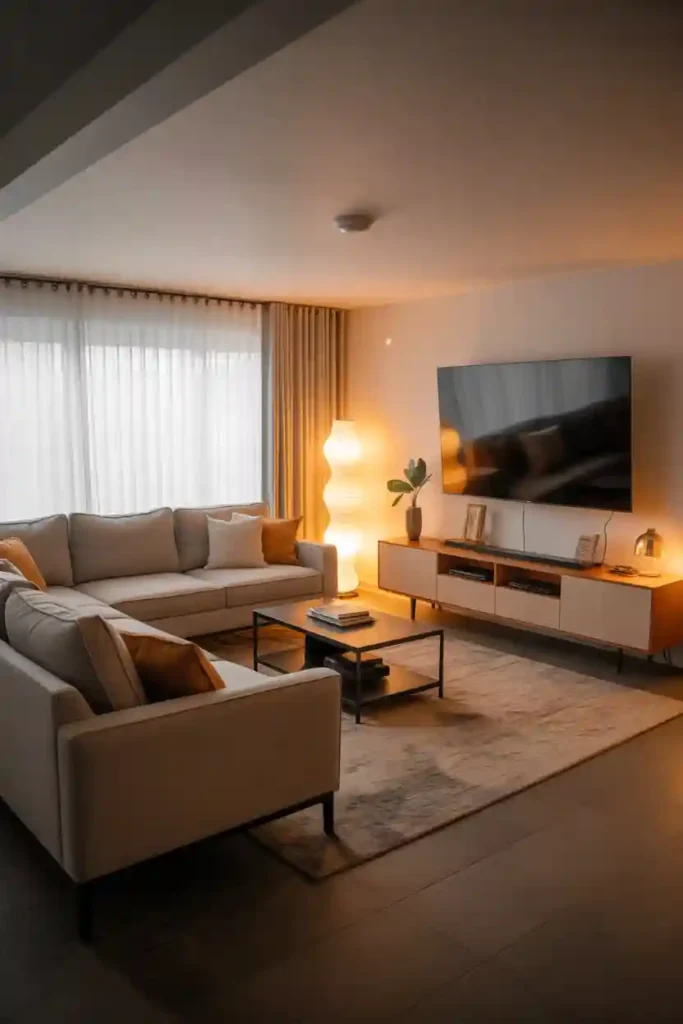
A family room is the most popular basement remodel for a reason. It gives everyone a place to relax without competing with the formal living room upstairs. Start with a plush sectional sofa 100 to 120 inches wide, arranged in an L shape so the whole family can sit together for movie nights. Choose a performance fabric in a mid tone gray, warm beige, or deep navy, since basement furniture takes more wear and the occasional spill. Add a large area rug, at least 8 by 10 feet, to warm up cold concrete floors and to define the seating area.
Basements lack natural light, so layer your lighting carefully. Recessed ceiling lights on a dimmer give even coverage, while a floor lamp beside the sofa and a pair of wall sconces add warmth at eye level. Paint the walls a light warm neutral, such as warm white or pale greige, and add texture with wood accents, woven baskets, and soft throws. A media console 60 to 70 inches wide or a wall mounted television becomes the natural focal point. Keep a storage ottoman nearby for blankets and remotes so the room stays tidy between uses.
Finish with personal touches that make the room feel lived in rather than staged. Family photos in matching frames, a few favorite books on a low shelf, and a small side table for drinks all help. If the budget allows, add a simple electric fireplace for instant coziness and a bit of extra heat on cold evenings. This is the remodel that gets used every day, so spend on comfort first and decor second, and the room will pay you back in family time.
2. Modern Home Theater
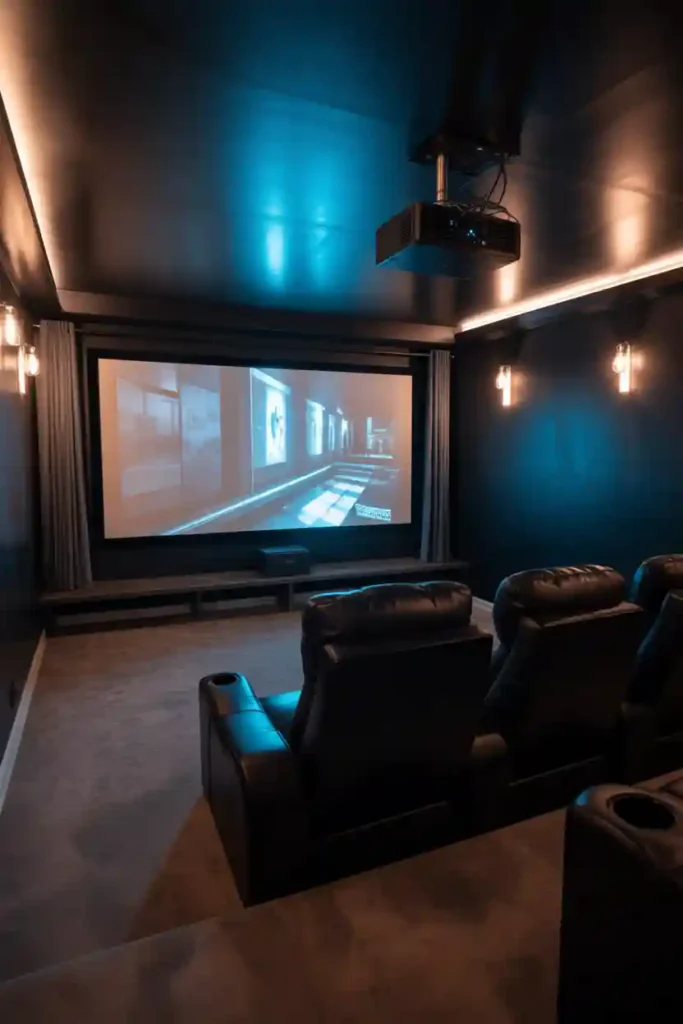
A basement is the ideal spot for a home theater because it is naturally dark and quiet. Start with the screen. A 75 to 85 inch flat screen television works well in most basements, while a projector and a 100 to 120 inch screen create a true cinema feel if you have at least 12 feet of viewing distance. Paint the walls a dark color such as charcoal, deep navy, or dark slate to cut glare and to make the picture pop. A matte finish hides scuffs and reflects less light than glossy paint.
Seating makes or breaks the experience. Two rows of recliners work if the room is at least 18 feet deep, with the back row raised on a 7 inch platform so everyone can see. For smaller rooms, one row of three or four recliners plus a couple of bean bags for the kids is plenty. Add dimmable LED strip lights along the baseboards or behind the screen for a professional glow, and install acoustic panels or thick curtains on the walls to improve sound and to keep movie noise from traveling upstairs. A soundbar is a good start, but a 5.1 surround system truly fills the room.
Keep snacks close with a small bar cart or a mini fridge tucked in a corner, stocked with drinks and popcorn supplies. Dark carpet or a large dark rug absorbs sound and feels soft underfoot. Add a star ceiling kit or simple recessed lights on a dimmer for that theater magic when the movie starts. Even a modest setup with a good television, comfortable recliners, and dark walls will feel like a real cinema, and it will quickly become the favorite room in the house on Friday nights.
3. Basement Home Office

Working from home is much easier when the office has a door that closes, and a basement can provide exactly that quiet zone. Position a desk 48 to 60 inches wide against the brightest wall, ideally near a window well if you have one, and add a good task lamp with a daylight bulb to make up for limited natural light. A comfortable ergonomic chair matters more than almost anything else in this room, since you will sit in it for hours every day.
Storage keeps a small office from feeling cluttered. Built in shelves 12 inches deep hold books, files, and supplies without eating floor space, and a closed cabinet hides printers and cables. Paint the walls a light color such as soft white, pale blue, or light sage to reflect what light there is, and hang a large mirror opposite the light source to make the room feel bigger. A few plants that tolerate low light, like a snake plant or a pothos, add life without needing much care. If video calls are part of your day, keep the wall behind your desk clean and add one framed print or a small shelf for a tidy background.
Sound matters in a basement office. A thick rug, upholstered chair, and fabric covered pinboard all absorb echo, which makes calls sound better. If the basement runs cool, a small space heater under the desk or a heated foot pad keeps you comfortable without heating the whole level. For inspiration on making a small workspace feel polished and practical, see these cozy apartment makeover ideas, many of which work just as well in a compact basement office. A well planned office pays for itself in focus and productivity.
4. Guest Bedroom Suite
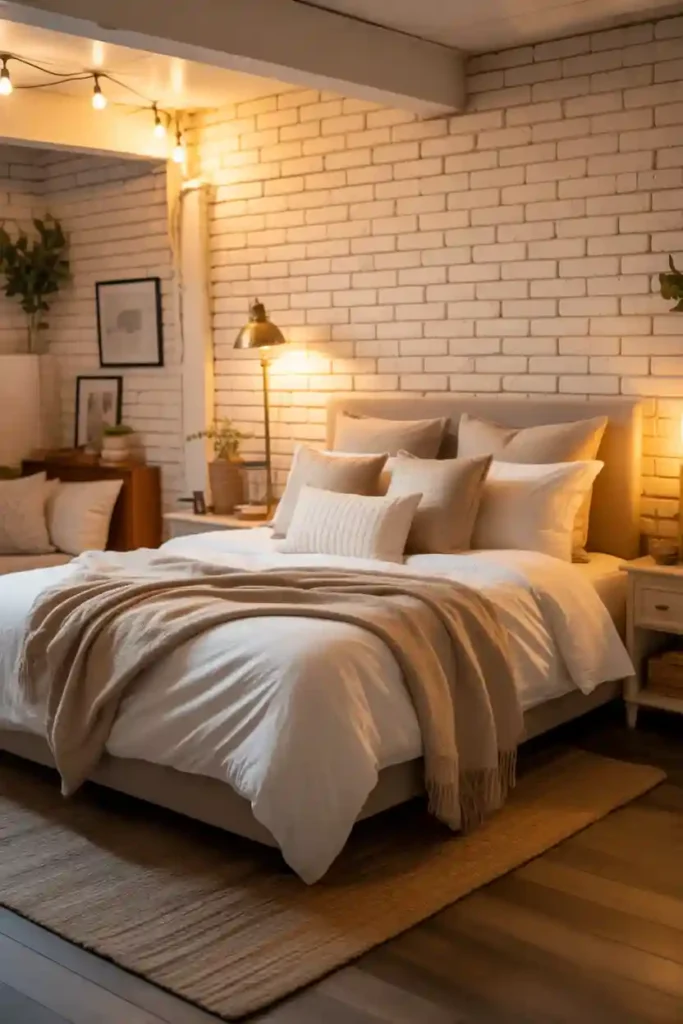
A basement guest suite turns occasional visitors into comfortable houseguests instead of people sleeping on a couch. Start with a queen bed, 60 by 80 inches, dressed with layered bedding in warm tones and a thick comforter, since basements run cooler than upstairs rooms. Add a bedside table on each side with a small lamp, a phone charger, and a glass of water, the little details that make guests feel welcome.
If space allows, add a small sitting area with one armchair and a floor lamp, plus a desk or a luggage rack so guests can unpack properly. An en suite bathroom is a big upgrade, and even a simple three quarter bath with a shower adds privacy and value. Check local egress rules before you build a basement bedroom. Most codes require a window large enough for emergency exit, usually at least 20 inches wide and 24 inches high, with a sill no higher than 44 inches from the floor. A window well with a ladder solves this in most homes.
Warm the room with plush textiles and soft lighting. A rug beside the bed feels good on bare feet on cold mornings, and blackout curtains on the window well keep the room dark for sleeping. Add a small basket with fresh towels, a spare blanket, and the WiFi password written on a card. Guests will remember the comfort, and your home gains a flexible room that works as a guest suite, a teen bedroom, or a quiet retreat whenever you need it.
5. Rustic Basement Lounge
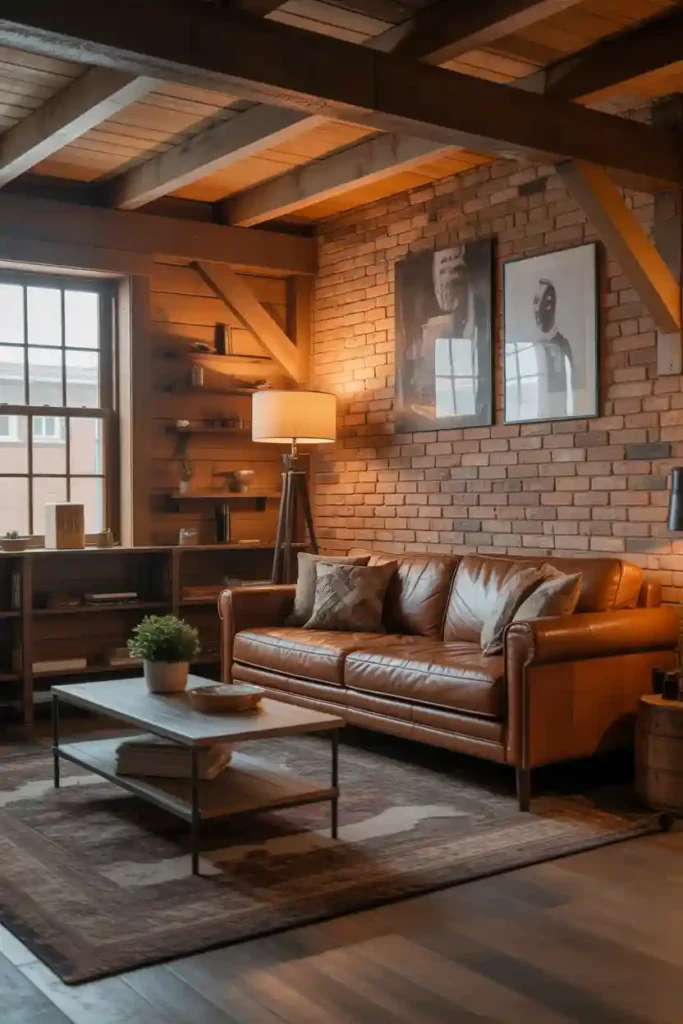
A rustic lounge brings cabin warmth to a basement that might otherwise feel cold and plain. Exposed wood beams, real or faux, instantly change the ceiling from a problem into a feature. Pair them with a brick accent wall or reclaimed wood paneling behind the seating area, and choose a leather sofa in cognac or dark brown that only gets better with age. Warm earthy tones such as terracotta, olive, and warm brown keep the palette cozy.
An electric fireplace or a small wood stove style heater adds both warmth and a focal point, and it is far simpler to install in a basement than a real chimney. Layer the lighting with Edison bulb pendants, a wrought iron floor lamp, and candles in hurricane holders on the coffee table. Natural textures do the heavy lifting here. A jute rug, wool throws, linen cushions, and a live edge wood coffee table all add the organic feel that defines rustic style. Vintage finds such as an old trunk for storage or antique signs on the wall give the room character without costing much.
Keep the layout relaxed and low. Rustic rooms should feel like a lodge, not a showroom, so leave space between pieces and let the materials speak. This style suits homeowners who want a retreat from screens and noise, a place to read, talk, and unwind by the fire. It also hides basement imperfections well, since textured walls and wood finishes are far more forgiving than smooth white drywall.
6. Kids’ Playroom Basement

Turning a basement into a kids playroom is one of the best trades a family can make. The toys move downstairs, the living room stays tidy, and the children get a space designed just for them. Start with the floor, since safety comes first. Interlocking foam mats 24 by 24 inches, carpet tiles, or a large low pile rug all cushion falls and are easy to clean. Choose bright, cheerful wall colors such as sunny yellow, sky blue, or soft coral, or keep the walls neutral and let the toys and art supply the color.
Storage is what keeps a playroom usable instead of chaotic. Low open shelves 24 to 30 inches high let small children reach their own toys and put them back, while labeled bins in different colors make cleanup a game rather than a chore. Add a craft table 24 by 36 inches with washable surfaces, a reading corner with a bean bag and a small bookcase, and one active zone such as a small climbing wall, a mini slide, or a dance space with a Bluetooth speaker. Good lighting is essential, so combine bright overhead lights with a couple of playful lamps and make sure every corner is well lit.
Choose materials that can take a beating. Washable paint in a satin finish wipes clean, vinyl flooring survives spills, and rounded furniture corners prevent bumps. Hang a clothesline style art display where children can clip their own drawings, and rotate toys every few weeks so the room feels fresh. A well planned playroom gives children a safe, imaginative world of their own, and gives parents their living room back.
7. Basement Home Gym

A basement home gym saves the cost of a membership and removes every excuse not to work out. Start with the floor. Rubber gym tiles or interlocking foam mats at least 8 millimeters thick protect the concrete, reduce noise, and cushion joints. A large mirror, at least 36 by 48 inches, mounted on one wall makes the space feel bigger and helps you check your form. Bright LED lighting at 4000K to 5000K keeps energy high and makes the room feel less like a basement.
Choose equipment based on the workouts you actually do, not the ones you imagine. A set of adjustable dumbbells, a bench, resistance bands, and a yoga mat cover most strength and stretching routines in a small footprint. If you love cardio, add one machine such as a treadmill, a stationary bike, or a rowing machine, and leave enough open floor for warm ups and floor work. Wall mounted storage racks keep weights and bands tidy and off the floor, and a small fan or a dehumidifier keeps the air fresh, since basements can feel stuffy during hard workouts.
Add motivating details that cost almost nothing. A whiteboard for tracking workouts, a speaker for music, and a water bottle station with a small towel rack all make the gym feel intentional. Paint one accent wall in an energizing color such as deep teal or bold orange to lift the mood. Even a compact 10 by 12 foot corner can become a real gym, and the convenience of walking downstairs instead of driving across town means you will actually use it.
8. Industrial-Style Basement

Industrial style suits basements better than almost any other look, because it turns the features other styles try to hide into design assets. Exposed brick, concrete floors, metal ductwork, and visible pipes all fit the aesthetic. Instead of covering the ceiling, paint it matte black or dark charcoal so the ducts and joists recede into a moody backdrop. Polished concrete floors, or concrete look vinyl planks, add to the raw feel and are tough enough for any use.
Keep the color palette tight and neutral. Blacks, grays, browns, and one metal accent such as brushed steel or aged brass are enough. Choose furniture with honest materials, a leather sofa with metal legs, open metal shelving, a reclaimed wood coffee table on a steel frame, and Edison bulb lighting in cage pendants or exposed fixtures. A large black and white photograph or a vintage metal sign makes a strong focal point without adding clutter. Open shelving works well here, since the style celebrates visible structure and storage rather than hiding it.
Industrial style is also practical. Concrete and metal surfaces are easy to clean, the dark ceiling hides wiring and pipes, and the look ages gracefully because wear and patina only add character. It suits homeowners who like urban lofts, bold design, and rooms that feel intentional rather than decorated. Add a few soft touches, such as a wool throw or a leather cushion, so the space stays comfortable and does not feel like a warehouse.
9. Basement Bar and Entertainment Area
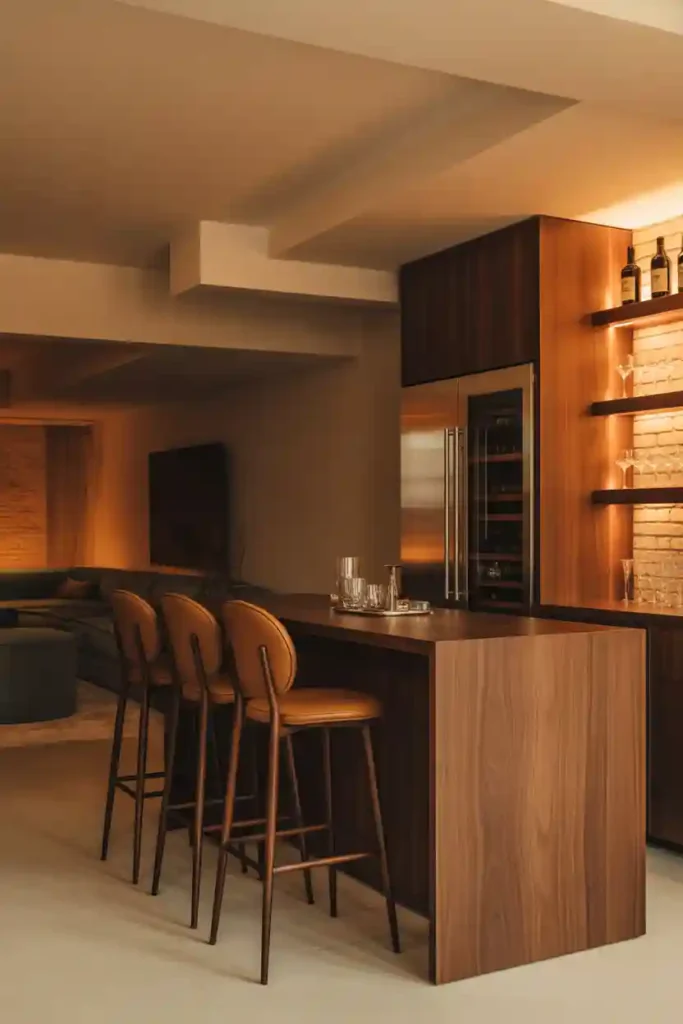
A basement bar turns ordinary evenings into occasions and gives parties a natural gathering spot. Start with the bar itself. A built in counter 8 to 10 feet long with seating for four to six stools works in most basements, while a smaller L shaped bar fits tighter rooms. Use durable materials such as quartz or butcher block for the countertop, and add open shelving above for glassware so bottles and glasses become part of the decor. Under cabinet LED lighting gives the bar a polished, professional glow.
A small under counter refrigerator or a wine cooler keeps drinks cold without trips upstairs, and a compact sink makes cleanup easy if plumbing allows. Add comfortable lounge seating nearby, such as a loveseat and two armchairs facing a wall mounted television, so guests can move between the bar and the seating area. Choose warm tones and wood finishes to keep the space inviting, and add a few personal touches such as framed cocktail prints, a chalkboard menu, or a collection of vintage bottles on display.
Keep the bar area practical as well as stylish. A spill proof countertop, washable bar mats, and a small trash bin tucked under the counter make hosting much easier. If you entertain often, add a second zone such as a card table or a dartboard so guests have something to do beyond sitting at the bar. This remodel is perfect for hosts who love having friends over, and it adds a fun, social heart to the lower level.
10. Minimalist Basement Retreat
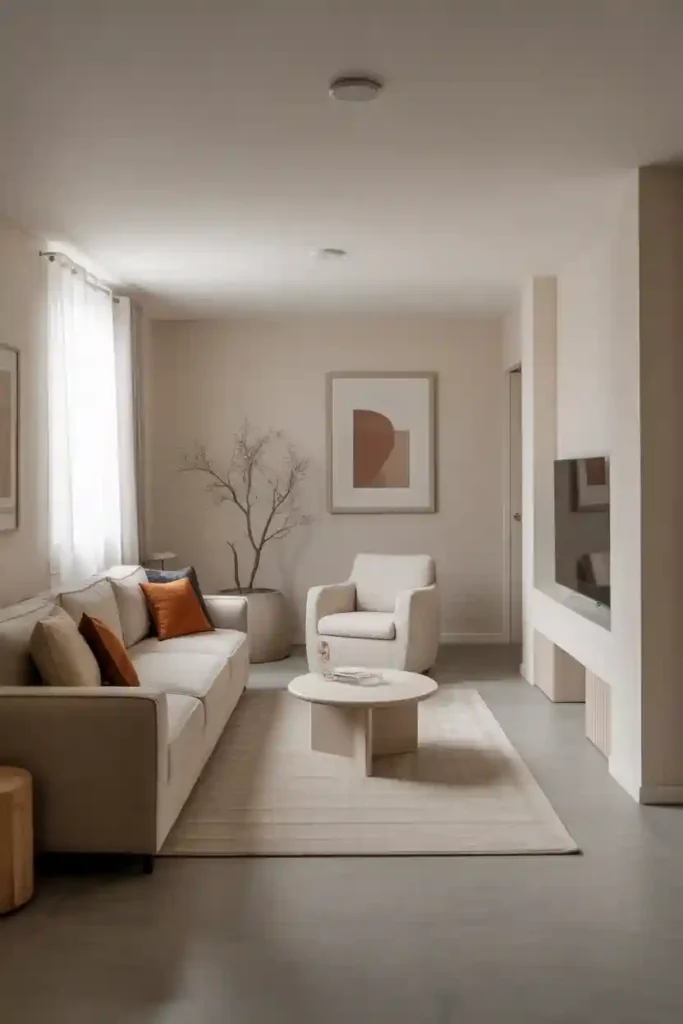
A minimalist basement is a calm retreat from a busy house, and it works beautifully in a space with low ceilings and little natural light. Start by clearing everything out and choosing only what earns its place. Light neutral walls in warm white, soft gray, or pale beige open the room up, and a low profile sofa in a solid color keeps sight lines clean. Choose furniture with simple lines and hidden storage, such as a platform bed style daybed or a bench with built in drawers.
Warmth comes from texture rather than clutter. A soft wool rug, a linen throw, a single ceramic vase, and one piece of large scale art are enough to make the room feel finished. Built in storage along one wall keeps everything out of sight, which is the real secret of minimalist rooms. They look empty only when storage is missing. Lighting should be soft and layered, with recessed lights on a dimmer, one floor lamp with a warm bulb, and sheer curtains on any window to diffuse the light.
This style is ideal for meditation, yoga, reading, or simply decompressing after a long day. Keep a small tray with a candle, a book, and a cup of tea on the side table, and resist the urge to fill the shelves. The restraint is the point. A minimalist basement retreat proves that a room does not need much to feel complete, just light, quiet, and a few beautiful things chosen with care.
11. Basement Game Room

A basement game room gives the whole family a reason to gather, and it keeps noisy fun away from quiet rooms upstairs. Start with one anchor piece based on what your family actually plays. A pool table needs a room at least 15 by 19 feet so players have room to cue, while a foosball table, an air hockey table, or a retro arcade machine fits in much less space. Add comfortable seating along one wall so watchers can relax between turns.
Bold accent colors make a game room feel energetic. Try one deep color such as navy, forest green, or burgundy on a single wall, with the rest of the room in a warm neutral. Durable flooring matters here, so choose luxury vinyl plank or low pile commercial carpet that can handle dropped balls, spilled drinks, and heavy furniture. Bright, focused lighting above each game table improves play, while dimmable overhead lights let you change the mood for a movie or a card game later in the evening.
Round out the room with the extras that make it a destination. A small snack station with a mini fridge, a shelf for board games, and a chalkboard for keeping score all add to the fun. Keep a few bean bags or floor cushions for younger players, and hang a few framed vintage game posters for personality. A game room does not need to be fancy to be loved. It just needs good games, good seating, and a layout that lets everyone play together.
12. Laundry Room Upgrade

A basement laundry room is often the most neglected space in the house, yet it is one of the easiest to transform. Start with storage. Custom or stock cabinetry above the washer and dryer holds detergent, stain removers, and cleaning supplies, while a countertop 25 to 30 inches deep across the machines gives you a proper folding surface. A drying rack that folds flat against the wall saves space and keeps delicates off the floor.
Bright light and light colors make laundry feel less like a chore. Paint the walls a clean white or pale blue, add bright LED lighting, and choose a light colored floor such as vinyl plank or painted concrete that is easy to mop. Decorative baskets in matching tones hold supplies and look far better than open shelves full of bottles. Add a hanging rod for clothes that need to air dry, a small ironing station, and a wall mounted lint bin near the dryer for convenience.
Small upgrades make a big difference here. A pretty backsplash behind the machines, matching hardware on the cabinets, and a cheerful piece of wall art all lift the room from utility space to a room you do not mind spending time in. If your laundry shares space with a bathroom, see these basement bathroom ideas for ways to make the two zones work together. A good laundry room proves that even the most practical spaces deserve thoughtful design.
13. Basement Library Nook
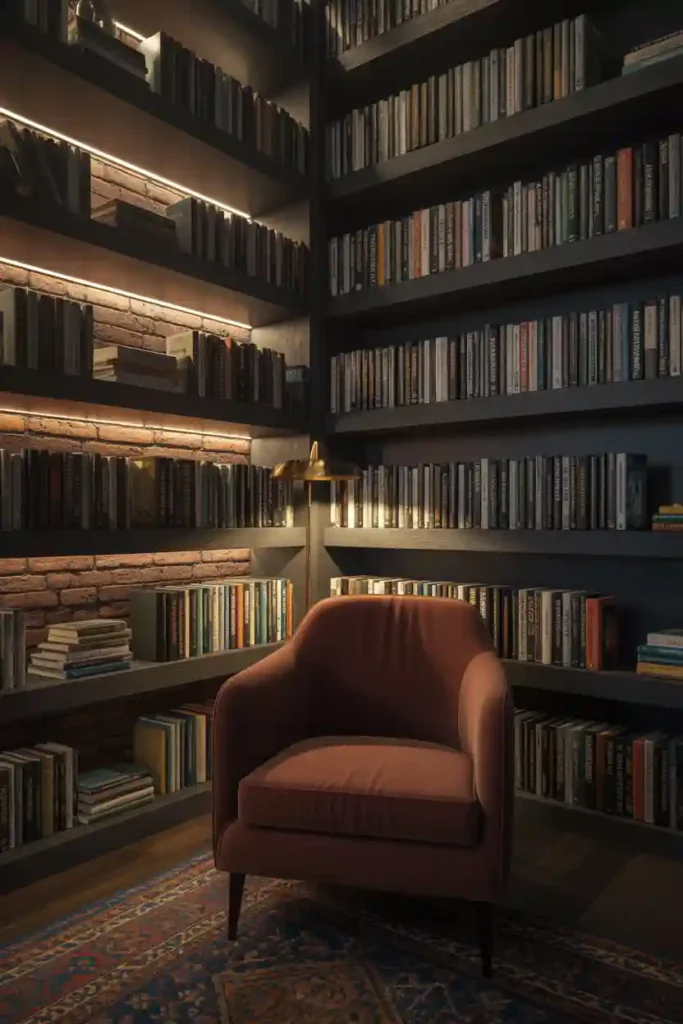
A basement library nook is a quiet intellectual retreat, perfect for readers who want a corner of the house that belongs to books. Line one wall with built in bookshelves 12 inches deep, or use tall freestanding bookcases 72 to 84 inches high for the same effect at lower cost. Organize books by color or by genre, and leave a little breathing room on each shelf for a small plant, a framed photo, or a favorite object.
Comfort is the heart of a library nook. Choose a deep armchair with a high back, or a small loveseat if two people like to read together, and add a floor lamp with a warm bulb positioned over your shoulder for reading light. A small side table holds a cup of tea and a bookmark, while a textured rug underfoot warms the floor and quiets footsteps. Warm colors such as deep green, warm brown, or burgundy make the nook feel like a private study, and wood tones add richness.
Add a window seat if your basement has a window well, with storage underneath for extra books and blankets. A rolling ladder is a charming touch for tall shelves, but a simple step stool works just as well. Keep the nook free of screens and clutter so it stays a place for slow reading. Even a small 8 by 8 foot corner can become a library, and it will quickly become the most peaceful spot in the house.
14. Small Basement Studio Apartment
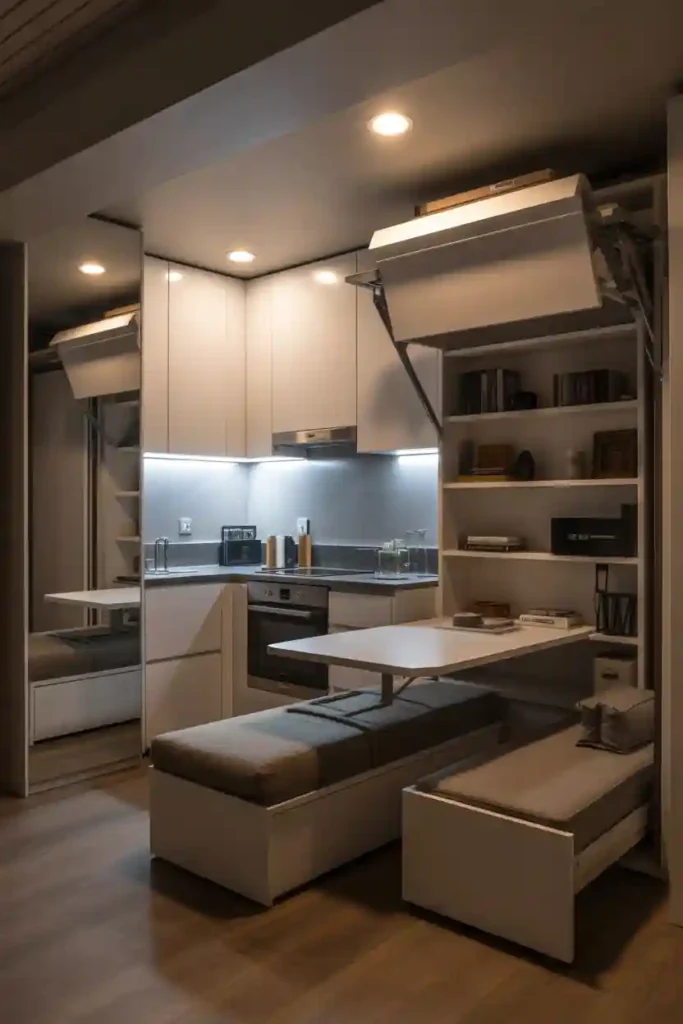
A basement studio apartment is the most ambitious idea on this list, and also the most rewarding. It creates rental income, a home for an adult child, or a fully private guest suite. Plan the layout in zones, with a sleeping area, a small kitchenette, and a living area arranged so each has its own light and purpose. A murphy bed or a sofa bed saves space in studios under 400 square feet, while multifunctional furniture such as a dining table that doubles as a desk makes every inch work harder.
Light colors and good lighting are essential in a studio with small windows. Paint the walls warm white, choose light wood flooring, and add mirrors to bounce light around the room. Proper ventilation matters more here than anywhere else, so make sure the space has an exhaust fan in the kitchenette and bathroom, and a dehumidifier if the basement runs damp. Check local codes early, since a legal rental unit usually needs egress windows, a separate entrance, ceiling height of at least 7 feet, and its own smoke and carbon monoxide detectors.
Furnish the studio like a small hotel room. A comfortable bed, a compact kitchenette with a mini fridge and a two burner cooktop, a small dining set, and a smart television are enough to start. Add blackout curtains, a lockable door, and a small closet with built in storage so the tenant feels at home. Done well, a basement studio pays for its own remodel through rent, and it adds lasting value to the property.
15. Contemporary Basement with Accent Wall

An accent wall is the fastest way to give a plain basement personality without a full renovation. Choose the wall that faces the seating area, then cover it with bold paint, peel and stick wallpaper, wood slats, or stone veneer. Deep colors such as charcoal, forest green, or navy work well in basements because they add depth, while a warm terracotta or a rich teal adds energy. Keep the other walls neutral so the feature wall stands out.
Wood slat walls are especially popular right now. Vertical slats 1 to 2 inches wide with small gaps between them add texture and rhythm, and they are easy to install over a weekend with basic tools. Painted shiplap, geometric wallpaper, or a large scale mural all work too. Pair the accent wall with modern furniture in clean lines, a statement pendant light, and one or two pieces of bold art. The rest of the room should stay simple so the wall remains the star.
This idea is budget friendly and low risk, which makes it perfect for a first basement project. A single wall of paint costs under 100 dollars, while a wood slat wall for a 12 foot wall typically runs 300 to 600 dollars in materials. If you change your mind later, one wall is easy to repaint or recover. For more ways to give a room a fresh focal point, explore these modern home decor inspiration ideas. An accent wall adds depth and character, and it makes the whole basement feel designed rather than finished as an afterthought.
16. Budget-Friendly Basement Makeover

You do not need a big budget to transform a basement. A thoughtful makeover using paint, lighting, and smart decor can change the whole feel of the space for under 1,000 dollars. Start with a fresh coat of paint in a light warm neutral, which alone can make a dark basement feel twice as bright. Replace old bulbs with bright LED bulbs at 3000K to 4000K, and add a couple of inexpensive floor lamps to remove dark corners.
Rearrange the furniture you already own before buying anything new. Pull seating away from the walls, define zones with rugs you already have, and clear clutter from every surface. Add affordable decor such as a large thrifted mirror to reflect light, a few potted plants that tolerate low light, and simple framed prints. Moisture resistant materials matter even on a budget, so choose vinyl rugs, washable slipcovers, and plastic storage bins that survive a damp basement without damage.
Shop secondhand for the big pieces. A good quality sofa, a solid wood coffee table, or a bookshelf often costs a fraction of retail on local marketplaces, and a coat of paint or new hardware can make an old piece look new. Focus your spending on the things you touch every day, such as seating and lighting, and save on decor. This idea proves that small changes, done in the right order, can dramatically improve a basement while staying well within budget.
Final Words
These 16 basement remodel ideas for every style and budget show that your basement has far more potential than a storage room for boxes. Whether you dream of a cozy family lounge, a high end home theater, a productive office, or a rental ready studio apartment, the right design approach can completely transform the space. Start by fixing moisture and lighting, then choose the one idea that fits how your family really lives, and build it out step by step.
Remember that the best basement remodel is the one you will actually use. A simple family room with a good sofa and warm lighting often brings more daily joy than an elaborate theater that sits empty. Pick your purpose, set a realistic budget, measure twice, and enjoy the process of turning the darkest level of your home into one of its brightest spots. Your basement is waiting, and with a little planning it can become your favorite room in the house.
Frequently Asked Questions
How much does a basement remodel cost?
A basic basement remodel with paint, flooring, and lighting typically costs 10,000 to 25,000 dollars. A mid range remodel with a bathroom, a home theater, or a bar usually runs 30,000 to 60,000 dollars, while a full high end finish with a kitchenette and a bedroom suite can reach 75,000 dollars or more. A budget makeover using paint, lighting, and secondhand furniture can be done for under 1,000 dollars if the space is already dry and finished.
Do I need a permit to remodel my basement?
Most areas require a permit for basement remodels that add bedrooms, bathrooms, electrical work, or plumbing. Simple cosmetic work such as painting, new flooring, and furniture usually does not need one. Check with your local building department before you start, and confirm egress window, ceiling height, and smoke detector rules, since these affect whether a basement bedroom is legal.
How do I keep my basement dry before remodeling?
Start outside the house by making sure gutters drain at least 6 feet away from the foundation and the ground slopes away from the walls. Inside, seal cracks in the walls and floor, apply a waterproof coating to interior walls, and install a sump pump if water collects during heavy rain. A dehumidifier that keeps humidity below 50 percent protects your finished walls and furniture for years.
What flooring is best for a basement?
Luxury vinyl plank is the most popular basement flooring because it is waterproof, durable, and looks like real wood. Tile works well in bathrooms and laundry areas, while carpet tiles add warmth in family rooms and can be replaced one at a time if one gets stained. Avoid solid hardwood and laminate in basements, since both can warp if moisture appears.
Can a basement remodel add value to my home?
Yes, a finished basement typically returns 70 to 75 percent of its cost in added home value, and it makes the home more attractive to buyers by adding usable living space. The return is highest when the remodel adds a bedroom, a bathroom, or a flexible living area, and when the work is permitted and finished to the same standard as the rest of the house.
More Ideas You Will Love
 20 Creative Attic Bedroom Ideas to Transform Your Space with Style & Functionality
 13 Small Bedroom Inspirations: Smart, Cozy & Stylish Ideas
 16 Headboard Ideas: Stylish & Functional Designs for Every Bedroom
 14 Boy Nursery Ideas with Inspiring Themes and Layout Tips
 22 Bedroom Wall Decor Ideas to Instantly Elevate Your Space
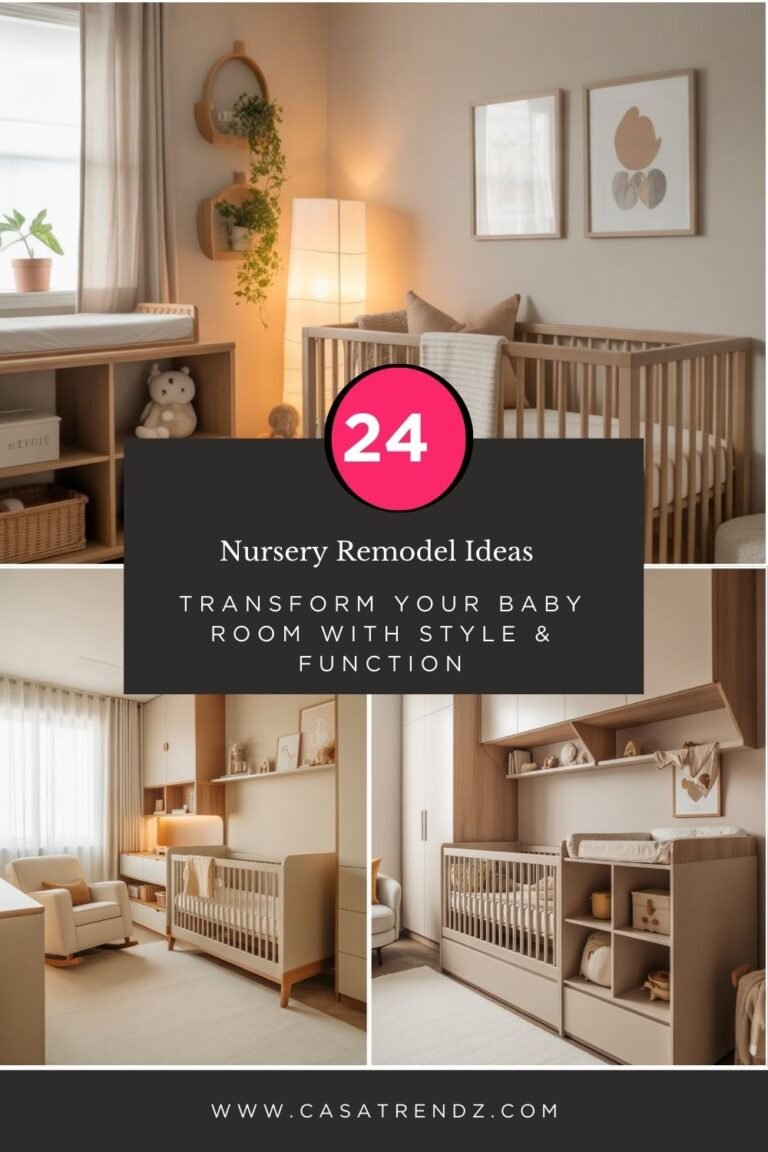 24 Nursery Remodel Ideas – Transform Your Baby Room with Style & Function