
14 Summer Lighting Ideas for Your Home Exterior: Top Trends

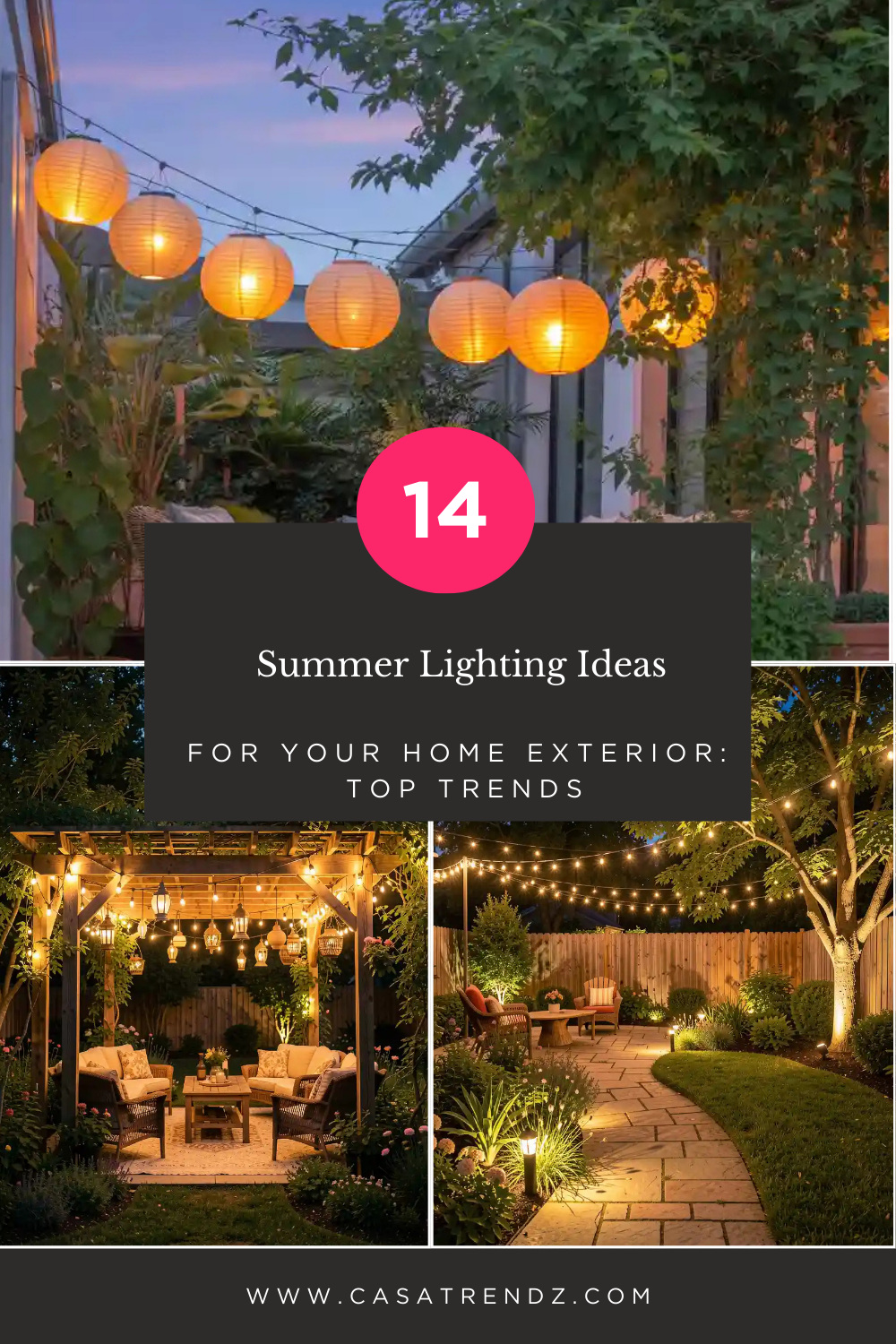
Summer is the season when the outside of your home finally gets as much attention as the inside. Long evenings, warm air, and dinner on the patio all invite you outdoors, and the right lighting is what makes those hours feel special. A well lit exterior does more than help you see where you are walking. It sets the mood for a barbecue, makes a small garden feel bigger, and turns a plain patio into the place everyone wants to gather after sunset.
The best summer lighting plans mix practical light with decorative light. You need enough brightness near steps, doors, and paths to move around safely, but you also want the soft glow that makes a garden feel magical. The good news is that most of these ideas are easy weekend projects. Solar lights need no wiring at all, string lights hang in an afternoon, and many smart systems plug straight into an outdoor outlet. You can start with one or two ideas and add more over the season.
This guide walks through 14 summer lighting ideas for your home exterior, with the materials, measurements, and step by step details you need to get each one right. Every idea works on its own, but they work even better together, so read through the full list and pick the combination that fits your patio, garden, and budget.
1. Hang String Lights Across Your Patio
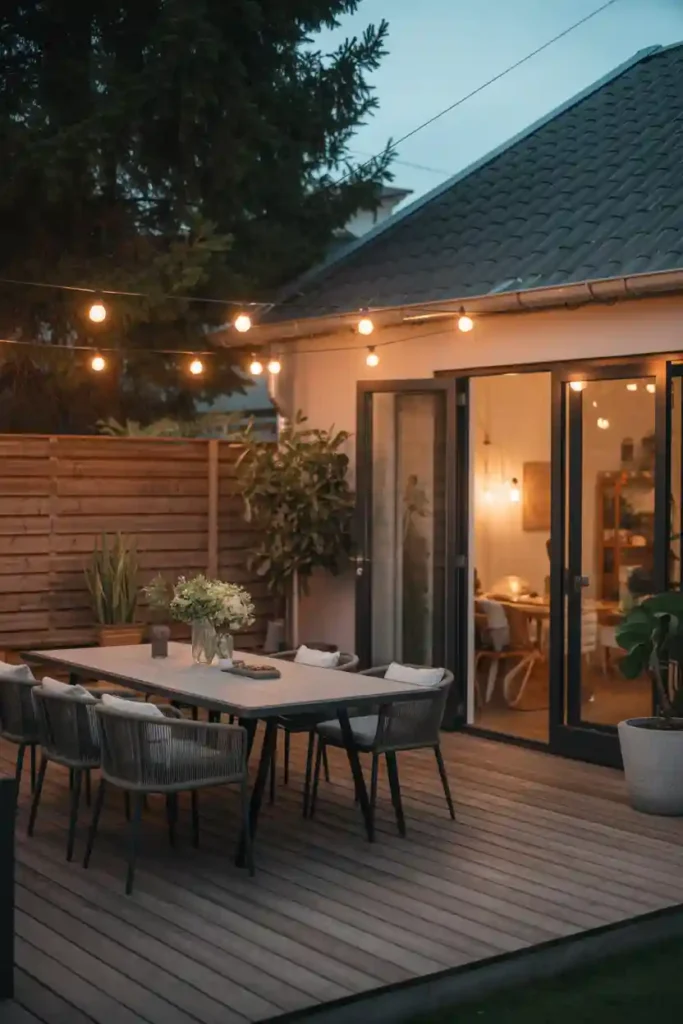
String lights are the fastest way to make a patio feel like a summer evening destination. Their warm glow softens hard edges, flatters skin tones in photos, and instantly signals that this is a place to relax. Drape them in a zigzag across the patio roof, run them in straight lines between two trees, or wrap them around a pergola beam. They work for a quiet dinner for two just as well as they do for a party of twenty, because the light is gentle enough to talk under and bright enough to see your plate.
For a standard 12 by 16 foot patio, one 48 foot string with 24 bulbs spaced 2 feet apart is usually enough for a single run, while a zigzag pattern across the same space needs two strings. Hang them 8 to 10 feet high so tall guests can walk underneath without ducking, and keep a gentle sag of 6 to 12 inches between anchor points so the line looks relaxed rather than pulled tight. Choose warm white LED bulbs at 2200K to 2700K for a soft, golden glow, and look for shatterproof plastic bulbs if children or pets use the space. Edison style bulbs give a vintage, nostalgic feel, while small globe bulbs suit a clean, modern patio. If your budget is tight, start with one string over the dining table, which is where the light matters most, and add a second run later. Our guide to affordable backyard lighting ideas has more low cost ways to light the same space.
2. Install Solar Pathway Lights
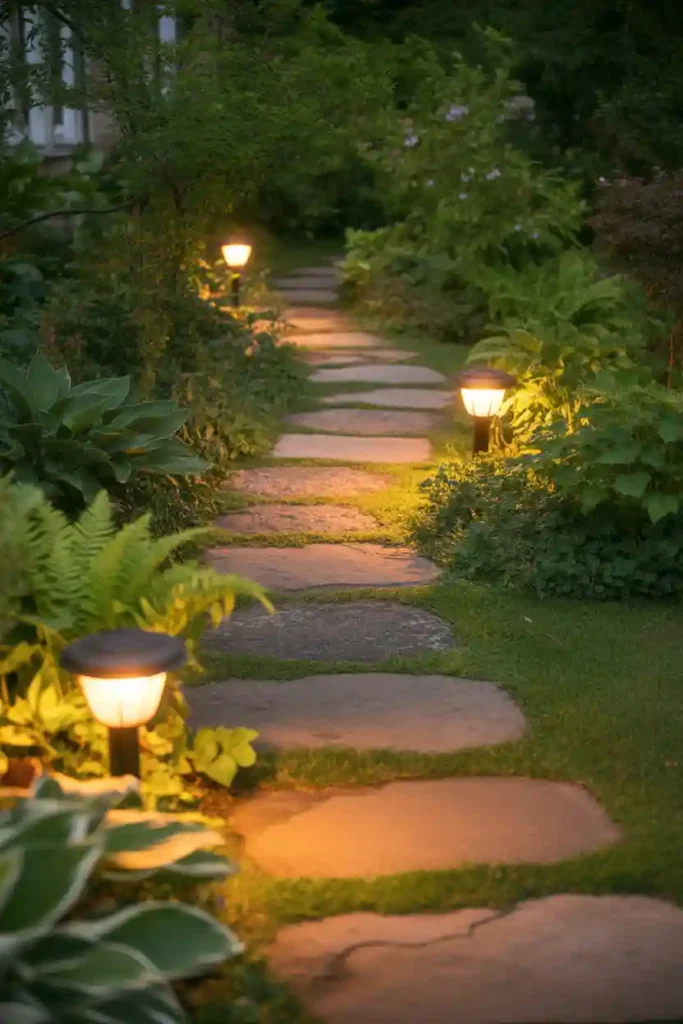
Solar pathway lights are the simplest way to light a walkway, because they need no wiring, no electrician, and no outdoor outlet. Each light has a small solar panel on top that charges during the day and switches on automatically at dusk, so the path lights itself every evening without you touching a switch. They guide guests safely from the driveway to the front door, and they make garden paths feel intentional rather than dark and forgotten.
Place the lights 6 to 8 feet apart along the edge of the path, alternating sides if the path is wide, and push the stake firmly into the soil so the panel sits level and faces the open sky. A panel shaded by a shrub or a fence will charge poorly, so trim back any overhanging leaves and avoid spots under deep eaves. Most solar pathway lights give 6 to 8 hours of light on a full charge, which covers the whole evening in summer. Choose a consistent style along one path, such as all black metal stakes or all lantern style fixtures, so the line reads as one design instead of a random mix. For brighter, more even light, look for models with at least 10 lumens per light, and if you want the glow to last all night, pick a set with a larger battery. If you are planning a bigger solar setup, our guide to modern solar exterior light ideas covers panels, placement, and fixtures that work well together.
3. Add Wall Sconces to Your Exterior Walls
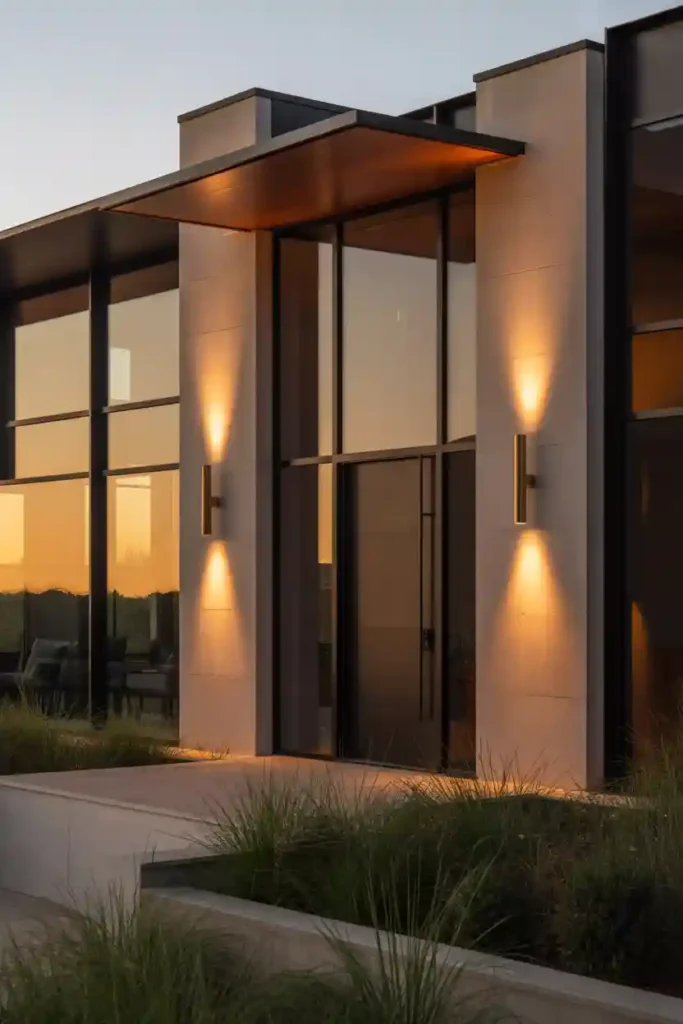
Wall sconces are the classic way to light an entrance, and they do two jobs at once. They give you focused light exactly where you need it, beside the front door, by the garage, or at the patio entrance, and they frame the architecture of your home so the facade looks finished after dark. A pair of sconces flanking a door creates symmetry that reads as welcoming from the street, while a single sconce beside a side gate is enough for a smaller entry.
Mount sconces 66 to 72 inches from the ground to the center of the fixture, which puts the light at eye level without glaring into anyone’s face. For a standard 36 inch door, fixtures 6 to 8 inches wide work well, and a pair should sit 6 to 12 inches from each side of the door frame. Choose weather rated fixtures, IP44 or higher, in materials that handle rain and humidity, such as powder coated black metal, brass, or marine grade stainless steel. A frosted glass shade softens the light and hides the bulb, while a clear glass lantern style shows off an Edison bulb. Pair the sconces with a dimmer switch or a dusk to dawn sensor so you can lower the brightness late at night, and match the finish to your door hardware for a pulled together look. If you want to compare fixture styles before you buy, our roundup of outdoor light fixture ideas shows the most popular shapes for porches, patios, and entryways.
4. Use Lanterns for Decorative Lighting
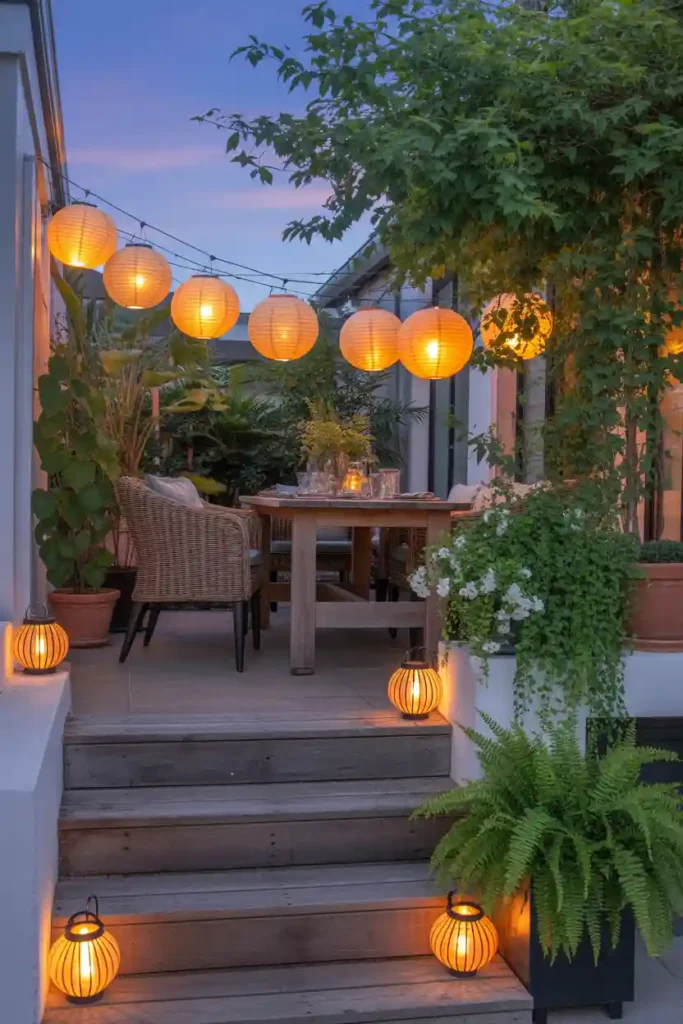
Lanterns are the most flexible decorative light you can own, because they move wherever the evening takes you. Set them on the dining table, hang them from a shepherd’s hook near the seating area, or line them along the edge of a path for a party. Their enclosed glow feels calm and old fashioned in the best way, and they suit almost every style, from rustic farmhouse to clean modern minimalism.
For a real flame look without the risk, use LED pillar candles inside the lantern, and choose a flickering flame effect if you want the movement of a real candle. A lantern 10 to 12 inches tall works on a tabletop, while an oversized lantern 16 to 20 inches tall makes a statement piece on the porch floor or beside a lounge chair. Group lanterns in odd numbers, three of different heights on a side table or five along a wide step, and keep the finishes consistent, all black metal or all natural wood, so the group reads as one arrangement. Metal lanterns with glass panels give the clearest light, while wooden lanterns add warmth and texture. Bring fabric or paper lanterns indoors when rain is forecast, and store battery candles with the batteries removed at the end of the season so they do not corrode.
5. Highlight Trees with Uplighting
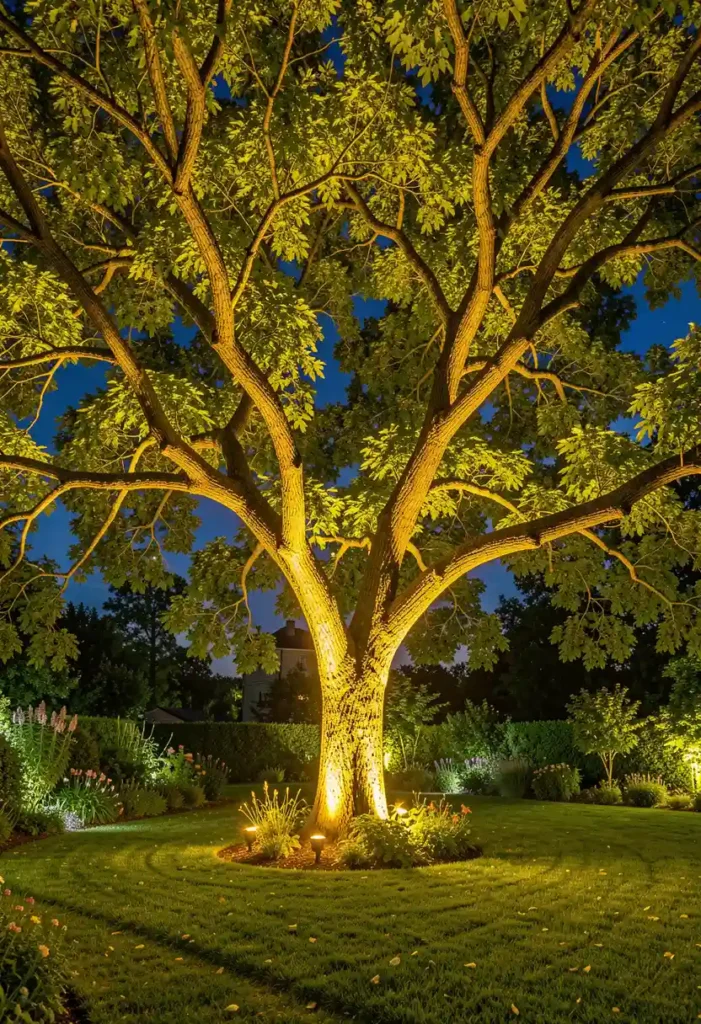
Tree uplighting is one of the most dramatic lighting techniques you can use, and it costs very little. A small spotlight placed at the base of a tree and aimed up through the branches turns an ordinary tree into a living sculpture at night. The light catches the underside of the leaves, throws long shadows across the lawn, and adds depth that makes the whole garden feel larger and more layered.
Start with one or two trees that have an interesting shape, such as a maple with a wide canopy, a birch with pale bark, or an evergreen with dense, layered branches. Place the fixture 12 to 18 inches from the trunk and angle it at about 30 degrees so the beam washes up through the canopy instead of blasting straight into the top. A 35 to 50 watt equivalent LED spotlight, around 300 to 500 lumens, is enough for a medium tree, and a warm white color temperature of 2700K keeps the foliage looking natural rather than washed out. Bury the low voltage cable a few inches under mulch so it disappears, and use a ground stake fixture you can adjust as the tree grows. Avoid aiming lights directly into a neighbor’s window, and skip uplighting on very young trees, since the trunk is too thin to carry the effect.
6. Install Deck Step Lights
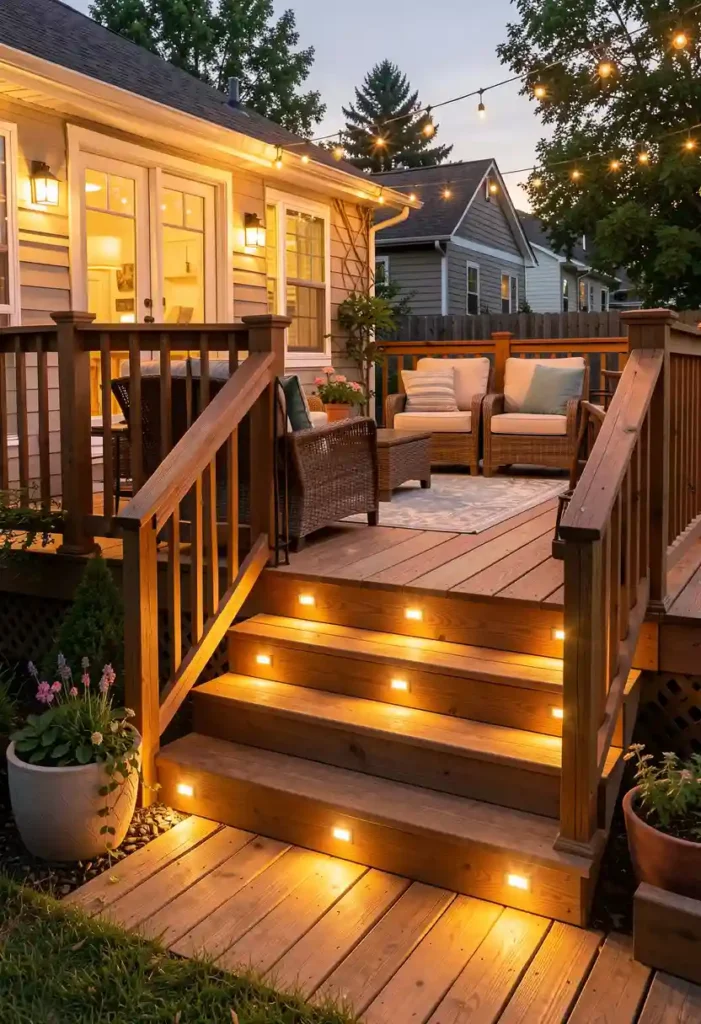
Deck step lights are small, but they solve a real problem. After dark, the edge of a deck step is easy to miss, and one missed step can end an evening quickly. A row of low, recessed lights on each riser marks every step clearly, so guests move between the deck and the garden with confidence. They also add a clean, modern line of light that makes the deck look designed rather than improvised.
Install one light per step, centered on the riser, about 3 to 4 inches above the tread below, so the light washes down across the step you are about to use. Recessed LED step lights in a 3 inch round or 4 inch rectangular size fit most deck boards, and a warm white 2700K bulb keeps the glow soft. Low voltage systems are the easiest for a DIY install, since the cable runs under the deck and connects to a small transformer plugged into an outdoor outlet. Keep the lights on a timer or a dusk to dawn sensor so they come on automatically, and choose fixtures with a frosted lens to avoid glare at ankle height. If your deck has a wide staircase, add a light on each side of the wider steps as well, so the edges are lit on both sides.
7. Add Pergola or Gazebo Lighting
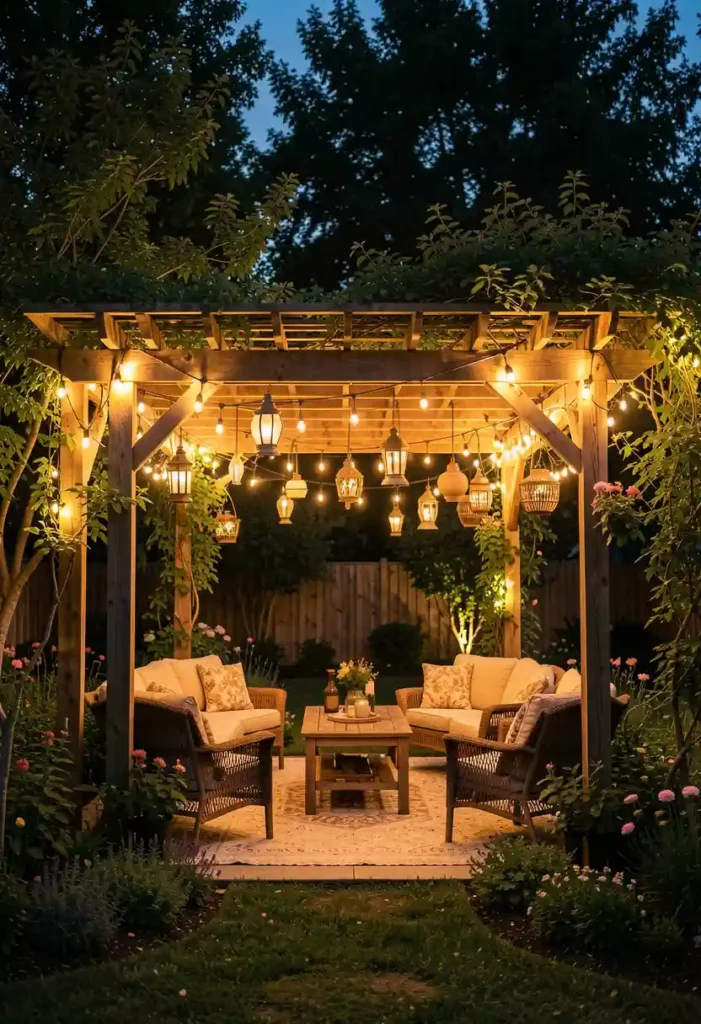
A pergola or gazebo is already the most inviting structure in a summer garden, and lighting is what turns it into an evening room. Lights under the roof or along the beams create a ceiling of soft glow that makes the space feel enclosed and cozy, even though it is open to the night air. It becomes the natural spot for dinner, drinks, or a quiet hour with a book.
String lights are the easiest starting point. Wrap them around the beams in a loose spiral, or stretch them in parallel lines across the underside of the roof, spacing the runs 18 to 24 inches apart for even coverage. For a more finished look, add a pendant light or a small outdoor chandelier over the dining table, hung 30 to 36 inches above the tabletop so it lights the plates without blocking the view across the table. Recessed lights set into the beams give the cleanest result of all, but they need a wired connection, so plan them before you build or hire an electrician for the install. Use dimmable bulbs throughout so you can lower the light for a late evening and raise it when you are serving food. If the pergola sits over a patio you use every night, pair the lighting with comfortable seating and a dining setup that suits the space, so the structure works as a real outdoor room rather than just a frame for lights.
8. Use LED Strip Lighting for Modern Accents
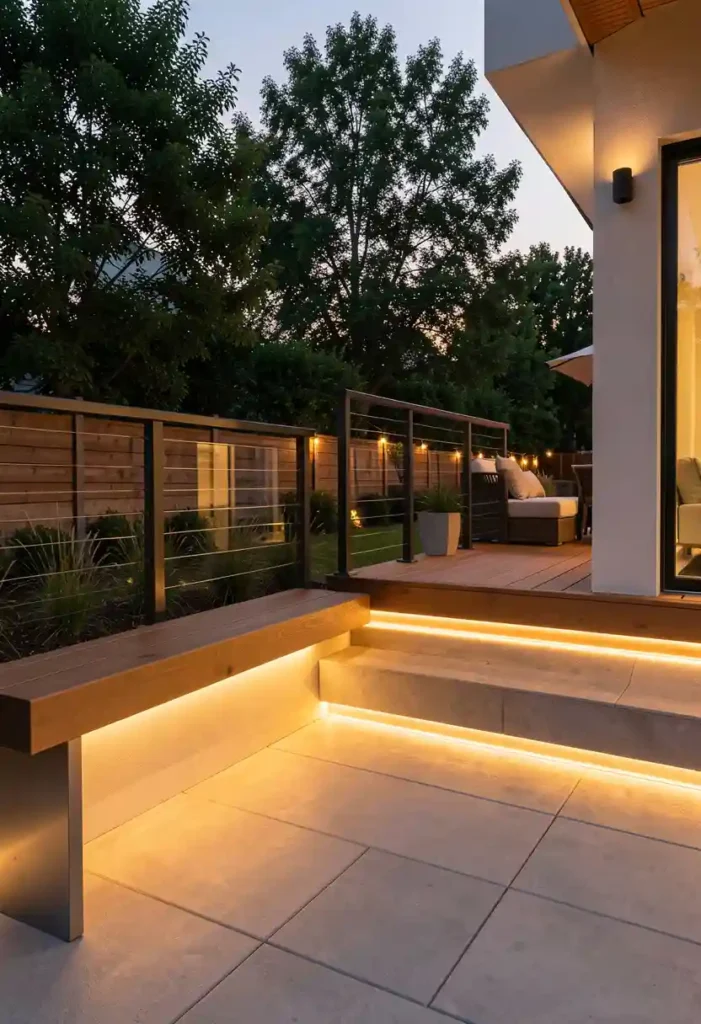
LED strip lighting is the most modern tool in this list, and it works by outlining shapes rather than flooding a space with light. A thin strip tucked under a deck railing, along the edge of a bench, or beneath a floating step creates a crisp line of glow that makes the architecture visible at night. It is subtle during a party and striking in photos, and it uses very little power.
Measure the run before you buy, and choose an outdoor rated strip, IP65 or higher, with a silicone coating that sheds rain. Warm white at 2700K suits wood decks and stone patios, while an RGB strip lets you switch to amber for a calm evening or a soft blue for a party. Cut the strip only at the marked cut points, usually every 2 inches, and mount it in an aluminum channel with a diffuser so you see a smooth line of light instead of individual dots. Common placements include under the top rail of a deck, along the underside of a bench seat, around the edge of a raised planter, and beneath the lip of an outdoor kitchen counter. Connect the strip to a low voltage driver, keep the driver in a weatherproof box, and add a remote or app control so you can dim it without walking outside.
9. Illuminate Water Features
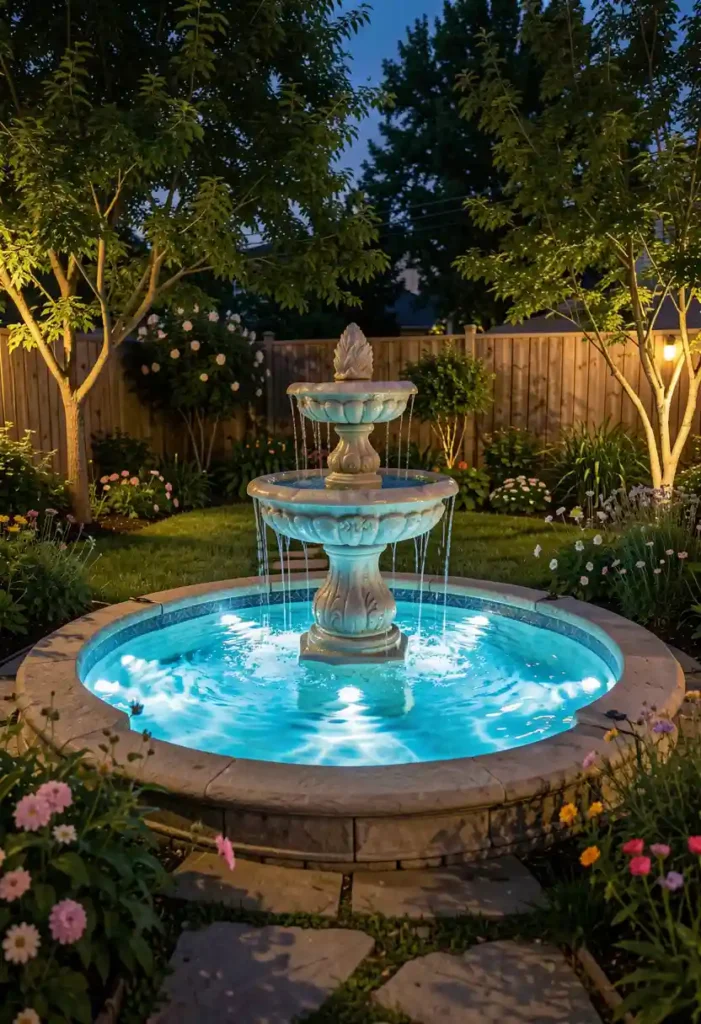
A fountain, pond, or waterfall is beautiful in daylight, but it becomes the centerpiece of the garden at night once it is lit. Light moving through water creates a shimmer that no other fixture can copy, and the sound of the water plus the glow makes the whole corner of the garden feel calm and luxurious. Even a small birdbath fountain looks impressive with one well placed light.
Use submersible LED lights rated IP68 for anything that sits in the water, and place one light at the base of a fountain jet so the water catches the beam as it rises. For a pond, set two small spotlights at opposite edges and aim them across the surface, which highlights the ripples and any fish below. A waterfall needs a light tucked behind the falling sheet of water, so the cascade glows from within. Choose warm white for a natural, candlelit feel, or a soft blue for a cooler, moonlit effect. Keep the transformer above the waterline in a dry, covered spot, and run the cable through conduit so it stays protected. Clean the light lenses once a month during summer, since algae builds up fast and dims the beam.
10. Place Lantern Posts Along Driveways
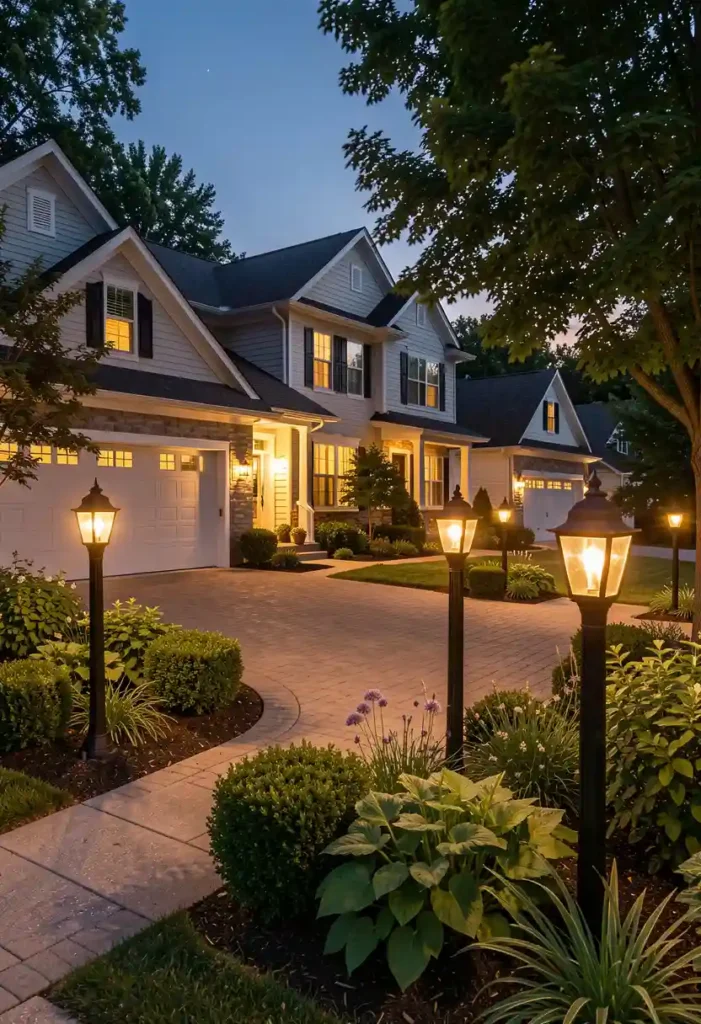
Lantern post lights are the classic way to light a driveway, and they do as much for curb appeal as they do for safety. A row of tall, freestanding posts creates a rhythm that leads the eye from the street to the front door, and the soft glow at each post makes the entrance feel welcoming long after dark. They suit traditional homes with ornate details and modern homes with clean lines, as long as the fixture style matches the house.
Space the posts 8 to 10 feet apart along one side of a straight driveway, or stagger them on both sides for a wider drive, and set them 18 to 24 inches back from the edge of the paving so car doors and mirrors clear them. A post 5 to 6 feet tall is the standard height, tall enough to light the ground without shining into a driver’s eyes. Choose a fixture with a clear or seeded glass panel and a warm white bulb, and pick the finish to match your other exterior hardware, such as black, oil rubbed bronze, or brushed nickel. For traditional homes, choose lantern posts with ornate details and a classic cap. For modern homes, sleek minimalist post lights with a flat top and a simple frame give a contemporary look. Low voltage posts are easier to install, while hardwired posts give the brightest, most even light for a long driveway.
11. Hang Pendant Lights on Covered Porches
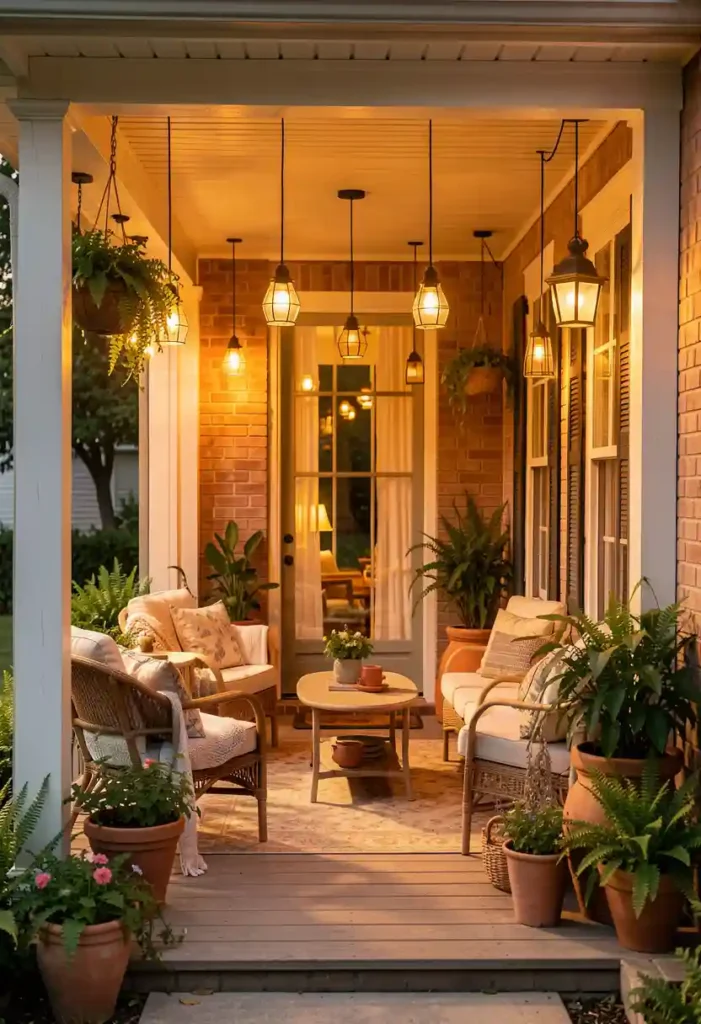
Pendant lights bring the comfort of indoor lighting outside, and they suit a covered porch better than almost any other fixture. Hung from the porch ceiling, they give focused light over a seating area or a dining table, and the fixture itself becomes a piece of decor. A single large pendant makes a statement over a small table, while a row of two or three smaller pendants suits a long porch.
Hang the pendant 7 feet above the porch floor if it hangs over a walkway, so tall guests clear it easily, and 30 to 36 inches above a dining table if it hangs over the table. Choose fixtures rated for damp locations at minimum, and wet rated if the porch is open on the sides and rain can reach the fixture. Industrial metal pendants in black or copper suit a rustic porch, glass pendants suit a coastal or cottage style, and woven rattan pendants give a relaxed, summery feel. Use a dimmable LED bulb in warm white, and put the pendants on a separate switch from the wall sconces so you can light the seating area on its own. If the porch ceiling is low, choose a flush mount or semi flush fixture instead of a long pendant, so the light stays out of the way.
12. Use Garden Stake Lights for Flower Beds
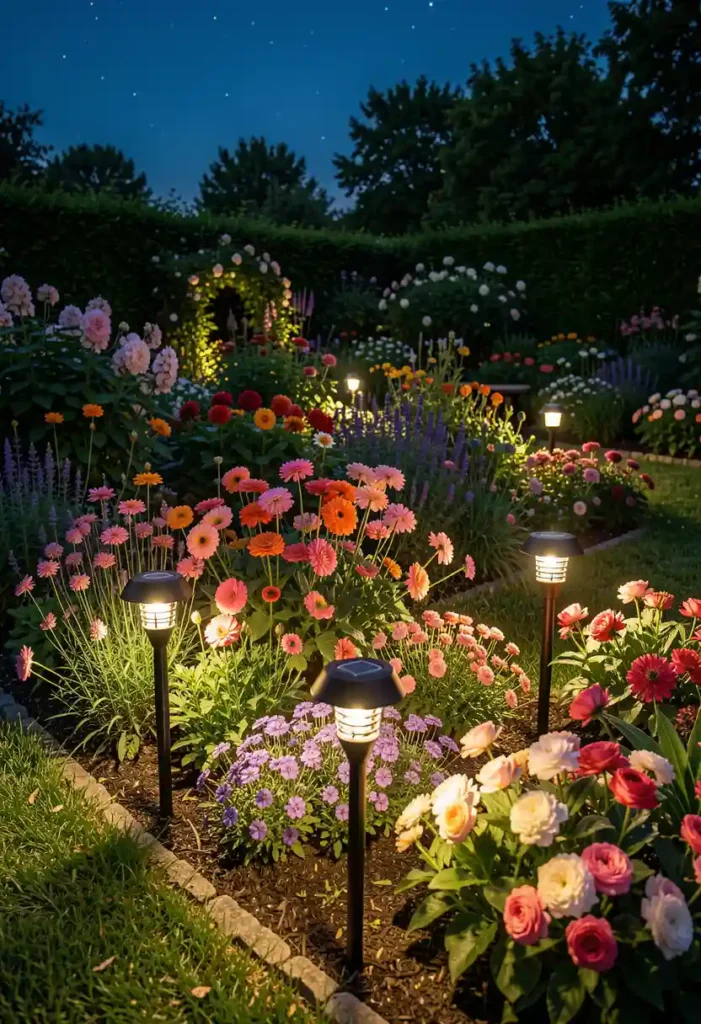
Garden stake lights are the easiest way to keep flower beds visible after dark. Pushed into the soil at the edge of a bed, they throw a small pool of light across the plants and ornaments, so the colors and shapes you worked on all summer do not disappear at sunset. They are cheap, easy to move, and simple enough that you can rearrange them whenever you replant.
Place one stake light every 3 to 4 feet along the front edge of a flower bed, angled back toward the plants so the light grazes the foliage instead of pointing at the house. Solar powered stakes are the simplest option and need no wiring, but low voltage stakes give a brighter, steadier glow on cloudy days and through the night. Choose a warm white bulb for flowers, since cool white can make reds and pinks look washed out. Keep the stakes short, 12 to 18 inches tall, so they disappear among the plants during the day, and avoid placing them where a mower or trimmer will hit them. At the end of the season, pull solar stakes out, wipe the panels clean, and store them indoors so the batteries last for next summer.
13. Install Smart Outdoor Lighting
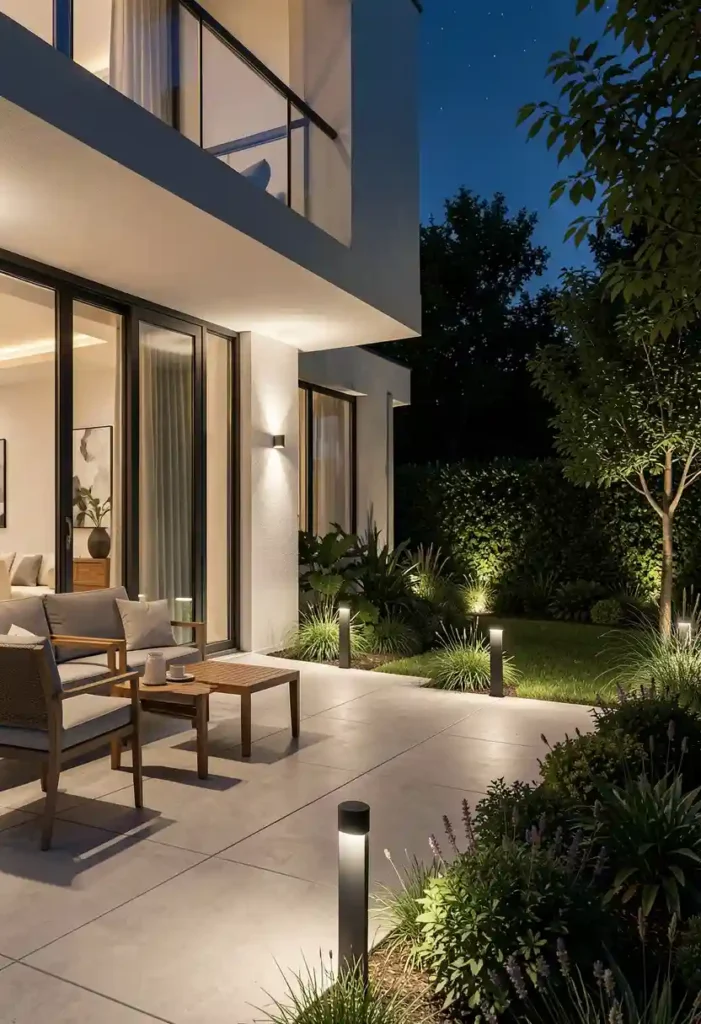
Smart outdoor lighting is the fastest growing trend in exterior design, because it removes the daily work of managing lights. Instead of walking around flipping switches, you set a schedule once and the lights turn on at sunset, dim at bedtime, and switch off at dawn. You can control everything from a phone app or a voice assistant, and you can change the mood for a party with one tap.
Start with a smart hub or a WiFi bridge from one brand, since mixing brands makes the setup harder to manage. Connect the path lights, string lights, and spotlights to the system, then build a few simple scenes, such as a bright scene for grilling, a dim warm scene for late evenings, and a motion sensor scene that lights the driveway when a car arrives. Set a dusk to dawn schedule with an automatic off time around midnight, and use geofencing if your system supports it, so the lights come on when you pull into the street. Smart lights also save energy, because motion sensors and timers mean lights are only on when someone is actually outside. Before you buy, check that the system works with your voice assistant and your WiFi range reaches the garden, and read our guide to smart home exterior lighting ideas for system comparisons and setup tips.
14. Combine Multiple Lighting Layers
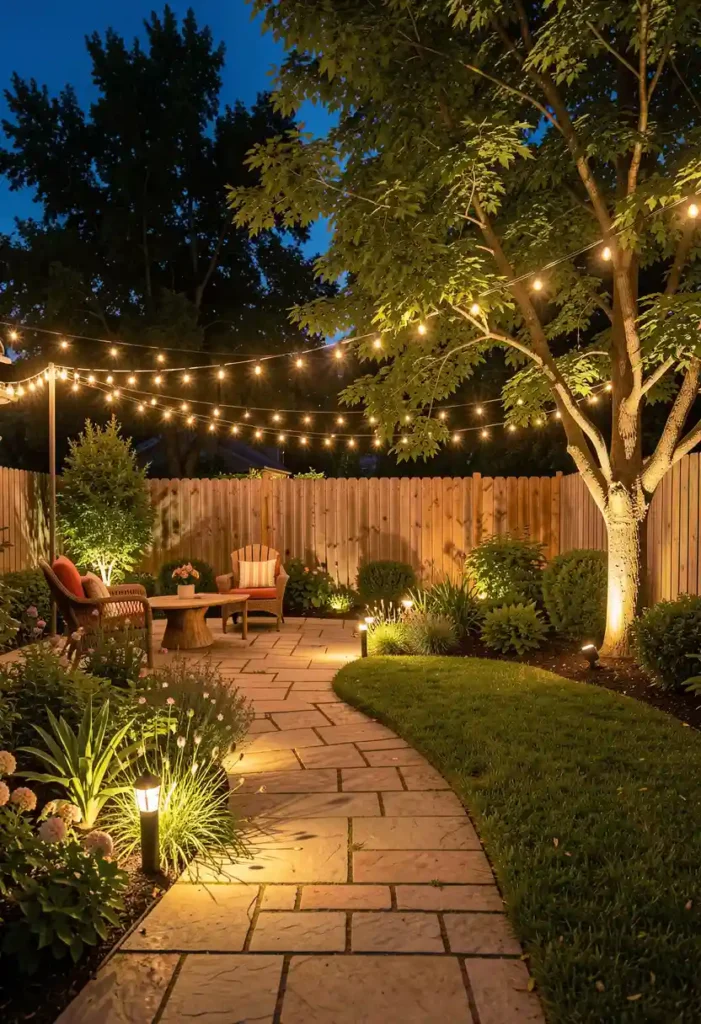
Layering is the idea that ties this whole list together. A single type of light, no matter how pretty, leaves parts of the garden dark and flat. Combining three layers, ambient light for general glow, task light for paths and steps, and accent light for trees and features, gives the exterior depth, so the eye moves from one lit area to the next instead of stopping at a single bright spot.
Start with the ambient layer, usually string lights over the patio or pendant lights on the porch, which sets the overall brightness. Add the task layer next, with pathway lights along the walk, step lights on the deck, and sconces by the doors, so every place you walk is safe. Finish with the accent layer, uplighting for a favorite tree, a spotlight on a water feature, or a strip light under a bench, which adds the drama. Keep the color temperature consistent across all three layers, all warm white at 2700K, so the garden reads as one space rather than a mix of yellow and blue. Put each layer on its own switch or smart scene, so you can run just the ambient lights for a quiet evening and add the task and accent layers when guests arrive.
Final Words
Exterior lighting is one of the highest impact, lowest cost upgrades you can make to a home in summer. A few well chosen fixtures can turn a dark garden into a place where you actually want to spend your evenings, and most of the ideas in this guide cost less than a single piece of outdoor furniture. Start with the spots you use every night, the patio table, the path to the door, and the steps off the deck, then add the decorative layers that make the space feel finished.
Whether you prefer a classic look with lantern posts and wall sconces, a rustic feel with lanterns and string lights, or a modern setup with LED strips and smart controls, these 14 summer lighting ideas give you a complete plan. Pick the combination that fits your home, install one layer at a time, and enjoy the garden long after the sun goes down.
Frequently Asked Questions
What is the best color temperature for outdoor summer lighting?
Warm white between 2200K and 2700K is the best choice for most home exteriors. It flatters wood, stone, and plants, feels cozy on a summer evening, and matches candlelight and firelight. Cool white above 4000K looks harsh in a garden and makes skin tones look pale, so save it for security floodlights rather than decorative areas.
Are solar lights bright enough for a patio or pathway?
Solar lights are bright enough for pathways, flower beds, and decorative accents, but they are usually not bright enough to be the only light over a dining table or a large patio. Use solar lights for paths and borders, and add wired string lights, sconces, or pendants where you need reliable brightness for eating and entertaining. On cloudy days, solar lights charge less, so low voltage wired lights are the safer choice for the areas you use every night.
How do I keep outdoor lights safe in rain?
Buy fixtures with the right IP rating for the spot. IP44 is enough for a covered porch, IP65 suits exposed walls and deck edges, and IP68 is needed for anything submerged in a fountain or pond. Keep transformers and drivers in a weatherproof box above ground level, use outdoor rated extension cords, and check the seals once a season for cracks or wear.
Can I install outdoor lighting myself, or do I need an electrician?
Solar lights, plug in string lights, low voltage path lights, and battery lanterns are all safe DIY projects that need no electrician. Any hardwired fixture, such as a wall sconce wired into the house, a recessed deck light on mains power, or a new circuit for driveway posts, should be installed by a licensed electrician, especially if your local code requires a permit.
How many lights do I need for a small backyard?
A small backyard of about 20 by 30 feet usually needs 8 to 12 pathway or stake lights, one string of lights over the patio, and one or two accent lights for a tree or feature. Start with that base, live with it for a week, and add more only where you notice dark spots. It is easier to add lights later than to remove lights that make the garden feel overlit.
More Ideas You Will Love
 11 Coastal Decor Ideas to Bring the Breezy Summer Vibes Indoors
 17 Gray Floor Ideas for Modern, Cozy & Stylish Interiors
 15 Exterior House Color Ideas: Stunning Schemes for Every Home
 17 Vintage DIY Christmas Decor Ideas for 2025 Nostalgia
 13 Exterior House Style Ideas for a Modern Porch Makeover
 13 Modern Farmhouse Exterior Light Fixture Ideas That Shine