
19 Cozy Apartment Makeover Ideas for Small, Dreamy Retreats

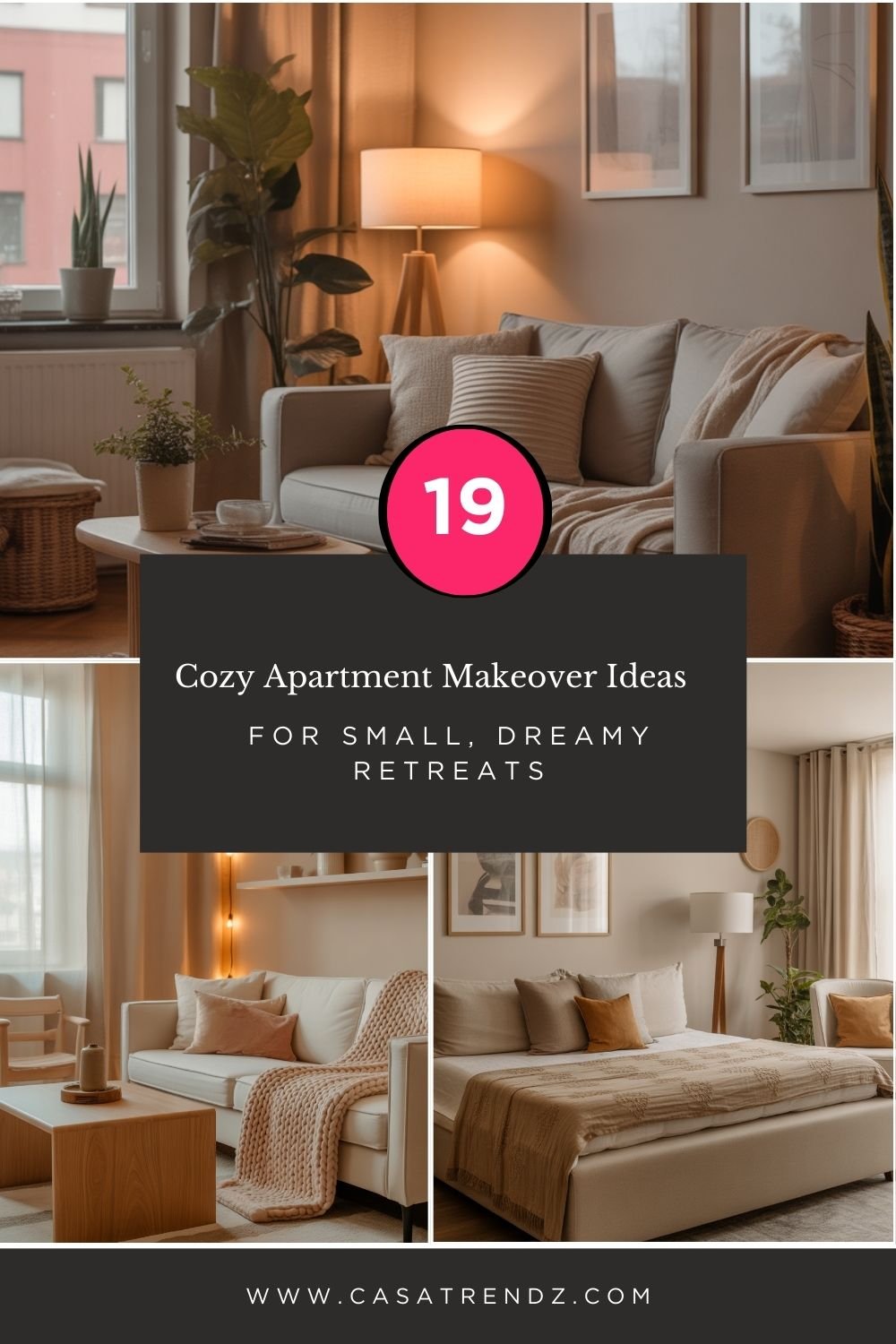
Small apartments have a special kind of charm. With less square footage to fill, every choice you make matters more, and every thoughtful detail shows. A cozy apartment is not about cramming in more furniture or chasing every trend. It is about creating a space that feels warm, calm, and unmistakably yours, a place where you can exhale the moment you walk through the door.
In this guide, we share 19 cozy apartment makeover ideas that turn compact spaces into dreamy retreats. You will find practical advice on lighting, color, texture, layout, and storage, plus small touches that make a big difference on a realistic budget. Most of these ideas take an afternoon or less, and many cost little or nothing. Whether you live in a studio or a one-bedroom apartment, work through the ideas one at a time and start with the change that would make your daily life feel better right away.
1. Layered Lighting to Create a Soft, Inviting Glow
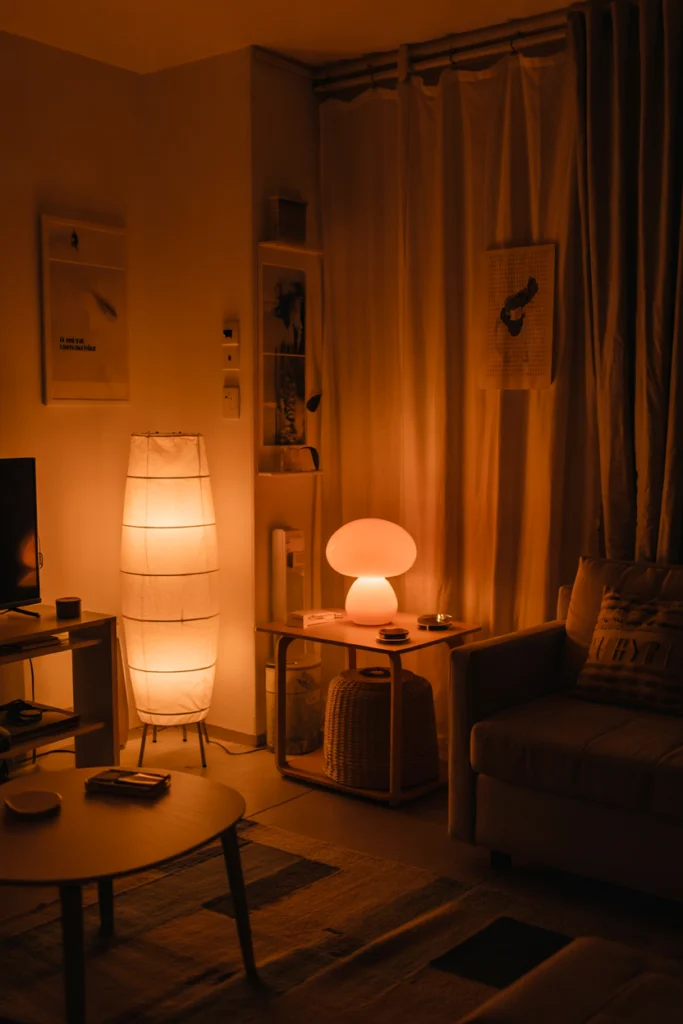
Lighting is the single fastest way to change how an apartment feels. A single overhead light casts harsh shadows and flattens everything in the room, which is the opposite of cozy. Instead, layer three types of light. Start with ambient light from a ceiling fixture or recessed lights for general brightness. Add task lighting, such as a floor lamp beside the sofa or a small lamp on your desk, for reading and working. Finish with accent lighting, like a table lamp on a shelf or a string of warm fairy lights, to highlight the corners and textures you love most.
Choose warm white bulbs between 2700K and 3000K, because cooler bulbs make a small space feel clinical. Put your main lamps on dimmer switches or smart plugs so you can lower the brightness in the evening and let the room wind down with you. A good starting point for a living area is one overhead light, two lamps at seating height, and one accent light placed at a different height. Keep the light sources spread around the room so no corner stays dark, and you will notice the whole apartment feels softer within a day. For more on pulling a whole room together, see these apartment living room ideas that show how lighting works with furniture and color.
2. Warm Neutral Color Palettes for Visual Calm
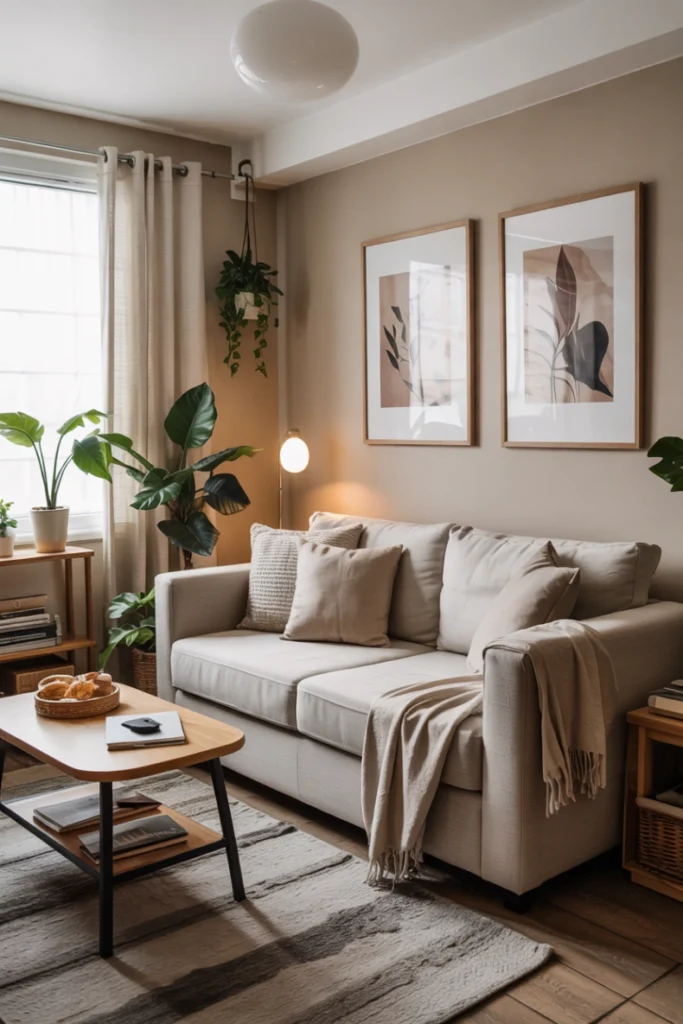
Neutral colors are a natural fit for small apartments because they keep the space feeling open and uncluttered. The trick is choosing neutrals with warm undertones instead of stark white or cool gray, which can feel cold and flat. Shades like warm beige, cream, soft taupe, and warm greige create a soothing foundation that makes the whole apartment feel calmer and more inviting.
Keep one consistent neutral palette running through the apartment so the rooms flow into each other instead of competing. Paint is the cheapest way to make this change: a single gallon covers most apartment living areas, and a warm white on the walls instantly softens the space. Then add color in small doses through cushions, throws, and art, so you can change the accent color with the seasons without repainting. Aim for about 60 percent dominant neutral, 30 percent secondary tone, and 10 percent accent color, and the room will feel balanced rather than washed out.
3. Plush Textiles That Add Warmth and Comfort
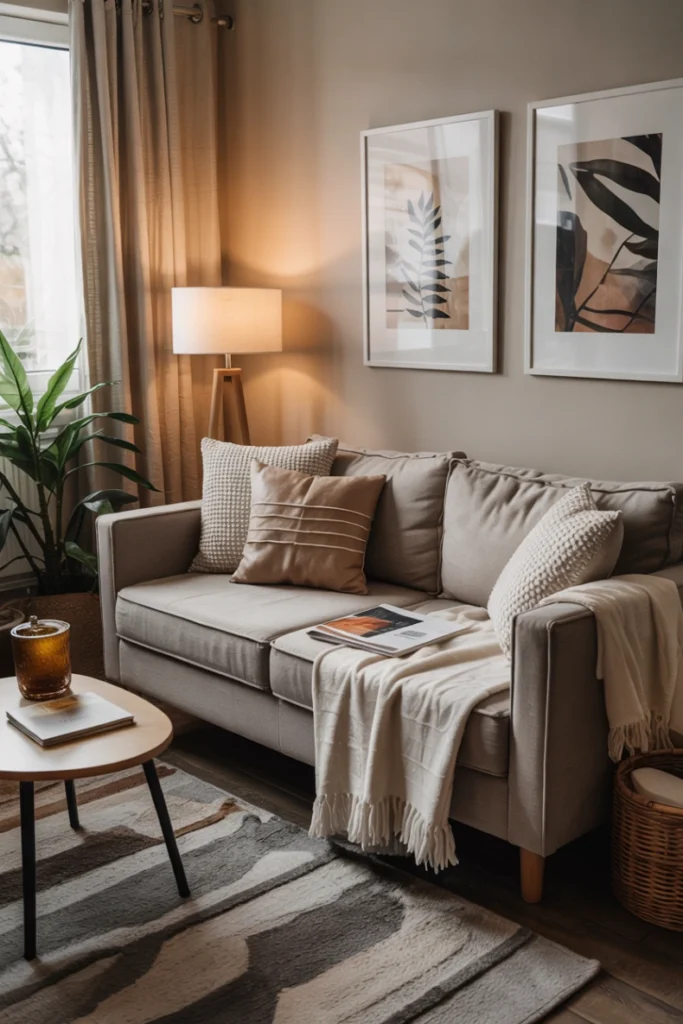
Textiles are the quickest route to coziness in a small apartment. Soft throw blankets, layered cushions, and textured rugs add warmth you can feel, and they soften hard surfaces like wood floors, bare walls, and leather furniture. A chunky knit throw draped over the arm of the sofa or a velvet cushion in a deep, warm tone can change the whole mood of a seating area in seconds.
Mix fabrics instead of matching everything. Pair smooth linen with nubby boucle, soft cotton with faux fur, or a flat-weave rug with a shaggy throw. Two or three textures in the same color family look intentional and layered, while too many competing patterns can make a small room feel busy. Washable covers are worth the small extra cost in an apartment, since throws and cushion covers get daily use. Rotate lighter linen and cotton in summer and heavier knits and faux fur in winter, and the apartment will feel fresh all year.
4. Furniture with Soft Silhouettes and Light Visual Weight
In a small apartment, furniture shape matters as much as size. Pieces with rounded edges and soft silhouettes feel more welcoming than sharp, boxy designs, and they are easier to move around without bruising a hip on a corner. A sofa with gently curved arms, a round coffee table, and armless accent chairs keep the room feeling open while still offering real comfort.
Look for furniture with visible legs, because seeing the floor underneath makes a piece feel lighter and the room feel larger. A loveseat around 60 to 72 inches long usually fits a small living area better than a full three-seater, and a round coffee table about 30 to 36 inches across leaves easier walkways than a rectangular one. Measure your doorways and stairwells before ordering anything, and leave at least 30 inches of clear walkway around the main seating. Pieces that do double duty, like an ottoman with hidden storage or a side table with a shelf, earn their floor space twice over.
5. Layered Rugs to Define Small Spaces
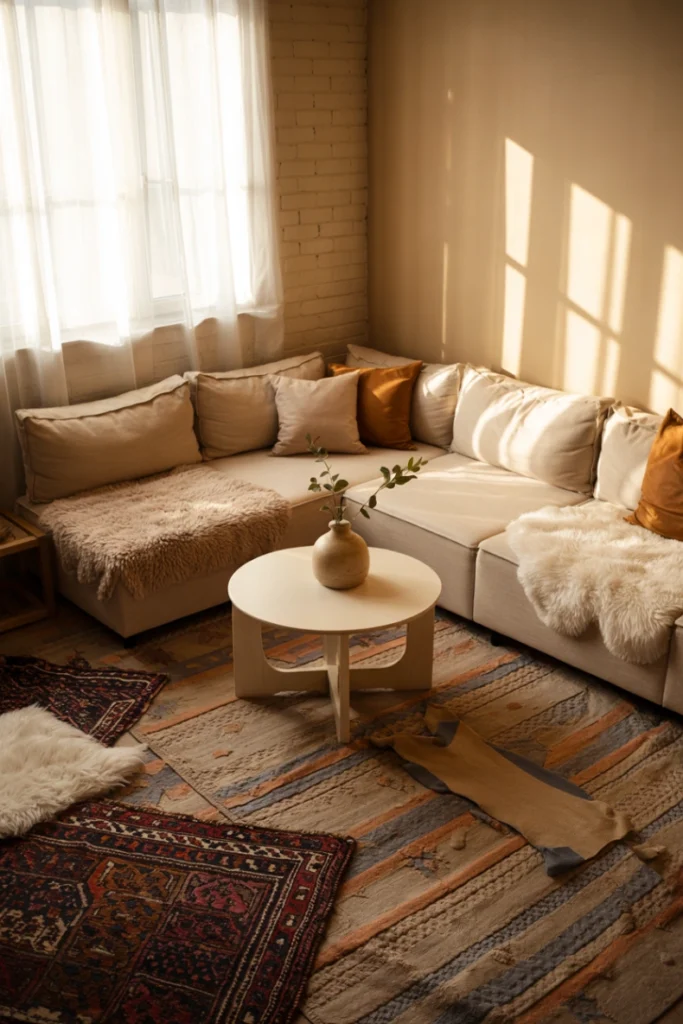
Rugs do more than warm your feet. In an open-plan apartment, they define zones without walls, so the living area feels separate from the dining corner even though nothing divides them. Layering a smaller patterned or textured rug over a larger neutral base rug adds depth and personality while keeping the look cohesive.
Start with a base rug large enough to fit under the front legs of your sofa and chairs, usually 8 by 10 feet in a living area or 5 by 7 feet in a small studio zone. Then layer a smaller rug, about 3 by 5 feet, on top at a slight angle for a relaxed, collected look. Low-pile or flat-weave rugs are easier to clean and safer under dining chairs, while a plusher rug works well beside the bed. Use a non-slip rug pad underneath, especially on wood floors, so the layers stay put and the rug does not bunch up underfoot.
6. Lightweight Curtains That Soften Natural Light
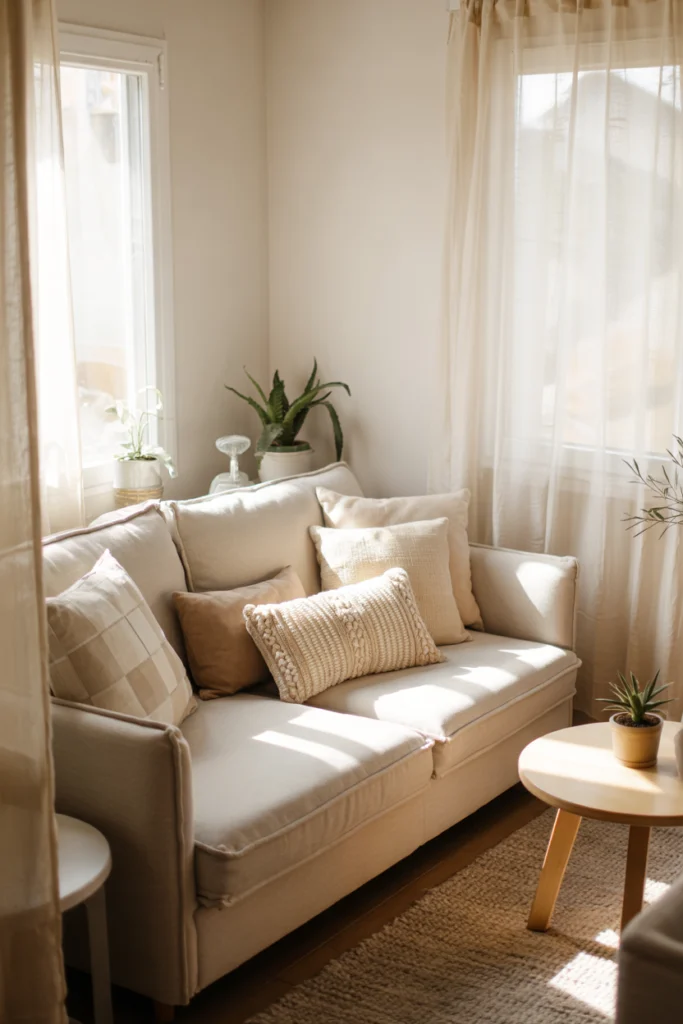
Heavy, dark curtains can make a small apartment feel closed in, while lightweight fabrics soften the light and keep the room feeling airy. Sheer or linen curtains let daylight filter through while still giving you privacy, and they add a soft vertical line that makes windows look taller and more elegant.
Hang the curtain rod 4 to 6 inches above the window frame and extend it 6 to 10 inches past each side, so the curtains frame the window instead of covering it. Floor-length panels that just kiss the floor look more polished than short curtains that stop at the sill. Choose warm neutrals or soft whites that match your wall color, and the windows will blend into the room instead of demanding attention. If you rent and cannot drill, tension rods inside the frame or command-strip hooks hold lightweight panels perfectly well.
7. Thoughtfully Curated Wall Art
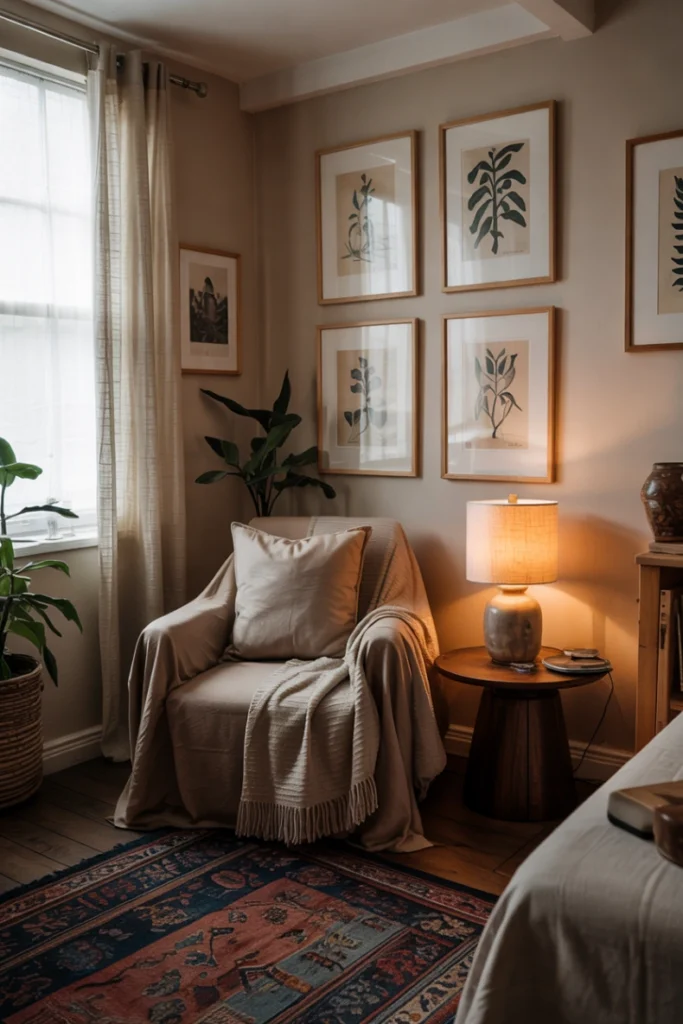
Wall art adds personality without using a single inch of floor space, which makes it perfect for small apartments. Fewer, well-chosen pieces have far more impact than a wall crowded with random frames. Choose art that means something to you, a print from a favorite trip, a photo you took, or a piece by a local artist, and the room will feel authentic instead of decorated from a catalog.
Hang art at eye level, with the center of the piece about 57 to 60 inches from the floor, and keep frames in one or two finishes so the display feels cohesive. A gallery wall works best when you plan it on the floor first, mixing one large anchor piece with smaller prints and leaving 2 to 3 inches between frames. In a rental, removable adhesive strips and picture ledges let you hang art without drilling holes. One large piece above the sofa usually looks calmer and more intentional than five small ones scattered around the room.
8. Functional Storage That Feels Decorative
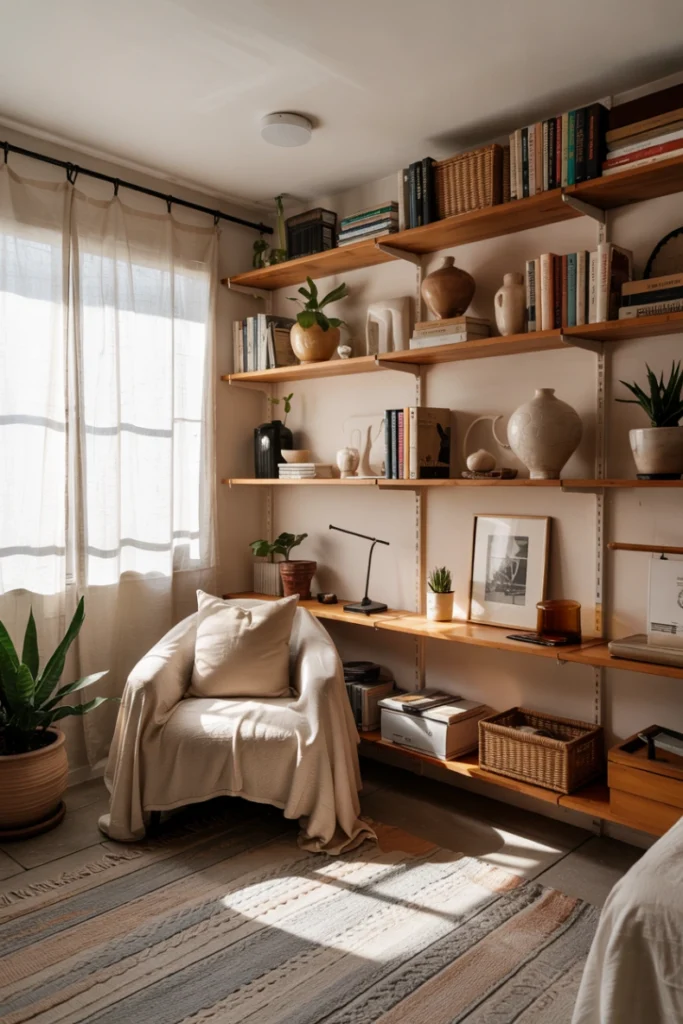
Storage is essential in a small apartment, but it does not have to look like storage. Decorative baskets, beautiful boxes, and closed cabinets hide clutter while adding warmth and texture to the room. When storage blends into the decor, the apartment feels intentional instead of cramped.
Use open shelving for the things you love to see, like books, plants, and a few meaningful objects, and closed storage for everything else. Woven baskets under a console table hide shoes and chargers, lidded boxes on a shelf corral small items, and a storage ottoman swallows extra blankets. Follow the one-in, one-out rule: every time something new comes in, something old leaves. A quick ten-minute reset each evening, putting things back where they belong, keeps the apartment feeling calm without a big weekly cleanup. For ideas that make a small living area work harder, these small living room ideas show storage that doubles as decor.
9. Layered Bedding for a Cozy Bedroom Retreat
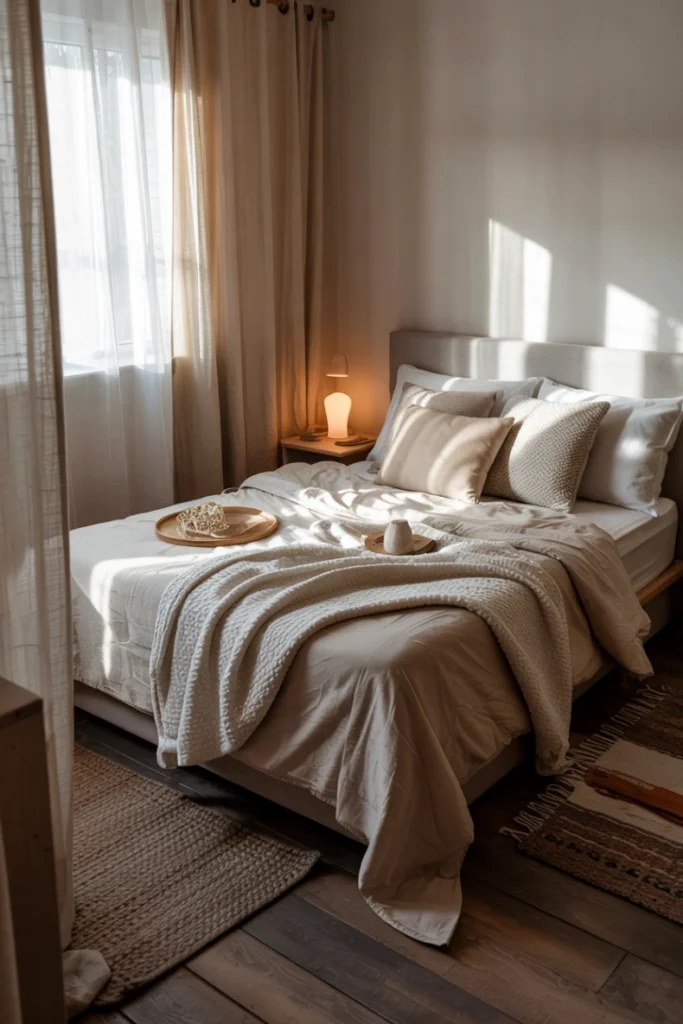
The bedroom should feel like the most comforting room in the apartment, even when it is barely bigger than the bed. Layered bedding turns a plain bed into a plush retreat: start with crisp cotton sheets, add a lightweight quilt or coverlet, then fold a soft throw across the foot of the bed and stack two sleeping pillows with one or two decorative cushions in front.
Stick to a cohesive palette of two or three colors so the layers add depth instead of visual clutter. White or cream bedding with one warm accent, like terracotta, sage, or dusty blue, feels fresh and restful. A mattress topper in memory foam or down alternative adds hotel-level comfort for far less than a new mattress, and a bed skirt or a low storage box under the bed keeps extra linens out of sight. Make the bed every morning, even loosely, because a finished bed makes the whole room feel calm and put together.
10. Warm Wood Accents for Natural Balance
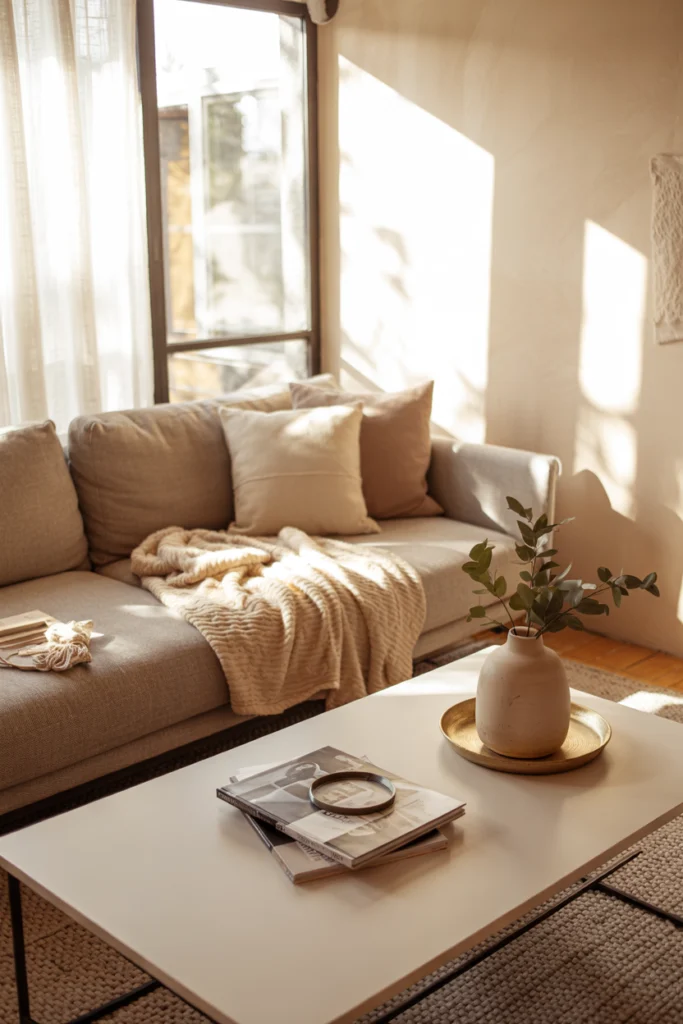
Wood brings warmth and organic texture into a small apartment in a way few other materials can. Light to medium wood tones, like oak, ash, or warm walnut, add coziness without darkening the space. A wooden side table, floating shelves, a cutting board displayed on the kitchen counter, or a simple wooden tray on the coffee table softens modern furniture and makes the room feel grounded.
Mix wood with soft fabrics and a few plants for the best balance. Keep the wood tones in the same family, warm with warm, so the pieces feel collected rather than random. If your furniture is mostly dark, add lighter wood accents to lift the room; if it is mostly light, a single darker wood piece adds contrast and depth. Secondhand wooden furniture is often solid wood at a fraction of new prices, and a light sanding plus a coat of furniture oil can make an old piece look new again.
11. Indoor Plants to Add Life and Softness
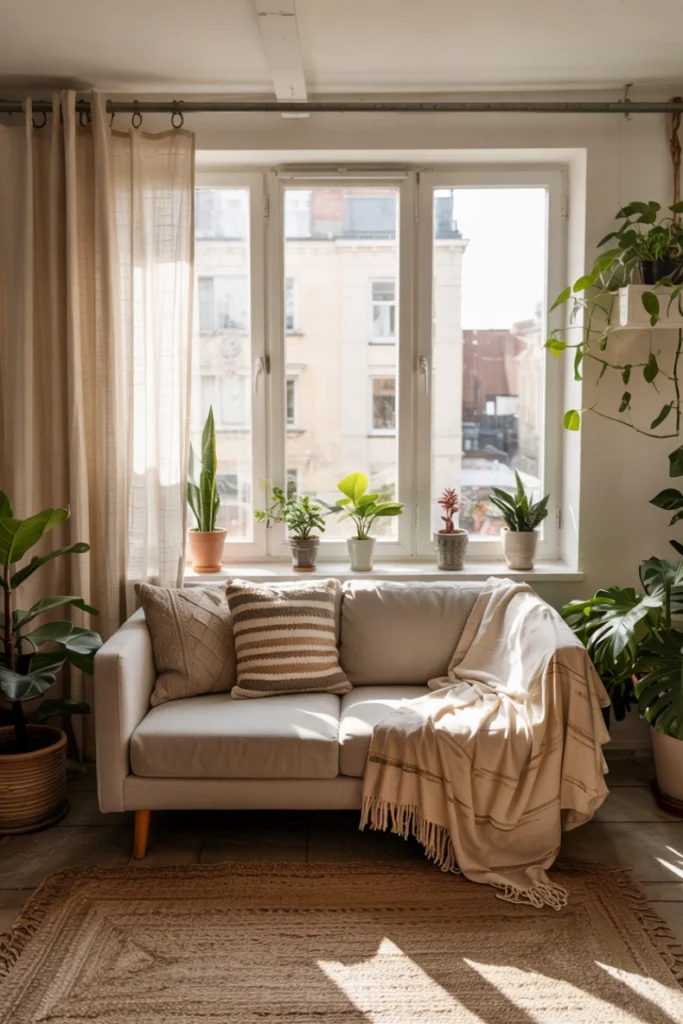
Plants bring freshness and life into a small apartment, softening hard lines and making the space feel cared for. Even two or three well-placed plants can change the atmosphere of a room. Compact greenery works best in limited space: a trailing pothos on a shelf, a snake plant in a quiet corner, or a small herb pot on the kitchen windowsill.
Choose low-maintenance plants if you are new to indoor gardening. Snake plants, ZZ plants, and pothos tolerate low light and missed waterings, while a fiddle-leaf fig needs bright light and a consistent routine. Group plants in odd numbers, three or five, at different heights for a natural look, and use matching pots in one or two finishes to keep the display tidy. Water only when the top inch of soil feels dry, and rotate pots every few weeks so the plants grow evenly. If real plants feel like too much commitment, one high-quality faux plant in a beautiful pot still adds softness without the upkeep.
12. Intentional Furniture Layouts for Better Flow
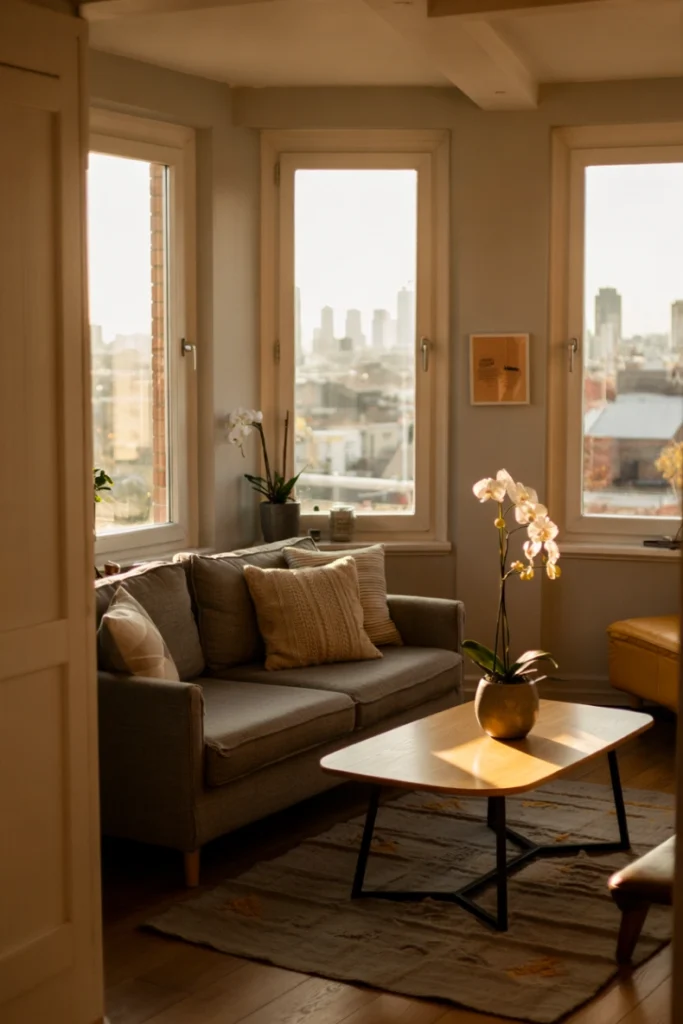
A well-planned layout can make a small apartment feel noticeably more comfortable without buying anything new. Arrange furniture to encourage conversation and easy movement instead of pushing every piece against the walls. Floating the sofa a few inches away from the wall, angled slightly toward the main seating, creates a cozier conversation zone and makes the room feel deeper.
Map your layout on paper before moving heavy furniture. Mark the main walkways first and keep them at least 30 inches wide, then place the largest piece, usually the sofa or bed, and build around it. Put the television or reading chair where it gets natural light, and keep the path from the front door to the kitchen clear. Try living with a new arrangement for a week before deciding, because a layout that looks odd on paper often feels right once you use it. If you want more layout inspiration for tight spaces, these small bedroom ideas show how smart placement makes compact rooms feel generous.
13. Accent Lighting in Cozy Corners
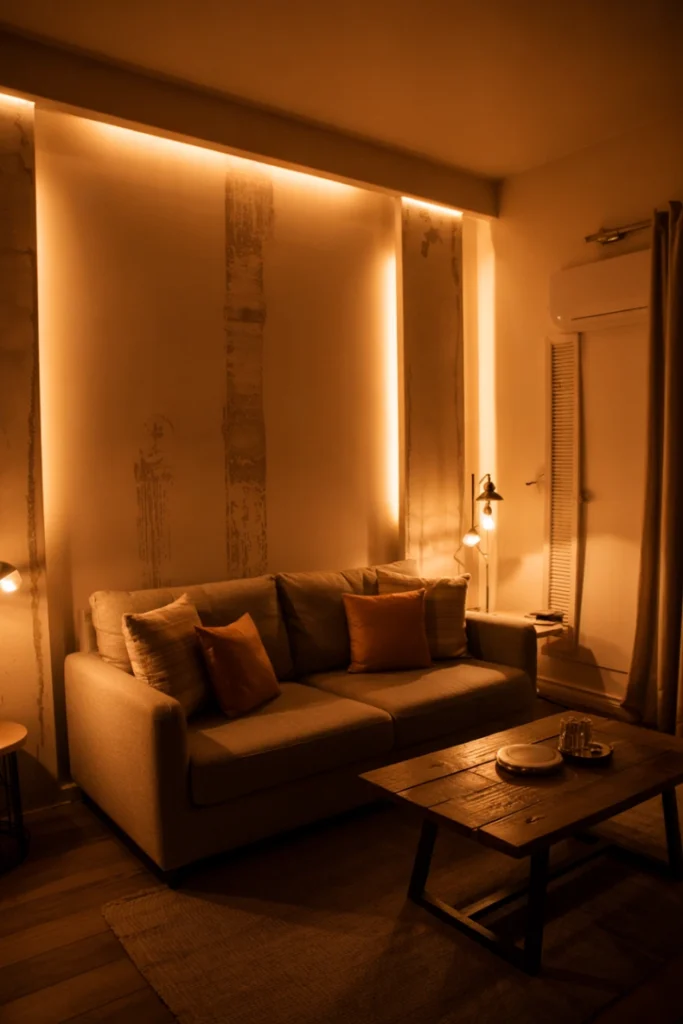
Accent lighting is what makes a room feel finished after dark. Small lamps on shelves, side tables, or nightstands create pools of warm light that soften corners and highlight textures, like a woven basket, a stack of books, or a piece of art. These little glowing spots add intimacy and depth without overpowering the room.
Place one accent light in each corner or zone of the room so the eye travels around the space instead of stopping at the brightest spot. Battery-operated candles in glass hurricanes are a safe, renter-friendly option for shelves and windowsills, and plug-in wall sconces add light without taking up table space. Keep accent bulbs warm, around 2700K, and dimmer than your main lights so they glow rather than glare. Turning off the overhead light and relying on two or three accent lamps in the evening instantly makes a small apartment feel like a retreat.
14. Mirrors to Expand Light and Space
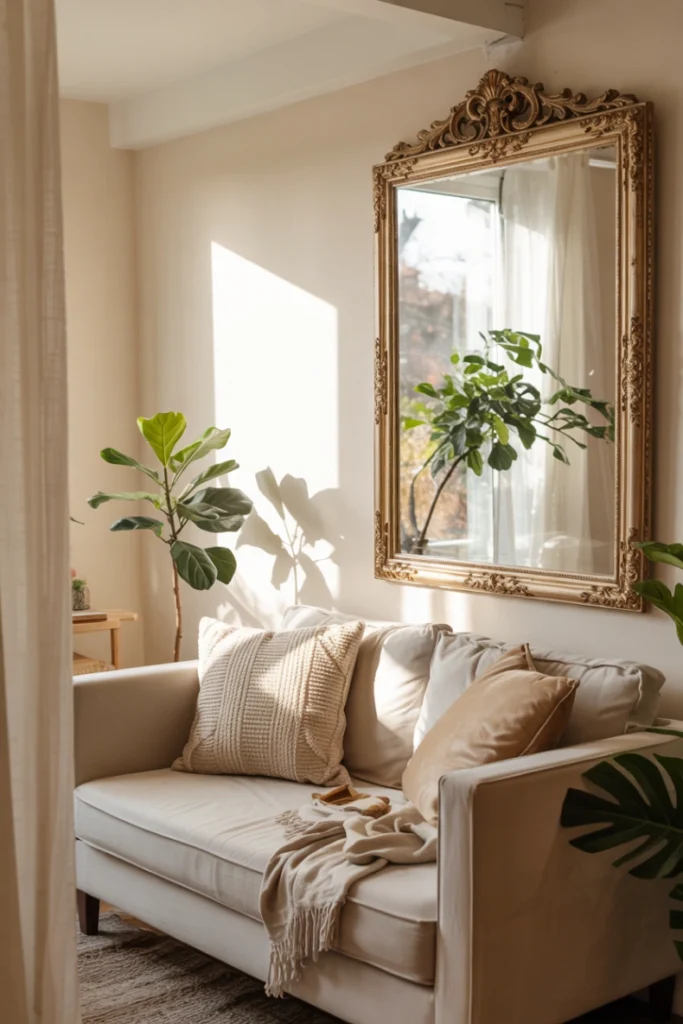
Mirrors are one of the oldest tricks for making a small apartment feel larger, and they work because they do two jobs at once. Hung near a window, a mirror reflects daylight deep into the room and doubles the sense of space. A decorative frame adds warmth and character, so the mirror feels like art instead of a trick.
Hang a large mirror opposite or beside a window for the biggest effect, and keep the reflected view pleasant, a plant, a piece of art, or the window itself, rather than a cluttered corner. A leaning floor mirror about 60 inches tall makes a narrow hallway or bedroom feel taller, while a round mirror above a console table softens a rectangular entryway. Avoid hanging mirrors where they reflect a television or a messy desk, since the reflection doubles the visual noise. One well-placed mirror beats three small ones scattered around the room.
15. Cozy Reading or Relaxation Nooks
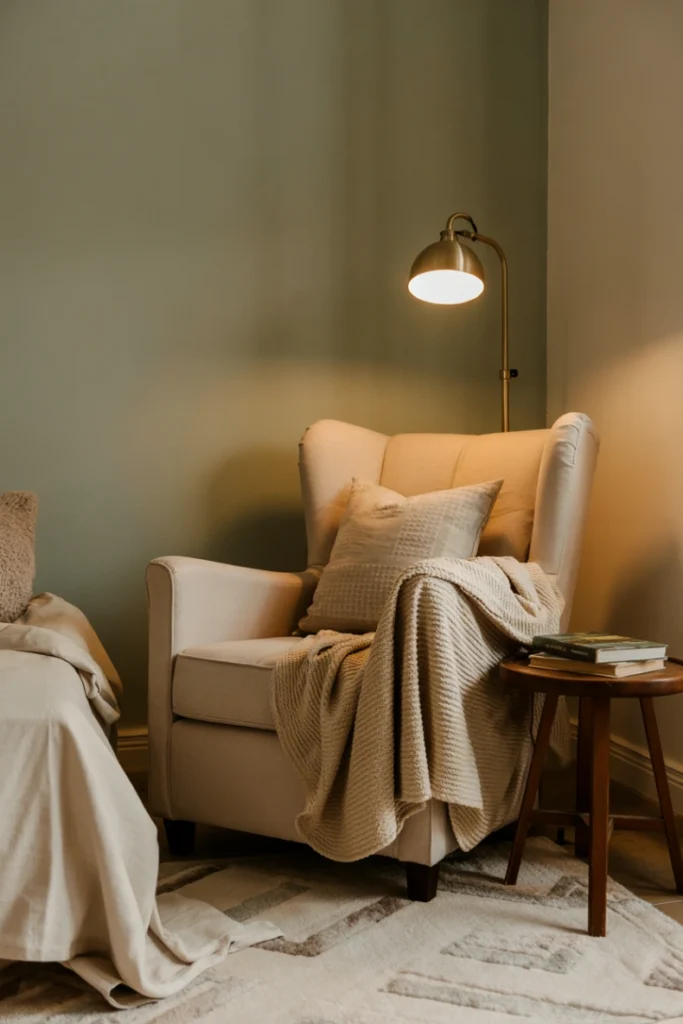
Unused corners are wasted potential in a small apartment. A comfortable chair, soft lighting, and a small side table can turn an empty corner into a reading nook that adds charm and function without taking over the room. It becomes the spot you look forward to, morning coffee, an evening chapter, or a quiet ten minutes alone.
Choose a chair you actually love sitting in, ideally with arms and a cushion deep enough to curl up in. Add a floor lamp or a small table lamp behind the chair, a throw blanket within reach, and a side table or wall-mounted shelf for a book and a mug. A small rug under the chair marks the nook as its own zone. If floor space is very tight, a window seat cushion with a few pillows creates the same feeling without any new furniture at all.
16. Curated Surface Styling for a Lived-In Feel
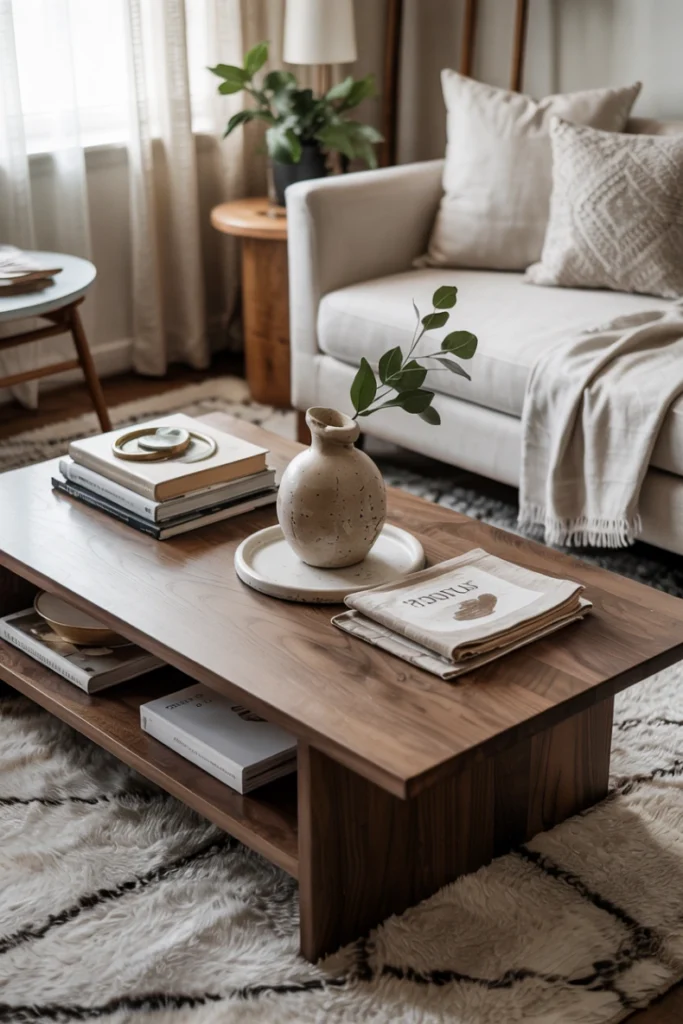
Styled surfaces make an apartment feel lived in and personal without adding clutter. A coffee table, shelf, or console styled with a few intentional objects, a stack of books, a tray, a candle, and one natural element like a plant or a stone, creates visual interest while keeping the surface useful.
Follow the rule of three: group objects in threes at different heights, and leave empty space around each group so the eye can rest. A tray is the easiest styling tool because it corrals small items into one neat zone and can be lifted away when you need the surface. Vary heights with a tall vase, a medium candle, and a low stack of books. Step back and remove one item if the surface feels busy, because in a small apartment, restraint reads as calm. Swap one or two objects with the seasons to keep the styling fresh without buying anything new.
17. Warm Scents to Complete the Atmosphere
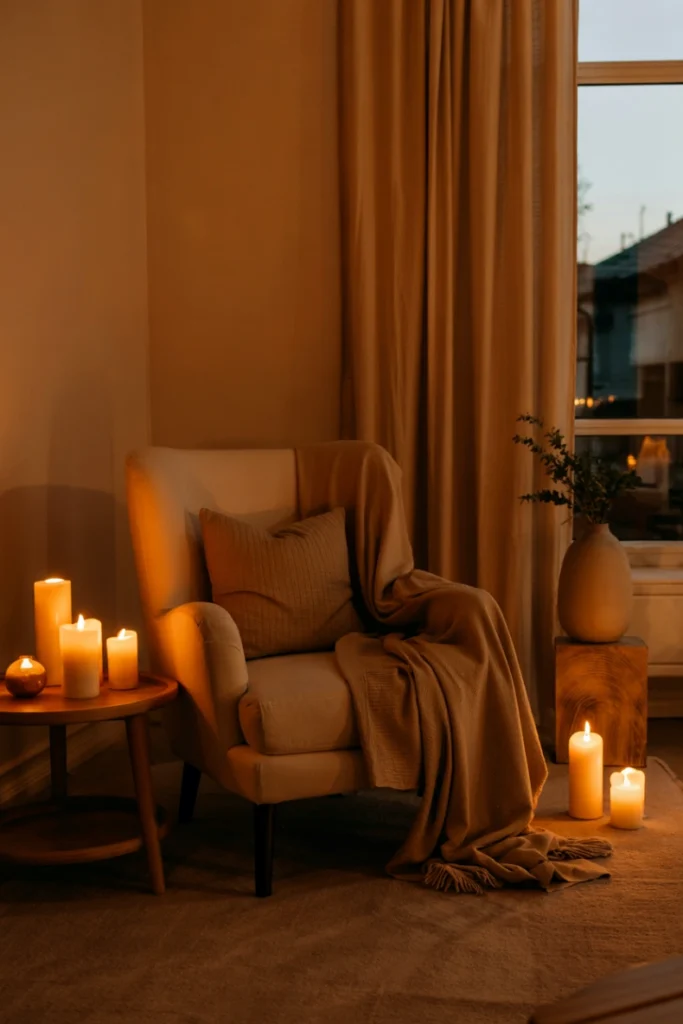
Scent is the finishing touch that makes a cozy apartment feel complete. Candles, reed diffusers, or a simmer pot on the stove introduce subtle fragrance that changes how the whole space feels. Warm scents like vanilla, cinnamon, sandalwood, and cedar suit autumn and winter, while citrus and fresh linen feel right in spring and summer.
Keep scent subtle and consistent: one candle or diffuser per room is enough, and two strong fragrances competing in a small space quickly become overwhelming. Place candles on a stable, heat-safe surface away from curtains and never leave them burning unattended. A reed diffuser in the entryway greets you when you come home, and a small candle on the bedside table helps signal bedtime. If you have pets or allergies, choose unscented or naturally scented options and keep essential oils away from cats and dogs.
18. Minimal Clutter for Visual and Mental Calm
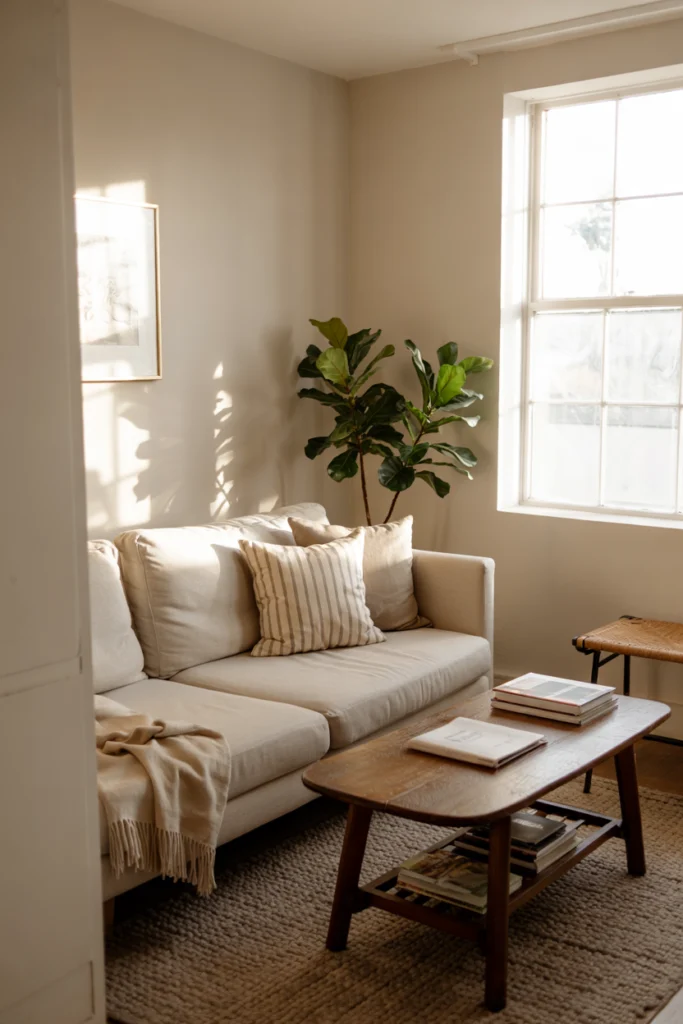
A cozy apartment should feel peaceful, not crowded. Reducing clutter lets your decor, textures, and colors breathe, and it makes the space feel larger than it is. Clean surfaces and clear floors create visual calm, which in turn helps your mind feel calmer at the end of a long day.
Start with one surface or one drawer at a time instead of trying to declutter the whole apartment in a weekend. Ask three questions about each item: do I use it, do I love it, and does it have a home here? If the answer is no, let it go. Give every remaining item a specific place, and put it back after use so clutter never builds up again. A small basket by the door for keys, mail, and sunglasses stops daily clutter at the entrance, and a five-minute tidy before bed keeps the apartment feeling fresh every morning. For a welcoming first impression that stays clutter-free, these modern entryway ideas show how to keep a small entrance both beautiful and organized.
19. Personal Touches That Make It Feel Like Home
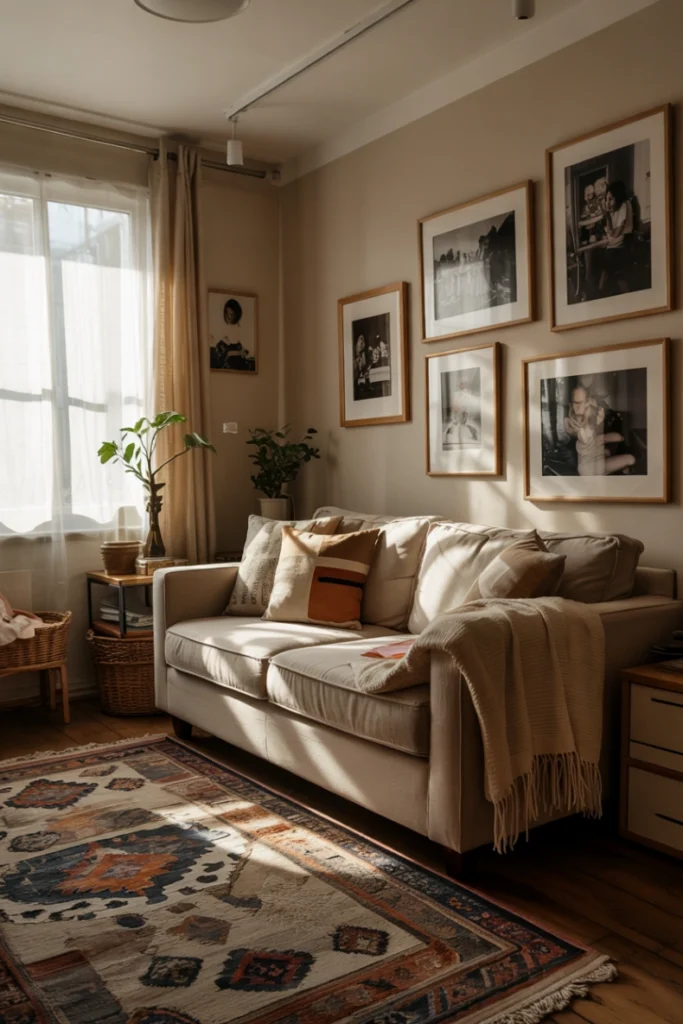
Personal items are what turn an apartment into a home. Photos, travel souvenirs, handmade pieces, and inherited objects add emotional warmth that no store-bought decor can match. These are the things guests ask about and the things that make you smile when you notice them during an ordinary day.
Display personal items with intention rather than scattering them everywhere. A small shelf of framed photos, one or two souvenirs on a console table, and a handmade textile draped over a chair tell your story without overwhelming the room. Mix personal pieces with neutral decor so they stand out: a colorful souvenir looks better against a calm background than in a busy display. Rotate items occasionally, keeping a few in storage and swapping them in, so the apartment keeps feeling fresh and the pieces you love get noticed again.
Conclusion
Small apartments hold incredible potential when they are designed with intention. These 19 cozy apartment makeover ideas show that warmth, comfort, and style can coexist beautifully in compact spaces. Through thoughtful lighting, warm textures, smart layouts, and personal details, even the smallest apartment can become a peaceful, dreamy retreat. Start with one idea this weekend, live with it for a few days, and then add the next. Bit by bit, your apartment will start to feel less like a place you live and more like a place you love coming home to.
Frequently Asked Questions
How can I make a small apartment feel cozy without spending a lot?
Start with lighting and textiles, which give the biggest change for the least money. Swap cool bulbs for warm white ones, add two or three lamps at different heights, and layer throws and cushions on the sofa and bed. Rearranging furniture costs nothing and often makes the biggest difference. Thrift stores and secondhand markets are great for wooden accents, baskets, and art at a fraction of retail prices.
What colors make a small apartment feel bigger and cozier at the same time?
Warm neutrals do both jobs. Shades like cream, warm beige, soft taupe, and warm greige keep the space feeling open while adding warmth that cool whites and grays lack. Keep one consistent palette through the apartment, then add color in small doses with cushions, throws, and art. A good balance is about 60 percent dominant neutral, 30 percent secondary tone, and 10 percent accent color.
How do I decorate a small apartment without making it look cluttered?
Choose fewer, larger pieces instead of many small ones, and give every item a specific home. Use closed storage for everyday clutter and open shelving only for things you love to see. Style surfaces in groups of three with empty space around them, and follow the one-in, one-out rule so new items replace old ones instead of piling up.
What is the best lighting for a cozy apartment?
Layer three types of light: ambient light from a ceiling fixture, task light from floor and table lamps, and accent light from small lamps, sconces, or candles. Use warm white bulbs between 2700K and 3000K, and put lamps on dimmers so you can lower the light in the evening. One overhead light, two lamps at seating height, and one accent light is a good starting point for a living area.
How can I create separate zones in a studio apartment?
Use rugs, lighting, and furniture placement instead of walls. A rug defines the living area, a different light level marks the sleeping zone, and a bookshelf or console table placed sideways can divide space while still letting light through. Keep one consistent color palette across the zones so the apartment feels connected rather than chopped up.
More Ideas You Will Love
 13 Guest Room Ideas for a Stylish & Functional Home
 22 Romantic Bedroom Ideas – Stylish Inspiration for Couples & Cozy Nights
 19 Teen Girls Bedroom Ideas: Dreamy & Personalized Decor Inspiration
 12 Elegant Luxury Master Bedroom Ideas
 21 Shared Kids Bedroom Ideas for Inspiring & Practical Designs
 12 Summer-Friendly Fabric Ideas to Refresh Your Home