
13 Small Bedroom Inspirations: Smart, Cozy & Stylish Ideas

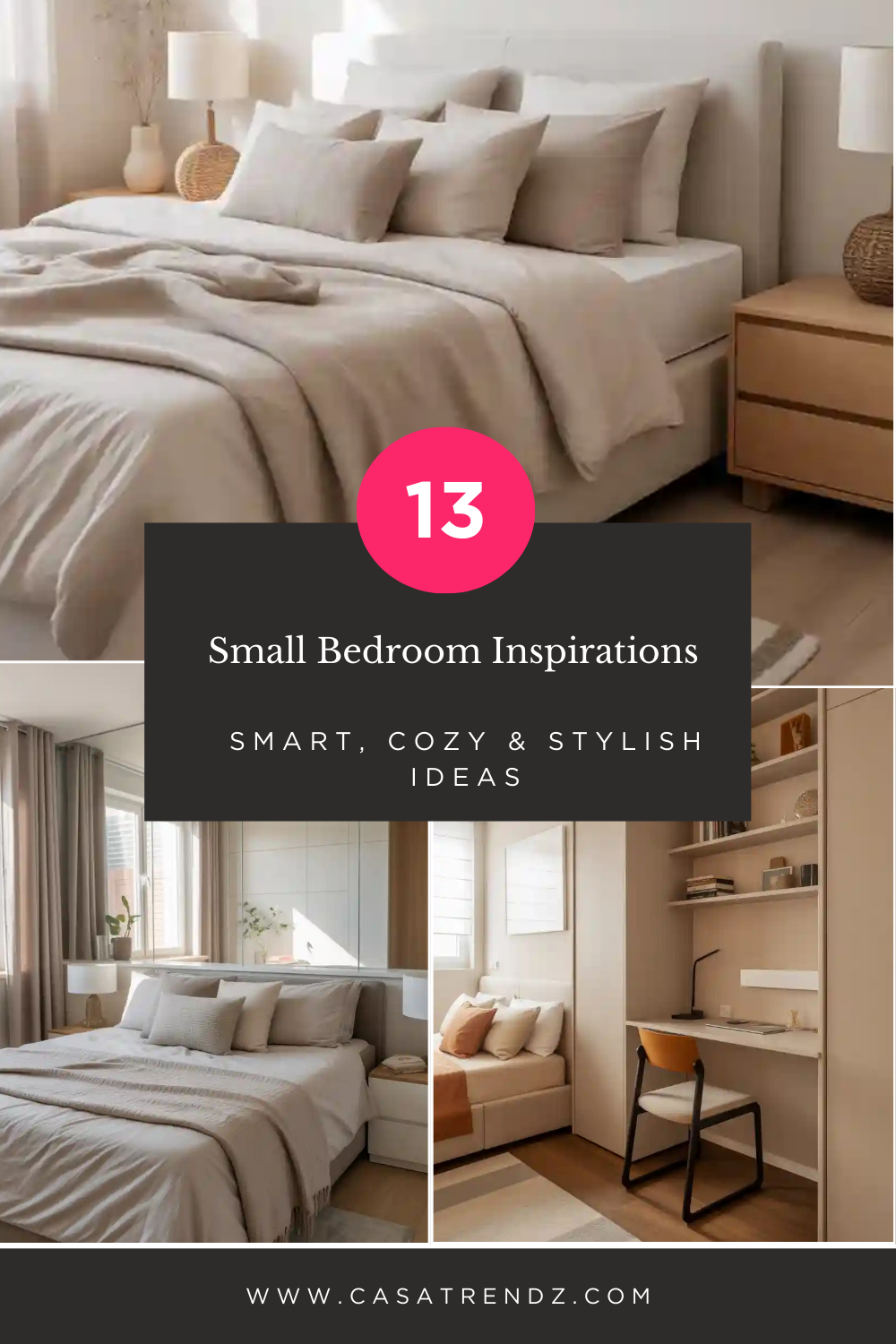
A small bedroom does not have to feel small. With the right layout, clever storage, and thoughtful decor choices, even the most compact room can feel open, calm, and beautifully put together. The trick is to treat every inch as an opportunity: the wall above the bed, the space under it, the corners you usually ignore, and even the ceiling. When each of those spots earns its keep, a tiny bedroom starts to work like a much bigger one.
These 13 small bedroom inspirations are practical ideas you can actually use, whether you rent a city apartment, own a small home, or want to refresh a guest room. You will find exact measurements, material suggestions, and step-by-step guidance for each idea, so you can start with the one that solves your biggest problem and add the rest over time. Most of these projects cost little, need no contractor, and can be finished in a single weekend.
Before you buy anything, measure your room carefully. Note the length and width of each wall, the ceiling height, the size and position of the windows, and the swing of the door. A queen bed needs about 60 by 80 inches, plus at least 24 inches of walking space on the sides you use. Sketch the layout on paper first, then pick the two or three ideas below that fit your room and your budget. If you want even more layout options, our guide to 23 small bedroom ideas for stylish, functional comfort pairs well with this list.
1. Light and Neutral Color Palette

A light and neutral color palette is one of the most reliable ways to make a small bedroom feel larger and brighter. Shades like soft white, warm beige, light gray, and muted sage reflect natural light instead of absorbing it, so the walls seem to step back and the room feels airier. Paint the walls and the ceiling the same pale shade to blur the line where they meet, which makes the ceiling look higher. If you prefer a little contrast, keep it subtle: paint one short wall a tone or two deeper, such as greige or pale taupe, and leave the rest light.
To keep a neutral room from feeling flat, layer different tones and textures within the same family. Pair crisp white bedding with a linen duvet in oatmeal, add a woven jute rug under the bed, and finish with cushions in soft stone and pale blush. Light wood furniture, brushed brass handles, or matte black picture frames add just enough definition without breaking the calm. For tested color combinations that work in real bedrooms, see our 22 relaxing bedroom color schemes. Test paint samples on the wall and look at them in morning and evening light before you commit, because a shade that looks warm at noon can turn cold gray after sunset.
2. Multi-Functional Furniture
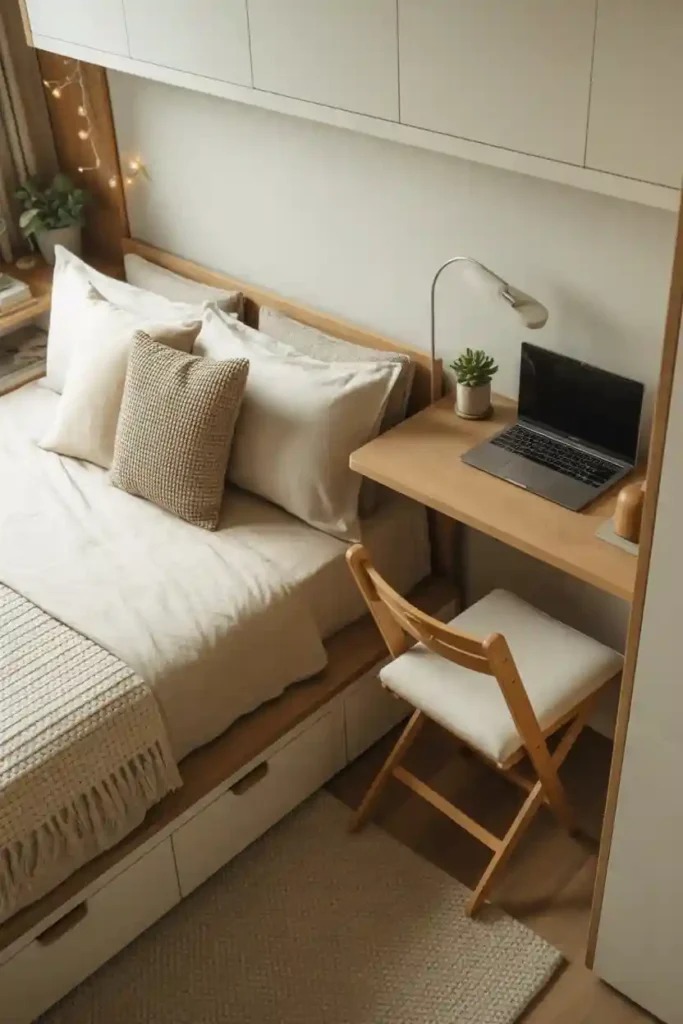
In a small bedroom, every piece of furniture should do at least two jobs. A storage bed with built-in drawers replaces a dresser, a lift-up ottoman at the foot of the bed holds extra blankets and doubles as a seat, and a fold-down wall desk gives you a workspace that disappears when the workday ends. Look for pieces with clean lines and slim legs, which let you see more floor and make the room feel less crowded. A bed frame with 12 to 14 inches of clearance underneath also leaves room for flat storage boxes.
Start by listing what the room must hold: sleeping, clothes, books, a laptop, and anything else you use daily. Then match each need to one piece of furniture instead of buying separate items for each. A nightstand with a drawer and an open shelf, for example, can hold a book, a phone charger, and a water glass without a second table. Measure the footprint of each piece before you order it, and leave at least 30 inches of clear path between the bed and the wall so you can move around comfortably. Choosing versatile furniture first saves you from buying bulky pieces you will later regret.
3. Floor-to-Ceiling Storage Solutions

Vertical space is the most underused asset in a small bedroom. Floor-to-ceiling wardrobes, tall built-in shelves, and custom cabinets draw the eye upward and create the illusion of higher ceilings while storing a surprising amount. A wardrobe that runs the full height of a 96-inch wall holds roughly twice as much as a standard 72-inch unit, and it removes the dusty gap on top where clutter usually collects. Use the highest shelves for out-of-season clothes and luggage you reach for only a few times a year.
Choose handle-less doors in a pale, matte finish so the tall unit reads as part of the wall rather than a heavy block of furniture. Mix closed storage with one or two open shelves for books, plants, or a favorite object, which keeps the unit from looking like a blank wall. If a full built-in is out of budget, stack two ready-made wardrobes and add a simple crown molding strip across the top to make them look custom. Anchor tall units to the wall with anti-tip brackets, especially in homes with children, and keep everyday items between knee and shoulder height so you never need a step stool for daily dressing.
4. Wall-Mounted Nightstands
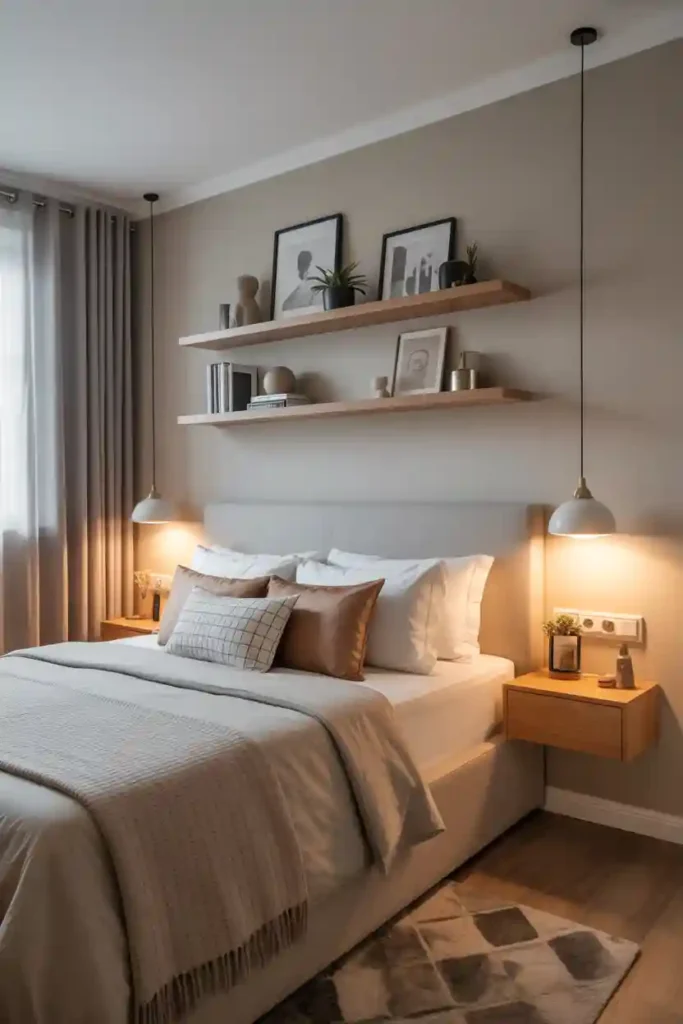
Wall-mounted nightstands are a simple upgrade that frees up real floor space in a small bedroom. By fixing a compact shelf or a small drawer unit directly to the wall beside the bed, you remove the legs and bulk of a traditional table, and the visible floor underneath makes the room look larger. Mount the surface 24 to 26 inches from the floor, roughly level with the top of your mattress, so a book, a glass of water, and your phone are all within easy reach from bed.
Choose a shelf 14 to 18 inches wide and 10 to 12 inches deep, which is enough for the essentials without crowding the wall. A single shallow drawer is useful for chargers and small items, while an open shelf below can hold one or two books. Pair the floating nightstand with a wall-mounted reading light or a pendant hung 12 to 18 inches above the surface instead of a table lamp, and you gain the whole surface back. Use proper wall anchors rated for at least 25 pounds, and check for studs before you drill, so the unit stays solid for years.
5. Statement Headboard Design
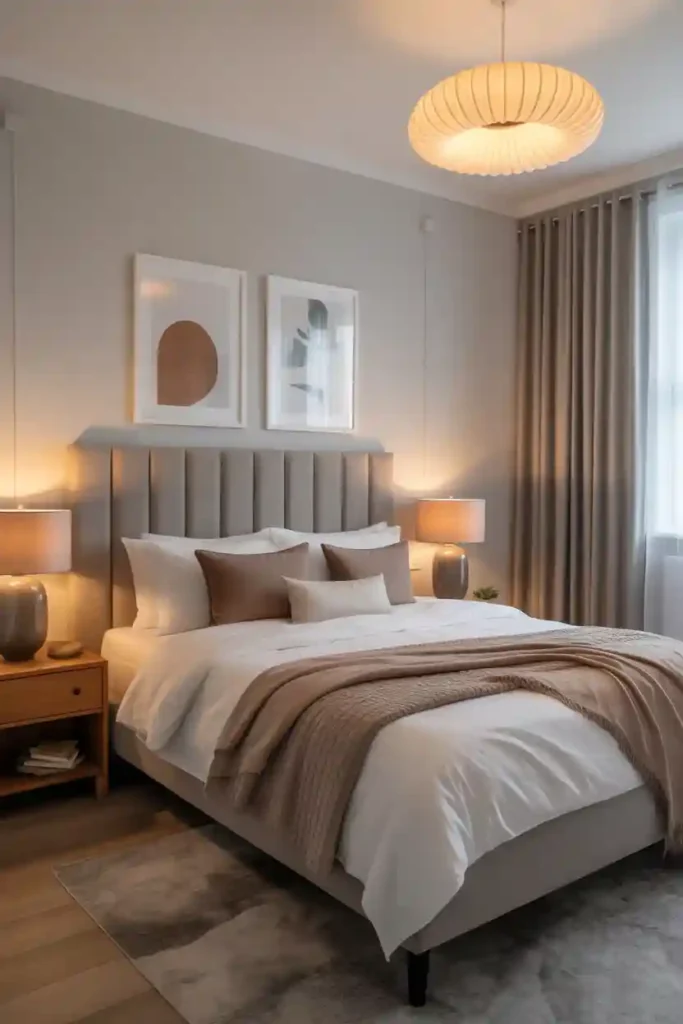
A statement headboard gives a small bedroom a clear focal point without taking up any extra floor space. An upholstered headboard in linen or velvet adds softness and comfort for reading in bed, while a wood slat or paneled design brings warmth and structure. A tall headboard, 48 to 60 inches high, draws the eye upward and can make a low ceiling feel taller, and one that extends 3 to 6 inches beyond the bed on each side makes the bed itself look more substantial.
Pick a texture or a color that contrasts gently with your walls: a deep forest green velvet headboard against pale walls, or a light oak slat panel against a soft white wall. Keep the bedding and the art around it simple so the headboard stays the star of the room. If a new headboard is not in the budget, try a DIY version: mount a large piece of plywood wrapped in foam and fabric, or hang a woven tapestry or a set of wood panels behind the bed. Measure the width of your bed frame first, and center the headboard on the wall so the bed sits balanced in the room.
6. Mirrors to Reflect Light

Mirrors are one of the most effective tools for making a small bedroom feel brighter and bigger. A large mirror placed opposite or beside a window bounces daylight across the room, doubling the sense of light and depth. A full-length mirror leaning against the wall at a slight angle works well in a corner, and mirrored wardrobe doors combine storage with light reflection in a single surface. Choose a mirror at least 24 by 36 inches for a real effect; anything smaller reads as decoration rather than a light source.
Round mirrors soften the sharp corners of a boxy room, while a frameless rectangular mirror keeps the look clean and modern. Hang the center of the mirror at about 57 to 60 inches from the floor, which is average eye level, and angle it so it reflects a window or a pleasant view rather than a cluttered corner. Avoid placing two mirrors directly opposite each other, which can create a confusing hall-of-mirrors effect. One well-placed mirror is usually enough. Secure leaning mirrors to the wall with brackets so they cannot slide or tip, especially on smooth floors.
7. Under-Bed Storage Solutions

The space under your bed is prime storage real estate that most people waste. Built-in drawers, rolling bins, or a lift-up hydraulic base turn that hidden area into a tidy zone for off-season clothes, spare bedding, shoes, and books. Low-profile bins 6 to 7 inches tall slide easily under a standard frame, while a platform bed with integrated drawers keeps everything dust-free and out of sight. Label each bin so you can find things without pulling everything out.
Choose bins in a neutral color that matches your bedding, or pick matching drawer fronts so the storage looks built in rather than improvised. Vacuum-seal bags are useful for bulky winter blankets and coats, cutting their volume roughly in half. Before you buy, measure the clearance under your bed frame and leave at least half an inch of play so bins slide freely. If your frame sits too low, inexpensive bed risers add 3 to 6 inches of height and create instant storage space. Keep the items you reach for weekly in the bins nearest the edge, and the seasonal things toward the center or the far side.
8. Minimalist Décor Approach
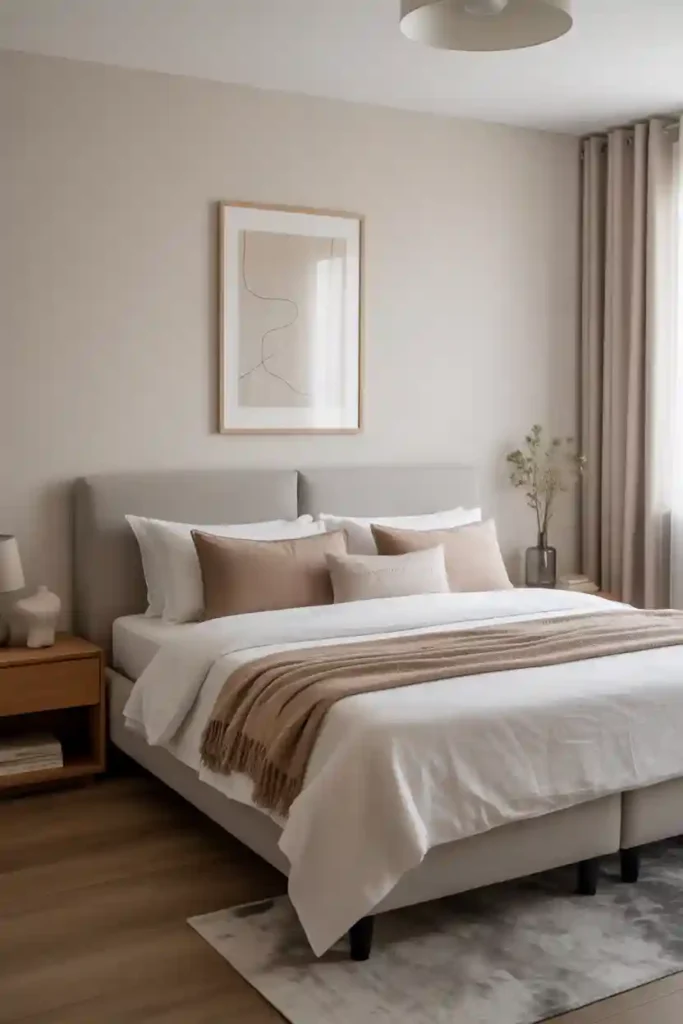
A minimalist approach helps a small bedroom feel calm, open, and balanced. Too many objects compete for attention and make limited space feel cramped, so the goal is fewer, better pieces. Start by removing everything from the surfaces, then put back only what you use or genuinely love. One striking piece of art above the bed usually has more impact than a gallery wall of small frames, and a single vase with fresh greenery beats a crowded shelf of knick-knacks.
Stick to one cohesive color palette, usually two neutrals plus one soft accent, and repeat it in the bedding, the rug, and the curtains so the room feels intentional. Floating shelves with three or four curated items can replace a bulky bookcase, and closed storage hides the everyday clutter that breaks the calm. Choose quality over quantity: a well-made lamp, a soft throw, and a framed print you love will serve the room better than a dozen impulse buys. Minimalism does not mean empty or cold; it means every object in the room has a reason to be there.
9. Cozy Layered Textiles
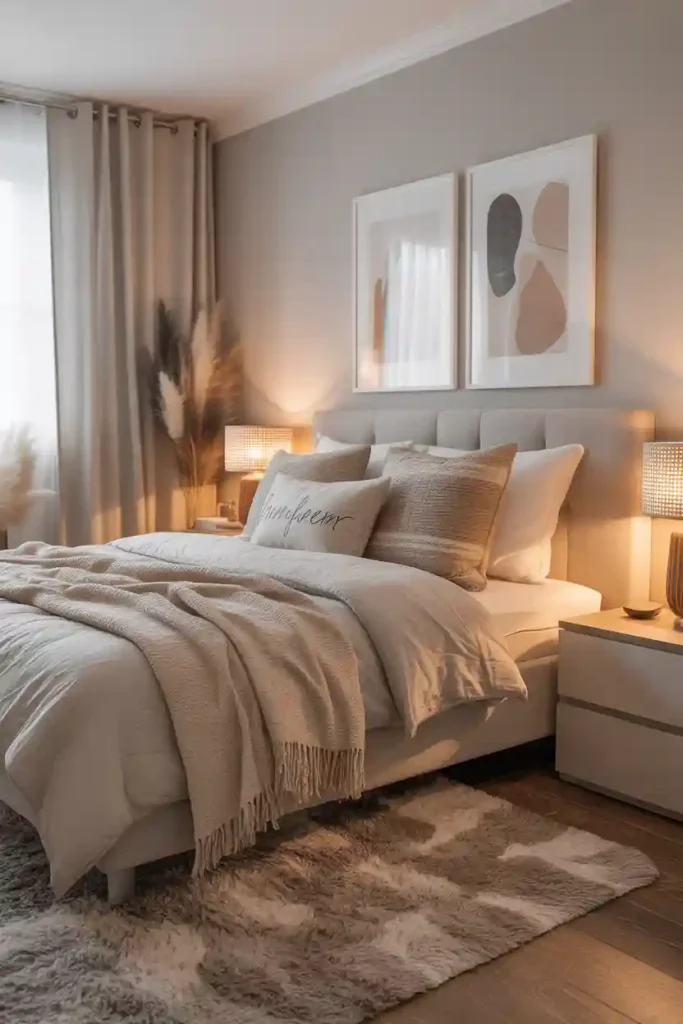
Layering textiles is the fastest way to make a small bedroom feel warm and inviting without adding furniture. Start with a fitted sheet and a duvet in a soft neutral, then add a folded throw across the foot of the bed and two or three cushions in complementary textures: linen, cotton knit, and velvet work well together. A plush rug beside the bed, at least 24 inches wide on each side, warms your feet in the morning and defines the sleeping area visually.
Keep the colors in one family so the layers feel harmonious rather than busy. A neutral base of white, cream, or light gray pairs well with soft sage, dusty blue, or warm terracotta accents. Light, flowing curtains in linen or sheer cotton soften the windows while still letting daylight through; hang them 4 to 6 inches above the window frame and let them fall to the floor to make the window look taller. Washable fabrics are a smart choice for bedding and throws, because layers that are easy to clean actually get used. Rotate the throw and cushions with the seasons for a fresh look at almost no cost.
10. Smart Lighting Layers
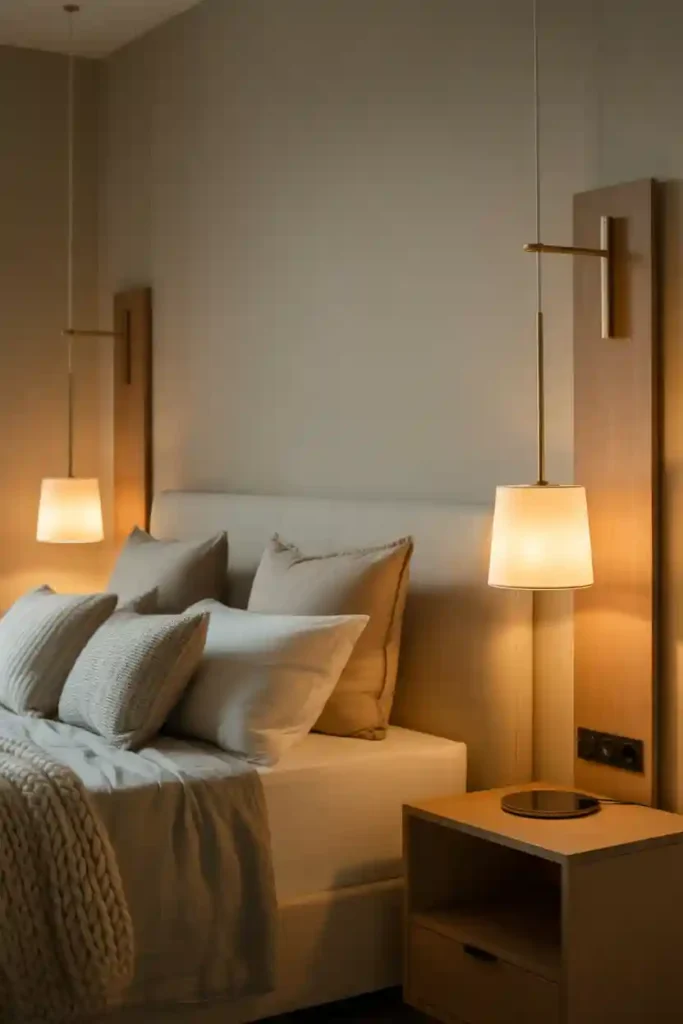
Good lighting makes a small bedroom feel larger, warmer, and more useful. Instead of relying on a single overhead fixture, layer three types of light: ambient light from the ceiling, task light for reading, and accent light for mood. A dimmable ceiling fixture or a flush-mount light keeps the room bright without hanging low into the space. Wall sconces or clip-on reading lights beside the bed free up nightstand space, and a warm LED strip behind the headboard or under the bed adds a soft glow that makes the room feel cozy at night.
Use warm white bulbs around 2700K for a relaxing feel, and put the main lights on a dimmer so you can shift from bright morning light to a soft evening glow. Place a small lamp or a sconce on each side of the bed so both sleepers have their own reading light, and keep cords hidden with a cable clip or a cord cover. If your room has little natural light, add a daylight bulb in one fixture to balance the warmth. Layered lighting costs little, needs no rewiring when you use plug-in sconces and LED strips, and changes the whole mood of the room.
11. Vertical Wall Shelving

Vertical wall shelving turns empty wall space into useful storage without touching the floor. Floating shelves above the desk, beside the bed, or along a narrow wall hold books, plants, and everyday essentials while keeping the room open. Install the lowest shelf at about 60 inches from the floor so it clears the headboard and stays out of the way, and space additional shelves 12 to 15 inches apart for books or 18 inches apart for taller objects.
Choose slim shelves in light wood or matte white, 8 to 10 inches deep, so they do not crowd the room visually. Leave about a third of each shelf empty to avoid a cluttered look, and group items in small clusters: a stack of two books, a small plant, and a framed photo reads as styled rather than stuffed. Use brackets or hidden mounts rated for the weight you plan to hold, and always anchor shelves into studs or use heavy-duty wall anchors. Shelving above the door frame is another overlooked spot, perfect for books or baskets you reach for rarely. For more ways to use vertical space in tight rooms, see our tiny bedroom ideas, which cover storage tricks for the very smallest spaces.
12. Built-In Wardrobe Designs
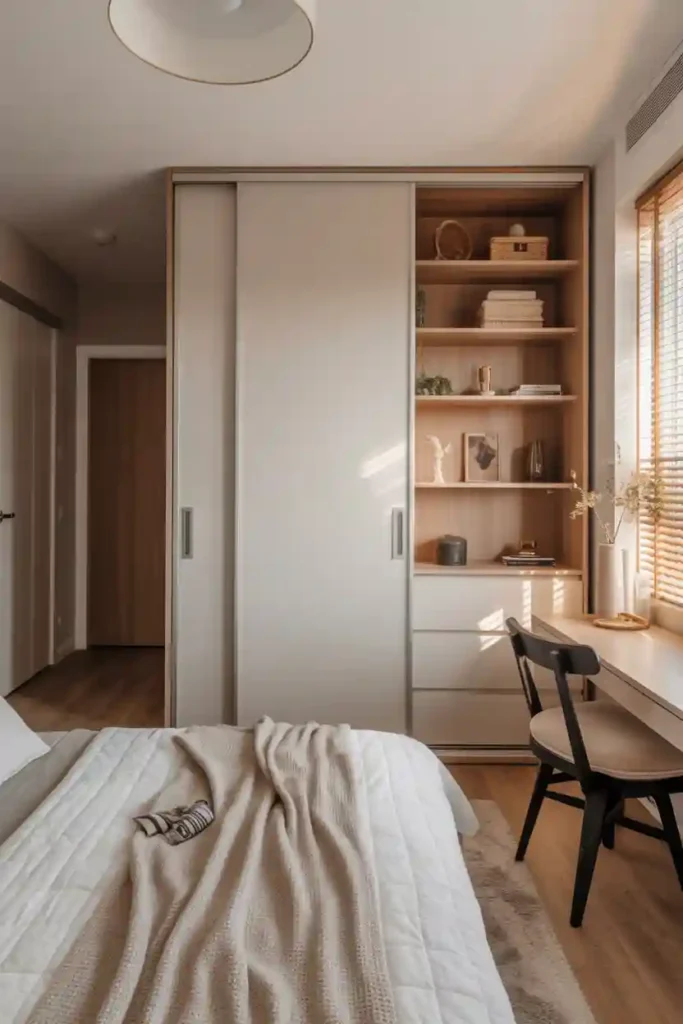
Built-in wardrobes are ideal for small bedrooms because they use the architecture of the room instead of fighting it. Unlike freestanding closets, a built-in can fill an awkward alcove, wrap around a corner, or run wall to wall, turning dead space into organized storage. A floor-to-ceiling design with sliding doors needs no swing clearance, which saves roughly 24 inches of floor space compared with hinged doors, and mirrored sliding doors add light and depth at the same time.
Inside the wardrobe, plan the layout before you order: double hanging rails for shirts and trousers, one long rail for dresses, drawers for folded clothes, and a top shelf for boxes. A standard hanging rail sits 66 inches from the floor for long garments and 42 inches for a double rail. Choose handle-less doors in a pale matte finish so the wardrobe blends into the wall, and add interior LED strips on a motion sensor so you can see everything without a separate light. If a full custom built-in is out of reach, ready-made modular wardrobes can be joined together and finished with a simple trim strip to look built in for a fraction of the price.
13. Compact Workspace Corner
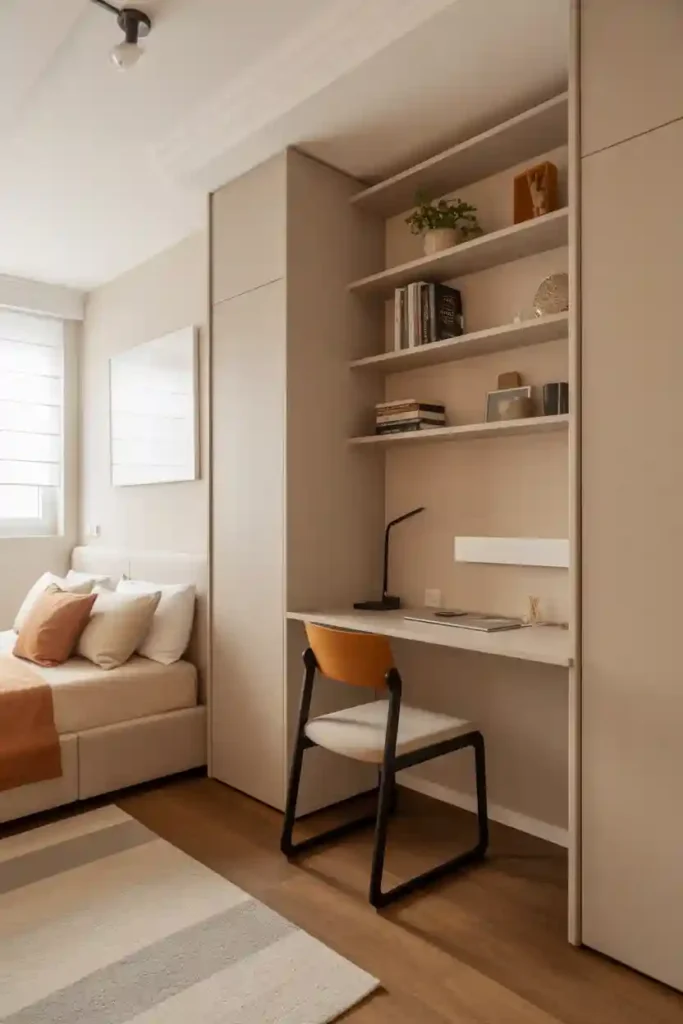
A compact workspace corner lets a small bedroom double as a home office without feeling like one. A slim wall-mounted desk 36 to 48 inches wide and 20 inches deep is enough for a laptop, a notebook, and a cup of coffee, and a lightweight chair that tucks fully underneath keeps the floor clear when you are not working. Position the desk near a window so you get natural light during the day, and mount one or two floating shelves above it for books, chargers, and supplies.
Keep the workspace in the same color palette as the rest of the bedroom so it blends in rather than standing out. A fold-down desk is a good option if you need the space only some of the time, and a small pegboard or a cable tray keeps cords and papers from spreading across the room. Add a desk lamp with a warm bulb and a small plant to make the corner feel pleasant rather than purely functional. When the workday ends, close the laptop, clear the surface, and the corner returns to being part of the bedroom. A well-planned workspace adds real versatility to a small room without sacrificing comfort or style.
Final Words
These 13 small bedroom inspirations prove that limited square footage does not mean limited design potential. A light color palette, furniture that does double duty, vertical storage, and layered lighting can transform even the tiniest bedroom into a space that feels open, organized, and truly yours. Start with the idea that solves your biggest frustration, measure twice, and build from there. Small changes add up quickly, and before long your compact bedroom will feel like a calm, stylish retreat you love coming home to. For a broader look at bedroom design, our 19 bedroom design ideas show how these same principles work in rooms of every size.
Frequently Asked Questions
How can I make a small bedroom look bigger?
Use a light, neutral color palette on the walls and ceiling, add a large mirror opposite a window to reflect daylight, and choose furniture with slim legs so more floor stays visible. Floor-to-ceiling storage draws the eye upward, and keeping the floor clear of clutter makes the biggest visual difference of all.
What is the best bed size for a small bedroom?
A full or double bed, 54 by 75 inches, suits most small bedrooms and leaves room for a nightstand and walking space. A queen bed, 60 by 80 inches, works if the room is at least 10 by 10 feet and you keep other furniture minimal. Measure the room first and leave at least 24 inches of clear space on the sides you use to get in and out of bed.
How do I add storage to a small bedroom without a dresser?
Use under-bed bins or a storage bed, add floor-to-ceiling wardrobes or tall shelving, and mount floating shelves on empty wall space. Wall-mounted nightstands with a drawer, an ottoman with hidden storage, and hooks behind the door all add capacity without taking up floor space.
What colors work best in a small bedroom?
Soft white, warm beige, light gray, pale sage, and muted pastels work best because they reflect light and make walls feel farther away. Keep the main palette to two or three tones and add depth with texture, such as linen bedding, a woven rug, or light wood furniture, rather than strong contrasting colors.
Can a small bedroom have a workspace?
Yes. A wall-mounted desk 36 to 48 inches wide, a chair that tucks underneath, and a floating shelf above it create a functional workspace in a small corner. Place it near a window for natural light, keep it in the same color palette as the bedroom, and choose a fold-down desk if you need the space back when you are not working.
More Ideas You Will Love
 15 Basement Bedroom Ideas: Cozy, Functional Styles for Homes
 16 Headboard Ideas: Stylish & Functional Designs for Every Bedroom
 23 Master Bedroom Ideas for a Luxurious & Relaxing Retreat
 21 Dorm Room Inspiration Ideas – Transform Your Space with Creative Touches
 21 Tiny Bedroom Ideas: Smart Design Tricks for Small Spaces
 16 Tan Bedroom Ideas with Neutral Boho Vibes You’ll Adore