
14 Boy Nursery Ideas with Inspiring Themes and Layout Tips

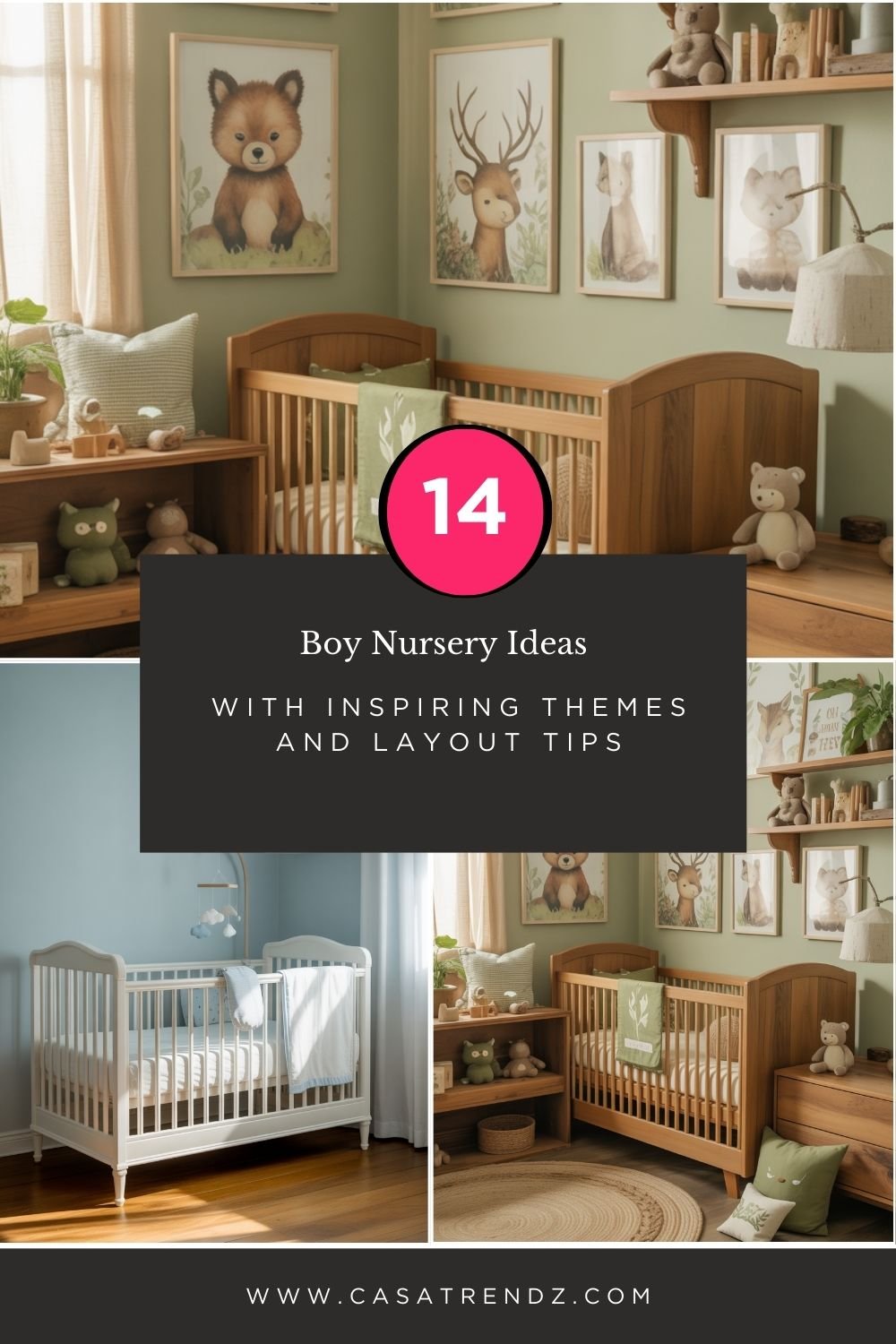
Designing a nursery for a baby boy is about much more than choosing colors and furniture. It is about creating a nurturing environment that supports rest, early development, and daily routines while also reflecting personal style. A thoughtfully designed nursery helps parents stay organized and provides a comforting space where a child can grow, explore, and feel secure. With the right balance of aesthetics and function, a nursery becomes one of the most meaningful rooms in the home.
Modern boy nursery design focuses on adaptability, calm visual flow, and practical layouts. Instead of relying on overly themed decor, many parents now choose designs that can evolve with the child over time. This approach ensures the nursery remains relevant beyond infancy. In this article, we explore 14 boy nursery ideas with inspiring themes and layout tips, offering guidance on how to design a space that is both beautiful and highly functional.
Before you start buying furniture or painting walls, it helps to plan the room around how you will actually use it. The three zones every nursery needs are sleep, changing, and feeding. Place the crib on the quietest wall, away from the door and the window, so hallway noise and street light do not wake the baby. Keep the changing table within arm’s reach of diapers, wipes, and a small trash bin, and set up a comfortable chair with a side table and a soft lamp in a corner for nighttime feeds. Once those three zones are mapped out, every theme in this guide can be layered on top without moving a single piece of furniture twice.
1. Classic Blue and White Boy Nursery

A classic blue and white nursery remains one of the most enduring and reliable boy nursery ideas. Blue naturally creates a calming environment, while white adds brightness and balance. Together, these colors establish a clean and soothing aesthetic that works well for newborns. Light shades of blue help prevent the room from feeling heavy, while white walls or furniture reflect natural light and create visual openness.
How to do it: Paint three walls a soft white such as warm white or alabaster, and turn the wall behind the crib into an accent wall in a powder blue or dusty blue. Choose a white crib with clean lines and pair it with a white or light gray dresser that doubles as a changing station. Layer blue through the details rather than the big pieces: a blue and white striped crib sheet, a soft blue knit blanket, a blue gingham curtain, and a pale blue rug about 4 by 6 feet beside the crib. Add a framed print or two in navy and white above the dresser to tie the palette together.
Make it last: The beauty of blue and white is how easily it grows up. When your son outgrows the crib, swap the crib for a toddler bed in the same white finish, change the bedding to a deeper navy, and the room instantly reads older without repainting a wall. Keep the blue in accessories you can change cheaply, and invest in white furniture that will look right for years. If you want a slightly richer look, add one navy element, such as a navy glider cushion or a navy storage basket, so the room has a clear anchor color.
2. Neutral Boy Nursery with Warm Undertones
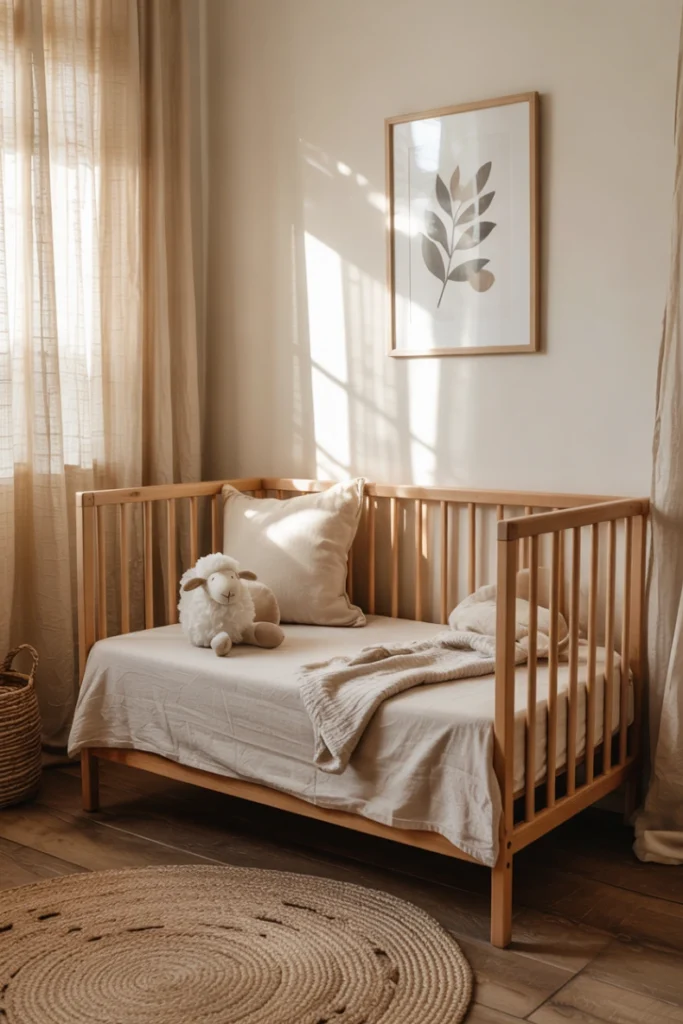
Neutral nurseries have gained popularity due to their versatility and calming effect. This boy nursery idea focuses on warm neutral shades such as beige, ivory, taupe, and soft gray. These tones create a serene atmosphere that feels inviting and adaptable, making the space suitable for long-term use beyond the baby stage.
How to do it: Start with walls in a warm ivory or greige, then build the room in layers of texture instead of color. Choose natural wood furniture in oak or walnut, add a woven jute or wool rug, and bring in linen curtains, a chunky knit throw, and a soft cotton crib skirt. Woven storage baskets in seagrass or rattan keep diapers, toys, and extra blankets tidy while adding natural texture. A wooden name sign or a simple framed black and white photo above the crib gives the room a personal touch without adding color.
Layout tip: In a neutral room, texture does the work that color does elsewhere, so vary it deliberately. Pair smooth painted wood with rough woven baskets, soft linen with a nubby wool blanket, and a matte wall with a glossy ceramic lamp base. If the room starts to feel flat, add one warm accent you can swap later, such as a terracotta pillow on the glider or a sage green plant in the corner. Neutral nurseries also make an ideal base if you plan to add a theme later, since almost any accent color sits comfortably on beige and ivory.
3. Woodland-Themed Boy Nursery

A woodland-themed nursery brings elements of nature into the home, creating a peaceful and imaginative environment. This boy nursery idea often features soft greens, muted browns, and earthy neutrals paired with forest-inspired illustrations or patterns. Woodland themes feel gentle and grounding, making them ideal for a restful nursery setting.
How to do it: Paint the walls a soft sage or warm cream, then add the forest through one statement piece: a removable wall decal set of trees, deer, foxes, and bears behind the crib, or a large framed woodland print. Choose a crib and dresser in natural pine or light oak, and dress the bed in bedding with a subtle leaf or tree print in sage, cream, and soft brown. A faux fur throw in cream, a plush fox or bear, and a small wooden tree shelf for books complete the look. Keep the palette to three colors at most so the room stays calm rather than busy.
Layout tip: When designing the layout, prioritize natural materials and uncluttered surfaces. Wooden furniture, organic cotton fabrics, and soft warm lighting enhance the theme without overwhelming the space. Put the reading corner near the window with a small floor cushion and a low bookshelf the child can reach later. Keep decorative elements minimal and at adult eye level or above, so the lower half of the room stays clear for a play mat and tummy time. A woodland theme also pairs well with a nature mobile over the crib, hung at least 16 inches above the mattress for safety.
4. Modern Minimalist Boy Nursery
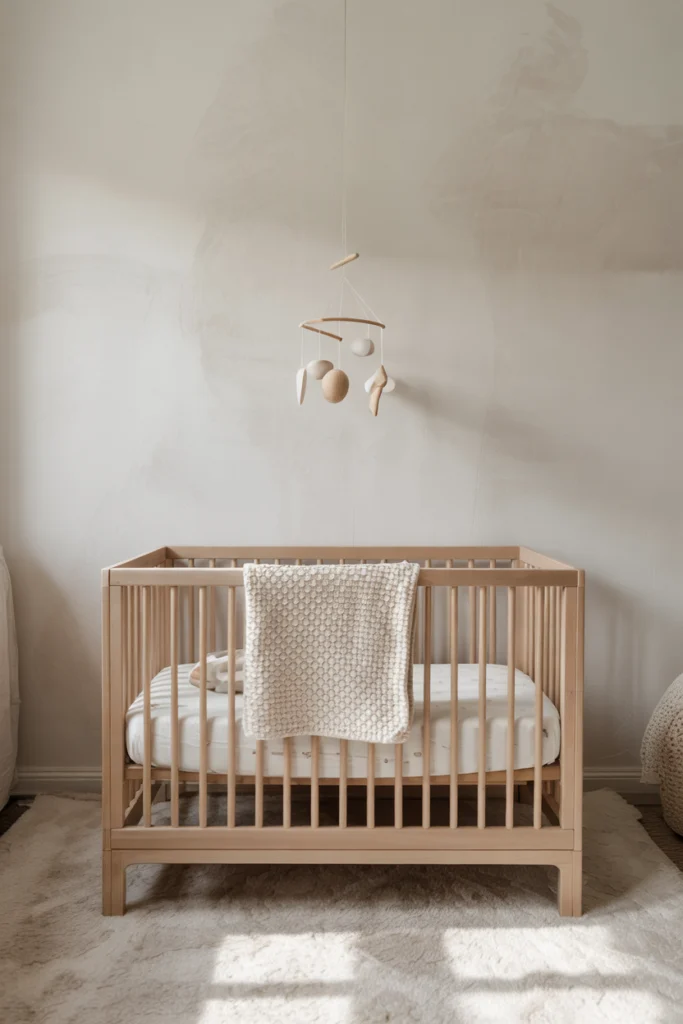
A modern minimalist nursery emphasizes simplicity, clean lines, and functionality. This boy nursery idea removes unnecessary decoration, allowing essential elements to define the space. Neutral color palettes, sleek furniture, and intentional design choices create a calm and organized environment that supports rest and routine.
How to do it: Choose a palette of white, soft gray, and one warm wood tone, and stick to it for every purchase. Pick a crib with a low profile and straight lines, a dresser with flat fronts and no visible hardware, and a glider in a solid light gray fabric. Limit wall decor to one piece, such as a single large abstract print or a simple wooden name sign. Use hidden storage everywhere: a dresser with deep drawers, a crib with a storage drawer underneath, and two or three matching fabric bins on a closet shelf. Every item in the room should earn its place by being used daily.
Layout tip: From a layout perspective, minimalist nurseries benefit from efficient storage solutions and multi-functional furniture. Built-in drawers, concealed storage, and streamlined shelving reduce visual clutter. Leave at least 3 feet of clear floor space in the center of the room for a play mat, and keep the changing station against the wall opposite the crib so you are not crossing the room in the dark. This approach not only simplifies maintenance but also creates a nursery that feels spacious, calm, and easy to adapt as the child grows. The rule to remember is one in, one out: when a new toy or item arrives, an old one leaves.
5. Safari-Themed Boy Nursery

A safari-themed nursery introduces playful elements while maintaining a sophisticated feel. This boy nursery idea often includes animal motifs, soft earth tones, and natural textures. When executed thoughtfully, safari themes feel engaging without becoming overly bold or busy.
How to do it: Paint the walls warm white or pale sand, then bring in the safari through textiles and art. A crib sheet with a subtle giraffe or elephant print, a wall gallery of three framed animal prints in matching frames, and a soft lion or elephant plush on the dresser are enough to set the theme. Add texture with a woven rug in natural jute, a rattan basket for toys, and a linen curtain in a warm tan. Choose furniture in light wood to keep the room feeling airy, and avoid bright jungle greens and oranges, which can make the room feel loud.
Layout tip: Layout planning should focus on balance and restraint. Instead of covering the room with themed decor, use selective accents such as wall art, bedding, or soft toys. Simple furniture and neutral backdrops allow the safari elements to stand out while maintaining a calm and functional nursery environment. Place the animal prints at adult eye level on the wall the baby faces from the crib, since that is where they will actually be seen. Keep the floor clear around the crib and changing table, and store themed toys in one basket so the room can be tidied in under a minute.
6. Nautical Boy Nursery Design
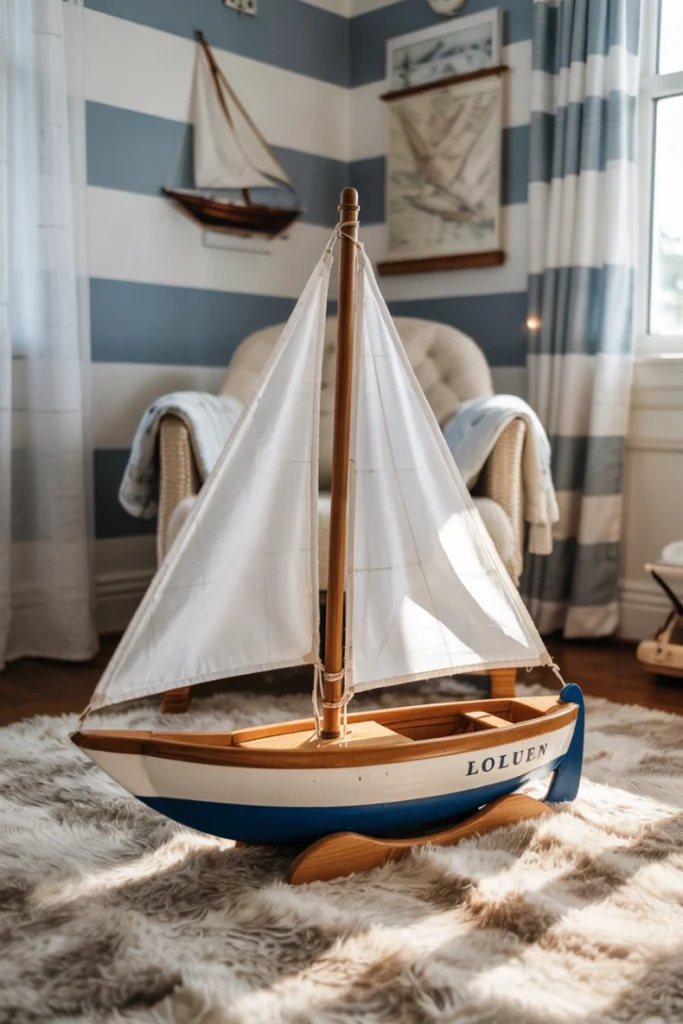
Nautical nurseries are a timeless option that works well for boys of all ages. This boy nursery idea typically incorporates navy blue, white, and subtle red accents, along with maritime-inspired patterns. Nautical themes create a structured and orderly aesthetic that feels both fresh and classic.
How to do it: Start with white walls and a navy accent wall behind the crib, or paint the lower third of the walls navy with a white chair rail for a classic wainscoted look. Add stripes through the crib sheet, a striped rug runner, or a striped curtain in navy and white. Hang a simple rope detail, a small wooden sailboat on the dresser, and a framed anchor or ship print. A navy glider with a white throw pillow anchors the feeding corner, and a woven rope basket holds blankets and toys. Keep red to one or two small accents, such as a red picture frame or a red stripe on a storage bin, so it reads as a highlight rather than a competing color.
Layout tip: From a layout standpoint, nautical nurseries benefit from clean lines and thoughtful spacing. Striped textiles, simple wall decor, and functional storage keep the room organized. By limiting the number of themed elements, the nursery remains adaptable and visually balanced over time. A practical bonus is that navy hides stains far better than white, so navy crib sheets and chair cushions are a smart choice for a room that will see spit-up and spills. When the child outgrows the theme, remove the boat and anchor decor and you are left with a classic navy and white bedroom.
7. Animal-Inspired Boy Nursery
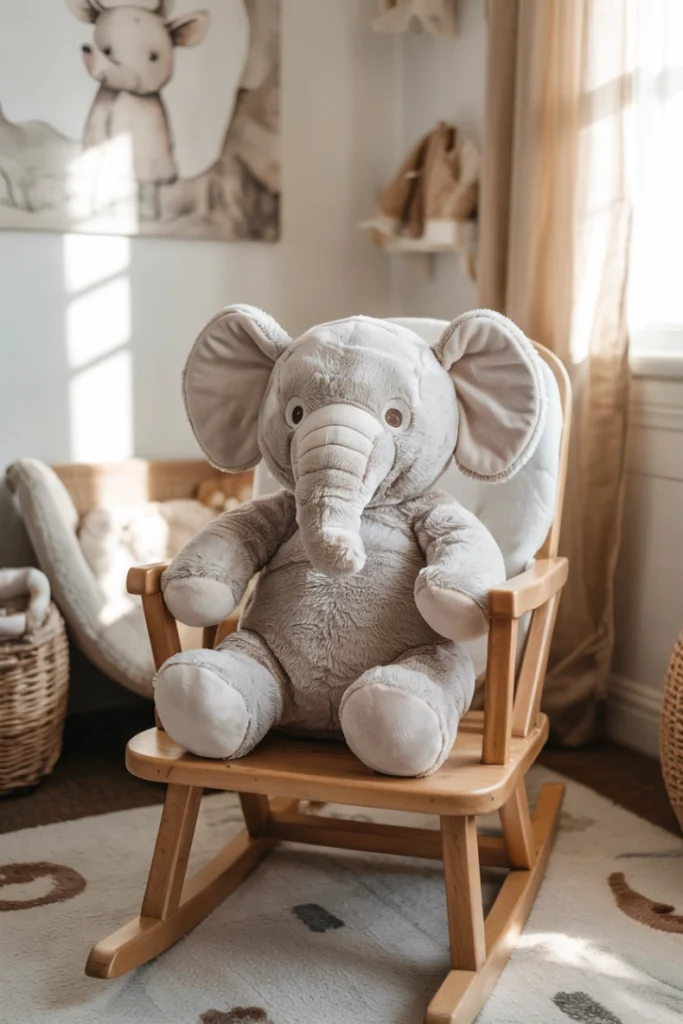
Animal-inspired nurseries offer warmth and visual engagement while remaining versatile. This boy nursery idea uses soft animal illustrations, neutral color palettes, and gentle textures to create a welcoming environment. Friendly animal motifs can stimulate curiosity without overstimulation.
How to do it: Choose a neutral base of warm white or pale gray walls and light wood furniture, then add animals in one consistent style, either all watercolor illustrations or all simple line drawings, so the room feels designed rather than random. A set of three to five framed animal prints above the crib, a crib sheet with a single animal motif, and two or three plush animals on a low shelf are plenty. Add a soft rug with a subtle animal border or a small animal-shaped floor cushion for tummy time. Stick to soft, muted versions of each animal’s colors rather than bright cartoon shades.
Layout tip: Layout planning should ensure open floor space and clear pathways. Animal decor works best when placed at eye level or used sparingly on walls and textiles. Keeping the layout simple allows the playful elements to enhance the nursery without disrupting its calm atmosphere. Put the plush animals on a shelf the baby can see from the crib but cannot reach, and rotate them every few weeks so the view stays fresh. A low, open bookshelf with animal board books doubles as decor and as the start of a reading habit.
8. Vintage-Inspired Boy Nursery

Vintage nurseries add character through timeless details and classic styling. This boy nursery idea often includes antique-inspired furniture, soft pastel colors, and subtle patterns. Vintage designs feel warm and personal, creating a nostalgic atmosphere.
How to do it: Look for furniture with classic lines: a crib with turned spindles, a dresser with brass knobs, or a rocking chair with a curved back. A soft pastel palette works best, think dusty blue, pale sage, cream, and warm gray, with one pattern repeated lightly, such as a small gingham or a classic stripe on the crib sheet and curtains. Add vintage touches that are easy to find secondhand or new: a brass picture frame, a ceramic lamp with a linen shade, a wooden toy chest, and a framed vintage alphabet print. A handmade or heirloom quilt folded over the crib rail adds instant warmth and history.
Layout tip: From a layout perspective, combining vintage aesthetics with modern functionality is key. Ensure furniture meets current safety standards while preserving classic charm, so check that any secondhand crib meets current safety rules, with slats no more than 2 and 3/8 inches apart and no drop side. Thoughtful spacing and practical storage help maintain a functional nursery that feels both charming and efficient. If you love the vintage look, our guide to vintage nursery ideas has more ways to mix old and new pieces without the room feeling like a museum. Keep the room’s lighting warm, with a dimmable lamp near the glider, so the vintage pieces glow softly at night.
9. Space-Themed Boy Nursery
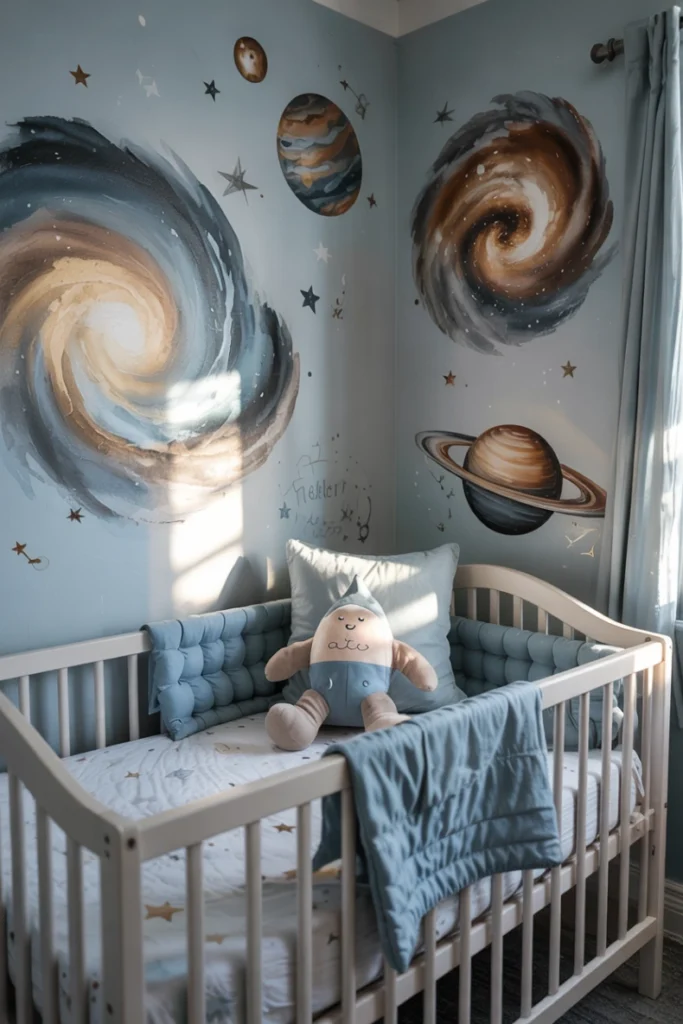
A space-themed nursery sparks imagination while maintaining a calming tone. This boy nursery idea often features celestial elements such as stars, moons, and planets in soft shades of blue, gray, and white. Space themes feel playful yet soothing when designed with restraint.
How to do it: Paint the walls a soft pale gray-blue, then add the stars with removable glow-in-the-dark star decals on the ceiling above the crib, which double as a gentle night light effect. Choose bedding with a subtle star or moon print in navy and white, and hang a framed print of the moon or a simple solar system illustration. A rocket-shaped floor lamp or a crescent moon wall light makes a lovely focal point, and a plush planet or star toy on the dresser finishes the theme. Keep the palette to blues, grays, and white, and let the ceiling stars carry the magic.
Layout tip: Layout planning should prioritize sleep-friendly lighting and minimal visual clutter. Use space elements through wall decals or artwork rather than overwhelming patterns. This ensures the nursery remains restful while still encouraging curiosity and creativity. Put blackout curtains on the window so daytime naps stay dark, and use a dimmable warm lamp for nighttime feeds instead of the ceiling light. Place the crib so the baby can see the ceiling stars from lying down, and keep the floor clear for a play mat where the stars can be a talking point during tummy time.
10. Farmhouse-Style Boy Nursery
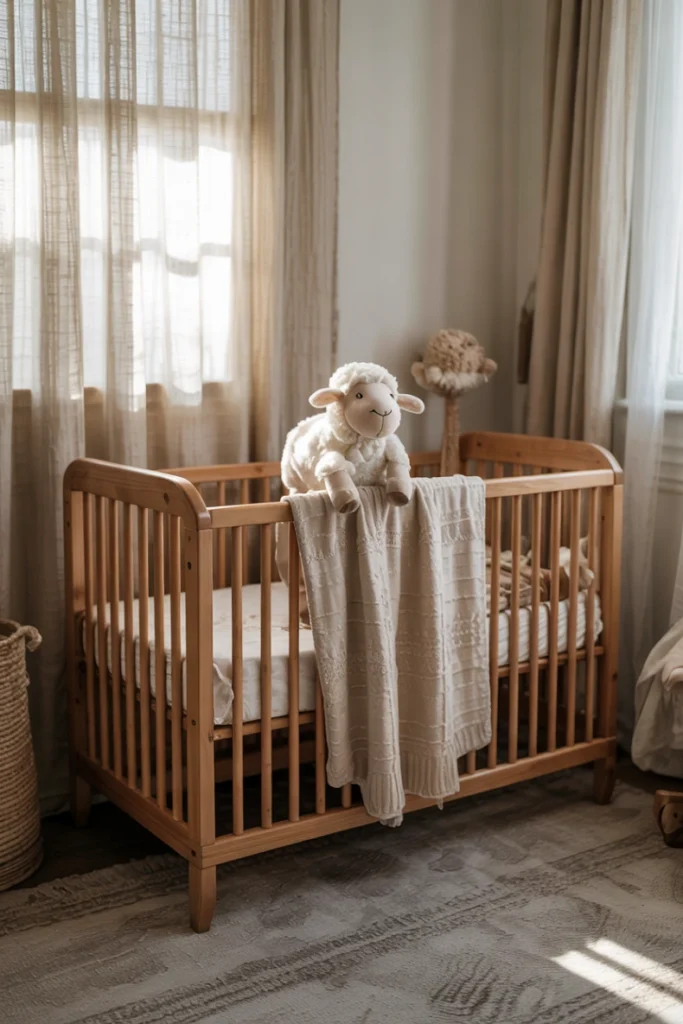
Farmhouse nurseries combine comfort, warmth, and timeless appeal. This boy nursery idea often features white or neutral walls, natural wood furniture, and cozy textiles. Farmhouse designs feel welcoming and practical, making them ideal for everyday use.
How to do it: Start with white or warm cream walls and add a shiplap accent wall behind the crib for instant farmhouse character. Choose furniture in natural pine or whitewashed wood, and layer in cozy textiles: a plaid or buffalo check blanket in navy and white, a chunky knit throw over the glider, and a woven rug under the crib. Open wooden shelves above the dresser hold folded blankets, a few books, and a small potted plant, while galvanized metal baskets or wooden crates keep toys and supplies organized. A simple wooden name sign and a framed barn or landscape print complete the look.
Layout tip: Layout tips include incorporating sturdy furniture and ample storage solutions. Open shelving, baskets, and simple decor keep the nursery organized while maintaining a relaxed aesthetic. The farmhouse style creates a nurturing environment that feels both functional and inviting. Because farmhouse furniture is usually solid wood and simply built, it tends to last through the toddler years and beyond, so invest in a good crib and dresser and save on the accessories. Keep the changing station stocked from the open shelves so everything is visible and within reach.
11. Monochrome Boy Nursery
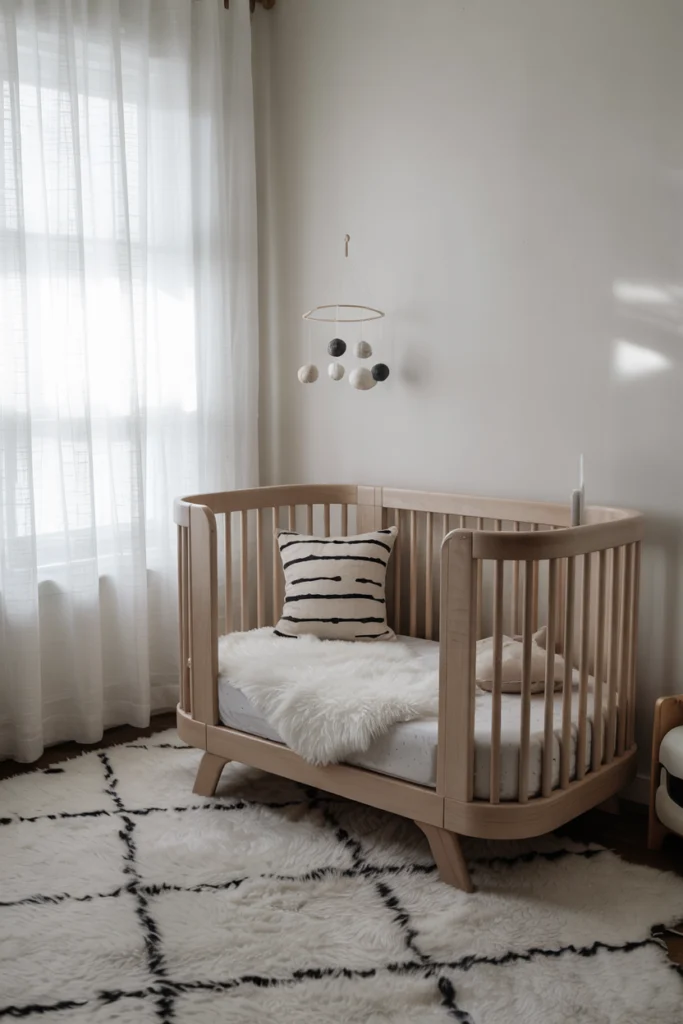
Monochrome nurseries use black, white, and gray tones to create a modern and visually striking space. This boy nursery idea focuses on contrast and simplicity, resulting in a clean and structured look.
How to do it: Paint the walls white and use black as the accent color in small, deliberate doses: a black picture frame gallery, a black and white geometric crib sheet, a black glider cushion, and a black storage basket. Add gray as the bridge color through a soft gray rug, gray curtains, and a gray knit blanket, so the contrast never feels harsh. Choose furniture in white or light wood, and add one bold pattern, such as black and white stripes or a simple geometric print, on the rug or the curtains. A black wooden name sign above the crib ties the whole scheme together.
Layout tip: From a layout standpoint, balance is essential to prevent the space from feeling stark. Soft textures, layered fabrics, and gentle lighting help soften the contrast. Monochrome designs are highly adaptable and can easily evolve as the child grows. Use a warm white bulb in the lamps rather than cool daylight bulbs, since warm light softens black and white contrast noticeably. Add a sheepskin rug or a faux fur throw for texture, and keep one wall mostly empty so the eye has a place to rest. When your son is older, a single color, such as a red or blue bedspread, can be added without changing anything else.
12. Soft Green Boy Nursery
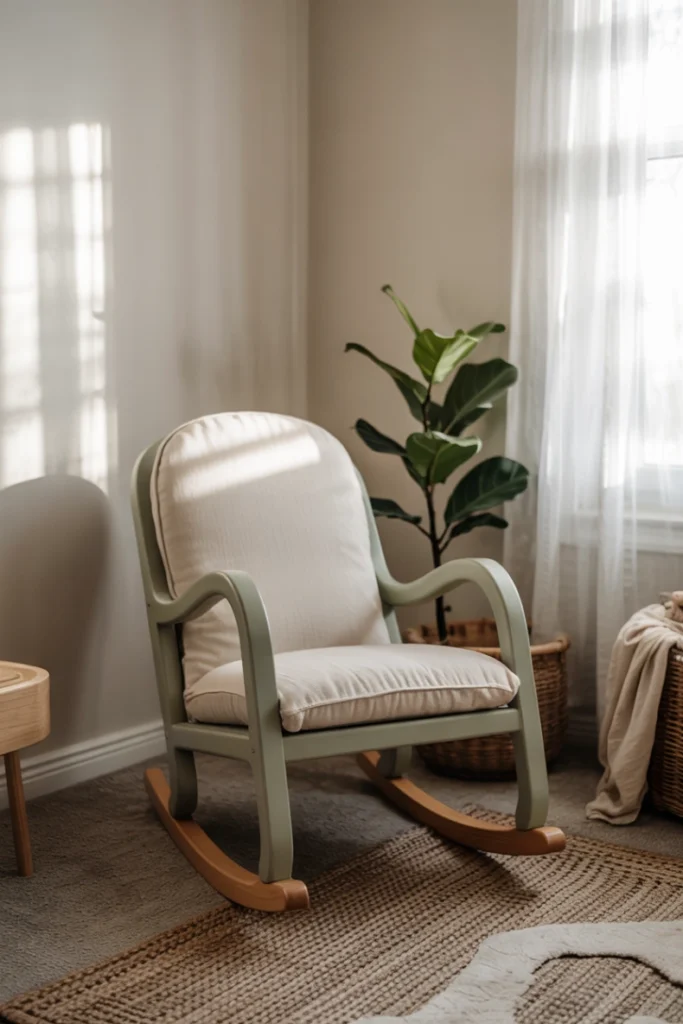
Green is a calming and versatile color that works beautifully in nurseries. This boy nursery idea uses soft green tones to create a peaceful environment inspired by nature. Green pairs well with white and natural wood elements, creating visual harmony.
How to do it: Paint the walls a soft sage or pale eucalyptus green, or keep the walls white and bring green in through the curtains, rug, and bedding. Pair sage with natural wood furniture in light oak, white bedding with a sage green border, and a cream rug with a subtle green pattern. Add a real plant in a safe spot the baby cannot reach, such as a high shelf, or a faux olive branch in a ceramic vase on the dresser. A sage green glider cushion and a matching storage basket pull the palette together without any extra effort.
Layout tip: Layout planning should emphasize simplicity and comfort. Soft textiles, minimal decor, and natural materials enhance the calming effect. Green nurseries feel refreshing and timeless, making them suitable for long-term use. Sage green is one of the easiest nursery colors to live with because it looks good in both bright daylight and warm lamplight, and it transitions naturally into a toddler room by swapping the crib bedding for a green and white duvet set. If you want more nursery color inspiration, our baby nursery ideas guide covers palettes and layouts that work for any baby, boy or girl.
13. Storybook-Themed Boy Nursery

Storybook-themed nurseries celebrate creativity and imagination. This boy nursery idea often includes illustrated walls, bookshelves, and whimsical details inspired by classic children’s stories. Soft colors and gentle lighting keep the space soothing.
How to do it: Pick one beloved story or a general storybook feel rather than mixing five different books. A soft mural or a set of removable wall decals showing a scene from a classic tale, such as a forest, a castle, or a hot air balloon journey, sets the scene behind the crib. Add low, forward-facing bookshelves so the covers themselves become decor, and fill them with cloth and board books in soft colors. A cozy reading corner with a small armchair or floor cushions, a soft rug, and a warm lamp invites story time from the earliest months. Finish with a framed quote from a favorite children’s book above the glider.
Layout tip: From a layout perspective, include accessible book storage and a cozy reading corner. This encourages early literacy while maintaining a functional nursery layout. Keeping the theme subtle ensures the space remains calm and adaptable. Mount the bookshelves at a height the child can reach once he is standing, and keep heavier books on higher shelves. A storybook theme grows beautifully with the child: the same shelves that hold board books now will hold chapter books later, and the reading corner becomes the spot for bedtime stories for years. For more magical, imagination-led styling, see our magical nursery themes guide.
14. Timeless Boy Nursery Designed to Grow
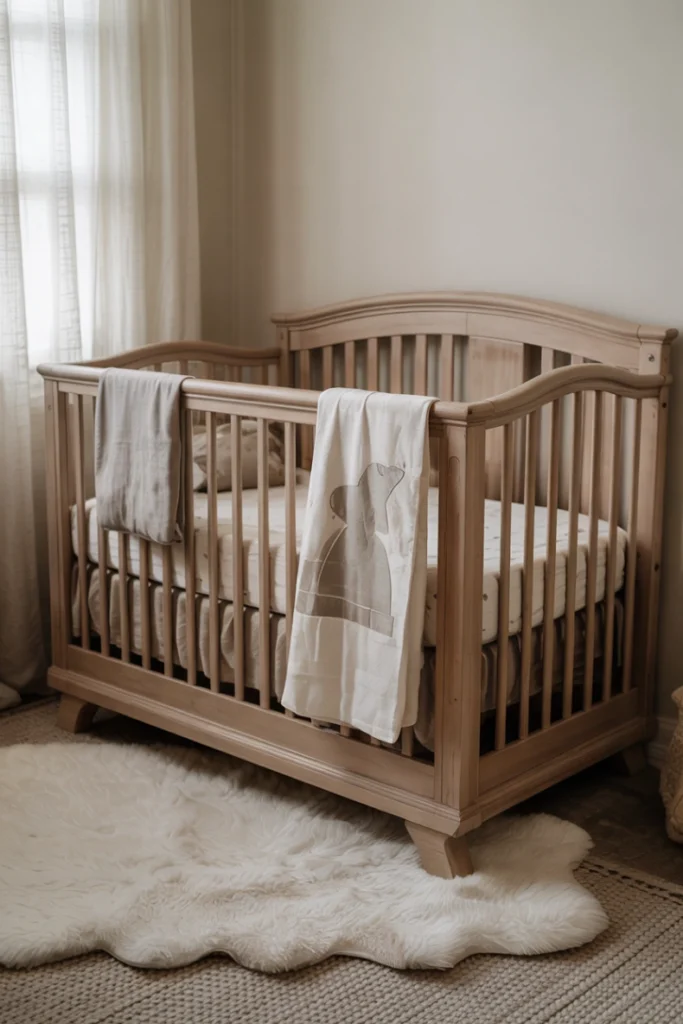
A timeless nursery focuses on adaptability and long-term usability. This boy nursery idea avoids overly specific themes and instead relies on neutral colors, classic furniture, and flexible layouts. The result is a space that transitions easily as the child grows.
How to do it: Choose a convertible crib that turns into a toddler bed and then a daybed, which is the single best investment in a grow-with-me nursery. Pair it with a dresser in a classic style and a neutral paint color, such as warm white, soft gray, or pale greige, that will still look right when the room belongs to a five-year-old. Add one quality rug in a simple pattern, blackout curtains in a solid neutral, and a glider in a durable, washable fabric. Keep wall decor to framed prints you love rather than themed decals, so nothing needs to be peeled off later.
Layout tip: Layout tips include choosing convertible furniture and modular storage. This ensures the nursery evolves into a toddler or child’s room without major redesigns. A timeless approach offers both practicality and enduring style. Plan the room with the toddler version in mind: leave a clear corner where a small table and chairs can go later, put the dresser where it can become a clothes dresser without moving, and choose storage bins that fit a closet shelf now and a toy shelf later. If you are still deciding between a themed nursery and a timeless one, our girls nursery ideas guide shows how the same grow-with-me principles work in a softer palette, and the layout lessons transfer directly.
Conclusion
Designing a nursery for a baby boy requires thoughtful planning, creativity, and attention to detail. These boy nursery ideas demonstrate how inspiring themes and practical layouts can work together to create spaces that are both nurturing and functional. By focusing on adaptability, calming color palettes, and efficient organization, parents can design nurseries that support daily routines and long-term growth.
A well-designed nursery is more than a decorative space, it is an environment that supports comfort, development, and family life. With careful design choices, a boy nursery can remain beautiful, practical, and meaningful for years to come. Start with the three zones, sleep, changing, and feeding, pick a theme that makes you smile every time you walk in, and let the room grow with your child instead of locking it into one age.
Frequently Asked Questions
What is the best color for a boy nursery?
There is no single best color, but soft blue, sage green, warm neutrals, and classic navy and white are the most popular choices because they feel calm and work with many furniture styles. The smartest approach is to keep the walls and big furniture neutral and add color through bedding, curtains, and accessories you can change cheaply as your child grows.
How much space do I need for a baby boy nursery?
A nursery can work in a room as small as 8 by 10 feet if the layout is planned well. The essentials are a crib, a changing surface, a feeding chair, and storage for clothes and diapers. Choose a mini crib or a convertible crib, use the dresser top as the changing station, and keep at least 3 feet of clear floor space in the center for a play mat.
When should I start setting up the nursery?
Most parents start in the second trimester, around weeks 20 to 24, when energy is usually highest and there is still plenty of time to order furniture. Cribs and dressers can take 4 to 8 weeks to arrive, so order the big pieces first, then paint, then add decor and textiles in the final weeks before the due date.
What furniture is essential for a boy nursery?
The four essentials are a safe crib that meets current safety standards, a dresser or changing table with storage, a comfortable glider or rocking chair for feeds, and a small side table or shelf for bottles, books, and a lamp. Everything else, such as a bookshelf, a toy basket, or a rug, can be added gradually after the baby arrives.
How can I make a small boy nursery feel bigger?
Use light wall colors, a large mirror or light curtains to bounce natural light, and furniture with slim legs that shows the floor underneath. Keep the crib against the longest wall, use vertical storage such as wall shelves and a tall narrow dresser, and limit the palette to two or three colors so the room reads as one calm space instead of many small pieces.
More Ideas You Will Love
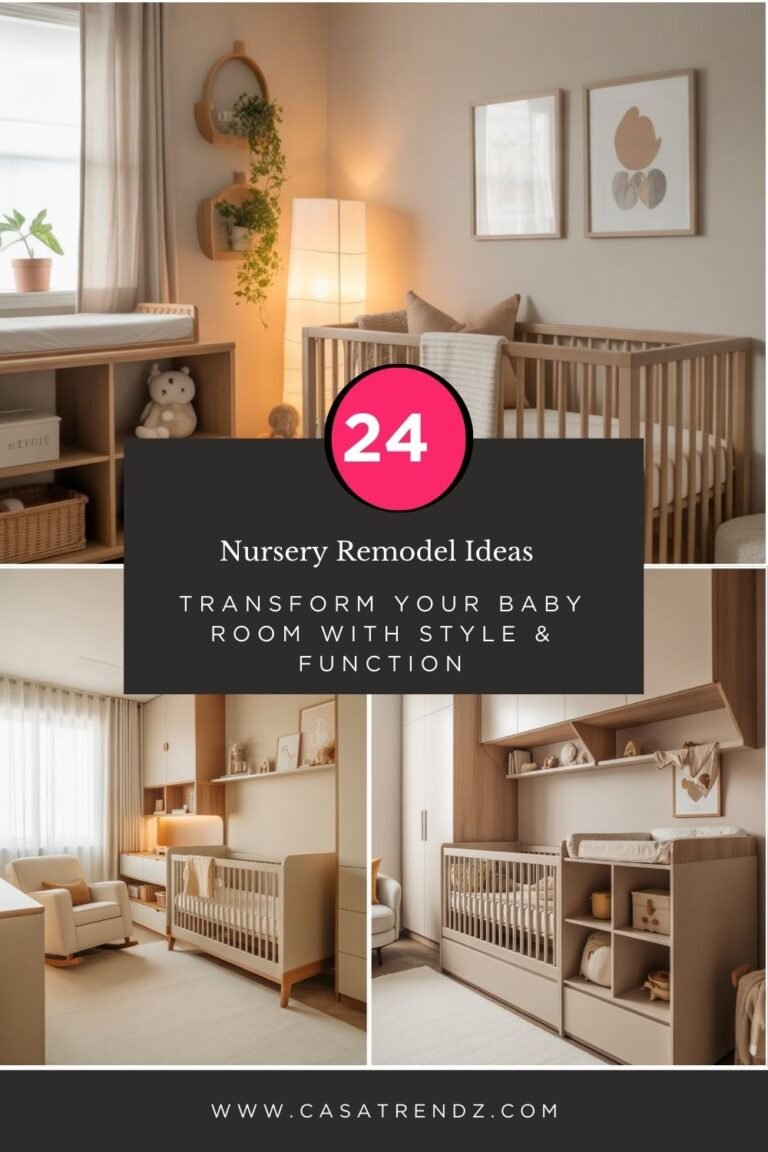 24 Nursery Remodel Ideas – Transform Your Baby Room with Style & Function
 21 Tiny Bedroom Ideas: Smart Design Tricks for Small Spaces
 14 Modern Bedroom Design Ideas for Elegant Interiors
 19 Stunning Bedroom Wallpaper Ideas You’ll Want to Try
 19 Teen Girls Bedroom Ideas: Dreamy & Personalized Decor Inspiration
 14 Fall Bedroom Decoration Ideas for a Cozy Feel