
20 Creative Attic Bedroom Ideas to Transform Your Space with Style & Functionality


An attic bedroom has something no ordinary bedroom can offer: character built right into the architecture. Sloped ceilings, exposed beams, dormer nooks, and a quiet remove from the rest of the house all give the space a ready made personality. The challenge is making that personality work for everyday life, so the room feels cozy rather than cramped, and practical rather than just pretty. That is exactly what the 20 ideas below are designed to do.
Before you pick paint colors or shop for furniture, start with the basics of the room itself. Measure the ceiling height at the tallest point and at the walls, note where you can stand comfortably, and mark the spots where the ceiling drops below about five feet. Those low zones are perfect for storage, a reading nook, or the head of a bed, while the taller center of the room should stay open for walking, dressing, and getting in and out of bed. If you want more ideas for working with a tight footprint first, browse these small bedroom ideas alongside this guide and note which layouts match your attic shape.
Light, insulation, and airflow matter more in an attic than in any other room, so plan them before you decorate. A skylight or dormer window can change the whole feel of the space, good insulation keeps summer heat and winter cold in check, and a ceiling fan or quiet vent helps air move under the roof. Once those fundamentals are in place, the decorating becomes fun rather than frustrating, because every idea below builds on a room that already works. Pick three or four ideas that solve your biggest problems first, whether that is storage, light, or a layout that finally makes sense.
Budget is another reason to plan in phases. Paint, bedding, lighting, and a rug can transform an attic bedroom for very little money, while built in storage, skylights, and new flooring are worth saving for and doing once, properly. Buy the bed and mattress first, since sleep quality sets the tone for the whole room, then add storage and lighting, and finish with art and accessories. With that order in mind, here are 20 creative attic bedroom ideas, each with practical detail you can actually use.
1. Cozy Minimalist Attic Retreat
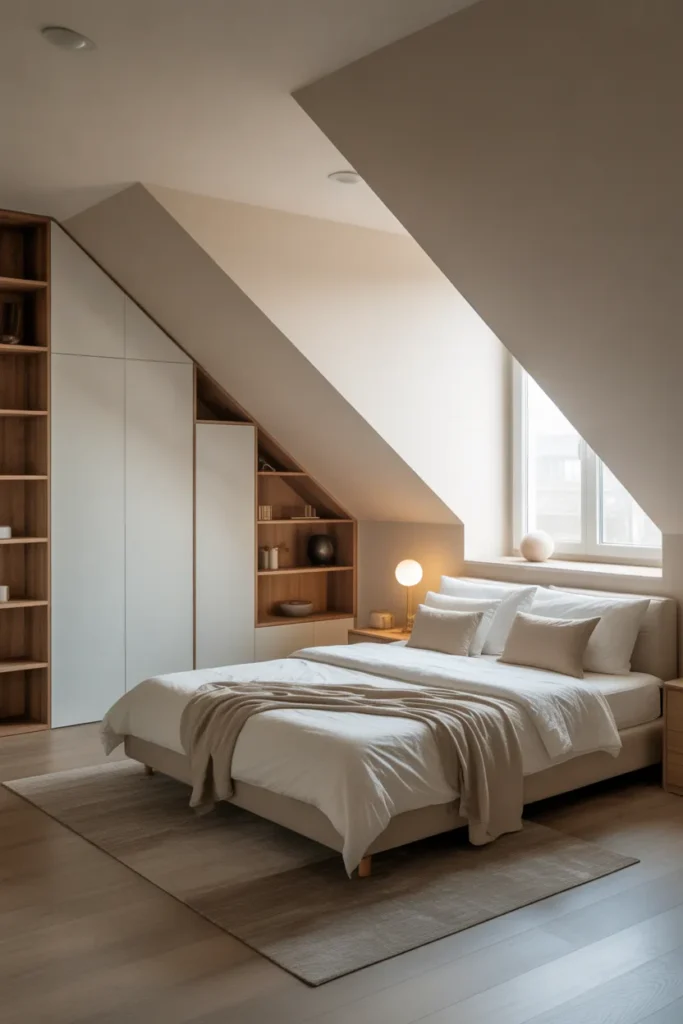
A minimalist attic bedroom works because it lets the architecture do the talking. Keep the palette to warm white, soft beige, or pale gray, and let one or two natural textures carry the warmth: a linen duvet, a wool throw at the foot of the bed, and a flat weave rug that defines the sleeping zone. Choose a low profile bed frame, ideally 10 to 14 inches high including the mattress base, so the bed sits comfortably under the slope without making the ceiling feel lower. Keep furniture to the essentials: bed, one nightstand or wall shelf, and a single dresser or built in unit.
Storage is where minimalism usually fails in attics, so give everything a hidden home before you start editing decor. Use shallow drawers under the eaves for out of season clothes, a lidded basket for extra blankets, and a wall mounted shelf instead of a bulky bookcase. Leave at least 24 inches of clear walking space beside the bed and keep the center of the room free of furniture so the eye travels to the tallest point of the ceiling. The result feels calm and spacious, even in a small attic, because nothing competes with the shape of the room itself.
2. Rustic Cabin-Inspired Attic Bedroom

A rustic attic bedroom leans into the cozy, cabin feel that sloped ceilings already suggest. If you have exposed beams, leave them visible and clean them up with a light sanding and a matte sealant rather than painting over them. If you do not have beams, a single reclaimed wood accent wall behind the bed, using planks 4 to 6 inches wide, gives the same warmth without closing the room in. Pair the wood with earthy tones like warm brown, muted sage, and cream, and keep the bedding chunky: a cotton duvet, a wool blanket, and two sleeping pillows plus two euro pillows for lounging.
Place the bed with its headboard on the tallest wall where possible, and use the lowest part of the slope for a snug reading corner with a low armchair and a small side table. Lantern style lamps, woven baskets, and a thick rug beside the bed add texture without clutter, and a plaid or striped throw folded across the foot of the bed ties the palette together. Avoid filling every surface: in a rustic room, three or four well chosen pieces, a basket, a lamp, a framed print, and a plant, feel richer than a dozen small ornaments. For broader layout inspiration, these bedroom design ideas show how rustic touches work in rooms of every size.
3. Scandinavian-Inspired Light-Filled Attic Bedroom
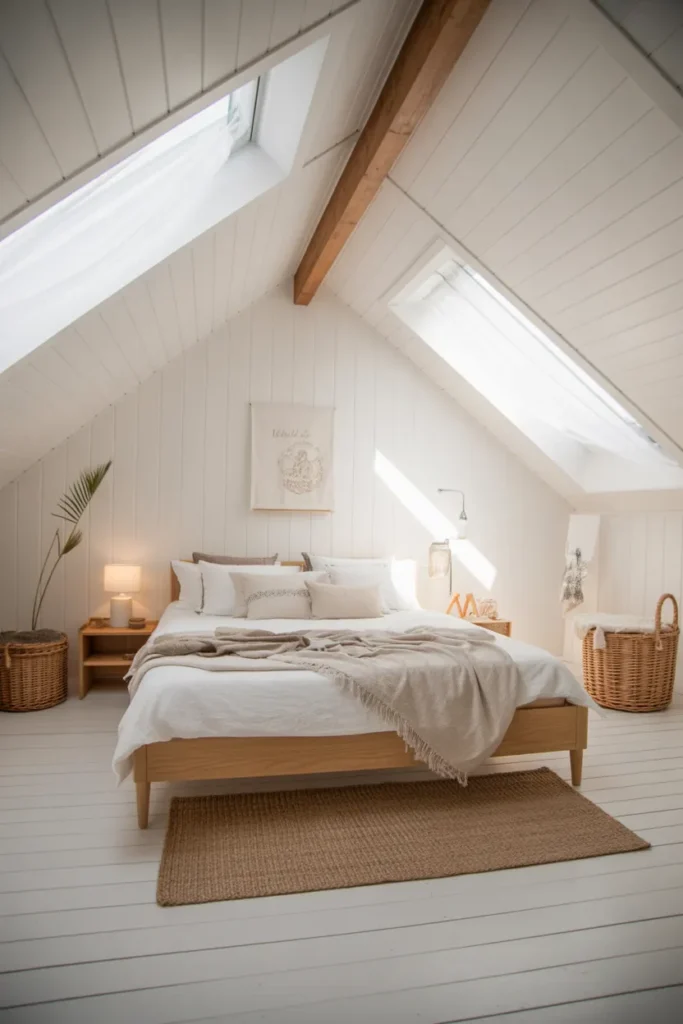
Scandinavian style is a natural fit for attics because it prizes light, pale color, and furniture that does not fight the room. Paint the sloped ceiling the same soft white as the walls so the ceiling visually lifts, and choose light wood for the bed frame, nightstand, and any shelving. Keep the color palette to white, light gray, pale oak, and one muted accent such as dusty blue or sage, used only in bedding and one piece of art. A low bed, simple bedding in white or light gray linen, and a single textured throw keep the room feeling airy.
Texture does the work that color does in other styles, so layer it deliberately: a knitted throw, a linen cushion, a woven basket, and a flat weave cotton rug in a light neutral. Place a plant near the skylight or dormer where it gets bright indirect light, and use sheer white curtains or a light filtering skylight blind so daylight stays soft rather than harsh. Keep surfaces mostly clear and store everyday items in closed baskets or drawers, because Scandinavian calm depends on visual quiet. The payoff is a room that feels larger than its floor plan, bright in the morning and restful at night.
4. Bohemian Attic Sanctuary

A bohemian attic bedroom suits the irregular shape of the space because the style welcomes layering and imperfection. Start with a low bed or a platform base close to the floor, which sits comfortably under a slope and makes the room feel grounded. Then layer in stages: a patterned rug at least 5 by 7 feet under the bed, a lighter throw rug or woven mat beside it, colorful cushions in two or three coordinating tones, and a macrame wall hanging or woven basket on the tallest wall. Plants in hanging planters draw the eye upward and soften sharp angles.
The trick to keeping boho from turning chaotic is one unifying base color underneath the pattern. Choose warm white, natural jute, or soft terracotta for the largest surfaces, then let brighter colors appear in smaller doses through cushions, art, and throws. String lights along a beam or around a dormer frame add warm evening light, but pair them with a proper bedside lamp so you can actually read in bed. Leave one wall or corner relatively plain so the eye has somewhere to rest, and the room will feel collected and personal rather than crowded.
5. Modern Chic Attic Bedroom
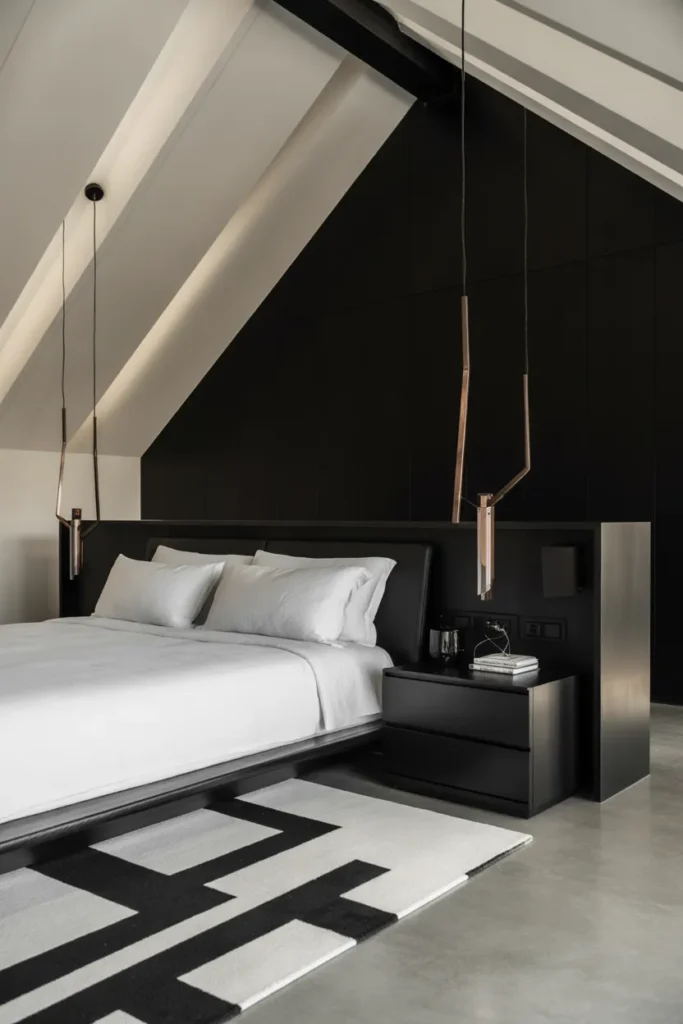
A modern attic bedroom pairs clean lines with bold, simple contrast. A black and white or charcoal and white palette works well, softened by one warm material such as light oak or brushed brass. Choose furniture with slim legs and simple shapes: a platform bed with no footboard, a floating nightstand, and a single streamlined dresser. Minimalist pendant lights hung at about 30 inches above each nightstand, or a pair of wall sconces mounted 55 to 60 inches from the floor, give focused light without taking up surface space.
To keep the modern look from feeling cold, add plush layers where your body actually meets the room: a thick mattress topper, a soft duvet, a high pile rug beside the bed, and one upholstered accent such as a bench at the foot of the bed. Built in drawers along the low eave wall handle storage without adding visual bulk, and a single large piece of art above the bed anchors the room better than a cluster of small frames. Keep the color count low, the lines clean, and the textures soft, and the attic will read as polished and intentional rather than stark.
6. Soft Pastel Attic Bedroom
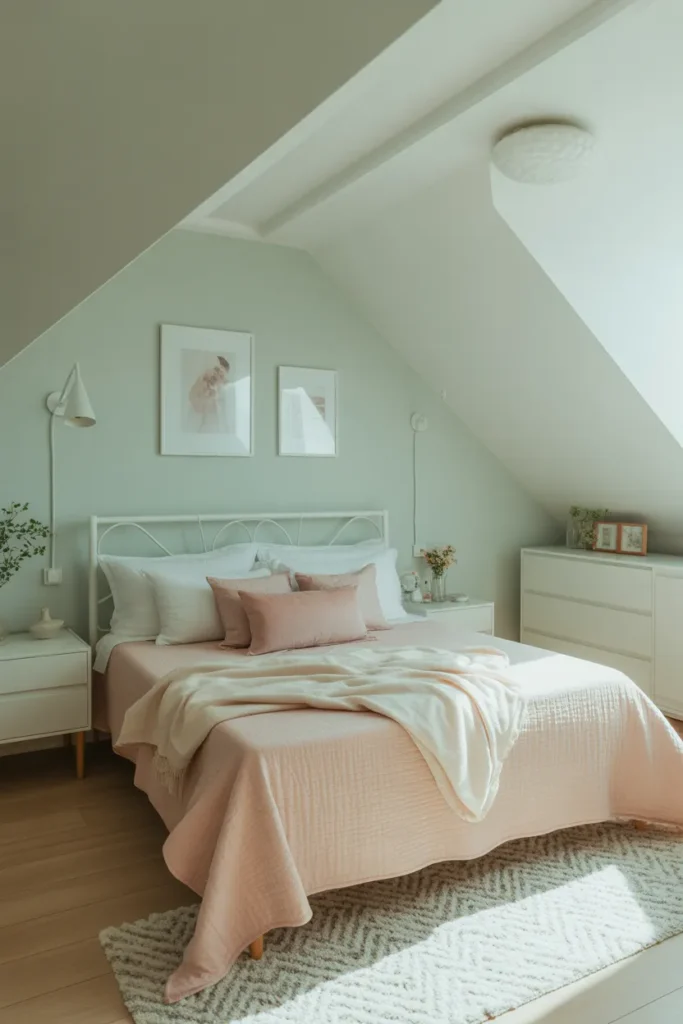
Pastels are a smart choice for small or low ceilinged attics because they reflect light and soften sharp angles. Mint, blush, lavender, and sky blue all work, but pick one pastel as the lead and use the others sparingly, if at all. Paint the walls and sloped ceiling in the pastel at a light tint, or keep the ceiling white and use the pastel on the tallest wall only, so the room still feels tall. Pair pastel walls with white furniture and white bedding, then add depth through texture: a waffle weave throw, a velvet cushion, and a soft cotton rug.
Contrast matters even in a soft palette, so include one slightly deeper tone, for example a dusty rose cushion with blush walls, or a sage throw with mint walls, to stop the room from looking washed out. Keep art simple and light framed, with plenty of white space, and use a white or light wood frame for mirrors so they bounce light without adding visual weight. Pastel bedrooms suit children, teens, and anyone who wants a calm, dreamy retreat, and they are easy to update later by swapping cushions and throws rather than repainting.
7. Industrial-Style Attic Loft

An industrial attic bedroom celebrates raw materials: exposed brick or a brick effect wall, black metal bed frames, matte fixtures, and darker tones such as charcoal, rust, and deep green. This style works best in a larger attic with a high peak or visible beams, where the scale can carry the bolder materials. If you do not have real brick, a single brick clad wall behind the bed gives the look without the cost or weight of full masonry. Pair it with a simple metal frame bed, a reclaimed wood nightstand, and open shelving in black metal and wood.
Soften the industrial edge where it counts, or the room can feel cold and hard. Layer a thick duvet, a wool throw, and a rug with some pile underfoot, and use warm Edison style bulbs in sconces or a pendant to offset the metal and brick. Keep the palette to three main materials, brick, wood, and metal, plus bedding in a warm neutral, so the room stays cohesive. A large mirror on the tallest wall helps bounce light around a darker scheme, and closed storage in one wooden trunk or cabinet keeps the loft feel without the clutter.
8. Attic Bedroom with Built-In Storage Solutions
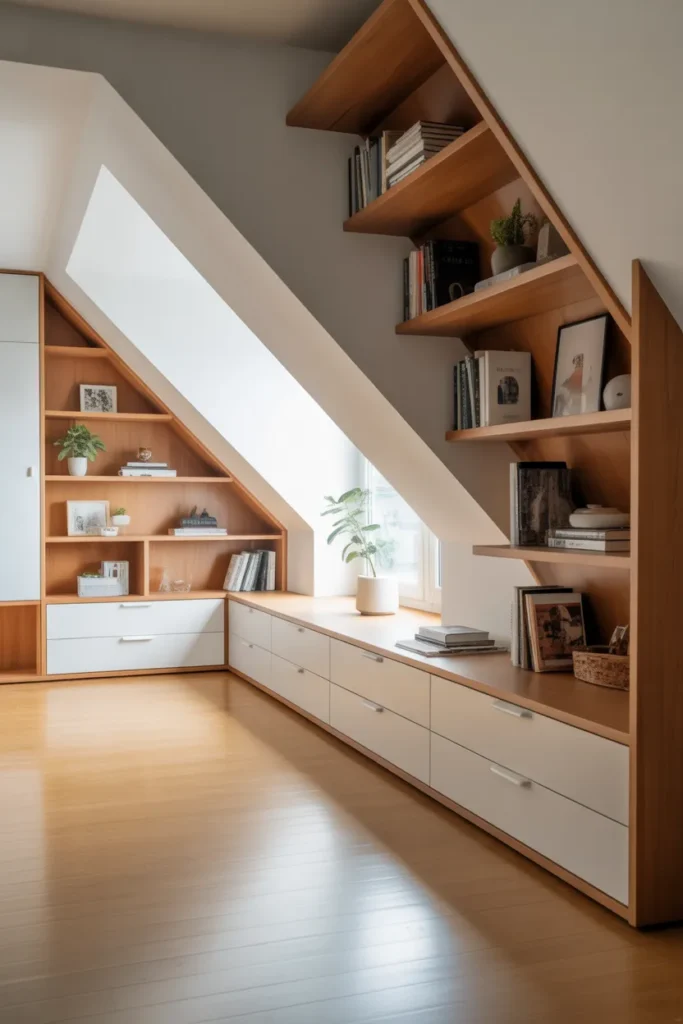
Built in storage is the single most useful upgrade in an attic bedroom, because it turns awkward low space into usable space. Along the eaves, where ceiling height drops below about four feet, fit drawers 18 to 24 inches deep with full extension runners so you can reach the back without crouching into the slope. Add a wardrobe section where the ceiling is tallest, with a hanging rail at about 66 inches for shirts and a double rail section for shorter items. Open cubbies near the bed work well for books and everyday items, while closed doors on the rest keep the room looking calm.
Plan storage by category before you build: everyday clothes near the dressing area, bedding and out of season items in the deepest eave drawers, and books or hobbies in open shelving at arm height. Match the drawer and door fronts to your wall color or to the wood tone already in the room, so the storage reads as architecture rather than furniture. Label the inside of deep drawers if you share the room, and leave one empty drawer or shelf on purpose, because an attic bedroom always gains things over time. Done well, built ins make the room feel larger, since floor space stays clear and nothing needs to be stacked or piled.
9. Attic Bedroom with Skylight Windows
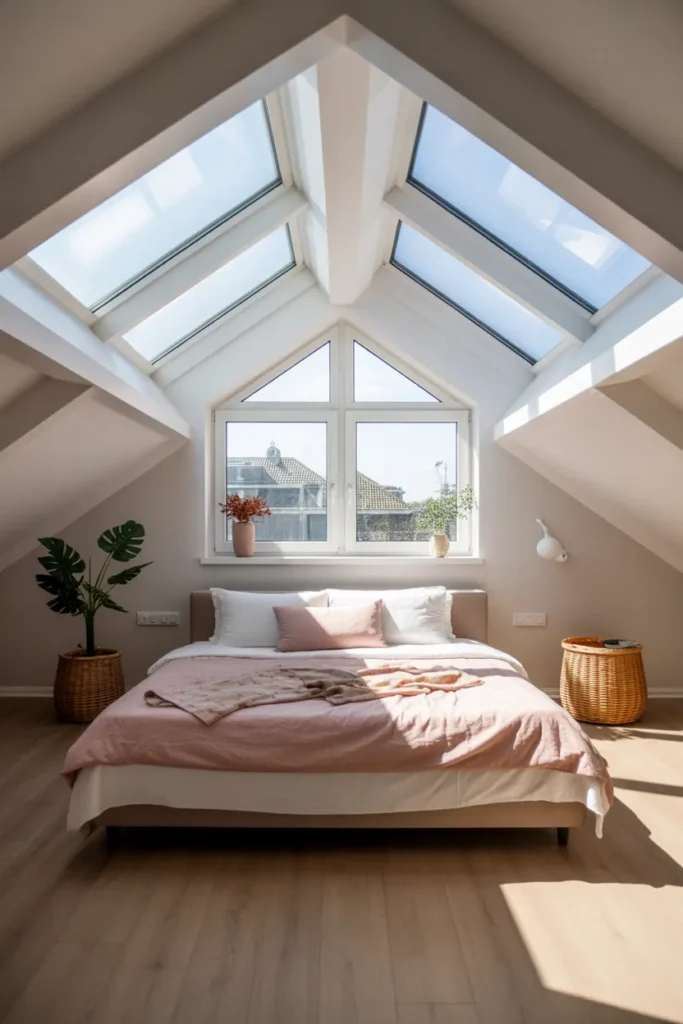
Skylights change an attic bedroom more than almost any other single feature, because they bring in daylight and a view of the sky where a normal window cannot. For a bedroom, a skylight roughly 2 by 4 feet over or near the bed gives a generous patch of light without overwhelming the room, and two smaller skylights spaced along the roof can light a longer attic more evenly. Choose an opening model with a rain sensor if your budget allows, so you get ventilation as well as light, and add a light filtering blind for bright summer mornings and a blackout blind if you sleep late.
Place furniture to make the most of the light: a reading chair or small desk under or beside the skylight, the bed positioned so morning light falls across the foot rather than directly on your face, and a plant on a nearby shelf where it gets bright indirect light. Keep the skylight surround painted white and free of heavy trim, so light spreads cleanly into the room. At night, the same skylight gives you a view of the stars from bed, which is one of the quiet pleasures of sleeping upstairs. Just remember to plan for cleaning access and for a blind you can actually reach, with a rod or remote control if the skylight is high.
10. Attic Bedroom with a Statement Wall

A statement wall gives an attic bedroom a clear focal point and stops sloped ceilings from making the room feel shapeless. The wall behind the headboard is the natural choice, because it anchors the bed and draws the eye to one deliberate feature. Options that work well include a bold paint color, peel and stick wallpaper in a geometric or botanical print, vertical wood slats, or a large scale mural. Keep the statement to one wall only, and keep the other walls and the ceiling in a quiet neutral, so the feature reads as intentional rather than busy.
Scale the pattern to the room: larger prints suit a bigger attic and a taller headboard wall, while smaller, subtler patterns work better in a compact space where a bold print could feel overwhelming. If you use wallpaper, choose a washable, paste the wall type for easier future removal, and order one extra roll for repairs. Finish the wall with simple bedding in a solid color pulled from the print, plus one cushion or throw that echoes the accent, and the room will feel designed rather than decorated around a single loud wall.
11. Attic Bedroom with Neutral Color Harmony
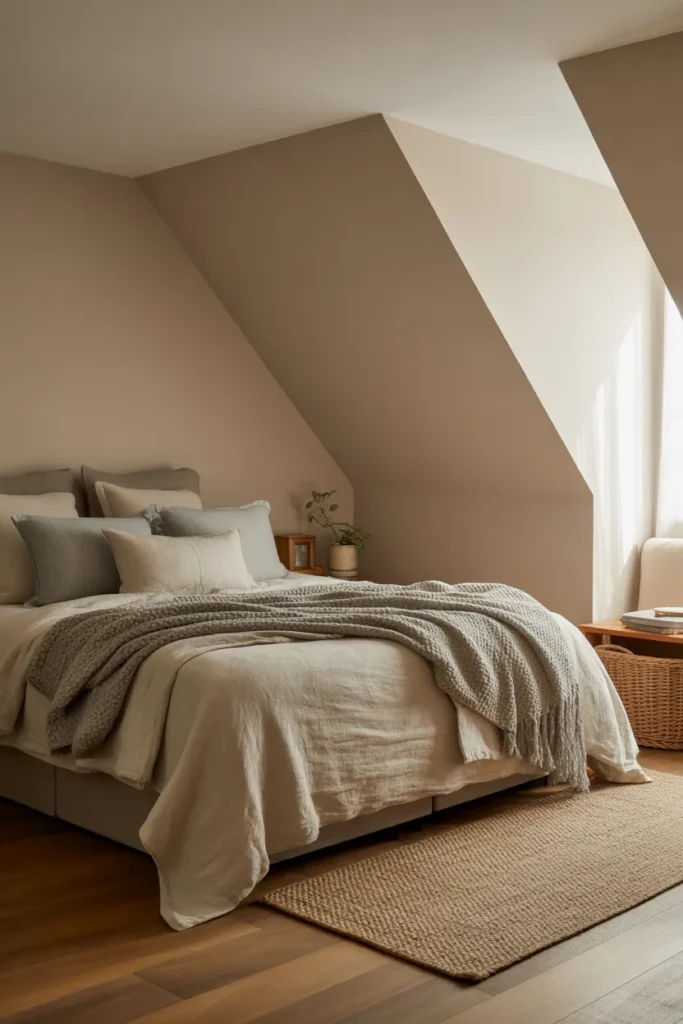
Neutral colors are timeless in attics because they maximize light and let beams, angles, and woodwork stand out. Build the palette from beige, ivory, warm gray, and taupe, with the lightest tone on the sloped ceiling so the room feels taller. A useful approach is to paint walls and ceiling in the same warm white, then add depth through the rug, bedding, and curtains in mid neutrals, and finish with one darker neutral, such as a charcoal throw or dark wood frame, for contrast. For more color pairing ideas, these bedroom color schemes show how neutrals work across different room sizes.
Texture is what keeps a neutral attic bedroom from feeling flat. Combine linen bedding, a knitted throw, a nubby rug, and smooth wood or matte ceramic accessories, so the room feels layered even though the colors stay quiet. Add warmth with one metallic accent, brushed brass lamp bases or a gold framed mirror, used sparingly rather than throughout the room. The great advantage of a neutral base is flexibility: you can change the mood completely by swapping cushions, throws, and art, without repainting or replacing furniture.
12. Kids’ Attic Bedroom with Playful Design
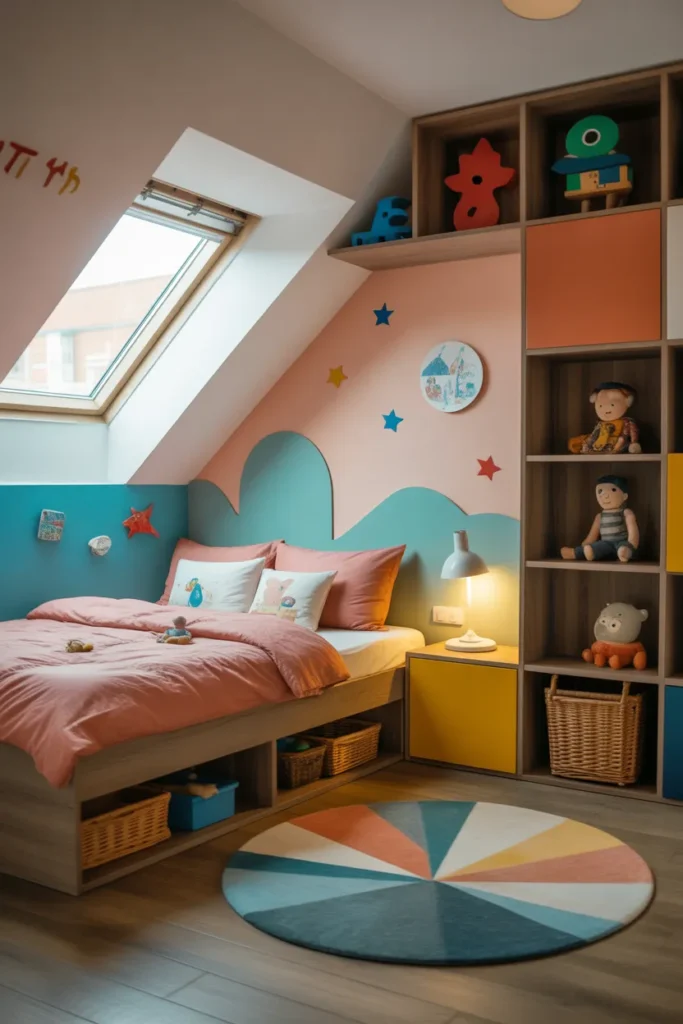
An attic makes a wonderful kids bedroom because the slopes feel like a hideaway and the space invites imagination. Start with safety and practicality: a low bed frame that a child can climb into easily, soft rugs on both sides of the bed, and rounded or padded edges on any furniture near the slope. Keep the brightest colors and boldest themes in items that are easy to change, bedding, cushions, wall decals, and a rug, while walls stay in a light, cheerful neutral that will still suit a teenager later. For age appropriate layout ideas, browse these kids bedroom ideas before you commit to a theme.
Build in a small reading nook under the lowest slope with a floor cushion, a basket of books, and a clip on or wall mounted reading light, so the awkward corner becomes the favorite spot in the room. Use labeled bins or low open cubbies for toys, with one bin per category, so tidying is a two minute job rather than a weekend project. Choose a desk or art table that fits the tallest part of the room, with the chair able to slide fully underneath, and leave clear floor space in the center for play. The goal is a room that feels magical now and still works in three years, without a full redecoration.
13. Attic Bedroom with a Home Office Corner
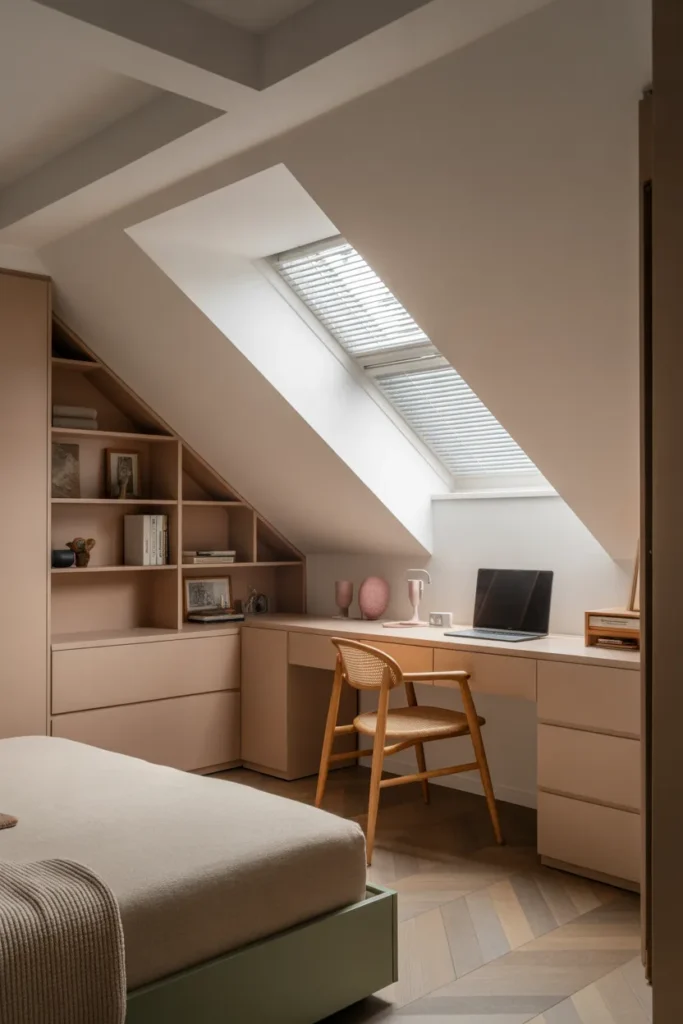
Combining a bedroom and a home office in an attic works when each zone has its own clear territory. Place the desk near a skylight, dormer, or gable window for daylight, and keep it in the tallest part of the room so you can stand and sit comfortably. A desk 48 inches wide and 24 inches deep suits most laptops and a monitor, while a compact 36 inch desk works in a tighter attic. Pair it with a chair that slides fully under the desk, and add vertical storage, wall shelves at 60 to 72 inches high, or a narrow bookcase, so paperwork stays off the desk surface.
Separate the zones visually without building a wall: a rug under the desk area, a different wall color or a single shelf unit as a divider, and task lighting that belongs to the desk alone. Keep the sleep zone calm by turning the desk chair to face away from the bed, or by using a small screen or curtain when you finish work. Choose calming colors for both zones, soft white, sage, or light gray, so the room still feels restful at night. With that separation, the attic becomes a true mini suite: focused by day, quiet by night.
14. Romantic Attic Bedroom with Soft Lighting
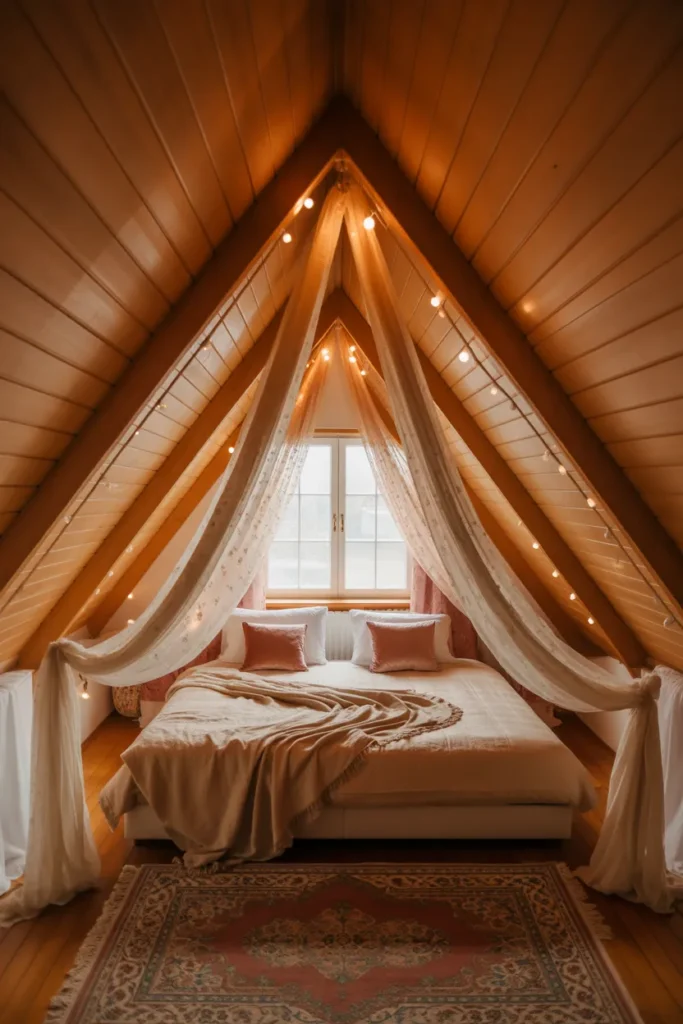
Romantic attic bedrooms depend on layered, warm light more than on any single decoration. Start with dimmable bedside lamps at about 2700 Kelvin, which gives a warm glow rather than a cool clinical light, then add a second layer: wall sconces beside the bed, fairy lights along a beam, or a small table lamp on the dresser. A dimmer switch on the main light lets you move from bright, practical light for cleaning and dressing to soft evening light in one touch. Keep the brightest light out of the direct line of sight from the bed, so the room glows rather than glares.
Pair the lighting with soft materials: a high thread count cotton or linen duvet, flowing curtains at a dormer window, a plush rug that extends at least 18 inches beyond each side of the bed, and cushions in velvet or washed linen. Choose a palette of warm neutrals with one romantic accent, dusty rose, muted plum, or soft gold, used in bedding and one piece of art. The sloped ceiling helps here, because it holds warm light close and makes the room feel intimate. Finish with a scented candle on a safe, stable surface away from curtains, or a diffuser, and the attic becomes a genuinely restful retreat.
15. Attic Bedroom with Vintage Charm
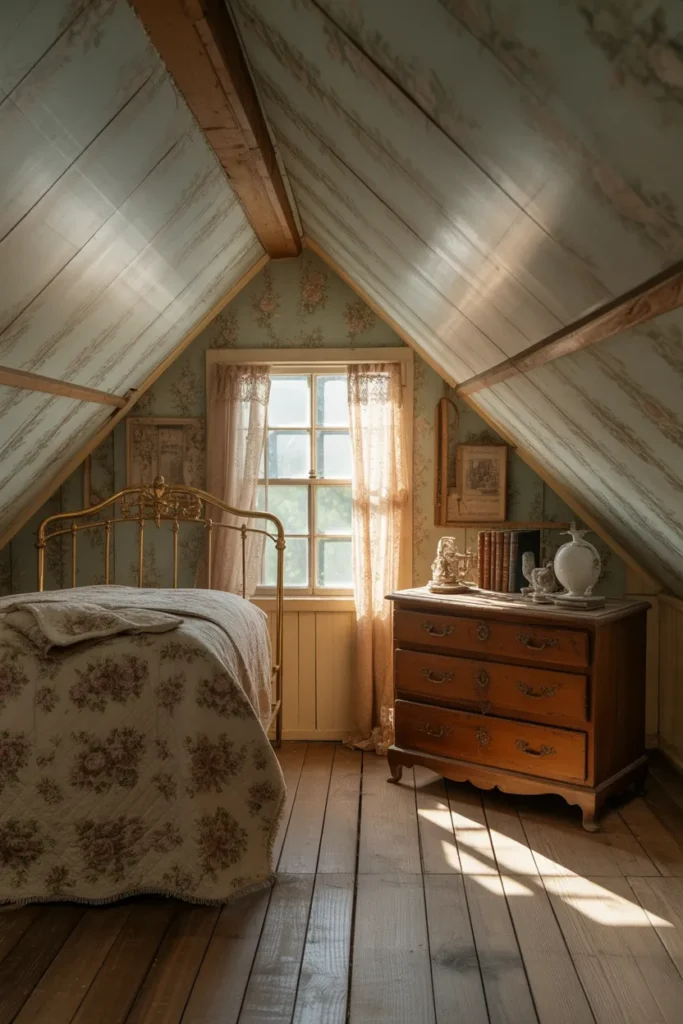
A vintage attic bedroom feels soulful because the architecture already has history, and older furniture suits it naturally. Look for a wrought iron or wooden bed frame, a small wooden wardrobe, and a dresser with patina rather than perfect finish, and let mismatched pieces sit together as long as they share a wood tone or a color family. Floral or toile bedding, lace trimmed cushions, and framed vintage prints add nostalgia without turning the room into a museum. Keep the palette warm: cream, soft sage, dusty rose, and aged wood.
Vintage rooms can tip into clutter quickly, so edit with a simple rule: every decorative item should earn its place by being beautiful, useful, or meaningful, and surfaces should stay at least one third clear. Use a trunk at the foot of the bed for extra blankets, which adds vintage character and practical storage in one piece. Hang art in simple wood or brass frames at eye level on the tallest wall, where it will not compete with the slope. Soft, warm lighting from a table lamp with a fabric shade completes the look, and the attic will feel like a room with a story rather than a room full of old things.
16. Luxury Attic Bedroom Suite
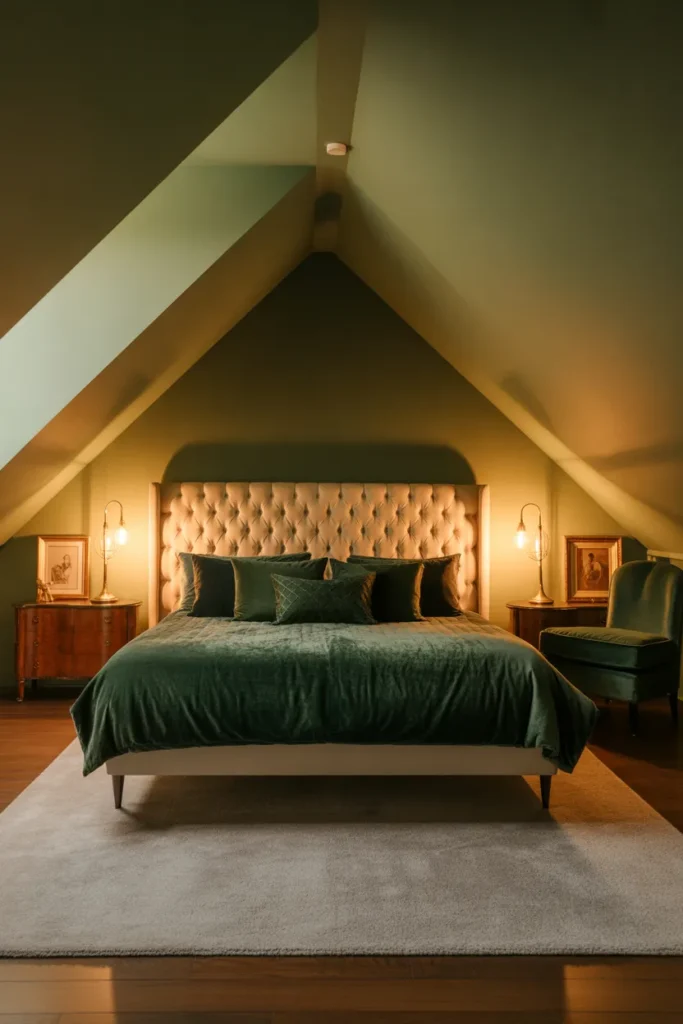
A luxury attic bedroom is less about size and more about attention to detail. Start with the bed: a tall upholstered headboard in velvet or linen, high quality bedding in white or cream, and a folded throw in a muted jewel tone such as deep teal or plum. Add a thick rug that extends well beyond the bed on both sides, so your first step in the morning lands on something soft, and choose lighting that makes a statement, a small chandelier or a pair of elegant pendants hung at equal height beside the bed. Keep the color palette restrained, cream, gold, and one muted jewel tone, so the luxury reads as calm rather than busy.
To create a suite feeling, carve out one extra zone beyond sleeping: a reading chair with a floor lamp near a window, a small vanity with a mirror and a stool, or a chaise in the tallest corner. Add blackout lining behind curtains or skylight blinds so sleep is undisturbed, and keep clutter out of sight in built in drawers or a wardrobe with doors. Small touches make the biggest difference here: matching hangers, a carafe and glass on the nightstand, and a single tray for jewelry and a book. Together they turn an attic into a private getaway that feels separate from the rest of the house.
17. Attic Bedroom with Natural Materials
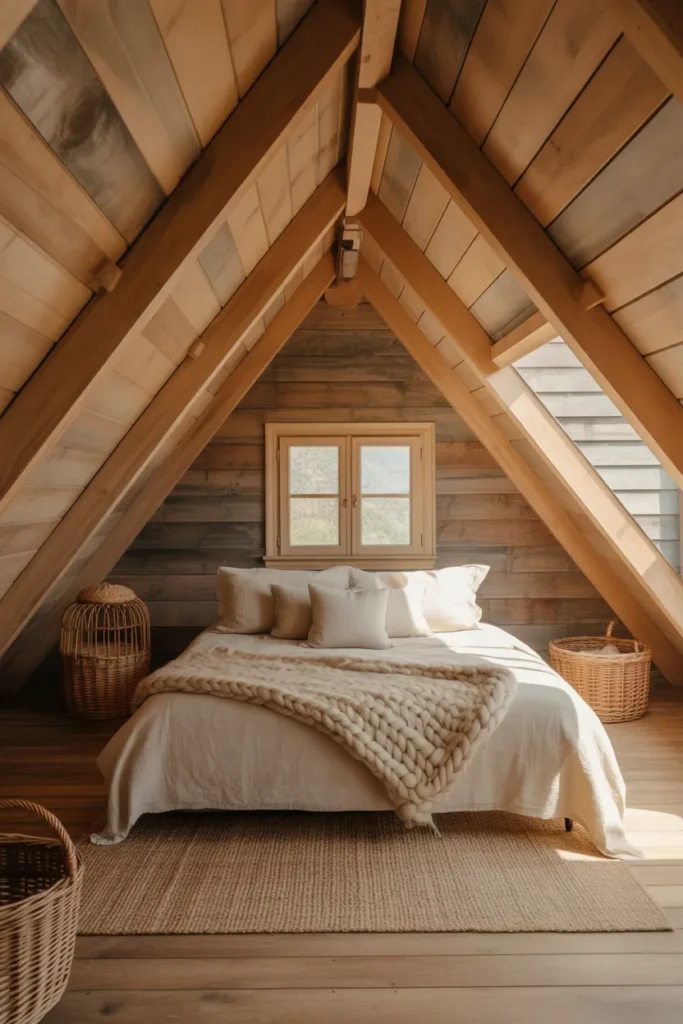
Natural materials suit attics because they soften sharp geometry and bring warmth that paint alone cannot. Use solid wood for the bed frame and shelving, rattan or cane for a chair or pendant shade, linen and cotton for bedding, and jute or wool for rugs. Keep finishes matte and honest: oiled wood rather than high gloss, unbleached linen rather than shiny polyester, and stone or ceramic for lamps and vases. An earthy palette of warm white, sand, clay, and soft green ties the materials together without needing bold color.
Place plants where they will thrive, near a skylight or dormer with bright indirect light, and choose forgiving varieties such as pothos, snake plant, or ZZ plant if the attic gets hot in summer. Let wood age naturally rather than chasing a perfect finish, since small marks and color changes add character over time. Keep furniture simple and well made, with visible craftsmanship, a joined wood frame, a woven seat, a hand thrown vase, rather than glossy or overly ornate pieces. The result is a grounded, peaceful bedroom where relaxation feels natural, not staged.
18. Attic Bedroom with Built-In Window Seat

A built in window seat turns a dormer or skylight nook from wasted space into the best seat in the house. Build the seat 18 to 20 inches high and 20 to 24 inches deep, which suits most adults for sitting and reading, and add a custom cushion 3 to 4 inches thick in a washable fabric. Underneath, fit drawers or a lift up bench for bedding, books, or out of season clothes, so the seat works as storage as well as seating. Add back cushions or bolster pillows along the wall, and a small wall light or clip on reading light, so the nook works comfortably in the evening too.
Choose a fabric that can handle sunlight if the seat faces a skylight or south facing dormer, and keep a small basket nearby for the current book, a throw, and a phone charger, so the nook stays tidy. If children use the room, add a safety catch on a lift up lid and keep the seat height low enough for them to climb up safely. A window seat also helps with temperature, because the cushion and storage base add insulation to what is often the coldest part of the room. It is a small build with an outsized payoff: a private, sunny corner that makes the whole attic feel thoughtfully designed.
19. Attic Bedroom with Artistic Flair
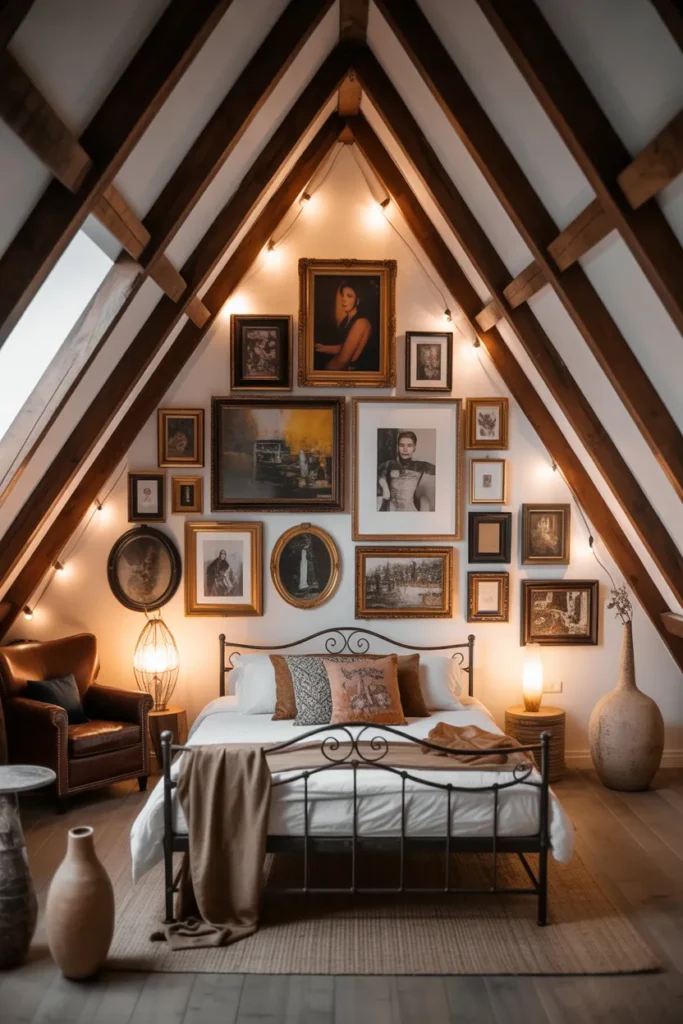
An attic bedroom is a natural canvas for art because the sloped walls and beams already create visual rhythm. Choose one main art moment rather than scattering small pieces everywhere: a gallery wall along the longest straight wall, a large framed print above the bed, or a sculptural vase and a textured wall hanging on the tallest wall. Keep the frames consistent, all wood, all black, or all white, so the collection reads as curated even when the subjects differ. Let the art palette echo the bedding and rug, with one accent color repeated in at least two places.
Art does not need to be expensive to feel personal. Framed prints, a hand painted accent on a small side table, a woven wall hanging, or a collection of ceramics on a shelf all add character when they reflect your taste rather than a catalog. Hang art at eye level from a standing position on the tallest wall, and keep pieces off the lowest slopes where they will be hard to see and easy to bump. Leave breathing room around each piece, at least 3 to 4 inches between frames in a gallery wall, so the display feels intentional. Done this way, the attic becomes a personal haven that tells your story at a glance.
20. Attic Bedroom with Multi-Functional Zones
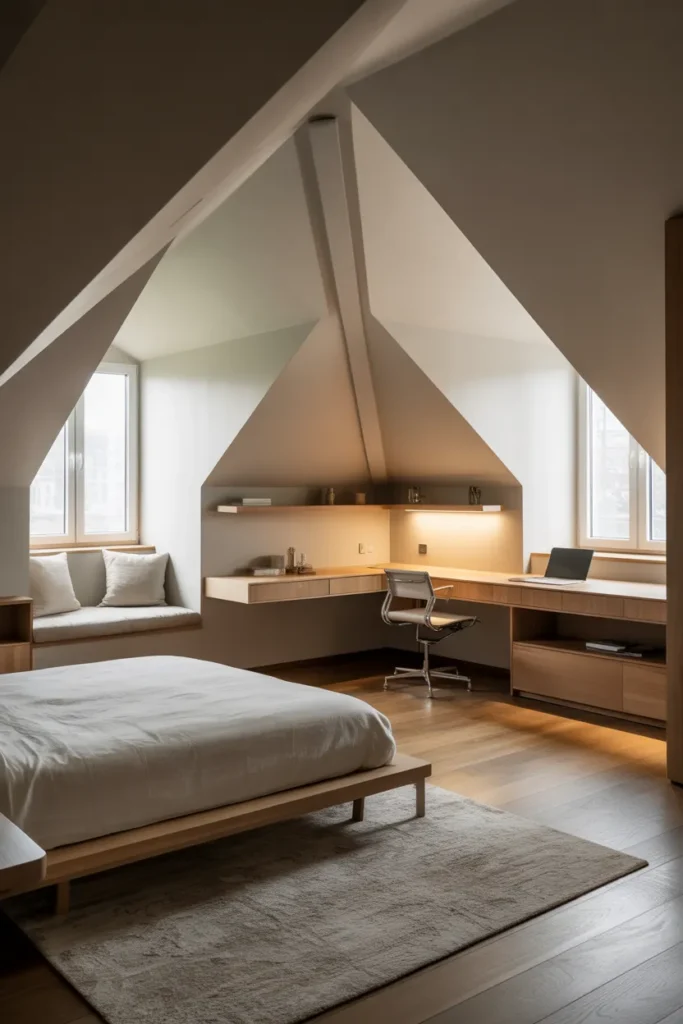
A multi functional attic bedroom works when each activity has a defined zone, even in a small footprint. Sketch the room first and divide it into sleeping, dressing or storage, and sitting or working areas, using the ceiling height as your guide: sleeping and storage can sit under lower slopes, while dressing and walking need the tallest space. Use rugs to mark each zone, a large rug under the bed, a smaller rug under a chair, and keep furniture scaled to its zone, so a bulky desk does not crowd the sleeping area. Lighting should follow the same logic, with a bedside lamp, a desk lamp, and a general ceiling light on separate switches where possible.
Choose furniture that does more than one job wherever you can: a storage bench at the foot of the bed, a fold down desk, a sofa bed for guests, or modular shelving that can be rearranged as needs change. Keep walkways at least 24 inches wide between zones, and avoid blocking the tallest part of the room with tall furniture. The test of a good multi zone attic is simple: you can move from sleeping to working to relaxing without moving furniture or stepping over things. When that works, even a compact attic feels like a complete, flexible living space rather than a single cramped bedroom.
Conclusion
Turning an attic into a bedroom is one of the most rewarding projects in a home, because you start with a space that already has character and end with a room that feels personal in a way a standard bedroom rarely does. Whether you lean toward a calm minimalist retreat, a rustic cabin hideaway, a light filled Scandinavian room, or a bold industrial loft, the principles stay the same: respect the ceiling height, plan storage into the low spaces, bring in as much natural light as you can, and choose furniture that fits the shape of the room rather than fighting it.
Start with the three or four ideas that solve your biggest frustrations, get the fundamentals of light, insulation, and storage right, and then layer in color, texture, and art at your own pace. An attic bedroom does not need to be finished in one weekend to feel wonderful, and in fact it often turns out better when it grows gradually, as you learn how you actually use the space. With a little planning and the ideas in this guide, the attic you once ignored can become the most inviting room in your home.
Frequently Asked Questions
How much headroom do you need for an attic bedroom?
You need enough height to stand, dress, and move comfortably in the main walking areas, ideally seven feet or more in the center of the room, with at least five feet of usable height over a good portion of the floor. Lower areas under the eaves are still useful for a bed head, storage drawers, or a reading nook, but avoid placing a desk, wardrobe door, or main walkway where you cannot stand upright. Always check your local building rules for minimum ceiling height and emergency escape requirements before converting an attic into a legal bedroom.
How do you keep an attic bedroom cool in summer and warm in winter?
Insulation is the first step, in the roof slopes and any knee walls, followed by ventilation through an opening skylight, a vent, or a quiet fan that moves air under the roof. In summer, use light filtering or blackout skylight blinds during the hottest hours and open windows at night to flush out warm air. In winter, seal drafts around skylights and dormers, add a thick rug and heavy curtains, and keep furniture slightly away from exterior walls so warm air can circulate. A ceiling fan set to push air down in winter and pull it up in summer helps in both seasons.
Can you add a skylight to any attic roof?
Most pitched roofs can take a skylight, but the size, position, and structure depend on your roof type, rafter spacing, and local rules. A roofer or structural professional should confirm that the opening will not weaken the roof and that flashing will keep it watertight. Fixed skylights suit light only, while opening models add ventilation, and both need a blind you can reach for glare and heat control. Get at least two quotes, ask about flashing warranties, and plan the interior finish at the same time so the skylight surround looks neat from inside.
What is the best bed placement under a sloped ceiling?
In most attics, the bed works best with its headboard on the tallest wall and the length of the bed running toward the slope, so you sit up in the taller space and only your feet or the foot of the bed extend into lower headroom. If the tallest wall is short, placing the bed with its head under the slope can still work for sleeping, as long as you can sit up comfortably without hitting the ceiling. Leave at least 24 inches beside the bed for getting in and out, and keep a bedside light within arm’s reach rather than on a distant wall.
How do you add storage without losing floor space?
Use the space you cannot stand in: drawers and cupboards built into the eaves, a wardrobe where the ceiling is tallest, and a window seat with storage underneath. Keep everyday clothes and items at arm height, seasonal and bulky items in the deepest eave drawers, and books and hobbies in open shelving near the bed or desk. Closed doors on most storage keep the room calm, while one or two open shelves stop it from feeling like a wall of cupboards. The goal is simple: every item has a home that does not take up floor you need for walking and living.
More Ideas You Will Love
 21 Creative Kids Bedroom Ideas with Fun Themes & Practical Decor Tips
 23 Master Bedroom Ideas for a Luxurious & Relaxing Retreat
 23 Bedroom Remodel Ideas for 2026 That Transform Your Space with Modern Design
 18 Indoor Christmas Light Ideas for 2025 Inspiration
 14 Boy Nursery Ideas with Inspiring Themes and Layout Tips
 12 Elegant Luxury Master Bedroom Ideas