
22 Bedroom Wall Decor Ideas to Instantly Elevate Your Space

Your bedroom walls do more work than any other surface in the room. They set the mood when you wake up, they frame the bed, and they decide whether the space feels calm, creative, or just unfinished. A blank wall is not neutral, it quietly makes even good furniture look temporary, while a well dressed wall pulls bedding, lighting, and storage together into a room that feels intentional and restful.
The good news is that bedroom wall decor does not require a renovation or a large budget. Most of the ideas below use one wall, a few tools, and an afternoon of work, and many can be changed later without damage, which matters for renters and for anyone who likes to refresh a room with the seasons. The trick is to choose a focal wall first, usually the wall behind the bed, get its scale right, and then let the other walls stay quieter so the room does not feel crowded.
Here are 22 bedroom wall decor ideas that cover art, texture, color, lighting, and storage, each with practical details on sizes, materials, placement, and cost saving tips. Work through them in order, pick the one that solves your biggest problem first, whether that is a bare wall, a dark room, or a lack of storage, and build from there.
1. Statement Wall Art
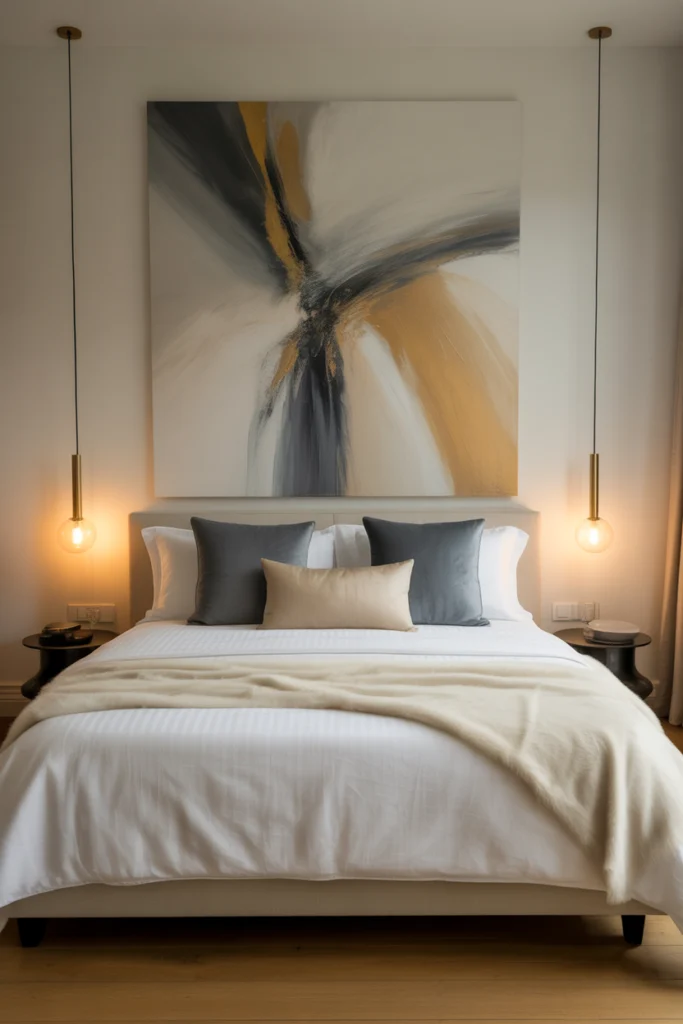
Nothing changes a bedroom faster than one large piece of statement art. A single oversized canvas, framed print, or textile above the bed becomes the natural focal point, and it does the job that ten small frames scattered around the room cannot do, because the eye has one clear place to land. Choose art that reflects your taste and the mood you want at night: soft abstracts and landscapes for calm, bold color and graphic shapes for energy, and photography or portraits for a personal feel.
Scale is what makes this work. Above a queen bed, aim for art that spans roughly two thirds of the bed width, about 40 to 48 inches wide, and hang it so the center sits at 57 to 60 inches from the floor, with 6 to 8 inches of space between the bottom of the frame and the headboard. Keep the palette tied to your bedding by repeating one color from the art in a pillow or throw, and use a simple frame, natural oak for warmth or slim black metal for a modern look, so the art itself stays the star. If you are unsure, lean the piece against the wall for a few days before hanging it, and live with it in morning and evening light.
2. Gallery Wall with Personal Flair
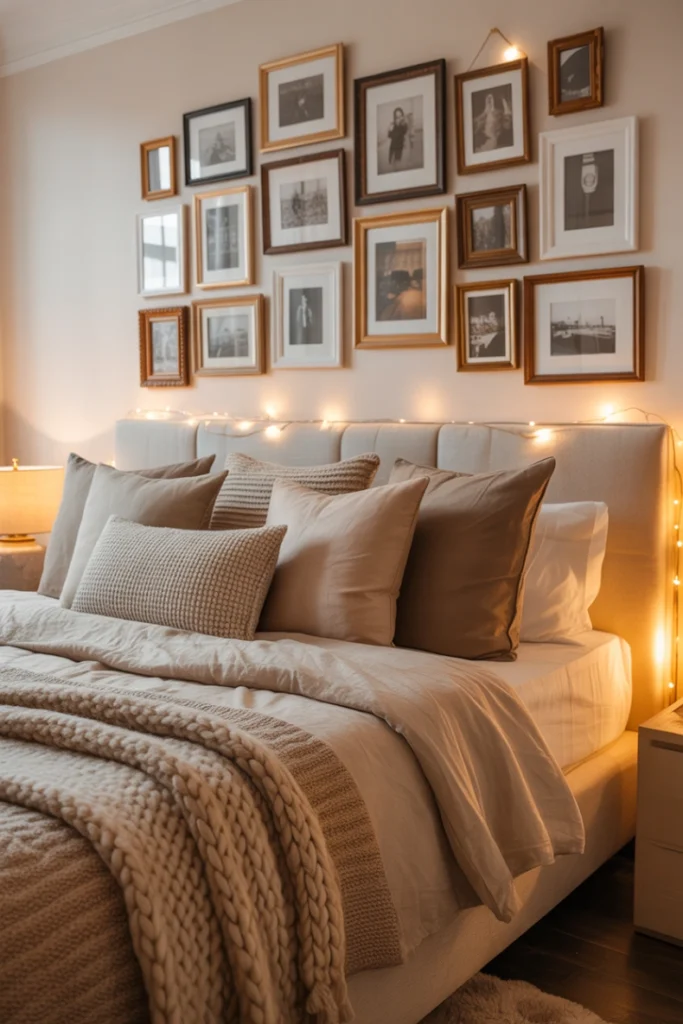
A gallery wall turns your memories into decor, and it works best when it tells a story instead of filling space at random. Mix framed photos, art prints, and a typography piece or two, and keep one thread running through the whole arrangement, such as matching frames, a shared color, or a single subject like travel, family, or nature. That thread is what stops a gallery wall from looking like a noticeboard, even when frame sizes and orientations vary.
Plan the layout on the floor before you make a single hole. Lay the frames out on a rug or on kraft paper cut to the wall size, start with the largest piece slightly off center, and build outward with 2 to 3 inches between frames for a tight, curated look, or 4 to 5 inches for a lighter, airier feel. Symmetrical grids suit modern rooms, while a loose, salon style cluster suits eclectic rooms. For more inspiration on tying a gallery wall into the rest of the room, see these bedroom decor ideas that show how art, bedding, and lighting work as one scheme. Use picture hanging strips for lighter frames in rentals, and keep the center of the whole arrangement at eye level, about 57 to 60 inches high.
3. Textured Wall Panels

Textured wall panels add a layer your eyes can feel, even from the doorway. Wood slats, fabric wrapped panels, fluted MDF, and 3D plaster tiles all create shadow and depth that flat paint cannot, and they make a bedroom feel finished and cocooning, especially behind the bed. Fabric panels also soften sound, which is a real bonus in a bedroom, while wood and plaster panels add a tailored, architectural quality.
Start with one accent wall, and measure carefully before you order. For a bed wall, panels usually run the full width of the bed plus 12 to 24 inches on each side, and from floor to about 8 to 9 feet high, or to the ceiling if your ceilings are standard height. Wood slats in natural oak suit Scandinavian and warm modern rooms, walnut suits a moodier scheme, and painted fluted panels in the wall color suit a subtle, tonal look. Install with construction adhesive and a few finish nails for wood, or adhesive alone for lightweight foam and fabric panels, and paint the wall behind dark panels a matching tone first so no gaps show through.
4. Wallpaper with Personality
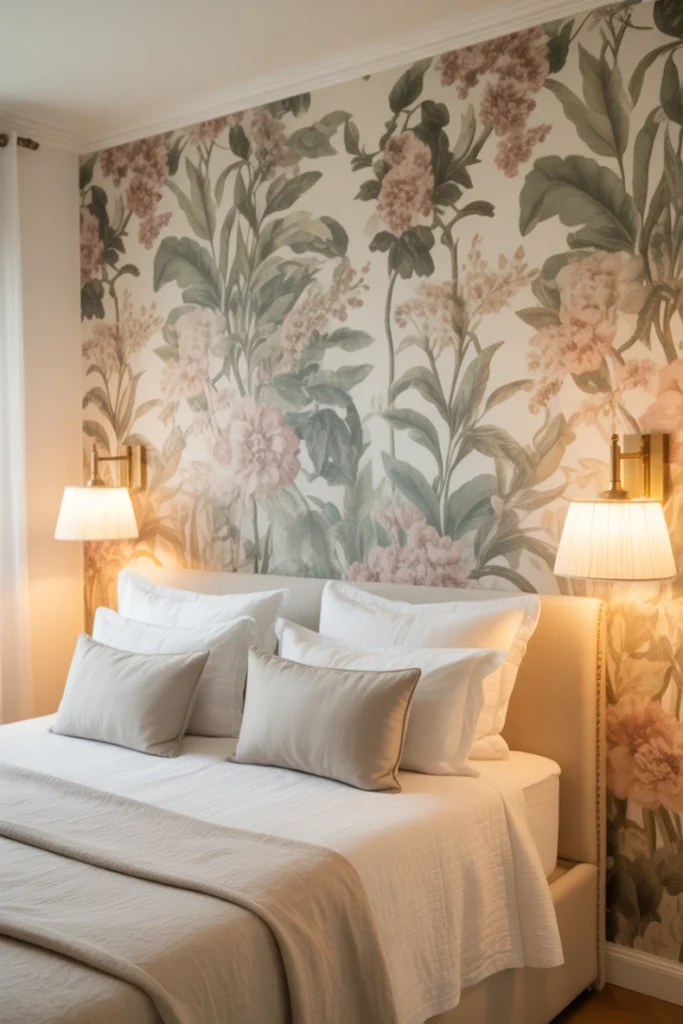
Wallpaper is the fastest way to give a bedroom a distinct personality, because it adds pattern, color, and texture in one step. Soft florals and botanicals suit a romantic, relaxed room, small geometrics and stripes suit a modern room, and metallic or grasscloth style papers add a touch of glamour without needing much else on the wall. The key decision is coverage: one accent wall for a bold pattern, or the whole room for a small, quiet pattern that reads almost like texture.
Modern peel and stick wallpaper has made this a renter friendly weekend project. Measure the wall, add 10 percent for pattern matching and waste, and order all rolls from the same batch so the color matches. Start in a corner, use a plastic smoother to push out air bubbles, and trim at the ceiling and baseboard with a sharp craft knife. For a bold pattern, keep bedding and curtains plain so the wall can carry the room, and if you are choosing a color, check these bedroom color schemes for pairings that keep a patterned wall feeling calm rather than busy. A single accent wall in a standard bedroom usually needs 2 to 3 rolls, and most people finish it in two to three hours.
5. Floating Shelves for Style and Function
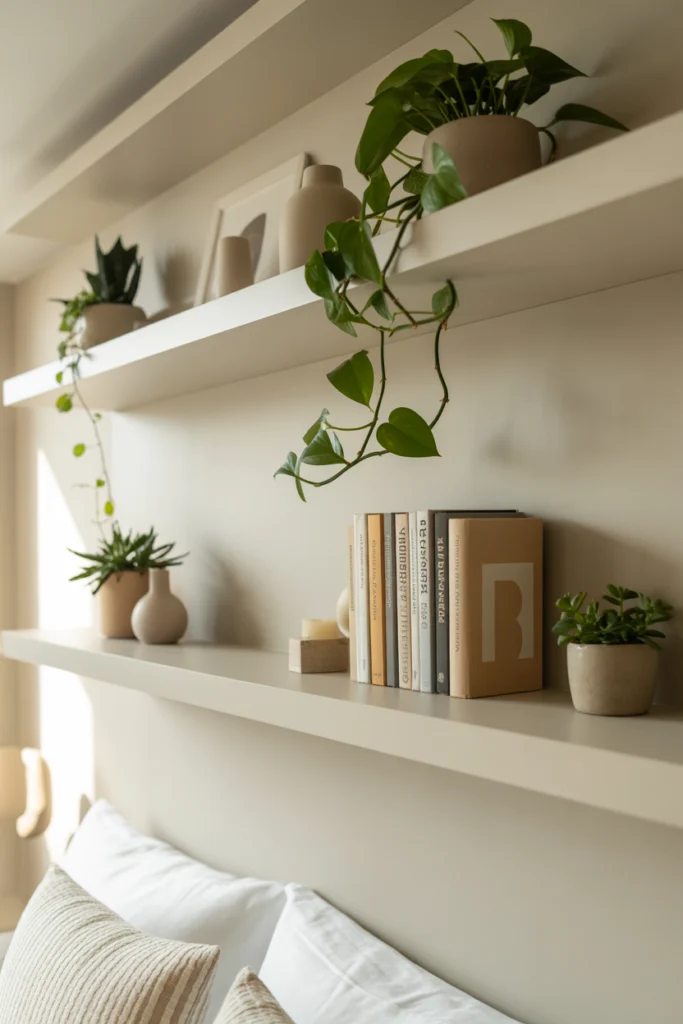
Floating shelves give you display space without taking a single inch of floor, which is why they are ideal for small bedrooms and for walls that feel bare but cannot hold a heavy bookcase. Style them with a mix of books, a small plant, a candle, and one framed print, and the wall gains layers and personality while the room stays open. The trick is restraint: a shelf that is fully packed looks like storage, while a shelf with breathing room looks like decor.
Hang shelves at a height you can reach and enjoy, usually 60 to 66 inches from the floor for a display shelf above a dresser, or in a staggered pair beside the bed as a nightstand alternative. Use brackets rated for at least twice the weight you plan to load, fix them into wall studs where possible, and vary shelf lengths, for example a 36 inch shelf above a 24 inch shelf, for a more dynamic look. Leave at least one third of each shelf empty, group objects in odd numbers, and put the heaviest item, usually books, at one end to anchor the arrangement. In a tight layout, these small bedroom ideas show how shelves above a bed or desk can replace bulkier furniture entirely.
6. Boho Macramé Wall Hangings
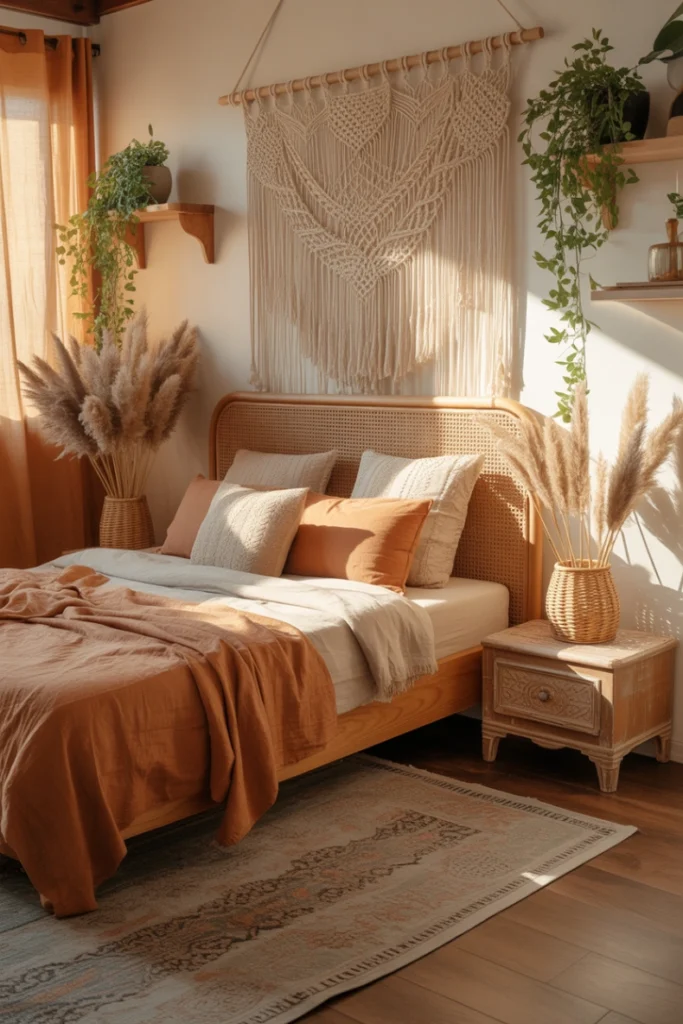
Macramé wall hangings bring instant warmth and handmade texture to a plain wall, and they suit bedrooms better than almost any other room because their soft, woven surface makes the space feel relaxed rather than formal. A large piece above the bed, or a smaller one layered over a rattan headboard, softens hard walls and adds the kind of visual softness that bedding alone cannot provide. Cream, natural cotton, and undyed jute are the safest choices, because they work with any bedding color, while terracotta or sage dyed yarn can pick up an accent color already in the room.
Choose size by wall, not by price: a piece 24 to 36 inches wide suits a single bed or a narrow wall, while a 40 to 48 inch piece suits a queen bed wall. Hang it from a wooden dowel with a simple nail or hook, and let it hang free rather than stretching it flat, because its movement is part of its charm. Pair it with rattan furniture, linen bedding, and a woven basket or two, and keep the rest of that wall simple, since macramé plus a gallery wall on the same wall will compete. Dust it with a low suction vacuum attachment every few weeks, and keep it away from direct damp, which can stain natural cotton over time.
7. Mirrors for Light and Space
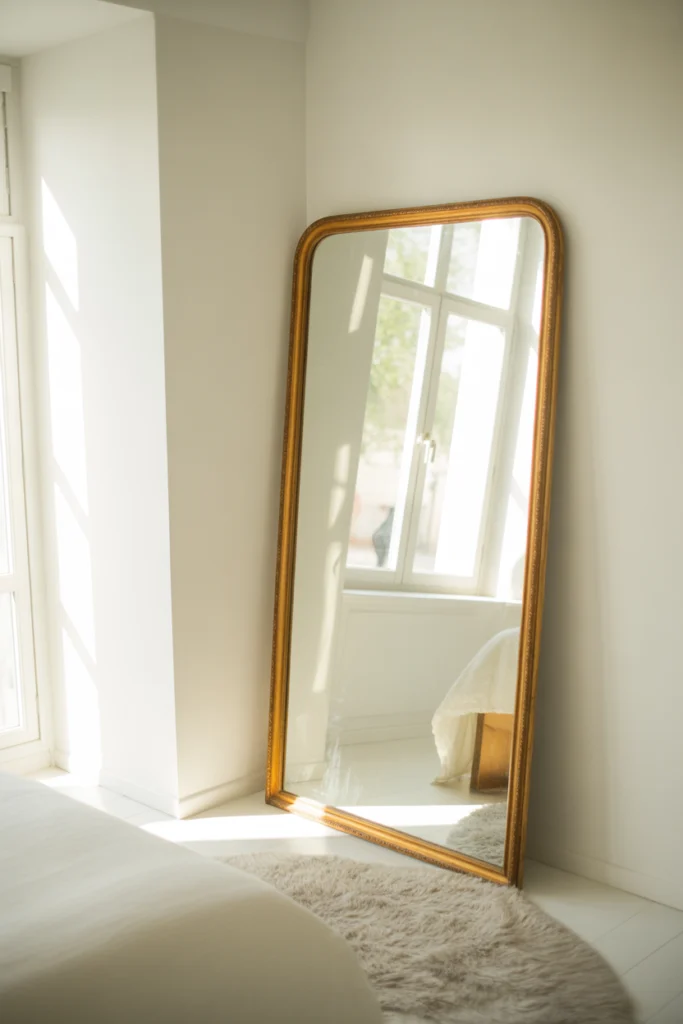
Mirrors are the most practical wall decor a bedroom can have, because they do two jobs at once: they decorate, and they change how the room feels. A mirror placed opposite or beside a window bounces daylight deeper into the room, making a small or north facing bedroom feel larger and brighter, and a mirror with an interesting frame, arched, round, or rattan wrapped, reads as art in its own right. This is the first idea to try in a dark bedroom, before you buy more lamps or repaint.
For a full length option, an oversized mirror 60 to 70 inches tall leaned against the wall beside a dresser or in a corner gives a dressing area and a light boost in one piece, and leaning avoids extra wall fixings, though it should be secured at the top in homes with children or pets. For a cluster, group three small round mirrors, 12 to 16 inches across, with 3 to 4 inches between them, above a dresser. Hang a single mirror so its center is at eye level, about 60 inches from the floor, and avoid placing it directly opposite the bed if reflected light from a window will hit the bed in the morning. A brass or wood frame warms a neutral room, while a slim black frame suits a modern scheme.
8. Wall-Mounted Lighting Fixtures

Wall sconces and swing arm lamps are wall decor with a job, and they earn their place by freeing up nightstand space and creating the layered, cozy light that a single ceiling light can never give. A pair of sconces flanking the bed gives each sleeper their own reading light, and because the light washes up and down the wall, it makes the wall itself look better, highlighting texture, art, and paint color after dark. This is a small change with an outsized effect on how expensive a bedroom feels.
Hang bedside sconces at about 60 to 66 inches from the floor, and 6 to 10 inches out from the edge of the mattress, so light falls on a book without shining in your eyes. Choose plug in sconces with a cord cover painted to match the wall if you do not want an electrician, or hardwired sconces with a dimmer for a cleaner look. Brass suits warm, traditional, and boho rooms, matte black suits modern and industrial rooms, and opal glass globes soften light and hide the bulb. Adjustable arms are worth the small extra cost for readers, because you can pull light toward the bed at night and push it flat to the wall during the day.
9. Wooden Slat Accent Wall
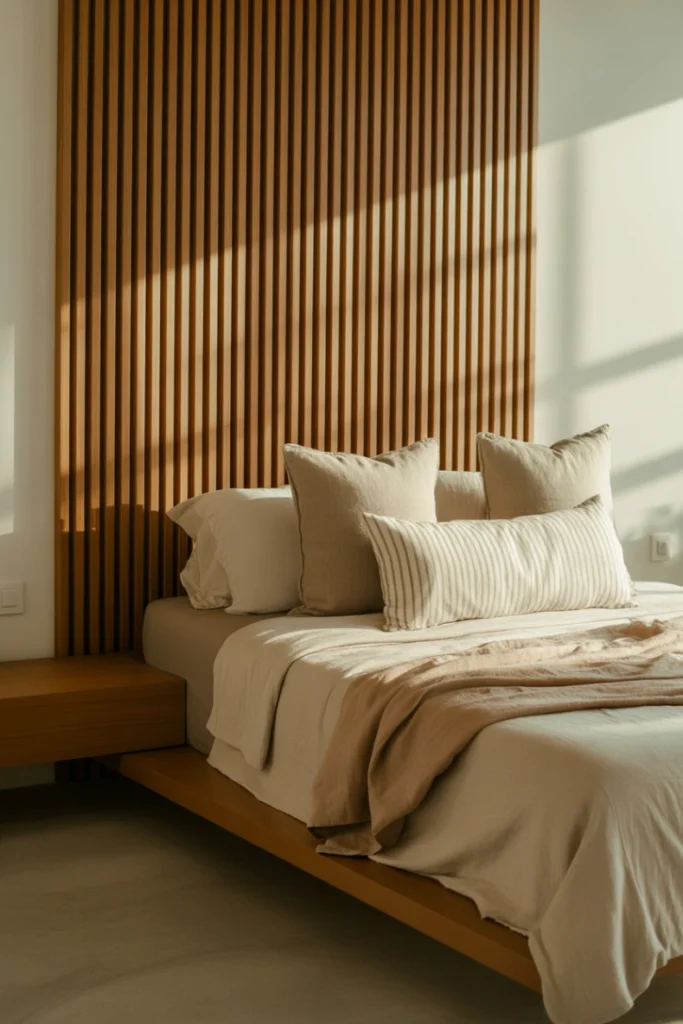
A wooden slat wall adds rhythm, warmth, and a modern organic feel in one project, and the vertical lines make a bedroom feel taller and more structured, which is especially useful in rooms with low ceilings. Natural oak slats suit a Scandinavian or Japandi room, dark walnut suits a moody, hotel style room, and painted slats in the wall color suit a subtle, tonal look that adds texture without adding color. Unlike wallpaper, slats also hide small wall imperfections, which makes them forgiving on older walls.
Plan the layout before you buy: slats are usually 1 to 2 inches wide with a gap of about half an inch to 1 inch between them, and the wall behind should be painted in a tone close to the slats, or darker for contrast. For a bed wall, run slats floor to ceiling across the bed width plus 12 inches each side, and use a level and a spacer block to keep gaps even. Pre-finished slat panels, sold in 8 foot lengths, are faster than individual slats and cost less in labor, while individual slats let you work around outlets and switches more neatly. Finish with a clear matte sealant on raw wood to protect against dust and humidity, and keep the rest of the room simple so the slat wall stays the focus.
10. Minimalist Line Art

Minimalist line art is popular for a reason: a single continuous line, a face in profile, or a simple botanical outline adds interest without visual noise, which is exactly what a bedroom needs. It works in neutral rooms where a bold painting would feel too loud, and it pairs beautifully with white bedding, light wood, and linen textures. Black line work on white or cream paper is the classic choice, while a terracotta or sage line can tie the art to an accent color without breaking the calm.
Hang one large line art print, about 24 by 36 inches, above the bed or dresser, and give it a wide mat, at least 2 to 3 inches, so the drawing has room to breathe inside the frame. A set of three smaller prints, each 12 by 16 inches, hung in a row with 3 inches between them, works well above a long dresser. Keep frames thin and consistent, black for contrast or natural wood for warmth, and avoid mixing line art with busy patterns on the same wall. For a softer, dreamier take on pared back bedroom walls, these dreamy bedroom style ideas show how line art, pale color, and soft textiles work together. If you like to change art often, lean large line art on a dresser instead of hanging it, so swapping takes seconds.
11. Botanical Wall Prints

Botanical prints bring the calm of the outdoors inside, and they suit bedrooms because green is restful and because plant forms work with almost any style, from vintage pressed flower frames to modern oversized leaf photography. A set of botanical prints above a bed or along a hallway style wall adds color without shouting, and it pairs naturally with wood, linen, rattan, and other natural materials already common in bedrooms.
Build the set with intention: pick prints that share a palette, for example deep green and cream, or muted sage and terracotta, and vary the scale, one large fern or monstera print with two smaller herb or flower prints. Frame them identically, in wood or thin black metal, and hang them as a row or a grid with even spacing, 3 inches apart, at eye level. Pressed flower frames under glass need to stay out of direct sunlight to avoid fading, while printed botanicals are more forgiving. Add one real plant on a nightstand or dresser nearby, and the prints will feel like part of a living scheme rather than a theme park version of nature.
12. Woven Baskets as Wall Art
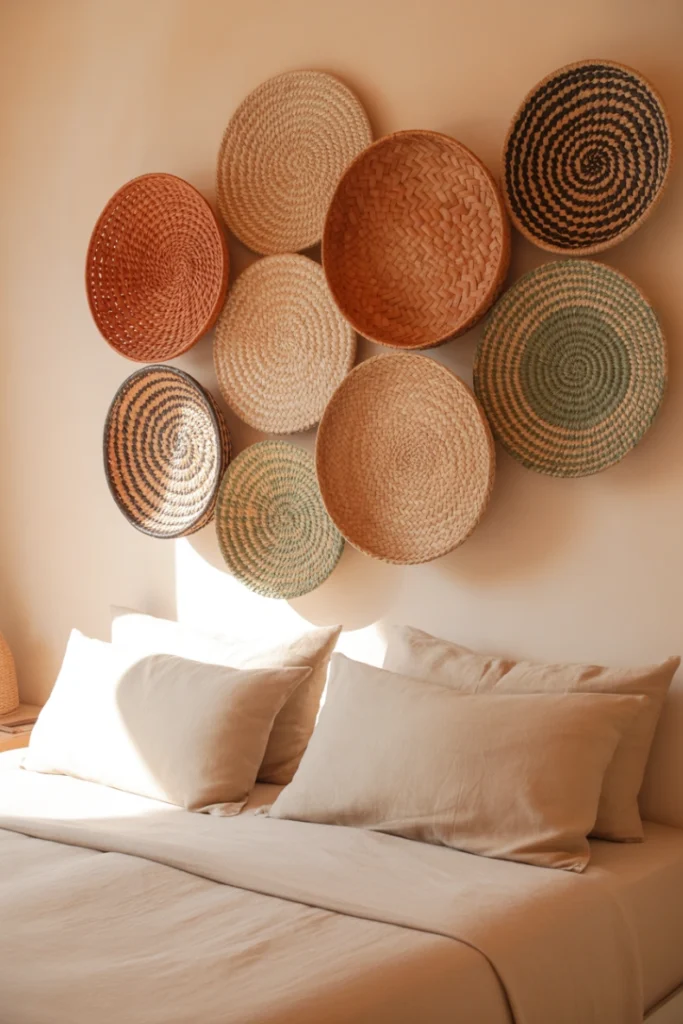
Woven baskets hung on a wall turn everyday craft into a sculptural display, and they add depth, shadow, and natural texture that flat art cannot match. Baskets in seagrass, rattan, sisal, and jute bring a handmade, global feel, and because they are shallow and light, they work on walls that cannot hold heavy frames. A basket wall suits boho, coastal, farmhouse, and eclectic bedrooms, and it is one of the cheapest ways to fill a large blank wall with real impact.
Collect baskets in a range of sizes, from 10 inch small rounds to 20 inch statement pieces, and in a tight palette of natural tones with one or two painted or patterned pieces for contrast. Lay them on the floor first, starting with the largest basket slightly off center, and build outward with 2 to 4 inches between pieces, mixing round, oval, and flat shapes. Hang each basket from a small nail through its woven back or a loop of twine, and step back often, because a basket wall looks best when it feels organic rather than perfectly symmetrical. Dust with a dry cloth, and keep baskets away from bathroom humidity, which can warp natural fibers over time.
13. Fabric Wall Tapestry
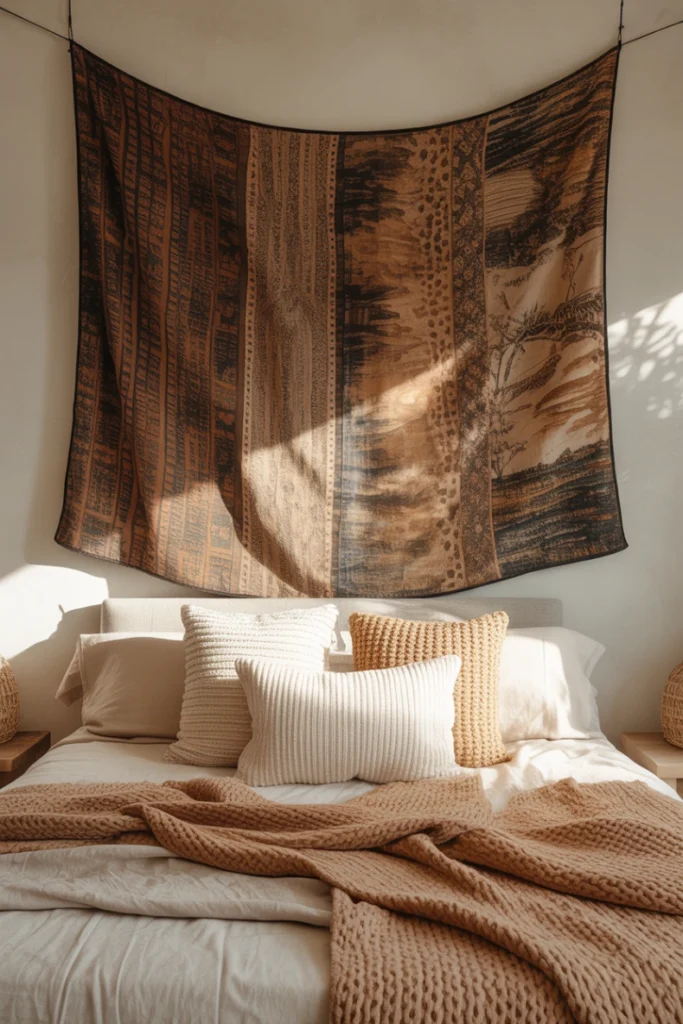
A fabric tapestry is the softest way to cover a large wall, and it instantly makes a bedroom feel warmer, quieter, and more layered. Unlike framed art, a tapestry has no hard edges, so it softens a room, absorbs a little sound, and adds pattern and color in one piece. Mandala and geometric designs suit boho and modern rooms, landscape and nature scenes suit calm, nature led rooms, and abstract color washes suit minimalist rooms that still want warmth.
Size matters more than design: a tapestry should cover most of the wall it hangs on, so a queen bed wall needs a piece at least 60 inches wide, while a narrow wall needs a vertical tapestry rather than a small square that looks lost. Hang it from a curtain rod, a wooden dowel, or adhesive wall clips, and make sure it hangs straight by weighting the bottom hem with a thin dowel if it curls. Keep bedding simple when the tapestry is bold, wash it according to its label before hanging to remove creases and sizing, and avoid placing it where a radiator or direct sun will fade it. For renters, adhesive clips and a tension rod inside a window frame are damage free options that still look neat.
14. Paint an Accent Color Block
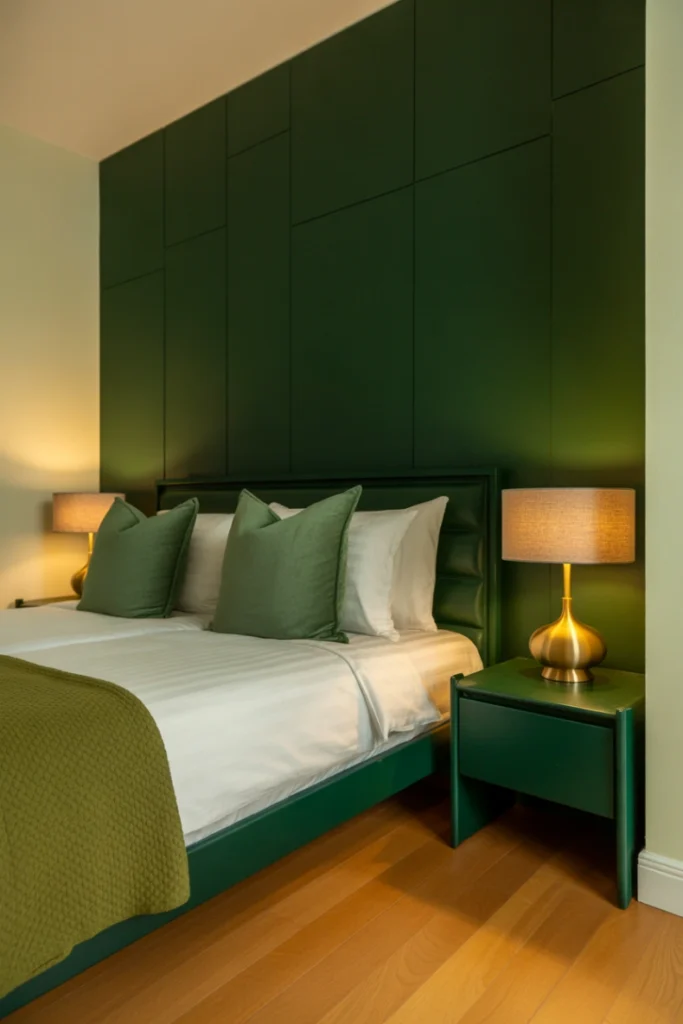
A painted color block is one of the simplest and cheapest bedroom transformations, and it defines the sleeping zone more clearly than a whole room repaint. By painting a rectangle, arch, or half wall behind the bed in a contrasting color, you create a built in headboard effect, add modern edge, and give the eye a clear focal point, even in a room with no headboard at all. It works in rentals too, since repainting one block is far easier than repainting a room.
For a rectangle block, mark the area with painter tape, usually bed width plus 12 inches each side, and from the floor or from behind the bed up to about 60 to 72 inches high, or up to the ceiling for a full height arch. Use two coats of a durable eggshell or satin paint, and remove the tape while the second coat is still slightly tacky for a crisp edge. Muted pastels, sage, dusty blue, and warm clay, suit calm bedrooms, while deep green, navy, or terracotta suit a bolder, hotel style look. Test the color on a large swatch and view it in daylight and lamplight before committing, because bedroom colors shift a lot under warm bulbs. An arch shape, drawn with a string and pencil as a compass, softens the look and suits boho and cottage rooms.
15. Wall-Mounted Plants and Greenery

Wall mounted plants turn a bedroom wall into a living feature, and they suit people who love plants but have no floor or sill space left. Hanging planters, wall pockets, and a small vertical garden add freshness, soften hard surfaces, and make a room feel calmer, and studies on indoor plants consistently link greenery with a more relaxed atmosphere. The key is to choose plants that match your light and your watering habits, rather than choosing by looks alone.
Start with easy, low light tolerant plants for bedroom walls: pothos, philodendron, and spider plants for trailing planters, and snake plants or ZZ plants for wall pockets that get less attention. Hang planters with proper wall fixings, not adhesive hooks, because a watered pot can weigh 5 to 10 pounds, and place a saucer or a waterproof liner inside each planter to protect the wall. Water only when the top inch of soil feels dry, and rotate trailing plants every few weeks so growth stays even. Keep plants away from direct heat sources, and avoid strongly scented flowering plants in a bedroom if scent disturbs your sleep. A set of three hanging planters at staggered heights, 66, 72, and 78 inches, looks intentional and gives each plant its own light.
16. Decorative Wall Molding
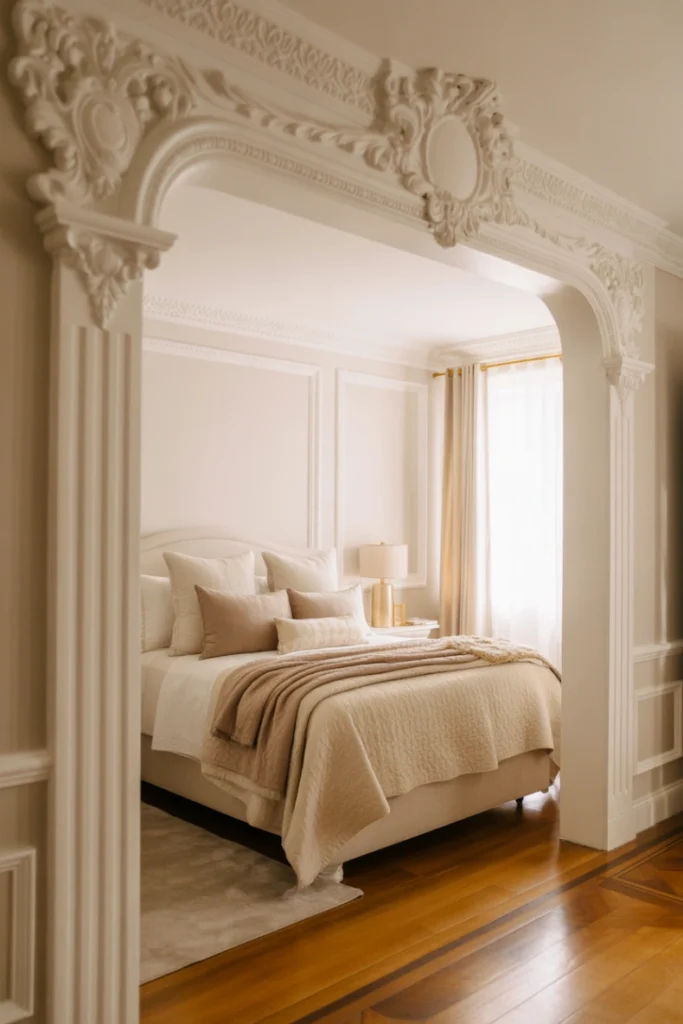
Wall molding adds architectural character that paint and art alone cannot give, and it makes even a new build bedroom feel established and tailored. Panel molding, picture frame molding, and chair rail molding create rhythm and shadow on a flat wall, and they suit traditional, Parisian, transitional, and modern rooms depending on the profile you choose. A molding wall behind the bed reads like a built in feature, and it photographs beautifully, which is why it appears in so many styled bedrooms.
Plan the panels on paper first: for a bed wall, divide the width into equal panels, usually 24 to 36 inches wide, with 4 to 6 inches between panels and a consistent margin from the bed and the ceiling. Use lightweight polyurethane or MDF molding, cut with a miter saw at 45 degree angles, and fix with adhesive plus a few brad nails, then fill nail holes and paint the whole wall, molding included, in one color for a subtle, tonal effect, or paint molding white against a colored wall for contrast. Paint molding the same color as the wall in a satin finish for a quiet, expensive look, and keep the rest of that wall free of competing art so the molding can carry the design.
17. Floating Art Ledges
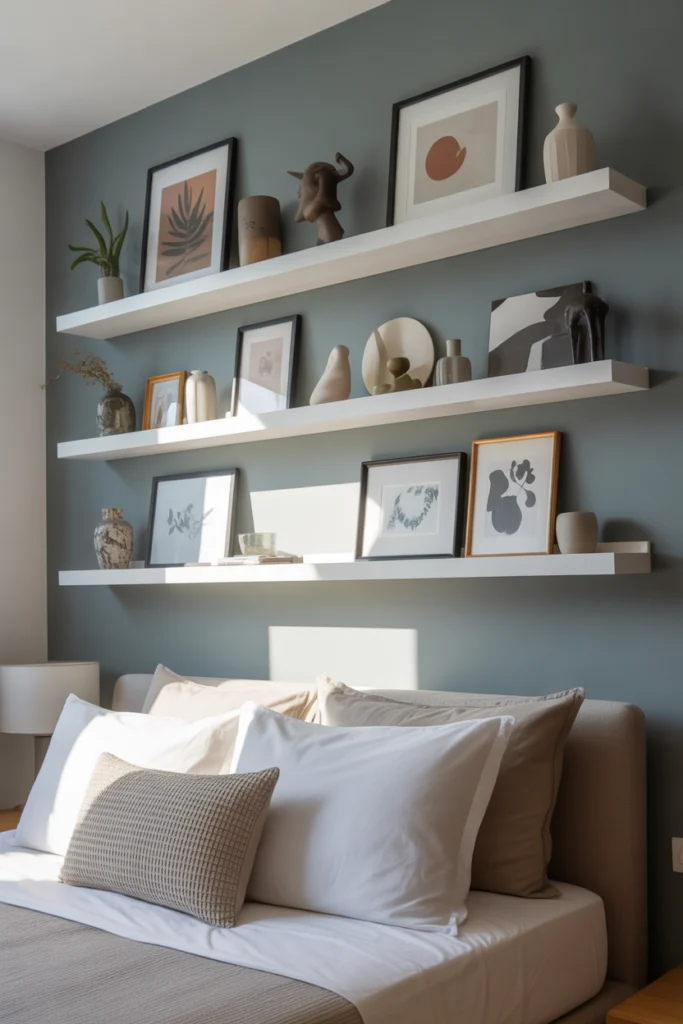
Floating art ledges are the best choice if you love changing art often, because you can swap frames, lean new prints, and restyle a wall in minutes without making new holes. A ledge turns art into a display you can curate by season, mood, or occasion, and the layered, leaning look feels relaxed and gallery like rather than formal. They also solve the small art problem, since several small frames grouped on a ledge look intentional, while the same frames hung separately can look scattered.
Install one or two ledges, each 36 to 48 inches long, at about 60 inches from the floor above a dresser, or as a pair stacked 12 to 14 inches apart above a bed. Choose ledges at least 3 inches deep so frames lean securely, and add a small lip or rail at the front edge. Layer frames of different heights, tallest at the back or at one end, smallest at the front, and overlap them slightly so the arrangement feels casual. Anchor each ledge into studs, keep the total weight within the rated limit, and leave one end of the ledge with a small object, a candle or a tiny plant, to stop the display from looking like a row of identical frames.
18. Textured Wall Paint Techniques
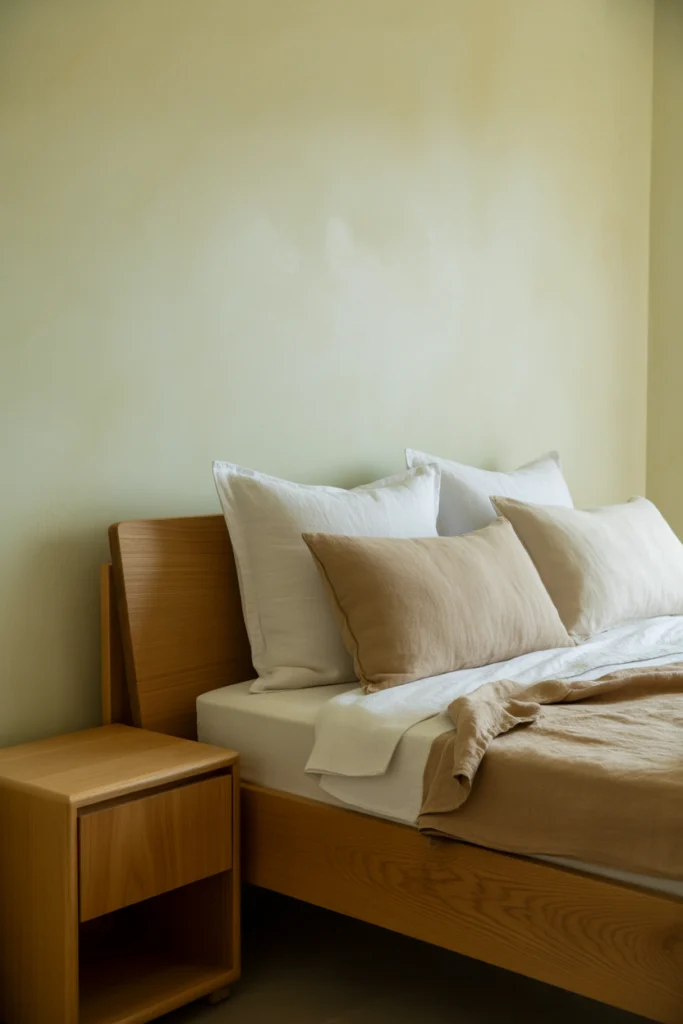
Textured paint finishes, limewash, plaster effect, and sponge painting, give a bedroom wall an artisanal, hand finished quality that flat paint cannot match. Limewash creates soft, cloudy movement that changes with the light, plaster effect adds a subtle stone like texture, and sponge or rag rolling adds gentle mottling that hides small wall flaws. These finishes suit cozy, organic, and Mediterranean style bedrooms, and they make a room feel warm even in a pale color.
Limewash is the easiest to start with: apply it with a block brush in crisscross strokes over a primed wall, work in sections of about 3 by 3 feet, and let each coat dry fully, usually two coats for depth, before judging the color, because limewash dries lighter than it looks wet. For a plaster effect, use a premixed plaster paint and a trowel, apply a thin first coat, then a second coat with varied pressure to create movement. Always test on a large board first, work in daylight so you can see the texture, and protect floors and trim with tape and drop cloths, since textured paints are harder to wipe off than standard emulsion. Keep furniture and bedding simple with a textured wall, because the wall itself is now the decoration.
19. Artistic Murals
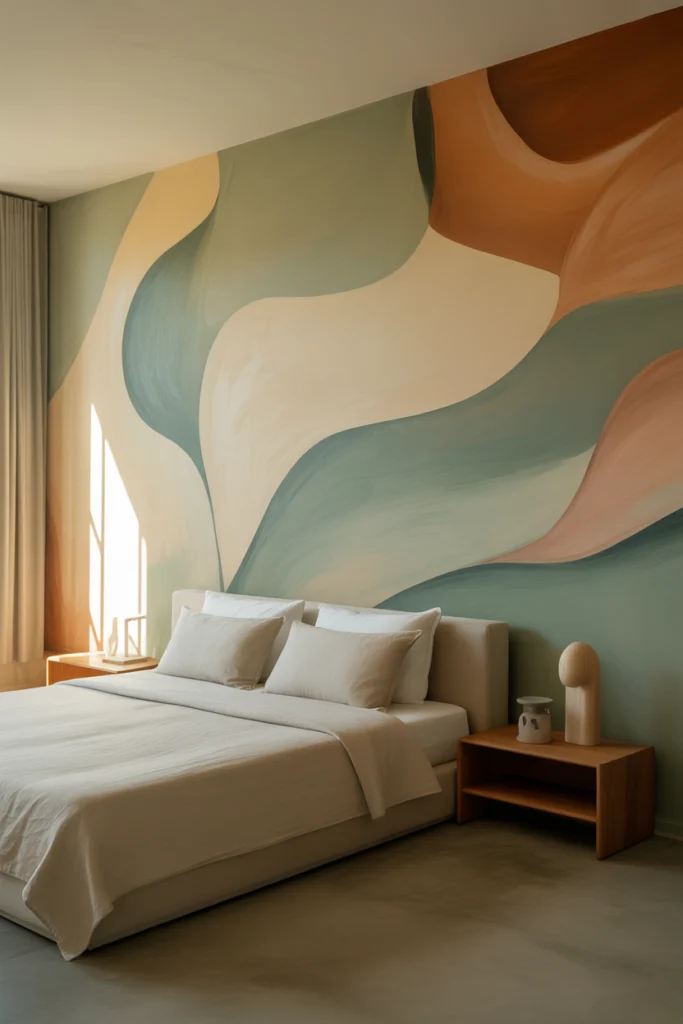
A mural turns a bedroom wall into a personal gallery, and it is the boldest idea on this list, which is why it works best on one wall, usually behind the bed. Hand painted murals, removable mural wallpaper, and large scale decals can create anything from a dreamy sky and soft mountains to abstract color washes, botanical scenes, and city skylines. A mural adds emotion and storytelling to a room in a way that a single framed print cannot, and it makes a bedroom feel truly one of a kind.
Removable mural wallpaper is the practical starting point: measure the wall exactly, order a mural sized to that wall, and install it panel by panel from one corner, smoothing each panel with a plastic smoother and trimming at edges. For a hand painted mural, sketch the design on paper, project it onto the wall with a basic projector if you want accuracy, and use sample pots to test colors on the wall first. Keep the rest of the room quiet, plain bedding, simple curtains, and minimal art on other walls, so the mural stays the hero. A mural in soft, muted tones suits a bedroom better than a high contrast design, because you will live with it in low light every night, and a landscape or abstract wash is easier to sleep beside than a busy, detailed scene.
20. Wall-Mounted Storage Solutions

Wall mounted storage solves a bedroom problem that decor alone cannot: where to put things in a small room without filling the floor. Floating nightstands, slim wall shelves, pegboards, and wall mounted cabinets keep essentials within reach, free up floor space, and still look sleek, because the storage is part of the wall design rather than an afterthought. This idea is especially valuable in small bedrooms, guest rooms, and kids rooms, where every square foot counts.
A floating nightstand, usually 16 to 20 inches wide and 12 inches deep, mounted at mattress height, about 24 to 28 inches from the floor, gives you a surface for a phone, a book, and a glass of water without legs crowding the floor. A pegboard above a desk or vanity, about 24 by 36 inches, holds accessories, jewelry, and small tools on hooks, and can be painted to match the wall so it reads as decor. Fix all wall storage into studs or use heavy duty wall anchors rated for the load, keep daily items at arm height and seasonal items higher, and leave some open wall beside closed storage so the room does not feel like a warehouse. Pair wall storage with a mirror or art above it, and the functional wall will look designed rather than purely practical.
21. Sculptural Wall Decor
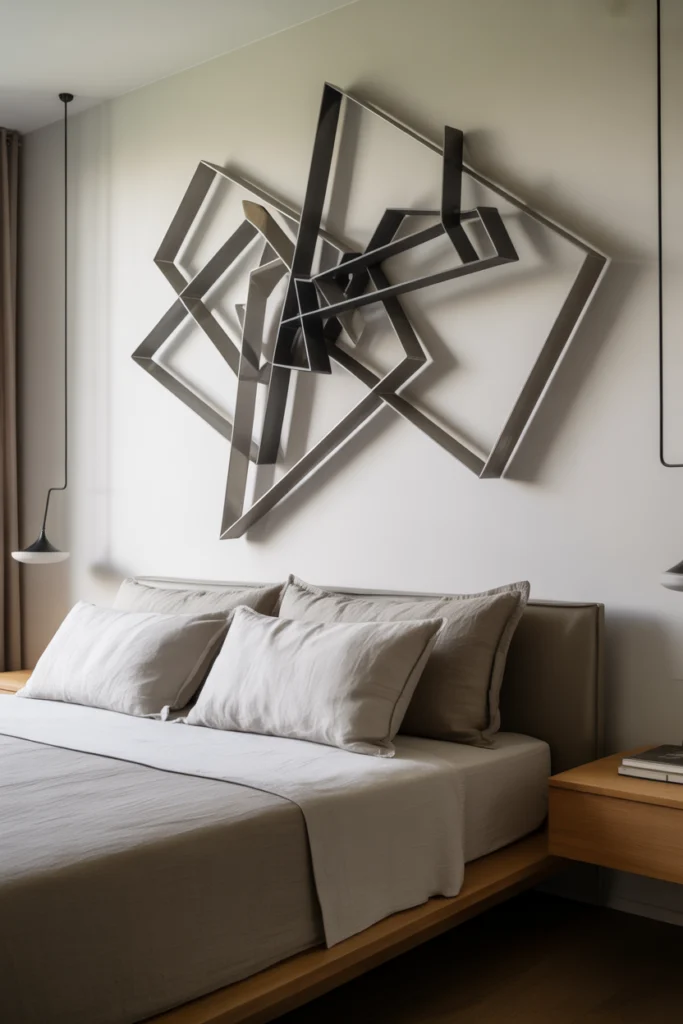
Sculptural wall decor, metal wall art, resin pieces, ceramic plates, and handmade clay forms, adds a third dimension that flat art cannot, and it catches light and shadow throughout the day, so the wall changes as the sun moves. A single large metal sculpture, a set of ceramic discs, or a cluster of abstract shapes can turn a plain wall into a focal point without color, which suits neutral and minimalist bedrooms that want interest without pattern.
Choose one large centerpiece, about 30 to 40 inches across, for a bed wall, or a coordinated set of three to five smaller pieces, 10 to 16 inches each, arranged with 4 to 6 inches between them. Hang heavier metal and ceramic pieces with proper wall anchors, not picture hooks, and test the arrangement on the floor first to check balance. Keep the surrounding wall bare, because sculpture needs negative space to be seen, and pair it with simple bedding and one natural material nearby, such as wood or linen, to soften the hard surface. A sculptural piece in a warm metal, brass or copper, warms a cool room, while matte black or white sculpture suits a crisp, modern scheme.
22. Personalized Name or Quote Signs
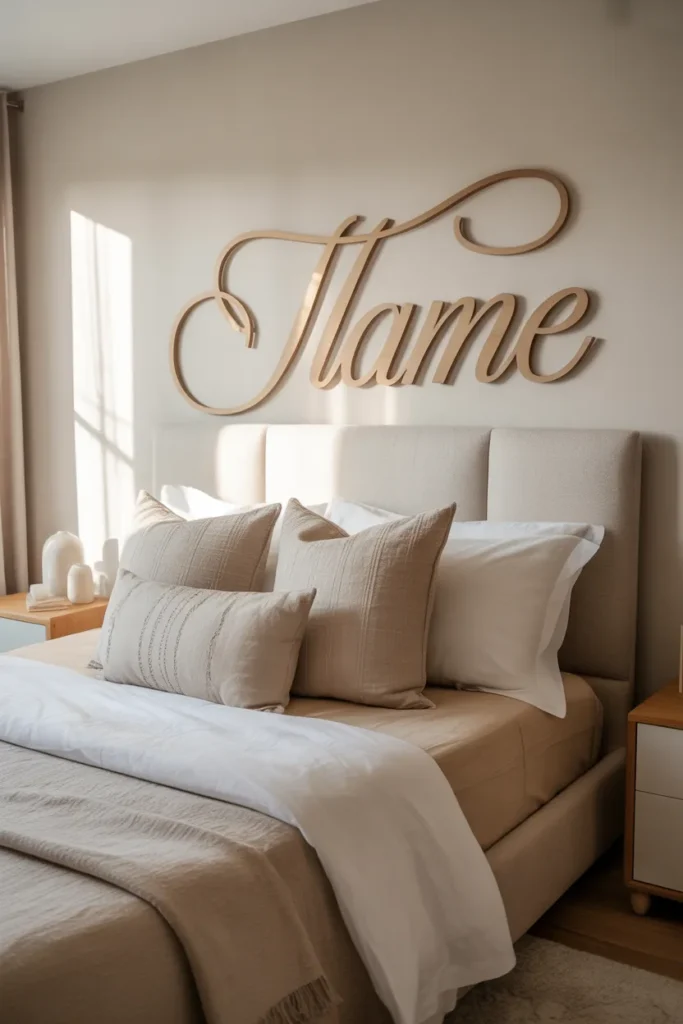
Personalized signs, wooden name signs, family name plaques, and favorite quotes in wood, metal, or neon style lettering, add the most personal layer to a bedroom wall, and they make a room feel owned rather than decorated. A name sign above a bed, a quote above a reading chair, or a family name in an entry style wall inside the bedroom gives the space identity, and it is a popular choice for kids rooms, couples bedrooms, and guest rooms where a welcoming touch matters.
Keep the sign in proportion: a name sign 24 to 36 inches wide suits a single or double bed wall, while a short quote in script lettering should span about two thirds of the furniture below it. Wood signs in natural oak or walnut suit farmhouse and warm modern rooms, matte black metal letters suit modern rooms, and warm white neon style LED signs suit a cozy, contemporary look and double as soft night lighting. Hang the sign at eye level, about 60 inches from the floor, or centered above the headboard with 6 to 8 inches of clearance, and choose a quote you will still love in five years, a short phrase about home, rest, or family, rather than a trend led slogan. Fix heavier wood signs into studs, and keep the wall around the sign simple so the words stay readable.
Conclusion
Your bedroom walls are the perfect opportunity to express your creativity and shape the mood of your space, and you do not need to tackle all 22 ideas at once. Start with the wall you see first when you walk in, usually the bed wall, choose the idea that fixes your biggest frustration, whether that is darkness, blankness, or clutter, and get that one wall right. A single well scaled piece of art, a coat of color, or a pair of sconces can change how the whole room feels in a single weekend.
Whether you love minimalist line art, rustic wood slats, botanical prints, or sculptural metal, these 22 bedroom wall decor ideas help you design a haven that feels both stylish and soulful, and the best rooms grow slowly. Add one layer, live with it for a week, and then decide what the room still needs, rather than buying everything at once. With a few thoughtful additions, from mirrors that amplify light to art that tells your story, you can transform any blank wall into a feature that makes your bedroom truly your own.
Frequently Asked Questions
What is the best wall to decorate first in a bedroom?
Start with the wall behind the bed, because it is the natural focal point and the wall you see when you enter the room. Get that wall right with art, color, texture, or lighting, and keep the other walls quieter, so the room feels balanced rather than crowded. If your bed sits under a window, decorate the wall opposite the bed or the longest side wall instead.
How high should I hang art above a bed?
Hang art so its center sits at 57 to 60 inches from the floor, with 6 to 8 inches between the bottom of the frame and the top of the headboard. Above a bed without a headboard, keep the same center height, and choose art that spans about two thirds of the bed width. When in doubt, hang slightly lower rather than higher, because art hung too high looks disconnected from the furniture below it.
What wall decor works best in a small bedroom?
Mirrors, floating shelves, wall sconces, and one large piece of art work best in a small bedroom, because they add style without using floor space. Avoid covering every wall, and choose one focal wall plus one functional wall, such as shelves or wall storage, so the room stays open. Light colors, mirrors opposite windows, and vertical lines from slats or tall art also help a small room feel taller.
Can I decorate bedroom walls in a rental without damage?
Yes, and the best rental friendly options are peel and stick wallpaper, adhesive picture hanging strips, leaning mirrors and art, fabric tapestries hung from tension rods or adhesive clips, and plug in wall sconces with cord covers. Avoid drilling into walls unless your lease allows it, and always check the weight limit on strips and hooks before hanging anything heavy. A painted color block and wall molding are better saved for a home you own.
How do I choose a color for a bedroom accent wall?
Choose a color that already appears in your bedding, rug, or art, so the accent wall ties the room together instead of introducing a random new color. Soft, muted tones, sage, dusty blue, warm clay, and warm gray, suit most bedrooms and stay restful at night, while deep green, navy, or terracotta suit a bolder look. Test a large swatch on the wall and view it in daylight and evening lamplight before painting, because bedroom colors shift a lot under warm bulbs.
More Ideas You Will Love
 23 Master Bedroom Ideas for a Luxurious & Relaxing Retreat
 13 Shared Bedroom Ideas That Are Cute, Aesthetic & Functional
 20 DIY Christmas Bedroom Decor Ideas for 2025
 13 Girls Nursery Ideas for Sweet, Stylish & Playful Spaces
 14 Aesthetic Halloween Bedroom Decor Ideas
 21 Creative Kids Bedroom Ideas with Fun Themes & Practical Decor Tips