
21 Tiny Bedroom Ideas: Smart Design Tricks for Small Spaces

Your bedroom may be small, but it does not have to feel cramped, cluttered, or hard to live in. With the right layout, the right furniture sizes, and a few clever visual tricks, even a room of 80 to 120 square feet can feel calm, organized, and genuinely comfortable. The secret is not buying more things. It is choosing pieces that work harder, keeping clear walking paths, and letting light and color do some of the work for you.
These 21 tiny bedroom ideas focus on practical changes you can actually make, from floating beds and vertical storage to slim furniture, better lighting, and smarter door choices. Each idea includes measurements, materials, and colors to try, so you can adapt it to a rented apartment, a shared home, or a small primary bedroom. If you are planning a wider refresh, pair these ideas with more small bedroom ideas for layouts and color palettes that suit compact rooms.
Start with the biggest wins first: clear the floor, lift storage up the walls, and keep your color palette light and consistent. Then add personality in small, controlled doses, through bedding, art, and one or two textures you love. A tiny bedroom feels best when everything in it has a place, and when you can walk in, breathe out, and relax.
1. Use a Floating Bed Frame to Create Space
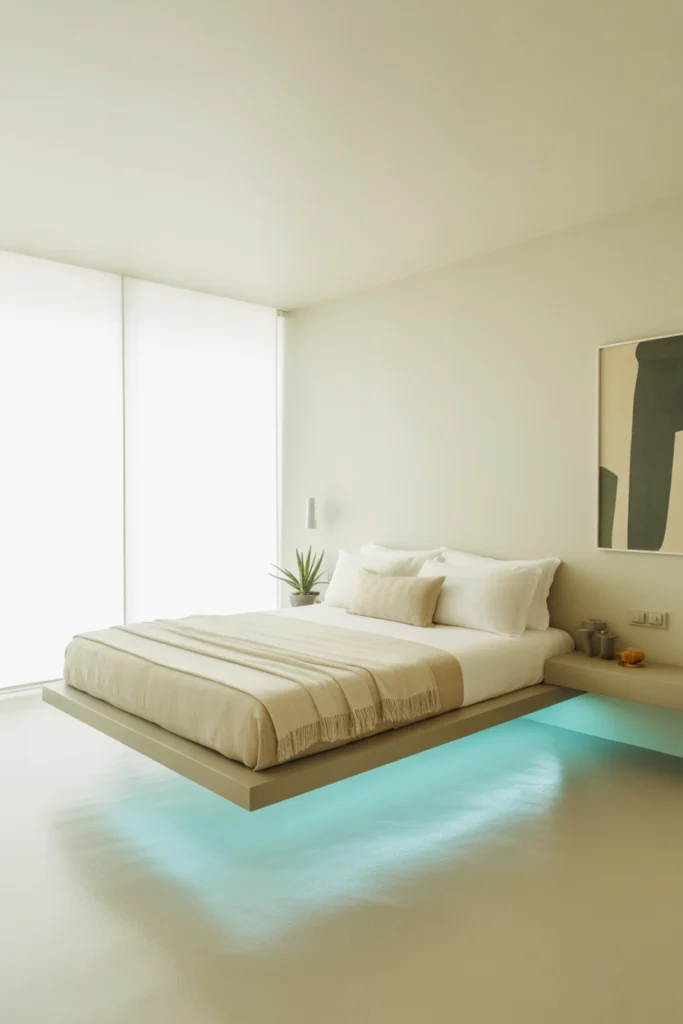
A floating bed frame is mounted to the wall or supported by a recessed base set back about 6 to 10 inches from the edge of the mattress, so you see floor underneath the bed instead of bulky legs. That visible strip of floor tricks the eye into reading the room as larger, and it makes vacuuming and mopping far easier. Choose a sturdy plywood or solid wood platform, at least 3/4 inch thick, fixed into wall studs or a steel wall bracket rated for the full weight of the mattress plus two adults.
Keep the frame low, with the top of the mattress about 20 to 24 inches from the floor, so the room keeps a low, calm profile. Pair it with a slim upholstered headboard or a simple wall mounted cushion panel, and dress the bed in light neutrals such as white, warm cream, pale sage, or soft gray. Avoid a heavy bed skirt or a dark, oversized frame, both of which cancel out the floating effect.
For extra impact, add a warm white LED strip under the platform, set on a dimmer, to create a soft glow at night. Leave at least 24 inches of clear space on the side you get out of bed, and keep only one small item under the bed, such as a flat storage box, so the open floor stays visible. This idea works best in modern, minimalist, and Scandinavian style rooms.
2. Choose Light Colors to Create an Open Feel
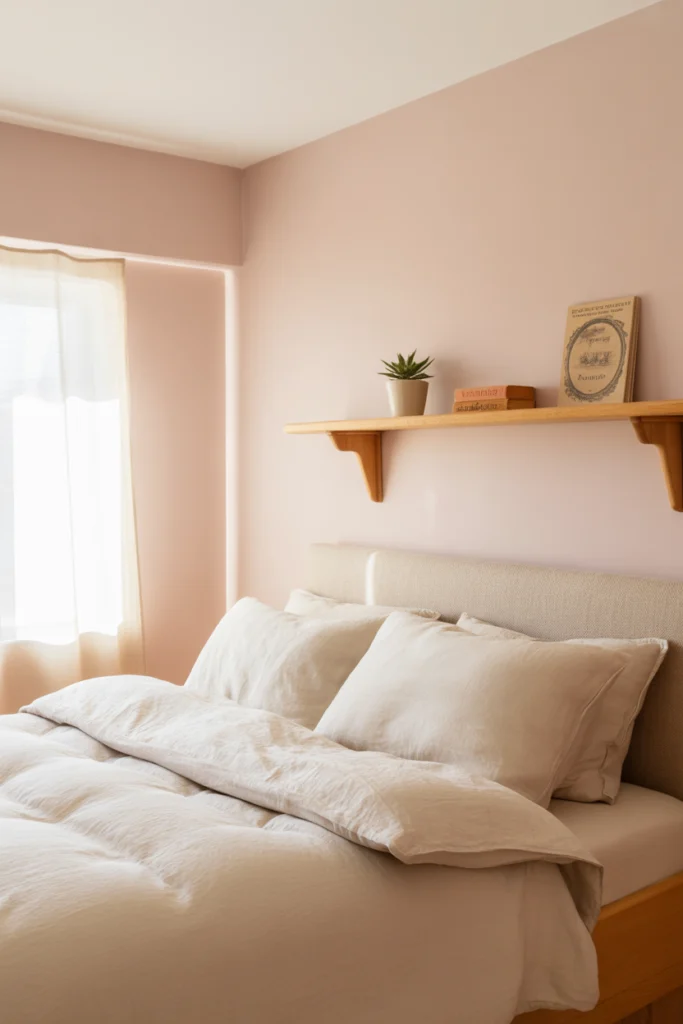
Light colors reflect both daylight and lamp light, which is why they are the fastest way to make a tiny bedroom feel larger. Paint walls in white, warm cream, pale beige, light gray, or a soft pastel such as pale blue or blush, and keep the ceiling a clean bright white to lift the height of the room. If you love color, use it on bedding, cushions, or one accent wall in a muted tone, rather than painting all four walls dark.
Match your bedding and curtains to the same light family, but vary the texture so the room does not look flat. Try crisp cotton sheets, a linen duvet cover, a chunky knit throw, and a natural wood or rattan accent. These textures add warmth without adding visual weight. For a cohesive scheme, limit yourself to three main colors: one light neutral for walls, one mid tone for bedding, and one small accent, such as terracotta, olive, or dusty blue.
When you are choosing paint, test two or three swatches on the wall and check them in morning light, evening light, and lamplight before you commit. A shade that looks clean in the store can turn gray or yellow at home. For more palette guidance, browse these bedroom design ideas and note how light walls are paired with wood, white bedding, and one restrained accent color.
3. Incorporate Vertical Storage to Maximize Space
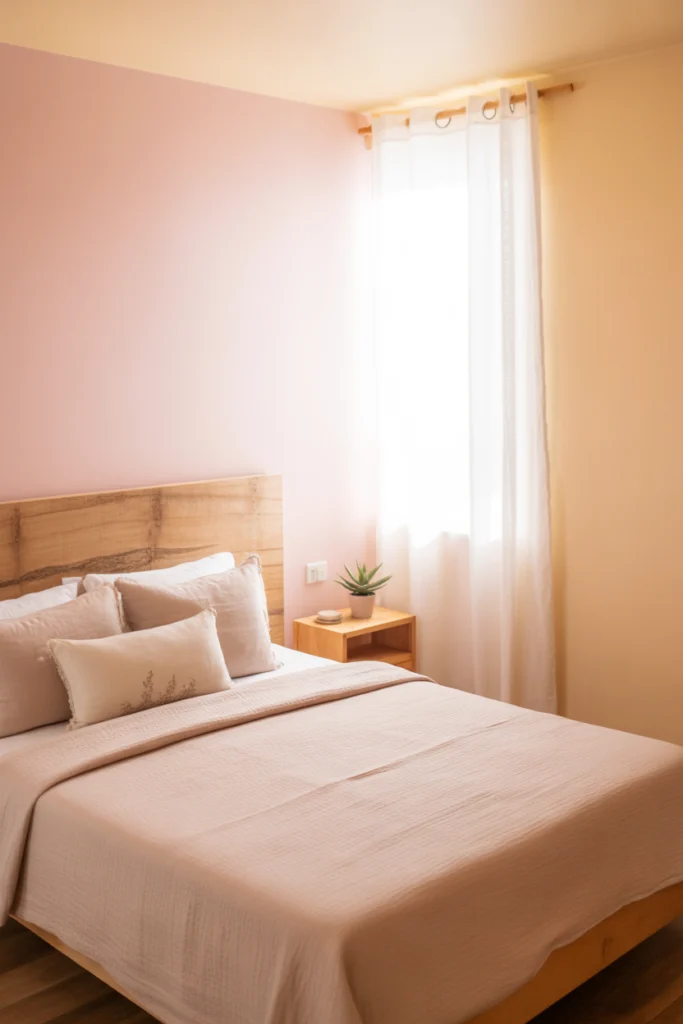
When floor space is limited, the walls are your best storage asset. Install tall bookcases, floating shelves, or a wardrobe that runs all the way to the ceiling, so you use height that would otherwise sit empty. A bookcase 72 to 84 inches tall and only 12 inches deep holds a surprising amount without jutting far into the room. Anchor every tall unit to a wall stud with furniture straps, especially in homes with children or pets.
Divide vertical storage into zones: everyday items at arm height, from about 30 to 66 inches; rarely used items, such as seasonal bedding, on the top shelf; and heavy items low down. Use matching baskets or fabric boxes on open shelves to hide small clutter and keep the look calm. Label the boxes on the inside of the lid if you prefer a clean exterior, or use small tags for a more practical setup.
Add wall hooks, a pegboard panel, or a slim rail near the door for bags, hats, and tomorrow’s outfit. Keep the top third of the wall visually light by leaving some open space, rather than filling every inch. A room that uses vertical storage well feels organized and taller, because the eye travels upward instead of stopping at a cluttered floor.
4. Use Mirrors to Reflect Light and Expand the Room
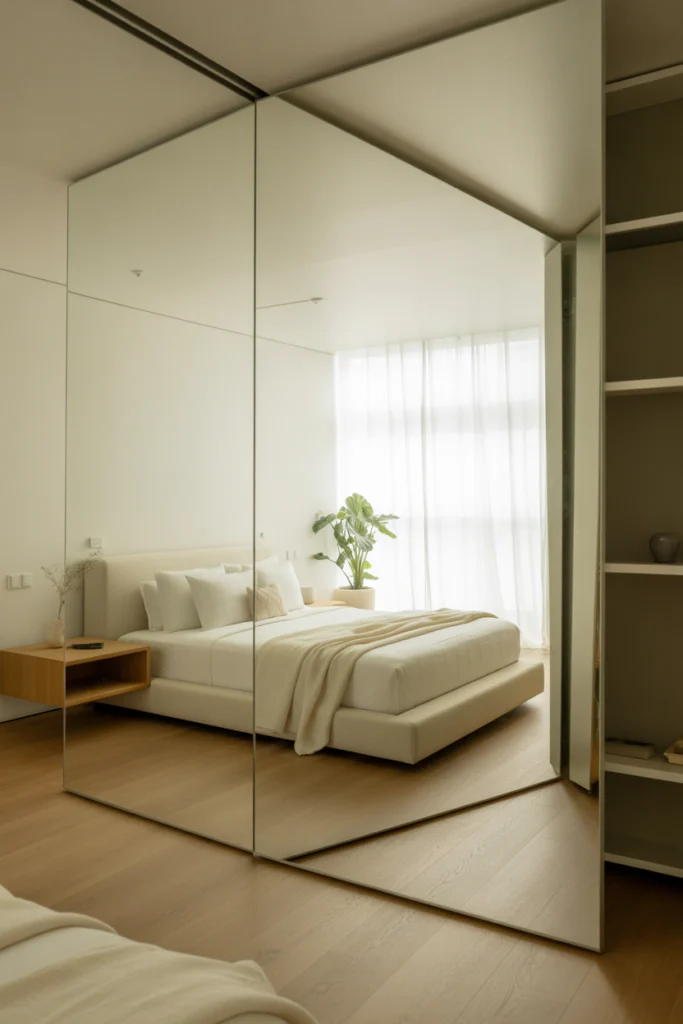
A large mirror placed opposite or beside a window bounces daylight across the room and can make a tiny bedroom feel almost twice as bright. Choose a full length mirror, about 60 to 66 inches tall, leaned against the wall or mounted on a closet door, rather than several small mirrors that can look busy. A frameless mirror gives the cleanest, most modern effect, while a thin wood or black metal frame adds warmth and definition.
Position the mirror so it reflects something pleasant, such as a window view, a plant, or a light colored wall, not a cluttered corner or the inside of a closet. If you have no window opposite a free wall, place a mirror beside the window at a slight angle, so it still catches light. Keep the glass clean, because smudges and dust dull the reflection and reduce the brightening effect.
Mirrored furniture, such as a small mirrored tray on a dresser or a nightstand with mirrored drawer fronts, can add sparkle in small doses. Use one mirrored accent at most, so the room stays calm rather than flashy. Combined with light walls and sheer curtains, a well placed mirror is one of the cheapest and most effective small room tricks available.
5. Opt for a Murphy Bed for Ultimate Space-Saving
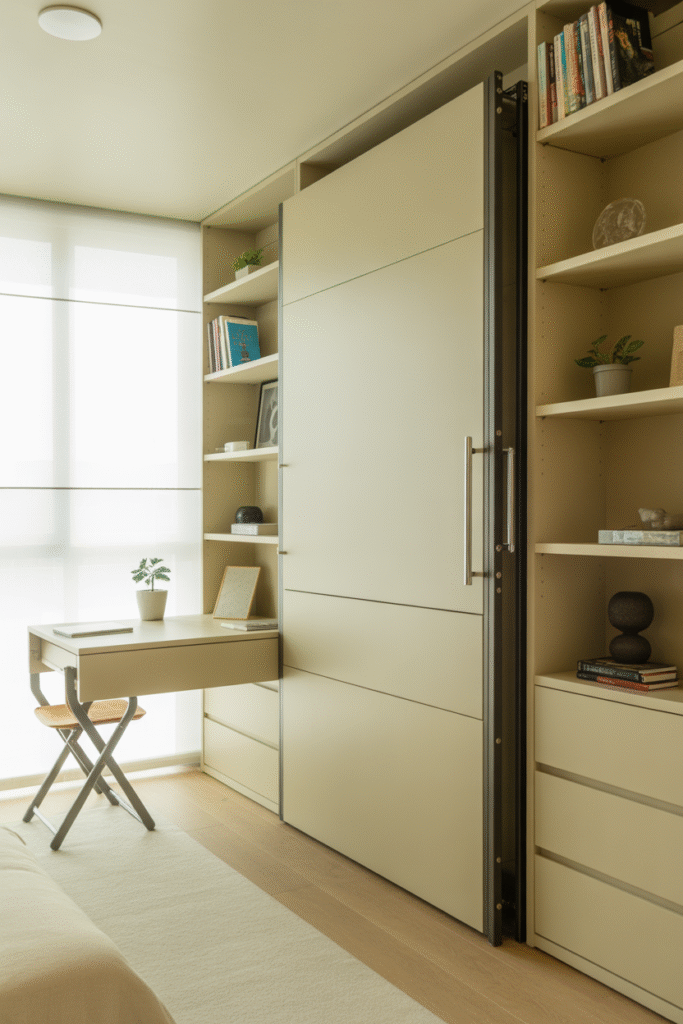
A Murphy bed, also called a wall bed, folds vertically into a cabinet when not in use, freeing almost the entire floor during the day. This makes it ideal for a studio, a guest room that doubles as an office, or a tiny bedroom that also needs a workout or study area. Modern units come in twin, full, and queen sizes, with cabinets 16 to 24 inches deep when closed, so they fit against most walls without major renovation.
Look for a mechanism with gas pistons or spring assistance, so the bed lowers and lifts smoothly and locks safely in both positions. Choose a cabinet with built in shelving, a fold down desk, or side storage, so the closed unit looks like furniture rather than a blank box. A quality mattress for a Murphy bed is usually 10 to 12 inches thick, and it should be secured with straps so bedding stays in place when folded.
Measure carefully before you order: allow the full length of the bed plus at least 24 inches of clear floor in front when open, and check ceiling height, light switches, and outlets on that wall. Installation is best done by two people, with the cabinet fixed into at least two wall studs. Once installed, a simple routine of folding the bed each morning can transform how a small room functions all day.
6. Choose Multipurpose Furniture to Save Space
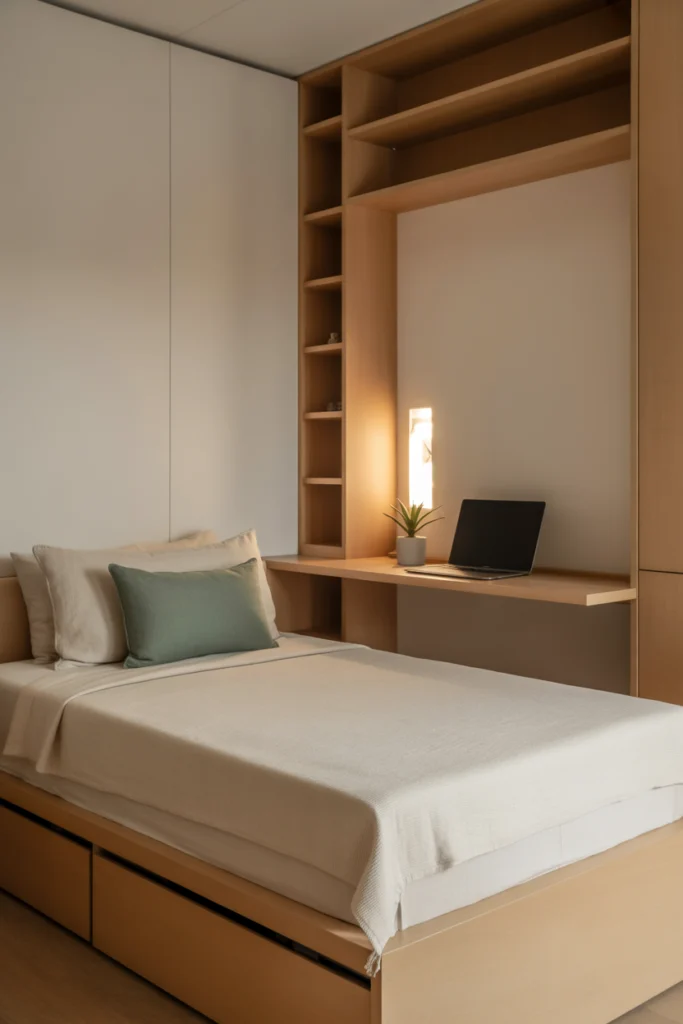
Multipurpose furniture earns its floor space by doing two or three jobs at once. A storage ottoman holds blankets and works as extra seating. A bed with built in drawers replaces a dresser. A bench at the foot of the bed offers seating, storage, and a place to lay out clothes. A vanity with a flip top mirror can double as a writing desk. Each dual purpose piece means one fewer item in the room, which keeps the layout open.
When you shop, check the real dimensions, not just the style. A storage bed needs at least 12 inches of drawer clearance on the side, and a lift up ottoman needs room to open fully. Choose sleek, low profile designs in light wood, white, or soft gray, with simple handles rather than ornate hardware. Avoid pieces that are deep, dark, and heavy, because they dominate a small room even when they are useful.
Start with one hero piece, such as a storage bed or a convertible nightstand with a charging drawer, then build around it. Test the piece in daily use for a week: if you have to move it to open it, or if a drawer blocks a walkway, it is the wrong size for the room. The best multipurpose furniture disappears into your routine and quietly removes clutter.
7. Install Wall-Mounted Lighting to Free Up Space
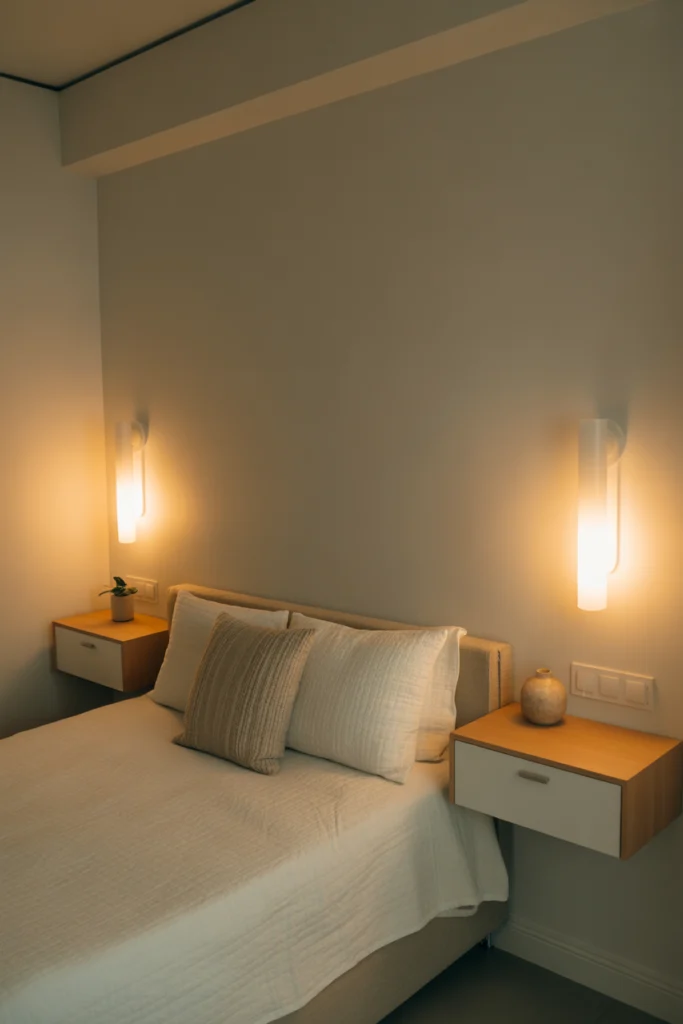
Wall mounted sconces, swing arm lamps, and plug in reading lights free your nightstand for a phone, a book, and a glass of water, instead of a bulky lamp base. Mount sconces about 55 to 60 inches from the floor, or about 12 to 18 inches above the pillow, so light falls on your book without shining in your eyes. Swing arm lamps are especially useful, because you can pull the light toward you for reading and push it back flat against the wall during the day.
Choose warm white bulbs, around 2700K, for a cozy evening feel, and put the lights on a dimmer if possible, so you can shift from bright task light to soft wind down light. Match the fixture finish to other metals in the room, such as brushed brass, matte black, or chrome, for a pulled together look. If you rent and cannot hardwire, use plug in sconces with a cord cover painted to match the wall.
Layer your lighting rather than relying on one ceiling light. Combine wall sconces with a small ceiling fixture and, if you have space, a tiny clip light or LED strip behind the headboard. This layered approach removes harsh shadows, makes the room feel taller and calmer, and keeps surfaces clear for the things you actually use.
8. Use Under-Bed Storage to Keep Things Organized
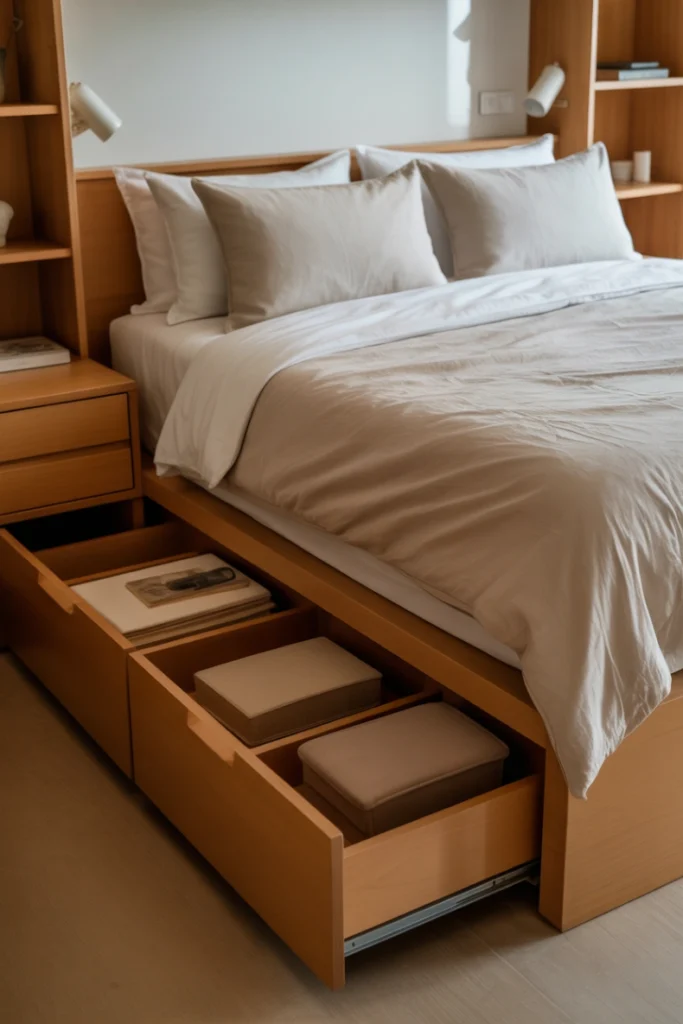
The space under a bed is often the largest unused storage area in a tiny bedroom. Flat rolling bins, fabric boxes, and vacuum sealed bags can hold off season clothes, extra linens, shoes, and spare bedding without adding a single piece of furniture. Standard under bed bins are about 6 to 7 inches high and fit under most bed frames; measure your clearance first, including any rug underneath, before you buy.
Sort under bed storage by category, one bin for winter clothes, one for extra sheets, one for shoes, and label each bin on the short end that faces out, so you can find things without pulling everything out. Vacuum sealed bags work well for bulky items such as winter coats and duvets, reducing them to about a third of their volume. Keep everyday items, such as the shoes you wear most, in the most accessible bin near the side you use.
Clean under the bed every few months to prevent dust buildup, and avoid storing anything damp, perishable, or heavy enough to damage the floor. If your bed sits directly on the floor, consider bed risers that add 5 to 7 inches of clearance, but check that the total bed height stays comfortable, with the mattress top around 22 to 25 inches from the floor. Used well, under bed storage can replace an entire dresser drawer set.
9. Choose Slim Furniture to Avoid Bulk
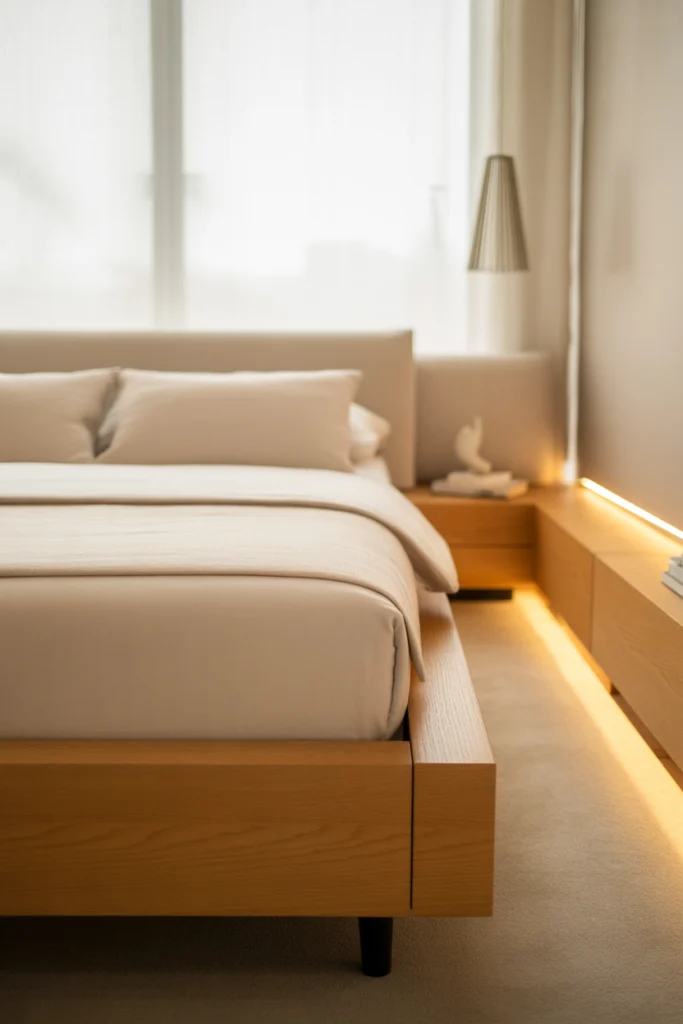
Slim furniture keeps a tiny bedroom feeling open because it leaves more visible floor and wall around each piece. Look for nightstands 12 to 16 inches wide instead of 24 inch models, dressers no deeper than 16 to 18 inches, and bed frames with a low, narrow profile. Furniture with tall, tapered legs also helps, because you can see floor beneath it, which makes the room read as larger.
Choose materials that feel light: pale wood, white lacquer, cane, rattan, or metal frames with open sides. Avoid thick, dark, heavily carved pieces, and skip oversized armchairs or wide desks that block walkways. Leave at least 30 inches for main walking paths and 24 inches beside the bed, and test the layout by walking it at night, when you are most likely to bump into corners.
If a piece feels bulky but you need its storage, try a slimmer version of the same idea: a tall, narrow chest instead of a wide dresser, or a wall mounted shelf instead of a nightstand. Paint or refinish a dark piece in a light color to reduce its visual weight without replacing it. In a small room, every inch of depth you save is an inch of breathing space you gain.
10. Add Floating Shelves for Smart Storage
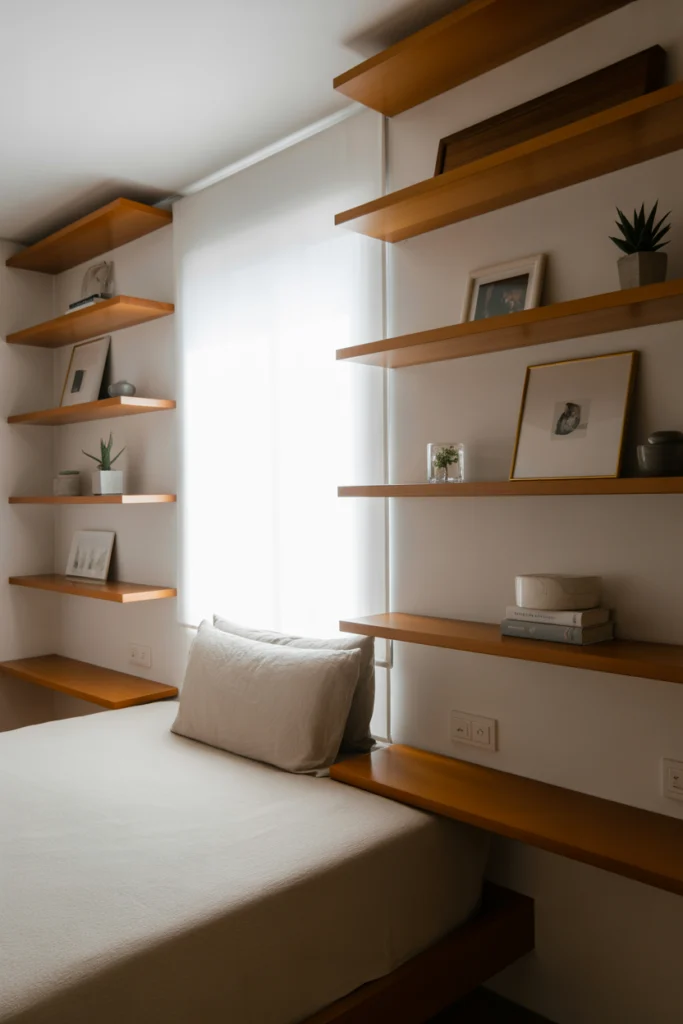
Floating shelves add storage without legs, brackets, or floor space, which makes them perfect above a bed, a desk, or an empty stretch of wall. Install shelves 10 to 12 inches deep for books and decor, and 6 to 8 inches deep for small plants and framed photos. Fix each shelf into wall studs or use heavy duty wall anchors rated for at least 25 pounds per shelf, and keep heavier books low and lighter decor high.
Style shelves in groups of two or three, spaced 12 to 15 inches apart vertically, so you can reach the lowest shelf easily and the display does not feel crowded. Mix practical items, such as a clock, a small plant, and a favorite book, with one decorative piece per shelf, and leave about a third of each shelf empty. That breathing room is what keeps shelves looking styled rather than stuffed.
In an extremely tiny bedroom, a single floating shelf beside the bed can replace a nightstand entirely. Add a small wall mounted light above it and a tiny tray for your phone and lip balm, and you have a complete bedside station in zero floor space. Wipe shelves weekly, because dust shows quickly on open storage, and rotate items seasonally to keep the display fresh.
11. Hang Curtains High to Create Height
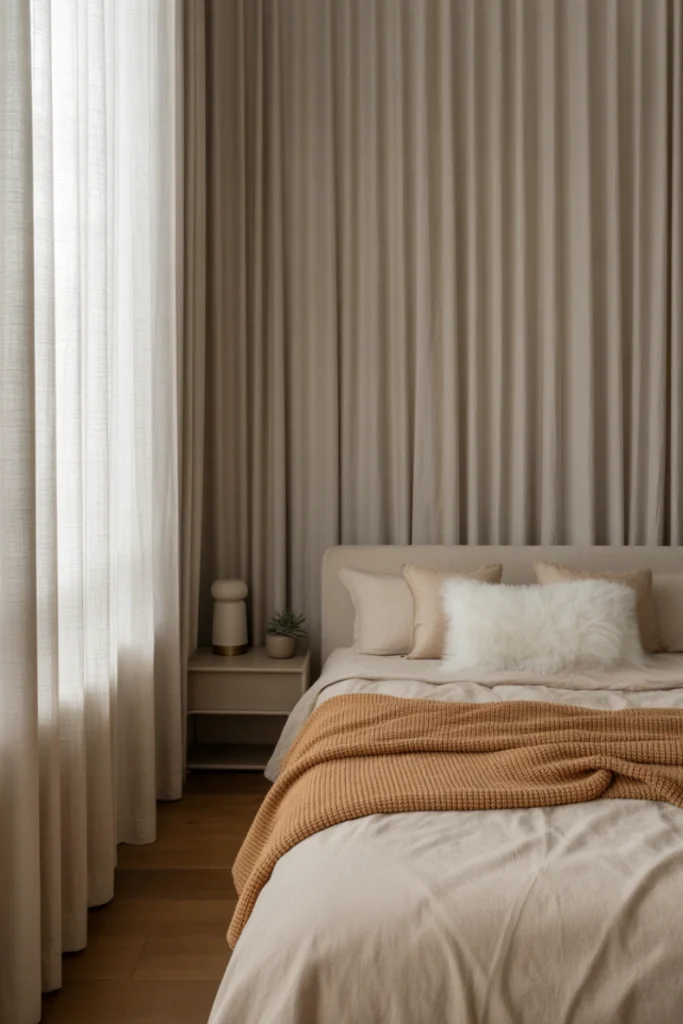
Hanging your curtain rod close to the ceiling, about 4 to 6 inches below it, and extending it 6 to 10 inches beyond each side of the window, makes the window look taller and wider, and draws the eye upward. This simple trick can make a low ceiling feel noticeably higher. Choose floor length curtains that just brush the floor, rather than short curtains that cut the wall in half visually.
Use lightweight, airy fabrics such as linen, sheer cotton, or a light voile for daytime, so natural light still filters through. For sleep, layer sheers with blackout panels on the same rod using double brackets, or add a separate blackout roller blind behind the curtains. Keep curtain colors close to your wall color, in white, cream, or pale gray, for the most spacious effect, and save bold patterns for cushions or art.
Measure before you buy: record the rod height, the rod width, and the drop from rod to floor, and buy panels at least 1.5 times the window width for a soft, gathered look. Iron or steam curtains after hanging, because wrinkles draw attention and break the clean vertical lines. This one afternoon project changes the proportions of the whole room.
12. Use a Foldable Desk for Work & Study
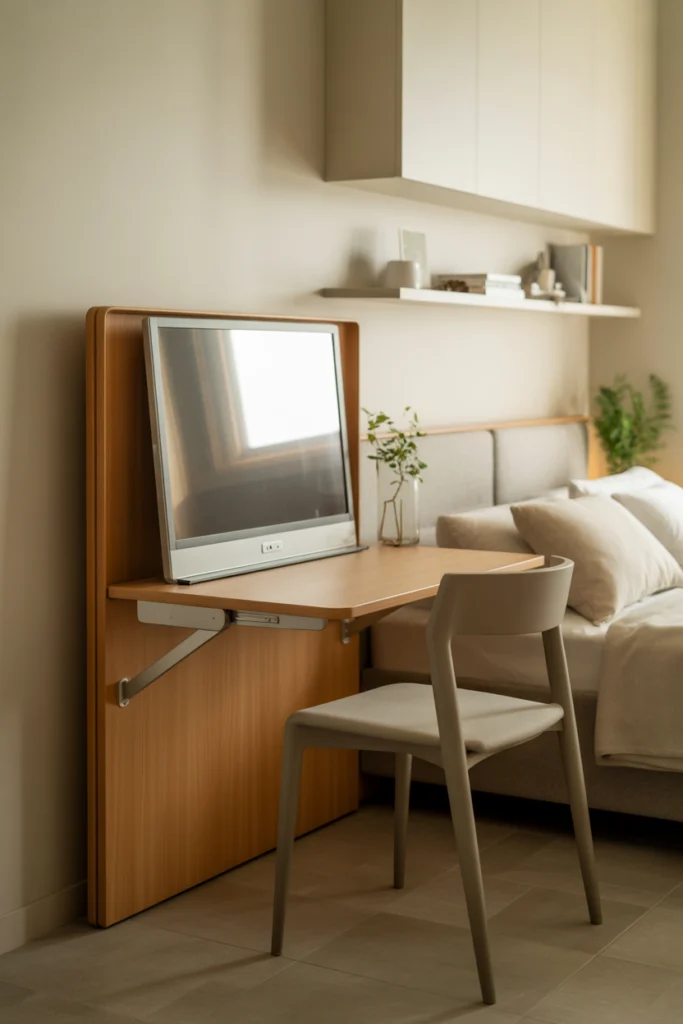
A foldable or wall mounted drop down desk gives you a real workspace without permanently giving up floor space. When closed, many models look like a shallow cabinet only 4 to 6 inches deep. When open, they provide a work surface about 30 to 36 inches wide and 20 inches deep, enough for a laptop, a notebook, and a cup of coffee. Mount the desk at a height of 28 to 30 inches for seated work, and fix it into wall studs.
Pair the desk with a slim, stackable chair or a folding chair that can hang on a wall hook when not in use. Add a small shelf above the desk for stationery, and use a cable clip or a tiny basket to keep chargers tidy. Keep only the items you use daily on the desk surface, and store the rest in a box on the shelf, so closing the desk takes seconds, not a full tidy up.
This setup suits students, remote workers, and anyone whose bedroom must also serve as an office. Set a simple routine: open the desk in the morning, close it in the evening, and let the room return to a restful bedroom at night. That clear boundary helps you switch off, even when work and sleep share the same small space.
13. Incorporate Pocket or Sliding Doors
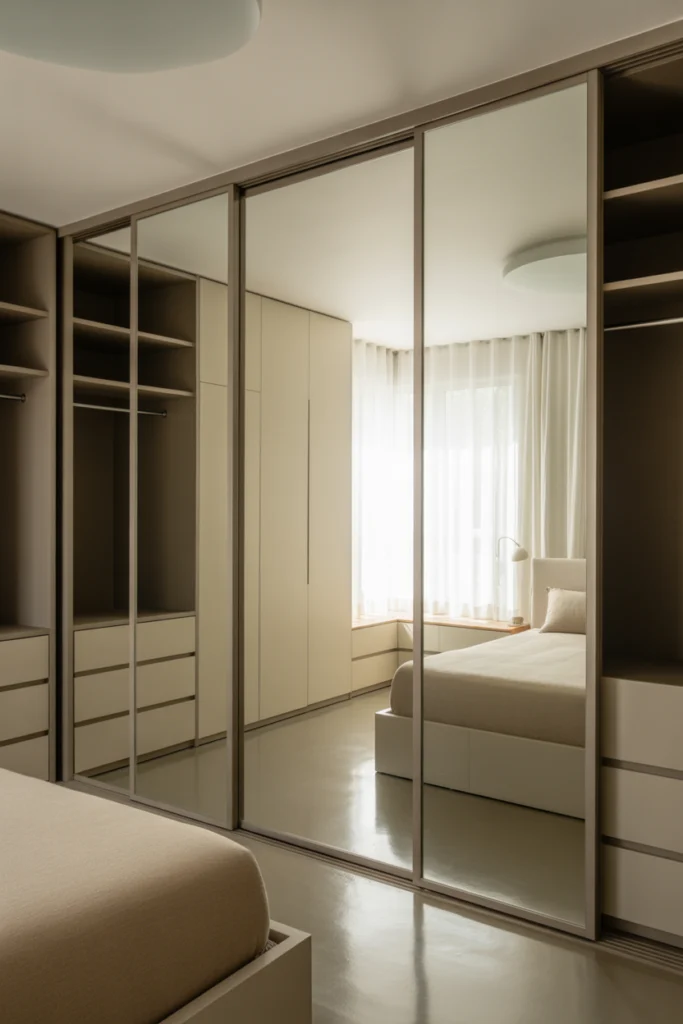
A standard hinged door needs about 30 inches of clear swing space, which is a lot to lose in a tiny bedroom. A pocket door slides into the wall cavity and needs no swing space at all, while a barn style sliding door runs along a wall rail and also frees the floor. Both options let you place furniture, a wardrobe, or a desk where a door swing would otherwise block it.
Pocket doors work best during a renovation, because they need a wall cavity free of plumbing and wiring, and a pocket door frame kit. Sliding barn doors are easier to retrofit, since the rail mounts on the wall surface, but they need a clear wall length at least twice the door width, and they do not seal sound as well as a pocket door. Choose doors in a light color, frosted glass, or mirrored panels to keep brightness in the room.
For closets, consider bypass sliding doors or bifold doors, which also save swing space and give wide access to shelves. Keep the door track clean and check rollers twice a year, so doors glide smoothly and do not stick. If a full door change is not possible, even removing an interior door between a bedroom and a dressing area, and replacing it with a curtain, can free useful space.
14. Add a Loft Bed for Extra Floor Space
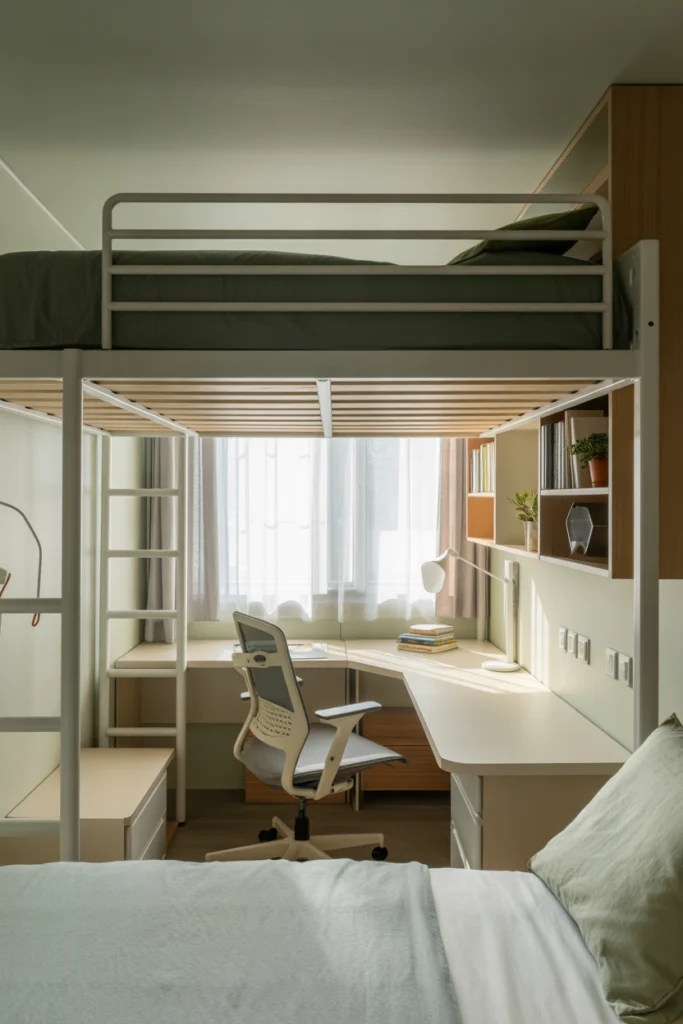
A loft bed raises the sleeping area to about 55 to 66 inches high, freeing the floor underneath for a desk, seating, storage, or a reading nook. This is one of the most dramatic space gains available in a tiny bedroom, especially for children, teenagers, students, and adults in studios. Check your ceiling height first: you need at least 30 to 33 inches of sitting clearance above the mattress, so a ceiling of 8 feet or higher works best.
Choose a sturdy steel or solid wood loft frame rated for adult weight, with a full length guardrail at least 5 inches above the mattress, a secure ladder or stair, and anti slip steps. Underneath, plan one clear function, such as a desk with a chair, a small sofa, or a wardrobe, rather than cramming in three functions that all feel tight. Add a small wall light and a shelf at bed height for a book and a phone.
Keep bedding light and simple, because making a loft bed is harder than making a low bed. Use a fitted sheet, a light duvet, and one or two pillows, and avoid heavy throws that fall off the edge. With light colors, slim furniture below, and minimal decor, a loft bed turns a single small room into two usable levels without building anything.
15. Integrate Built-In Storage for a Seamless Look
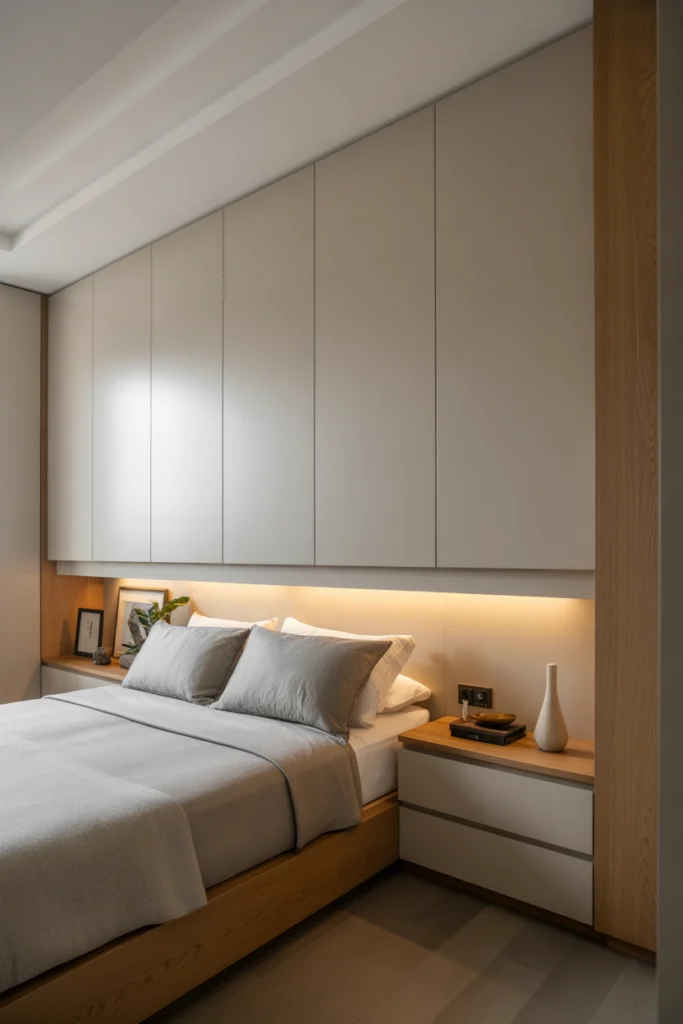
Built in storage looks like part of the room, not an extra piece of furniture, which is why it keeps tiny bedrooms feeling calm. Options include a wardrobe built into an alcove, shelving around the bed head, cabinets above a door frame, or a window seat with storage underneath. Because built ins are sized to the exact wall, they waste no gaps and leave no awkward corners.
Plan built ins around your real belongings: measure your longest clothes, your shoe collection, and your bedding, then design hanging space, shelves, and drawers to fit them. Use matching finishes, such as white painted MDF, light oak, or the same color as the walls, so the storage blends in. Add soft close hinges and simple, recessed handles to keep the look clean and quiet.
Built ins cost more than freestanding furniture, so start with the highest impact spot, usually a full wall wardrobe or bed surround, and add smaller built ins later if budget allows. If you rent, mimic the effect with freestanding wardrobes pushed tight together, a top bridge cabinet above them, and matching paint, so the run reads as one unit. The result is a room that feels custom, tidy, and much larger than its floor plan.
16. Use a Minimalist Headboard
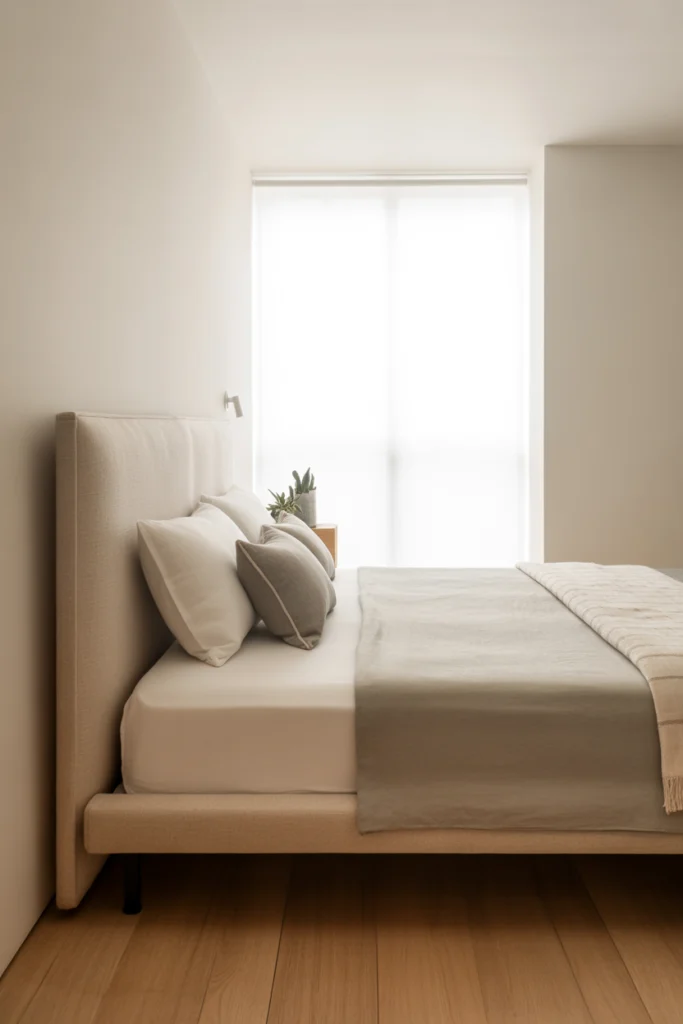
A minimalist headboard anchors the bed without eating visual space. Choose a slim upholstered panel, a simple wood slat design, or a wall mounted cushion, no more than 2 to 4 inches deep, in a neutral fabric such as linen, bouclé, or light leather. Keep the height modest, about 24 to 36 inches above the mattress, so the wall above stays open and the room feels taller.
Match the headboard to your bedding palette, and let one texture do the work: a soft fabric against crisp cotton sheets, or a pale wood headboard against a white wall. If you need extra function, choose a headboard with a narrow shelf, a built in reading light, or a small pocket for a book, but avoid wide, padded designs with bulky wings that crowd a small room. For styling inspiration, look at how dreamy bedroom style ideas pair simple headboards with layered white bedding and warm wood accents.
Clean fabric headboards with a vacuum brush attachment monthly, and spot clean stains promptly, because a headboard sits close to pillows and hair products. If you want a no cost version, paint a simple rectangular panel on the wall behind the bed in a tone slightly darker than the wall, or hang a large piece of fabric as a soft, temporary headboard. Both give the bed a finished focal point without any bulk.
17. Create Zones with Rugs
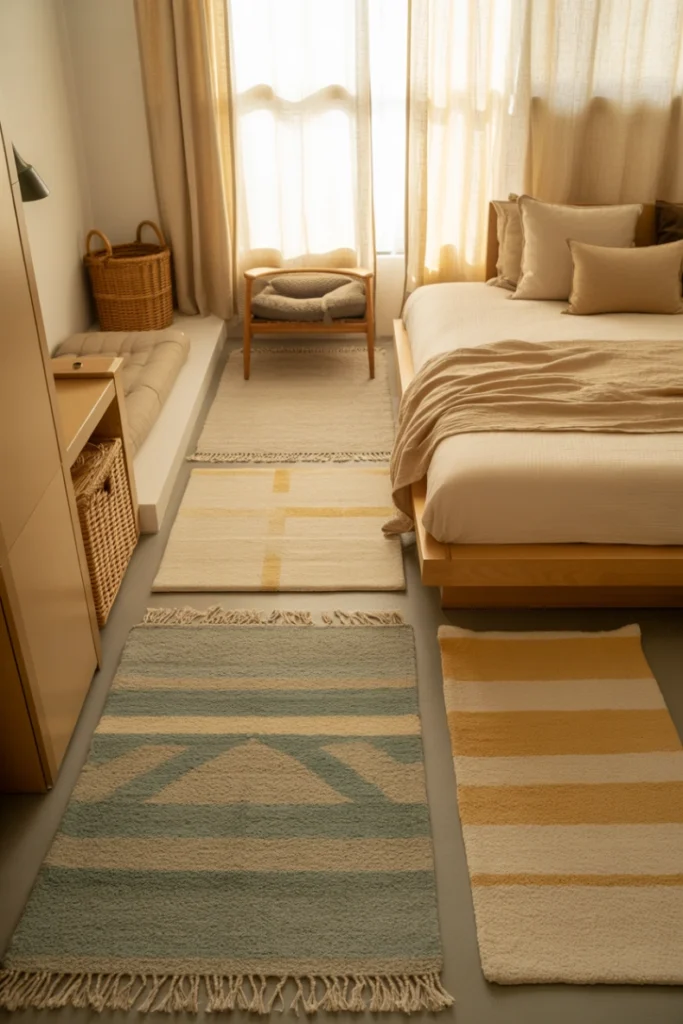
Rugs define areas in a small bedroom without walls or screens. A rug under the bed anchors the sleeping zone, a small rug beside the bed creates a soft landing spot for bare feet, and a rug under a chair marks a reading corner. For a queen bed, choose a rug about 8 by 10 feet, placed so it extends at least 18 inches beyond each side of the bed. For a twin bed, a 5 by 7 foot rug beside the bed is often enough.
Choose low pile rugs, no more than 1/2 inch thick, so doors clear them and chairs roll easily. Light neutrals, soft patterns, and natural fibers such as wool, cotton, or jute work best in small rooms, because they add warmth without darkening the floor. If you layer rugs, keep the base rug plain and add a smaller patterned rug on top, with at least 12 inches of the base rug visible around it.
Use a non slip rug pad underneath, especially on hard floors, and vacuum rugs twice a week in a small room, where dust shows fast. Rotate the rug every few months to prevent uneven wear and sun fading. Done well, zoning with rugs makes a tiny bedroom feel organized and intentional, as if each corner has a purpose, even when the whole room is only a few steps across.
18. Add Wall Art for Personality
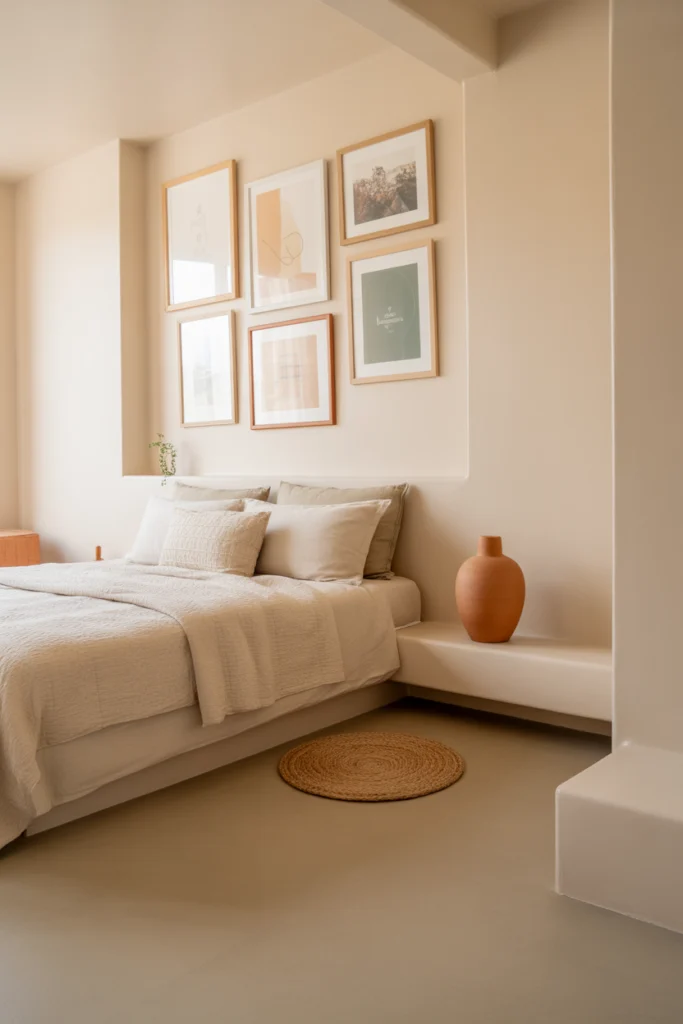
Wall art adds personality without using any floor space, which makes it ideal for tiny bedrooms. Choose one larger piece, about 24 by 36 inches, above the bed or dresser, rather than many small frames that can look cluttered. Alternatively, create a simple gallery of three to five frames in matching frames, spaced 2 to 3 inches apart, with a consistent theme, such as landscapes, line drawings, or family photos.
Hang art at eye level, with the center about 57 to 60 inches from the floor, or 6 to 8 inches above a headboard or dresser. Use a vertical arrangement to emphasize height, or a horizontal row to make a wall feel wider. Keep frame colors consistent, in black, white, natural wood, or thin brass, and match the art colors to your bedding accent, so the room feels cohesive rather than random. For more decor pairings, see these bedroom decor ideas for how art, bedding, and lighting are balanced in small rooms.
Use removable adhesive strips or picture ledges if you rent, so you can change art without damaging walls. A picture ledge also lets you swap prints seasonally in minutes. Avoid hanging art on every wall: leave at least one wall mostly bare, so the eye has a place to rest. In a tiny bedroom, a little well chosen art feels personal, while too much feels busy.
19. Choose Foldable or Nesting Furniture
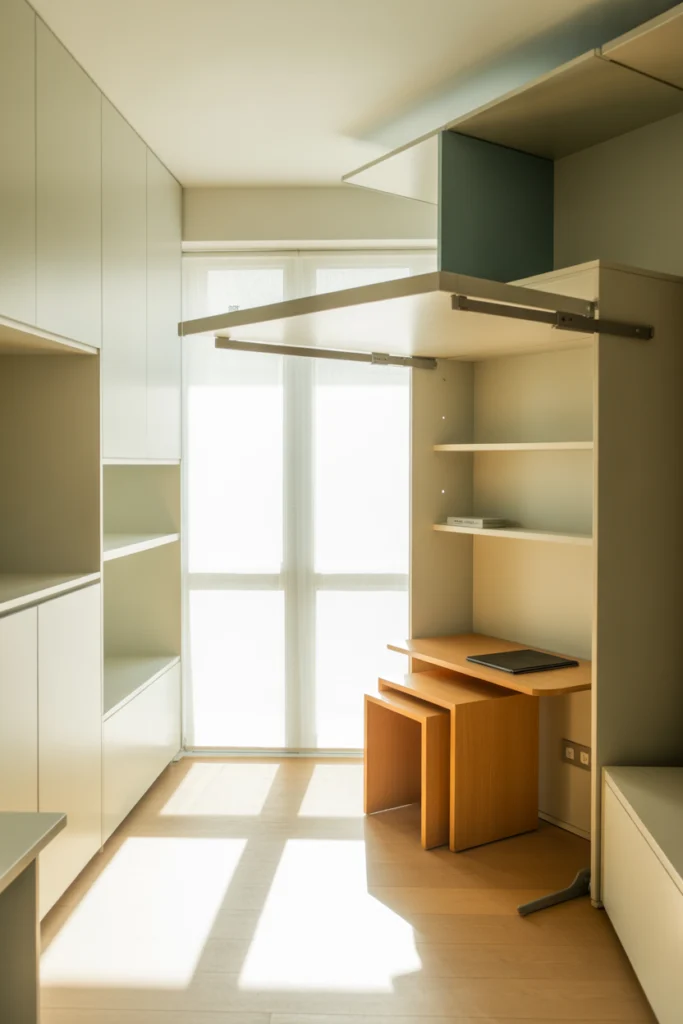
Foldable and nesting furniture adapts to what you are doing, then disappears when you are done. Nesting tables tuck together as one small side table and pull apart when guests visit. Folding chairs hang on a wall or slide under a bed. A foldable bench at the foot of the bed offers seating for getting dressed, then folds flat for storage. These pieces are especially useful in rooms that serve more than one purpose.
Look for lightweight designs in wood, metal, or rattan, weighing under 15 pounds per piece, so you will actually move them instead of leaving them out. Check that folding mechanisms lock securely and that nesting tables slide smoothly without scratching. Keep a dedicated storage spot for folded items, such as a hook behind the door or a slim gap beside the wardrobe, so they do not end up leaning in a corner.
Use foldable furniture for occasional needs, such as extra seating, a hobby table, or a guest surface, and keep your everyday furniture fixed and comfortable. That balance gives you flexibility without living in a room that always feels temporary. When guests leave, fold the extras away, and your tiny bedroom returns to its calm, everyday layout in under a minute.
20. Incorporate Multi-Functional Wall Hooks
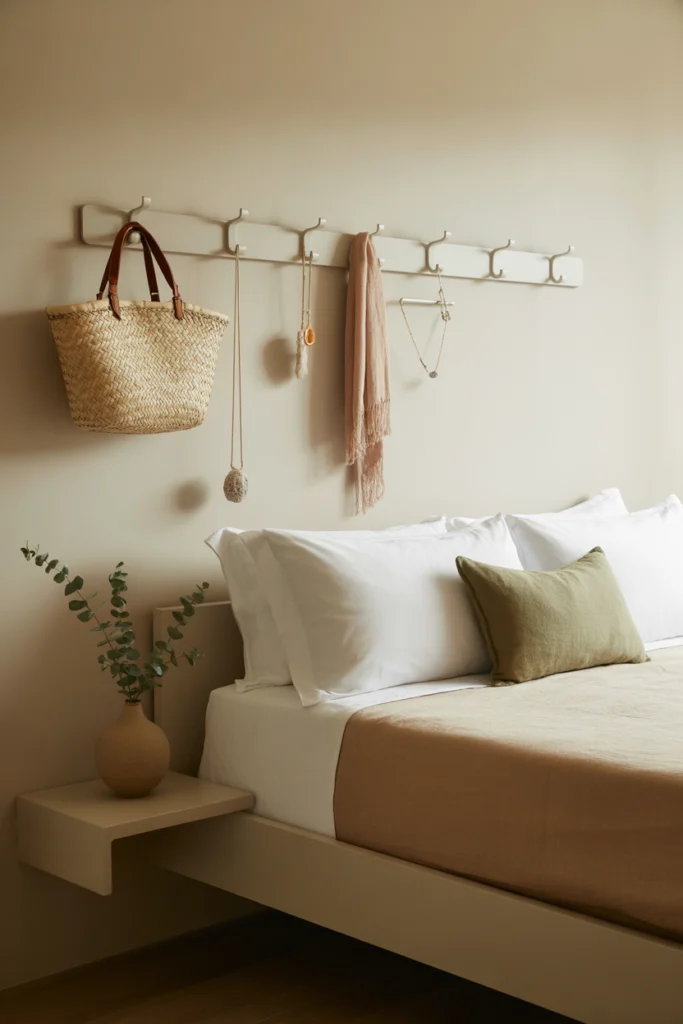
Wall hooks are the smallest, cheapest storage upgrade in a tiny bedroom, and one of the most useful. A row of hooks near the door holds coats, bags, and tomorrow’s outfit. Hooks beside the bed hold a robe, headphones, or a tote bag. Hooks inside a closet door or on the side of a wardrobe use space that would otherwise sit empty. Choose hooks rated for at least 10 pounds each, fixed into studs or with heavy duty anchors.
Install hooks at useful heights: about 60 to 66 inches for coats and bags, and about 48 inches for children’s items or smaller accessories. Mix hook styles for different jobs: sturdy single hooks for bags, double hooks for a coat plus a scarf, and small pegs for jewelry or keys. Choose finishes that match your room hardware, such as matte black, brushed brass, or natural wood, so hooks look intentional rather than improvised.
Limit each hook to one or two items, and clear hooks weekly, so they do not become a second closet. If hooks start to look cluttered, add a small basket nearby for scarves and hats, and keep only daily items on the hooks themselves. Used with discipline, wall hooks keep essentials visible, reachable, and off the floor, which is exactly what a tiny bedroom needs.
21. Maximize Natural Light
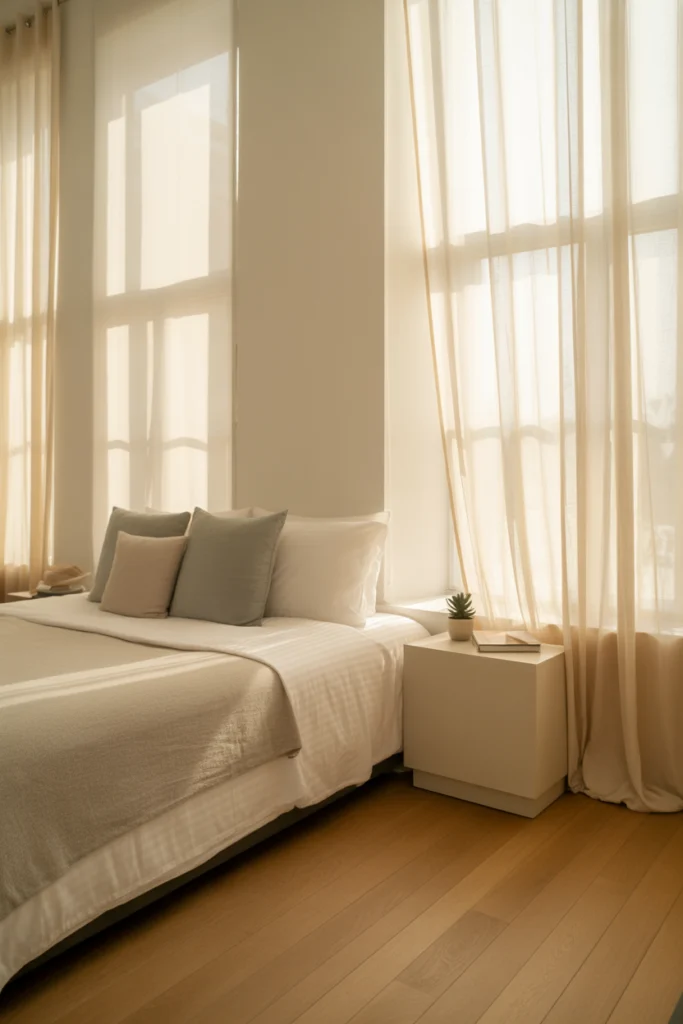
Natural light is the single most powerful way to make a tiny bedroom feel larger, brighter, and more welcoming. Keep windows unobstructed: move tall furniture away from the window wall, choose sheer or light filtering curtains, and avoid heavy valances or dark blinds that block daylight. Clean windows inside and out every month, because even a thin film of dust can noticeably dim a small room.
Amplify the light you have by pairing windows with mirrors, light walls, glossy or satin paint on trim, and reflective bedding in white or pale tones. If privacy is a concern, use a frosted window film on the lower half of the window, which lets light in while blocking the view, or use a sheer curtain during the day and a blackout panel only at night. For north facing rooms with cooler light, use warm white bulbs in the evening to balance the tone.
If you can make a structural change, consider enlarging a window, adding a skylight, or replacing a solid bedroom door with a door that has a frosted glass panel, so hallway light can enter. Even without renovation, a daily habit of opening curtains fully in the morning and keeping the window sill clear makes a visible difference. A bright tiny bedroom feels open, lifts your mood, and makes every other idea on this list work better.
Conclusion
Designing a tiny bedroom is about smart choices, not sacrifice. From floating beds and built in storage to mirrors, vertical organization, light colors, and slim furniture, these 21 tiny bedroom ideas show how a small space can still be stylish, functional, and deeply comfortable. The best results come from combining a few strong ideas, rather than trying all 21 at once.
Start with light, layout, and storage, then add personality through art, rugs, and bedding you love. Measure before you buy, keep walkways clear, and let every piece earn its place. With thoughtful planning, a cohesive palette, and a little daily discipline, even the smallest bedroom can become a calm, inviting retreat where limited space never limits style or comfort.
Frequently Asked Questions
What is the best bed size for a tiny bedroom?
For most tiny bedrooms, a double bed, about 54 by 75 inches, or a queen bed, about 60 by 80 inches, works well, depending on room width. Leave at least 24 inches of clear space on the side you get out of bed, and at least 30 inches for the main walkway. If a queen bed leaves less than that, choose a double bed and gain storage elsewhere, such as under the bed or on the walls. Comfort matters, but so does being able to move around the bed without squeezing past furniture.
How can I add storage to a tiny bedroom without a dresser?
Use a combination of under bed bins, vertical shelving, wall hooks, and a storage ottoman or bench. A bed with built in drawers can replace a dresser entirely, and floating shelves above the bed or desk hold books and decor without floor space. Sort items by how often you use them, keep daily items at arm height, and store seasonal items high up or under the bed. This layered approach often holds as much as a dresser, while keeping the floor clear.
What colors make a small bedroom look bigger?
White, warm cream, pale beige, light gray, pale blue, and soft sage all reflect light and make walls feel farther apart. Keep walls, bedding, and curtains in the same light family, and add one muted accent color through cushions or art. Avoid painting all four walls in a dark color, and keep the ceiling bright white. If you love dark tones, use them in small doses, such as a dark headboard or a single accent wall, balanced by light bedding and mirrors.
Should I use a loft bed in a tiny bedroom?
A loft bed works well if your ceiling is at least 8 feet high, giving you 30 to 33 inches of sitting clearance above the mattress, and if you are comfortable climbing a ladder daily. It frees the floor for a desk, seating, or storage, which is a major gain. It is less suitable for people with mobility issues, very low ceilings, or a dislike of climbing. Always choose a frame with a full guardrail, secure fixings, and a weight rating suited to adult use.
How do I keep a tiny bedroom from feeling cluttered?
Give everything a home, and review the room monthly. Use closed storage for small items, open shelving only for a few chosen pieces, and keep surfaces mostly clear. Limit decor to one or two textures and one accent color, hang curtains high, and keep the floor visible wherever possible. A simple evening routine, making the bed, clearing the nightstand, and hanging up clothes, prevents clutter from building up and keeps a small room feeling calm.
More Ideas You Will Love
 14 Baby Nursery Ideas for a Cozy, Magical & Stylish Space
 12 Summer Bedroom Makeover Ideas for a Cooler, Fresher Sleep
 22 Modern Bedroom Ideas for Cozy, Luxury & Contemporary Spaces
 16 Headboard Ideas: Stylish & Functional Designs for Every Bedroom
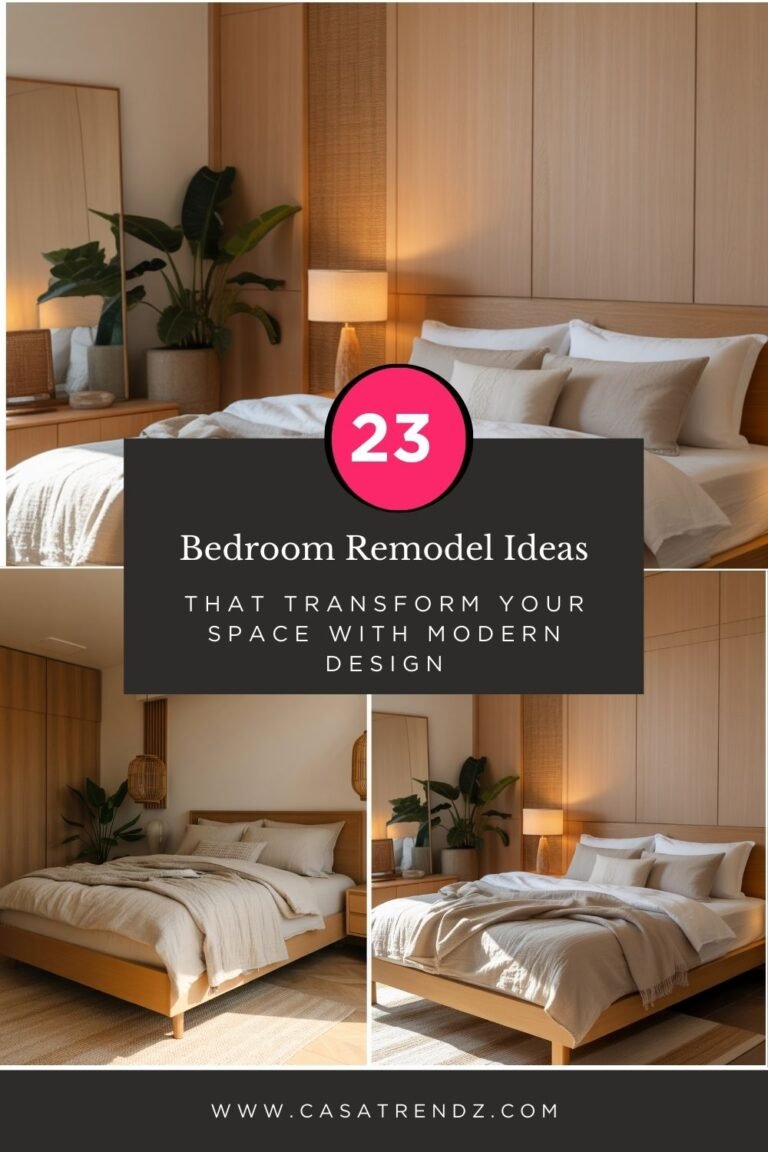 23 Bedroom Remodel Ideas for 2026 That Transform Your Space with Modern Design
 20 Aesthetic DIY Christmas Bedroom Light Ideas for 2025