
23 Bedroom Remodel Ideas for 2026 That Transform Your Space with Modern Design

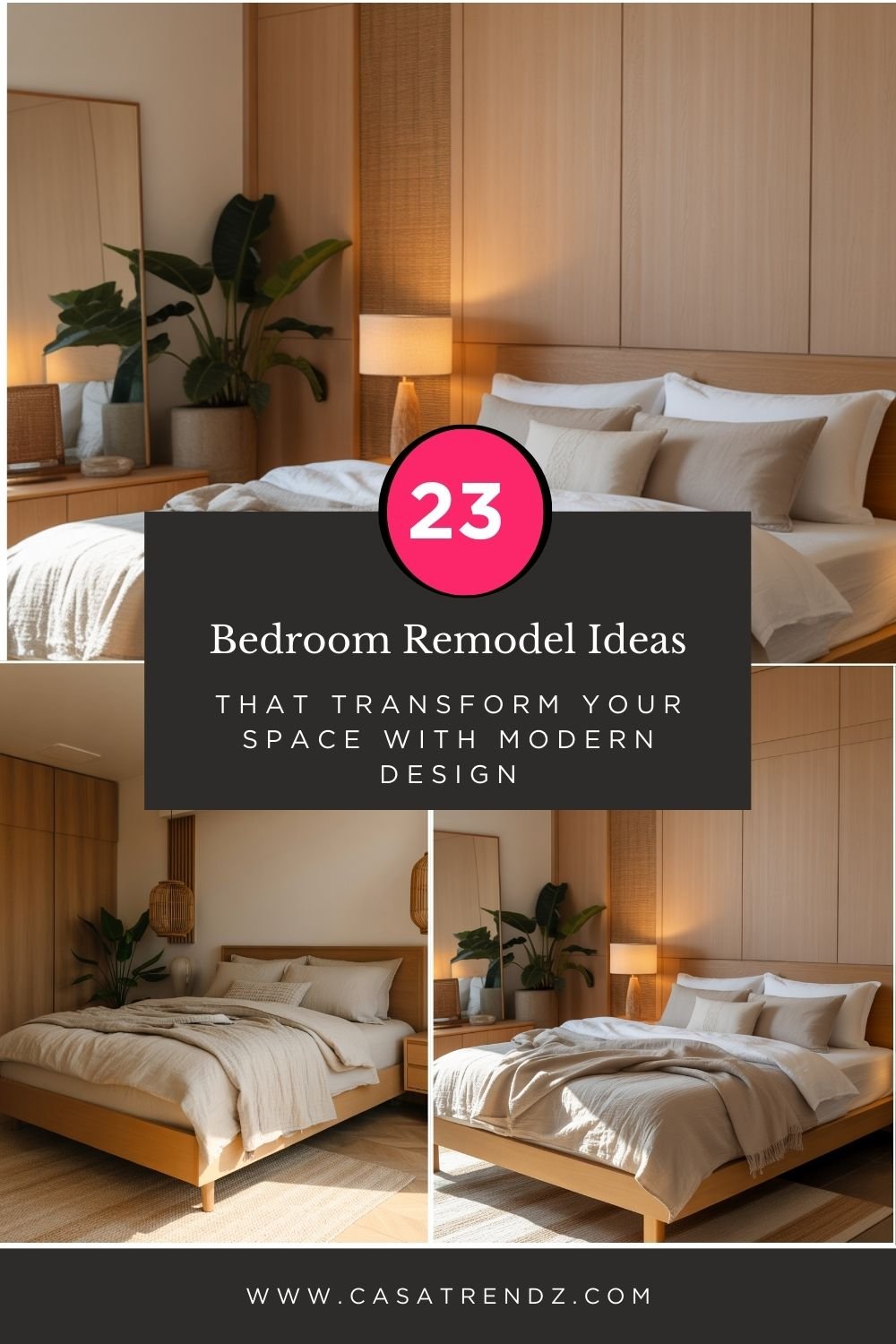
A bedroom remodel in 2026 is less about following one trend and more about building a room that helps you sleep better, start the day calmly, and store everything without visual clutter. The strongest remodels this year mix comfort driven design with practical upgrades: layered lighting you can dim from bed, storage built into the walls instead of bulky furniture, natural materials that soften a room, and a clear focal point, whether that is an accent wall, a statement headboard, or a beautiful light fixture.
Use this guide the way a designer would. First, pick one main change that will define the room, such as a new color palette or a new bed setup. Then layer the supporting changes around it: lighting, storage, and textiles. Working in that order keeps the room cohesive and stops you from buying pieces that compete with each other. If you are still deciding on an overall direction, browse these bedroom design ideas first and save the two or three rooms that feel most like you.
Before you start, measure the room, note where the natural light falls during the day, and list what is not working now: too little storage, harsh overhead light, a bed that dominates the room, or a color you are tired of. Most of the 23 ideas below can be done as a weekend refresh, while a few, like built in storage or a full layout change, are worth planning over a few weeks. Each section gives you materials, measurements, and a step by step approach so you can act on it right away.
1. Minimalist Bedroom with Clean Lines and Neutral Tones
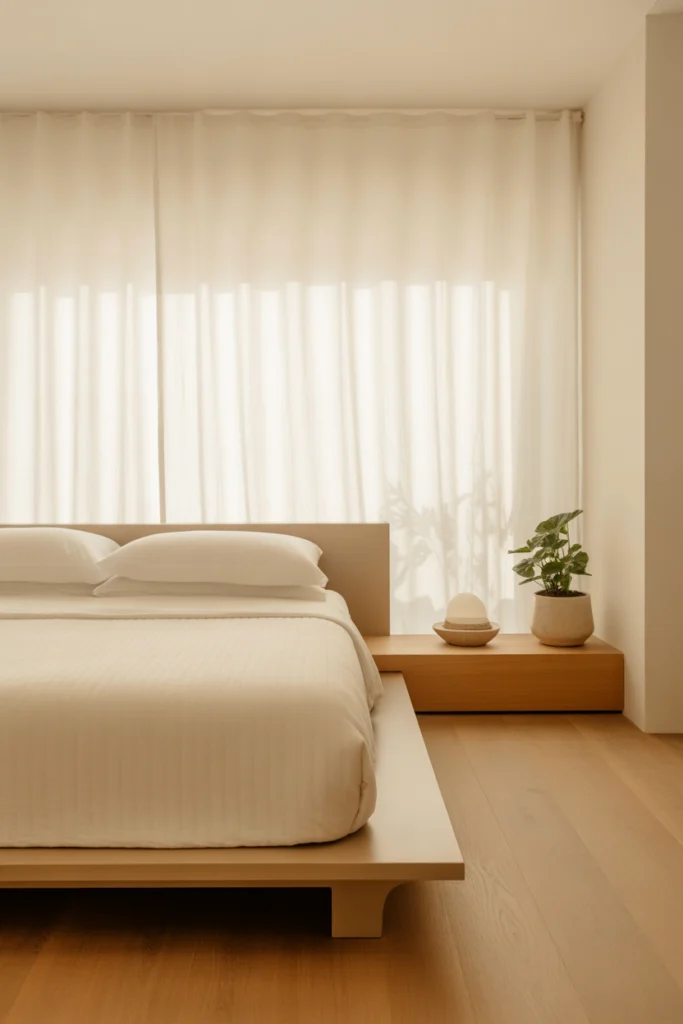
Minimalism works because it removes visual noise. Start with a warm neutral palette: warm beige or soft taupe on the walls, muted white bedding, and one wood tone, such as light oak, repeated in the nightstands and frames. Keep the furniture low profile and simple: a platform bed, floating nightstands, and a single dresser instead of several small pieces. Concealed storage is what makes this style livable, so choose a bed with drawers or a wardrobe with flat fronts and push to open doors rather than visible handles.
To build the look, declutter first and remove anything that does not serve the room. Paint the walls in a warm white with a slight beige undertone, which flatters both morning and evening light. Add texture instead of pattern to keep the room interesting: a cotton duvet, a linen throw, a wool rug under the bed that extends at least 18 inches on each side, and one piece of art. For lighting, use warm white bulbs around 2700K in both the ceiling fixture and bedside lamps, and put the bedside lamps on dimmers so the room can shift from bright morning to calm evening.
Tip: follow a one in, one out rule for decor after the remodel. Minimalist rooms stay calm only when new items replace old ones instead of piling up beside them.
2. Cozy Modern Bedroom with Warm Textures
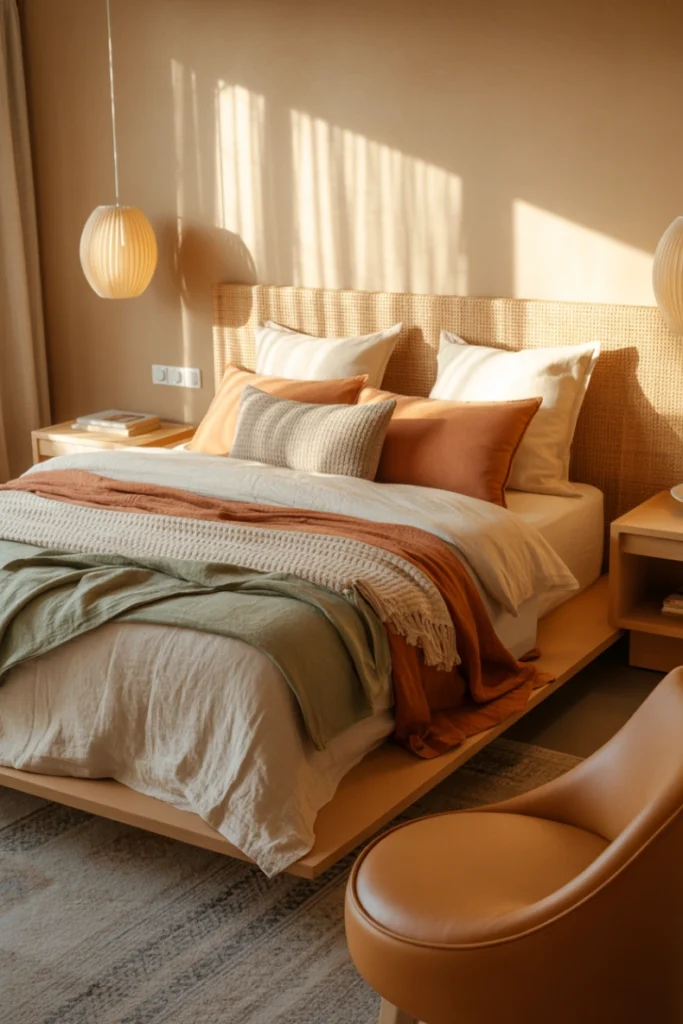
A cozy modern bedroom layers soft materials over clean furniture lines. Think boucle or sherpa throws, velvet cushions, a thick wool or high pile rug, and linen or cotton bedding in warm earth tones like camel, rust, cream, and soft brown. The contrast is the point: sleek furniture keeps the room modern, while the textiles make it feel inviting. For a queen bed, choose a rug at least 8 by 10 feet so it runs under the bed and extends on both sides; for a king, go 9 by 12 feet if the room allows.
Layer in this order: start with crisp cotton sheets, add a light duvet, then a heavier blanket folded across the foot of the bed, and finish with two or three cushions in different textures rather than different colors. Add a knitted throw on a chair or bench for a lived in touch. Lighting matters as much as fabric, so use dimmable sconces or table lamps with warm bulbs, and avoid a single harsh ceiling light in the evening. A textured wall panel or a woven headboard can add depth without adding clutter.
Tip: limit the palette to three warm tones plus white. Too many colors will make a layered room feel busy instead of cozy.
3. Statement Accent Wall for Visual Impact
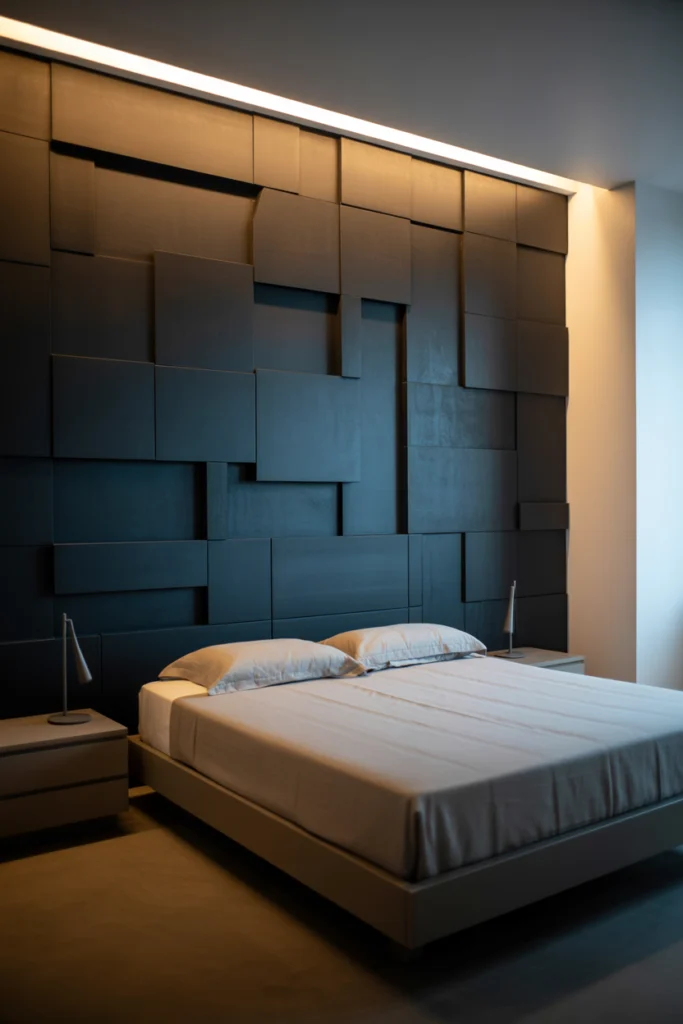
An accent wall gives the whole room a focal point with one weekend of work. The most popular 2026 options are limewash paint for a soft, cloudy texture, fluted wood panels for vertical rhythm, geometric wood slats for a modern look, and textured wallpaper for pattern without paint. The wall behind the bed is the natural choice, since it frames the bed and is visible from the doorway. If the bed wall has windows or a door, use the wall opposite the bed instead.
For fluted panels, measure the wall and plan panels that run floor to ceiling, with slats about 1 to 2 inches wide and spaced evenly. Paint the wall behind the panels the same color first so gaps disappear. For limewash, apply two thin coats with a block brush in crisscross strokes and let each coat dry fully. For wallpaper, order one extra roll beyond the measured amount to cover pattern matching and mistakes. Finish with lighting that shows off the texture: wall washers, picture lights, or sconces mounted about 60 inches from the floor.
Tip: keep the rest of the room quiet. Neutral bedding and simple nightstands let the accent wall carry the room instead of competing with it.
4. Smart Bedroom with Integrated Technology
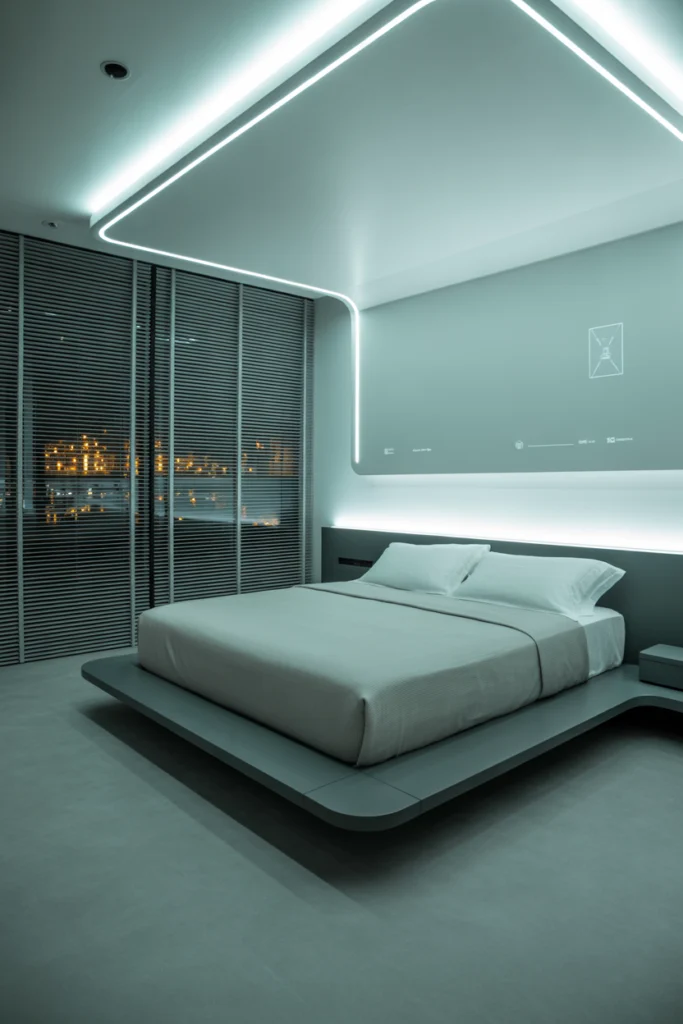
A smart bedroom should feel effortless, not technical. The upgrades that make the biggest daily difference are smart lighting, automated blackout blinds, and a simple voice or app control for both. Smart bulbs let you shift from bright daylight white in the morning to warm dim light at night, which supports a steadier sleep routine. Automated blinds can open gradually in the morning and close fully at night, and a temperature controlled mattress pad or a quiet smart fan adds comfort without visible gadgets.
Start with lighting and blinds, then add only what you will actually use: wireless chargers built into the nightstand, a small smart speaker for alarms and white noise, or a smart mirror with soft backlighting. Hide the technology: run cables behind the bed, use cord covers painted to match the wall, and choose devices in white or black to match your hardware. Set up one routine, such as a “good night” command that dims the lights, closes the blinds, and starts white noise, so the system works with one tap instead of five apps.
Tip: buy devices that work with the voice assistant you already use. A mixed system with three apps is the fastest way to stop using smart features altogether.
5. Earth-Toned Bedroom Inspired by Nature
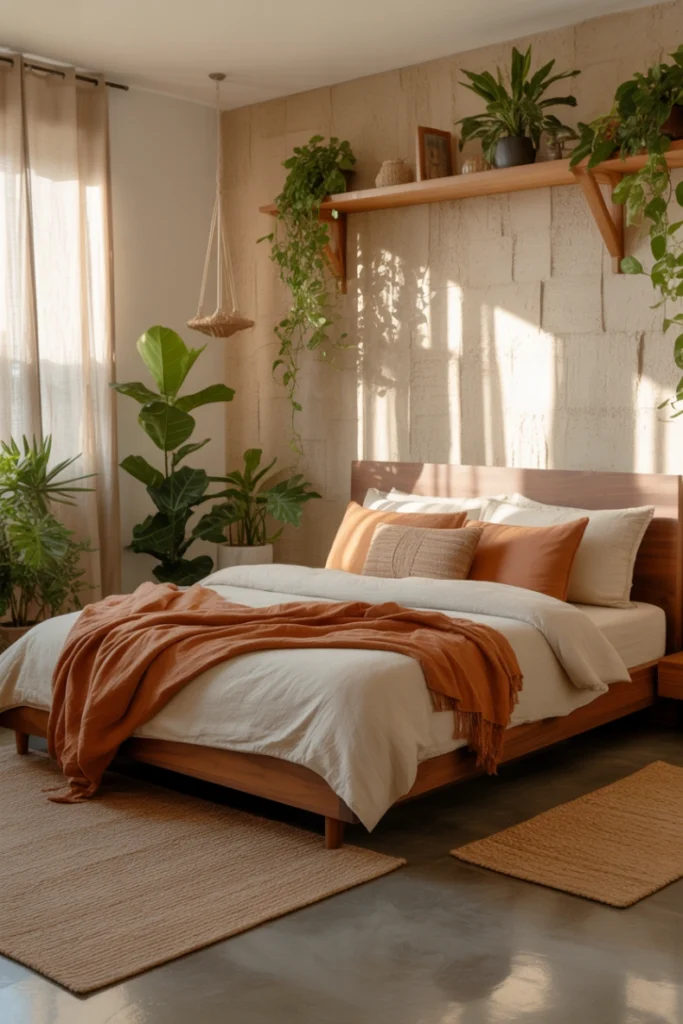
Earth tones bring warmth and calm without feeling dark. Build the palette from clay, terracotta, warm sand, olive, and forest green, and pair it with natural materials: solid oak or rattan furniture, linen bedding, woven baskets, and a jute or wool rug. Keep the largest surfaces, walls and bedding, in the lightest tones, and use the deeper colors, terracotta cushions, an olive throw, a dark wood frame, as accents so the room stays bright.
Add greenery that survives bedroom conditions: a snake plant, a pothos trailing from a shelf, or an olive tree in a terracotta pot near the window. Use stone or ceramic decor, such as a travertine tray on the dresser or handmade ceramic vases, to echo natural textures. For lighting, choose warm bulbs and linen or rattan shades that soften the light like sunlight through leaves. Hang one large nature print or a woven wall hanging instead of several small pieces to keep the organic feeling calm.
Tip: bring in one natural scent, such as cedar, sandalwood, or eucalyptus, through a candle or diffuser. Scent completes the nature inspired feeling in a way color alone cannot.
6. Scandinavian Bedroom with Light and Airy Design
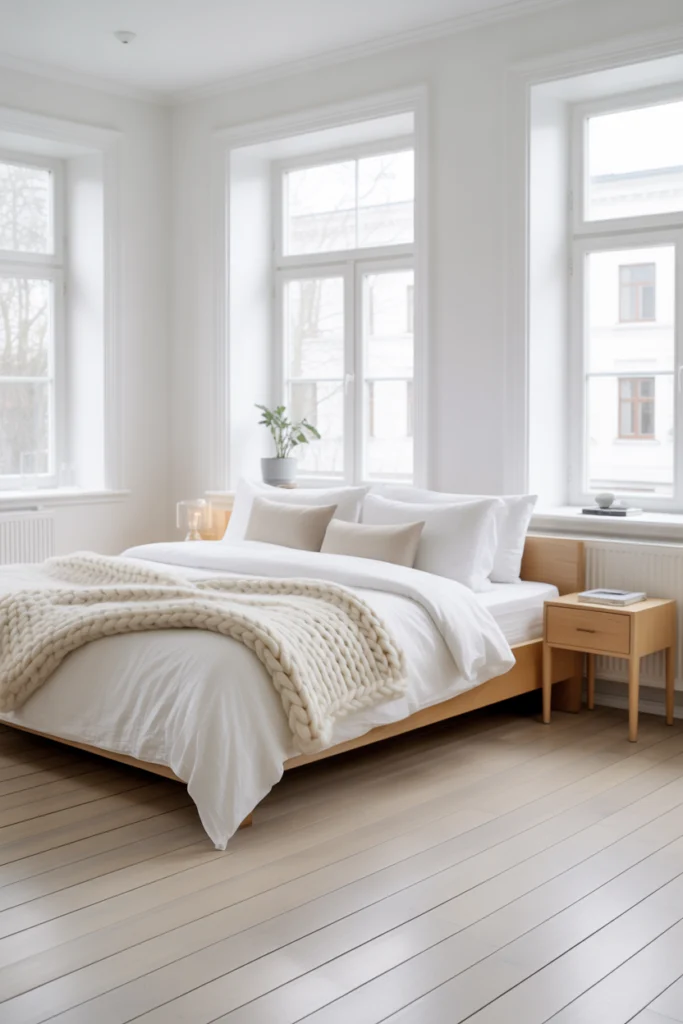
Scandinavian design pairs bright spaces with cozy minimalism. Paint the walls soft white, choose pale wood flooring or a light wood bed frame, and keep furniture functional: a simple bed, two matching nightstands, and a dresser with clean lines. Natural fabrics do most of the decorating here: white or cream cotton bedding, a wool throw, and linen curtains that let daylight through while keeping privacy.
To get the look right, leave breathing room around the furniture. Keep at least 24 inches of walking space on each side of the bed, and avoid pushing every piece against the wall. Choose one statement piece, such as a large framed print, a sculptural lamp, or a single vase with dried stems, and keep other surfaces mostly clear. Add warmth with a sheepskin on a chair, a light wool rug beside the bed, and soft lighting from a paper pendant or a simple table lamp.
Tip: store out of season bedding and extra blankets in under bed boxes or a top wardrobe shelf. Scandinavian calm depends on surfaces staying clear.
7. Luxury Hotel-Inspired Bedroom
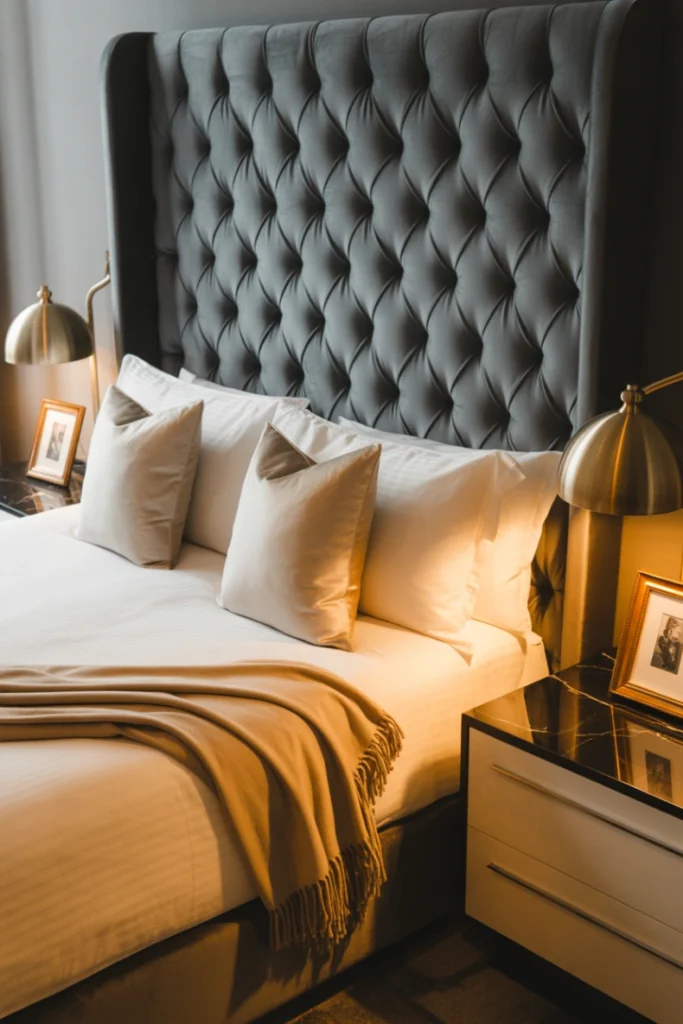
A hotel style bedroom is built on layers. Start with the bed: a supportive mattress, a plush topper, crisp white cotton or linen sheets, a full duvet, and four sleeping pillows plus two decorative cushions. An oversized upholstered headboard, about 48 to 60 inches high and at least as wide as the bed, instantly gives the five star look. Add a padded bench at the foot of the bed, blackout curtains behind sheer panels, and a dimmable chandelier or pendant as the centerpiece.
Choose a quiet palette of ivory, champagne, soft gray, and one metallic accent, such as brushed brass or chrome, repeated in the lamp bases, mirror frame, and drawer pulls. Keep the nightstands symmetrical, with matching lamps and a small tray for a carafe and book. A thick rug under the bed, velvet cushions, and a folded throw across the foot of the bed complete the layered feeling. Use blackout lining on curtains so the room stays dark for sleep, and add a soft bedside light for reading.
Tip: iron or steam the bedding and fold the top sheet back over the duvet. That one hotel habit makes even a simple bed look freshly made.
8. Japandi Bedroom for Calm and Balance
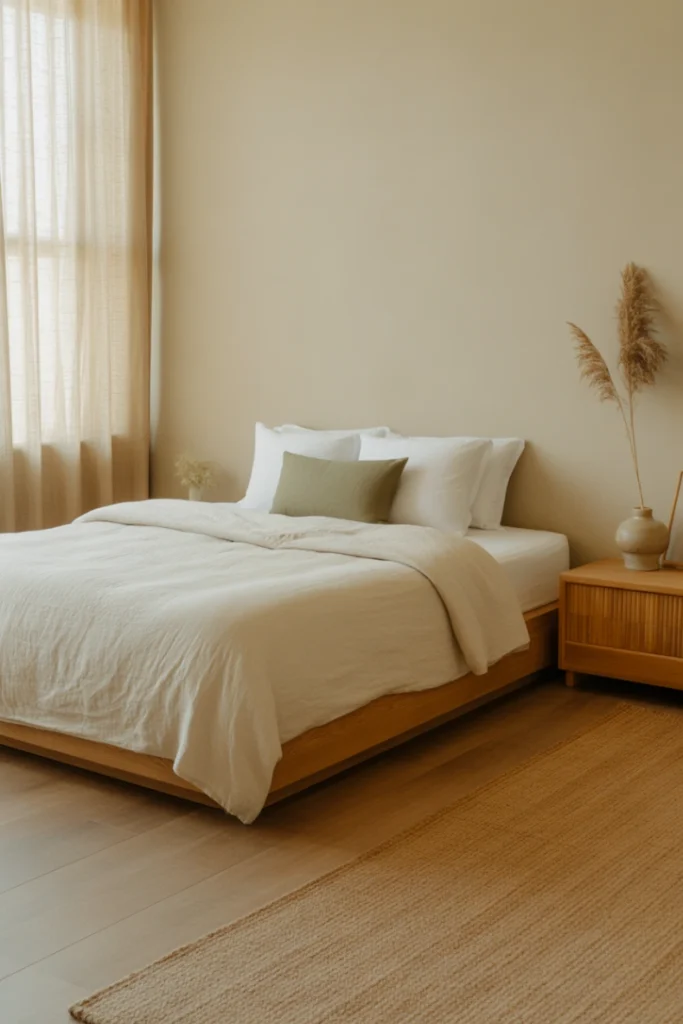
Japandi blends Scandinavian lightness with Japanese minimalism: low furniture, clean lines, organic materials, and a warm neutral palette of warm white, stone gray, soft beige, and light wood. The bed is the anchor, so choose a low platform frame, about 8 to 12 inches high, in light oak or walnut, with simple linen bedding in white or oatmeal. Keep surfaces mostly clear and let one or two handcrafted pieces, a ceramic vase, a wooden tray, a paper lamp, carry the character of the room.
Build the room in layers of texture rather than color: a woven rug, a cotton throw, a linen cushion, and a bamboo or rattan pendant light. Use soft ambient lighting, such as a paper floor lamp or dimmable wall sconces, and avoid bright overhead light in the evening. Storage should be closed and calm: sliding wardrobe doors, lidded baskets, and a single shelf for books instead of open clutter. If the room has a view, keep the window treatment sheer so daylight stays part of the design.
Tip: when something new enters the room, remove something old. Japandi calm is maintained by editing, not by adding.
9. Modern Industrial Bedroom with Raw Finishes
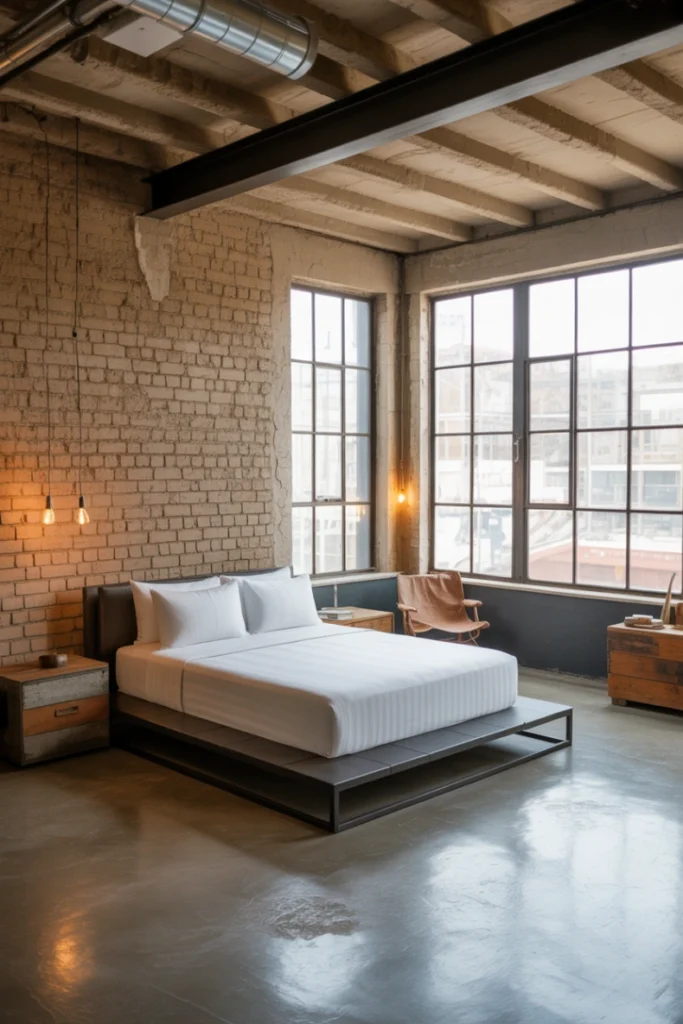
Industrial bedrooms mix raw materials with warm comfort. The signature elements are an exposed brick wall or brick look panels, black metal fixtures, distressed wood, and concrete or plaster textures. The key is restraint: pick one raw feature per wall, such as brick behind the bed, and keep the rest of the room warm so it never feels like a warehouse. Pair the raw wall with soft bedding in cream or rust, a textured wool rug, and warm ambient lighting.
For the brick wall, real exposed brick can be sealed with a matte sealant to stop dust; if that is not possible, brick veneer panels or brick effect wallpaper give the same look with less work. Add black metal in small doses: a slim bed frame, matte black lamp bases, and black curtain rods. Edison style bulbs around 2200K give the warm glow this style needs. Balance the hard surfaces with a wooden bench, leather accents, or a vintage style trunk at the foot of the bed.
Tip: soften every hard surface with something warm. If the room still feels cold, add a second rug layer or heavier curtains before changing the wall.
10. Soft Romantic Bedroom with Pastel Tones
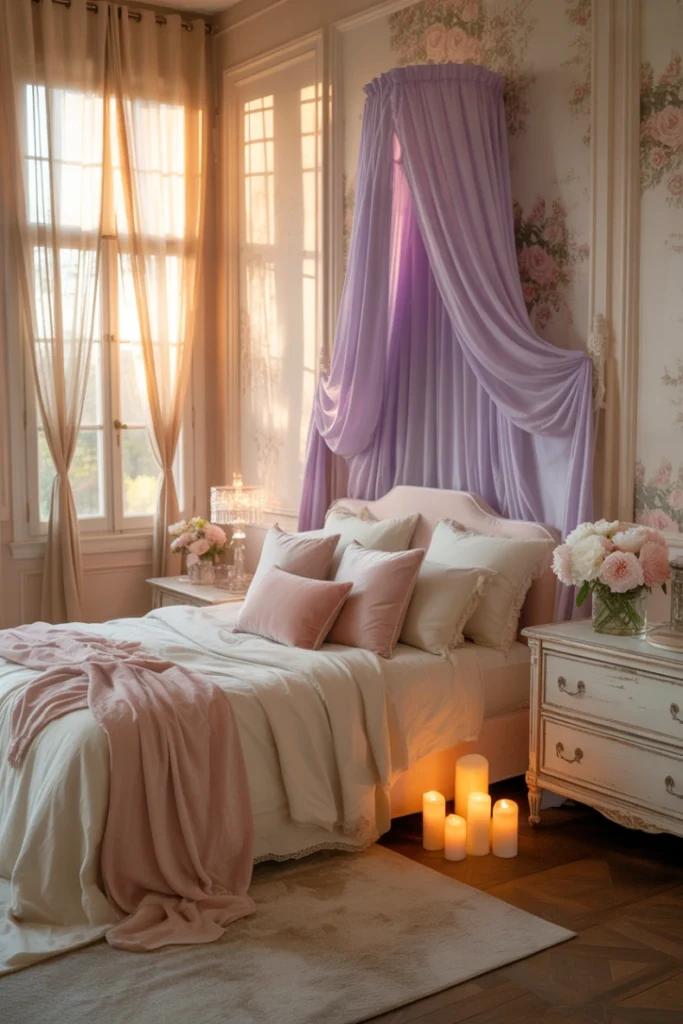
Pastel bedrooms feel gentle and restful when the colors stay soft and the furniture stays simple. Choose a base of cream or soft white, then add blush, lavender, sage, or powder blue in bedding, cushions, and art. A tufted or upholstered headboard in a pale tone, sheer curtains that glow in daylight, and delicate floral artwork complete the romantic feeling without making the room feel like a theme.
Layer the pastels carefully: pick one main pastel for the bedding, a second for cushions or a throw, and keep walls and large furniture neutral so the room stays airy. Add warmth with a plush rug beside the bed, a small upholstered chair in the corner, and warm bedside lighting. A draped canopy or a sheer bed curtain can add softness, but keep it light and simple so the room does not feel heavy. Mirrored or white furniture reflects light and keeps pastel rooms bright.
Tip: test pastel paint in both daylight and evening light before committing. Pastels can turn gray under cool bulbs, so pair them with warm white lighting.
11. Statement Lighting as a Design Centerpiece
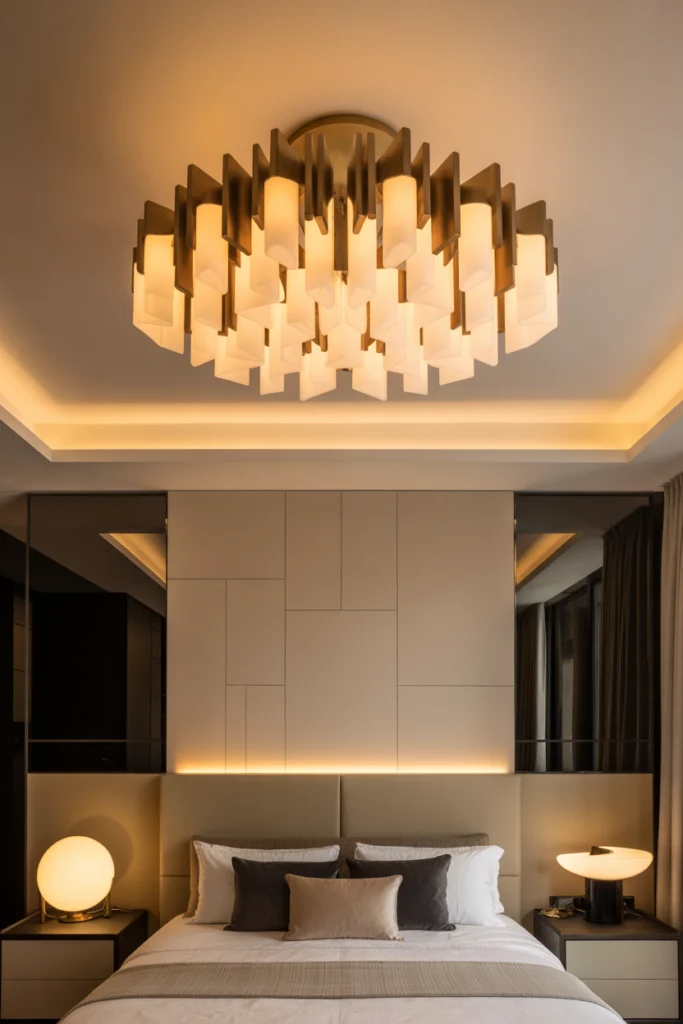
Lighting changes a bedroom more than almost any other single upgrade, and a statement fixture makes it the centerpiece. Sculptural chandeliers, oversized pendants, and artistic sconces add personality while setting the mood. Size the fixture to the room: a useful rule is to add the room length and width in feet and use that total in inches for the fixture diameter, so a 12 by 14 foot room suits a fixture about 26 inches wide. Hang a bedroom chandelier so its bottom sits about 7 feet above the floor, or 30 to 36 inches above a bedside table for pendants.
Layer three types of light: ambient light from the ceiling fixture, task light from bedside lamps or reading sconces, and accent light from a picture light or LED strip behind the headboard. Put each layer on its own dimmer so you can shift from bright morning light to a soft evening glow. Choose warm bulbs, 2700K for relaxation, and keep the fixture style in line with the room: a crystal or brass chandelier for luxury, a rattan pendant for bohemian or earthy rooms, a slim black pendant for modern spaces.
Tip: if you can only change one thing, change the lighting. A beautiful fixture with dimmers transforms even an unchanged room.
12. Built-In Storage Solutions for a Clutter-Free Space
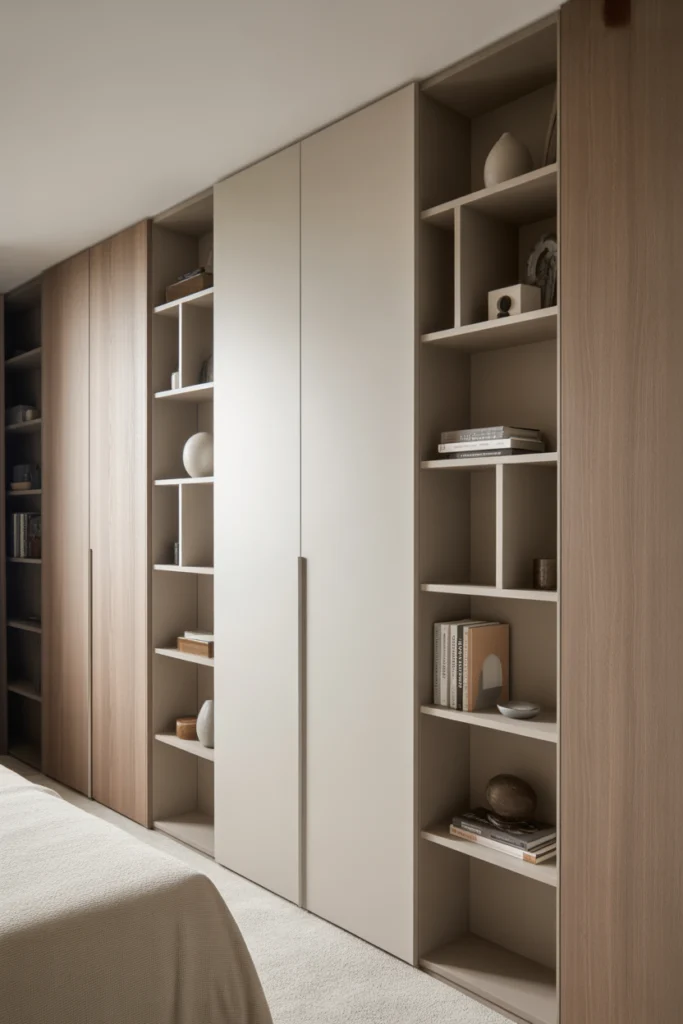
Built in storage is the most practical remodel a bedroom can get, because it removes clutter without adding furniture. The best options are floor to ceiling wardrobes with flat fronts, custom closets with double hanging rails, under bed drawers about 6 to 8 inches deep, wall integrated shelves beside the bed, and a window seat with storage underneath. In 2026, the cleanest look comes from concealed systems: handleless doors, soft close hinges, and finishes that match the wall color so the storage reads as architecture, not furniture.
Plan before you build. List everything the bedroom must store, measure the largest items, and leave about 20 percent of the storage empty so the system stays usable. Put daily clothes at eye level, seasonal items up high, and shoes and bags low. Inside the wardrobe, add a mix of hanging space, shelves spaced 12 inches apart for folded clothes, and at least one drawer for small items. Under bed drawers work best on smooth casters with a low profile handle, and a shallow shelf niche beside the bed can replace a nightstand in a tight room.
Tip: photograph the inside of your current closet before planning. It shows what you actually store, which is more useful than any generic closet layout.
13. Moody Dark Bedroom for a Dramatic Look
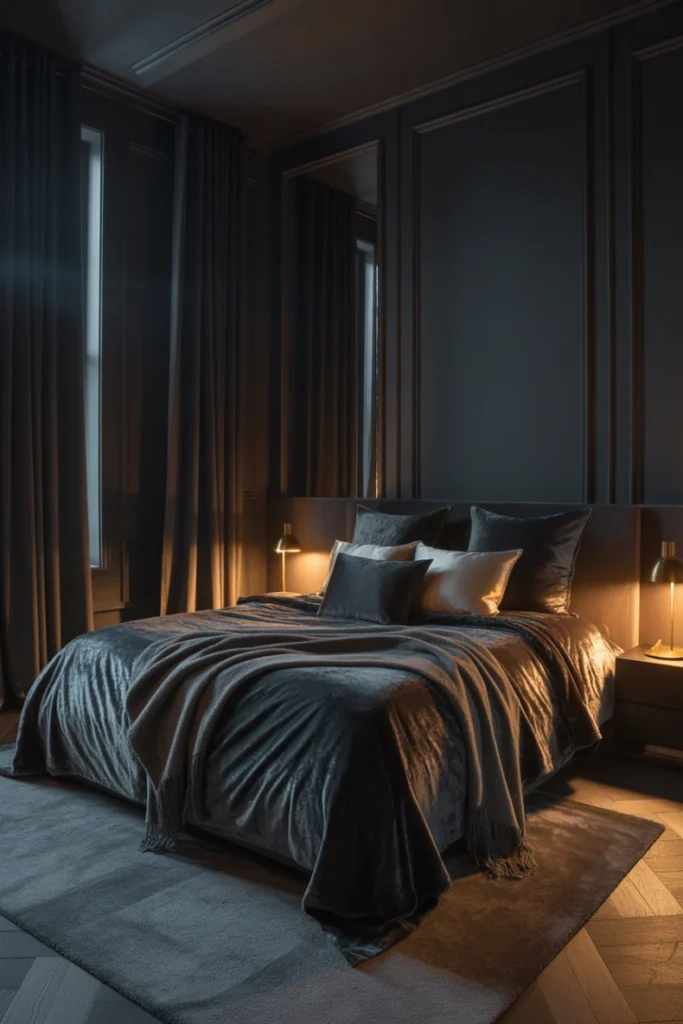
Dark bedrooms feel dramatic and cocooning when the color is balanced with light and texture. The best 2026 shades are charcoal, deep navy, espresso, and forest green, used on all four walls or on the bed wall plus one adjacent wall. Dark paint absorbs light, so the room needs more lighting than a light room: a ceiling fixture, two bedside lamps, and one accent light, such as a picture light or a small uplight, to keep corners from going flat.
Balance the dark walls with lighter layers: ivory or cream bedding, a beige or oatmeal throw, brass or gold hardware, and a light rug to ground the bed. Test paint swatches on each wall and view them in daylight and at night, since dark colors shift a lot with light. Add mirrors opposite a window to bounce daylight, and choose bedding with texture, velvet, linen, or a chunky knit, so the room feels rich rather than flat. If you want more ideas for getting the palette right, these bedroom color schemes show how dark tones pair with lighter accents.
Tip: paint the ceiling the same dark color or one shade lighter, not bright white. A white ceiling in a dark room cuts the cocooning effect in half.
14. Modern Bohemian Bedroom with Artistic Flair
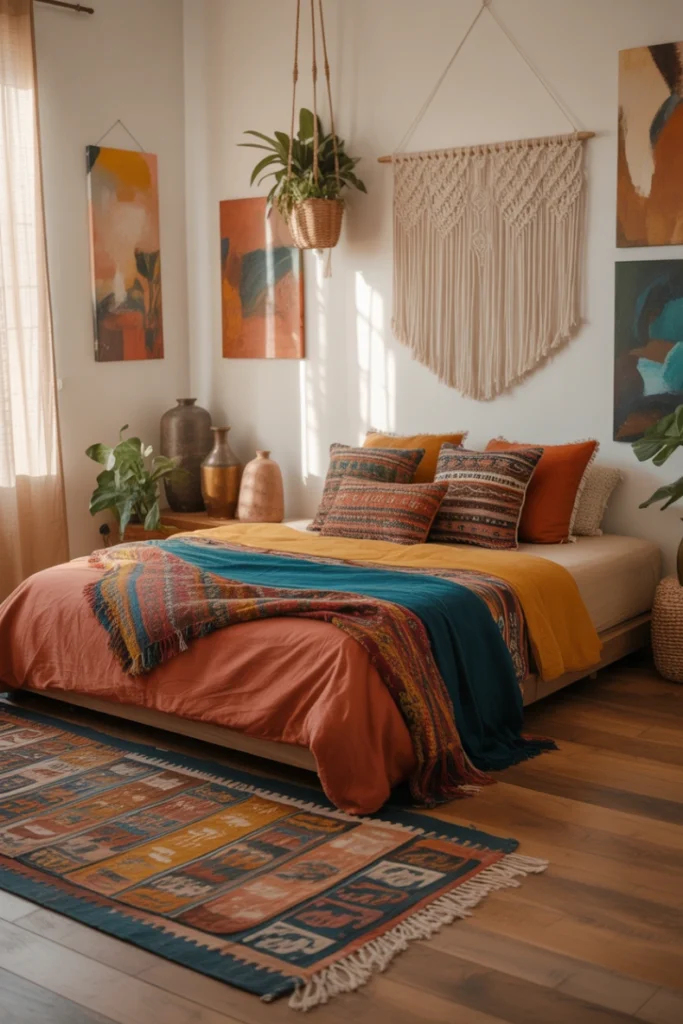
Modern bohemian style is about layered texture and personal pieces, edited so the room stays stylish instead of cluttered. Start with a natural base: a jute rug, a rattan pendant light, and wood furniture. Then layer a patterned rug on top of the jute, add macrame wall hangings, woven baskets, leafy plants, and colorful textiles in terracotta, mustard, teal, or rust. Handcrafted decor, such as a ceramic vase, a carved mirror, or a block print cushion, gives the room its artistic character.
The editing rule matters more than the shopping list. Keep one statement piece per surface: one large art print above the bed, one plant cluster in a corner, one tray on the dresser. Repeat one wood tone and one metal finish throughout so the mix feels intentional. Warm lighting from rattan pendants, string lights, or a salt lamp softens the layered textures. A low wooden bed frame or a rattan headboard anchors the look, and linen bedding in white or cream keeps the colorful layers from overwhelming the room.
Tip: if a surface looks busy, remove one item and live with it for a day. Bohemian rooms improve by editing, and the removed piece often belongs in another room.
15. Upholstered Wall Panels for Luxury and Comfort
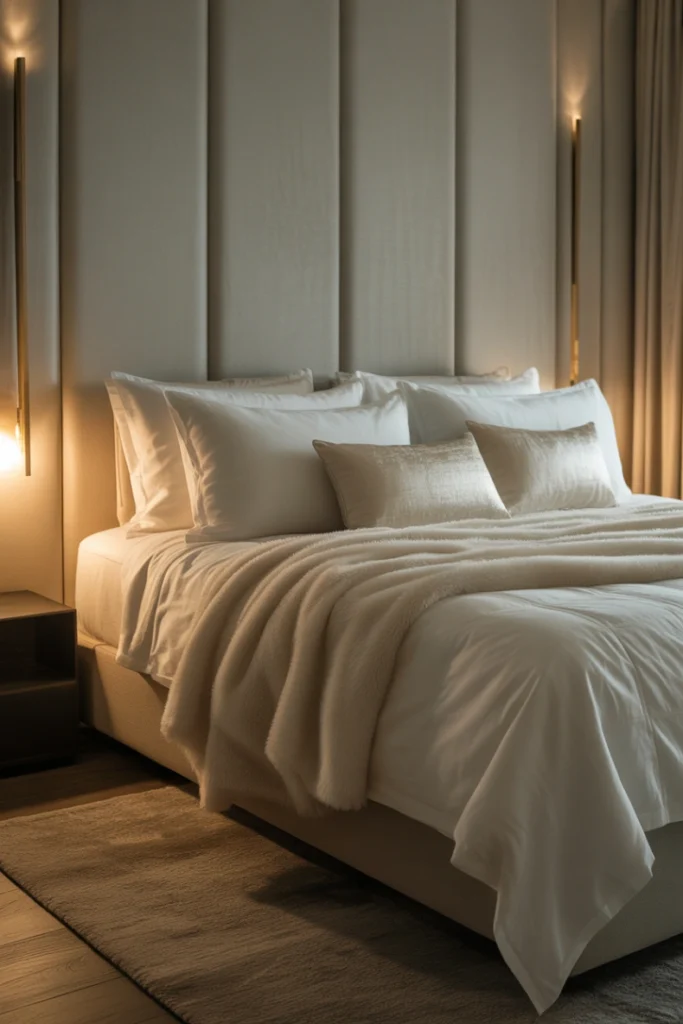
Upholstered wall panels turn the bed wall into a soft, luxurious backdrop and improve the room in a practical way too: they absorb sound, soften echoes, and feel warm to lean against. Velvet gives the most luxurious look, linen feels relaxed and natural, and faux suede is the easiest to clean. Panels behind the bed usually run the width of the bed plus 12 to 24 inches on each side, and a height of 48 to 60 inches from the floor works well with a standard headboard height.
Plan the layout on paper first. Mark the panel size, often 24 by 24 inches or 24 by 48 inches, and space them with a small even gap, about half an inch, for a tailored look. Mount them with French cleats for a secure, removable fit, or with strong adhesive strips for lighter foam backed panels. Keep the rest of the room clean and simple: sleek nightstands, neutral bedding, and one elegant lamp on each side, so the panels stay the star. Vacuum the panels with an upholstery attachment monthly, and blot spills at once instead of rubbing them.
Tip: order one spare panel with the set. If one panel gets stained or damaged later, a matching replacement saves a full wall redo.
16. Artistic Minimal Bedroom with Gallery Wall
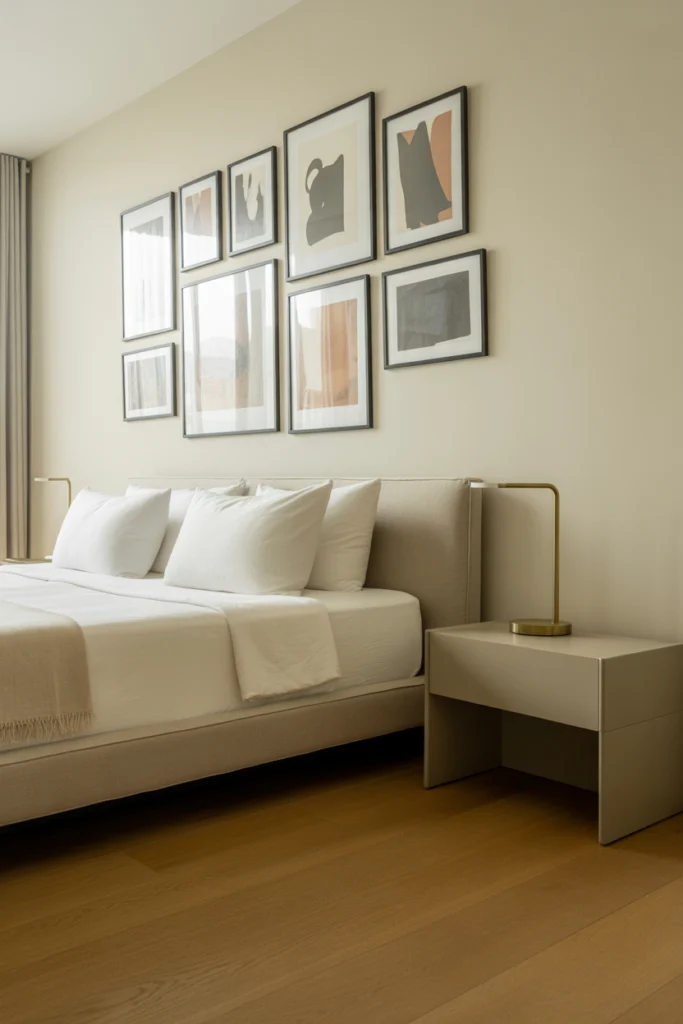
An artistic minimal bedroom lets one or two strong artworks carry the room. Instead of filling every wall, choose a gallery wall above the bed or on one feature wall, and keep the rest of the room neutral with clean lined furniture. The gallery can be a grid of same size frames for a calm look, or a salon style mix of sizes for a collected feeling. Either way, cohesive frames, such as all black, all oak, or all white, and a shared color thread in the art keep the wall feeling intentional.
Hang the center of the arrangement at eye level, about 57 inches from the floor, and keep spacing between frames to 2 to 3 inches for a tight, gallery look. Lay the arrangement on the floor first and photograph it before hanging, which saves extra holes in the wall. Use picture lights or a ceiling spotlight to draw attention to the art in the evening, and keep bedding and rugs in quiet tones so the art stays the focal point. For more wall styling ideas, see these bedroom wall decor ideas that pair well with a minimal layout.
Tip: start with the largest piece in the center or at the top, then build outward. A gallery without an anchor piece tends to look scattered.
17. Canopy Bed for a Modern Luxury Statement
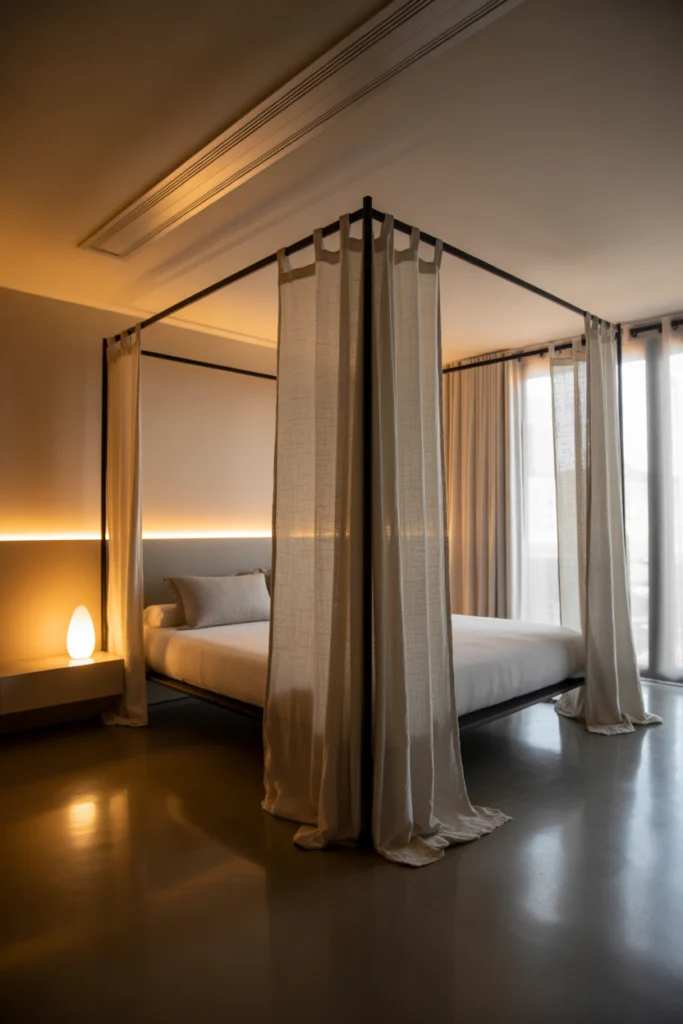
Modern canopy beds have moved away from heavy drapes. The 2026 versions use slim metal or wood frames, clean lines, and either no fabric or a single sheer panel, so the bed adds height and architecture without closing in the room. A canopy frame works best in a room with at least 8 foot ceilings, since the posts need headroom to feel elegant rather than cramped. The frame becomes the centerpiece, so keep bedding neutral and the surrounding decor simple.
Measure carefully before buying. Leave at least 24 inches of walking space on each side of the bed and 30 inches at the foot, and check that ceiling lights and fans clear the top of the frame. If you add fabric, use one sheer layer on the sides or across the top only, and keep it light so morning light still enters. Pair the canopy with floor length curtains in a matching tone, warm ambient lighting, and a bench or rug that echoes the frame color. In a smaller room, a slim frame in black metal or light wood keeps the luxury feeling without overwhelming the space.
Tip: skip the canopy if the ceiling is under 8 feet. A tall headboard gives the same vertical drama without making the room feel low.
18. Bedroom with a Reading Nook or Lounge Corner
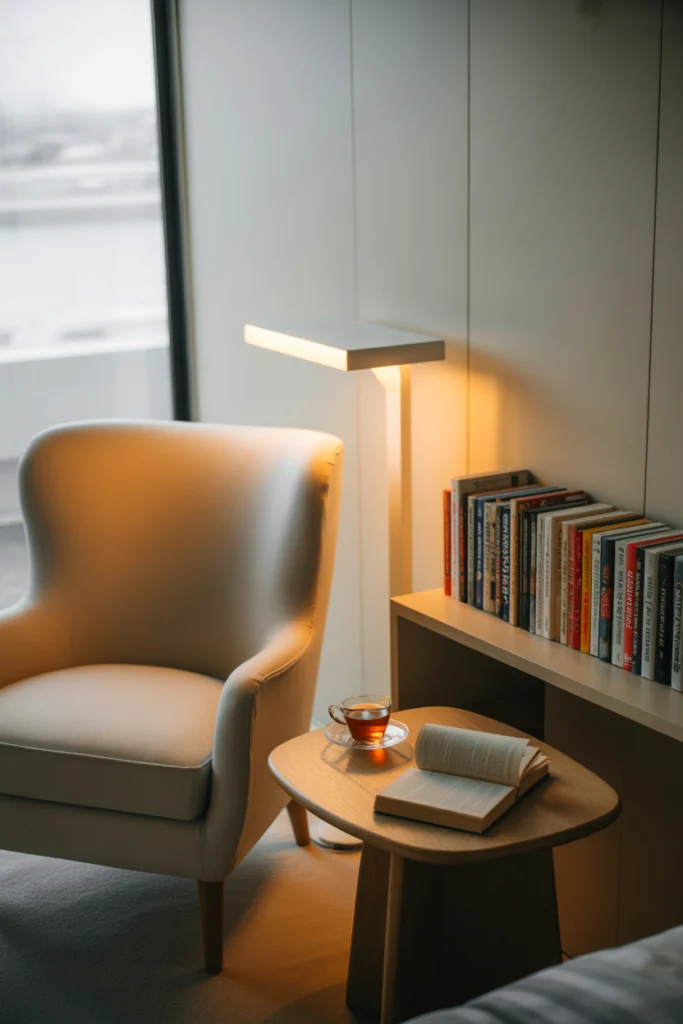
A reading nook turns an unused corner into the most loved spot in the bedroom. The essentials are a comfortable chair with good back support, a soft cushion and throw, a small side table for a book and a drink, and warm focused lighting. A corner near a window is ideal for daylight reading, while a quiet corner away from the door works better for evening use. A small bookshelf, a wall mounted shelf, or a basket for current reads keeps books close without adding a bulky bookcase.
Choose a chair that fits the corner with room to stretch: an armchair about 30 to 34 inches wide, a side table about 18 inches wide, and a floor lamp 58 to 64 inches tall with a warm bulb around 2700 to 3000K. Add a soft rug under the chair to define the zone, and a throw basket nearby for blankets. If space is tight, a built in window seat with a thick cushion and hidden storage underneath gives the same lounge feeling in less floor space. Keep the nook separate from the work zone so it stays a place for rest, not another desk.
Tip: angle the chair slightly toward the room instead of flat against the wall. It feels more inviting and makes the nook look designed rather than leftover.
19. Floating Bed Frame for a Futuristic Look
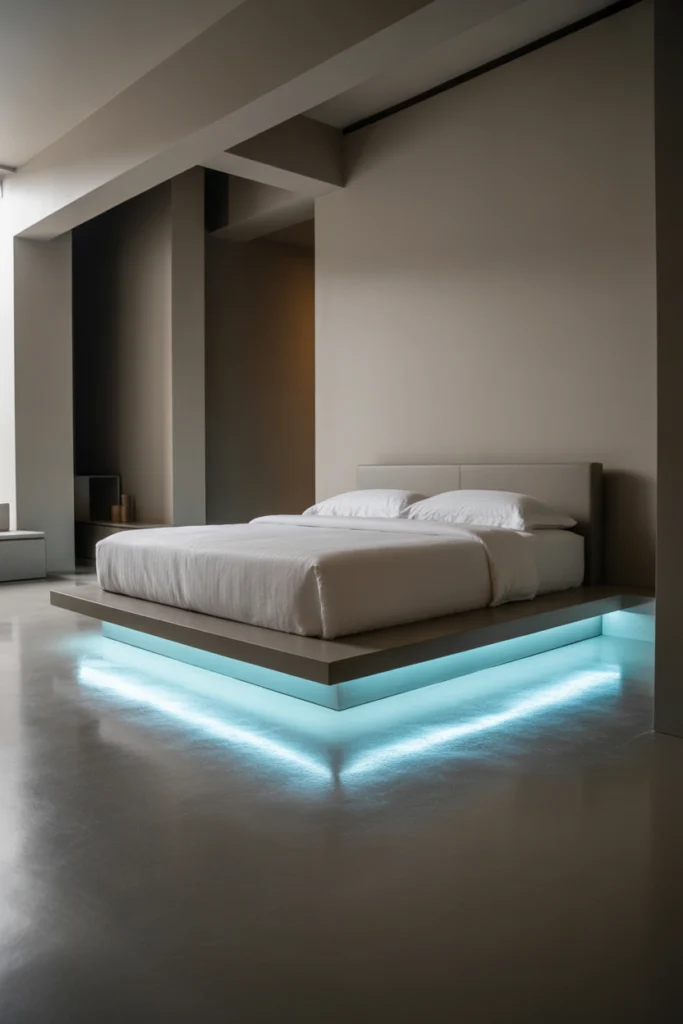
A floating bed looks suspended because its support frame is set back from the edges and hidden under the mattress, leaving a shadow gap around the base. LED strip lighting under the bed, usually warm white 2700K, strengthens the floating effect at night and doubles as a gentle night light. The look suits minimalist and contemporary rooms best, where clean lines and open floor space are already part of the design.
Before buying, check the weight capacity of the frame and the wall or floor fixing it needs, and confirm the hidden supports suit your floor type. The LED strip should run along the recessed base, not at the outer edge, so the glow is soft and indirect. Pair the floating bed with low nightstands, minimal decor, and neutral bedding so nothing competes with the levitation effect. Keep the floor under the bed clear and easy to clean, since the gap makes dust visible, and leave enough clearance for a robot vacuum if you use one.
Tip: put the LED strip on a dimmer or a motion sensor for night trips. Full brightness under the bed at 2 a.m. defeats the calm the design is meant to create.
20. Statement Headboard for a Bold Centerpiece
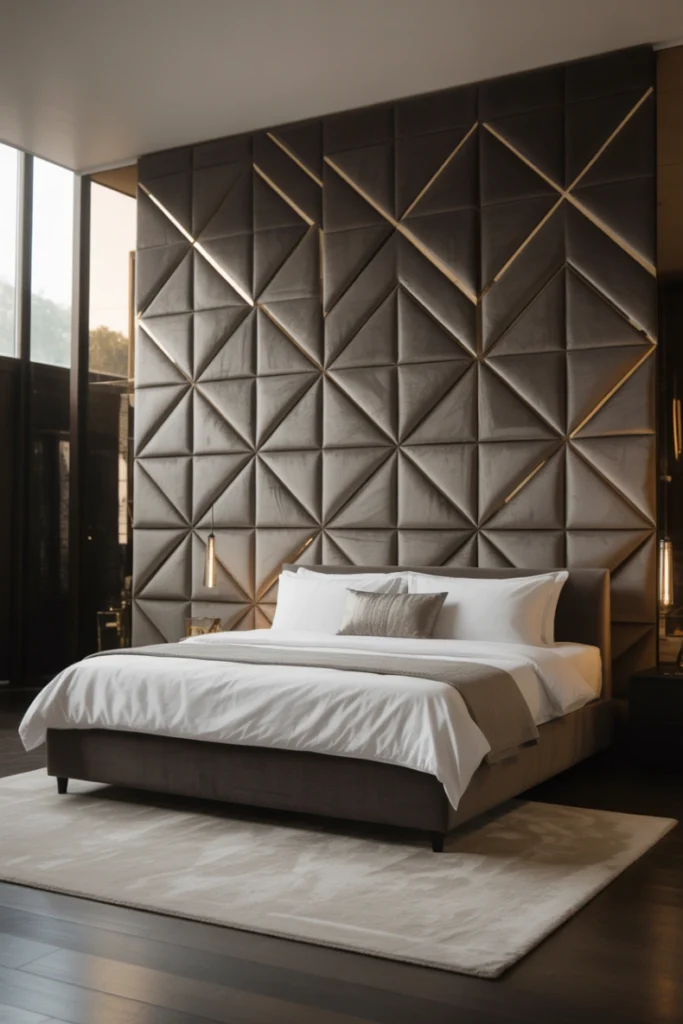
A statement headboard is the fastest way to transform a bedroom without a full renovation. Oversized upholstered headboards, geometric wood designs, channel tufting, rattan panels, and sculptural shapes are all trending in 2026. The headboard should be at least as wide as the bed, and for a bold look, extend it 6 to 12 inches beyond the mattress on each side. Height matters too: 48 to 60 inches from the floor suits most rooms, while taller headboards up to 72 inches suit rooms with high ceilings.
Mount the headboard so its bottom sits just above the top of the mattress, and secure it to the wall or the bed frame so it does not shift. Pair a bold headboard with neutral or complementary bedding: if the headboard is patterned or brightly colored, keep the duvet quiet; if the headboard is neutral velvet or wood, add color through cushions. Position bedside lighting to highlight the texture, such as sconces mounted just above headboard height or a picture light centered on the wall above it.
Tip: choose the headboard after the wall color, not before. A headboard that clashes with the wall will fight the room every day.
21. Multi-Functional Bedroom Layout
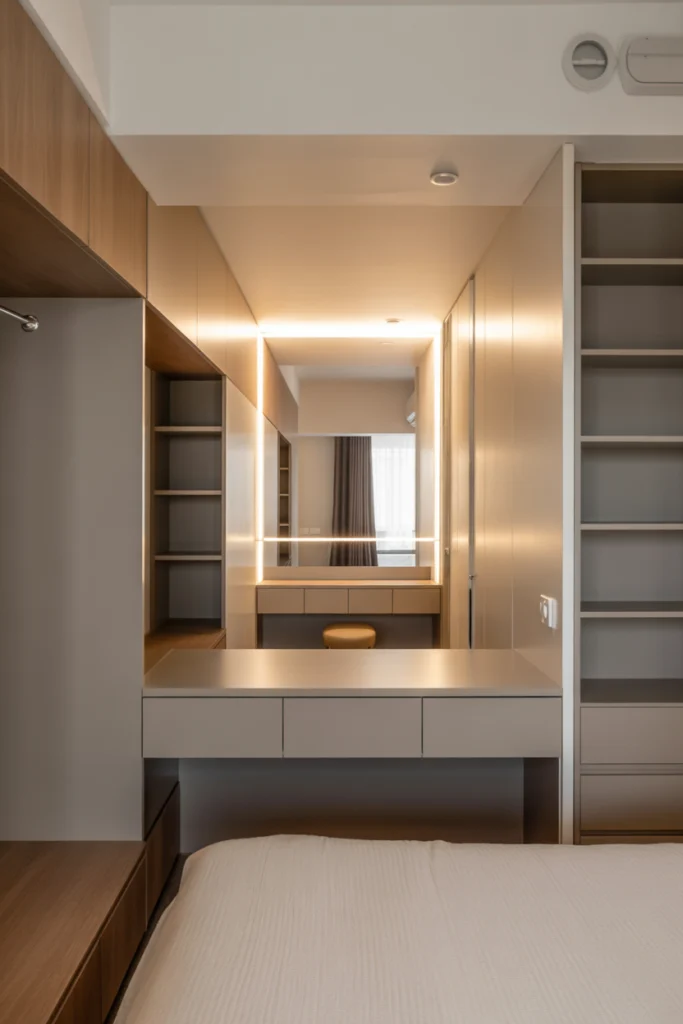
A multi functional bedroom works when each activity has a clear zone: sleep, work, dressing, and rest. Start by mapping the room on paper and assigning zones before moving furniture. Place the bed on the longest uninterrupted wall, put a compact desk, about 48 inches wide, near a window for daylight, and use a small vanity or dressing table on a third wall. Fold away furniture, such as a wall mounted desk or a bench with storage, keeps the room flexible when floor space is limited.
Define zones without building walls. A rug under the desk area, a different light source for each zone, and furniture placement, such as a bookshelf turned sideways as a divider, all signal where one zone ends and another begins. Keep walkways at least 24 to 30 inches wide so the room never feels cramped. Cable management matters in a work zone: a small cable tray under the desk and a power strip with a short cord keep the area tidy. If you need more small space strategies, these small bedroom ideas show how zoning, mirrors, and vertical storage work together.
Tip: end the work zone visibly at night, by closing a laptop, folding a desk, or drawing a curtain. A bedroom that still looks like an office will not help you sleep.
22. Bedroom with Floor-to-Ceiling Curtains for Soft Drama
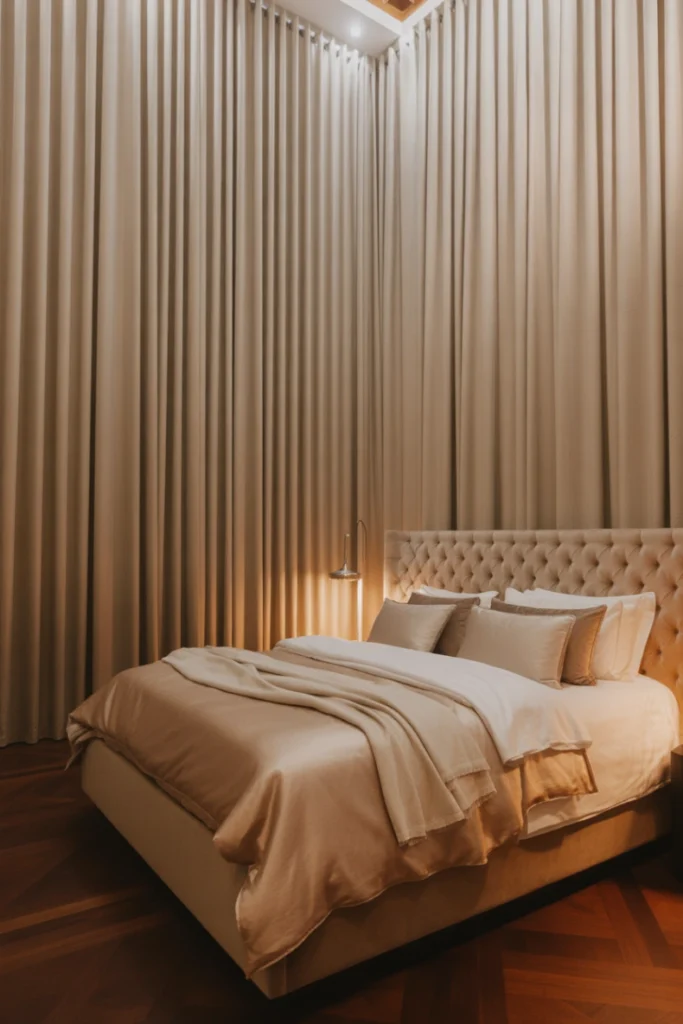
Floor to ceiling curtains add height, softness, and a sense of luxury with one simple change. They turn a plain window wall into a design feature, soften hard edges, and help with light control and privacy. Sheer panels give an airy daytime look, while heavier drapes in velvet or linen add drama and block light for sleep. A double rod lets you use both: sheers by day, blackout drapes by night.
Hang the rod high and wide for the full effect. Mount it 4 to 6 inches above the window frame, or close to the ceiling for maximum height, and extend it 8 to 12 inches beyond the window on each side so the curtains stack beside the glass instead of covering it. Measure from the rod to the floor and choose a length that just kisses the floor, or puddles 1 to 2 inches for a formal look. Use one curtain panel per side at least 1.5 times the window width so the fabric gathers richly instead of hanging flat. Pair the curtains with soft ambient lighting and a minimal palette so the drape stays the star.
Tip: steam or iron new curtains before hanging them. Creases from packaging are the one detail that makes expensive curtains look cheap.
23. Nature-Inspired Bedroom with Organic Shapes
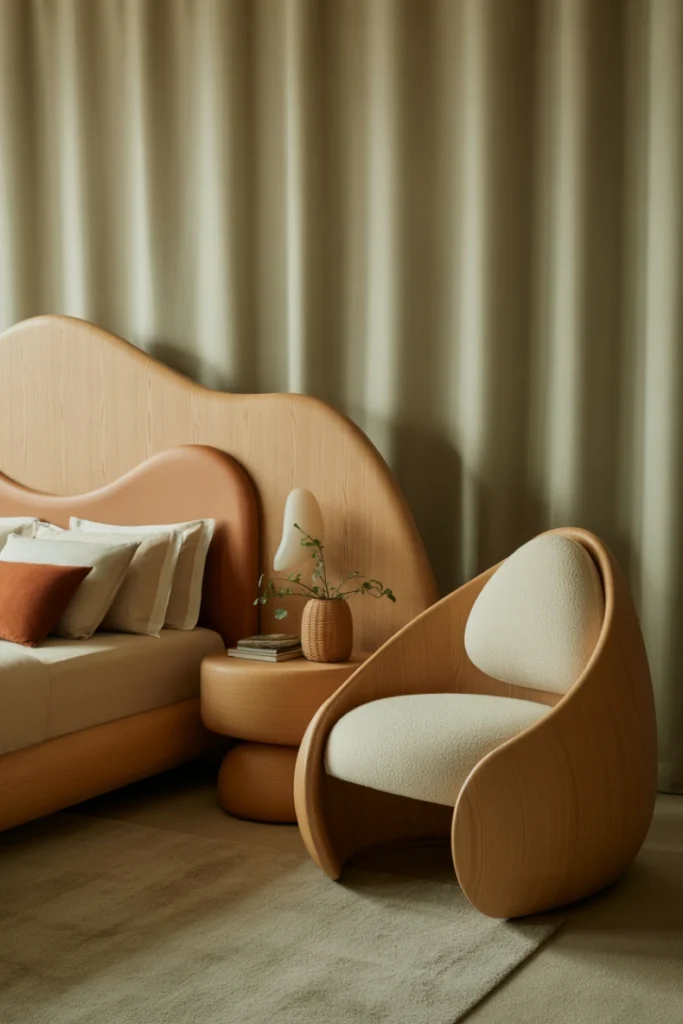
Organic shapes soften a bedroom in a way straight lines cannot. Rounded furniture, curved headboards, arched mirrors and doorways, and flowing decor reduce harsh edges and make the room feel calm and natural. Pair the curves with earthy tones, sage, sand, clay, and warm white, and natural textures such as boucle, rattan, light wood, and linen. The result is a room that feels both modern and grounded, like a natural retreat indoors.
Introduce curves in three places for balance: one large piece, such as a curved headboard or an arched mirror; one medium piece, such as round nightstands or a curved bench; and one small detail, such as a round tray or a vase with soft lines. Add plants that echo the shapes, such as a trailing pothos, a fiddle leaf fig, or a round leafed pilea, and choose nature inspired art, such as botanical prints or a landscape photograph. Warm wood tones and handmade decor, like a ceramic lamp or a woven basket, complete the organic feeling.
Tip: keep at least one straight line in the room, such as a rectangular rug or a straight curtain rod. A room with only curves can feel shapeless instead of soft.
Conclusion
These 23 bedroom remodel ideas for 2026 cover every starting point, from a simple weekend refresh to a full layout change. The strongest remodels share the same habits: one clear focal point, layered lighting on dimmers, storage that hides clutter, and materials you enjoy touching every day. You do not need to do all 23 ideas. Pick the one change that solves your biggest frustration, then add a second idea that supports it, such as better lighting with a new headboard, or built in storage with a calmer color palette.
Start this week with three steps. First, measure the room and note what is not working. Second, choose your palette and your focal point from the ideas above. Third, tackle lighting and storage before buying decor, since those two changes improve every style that follows. A remodeled bedroom should feel like a retreat at the end of the day and a calm, organized start in the morning, and with one thoughtful change at a time, that room is well within reach.
Frequently Asked Questions
How much does a bedroom remodel cost?
It depends on scope more than room size. A cosmetic refresh, paint, new bedding, curtains, and lighting, usually costs far less than a mid range remodel with new flooring, built in storage, or a new bed setup, and a full remodel with layout changes, new windows, or an en suite update costs the most. Set a budget for the focal change first, keep 10 to 15 percent aside for surprises like damaged walls behind old furniture, and phase the work if needed: paint and lighting first, furniture second, decor last.
What is the best color for a remodeled bedroom?
The best color is one that helps you relax and suits your light. Warm whites, soft beige, sage green, and pale blue are safe choices for most rooms because they reflect light and pair with many styles. Dark colors like charcoal or forest green work beautifully in rooms with good lighting and layered lamps. Always test a large swatch on the wall and view it in morning, afternoon, and evening light before painting the whole room.
How do I remodel a small bedroom without making it feel cramped?
Keep furniture low and multi purpose, use vertical storage up to the ceiling, and choose light colors with one darker accent instead of dark walls all around. Mirrors opposite a window, floor to ceiling curtains, and a bed with drawers underneath all add function without adding bulk. Leave at least 24 inches of walking space around the bed, and edit decor ruthlessly: one statement piece per wall is plenty in a small room.
Should I remodel in stages or all at once?
Stages usually work better, especially if you sleep in the room during the work. Start with disruptive jobs, painting, flooring, and built in storage, then move to the bed setup and lighting, and finish with textiles and decor. Doing it in stages also lets you live with each change for a week and adjust the next step, which leads to fewer regrets than buying everything in one weekend.
How long does a bedroom remodel take?
A cosmetic refresh can take one weekend: a day for painting and a day for lighting, curtains, and bedding. A mid range remodel with new furniture and built in storage usually takes one to three weeks, including delivery and installation time. A full remodel with layout changes, electrical work, or new windows can take four to eight weeks. Order furniture and fixtures before starting disruptive work so deliveries do not stall the project.
More Ideas You Will Love
 14 Boy Nursery Ideas with Inspiring Themes and Layout Tips
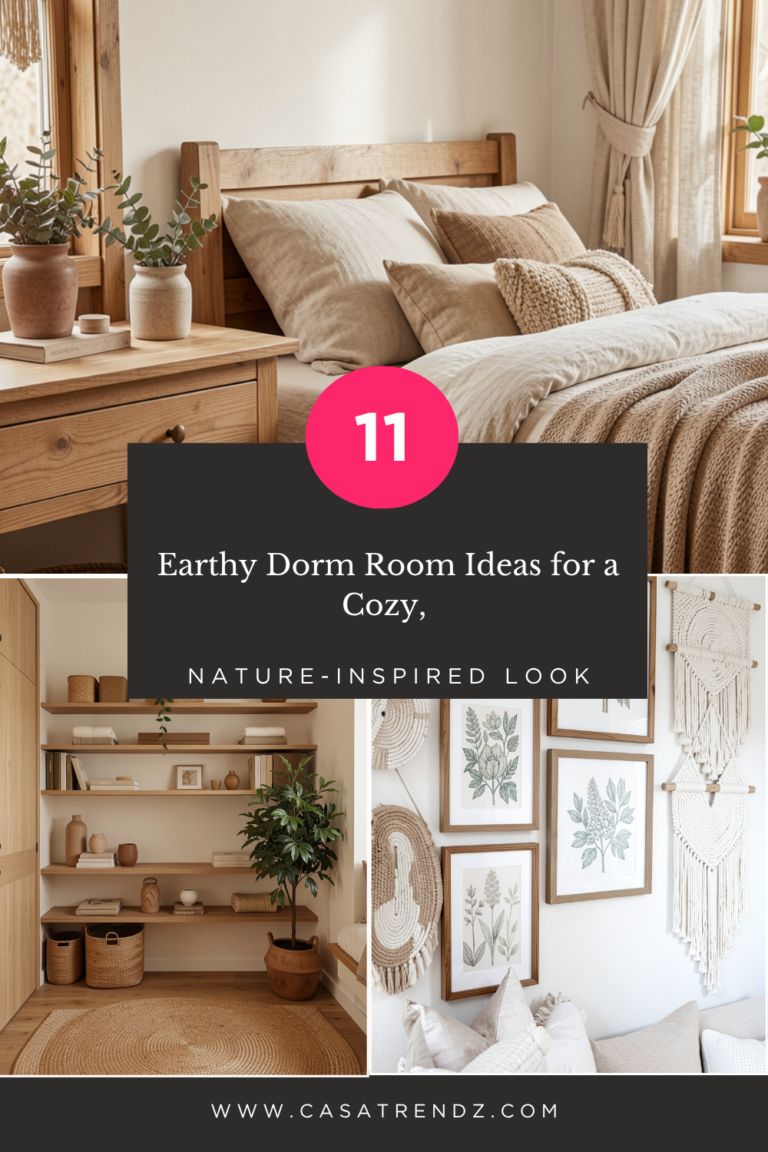 11 Earthy Dorm Room Ideas for a Cozy, Nature-Inspired Look
 18 Ottoman Ideas: Functional & Stylish Designs for Every Space
 20 Men’s Bedroom Ideas That Are Modern, Masculine & Stylish
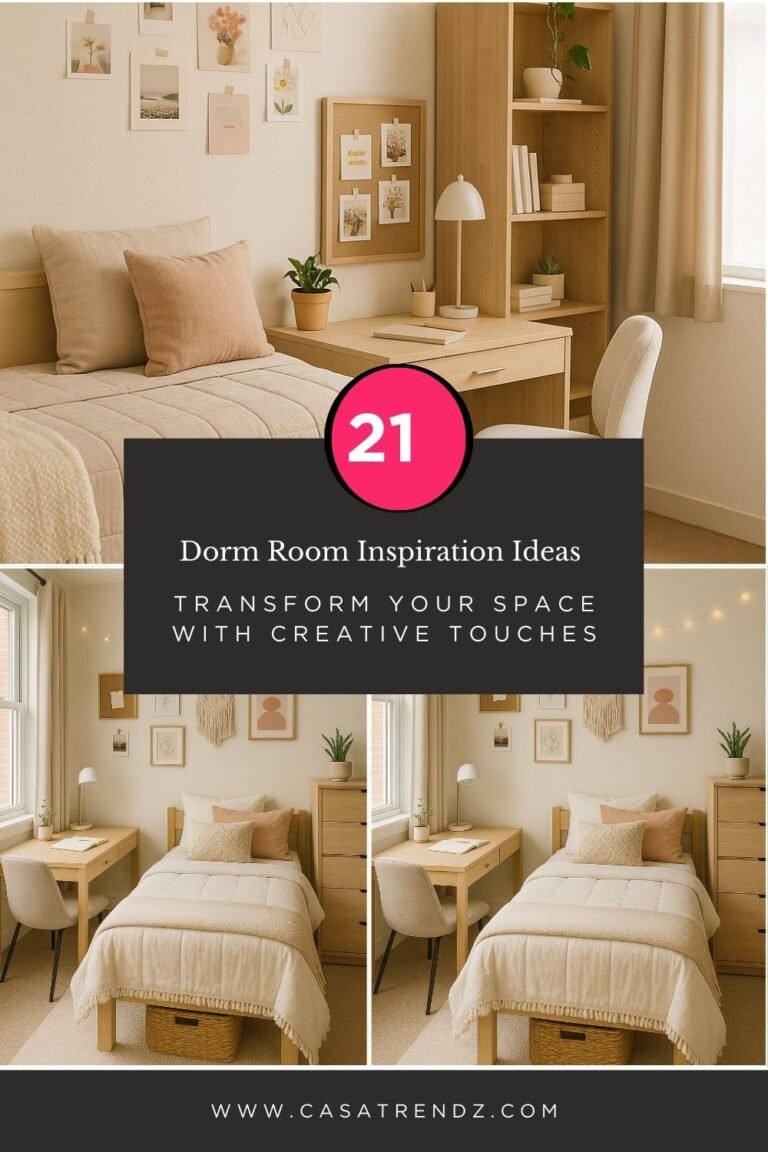 21 Dorm Room Inspiration Ideas – Transform Your Space with Creative Touches
 13 Guest Room Ideas for a Stylish & Functional Home