
20 Bedroom Decor Ideas for a Cozy, Stylish, and Inviting Space


Your bedroom should do more than hold a bed. It is the first room you see in the morning and the last room you unwind in at night, so it deserves the same care you give your living room or kitchen. A well decorated bedroom feels calm without feeling empty, stylish without feeling staged, and personal without feeling cluttered. The secret is not spending more money. It is making deliberate choices about color, texture, light and storage, and then repeating those choices consistently across the room.
Before you buy anything, stand in the doorway and look at the room as a whole. Notice what draws your eye first, where the light falls during the day, and which corners feel awkward or unused. Most bedrooms improve dramatically once one strong focal point is set, usually the bed wall, and everything else is arranged to support it rather than compete with it. Measure your key pieces before shopping, keep a simple palette of three main colors plus one accent, and leave some breathing room on every surface. A room that is slightly under decorated always looks better than a room that is overfilled.
Here are 20 bedroom decor ideas that balance beauty, comfort and practicality. Each one works on its own, but they also combine well, so you can borrow a lighting idea from one section, a color idea from another, and a storage idea from a third to build a bedroom that truly feels like yours.
1. Soft Neutrals for Timeless Calm
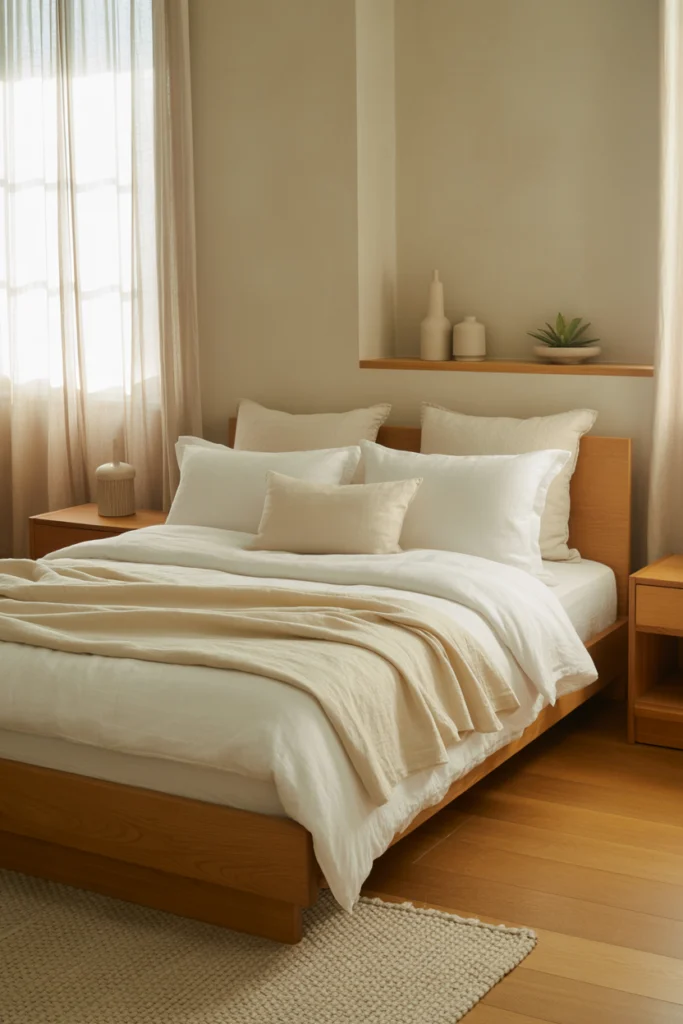
Neutral colors never go out of style because they let light, texture and shape do the talking. Start with warm white or soft ivory on the walls, then layer in taupe, warm gray and pale beige through bedding, curtains and rugs. A good rule is 60 percent dominant neutral, 30 percent secondary neutral and 10 percent accent, which could be a muted sage cushion, a terracotta throw or a brass lamp. This balance keeps the room restful while stopping it from looking washed out.
Texture is what saves a neutral room from feeling flat. Pair crisp cotton sheets with a chunky knit throw, a linen duvet cover and a woven jute or wool rug beside the bed. Add one reflective surface, such as a brass-framed mirror or a pair of brushed gold lamps, to bounce light around the room. If your room gets little natural light, lean toward warm neutrals with yellow undertones rather than cool grays, which can look dull in shadow. For a similar calm palette in a smaller space, see these small bedroom ideas that use light colors to make tight rooms feel larger.
2. Layered Bedding for Luxurious Comfort
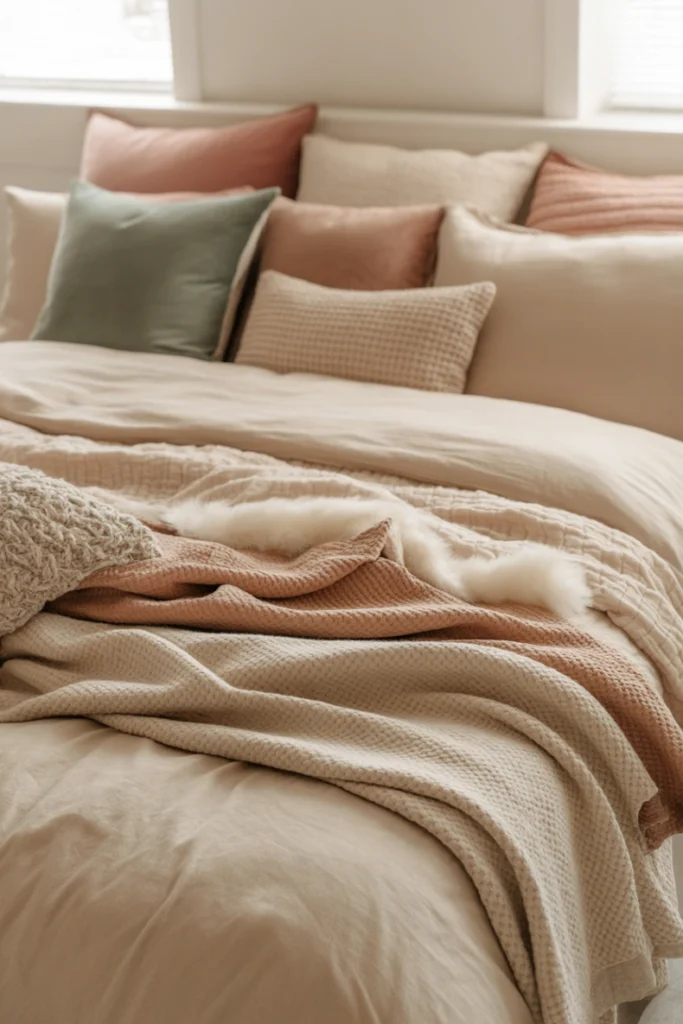
The bed is the largest piece of furniture in the room, so dressing it well changes everything. Start with breathable cotton or linen sheets in a solid color, add a duvet or quilt in a slightly deeper tone, then fold a throw across the foot of the bed. Finish with sleeping pillows at the back, two standard or Euro pillows in front of those, and one or two smaller decorative cushions. This layered look reads as luxurious, but it also works in real life because you can simply remove the decorative layers at night and put them back in the morning.
Choose fabrics by season to keep the bed comfortable all year. In summer, a lightweight cotton quilt and a single linen throw are enough, while winter calls for a heavier duvet, a wool or fleece throw and flannel or brushed cotton sheets. Stick to one base color family, such as whites and creams with sage or dusty blue accents, so the layers look intentional rather than random. Wash bedding in cool water and dry it on low to keep colors soft, and rotate two sets so the bed always looks fresh while one set is in the wash.
3. Statement Lighting Fixtures
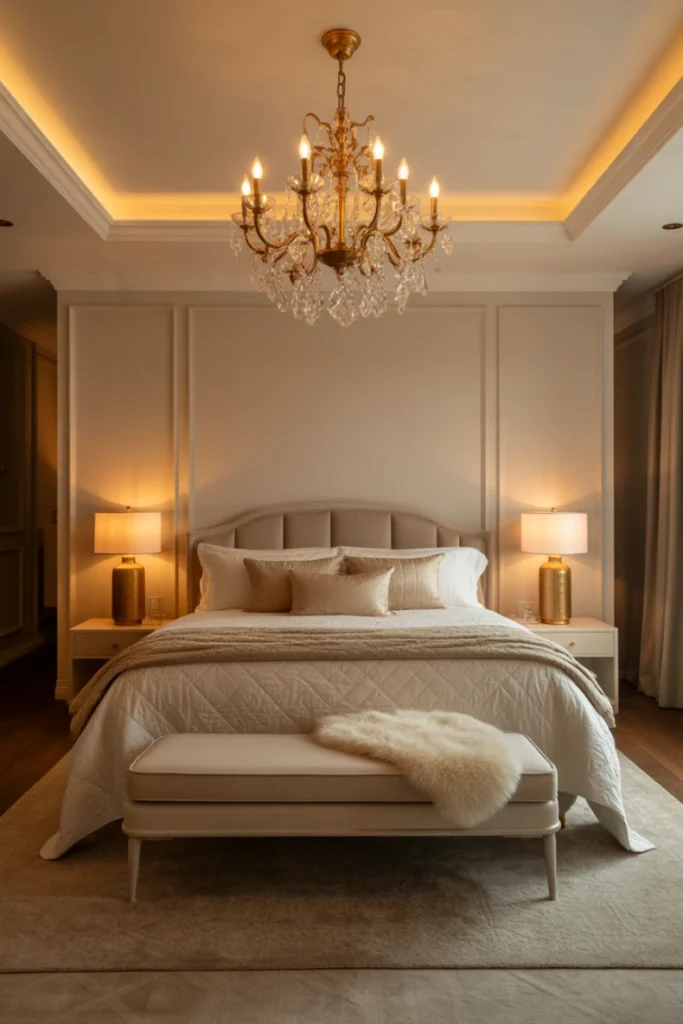
Lighting sets the mood of a bedroom more than almost any other choice, yet it is often left as a single ceiling bulb. A statement fixture over the bed, such as a rattan pendant, a small chandelier or a pair of matching pendants over the nightstands, instantly gives the room a designed feel. Hang pendants so the bottom of the shade sits about 50 to 60 centimeters above the nightstand, which keeps the light useful for reading without blocking your view across the room.
Layer three types of light for flexibility. Overhead lighting handles general brightness, bedside lamps or wall sconces provide task light for reading, and a small accent light, such as a picture light or a warm LED strip behind the headboard, adds evening atmosphere. Choose warm white bulbs around 2700K for bedrooms, and put the main lights on a dimmer if possible so you can shift from bright morning light to a soft evening glow. If your ceiling is low, choose a flush mount or semi flush fixture rather than a long pendant, and let the bedside lamps carry the decorative weight.
4. Textured Accent Walls
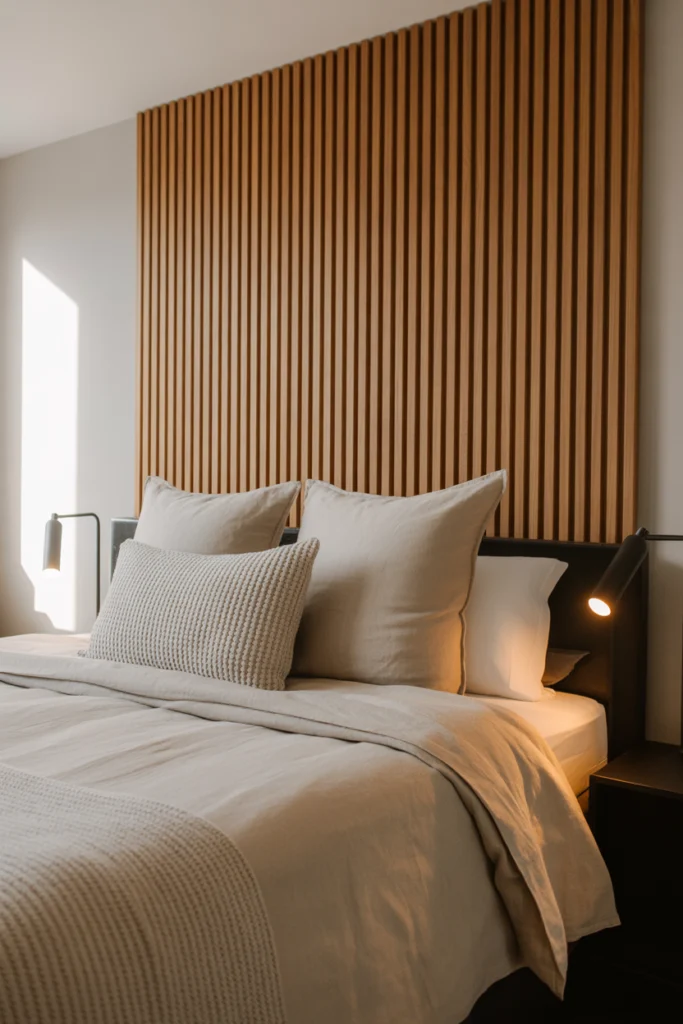
An accent wall gives the eye a clear focal point and makes even a simple bed look intentional. The most forgiving options are vertical shiplap boards, wood slats, limewash paint or a subtle textured wallpaper, all of which add depth without shouting for attention. Paint the accent wall one or two shades deeper than the other walls if you want a gentle effect, or go bold with a deep green, navy or charcoal behind pale bedding for real contrast.
Before you start, measure the wall and plan the layout from the center outward so any cuts land at the edges rather than in the middle. For a slat wall, space battens about 2 to 3 centimeters apart and use a level on every third batten to stop the lines from drifting. Keep the rest of the room quiet once the wall is done: plain bedding, simple curtains and one piece of art at most. The wall should be the star, and everything else should let it shine. If you are renting, try peel and stick wood panels or removable wallpaper, which give the same effect without permanent change.
5. Nature-Inspired Decor
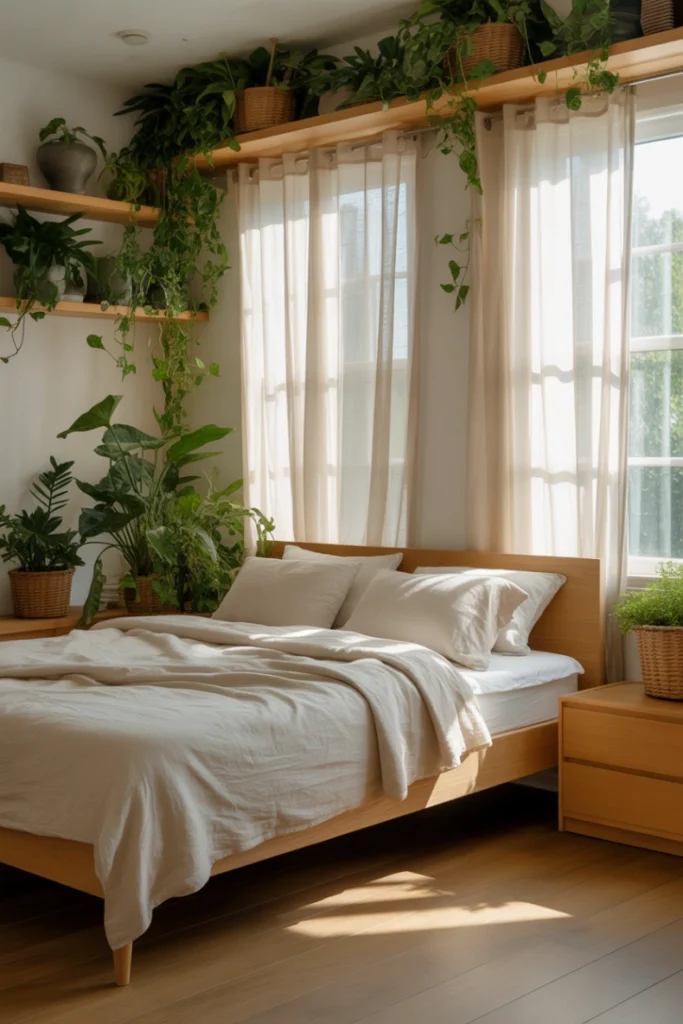
Natural materials make a bedroom feel grounded and calm because they soften hard edges and add organic variation. Start with wood in a warm finish for the bed frame or nightstands, linen or cotton for bedding, and rattan or seagrass for baskets and a pendant light. Then add living plants: a snake plant or pothos on a dresser, a fiddle leaf fig in a bright corner, or a small fern on a shelf. These plants tolerate indoor light well and need watering only when the top 2 to 3 centimeters of soil feel dry.
Small natural touches go a long way. A vase of fresh eucalyptus or dried pampas grass on the nightstand, a stone or ceramic tray for jewelry, and botanical prints in simple wood frames all add warmth without clutter. Keep the palette earthy with greens, warm browns and creams, and avoid glossy plastic finishes that fight the natural look. If you have pets, choose pet safe plants such as spider plants or calathea, and keep trailing plants out of reach. The goal is a room that feels like a breath of fresh air every time you walk in.
6. Romantic Canopy Beds

A canopy bed adds height, structure and instant romance to a bedroom, and it does not require an ornate frame to work. A simple black metal or light oak four poster frame is enough. Drape it with sheer voile or chiffon panels for a soft, dreamy effect, or use heavier linen panels on two sides only if you want a cozier, more enclosed feel. Leave the foot end open so the bed still feels welcoming rather than boxed in.
Balance the drama of the canopy with simple bedding in solid or subtly textured fabrics, and keep nightstands clear except for a lamp and a small plant or book. Fairy lights woven loosely through the top frame add a magical evening glow, but choose warm white lights on a timer so they switch off automatically. In a small room, a canopy still works if the frame is slim and the fabric is sheer, because the eye reads through the material instead of stopping at it. Measure your ceiling first: you need at least 15 centimeters of clearance above the frame for the fabric to drape properly.
7. Modern Minimalist Style
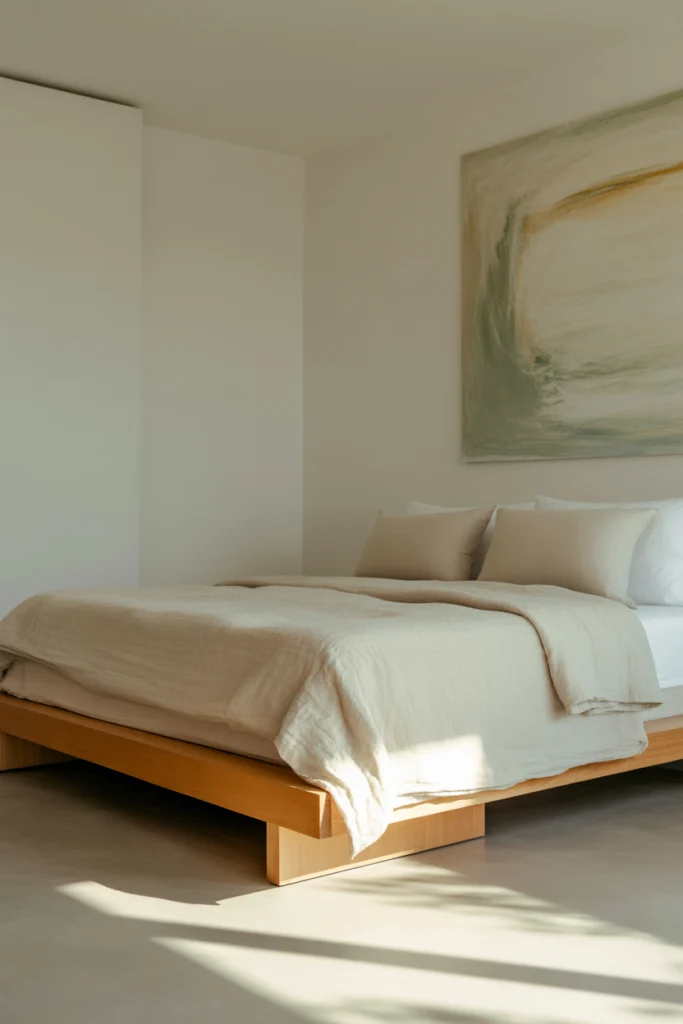
Minimalism is not about owning nothing. It is about choosing fewer, better pieces and giving each one room to breathe. Start by removing everything from the surfaces, then return only what you use daily or truly love. Choose a low platform bed, one pair of matching nightstands, a single large piece of art above the bed, and plain curtains in a light neutral. Every item should earn its place, and every surface should have at least some empty space.
Color discipline is the backbone of this style. Use two neutrals, such as white and warm gray, plus one natural wood tone, and repeat them throughout the room. Hide clutter with closed storage: drawers under the bed, a wardrobe with plain doors, and a single lidded basket for odds and ends. Good lighting matters even more in a minimal room, so add a dimmable bedside lamp and keep window treatments sheer to maximize daylight. The result is a room that feels airy, calm and easy to keep tidy, which is the real luxury of minimalism.
8. Boho-Chic Bedroom Vibes
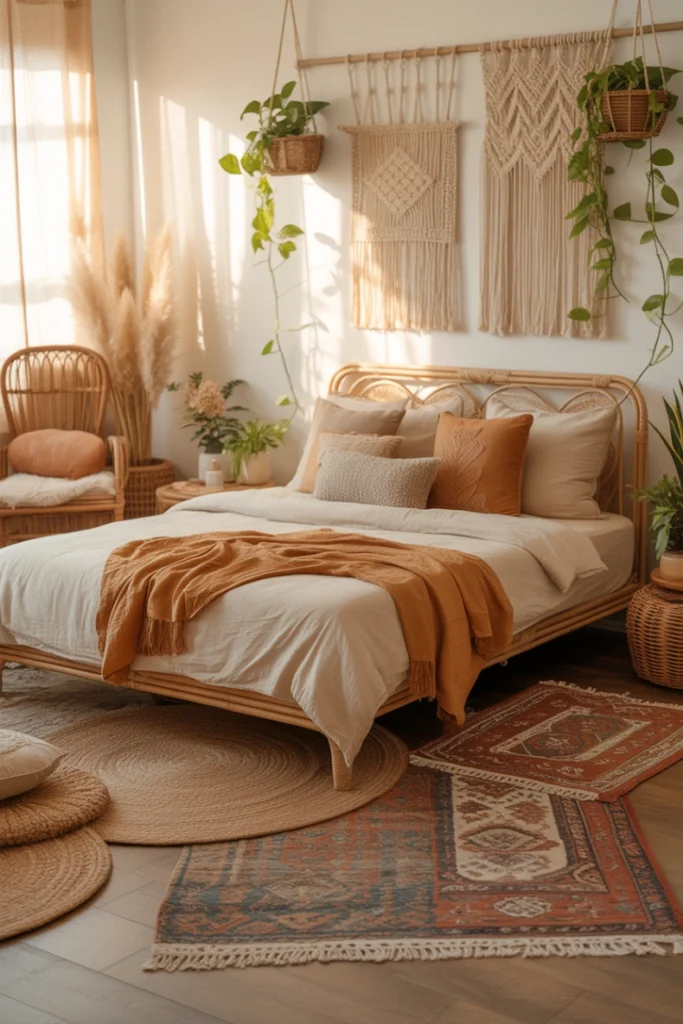
Boho style celebrates texture, travel and personal expression, so it is one of the most forgiving styles to decorate in. Layer a patterned quilt over solid sheets, add a macrame wall hanging above the bed, and place a woven jute rug over a larger neutral rug for depth. Mix materials freely: rattan, cane, raw wood, cotton, wool and terracotta all sit happily together, and the slight imperfections are part of the charm.
Color in a boho bedroom usually starts earthy, with terracotta, ochre, olive and warm sand, then adds one or two brighter accents such as rust orange cushions or a teal throw. Add plants at different heights, a floor cushion or pouf for casual seating, and string lights along a shelf or headboard for evening warmth. The one rule is to keep one element calm, usually the wall color or the largest rug, so the layers feel collected rather than chaotic. Shop secondhand for baskets, mirrors and wooden frames to build the look slowly and affordably.
9. Modern Glamour with Metallic Touches

Metallic accents are the fastest way to add glamour without redecorating the whole room. Gold, brass, chrome or brushed nickel all work, but pick one metal and repeat it in three or four places: lamp bases, mirror frames, drawer pulls and a decorative tray. Repeating the same finish is what makes the room look cohesive rather than like a collection of random shiny objects.
Pair metallics with rich textures to keep the glamour feeling warm. Velvet cushions in emerald, navy or plum, a silk or satin throw, and a plush rug underfoot all complement gold and brass beautifully. Keep walls in a soft neutral or a deep moody shade so the metallics have something to shine against, and use warm bulbs so the metal glows rather than glares. Moderation matters: if the lamps are gold, choose a mirror with a thin gold frame rather than a fully gilded piece, and let one statement item, such as a velvet headboard, anchor the room.
10. Rustic Farmhouse Warmth
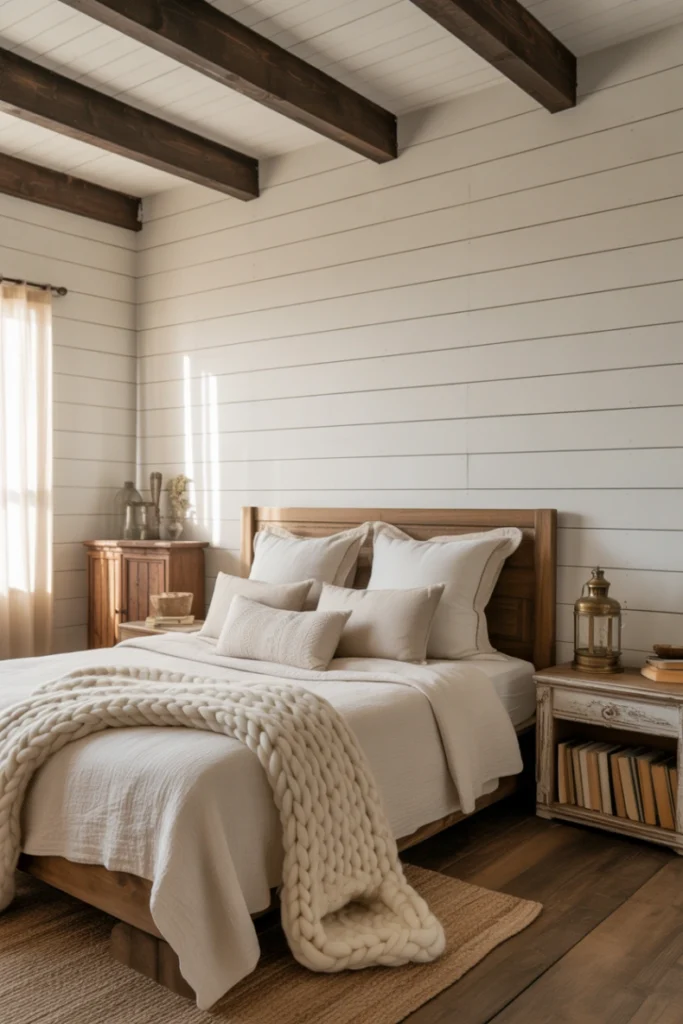
Farmhouse bedrooms feel welcoming because they mix honest materials with soft, lived in textiles. Start with a wood bed frame in a distressed or natural finish, add shiplap or a wood accent wall behind it, and layer in cotton bedding with a plaid or gingham throw. A wooden bench at the foot of the bed, a ladder shelf for blankets, and a vintage style lamp complete the look without needing a full renovation.
Color stays soft and nature based: cream, warm white, muted sage and dusty blue, with wood tones providing the warmth. Avoid going too themed, which can make the room feel like a display rather than a bedroom. One or two farmhouse cues, such as a barn style door on the closet or a galvanized metal planter, are enough when the rest of the room is simply comfortable. Add a thick wool rug beside the bed so cold mornings feel inviting, and choose blackout lined linen curtains to keep the room dark for sleep while preserving the relaxed look during the day.
11. Scandinavian Simplicity
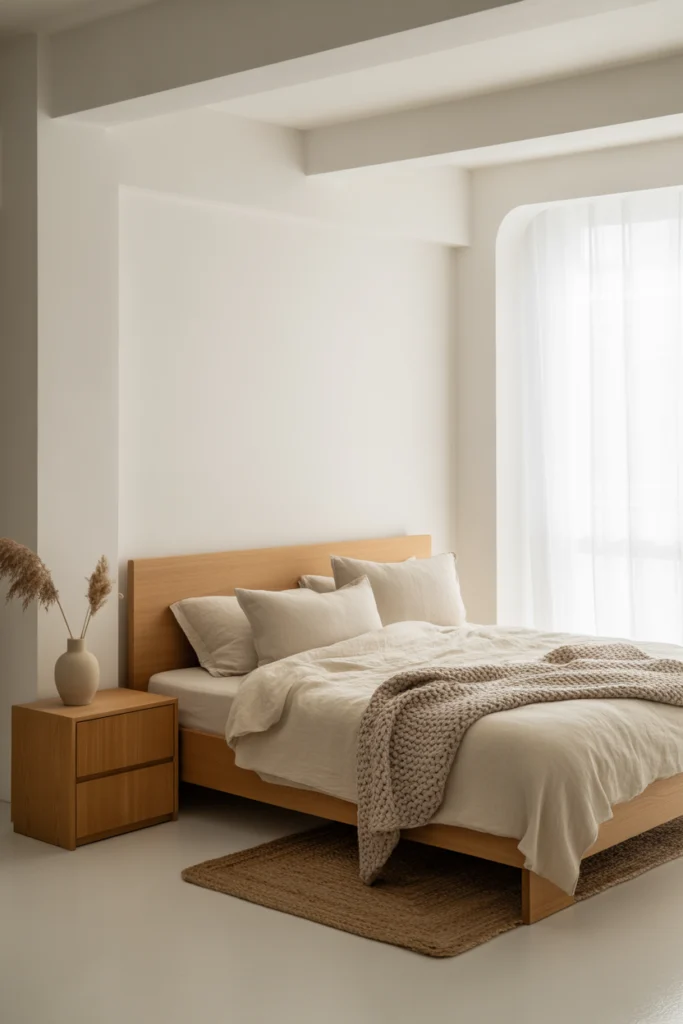
Scandinavian design pairs minimalism with warmth, which makes it ideal for bedrooms. Walls stay white or pale gray, furniture is light wood such as birch or pale oak, and textiles add the coziness: a wool throw, a faux fur rug beside the bed, and linen bedding in white or soft gray. The style depends on natural light, so keep window treatments light and simple, using sheer curtains or a plain roller blind rather than heavy drapes.
Add interest through small, deliberate details rather than lots of decor. A single black and white print, a geometric cushion, a ceramic vase and one or two plants are enough. Keep floors visible where possible, since light wood floors are a signature of the style, and use a rug only where your feet land in the morning. Storage should be closed and simple, such as a plain wardrobe and drawers under the bed, so the room stays calm. This approach suits both small and large bedrooms because it prioritizes light, function and comfort over decoration.
12. Hotel-Inspired Elegance
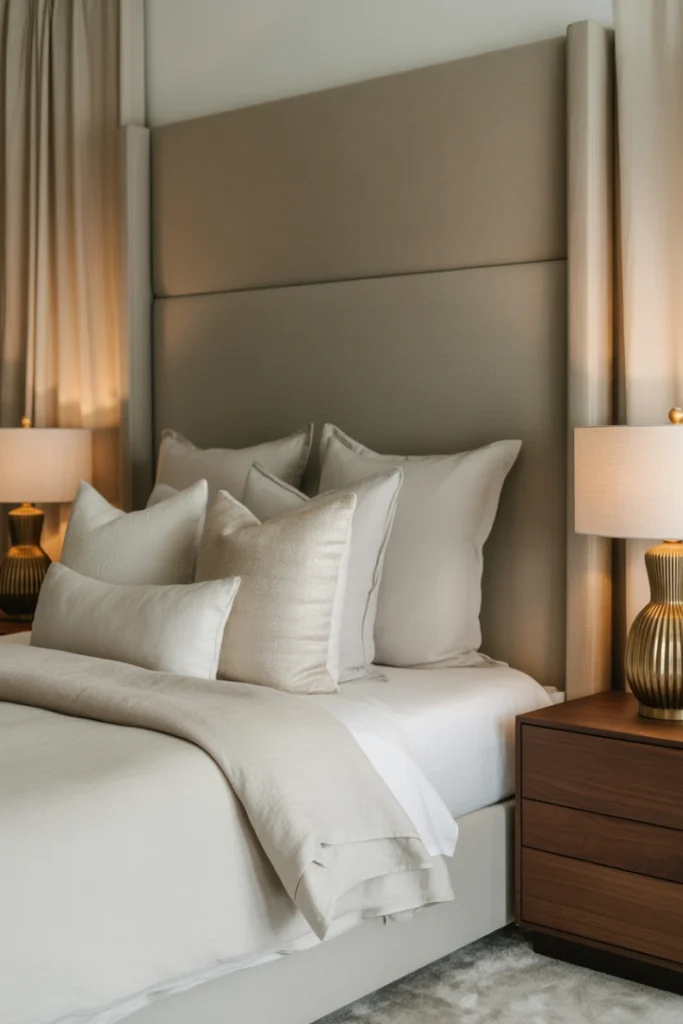
A hotel bedroom feels luxurious because of symmetry, quality linens and uncluttered surfaces, all of which you can copy at home. Match your nightstands and lamps on both sides of the bed, choose a tall upholstered headboard as the focal point, and dress the bed in crisp white or ivory bedding with a folded throw and a row of plump pillows. Symmetry tells the eye that the room is orderly, which instantly feels restful.
Invest where it matters most: high thread count cotton sheets, a supportive but soft duvet, and a rug large enough to extend at least 45 centimeters beyond each side of the bed. Keep the palette neutral or monochrome, with texture providing the interest instead of color. Add a carafe and glass on one nightstand, a small tray for a book and hand cream, and a dimmable lamp for evening reading. Clear the dresser top except for one vase or a framed photo, and the room will feel like a private suite rather than a storage space. For more ideas on building a polished overall scheme, browse these bedroom design ideas that show how headboards, lighting and layout work together.
13. Coastal Calm and Breezy Blues

Coastal style is about light, air and soft color, not about filling the room with shells and anchors. Start with white or pale blue walls, sandy beige bedding, and lightweight cotton or linen fabrics that move gently in a breeze. Add one or two nautical touches, such as a rope detail lamp, a driftwood mirror frame or a piece of abstract sea inspired art, and stop there so the room stays modern rather than themed.
Texture does the heavy lifting in a coastal bedroom. Use woven baskets, a rattan chair in the corner, whitewashed wood furniture and a flatweave rug in natural fibers. Soft blue accents work best in cushions, a throw and art, while the larger pieces stay white or sand so the room feels bright even on gray days. Keep window treatments sheer to maximize daylight, and add a plant such as an olive tree in a terracotta pot for a Mediterranean touch. The result is a room that feels like a deep breath, no matter how far you live from the sea.
14. Vintage Charm with a Modern Twist
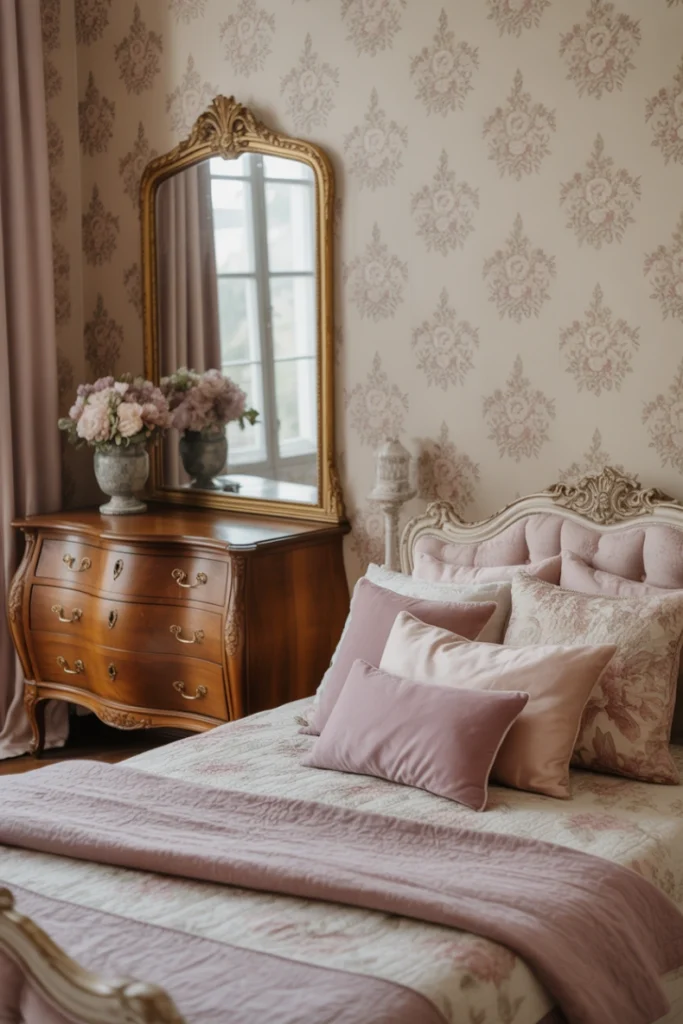
Vintage bedrooms work best when old and new sit side by side rather than competing. Pair an antique dresser or ornate mirror with a simple modern bed frame, or place sleek bedside lamps beside a tufted vintage headboard. The contrast is what keeps the room feeling curated instead of like a museum, and it also lets you use inherited pieces without committing the whole room to one era.
Color in a vintage scheme is soft and faded: blush, mint, dusty blue and ivory, with brass or aged wood as the metal. Floral bedding, lace trimmed cushions and a tufted bench add romance, but keep one element modern, such as plain linen curtains or a contemporary rug, to ground the look. When shopping vintage, check drawers run smoothly, joints feel solid and mirrors have no major desilvering, since restoration costs can quickly outweigh the charm. One strong vintage piece per wall is a good limit, with simpler pieces filling the gaps.
15. Industrial Edge and Urban Cool
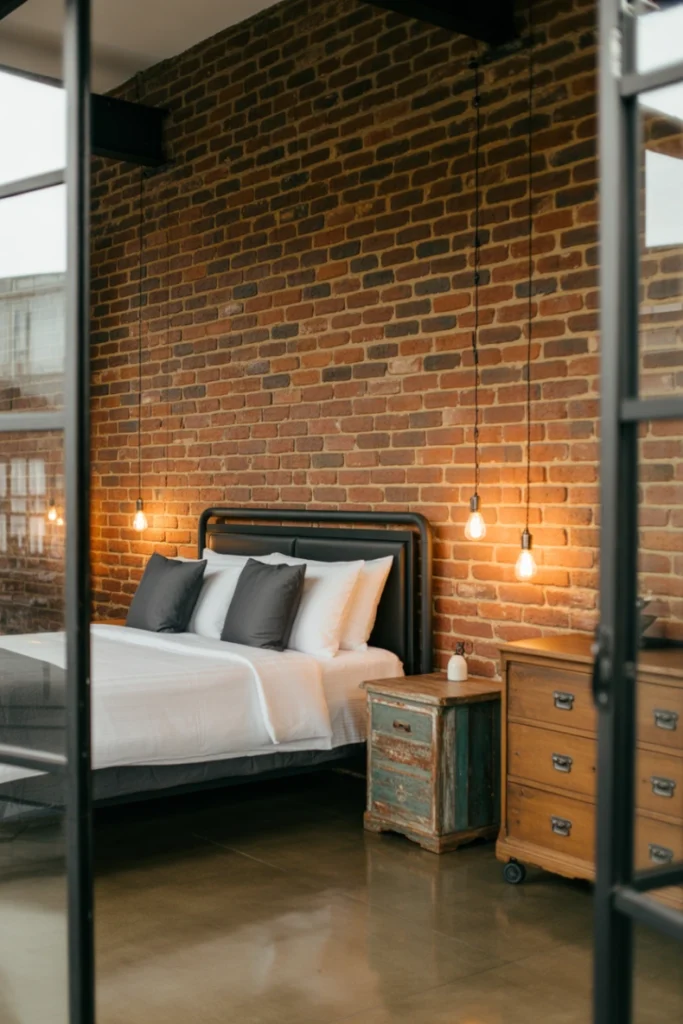
Industrial bedrooms embrace raw materials: exposed brick or concrete look walls, black metal frames, reclaimed wood and Edison style bulbs. Start with one raw element, such as a brick accent wall or a metal frame bed, and soften it immediately with warm textiles, or the room can feel cold. A wool throw, leather cushions, linen bedding and a thick rug underfoot balance the hard surfaces and make the space livable.
Color stays dark and grounded: charcoal, rust, deep brown and black, with wood tones warming the palette. Furniture should be functional and bold, such as a metal nightstand with a reclaimed wood top, an open shelf unit for books, and a cage style pendant light. Keep decor minimal and purposeful, since industrial style values honesty over ornament. If you cannot expose real brick, try a realistic brick wallpaper on one wall only, and paint the remaining walls in warm white so the room keeps its light.
16. Artistic Expression Through Wall Art
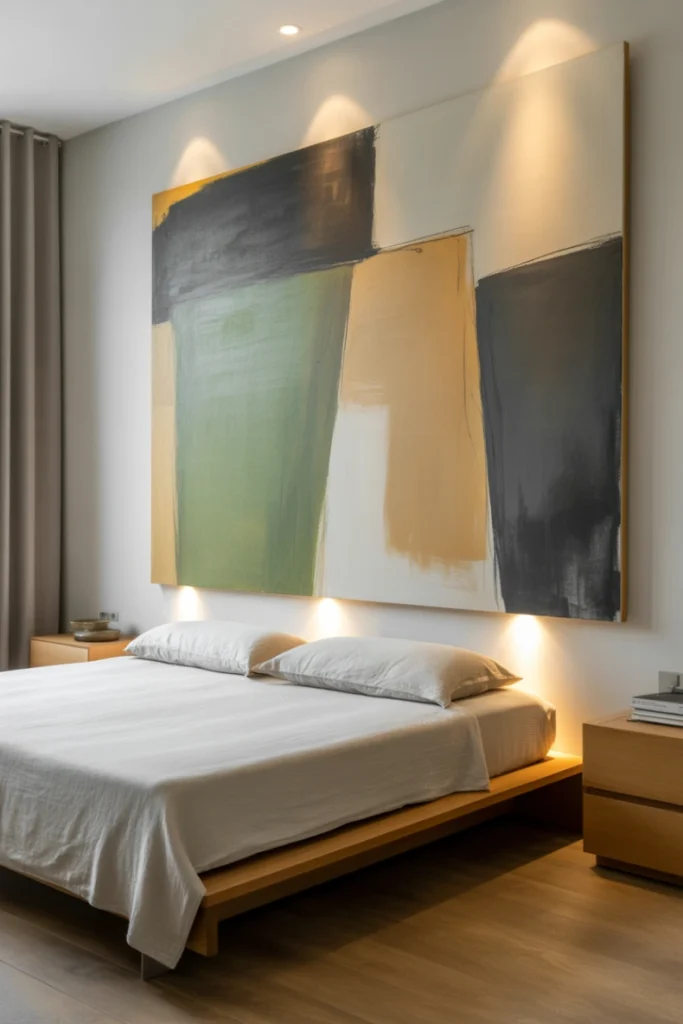
Art is the fastest way to make a bedroom feel personal, because it shows taste in a way furniture alone cannot. Choose pieces that mean something to you: abstract prints for a modern room, botanical illustrations for a natural scheme, or black and white photography for a timeless look. Hang the main piece above the bed with its center about 145 to 155 centimeters from the floor, and keep it roughly two thirds the width of the bed so the proportions feel right.
A gallery wall works well on a side wall if you plan it first. Lay the frames on the floor, arrange them with 5 to 8 centimeters between pieces, and use a mix of sizes with one consistent element, such as matching frames or a shared color, to tie them together. In a minimal room, one large statement piece often has more impact than many small ones. Light your art with a picture light or a directed spot so it reads clearly in the evening, and make sure the colors in the art echo at least one color already in the bedding or rug so the room feels connected.
17. Soft Lighting for Dreamy Ambiance

Good bedroom lighting is layered, not just bright. Ambient light from the ceiling sets the general level, task light from bedside lamps serves reading, and accent light creates mood. A dimmer switch on the main light is the single most useful upgrade, because it lets one room serve both bright mornings and quiet evenings. Add a pair of wall sconces beside the bed if nightstand space is tight, since they free the surface while still giving focused reading light.
Choose warm bulbs around 2700K throughout the bedroom, and avoid cool daylight bulbs, which feel clinical at night. Fairy lights along a headboard, a salt lamp on a dresser, or an LED strip tucked under a floating shelf all add a soft glow without glare. If you use smart bulbs, set an evening scene at about 30 percent brightness and a morning scene at full brightness so the room supports your routine automatically. Keep cords tidy with small clips or a cord cover, since visible cables undo the calm effect that soft lighting creates.
18. Luxe Textures and Layered Comfort
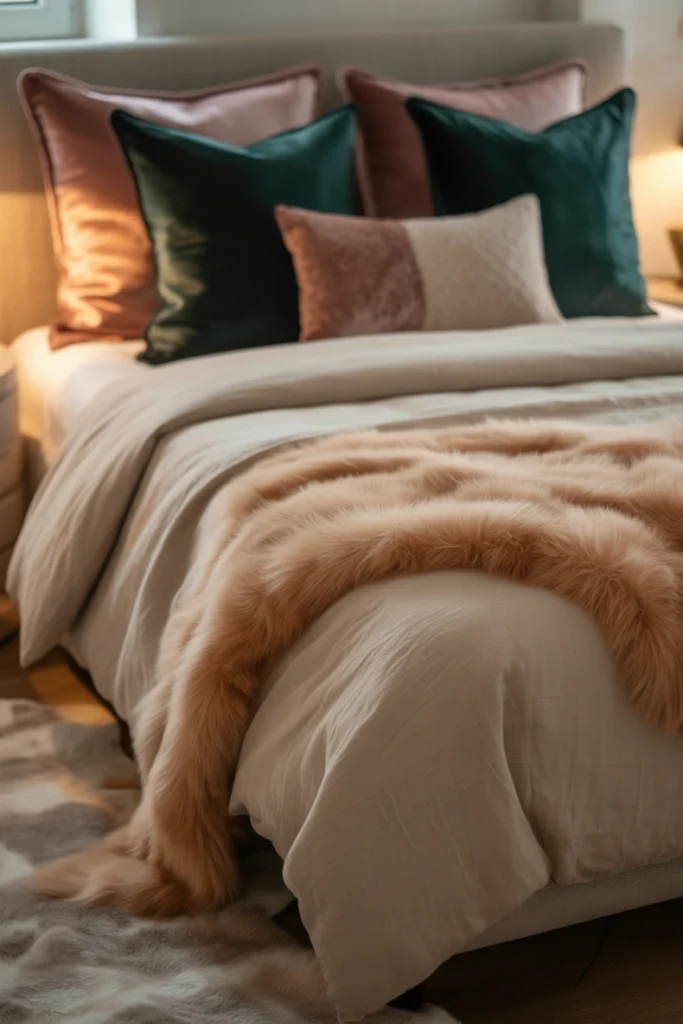
Texture is what separates a bedroom that looks good in a photo from one that feels wonderful to live in. Start with the bed: smooth cotton sheets, a slightly nubby linen duvet, a velvet or chunky knit throw, and cushions in two or three different fabrics. Then extend the idea to the floor with a soft rug, to the windows with lined curtains, and to seating with a cushioned chair or bench. Each surface should invite touch.
The trick is to vary texture more than color. A room in creams and warm grays can hold velvet, wool, linen, faux fur and rattan at once without looking busy, because the palette stays calm. Add one tactile headboard, such as a tufted or channel stitched design, to anchor the bed wall, and finish with a woven basket for extra throws so comfort is always within reach. If you are updating on a budget, start with the throw and cushions, which change the feel of the whole bed for a fraction of the cost of new furniture. A dreamier, softer version of this layered approach is shown in these dreamy bedroom style ideas, which lean into plush fabrics and gentle colors.
19. Smart Storage and Stylish Organization
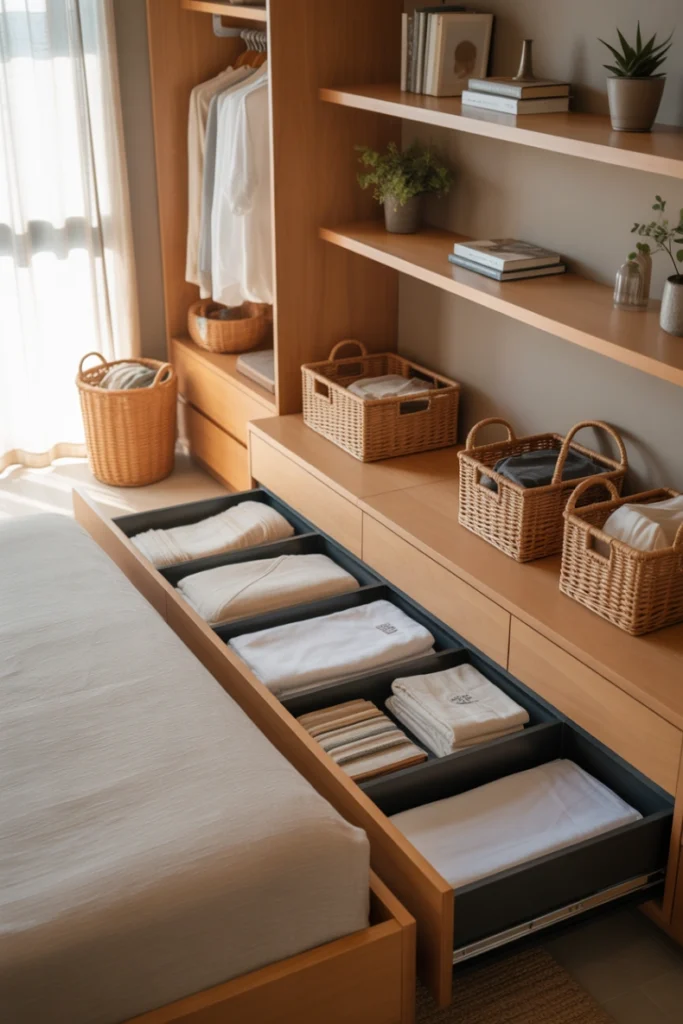
A bedroom that stays tidy feels larger and calmer, and smart storage is how you get there without living like a minimalist. Start with the obvious wasted spaces: drawers or rolling bins under the bed for out of season clothes, a tall wardrobe with double hanging rails, and floating shelves above a dresser for books and plants. Choose storage that matches your style, such as rattan baskets for a boho room, sleek lidded boxes for a modern room, or fabric bins in a wardrobe for a soft look.
Make daily routines easier with small systems. A tray on the dresser for keys, watch and jewelry, a hook behind the door for tomorrow’s outfit, and a laundry basket that actually fits the corner it lives in all prevent the slow creep of clutter. Keep only what you use weekly on open surfaces, and store the rest behind closed doors. Floating nightstands work well in small rooms because they free floor space and make cleaning easier, while a storage bench at the foot of the bed doubles as seating and a home for extra bedding. Review the room once a season, remove what no longer earns its place, and the tidy look maintains itself.
20. Personalized Decor That Tells Your Story
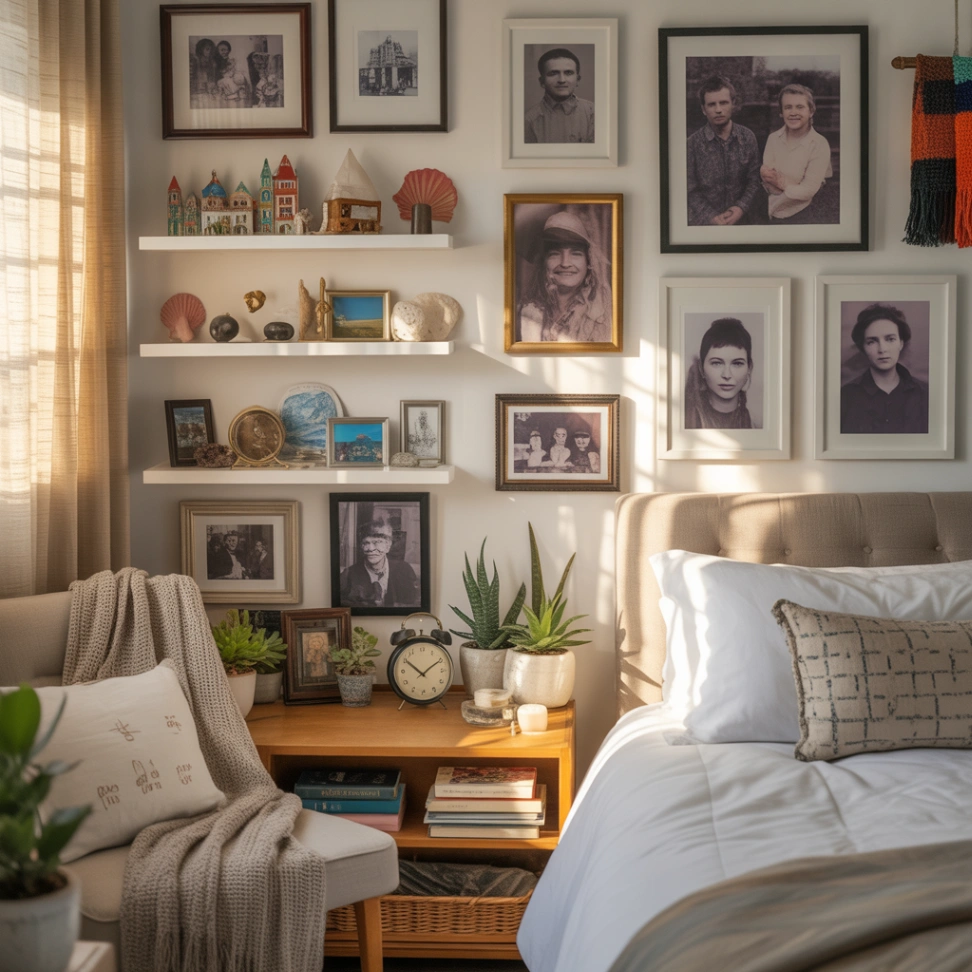
The most memorable bedrooms are personal, not perfect. Display a few items with real meaning: framed photos from a favorite trip, a handmade ceramic vase, a stack of books you actually reread, or an heirloom blanket folded over a chair. These pieces give the room warmth that no store bought set can replicate, and they make the space feel unmistakably yours. Group personal items in small clusters of three rather than scattering them everywhere, so each group reads as intentional.
Balance sentiment with restraint. Every personal touch should have breathing room around it, and surfaces should never be fully covered. Mix one sentimental piece with one design piece, such as a travel photo beside a sculptural lamp, so the room feels both heartfelt and polished. Rotate displays seasonally if you have many treasures, keeping a few out at a time. Your bedroom should tell your story quietly, in a way that feels comforting to wake up to every day. For color inspiration to tie personal pieces together, see these bedroom color schemes that pair wall colors with bedding and accents.
Conclusion: Crafting Your Perfect Bedroom Sanctuary
Designing a bedroom is about shaping an environment that supports rest, creativity and calm. Whether you love rustic farmhouse warmth, modern minimalism, coastal breezes or hotel elegance, the ideas in this guide share one principle: every detail should earn its place. Start with a clear focal point, choose a restrained palette, layer texture and light, and add storage that keeps the calm intact. Then finish with personal touches that make the room yours.
Do not try to apply all twenty ideas at once. Pick the two or three that solve your biggest frustrations, whether that is poor lighting, a lack of storage or a room that feels cold, and build from there. Small, deliberate changes, such as new bedding, a dimmer switch or a fresh coat of paint on one wall, often transform a bedroom more than a full renovation. Your sanctuary should feel beautiful, but more importantly, it should feel like home every single night.
Frequently Asked Questions
What is the best color for a bedroom?
Soft neutrals such as warm white, beige and pale gray suit most bedrooms because they feel calm and work with any style. If you want more personality, add a deeper accent wall in sage green, dusty blue or warm terracotta, and keep bedding and curtains in lighter tones so the room still feels restful and bright.
How can I make a small bedroom look bigger?
Use light wall colors, a low bed frame, mirrors opposite a window, and closed storage to keep surfaces clear. Choose one large rug instead of several small ones, hang curtains high and wide so the window looks larger, and keep furniture to the essentials so the floor stays as visible as possible.
How many pillows should I put on a bed?
For a queen bed, two sleeping pillows plus two Euro pillows and one or two decorative cushions looks full without being impractical. For a king bed, add one more Euro pillow. Remove the decorative layers at night and store them in a basket or on a bench so making the bed each morning takes less than a minute.
What lighting is best for a bedroom?
Layered lighting works best: an overhead light for general brightness, bedside lamps or sconces for reading, and a dimmer or soft accent light for evenings. Warm white bulbs around 2700K create a cozy glow, while a dimmer lets you shift the same room from bright mornings to a calm nighttime mood.
How do I keep my bedroom tidy without much effort?
Give everything a home: under bed storage for seasonal clothes, a tray for daily essentials, hooks for tomorrow’s outfit, and a laundry basket in a sensible spot. Clear surfaces once a day, keep only weekly use items visible, and do a quick seasonal review to remove anything that no longer earns its place.
More Ideas You Will Love
 15 Warm and Cozy Earth-Tone Bedroom Ideas
 23 Bed Frame Ideas: Modern & Stylish Choices for Every Bedroom
 16 Basement Remodel Ideas for Every Style & Budget
 12 Cozy Bedroom Ideas for Women – Soft, Stylish & Soothing
 14 Fall Bedroom Decoration Ideas for a Cozy Feel
 21 Bedroom Furniture Ideas – Fresh Ways to Elevate Your Space