
23 Dreamy Bedroom Style Ideas You’ll Fall in Love With


Your bedroom is more than a place to sleep. It is your sanctuary, your retreat, and the one room in the house that exists purely for you. The right mix of color, texture, and light can turn an ordinary room into a space that lowers your shoulders the moment you walk in, whether you love cozy cottage charm, calm minimalism, or full glamour.
In this guide you will find 22 dreamy bedroom style ideas, each broken down into the colors, materials, and finishing touches that make it work. Every section includes practical, step-by-step guidance: paint colors to ask for at the store, fabric choices that feel as good as they look, furniture proportions that suit real rooms, and small styling tricks that pull everything together. Pick the one style that speaks to you, or borrow details from several and make the room completely your own.
A good starting point for almost every look: measure your room before you buy anything, note which direction your windows face, and choose your bedding first, since it is the largest color block in the room. Soft white bulbs at 2700K flatter every skin tone and make every style feel warmer, and a rug that extends at least 18 inches beyond each side of the bed anchors the whole layout.
1. Soft Neutrals for Serene Calm
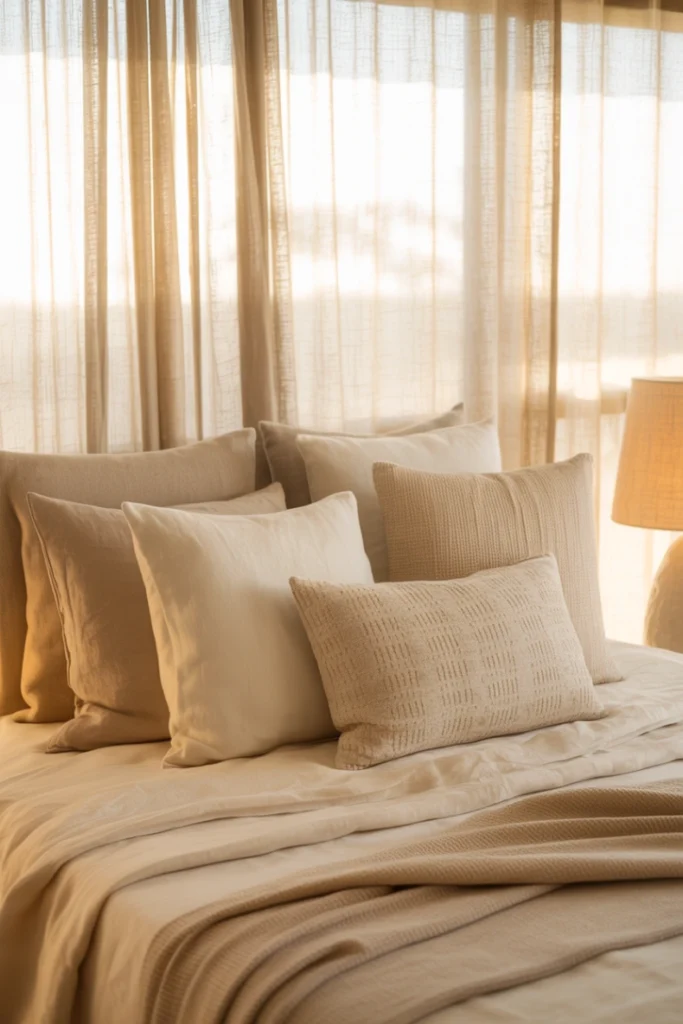
Neutral palettes never go out of style, and they are the foundation of a truly dreamy bedroom. Shades like ivory, warm taupe, greige, and pale gray make a room feel open, quiet, and balanced. This style works especially well in rooms with limited natural light, because light-reflecting tones keep the space from feeling closed in.
How to build it: Start with walls in a warm white or pale greige, then layer bedding in three tones: crisp white sheets, an ivory or oatmeal duvet, and a knit or waffle-weave throw in taupe at the foot of the bed. Add texture through a mix of pillow fabrics: linen, velvet, and boucle in slightly different shades of the same family. For lighting, choose warm diffused sources such as a linen-shade bedside lamp or a soft-glow pendant, and finish with a touch of nature like dried pampas grass in a tall vase or a small potted olive tree in the corner.
Design tip: Neutrals can look flat without contrast, so include one deeper tone, like a charcoal throw pillow or a walnut tray on the nightstand, to give the palette depth. If your bedroom is on the smaller side, you may also enjoy our guide to small bedroom ideas, which uses the same light, layered approach to make compact rooms feel bigger.
2. Romantic Canopy Beds

Few pieces change a bedroom as dramatically as a canopy bed. The four posts frame the sleeping area like a stage, creating a sense of intimacy and occasion that an ordinary bed frame simply cannot match. Draped with sheer fabric, a canopy bed turns even a simple room into a romantic retreat.
How to build it: Choose a frame in white, brushed gold, or matte black with posts at least 72 inches tall so the canopy clears your sightline. For the draping, buy 6 to 8 yards of sheer chiffon or lightweight linen per side and let it fall in loose, uneven folds rather than pulling it taut. Hang the fabric from the top rails with discreet clips or a slim curtain wire so it can be drawn back during the day. Pair the frame with plush white or blush bedding and warm fairy lights or small Edison bulbs woven through the drapes for an evening glow.
Good to know: Canopy frames need ceiling height. In rooms with 8-foot ceilings or lower, skip the full fabric tent and use just the bare frame, which gives the same architectural feel without crowding the room. Washable sheer panels are a practical choice since bedroom drapes collect dust.
3. Modern Minimalist Chic
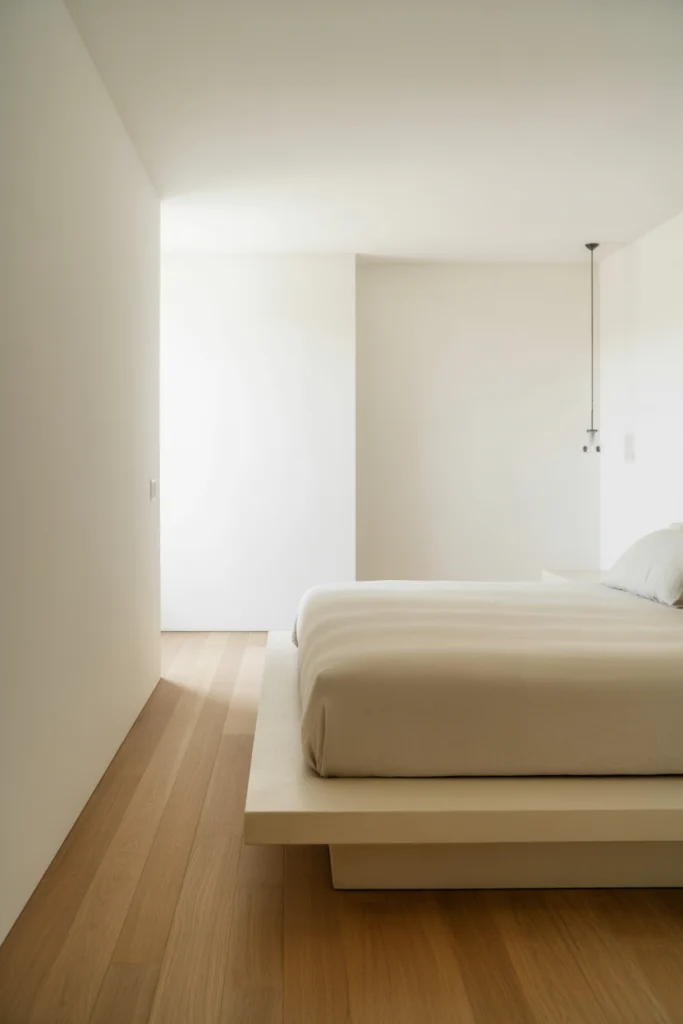
Minimalism brings peace through restraint: clean lines, open floor space, and every object earning its place. A minimalist bedroom feels calm because your eyes have somewhere to rest. The trick is choosing a few beautiful pieces instead of many average ones, and letting negative space do the decorating.
How to build it: Keep the palette tight, just two or three tones such as white, warm beige, and one dark accent like charcoal or black. Choose low-profile furniture: a platform bed with a simple upholstered headboard, floating nightstands, and a single dresser. Hide clutter with closed storage, under-bed drawers, or a bench with a lift-up lid. Warm the space with natural materials, an oak side table, a jute rug, a nubby wool throw, and add one statement piece, such as an oversized framed print or a sculptural arc floor lamp, to keep the room from feeling sterile.
Design tip: Minimalism fails when it looks unfinished rather than intentional. Every surface should be at least 70 percent clear, and each remaining item should be something you genuinely like. One small plant, one book stack, one candle: small groups of three read as styling, not clutter.
4. Warm Wood Accents
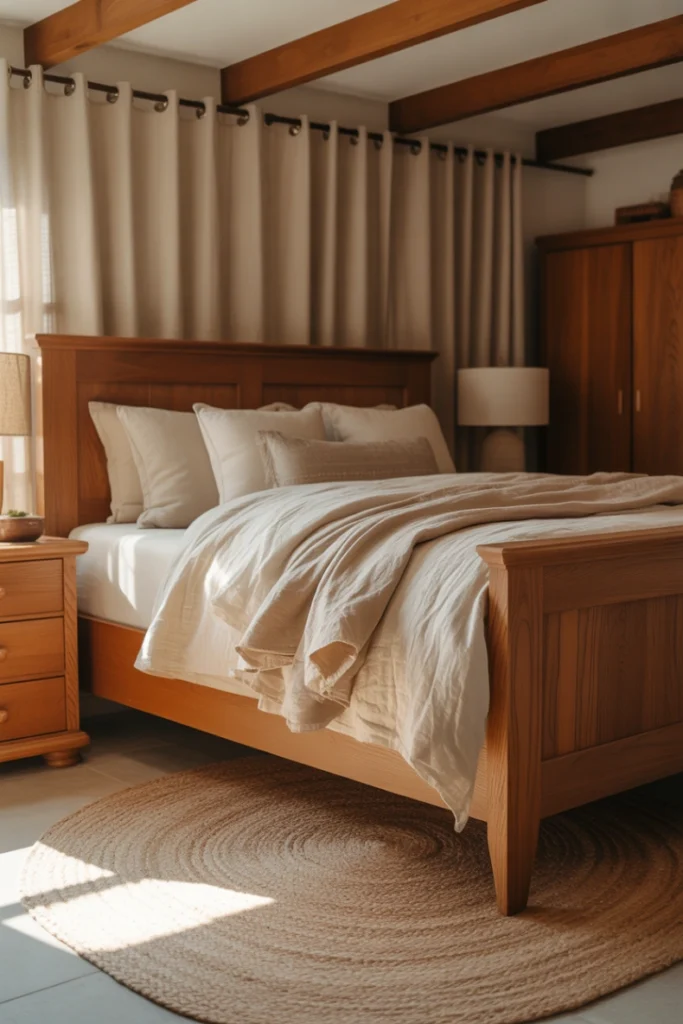
Natural wood brings instant warmth and a grounded, organic feel that painted furniture cannot replicate. From a walnut headboard to reclaimed oak beams, wood tones make a bedroom feel established and calm, like a cabin retreat adapted for everyday life.
How to build it: Pick one dominant wood tone and one supporting tone: for example, warm oak floors with a darker walnut nightstand, or a reclaimed-timber headboard against pale pine side tables. Keep walls soft and light, warm white or pale sage, so the wood reads as the star. Soften the hard surfaces with linen curtains, a cotton quilt, and a wool area rug under the bed. For lighting, choose fixtures with warm metal or woven shades, rattan pendants or brass sconces, which echo the natural theme.
Good to know: Mixing more than three wood tones in one room usually looks chaotic. If you already own mismatched wood furniture, unify it with the same finish family (all warm or all cool) or tie the pieces together with matching textiles and hardware.
5. Vintage Romance
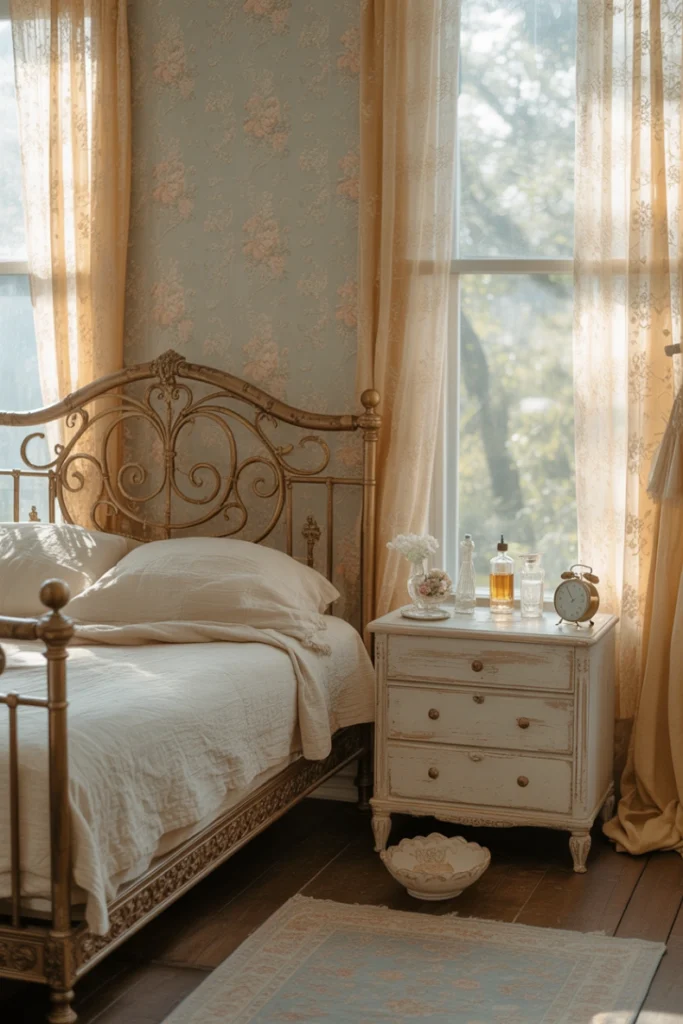
Vintage romance is the bedroom as love story: ornate mirrors, floral wallpaper, a wrought-iron bed, lace curtains catching the morning light. The style celebrates pieces with history and patina, and it feels deeply personal because no two vintage rooms can ever look alike.
How to build it: Anchor the room with one true vintage piece, a carved wooden dresser, an iron bed frame, or a marble-top washstand used as a nightstand. Add softness with floral or damask wallpaper on one wall, lace or sheer curtains, and bedding in faded rose, cream, or powder blue. A small chandelier or crystal table lamp adds the glow this style needs. To keep the room from feeling like a museum, mix in one or two modern pieces: a clean-lined lamp, a simple linen duvet, or contemporary art in a vintage frame.
Design tip: Authentic vintage finds come from estate sales, flea markets, and architectural salvage shops. Check that old drawers slide smoothly and iron frames are rust-free before buying, and always measure doorways before hauling a large piece home.
6. Scandinavian Simplicity
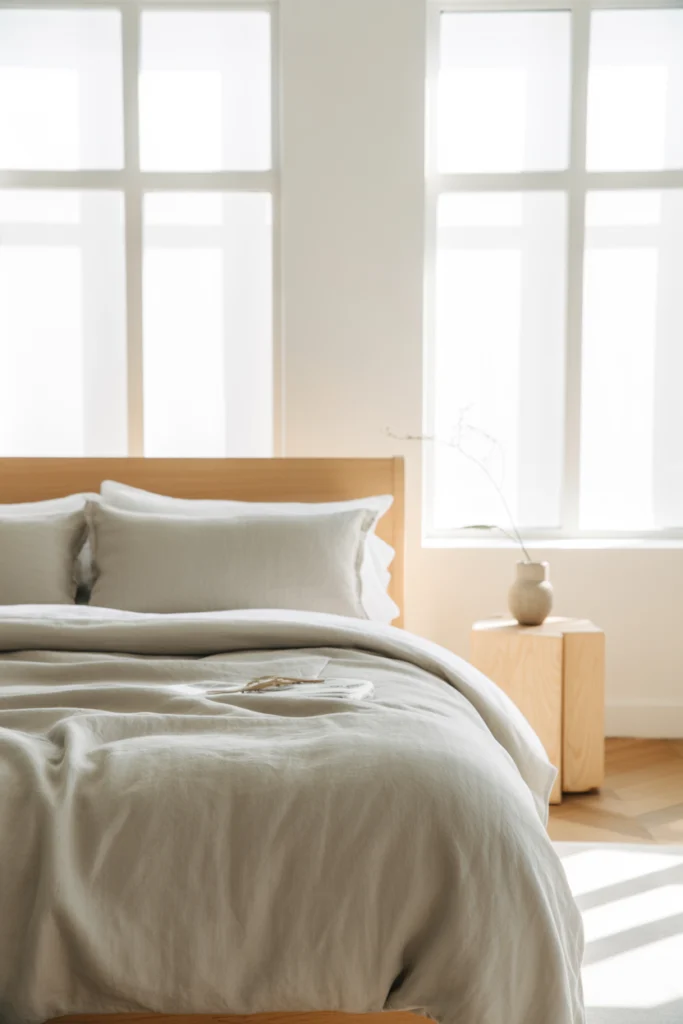
Scandinavian design is built on light, function, and the Danish idea of hygge, that deep sense of coziness and well-being. White walls, pale wood floors, and uncluttered surfaces make this style a natural fit for small or dark bedrooms, because every choice is designed to bounce light around the room.
How to build it: Start with white or very pale gray walls and light wood or whitewashed floors. Choose furniture with tapered legs and simple silhouettes: a low pine or birch bed frame, a small round side table, a ladder-style blanket rack. Layer the essential Scandi textures: white linen bedding, a chunky wool throw, a flat-weave cotton rug, and sheepskin draped over a chair. Add life with two or three easy plants, a fiddle-leaf fig or a trailing pothos, and keep wall art minimal, one or two simple black-and-white prints in thin frames.
Good to know: The secret to Scandinavian warmth is candlelight and textiles, not color. In winter months, a cluster of unscented pillar candles on a tray and an extra throw at the foot of the bed make the pale palette feel rich instead of stark.
7. Bold Accent Walls
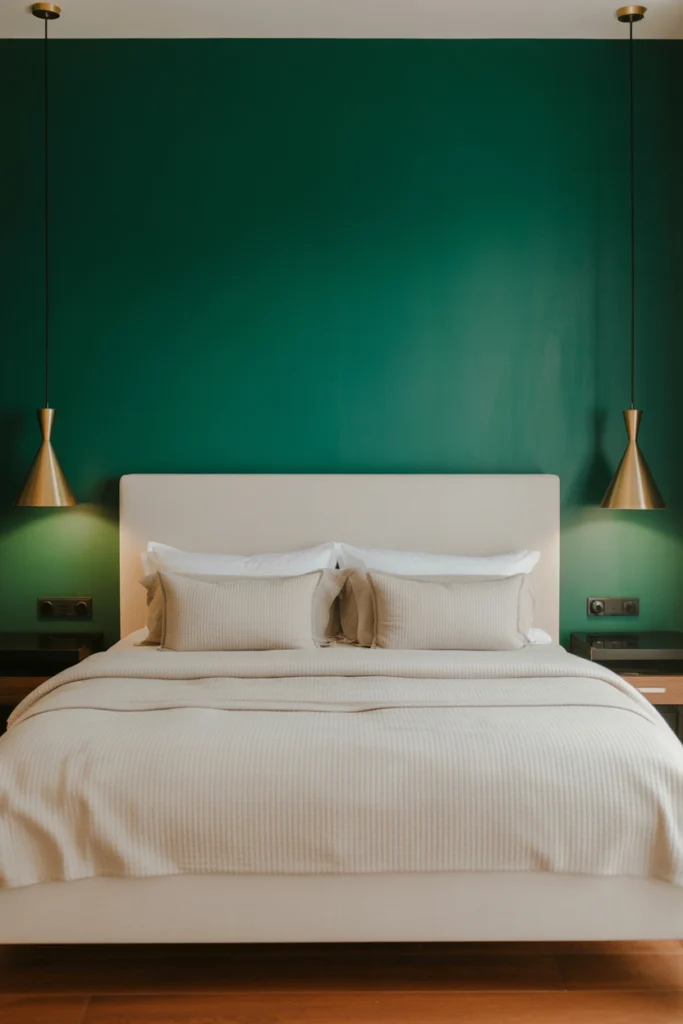
One dramatic wall can transform a bedroom for the cost of a single gallon of paint. A deep navy, emerald, charcoal, or terracotta wall behind the bed creates a focal point that makes the whole room feel designed, and it is the fastest way to add personality without committing to a full-room color scheme.
How to build it: Choose the wall your bed sits against, since that is the natural focal point. For paint, deep saturated colors work best: navy, forest green, aubergine, or warm charcoal in an eggshell or matte finish. For more texture, consider board-and-batten paneling painted the same color, a grasscloth wallpaper, or peel-and-stick wood planks. Keep the other three walls light and neutral, and echo the accent color in two or three small places, throw pillows, a piece of art, a vase, so the wall feels connected to the room instead of isolated.
Design tip: A dark accent wall actually makes a small bedroom feel larger when the bedding and trim stay light, because the dark wall recedes visually. Just make sure the room gets decent light, and add a mirror on an adjacent wall to bounce it around.
8. Bohemian Dreamscape
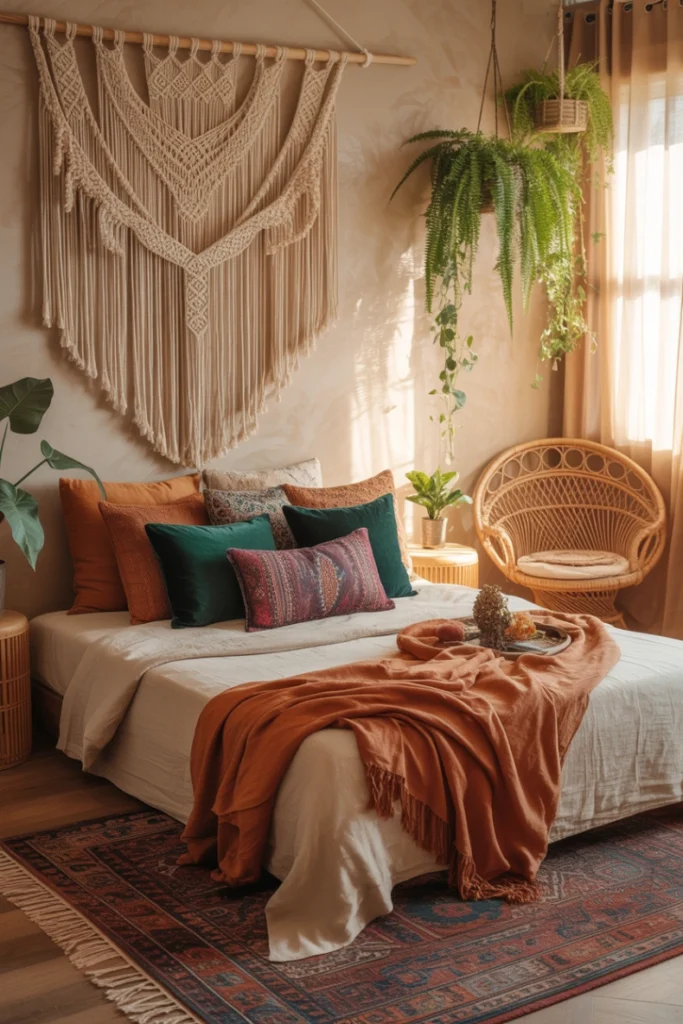
Boho style is joyful, layered, and unapologetically personal: patterned rugs over more rugs, macrame on the walls, plants on every surface, and colors pulled from markets around the world. Nothing has to match, which makes it the most forgiving style for mixing pieces you already own.
How to build it: Build from the floor up: layer two or three flat-weave rugs in complementary patterns, then dress the bed with a patchwork or block-print quilt, a mix of embroidered and solid pillows, and a fringed throw. Ground the palette with earthy tones, terracotta, mustard, sage, rust, and add rattan or cane furniture: a peacock chair, a woven pendant light, a cane-front dresser. Hang plants at different heights, add brass lanterns or Moroccan-style lamps for warm patterned light, and finish walls with a gallery of small art, woven hangings, and mirrors in mixed frames.
Good to know: The difference between boho and clutter is editing by color. Keep your palette to three or four hues repeated throughout the room, and the layers will read as intentional rather than chaotic.
9. Luxurious Hotel-Inspired Design
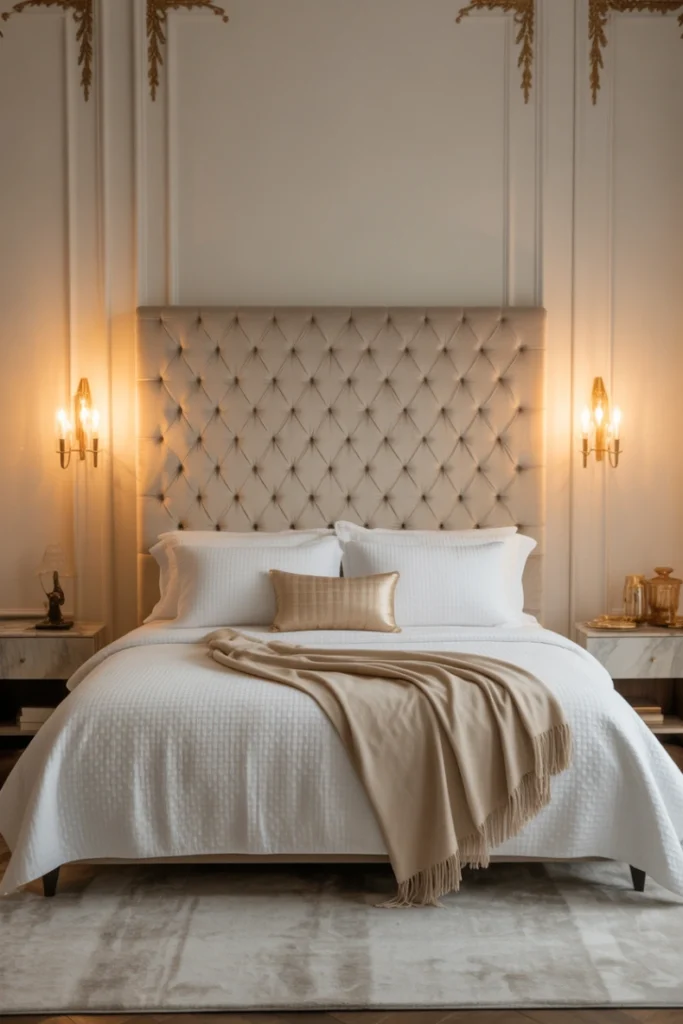
A five-star hotel bedroom feels indulgent because of discipline: symmetry, crisp linens, layered lighting, and not a single visual loose end. Recreating that feeling at home is mostly about upgrading the bed and insisting on pairs.
How to build it: Invest first in the bed: a tall upholstered headboard (at least 48 inches high), a white duvet with a high thread-count cotton cover, and the classic hotel pillow stack, two sleeping pillows plus two Euro shams, karate-chopped at the center. Place matching nightstands and matching lamps on both sides for perfect symmetry. Add a bench or two ottomans at the foot of the bed, a tray with a carafe and glasses on one nightstand, and blackout curtains in a heavy fabric that fall to the floor. A subtle scent, a reed diffuser in sandalwood or white tea, completes the suite feeling.
Design tip: The hotel look lives or dies on the bed skirt area and the floor. Keep under the bed completely clear, run the rug wall to wall or at least 3 feet beyond the bed on three sides, and hide all cords behind the nightstands.
10. Statement Lighting Fixtures
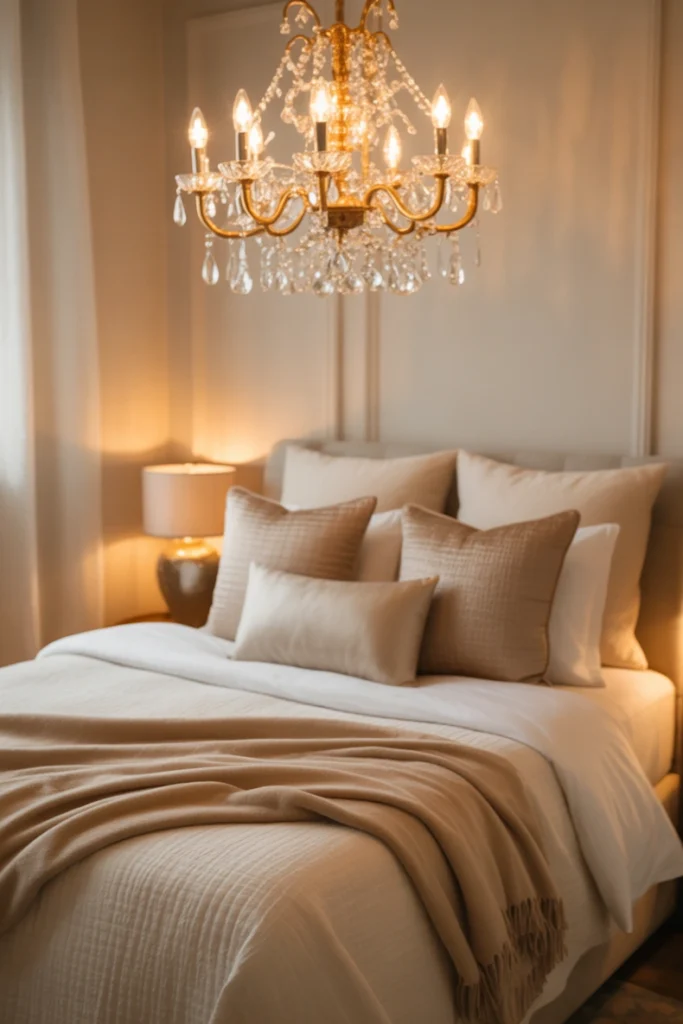
Lighting is the jewelry of a bedroom, and one bold fixture can carry the entire design. A sculptural chandelier, an oversized pendant, or an artistic floor lamp draws the eye upward, adds drama after dark, and makes even simple furniture look intentional.
How to build it: Size the fixture to the room: add the room’s length and width in feet, and use that number in inches as a rough guide for a chandelier’s diameter (a 12 by 14 foot room suits a 26-inch fixture). Hang pendants or chandeliers so the bottom sits 30 to 36 inches above the mattress if centered over the bed, or at least 7 feet above the floor in a walkway. Choose warm bulbs at 2700K, and put the statement fixture on a dimmer so it can shift from bright to moody. Then layer supporting light: matching bedside lamps or wall sconces for reading, and a small accent light, like a picture light or LED strip behind the headboard, for depth.
Good to know: If your ceiling is low, skip hanging fixtures and make a sculptural table lamp or an arc floor lamp your statement piece instead. Never use cool daylight bulbs in a bedroom; they flatten every color in the room.
11. Nature-Inspired Serenity

Bringing the outdoors in is one of the most reliable ways to make a bedroom feel calm. Natural materials, earthy colors, and living plants lower visual noise and connect the room to something timeless. This style suits anyone who finds peace in gardens, forests, and open sky.
How to build it: Choose a palette pulled from nature: sage green, warm stone, soft clay, mushroom, and warm white. Use honest materials wherever you can: a solid wood bed frame, linen curtains, seagrass baskets for storage, a stone or travertine lamp base. Add plants in odd numbers, a tall olive or fig tree in a corner plus smaller trailing plants on shelves, and bring in botanical art or a nature mural on one wall. Keep patterns organic: leaf prints, subtle stripes like tree bark, or simple woven textures.
Design tip: Real plants beat fake ones for this style, but choose easy varieties if you are not a natural gardener: snake plants, pothos, and ZZ plants tolerate low light and missed waterings. Group plants in matching pots for a curated look instead of a random collection.
12. Coastal Breeze Aesthetic
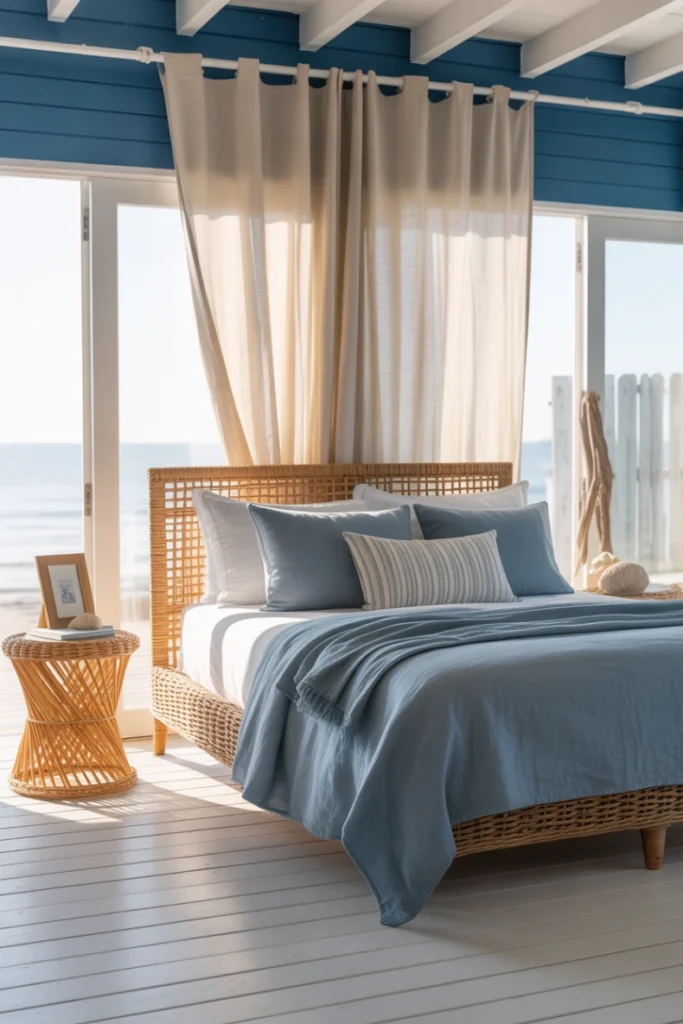
Coastal style captures the feeling of a beach house morning: bright, breezy, and unhurried. It is built on natural light, airy textures, and a palette of white, sand, soft blue, and sea glass green. Done well, it feels fresh rather than themed, with no need for literal anchors or rope.
How to build it: Keep walls white or the palest blue-gray, and maximize natural light with sheer linen curtains that puddle slightly on the floor. Choose light wood or whitewashed furniture, a rattan headboard or bench, woven seagrass baskets, and bedding in white with blue or sand-colored accents. Add subtle seaside references: driftwood art, a bowl of shells on the dresser, or a large photograph of the ocean as the room’s single statement piece. A jute or sisal rug grounds the look and feels great underfoot.
Good to know: Coastal rooms can feel cold in winter climates, so keep a chunky knit throw in warm sand or oatmeal on hand. The breezy palette also works beautifully in open-plan spaces where the bedroom flows into a sitting area.
13. Artistic Headboards
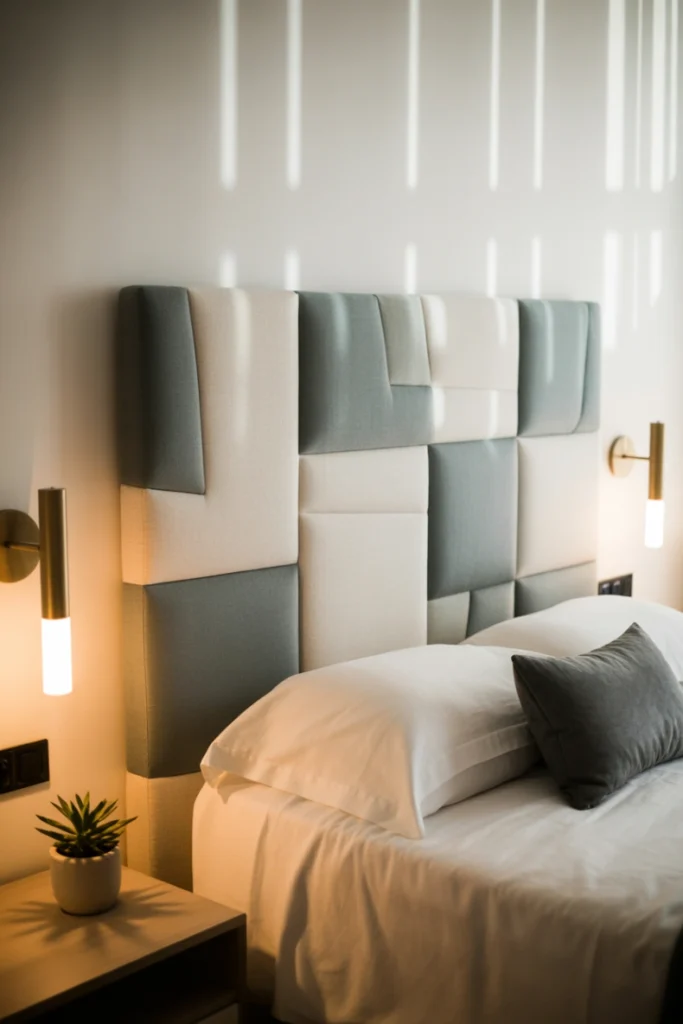
The headboard is the largest single design element in most bedrooms, so treating it as art instantly elevates the room. An oversized, sculptural, or unexpected headboard becomes the focal point, which means everything else in the room can stay beautifully simple.
How to build it: Consider options beyond the standard rectangle: a tall channel-tufted headboard in velvet, a reclaimed-wood plank wall that extends to the ceiling, an arched rattan screen, or a large-scale upholstered panel in a bold color. Size matters: the headboard should be at least as wide as the mattress and ideally 4 to 6 inches wider on each side. Keep bedding quiet, white or solid-color linens, so the headboard holds the spotlight, and flank it with simple matching nightstands and lamps that do not compete for attention.
Design tip: A headboard wall is a renter-friendly upgrade if you use a freestanding or leaning design. Oversized art hung low behind a simple bed can fake the same effect: hang it so its bottom edge sits 4 to 6 inches above the mattress.
14. Layered Bedding Luxury
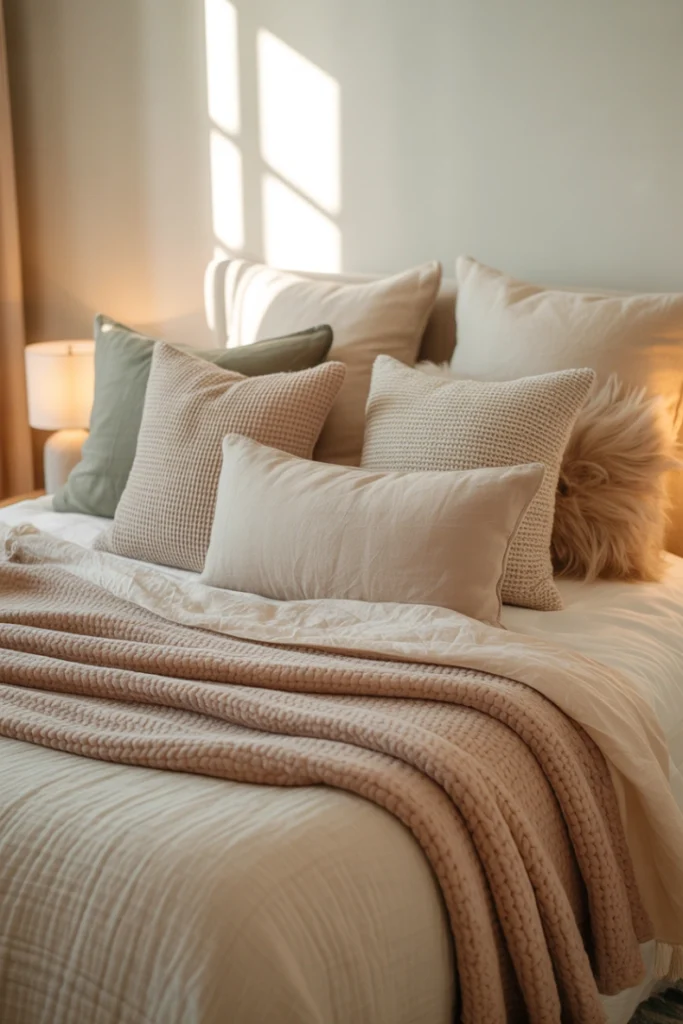
The difference between a bed that looks inviting and one that looks flat is layering. Hotels and stylists build beds in five or six layers, and each layer adds texture, color depth, and that sink-in look everyone wants to photograph.
How to build it: Work in this order: fitted sheet, flat sheet folded back 12 inches at the top, duvet or comforter pulled up to cover two-thirds of the bed, a folded quilt or coverlet across the foot, and a throw draped diagonally over one corner. Mix materials for richness: crisp cotton sheets, a linen duvet cover, a waffle or knit throw, and velvet or silk accent pillows. Finish with pillows in odd numbers: two sleeping pillows flat, two shams upright, and one to three smaller decorative cushions in front. Stick to one color family in three tones, or white bedding with one accent color, to keep the layers cohesive.
Good to know: Layering works in every season. In summer, swap the duvet for a lightweight quilt and keep the same structure; the bed will look just as styled with half the warmth.
15. Elegant Mirror Touches
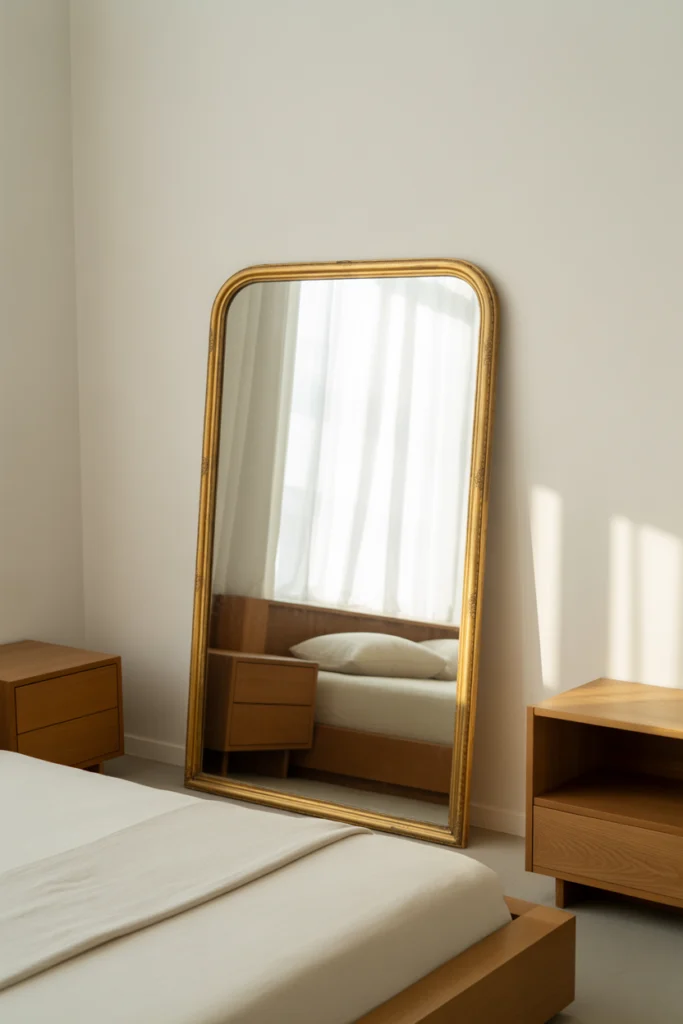
Mirrors are the hardest-working decor in a bedroom: they double the light, visually expand the walls, and add a jewelry-like finish. Used with intention, they make small or dark bedrooms feel twice their size.
How to build it: Place one large mirror where it can do the most work: a full-length mirror leaning against the wall opposite or beside a window, so it catches and throws daylight across the room. Choose frames that match your style, aged gold for vintage, thin black for modern, arched white for coastal. Mirrored nightstands or a mirrored tray on the dresser add sparkle without a big commitment. Keep mirrors clean, since smudges show immediately, and avoid placing a mirror where it reflects clutter like an open closet.
Design tip: A leaning floor mirror should be at least 48 inches tall to be useful and safe; anchor it to the wall with the included hardware if you have kids or pets. Two matching mirrors flanking the bed can substitute for art and make the wall feel twice as wide.
16. Cozy Corner Nook
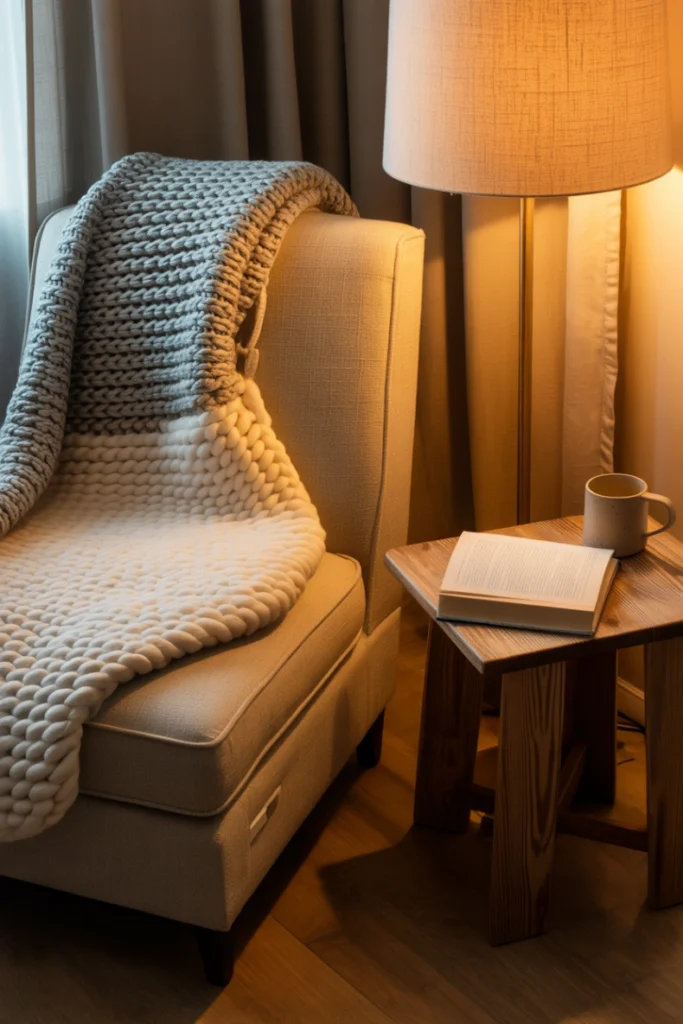
Every dreamy bedroom deserves a retreat within the retreat: a small corner for reading, journaling, or slow mornings with coffee. A dedicated nook makes the bedroom feel larger and more luxurious, because it gives the room a second purpose beyond sleep.
How to build it: Claim any corner at least 3 by 3 feet, ideally near a window. Start with a comfortable seat: an upholstered armchair, a papasan, or a built-in window bench with a 4-inch cushion. Add a small side table for books and a mug, a floor lamp or wall-mounted reading sconce at shoulder height, and a throw blanket within arm’s reach. Define the zone with a small round rug, 4 to 5 feet across, and one piece of art or a floating shelf above the chair to make the corner feel finished.
Good to know: If floor space is tight, a nook can float: mount a small fold-down desk or shelf as the “table” and use a comfortable floor cushion as the seat. The key ingredients are simply good light, a soft seat, and a surface for your cup.
17. Parisian Chic Elegance
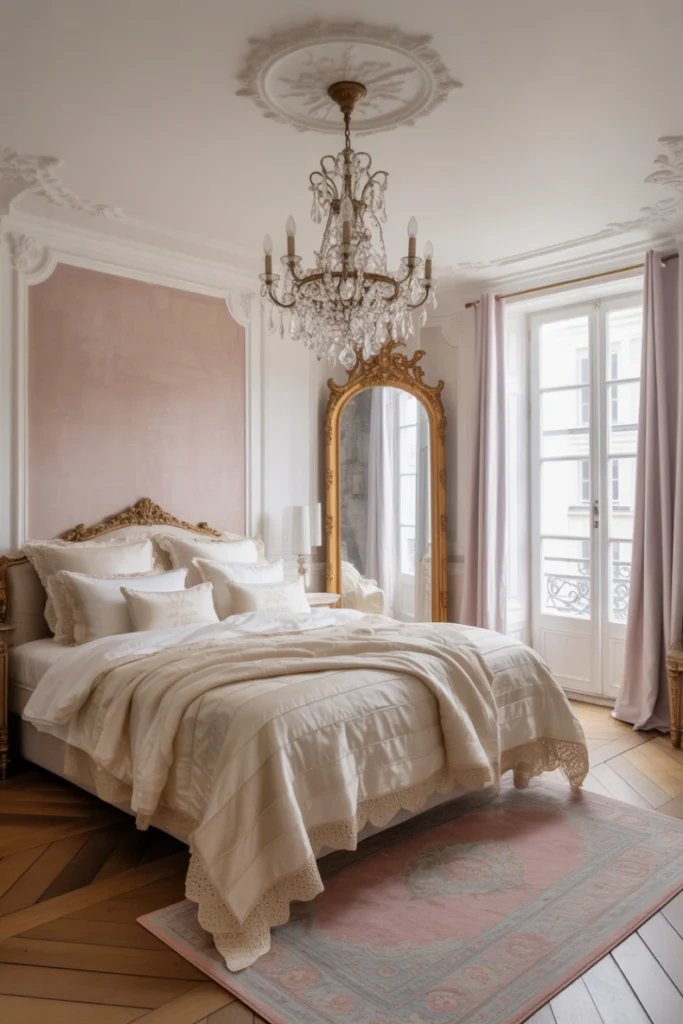
Parisian style is elegance without effort: ornate moldings next to a perfectly plain linen duvet, a crystal chandelier over a simple oak floor. It feels timeless because it mixes old and new with complete confidence, and it works in any size room.
How to build it: Start with a soft, muted palette: warm white walls, blush or dove-gray bedding, touches of black for definition. Add architectural character even in a plain room: peel-and-stick wall molding panels, a ceiling medallion around a simple light fixture, or tall baseboards painted the same white as the walls. Choose one glamorous piece, a tufted velvet headboard, a faceted crystal lamp, or a gilt mirror, and keep everything else restrained. Finish with fresh flowers or a single stem in a bud vase on the nightstand, the signature Parisian touch.
Design tip: Parisian rooms look collected, not decorated, so avoid matching sets. Pair your ornate mirror with a plain modern lamp, your vintage chair with a simple side table. The contrast is what makes it feel authentically French.
18. Farmhouse Warmth

Farmhouse style wraps a bedroom in comfort: weathered wood, soft plaids, vintage-inspired lighting, and the feeling that everything in the room has a story. Modern farmhouse keeps the warmth but edits out the clutter, pairing rustic materials with clean lines.
How to build it: Bring in wood first: a shiplap accent wall, a reclaimed-wood headboard, or exposed beams if your ceiling allows. Layer bedding in warm neutrals, ivory sheets, a buffalo-check or plaid throw, and knit cushions in cream and rust. Choose lighting with a vintage feel: black metal sconces, a seeded-glass pendant, or an iron chandelier. Add woven baskets for storage, a distressed bench at the foot of the bed, and greenery, eucalyptus stems or a small potted plant, to keep the rustic palette feeling alive.
Good to know: Real shiplap is a weekend project, but peel-and-stick shiplap panels give the same look in an afternoon and come off cleanly when you move. Keep farmhouse patterns to two at most, such as plaid plus a small ticking stripe, so the room stays calm.
19. Contemporary Art Vibe
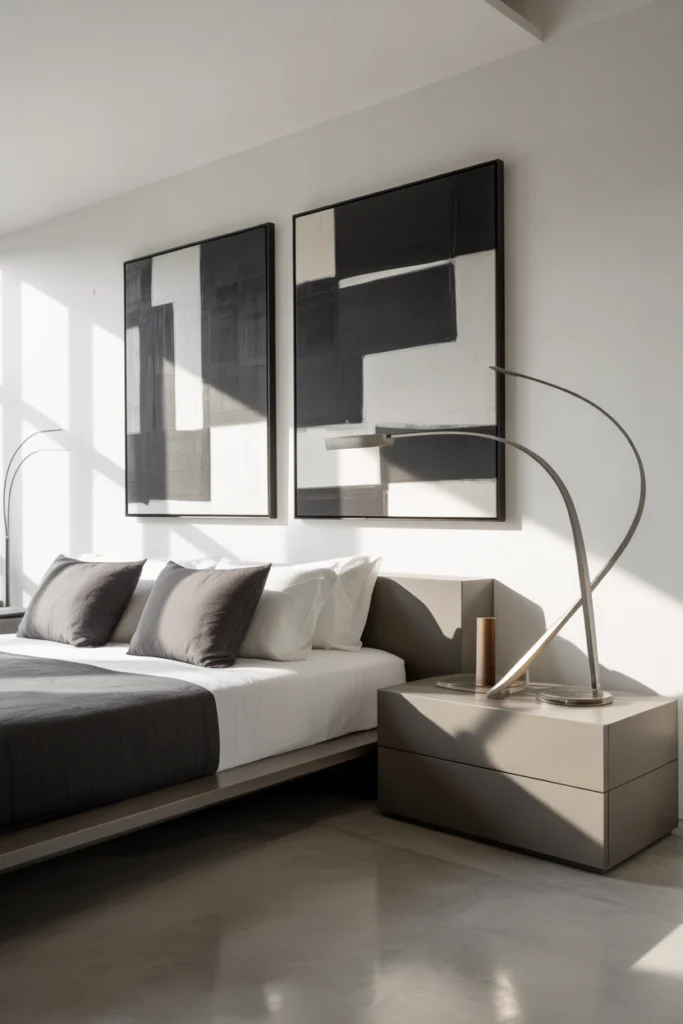
For the creatively inclined, the bedroom can double as a personal gallery. Bold artwork, sculptural furniture, and unexpected color combinations turn the room into an expression of personality, while a neutral base keeps it restful enough for sleep.
How to build it: Keep walls white or light gray as your canvas, then go bold in one or two places: a large abstract painting above the bed, a sculptural side table, or bedding in a single saturated color like ochre or deep teal. Mix materials with intent: glass, black metal, velvet, and lacquered wood create the gallery feel. Choose lighting as sculpture too, an arc floor lamp or a geometric pendant. Edit ruthlessly: in an art-forward room, each object needs breathing room, so leave generous empty wall and floor space around your statement pieces.
Design tip: You do not need an art budget for this look. Large-scale prints from independent artists, framed with simple gallery frames from a craft store, deliver the same impact. Hang art so its center sits about 57 inches from the floor, the standard gallery height.
20. Soft Pastel Palette

Pastels bring a gentle, romantic calm that stronger colors cannot: blush pink, powder blue, sage green, and lavender feel like a deep breath. This palette suits bedrooms perfectly because it is soothing by nature, and it flatters both traditional and modern furniture.
How to build it: Choose one lead pastel and one supporting pastel, for example blush walls with sage bedding, or a lavender accent wall with powder-blue textiles. Keep large surfaces, walls and main bedding, in the palest version of your colors, and use slightly deeper versions in pillows and art for definition. Add texture to keep pastels sophisticated: ruffled shams, a tufted headboard, linen curtains, or a soft wool rug. Small metallic or glass accents, a brass lamp, a mirrored tray, keep the sweetness from tipping into childish.
Good to know: Pastels shift dramatically under different light. Test paint swatches on the wall and check them morning, noon, and evening before committing, since a blush that looks perfect at noon can turn peachy under warm evening bulbs.
21. Rustic Lodge Feel
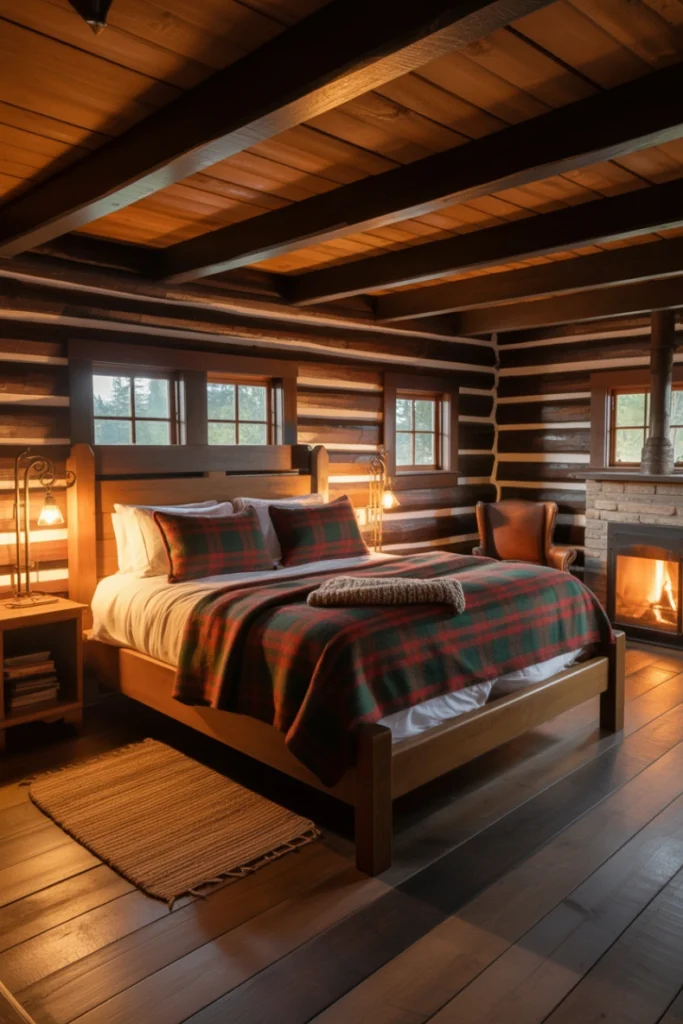
The lodge look brings the mountain cabin indoors: rough-hewn wood, plaid wool, leather, and the warm glow of firelight. It is the coziest of all bedroom styles, built for cold nights, slow mornings, and the smell of pine.
How to build it: Start with wood everywhere it makes sense: a log or timber-frame bed, plank walls or a wood accent wall, and wide-plank or wood-look floors. Layer bedding generously: flannel sheets, a wool plaid blanket, and faux-fur throws and pillows in cream, rust, and forest green. Add leather details, a leather bench, a hide rug, or leather drawer pulls, and keep lighting warm and low: iron sconces, a lantern-style table lamp, or string lights along a beam. If you have a fireplace, make it the focal point; if not, a cluster of large pillar candles in a stone tray suggests the same glow.
Design tip: Lodge style can go dark fast, so balance the heavy wood with plenty of cream and white textiles. One light-colored area rug under the bed keeps the room from feeling like a cave.
22. Personalized Decor Story
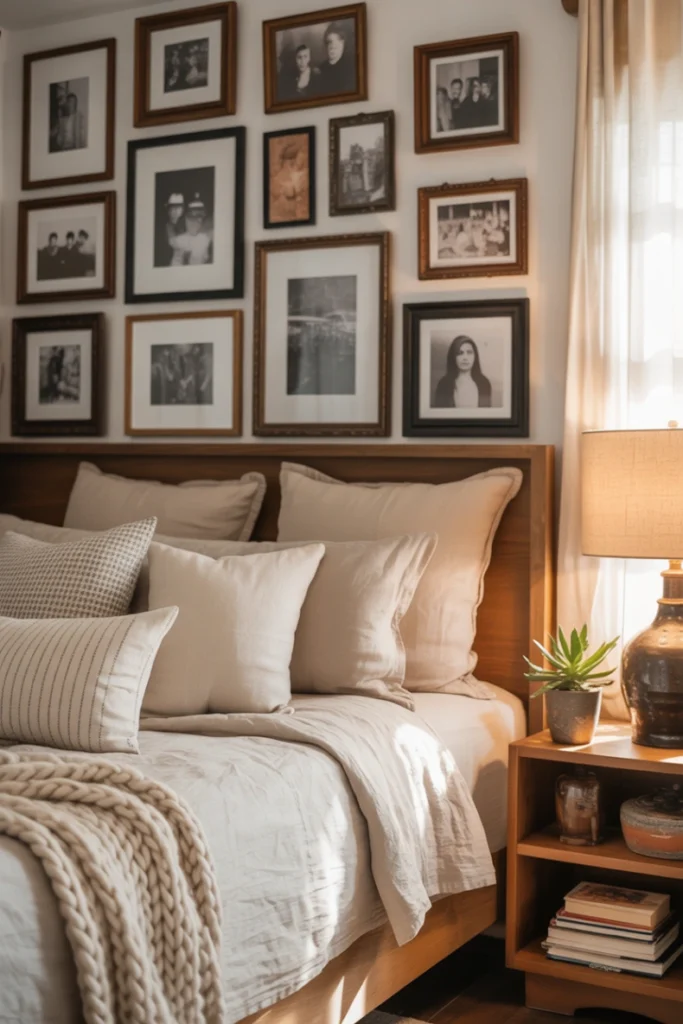
The dreamiest bedroom of all is the one that could only belong to you. Personal details, travel photos, handmade art, heirloom furniture, a bookshelf that maps your reading life, turn a styled room into a home. This is less a style than a finishing layer that makes any of the looks above feel authentic.
How to build it: Choose three to five meaningful items to display with intention: framed travel prints, a handmade quilt, a vintage camera collection, or letters and postcards in matching frames. Build a small gallery wall with consistent framing so personal pieces look curated rather than scattered. Weave in one custom touch: monogrammed pillowcases, a blanket embroidered with a significant date, or a headboard made from a meaningful material like wood from a family home. Blend these pieces into your base style, and keep the color palette of personal items loosely coordinated with the room so everything feels unified.
Good to know: Sentimental does not mean cluttered. Rotate displays seasonally: keep your five favorite pieces out and store the rest, swapping them every few months. If you are starting from a blank slate, our guide to bedroom design ideas walks through the fundamentals of layout, color, and furniture before you add the personal layer, and aesthetic Halloween bedroom decor shows how personal styling can transform a room for a season without a full redesign.
Final Words
A dreamy bedroom is not about following trends or copying a showroom. It is about building a space that restores you: the colors that calm your mind, the textures you want to touch, the light that makes you linger a little longer in the morning. From the quiet of soft neutrals to the drama of a bold accent wall, every choice in this guide is a small step toward a room that feels unmistakably yours.
Start with the one idea that made you pause while reading, gather its key pieces over a few weekends, and let the room evolve. The best bedrooms are never finished in a day. They grow with the people who sleep in them, and that slow layering is exactly what makes them dreamy.
Frequently Asked Questions
What colors make a bedroom feel calm and dreamy?
Soft, muted tones work best: warm whites, ivory, pale gray, greige, sage green, and dusty blue all lower visual stimulation and make a room feel restful. If you love color, use deeper shades like navy or forest green on a single accent wall and keep bedding light. Avoid high-contrast combinations and very bright primary colors, which keep the eye alert instead of relaxed.
How can I make my bedroom look luxurious on a budget?
Focus on the bed, since it dominates the room. White or ivory bedding in a crisp cotton, layered with a throw and extra pillows, instantly looks more expensive. Add matching lamps on both nightstands for symmetry, hang curtains high and wide so windows look larger, and clear every surface of clutter. A $30 can of paint on one accent wall and a thrifted mirror with a good frame can transform the room for very little money.
What is the best lighting for a cozy bedroom?
Layer three types: ambient light from a ceiling fixture or pendant on a dimmer, task light from bedside lamps or wall sconces for reading, and accent light such as fairy lights, candles, or an LED strip behind the headboard. Use warm bulbs at 2700K throughout, since cool white light feels clinical. Dimmers are the single best upgrade, because they let one room shift from bright and functional to soft and romantic.
How do I choose a bedroom style for a small room?
Pick a style built on light colors and simple furniture: Scandinavian, soft neutrals, minimalism, or coastal all make small rooms feel bigger. Keep furniture low and leggy so more floor shows, use mirrors to double the light, and limit the palette to three tones. Avoid heavy dark furniture and oversized patterns, which close a small room in. For a full room-by-room plan, see our small bedroom ideas guide.
How often should I update my bedroom decor?
A full style change every few years is plenty, but small seasonal refreshes keep the room feeling alive. Swap throw pillows and blankets with the seasons, change artwork or photos once or twice a year, and update bedding when it wears out. Repainting one accent wall or changing curtains are bigger refreshes worth doing every two to three years, or whenever the room starts feeling tired instead of restful.
More Ideas You Will Love
 18 Vintage Nursery Ideas for a Charming, Timeless Baby Room
 15 Smart Small Bedroom Layout Ideas for Every Space & Style
 20 Creative Attic Bedroom Ideas to Transform Your Space with Style & Functionality
 25 Guest Bedroom Ideas Perfect for Every Style & Budget
 19 Cozy Apartment Makeover Ideas for Small, Dreamy Retreats
 12 Cozy Bedroom Ideas for Women – Soft, Stylish & Soothing