
20 Dark Hallway Ideas to Brighten and Modernize Your Space

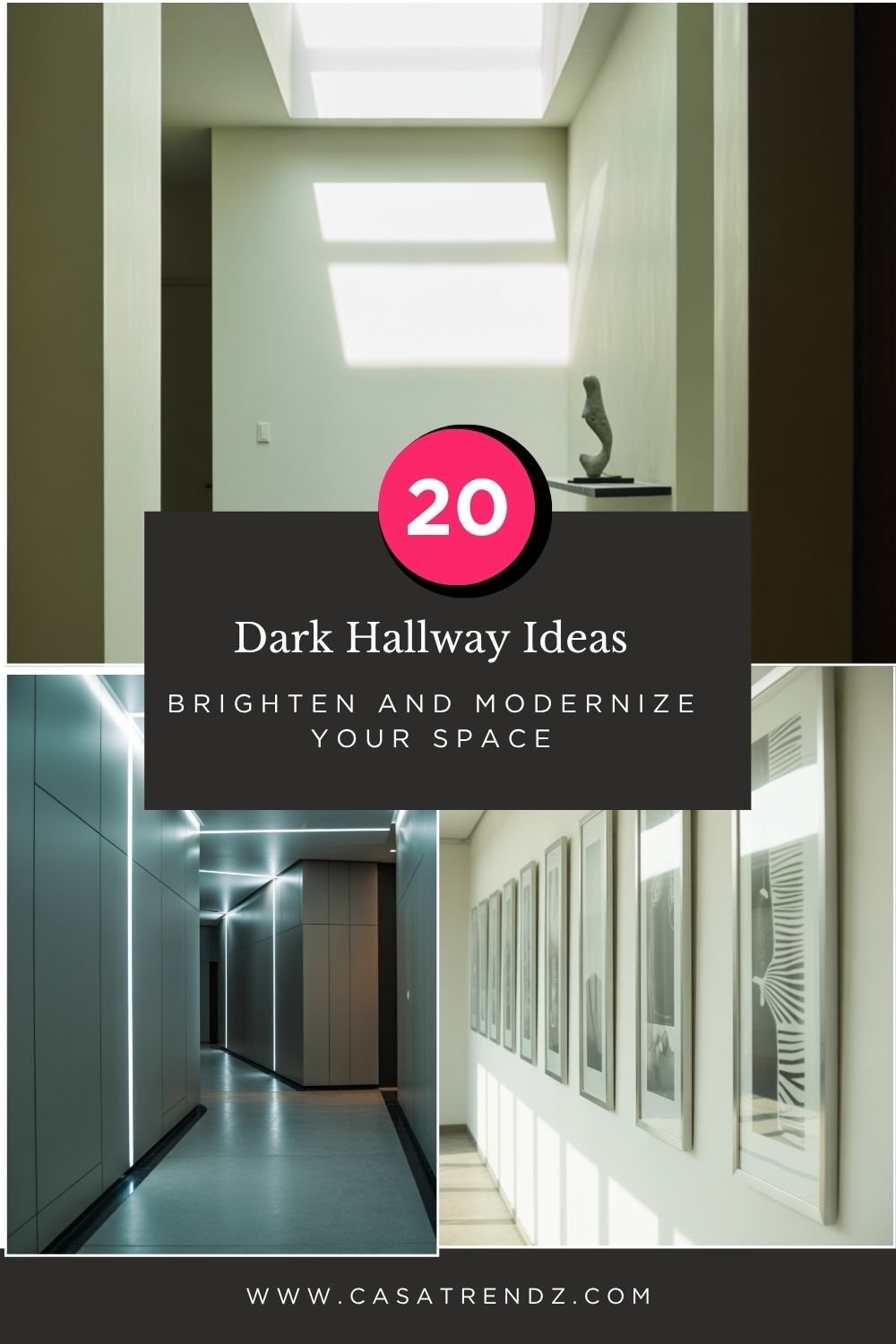
A dark hallway is one of the most common trouble spots in a home. It usually has no windows, little natural light, and walls that seem to close in from both sides. The good news is that you do not need to knock down walls or rebuild the space to fix it. With the right mix of lighting, color, reflection, and slim furniture, even a narrow, windowless corridor can feel bright, open, and genuinely welcoming.
The trick is to layer your changes instead of relying on one fix. A single ceiling light leaves shadows at the ends of the hall. Paint alone cannot help if the lighting is poor. When you combine a pale wall color with mirrors, layered lights at different heights, and a light floor or runner, each change makes the next one work harder. The 20 ideas below follow that approach, starting with the highest impact fixes and ending with the finishing touches that make a hallway feel styled rather than just passable.
Work through them in order, or pick the three or four that fit your hallway best. Measure your space first, note where the darkest patches fall at night, and keep walkways clear: a hallway should always leave at least 36 inches of clear walking width, even after furniture and decor are added.
1. Add Wall Sconces for Vertical Lighting
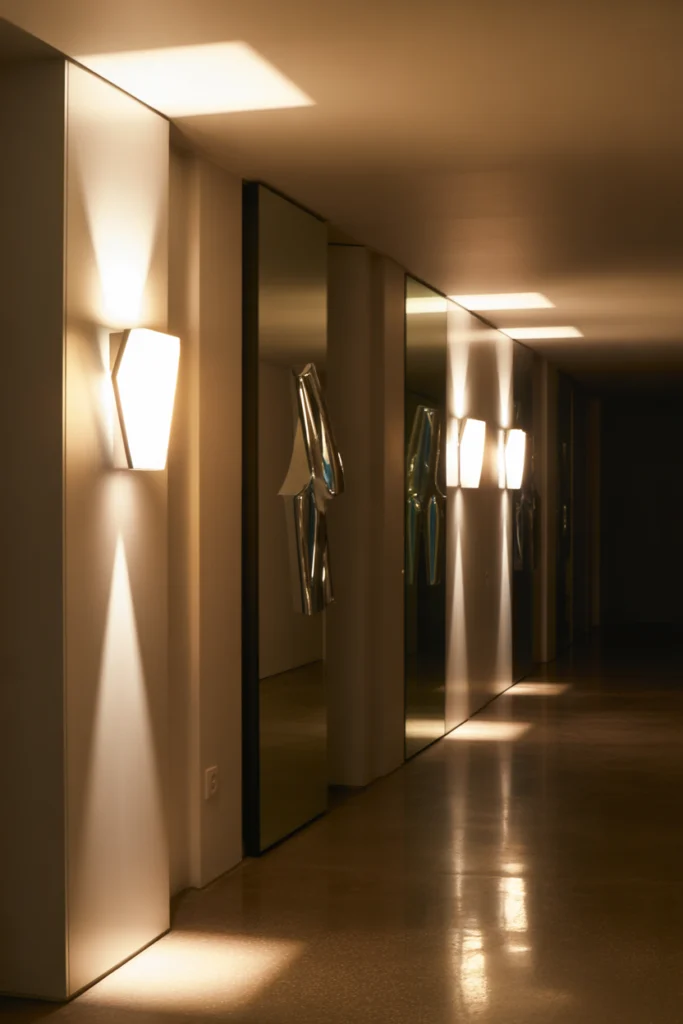
Wall sconces are one of the fastest ways to brighten a dark hallway because they put light exactly where you need it, at eye level, along the whole length of the corridor. Unlike a single ceiling fixture, which throws light straight down and leaves the walls in shadow, sconces wash the walls with light and make the whole passage feel wider. Choose slim, low profile fixtures that project no more than 4 inches from the wall so they never snag shoulders or bags in a narrow hall.
Spacing matters more than brightness. In a hallway up to 12 feet long, two sconces, one near each end, are usually enough. For a longer run, space them 6 to 8 feet apart and stagger the height slightly if the ceiling slopes. Mount them 60 to 66 inches from the floor to the center of the fixture, which is standard eye level and keeps glare out of your sightline. Use warm white bulbs at 2700K to 3000K for a cozy feel, or 3500K if you want a crisper, more modern look.
For the best result, put the sconces on a dimmer switch. Full brightness works when you are cleaning or carrying things in, while a lower setting in the evening makes the hallway feel calm rather than clinical. Pair sconces with pale wall paint or a light wallpaper, as the lit wall becomes a reflector that bounces light back into the room. If wiring new sconces is not practical, battery powered LED sconces with a remote control give a very similar effect with no electrician needed, and many now run for months on one set of batteries.
2. Install a Runner Rug to Reflect Light
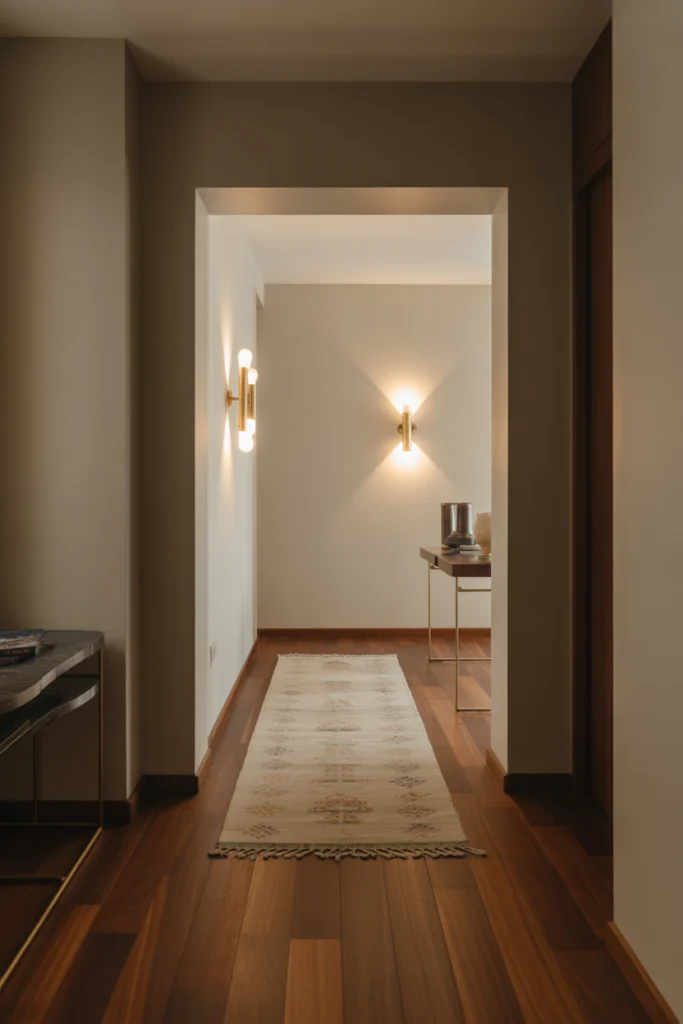
A runner rug does two jobs at once in a dark hallway: it adds a band of light color at floor level, and it draws the eye forward, which makes the corridor feel longer and more intentional. Choose a runner in a pale neutral, soft pattern, or a light tone with a subtle sheen, such as a flatweave wool blend or a cotton rug with a faint metallic thread. Avoid very dark or heavily patterned rugs, which absorb light and visually shorten the space.
Size the runner correctly. Leave 4 to 6 inches of bare floor visible on each side so the rug reads as a deliberate layer rather than wall to wall carpet. For a standard 36 to 42 inch wide hallway, a runner 24 to 30 inches wide works well. The length should cover the main walking path but stop 6 to 12 inches short of doorways so doors swing freely and the rug does not bunch. Use a thin, non slip rug pad underneath: it keeps the runner flat, protects the floor, and adds a little cushioning underfoot.
Maintenance is simple and worth doing. Vacuum a hallway runner twice a week, since it collects more dust and grit than any other rug in the house, and shake it out or wash it monthly if the care label allows. If you have pets, choose a low pile rug that hides hair and is easy to spot clean. A washable runner is a smart choice for a busy family hallway, and you can swap it seasonally, a lighter linen look in summer and a warmer textured weave in winter, without changing anything else in the space.
3. Use Mirrors Strategically
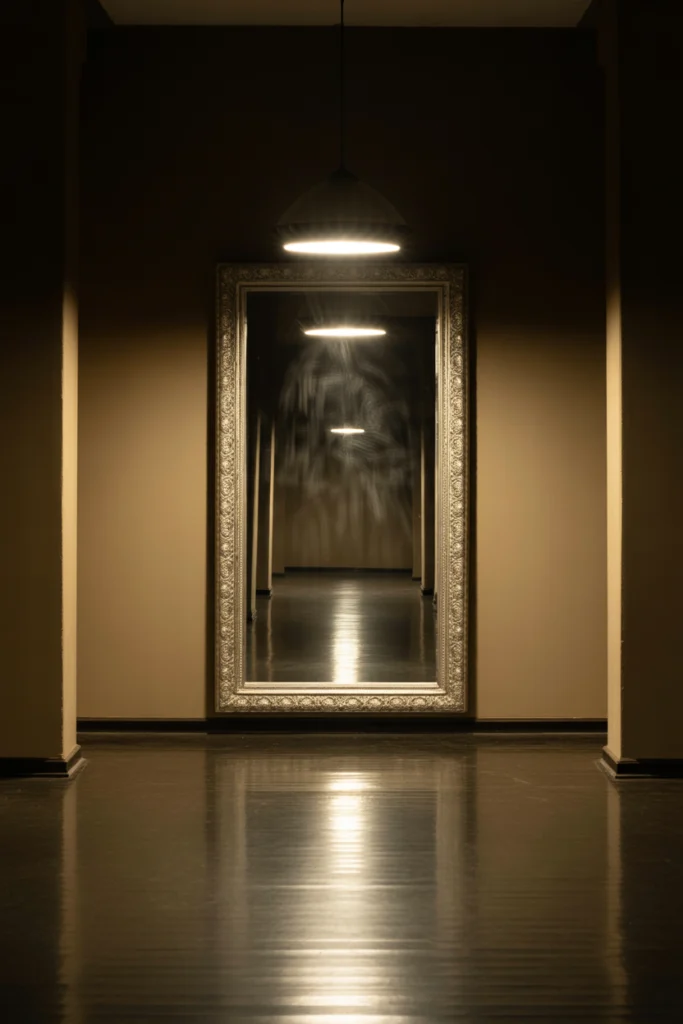
Mirrors are the single most effective tool for doubling the sense of space in a dark hallway. A large mirror reflects whatever light exists, whether it comes from a sconce, a doorway, or the room at the end of the hall, and sends it back into the corridor. Hang one generous mirror rather than several small ones: a mirror 24 to 36 inches wide and 36 to 48 inches tall makes a real visual difference, while tiny decorative mirrors mostly add clutter.
Placement is the key. Hang the mirror opposite a light source, a doorway, or a sconce, so it has something bright to reflect. In a long hallway, place a large mirror at the far end to create the illusion that the corridor continues, or hang two matching mirrors on opposite walls to bounce light back and forth. Keep the center of the mirror at about 57 to 60 inches from the floor, which is standard gallery height and suits most adults. Lean a tall, floor length mirror against the wall at the end of the hall if you cannot hang one, but secure it to the wall with a safety strap in a home with children.
Frame choice changes the mood. A slim black or brass frame suits a modern hallway, a natural wood frame warms up a farmhouse style hall, and a frameless beveled mirror disappears into a minimalist space. Clean the glass weekly, because dust and fingerprints dull the reflection and undo the brightening effect. If your hallway is very narrow, a mirrored panel or a set of mirror tiles on one wall can work, but keep the opposite wall simple so the space does not feel like a funhouse.
4. Brighten with Light Wall Paint
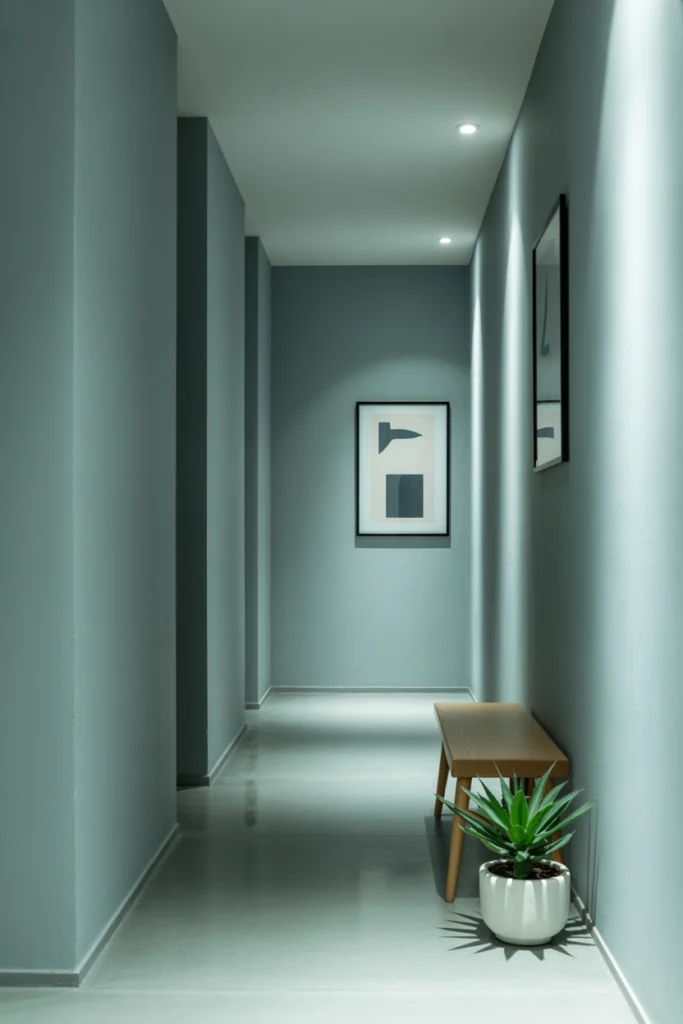
Paint is the cheapest transformation a dark hallway can get, and it is often the one that makes every other idea work better. Light neutrals such as warm white, cream, soft greige, pale sage, or light warm gray reflect far more light than dark or saturated colors. In a windowless hall, choose a paint with a Light Reflectance Value (LRV) above 70, which you will find printed on most paint swatches, to get the maximum bounce from your existing lights.
Finish matters almost as much as color. A satin or eggshell finish reflects more light than flat matte paint and is much easier to wipe clean, which matters in a hallway that gets brushed by hands, bags, and pets every day. Semi gloss works well on trim and doors, where its sheen catches light and defines the edges of the space. If you want a little more character, paint the walls a pale neutral and the trim a crisp white one or two shades lighter: the contrast sharpens the architecture and makes the hallway feel taller.
Before you commit, test properly. Paint two large swatches, at least 12 by 12 inches, on opposite walls, and look at them in the morning, at midday, and at night under your actual hallway lights. Colors shift dramatically in artificial light, and a cream that looks fresh in the store can turn yellow under warm bulbs. Paint the ceiling the same pale color, or a shade lighter, to avoid a dark lid effect, and carry the same color into the adjoining rooms if you can, so the hallway feels connected rather than cut off. For more inspiration on tying a hallway into the rest of your home, see these hallway decor ideas that show how color and decor work together.
5. Add Glass or Acrylic Console Tables
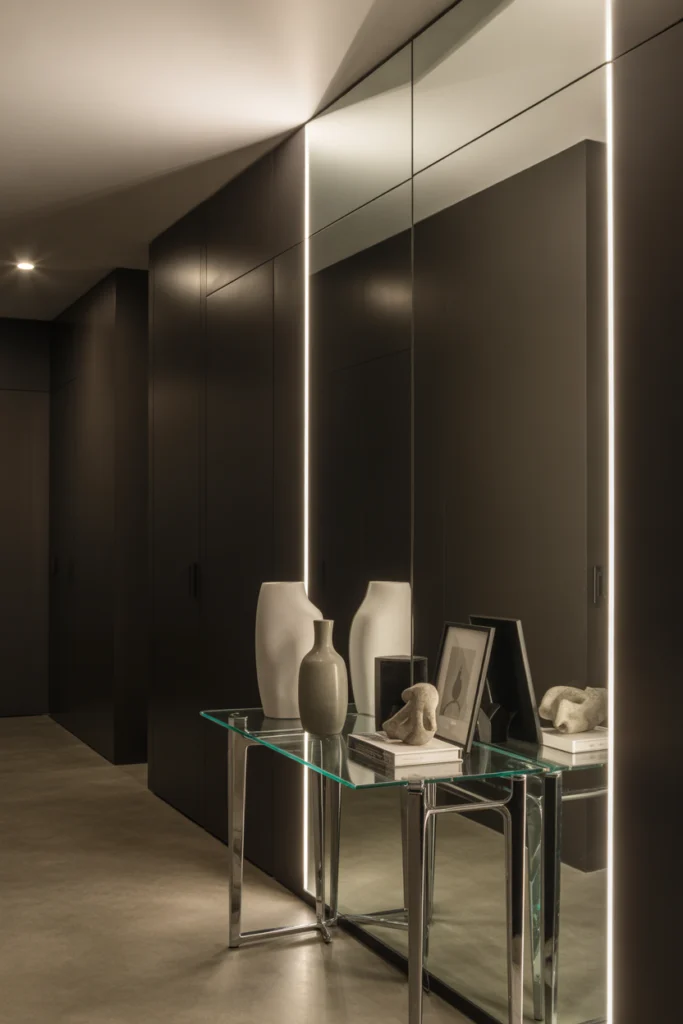
A console table gives a hallway a place for keys, mail, and a small lamp, but a solid wood table in a dark corridor can feel like a roadblock. Glass or acrylic tables solve that problem: you can see through them, so light keeps moving and the floor stays visible, which makes the hallway feel wider than it is. Choose a table 10 to 12 inches deep, which is slim enough for a narrow hall, and 30 to 36 inches high, which matches standard console height.
Style the surface lightly. A small tray for keys, one vase with a few stems, and a candle or a small sculpture are plenty. Anything more starts to block the see through effect and collect dust. Acrylic is lighter and safer than glass if you have small children, and it will not shatter if bumped, but it scratches more easily, so use felt pads under objects. Tempered glass is heavier and more scratch resistant, and a beveled edge catches light nicely along the tabletop.
Anchor the table so it does not wobble when someone brushes past it. Wall mount brackets or anti slip pads under the feet help, and a small rug or runner underneath grounds the piece visually. If your hallway is wider than 48 inches, you can pair the glass console with a slim bench or a pair of stools tucked underneath, but in a standard narrow hall, keep the floor beneath the table clear so the eye travels straight through.
6. Incorporate Recessed Ceiling Lights
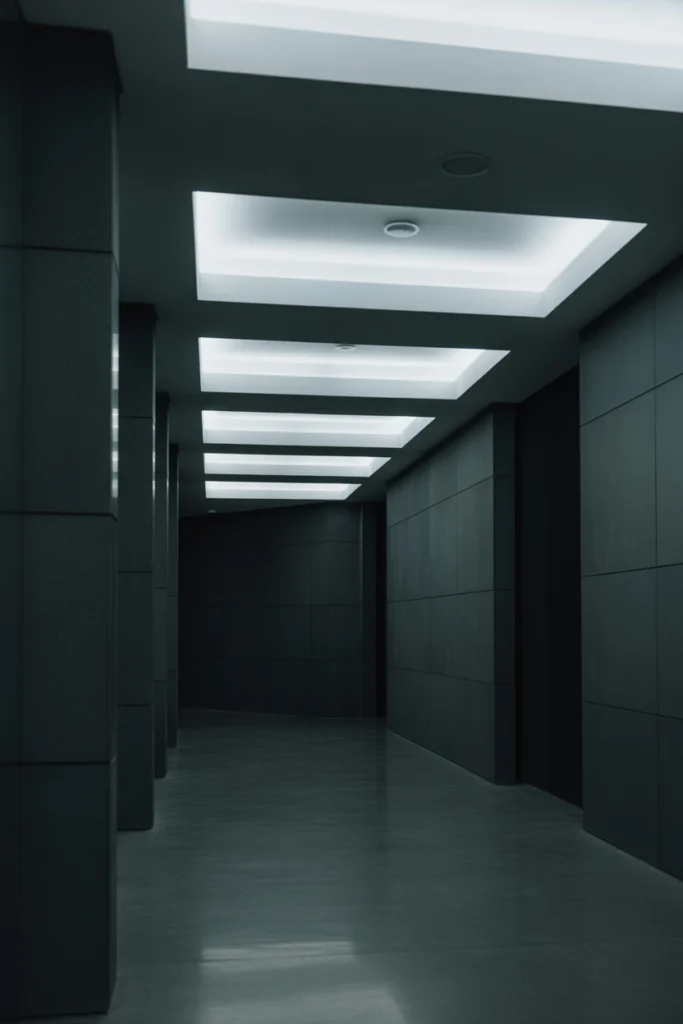
Recessed ceiling lights, often called can lights, give a dark hallway even, shadow free illumination without hanging fixtures that lower the ceiling visually. They sit flush with the ceiling, so the corridor keeps its full height, and they spread light evenly along the whole run. For a hallway, 4 inch recessed lights are usually the right size: large enough to light well, small enough not to dominate a narrow ceiling.
Spacing and placement make the difference between a well lit hall and a runway of bright spots. Space the lights 4 to 5 feet apart in a straight line down the center of the hallway, and keep them at least 18 inches from the walls so you do not create harsh scallops of light. In a hallway wider than 5 feet, two staggered rows work better than one center line. Choose LED retrofit modules with a color temperature of 3000K for a warm, residential feel, and a beam angle of about 60 degrees for even coverage.
Put the recessed lights on a dimmer, and consider a smart dimmer you can control from your phone or set on a schedule, so the hallway is bright when you come home and soft at night. If your ceiling is concrete or you cannot cut into it, surface mounted slim LED panels that look almost flush give a very similar effect with far less work. Either way, recessed style lighting pairs beautifully with wall sconces: the ceiling lights handle general brightness, while the sconces add warmth and visual interest at eye level.
7. Use Reflective Wall Panels
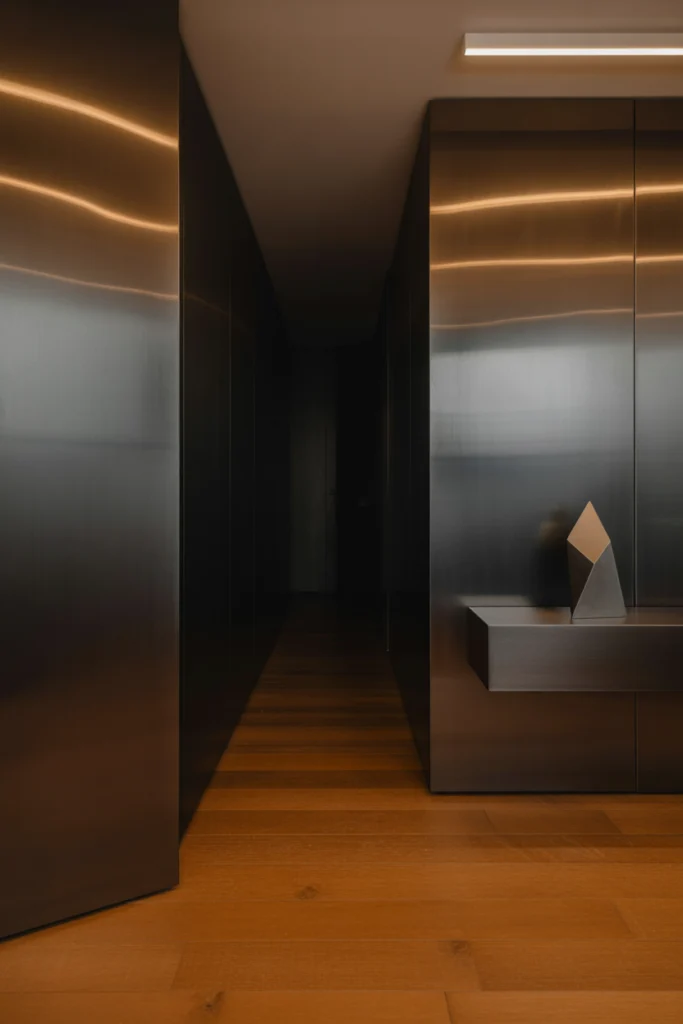
Reflective wall panels are a bolder way to bounce light around a dark hallway. High gloss laminate panels, lacquered wood panels, metallic tiles, or fluted panels with a glossy finish all reflect light in a way that flat paint cannot. Used on one feature wall, they turn that wall into a giant, soft reflector. Used on both walls, they can feel overwhelming, so start with one wall, ideally the longest one or the wall opposite your main light source.
Installation is more approachable than it sounds. Many reflective panels now come as peel and stick tiles or lightweight PVC panels that you can cut with a utility knife and fix with construction adhesive. A 24 by 48 inch panel is a manageable size for a DIY project, and a full accent wall in a 10 foot hallway typically needs 8 to 10 panels. Keep the rest of the hallway calm: pale flooring, simple trim, and minimal decor, so the reflective wall reads as a design feature rather than visual noise.
Think about cleaning before you commit. Glossy panels show fingerprints and dust more than matte walls, so a quick weekly wipe with a microfiber cloth keeps them looking bright. In a home with pets or small children, choose panels for the upper half of the wall, above 36 inches, where little hands and paws are less likely to smudge them, and use a durable wainscot or washable paint below. The result is a hallway that feels polished and modern, with light moving in ways paint alone cannot achieve.
8. Introduce Vertical Art Pieces
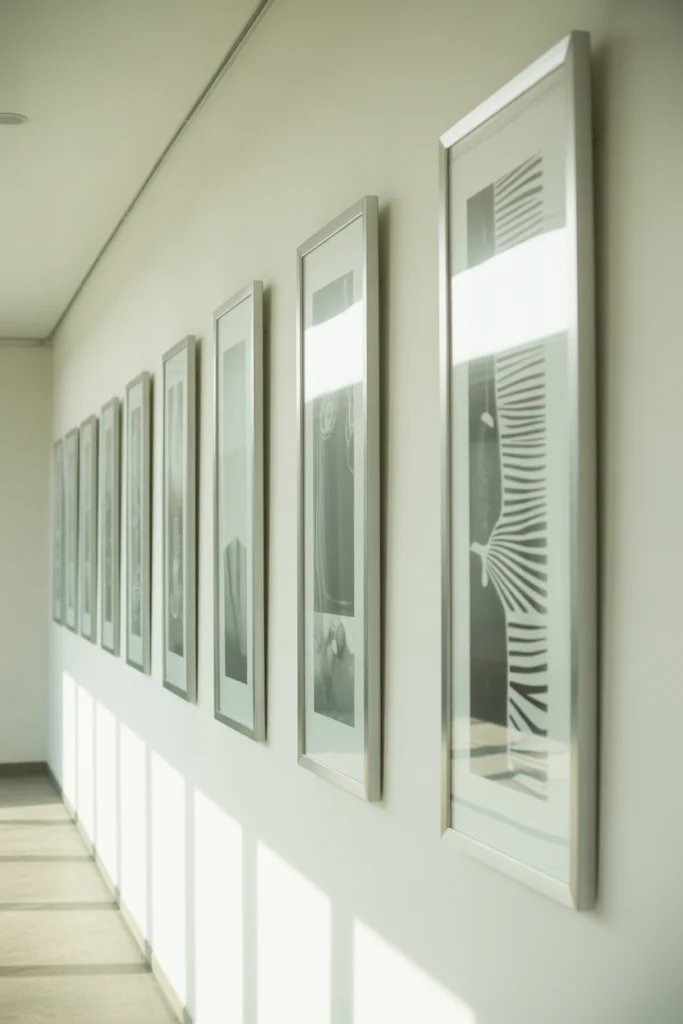
Vertical artwork is a simple visual trick for a dark hallway: tall, narrow pieces draw the eye upward, which makes low ceilings feel higher and short corridors feel more gracious. Choose art with light backgrounds or bright accents, such as botanical prints, abstract pieces in pale tones, or landscape photographs with open sky, rather than dark, moody pieces that absorb light and reinforce the gloom.
Hang art in a consistent rhythm. In a long hallway, a series of three to five matching frames, spaced 6 to 8 inches apart and hung with their centers at 57 to 60 inches from the floor, creates a gallery effect that pulls you forward. Vary the sizes slightly for interest, but keep the frames consistent in color and style, or the wall will feel busy. If your hallway is short, one tall piece, 24 by 36 inches or larger, at the far end makes a strong focal point and gives the eye somewhere to land.
Lighting the art multiplies the effect. A small picture light mounted above each frame, or a sconce placed between two pieces, turns the artwork into a light feature in its own right. Battery powered picture lights are inexpensive and easy to fit, and they wash the art with a warm glow that brightens the surrounding wall too. Avoid hanging art in direct line with a door that swings open, and use proper wall anchors so heavier frames stay secure in plaster or drywall.
9. Layer Lighting with Table Lamps
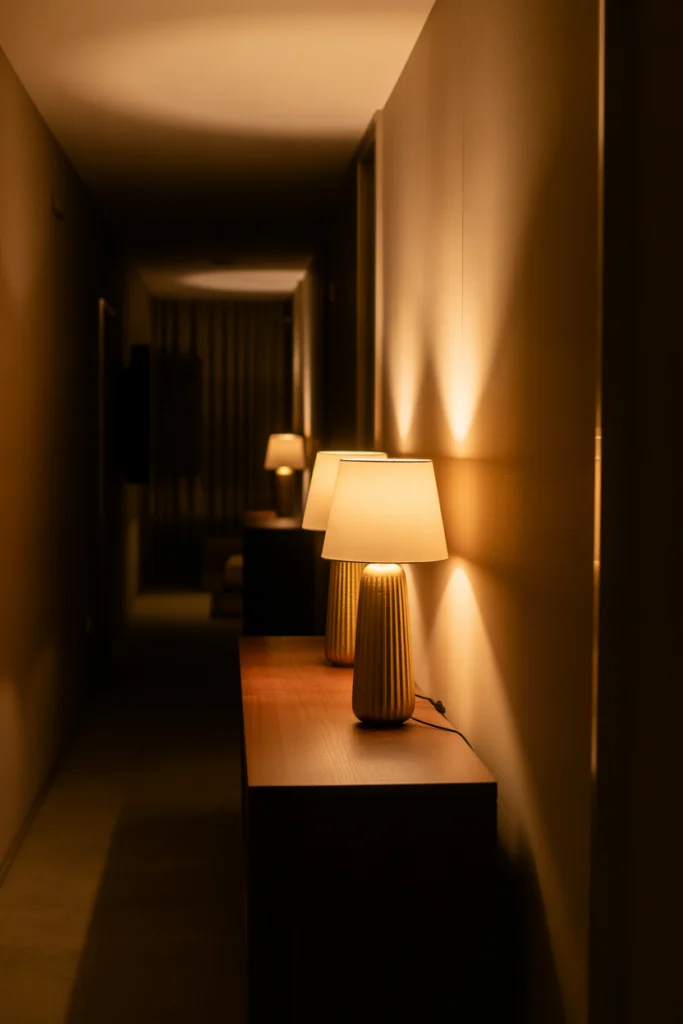
Table lamps are often overlooked in hallways because the space feels too narrow for them, but a small lamp on a console table adds a pool of warm light at exactly the height where a hallway feels darkest: waist to shoulder level. That middle layer of light is what makes a corridor feel inviting rather than institutional. Overhead lights alone create a top down, tunnel effect, while a lamp softens shadows and adds a residential, lived in glow.
Choose lamps scaled to the table. A lamp 12 to 18 inches tall with a slim base works on a standard console, and a light colored or linen shade diffuses the light gently instead of throwing a harsh spot. Use a warm white bulb at 2700K, and if the lamp will be on in the evening, a smart bulb lets you dim it or set it on a timer without adding another switch. One lamp is enough for a short hallway; in a longer hall, two matching lamps, one at each end, create symmetry and balance.
Safety and practicality matter in a walkway. Keep cords tucked behind the table and secured with cord clips so nobody trips, and choose a lamp with a stable, weighted base that will not topple if bumped. If your console is very slim, a wall mounted plug in lamp or a clip on shelf lamp gives the same warm pool of light without taking up table space. Layered this way, with ceiling lights for general brightness, sconces for wall wash, and a table lamp for warmth, a dark hallway starts to feel like a room rather than a passage.
10. Install Skylights or Light Tubes
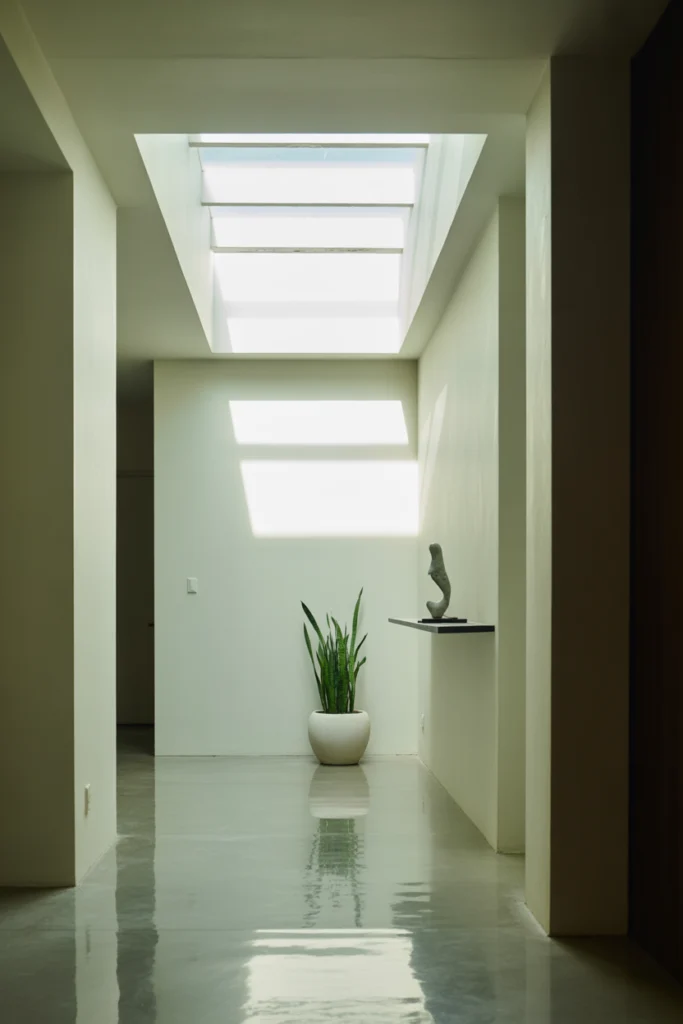
Nothing brightens a dark hallway as completely as real daylight, and skylights or tubular daylight devices, often called sun tunnels, bring it in even when the hallway has no exterior wall. A traditional skylight, typically 22 by 46 inches or larger, floods the space with daylight and, on a clear day, can make a windowless hall feel like it has a window. A sun tunnel is a smaller, more affordable alternative: a dome on the roof captures sunlight and channels it down a reflective tube, usually 10 to 14 inches in diameter, to a diffuser in the hallway ceiling.
Sun tunnels work best when the distance from roof to ceiling is under 15 feet and relatively straight, though flexible tubes can handle gentle bends. Installation typically takes a few hours for a professional roofer, and the cost is usually a fraction of a full skylight, with no structural changes to roof framing in most cases. Place the diffuser in the darkest section of the hallway, or center it in a long hall, and choose a diffuser with a frosted finish so the light spreads softly rather than creating a bright spot.
There are a few practical points to check first. Confirm that your roof structure and local building rules allow the opening, and hire a roofer rather than attempting the roof penetration yourself, since a poorly sealed skylight or tunnel will leak. Add a solar powered venting skylight if you also want airflow, and consider a blind or shade for the skylight if the hallway gets strong afternoon sun. Once installed, pair the daylight with pale walls and a mirror, and the hallway will stay bright all day with no electricity used at all.
11. Add Patterned Wallpaper
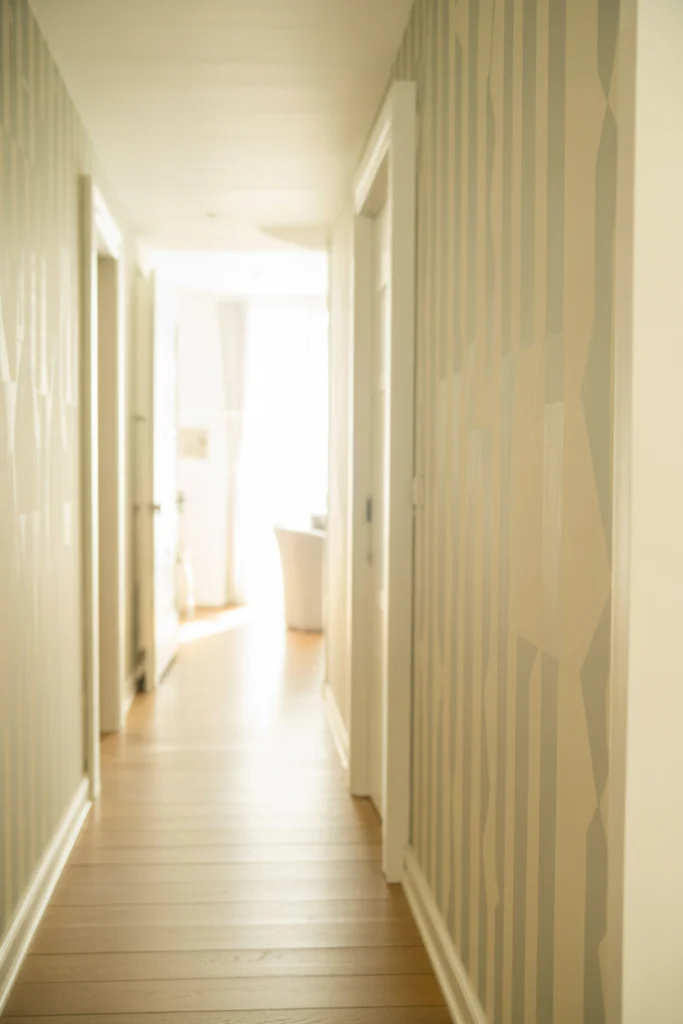
Patterned wallpaper can rescue a dark hallway from feeling flat and monotonous, as long as you choose the right pattern. Light backgrounds with subtle metallic, pale geometric, or soft botanical motifs reflect light and add texture, while dark, large scale patterns do the opposite and close the space in. Look for wallpapers with a light base, cream, pale gray, soft blush, or light sage, and a pattern that repeats every 12 to 20 inches, which reads as texture from a distance rather than a busy print.
Application is straightforward in a hallway because the walls are usually straight and uninterrupted. Peel and stick wallpaper is a renter friendly option and a forgiving first project: you can reposition a panel if it goes up crooked, and remove it later without damage. Measure the wall height, add 2 inches top and bottom for trimming, and cut panels to length before you start. Work from a plumb line marked with a level, not from the corner, since hallway corners are rarely perfectly square.
If full wallpaper feels like too much, use it on one wall only, such as the wall at the end of the hallway, which becomes a focal point, and paint the other walls in a matching pale tone pulled from the wallpaper background. That single patterned wall adds personality without darkening the corridor. Keep the flooring and furniture simple in a wallpapered hall, and avoid hanging busy art on the patterned wall, since pattern plus art plus decor quickly becomes clutter.
12. Use Floating Shelves with Accent Lighting
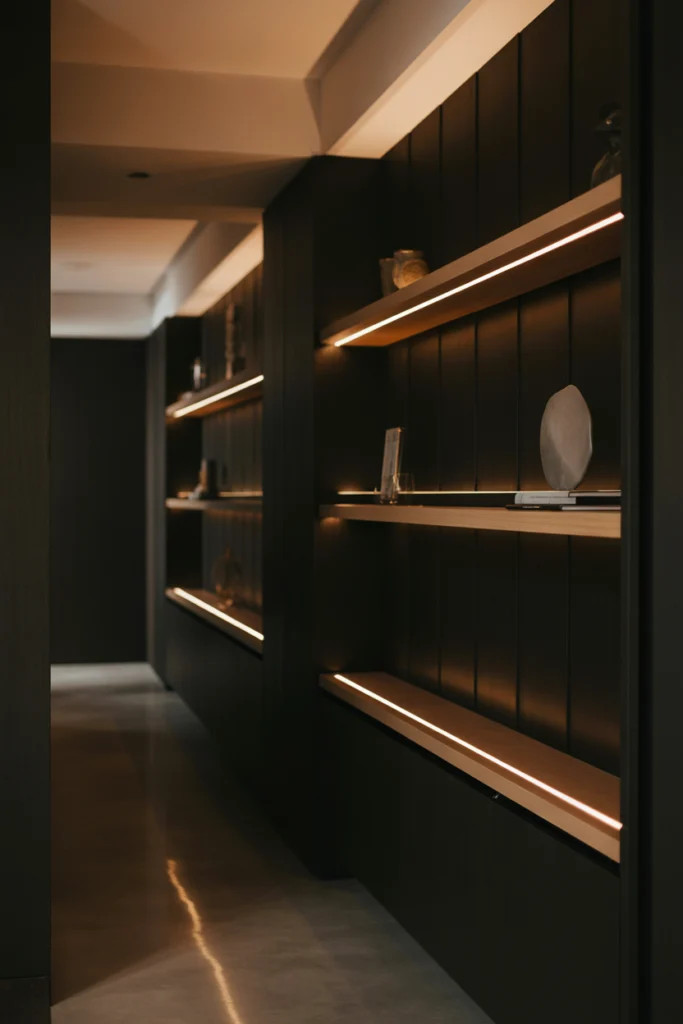
Floating shelves give a dark hallway display and storage space without the bulk of a cabinet, and when you add LED strip lighting underneath, they become a light feature as well. The shelf itself, usually 24 to 36 inches long and 8 to 10 inches deep, holds a few books, a small plant, or a framed photo, while the LED strip underneath washes the wall below with a soft glow that makes the whole section feel brighter.
Install shelves at a height that is useful but out of the walking path: 60 to 66 inches from the floor works well in most hallways, and keeps displayed items above shoulder height so nobody bumps them. Use proper wall anchors rated for the shelf plus its contents, especially in drywall, and keep the load light, a few books and small decor items rather than heavy pottery. For the lighting, choose a warm white LED strip at 2700K to 3000K, and hide the strip in a small aluminum channel with a diffuser so you see the glow, not the individual diodes.
Power the strips neatly. A plug in driver tucked behind a nearby console, or a rechargeable LED strip with a remote, avoids trailing wires down the wall. Connect the shelf lights to the same dimmer or smart plug as your sconces if you can, so the whole hallway dims together in the evening. Style the shelves sparingly: two or three items per shelf, with some empty space between them, keeps the look airy. A trailing plant on the top shelf softens the edges and adds a touch of green that reads beautifully against a lit wall.
13. Incorporate Glass Doors
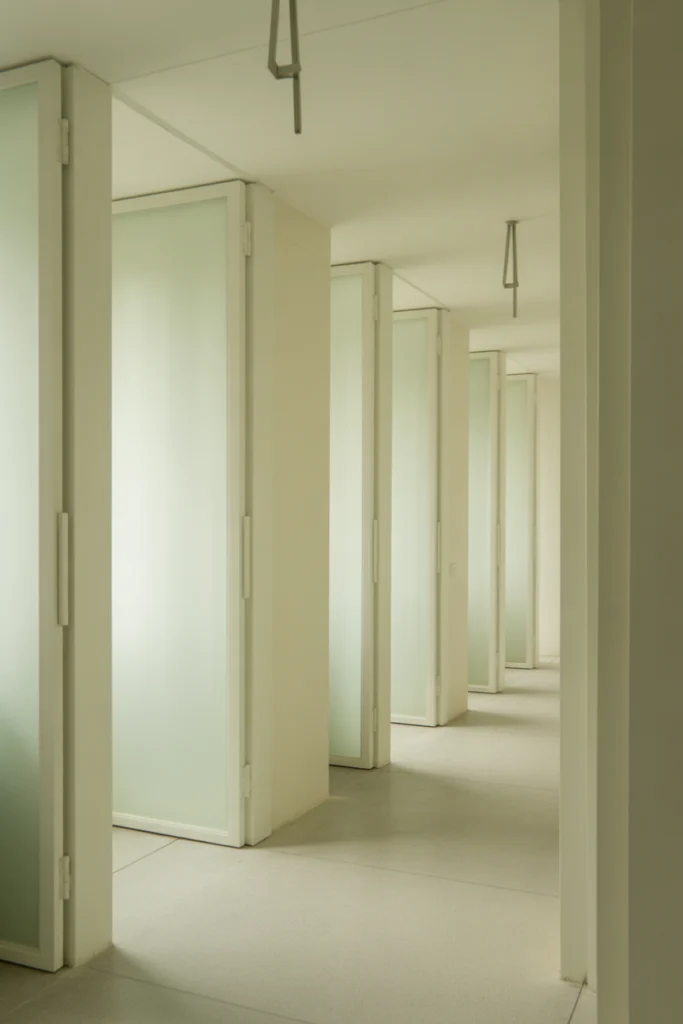
Interior glass doors are one of the most effective structural fixes for a dark hallway, because they let light flow from bright rooms into the corridor while still giving you a door you can close. A hallway that opens onto a sunny living room or kitchen stays dark if that doorway has a solid door, but a glass door, even a frosted one, passes a surprising amount of light through. Frosted or reeded glass gives privacy while still glowing softly, while clear glass works best between a hallway and a living space where privacy is less important.
Choose the door style to match your home. A single glass panel door with a slim frame suits a modern hallway, while a French style door with multiple panes suits a traditional home and adds architectural charm. Standard interior door sizes are 30, 32, or 36 inches wide by 80 inches tall, and many glass doors are available in those sizes as pre hung units, which makes replacement much simpler than building a custom door. Keep the frame and trim in a light color so the doorway itself does not become a dark frame around the light.
If replacing a door is not in your budget, a simpler version of the same idea works: remove an unused interior door entirely and finish the opening with light colored trim, or replace just the upper panel of a solid door with a glass insert. Even a transom window above an existing door, a small horizontal window that sits above the door frame, lets a band of light into the hallway. Any opening that connects the hallway to a brighter room will help, and glass keeps that connection even when the door is closed. If you are also rethinking the entrance area, these entrance hall decor ideas show how glass, light colors, and slim furniture work together at the front of the home.
14. Use Light-Colored Flooring
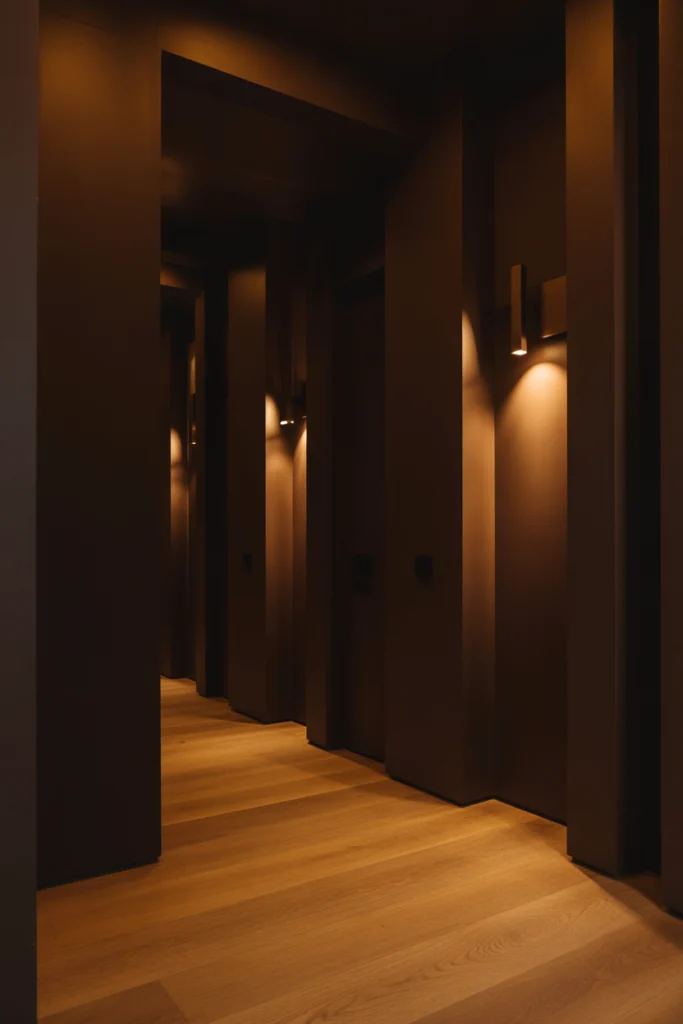
Flooring covers the largest surface in a hallway after the walls, so its color has an outsized effect on brightness. Light hardwood, pale oak, light laminate, pale tiles, or a light luxury vinyl plank all reflect more light than dark wood or dark carpet, and they make the floor plane feel wider. In a narrow hallway, lay planks or tiles lengthwise, running along the corridor, which draws the eye forward and makes the hall feel longer.
Material choice depends on traffic and budget. Light oak or maple hardwood looks warm and lasts for decades, but costs more and needs care in a wet climate. Light laminate and luxury vinyl plank are budget friendly, water resistant, and easy to clean, which matters in a hallway that sees muddy shoes and pet paws. Pale porcelain tiles are the most durable option and work well in a hallway that connects to an exterior door, though they feel colder underfoot, so pair them with a runner in the main walking path.
Finish the floor with light colored baseboards and a simple transition strip where the hallway meets other rooms. A dark baseboard creates a hard line that visually narrows the floor, while white or pale trim blends the floor into the walls and makes the whole space feel more open. If replacing the floor is not possible right now, a large light runner or a series of light, low pile rugs over a dark floor gives much of the same brightening effect for a fraction of the cost, and you can always upgrade the floor later.
15. Hang Reflective Decorative Objects
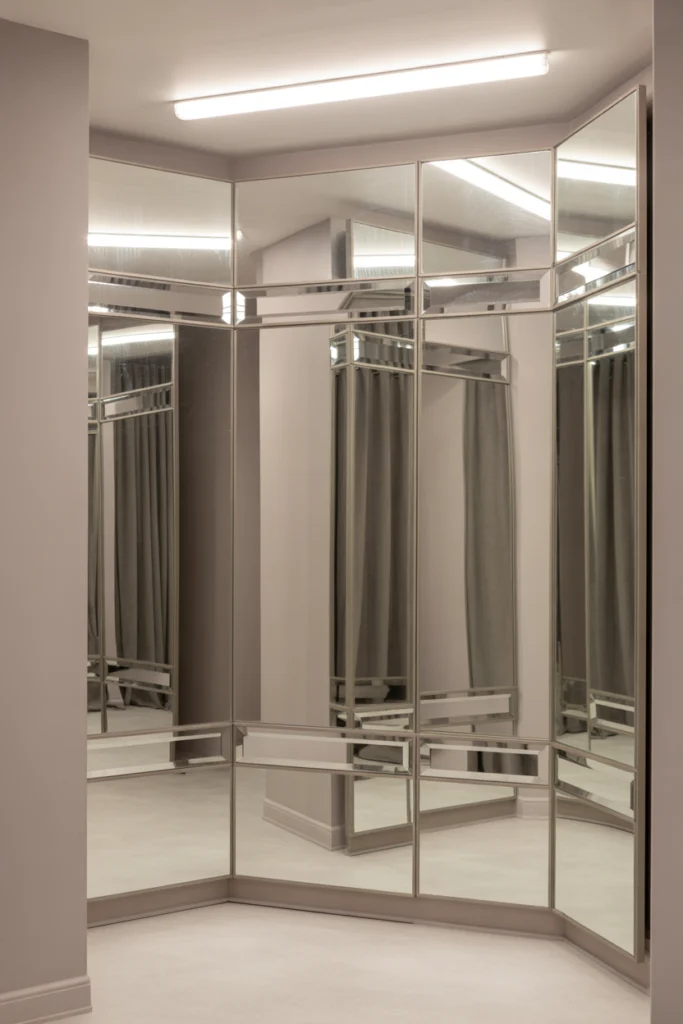
Reflective decor is a lighter touch version of mirrors and reflective panels: metallic frames, glossy ceramics, mirrored trays, brass candle holders, and glass vases all catch and scatter light in small, sparkling ways. Used sparingly, they add life to a dark hallway without the commitment of a full mirrored wall. The key is restraint: three or four reflective accents, well placed, brighten a hallway, while a dozen shiny objects turn it into a cluttered display.
Place reflective pieces where light will actually hit them. A brass frame next to a sconce, a mirrored tray on a console under a lamp, or a cluster of glass vases on a floating shelf with LED lighting underneath will all catch light and throw it back into the room. Mix metals carefully: one dominant metal, such as brass or chrome, plus one accent is enough. Too many mixed finishes in a small space feel chaotic, while a consistent finish feels intentional and calm.
Scale matters in a narrow space. Choose decor that is proportionate to the surface it sits on: a vase 8 to 12 inches tall on a console, a frame 11 by 14 inches or smaller on a shelf, and nothing that sticks out more than a few inches from the wall. Keep the background simple, pale walls and a clean surface, so the reflective pieces stand out as jewelry for the hallway rather than getting lost in a busy scene. Dust metallic and glass pieces weekly, since dull, dusty surfaces reflect very little light.
16. Install LED Strip Lighting
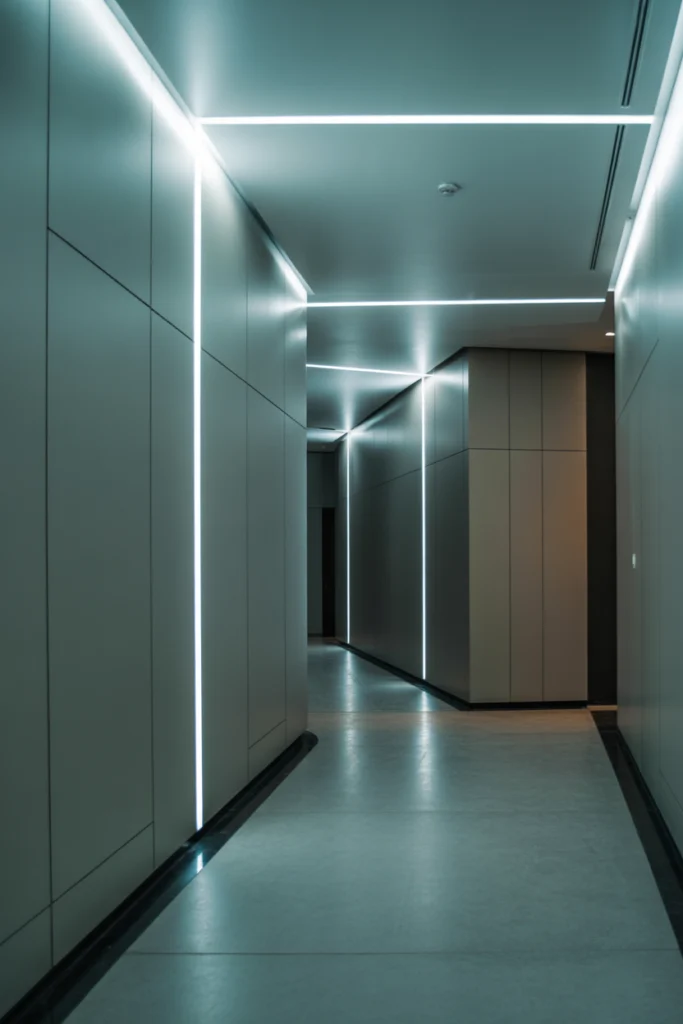
LED strip lighting is one of the most flexible tools for a dark hallway because it can go almost anywhere: along the top of baseboards, under a handrail, along the ceiling edge, under floating shelves, or inside a recessed cove. The strip itself is thin and nearly invisible when it is off, but when it is on, it creates a continuous line of light that guides the eye down the corridor and eliminates the dark patches between ceiling fixtures.
For hallway use, choose a strip with a color rendering index (CRI) above 90, which makes colors look natural rather than washed out, and a density of at least 60 LEDs per meter for an even glow without visible dots. Warm white at 2700K suits a cozy home, while 3000K to 3500K suits a modern, crisp look. Mount the strip in an aluminum channel with a frosted diffuser for a professional finish, and hide the power supply in a nearby cupboard, behind a console, or in the ceiling void if you have access.
Think about where the strip will have the most impact. A strip along the baseboard on one side creates a subtle, hotel corridor glow and doubles as a night light, which is genuinely useful for children or older family members walking to the bathroom at night. A strip along the ceiling edge washes the ceiling with light and makes it feel higher. A motion sensor switch is a smart addition: the hallway lights up automatically when someone enters and switches off after a minute or two, which saves energy and means you never walk into a dark corridor. For more ways to make a tight corridor feel larger, see these narrow hallway makeovers, which pair lighting tricks like this with layout and storage ideas.
17. Incorporate Built-in Storage with Lighting
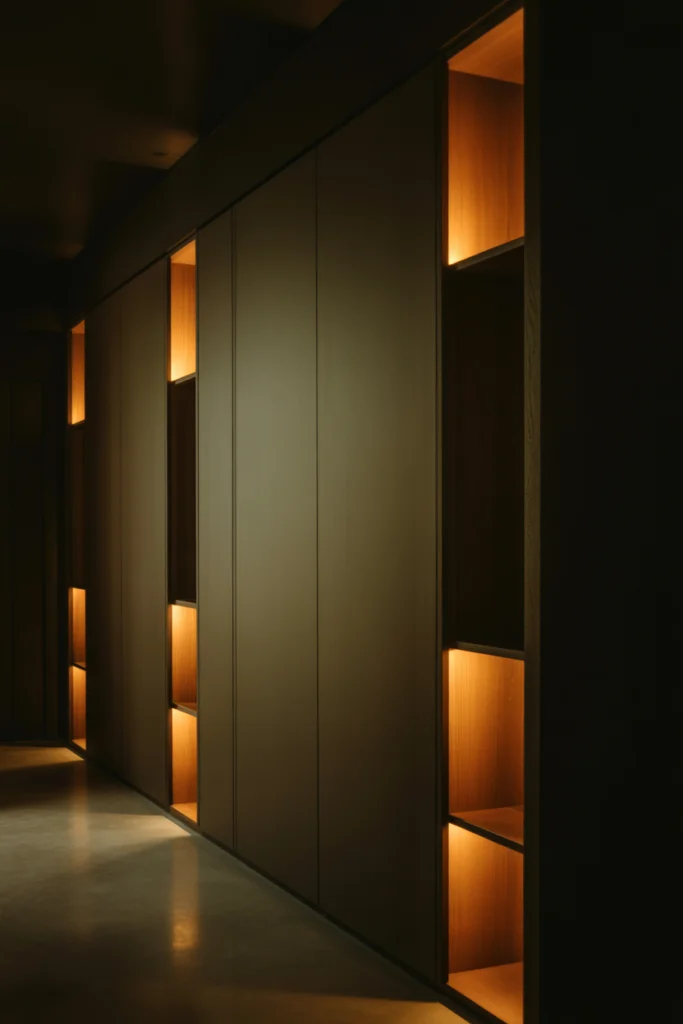
Built in storage solves two hallway problems at once: it hides clutter that makes a dark space feel cramped, and when you add integrated lighting, it becomes a light source itself. A shallow built in cabinet, 12 to 16 inches deep, fits most hallways without blocking the walkway, and it can hold shoes, coats, bags, and cleaning supplies that would otherwise pile up in the open and darken the space visually.
Design the storage around what you actually need to hide. A tall cabinet near the front door for coats and shoes, a shallow cupboard for cleaning supplies, and a few open niches with LED lighting for display keep the hallway functional without turning it into a wall of doors. Glass front doors or open shelving sections let light bounce inside the cabinet and out again, while solid doors in a pale color keep the look calm and uniform. Add LED strips inside each section, wired to a door switch or a motion sensor, so the light comes on when you open the cabinet and off when you close it.
If a full built in is beyond your budget, a modular version works well: two or three slim, wall mounted cabinets from a flat pack range, painted to match your trim, with battery powered LED puck lights inside, give a very similar effect. Keep the cabinet fronts flush and handle free, or use small recessed pulls, so the storage reads as part of the wall rather than as furniture. The result is a hallway that looks tidy, feels brighter, and actually stores the things that used to make it feel cluttered.
18. Choose Minimalist Furniture
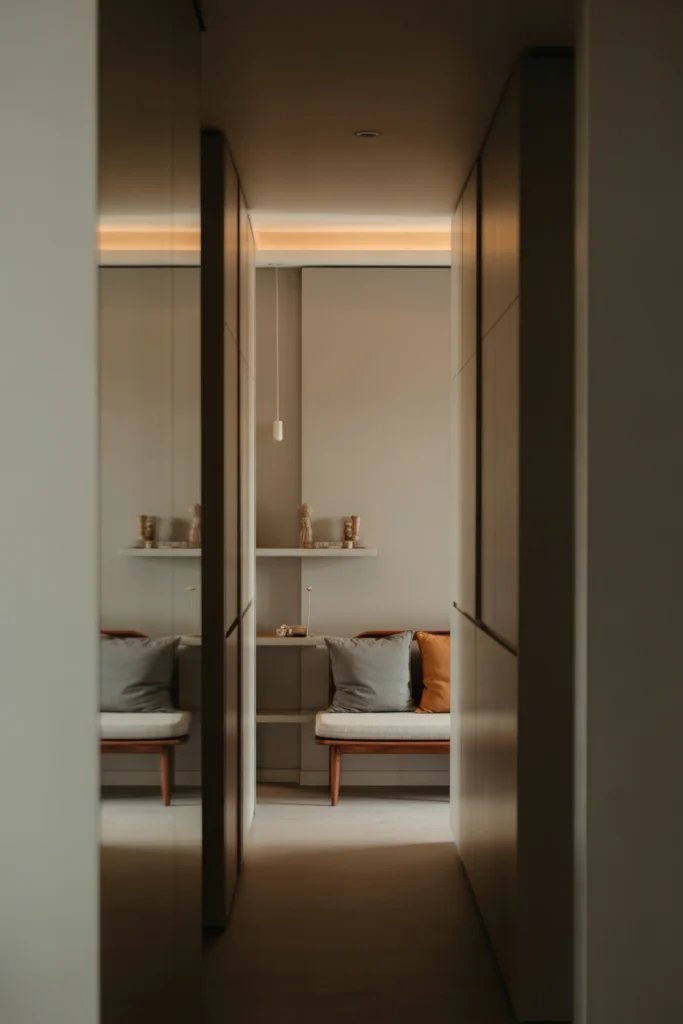
In a dark hallway, every piece of furniture is also a shadow. Bulky benches, deep bookcases, and heavy consoles block light, narrow the walkway, and make the corridor feel like an obstacle course. Minimalist furniture does the opposite: slim profiles, open legs, and light materials let light pass around and underneath, so the hallway keeps its full sense of width. The rule is simple: if a piece does not earn its place by being genuinely useful every week, leave it out.
Choose pieces that fit the hallway, not just pieces you like. A bench 12 to 14 inches deep is enough to sit and put shoes on, while a standard 18 inch deep bench will crowd a narrow hall. A console 10 to 12 inches deep, a floating shelf instead of a bookcase, and a wall mounted coat rail instead of a freestanding coat stand all save precious inches. Materials matter too: light wood, white lacquer, glass, and open metal frames all feel lighter than dark, solid wood, even at the same size.
Keep the floor visible as much as possible. Furniture with legs, rather than pieces that sit flat on the floor, lets you see the floor continuing underneath, which tricks the eye into perceiving more space. Leave at least 36 inches of clear walking width at all times, and test the layout at night with the hallway lights on: walk through carrying a bag, open the doors along the hall, and check that nothing catches or forces you sideways. A hallway that is easy to move through feels brighter, because you are not constantly aware of its narrowness. For a full look at how slim furniture, mirrors, and light colors combine, browse these modern entryway ideas for entry spaces that stay open and welcoming.
19. Add Ceiling Molding or Light-Colored Trim
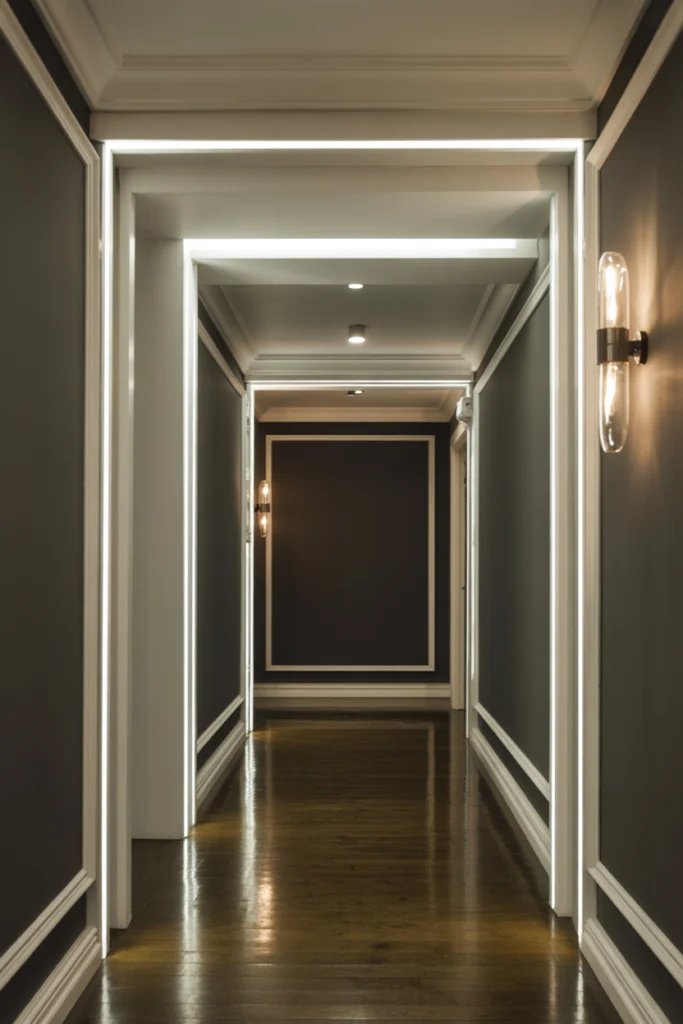
Trim is the frame around a hallway, and in a dark corridor, light colored trim does a surprising amount of work. White or pale crown molding at the ceiling, pale baseboards at the floor, and light door casings create bright lines that outline the space and make it feel taller and more finished. Against pale walls, the trim adds subtle definition; against a darker accent wall, it provides a crisp contrast that lifts the whole corridor.
Crown molding 3 to 5 inches wide suits a standard 8 foot ceiling, while a taller ceiling can handle 5 to 7 inches. Keep the profile simple in a narrow hallway: a clean, stepped or cove profile reads as modern and does not collect dust the way ornate profiles do. Baseboards 4 to 6 inches tall in a bright white semi gloss finish reflect light along the floor line and protect the wall from scuffs, which is a practical bonus in a high traffic passage.
Paint all the trim the same bright white or pale color for a cohesive look, and use a semi gloss or gloss finish so it catches light and is easy to wipe clean. If your hallway has a chair rail or picture rail, paint it the same trim color to keep the lines clean, and use it to hang art with picture wire, which avoids extra holes in the wall. Small as it sounds, consistent light trim ties together every other brightening idea in this list, from pale paint to mirrors to LED strips, and gives the hallway a finished, intentional feel.
20. Incorporate Plants for Freshness
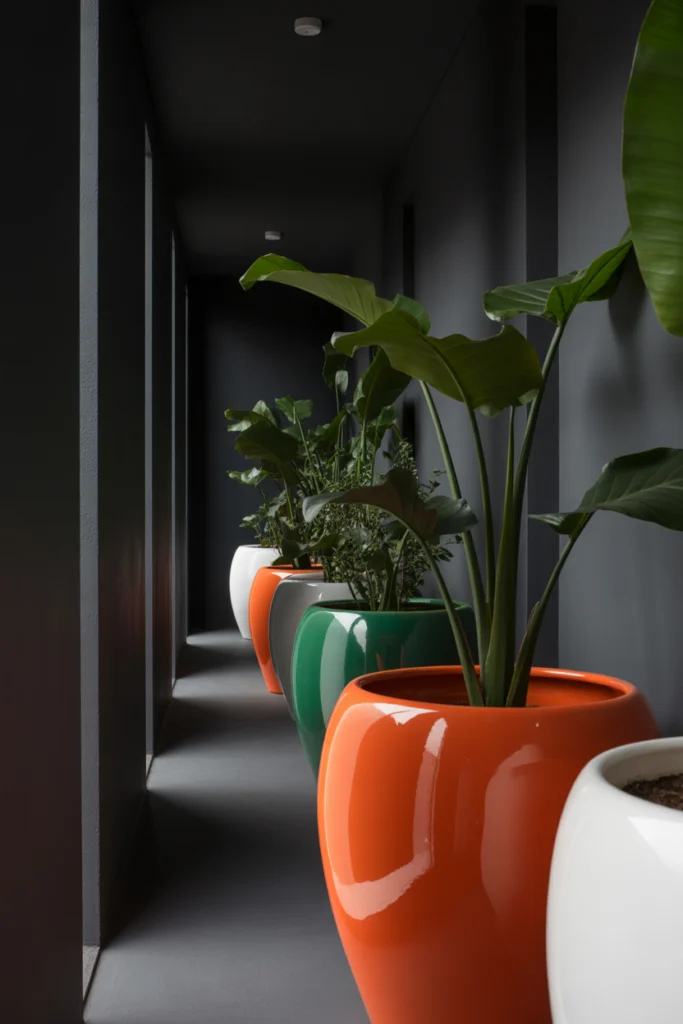
Plants bring life, color, and a sense of freshness to a dark hallway that no amount of paint or lighting can fully replace. Green foliage breaks up pale walls, softens hard edges, and makes a corridor feel like part of a home rather than a passage between rooms. The challenge is light: most hallways are low light environments, so choose plants that genuinely tolerate shade rather than plants that merely survive for a few weeks and then fade.
Good low light choices include snake plants, ZZ plants, pothos, peace lilies, and cast iron plants, all of which tolerate indirect light and irregular watering. A snake plant in a tall, light colored pot at the end of a hallway adds height without taking much floor space, while a trailing pothos on a high shelf softens the upper wall and draws the eye upward. Keep pots light colored, white, cream, pale terracotta, or light gray, so the plant display adds brightness rather than another dark mass.
Care is simple if you match the plant to the conditions. Water only when the top inch of soil feels dry, which for most low light plants means every one to two weeks, and rotate the pot a quarter turn each month so growth stays even. Wipe leaves monthly with a damp cloth, since dusty leaves photosynthesize poorly and look dull. If your hallway gets almost no natural light at all, rotate two plants: keep one in the hallway for two weeks while the other recovers in a brighter room, then swap them. Artificial plants are a last resort, but if you choose them, invest in realistic ones and dust them regularly, since an obviously fake, dusty plant does more harm than good.
Conclusion
A dark hallway does not have to stay dark, and it does not need a renovation to feel better. Start with the biggest levers: pale paint with a high light reflectance, layered lighting at ceiling, wall, and table height, and a large mirror placed where it can reflect real light. Then add the supporting ideas that fit your space, a light runner underfoot, slim glass or minimalist furniture, reflective accents, and a few shade tolerant plants for life and color.
Work in layers and test as you go. Change the paint, then check the hallway at night before you buy sconces. Add the mirror, then see where the remaining dark patches fall before you add LED strips. That step by step approach saves money, avoids over decorating a small space, and lets each change build on the last. With a little planning, even the darkest hallway in your home can become a bright, modern, and welcoming part of the house, a space you walk through with pleasure rather than hurry through in the dark.
Frequently Asked Questions
What is the best paint color for a dark hallway?
Warm white, cream, pale greige, light warm gray, or pale sage work best, especially in a satin or eggshell finish. Choose a paint with a Light Reflectance Value above 70 so it bounces the maximum amount of light around the space, and paint the ceiling the same color or one shade lighter to avoid a dark lid effect. Always test large swatches under your actual hallway lights before committing, since colors shift a lot in artificial light.
How can I brighten a hallway with no windows?
Layer artificial light at three heights: recessed or flush ceiling lights for general brightness, wall sconces at 60 to 66 inches for wall wash, and a small table lamp or LED strip for warmth at lower levels. Add a large mirror opposite a doorway or sconce, paint the walls pale, and use a light runner and light flooring. If your budget allows, a sun tunnel can bring real daylight into a windowless hall for a fraction of the cost of a skylight.
What kind of lighting works best in a narrow hallway?
A combination works best: recessed ceiling lights spaced 4 to 5 feet apart for even coverage, sconces spaced 6 to 8 feet apart for eye level warmth, and LED strips along a baseboard, ceiling edge, or shelf for continuous glow without dark gaps. Put the main lights on a dimmer, use warm white bulbs at 2700K to 3000K for a residential feel, and consider a motion sensor so the hallway is never dark when you walk into it.
Do mirrors really make a dark hallway look bigger?
Yes, when they are large enough and placed well. A mirror 24 to 36 inches wide hung opposite a light source, a doorway, or a sconce reflects that light back into the corridor and visually doubles the perceived width. One generous mirror works better than several small ones, and a tall mirror at the far end of a hallway creates the illusion that the corridor continues. Keep the glass clean, since dusty mirrors reflect far less light.
Which plants survive in a dark hallway?
Snake plants, ZZ plants, pothos, peace lilies, and cast iron plants all tolerate low, indirect light and irregular watering, which makes them ideal for hallways. Water only when the top inch of soil is dry, usually every one to two weeks, and wipe the leaves monthly so they stay glossy and photosynthesize well. If your hallway gets almost no natural light, rotate two plants between the hallway and a brighter room every couple of weeks.
More Ideas You Will Love
 20 Narrow Hallway Makeovers: Smart Design Ideas for Small Spaces
 12 Modern Hallway Renovation Ideas for Your Homes
 22 Entrance Hall Decor Ideas for a Welcoming, Functional Entryway
 22 Upstairs Hallway Ideas to Elevate Your Home’s Style
 20 Hallway Decor Ideas That Instantly Elevate Your Home’s Entrance
 20 Furniture Ideas for Hallways: Stylish & Functional Spaces You’ll Love