
18 Small Garden Ideas for Stylish, Space-Saving Outdoor Design


A small garden is not a limitation. It is an invitation to design with more care, because every square foot has to earn its place. With thoughtful planning and smart choices, even a tiny yard, patio, or balcony can become a beautiful retreat that feels generous instead of cramped. The secret is not to squeeze more things into the space, but to choose elements that do double duty: a wall that grows herbs, a bench that stores tools, a path that also drains rainwater away from the house.
Small gardens are more popular than ever, especially in urban homes, apartments, and compact suburban properties where outdoor space is precious. The good news is that the design ideas that work best in small gardens are the same ones that make any garden feel intentional: clear zones, vertical interest, a restrained color palette, and plants chosen for the light and soil you actually have. When those pieces come together, a small garden can feel larger, brighter, and more inviting than a big yard that was never planned at all.
In this guide, we explore 18 small garden ideas that focus on style, efficiency, and practicality. Each idea includes specific materials, measurements, colors, and step by step tips you can put to work right away. Whether you prefer a modern look, a cozy cottage feel, or a low maintenance green space, these ideas will help you design an outdoor area that suits your lifestyle and makes the most of every inch.
1. Vertical Garden Walls
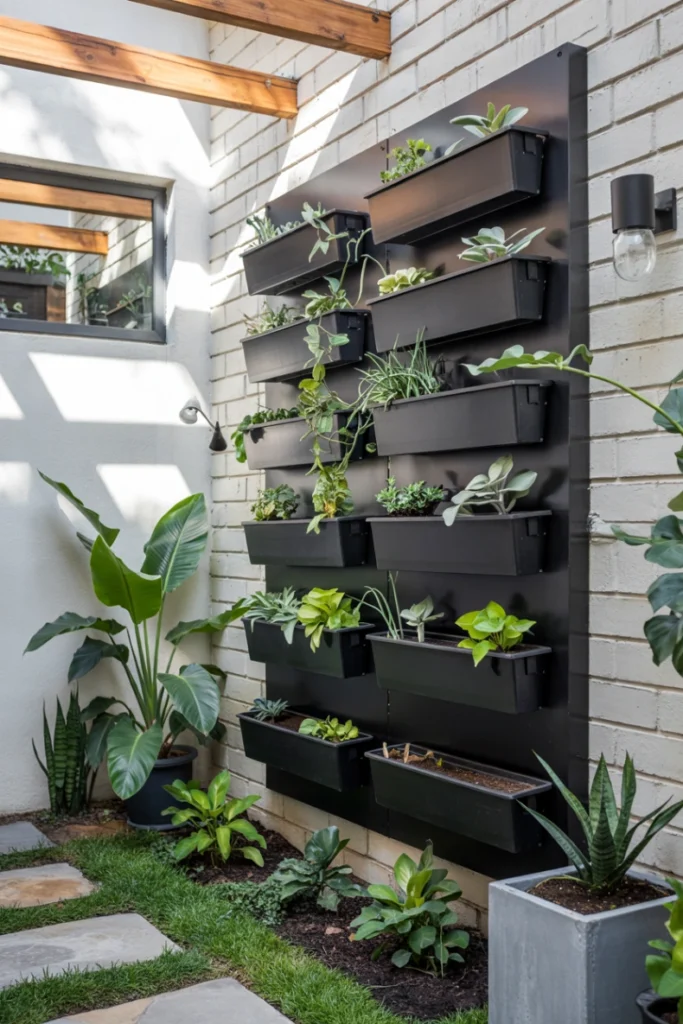
A vertical garden wall is one of the most effective small garden ideas for maximizing limited space, because it turns a blank fence or wall into growing room. By growing plants upward instead of outward, you can enjoy lush greenery without sacrificing a single square foot of floor area. Vertical gardens can be built with wall mounted planters, a wooden trellis, pocket planters made from felt or recycled fabric, or modular green wall panels that click together. They are ideal for narrow yards, patios, and balconies where ground space is minimal but wall space is going unused.
Start by choosing a wall that gets at least four to six hours of sunlight a day for most herbs and flowering plants, or a shadier wall for ferns, hostas, and trailing ivy. Mount a simple frame of pressure treated timber battens, then fix planters in rows spaced 10 to 12 inches apart so each row has room to grow without shading the one below. Fill the planters with a lightweight potting mix and add a drip irrigation line along the top row, which lets water trickle down through the whole wall with almost no daily effort. Herbs such as basil, mint, thyme, and parsley thrive in vertical planters, and so do strawberries, trailing petunias, and leafy greens such as lettuce and spinach.
Beyond saving space, vertical gardens add visual depth and texture that flat planting beds cannot match. A green wall softens hard surfaces like fences, brick, and concrete, and it creates a living backdrop that makes the whole garden feel more natural and inviting. Keep the palette simple by repeating two or three plant types across the wall, and leave a few pockets empty at first so you can add seasonal color later. Water in the morning, feed with a diluted liquid fertilizer every two weeks during the growing season, and trim trailing plants regularly so the wall stays full without becoming overgrown.
2. Raised Garden Beds

Raised garden beds are practical and stylish small garden ideas that bring order to a compact space while improving the soil your plants grow in. By lifting plants 12 to 18 inches above ground level, raised beds make gardening easier on your back and knees, and they drain better than flat ground, which is especially helpful in small gardens where soggy soil is a common problem. They also create clear structure: the beds define where planting happens and where paths and seating go, so a small yard feels organized instead of crowded.
Build beds from cedar or redwood boards, which resist rot naturally, or from stone, brick, or corrugated metal for a more modern look. A bed 4 feet wide and 8 feet long is a good standard size, because you can reach the center from either side without stepping on the soil. For narrow spaces, a 2 foot wide bed along a fence works just as well. Fill the bottom with a layer of cardboard to smother weeds, then add a mix of two parts topsoil to one part compost, topped with 2 inches of mulch. Raised beds built 18 inches high can double as seating when capped with a wide flat board, which is a clever way to add a place to sit without using extra floor space.
From a design perspective, raised beds let you group plants by their needs, so sun loving vegetables get the brightest spot while shade tolerant herbs sit along a wall. Rotate crops each season, refresh the top 3 inches of soil with fresh compost every spring, and line the inside of wooden beds with landscape fabric to slow moisture damage. Paint or stain the outside of timber beds in a soft sage green, warm gray, or natural wood tone that matches your house trim, and the beds will look like a deliberate part of the garden design rather than an afterthought.
3. Container Gardening

Container gardening is one of the most flexible small garden ideas available, because pots and planters can go anywhere: a sunny patio, a paved courtyard, a balcony, or even a doorstep. Using containers lets you grow plants in spaces with no soil at all, and it gives you complete control over soil quality, drainage, and placement. Containers come in every size, shape, and material, from terracotta pots and glazed ceramic planters to lightweight fiberglass, galvanized metal, and wooden crates, so it is easy to match them to your garden style while keeping the footprint compact.
Choose containers at least 12 inches deep for most vegetables and 10 inches deep for herbs and annual flowers, and always make sure each pot has drainage holes, adding a layer of broken pottery or gravel at the bottom to keep water flowing. Group pots in clusters of three or five at different heights, using plant stands or upturned pots to raise the smaller ones, which creates a layered look that feels abundant without taking up much floor space. Fill containers with a quality potting mix, not garden soil, and mix in slow release fertilizer at planting time so the plants stay fed for months. Water containers more often than beds, since pots dry out faster, especially in terracotta, which loses moisture through its walls.
This approach also makes seasonal updates simple. Plants can be moved to chase the sun, sheltered from harsh weather, or swapped out when a season ends, so the garden always looks fresh. Container gardening is ideal for renters and for homeowners who want a non permanent option, because the whole garden can move with you. Stick to a limited color palette for the pots, such as two neutrals plus one accent color, and repeat the same pot style in different sizes so the collection feels curated rather than random.
4. Multi-Functional Furniture

Multi-functional furniture is essential in a small garden, because every piece has to earn its floor space twice. A bench with built in storage, a foldable bistro table, a stool that doubles as a side table, or an ottoman that hides garden tools all reduce clutter while improving usability. The goal is to keep the garden adaptable: a space that works for morning coffee alone, an afternoon of reading, and an evening with friends, without permanently dedicating floor space to any single use.
Look for pieces made from weather resistant materials such as teak, powder coated aluminum, or all weather wicker, and choose streamlined designs in light colors so the furniture does not visually weigh the space down. A storage bench 4 feet long and 18 inches deep can hold cushions, tools, and watering cans, while providing seating for two. Foldable chairs and a drop leaf table can be tucked against a wall when not in use, freeing the center of the garden for play or planting. Stackable stools are another smart choice, since four stools can live in the footprint of one when stacked.
When choosing furniture, measure your space first and leave at least 24 inches of clear walking room around each piece, so the garden never feels like an obstacle course. Keep cushions in a single solid color or a simple stripe, and store them in the bench or a small deck box when rain is expected. Multi-functional furniture keeps a small garden practical without making it feel overcrowded, and it is one of the simplest upgrades that makes a compact outdoor space feel like a real outdoor room.
5. Hanging Planters

Hanging planters are simple yet impactful small garden ideas that use overhead space most gardeners forget about. Suspended from a pergola beam, a wall bracket, a shepherds hook, or a sturdy tree branch, hanging planters free up ground area while adding layers of greenery at eye level and above. They are perfect for trailing plants such as ivy, string of pearls, petunias, and lobelia, as well as for herbs like mint and oregano that would otherwise spread aggressively in a bed.
Hang planters at staggered heights, with the lowest basket about 5 feet off the ground so nobody walks into it, and the highest near 7 feet for a cascading effect. Use lightweight planters made from coconut coir, woven rattan, or molded plastic, and line them with a plastic disc or a saucer to slow water loss. A simple pulley system or an S hook makes it easy to lower a basket for watering and trimming, which is important because hanging planters dry out faster than ground planters and usually need watering every day in hot weather. A slow release fertilizer mixed into the potting soil at planting time will keep the display full for the whole season.
Beyond their practical benefits, hanging planters add movement and softness to a garden design. They draw the eye upward, which makes small gardens feel taller and more open, and they work especially well in courtyards and narrow side yards where floor area is limited but vertical potential is abundant. Repeat the same planter style in groups of three, and choose one flower color to repeat across the baskets so the display feels intentional. In autumn, swap summer annuals for trailing ivy and small ornamental cabbages to keep the hanging display going into the colder months.
6. Built-In Seating
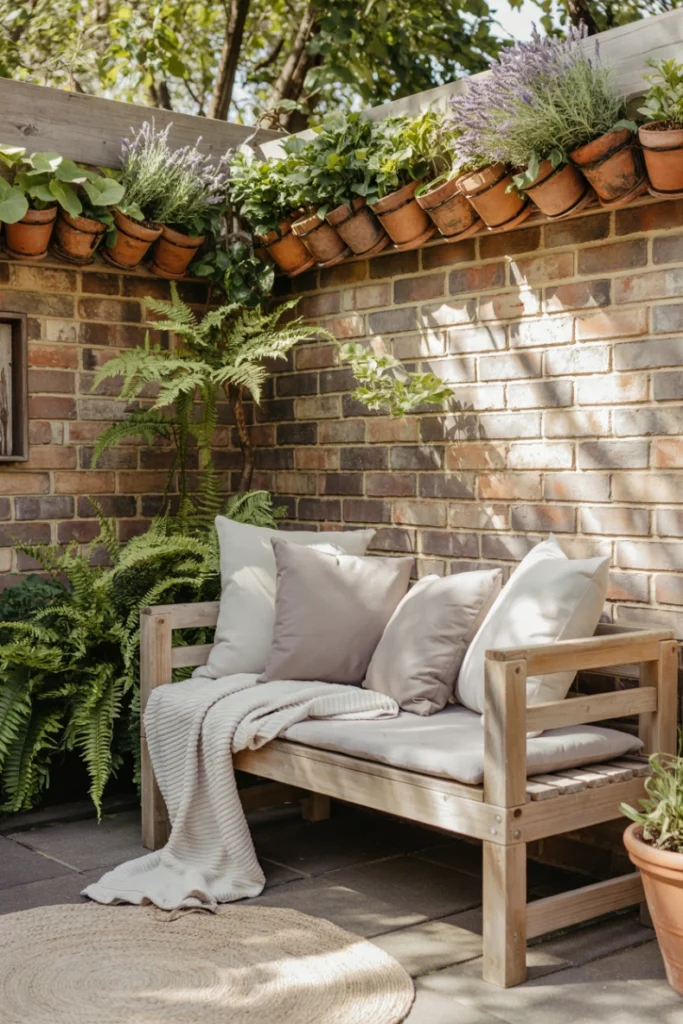
Built-in seating is a smart solution for small gardens because it replaces bulky movable furniture with a fixed feature that fits the exact dimensions of the space. A low bench along a wall or fence, 16 to 18 inches high and 14 to 16 inches deep, gives comfortable seating without the visual clutter of chair legs and frames. It creates a seamless look that makes the garden feel larger, and it defines a clear seating zone so the rest of the space stays open for planting and walking.
Build the bench from the same material as your garden walls, such as rendered block, brick, or timber decking, so it reads as part of the architecture rather than as furniture. Add hidden storage beneath the seat for garden tools, cushions, and watering cans, using hinged lids or front access panels. Top the bench with outdoor cushions in a durable, fade resistant fabric, in a warm neutral or a soft sage green, and add two or three throw pillows in a coordinating pattern for comfort and color. For more ideas on turning a seating nook into a comfortable outdoor room, see these outdoor living room ideas that pair built-in benches with rugs, lighting, and low tables.
Built-in seating also helps a small garden feel intentional and calm. Because the bench never moves, the layout stays tidy, and the space beneath it stays useful instead of becoming a dead corner. Leave a gap of about 30 inches between the front of the bench and any table or fire pit so people can sit and stand comfortably. If the bench runs along a boundary wall, add a row of tall planters or a trellis with climbing jasmine behind it, so the seating area feels sheltered and private rather than exposed.
7. Gravel and Stone Pathways

Gravel and stone pathways are low maintenance small garden ideas that add structure and flow without overwhelming the space. Unlike large paved areas, gravel paths feel lighter and more natural, which suits compact gardens where heavy hardscaping can make the yard feel smaller. Gravel also drains well, so paths stay usable after rain, and it is one of the cheapest ways to define routes through a garden, usually costing far less per square foot than pavers or decking.
Lay a path 24 to 36 inches wide, which is comfortable for one person and easy to maintain, and edge it with steel landscape edging, brick, or large flat stones so the gravel stays in place. Excavate 3 to 4 inches of soil, lay landscape fabric to block weeds, add a 2 inch base of crushed stone, and finish with 2 inches of pea gravel or decomposed granite in a warm tan or soft gray tone. Light colored gravel reflects more light and can make a small garden appear larger and brighter, while darker gravel suits modern designs with charcoal planters and black metal furniture. Space flat stepping stones 18 to 24 inches apart along the path for a more formal look that still lets ground cover plants grow between the stones.
These pathways help guide movement through the garden while defining planting areas on either side. A gently curving path feels more interesting than a straight one, and it makes a small garden seem larger by hiding the far end around a bend. If your path leads from the house to the garden, match the gravel tone to your front porch materials for a cohesive look, and see these small front porch ideas for ways to tie the entry and the garden together. Sweep or rake the gravel level once a month, and top it up with a fresh bag each spring to keep the path looking crisp.
8. Mirror Features

Mirrors are clever small garden ideas that create the illusion of depth and expanded space, and they cost far less than structural changes. A strategically placed outdoor mirror reflects greenery and sky, making a compact garden feel larger than it actually is. Mirrors work particularly well in enclosed gardens, courtyards, and narrow side yards where the view ends at a fence or wall, because the reflection opens up a visual window where there was only a boundary before.
Choose mirrors made for outdoor use, or protect a standard mirror by sealing the back and edges with exterior varnish and mounting it under a small overhang. A large mirror framed to look like a window, complete with a wooden frame and a faux sill, blends naturally into a garden wall and fools the eye beautifully. Mount it on a fence or wall at eye level, angled slightly downward so it reflects plants rather than the sky, which keeps the effect natural. A mirror 3 feet wide and 4 feet tall is a good size for most small gardens: large enough to make a difference, but not so large that it dominates the wall. Avoid placing mirrors where they will reflect direct sun into seating areas or into a neighbors window, and never angle a mirror toward a bird flight path without adding a visible frame or decal.
When used carefully, mirrors enhance the atmosphere of a garden without feeling artificial. They add brightness to shady corners and make planting beds look fuller by doubling the greenery in the reflection. Pair a mirror with a climbing plant such as clematis or jasmine trained around the frame, so the mirror looks like part of the planting rather than an object stuck on a wall. Clean the glass every few weeks with a vinegar solution, and check the mounting each spring to make sure the fixings are still secure.
9. Tiered Planting
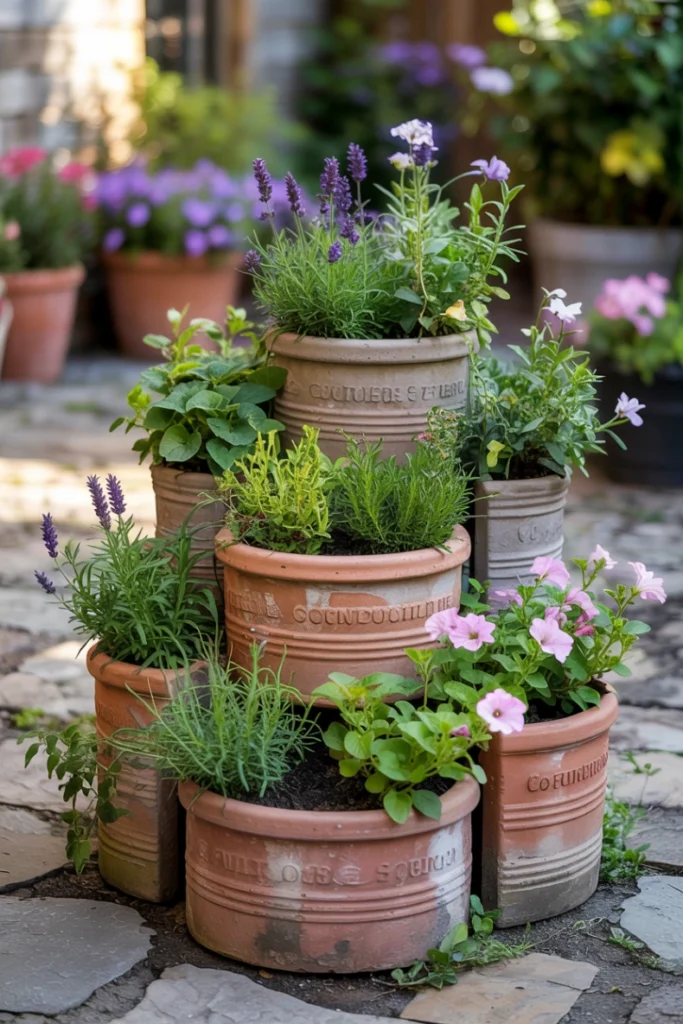
Tiered planting is an excellent approach for adding dimension to a small garden without expanding its footprint. By layering plants at different heights, you create visual interest and use every inch of growing space, from ground level up to shoulder height and beyond. Tiered planters, stepped shelves, or a sloped bank planted in levels are especially useful in narrow or sloped gardens, where flat beds waste the vertical potential of the site.
Build tiers from timber sleepers, stacked stone, or ready made stepped planters, keeping each level 8 to 12 inches higher than the one in front so every plant gets sunlight. Plant the tallest species at the back, such as ornamental grasses, small shrubs, or climbing roses on a trellis, then fill the middle tier with medium plants like lavender, salvia, and geraniums, and finish the front with low ground cover, trailing lobelia, or creeping thyme. This layered arrangement lets sunlight reach all the plants more evenly and makes watering and maintenance easier, since each level is easy to reach. If you want help choosing plants for each layer, these best flowers to plant offer reliable options for sun and shade that work well in tiered beds.
Tiered planting also helps organize different plant types, so flowers, herbs, and small shrubs each have a clear home. The result is a lush, dynamic garden that feels full without being overcrowded. Water the top tier first and let the excess drain down to the lower levels, and mulch each tier with 2 inches of bark or gravel to hold moisture and suppress weeds. In a very small space, a three tier plant stand on a patio can hold a dozen pots in the footprint of a single large planter.
10. Minimalist Lawn Alternatives

Traditional lawns can be impractical in small gardens. They need regular mowing, watering, and feeding, and a small patch of grass often looks patchy and worn rather than lush. Lawn alternatives such as artificial grass, ground cover plants, or decorative gravel provide greenery without the maintenance demands of natural turf, and they create clean, open areas that do not overwhelm limited space. A small rectangle of artificial grass or a sweep of creeping thyme can give you the green surface you want with a fraction of the upkeep.
Artificial grass is the simplest option: lay it on a compacted base of crushed stone and sharp sand, and it stays green all year with no watering or mowing. Choose a pile height of 30 to 40 millimeters for a natural look, and a density of at least 16,000 stitches per square meter so it feels soft underfoot. Ground cover plants are a living alternative: creeping thyme, Irish moss, and baby tears form dense green carpets that tolerate light foot traffic and need only occasional trimming. Decorative gravel in a pale limestone or warm buff tone is another good choice, especially when combined with large stepping stones that create a clear walking route across the space.
Minimalist lawn alternatives also support modern garden aesthetics. They provide a visual break between planting areas while remaining functional for walking, seating, or play. Keep the surface area simple and uncluttered, with one green zone rather than several small patches, which makes the garden feel larger and calmer. Edge the lawn alternative with steel edging or stone to keep it tidy, and add a single sculptural plant or a small tree in a large pot as a focal point. The result is a garden that looks cared for every day of the year, with almost no weekly work.
11. Compact Water Features

Compact water features add tranquility without consuming much space, making them popular small garden ideas for homeowners who want a calming focal point. A small fountain, a wall mounted water blade, or a tabletop pond introduces soothing sound and movement into a limited area, and it creates a sense of calm that plants alone cannot provide. The sound of running water also masks street noise, which is a real benefit in urban gardens where traffic and neighbors are close by.
Choose a self contained design that recycles its own water, such as a ceramic urn fountain, a bamboo spout that pours into a stone basin, or a slim wall mounted feature that is only 6 to 8 inches deep. A fountain 18 to 24 inches tall fits comfortably on a patio table or a small plinth, while a wall feature can be mounted on any sturdy fence or wall with a nearby power outlet. Fill the reservoir with rainwater when possible, and add a small solar powered pump if you want to avoid running a power cable across the garden. Place the feature where you can see and hear it from your favorite seat, usually within 6 to 10 feet, and keep it away from overhanging trees so falling leaves do not clog the pump.
Water features can also attract birds and enhance biodiversity in urban settings, especially if you add a shallow dish or a flat stone at the edge where birds can drink and bathe. Maintenance is minimal: top up the water every few days in hot weather, clean the pump filter once a month, and empty the feature before the first hard frost. When thoughtfully placed, a compact water feature becomes an elegant focal point that elevates the whole garden, and it is one of the few features that makes a small space feel like a retreat rather than just a yard.
12. Foldable Garden Elements
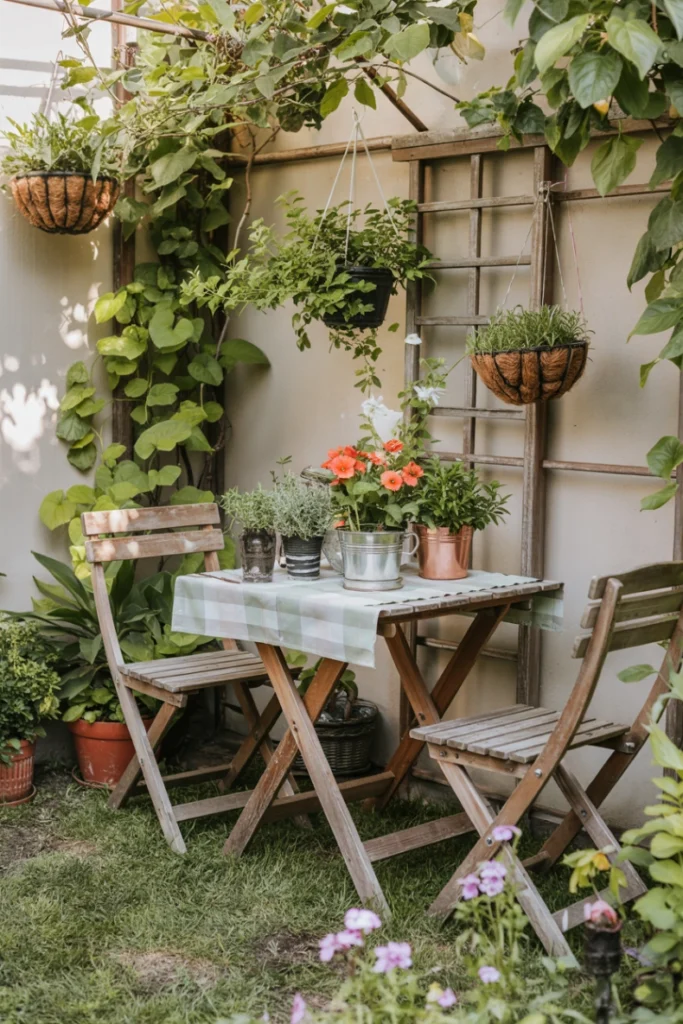
Foldable garden elements are ideal small garden ideas for flexible outdoor living, because they let one space serve many purposes. A fold down wall table, a retractable awning, collapsible chairs, and a folding drying rack can all be set up in a minute and stored away just as fast. When not in use, these elements disappear against a wall or into a storage bench, freeing the floor for planting, play, or simply an open view.
A wall mounted drop leaf table is the most useful foldable piece in a small garden. Mounted at 30 inches high with a top 24 inches deep when open, it gives two people a comfortable place for breakfast or an evening drink, then folds flat to 4 inches deep when closed. Pair it with two folding chairs that hang on wall hooks, and you have a complete dining set that uses almost no floor space. A retractable awning or a folding parasol adds shade on demand without a permanent structure, and a collapsible garden cart makes it easy to move soil, pots, and tools around without leaving a wheelbarrow in the way.
This adaptability is especially useful in multifunctional gardens that serve as dining, relaxation, and entertainment spaces at different times of day. Foldable elements keep the garden open and uncluttered while still providing comfort and practicality when needed. Choose pieces in weather resistant materials such as powder coated steel, teak, or UV stable resin, and store fabric parts indoors during long wet spells. The best foldable furniture feels sturdy when open and almost invisible when closed, which is exactly what a small garden needs.
13. Narrow Border Planting
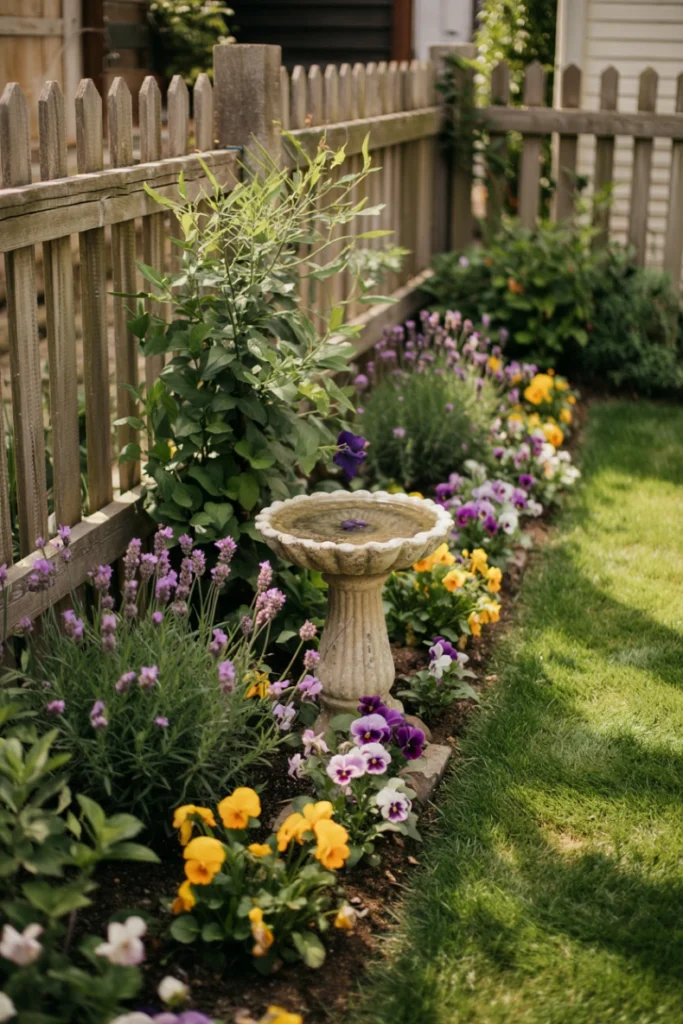
Narrow border planting is a subtle yet effective approach for small gardens. By planting along edges, fences, and walls, you preserve the central space for seating and movement while still enjoying a generous amount of greenery. Slim planting beds only 12 to 18 inches wide can host a surprising mix of shrubs, flowers, and ornamental grasses, and they turn bare boundaries into living frames for the whole garden.
Prepare a narrow border by digging in plenty of compost, since soil along fences is often dry and poor, and add a drip line or soaker hose along the base so watering is easy and even. Plant in layers even within the narrow width: tall narrow plants at the back, such as climbing roses, clematis, or bamboo in containers to control spreading, then medium plants like lavender, salvia, and penstemon, and low edging plants at the front such as creeping thyme or small geraniums. Repeat the same three or four plants along the length of the border rather than using a different plant every foot, which keeps the border looking calm and designed. For more planting ideas that suit tight spaces, see these garden design ideas that show how borders, paths, and seating work together in compact yards.
This technique helps frame the garden and adds softness to hard boundaries. Vertical plants in narrow borders enhance the feeling of height, making the garden feel more spacious, and a well planted border can screen an ugly fence completely within one or two growing seasons. Mulch the border with 2 inches of bark to hold moisture and suppress weeds, and trim the front edge with half moon edging twice a year so the border keeps a crisp line against the lawn or path. Narrow borders prove that you do not need deep beds to have a garden that feels lush.
14. Pergolas and Arches
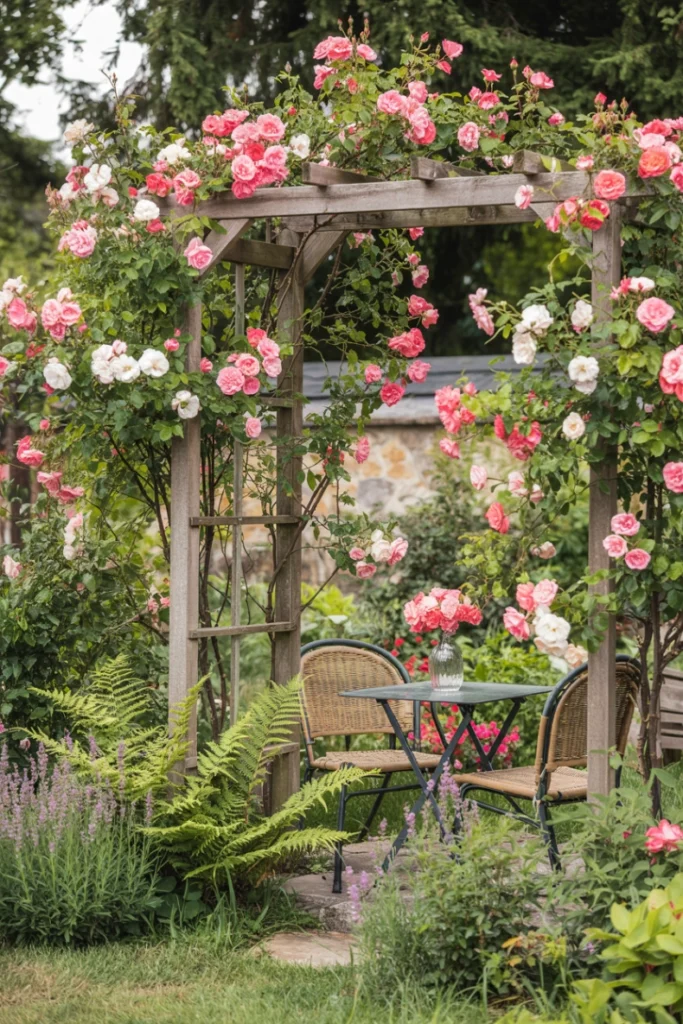
Pergolas and arches are architectural small garden ideas that add structure and height without taking up much ground space. These vertical elements define areas such as seating zones or pathways, provide support for climbing plants, and create a sense of enclosure that makes a small garden feel like a private outdoor room. A simple arch over a path or a compact pergola over a bench can change the whole character of a garden in a single weekend.
A freestanding pergola 8 feet long and 6 feet wide fits most small gardens, with posts set in concrete footings and cross beams spaced 12 inches apart to filter sunlight without blocking it completely. Choose cedar or pressure treated timber for a natural look, or powder coated steel for a modern one, and keep the structure light in color so it does not visually weigh the space down. An arch 7 feet high and 4 feet wide over a garden path is even simpler, and it becomes a beautiful feature once a climbing rose, jasmine, or clematis covers it. Plant one climber on each side of the arch, train the stems along the frame with soft ties, and prune lightly after flowering to keep the shape tidy.
In small gardens, pergolas and arches help create a sense of intimacy and enclosure without closing the space in. Lightweight designs with open tops prevent the garden from feeling heavy, and when paired with climbing plants they add charm, shade, and fragrance. Hang a pair of lanterns or a string of warm white lights from the beams to make the structure glow after dark, and place a bench or two chairs beneath it to claim the spot as the garden’s favorite seat. A pergola also gives you a frame for a retractable shade cloth in summer, which is an easy way to add comfort without building a roof.
15. Light Color Palettes

Using light color palettes is a strategic small garden idea for enhancing the feeling of space. Light colored walls, paving, and furniture reflect more light, making small gardens appear larger and brighter, while dark or heavy tones absorb light and can make a compact area feel smaller and more enclosed. Neutral tones such as warm white, soft cream, pale gray, and light sage create a clean and cohesive look that lets greenery stand out as the star of the garden.
Apply the palette to the largest surfaces first, since those have the biggest effect. Paint a boundary fence or wall in a soft off white or pale stone color, choose light gray or buff paving instead of dark slate, and pick furniture in white, natural rattan, or light timber. Then add plants with light green and silver foliage, such as lambs ear, artemisia, and variegated hostas, which brighten shady corners. Keep the accent colors to one or two: a single bold color, such as terracotta pots or deep blue cushions, repeated in three or four places, gives the garden personality without breaking the calm of the light palette.
This approach supports many design styles, from modern to traditional, because light colors are a neutral backdrop rather than a style statement. A light palette also makes the garden feel more open and inviting throughout the day, especially in the morning and evening when light is low. The one caution is maintenance: light surfaces show dirt more easily, so choose washable exterior paint for fences, sealed pavers for paths, and removable cushion covers that can go in the washing machine. A quick wash down in spring keeps the whole garden looking fresh.
16. Compact Outdoor Lighting
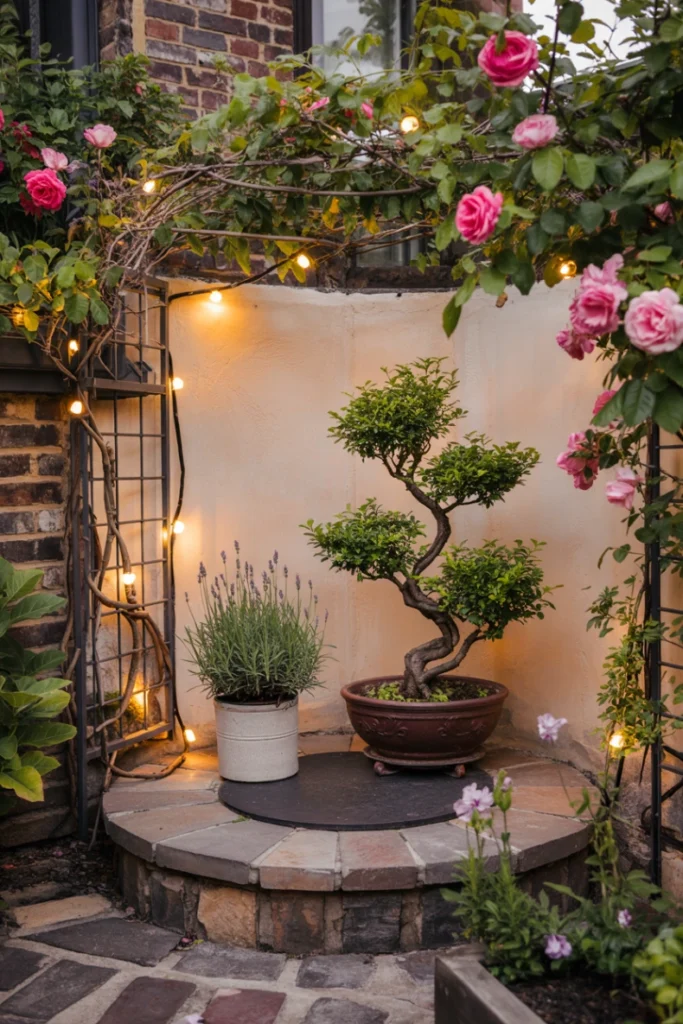
Thoughtful lighting is a key element in small garden ideas because it extends the use of the garden well beyond daylight hours. Compact lighting options such as string lights, solar stake lights, and wall mounted fixtures add ambiance without cluttering the space, and they help define zones and improve safety on steps and paths. A well lit small garden feels larger at night, because the light draws the eye to features that disappear in the dark.
Start with three layers of light. First, string lights or festoon lights hung between two posts or along a fence, using warm white bulbs spaced 12 inches apart for a soft glow. Second, solar stake lights along paths and borders, spaced 4 to 6 feet apart so the light pools gently without creating bright spots. Third, one or two wall mounted lanterns or uplights that highlight a tree, a mirror, or a seating area. Solar lights are the easiest option since they need no wiring, but mains powered low voltage lights are brighter and more reliable, and a small 12 volt transformer can run a whole small garden from a single outdoor socket. Choose warm white bulbs around 2700K, which flatter plants and skin tones far better than cool white.
Soft, warm lighting enhances the mood and highlights garden features without overwhelming the design. Keep the total number of lights modest: in a small garden, six to ten light points are usually enough, and too many will make the space feel like a fairground. Put the lights on a timer or a dusk to dawn sensor so they switch on automatically, and check solar panels monthly to keep them clean and charging well. Well placed lights can transform even the smallest garden into a functional evening retreat that you will use long after sunset.
17. Edible Small Gardens
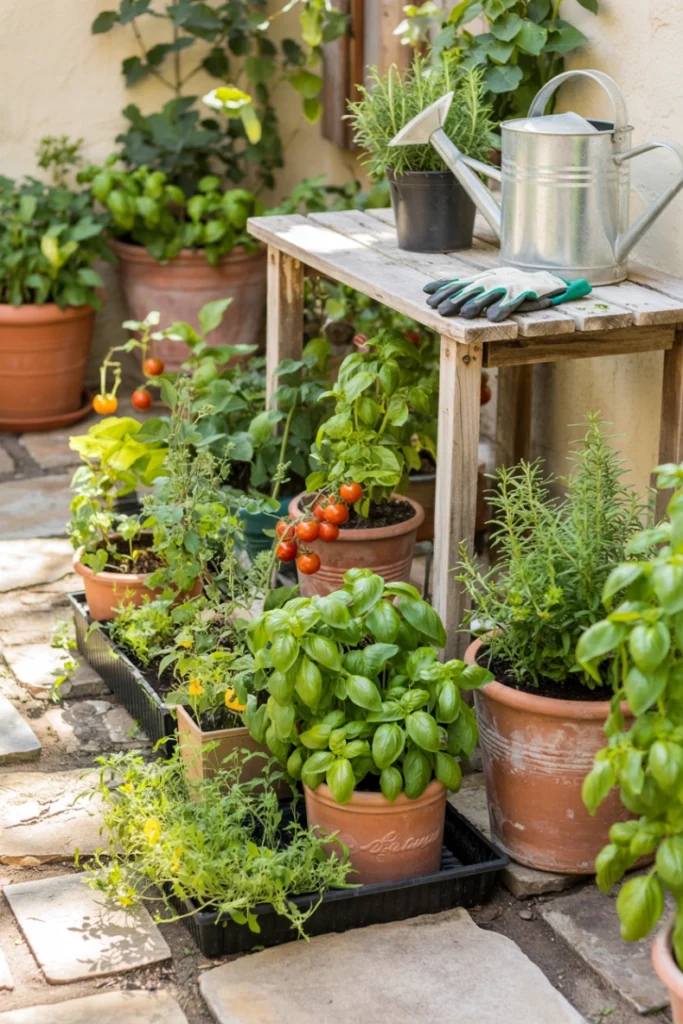
Edible gardens are functional small garden ideas that combine beauty with practicality. Growing herbs, vegetables, or fruit in a compact layout allows homeowners to enjoy fresh produce from a space that might otherwise hold only ornamental plants. Vertical planters, containers, and raised beds all work well for edible planting, and a small harvest of salad leaves, herbs, and tomatoes can genuinely change the way you cook through the summer.
Start with the easiest and most rewarding crops for small spaces. Herbs such as basil, parsley, chives, mint, and rosemary grow well in pots and vertical planters, and a single plant of each covers most cooking needs. Salad leaves, spinach, and radishes grow fast and can be sown every two weeks for a continuous supply. Compact vegetables bred for containers, such as patio tomatoes, dwarf beans, and baby carrots, produce well in pots 12 inches deep or more. Fruit is possible too: strawberries in hanging baskets or a vertical tower, and a dwarf apple or fig tree in a large pot 18 to 24 inches across, can both thrive on a sunny patio. Keep mint in its own pot, since it spreads aggressively and will take over a shared bed.
Edible gardens encourage sustainable living and reduce reliance on store bought produce, and they can be easily integrated into decorative garden designs. A row of herbs along a path edge, a tomato plant in a terracotta pot by the door, and a vertical planter of salad leaves on a sunny wall all look beautiful while working hard. Feed edible plants with an organic liquid fertilizer every two weeks, water in the morning so leaves dry before night, and harvest little and often, which encourages most herbs and salad crops to keep producing. Even small harvests add value and enjoyment to compact outdoor spaces.
18. Zoning with Levels
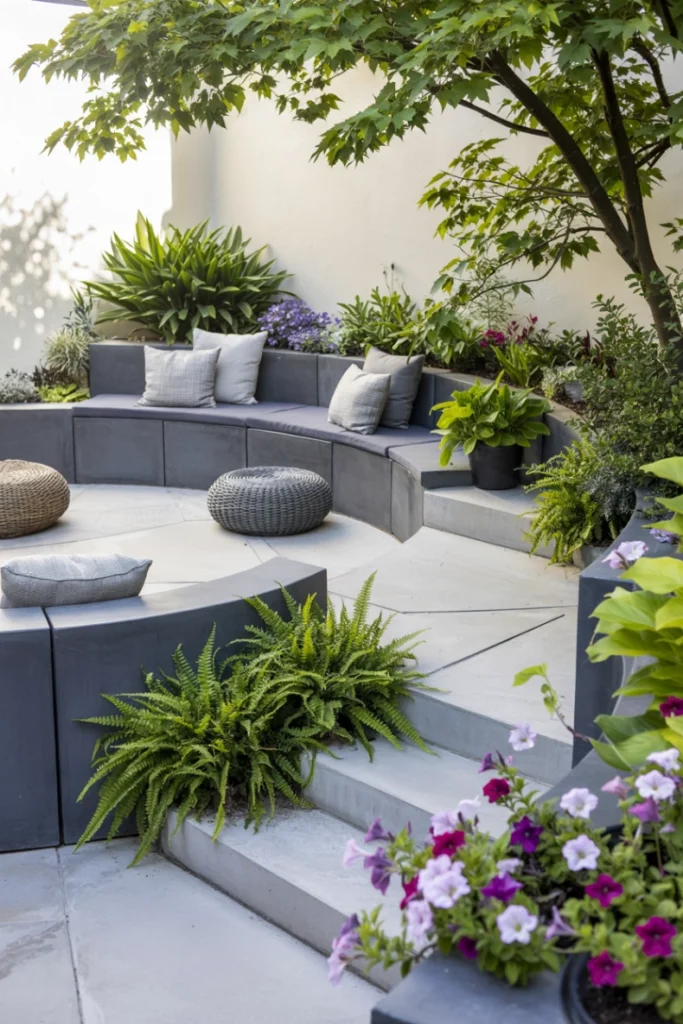
Creating zones with slight level changes is an advanced small garden idea that adds depth without expanding the space. Raised platforms, shallow steps, or a sunken seating area help define different functions within a compact layout, so a dining spot, a planting zone, and a quiet reading corner each feel distinct even when they sit only a few feet apart. Zoning improves flow and visual interest, and it makes a small garden feel designed rather than simply filled.
Keep level changes subtle: a single step of 6 to 7 inches, a raised deck platform 8 to 12 inches high, or a sunken seating circle 12 to 18 inches below the surrounding lawn are all enough to create a sense of separation. Build a raised platform from decking boards on a simple timber frame, or use large pavers on a compacted gravel base for a low terrace. Retain the edge with a low wall 12 to 18 inches high, which doubles as extra seating. Add low voltage step lights or a strip of solar lights along the edge so the change in level is obvious and safe after dark, and slope each level gently away from the house so rainwater drains properly.
These level changes can separate seating areas from planting zones or walkways, and when done subtly they enhance usability while maintaining openness. A raised dining terrace near the house, a step down to a lawn or gravel seating area, and a further step to a planted border at the far end gives a small garden three clear rooms in the space of one. Keep the materials consistent across levels, using the same decking or paver on every surface, so the garden reads as one cohesive design. Zoning with levels turns small gardens into thoughtfully designed spaces that feel organized, intentional, and surprisingly spacious.
Conclusion
Designing a small outdoor space requires creativity, planning, and smart use of available resources. With the right approach, small garden ideas can transform limited areas into stylish, functional retreats that enhance daily living. The ideas in this guide all share the same principle: use height before floor space, choose furniture and features that do more than one job, and keep the palette and the layout simple enough that the garden feels calm rather than crowded.
Whether you are starting from scratch or upgrading an existing space, these 18 small garden ideas provide inspiration for every style and budget. Start with one change, such as a vertical garden wall or a gravel path, and build from there as you learn what works in your light and soil. By applying these concepts step by step, you can create an outdoor area that reflects your personality while making the most of every square foot, and you will find yourself spending far more time outside than you ever expected.
Frequently Asked Questions
How do I make a very small garden look bigger?
Use height, light colors, and clear sight lines. Add a vertical garden wall or a mirror to open up a boundary, paint fences in a pale color, and keep paths and furniture in light tones. Avoid filling the center of the garden, and leave one clear view from the door to the far end, since a visible long line makes any space feel larger.
What plants grow best in a small garden?
Choose compact and multi season plants that earn their place. Lavender, salvia, ornamental grasses, and dwarf shrubs give structure with little care. Herbs such as basil, rosemary, and mint grow well in pots and vertical planters. Climbing plants like clematis, jasmine, and climbing roses add height without using floor space, and they bring flowers and fragrance to small gardens.
How much does a small garden makeover cost?
A simple makeover with gravel paths, containers, and a few new plants usually costs between 200 and 600 dollars. Adding a raised bed, a vertical garden wall, or built-in seating brings the total to 800 to 2,000 dollars, depending on materials. Start with the cheapest changes, such as painting a fence and rearranging pots, and add bigger features one at a time.
Can I grow vegetables in a small garden?
Yes, and small gardens are often ideal for vegetables because the space is easy to manage. Grow salad leaves, herbs, tomatoes, and dwarf beans in containers or raised beds, and use vertical planters for strawberries and leafy greens. A sunny wall or balcony that gets six hours of light a day can produce a useful harvest all summer with only a few pots.
How do I keep a small garden low maintenance?
Choose lawn alternatives such as gravel or ground cover instead of grass, use self watering planters and drip irrigation, and plant perennials and evergreen shrubs that need little feeding or pruning. Mulch beds with 2 inches of bark to suppress weeds, and pick furniture and surfaces that can be hosed clean. A low maintenance small garden usually needs less than an hour of care a week once it is established.
More Ideas You Will Love
 16 Outdoor Rug Ideas That Withstand Summer Weather
 19 Yard Fire Pit Ideas to Add Style to Your Outdoor Space
 15 Dark Exterior House Ideas: Bold & Stylish Designs
 13 4th of July House Exterior Ideas Featuring the American Flag
 17 Modern Exterior Wall Design Ideas for a Stylish Home
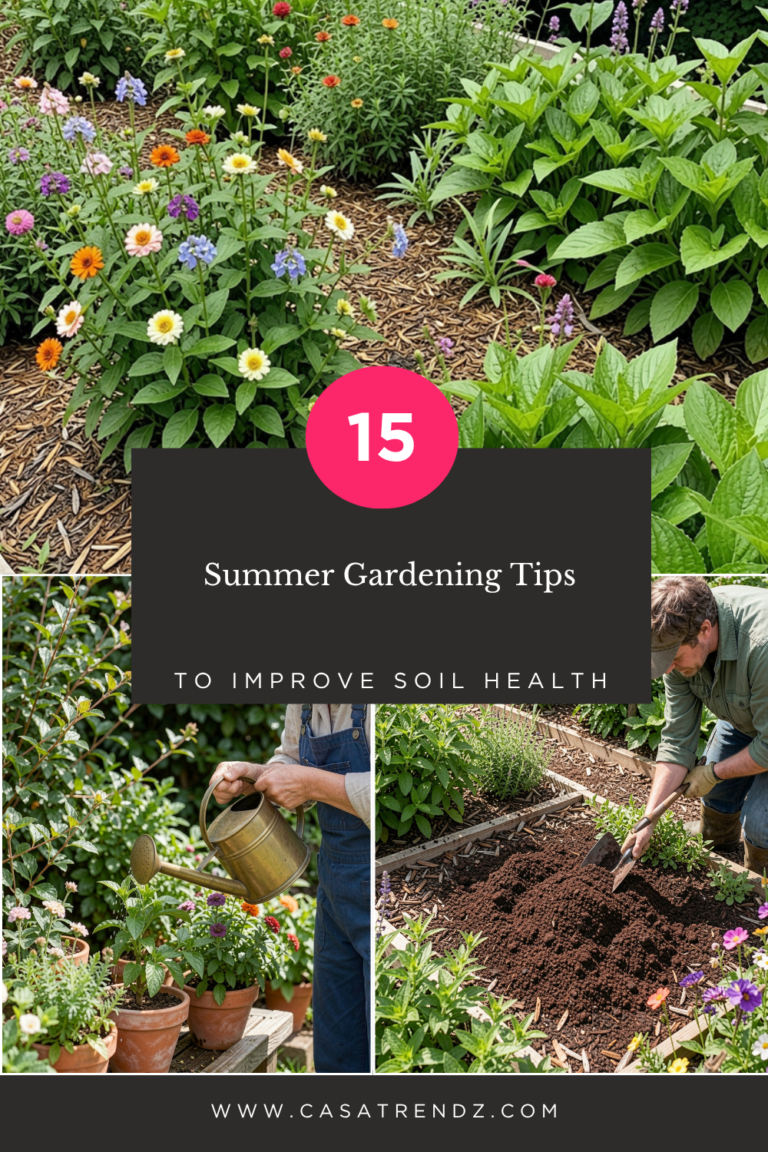 15 Summer Gardening Tips to Improve Soil Health