
13 Small Front Porch Ideas That Elevate Your Entrance on a Budget

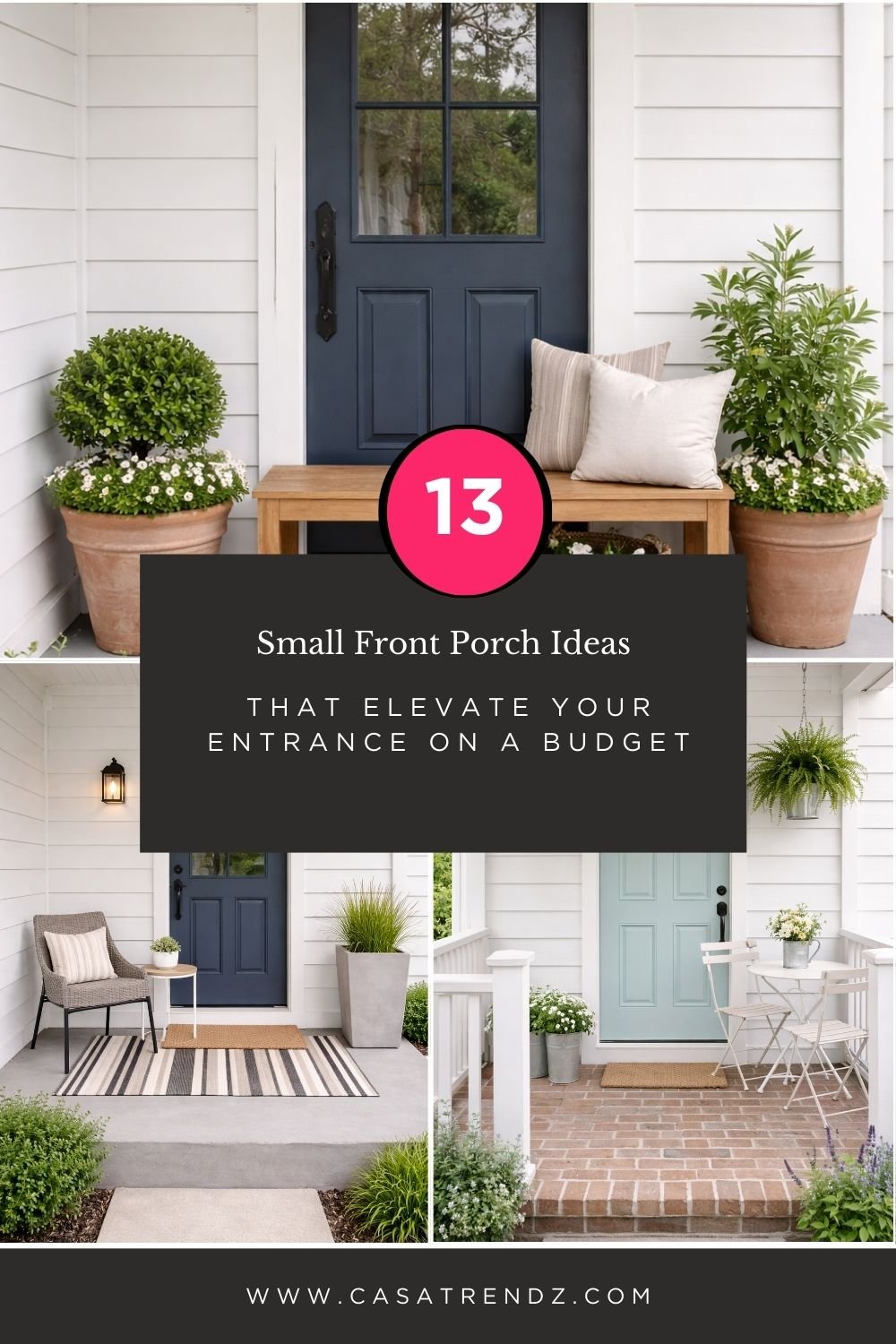
A small front porch may look like a limitation, but it is actually one of the best places in your home to make a big impression on a small budget. It is the first thing guests see, the backdrop for every welcome home, and the frame around your front door. When a porch is styled well, even a space that is only a few feet deep can feel warm, polished, and completely intentional. The secret is not buying more things. It is choosing the right few things, sizing them correctly, and placing them with care.
Most small porches fail for the same simple reasons: furniture that is too big for the space, a door that blends into the wall, flat lighting, or decor that piles up without a plan. Every idea in this guide fixes one of those problems, and every one of them can be done in a weekend for very little money. A gallon of paint, a pair of planters, a new rug, or a set of modern house numbers can change the whole feel of your entrance, and you can combine several ideas at once without the porch ever feeling crowded.
In this guide, we explore 13 small front porch ideas that elevate your entrance on a budget, from a statement front door color and vertical plant displays to affordable lighting, seating, symmetry, and smart storage. Each idea includes real materials, measurements, colors, and step by step tips you can use right away. Whether you rent or own, whether your porch is a narrow stoop or a cozy covered entry, these ideas will help you build an entrance that feels welcoming, looks expensive, and stays practical every single day.
1. Add a Statement Front Door Color
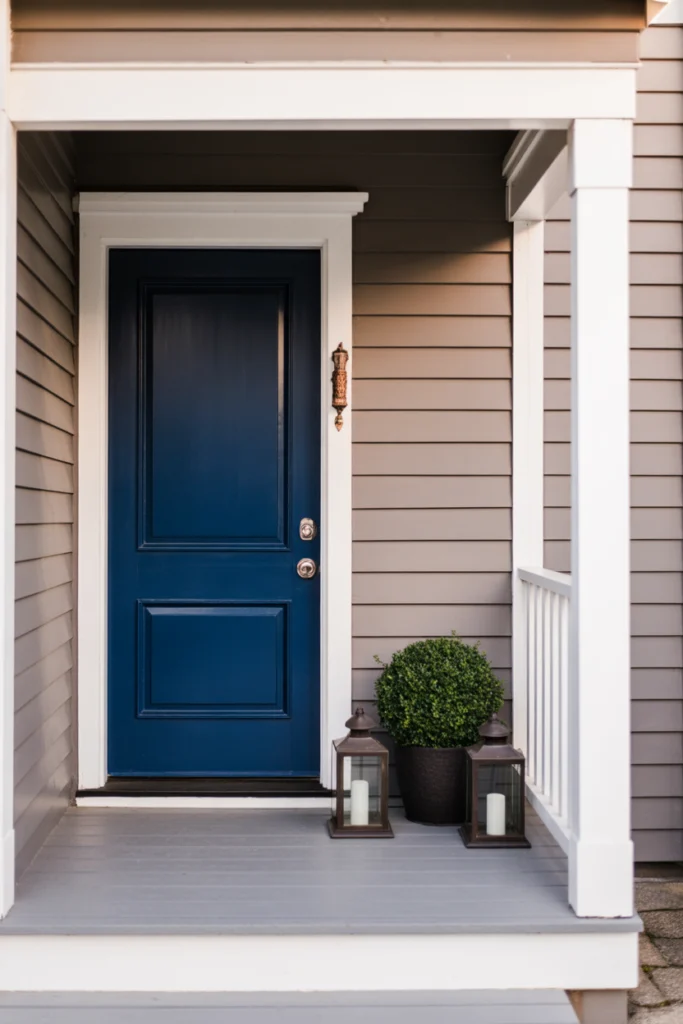
A bold front door color is the single most cost effective small front porch idea, because one gallon of paint can transform the entire entrance. Start by choosing a shade that works with your home exterior. Deep navy, forest green, and charcoal gray suit brick and stone homes, while sage green, dusty blue, and classic black look beautiful on white, cream, and gray siding. For a warmer look, try a rich cranberry, a muted terracotta, or a deep teal. Test the color first by painting a large swatch on a piece of cardboard and holding it against the door in morning and afternoon light, since paint looks very different in sun and shade. Most exterior doors need one quart of paint for two coats, and a quart of quality exterior acrylic paint costs about 15 to 25 dollars.
Prep work is what makes the paint job look professional. Remove the hardware or tape it off carefully, clean the door with a mild detergent, and sand any rough or peeling spots with 120 grit sandpaper. Use a good exterior primer if you are painting over a dark color or bare wood, then apply two thin coats with a high quality brush for the panels and a small foam roller for the flat areas. Let the first coat dry fully, usually two to four hours, before adding the second. Finish the look with updated hardware: a new handle set in matte black or brushed brass costs 30 to 60 dollars and makes the fresh color feel complete. Add a matching door knocker or a simple kick plate if your door takes a lot of wear, and your entrance will look brand new for the price of a dinner out.
2. Use Potted Plants for Vertical Interest
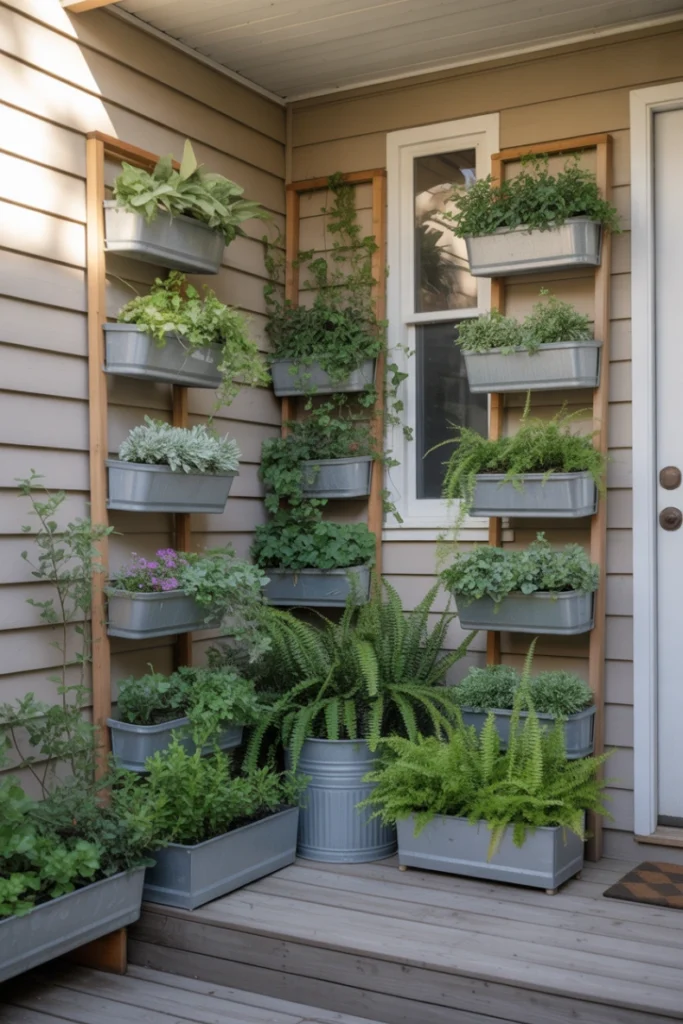
Potted plants bring life and color to a small front porch without eating up floor space, as long as you build upward instead of outward. A tall planter, 24 to 36 inches high, on each side of the door frames the entrance and draws the eye up, which makes a narrow porch feel taller and more grand. Fill tall planters with a simple thriller, filler, and spiller combination: one upright plant such as a dwarf evergreen, a snake plant, or a tall ornamental grass in the center, a mounding plant such as petunias, begonias, or dusty miller around it, and a trailing plant such as ivy or sweet potato vine spilling over the edge. For a low maintenance option, choose hardy evergreens such as boxwood, dwarf juniper, or a small topiary, which look good all year and need very little care.
Layering heights is the trick that keeps a plant display from looking flat. Place one tall planter directly on the floor, set a second medium pot, 14 to 18 inches tall, on a small plant stand or an overturned crate, and hang a third small planter from a wall bracket or a ceiling hook. Keep the pot styles in the same family, such as all matte ceramic, all concrete, or all galvanized metal, so the group looks curated rather than random. Always use pots with drainage holes and a saucer underneath, and water in the morning so the foliage dries before evening. In cold climates, swap tender summer plants for cold hardy choices such as ornamental kale, pansies, and evergreen sprigs in fall and winter, so your porch never looks bare. A small watering can kept by the door makes the routine easy, and a bag of potting mix and a slow release fertilizer will keep your plants thriving all season.
3. Install Affordable Outdoor Lighting
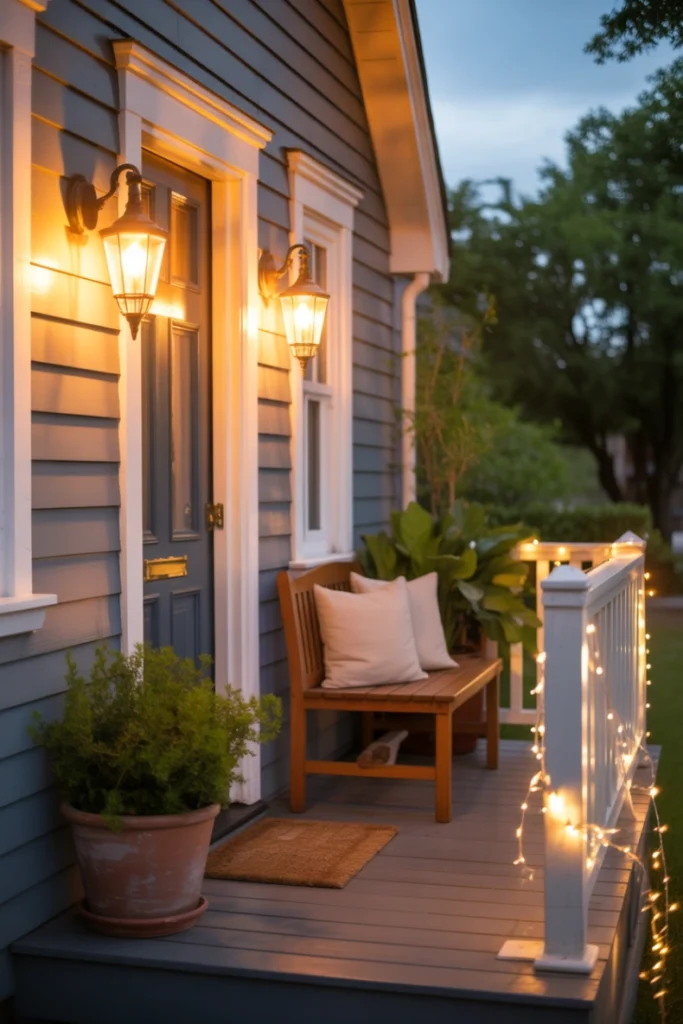
Outdoor lighting does double duty on a small front porch: it makes the entrance safer at night and it makes the whole house look more expensive after dark. Start with the fixture by the door. A single wall sconce or a pair of matching lanterns flanking the door, mounted 66 to 72 inches above the floor, gives the most flattering light. Choose warm white bulbs around 2700K, which cast a soft golden glow, and avoid harsh daylight bulbs that make a small porch feel like a parking lot. Solar powered lanterns and battery operated sconces cost 20 to 40 dollars each, need no wiring, and can be installed with just a drill and a few screws, which makes them perfect for renters. For a wired option, look for outdoor rated fixtures in matte black, oil rubbed bronze, or brushed nickel to match your door hardware.
Layer a second light source so the porch feels finished rather than lit by a single bulb. String lights are the easiest win: run one strand along the porch ceiling or the top of the railing, keeping the bulbs 8 to 10 feet above the floor so no one walks into them. Solar path lights, placed every 4 to 6 feet along the walkway, guide guests to the door and add a welcoming glow for about 3 to 5 dollars per light. Add a small lantern with a flameless candle on a step or a shelf for a soft flicker that costs almost nothing to run. If your porch has an overhead light, swap the bulb for a dimmable warm LED and add a simple timer so the light comes on at dusk automatically. For more fixture styles, finishes, and placement ideas, explore our outdoor light fixture ideas to find lighting that suits your porch size and your home style.
4. Add a Budget-Friendly Porch Rug
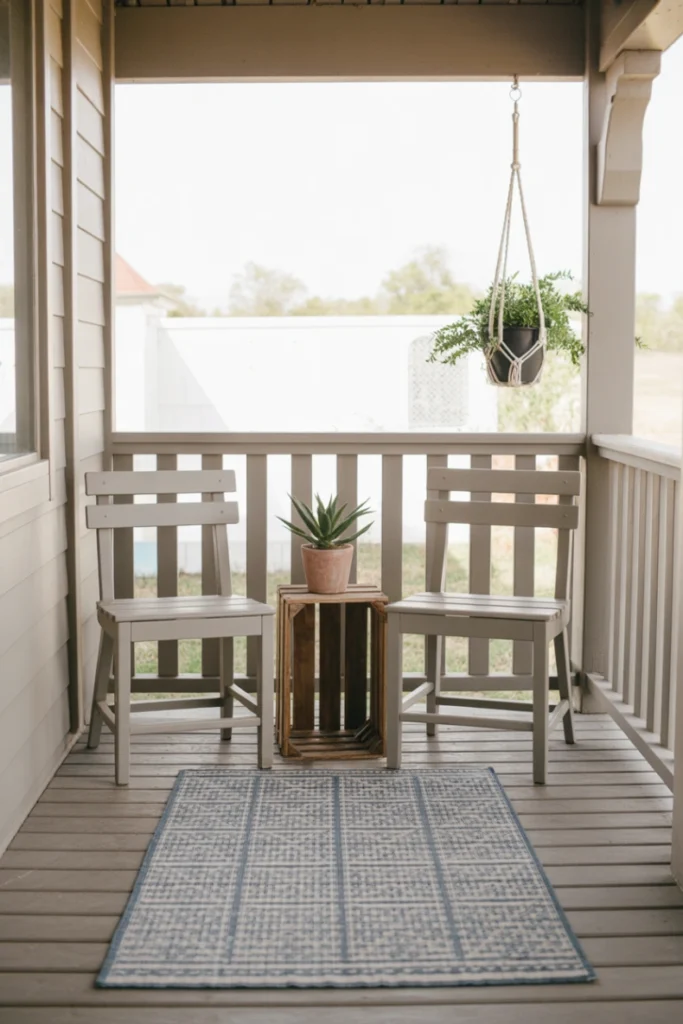
An outdoor rug is the fastest way to define a small front porch and make it feel like a real room instead of a bare slab of concrete. Size matters more than pattern: the rug should be wide enough to sit under the door swing and leave about 6 inches of floor visible on each side, which usually means a 2 by 3 foot rug for a tiny stoop, a 3 by 5 foot rug for a standard single door porch, and a 4 by 6 foot rug for a wider entry. Look for rugs made from polypropylene, recycled plastic, or coir, which handle rain, mud, and sun without rotting or fading. A flat weave rug is best for a door that swings outward, since a thick pile rug can catch under the door. Expect to pay 25 to 60 dollars for a good quality outdoor rug in these sizes, and much less if you catch an end of season sale.
Choose a pattern that flatters your home rather than fighting it. A simple striped rug in navy and white, a subtle geometric pattern in charcoal and cream, or a classic coir doormat layered over a larger patterned rug all work beautifully on small porches. Layering is a designer trick that costs little and looks expensive: place a larger patterned rug underneath, then center a smaller coir mat with a welcome message on top, leaving a 6 to 8 inch border of the bottom rug visible all around. Shake the rug out once a week and hose it down once a month to keep it fresh, and store it indoors during heavy snow or long rainy spells so it lasts for years. If your porch gets full sun, choose a rug with UV resistant fibers so the colors stay true. A rug also protects your porch floor from scratches and dirt, which makes it one of the most practical small front porch ideas as well as one of the prettiest.
5. Incorporate a Simple Seating Option
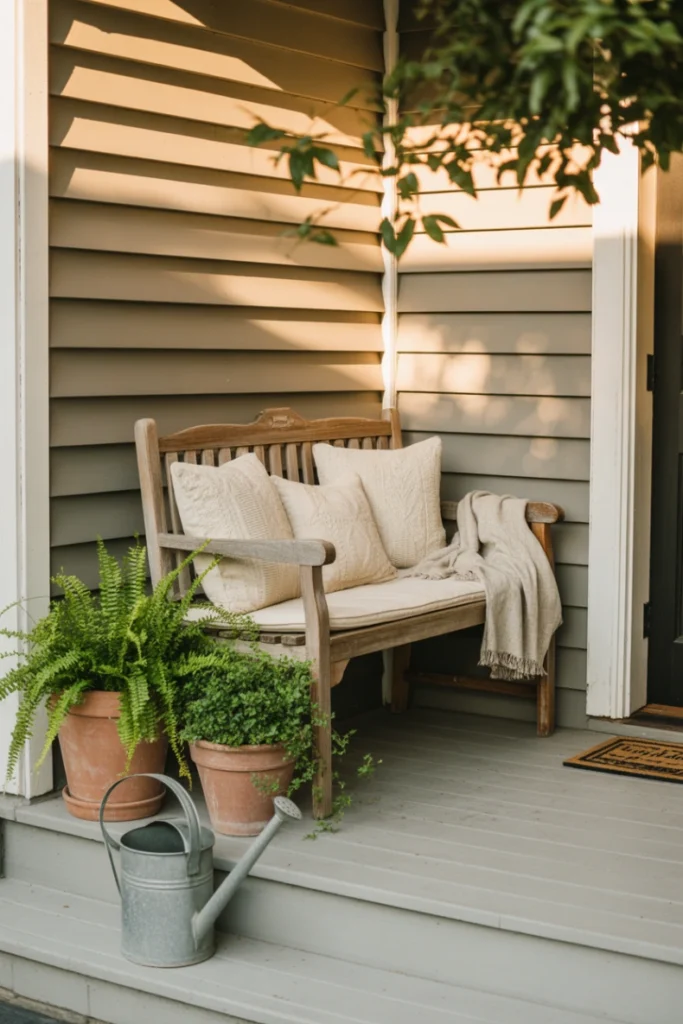
Even the smallest front porch feels more inviting with a place to sit, and the right seat turns a pass through space into a spot where you actually want to linger. Measure first, then shop. Leave at least 30 inches of clear walkway from the door to the steps, and choose seating that fits the remaining space. A single armless chair about 24 inches wide, a narrow bench 36 to 48 inches long and 14 to 16 inches deep, or a pair of small stools will fit almost any small porch. Wood, metal, and resin wicker all work outdoors, but resin wicker and powder coated metal need the least care. Add a seat cushion in solution dyed acrylic fabric, which resists fading and dries quickly after rain, and keep one throw blanket in a weatherproof box nearby for cool evenings.
Style the seating so it looks intentional, not like a chair that wandered outside by accident. Place a small side table or a wall mounted shelf within arm reach for a cup of coffee or a book, and add one cushion in a color pulled from your door, your rug, or your planters so the whole porch ties together. If floor space is truly tight, skip the chair and use a wall mounted folding seat or a storage bench that doubles as a place to stash shoes, dog leashes, and delivery packages. A bench with a hinged lid is especially useful, since it gives you seating and hidden storage in the same footprint. For more ways to style a small entry and choose furniture that fits, see our front porch decor ideas for layouts, color palettes, and seating arrangements that work on porches of every size.
6. Style with Symmetry for a Polished Look
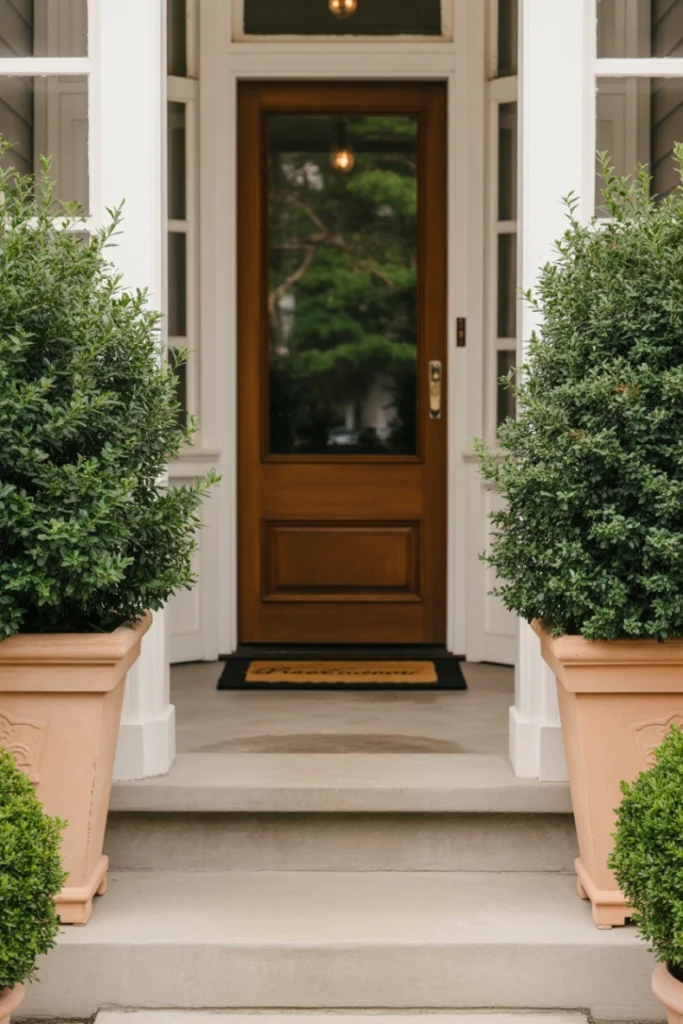
Symmetry is the oldest designer trick for making a small space look polished, and it costs nothing at all. When two matching elements frame your front door, the eye reads the entrance as balanced and deliberate, even if the porch itself is only a few feet wide. Start with a pair of identical planters, lanterns, or topiaries, one on each side of the door, placed the same distance from the door frame. A pair of 18 to 24 inch tall lanterns, a pair of matching wall sconces, or two identical potted evergreens all work. Keep the pair truly identical, same size, same color, same plant, because mismatched pairs look like an accident instead of a design choice. If your door is off center or your porch is wider on one side, use a taller item on the short side and a shorter one on the long side to restore the balance visually.
Symmetry also makes styling decisions much easier, because you only need to choose one side and repeat it. Place the same doormat centered on the door, hang the wreath at eye level, about 60 inches from the floor, in the exact middle of the door, and center the house numbers on the wall beside the door. If you add a bench or a chair on one side, balance it with a tall planter or a small side table on the other side so the weight of the porch feels even. Step back to the street and look at the porch from a distance, since that is how guests and neighbors see it. Small adjustments, moving a planter two inches to the left or raising a lantern by a few inches, can make a surprising difference. Symmetry works best when the rest of the porch stays simple, so resist the urge to add extra items once the pair is in place.
7. Hang a Seasonal Wreath
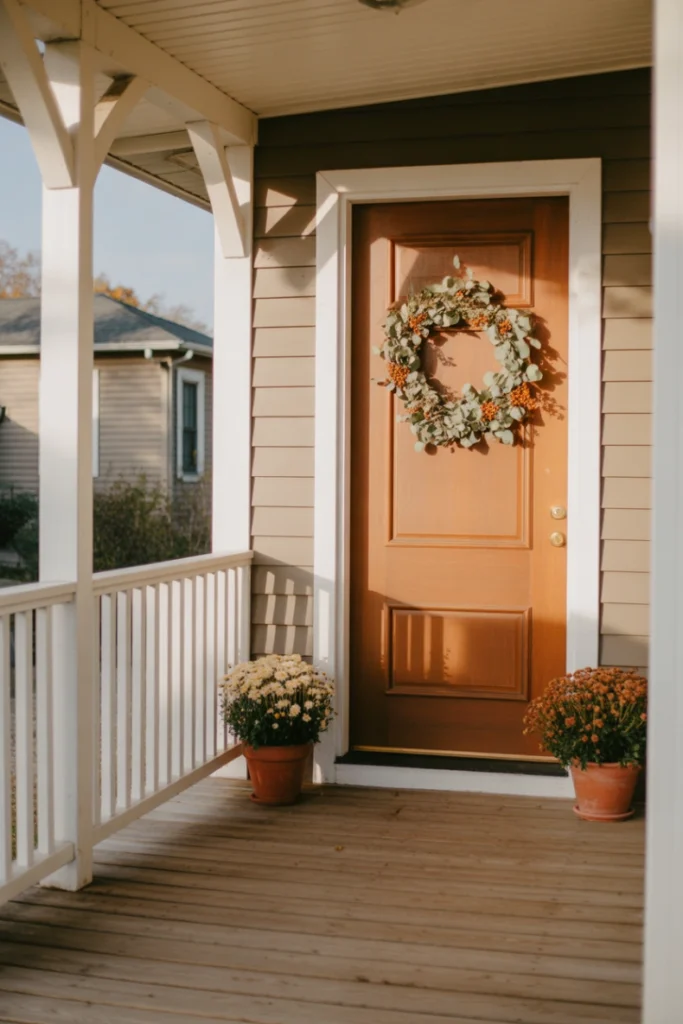
A seasonal wreath is the easiest way to refresh a small front porch four times a year without spending much or using any floor space. A wreath 18 to 24 inches across suits a standard 36 inch wide front door, while a 24 to 28 inch wreath looks better on a wider or double door. Hang it with a simple over the door hook, a suction cup hook rated for outdoor use, or a small nail, positioning the center of the wreath at about 60 inches from the floor, which is eye level for most adults. Faux greenery wreaths cost 25 to 50 dollars and last for years, while a fresh eucalyptus, magnolia, or evergreen wreath costs 20 to 40 dollars and fills the porch with a wonderful scent for a few weeks. A grapevine base is the most versatile starting point, since you can add and remove decorations as the seasons change.
Build one good base wreath and restyle it through the year instead of buying four separate wreaths. Start with a plain faux greenery wreath, then add spring tulips and a pastel ribbon in March, sunflowers and a gingham bow in summer, dried leaves, mini pumpkins, and a plaid ribbon in fall, and pinecones, berries, and a velvet bow in winter. Use floral wire or a hot glue gun to attach each element so it survives wind, and store the off season decorations in a labeled bag inside the wreath box. Keep the wreath simple and in scale with the door: three to five elements are enough, and a wreath that covers more than half the door width will look crowded. For more seasonal styling ideas that carry the same look from the porch into the rest of the entry, see our fall porch decor ideas for autumn color palettes, textures, and arrangements.
8. Use Wall-Mounted Decor to Save Space
Wall mounted decor is the small porch secret weapon, because it adds color, texture, and personality without taking a single inch of floor space. Start with the wall beside the door, which is usually empty and easy to reach. A wall planter with trailing greenery, a decorative wall hook for a hat or a dog leash, an address plaque, or a small piece of outdoor wall art can fill that blank space beautifully. Choose pieces made from weather resistant materials such as powder coated metal, treated wood, teak, or resin, and mount them with outdoor rated screws and wall anchors so they stay secure in wind and rain. Keep the scale modest: a wall planter 12 to 18 inches wide, or a sign 12 by 18 inches, suits a small porch, while anything larger will overwhelm the door.
Think in layers when you style the wall. Hang one larger piece, such as a wall planter or a decorative mirror, at eye level, then add one smaller piece below or beside it, such as a small lantern or a hook. A mirror deserves special mention: an outdoor rated mirror hung on the porch wall reflects light and greenery, which makes a narrow porch feel wider and brighter. Avoid hanging anything that blocks the door swing or sits where people will brush against it when they walk past. If you rent, use heavy duty outdoor adhesive hooks and removable mounting strips rated for your item weight, and always check the weight limit before you hang anything glass. Wall decor also gives you a place to change things seasonally, a small chalkboard sign, a hanging basket of flowers, or a lantern can be swapped in minutes whenever you want a fresh look.
9. Upgrade House Numbers for Instant Impact
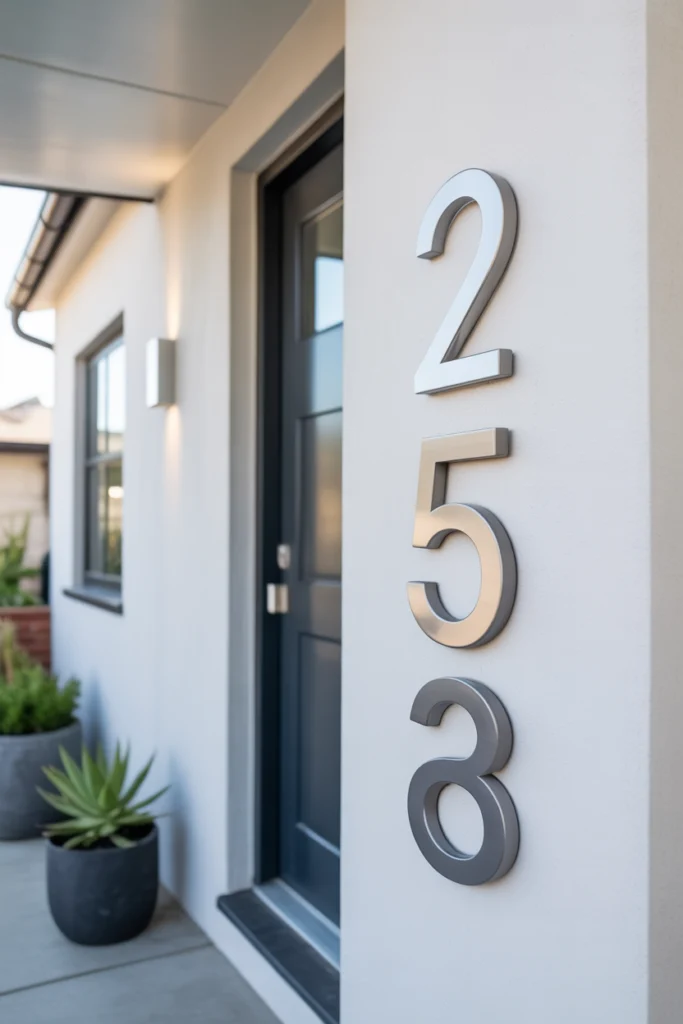
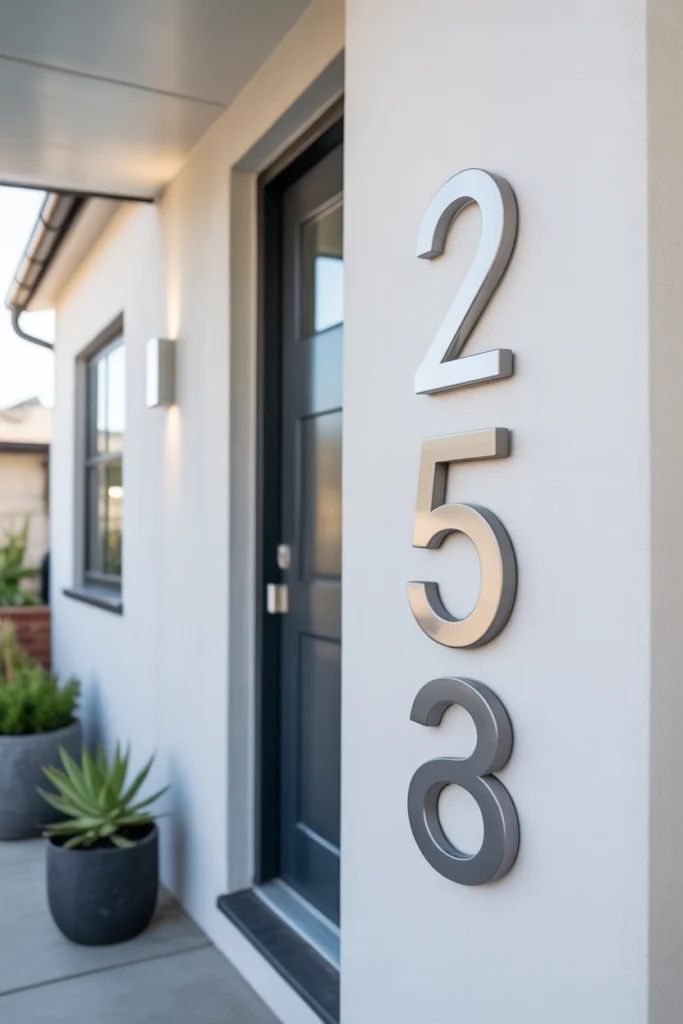
Modern house numbers are a small detail with an outsized effect, and they cost far less than most people expect. Old, faded, or mismatched numbers make a home look dated, while clean modern numbers signal that the whole house is well cared for. Choose numbers 4 to 6 inches tall so they are easy to read from the street, and pick a style that matches your home: sleek sans serif numbers in matte black or brushed nickel suit modern and contemporary homes, while classic serif numbers in oil rubbed bronze or white suit traditional and farmhouse styles. A set of individual numbers costs 15 to 40 dollars, and a complete plaque with the numbers already mounted costs 40 to 90 dollars. Floating numbers, which stand off the wall on small spacers, cast a subtle shadow that looks especially polished.
Placement matters as much as style. Mount the numbers on the wall beside the door, on the door frame, or on a vertical plaque near the entrance, keeping them at eye level, about 60 to 66 inches from the floor, and centered in the space where they sit. If your porch is dark, choose numbers with a light finish on a dark plaque, or add a small solar light above them so delivery drivers and guests can find you after dark. Make sure the numbers are visible from the street and not hidden behind plants, wreaths, or porch furniture. Before you drill, hold the numbers in place with painter tape and step back to the curb to check the spacing and alignment. Use a level and a simple paper template to mark the screw holes, drill pilot holes, and mount the numbers with the screws or standoffs that come in the kit. The whole job takes about 20 minutes, and the result looks like a much bigger renovation than it is.
10. Add a Narrow Console or Shelf
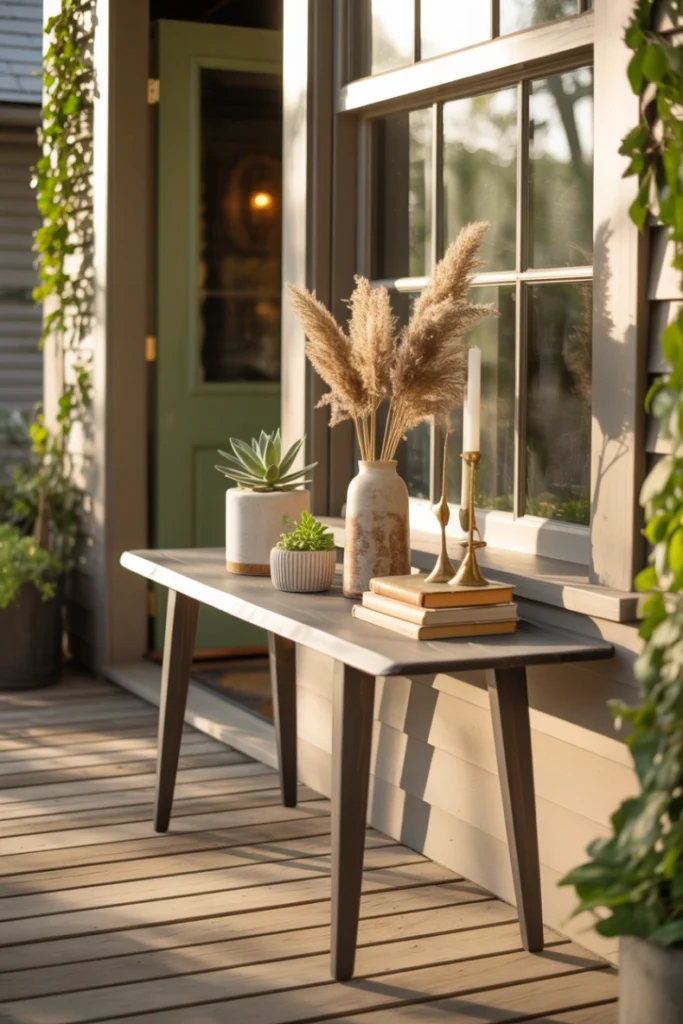
A narrow console table or a wall mounted shelf gives a small front porch a useful surface without crowding the walkway, and it is one of the most practical upgrades you can make. Look for a console 10 to 12 inches deep and 30 to 36 inches wide, which leaves plenty of room to walk past while still holding a lantern, a small plant, and a tray for keys or mail. A wall mounted shelf 8 to 10 inches deep works even better on a very narrow porch, since it uses no floor space at all. Choose weather resistant materials such as teak, cedar, powder coated metal, or outdoor rated resin, and avoid untreated indoor furniture, which will warp and peel after the first rain. A folding console that drops flat against the wall is a smart choice for the narrowest porches, since you can fold it away when you need the full walkway.
Style the surface lightly, since a crowded console defeats the purpose. Place one taller item at one end, such as a lantern or a small potted plant, one low item in the middle, such as a stack of two books or a small tray, and leave the rest of the surface empty. Keep a small basket or a lidded box on the lower shelf for shoes, umbrellas, or pet supplies, so clutter stays out of sight. If your console sits near the door, add a small dish or a hook above it for keys, and a boot tray underneath for muddy shoes. Anchor the console to the wall with a furniture strap if you have small children, and check the shelf brackets once a season to make sure they are still tight. With one slim surface in place, your porch gains a spot for packages, a place to set down groceries while you unlock the door, and a display area that makes the entrance feel complete.
11. Refresh with Neutral Paint and Finishes
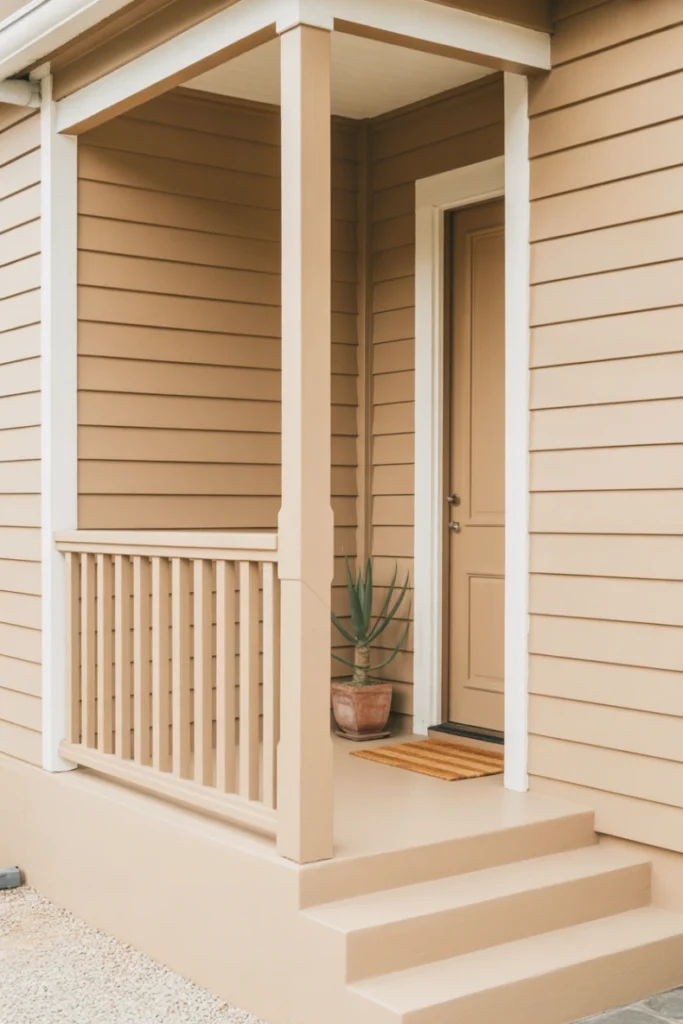
Neutral paint is the quiet workhorse of small porch design, because it makes a tight space feel larger, cleaner, and more timeless than any bold color can. A fresh coat of warm white, soft greige, light gray, or pale sage on the porch walls, trim, railings, or floor instantly brightens the entrance and gives your decor a clean backdrop. Light colors reflect natural light, which is especially valuable on a covered porch that gets little direct sun. If your porch floor is stained or worn, a coat of porch and floor paint in a soft gray or warm taupe costs about 30 to 50 dollars per gallon, covers about 300 square feet, and can make old concrete or wood look brand new. Always use paint labeled for exterior porches and floors, which resists scuffs, moisture, and peeling far better than standard wall paint.
Prep the surface properly and the finish will last for years. Sweep and scrub the floor with a degreasing cleaner, let it dry completely, then sand any rough or peeling areas and fill cracks with an exterior filler. Apply one coat of primer if you are painting over a dark color or bare wood, then two thin coats of paint, letting each coat dry for at least four hours. Paint the ceiling a bright white, which reflects light downward and makes a low porch ceiling feel higher, and paint the trim a shade lighter or darker than the walls for a subtle contrast. Once the neutrals are in place, your door color, your rug, and your planters will stand out more, and you can change the accent colors seasonally without repainting anything. Neutral finishes also help if you ever sell the home, since buyers read a clean neutral porch as well maintained and move in ready.
12. Layer Textures with Simple Accessories
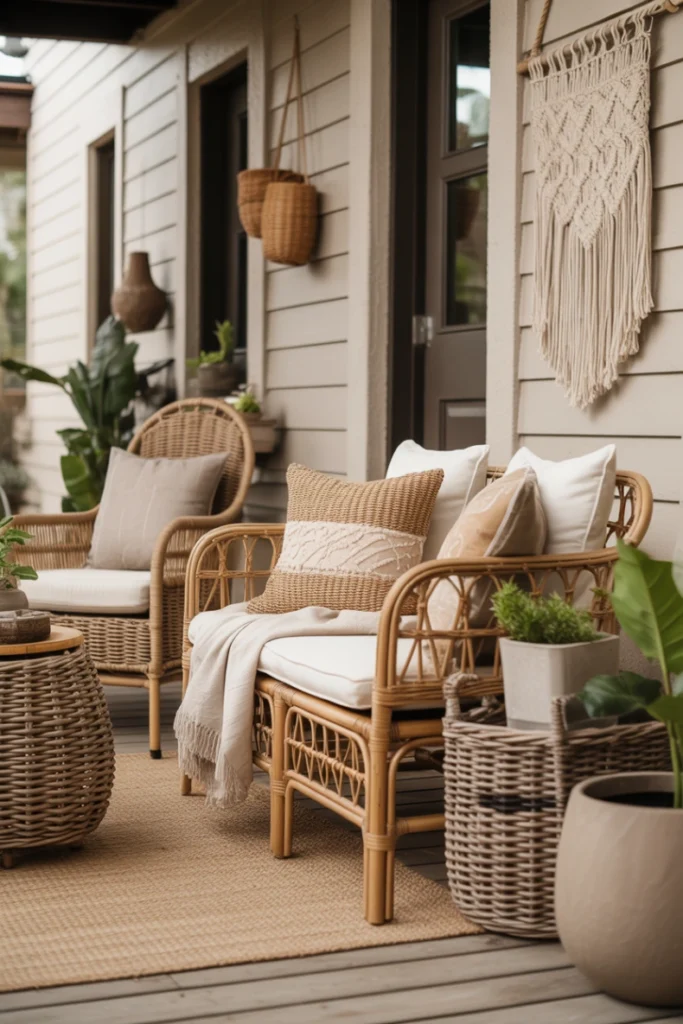
Texture is what makes a small front porch feel rich and layered instead of flat and plain, and it works best when the color palette stays calm. Combine three or four different textures in one small space: a woven seagrass basket, a smooth ceramic planter, a rough coir doormat, a soft outdoor cushion, and a weathered wood lantern, for example. Each material catches the light differently, which adds depth without adding visual clutter. Keep the colors within one family, such as warm neutrals with one accent, so the textures do the talking instead of competing colors. A basket in natural seagrass, a planter in matte terracotta, a cushion in warm cream linen, and a lantern in black metal is a combination that works on almost any porch.
Add texture in small, practical pieces that earn their place. A woven basket beside the door holds an extra throw blanket or a pair of gardening gloves. A textured planter, such as ribbed ceramic or hammered metal, looks interesting even when the plant inside is simple. A cushion with a subtle woven pattern or a piped edge feels more expensive than a flat cushion in the same color, and a nubby outdoor throw draped over a chair arm adds softness that balances the hard surfaces of concrete and brick. Swap one or two textures with the seasons: a chunky knit throw and a wool look cushion in fall, a light linen cushion and a rattan basket in summer. The rule is simple: if an accessory is not useful or beautiful, take it off the porch. Three well chosen textured pieces will always look better than ten random ones.
13. Keep It Minimal but Intentional
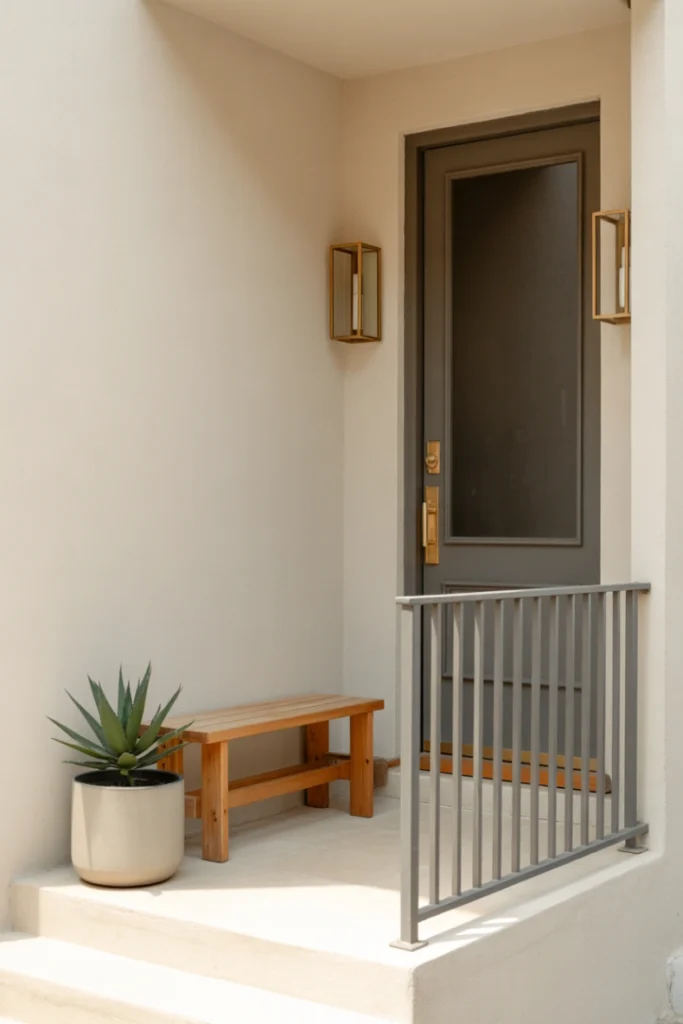
Minimalism is the most powerful approach for a small front porch, because every piece you leave out makes the pieces you keep look better. Start by removing everything from the porch, then add back only the items that serve a clear purpose or bring you real joy: a doormat, one pair of planters, a wreath, a light, and a seat if there is room. That is usually enough. A clean porch shows off your door color, your house numbers, and your architecture, which are the features that actually raise curb appeal. It also makes the porch easier to clean, since you can sweep the whole floor in two minutes, and it keeps the walkway clear for guests, strollers, and deliveries.
Being intentional means every item has a reason to be there and a place where it belongs. Choose a simple color palette of two or three colors and repeat it in the door, the rug, the cushions, and the planters, so the porch reads as one calm design. Leave empty space on purpose: an empty stretch of wall or floor is not wasted space, it is breathing room that makes the porch feel larger. Before you buy anything new, ask whether it replaces something worse or adds something missing. If the answer is no, skip it. If you want to extend the same calm, uncluttered feeling beyond the front door, our outdoor entertaining area ideas show how to carry a simple palette and clean layout into patios, decks, and garden seating areas. A minimal porch is not an empty porch, it is a porch where every single piece was chosen on purpose.
Conclusion
Designing a stylish front porch does not require a large budget or expansive space. These 13 small front porch ideas demonstrate how thoughtful choices in color, layout, and decor can elevate your entrance while remaining affordable. A painted door, a pair of planters, warm lighting, and a good rug can transform a plain stoop into a welcoming statement, and each idea works on its own or combined with the others. By focusing on balance, functionality, and simplicity, you can transform even the smallest porch into an entrance you are proud of.
With strategic updates and intentional styling, your front porch can reflect your personal taste while enhancing curb appeal. Whether you choose one idea or combine several, these solutions make it easy to create a beautiful entrance that feels polished, inviting, and budget friendly. Start with the idea that will make the biggest difference for your porch, finish it this weekend, and enjoy the change every time you come home.
Frequently Asked Questions
How much does it cost to decorate a small front porch on a budget?
You can transform a small front porch for 100 to 300 dollars if you focus on the highest impact changes. A quart of exterior paint for the door costs 15 to 25 dollars, an outdoor rug costs 25 to 60 dollars, a pair of planters with plants costs 40 to 80 dollars, and a set of modern house numbers costs 15 to 40 dollars. Start with the door color and the rug, which give the most visible change for the least money, then add lighting and plants in a second round. Shopping end of season sales and thrift stores can cut the total even further.
What size rug should I use on a small front porch?
Choose a rug that leaves about 6 inches of floor visible on each side and fits under the door swing. A 2 by 3 foot rug suits a tiny stoop, a 3 by 5 foot rug fits most single door porches, and a 4 by 6 foot rug works for a wider entry. Use a flat weave outdoor rug made from polypropylene or coir so the door clears it easily, and layer a smaller coir doormat on top for a finished designer look. Always measure your porch and your door clearance before you buy.
How do I decorate a very narrow front porch?
Build upward instead of outward. Use wall mounted planters, wall lanterns, and a narrow wall shelf to add decor without using floor space. Choose a single slim chair or a folding seat instead of a full seating set, and keep the walkway at least 30 inches clear. A pair of tall narrow planters flanking the door draws the eye up and makes the porch feel taller, while a mirror on the wall reflects light and makes the space feel wider. Keep the color palette simple and limit yourself to a few well chosen pieces.
What plants work best on a small front porch?
Choose plants that suit your light and your climate. For sunny porches, try petunias, geraniums, lavender, and ornamental grasses. For shady porches, try ferns, hostas, begonias, and impatiens. For year round structure, use hardy evergreens such as boxwood, dwarf juniper, or a small topiary, which look good in every season. Always use pots with drainage holes, water in the morning, and swap tender summer plants for cold hardy choices such as pansies and ornamental kale in fall and winter.
How can I make my front porch look expensive without spending a lot?
Focus on the details that read as quality: a freshly painted door in a rich color, matching hardware in matte black or brushed brass, modern house numbers, warm lighting, and a pair of identical planters framing the door. Keep the color palette to two or three colors, repeat them across the rug, cushions, and planters, and remove anything worn, faded, or mismatched. Symmetry, clean lines, and a tidy, uncluttered layout make a porch look far more expensive than the amount you actually spent.
More Ideas You Will Love
 15 Eco-Friendly Cooling Tips to Naturally Keep Your Home Fresh
 18 DIY Christmas Wreath Ideas for 2025 You Can Make at Home
 17 Easy Summer Coffee Table Styling Ideas for a Fresh Look
 14 Modern Farmhouse Exterior Design Ideas You’ll Fall in Love With
 13 Reasons Why Window Boxes Are the Perfect Summer Decor
 16 Exterior Wall Design Ideas: Modern & Stylish Facade Trends