
15 Garden Design Ideas: Transform Your Outdoor Space with Style

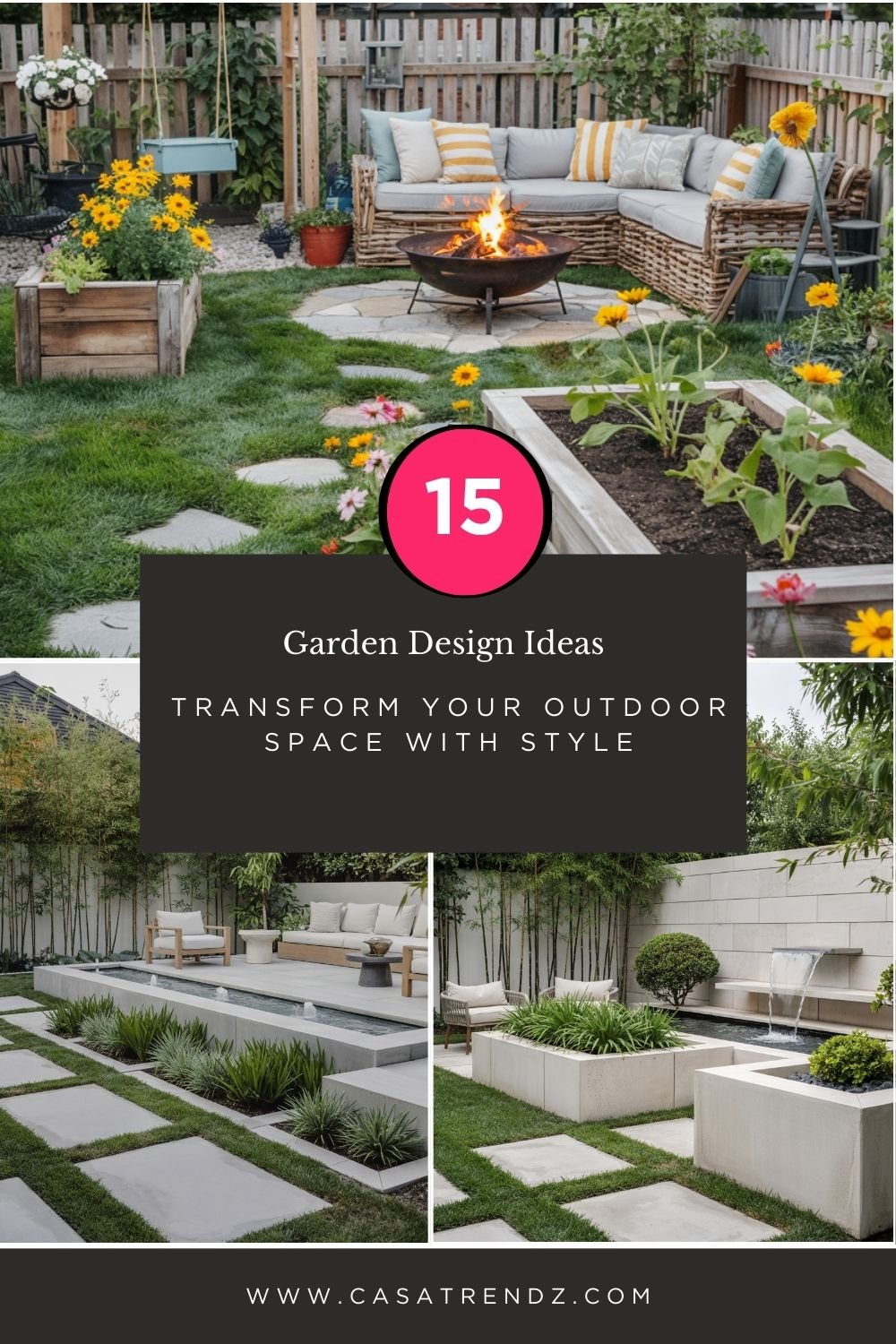
A thoughtfully designed garden can completely change how your outdoor space looks, feels, and works. Whether you have a small backyard, a wide lawn, or a compact courtyard, the right plan turns an empty patch of ground into a place you actually want to spend time in. A good garden adds curb appeal, gives you room to relax and entertain, and can even raise your property value.
The secret is to start with how you want to use the space, then choose a style that fits your home, your climate, and the amount of maintenance you are happy to do. A garden that looks beautiful in photos but needs hours of work every weekend will not stay beautiful for long. The ideas below cover fifteen proven styles, from clean modern layouts to lush tropical planting, and each one includes practical detail on materials, spacing, colors, and the steps to build it.
Read through the styles, pick the one that matches your home, and borrow details from the others to make it your own. Even a single well planned bed, path, or seating area can transform the whole yard.
1. Modern Minimalist Garden Design
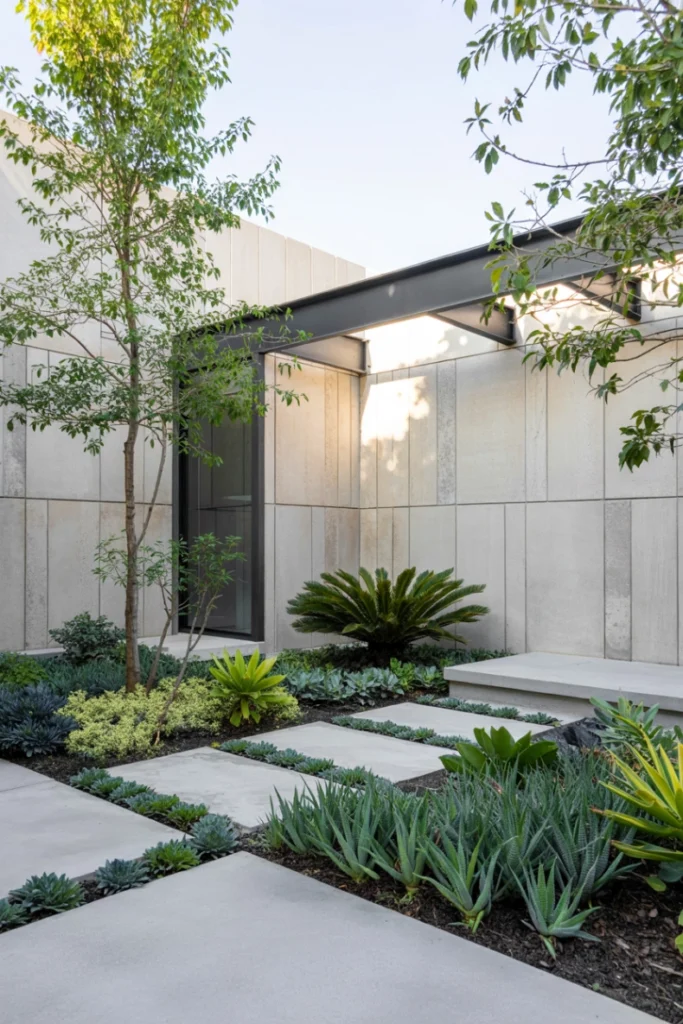
Modern minimalist garden design is built on simplicity, structure, and intentional spacing. Every element earns its place. Clean lines, geometric beds, and a limited palette of two or three colors keep the space calm and uncluttered. Hardscaping does most of the visual work here, with concrete pavers, stone borders, and raised planters defining the layout while plants are chosen for their shape rather than their abundance.
Start by sketching a simple grid. A common layout uses one straight path, about 90 to 120 cm wide, running from the house to a focal point such as a single sculptural tree or a low water bowl. Keep beds in crisp rectangles or long strips, edged with steel or stone so the lines stay sharp. Choose a restrained plant palette: ornamental grasses like blue fescue, evergreen shrubs such as boxwood, and one architectural plant like a Japanese maple or an agave. Repeat the same three or four plants through the whole garden so the design reads as one composition instead of a collection of random pots.
Maintenance stays low because there is less to prune and fewer beds to weed. A 5 to 8 cm layer of dark gravel or bark mulch suppresses weeds and ties the beds together visually. Add subtle lighting, such as low bollard lights along the path or a single uplight on the feature tree, and the garden looks just as good after dark. This style suits urban homes and contemporary architecture best, and it works especially well in small yards where clutter would make the space feel cramped.
2. Cottage-Style Garden Design
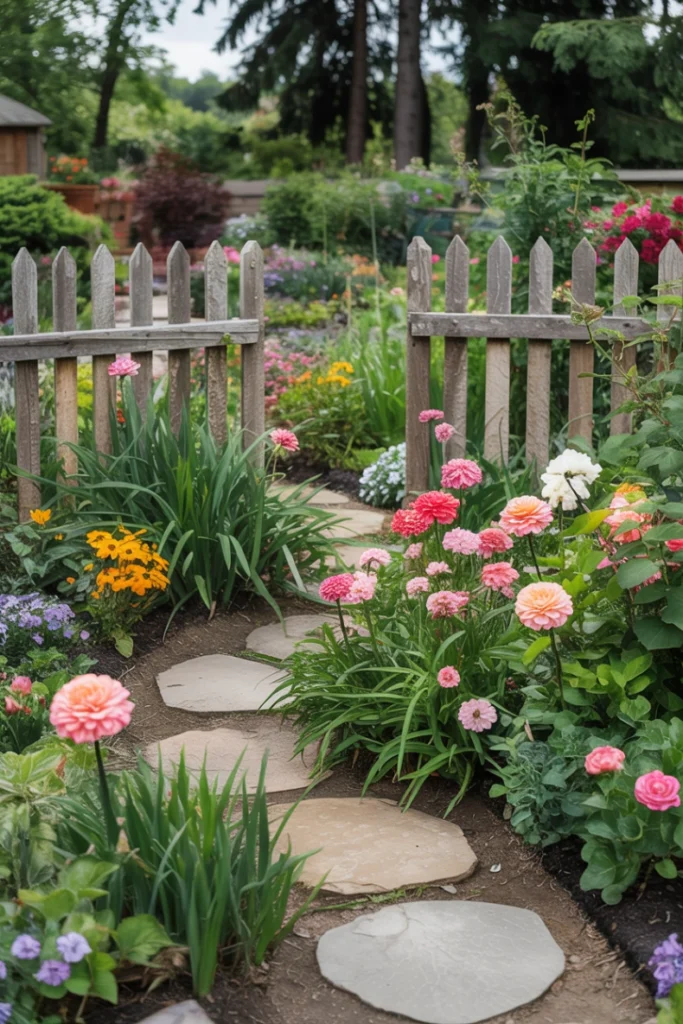
Cottage-style garden design is romantic, relaxed, and deliberately a little untamed. It embraces abundance, mixing flowering plants, shrubs, and herbs in layered beds that look as if they grew there naturally. Curved paths, informal planting, and overflowing borders give cottage gardens their signature charm, and the style rewards gardeners who enjoy a landscape that changes with the seasons.
Build the layers first. Plant tall growers at the back, such as hollyhocks, delphiniums, or foxgloves reaching 120 to 180 cm, then mid-height roses, lavender, and salvias at 45 to 90 cm, and finish the front edge with low growers like catmint, geraniums, or creeping thyme. Aim for groups of three or five of each plant rather than single specimens, and let plants spill over path edges by 10 to 15 cm for that soft, abundant look. A winding path of brick, gravel, or stepping stones, about 75 to 90 cm wide, adds to the informal feel.
Use natural, weathered materials: a wooden picket fence, a stone edging, a vintage watering can, or a simple wooden bench tucked into a shady corner. Herbs such as rosemary, thyme, and mint are practical as well as pretty, and they fill the air with scent when brushed past. Cottage gardens need regular deadheading and a yearly cut-back in late winter, but the payoff is a garden that looks full and generous from spring through fall. This style fits traditional homes and countryside settings beautifully, and it adapts well to suburban front yards too.
3. Small Garden Design Ideas
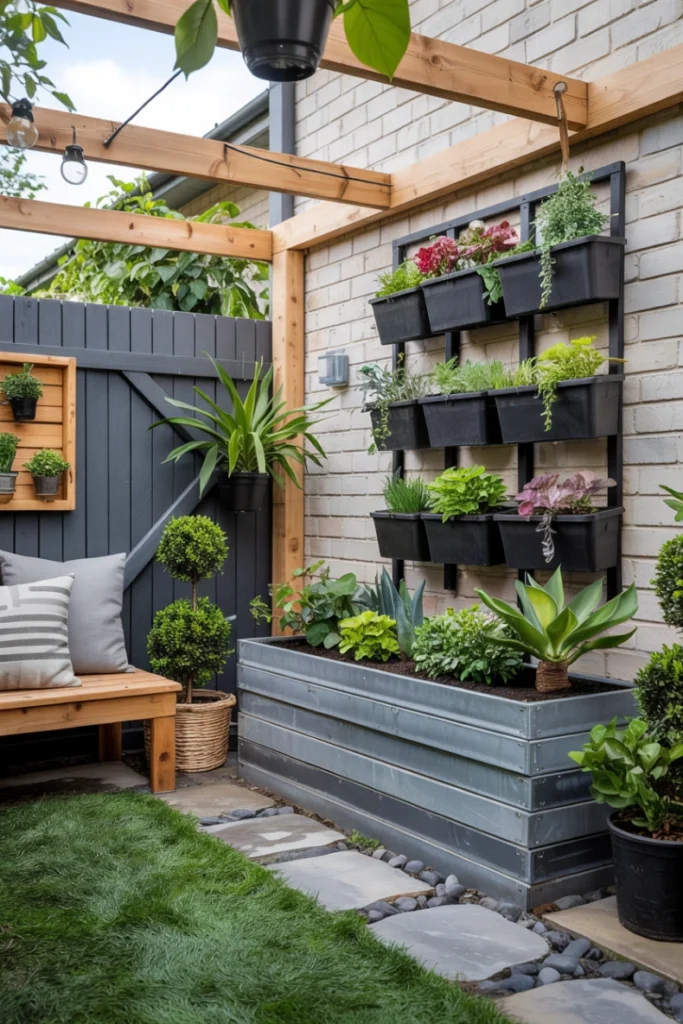
Small garden design ideas focus on getting maximum impact from limited space. Even a compact yard, balcony, or courtyard can feel spacious and inviting with the right layout and plant choices. The trick is to think in zones and in layers: use height, mirrors, and light colors to stretch the space visually, and choose plants that stay compact so nothing overwhelms the area.
Divide the space into two or three clear zones, even in a yard of only 20 to 30 square meters. A small seating corner with two chairs and a side table, a planting bed along one wall, and a narrow path between them is enough to make the garden feel designed rather than crowded. Vertical gardening is your best friend here: wall planters, trellises, and tiered plant stands add greenery without taking floor space. Grow climbers like jasmine, clematis, or star jasmine up a fence, and use raised beds 30 to 45 cm high to define the edges and add planting depth.
Choose light colors for walls, paving, and furniture, since pale stone, white paint, and light wood reflect light and make boundaries recede. A mirror fixed to a shaded wall can double the sense of depth, but angle it so it reflects greenery, not the house. Pick compact plants such as dwarf boxwood, lavender, hostas, and ornamental grasses, and keep one clear sightline through the garden so the eye travels to the far end. With careful planning, a small garden can hold seating, planting, and decoration without ever feeling cluttered.
4. Luxury Garden Design
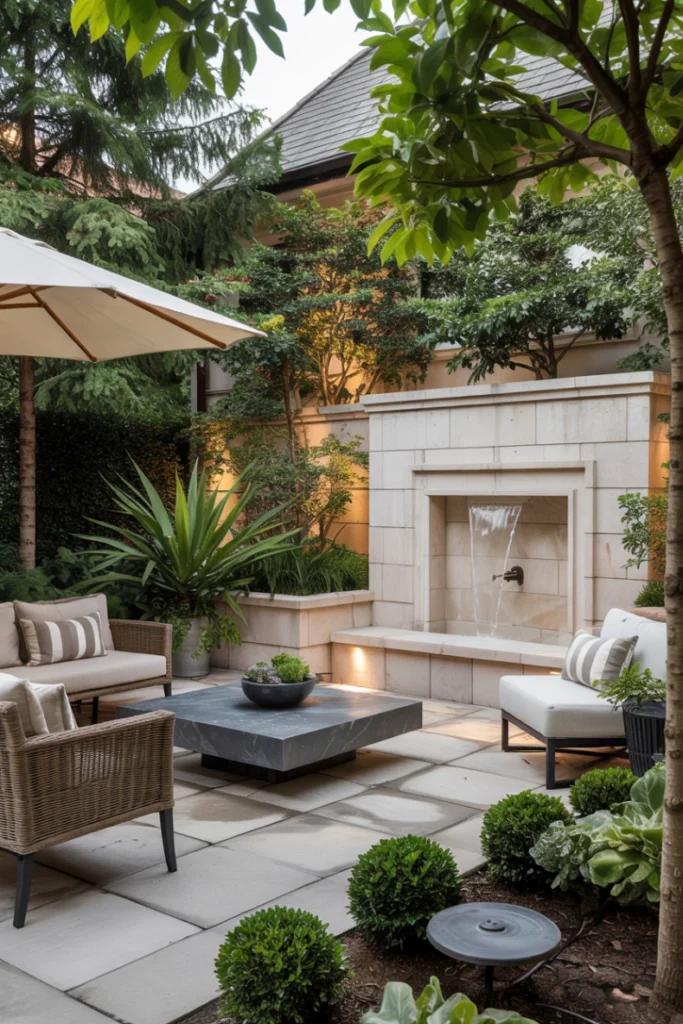
Luxury garden design is about elegance, comfort, and high-quality materials. Manicured lawns, sculpted plants, water features, and premium outdoor furniture create a polished, resort-like feel, and symmetry plays a big role: matched planters on either side of a path, a central fountain, or a pair of identical trees framing a view all signal intentional, high-end design.
Invest in the bones first. A level lawn, edged cleanly with stone or steel, sets the standard for everything else. Add one statement water feature, such as a rectangular reflecting pool or a tiered stone fountain, and place it on the main axis of the garden so it anchors the view from the house. Choose furniture in weatherproof teak, powder-coated aluminum, or woven resin, and dress it with outdoor cushions in a tight palette of cream, charcoal, and one accent color such as deep green or terracotta. A built-in outdoor kitchen or a fire pit turns the garden into a true entertaining space, and our backyard fire pit ideas show how to place one safely and style it for evening gatherings.
Layered lighting is what makes a luxury garden work after sunset. Combine low path lights, uplights on specimen trees, and warm string lights or lanterns over the seating area, all on a timer or smart dimmer. Keep planting structured: clipped boxwood hedges, topiary balls, and repeated drifts of white or pale flowers read as expensive because they are disciplined. Luxury gardens do need regular professional maintenance, so budget for weekly lawn care and seasonal pruning, or choose slow-growing, low-maintenance plants to keep the upkeep realistic.
5. Natural Landscape Garden Design
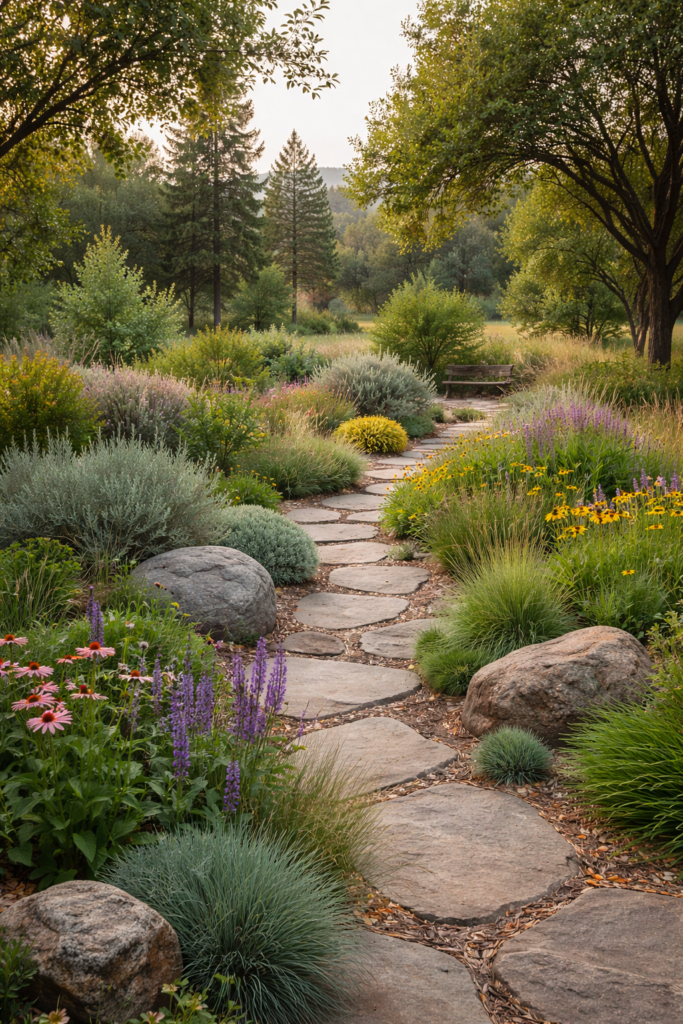
Natural landscape garden design aims to blend seamlessly with the surrounding environment. Instead of strict symmetry, it follows the land’s contours and existing features, using native plants, organic shapes, and minimal interference with nature. The result is a garden that looks like it belongs exactly where it is, and one that supports local wildlife at the same time.
Start by observing your site. Note where water collects, which areas get full sun, and which trees already thrive. Choose native plants first, since they need less water and fertilizer and are already adapted to your soil and climate. In most regions, native grasses, wildflowers, and shrubs form the backbone; add a few drifts of seasonal color, such as coneflowers, black-eyed Susans, or native salvias, planted in loose groups of five to seven. Let beds curve gently rather than cutting straight lines, and use natural stone, gravel, or bark paths that follow the ground instead of fighting it.
Leave part of the garden a little wild. A wildflower patch, a log pile for insects, or a small rain garden in a low spot all add ecological value and visual interest. A natural style also adapts beautifully through the seasons, and our fall garden decor ideas show how to style this look with pumpkins, ornamental grasses, and warm autumn color. Maintenance is lighter than in formal gardens: one or two cut-backs a year and occasional weeding are usually enough, which makes this style ideal for eco-conscious homeowners who want beauty without constant work.
6. Japanese Zen Garden Design
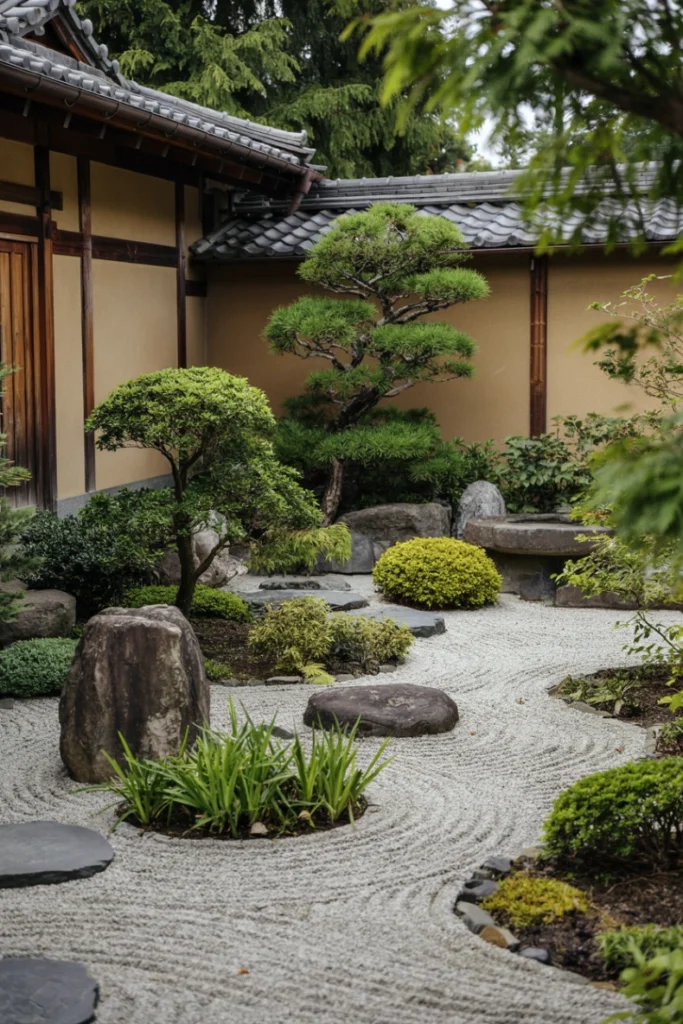
Japanese Zen garden design is built on tranquility, balance, and simplicity. Gravel, stones, water, and carefully pruned plants are arranged with intention, and every element carries symbolic meaning. A Zen garden is not meant to be busy; it is meant to slow you down and give you a quiet place to think.
The classic elements are few: raked gravel or sand to suggest water, a small number of large rocks placed in odd-numbered groups, a stone lantern, and restrained planting. Rake the gravel into smooth, curved patterns around the stones, using a wooden rake with teeth spaced about 2 to 3 cm apart, and re-rake every week or two to keep the lines crisp. Choose plants sparingly: a single Japanese maple for seasonal color, a cloud-pruned pine or juniper, moss or low ground cover between stones, and bamboo along one edge for height and sound. A small water basin or a bamboo fountain adds gentle movement and the sound of trickling water.
Keep the palette to greens, grays, and natural wood tones, and resist the urge to add bright flowers or extra ornaments. A simple wooden bench or a flat stepping stone gives you a place to sit and look at the composition. Zen gardens work well in quiet corners, courtyards, or a dedicated meditation space, and they suit small areas because they rely on empty space as much as on planting. The maintenance is meditative too: raking, pruning, and sweeping become part of enjoying the garden rather than chores to rush through.
7. Garden Design with Seating Areas

A garden without seating is a garden you only look at. Adding seating turns it into a living space where you can relax, read, eat, or entertain, and the right seating area can become the most used spot in your whole home during the warmer months. The key is to place seating where the garden is at its best, near a focal point, in dappled shade, or with a view across the planting.
Plan the size around how you will use it. A quiet reading corner needs only about 2 by 2 meters, with one comfortable chair and a small side table. A dining area for six needs at least 3 by 3 meters of level paving, plus 90 cm of clearance behind each chair so people can pull out comfortably. A lounge area with a sofa and coffee table works best at around 3 by 4 meters. Build the base from stone pavers, decking, or compacted gravel on a weed membrane, and add shade with a pergola, a large umbrella, or a well-placed tree. Cushions in outdoor fabric and a few lanterns or string lights make the space comfortable from morning coffee through evening drinks.
Match the seating to your garden style: a wooden bench suits cottage and rustic gardens, a sleek metal set fits modern designs, and a hanging chair or swing adds movement and charm to a relaxed family garden. Our porch swing ideas show how a swing can anchor a seating area and become a favorite spot for the whole family. Place a small side table within arm’s reach of every seat, add a weatherproof storage box for cushions, and keep a path of at least 90 cm wide leading to the seating area so it feels connected to the house rather than stranded in the lawn.
8. Vertical Garden Design
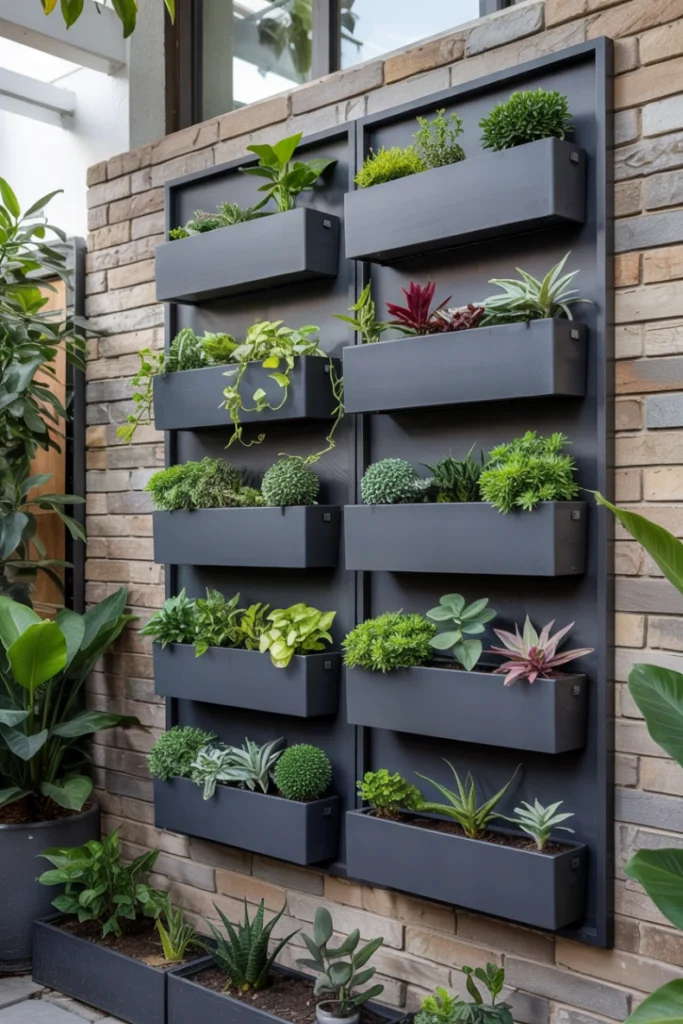
Vertical garden design grows plants upward on walls, fences, and frames, adding greenery without using any ground space. It is ideal for small yards, balconies, and modern homes, and a well-built living wall becomes a striking feature in its own right, turning a blank fence or bare wall into the most photographed part of the garden.
There are several systems to choose from. Pocket planters made from felt or recycled fabric are the cheapest starting point and work well for herbs and small annuals. Modular panel systems with built-in irrigation are more expensive but easier to maintain and better for larger walls. A simple trellis with climbing plants is the lowest maintenance option of all: fix the trellis 5 to 10 cm away from the wall so air can circulate behind it, and train jasmine, clematis, climbing roses, or ivy up it over one or two seasons. For a freestanding feature, a wooden pallet or a slatted frame filled with small pots creates a movable green wall in an afternoon.
Watering is the make-or-break detail. Vertical gardens dry out faster than ground beds, so a drip irrigation line along the top row, run on a timer for 10 to 15 minutes a day in summer, saves most of the daily work. Choose plants by light level: ferns, hostas, and trailing pothos for shade; succulents, herbs, and strawberries for full sun. Keep the design simple by repeating three or four plant types rather than mixing dozens, and check the wall or fence can carry the weight, since a fully planted, watered living wall can weigh 30 to 50 kg per square meter.
9. Family-Friendly Garden Design
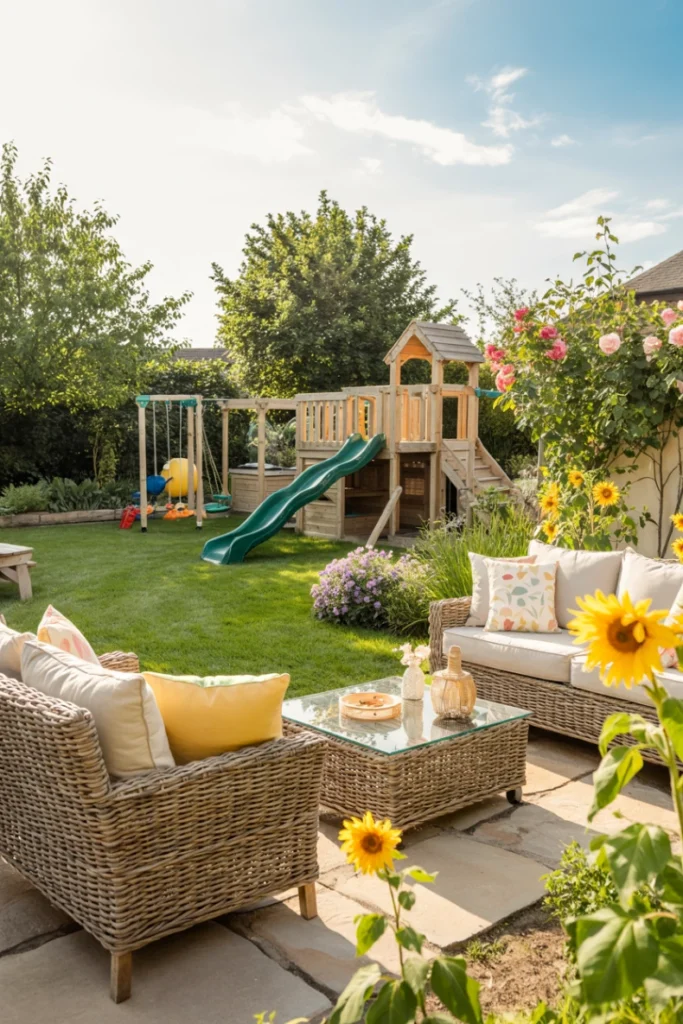
Family-friendly garden design balances beauty with safety and durability. The goal is a space where children and pets can play freely while the garden still looks good, which means choosing tough materials, non-toxic plants, and a layout with clear sightlines so you can watch the kids from the house or the seating area.
Start with the lawn. A generous open area of hard-wearing grass, such as perennial ryegrass or Bermuda grass in warm climates, handles football games and playdates far better than delicate planting. Keep paths smooth and at least 90 cm wide for bikes, scooters, and strollers, and avoid loose gravel in play zones where it ends up in shoes and pockets. Choose plants carefully: skip thorny roses at child height, avoid toxic plants like foxglove, oleander, and yew berries, and favor sturdy, safe options such as lavender, sunflowers, mint, and ornamental grasses that bounce back from being touched.
Add features that grow with the family. A small vegetable patch, with a raised bed about 120 by 60 cm, gives children something to plant and harvest, and fast growers like radishes, lettuce, and sunflowers keep them interested. A shaded seating area near the play zone lets adults supervise comfortably, and a storage bench or small shed keeps toys, balls, and tools out of sight. Use rounded edges on hardscaping, keep water features shallow or fenced, and choose outdoor lighting with no exposed cables. With the right choices, a family garden stays attractive, practical, and safe for years.
10. Tropical Garden Design
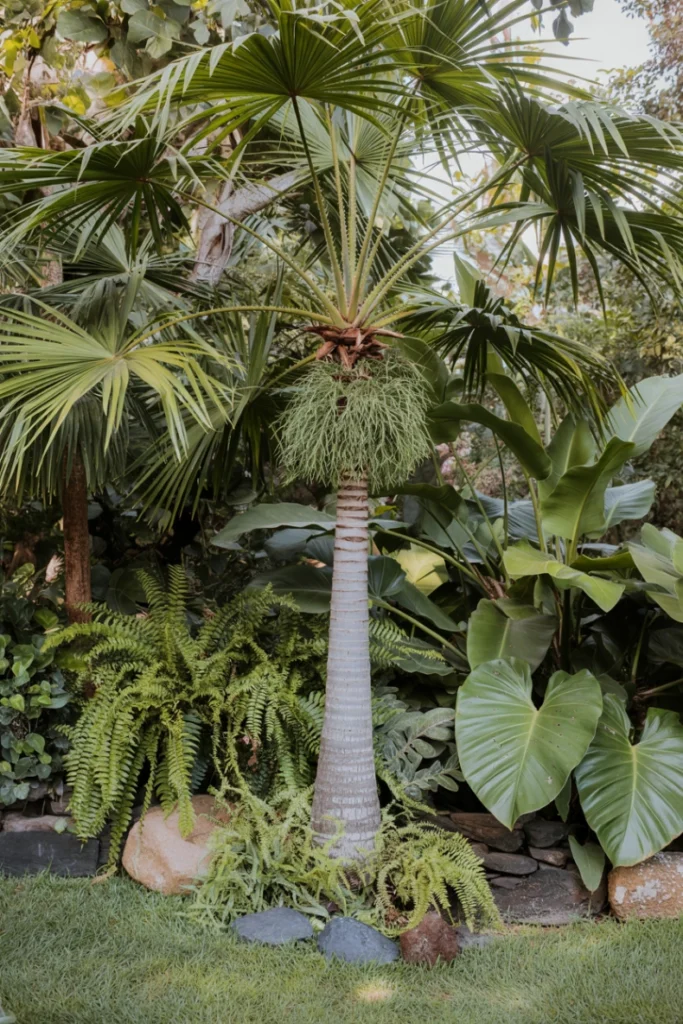
Tropical garden design creates a lush, exotic atmosphere with bold foliage, layered textures, and vibrant greenery. Large leaves, palms, and dense planting make the space feel immersive, almost like stepping into a resort, and the style works best in warm climates or in sheltered, sunny spots where tender plants can survive.
Build the layers from tall to low. Palms, banana plants, or bamboo form the canopy at 3 to 5 meters; mid-layer plants like bird of paradise, elephant ears, and cannas fill the middle at 1 to 2 meters; and ground cover such as ferns, hostas, or creeping Jenny carpets the soil below. Plant closely, about 30 to 45 cm apart for mid-layer plants, so the beds fill in quickly and weeds have no room to grow. A dark mulch, such as shredded bark, makes the greens look richer and keeps moisture in the soil.
Water is the heart of a tropical garden. A small pond, a bubbling urn, or even a simple bird bath adds humidity, sound, and a focal point. Use natural materials such as teak, bamboo, and rattan for furniture, and add color with bright cushions or painted pots in coral, turquoise, or sunny yellow. In cooler climates, grow the boldest plants in large pots, 40 to 60 cm wide, so you can move them indoors or under cover before the first frost, and fill the beds with hardy lookalikes like hardy bananas and fatsia. With regular watering and feeding through the growing season, a tropical garden rewards you with the most dramatic transformation of any style on this list.
11. Rustic Garden Design
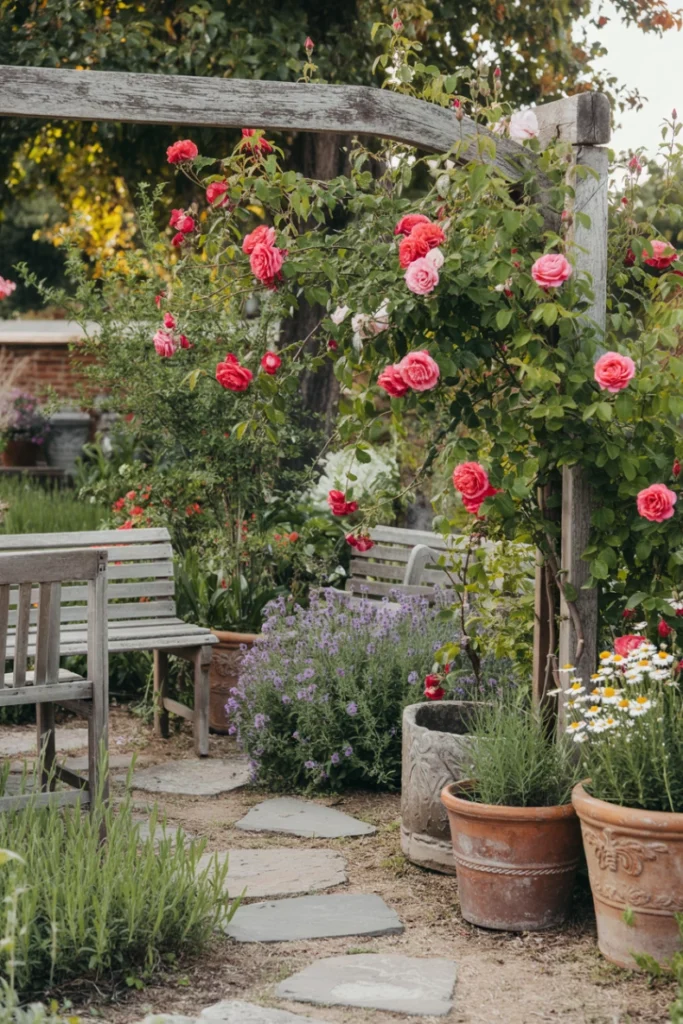
Rustic garden design embraces natural textures, traditional materials, and a warm, lived-in feel. Weathered wood, rough stone, earthy tones, and simple planting create a garden that looks as if it has been loved for decades, and the style pairs beautifully with countryside homes, cottages, and traditional architecture.
Use materials that age gracefully. Reclaimed timber for raised beds and fences, dry-stone walls or rough stone edging, terracotta pots, and gravel paths all gain character over time instead of looking worn out. Build raised beds from untreated hardwood planks, about 30 to 45 cm high, and fill them with a mix of vegetables, herbs, and cutting flowers for a productive, cottage-like feel. Paths of crushed stone or bark, 75 to 90 cm wide, suit the informal layout, and a wooden arch or arbor covered in climbing roses or honeysuckle makes a natural entrance point.
Keep planting simple and generous. Wildflower mixes, ornamental grasses, lavender, and old-fashioned roses suit the style, and a few fruit trees or berry bushes add both beauty and harvest. Add one or two handmade touches: a wooden bench made from a single slab, a galvanized watering can, a birdhouse, or a stack of firewood arranged neatly by a seating area. Rustic gardens are forgiving to maintain, since a little wildness suits the look, but do keep paths clear and prune climbers once a year so the garden stays welcoming rather than overgrown.
12. Mediterranean Garden Design
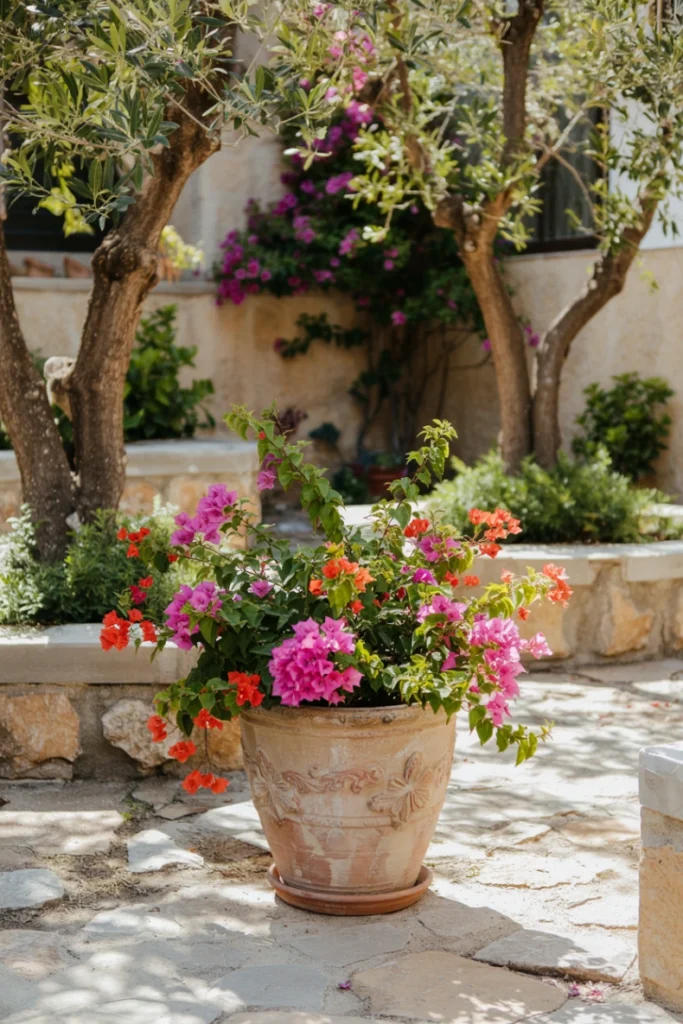
Mediterranean garden design takes its inspiration from Southern Europe, with warm colors, textured surfaces, and drought-tolerant plants. Olive trees, lavender, rosemary, and terracotta pots are the signature elements, and the style is both stylish and practical, especially in sunny, dry climates where water-wise planting matters.
Start with the structure. A pale stone or terracotta tiled patio, 3 by 4 meters or larger, gives you a warm base for outdoor dining, and low stone walls or rendered planters in warm white or ochre define the edges. Plant one olive tree as the centerpiece, in a large pot or in the ground with at least 3 meters of space around it, and underplant with lavender, rosemary, and santolina in drifts along the sunny edges. Terracotta pots in graduated sizes, from 30 to 60 cm, grouped in threes by the door or along a wall, are the classic Mediterranean detail, and they look better as they weather.
Choose plants that thrive on sun and poor soil: lavender, rosemary, thyme, agave, bougainvillea, and citrus trees in pots. A gravel mulch in warm tones, such as crushed limestone or terracotta-colored stone, keeps weeds down, reflects heat, and suits the palette far better than dark bark. Add a small water feature, such as a wall fountain or a glazed ceramic urn, for the sound of water and a cool focal point, and use wrought iron furniture with cream or white cushions. Mediterranean gardens need little watering once established, which makes them one of the most sustainable and low-maintenance styles for hot, dry regions.
13. Sustainable Garden Design
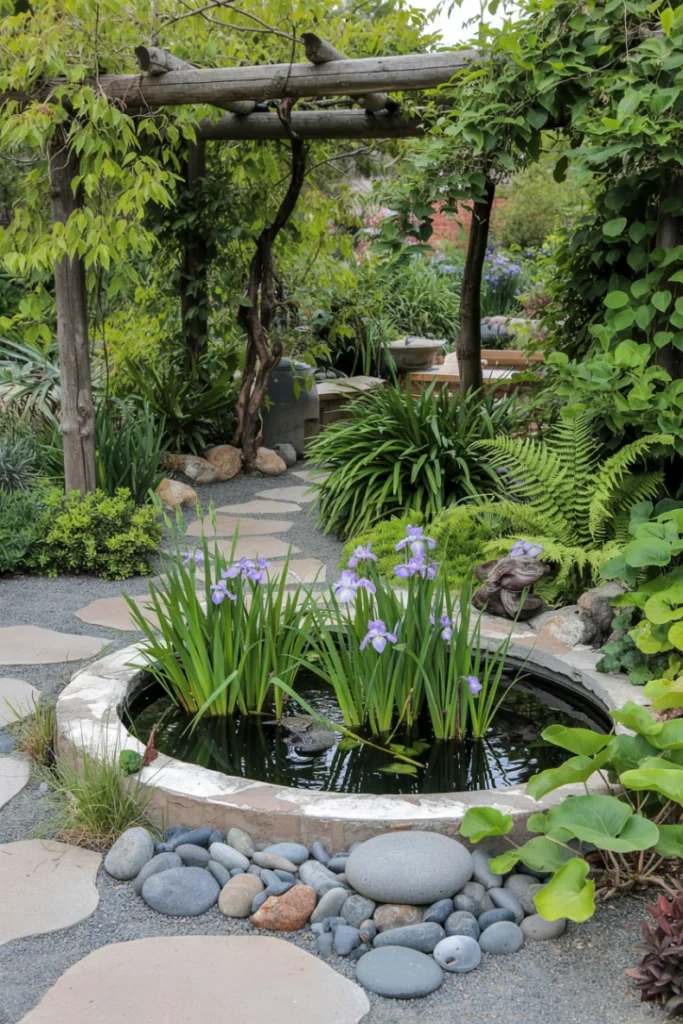
Sustainable garden design focuses on environmental responsibility and long-term efficiency. Native plants, rainwater collection, composting, and organic materials reduce environmental impact while keeping the garden beautiful, and the style is increasingly popular with homeowners who want a garden that gives back as much as it takes.
Begin with the soil and water. A compost bin, about 1 cubic meter, turns kitchen scraps and garden waste into free, rich compost within three to six months, and top-dressing beds with 5 cm of compost each spring improves soil structure and reduces the need for fertilizer. A rain barrel connected to a downspout, holding 200 liters or more, supplies free water for beds and pots through dry spells. Choose native and drought-tolerant plants, group them by water needs so you never overwater one bed to satisfy another, and mulch every bed with 5 to 8 cm of bark or straw to hold moisture and suppress weeds.
Support wildlife as part of the design. A small wildflower strip, a bee hotel fixed to a sunny fence, and a shallow dish of water for birds all add life to the garden, and they help pollinate your flowers and vegetables too. Avoid chemical pesticides; plant sacrificial nasturtiums to draw aphids away from roses, and encourage birds and ladybugs to handle the rest. Sustainable gardens often cost less to run than conventional ones, since they need less water, less fertilizer, and fewer replacements, and they look better every year as the planting matures and the soil improves.
14. Garden Pathway Design
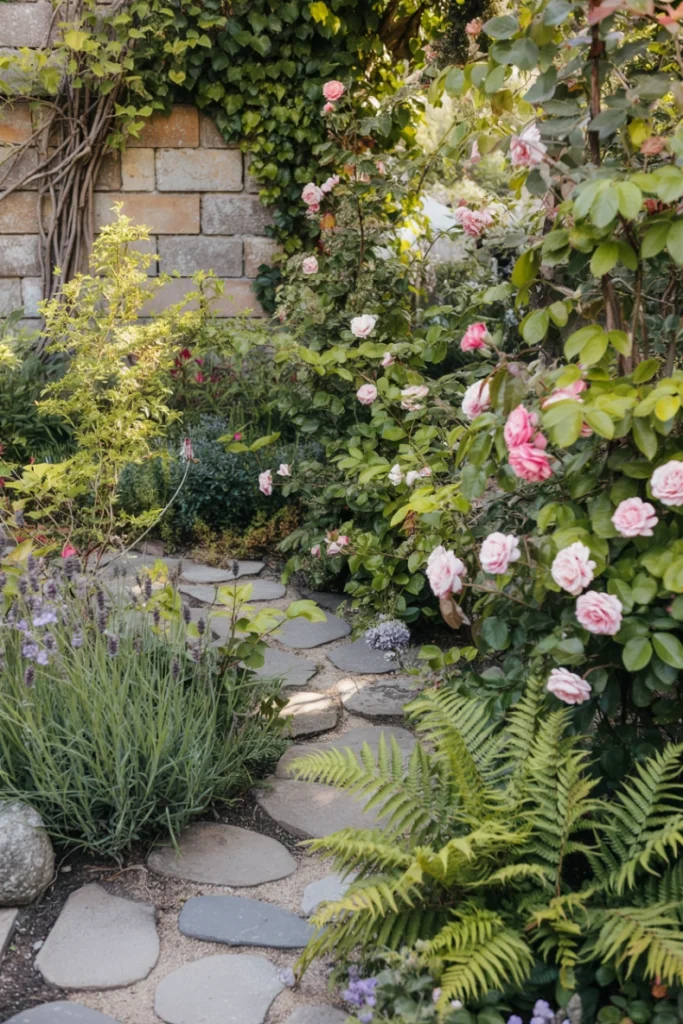
Garden pathways guide movement, connect different zones, and give the whole garden structure. A well-designed path does more than get you from the front gate to the back door; it controls the pace of a walk, frames views, and makes the garden feel larger by revealing it one section at a time.
Choose the material to match your garden style and your budget. Natural stone slabs give a timeless, high-end look and last for decades; set them with 2 to 5 cm gaps filled with low ground cover such as creeping thyme or Irish moss. Gravel is the cheapest option and suits cottage and rustic gardens; lay it 5 to 8 cm deep over a weed membrane, edged with stone or steel to keep it in place. Brick paths suit traditional homes and age beautifully, while decking boards work well on slopes or over uneven ground. Make main paths 90 to 120 cm wide so two people can walk side by side, and secondary paths 60 to 75 cm wide for single-file access to beds.
Design the route with intention. A straight path feels formal and direct, while a gentle curve slows the walk and hides what comes next, which makes a small garden feel bigger. Place a focal point at the end of the path, such as a bench, a sculpture, or a specimen tree, so there is a reason to follow it. Line the edges with low lighting, either solar stake lights or low-voltage fixtures spaced 2 to 3 meters apart, so the path is safe and inviting after dark. Our outdoor bench ideas show seating options that work beautifully at the end of a garden path. Keep the surface level and non-slip, clear fallen leaves regularly, and refresh gravel once a year to keep the path looking cared for.
15. Outdoor Lighting Garden Design
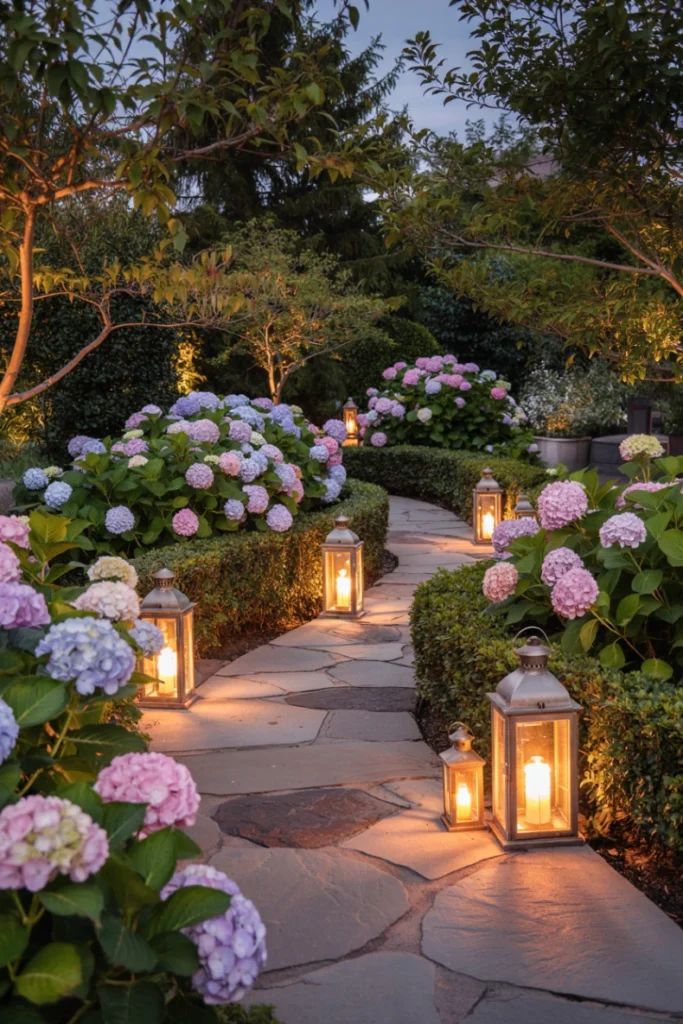
Outdoor lighting transforms a garden after sunset. It highlights the features you love, improves safety on paths and steps, and creates an atmosphere that makes the garden usable long after dark. Good lighting is layered, warm, and subtle; the goal is to see the garden, not the light fittings.
Work in three layers. First, safety lighting along paths, steps, and entrances, using low bollard lights or recessed step lights spaced 2 to 3 meters apart, so nobody trips after dark. Second, feature lighting to show off the best of the garden: a warm white uplight at the base of a specimen tree, a spotlight on a water feature, or a wash of light across a textured wall. Third, ambient lighting for mood: string lights draped over a pergola or between trees, lanterns on a dining table, and candles in hurricane jars on a seating wall. Choose warm white bulbs, around 2700K, since they flatter plants and skin tones far better than cool blue-white light.
Solar lights are the easiest starting point, since they need no wiring, but they are dimmer and less reliable in winter. Low-voltage LED systems cost more upfront but give brighter, more consistent light and last for years; a basic kit with a transformer, cable, and six to eight fixtures is a good weekend project for most homeowners. Put the lights on a timer or a dusk-to-dawn sensor so they switch on automatically, and keep the total number restrained: five well-placed lights beat fifteen scattered ones. With thoughtful lighting, your garden becomes a second living room, useful and beautiful from the first warm evening of spring through the last mild night of fall.
Final Thoughts
These garden design ideas prove that there is a style for every home, every budget, and every size of outdoor space. Whether you love the clean lines of a modern minimalist garden, the abundance of a cottage garden, or the calm of a Japanese Zen design, the same principles apply: start with how you want to use the space, invest in good bones like paths and seating, and choose plants that suit your climate and the time you have for maintenance.
Do not try to build everything at once. Pick one style, build the main structure first, and add planting and details over a season or two. A garden that grows with you will always look better than one that was finished in a single rushed weekend. With thoughtful planning and a little patience, your outdoor space can become a functional, beautiful extension of your home that you enjoy every day of the year.
Frequently Asked Questions
How much does a garden redesign cost?
A simple refresh with new plants, mulch, and a few pots can cost as little as 200 to 500 dollars, while a full redesign with new paving, a patio, lighting, and a water feature can run from 3,000 to 10,000 dollars or more. Start with the structure, paths and seating, since those are the most expensive and the hardest to change later, then add planting gradually over a season or two to spread the cost.
What is the easiest garden design for beginners?
A cottage-style or natural landscape garden is the most forgiving for beginners, because both styles welcome a little wildness and do not demand perfect symmetry. Start with a small bed, choose hardy native plants and a few reliable perennials like lavender and ornamental grasses, and add mulch to keep weeds down. You can build skill and confidence before tackling more structured styles.
How do I design a garden in a small space?
Divide the space into two or three zones, use vertical planting on walls and fences, and choose compact plants that will not outgrow the area. Light colors, a clear sightline to the far end, and one focal point, such as a small tree or a water bowl, make the space feel larger. Keep paths at least 60 cm wide and leave some empty space so the garden does not feel crowded.
Which plants need the least maintenance?
Ornamental grasses, evergreen shrubs like boxwood and juniper, lavender, rosemary, and native perennials are among the lowest maintenance choices. They need little watering once established, rarely need feeding, and only need one cut-back a year. Match the plant to your climate and soil, and it will largely look after itself.
How can I make my garden look good all year?
Mix evergreen shrubs and grasses for winter structure with plants that peak in different seasons: spring bulbs, summer perennials, fall grasses, and trees with autumn color or winter bark. Add hardscaping that looks good in every season, such as stone paths, a bench, or a water feature, and use lighting so the garden stays attractive after dark through the shorter days.
More Ideas You Will Love
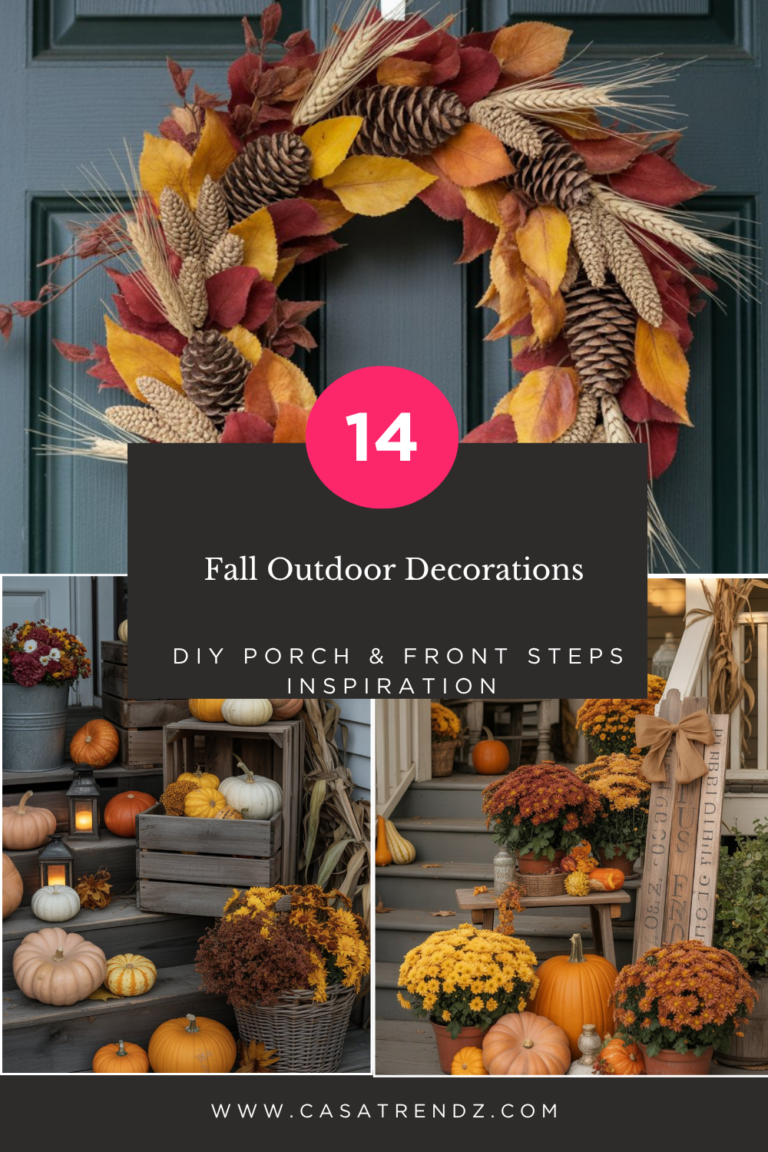 14 Fall Outdoor Decorations: DIY Porch & Front Steps Inspiration
 13 Water Conservation Gardening Tips for Hot U.S. Summers
 12 Tips for Choosing Durable Outdoor Cushions for Hot Summers
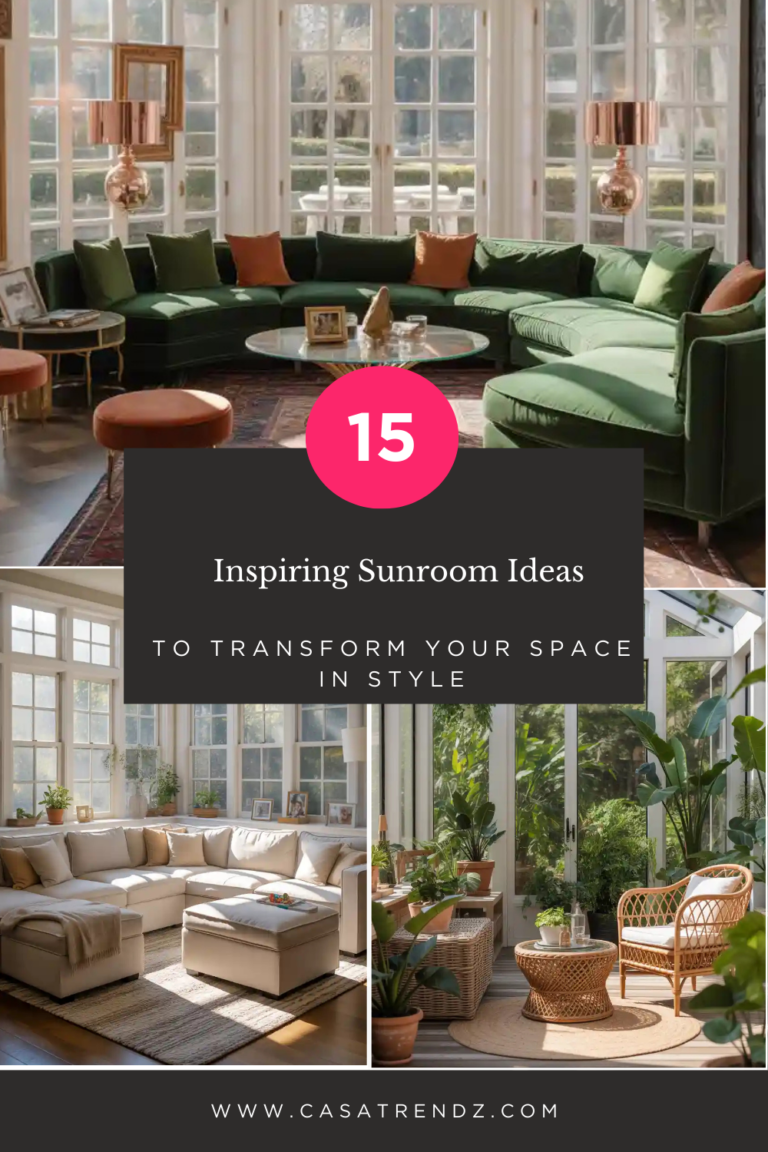 15 Inspiring Sunroom Ideas to Transform Your Space in Style
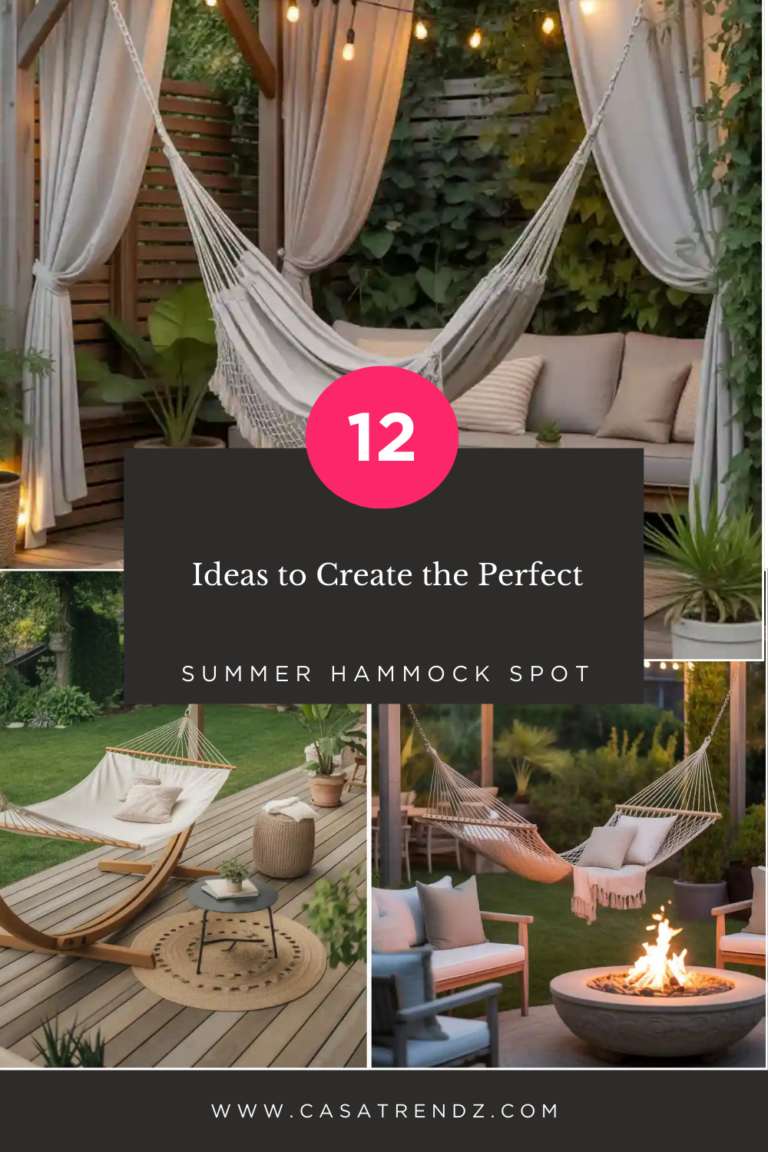 12 Ideas to Create the Perfect Summer Hammock Spot
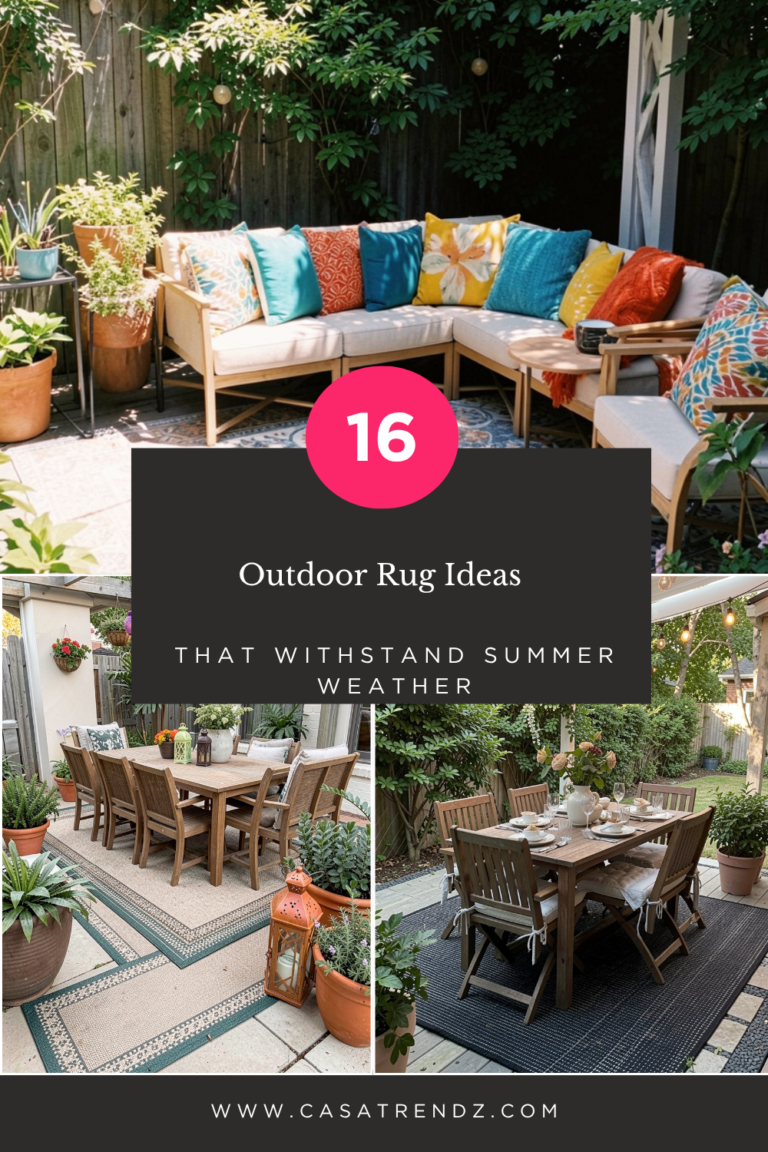 16 Outdoor Rug Ideas That Withstand Summer Weather