
15 Dark Exterior House Ideas: Bold & Stylish Designs

Dark exterior homes have moved from bold experiment to defining trend in modern architecture, and it is easy to see why. A deep charcoal, matte black, or forest green facade gives a house instant presence, sharpens its architectural lines, and makes the whole property look considered and confident. Where light-colored exteriors can fade into the street, a dark exterior stands out, and it does so with a calm, grown-up kind of drama rather than a shout.
There is also a practical side to the trend. Dark finishes hide dust, rain marks, and everyday wear far better than white or cream, and modern exterior paints and stains are now made to resist fading and heat buildup. The key is balance. The best dark exteriors pair a strong color with warm wood, pale stone, generous glass, or thoughtful lighting so the house feels inviting rather than heavy. Get that balance right and a dark exterior works on almost any style of home, from a minimalist new build to a rustic cabin in the trees.
This guide covers 15 dark exterior house ideas, each with the colors, materials, and practical details you need to make it work. Whether you are repainting a facade, planning a new build, or simply gathering inspiration, you will find a dark exterior look here that fits your home and your budget.
1. Charcoal Gray Modern Exterior
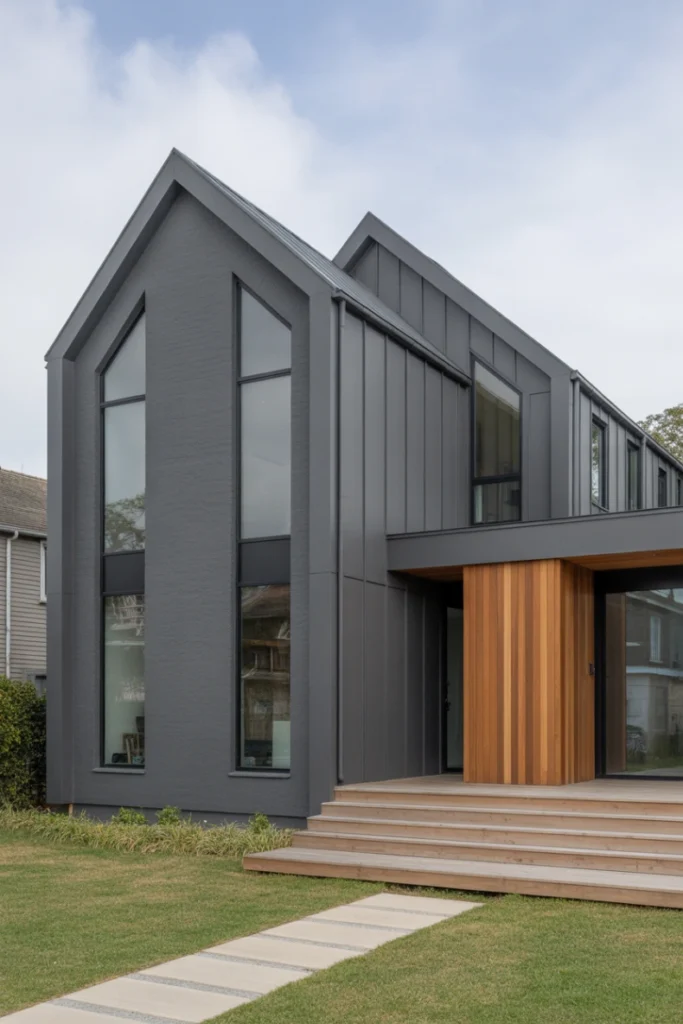
Charcoal gray is the safest and most versatile entry point into dark exteriors, and it is also one of the most popular. This deep neutral reads as sleek and modern without the severity of pure black, and it flatters clean architectural lines, flat roofs, large windows, and minimalist detailing. It works with almost every material you might pair it with, including concrete, steel, fiber cement, and natural wood.
For the best result, choose a charcoal with a warm undertone if your home gets cool northern light, and a cooler charcoal if it sits in strong sun. Paint brands offer useful reference points, such as Benjamin Moore Wrought Iron or Sherwin-Williams Iron Ore, but always test a large swatch on the actual wall first, because charcoal shifts noticeably between morning and evening light. A satin or low-sheen finish keeps the surface looking soft and hides minor imperfections in the siding.
Charcoal also earns its keep on maintenance. It conceals dirt, pollen, and light weathering far better than pale shades, so the facade looks freshly painted for longer. To keep it feeling warm rather than cold, add one natural element, such as a cedar entry door, a wood soffit, or warm white 2700K downlights at the entrance. If you are weighing other dark palettes first, our guide to exterior house style ideas shows how charcoal sits alongside other bold facade looks.
2. Matte Black Exterior for Bold Impact
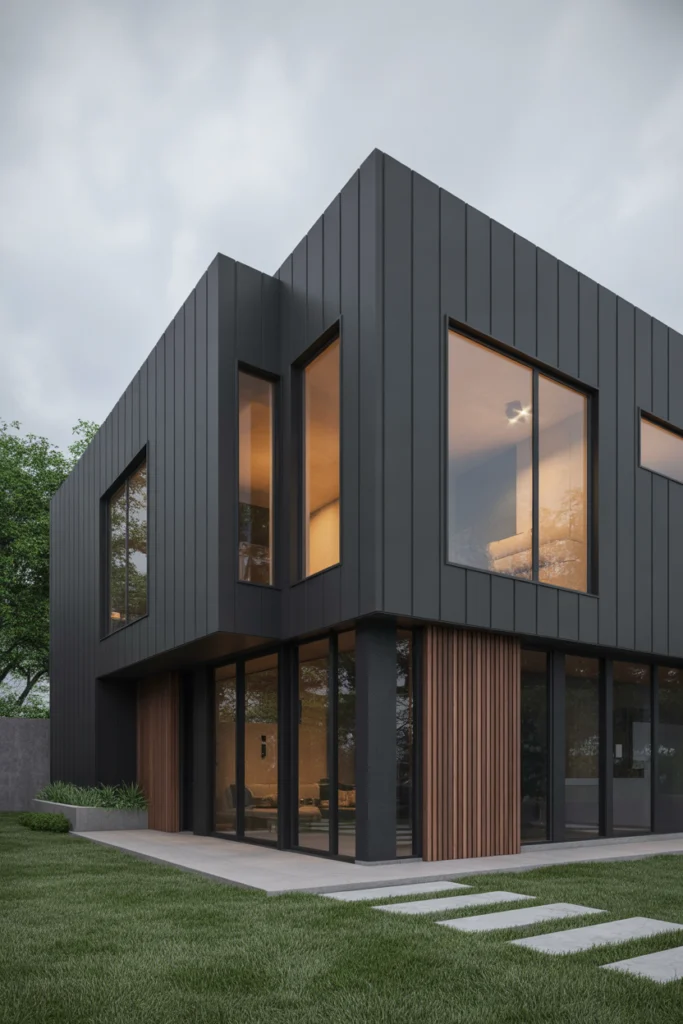
A matte black exterior is the boldest statement in this list, and it delivers exactly what it promises. The flat, non-reflective finish absorbs light, sharpens the silhouette of the house, and lets texture do the talking. Wood grain, standing seam metal, board-formed concrete, and stone all look richer against a matte black backdrop, which is why this finish suits minimalist and industrial-style homes so well.
Matte black needs a little planning to feel like a home rather than a monolith. Oversized windows and generous glazing break up the dark planes and pull daylight deep into the rooms, while pale stone plinths, light timber decking, or a natural wood door give the eye somewhere soft to land. Keep trim the same black or a shade darker rather than white, because a continuous dark envelope is what makes the look feel intentional. Use a high-quality exterior paint with UV-stable pigments, and expect to wash the facade once a year, since matte finishes show dust more readily than satin ones.
Budget-wise, a matte black repaint is one of the cheapest ways to transform a dated house, often costing no more than any other exterior repaint. The impact is outsized, and for a confident, high-end aesthetic there is nothing quite like it. Pair it with black-framed windows and simple landscaping in green and gravel and the result feels architectural rather than stark.
3. Dark Navy Blue with White Trim

Dark navy blue offers the drama of a dark exterior with a classic, almost preppy softness that black cannot match. It reads as both timeless and current, which is why it works across coastal cottages, colonial revivals, and contemporary homes alike. The deep blue feels rich and calm, and it changes beautifully through the day, looking almost black at dusk and vividly blue in bright sun.
The classic pairing is crisp white trim. Paint window frames, corner boards, fascia, and the front door surround in a clean bright white, such as Benjamin Moore Chantilly Lace, and the navy instantly looks sharper and more deliberate. For the navy itself, look at shades like Hale Navy or Sherwin-Williams Naval, and test them on a south-facing wall, since navy can go purple in warm evening light if the undertone is wrong. Brass or matte black hardware, a natural wood door, and simple white planters complete the look without competing with it.
Navy is also a forgiving choice if you are nervous about going fully dark. It feels bold from the street but familiar up close, and it pairs naturally with red brick paths, gray stone, and green planting. If your home has traditional details like shutters or a pitched roof, navy enhances them instead of fighting them, making it one of the easiest dark exteriors to live with long term.
4. Deep Forest Green Exterior
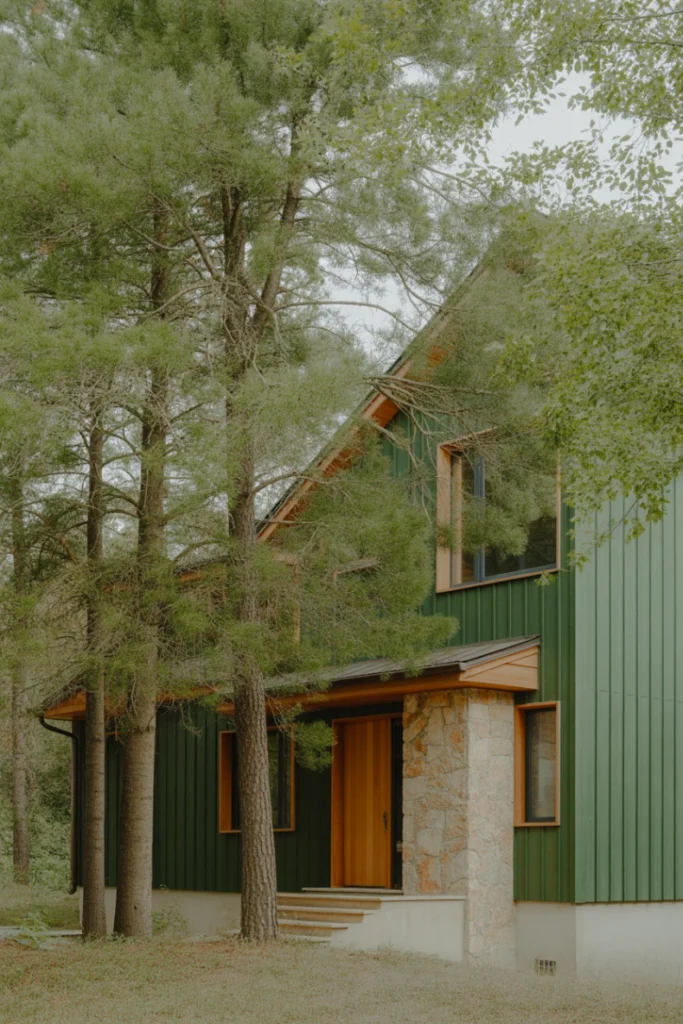
Deep forest green is the most nature-connected dark exterior in this guide. It blends a house into a wooded lot or garden setting instead of standing apart from it, which makes it ideal for homes surrounded by trees, hedges, or rolling lawns. The color has depth and character but stays calm, and it ages gracefully as the surrounding landscape changes through the seasons.
Forest green pairs best with materials that come from the landscape itself. A stone foundation or stone chimney, cedar shingles, black window frames, and a wood front door all sit naturally beside it. Try shades such as Sherwin-Williams Rockwood Green or Benjamin Moore Hunter Green, and use a satin finish so the color holds its richness in rain and sun. Avoid pairing forest green with bright white trim, which can look harsh; a warm off-white or a natural wood trim keeps the palette grounded.
This is also a smart color for older homes. Forest green suits Craftsman, cottage, and farmhouse architecture, and it hides the wear of a wooded setting, from leaf stains to pollen, better than most dark shades. Add simple black lanterns by the door and a gravel or stone path, and the house will look as though it grew out of its site rather than being placed on it.
5. Dark Gray with Natural Wood Accents

Dark gray with natural wood is the combination that convinces most skeptics, because the wood does the warming work that the gray cannot do alone. The dark base gives the house a modern, grounded foundation, while cedar, oak, or thermally modified ash introduces warmth, texture, and a handmade feeling. Used well, the pairing feels both contemporary and welcoming.
Apply the wood where it has the most impact. A wood entry door, a cedar-clad gable, wood soffits under the eaves, or a slatted wood screen beside the entrance are all high-value placements. Keep the wood to roughly 20 to 30 percent of the facade so the dark gray stays dominant and the composition stays calm. Seal exterior wood with a penetrating oil finish and plan to re-oil it every two to three years, or choose a pre-finished cladding with a long warranty if you want a lower-maintenance option.
For the gray itself, a mid-charcoal with a warm undertone works best with honey-toned wood, while a cooler graphite gray suits pale ash or weathered silver wood. The combination works across modern, transitional, and Scandinavian-inspired homes, and it photographs beautifully, which is a bonus if curb appeal matters to you. Warm 2700K lighting at the entry and along the path finishes the look and makes the wood glow after dark.
6. Black and Stone Exterior Combination
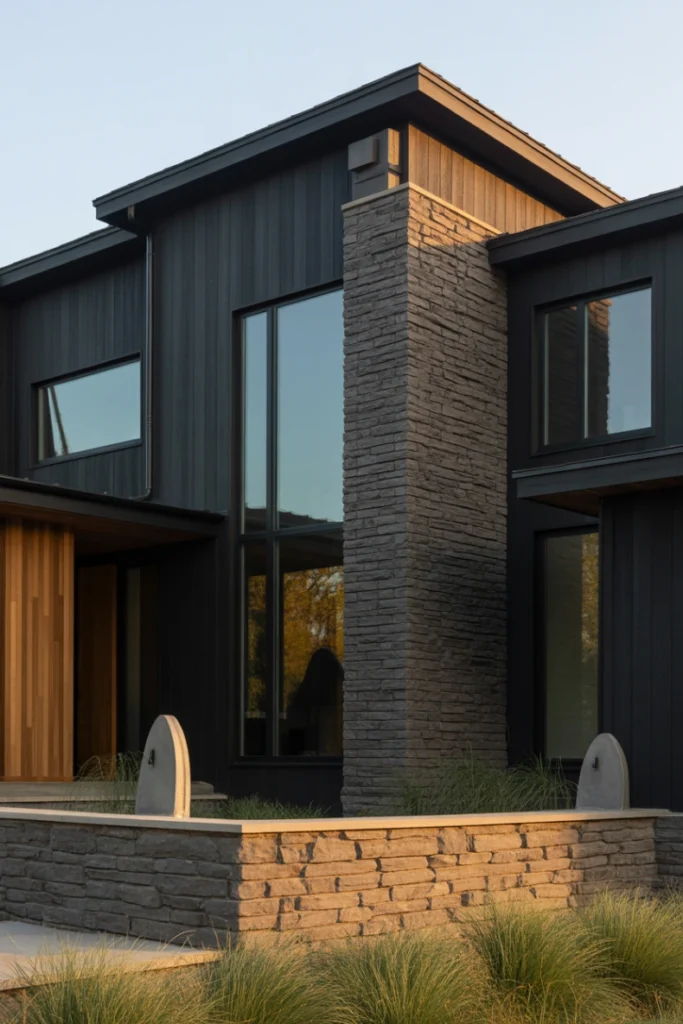
Pairing black with natural stone is one of the most luxurious dark exterior ideas, because the contrast between smooth dark surfaces and rough textured stone gives the facade instant depth. The stone grounds the design and stops the black from feeling flat or severe, while the black makes the stone look more deliberate and architectural. Together they read as expensive, even when the stone is used sparingly.
Use stone where it anchors the house visually. A stone base course, a full stone entry wall, a chimney breast, or cladding on the lower level are all effective. Limestone and sandstone bring warmth, while dark slate or basalt keeps the palette moody and modern. Keep the mortar joints tight and the stone coursing regular for a contemporary feel, or go with irregular, rugged stone for a modern rustic look. The key is consistency, so choose one stone type and repeat it rather than mixing several.
This combination also performs well. Stone is durable, needs almost no maintenance, and protects the lower walls from splash-back and knocks. The black upper levels can be painted fiber cement, metal cladding, or stained wood, all of which are straightforward to maintain. If you want the full effect on a budget, use real stone on the entry wall, where it is seen up close, and a matching stone-look cladding elsewhere. For more ideas on pairing stone and dark tones, see our black exterior house ideas for bolder all-black variations.
7. Dark Brown Exterior for Earthy Elegance
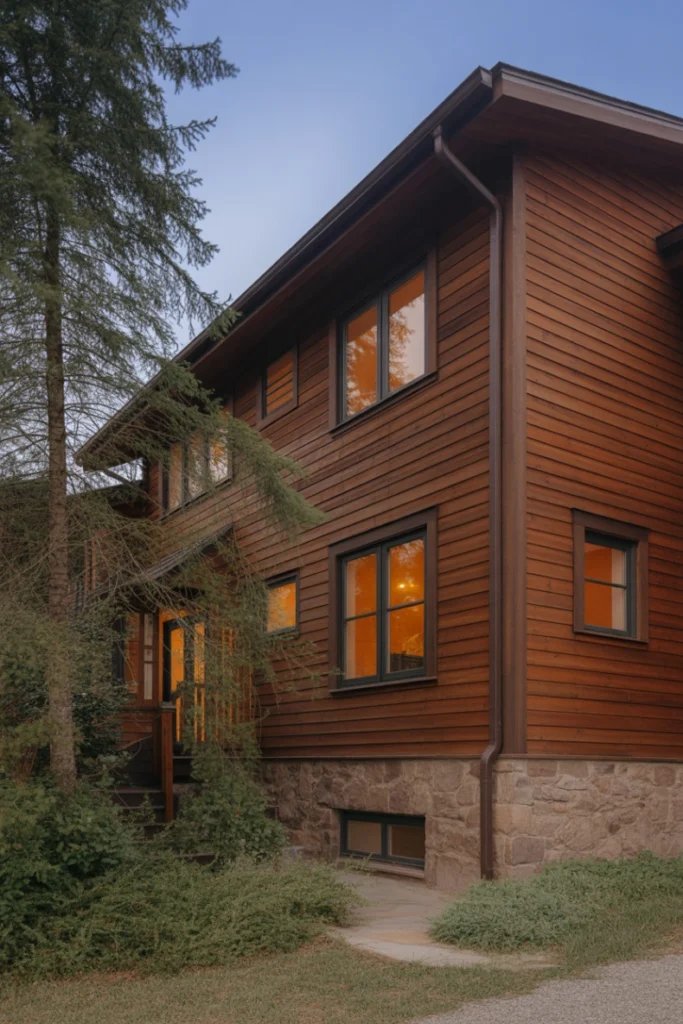
Dark brown is the softest dark exterior color, and that softness is its strength. Where black and charcoal can feel sharp or severe, a deep espresso or walnut brown feels warm, organic, and quietly elegant. It suits homes that lean on natural materials and textures, and it blends beautifully with gardens, timber fences, and stone landscaping.
Dark brown works especially well with wood siding, whether that is cedar shingles, board and batten, or horizontal lap siding. A semi-transparent dark stain lets the wood grain show through, which adds a layer of texture that paint cannot match, and it weathers more gracefully than opaque paint, fading evenly rather than peeling. Try shades like Sherwin-Williams Sealskin or Benjamin Moore Brown Horse, and pair them with cream or warm white trim and a front door in a lighter wood tone to keep the facade from feeling too heavy.
This color also ages well in a practical sense. Brown hides dirt and leaf stains, and it does not show the fading that can affect black in strong sun. It is a good choice for a family home, a cabin, or any house where you want the boldness of a dark exterior with the warmth of a natural one. Add copper or aged brass light fixtures and the whole facade takes on a rich, lived-in glow.
8. Charcoal Black with Metal Accents

Adding metal to a charcoal black exterior gives the house an industrial edge and a sense of precision. Steel railings, a standing seam metal roof, aluminum window frames, and metal cladding panels all catch the light differently from matte paint, and that play of reflection against dark, flat surfaces is what makes the design feel alive. The result is a facade that looks sharp in bright sun and moody after dark.
Choose one metal finish and repeat it. Matte black steel keeps the palette unified and modern, while zinc or weathered steel adds a softer gray tone that ages with character. Copper or brass accents can work as a warm counterpoint, but use them sparingly, such as on a single light fixture or the house numbers, so they read as jewelry rather than clutter. Make sure any metal is properly coated or naturally weathering, since unprotected steel will rust and stain a dark facade quickly.
Metal also brings durability. A standing seam metal roof can last 40 to 70 years, and metal railings and window frames need little more than an occasional wash. This approach suits urban homes, modern new builds, and any house where a strong, contemporary identity matters. Keep landscaping simple, with gravel, grasses, and a few sculptural plants, so the architecture stays the star.
9. Dark Exterior with Large Glass Panels

Large glass panels are the natural partner for a dark exterior, because they solve the one real risk of going dark, that the house might feel heavy or closed in. Expansive glazing pulls daylight deep into the rooms, opens the interior to the garden, and breaks the dark facade into a rhythm of solid and transparent panels. The contrast between dark cladding and clear glass is one of the most sophisticated looks in modern architecture.
Plan the glazing with the sun in mind. South-facing glass brings welcome winter warmth but needs an overhang or external shading to avoid summer overheating, while north-facing glass gives even, glare-free light. Use low-E double or triple glazing to keep the house comfortable, and choose slim black aluminum frames so the glass reads as a continuous surface rather than a grid of windows. Inside, keep the rooms behind the glass light in tone, so the contrast between the dark outside and the bright inside feels deliberate.
This idea works best on modern homes with open-plan living spaces and a strong indoor-outdoor connection. Sliding or folding glass doors that open onto a deck or terrace extend the effect, and at night the lit interior turns the house into a lantern against the dark facade. It is a bigger investment than paint, but it changes how the whole house lives, not just how it looks.
10. All-Black Minimalist Exterior
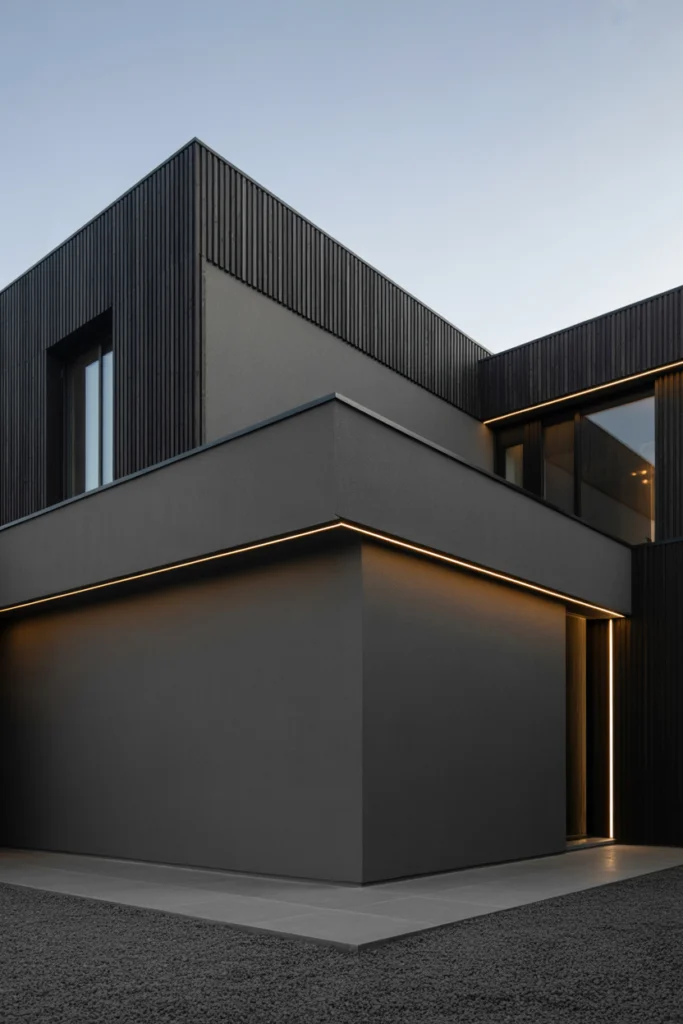
An all-black exterior is minimalism taken to its purest form. With no contrasting trim, no feature color, and no ornament, the house is reduced to form, proportion, and texture. Clean lines, simple geometry, and monochromatic surfaces define the look, and when it works, it is unforgettable. This is the choice for homeowners who value simplicity, confidence, and design purity above all else.
The secret to a successful all-black house is variation in texture rather than color. Mix materials that are all black but feel different to the eye, such as matte black cladding beside blackened timber, a black metal roof, and a black stone plinth. Subtle shifts in sheen, from flat to satin to a slight gloss, stop the facade from looking like a single flat plane. Lighting matters more here than in any other idea on this list, so use warm 2700K uplights to graze the walls and reveal their texture after dark, and keep the entrance well lit so the house still feels welcoming.
An all-black exterior also demands good maintenance habits. Black shows dust, pollen, and water marks, so plan for an annual wash and use a quality exterior paint or stain with strong UV resistance. Keep the landscaping simple and green, with clipped hedges, grasses, or a single specimen tree, because planting is the main softening element in this design. Done well, an all-black house looks less like a color choice and more like a piece of architecture.
11. Dark Charcoal with Light Concrete Contrast

Pairing dark charcoal with light concrete creates one of the most striking balances in modern exterior design. The pale concrete softens the intensity of the charcoal, while the charcoal gives the concrete a sense of purpose and structure. Together they produce a facade that feels both bold and calm, with strong geometric forms doing the visual work instead of decoration.
Use concrete where it reads as structure. A board-formed concrete wall, a concrete plinth or base, pale concrete steps, or a concrete planter wall beside the entrance all work well. Keep the concrete finish consistent, whether that is smooth cast concrete or a lightly textured board-formed surface, and seal it with a penetrating sealer to prevent staining. The charcoal cladding can be fiber cement, metal panels, or painted timber, and the contrast is strongest when the charcoal is a flat, even tone rather than a busy pattern.
This combination suits contemporary homes with strong rectangular forms and flat or low-pitched roofs. It is also forgiving to maintain, since concrete needs little care and charcoal hides marks well. Add a single warm element, such as a wood front door or a strip of warm lighting along the concrete wall, to stop the palette from feeling too cool, and the result is a facade that looks considered from every angle.
12. Black Exterior with Warm Lighting Design
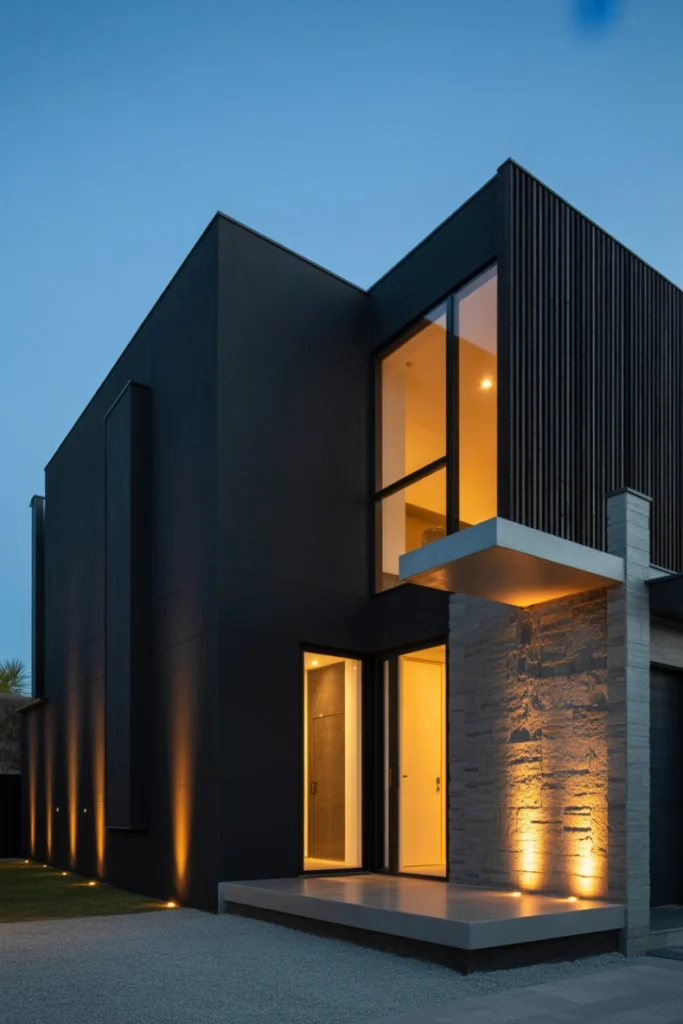
Lighting transforms a black exterior more than any other single element. By day, black cladding looks bold and graphic, but at night, without good lighting, it can disappear into the dark. Warm lighting fixes that completely. Well-placed lights highlight the texture of the facade, wash the entrance in a welcoming glow, and turn the house into a landmark on the street after sunset.
Layer three types of light for the best effect. Start with wall washers or uplights that graze the facade and reveal its texture, then add functional lighting at the entrance, path, and steps for safety, and finish with a few accent lights on a tree, a stone wall, or a sculptural plant. Choose warm white light at 2700K, which flatters both black cladding and skin tones, and keep fixtures in matte black or dark bronze so they blend into the facade by day. Use low-voltage LED fixtures to keep running costs low, and put the entrance and path lights on a dusk-to-dawn sensor so the house is always lit when it matters.
Plan the lighting early, ideally before the facade is finished, so cables can be hidden and fixtures mounted cleanly. A lighting designer or a good landscape lighting supplier can help you place fixtures where they will have the most impact. For homeowners who entertain outdoors or simply value coming home to a house that looks beautiful at night, warm lighting on a black exterior is one of the highest-impact upgrades you can make. If you are still choosing your overall palette, our guide to exterior paint color ideas can help you compare dark shades with lighter options side by side.
13. Dark Blue-Gray Transitional Exterior
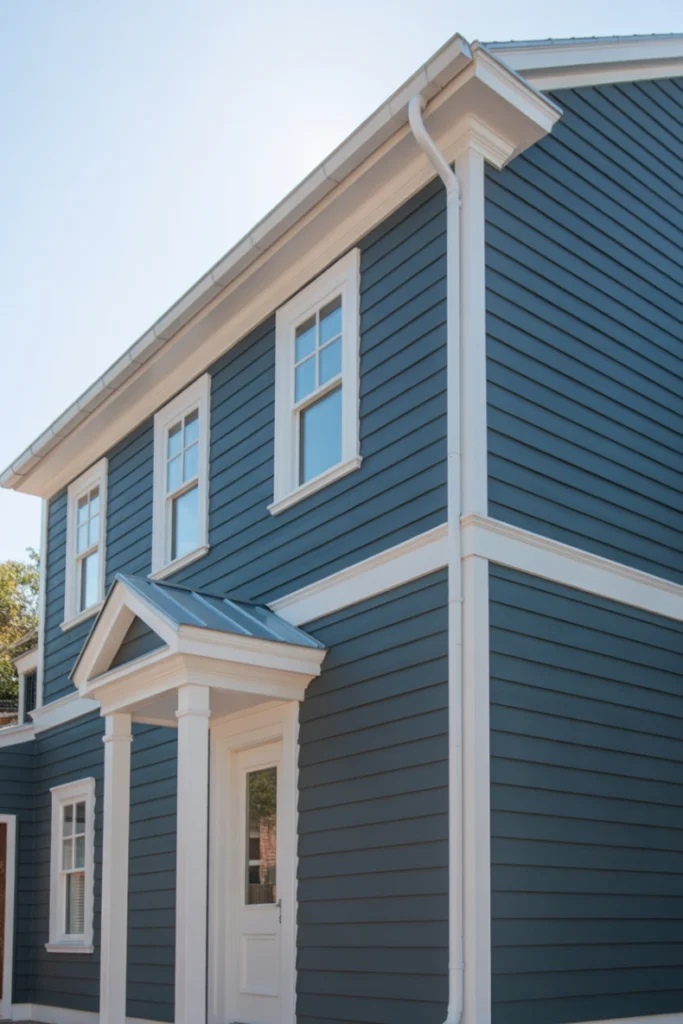
Dark blue-gray is the quiet achiever of this list. It blends cool blue undertones with gray neutrality to create a color that has depth without harshness, and it suits the growing number of transitional homes that mix classic and modern elements. It feels tailored and refined rather than dramatic, which makes it a good choice if you want a dark exterior that neighbors and future buyers will also love.
Blue-gray pairs well with white or warm off-white trim, natural stone, and wood accents in pale or mid tones. Try shades like Benjamin Moore Boothbay Gray or Sherwin-Williams Meditative, and test them on the wall at different times of day, because blue-gray can lean more blue in bright sun and more gray on a cloudy day. A satin finish keeps the color looking soft and even, and it is a forgiving choice on older siding, since it does not highlight imperfections the way black can.
This color is also one of the most adaptable dark choices. It works on colonial, craftsman, and contemporary homes, and it sits comfortably in both suburban streets and rural settings. Add simple black lanterns, a wood door, and green planting, and the facade feels complete without any further decoration. If you want subtle drama rather than a bold statement, dark blue-gray is the color to choose.
14. Dark Exterior with Vertical Siding
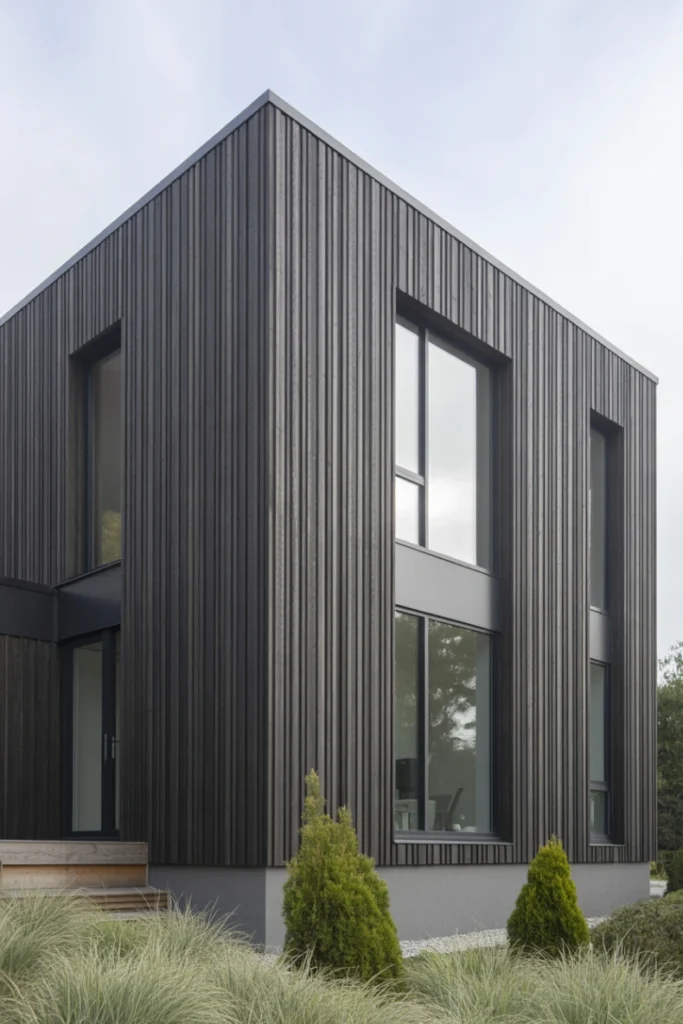
Vertical siding changes the whole feeling of a dark exterior by drawing the eye upward. Where horizontal siding emphasizes width and a low, grounded profile, vertical boards make a house look taller, slimmer, and more modern. The vertical lines also add rhythm and texture to a dark facade, which keeps large expanses of charcoal or black from looking flat.
Board and batten is the classic vertical profile, with wide boards and narrow battens covering the joints, and it suits farmhouse, Scandinavian, and modern homes alike. For a sleeker look, use tongue and groove vertical siding with a narrow shadow gap, or vertical metal panels with a standing seam profile. Dark colors work especially well here, because the shadows between boards add depth that a light color would wash out. Use a durable material such as fiber cement, thermally modified wood, or metal, since vertical siding sheds water well but still needs a finish that can handle sun and rain.
Keep the rest of the design simple so the siding stays the star. Match the trim to the siding color, choose black-framed windows, and avoid fussy details that compete with the vertical lines. A vertical siding facade also pairs beautifully with a flat or low-pitched roof and a simple landscaped front garden. The result is a house that looks taller, more modern, and more considered than its neighbors, with very little extra cost over standard siding.
15. Dark Rustic Cabin-Style Exterior
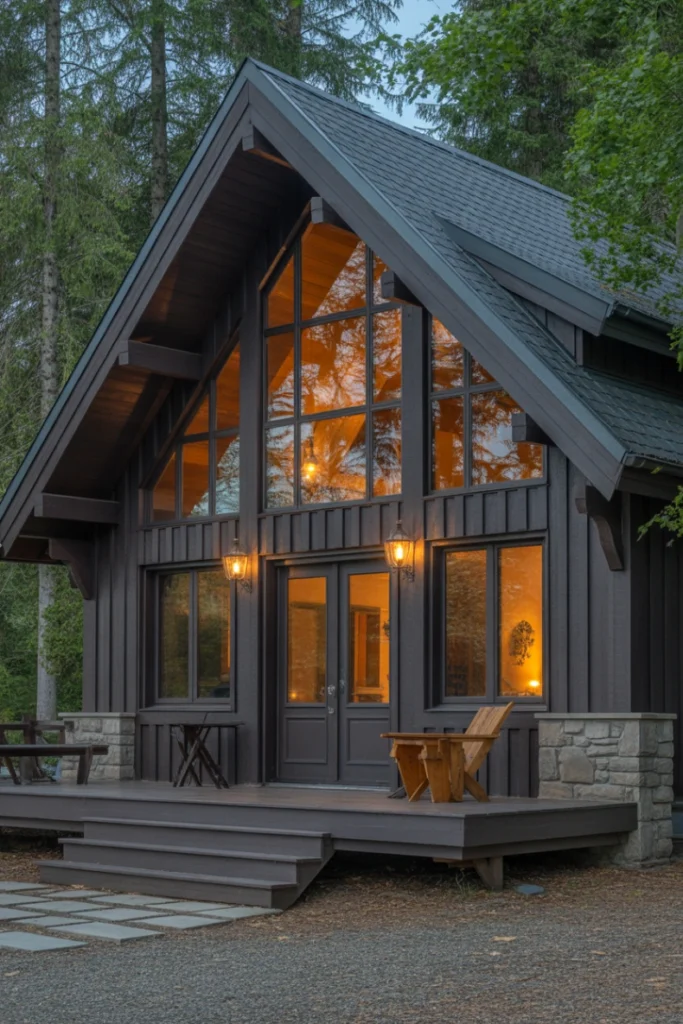
A dark rustic cabin exterior takes the boldness of a dark palette and softens it with natural texture and traditional craft. Deep browns, charcoal tones, and black stains enhance the wood grain instead of hiding it, while stone, exposed beams, and a rugged landscape complete a look that feels both dramatic and deeply cozy. It is the ideal dark exterior for a retreat, a mountain house, or any home that wants to feel connected to its setting.
Start with the wood. Horizontal log siding, cedar shingles, or board and batten in a dark semi-transparent stain will show the grain while protecting the timber from weather. A stone fireplace or stone foundation grounds the cabin visually, and a dark metal roof in standing seam profile handles snow and rain while reinforcing the rustic-modern character. Keep window frames black or dark bronze, and add a covered porch with thick timber posts so there is a sheltered, welcoming threshold between the wild landscape and the warm interior.
Maintenance is straightforward if you plan for it. Re-oil or re-stain the wood every three to five years, check the chinking or sealant on log walls annually, and keep gutters clear so water does not stain the dark timber. Inside, the dark exterior makes the warm glow of the interior feel even more inviting, especially in winter. For a cabin that needs to look good in every season, a dark rustic exterior is hard to beat, and it only gets better as the wood and stone weather in. For more exterior inspiration in this vein, browse our modern house exterior ideas for contemporary takes on the same materials.
Final Thoughts
Dark exteriors are no longer a design risk. They are a statement of confidence, sophistication, and modern style, and these 15 dark exterior house ideas show how bold color choices can enhance architecture, create visual depth, and elevate curb appeal when they are applied thoughtfully. The thread running through every idea is balance. A dark facade needs one warm, light, or natural counterpoint, whether that is wood, stone, glass, concrete, or warm lighting, to feel like a home rather than a monument.
Before you commit, test your chosen color on a large swatch on the actual wall and look at it morning, noon, and evening. Talk to your painter about UV-stable exterior paint and the right sheen for your siding, and think about the whole picture, including the roof, the door, the lighting, and the planting. Whether you prefer a sleek charcoal modern, a matte black minimalist, or a dark rustic cabin, a dark exterior rewards careful planning with a home that stands out for all the right reasons and keeps looking good for years.
Frequently Asked Questions
Are dark exterior house colors a good idea?
Yes, dark exterior colors are a good idea for most homes when they are chosen and balanced well. They make architectural details stand out, hide dirt and weathering better than light colors, and give a house strong curb appeal. The key is to pair the dark color with a warm or light counterpoint, such as natural wood, pale stone, or warm lighting, so the facade feels inviting rather than heavy.
Do dark exterior houses get hotter in summer?
Dark exteriors do absorb more heat from the sun than light ones, and the surface temperature of dark cladding can run noticeably higher on a hot day. In practice, good insulation, a ventilated rainscreen behind the cladding, and light-colored roofing keep the interior comfortable. Modern exterior paints with heat-reflective pigments also reduce the effect. If you live in a very hot climate, consider a dark color with a reflective formulation or use dark tones on shaded walls and a lighter color on the sunniest side.
What is the best dark exterior paint color?
There is no single best color, because the right choice depends on your architecture, light, and setting. Charcoal gray is the most versatile and the safest starting point, matte black makes the boldest statement, dark navy suits traditional homes, and forest green blends best with a wooded lot. Always test a large swatch on your own wall before committing, since dark colors shift a lot with the light.
Will a dark exterior hurt my home’s resale value?
A well-executed dark exterior generally does not hurt resale value, and in many modern neighborhoods it can help, because buyers associate dark facades with updated, design-led homes. The risk comes from a poorly done job, such as a harsh black on a traditional house with no balancing elements, or a color that clashes with the street. Transitional shades like dark blue-gray and charcoal are the safest choices if resale is a concern.
How do I keep a dark exterior looking good?
Wash the facade once a year with a gentle hose and soft brush to remove dust and pollen, which show more on dark surfaces. Use a high-quality exterior paint with UV-stable pigments, and expect to repaint every 7 to 10 years depending on your climate. If you have wood accents, re-oil or re-stain them every two to three years. Good lighting also helps, because warm lights make dark cladding look rich rather than flat after sunset.
More Ideas You Will Love
 11 Container Garden Secrets for Lush, Healthy Summer Plants
 13 4th of July House Exterior Ideas Featuring the American Flag
 13 Natural Remedies for Summer Garden Pests (Eco-Friendly Guide)
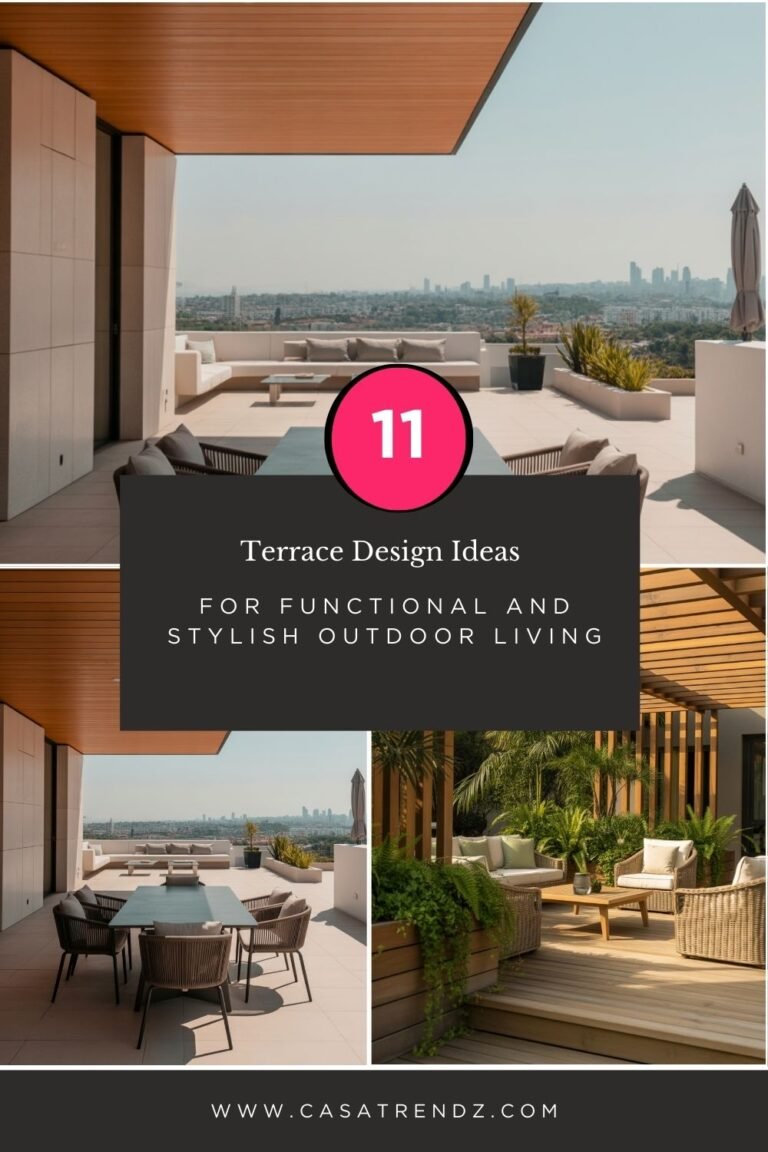 11 Terrace Design Ideas for Functional and Stylish Outdoor Living
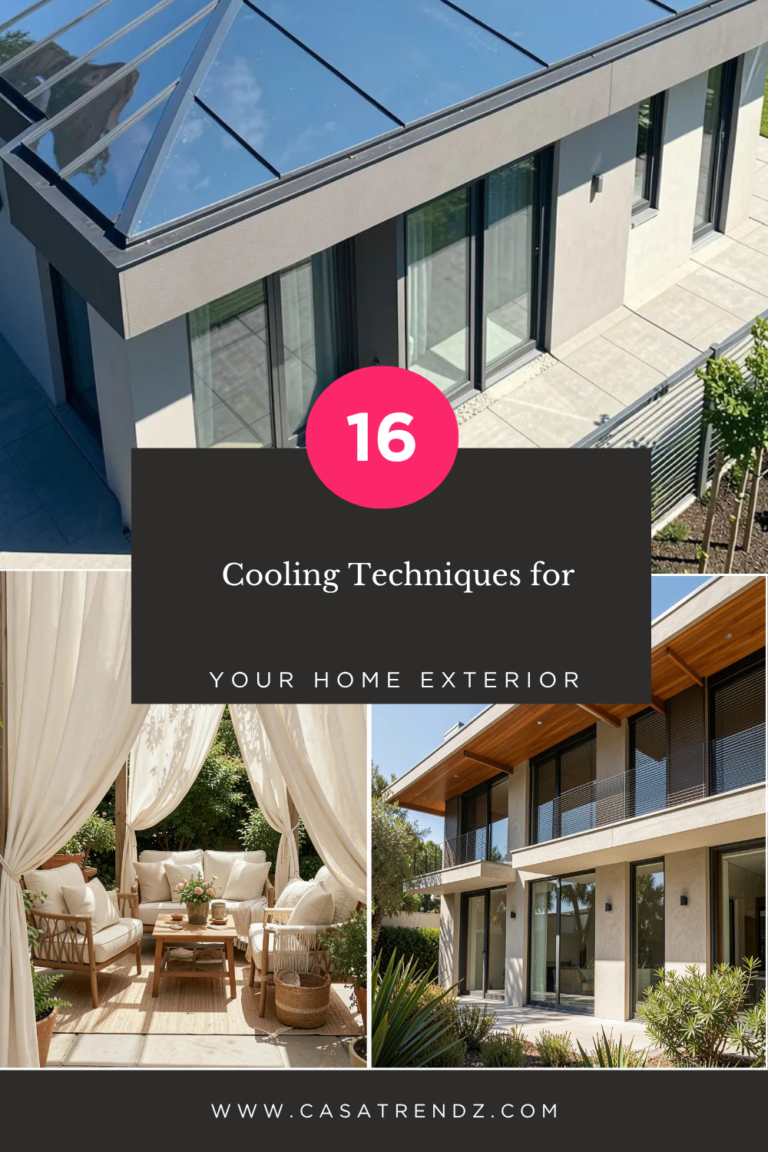 16 Cooling Techniques for Your Home Exterior
 18 Creative Christmas Tree Light Ideas for a Magical Look Exterior