
22 Mudroom Entryway Ideas for a Stylish & Functional Home


A mudroom entryway is one of the most practical spaces in a home, and also one of the most overlooked. It is the transition zone between the outdoors and the indoors, the place where muddy shoes, wet coats, backpacks, and pet leashes either find a home or end up scattered across the floor. A well-designed mudroom keeps dirt out of the rest of the house, shortens the morning routine, and makes the first thing you see when you walk in feel calm instead of chaotic.
Modern homeowners are investing more thought into these spaces because a mudroom does more than hold shoes. The right layout can add real storage to a home that has none, protect floors and walls from daily wear, and extend the style of the rest of the house right up to the front or back door. Whether you have a dedicated room off the garage or a single wall beside the front door, smart design choices can turn that spot into a hardworking, good-looking hub for the whole family.
In this guide, we explore 22 mudroom entryway ideas that balance organization, durability, and style. Each idea includes specific materials, measurements, colors, and step by step tips you can use right away. From built-in benches and lockers to pet-friendly features and accent lighting, these ideas will help you design an entryway that keeps your home organized and makes a great first impression every single day.
1. Built-In Bench with Storage

A built-in bench is one of the most popular mudroom entryway ideas because it combines seating and storage in a single streamlined feature. It gives everyone a comfortable place to sit while putting on or taking off shoes, while the space underneath holds baskets, drawers, or open cubbies for footwear and seasonal gear. Because the bench is fixed to the wall, it looks like part of the architecture instead of a piece of furniture that was pushed into place, and it never slides around or leaves a gap behind it.
Plan the bench seat at 17 to 18 inches high and 15 to 18 inches deep, which is comfortable for both adults and children. A length of 48 to 72 inches works well for most families, giving room for two or three people to sit at once. Build the base from moisture-resistant plywood or MDF with a painted finish in white, soft gray, or a warm wood tone, and top it with a solid wood slab, butcher block, or a washable cushion in a durable outdoor fabric. Add a row of hooks above at 60 to 66 inches from the floor, and leave 12 to 14 inches of clearance between the seat and the first shelf so boots and tall shoes fit underneath.
For extra function, add a hinged lid to the bench so the seat itself opens into deep storage for off-season items like winter hats, gloves, and sports gear. A small shelf or a row of labeled baskets under the bench keeps each family member’s shoes separate and easy to find. If your entryway connects to other rooms, pair the bench with matching modern entryway ideas to keep the whole arrival experience feeling cohesive from the door to the hallway.
2. Open Cubby Storage System

Open cubbies are a practical solution for busy households that need quick access to everyday items. This mudroom entryway idea focuses on visibility and easy reach, giving each family member a designated space for shoes, backpacks, and coats. Because nothing is hidden behind a door, children can find their own things and put them back without help, which makes the morning routine faster and the entryway easier to maintain.
Build cubbies 14 to 16 inches wide and 15 to 18 inches deep, which fits most shoe sizes and standard storage baskets. A height of 60 to 72 inches gives room for a hook rail on top, a shelf for hats and gloves in the middle, and shoe storage at the bottom. Use painted MDF or birch plywood for a clean, built-in look, and add a back panel in beadboard or shiplap for texture. Woven seagrass baskets or labeled fabric bins inside the cubbies keep small items contained while adding warmth to the design.
Keep the system flexible by leaving one or two cubbies open without baskets so larger items like sports bags or a pet leash have a place to go. Color code the baskets or add name tags above each cubby so everyone knows exactly where their things belong. In a shared family entryway, open cubbies work best when they sit beside a bench, so shoes can be slipped off and stored in one smooth motion instead of being left on the floor.
3. Wall Hooks for Everyday Essentials

Wall hooks are a simple and effective mudroom entryway idea that makes the most of vertical space. Sturdy hooks hold coats, hats, scarves, dog leashes, and bags without taking up a single inch of floor space, which makes them ideal for narrow entryways or homes without a dedicated mudroom. A row of well-placed hooks turns a blank wall into the hardest working surface in the house.
Install hooks at two heights so the whole family can reach them: adult hooks at 60 to 66 inches from the floor and a lower row at 42 to 48 inches for children. Space hooks 10 to 12 inches apart so bulky winter coats do not crowd each other, and anchor them into wall studs or a solid wood mounting board so they can hold real weight. Choose cast iron or brass hooks for a classic look, matte black metal for a modern entryway, or wooden pegs for a farmhouse feel. A continuous mounting rail or a shiplap board behind the hooks adds strength and gives the wall a finished, intentional look.
Add a small shelf above the hooks for hats, sunglasses, and keys, and a boot tray or a low basket underneath for the items that do not hang. Keep one hook free near the door for the bag or jacket you grab every day, so the most-used items are always within reach. In a compact entry, hooks paired with a narrow bench can deliver almost as much function as a full built-in system at a fraction of the cost.
4. Closed Cabinets for a Clean Look

Closed cabinetry is ideal for homeowners who prefer a streamlined and clutter-free appearance. This mudroom entryway idea hides shoes, cleaning supplies, sports gear, and off-season accessories behind cabinet doors, creating a polished look that works especially well when the mudroom is visible from the living room or kitchen. With the doors shut, the entryway reads as a calm, finished room instead of a storage area.
Use floor-to-ceiling cabinets that are 12 to 15 inches deep for shoes and everyday gear, and 18 to 24 inches deep where you need to store larger items like a vacuum or a stack of board games. Flat-panel or Shaker-style doors in white, navy, sage green, or a warm wood tone give the mudroom a furniture-like finish. Add soft-close hinges so doors never slam, and choose simple hardware such as matte black pulls or brushed brass knobs to match the rest of the home. Inside, adjustable shelves let you reconfigure the space as needs change, and a pull-out drawer for keys, mail, and charging cables keeps small clutter off the counter.
Leave one open shelf or a small countertop section at waist height for the items you use daily, such as keys, sunglasses, and the dog leash, so the cabinets stay closed most of the time. Ventilated doors or a small gap at the bottom of shoe cabinets helps air circulate and keeps stored shoes from smelling musty. Closed cabinets cost more than open shelving, but they are the best choice when the mudroom doubles as a passageway guests see every day.
5. Mudroom Lockers for Family Organization

Mudroom lockers provide a structured and personalized storage solution for families. Each locker can be assigned to one person, with space for a coat, shoes, backpack, and personal belongings all in one vertical column. This mudroom entryway idea is especially effective in large households where shared storage turns into a pile, because it gives everyone a clear boundary and a sense of ownership over their own spot.
Plan each locker at 15 to 18 inches wide and 16 to 20 inches deep, with a total height of 72 to 84 inches. Include a double hook at 60 inches for coats, a shelf at 48 inches for hats and gloves, and an open cubby or drawer at the bottom for shoes. Add a name plate, a small chalkboard label, or a different paint color inside each locker so children can find their own column at a glance. Build the lockers from painted MDF or plywood with a durable satin or semi-gloss finish that wipes clean easily, and add crown molding on top so the unit looks built into the wall.
Place a bench or a small stool in front of the lockers so kids can sit while putting on shoes, and add a boot tray underneath each column to catch mud and snow. For sports families, make one locker wider, around 24 inches, to hold a gym bag or a musical instrument case. Lockers take up more wall space than simple hooks, but they end the daily search for missing shoes and jackets, which is worth the trade for most busy families.
6. Shoe Storage Drawers

Shoe storage drawers are a discreet and efficient way to keep footwear organized. Unlike open racks, drawers conceal shoes while keeping them easily accessible, which makes this mudroom entryway idea ideal for modern and minimalist interiors where visual simplicity matters. Pull-out drawers also protect shoes from dust and sunlight, which helps leather and fabric last longer.
Build drawers 14 to 18 inches deep so they fit most adult shoes, and make them at least 12 inches wide per pair. Tilted or slanted drawer fronts work well for flat shoes and sandals, while deeper drawers of 10 to 12 inches tall hold boots and high-top sneakers. Add a soft-close slide so drawers glide smoothly even when full, and line the bottom with a washable mat or a removable tray that catches dirt. A bank of two or three drawers under a bench, or a full drawer column beside the door, can hold 8 to 12 pairs without taking up more than a few square feet.
Label the inside or the front of each drawer by person or by season so everyone knows where their shoes go. Keep one open shelf or a small boot tray beside the drawers for the muddy pair that just came in from outside, since wet shoes should dry before they go into a closed drawer. If you want the best of both worlds, combine a drawer bank for everyday shoes with an open cubby for the pair in current rotation.
7. Mudroom with Utility Sink

Including a utility sink in the mudroom adds significant function, especially for active households. This mudroom entryway idea is perfect for washing muddy boots, rinsing sports gear, cleaning pet paws, or handling messy outdoor chores without carrying dirt through the house to the kitchen or bathroom. A sink turns the mudroom from a storage space into a true workhorse room.
Choose a deep stainless steel or composite sink, at least 10 to 12 inches deep and 22 to 25 inches wide, set into a cabinet or a freestanding base at standard counter height of 34 to 36 inches. Add a high-arc pull-down faucet so you can rinse tall boots and fill buckets easily, and a sprayer attachment for washing pets. Surround the sink with a waterproof backsplash of ceramic tile or beadboard, and leave a drying rack or a small countertop section beside it for items that need to air dry. If plumbing is a challenge, a compact laundry-style sink with a pump can be installed without major pipe work, though a direct connection is always more reliable.
Store cleaning supplies in the cabinet below the sink and keep a stack of old towels on a shelf above, so everything you need for a quick cleanup is within arm’s reach. A utility sink also pairs naturally with a laundry setup, and if you are planning both, these mudroom laundry room ideas show how the two functions can share one wall without feeling crowded. Even a small sink changes how the mudroom is used, because it gives messy jobs a proper home.
8. Tile Flooring for Easy Maintenance

Durable tile flooring is a practical choice for mudroom entryways exposed to moisture, mud, and heavy foot traffic. This mudroom entryway idea prioritizes easy cleaning and long-term durability while offering a wide range of design options, from classic checkerboard patterns to bold encaustic-look tiles that turn the floor into a feature of the room.
Choose porcelain tile with a PEI rating of 4 or 5 for residential heavy traffic, and pick a slip-resistant finish with a matte or textured surface, which stays safer when wet than polished tile. Large-format tiles of 12 by 24 inches make a small mudroom feel bigger, while smaller mosaic or penny tiles add grip and charm. Classic color combinations include black and white checkerboard, warm terracotta, slate gray, and soft blue-gray, all of which hide dirt well between cleanings. Lay the tile over a waterproof membrane and use a dark grout, such as charcoal or warm gray, so the grout lines do not show stains.
Run the tile from the door into the mudroom and stop it at a clear threshold, such as a wood transition strip or a change in material, so the wet zone is obvious. A tile floor can be mopped in minutes and will not warp, stain, or scratch the way wood and laminate can. If you want warmth underfoot in winter, add an electric radiant heating mat under the tile, which is a small upgrade that makes the mudroom far more comfortable on cold mornings.
9. Mudroom with Built-In Shelving

Built-in shelving provides flexible storage for baskets, decor, and everyday essentials. This mudroom entryway idea lets homeowners customize storage as needs change, because shelves can hold anything from folded scarves and hats to plants, books, and decorative boxes. Open shelves also add visual warmth, breaking up long runs of cabinets with a lighter, more personal layer.
Install shelves 10 to 12 inches deep for most items, and space them 12 to 15 inches apart so baskets and folded clothes fit comfortably. Use solid wood shelves in oak, walnut, or painted pine for a warm finish, or floating shelves with hidden brackets for a clean modern look. Place heavier items like baskets of shoes on the lowest shelves, everyday items at eye level between 48 and 60 inches, and decorative pieces or seasonal items on the top shelf where they are seen but not handled daily. A mix of open shelves and closed cabinets gives the best balance, with the shelves showing off the pretty things and the cabinets hiding the rest.
Style the shelves with a simple rule: group items in threes, mix heights, and leave some breathing room between objects so the shelves do not look cluttered. Woven baskets, ceramic jars, and a small framed print or a trailing plant can make a mudroom feel like a designed room rather than a storage closet. Keep one shelf near the door free for keys, mail, and sunglasses, so the items you grab on the way out always have a home.
10. Small Space Mudroom Solutions

Even small entryways can benefit from smart mudroom design. This mudroom entryway idea focuses on maximizing limited space through compact storage, vertical organization, and multi-functional furniture. A hallway that is only 36 to 48 inches wide can still hold hooks, a narrow bench, and shoe storage if every piece is chosen for its footprint.
Start with a slim bench that is 12 to 14 inches deep and 36 to 48 inches long, with open storage underneath for two or three pairs of shoes. Mount a row of hooks on the wall above at 60 inches, and add a floating shelf at 72 inches for hats and seasonal items. A wall-mounted shoe cabinet that is only 6 to 8 inches deep can hold several pairs of flat shoes without blocking the walkway, and a tall narrow cabinet of 12 inches deep can store coats, umbrellas, and cleaning supplies in a footprint smaller than a bookshelf. Use a mirror on the opposite wall to reflect light and make the space feel wider, and choose light colors such as white, pale gray, or soft beige to keep the area bright.
The key rule for small mudrooms is that every item must earn its place, so store off-season gear elsewhere and keep only the current season’s coats and shoes by the door. A boot tray that is 30 by 15 inches catches mud without taking up the whole floor, and a single basket per person prevents the space from overflowing. For more compact entry ideas, these small entryway decor ideas show how to make a tight space feel intentional instead of cramped.
11. Mudroom with Mirror Feature

Adding a mirror to the mudroom enhances both function and style. This mudroom entryway idea lets you check your appearance before leaving the house, while the reflective surface makes the space feel larger and brighter, which is especially valuable in small or windowless entryways. A mirror also bounces natural light from the door deeper into the room.
Choose a mirror that fits the scale of the wall: a full-length mirror of 16 by 60 inches works well beside the door, while a round mirror of 24 to 30 inches in diameter looks great above a bench or a console table. Lean a large mirror against the wall for a relaxed look, or hang it securely with proper wall anchors so it stays put in a high-traffic area. Frames in black metal, natural wood, or brushed brass can tie the mirror to the rest of the mudroom hardware, and an arched mirror softens a room full of straight lines and sharp corners. Place the mirror where it catches light from a window or the front door, not where it reflects clutter from the storage area.
Keep the mirror clean with a quick weekly wipe, since fingerprints and dust show up fast on glass in an entryway. If the mudroom is very narrow, a mirror on the long wall can double the perceived width of the space, which makes the room feel far less cramped. Pair the mirror with a small shelf or a hook underneath for keys and sunglasses, so the last-check spot becomes a useful station instead of just decoration.
12. Rustic Mudroom Entryway Design

A rustic mudroom emphasizes natural materials such as wood, stone, and metal. This mudroom entryway idea creates a warm, welcoming atmosphere while staying durable enough to handle dirt, wet boots, and daily wear. The textures of reclaimed wood, rough stone, and aged metal hide scuffs and marks far better than smooth painted surfaces, which is exactly what a hardworking entryway needs.
Start with a reclaimed wood bench or a live-edge slab seat, and add shiplap or tongue-and-groove paneling on the walls in a warm white or a natural wood stain. Use black iron hooks, oil-rubbed bronze hardware, and woven baskets for storage, and choose a stone or slate tile floor that can handle mud and moisture. A burlap or jute runner protects the floor and adds texture, while a galvanized metal bucket or a wooden crate holds umbrellas and walking sticks. Warm colors such as cream, sage, terracotta, and wood tones keep the space cozy, and a vintage-style lantern or an Edison bulb pendant adds soft, warm light.
Keep the rustic look intentional by repeating the same wood tone in two or three places, such as the bench, the shelf, and a picture frame, rather than mixing too many finishes. A small chalkboard or a wooden sign with a family name adds personality without cluttering the space. Rustic mudrooms work especially well in farmhouses, cabins, and homes with wood floors, because the entryway feels like a natural extension of the rest of the house.
13. Modern Minimalist Mudroom

Minimalist mudrooms focus on clean lines, neutral colors, and simple storage solutions. This mudroom entryway idea is ideal for contemporary homes that want a clutter-free aesthetic, where every item has a hidden place and the surfaces stay clear. The result is an entryway that feels calm and organized, even on the busiest morning.
Use a palette of white, warm gray, and one natural wood tone, and keep the cabinetry flat-panel with handleless doors or slim recessed pulls. Choose a single material for the bench top, such as white oak or a light concrete-look laminate, and repeat it in a floating shelf for a cohesive feel. Storage should be mostly closed: a tall cabinet for coats, drawers for shoes, and a single open niche at eye level for keys and a small plant. Avoid decorative clutter and limit the visible items to three or four essentials, such as a mirror, a bench cushion in a solid neutral fabric, and one piece of simple art.
The trick to making a minimalist mudroom work is to give everything a specific hidden home, because a space with nowhere to put things will never stay minimal. Add a drawer for mail and keys, a tall narrow cabinet for the vacuum and mop, and a pull-out bin for recycling. Clean lines and empty surfaces only stay that way when the storage behind the doors is generous, so plan for about 20 percent more storage than you think you need.
14. Mudroom with Overhead Storage

Overhead storage uses vertical space to store seasonal or less frequently used items. This mudroom entryway idea helps keep everyday areas clear while maximizing overall storage capacity, because the space above the hooks and cabinets is often wasted in most entryways. A row of cabinets or open shelves near the ceiling can hold a surprising amount of gear.
Install overhead cabinets that are 12 to 15 inches deep and 12 to 18 inches tall, mounted so the bottom edge sits at 72 to 78 inches from the floor, which keeps them out of the way but still reachable with a small step stool. Use them for off-season items such as winter hats, holiday decorations, camping gear, and sports equipment that is only used on weekends. Add a pull-down shelf or a small folding step stool stored in the mudroom so the top cabinets are actually used instead of becoming a place where things are forgotten. Label the cabinet fronts or the inside of the doors so everyone knows what is stored where.
Keep the overhead storage visually light by painting it the same color as the wall or the cabinets below, so it blends in instead of looming over the room. Open shelves work well here too, especially for decorative baskets that hold seasonal items. Just avoid storing anything heavy above head height, and never put items you use daily in overhead cabinets, since reaching up every morning gets old fast.
15. Mudroom with Laundry Integration

Combining the mudroom with a laundry area enhances efficiency. This mudroom entryway idea lets dirty clothes be handled the moment you walk in, which keeps the rest of the home clean and shortens the laundry routine. It creates a multi-purpose utility zone that supports daily life while keeping organization and cleanliness in one place.
Plan the laundry wall with a stackable washer and dryer or a side-by-side pair under a countertop that is 36 inches high and at least 24 inches deep, which gives you a folding surface right where the clothes come off. Add a hanging rod above the counter at 66 to 72 inches for air-drying shirts and jackets, and a pull-out drying rack for delicates. Place a laundry hamper or a sorting bin under the counter, one for lights and one for darks, so sorting happens at the door instead of in the bedroom. A small utility sink beside the washer handles stain treatment and hand washing, and a shelf above holds detergent, stain remover, and dryer sheets in matching containers.
Separate the laundry zone from the entry zone with a simple visual cue, such as a change in wall color, a curtain, or a half-wall, so the mudroom still feels like an entryway and not a laundry room. Keep the floor in a waterproof material like tile or luxury vinyl, since both zones deal with water and mud. If space is tight, a single all-in-one washer dryer unit can fit in a 24-inch-wide cabinet, leaving the rest of the wall free for hooks and benches.
16. Mudroom with Decorative Accents

Decorative elements such as artwork, wallpaper, or accent colors can elevate a mudroom’s appearance. This mudroom entryway idea proves that utility spaces can still reflect personal style, and it is often the small touches that make a mudroom feel like a designed room rather than a storage closet. A little color and personality go a long way in a space you pass through several times a day.
Start with one bold choice and keep the rest simple: a patterned wallpaper on a single accent wall, a painted ceiling in a soft blue or sage, or a row of colorful hooks in a bright finish. Add a framed print or a family photo above the bench, a small vase with fresh greenery on a shelf, and a patterned runner in a washable indoor-outdoor material. Choose a rug that is 24 to 36 inches wide and long enough to cover the main walking path, with a low pile that is easy to vacuum and a dark or busy pattern that hides dirt. Swap the runner and the artwork with the seasons, using warm oranges and deep reds in fall and fresh greens and blues in spring.
Keep decorations practical by choosing washable, durable materials that can handle dust and the occasional splash. Avoid fragile items at low heights where bags and boots can knock them over, and keep the area around the hooks free of anything that blocks access. The goal is a mudroom that feels welcoming and personal, not a gallery that gets in the way of getting out the door.
17. Mudroom with Pet-Friendly Features

Pet-friendly mudrooms include features such as pet washing stations, feeding areas, and dedicated storage for pet supplies. This mudroom entryway idea supports homes with active pets by giving muddy paws, wet fur, and pet gear a proper place, so the rest of the house stays clean and the pet routine becomes much easier.
Build a low pet washing station with a shower base or a large utility sink set at 12 to 18 inches off the floor, with a handheld sprayer and a non-slip mat so your dog can step in comfortably. Add a wall-mounted towel rack and a shelf for shampoo, brushes, and treats right beside the station. Create a feeding nook with built-in bowls set into a low cabinet or a pull-out drawer, and store food, leashes, and waste bags in a dedicated cabinet or a labeled basket near the door. A small gate or a Dutch door can keep pets in the mudroom while you clean up, and a hook at 36 inches holds the leash at grabbing height.
Choose flooring that handles claws and water, such as porcelain tile or luxury vinyl plank with a waterproof core, and avoid carpet in the pet zone entirely. Keep a stack of old towels in a basket by the door for quick paw wipes after a walk, and add a boot tray that doubles as a drip tray for wet paws. With the right setup, the mudroom becomes the pet’s own station, and the muddy-paw trail through the living room becomes a thing of the past.
18. Mudroom with Glass Doors

Glass doors allow natural light to flow into the mudroom while maintaining separation from the rest of the home. This mudroom entryway idea enhances brightness and visual openness, which is especially valuable when the mudroom sits between the garage and the kitchen and would otherwise feel like a dark tunnel.
Choose a French door with divided glass panes, a full-lite door with a single large pane, or a sliding barn door with a glass insert, depending on how much separation you need. Frosted, reeded, or textured glass adds privacy while still letting light through, which works well when the mudroom is used as a changing area or a laundry space. Frame the door in white, black, or a wood tone that matches the mudroom cabinetry, and add simple hardware in matte black or brushed nickel. A standard door width of 30 to 36 inches fits most mudroom openings, and a sliding door saves swing space in tight layouts.
Glass doors also help contain dirt, noise, and pet hair in the mudroom, so the mess stays where it belongs. Keep the glass clean with a squeegee stored nearby, since fingerprints show up quickly on a door that everyone touches. If you want the light without the full glass, a door with a small window at the top, known as a transom, brings in brightness while keeping the lower half solid and private.
19. Farmhouse-Style Mudroom

Farmhouse mudrooms emphasize comfort, practicality, and timeless appeal. This mudroom entryway idea uses shiplap walls, wooden benches, and simple storage solutions to create a cozy entryway that feels warm and lived in. It is one of the most enduring mudroom styles because it looks good with almost any home and hides everyday wear gracefully.
Start with white or cream shiplap on the walls and a bench in a natural wood tone such as oak, pine, or reclaimed barn wood. Add black metal hooks, woven baskets, and galvanized metal accents for storage, and choose a floor in wood-look tile or a durable vinyl plank in a warm brown tone. A gingham or plaid cushion on the bench, a cotton runner in a neutral pattern, and a simple wreath or a wooden sign above the hooks complete the look. Keep the color palette soft and warm: whites, creams, sage green, and natural wood, with black hardware for contrast.
Farmhouse style works best when the materials look honest and a little worn, so choose finishes that age well instead of glossy surfaces that show every scratch. A vintage-style pendant light or a lantern fixture adds warmth, and a wall-mounted chalkboard or a small message center keeps the family organized. For more ideas on connecting the entryway to the rest of the home, these hallway decor ideas show how to carry the same warm, welcoming style from the mudroom into the hallway beyond.
20. Mudroom with Accent Lighting

Proper lighting enhances both function and style in a mudroom. This mudroom entryway idea uses accent lighting to highlight storage areas, improve visibility, and add warmth, turning a small utility space into a welcoming room. Good lighting matters even more in mudrooms because they are often windowless or face north, and a dim entryway makes the whole house feel gloomy.
Layer three types of light: an overhead pendant or flush-mount fixture for general brightness, LED strip lights under shelves or inside cabinets for task lighting, and a small wall sconce or a picture light above the mirror for a warm glow. Choose warm white bulbs at 2700K to 3000K, which feel inviting, and aim for 300 to 500 lumens per square meter so the space is bright enough to find things easily. A pendant hung 66 to 72 inches above the floor over the bench, or a pair of small pendants over a long bench, adds a focal point. Add a motion sensor or a smart switch so the light turns on automatically when you walk in with your hands full.
Highlight the prettiest parts of the mudroom with light: a strip under the top shelf, a small spotlight on a piece of art, or a glow inside a glass-front cabinet. Avoid a single harsh ceiling light, which creates shadows in the corners where storage lives. With layered lighting, the mudroom feels safe, easy to use, and far more polished, even if the rest of the design is simple.
21. Mudroom with Sliding Doors

Sliding doors are a space-saving solution that works well in compact layouts. This mudroom entryway idea allows separation between the mudroom and the rest of the home without requiring swing space, which makes it ideal for narrow hallways and small entryways where a standard door would block a bench or a cabinet every time it opens.
Choose a barn door on an exposed rail for a rustic or farmhouse look, or a pocket door that slides into the wall for a clean, modern finish. A standard barn door is 36 to 42 inches wide and 80 to 84 inches tall, and it needs about twice its width in clear wall space beside the opening to slide fully open. Use solid wood, MDF with a painted finish, or a door with a glass panel if you want light to pass through. Add a soft-close mechanism so the door glides quietly, and a simple pull handle at 36 inches from the floor. For a pocket door, make sure the wall is free of plumbing and electrical wiring before installation, since the door needs a hollow cavity to slide into.
Sliding doors are also useful inside the mudroom, such as a sliding panel that hides the laundry area or a closet full of coats. They give you the flexibility to close off the mess when guests arrive and open the space up again when the family is home. Just keep the track clean and free of debris, since dirt on the rail is the most common reason a sliding door starts to stick.
22. Custom Mudroom Entryway Design

A custom-designed mudroom allows homeowners to tailor every element to their needs. This mudroom entryway idea ensures that storage, layout, and materials align perfectly with lifestyle requirements, whether that means extra-tall lockers for a basketball family, a dog washing station for a pet owner, or a built-in desk for a home office that shares the entry wall.
Start by listing how your family actually uses the entryway: how many people, how many coats and pairs of shoes per person, what sports gear or work equipment comes through the door, and whether pets, kids, or guests are part of the daily routine. Then design around those answers: a family of five needs five lockers and at least 10 shoe cubbies, while a couple in a condo might only need a bench, four hooks, and a single shoe drawer. Work with a carpenter or a cabinet maker to build the unit to the exact dimensions of your wall, including any awkward angles, pipes, or outlets that off-the-shelf furniture cannot handle. Choose materials that match the rest of the home, such as the same wood tone as the kitchen cabinets or the same paint color as the hallway trim, so the mudroom feels like part of the house.
Custom work costs more than ready-made furniture, but it uses every inch of the available space and solves problems that standard pieces cannot, such as a sloped ceiling, a radiator on the wall, or a very narrow hallway. Ask for adjustable shelves inside the cabinets, soft-close hardware throughout, and a durable finish that can be wiped clean. A well-planned custom mudroom is an investment that pays off every single day, because it removes friction from the morning routine and keeps the whole house tidier.
Conclusion
A thoughtfully designed mudroom entryway can significantly improve daily routines while enhancing your home’s overall look. These 22 mudroom entryway ideas show how functionality and style can coexist, regardless of space size or design preference. By combining smart storage, durable materials, and personalized details, you can create an entryway that keeps your family organized and reflects the way you actually live.
Whether you prefer a minimalist look, a rustic farmhouse feel, or a family-focused layout with lockers and a pet station, the right mudroom design transforms your home’s first impression into a practical and welcoming space. Start with the one change that would help you most, such as a bench with storage or a row of sturdy hooks, and build from there. Small upgrades add up quickly, and before long the entryway will work as hard as the rest of your home.
Frequently Asked Questions
How much does it cost to build a mudroom entryway?
A simple mudroom setup with hooks, a bench, and baskets usually costs between 300 and 1,500 dollars, depending on whether you build it yourself or buy ready-made pieces. A custom built-in unit with cabinets, lockers, and a bench typically costs 3,000 to 8,000 dollars, while a full mudroom remodel with a utility sink, tile flooring, and laundry integration can reach 10,000 to 20,000 dollars. Start with the highest-impact items, such as a bench and hooks, and add built-ins later as your budget allows.
What is the best flooring for a mudroom?
Porcelain tile is the best choice for most mudrooms because it resists water, mud, and scratches, and it is easy to mop clean. Luxury vinyl plank with a waterproof core is a good alternative that feels warmer underfoot and is easier to install. Avoid hardwood and carpet in a mudroom, since both are damaged by moisture and are hard to keep clean in a high-traffic entryway. Choose a dark grout and a slip-resistant finish for safety and easy maintenance.
How do I organize a small mudroom?
Use vertical space first: hooks at two heights, shelves near the ceiling, and a tall narrow cabinet. Keep only the current season’s coats and shoes by the door and store the rest elsewhere. Give each person one basket or cubby, use a boot tray to contain mud, and add a mirror to make the space feel larger. A slim bench with storage underneath can hold shoes without blocking the walkway, and a single labeled basket per person prevents the space from overflowing.
Do I need a dedicated room for a mudroom?
No, a dedicated room is not required. A mudroom can be a single wall beside the front or back door, a wide hallway, or a corner of the garage or laundry room. The key elements are a place to sit, hooks or storage for coats, a spot for shoes, and a durable floor that can handle dirt and moisture. Even a 36-inch-wide section of wall can work as a functional mudroom if it is planned well.
How do I keep a mudroom from smelling?
Good airflow is the key. Open the door or a window regularly, use ventilated cabinets or open cubbies for shoes, and avoid storing wet items in closed drawers. Sprinkle baking soda in shoes overnight, wash the boot tray weekly, and place a small dehumidifier or a moisture-absorbing product in the mudroom if it feels damp. A washable rug and regular mopping also help keep odors from building up.
More Ideas You Will Love
 14 Summer Entryway Ideas: Create a Warm & Welcoming Vibe
 14 Small Entryway Renovation Ideas for Your Inspiration
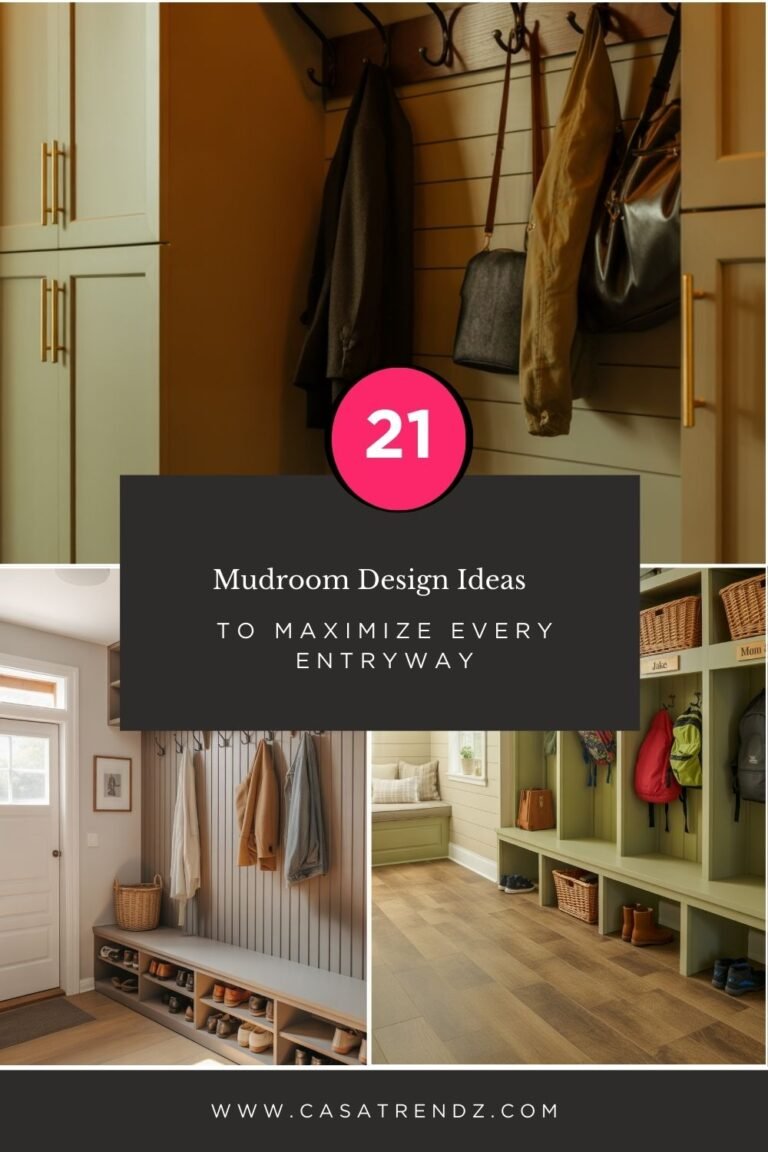 21 Mudroom Design Ideas to Maximize Every Entryway
 12 Stylish Exterior Door Design Ideas for a Stunning Entryway
 19 Festive Christmas Entryway Decor Ideas for 2025 Front Porches
 13 Double Door Ideas to Upgrade Your Entryway or Patio