
12 Rooftop Terrace Design Ideas to Transform Your Outdoor Space

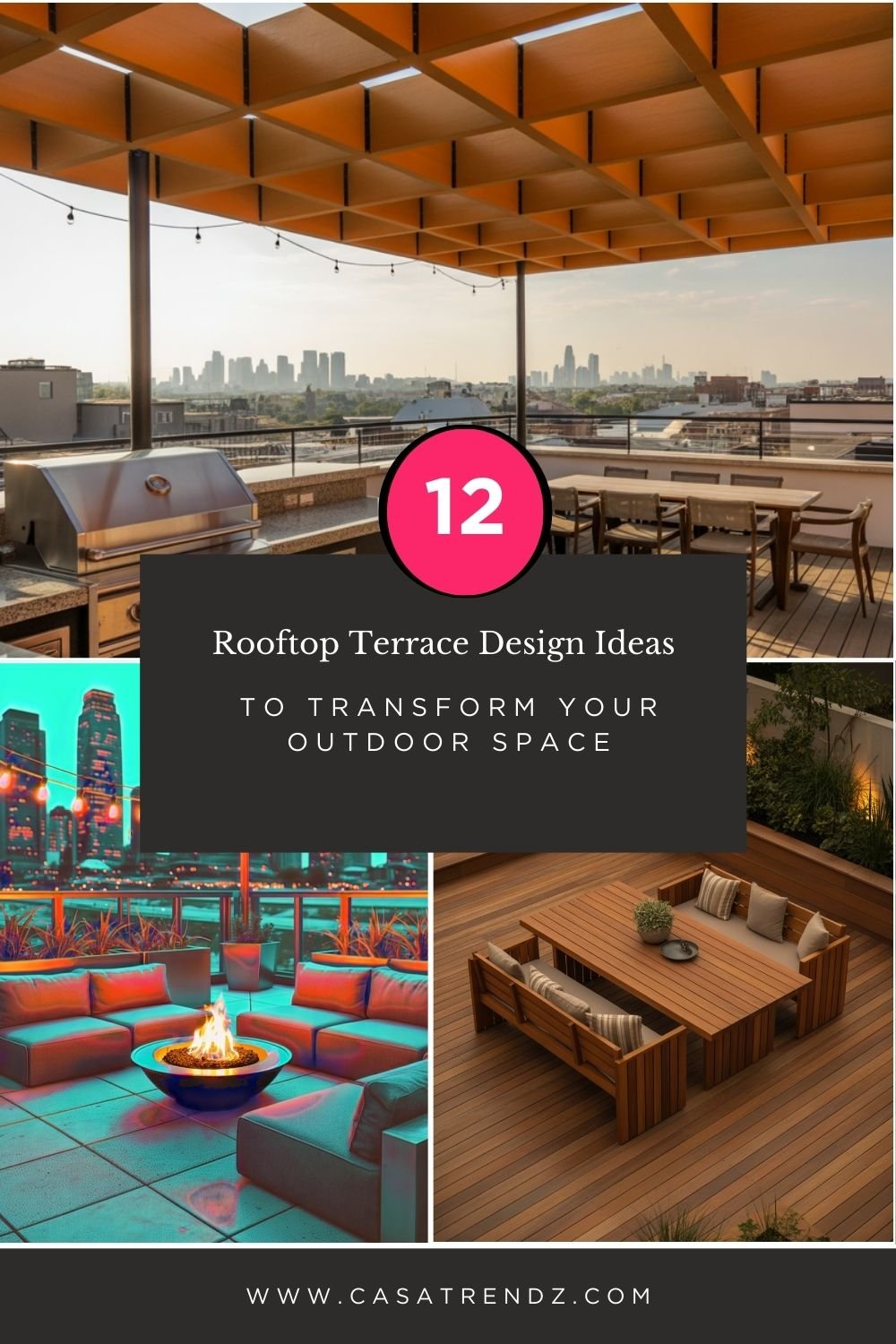
A rooftop terrace is one of the most underused spaces in any home. It sits above the noise of the street, catches the best light of the day, and offers open sky that no ground floor room can match. Yet most rooftops stay empty, holding little more than a water tank and a few forgotten planters. With a clear plan and the right design choices, that same slab of roof can become the most loved spot in your home, a place for slow mornings, long dinners, and quiet evenings under the stars.
The secret is to design for how you will actually use the space, not for a photo. A rooftop that hosts weekend dinners needs a different layout than one built for morning yoga or quiet reading. Before you buy a single piece of furniture, check the basics first. Confirm the roof can carry the weight of planters, furniture, and people, and talk to a structural engineer if you are unsure. Plan drainage so rainwater never pools around seating or planters, and think about wind, because rooftops catch far more wind than ground level gardens. Once those practical boxes are ticked, the fun part begins.
In this guide, we explore 12 rooftop terrace design ideas that balance style, comfort, and practicality. Each idea includes real materials, measurements, colors, and step by step tips you can use right away. From modern minimalism to garden inspired retreats, these rooftop terrace design ideas will help you turn unused rooftop space into a stunning outdoor destination you will use every single day.
1. Modern Minimalist Rooftop Terrace

A modern minimalist rooftop terrace focuses on clean lines, open layouts, and restrained material choices. Neutral color palettes such as white, warm gray, and beige dominate the space, creating a calm and uncluttered environment. Low profile furniture, sleek planters, and simple architectural elements help maintain a sense of openness. This approach works particularly well for urban rooftops where surrounding city views become part of the design rather than competing with it. Keep the palette to two or three colors at most, and let texture do the work that color usually does. A smooth concrete floor, a teak bench, and a matte black planter give you plenty of contrast without any visual noise.
Functionality plays a key role in minimalist rooftop terrace design ideas. Built in seating, concealed storage, and multi purpose furniture help maximize space without visual overload. A built in bench along one edge, about 18 inches high and 16 inches deep, doubles as seating and storage for cushions and throws. Choose a low coffee table around 40 by 20 inches and a pair of armless lounge chairs so sightlines stay open across the roof. Subtle lighting, such as recessed floor lights or slim LED strips tucked under a bench, enhances the atmosphere while maintaining the clean aesthetic. Finish with one sculptural plant, like an olive tree in a tall concrete planter, and resist the urge to add more. The result is a sophisticated rooftop terrace that feels intentional, balanced, and easy to maintain.
2. Rooftop Garden Oasis
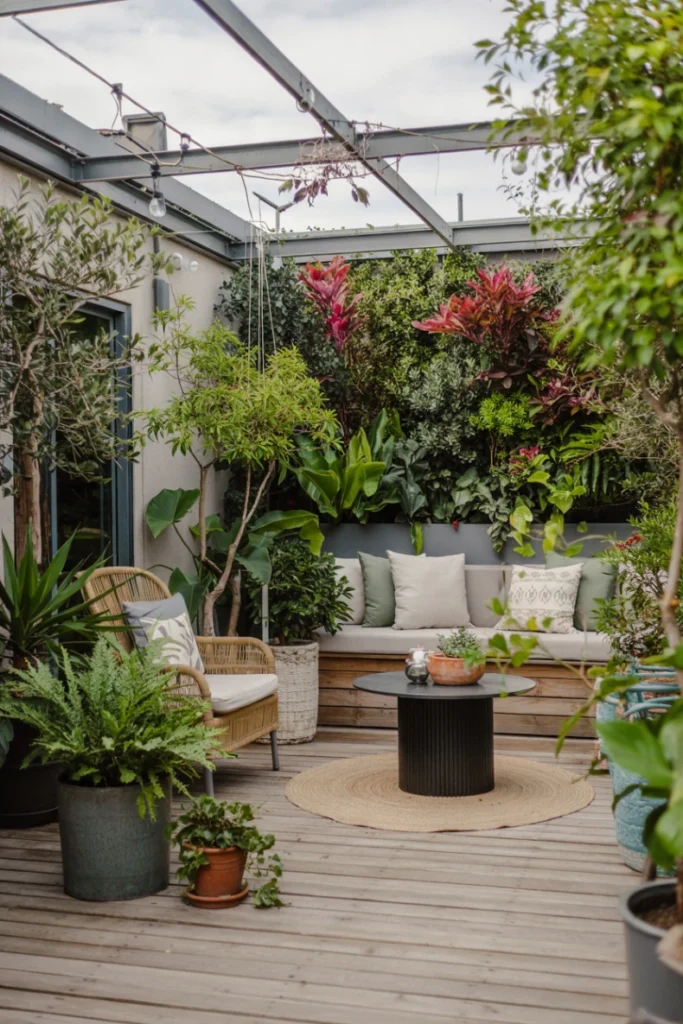
Transforming a rooftop terrace into a garden oasis creates a refreshing escape from the urban environment. Lush greenery, layered planting, and a mix of planters bring natural beauty to an otherwise hardscape heavy area. Vertical gardens, raised beds, and potted trees allow you to maximize greenery without compromising usable space. This approach softens the rooftop visually and improves air quality while enhancing overall comfort. Start with a simple planting plan in three layers: tall plants or small trees at the back for privacy, mid height shrubs and grasses in the middle, and low trailing plants at the front to soften hard edges. A mix of evergreen shrubs and seasonal flowers keeps the terrace looking alive all year.
A rooftop garden terrace should balance beauty with practicality. Choosing weather resistant plants suited to sun exposure and wind conditions is essential for long term success. In sunny, windy spots, go for tough plants like lavender, rosemary, ornamental grasses, and dwarf olive trees, all of which handle heat and gusts well. Use lightweight planters made from fiberglass or resin rather than heavy stone, and always use a lightweight growing mix with good drainage so the roof load stays manageable. Add a drip irrigation line on a timer so watering takes care of itself in hot weather. Comfortable seating tucked among greenery encourages relaxation, while natural materials like wood decking and stone pavers reinforce the organic feel. These rooftop terrace design ideas are perfect for homeowners seeking tranquility and a closer connection to nature, and they pair beautifully with the planting advice in our small garden ideas guide.
3. Rooftop Lounge for Entertaining
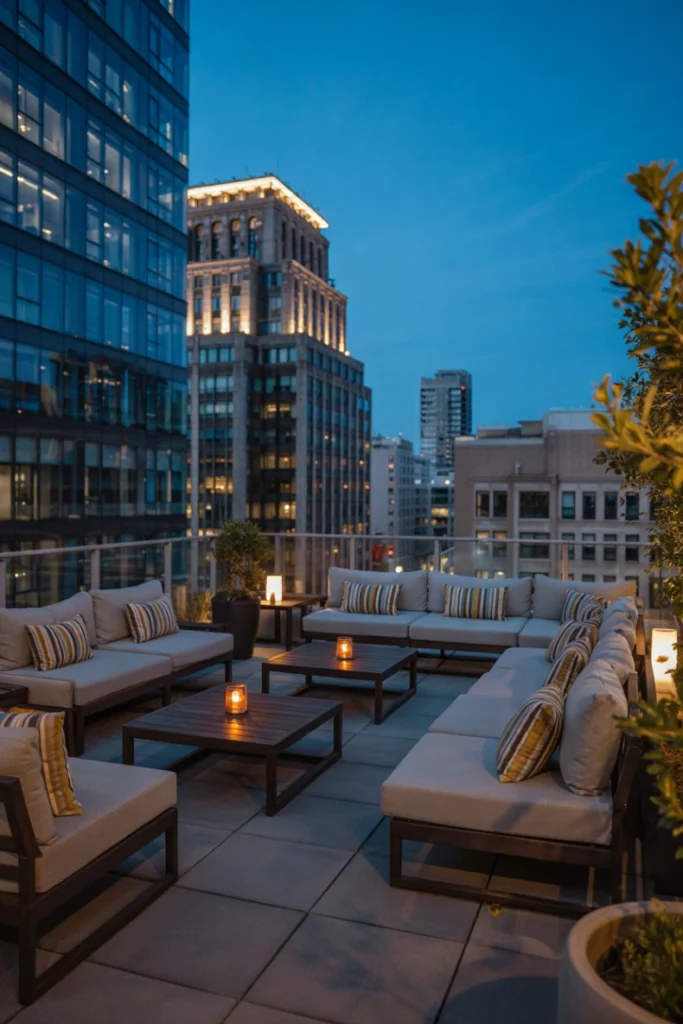
A rooftop lounge is ideal for homeowners who enjoy hosting gatherings and social events. This design centers around comfortable seating, open circulation, and zones for conversation. Sectional sofas, outdoor armchairs, and low tables create an inviting layout that encourages people to relax and interact. A cohesive color palette helps the space feel polished and intentional. Plan the layout around a conversation circle about 10 to 12 feet across, with a sectional or two sofas facing each other and a coffee table in the middle. Leave at least 30 inches of walkway around the group so guests can move freely with a drink in hand. For a rooftop that regularly hosts six to eight people, a sectional about 9 feet long with two armchairs is a comfortable fit.
Lighting plays a crucial role in rooftop lounge terrace design ideas. String lights, lanterns, and accent lighting create a warm evening atmosphere while extending usability after sunset. Hang string lights in a zigzag or perimeter pattern about 8 to 9 feet above the floor, and add a few battery operated lanterns on side tables for a soft glow at eye level. Adding elements like an outdoor bar cart or a small beverage station enhances functionality without overwhelming the layout. A slim bar cart about 36 inches wide can hold glasses, a cooler, and a few bottles, and it tucks against a wall when not in use. Choose weatherproof furniture in powder coated aluminum or resin wicker with solution dyed acrylic cushions, which resist fading and dry quickly after rain. The result is a rooftop terrace that seamlessly transitions from daytime lounging to nighttime entertaining, much like the setups in our outdoor entertaining area ideas.
4. Cozy Rooftop Terrace with Fire Feature

A fire feature instantly adds warmth and intimacy to a rooftop terrace. Fire pits or fire tables create a natural focal point while encouraging year round use, even in cooler climates. Surrounded by comfortable seating, the fire feature becomes a gathering spot that enhances both function and atmosphere. A round fire table about 42 to 48 inches across works well for four to six chairs, while a rectangular table around 60 by 36 inches suits a longer lounge sofa. Keep at least 24 inches between the fire edge and the nearest seat so everyone stays comfortable, and choose chairs with deep seats and weatherproof cushions so people linger instead of perching.
When incorporating fire into rooftop terrace design ideas, safety and placement are key. Choosing gas powered or modern smokeless fire features ensures compliance with building regulations while maintaining convenience. Before you buy anything, check your building rules and local fire codes, because many cities restrict open flames on rooftops. A propane fire table with a hidden tank compartment is usually the simplest option, and it lights with a push button instead of matches and kindling. Complementary materials such as stone, concrete, or metal help the fire element blend seamlessly with the overall design. Place the fire feature on a non combustible surface, keep it at least 10 feet from any pergola fabric or overhead cover, and store a small fire extinguisher nearby in a weatherproof box. This approach results in a cozy, inviting rooftop terrace that feels luxurious and practical, and it works especially well alongside the layouts in our fire pit garden ideas.
5. Rooftop Dining Terrace

A rooftop dining terrace transforms outdoor meals into memorable experiences. Whether used for casual breakfasts or formal dinners, a dedicated dining area adds functionality and elegance. A sturdy dining table, comfortable chairs, and adequate lighting ensure the space is both practical and welcoming. Size the table to your household first: a table 72 by 36 inches seats six comfortably, with 24 inches of elbow room per person, while a 48 inch round table suits four. Leave at least 36 inches behind each chair so people can pull out and stand up without bumping into planters or a railing. Choose a table in teak, powder coated aluminum, or stone topped metal, all of which handle sun and rain without warping or rusting.
Rooftop terrace design ideas for dining should consider weather exposure and shade. Pergolas, umbrellas, or retractable awnings provide protection while defining the dining zone. A cantilever umbrella with a 10 to 11 foot canopy shades a six seat table without a center pole getting in the way of serving dishes, and it can tilt to follow the afternoon sun. Durable materials like treated wood, metal, and stone ensure longevity, and outdoor rated dinnerware in melamine or enamel keeps the table looking good without the worry of broken glass. Add a small sideboard or outdoor storage bench within a few steps of the table for plates, cutlery, and table linens so setting the table takes minutes, not trips up and down the stairs. With thoughtful layout and lighting, a rooftop dining terrace becomes an extension of your indoor dining space.
6. Luxury Rooftop Terrace with Outdoor Kitchen
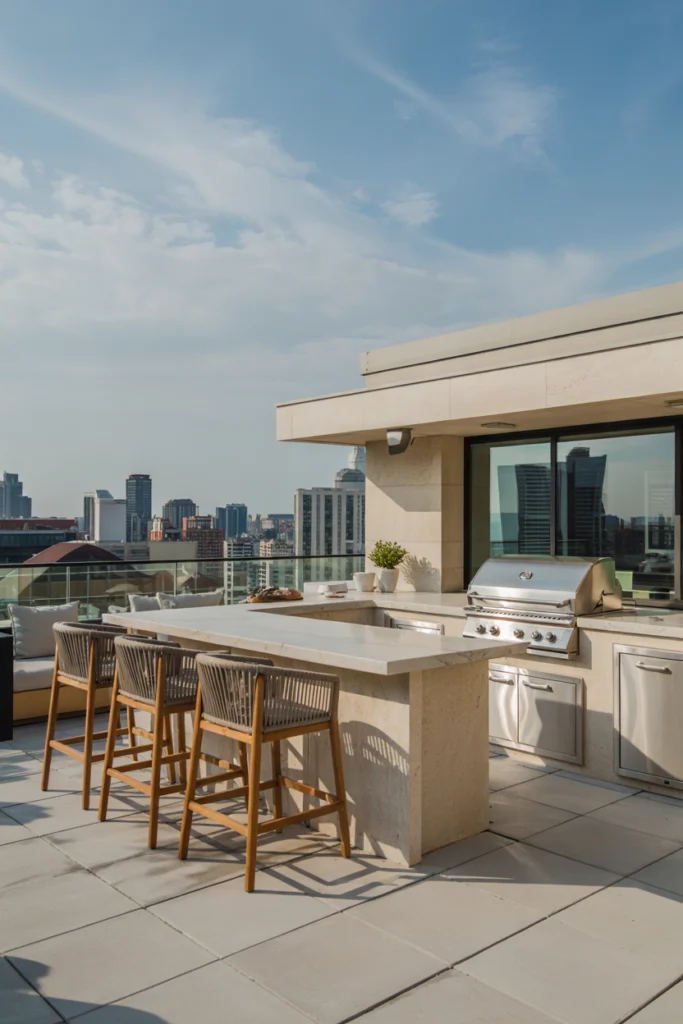
An outdoor kitchen elevates a rooftop terrace into a premium entertaining space. Built in grills, countertops, sinks, and storage allow for seamless meal preparation without repeated trips indoors. This setup is ideal for frequent hosts who want a fully functional outdoor living area. Plan the kitchen as a straight run or L shape along one wall, with the grill at one end, a prep counter in the middle, and a sink at the other end. A counter run of 10 to 12 feet gives you enough room for a 32 inch built in grill, 36 inches of prep space, and a small sink. Keep the work triangle tight, with no more than 6 feet between grill, sink, and serving counter, so cooking stays easy.
Luxury rooftop terrace design ideas focus on high quality materials and thoughtful layout. Stone countertops, stainless steel appliances, and integrated lighting enhance both durability and aesthetics. Choose a granite or porcelain countertop at least 24 inches deep, marine grade stainless steel for the grill and fridge, and cabinetry in powder coated aluminum or marine grade polymer, which will not swell or rot in rain. A small under counter fridge, about 24 inches wide, keeps drinks cold right where you need them, and a pull out trash drawer keeps the prep area tidy. Seating areas positioned nearby encourage social interaction while meals are prepared, so place a row of three bar stools at a raised counter section about 42 inches high, facing the cook. This design transforms the rooftop into a self sufficient outdoor hub, and it pairs naturally with the ideas in our outdoor kitchen ideas.
7. Small Rooftop Terrace Design
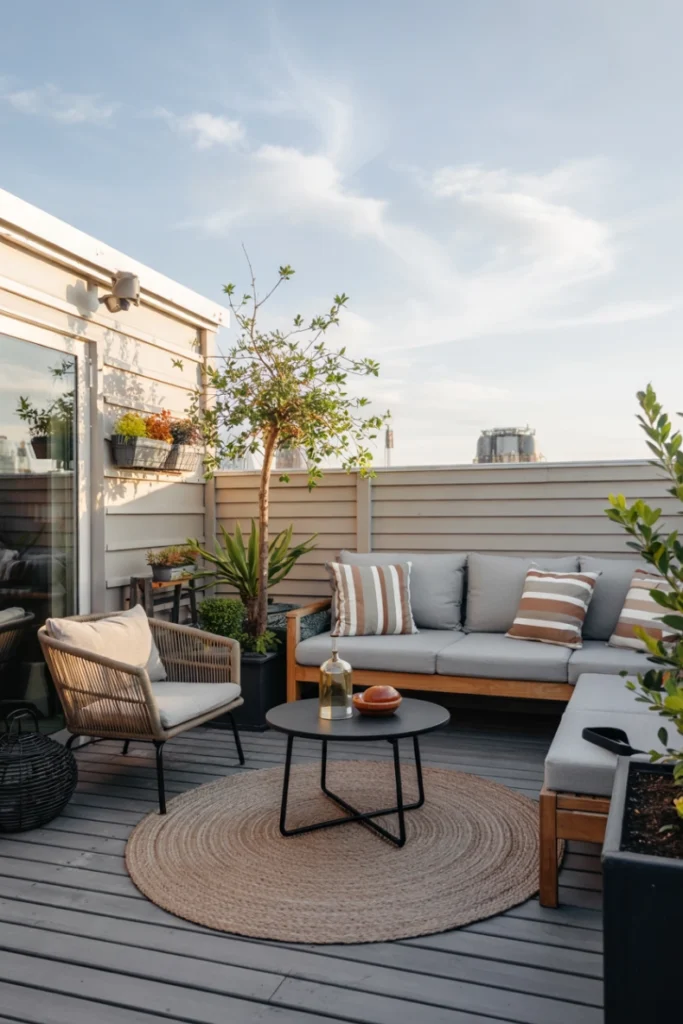
Even small rooftops can become stylish and functional with the right design approach. Compact furniture, vertical storage, and flexible layouts allow limited space to be used efficiently. Folding chairs, stackable furniture, and built in benches maximize usability without overcrowding the terrace. Start by measuring carefully and sketching the space to scale, even a rough drawing helps. On a terrace under 150 square feet, pick one main purpose, like a reading nook or a two person breakfast spot, and design around it. A bistro set with a 24 inch round table and two folding chairs, plus a slim bench along the wall, gives you seating for four without crowding the floor.
Small rooftop terrace design ideas benefit from light colors and reflective surfaces, which help the space feel larger. Pale decking, white walls, and light gray furniture bounce light around and make the edges of the terrace feel further away. A large mirror on a sheltered wall, or glossy ceramic planters, can add the same effect. Strategic lighting and minimal decor prevent visual clutter, so choose one statement piece, like a sculptural planter or a small water bowl, and keep the rest simple. Use vertical space for plants with wall mounted planters or a narrow trellis, which adds greenery without taking up floor area. By focusing on essentials and thoughtful layout, a small rooftop terrace can feel comfortable, inviting, and surprisingly spacious.
8. Rooftop Terrace with Pergola or Canopy
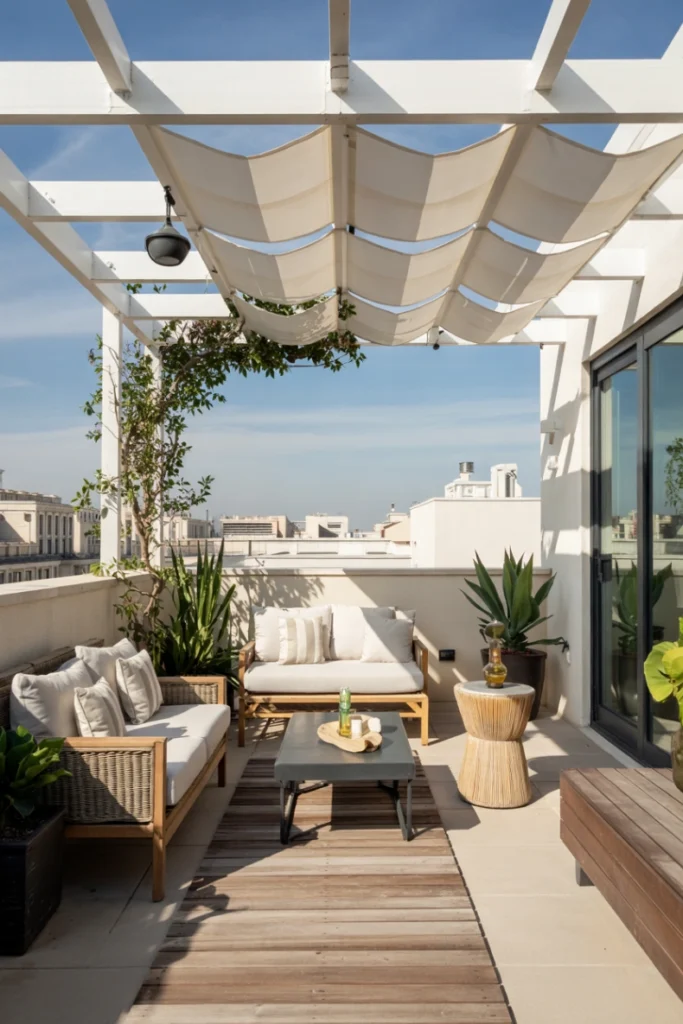
Adding a pergola or canopy defines the rooftop terrace while offering shade and visual structure. These architectural elements create a sense of enclosure without fully blocking views or airflow. Pergolas also provide opportunities for hanging lights, curtains, or climbing plants. A freestanding pergola about 10 by 12 feet shades a lounge set comfortably, while a smaller 8 by 8 foot version suits a dining table for four. Build it from cedar, redwood, or powder coated aluminum, all of which hold up well outdoors, and anchor it properly to the roof structure with a professional fixing, since wind loads on a rooftop are much higher than at ground level.
Rooftop terrace design ideas incorporating pergolas enhance comfort and usability throughout the day. Adjustable canopies or retractable shades allow flexibility based on weather conditions. A retractable fabric canopy in a light neutral color blocks harsh midday sun and rolls away when you want open sky, while outdoor curtains in weatherproof fabric can be drawn across one side to block wind or late afternoon glare. Train a climbing plant like jasmine or wisteria up the posts for natural shade and fragrance, but keep the planting in lightweight containers with a drip line. Combined with comfortable seating and layered lighting, this design creates a balanced outdoor environment that feels intentional and inviting, similar to the shaded structures in our outdoor pavilion ideas.
9. Rooftop Terrace with Water Features
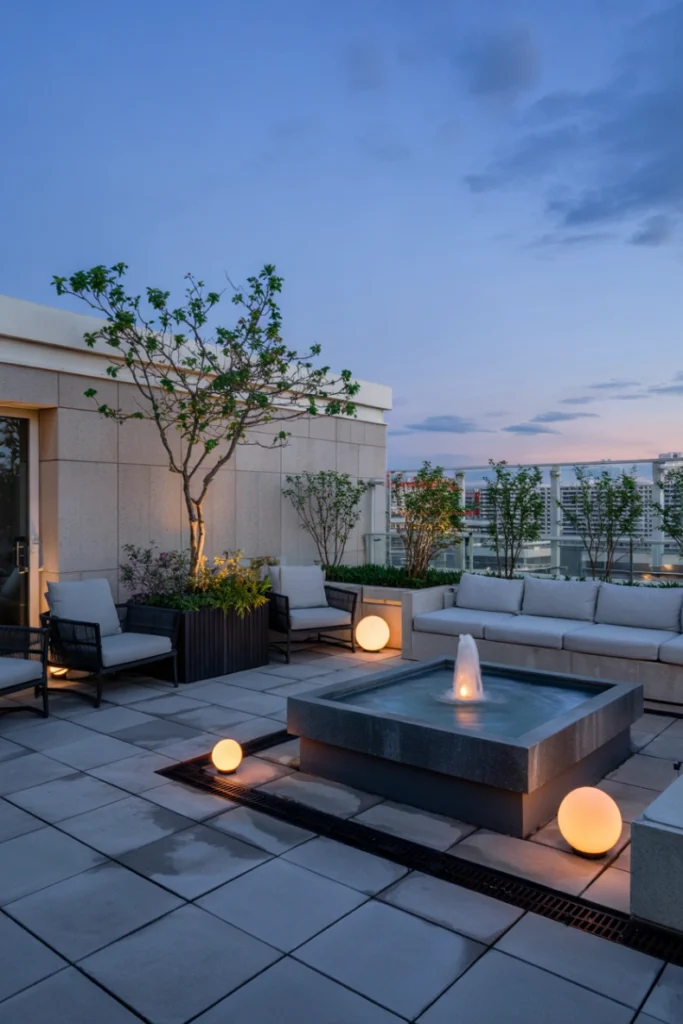
Water features introduce movement, sound, and visual interest to rooftop terraces. Fountains, reflecting pools, or small cascading features help create a calming ambiance that contrasts with surrounding city noise. Even compact water elements can significantly elevate the overall atmosphere. A small wall mounted fountain about 24 inches wide, a bubbling stone urn, or a narrow rill running along a planter edge all add gentle sound without taking up much space. Place the feature where you can hear it from the main seating area, ideally within 6 to 8 feet, so the sound is present but never loud enough to drown out conversation.
When planning rooftop terrace design ideas with water features, weight and maintenance must be considered. Lightweight materials and recirculating systems make installation more practical. Choose a self contained fountain in fiberglass or resin that recirculates the same water, so you only need to top it up occasionally, and place it on a level, load bearing part of the roof. In cold climates, drain the feature before winter so freezing water cannot crack the basin. Paired with subtle lighting and natural materials, water features enhance relaxation and create a spa like rooftop experience. A couple of underwater LED lights, or a small spotlight aimed at the water surface, turns the feature into a focal point after dark.
10. Rooftop Terrace Inspired by Mediterranean Design

Mediterranean inspired rooftop terraces emphasize warmth, texture, and relaxed elegance. Terracotta tiles, stucco finishes, and wrought iron details create a timeless aesthetic. Earthy color palettes combined with natural materials evoke a vacation like atmosphere. Start with the floor: terracotta pavers or warm toned porcelain tiles laid in a simple pattern set the tone immediately. Add whitewashed walls or a stucco finished parapet, and choose furniture in wrought iron or weathered teak with cushions in warm white, olive, and terracotta. A few large clay pots planted with olive trees, lavender, or rosemary reinforce the theme and release fragrance on warm evenings.
These rooftop terrace design ideas focus on comfort and social interaction. Built in benches, patterned cushions, and shaded seating areas encourage lingering conversations. Build a low bench along one wall, about 18 inches high, with a cushion in a striped outdoor fabric and a few patterned throw pillows in blue and terracotta. Add a mosaic topped side table, a wrought iron lantern or two, and a simple shade sail in cream canvas to soften the midday sun. With thoughtful lighting and layered textures, a Mediterranean rooftop terrace feels welcoming and effortlessly stylish. String lights with warm white bulbs, hung loosely between posts, complete the look and make the terrace glow after sunset.
11. Rooftop Terrace for Relaxation and Wellness

A wellness focused rooftop terrace prioritizes calm, comfort, and restorative design elements. Yoga mats, lounge chairs, and soft textiles create a peaceful retreat for relaxation or meditation. Natural materials and neutral tones reinforce a soothing environment. Dedicate a flat, open area of at least 8 by 10 feet for a yoga mat or two, with enough clearance to stretch without bumping into furniture. A low platform deck in pale wood defines the practice zone and feels warm under bare feet. Keep the color palette soft: warm whites, sand, sage, and pale wood tones, with no more than one gentle accent color.
Rooftop terrace design ideas centered on wellness often incorporate greenery and privacy screens. Gentle lighting, water features, and wind protection enhance comfort. A slatted wood screen or a row of tall grasses in planters blocks the view from neighboring buildings and cuts wind without making the space feel closed in. Add a weatherproof storage box for mats, blocks, and blankets, a small side table for tea or water, and a comfortable lounge chair with an outdoor cushion for reading after practice. A small bubbling water bowl adds gentle sound, and solar lanterns provide soft light for evening wind down sessions. This type of rooftop terrace becomes a personal sanctuary that supports both physical and mental well being.
12. Multi-Functional Rooftop Terrace
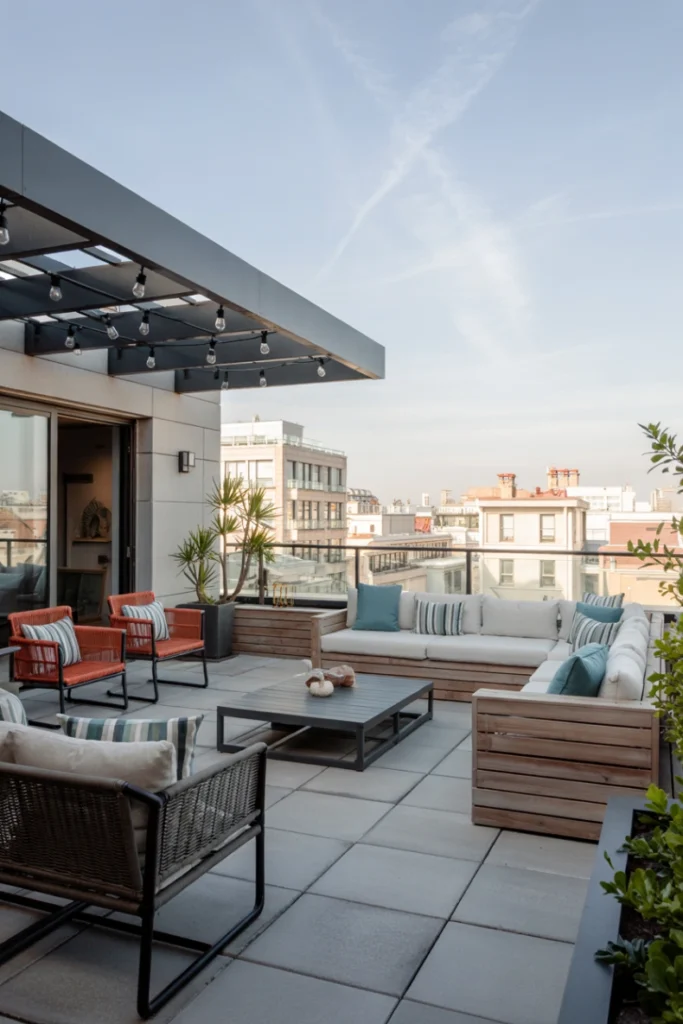
A multi functional rooftop terrace accommodates various activities within a single space. Zoning allows areas for lounging, dining, and relaxation without feeling cluttered. Furniture placement and material changes help visually separate each function. Divide the roof into two or three zones: a lounge corner with a sectional and fire table, a dining zone with a table and umbrella, and a quiet corner with a bench and planters. Use a change in flooring to mark each zone, for example wood decking under the lounge and stone pavers under the dining table, with a low planter row or an outdoor rug acting as a soft boundary between them. Keep at least 36 inches of clear walkway between zones so the space flows easily.
These rooftop terrace design ideas are ideal for homeowners who want flexibility. Modular furniture, movable planters, and adaptable lighting allow the space to evolve based on needs. Choose a modular sectional that can be rearranged from a long sofa into two loveseats, lightweight planters on casters that can be rolled aside for a party, and a folding dining table that extends from four seats to eight. String lights on dimmers and a few portable lanterns let you shift the mood from a bright family lunch to a soft evening gathering. With careful planning, a multi functional rooftop terrace delivers maximum value and usability, and it works beautifully on rooftops of almost any size.
Final Thoughts
Rooftop terrace design ideas offer endless possibilities for transforming underused outdoor space into a functional and stylish extension of your home. Whether your priority is relaxation, entertaining, or greenery, thoughtful planning and design can turn any rooftop into a destination. The best results come from starting with the practical basics, like structure, drainage, and wind, and then layering in the style that fits your life. A minimalist lounge, a garden oasis, a dining terrace, or a multi zone layout can all work, as long as the design matches how you will really use the space.
By choosing ideas that align with your lifestyle, space limitations, and climate, your rooftop terrace can become one of the most valuable and enjoyable areas of your home. Start small if you need to: one seating group, a few planters, and good lighting are enough to make the space usable this weekend. Add features like a pergola, a fire table, or an outdoor kitchen over time as you learn how you use the terrace. With each addition, your rooftop will feel more like a true outdoor room and less like an empty roof.
Frequently Asked Questions
How much does it cost to design a rooftop terrace?
A simple rooftop terrace with furniture, planters, and lighting usually costs between $2,000 and $8,000, while a full build with decking, a pergola, an outdoor kitchen, and a fire feature can run $15,000 to $40,000 or more. The biggest cost drivers are structural work, decking, and built in features. Start with furniture and plants, then add permanent features over time to spread the cost.
Do I need permission to build a rooftop terrace?
In most cities, you need building approval for structural changes, railings, pergolas, and any permanent fixtures on a rooftop. Check with your local building department and your building management before starting work. A structural engineer should confirm the roof can carry the extra load of decking, planters, furniture, and people.
What is the best flooring for a rooftop terrace?
Wood deck tiles, composite decking, and porcelain pavers are the most popular choices. Wood deck tiles are lightweight, easy to install, and warm underfoot. Composite decking resists moisture and fading. Porcelain pavers look like stone, handle weather well, and are easy to clean. Whatever you choose, make sure it allows water to drain freely and does not trap moisture against the roof membrane.
How do I protect rooftop terrace furniture from wind?
Choose heavy, low profile furniture that wind cannot easily lift, and avoid lightweight pieces on exposed rooftops. Anchor pergolas and shade structures properly, use weighted umbrella bases of at least 50 pounds, and store cushions in a weatherproof box when storms are forecast. Wind screens, slatted panels, or rows of planters can also cut gusts without blocking the view.
What plants grow best on a rooftop terrace?
Tough, sun loving plants do best on rooftops because they handle heat, wind, and reflected light. Good choices include lavender, rosemary, ornamental grasses, sedum, dwarf olive trees, and agave. Use lightweight planters with drainage holes, a light growing mix, and drip irrigation so plants stay watered through hot, dry spells.
More Ideas You Will Love
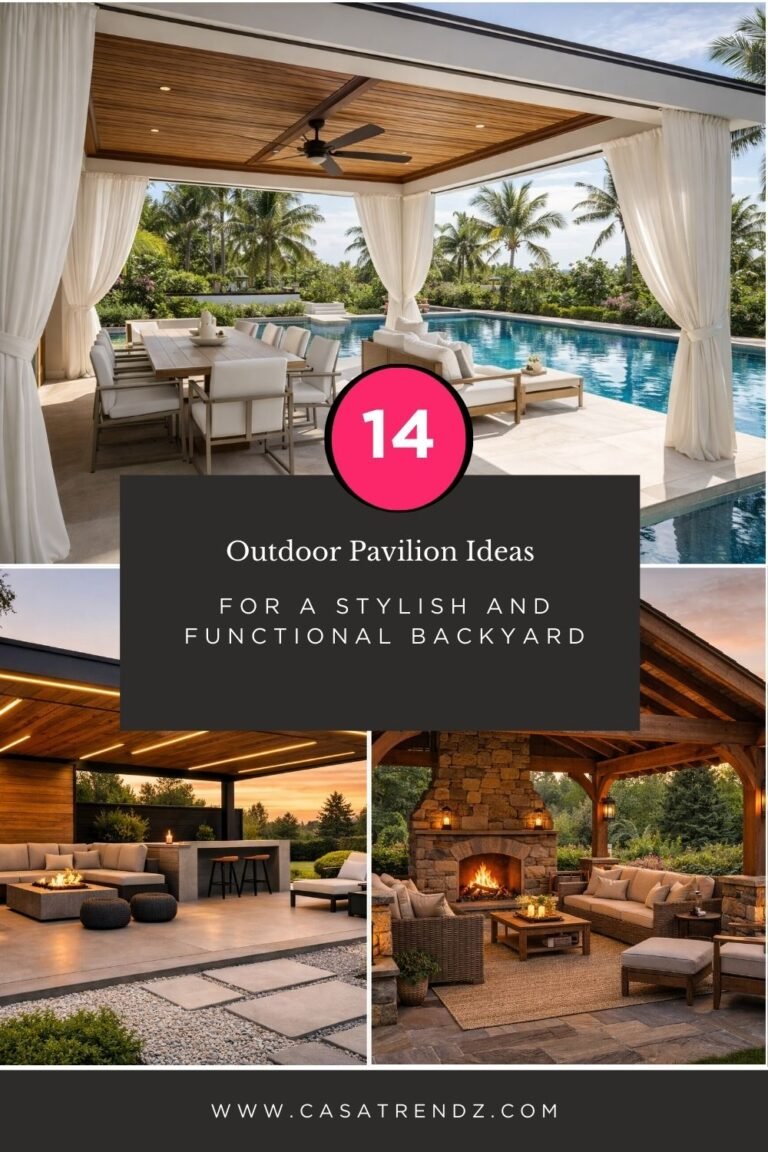 14 Outdoor Pavilion Ideas for a Stylish and Functional Backyard
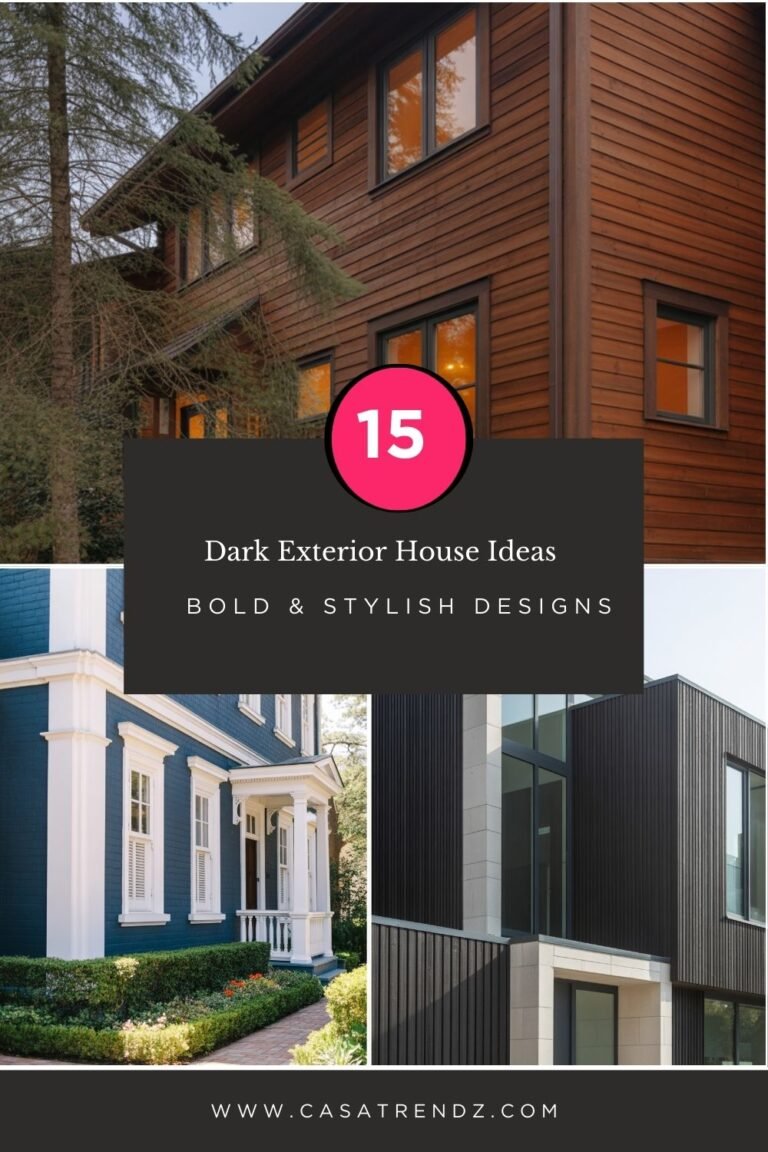 15 Dark Exterior House Ideas: Bold & Stylish Designs
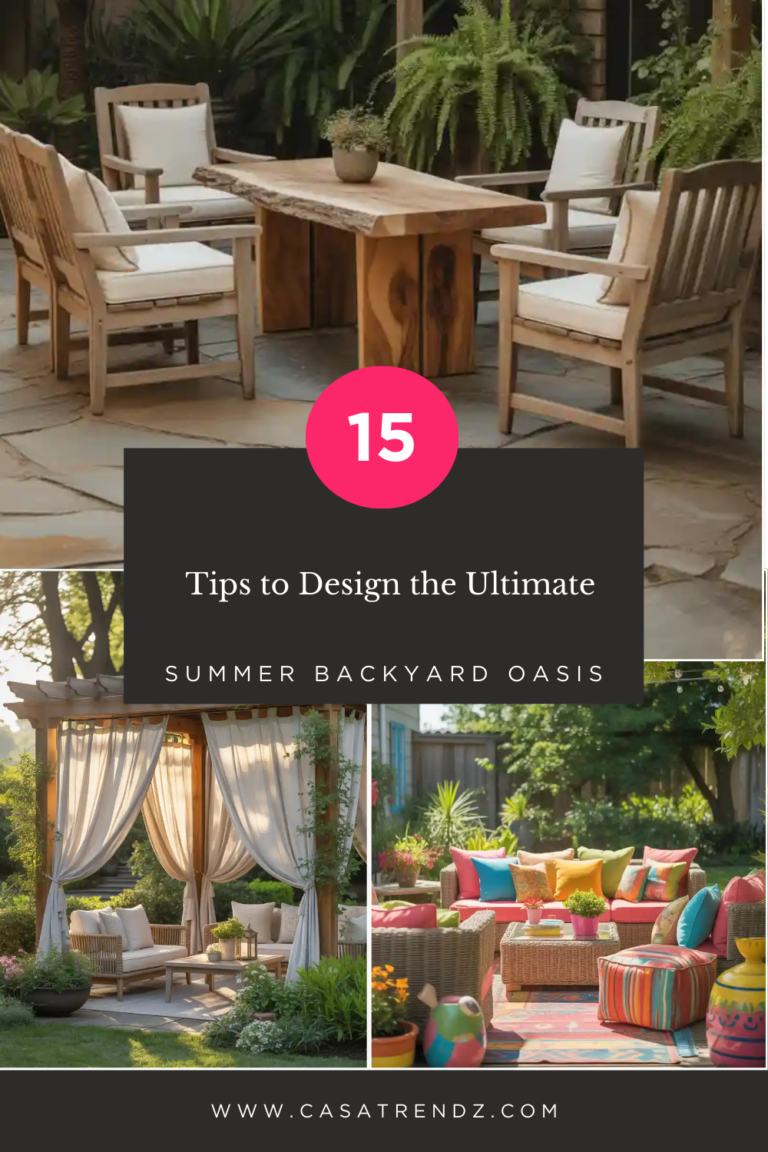 15 Tips to Design the Ultimate Summer Backyard Oasis
 16 Cheap Backyard Ideas for Stunning DIY Outdoor Makeovers
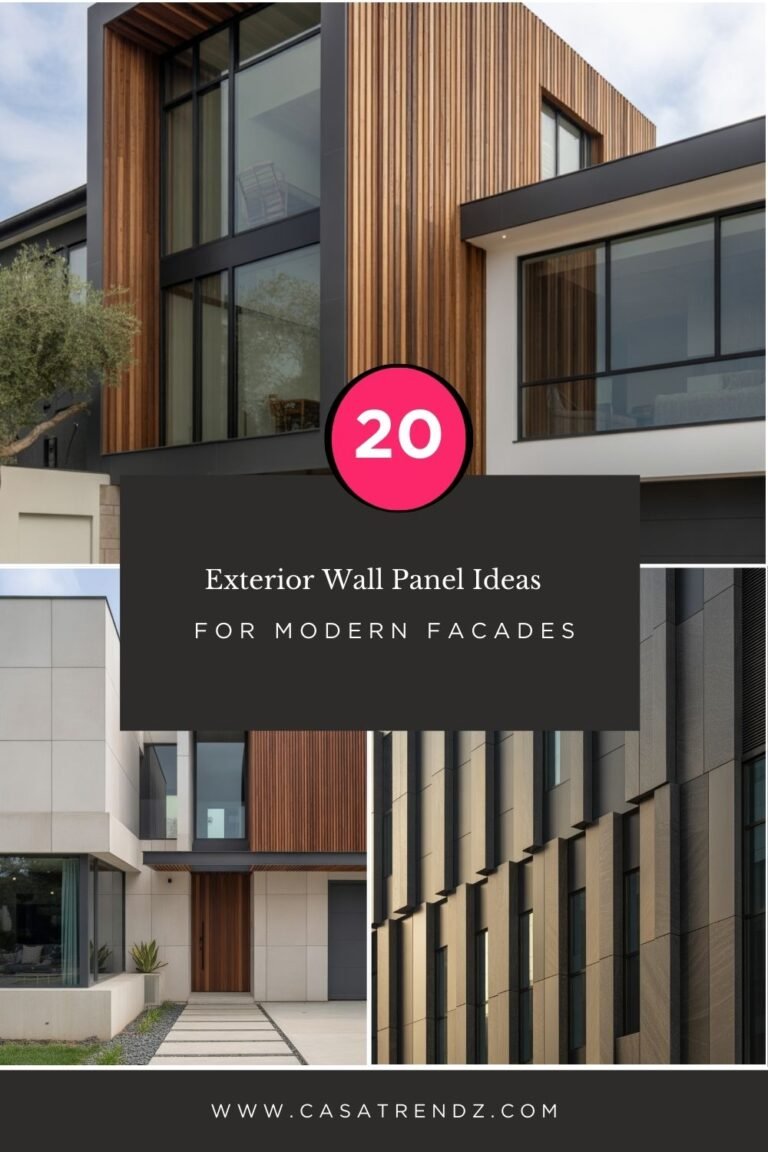 20 Exterior Wall Panel Ideas for Modern Facades
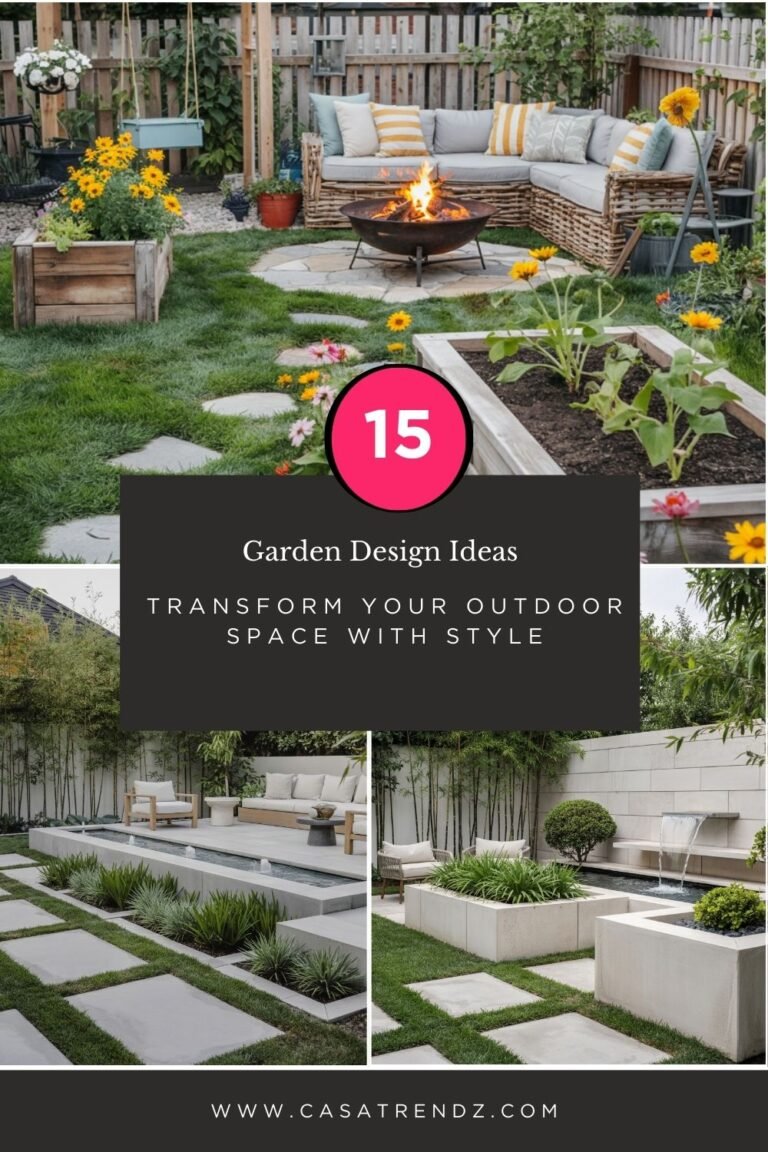 15 Garden Design Ideas: Transform Your Outdoor Space with Style