
18 Fire Pit Garden Ideas for Stylish, Functional Outdoor Spaces


A fire pit changes the way a garden feels after sunset. It turns an ordinary patch of lawn or patio into the place where everyone gathers, where conversations stretch longer, and where cool evenings become something to look forward to instead of a reason to head inside. A well planned fire pit garden is not just about the fire itself. It is about seating that invites people to stay, materials that age gracefully, lighting that flatters the space, and a layout that keeps the whole area safe and comfortable.
The best fire pit gardens balance beauty with practical thinking. You need enough clearance around the flames, a surface that will not scorch or shift, seating placed at a comfortable distance, and a design that fits the way you actually live. Some homeowners want a dramatic sunken lounge for weekend entertaining. Others need a compact fire bowl that fits a small courtyard. Both can work beautifully when the details are right.
In this guide, we explore 18 fire pit garden ideas that cover every style and garden size, from modern minimalist layouts to rustic stone circles and bohemian retreats. Each idea includes specific materials, measurements, colors, and step by step tips you can put to work right away. Whether you are starting from bare lawn or refreshing a patio you already love, you will find a design here that fits your space, your budget, and the way you gather outdoors.
1. Sunken Fire Pit Garden Lounge
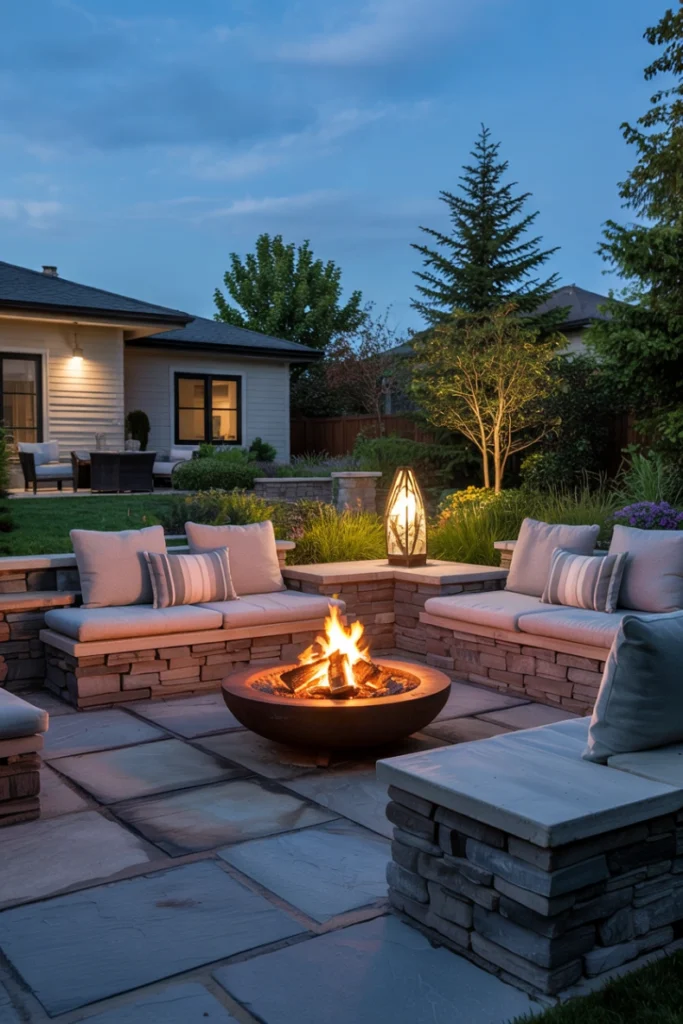
A sunken fire pit garden creates an intimate and luxurious atmosphere by lowering the seating area below ground level, usually by 18 to 24 inches. This design naturally shields the space from wind while creating a sense of enclosure that feels both cozy and elegant. Stone or concrete retaining walls around the pit add structure, while built in seating along the edges maximizes space and keeps the layout clean. A round fire bowl 36 to 42 inches across sits comfortably in the center, leaving about 24 inches of walkway between the fire and the seats.
Start by marking the area and checking drainage first, because a sunken space collects water if it has nowhere to go. Add a 4 inch gravel base under the floor and a slight slope toward a drain or a dry well. Line the walls with natural stone, brick, or poured concrete, and cap them with wide stones that double as extra seating. Finish with weather resistant cushions in warm neutrals, a few outdoor throw blankets, and low voltage path lights on the steps. This design works best in larger gardens where the change in level feels intentional rather than cramped, and it rewards you with a gathering spot that feels private, sheltered, and a little bit magical on cool nights.
2. Modern Minimalist Fire Pit Garden

A modern minimalist fire pit garden focuses on clean lines, neutral colors, and uncluttered layouts. A square or rectangular concrete fire pit, roughly 36 inches wide and 18 inches tall, anchors the space without visual fuss. Surround it with large format pavers in light gray or warm beige, and keep the planting structured, using ornamental grasses, sculpted boxwood, or a single row of lavender to frame the area. The palette stays restrained: charcoal, stone gray, off white, and one warm wood tone for contrast.
Keep furniture low and simple. Two streamlined benches or four cube style chairs in powder coated metal or teak give everyone a seat without crowding the view. Leave at least 36 inches of clear space around the fire pit for safe movement, and choose a smokeless fire pit insert if your garden sits close to neighbors. The secret to this style is restraint, so resist the urge to add extra decor. One sculptural planter or a single lantern is enough. The result is a calm, intentional outdoor room that feels refined in daylight and quietly dramatic once the flames are lit.
3. Rustic Stone Fire Pit Garden

A rustic stone fire pit garden celebrates natural textures and earthy tones. Build the pit from fieldstone, flagstone, or reclaimed brick, stacking the stones in a circle about 36 to 48 inches across with a fireproof steel ring inside to protect the masonry from heat. A gravel or crushed stone base, 3 to 4 inches deep and extending at least 24 inches beyond the pit on every side, gives the area a finished look while keeping embers off the lawn. Native plants, wooden log seats, and a simple gravel path complete the organic feel.
Choose stones in warm grays, tans, and soft browns so the pit blends into the landscape instead of standing out. If you build it yourself, dry stack the lower courses and use refractory mortar only on the inner ring, which keeps the structure flexible through freeze and thaw cycles. Add a few tree stump seats or a rough hewn bench, and keep a metal screen and a bucket of sand nearby for safety. Over time the stone weathers and softens, and the pit only looks better. This is one of the most enduring fire pit garden ideas because it asks for so little and gives back so much, a place for slow evenings, stories, and marshmallows with no fuss at all.
4. Fire Pit Garden with Built-In Seating

Built in seating around a fire pit maximizes space while creating a cohesive, intentional design. A curved masonry bench, 18 inches high and 16 to 18 inches deep, follows the shape of a round fire pit and leaves the center open for the fire. Build the bench from the same stone or brick as the pit so the whole area reads as one piece, then top it with thick outdoor cushions in a durable fabric such as solution dyed acrylic. A 42 inch round fire pit pairs well with a seating circle about 10 to 12 feet across, which leaves comfortable legroom and space to walk behind the benches.
This approach is ideal for gardens where space is limited but function matters, because built in seating removes the need for extra chairs and keeps the layout tidy. Add storage inside the bench base for firewood, blankets, or cushions, and include a small gap or a removable section so you can reach the fire easily for cleaning. Seat cushions in warm charcoal, rust, or deep green add color without clashing with the stone. In winter, store the cushions in a deck box and the stone bench still looks good on its own. The result is a permanent social zone that feels designed rather than assembled, and it works equally well in modern and traditional gardens.
5. Fire Pit Garden with Pergola
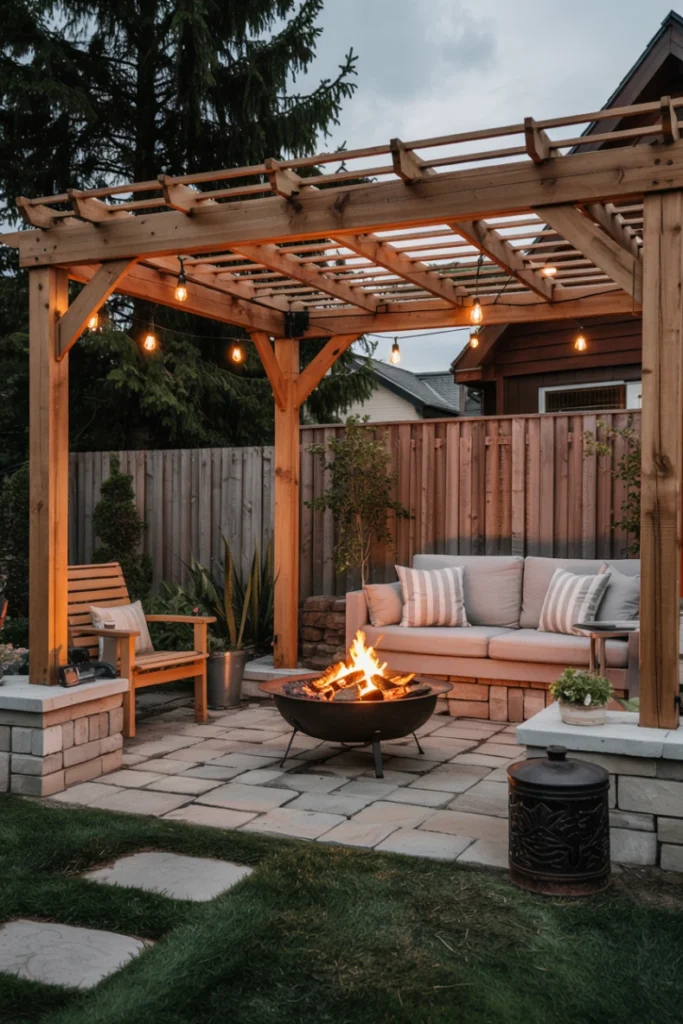
Adding a pergola above a fire pit creates a defined outdoor room that feels intentional and inviting. A timber pergola, typically 10 by 12 feet or 12 by 14 feet, frames the fire area without fully enclosing it, which lets smoke rise and disperse while the beams offer partial shade and a place to hang string lights or climbing plants. Keep the fire pit at least 8 feet below the lowest beam and choose a gas fire pit or a smokeless wood burner for extra safety under any overhead structure. Cedar and redwood are the classic choices for the frame because they resist rot and look warm against the flames.
Train a fast growing climber such as jasmine, clematis, or grapevine up the posts for softness and scent, and hang warm white string lights along the beams for evening glow. A retractable canopy panel can be added for light rain protection, but never use a fixed solid roof over an open wood fire. If you want a fully roofed structure, a pavilion style shelter with open sides and a high vented roof is the safer choice, and our outdoor pavilion ideas show how to get that look right. With the pergola in place, the fire pit area reads as a true extension of your home, comfortable in sun, usable on cool evenings, and beautiful from every angle of the garden.
6. Small Garden Fire Pit Design
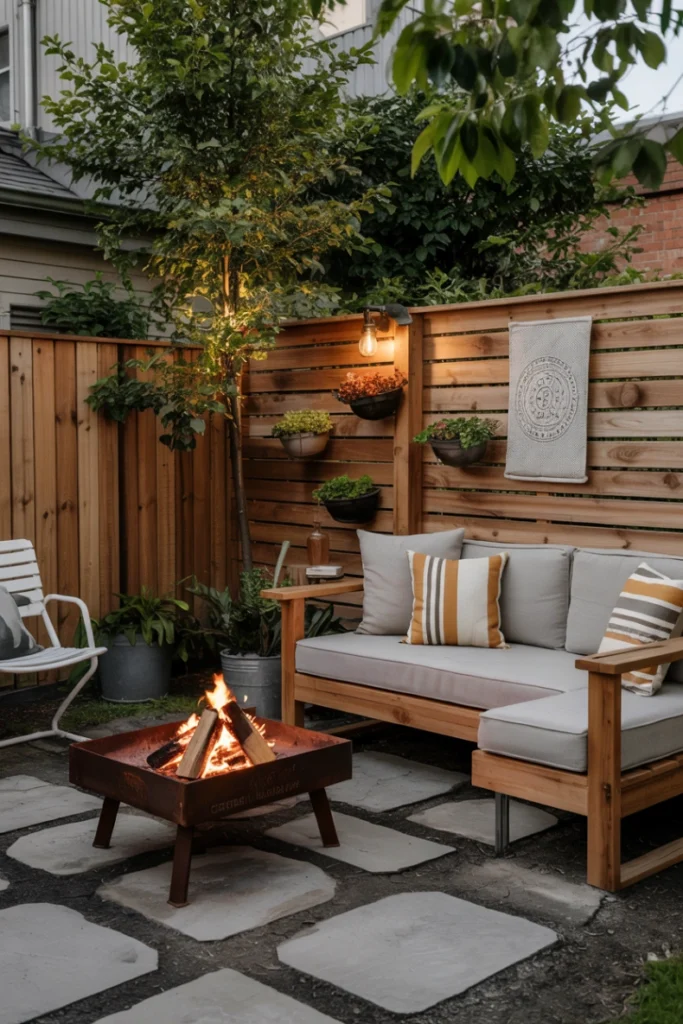
A small garden fire pit proves that limited space does not mean limited style. A compact fire bowl 24 to 30 inches across fits easily on a patio, courtyard, or narrow side garden, and a portable steel or cast iron model can be moved aside when you need the space for something else. Place the pit near a boundary wall or in a corner so the seating faces into the garden, and keep at least 3 feet of clearance from fences, plants, and furniture. A small bistro set or two folding Adirondack chairs is all the seating you need.
The trick is to keep everything in proportion. Choose a low profile fire bowl rather than a tall chiminea, and use a light colored gravel or paver base to make the area feel larger. A single potted olive tree or a tall ornamental grass in a slim planter adds height without taking floor space, and a wall mounted lantern provides light without clutter. If your outdoor space is tight, our small front porch ideas offer more clever ways to make a compact area feel generous. Done right, a small fire pit garden becomes the coziest corner of the home, proof that a few square feet and a little flame are all you really need.
7. Fire Pit Garden with Water Feature
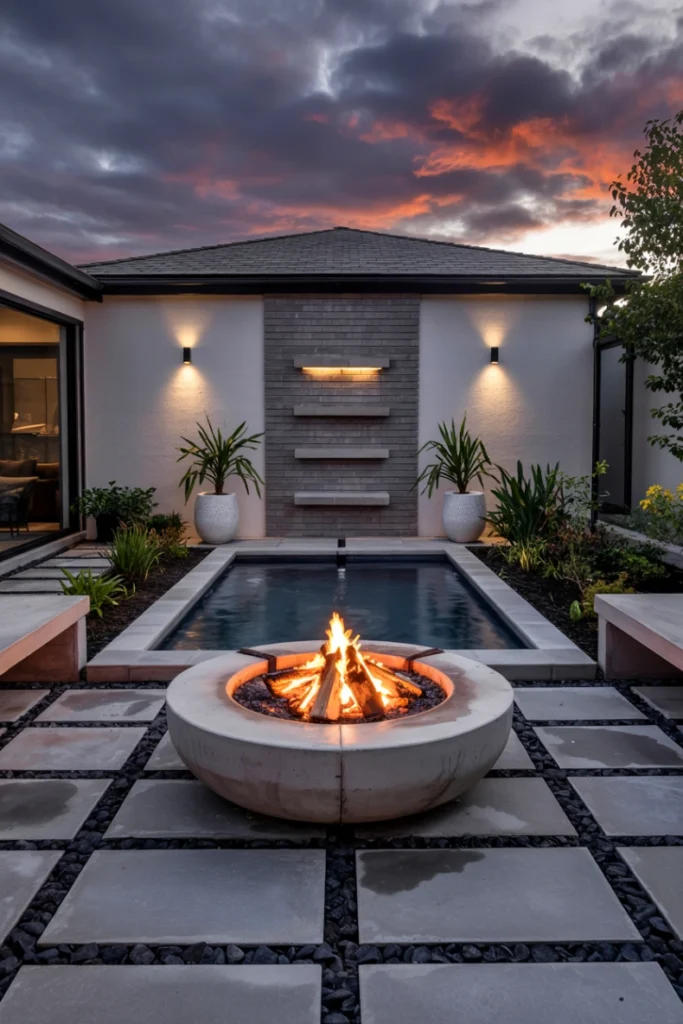
Combining a fire pit with a water feature creates a striking contrast that engages the senses in a way few other pairings can. The movement of water softens the intensity of the fire, and the sound of a small fountain or a narrow rill masks street noise so the garden feels secluded. Place the water feature at least 6 feet from the fire pit so splashing never reaches the flames, and use modern materials such as smooth concrete, corten steel, or dark slate to keep the look polished. A low rectangular fountain along one edge of the seating area works beautifully, especially with underwater lights that glow after dark.
Keep the scale modest. A wall mounted spout or a 3 foot bubbling rock is enough to create the effect without turning the garden into a maintenance project. Choose a recirculating pump so the water stays clean with minimal effort, and plant soft grasses or ferns nearby to blur the hard edges. The pairing works best in contemporary gardens, where the contrast between fire and water feels deliberate and sculptural. Guests will notice it immediately, and the combination of warmth, sound, and reflected light makes the space feel far more expensive and considered than either feature would on its own.
8. Bohemian Fire Pit Garden Retreat
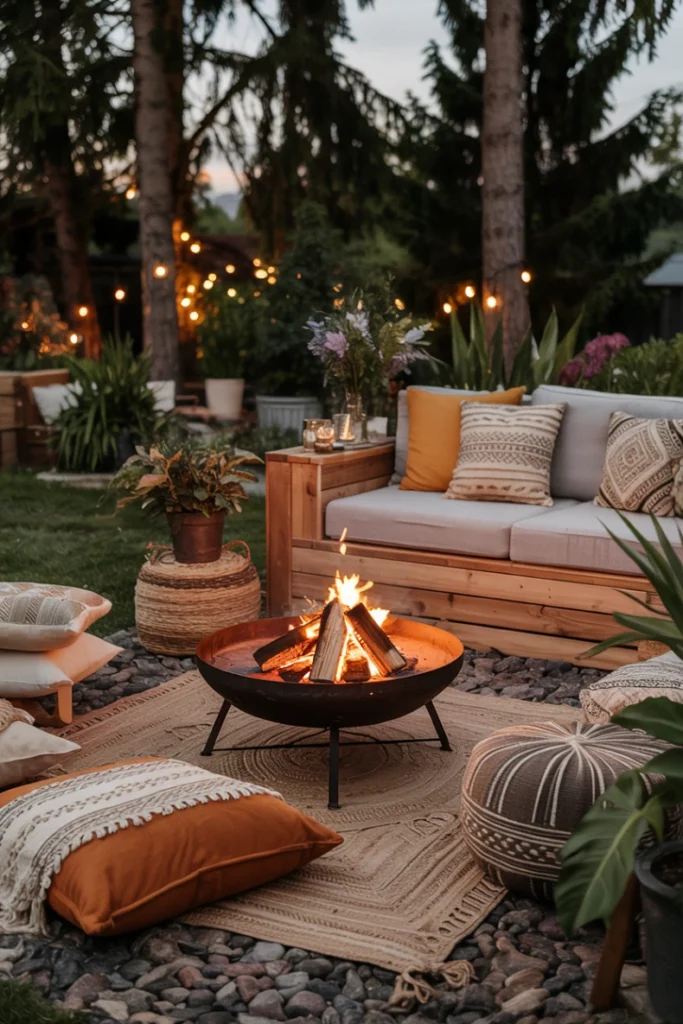
A bohemian fire pit garden embraces layered textures, vibrant colors, and relaxed seating. Start with a low fire bowl, 30 to 36 inches across, set on a base of patterned outdoor tiles or a round jute rug rated for outdoor use. Surround it with floor cushions, poufs, and low rattan chairs in mixed patterns, and layer textiles in terracotta, mustard, teal, and dusty rose. Plants do a lot of the decorating here, so let potted palms, trailing pothos, and ornamental grasses spill over the edges and fill the gaps.
This style prioritizes comfort and creativity over symmetry, so nothing needs to match. Hang a macrame wall piece or a few lanterns from a nearby tree branch, and string warm fairy lights overhead for a soft glow. Use a fire bowl with a spark screen, because low seating puts people closer to the flames. A small side table made from a tree slice or a woven basket holds drinks and keeps the setup casual. The fire pit becomes the grounding element that brings warmth and cohesion to an otherwise eclectic space, and the whole retreat feels less like a designed garden and more like a favorite place you never want to leave.
9. Fire Pit Garden with Outdoor Dining Area
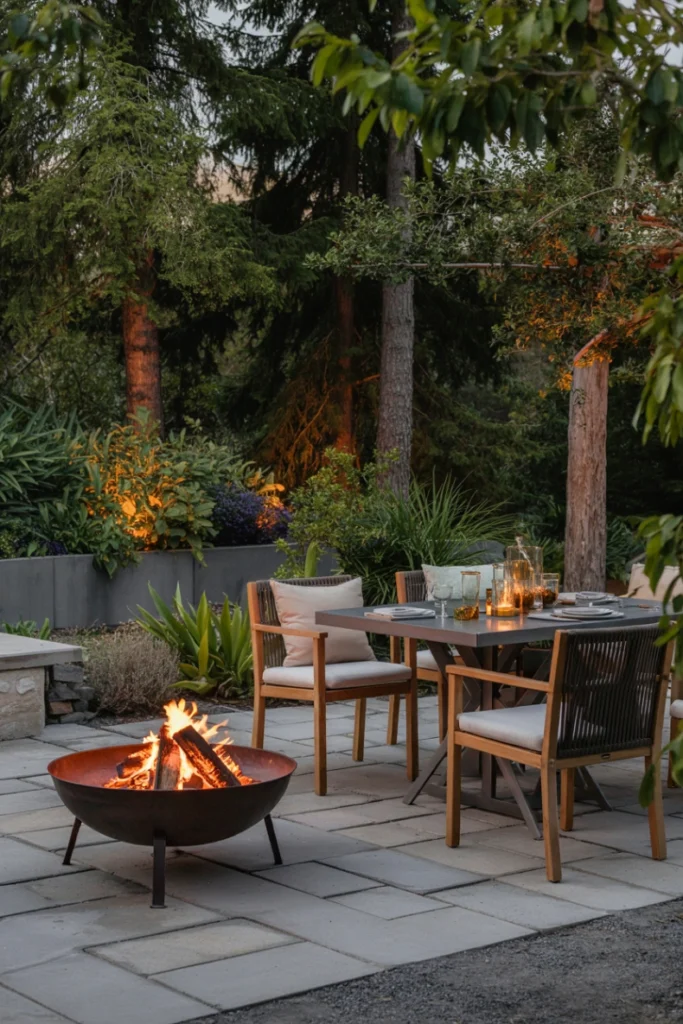
Integrating a fire pit near an outdoor dining space allows for seamless transitions between meals and relaxation. Place the fire pit 8 to 10 feet from the dining table so guests can drift from dinner to fireside without leaving the space, or choose a fire table that doubles as a dining surface, with a burner that converts to a full tabletop when covered. A long farmhouse table in teak or powder coated aluminum seats six to eight people comfortably, and a fire bowl at one end of the patio gives the group somewhere to gather once plates are cleared.
Plan the layout so the cook is never cut off from the group. Put the grill or outdoor kitchen along one edge, the table in the middle, and the fire pit at the far end, creating a natural flow from cooking to eating to lounging. Keep the fire pit downwind of the table so smoke drifts away from diners, and choose a gas fire pit if you entertain often, since it lights instantly and shuts off just as fast. Add citronella torches or a few potted herbs such as rosemary and lavender near the seating to keep evenings comfortable. This is one of the most practical fire pit garden ideas for social households because every square foot works twice, for dinner and for the long, lazy hours after.
10. Circular Fire Pit Garden Layout
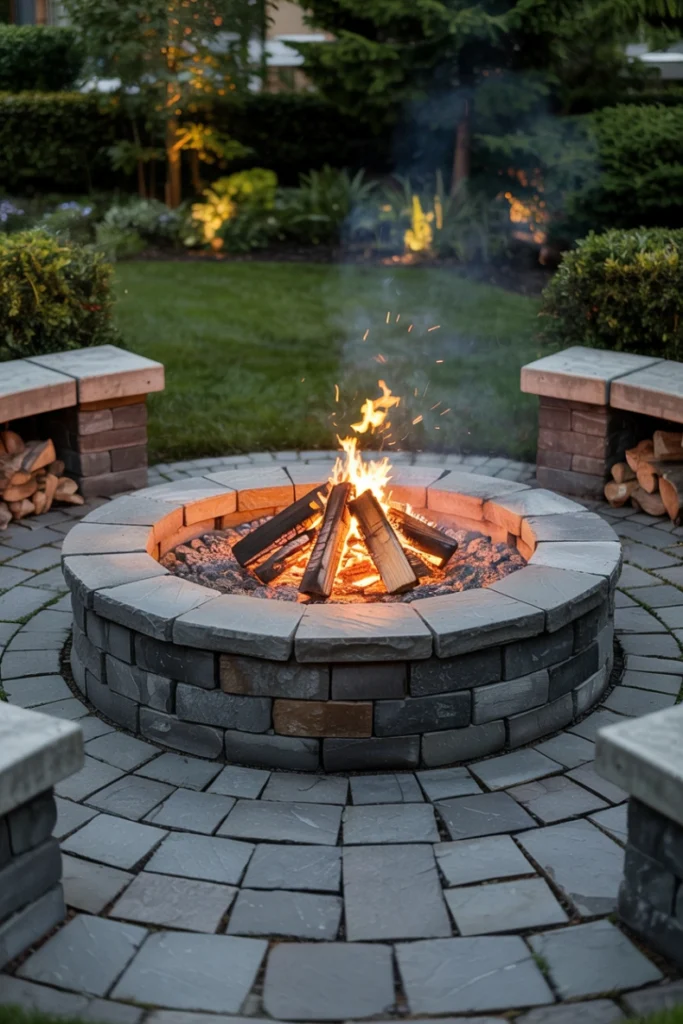
A circular fire pit layout promotes equality and conversation by positioning everyone at the same distance from the fire. A round fire pit 36 to 42 inches across sits at the center of a circular patio 12 to 14 feet in diameter, paved with flagstone, brick, or round pavers laid in concentric rings. Curved benches or a ring of Adirondack chairs follow the same circle, so no seat feels better or worse than another. The symmetry is naturally pleasing, and the shape feels balanced in open garden spaces.
Mark the circle with a stake and string, then lay the pavers outward from the center so the joints stay even. A low ring of stone edging, 4 to 6 inches high, defines the patio edge and keeps gravel or mulch from spreading into the lawn. Leave a 36 inch gap in the seating ring as an entry point, and place a small side table or two within easy reach for drinks. This layout works in both formal and informal gardens, and it is one of the most socially engaging fire pit garden ideas because the shape itself invites people to face each other, talk longer, and stay until the last ember fades.
11. Fire Pit Garden with Natural Landscaping
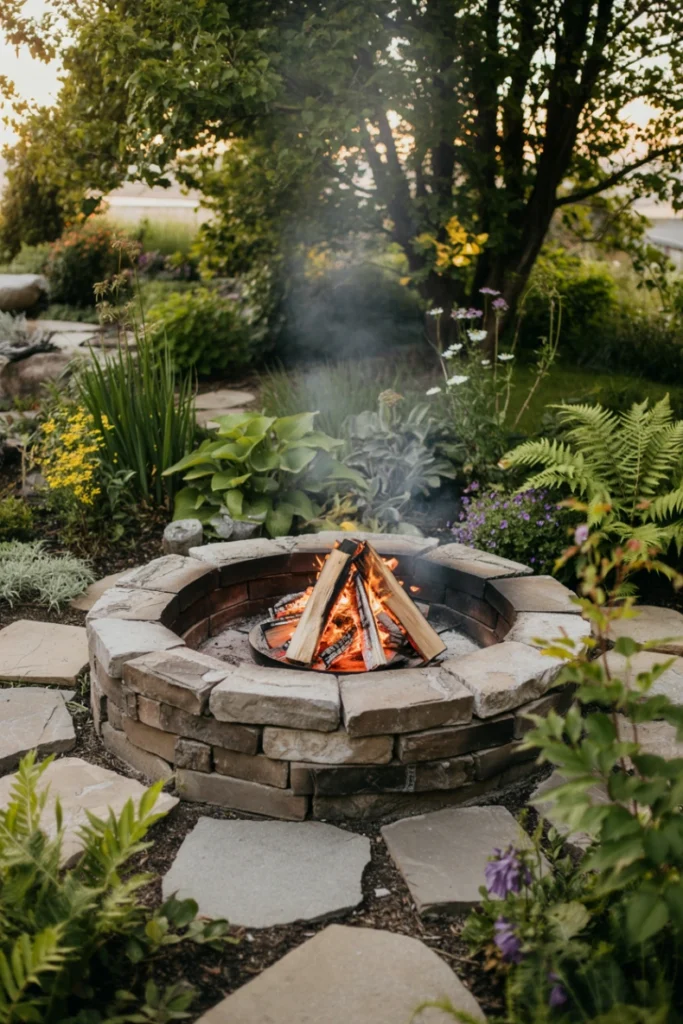
A fire pit surrounded by natural landscaping blends seamlessly into the environment instead of competing with it. Use native plants, wild grasses, and organic pathways of stepping stones or bark mulch to create a relaxed setting that feels untouched. The fire pit itself should be simple, a low stone ring or a weathered steel bowl 30 to 36 inches across, so it reads as part of the landscape rather than a built structure. Leave the planting loose and layered, with taller grasses at the back and low ground cover near the seating.
This design is ideal for homeowners who value sustainability and low maintenance. Native plants need less water and no fertilizer once established, and a mulch or gravel floor under the fire area suppresses weeds without chemicals. Keep a clear zone of at least 10 feet between the fire and any dry grasses or overhanging branches, and cut the planting back each spring. A few large boulders double as informal seats and anchor the composition. The result is a peaceful retreat that feels connected to nature, where the fire pit is a quiet part of the garden rather than its loudest feature, and where an evening outside feels like a small escape from the everyday.
12. Raised Fire Pit Garden Design

A raised fire pit adds visual prominence and improves safety by keeping flames elevated above ground level. Build the pit 18 to 24 inches high from masonry, brick, or corten steel, with a fire bowl or steel insert at the top and a cap of smooth stone that stays cool enough to rest a drink on. A raised design is easier to light, tend, and clean than a ground level pit, and it keeps the fire visible from across the garden, which makes it a stronger focal point. Pair it with structured seating such as a low stone wall or a pair of benches set 4 feet away.
Make sure the base is solid. Set the pit on a concrete pad or a compacted gravel foundation at least 6 inches deep so it never shifts or tilts. If you use wood as fuel, choose a model with a spark screen and keep a fireproof mat underneath to catch stray embers. Raised pits work especially well on patios and in formal gardens where clean lines matter, and they are a good choice for families because the height keeps small hands and paws a little further from the flames. Add a fitted cover for rainy weeks, and the pit will stay ready to use all year with almost no upkeep.
13. Fire Pit Garden with Gravel Base

Gravel provides excellent drainage and a relaxed aesthetic for fire pit gardens, and it is one of the easiest bases to install yourself. Spread a 3 to 4 inch layer of pea gravel or crushed granite over landscape fabric, extending at least 3 feet beyond the fire pit on every side. The loose stone drains rain quickly, never gets muddy, and lets you rearrange chairs and planters whenever the mood changes. A round fire pit in black steel or natural stone sits naturally on gravel, and the neutral gray or warm tan tones suit almost any garden style.
Edge the gravel area with steel landscape edging, brick, or large stones so it stays contained and looks finished. Choose a gravel size of about 3/8 inch, small enough to walk on comfortably but large enough not to stick to shoes. If you want more inspiration for pairing a gravel base with the right fire bowl, our backyard fire pit ideas show several layouts that work beautifully on this kind of surface. Keep a rake handy to smooth the gravel after gatherings, and top it up with a fresh bag or two each spring. The casual nature of gravel makes it ideal for informal gardens, and it offers a cost effective solution for homeowners who want stylish fire pit garden ideas without extensive construction.
14. Fire Pit Garden with Lighting Accents

Strategic lighting enhances the usability and ambiance of a fire pit garden long after the sun goes down. Layer three types of light: path lights along the walkway to the fire area, uplights aimed at nearby trees or a garden wall, and string lights overhead for a warm canopy of glow. Warm white bulbs, around 2700K, flatter skin tones and complement firelight far better than cool white. Solar path lights work well for the walkway, while low voltage wired lights give a steadier glow for the main seating area.
Place lights low and aim them away from faces so nobody is blinded while sitting by the fire. A pair of lanterns on the seating wall or a few LED candles in hurricane holders add flicker without competing with the real flames. Keep the wiring buried or clipped neatly along edging so no one trips in the dark. Lighting also improves safety by defining walkways, steps, and the edge of the fire zone, which matters most when guests are moving around with drinks after dark. When combined with a fire pit, good lighting transforms the garden into a nighttime destination rather than a space that disappears at dusk, and it extends the hours you can enjoy the outdoors by half the evening.
15. Fire Pit Garden with Brick Design
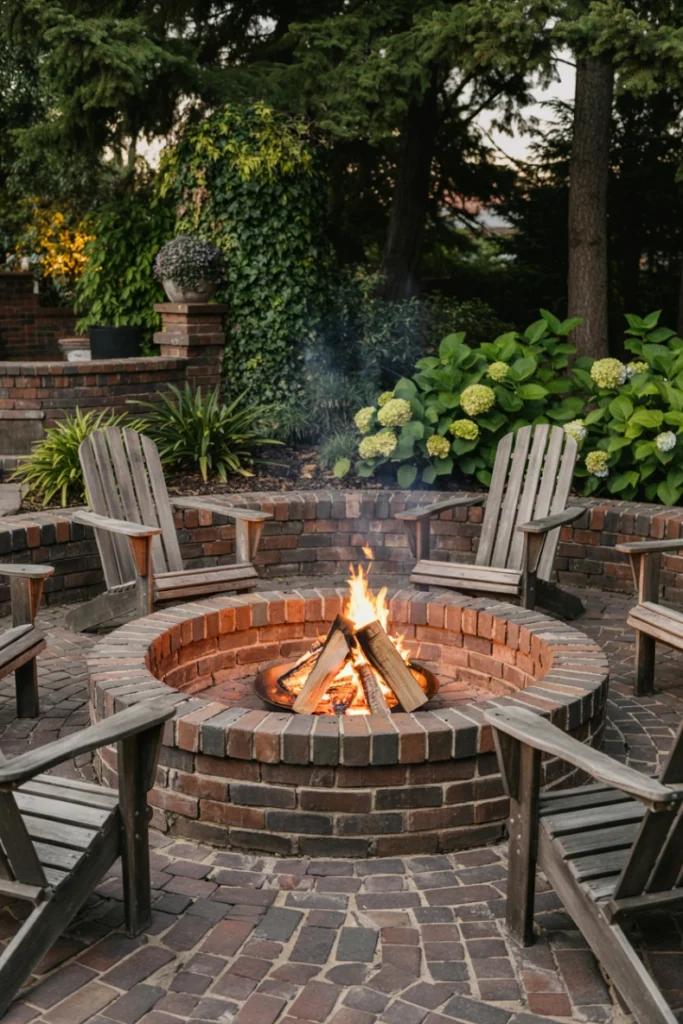
Brick fire pits offer timeless appeal and durability that few other materials can match. Build a circular pit 36 to 42 inches across using standard clay bricks, either new or reclaimed, laid in a running bond pattern with a fireproof steel ring on the inside. The warm red, terracotta, or buff tones of brick complement traditional gardens and classic architecture, and a soldier course of bricks standing upright around the top edge adds a subtle decorative detail. A brick patio or a brick edging ring around a gravel base ties the whole area together.
Use refractory mortar for the inner courses that face the heat, and standard mortar for the outer shell, which keeps the structure sound through years of freeze and thaw. Seal the exterior brick once a year with a breathable masonry sealer to prevent soot staining and moisture damage. Pair the pit with wrought iron chairs or a wooden bench, and plant roses, boxwood, or lavender nearby for a classic cottage garden feel. This design is ideal for homeowners who value longevity and understated elegance. A brick fire pit blends effortlessly into established landscapes while providing a reliable gathering space that looks as good in ten years as it does on the day it is built.
16. Fire Pit Garden with Privacy Screening
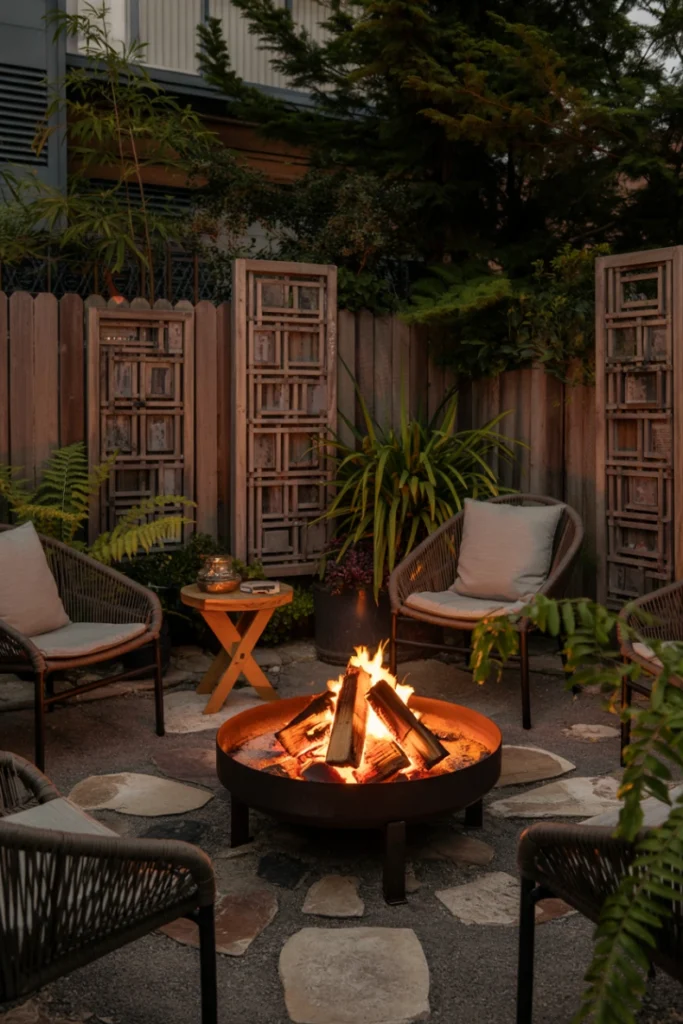
Privacy screens enhance comfort by shielding the fire pit area from wind and neighboring views, turning an exposed garden into a secluded retreat. Horizontal wood slats, 6 feet tall with half inch gaps between boards, block sightlines while still letting air and light through. Metal laser cut panels in geometric or botanical patterns offer a more modern look, and tall plants such as bamboo, miscanthus grass, or arborvitae create a living screen that softens over time. Place the screen on the windward side first, since blocking the prevailing wind makes the fire burn steadier and keeps smoke out of faces.
Keep screens at least 10 feet from the fire pit when using wood fuel, and choose fire resistant materials or a gas fire pit if space is tight. A screen also gives you a surface to hang lanterns, mount a small shelf for drinks, or train a climbing rose. For the seating side, use low planters instead of a tall wall so the area still feels open to the rest of the garden. This idea is particularly useful in urban settings where gardens sit close together. Privacy screens let you enjoy your fire pit without distractions, and they make even a small garden feel personal, protected, and entirely your own.
17. Fire Pit Garden with Multi-Level Design
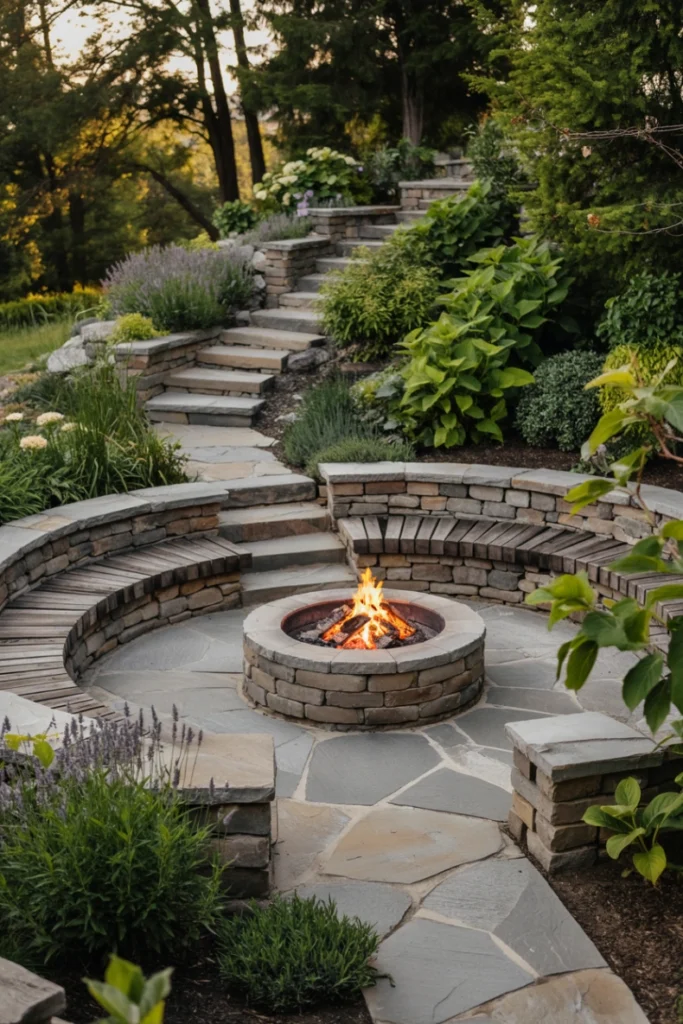
Multi level fire pit gardens use elevation changes to define zones and add visual drama to the space. The fire pit might sit on a lower terrace while a raised deck or a stone platform holds the dining area above it, connected by two or three wide steps that double as casual seating. Each level gets its own purpose: cooking up top, lounging by the fire below, and a quiet planting bed or a water feature on a third level. Retaining walls of stone or concrete, 18 to 24 inches high, shape the terraces and provide extra places to sit.
This approach works best in sloped gardens or large outdoor spaces where the change in level feels natural rather than forced. Plan the drainage carefully so rainwater flows away from the fire level, and light every step with a small recessed or solar step light. Use the same paving material across all levels to keep the design unified, and repeat one plant, such as lavender or ornamental grass, on each terrace to tie the zones together. The steps and terraces add depth that a flat garden can never match, and they turn the fire pit into a destination you walk down to, which makes every evening by the fire feel a little more special.
18. Fire Pit Garden for Year-Round Use
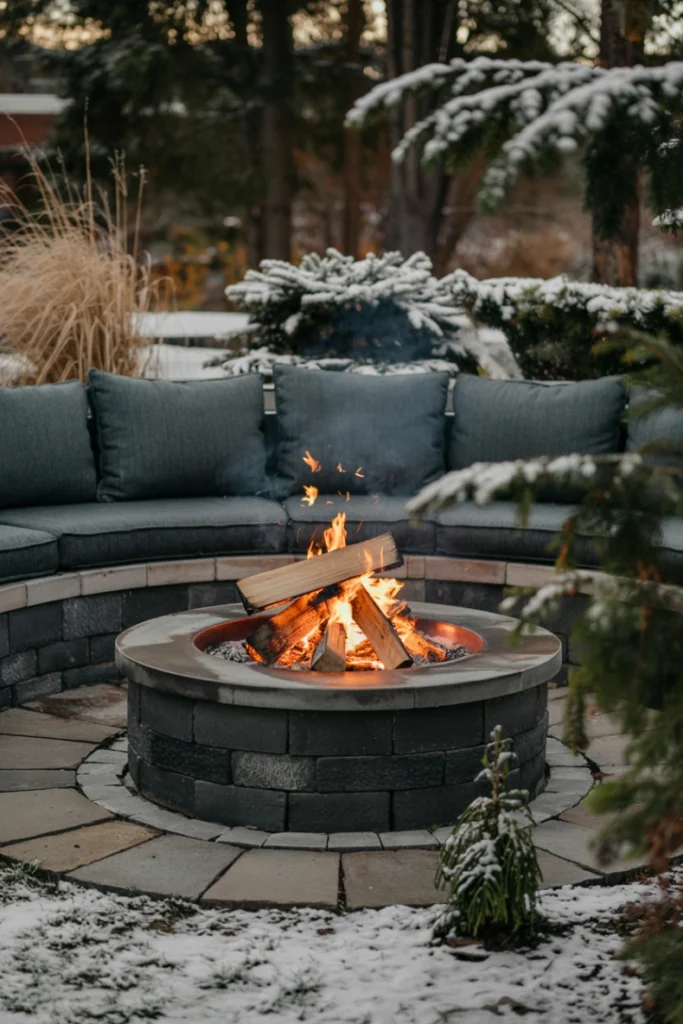
A year round fire pit garden focuses on durability and comfort in all seasons, so the space earns its keep in January as well as July. Choose weather resistant materials such as powder coated steel, natural stone, or concrete that will not crack in frost or fade in summer sun. A gas fire pit with an ignition switch is the easiest option for cold months because it lights instantly with no fuss, and a fitted metal cover protects the burner when it rains. Add wind protection with a low wall or a screen on the prevailing wind side, and keep a weatherproof deck box nearby for blankets, cushions, and firewood.
Comfort is what makes winter use possible. Store thick outdoor cushions in the deck box and bring them out on cold nights, drape wool throws over the chair backs, and add an outdoor heater or two for the coldest evenings. A few evergreen shrubs around the seating area keep the space looking alive when the rest of the garden is dormant. Before the cold season starts, check the safety basics in our safety guidelines for summer fire pits, since clearances and ember control matter just as much in winter. This design maximizes your return on the space by extending outdoor living throughout the year, and it is ideal for homeowners who want a functional garden regardless of the season.
Conclusion
Fire pits have evolved from simple heat sources into powerful design elements that define outdoor spaces. These fire pit garden ideas show how thoughtful planning, material selection, and layout choices can transform a garden into a stylish and functional retreat. Whether you prefer a modern minimalist layout, a rustic stone circle, or a relaxed bohemian vibe, there is a fire pit design that can elevate your outdoor experience and fit the space you already have.
Start with the basics: measure your space, decide between wood and gas, and choose materials that suit your climate. Then add the details that make the area yours, seating that invites long conversations, lighting that flatters the flames, and planting that softens the edges. By choosing the right fire pit concept for your space and lifestyle, you can create a garden that invites connection, relaxation, and year round enjoyment. With careful attention to detail and a clear vision, your fire pit garden can become the heart of your outdoor living space.
Frequently Asked Questions
How much space do I need around a fire pit?
Allow at least 10 feet of clearance from your house, fences, sheds, and overhanging trees, and keep 3 to 4 feet of open space around the pit itself for seating and safe movement. A comfortable seating circle is usually 10 to 14 feet across for a standard 36 to 42 inch fire pit. Always check your local fire codes, since some areas require larger setbacks.
What is the best surface under a fire pit?
Gravel, pavers, concrete, and brick are the safest choices because they will not catch fire or scorch. Spread gravel 3 to 4 inches deep over landscape fabric, or set the pit on a paver patio with a fireproof mat underneath. Never place a wood burning fire pit directly on a wooden deck or on dry grass.
Should I choose a wood burning or gas fire pit?
Wood burning pits give you real flames, crackling sound, and the classic campfire feel, but they need more cleaning and produce smoke. Gas pits light instantly, shut off with a switch, and work better under pergolas or in gardens close to neighbors. Choose wood for atmosphere and gas for convenience, and check local rules first, since some areas restrict wood burning.
How do I keep smoke away from guests?
Place the fire pit downwind of your seating so smoke drifts away from people, and use dry, seasoned hardwood, which burns cleaner than green or damp wood. A smokeless fire pit design with double wall airflow also cuts smoke dramatically. Avoid burning leaves, trash, or treated wood, which create heavy smoke and harmful fumes.
Can I leave my fire pit outside all year?
Yes, if it is built from weather resistant materials such as steel, stone, or concrete. Use a fitted cover to keep rain and leaves out of the bowl, store cushions in a deck box, and clean out ash after each use so moisture does not build up. Gas lines and igniters should be checked each spring before the first use of the season.
More Ideas You Will Love
 15 Inspiring Sunroom Ideas to Transform Your Space in Style
 11 Patio Chaise Lounge Ideas: Stylish & Comfortable Outdoor Seating
 13 Rustic Modern Exterior Shutter Ideas to Boost Curb Appeal
 11 Garden Seating Ideas: Create a Relaxing Outdoor Escape
 12 Outdoor Decor Protection Tips: Prevent Sun Damage Easily
 14 Simple Curb Appeal Ideas to Instantly Elevate Your Home