
11 Outdoor Entertaining Area Ideas for Every Backyard Space

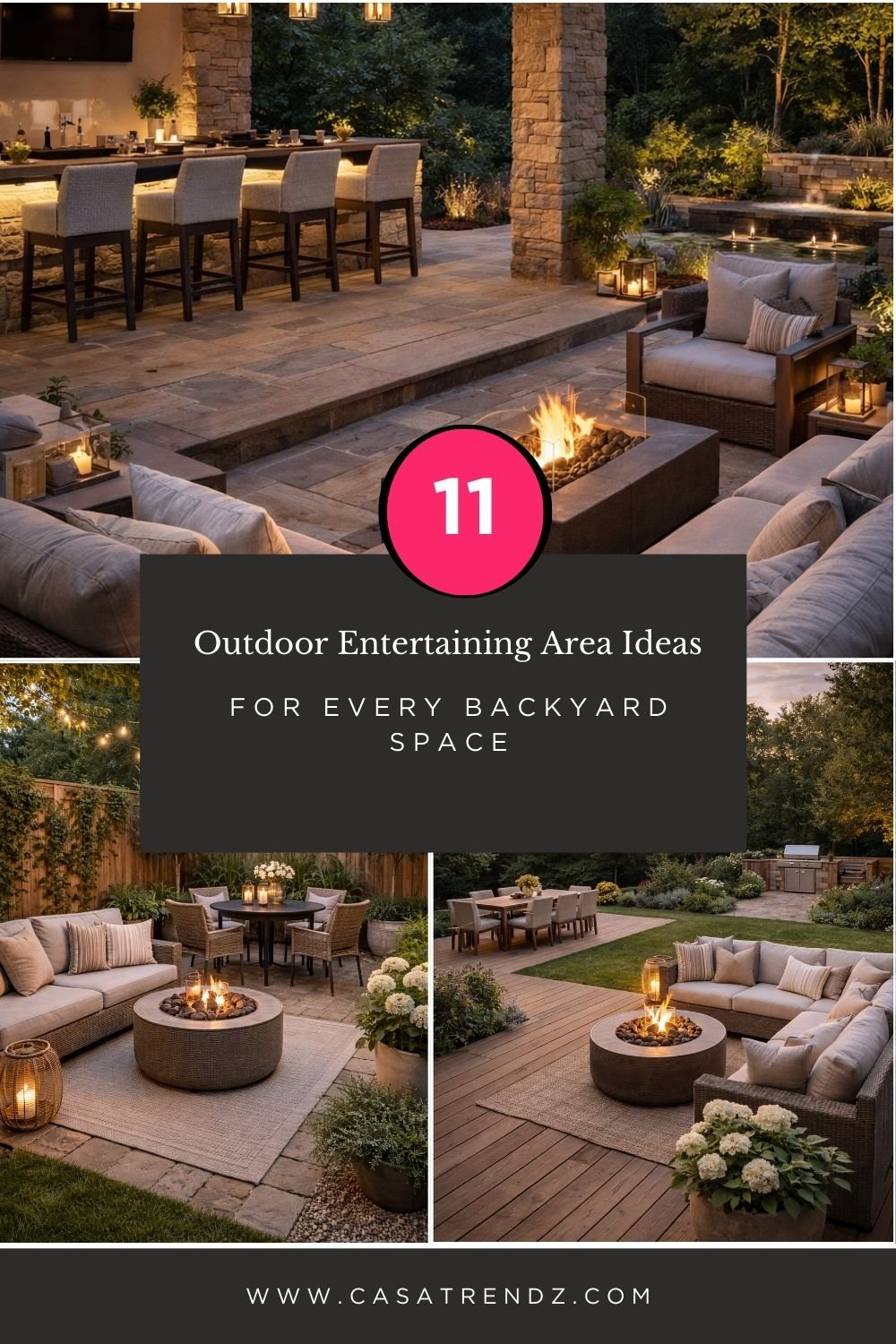
A great outdoor entertaining area turns an ordinary backyard into the room everyone wants to gather in. It is where summer dinners stretch past sunset, where friends pull up a chair around the fire, and where a quiet morning coffee feels like a small holiday. You do not need a huge yard or a big budget to get there. What you need is a clear plan for how you actually host, furniture that can handle the weather, and a layout that makes people feel comfortable the moment they step outside.
The trick is to start with your real habits, not a picture from a magazine. If you host big family barbecues, you need a dining table that seats eight and a grill within easy reach. If your evenings are quiet conversations with two or three friends, a small seating circle around a fire pit will serve you far better than a full outdoor kitchen. Measure your space first, note where the sun falls in the afternoon, and think about how people will move between the house, the seating, and the food. A layout that flows well makes even a small yard feel generous.
In this guide, we explore 11 outdoor entertaining area ideas for every backyard space, from cozy patios and fire pit zones to outdoor kitchens, decks, and multi-zone layouts. Each idea includes real materials, measurements, colors, and step by step tips you can use right away. Whether your backyard is compact or spacious, these ideas will help you build an outdoor area that feels inviting, works hard, and brings people together all season long.
1. Cozy Patio Seating Area

A cozy patio seating area is the most versatile starting point for outdoor entertaining, and it works in almost any backyard size. The classic setup is a three seat outdoor sofa about 84 inches wide, two armchairs, and a coffee table around 48 by 24 inches, arranged in a loose U shape so everyone can talk without raising their voice. Leave about 30 inches of walkway around the furniture so guests can move freely, and anchor the whole group with an outdoor rug at least 8 by 10 feet so the front legs of every piece sit on the rug. Choose powder coated aluminum or resin wicker frames, which resist rust and fading, and cushions in solution dyed acrylic fabric such as Sunbrella, which holds its color through sun and rain. Warm neutrals like sand, warm gray, and charcoal work with almost any house color, and you can add personality with terracotta, sage, or navy throw pillows.
Build the area in layers so it feels finished rather than thrown together. Start with the rug and the seating, then add a side table next to each chair for drinks, a pair of lanterns or a floor lamp for evening light, and a weatherproof storage box for cushions and blankets. A small side table also gives you a place for a citronella candle or a small speaker. In a smaller patio, swap the three seat sofa for a loveseat around 60 inches wide and use a round coffee table, which is easier to walk around. If your patio gets full afternoon sun, add a cantilever umbrella with a 9 to 11 foot canopy so the seating stays usable at the hottest part of the day. For more ways to style the seating and layer in comfort, see our outdoor living room ideas for layouts, color palettes, and furniture pairings that work in real backyards.
2. Outdoor Dining Area

An outdoor dining area gives every meal a reason to move outside, from weeknight dinners to weekend barbecues and birthday parties. The centerpiece is a sturdy dining table, and size matters more than style: a 6 foot rectangular table seats six to eight people comfortably, with about 24 inches of elbow room per person, while a 48 inch round table seats four to six and fits better in a tight corner. Choose teak, powder coated aluminum, or eucalyptus for the table, since all three handle rain and sun without warping, and pick chairs with a slight recline and armrests so guests linger after the meal. Place the dining set on a flat surface, a patio, a deck, or a level gravel pad, and leave at least 36 inches behind each chair so people can push back and stand up without bumping into a wall or a planter.
Shade and light turn a dining table from a daytime only spot into an all day gathering place. A market umbrella with a 9 to 11 foot canopy covers most six seat tables, and a pergola or a retractable awning gives more permanent cover if you eat outside most evenings. For evening meals, hang string lights 8 to 10 feet above the table in a loose zigzag or drape them from the pergola beams, and add two lanterns or a low centerpiece so the table glows without glare. Keep a small outdoor sideboard or a rolling cart nearby for plates, drinks, and serving dishes so the host is not running back to the kitchen every five minutes. If the dining area sits far from the house, add a simple path of stepping stones or a low voltage path light every 6 to 8 feet so guests can find their way after dark.
3. Fire Pit Gathering Zone
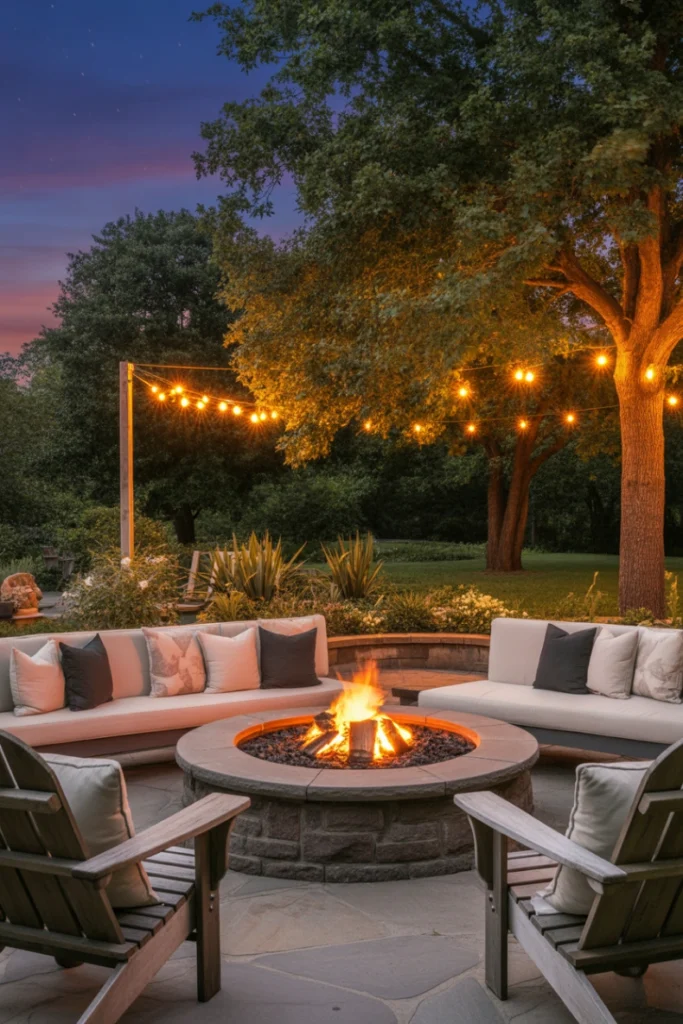
A fire pit gathering zone is the fastest way to make a backyard feel magical after sunset, and it naturally pulls people into conversation. A round fire pit 36 to 44 inches across is the sweet spot for most yards: large enough for a real fire, small enough that everyone can reach the warmth. Arrange seating in a circle 8 to 10 feet across, with Adirondack chairs, built in stone benches, or low lounge chairs spaced about 24 inches apart so each person has room to stretch their legs toward the fire. Keep the pit at least 10 feet from the house, fences, and low tree branches, and set it on a nonflammable surface such as gravel, pavers, or a concrete pad. Steel and copper pits develop a warm patina and cost less, while a stone or brick fire pit matches the house and lasts for decades with almost no upkeep.
Choose your fuel before you build, because it changes the whole setup. A wood burning pit gives the classic crackle and smell, but it needs dry firewood storage nearby and a spark screen, and you should check local burn rules before lighting it. A gas fire pit lights with a switch, burns clean, and can sit on a deck with the right clearance, though it needs a gas line or a propane tank hidden in the base. Add a small side table or a wide stone ledge beside each seat for drinks, and keep a basket of throw blankets within reach for cool nights. For layout ideas, fire pit styles, and seating arrangements that suit different yard sizes, explore our backyard fire pit ideas to find a design that fits your space and budget.
4. Pergola-Covered Lounge Area
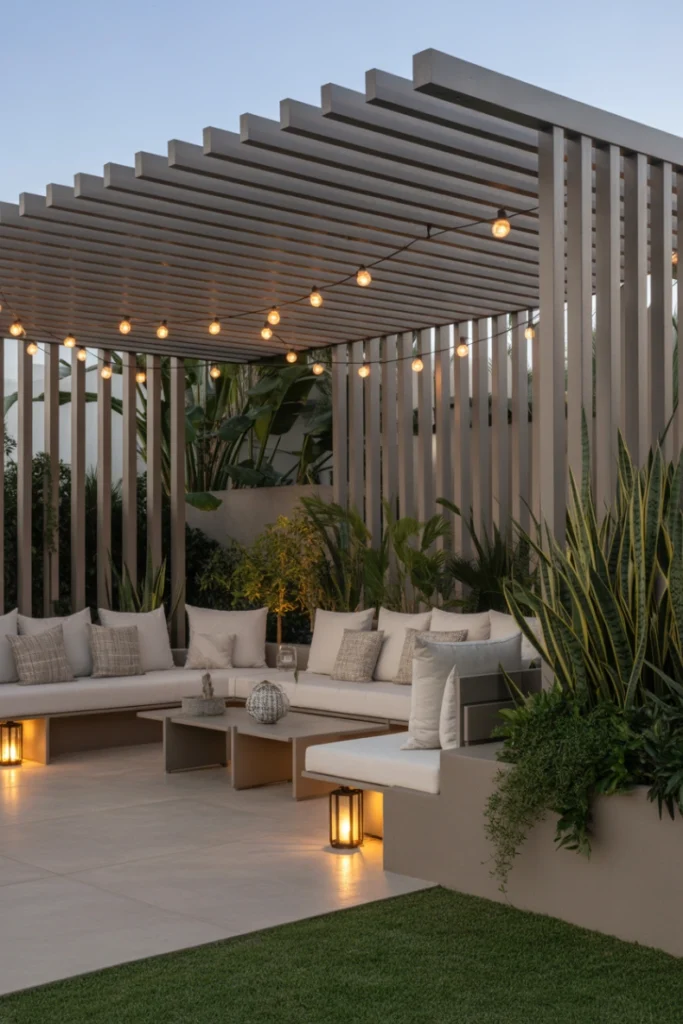
A pergola-covered lounge area gives your backyard structure, shade, and a clear sense of place without closing it off from the sky. A 10 by 12 foot pergola fits a sofa and two chairs comfortably, while a 12 by 16 foot pergola leaves room for a dining set or a daybed as well. Use 6 by 6 inch posts set in concrete footings at least 24 inches deep, and choose cedar for a warm natural look, pressure treated pine if you plan to paint it, or powder coated aluminum for a modern low maintenance option. Space the top rafters 12 to 16 inches apart for filtered shade, and add a retractable shade cloth or a louvered roof if you want real protection from rain. A pergola also defines the entertaining zone visually, so the rest of the yard can stay open lawn or garden.
Style the space underneath like an outdoor room. Hang outdoor curtains on the two windiest sides for privacy and soft shade, train climbing plants such as jasmine, clematis, or grapevine up the posts for fragrance and greenery, and string warm white lights along the beams for evening glow. Place a low coffee table in the center, an outdoor rug underneath to soften the floor, and a pair of lanterns on the side tables. If the pergola sits over a patio, use the same paver or stone underfoot so the whole area reads as one room. In hot climates, a ceiling fan rated for outdoor use makes a real difference on still summer evenings, and a small misting fan can cool the seating area by several degrees without soaking the furniture.
5. Outdoor Kitchen and Bar Area

An outdoor kitchen and bar area keeps the host where the guests are, and it turns cooking into part of the party instead of a chore done indoors. A practical starter setup is a 32 to 36 inch built in grill, a 36 inch high counter for prep, and a small sink with running water, all set in a run of cabinets about 8 to 10 feet long. Add a bar counter at 42 inches high with stools on the outside so guests can sit and chat while you cook, leaving about 24 inches of counter depth for plates and drinks. Stainless steel is the standard for grills, sinks, and cabinet doors because it handles weather and grease, while stone veneer, stucco, or brick on the base ties the kitchen to the house. Leave at least 36 inches of clearance behind the grill for safe access, and keep a fire extinguisher mounted within easy reach.
Plan the kitchen in three zones so the work flows smoothly: a hot zone with the grill and a side burner, a prep zone with counter space and a small fridge, and a serve zone with the bar and seating. A compact undercounter fridge around 24 inches wide holds drinks and marinades, and a weatherproof storage drawer keeps tools and towels dry. For lighting, mount a task light over the grill and warm string lights over the bar so the space works after dark. If a full kitchen is more than your budget allows, start with a grill station and a rolling cart, then add the sink and the bar in a later season. For more layouts, material options, and budget friendly starting points, see our outdoor kitchen ideas for designs that range from a simple grill nook to a full cooking and bar setup.
6. Small Backyard Entertaining Nook
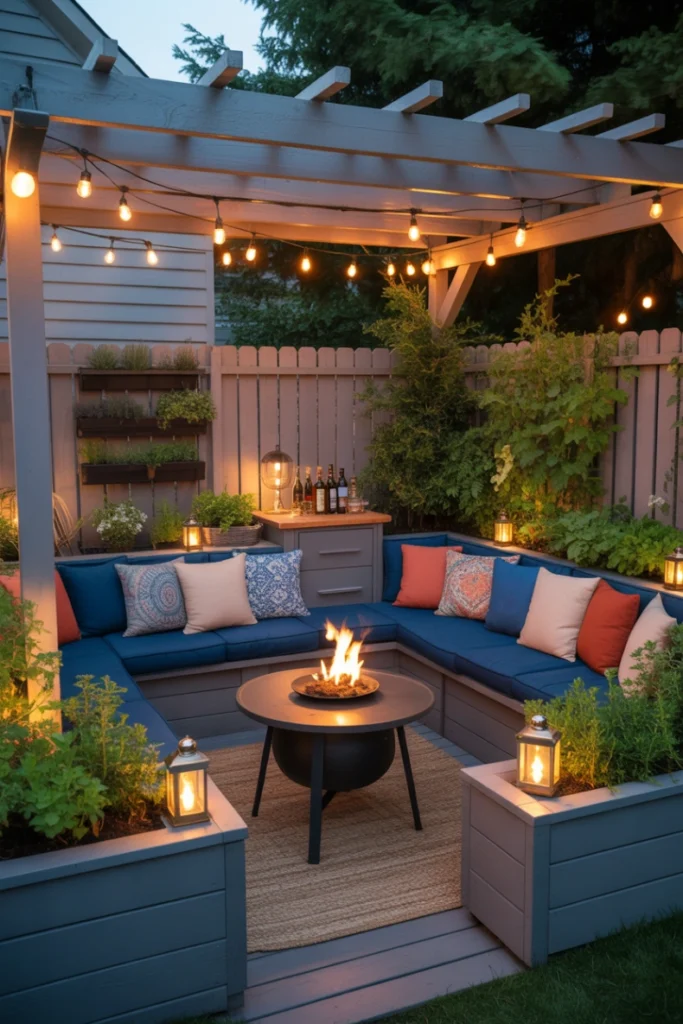
A small backyard entertaining nook proves that you do not need a large yard to host well. The key is to choose furniture that earns its footprint: a bistro set with two chairs and a 24 inch round table fits in a corner as small as 6 by 6 feet, while a bench with hidden storage seats two people and holds cushions, blankets, and games. Use foldable or stackable chairs so you can add seats when friends drop by and tuck them away when they leave. Wall mounted planters, a folding shelf, and a narrow console table keep surfaces useful without eating floor space. Light colors on the walls, fence, or furniture, such as warm white, pale sage, or soft gray, make the nook feel bigger, and a mirror mounted on the fence reflects light and greenery to double the sense of depth.
Define the nook so it feels like a destination, not a leftover corner. Lay a small outdoor rug about 5 by 7 feet to mark the seating area, hang a string of lights overhead in a simple straight run, and add one vertical element, such as a tall planter, a trellis with climbing jasmine, or a narrow outdoor shelf, to draw the eye upward. A small fire bowl or a tabletop lantern adds warmth without the footprint of a full fire pit. Keep the planting simple: one large potted plant, such as a dwarf olive tree or a tall grass in a 16 inch pot, anchors the corner better than a dozen small pots. With the right scale and a few thoughtful details, a nook that seats four can feel more inviting than a large empty patio.
7. Poolside Entertaining Area

A poolside entertaining area blends swimming, sunbathing, and socializing into one relaxed space, and it works best when the layout separates wet and dry zones. Place lounge chairs on the dry side of the pool deck, at least 4 feet from the water edge, so swimmers can walk past without dripping on seated guests. Choose lounge chairs with adjustable backs and quick dry mesh or sling fabric, and add a side table between every two chairs for drinks, books, and sunscreen. A cantilever umbrella with a 9 to 11 foot canopy shades two loungers at once, and a small shaded seating group with a loveseat and two chairs gives non swimmers a comfortable place to gather. Use textured pavers, brushed concrete, or composite decking underfoot so the surface stays slip resistant when wet.
Safety and convenience shape the details. Keep towels, a drink station, and a storage bench near the seating area so no one has to walk through the house dripping wet. Add outdoor speakers rated for wet locations, mounted high on a wall or a post, and keep glass out of the pool area by using acrylic or stainless steel drinkware. For evening swims, pool lights plus warm string lights or lanterns around the seating area create a resort feel without harsh glare. If you have children, a clear sightline from the seating area to the whole pool matters more than any decoration, so arrange the furniture to face the water. A small outdoor shower near the pool entrance keeps chlorine and dirt out of the seating zone and makes the whole area easier to maintain.
8. Garden-Inspired Entertaining Space

A garden-inspired entertaining space wraps your seating in plants, scent, and soft natural texture so the whole area feels calm and alive. Start by choosing a seating spot with a view of the best planting, then layer greenery at three heights: tall shrubs or small trees behind the seating for privacy, mid height flowering plants such as hydrangeas, roses, or lavender at eye level, and low ground cover or herbs along the edges. Natural materials carry the look: a teak or cedar bench, a stone or gravel floor, wicker chairs with linen colored cushions, and a wooden side table. Keep the color palette soft, with greens, warm wood tones, cream, and one accent color repeated in the cushions and the flowers, such as blush pink or soft blue.
Make the space work for real gatherings, not just for looking at. A gravel or flagstone floor about 10 by 12 feet fits a loveseat, two chairs, and a coffee table, and it drains well after rain. Add a small bistro table near the garden beds for afternoon tea, and place lanterns or solar path lights along the walkway so the garden glows after dusk. Fragrant plants near the seating, such as lavender, jasmine, or rosemary, add scent without any effort, and a small herb bed by the table lets guests pick mint for drinks. Water the seating area plants in the morning so the foliage is dry by evening, and prune once a season to keep paths clear. This kind of space suits slow afternoons, quiet conversations, and small dinners far better than a loud party, and that is exactly its charm.
9. Deck-Based Entertaining Area
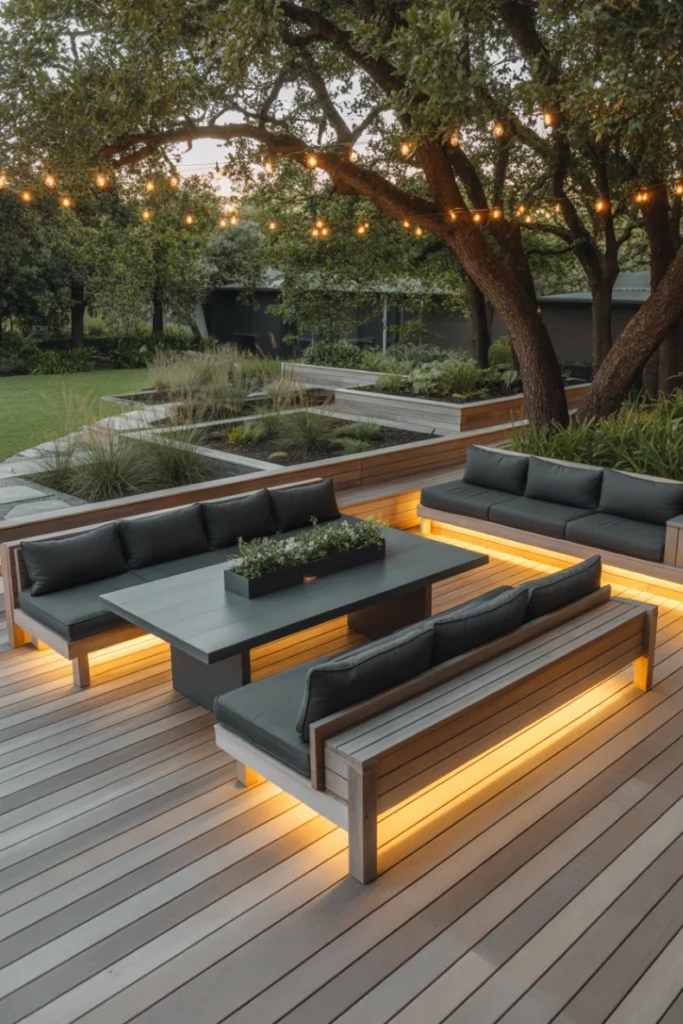
A deck-based entertaining area gives you a level, structured foundation that connects the house to the yard and makes the whole backyard easier to use. A deck at least 12 by 16 feet fits a dining table for six and a small lounge group, while a 16 by 20 foot deck leaves room for both plus a grill station. Composite decking in warm gray, cedar tone, or weathered brown resists splinters and fading, while natural cedar or redwood looks warmer and can be stained to match the house. Build the deck 18 to 24 inches above the ground for a low profile look, or higher with steps if your yard slopes, and always include a railing at least 36 inches high on any edge more than 30 inches above the ground. Leave a 36 inch walkway between the furniture groups so guests can move easily from the door to the yard.
Zone the deck the same way you would zone a room. Put the dining set near the kitchen door for easy serving, the lounge group at the far end for relaxing, and the grill in a corner with at least 3 feet of clearance on all sides. Built in benches along the railing save space and double as storage, and a low planter box along one edge softens the deck and adds privacy. For lighting, add recessed step lights on the stairs, a wall light by the door, and string lights overhead so the deck stays usable after dark. For more deck layouts, material choices, and styling ideas, explore our outdoor patio design ideas for patios and decks that connect smoothly with the rest of the backyard.
10. Multi-Zone Outdoor Entertaining Space
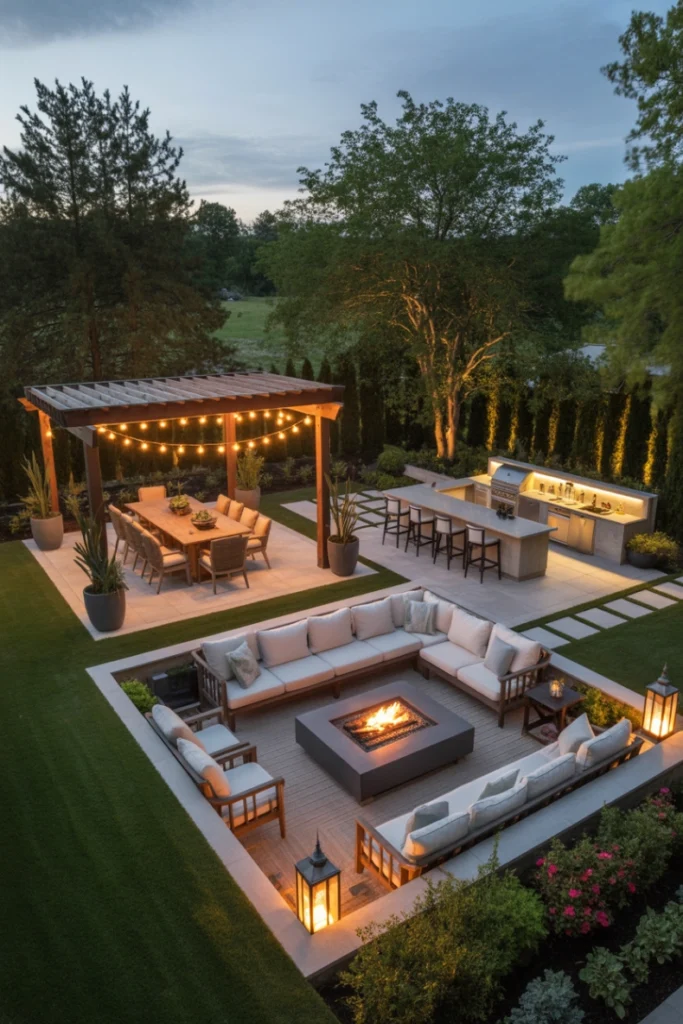
A multi-zone outdoor entertaining space is the best answer for a larger backyard, because it lets different groups do different things at the same time without crowding each other. Divide the yard into three or four clear zones: a dining zone near the house, a lounge zone with sofas and a fire pit, an activity zone with lawn games or a pool, and a quiet garden corner for conversation. Each zone should be at least 10 by 12 feet to feel usable, and a path of pavers, gravel, or stepping stones about 36 inches wide should connect them so guests can move around without crossing the lawn. Use a different floor treatment in each zone, such as decking for dining, gravel for the fire pit, and grass for games, so the boundaries read clearly without fences or walls.
Keep the zones tied together with one repeated element so the yard feels like a single design, not four separate projects. Repeat the same wood tone in the dining table, the fire pit benches, and the garden pergola, or use the same cushion color in every zone, such as navy, sage, or terracotta. A rug in each zone also helps define it: a 9 by 12 foot rug under the dining set, an 8 by 10 foot rug under the lounge group, and a small round rug in the garden corner. Add lighting to each zone separately so you can light only the areas in use, and place a small side table and a drink station in every zone so no one has to walk far for a refill. Multi-zone design works best when you build it one zone per season, starting with the area you will use most.
11. Minimalist Outdoor Entertaining Area

A minimalist outdoor entertaining area proves that fewer pieces, chosen well, can feel more luxurious than a crowded patio. Start with a neutral base: a light gray or warm white patio, a single low sofa in a solid color, two matching chairs, and one coffee table with clean lines. Limit the palette to three tones, such as warm gray, natural wood, and charcoal, and repeat them in the cushions, the planters, and the lighting so the whole space feels calm and intentional. Choose quality over quantity: a teak bench, a powder coated aluminum chair, and a stone topped table will outlast a dozen cheap pieces and look better doing it. Leave generous empty space around the furniture, at least 3 feet on every side, so the eye can rest and the area feels open.
The details in a minimalist space have to earn their place, so choose each one carefully. One large planter with a sculptural plant, such as a dwarf olive tree or a tall ornamental grass, adds life without clutter. A single row of warm string lights or two simple lanterns provides evening light without visual noise. Use texture instead of color to add interest: a woven outdoor rug, a linen cushion, a rough stone side table, and smooth concrete planters create depth while the palette stays quiet. Storage matters more in a minimalist design, so keep a slim weatherproof box or a bench with hidden storage nearby for blankets, games, and cushions. When everything has a place and nothing is extra, the space feels peaceful, easy to maintain, and ready for guests at a moment’s notice.
Conclusion
Designing the perfect outdoor entertaining area comes down to knowing how you host and building around that, not around a picture. A cozy patio, a fire pit circle, a full outdoor kitchen, or a quiet garden nook can all work beautifully when the furniture fits the space, the materials handle the weather, and the layout lets people move and talk easily. Start with the zone you will use most, get the seating and the lighting right, and add the rest one season at a time.
These 11 outdoor entertaining area ideas for every backyard space give you a place to begin, whether your yard is small or sprawling. Measure your space, pick the ideas that match your hosting style and your budget, and build slowly so each piece earns its place. With thoughtful planning and a few well chosen details, any backyard can become the spot where your best gatherings happen.
Frequently Asked Questions
How much space do I need for an outdoor entertaining area?
A comfortable seating area for four people needs about 10 by 12 feet, while a dining set for six needs roughly 12 by 14 feet including room to pull out chairs. A fire pit circle needs a clear area about 12 feet across. Even a small yard can host well if you scale the furniture down: a bistro set fits in a 6 by 6 foot corner, and a bench with a small table works in even less. Measure your space first, then choose furniture that leaves at least 30 inches of walkway around it.
What is the best material for outdoor furniture?
Powder coated aluminum and resin wicker are the most practical choices for most climates because they resist rust, fading, and rain with almost no upkeep. Teak is the premium option: it weathers to a silver gray if left untreated and lasts for decades, but it costs more. For cushions, choose solution dyed acrylic fabric, which holds its color in strong sun and dries quickly after rain. Avoid untreated steel, which rusts, and cheap plastic, which becomes brittle in the sun.
How do I keep an outdoor entertaining area usable in different weather?
Layer shade, shelter, and warmth. A pergola, a cantilever umbrella, or a retractable awning covers you from sun and light rain, while a fire pit or a patio heater extends the season into cooler evenings. Choose quick dry fabrics and furniture that can handle a shower, and keep a weatherproof storage box nearby for cushions and blankets. In very hot climates, a ceiling fan or a misting fan under a pergola makes a real difference on still afternoons.
How much does it cost to build an outdoor entertaining area?
A simple seating area with a rug, a loveseat, two chairs, and string lights can cost 500 to 1,500 dollars. A mid range setup with a dining set, a pergola, and a fire pit usually runs 3,000 to 8,000 dollars. A full outdoor kitchen with a built in grill, counters, and a bar can cost 10,000 dollars or more. Start with the seating and lighting, which give the most value for the money, and add bigger pieces one season at a time.
What lighting works best for outdoor entertaining at night?
Warm white string lights are the easiest win: hang them 8 to 10 feet above the seating or dining area for a soft glow that flatters everyone. Add a task light over the grill or kitchen counter so cooking stays safe, and use lanterns or solar path lights to mark walkways and steps. Keep the light warm, around 2700K, and avoid bright white floodlights, which kill the mood. Solar lights work well for paths, but wired lights are more reliable for the main seating area.
More Ideas You Will Love
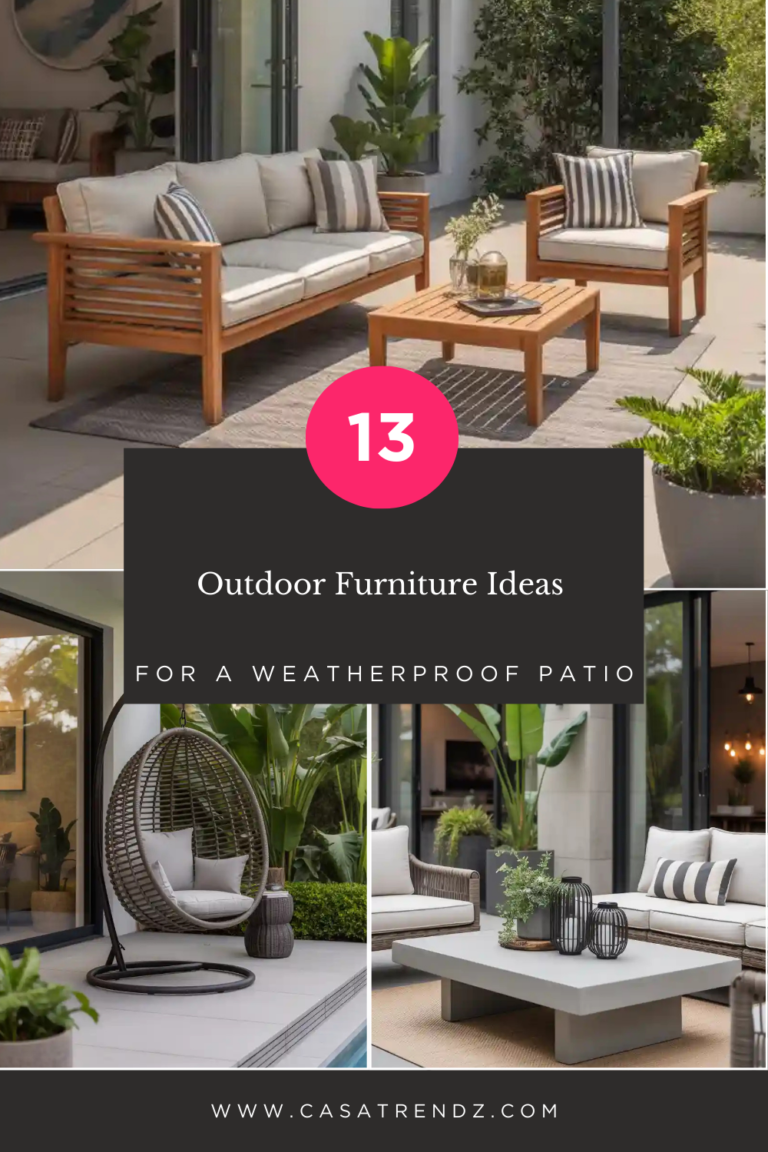 13 Outdoor Furniture Ideas for a Weatherproof Patio
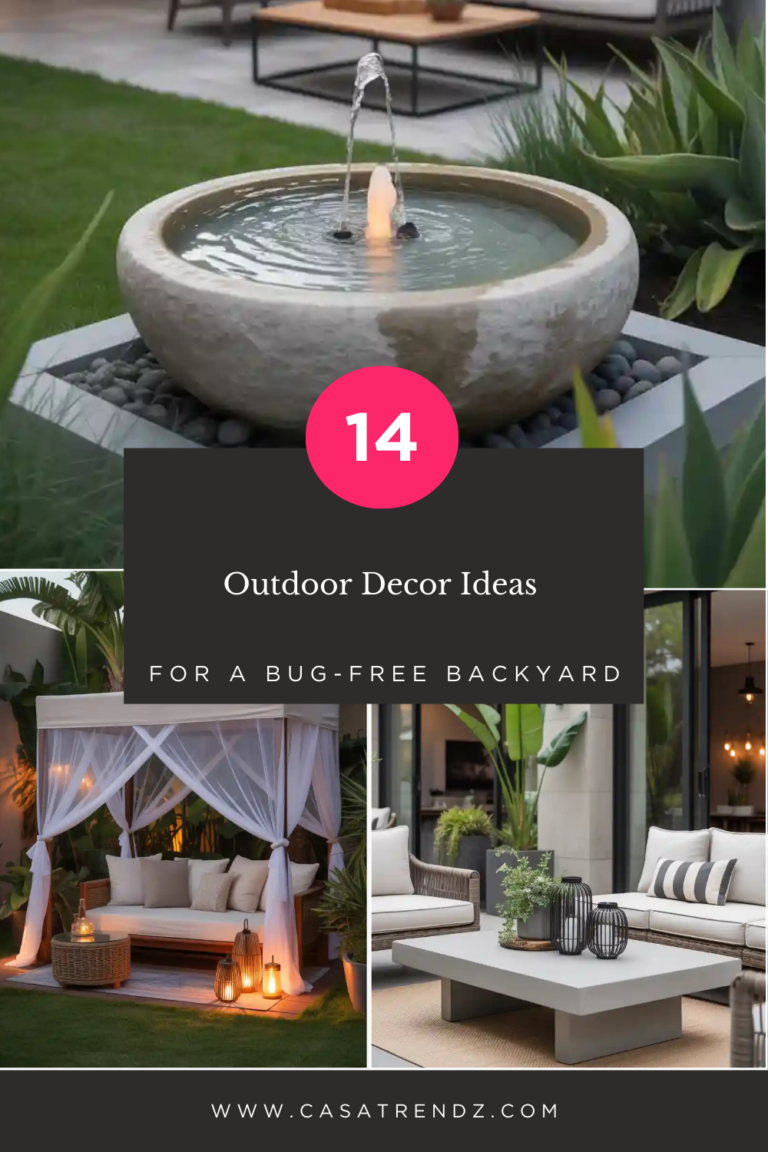 14 Outdoor Decor Ideas for a Bug-Free Backyard
 17 Modern Exterior Wall Design Ideas for a Stylish Home
 13 Natural Remedies for Summer Garden Pests (Eco-Friendly Guide)
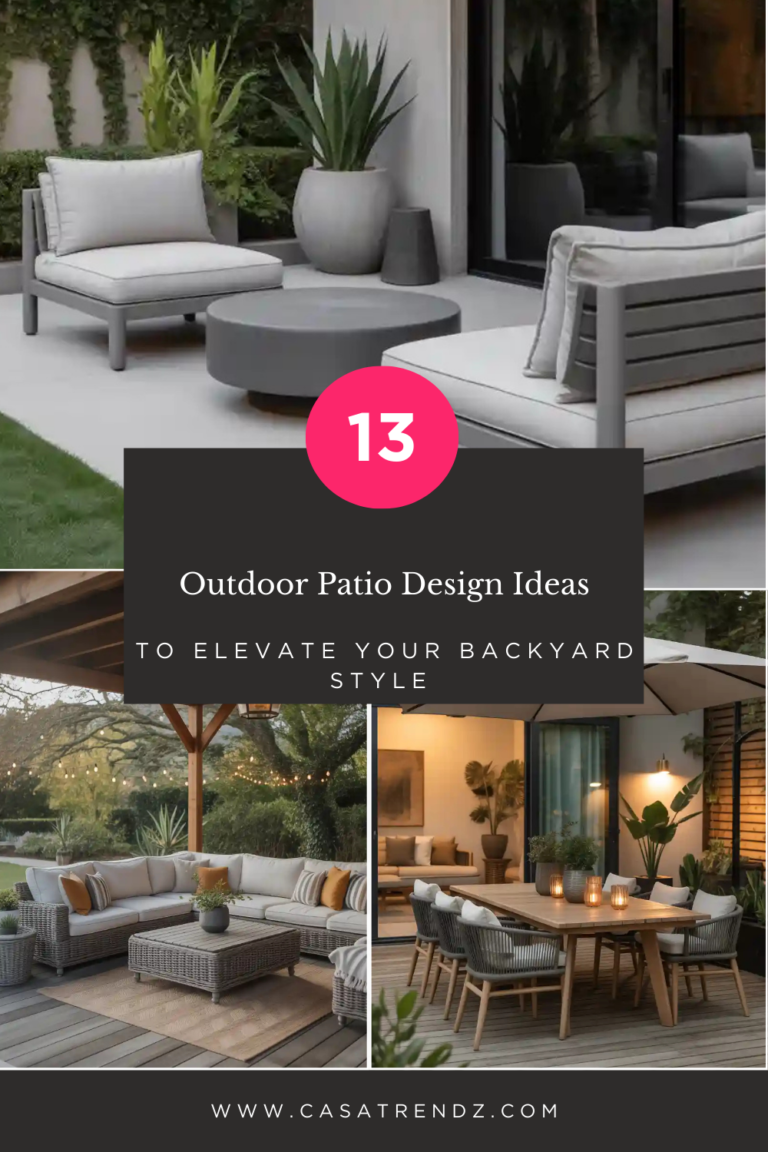 13 Outdoor Patio Design Ideas to Elevate Your Backyard Style
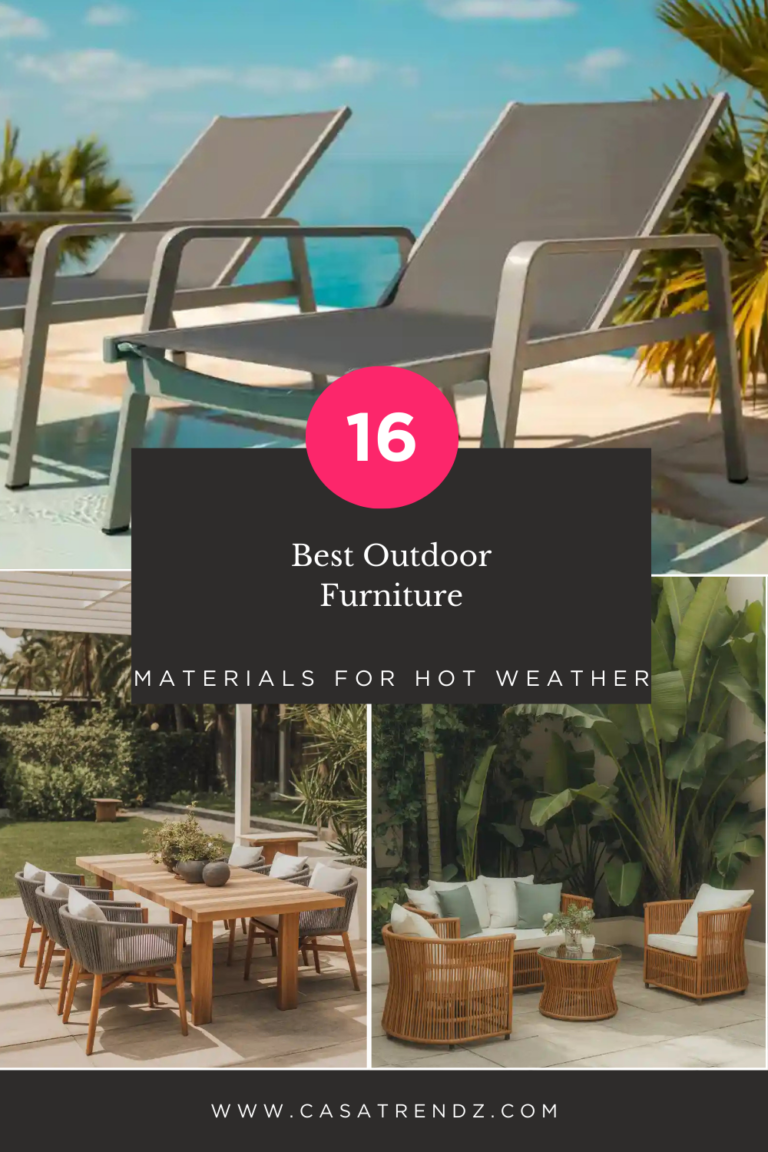 16 Best Outdoor Furniture Materials for Hot Weather