
16 Cheap Backyard Ideas for Stunning DIY Outdoor Makeovers

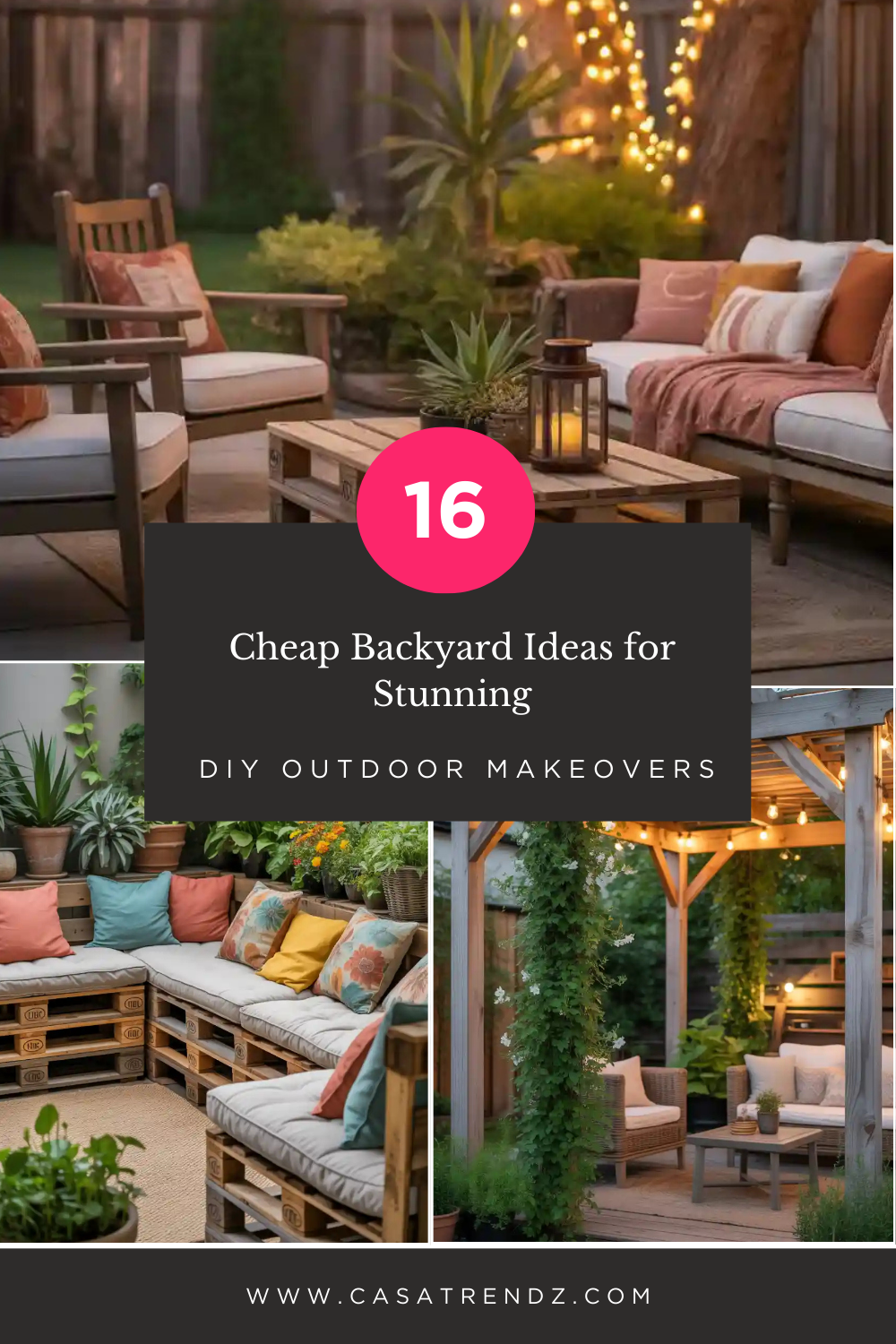
A beautiful backyard does not need a big budget. With a little creativity, a few basic tools, and materials that cost far less than store bought furniture, you can turn a plain patch of grass into a space where you actually want to spend your evenings. The trick is to spend money only where it shows, and to build, paint, or repurpose everything else yourself.
These 16 cheap backyard ideas are all weekend friendly projects that most homeowners can finish in a day or two. Each one focuses on high visual impact for very little money, whether that means turning free wooden pallets into a lounge sofa, lighting up a fence with a 25 foot string of LED bulbs, or building a fire pit from bricks that cost less than a takeout dinner. Pick two or three ideas to start, and your backyard will feel completely different by next weekend.
Before you start, measure your space and sketch a simple layout on paper. Knowing where the seating, the fire pit, and the pathways will go saves you from buying materials twice and keeps every project in proportion to your yard.
1. Pallet Wood Furniture DIY

Wooden pallets are the cheapest building material in backyard design, and they are often free. Check with local hardware stores, garden centers, and warehouses, many of them give pallets away just to clear space. Look for pallets stamped HT, which means heat treated, and avoid any marked MB, which were chemically treated and are not safe for home projects.
For a simple outdoor sofa, stack two pallets for the base and stand one upright behind them as the backrest. Screw the layers together with 2.5 inch exterior screws, then sand every surface with 80 grit sandpaper followed by 120 grit so no one catches a splinter. A coat of exterior wood stain in a warm walnut or weathered gray finish protects the wood and gives it a finished look. Top the base with a 24 by 48 inch outdoor cushion, or cut a piece of 4 inch foam to size and cover it with water resistant fabric.
A matching coffee table takes one more pallet, four short caster wheels, and a piece of plywood or a glass top. The whole seating set usually costs between 60 and 120 dollars, a fraction of what a store bought outdoor sofa costs, and you can rearrange the pieces whenever you want a new layout.
2. DIY Fire Pit on a Budget
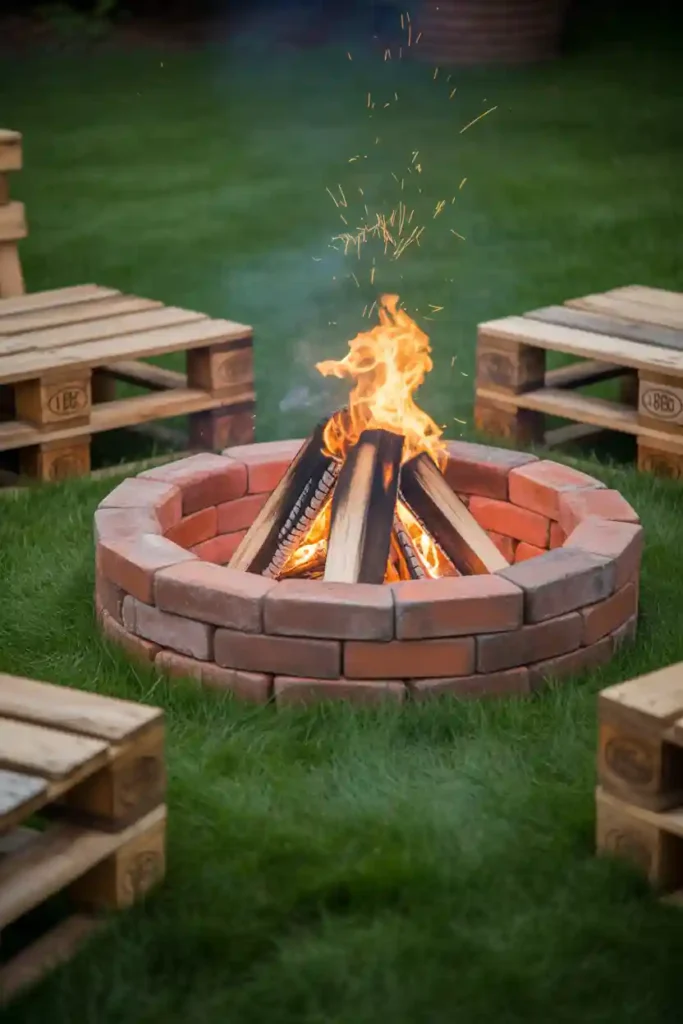
Nothing pulls people outside like a fire pit, and building your own costs far less than buying a kit. A simple round fire pit needs about 40 to 50 standard retaining wall blocks or fire bricks, a bag of gravel, and a bag of sand, usually 80 to 150 dollars in total from a home improvement store. Choose a spot at least 10 feet away from your house, fences, and low tree branches, and check your local rules about open fires before you build.
Start by marking a circle about 36 inches across with a stake and string. Dig down 4 inches, fill the base with gravel for drainage, then add a 1 inch layer of sand. Lay the first ring of blocks tight together, then stagger the second and third rings like brickwork so the joints do not line up. Three rings high, about 12 inches, is a comfortable height for sitting around. Leave small gaps between a few blocks on the bottom ring so air can feed the fire.
Surround the pit with a ring of pea gravel about 3 feet wide to catch stray sparks and give chairs a level surface. Pallet benches, folding camp chairs, or a couple of tree stump seats complete the setup. If you want more fire pit inspiration for the seating around it, see our backyard fire pit ideas for layouts that work in small and large yards alike.
3. Affordable String Lighting
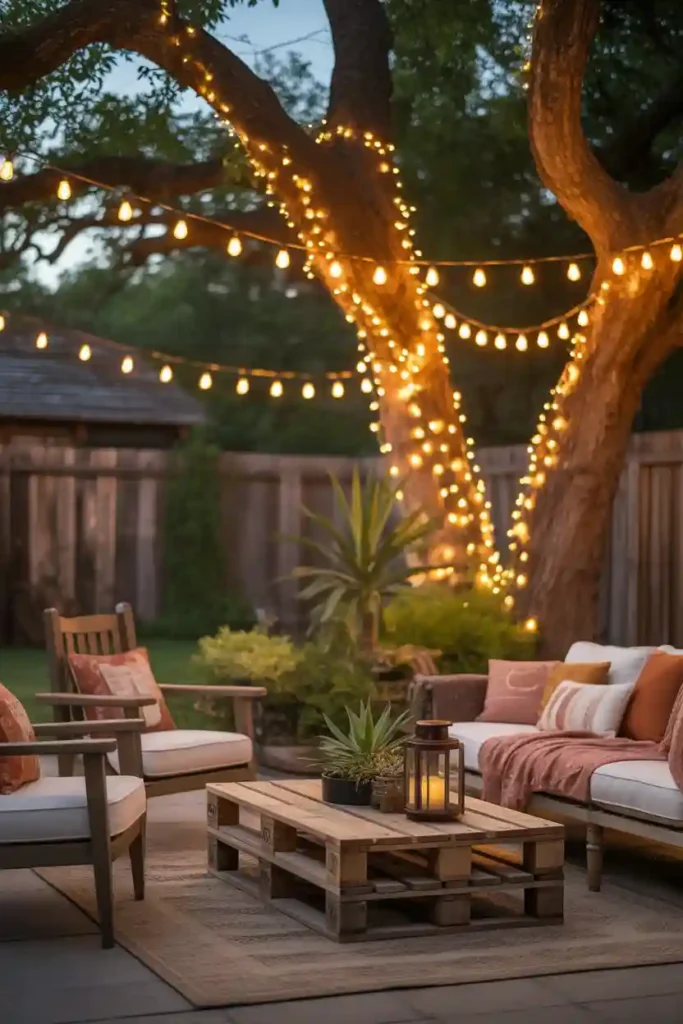
String lights are the single fastest way to make a backyard feel magical after dark. A 25 foot strand of outdoor LED globe lights costs 15 to 30 dollars, uses very little electricity, and lasts for years. Warm white bulbs, around 2700K, give the soft golden glow that looks best outdoors, while cool white can feel harsh against wood and plants.
Hang the lights in a gentle swag rather than pulling them tight, leaving a slight dip of 6 to 12 inches between support points so the strand looks relaxed and natural. Drape them in a zigzag across a patio, along the top of a fence, or from a tree branch to a pergola post. Use screw in cup hooks or outdoor adhesive clips rated for exterior use, and keep the plug end near an outdoor outlet or a weatherproof extension cord.
For a layered look, pair the string lights with a few solar lanterns on the table and solar stake lights along a pathway. The combination costs under 50 dollars in total and turns an ordinary evening into something that feels planned and polished. For more ways to light your yard without spending much, browse our affordable backyard lighting ideas.
4. Repurposed Container Planters
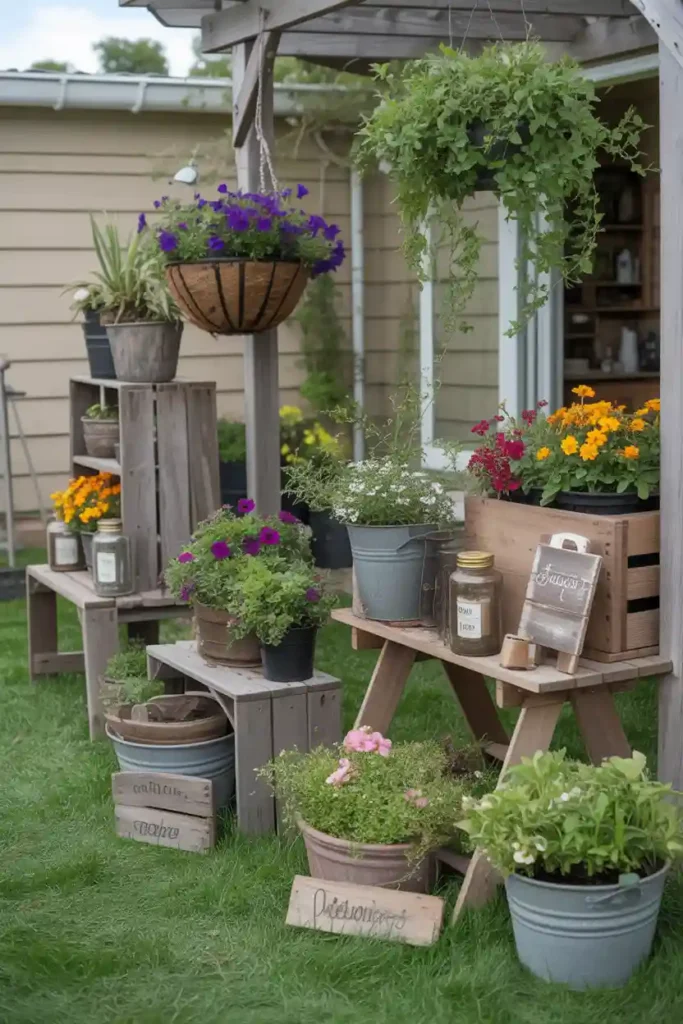
Almost anything that holds soil can become a planter, and the most charming ones cost nothing. Old tin buckets, wooden crates, metal watering cans, chipped enamel pots, and even worn out boots all work. The only rule is drainage. Drill three or four half inch holes in the bottom of every container, then add a 1 inch layer of small stones or broken pottery before the potting mix so water never sits around the roots.
Paint the outside to tie mismatched containers together. A single color, such as matte sage green, terracotta, or soft white, makes a random collection look intentional. Chalk paint sticks well to metal and wood without much prep, and one quart covers several small containers. For a playful touch, paint simple stripes or numbers on the pots with a stencil.
Group containers in clusters of three or five at different heights for the best effect. Mix trailing plants like sweet potato vine or creeping Jenny with upright herbs such as rosemary and basil, and put the tallest container at the back. This approach works for flowers, herbs, and even small vegetables like cherry tomatoes and peppers.
5. Painted Outdoor Fence Designs
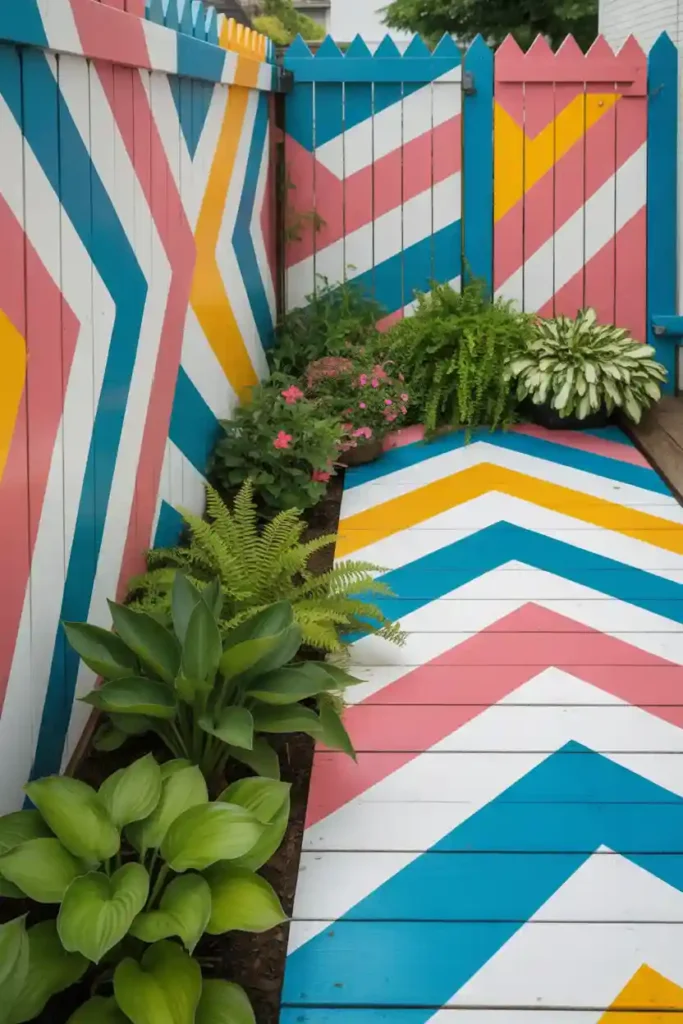
A fence is the biggest blank surface in most backyards, and a few gallons of paint can change the whole mood of the space. One gallon of exterior paint covers about 350 square feet, so a standard 6 foot fence panel usually needs two coats and about 40 to 60 dollars of paint. Always choose paint labeled for exterior wood, and clean the fence with a pressure washer or a stiff brush and soapy water first so the paint sticks.
For a modern look, paint the fence a deep charcoal, forest green, or navy blue. Dark colors make green plants pop and make a small yard feel deeper. If you prefer something lighter, a soft sage, warm cream, or pale blue-gray keeps the space bright. Bold homeowners can paint wide vertical stripes, a geometric pattern using painter’s tape, or a simple mountain or sun mural with a few tester pots of color.
Work on a dry day when no rain is expected for 24 hours, and paint in the direction of the wood grain. A sprayer finishes the job in half the time of a brush, and many home improvement stores rent one for about 40 dollars a day. The result is a backdrop that makes every plant and piece of furniture in front of it look better.
6. DIY Garden Pathways

A pathway gives a backyard structure and keeps shoes clean after rain, and it is one of the easiest DIY projects to get right. Gravel is the cheapest option at roughly 30 to 50 dollars per ton, while concrete stepping stones cost 3 to 8 dollars each. A curved path feels more natural than a straight one, so lay a garden hose on the ground first and adjust the curve until it looks right.
For a gravel path, dig a shallow trench 3 inches deep and 24 to 36 inches wide, line it with landscape fabric to stop weeds, and add 2 inches of crushed gravel, followed by a 1 inch top layer of pea gravel in a color that matches your house. Edge the path with bricks laid on their sides, flat river rocks, or short lengths of reclaimed wood so the gravel stays in place.
For a stepping stone path, set 16 or 18 inch square pavers 2 to 4 inches apart on a bed of sand, leaving the gaps open for creeping thyme or moss. Plant low ground cover between the stones and it will soften the edges within one season. A path that leads to a seating area, a fire pit, or a garden bed makes the whole yard feel designed instead of accidental.
7. Budget-Friendly Pergola or Shade Structure

A pergola defines an outdoor room and adds shade, and a simple one can be built for 200 to 400 dollars using pressure treated lumber. Four 4 by 4 posts, set 2 feet deep in concrete, support two 2 by 6 beams and a row of 2 by 4 rafters spaced 12 to 16 inches apart. Keep the footprint modest, an 8 by 10 foot pergola comfortably shades a table for four and feels right in most yards.
If a full pergola is more than you want to build, a shade sail is a faster option. A 12 by 12 foot triangular shade sail costs 30 to 60 dollars, and it only needs three sturdy anchor points, such as a house wall, a tree, and a 4 by 4 post. Hang it with a slight tilt so rain runs off one side, and pull it taut with turnbuckles so it does not flap in the wind.
Dress the structure up with climbing plants like jasmine, clematis, or grapevine, which will cover the top within a season or two, or hang outdoor curtains made from inexpensive drop cloths for privacy and soft shade. A strand of string lights across the beams finishes the space and makes it usable well into the evening.
8. Vertical Garden Walls
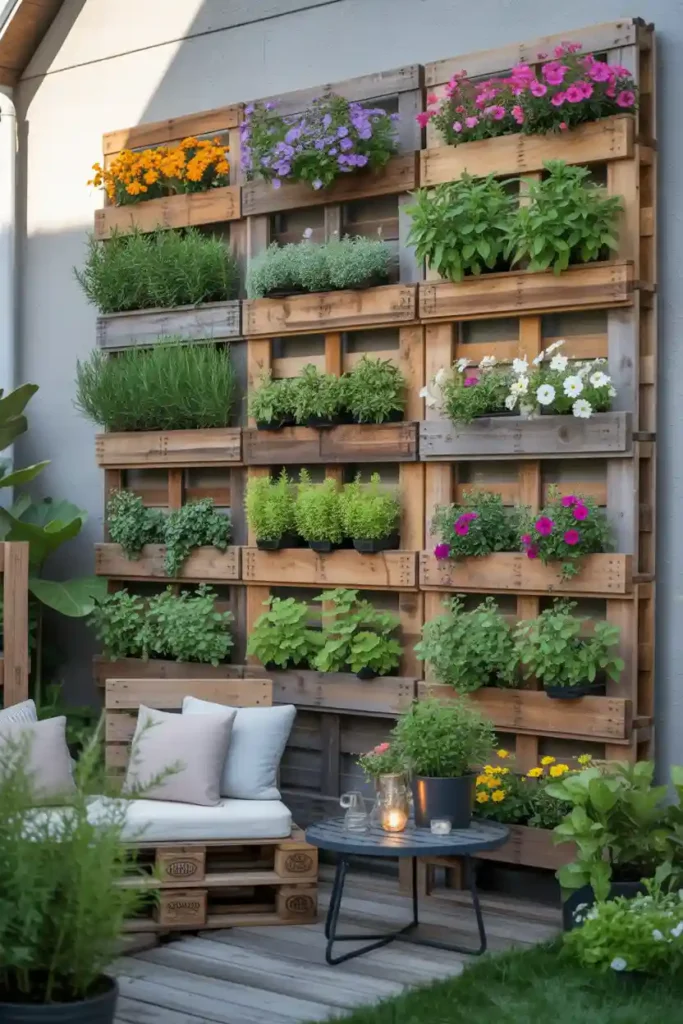
When floor space is tight, grow upward. A vertical garden turns a bare fence or wall into a living feature, and a pallet makes the perfect frame. Stand a pallet upright, staple landscape fabric to the back and bottom of each slat pocket, fill the pockets with potting mix, and plant herbs, lettuce, strawberries, or trailing flowers in the gaps. Lean it against a wall or fix it to a fence with two brackets.
Felt pocket planters are another easy option, with a 12 pocket hanging panel costing 15 to 25 dollars. Hang it on a sunny wall, fill each pocket with soil, and water from the top so moisture trickles down to every row. Herbs such as mint, basil, parsley, and chives do especially well in pockets because you can snip what you need right at the back door.
Mix leafy plants with a few flowering ones for color, and group plants with similar water needs together. A vertical garden also adds privacy on a patio or balcony, and it is a great companion to hanging plants around the porch. If you love this layered green look, our easy ways to beautify your porch with hanging plants show how to carry the same idea to your front entry.
9. Homemade Outdoor Cushions and Seating
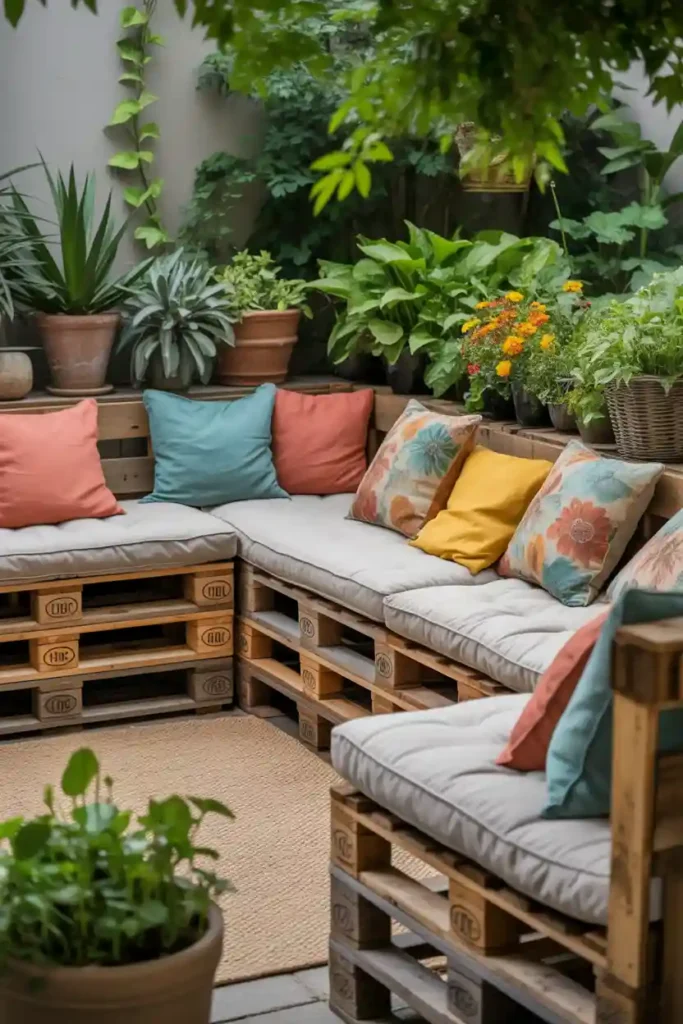
Store bought outdoor cushions are expensive, but homemade ones are a simple sewing project. A 24 by 24 inch seat cushion needs a piece of 3 or 4 inch foam, a yard of outdoor fabric, and a zipper. Cut the foam with an electric knife for clean edges, wrap it in a layer of polyester batting for softness, then sew a simple envelope style cover that slips on and off for washing.
Outdoor fabric costs 8 to 15 dollars per yard and resists sun and rain far better than indoor cotton. Choose a solid color for the main cushions and add one or two patterned throw pillows in a coordinating color for contrast. Navy and white, terracotta and cream, and sage and charcoal are combinations that work in almost any backyard.
The same approach works for benches made from crates or cinder blocks topped with a wooden plank. A pair of cinder blocks, a 2 by 8 board cut to 48 inches, and two homemade cushions make a sturdy bench for under 40 dollars. Store the cushions in a deck box or a large plastic bin when rain is expected, and they will last for several seasons.
10. DIY Water Feature Ideas

The sound of moving water makes any backyard feel calm, and a small fountain can be built for 40 to 80 dollars. The simplest design uses a large ceramic pot or a galvanized bucket as the reservoir, a small submersible pump rated at 80 to 160 gallons per hour, and a length of half inch tubing. The pump usually costs 15 to 25 dollars and runs on a standard outdoor outlet.
Set the pot where you can see it from your seating area, fill it with water, and place the pump at the bottom. Run the tubing up through a stack of smaller pots or a piece of bamboo so the water spills gently back down into the reservoir. Hide the cord behind plants and top the water with a few smooth river stones. A solar powered pump, about 20 to 35 dollars, works well in a sunny spot and needs no outlet at all.
Keep the water level topped up in hot weather and add a few drops of mosquito control treatment made for birdbaths if standing water is a concern. Birds will visit within days, and the gentle sound will mask street noise. Place the feature near a seating area or a shady corner so you can actually hear it while you relax.
11. Budget-Friendly Outdoor Dining Setup
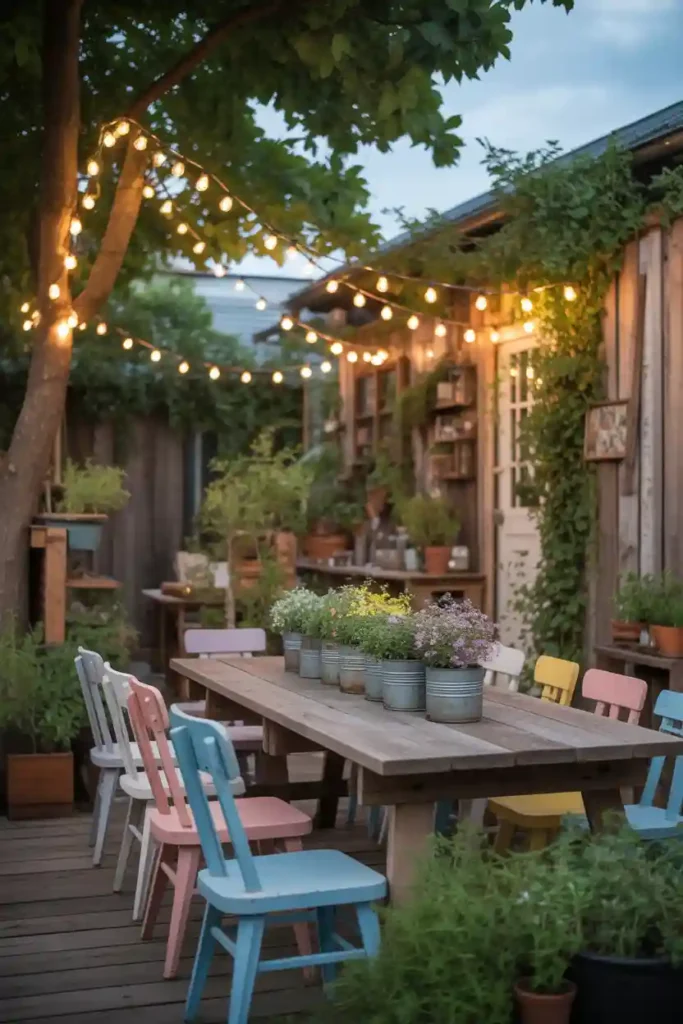
An outdoor dining area does not need a matching patio set. A thrifted wooden table, a coat of exterior paint, and a set of mismatched chairs painted in one color look charming and cost a fraction of a new set. Check thrift stores, garage sales, and online marketplaces, where solid wood tables often sell for 20 to 50 dollars. Sand rough spots, prime, and paint with two coats of exterior paint in a color that suits your yard.
A pallet table is another option. Stack two pallets, add a plywood top, and screw on four short legs or caster wheels. For a table for six, build the top about 72 inches long and 36 inches wide, with bench seating on both sides made from a single pallet each. Add a simple outdoor tablecloth or a runner in a washable fabric to protect the surface and add color.
Finish the setup with a centerpiece of potted herbs or a lantern, and hang string lights or a paper lantern overhead. A dining area like this turns weeknight dinners into small outdoor events, and it gives you a reason to use the backyard every day, not just on weekends. For a fuller outdoor look that ties the dining area to the rest of the yard, see our outdoor decor ideas.
12. Repurposed Wooden Crate Storage

Wooden crates are the workhorses of a budget backyard. They cost 5 to 15 dollars each at craft stores and flea markets, and they solve storage, display, and seating in one piece. Stack two or three crates on their sides against a fence to make open shelving for pots, garden tools, and lanterns. Screw them together from the inside so the stack stays stable, and anchor the top crate to the fence with a small bracket.
Turn a crate on its end and it becomes a side table or a plant stand. Add four small caster wheels to the bottom and it rolls wherever you need it. Paint the crates in one color to match your furniture, or leave the wood natural and seal it with exterior polyurethane so it weathers gracefully.
Crates also make excellent toy storage near a play area, a firewood holder beside the fire pit, or a display shelf for potted succulents by the back door. Label each crate with a chalkboard tag or a stenciled word so everyone in the family knows where things belong, and the yard stays tidy without any effort.
13. Painted Pots and Plant Stands
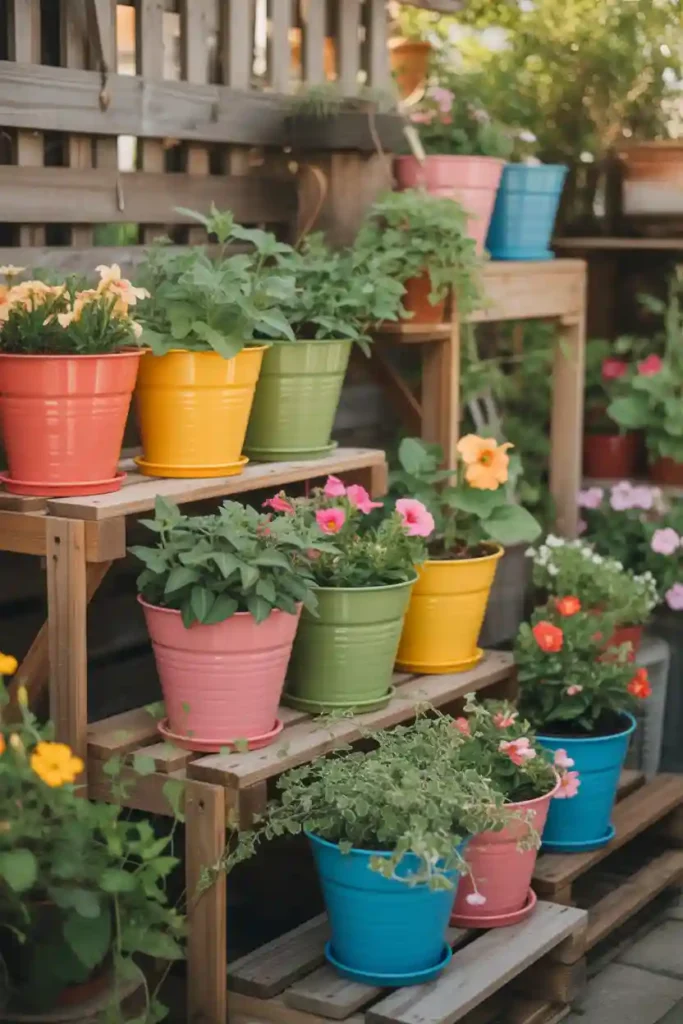
A plain terracotta pot costs 2 to 5 dollars, and paint turns it into a design piece. Clean the pot, let it dry completely, and seal the inside with a clear sealer so moisture does not push the paint off from behind. Then paint the outside with exterior acrylic or chalk paint. Bold stripes, color blocking with two tones, polka dots, or a simple solid color all work, and a set of pots painted in the same palette looks far more expensive than it is.
Pair the pots with plant stands to add height and variety. A stand made from a stack of two bricks and a 12 inch square paver costs almost nothing and lifts a pot 6 inches off the ground, which also improves drainage. For a taller stand, screw three wooden dowels or hairpin legs to a round wooden board. Group pots in threes at different heights, with the tallest at the back and a trailing plant in front to soften the edges.
Change the look each season by swapping in new plants rather than repainting. Bright marigolds and zinnias in summer, ornamental kale and mums in fall, and small evergreens in winter keep the same painted pots looking fresh all year.
14. DIY Outdoor Art or Murals
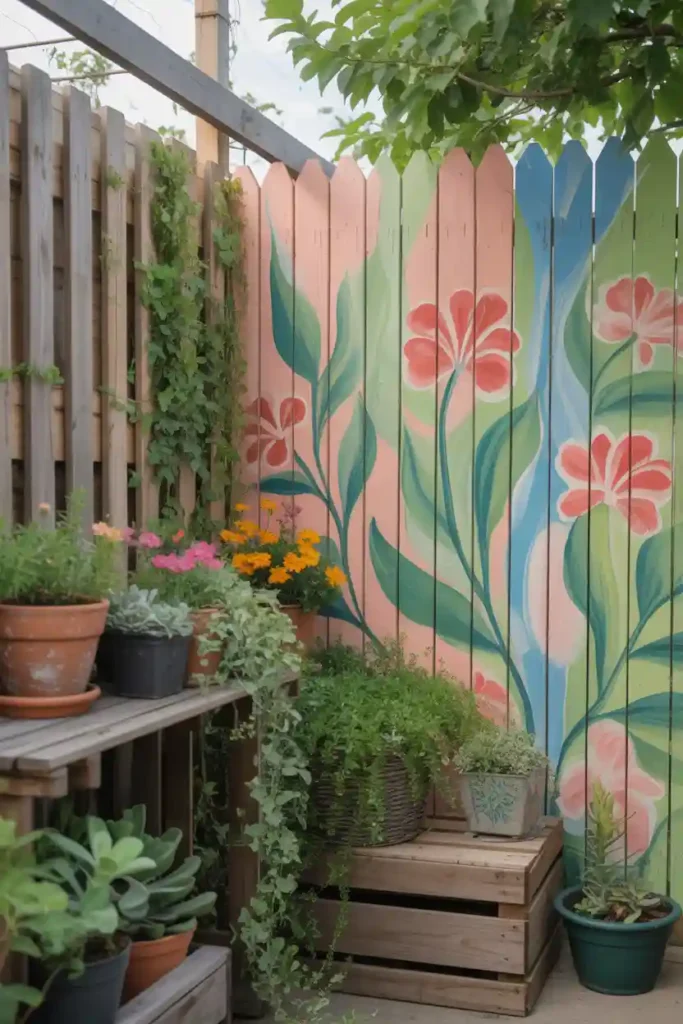
A blank fence or shed wall is a free canvas. A simple mural needs only exterior paint, a few brushes, and a steady hand, and even beginners can get a great result with stencils. Large stencil sets cost 10 to 20 dollars and include leaves, geometric shapes, and mandala patterns. Tape the stencil flat, dab the paint on with a foam brush, and lift it carefully for a clean edge.
For a painted mural, sketch the design on paper first, then draw it lightly on the wall with chalk using a grid to keep the proportions right. Simple subjects work best: a sun, mountains, a tree with birds, or big bold flowers. Use three or four colors at most so the design stays calm, and outline the shapes in a darker shade to make them read clearly from a distance.
Smaller art projects work too. Paint a set of old shutters, a wooden pallet sign with your family name, or a row of tin cans as wall planters. Seal outdoor art with a clear exterior topcoat so the colors stay bright through rain and sun. Art like this gives a backyard personality that no store bought decoration can match.
15. Cheap Privacy Screens

Privacy does not require a tall fence or a contractor. A freestanding screen made from three lattice panels hinged together costs 60 to 100 dollars and can be moved wherever you need it. Set the panels in a zigzag so they stand on their own, and paint or stain them to match your fence. Planters at the base add weight and keep the screen steady in wind.
Bamboo fencing is another inexpensive option. A 6 by 8 foot roll of bamboo screening costs 25 to 40 dollars and attaches to an existing fence or a simple frame of 2 by 2 lumber with zip ties or wire. It instantly softens a plain fence and gives a warm, natural look. Repurposed pallets also work: stand two or three upright, screw them together, and grow climbing plants up the slats.
For a living screen, plant fast growing climbers such as morning glory, sweet pea, or clematis at the base and train them up with twine. Within one season they form a green wall that smells lovely and blocks the view. A privacy screen around a seating area or a hot tub turns an exposed corner into a cozy private retreat.
16. Upcycled Outdoor Swing or Hammock
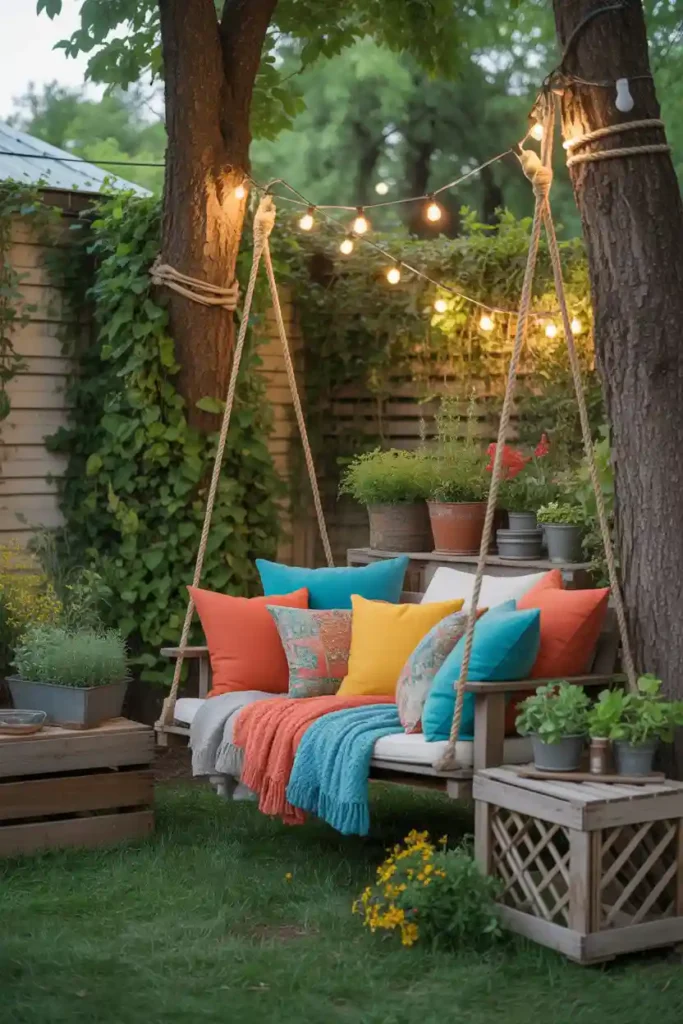
A swing or hammock is the finishing touch that makes a backyard feel like a retreat. A simple wooden pallet swing costs about 40 to 60 dollars to build. Use a sturdy single pallet as the seat, drill four holes near the corners, and thread heavy duty rope rated for at least 500 pounds through the holes. Hang it from a strong tree branch at least 8 inches thick, or from a pergola beam, using eye bolts and carabiners.
Hang the swing 17 to 19 inches off the ground, which is standard chair height, and test it carefully before anyone sits down. Add a homemade cushion and a throw pillow, and the swing becomes the most used seat in the yard. For a hammock, a double cotton hammock with a stand costs 60 to 100 dollars and needs no trees at all, which makes it ideal for small yards or patios.
Place the swing or hammock where it catches a breeze and a view, near a garden bed or facing the fire pit, and keep the landing area clear of stones and hard edges. A soft outdoor rug underneath adds comfort and defines the spot. This one project often becomes the favorite feature of the whole backyard.
Final Words
These 16 cheap backyard ideas prove that a beautiful outdoor space is about creativity, not cash. Start with the projects that solve your biggest problem, whether that is seating, shade, lighting, or privacy, and add one new idea each weekend. Within a month, a plain backyard can become the place where your family eats dinner, gathers around a fire, and spends long summer evenings. The best part is that every project here can be done with basic tools, affordable materials, and a little patience, and the result will feel like it was designed just for you.
Frequently Asked Questions
How much does a cheap backyard makeover cost?
A basic makeover using two or three ideas from this list usually costs 100 to 300 dollars. Pallet furniture, painted pots, and string lights are the cheapest starting points, while a pergola or a full fire pit seating area costs more. Doing the work yourself is what keeps the total low, since labor is usually the biggest part of any outdoor project.
What is the easiest cheap backyard idea for beginners?
String lighting is the easiest project on this list. It needs no tools beyond a few hooks, takes under an hour, and changes the look of the yard immediately. Painted pots and repurposed container planters are a close second, since they need only paint, soil, and plants.
How do I make my backyard look nice on a small budget?
Focus on the three things people notice first: seating, lighting, and plants. A clean seating area with homemade cushions, warm string lights overhead, and a few grouped planters will make any yard feel finished. Then add one focal point, such as a fire pit or a painted fence, to give the space character.
Are pallet projects safe for outdoor furniture?
Yes, as long as you choose the right pallets. Use only pallets stamped HT for heat treated, and avoid pallets marked MB, which were treated with chemicals. Sand all surfaces smooth, seal the wood with exterior stain or paint, and check the pallets for cracked boards or loose nails before building.
How can I add privacy to my backyard cheaply?
Lattice panels, bamboo screening, and repurposed pallets all make low cost privacy screens for 25 to 100 dollars. Planting fast growing climbers like morning glory or clematis at the base turns a plain screen into a living green wall within a single growing season.
More Ideas You Will Love
 How to Style a Classic White Christmas Tree with Lights
 14 Balcony Workspace Ideas: Stylish Outdoor Office Inspiration
 13 Easy Garden Care Tips for Hot Summer Weather
 16 Exterior Siding Ideas: Modern, Farmhouse & Classic Styles
 18 Pool Pavilion Ideas for Stylish and Functional Outdoor Living
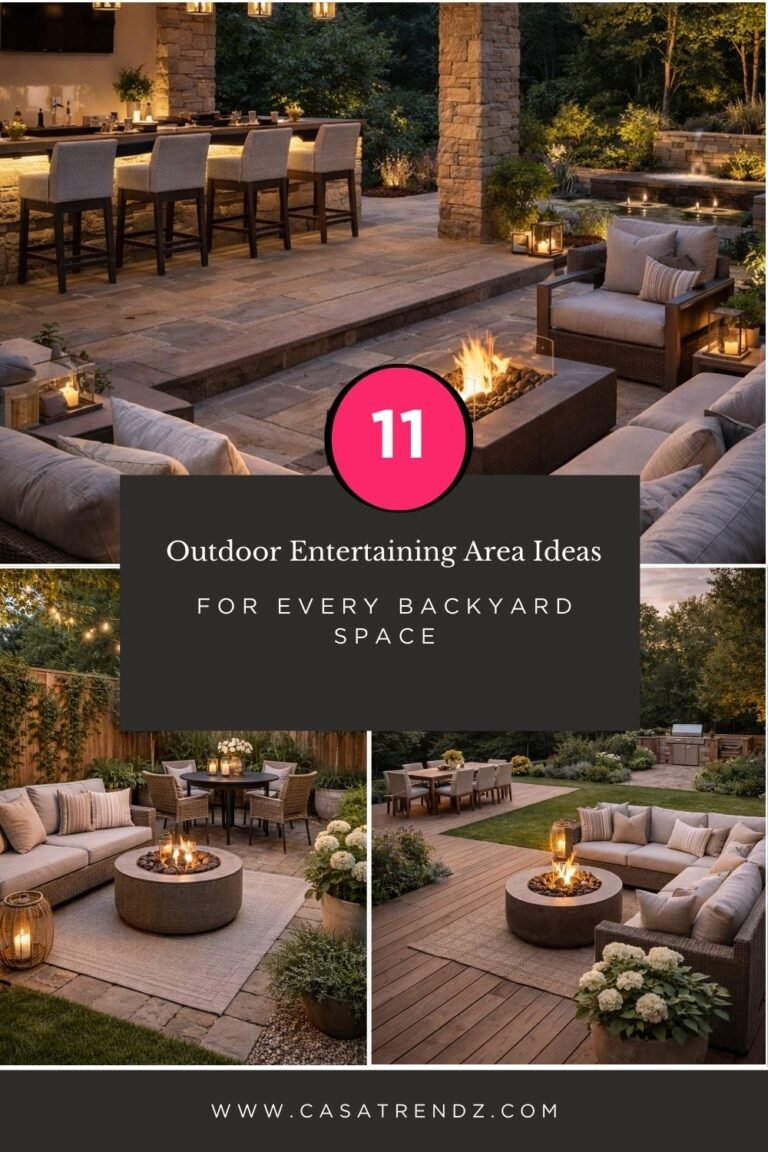 11 Outdoor Entertaining Area Ideas for Every Backyard Space