
21 Sectional Living Room Ideas for Stylish & Functional Spaces

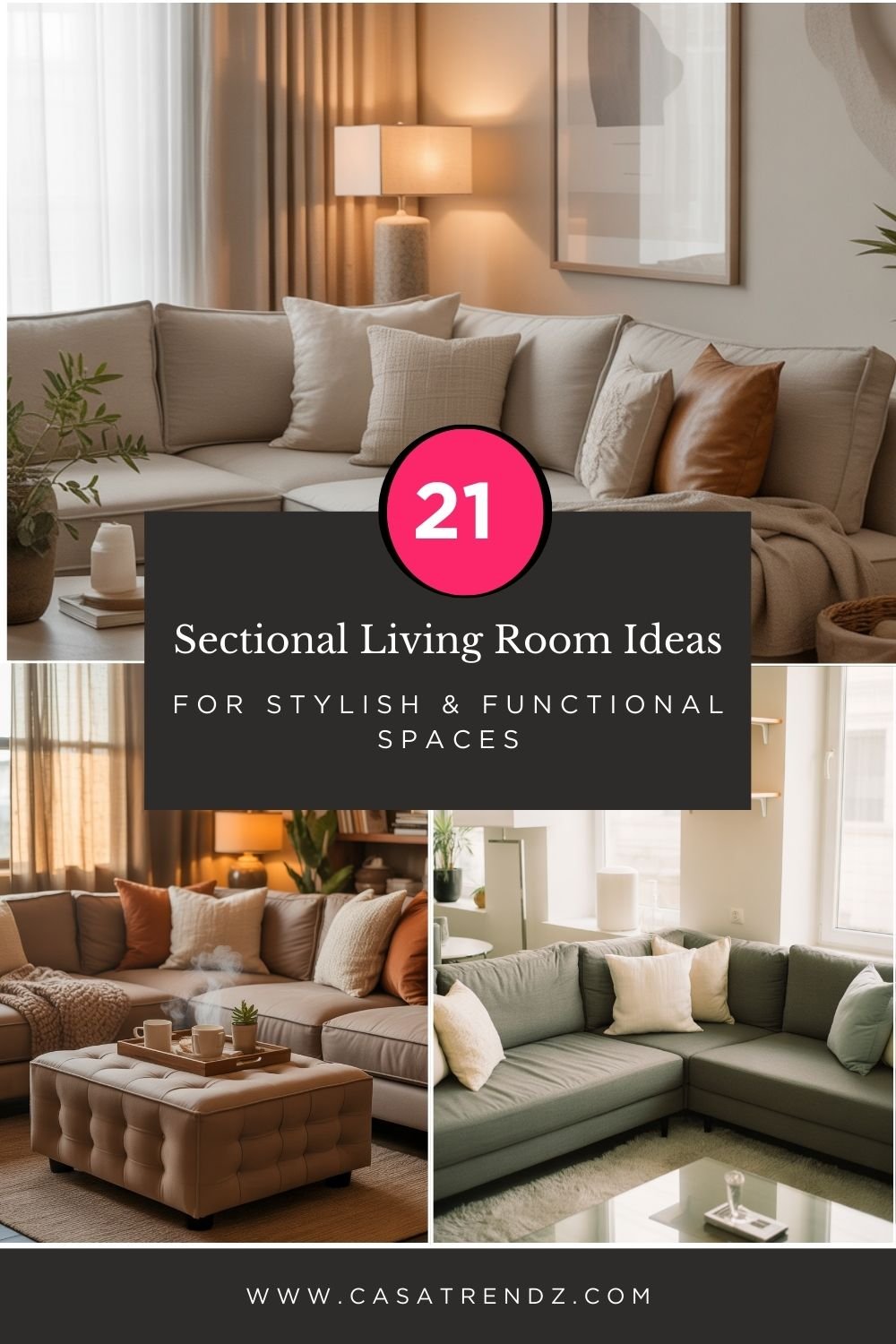
Designing a living room around a sectional sofa is one of the smartest ways to create a space that feels comfortable, functional, and visually appealing. Sectionals offer flexible seating, help define zones in open rooms, and make even small spaces feel organized and welcoming. Whether you prefer modern, cozy, minimalist, bold, or luxurious interiors, the right sectional can transform your living room into a space that truly fits your lifestyle. This guide covers 21 sectional living room ideas, each with practical layout advice, size guidance, color and fabric suggestions, and styling tips you can apply right away.
Before you buy, measure first. Leave at least 30 inches of clear walkway around the main seating area, and allow 16 to 18 inches between the front edge of the sectional and a coffee table so legs and feet have room to move. In a room under 150 square feet, look for sectionals under 90 inches wide with slim arms. In a room over 250 square feet, a sectional 110 to 130 inches wide will anchor the space without looking lost. Always check the chaise length, the door width for delivery, and whether the pieces can turn a tight hallway corner.
The ideas below work for rented apartments, family homes, and large open plan spaces. Start with the layout that fits your room shape, then choose a fabric that suits your daily life, then layer color, lighting, and texture around it. A sectional is a long term purchase, so pick a frame and cushion quality you will still enjoy in five years, not just a color you like this season.
1. Create a Cozy Corner Layout
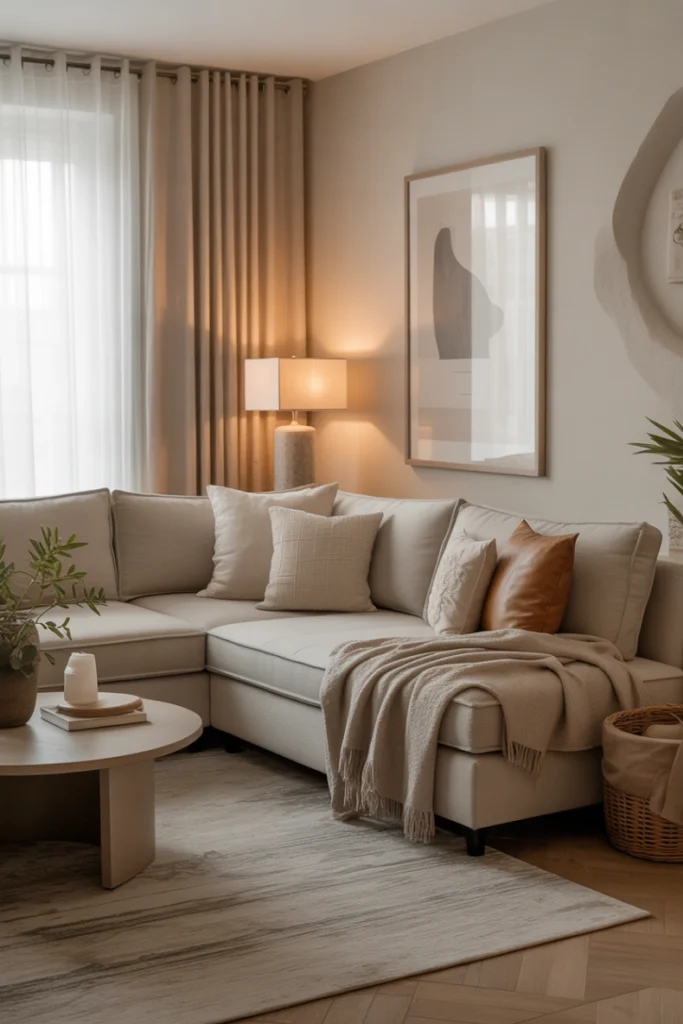
A corner sectional is perfect for maximizing comfort while keeping the living room layout simple and efficient. Placed against two walls, it defines a natural gathering area without extra furniture, and it works in both small and large rooms. The L shape creates an intimate zone for conversation, reading, and movie nights, and it leaves the center of the room free for a coffee table or a soft rug. For a standard corner sectional, allow a wall run of 90 to 110 inches on the long side and 60 to 84 inches on the return, so the piece fits without blocking windows or doors.
Build coziness with layers. Add a knitted throw in cream or warm gray, two or three cushions in mixed textures such as linen, velvet, and boucle, and a rug that extends at least 6 inches beyond each side of the sectional. A rug sized 8 by 10 feet suits most corner setups, while a 5 by 8 foot rug works in a compact room. Warm lighting makes the biggest difference after dark, so add a floor lamp at the open end of the sectional and wall sconces or a small table lamp near the corner seat.
To finish the look, place a rectangular or round coffee table 16 to 18 inches from the seat edge, and keep a basket nearby for throws and magazines. Avoid pushing every cushion flat against the back. Pull the front cushions slightly forward and vary their sizes for a relaxed, lived in feel. If the corner seat feels dark, add a light colored cushion or a small mirror on the adjacent wall to bounce light into the nook.
2. Go Minimalist with a Clean, Low-Profile Sectional
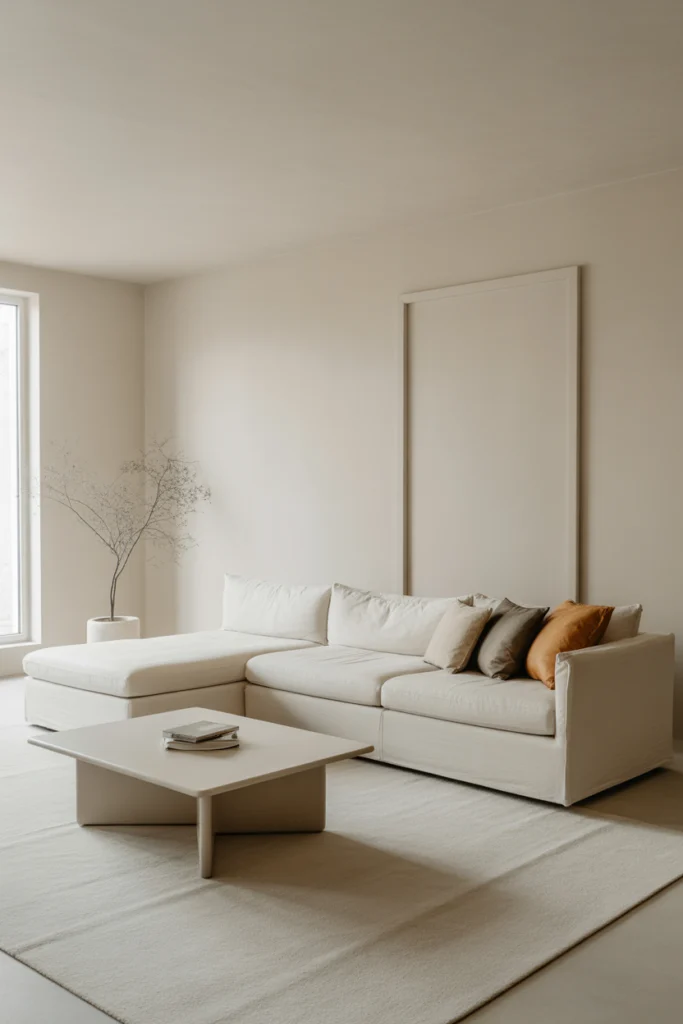
Minimalist design thrives on simplicity, and a low profile sectional is an excellent choice for a calm, clutter free room. These sectionals usually have a seat height of 16 to 18 inches, slim arms, and clean lines, which help the room feel open and airy. Neutral tones such as light gray, warm white, stone, and soft beige keep the look quiet and flexible. This style suits modern apartments and anyone who wants a peaceful, sophisticated atmosphere without heavy decor.
Pair the sectional with minimal accessories: one simple coffee table, one piece of large scale artwork, and subtle lighting. A monochromatic or soft tonal palette reinforces the minimalist vibe, so choose cushions in shades close to the sofa color and add interest through texture rather than pattern. A low pile rug in a solid color, a single vase, and a wooden tray on the coffee table are enough. Resist the urge to fill every surface, because empty space is part of the design.
For a practical minimalist setup, choose a performance fabric that resists stains, and keep storage hidden in a console or a closed cabinet. If you want more modern living room ideas, repeat the same restraint in the rest of the room: one focal wall, one metal finish, and one wood tone. The result feels effortless and stays easy to clean and easy to live with.
3. Choose a U-Shaped Sectional for Maximum Seating
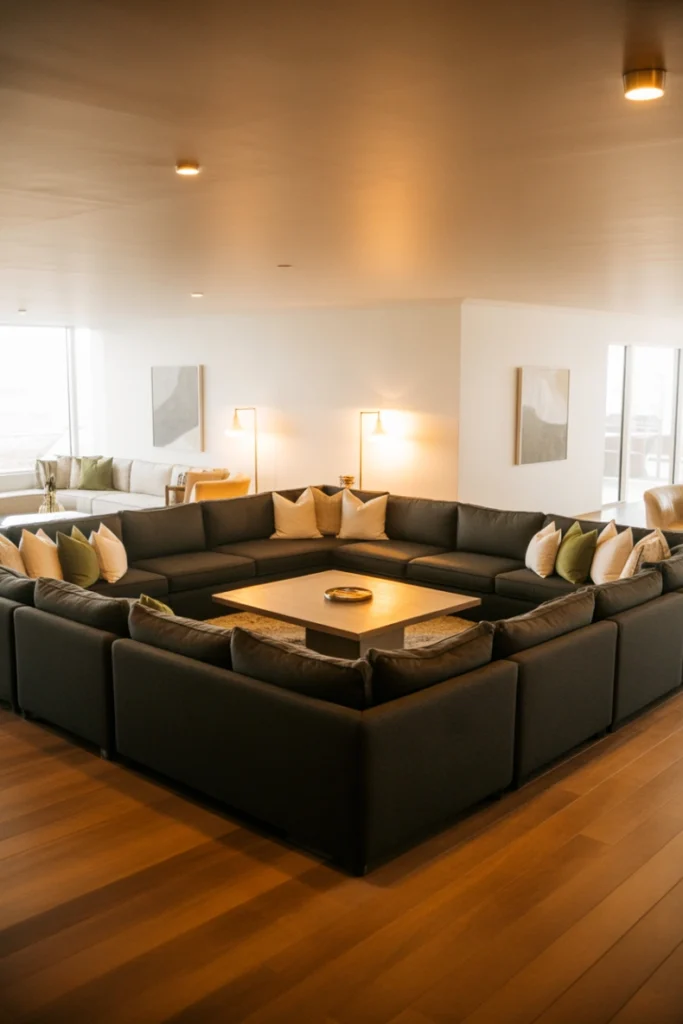
A U-shaped sectional is perfect for large living rooms and big families. It provides seating for six to eight people while keeping a cozy feeling that encourages conversation. With seats extending on both sides, everyone gets a comfortable place to sit, which makes it ideal for gatherings, game nights, and hosting guests. A typical U-shaped sectional measures 110 to 140 inches wide and 90 to 110 inches deep, so it needs a room at least 14 by 16 feet to leave proper walkways.
Style the center with a large coffee table or two smaller tables pushed together, so drinks and snacks are within reach from every seat. Add oversized cushions or a mix of patterns to keep the look visually engaging, and anchor the whole arrangement with a 9 by 12 foot rug. If the room has a television, place it 8 to 10 feet from the main seat for comfortable viewing, and use a low media console so sightlines stay open across the U shape.
One common mistake is filling the U with too many side tables. Choose one strong center piece and one side table at each open end instead. Keep the back of the sectional low if the room is open plan, so the space still feels connected. For families, pick a stain resistant fabric and removable cushion covers, because a U-shaped sectional gets daily use from every direction.
4. Try a Modular Sectional for Flexibility
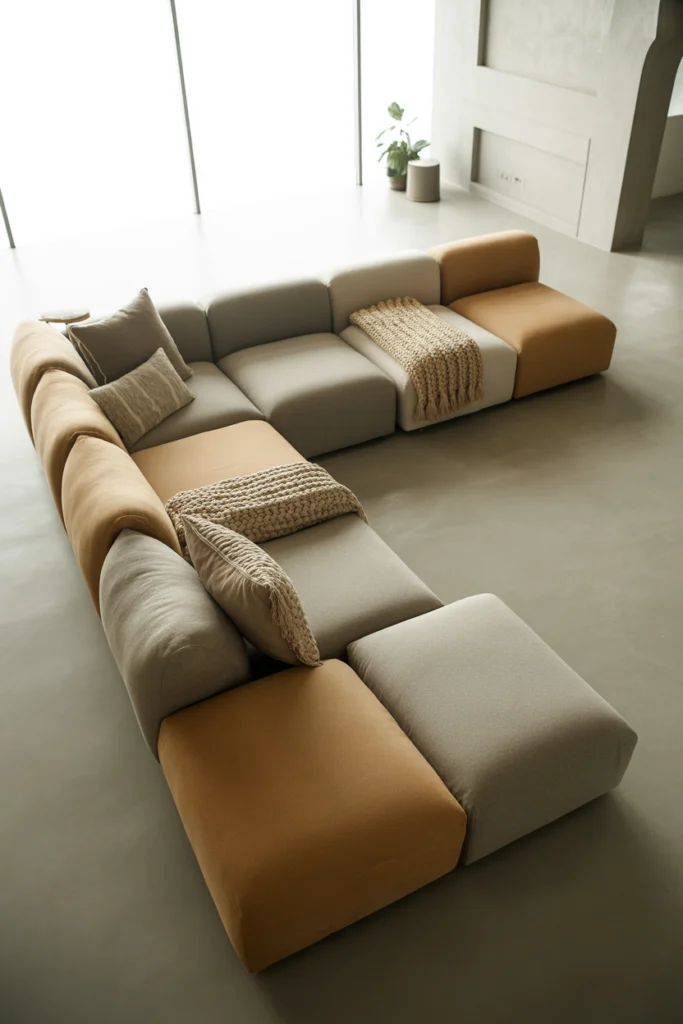
Modular sectionals are designed for flexibility and adaptability. Each piece can be rearranged to create different seating arrangements, so you can change the layout based on your needs. A long sofa one week can become a chaise layout or two separate seating units the next. This makes modular sectionals ideal for multifunctional living rooms, small apartments, and households that frequently host guests or move furniture for parties and holidays.
When you shop, check the connection system. Good modular pieces lock together firmly and have hidden clips, so the sofa does not drift apart during use. Standard modules are often 30 to 36 inches wide, which lets you build a two seat, three seat, or corner layout from the same set. Choose neutral tones or fabrics that work in different arrangements, and add lightweight side tables and movable ottomans to increase flexibility without adding bulk.
To refresh the room without buying new furniture, simply swap the chaise to the other side, split off an armless chair for a reading corner, or turn one module to face a fireplace. Keep a consistent cushion color across modules so every arrangement still looks intentional. Modular sectionals are also a smart choice for renters, because you can reconfigure the same pieces for a new room shape when you move.
5. Add a Sectional with a Built-In Chaise
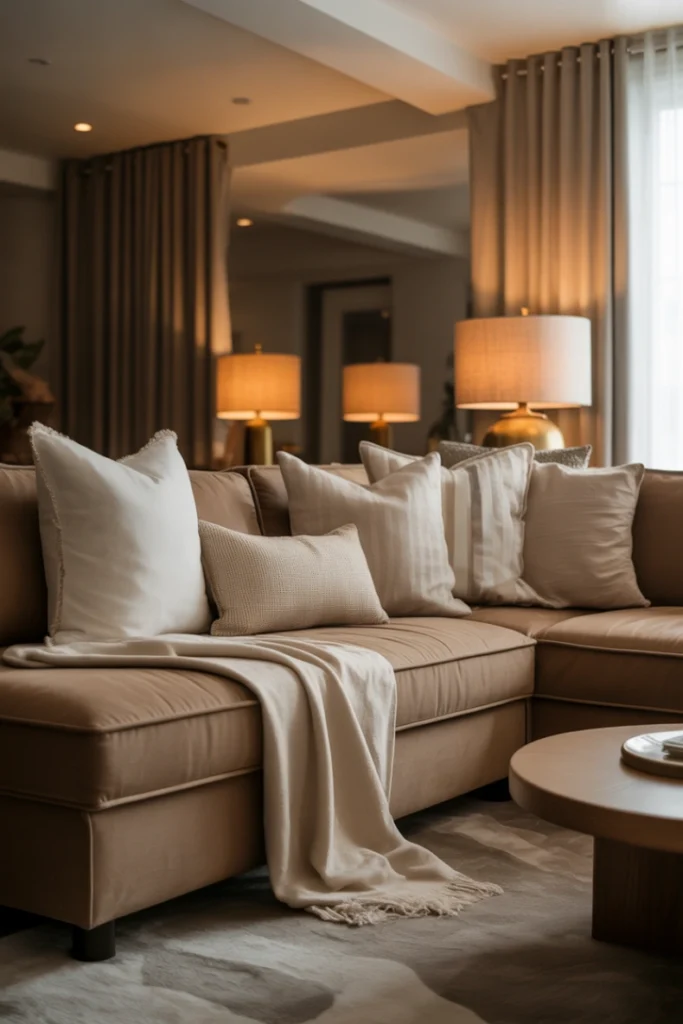
A sectional with a chaise brings both comfort and function to your living room. The chaise section provides a perfect place to stretch out, read a book, or enjoy a relaxing evening, and it helps create a natural flow in the layout. This design works beautifully in rooms where you want to maximize seating without sacrificing comfort. A typical chaise extends 60 to 66 inches from the back of the sofa, so measure the full depth before you order.
Decide first whether you need a left facing or right facing chaise, based on the room layout and the location of windows, doors, and the television. If you are unsure, a reversible chaise or a modular chaise gives you more options. Pair the chaise with a soft rug and complementary throw pillows, and add a slim side table or a floor lamp next to it to create a mini relaxation corner. A small tray on the chaise arm keeps a book and a drink close at hand.
For balance, keep the rest of the seating simple. If the chaise is long, use a round coffee table rather than a long rectangular one, so movement around the chaise stays easy. Choose a chaise cushion with a firm base and a soft top layer, so it supports legs without sagging. This setup is excellent for everyday use and adds a touch of luxury without overwhelming the space.
6. Opt for a Leather Sectional for a Luxurious Feel
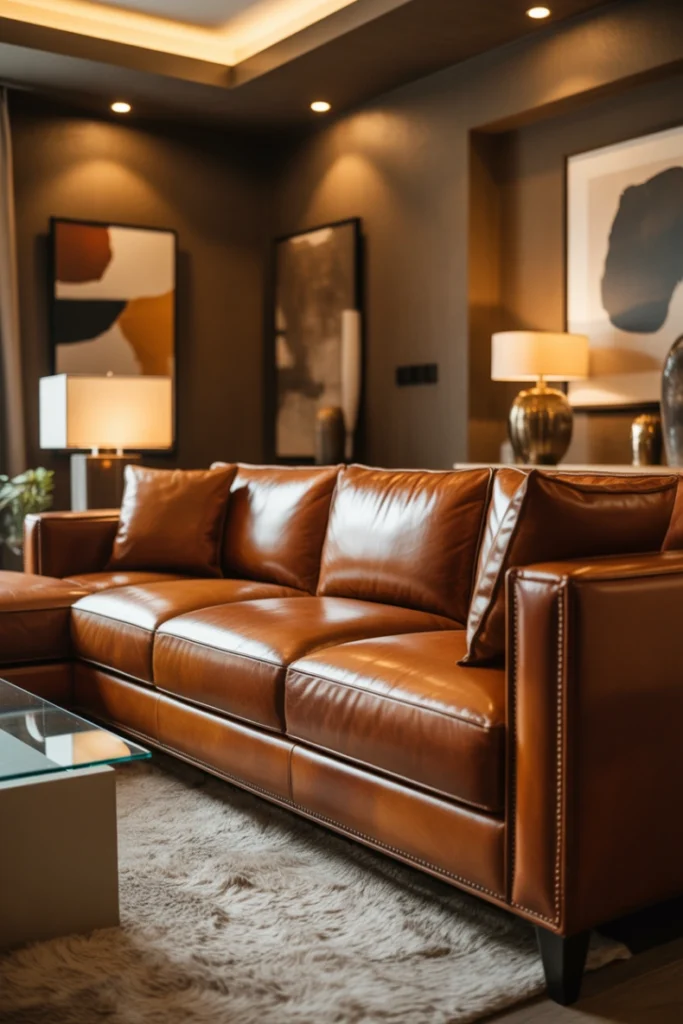
A leather sectional instantly adds sophistication and elegance to the living room. Whether you choose classic cognac brown, sleek black, or a bold contemporary color, leather gives the space a refined and timeless appearance. Leather sectionals are also durable, easy to wipe clean, and resistant to everyday wear, which makes them ideal for high traffic areas and family homes. Full grain and top grain leather age best, while bonded leather costs less but wears faster, so check the label before you buy.
To prevent the room from feeling too formal or heavy, mix the leather with soft textures. Add knit throws, fabric cushions, and a patterned rug in warm tones. Incorporating warm wood elements, such as a walnut coffee table or oak side tables, or modern metal accents in brass or matte black, balances the look further. In a bright room, a dark leather sectional creates contrast. In a dark room, choose a lighter tan or caramel leather to keep the space from feeling closed in.
Care matters with leather. Wipe it weekly with a dry cloth, clean spills quickly, and condition it every 6 to 12 months to prevent cracking. Keep leather out of direct sunlight, which fades color and dries the surface, and leave at least a few inches between the sofa and a radiator or fireplace. With simple care, a good leather sectional can look better after years of use than it did on delivery day.
7. Make a Bold Statement with a Colorful Sectional
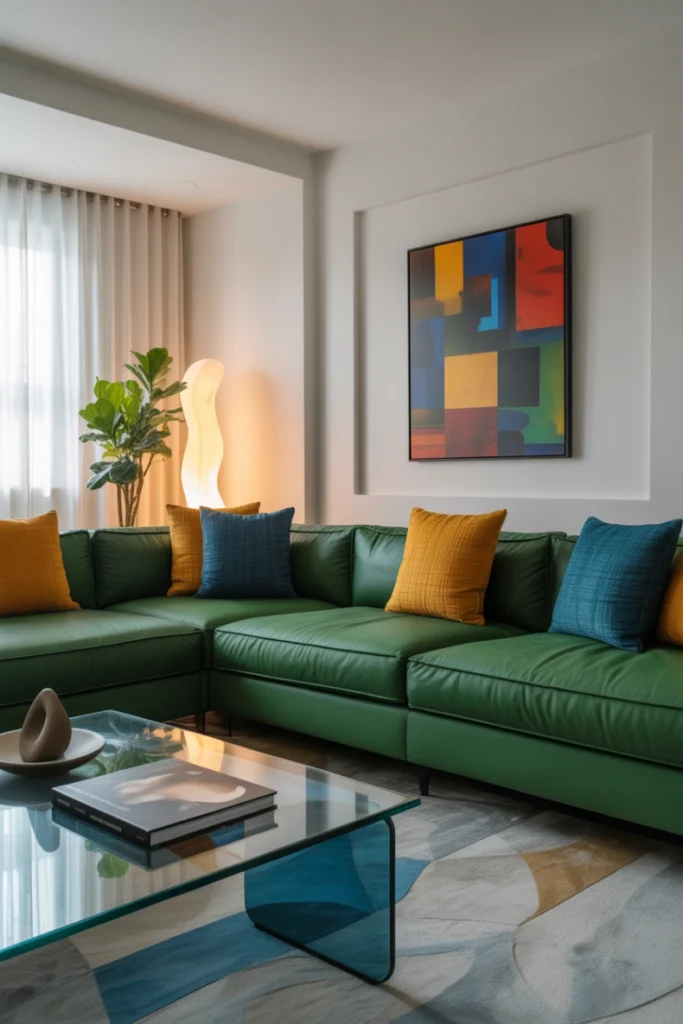
A bold colored sectional can instantly elevate your living room. Shades like emerald green, navy blue, mustard yellow, and burnt orange bring personality and vibrancy to the space. A colorful sectional works especially well in contemporary rooms where you want the sofa to act as the focal point. This approach adds energy, defines the design style, and makes the room memorable for guests.
To balance a bold color, keep the surrounding decor neutral or choose complementary tones. For emerald green, try cream walls, brass accents, and warm wood. For navy blue, try soft gray, white, and natural linen. For mustard or burnt orange, try charcoal, cream, and deep brown. Choose artwork, cushions, and rugs that enhance the sectional without competing with it, and repeat the sofa color in just one or two small accents, such as a vase or a throw, so the look stays intentional.
Before committing, test the color in your own light. Order fabric swatches and view them in morning and evening light, because a color that looks rich in a showroom can look much darker at home. If you are nervous about a strong color, choose a sectional in a deep, muted version of the shade, such as forest green instead of bright green, and keep the walls light. You get the statement without the risk of tiring of it quickly.
8. Use a Neutral Sectional for a Calm and Timeless Look
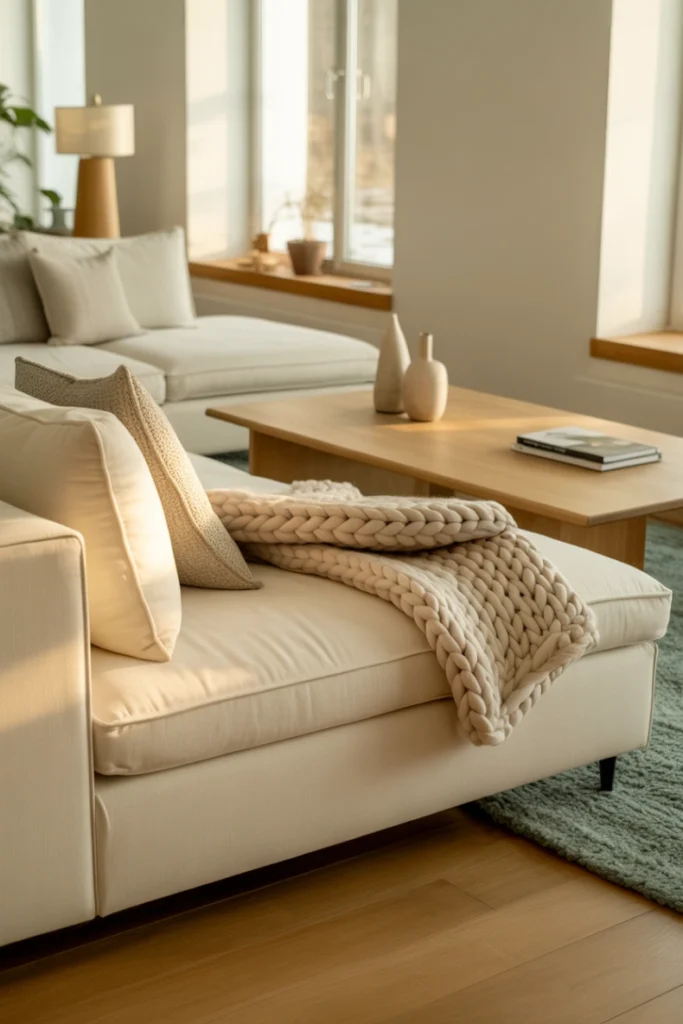
Neutral sectionals are incredibly versatile and timeless. Shades like beige, ivory, gray, and taupe blend seamlessly into any interior style. They create a calm environment and allow you to change your decor easily without clashing with the sofa. A neutral sectional also makes the space feel open and airy, which is especially helpful in smaller rooms or rooms with limited natural light.
With a neutral base, you can experiment with different textures, patterns, and accents. Add colorful cushions for spring and summer, then switch to deeper tones and chunky knits for fall and winter, all without buying new furniture. This idea is perfect for modern, minimalist, farmhouse, and Scandinavian inspired spaces. Keep the wall color within two shades of the sofa for a soft, layered look, or add contrast with a darker rug and dark wood furniture.
One practical tip is to choose a neutral with a warm or cool undertone that matches your flooring. A warm beige works with oak floors, while a cool gray works with concrete or gray washed wood. If you have pets or children, pick a mid tone neutral rather than bright white, and choose a washable, stain resistant fabric. A neutral sectional is not boring when the textures do the work, so mix linen, wool, cotton, and a touch of velvet.
9. Choose a Curved Sectional for a Soft, Elegant Layout
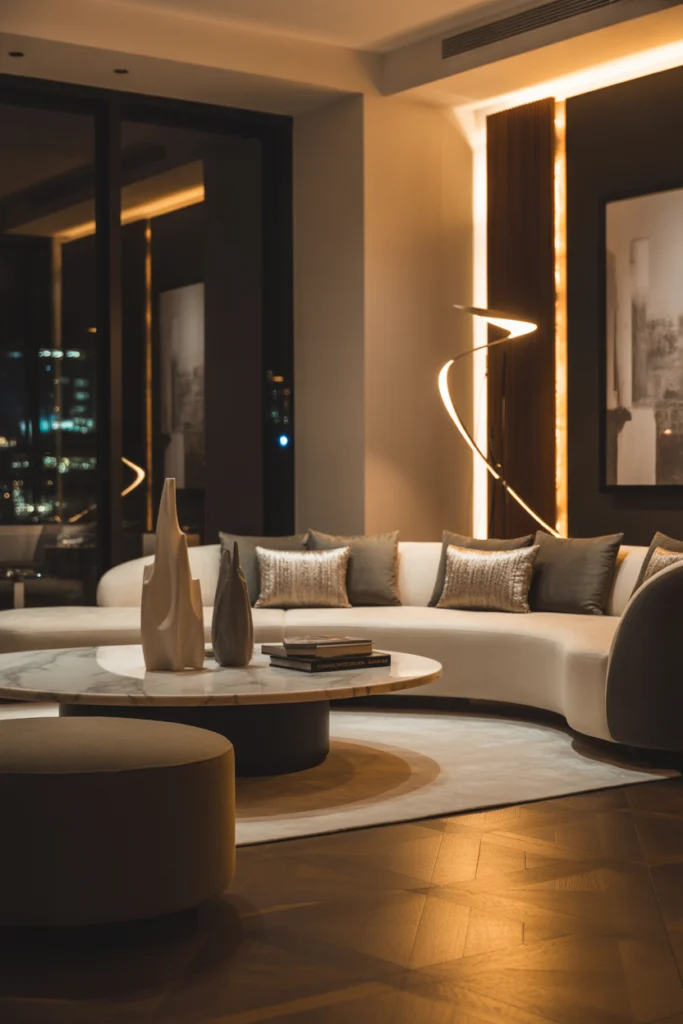
Curved sectionals add a subtle touch of elegance and sophistication. Their unique shape helps soften the room layout by breaking sharp angles and making the seating arrangement feel more inviting. This style works beautifully in modern, luxurious, and open concept living rooms where you want a striking centerpiece that still feels comfortable and social.
Because the curved shape naturally encourages conversation, it is ideal for entertaining. Pair it with a round coffee table to complement the flow, because a round table follows the curve and keeps walkways smooth. Add plush cushions, textured fabrics, and ambient lighting to enhance the luxurious feel. A curved sectional often measures 100 to 120 inches across, so leave at least 36 inches behind it if it floats in the room, and use a large round rug to ground the arrangement.
Curved sectionals need careful placement. Avoid pushing a curved back flat against a straight wall, because the gap looks awkward. Instead, float it slightly forward or place it to define a conversation zone in a large room. Keep side tables small and round, and avoid heavy rectangular furniture nearby, so the soft shape stays the star of the room.
10. Try a Small-Scale Sectional for Compact Spaces
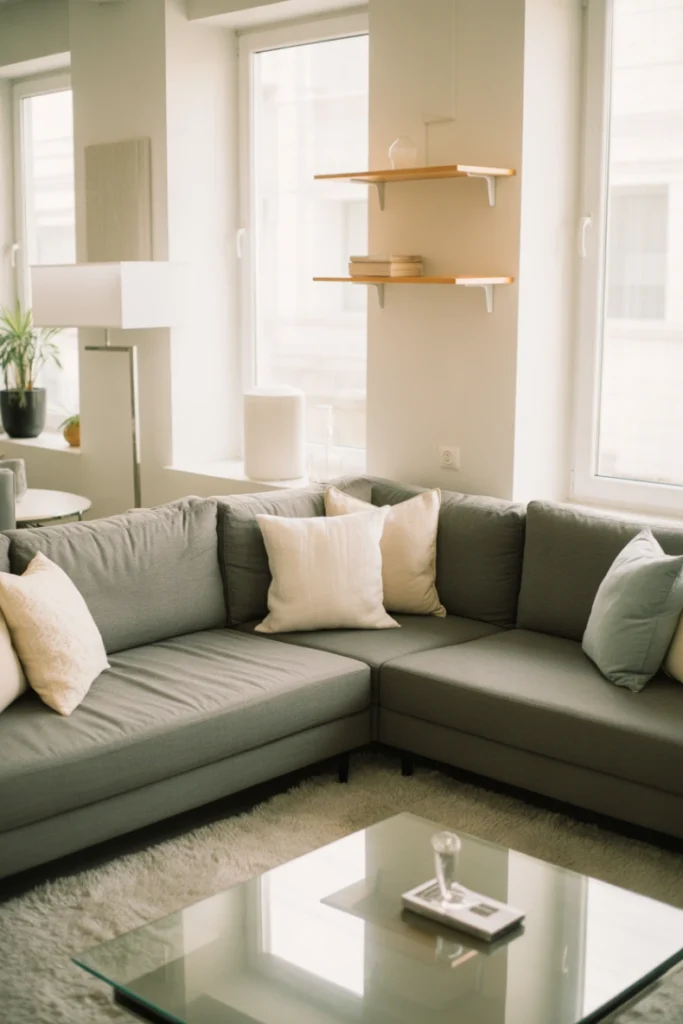
A small sectional is perfect for apartments, studios, and compact living rooms. It provides all the comfort of a larger sectional without overwhelming the space. By choosing a sleek design with narrow arms or raised legs, you can create the illusion of more space while maintaining a cozy atmosphere. Look for a total width of 78 to 90 inches, a depth of 34 to 38 inches, and legs at least 4 inches high so light and air pass underneath.
Keep the color scheme light to prevent the room from feeling cramped. Soft white, light gray, pale sage, and warm beige all help a small room feel larger. Add a simple rug that fits under the front legs of the sectional, and use wall mounted lighting or a slim floor lamp to free up floor space. A small scale sectional helps anchor the room while maximizing function, making it a great choice for minimal or urban layouts. For more compact room planning, see these small living room ideas for layout and storage tricks that pair well with a small sectional.
Avoid oversized cushions and heavy coffee tables in a compact setup. Choose a nesting table set or a C shaped side table that slides over the seat, so you get surface space without blocking movement. Measure your elevator, stairwell, and doorways before ordering, and consider a sectional that arrives in two or three pieces if access is tight.
11. Create a Living Room with a Sectional and Accent Chairs
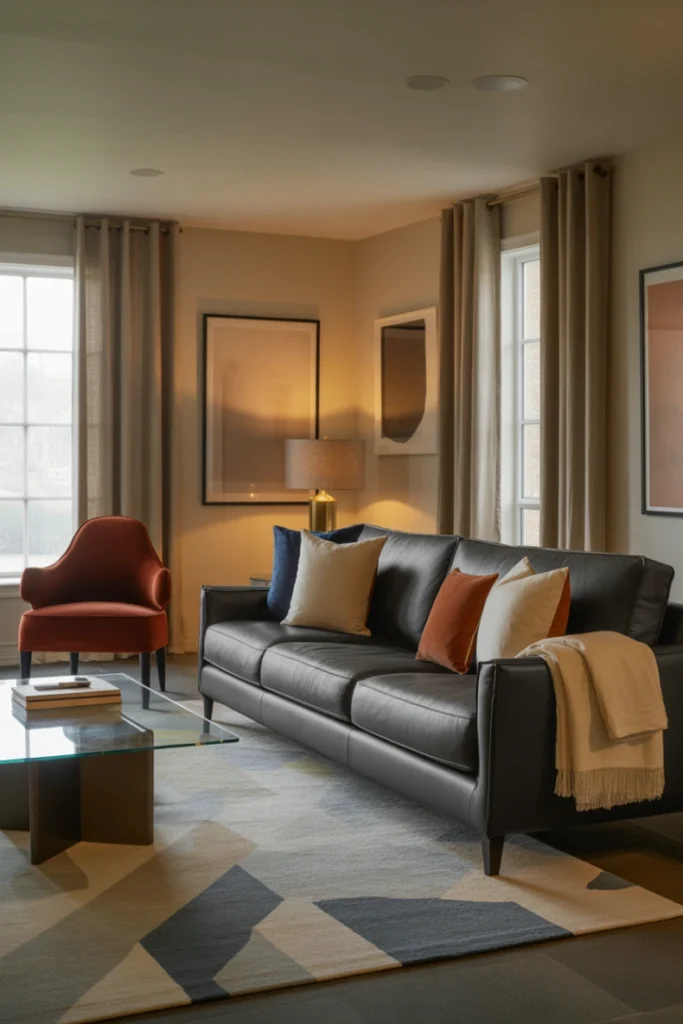
Pairing your sectional with accent chairs adds extra seating and enhances visual balance. The chairs introduce variety in shape, texture, and color, making the room feel more layered and designed. This setup works well for medium or large spaces where additional seating is needed without overcrowding, and it gives guests a choice between a deep sofa seat and a more upright chair.
Choose accent chairs that complement the sectional style. If the sectional is neutral, go bold with the chairs in a pattern, a rich color, or a distinct material such as rattan or velvet. If the sectional is colorful, keep the chairs subtle in cream, gray, or natural wood. Place chairs at a slight angle toward the sectional, about 30 to 45 degrees, so conversation feels natural, and leave 18 to 24 inches between chair and coffee table for legroom.
Scale matters. A chair seat height of 17 to 19 inches pairs well with most sectionals, and an arm height close to the sofa arm height keeps the arrangement visually calm. If floor space is tight, choose armless accent chairs or swivel chairs, which are easier to move and take up less visual space. Two matching chairs create symmetry, while two different chairs in the same color family create a collected, designer look.
12. Add an Oversized Ottoman to Replace Your Coffee Table
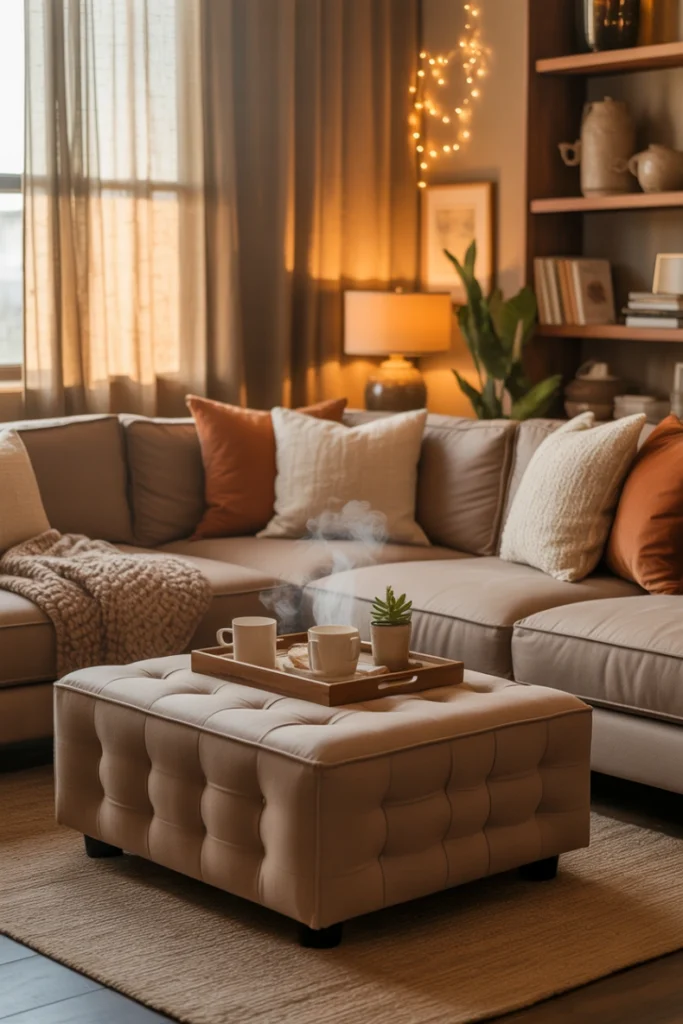
An oversized ottoman can be a beautiful and practical alternative to a traditional coffee table. It adds softness, extra seating, and even additional storage if you choose a lift top design. Using an ottoman also makes the living room feel warmer and more inviting, especially when paired with a cozy sectional, and it is safer for homes with small children because there are no sharp corners.
Size the ottoman to the sectional. A good rule is to choose an ottoman about two thirds the length of the sofa section it faces, and 18 to 22 inches high, close to seat height. Place a large tray on top for drinks and decor, which turns the soft surface into a stable table when you need it. Choose an ottoman fabric that complements your sectional, such as a textured weave with a smooth leather sofa, or velvet with a linen sofa, to maintain visual harmony.
For storage, a lift top ottoman hides throws, remote controls, board games, and chargers, which keeps the room tidy. If you often put your feet up, choose a firm ottoman with a flat top rather than a very soft, rounded one. This idea works well in family friendly spaces where comfort is a priority, and it pairs nicely with a soft rug that extends under both the sectional and the ottoman.
13. Use a Sectional to Define an Open-Concept Space
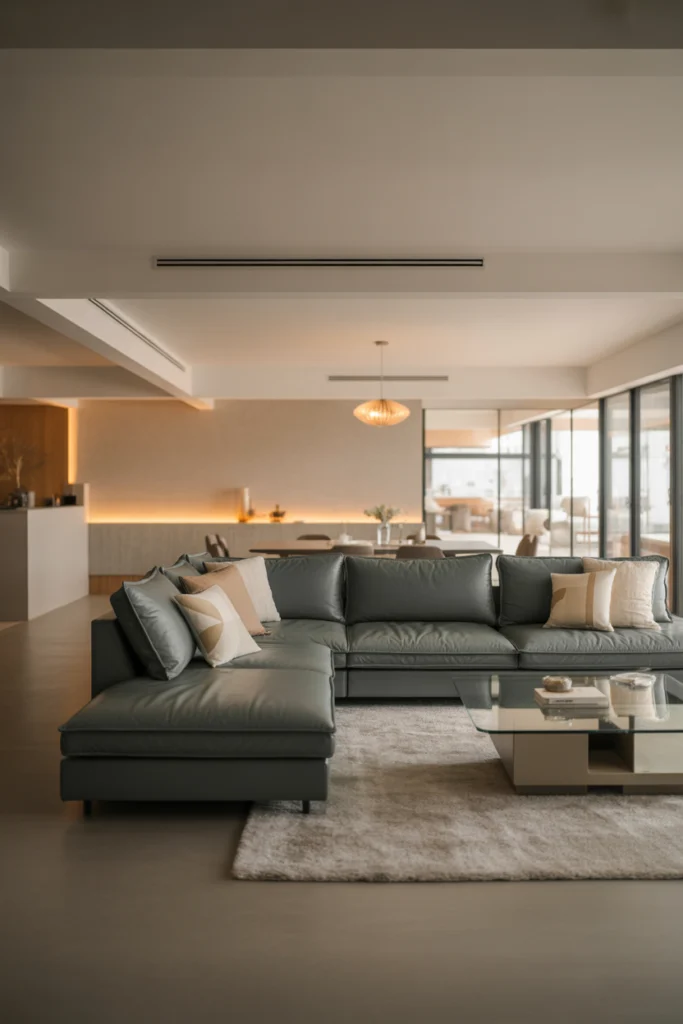
Sectionals are excellent for separating areas in open concept homes. By placing the back of the sectional toward the dining area or kitchen, you naturally create a division between spaces without adding walls. This layout keeps the room open while giving each area a clear purpose, so the living zone feels cozy and the dining zone still feels connected.
Choose a sectional with a clean silhouette and a finished back, because the back will be visible from the other zone. Add a rug for grounding, and place a console table behind the sofa with lamps, books, and a plant to make the back view attractive rather than blank. Use lighting to emphasize the separation, such as pendant lights over the dining table and a floor lamp in the living zone, so each area has its own glow in the evening.
Keep traffic paths clear. Leave at least 36 inches behind the sectional for a walkway to the kitchen or dining area, and avoid blocking that path with a side table or a plant stand. A low back sectional works best here, because a high back can act like a wall and break the open feeling. When the sectional back is neat and styled, the whole open plan room looks intentional from every angle.
14. Try a Floating Sectional in the Middle of the Room
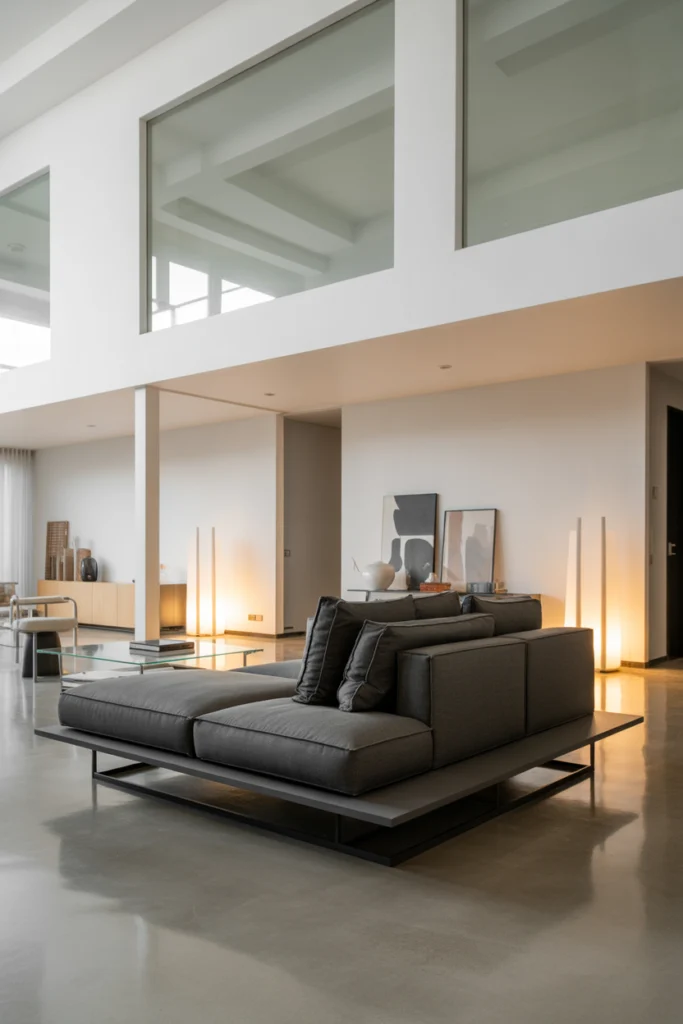
Floating your sectional away from the wall creates a more dynamic and intentionally designed layout. This approach works beautifully in spacious rooms and helps highlight the sectional as the focal point. It also allows you to place furniture behind the sofa, such as a console table, a bookshelf, or decorative shelving, which adds function without crowding the seating area.
To float a sectional well, you need room. Allow at least 30 inches of walkway behind it and 36 inches if that path leads to another room. Anchor the floating arrangement with a large rug that extends under the front legs and at least 12 inches beyond the sides. Use a console table behind the sofa to hide the back and to hold lamps, which also brings light into the center of the room rather than leaving it all on the walls.
Keep the surrounding decor simple to let the floating sectional shine. Use lighting to emphasize the openness of the space, and avoid tall bookcases right behind the sofa, which can make the arrangement feel boxed in. This layout creates an easy traffic flow and adds a modern, professional touch, especially in living rooms with a fireplace or a television on a wall opposite the floating sofa.
15. Add Storage Solutions Around Your Sectional
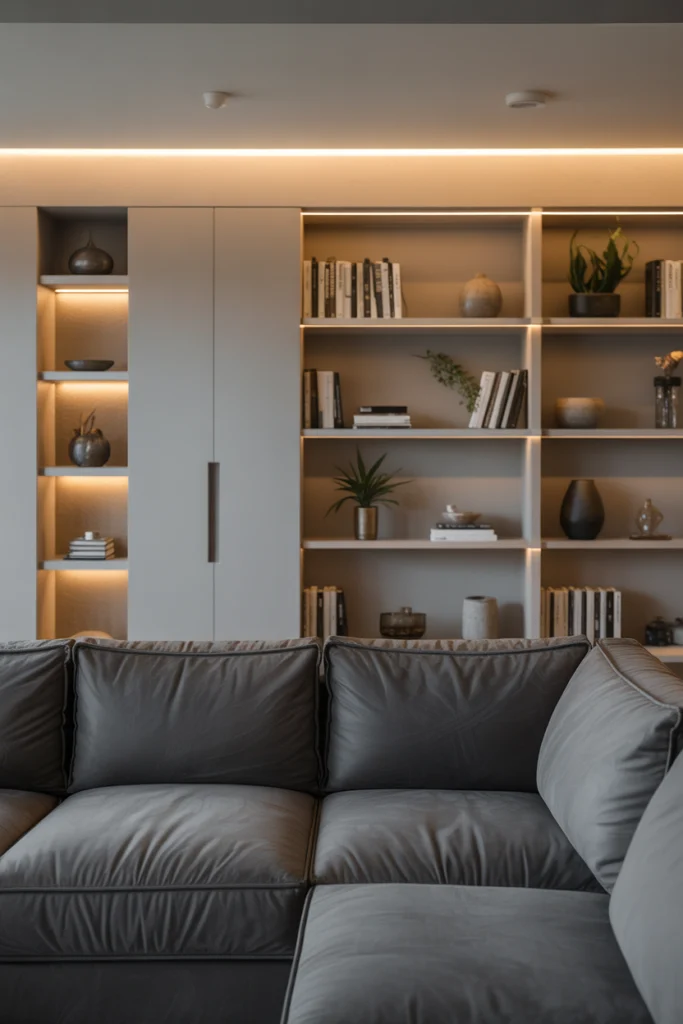
Integrating storage around your sectional maximizes function and organization. Use side tables with drawers, built in shelving, or a console table behind the sofa. These elements help keep the living room neat while providing convenient spaces for decor, books, chargers, and household items, and they stop clutter from collecting on the coffee table.
Choose storage that blends with your sectional style. Wood finishes bring warmth, while metal accents add a modern touch. A console table 30 to 36 inches high sits neatly behind most sectionals, and baskets underneath hold throws and magazines. Wall shelves above a side table use vertical space without taking floor space, and a storage ottoman doubles as seating and a hidden bin. In a small room, every piece should do two jobs, so prefer a side table with a drawer over a plain pedestal table.
Keep daily items close and seasonal items elsewhere. Remote controls, chargers, and current books belong in the side table drawer, while extra throws and board games belong in the ottoman or a closed cabinet. Label baskets if the household is large, and do a quick weekly reset so storage stays useful rather than becoming another clutter zone. This idea is especially useful in small living rooms where every inch counts.
16. Try a Sectional with Recliners
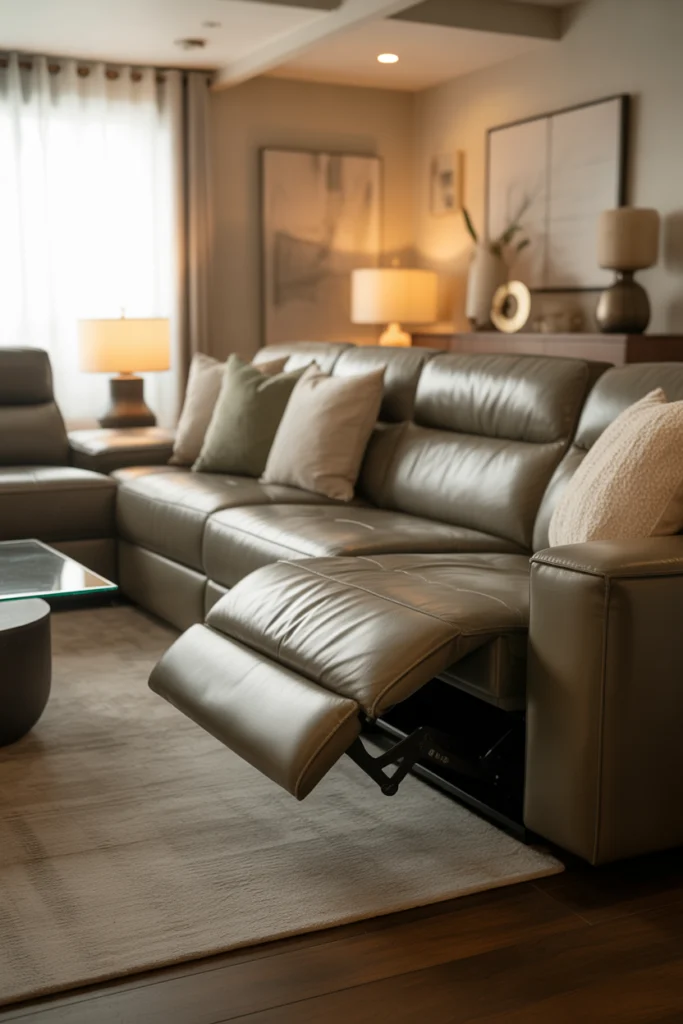
A sectional with built in recliners is perfect for families who prioritize relaxation and comfort. These sectionals make movie nights, reading sessions, and long evenings more enjoyable. The recliners offer versatility since each person can adjust their seating individually, which is ideal when family members have different comfort preferences.
Plan for recliner clearance before you buy. Most recliners need 4 to 8 inches behind the sofa for a wall hugger model, and up to 18 inches for a full recline model, so check the product specs and leave that gap. Power recliners need a nearby outlet, so plan cable routing under a rug or along a baseboard. To keep the room stylish, pair the sectional with modern decor and warm lighting, and add a soft rug and a sleek coffee table to balance the bulkier look of the recliners.
Choose the right material for recliner use. Leather and performance fabric both handle frequent reclining well, while delicate velvet can show wear at the footrest edge. Test the recliner mechanism in person if possible, and check the weight rating and warranty. A recliner sectional is a comfort first choice, so prioritize smooth operation and solid support over a very low price.
17. Create a Luxurious Look with Velvet Sectionals
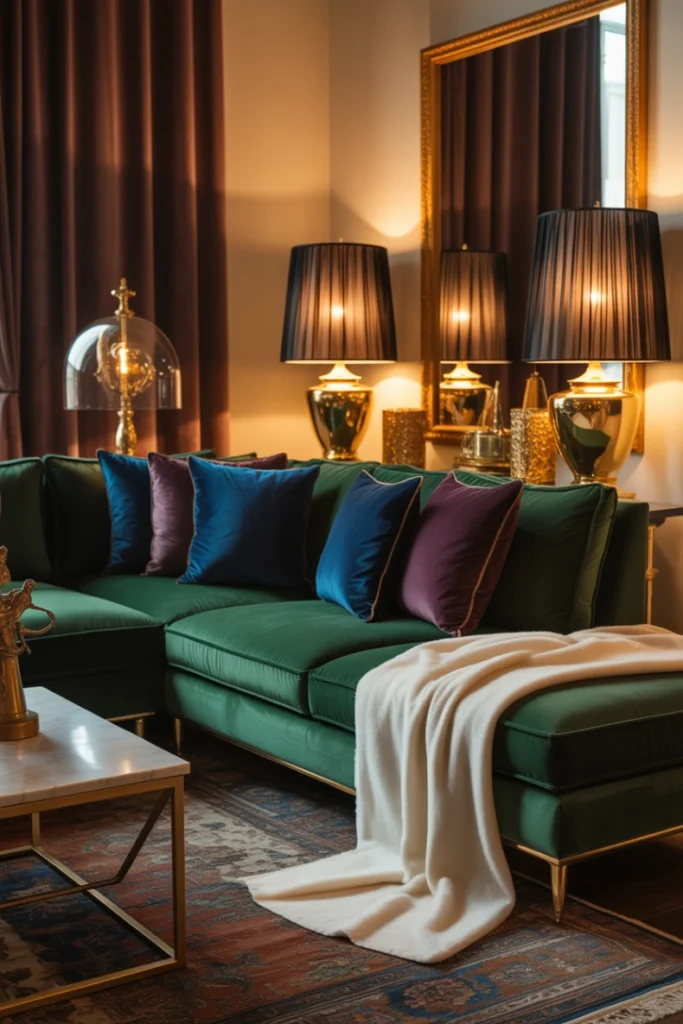
Velvet sectionals bring instant luxury and charm to any living room. The rich texture adds depth and elegance, making the space feel warm and inviting. Velvet also photographs beautifully, which makes it popular in modern and upscale interiors, and it catches light in a way that flat fabrics cannot, so the sofa changes subtly through the day.
Choose jewel tones like emerald, sapphire, or burgundy for a dramatic effect, or choose blush, taupe, or dusty blue for a softer luxury. Pair the sectional with metallic accents in gold or brass, soft lighting, and a plush rug to complete the look. Velvet sectionals work well in both cozy and glamorous interiors, but they need a balanced room, so keep other textures simple and let the velvet lead. A marble or glass coffee table adds contrast without competing with the soft fabric.
Care for velvet with a soft brush or a vacuum with an upholstery attachment, and blot spills immediately rather than rubbing. Rotate cushions regularly to keep wear even, and keep velvet out of strong direct sunlight to prevent fading. If you have pets, choose a short pile velvet and keep a lint roller nearby, because pet hair shows more on velvet than on a textured weave.
18. Incorporate Natural Elements with a Woven or Linen Sectional
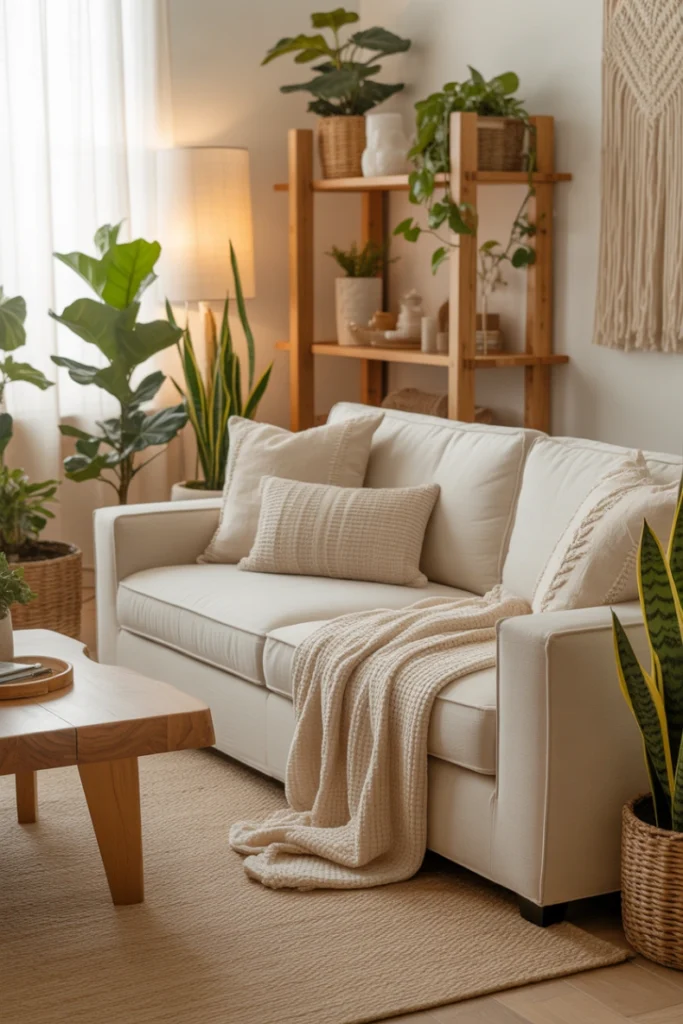
A woven or linen sectional adds a natural, organic feel to the living room. These fabrics bring softness and texture while maintaining a relaxed, earthy aesthetic. This style fits well into bohemian, coastal, farmhouse, and Scandinavian interiors, and it pairs naturally with plants, wood, and woven baskets.
Pair natural fabrics with wooden tables, woven baskets, plants, and neutral toned decor. A jute or sisal rug, a rattan side table, and linen cushions in cream, sage, and clay create a calming space inspired by nature. Keep the palette warm and earthy, with one green accent from plants, and avoid very shiny metals, which can clash with the soft, matte look of linen. This idea works beautifully for homes looking for warmth and simplicity.
Linen wrinkles and softens with use, which is part of its relaxed charm, but it needs a little care. Choose a linen blend with cotton or polyester for better durability and less wrinkling, and pick removable covers if possible so you can wash them. In a sunny room, linen fades slowly, so rotate cushions and keep the sofa out of harsh midday sun. The result is a room that feels calm, breathable, and easy to live in.
19. Try a Dark Sectional for Depth and Drama
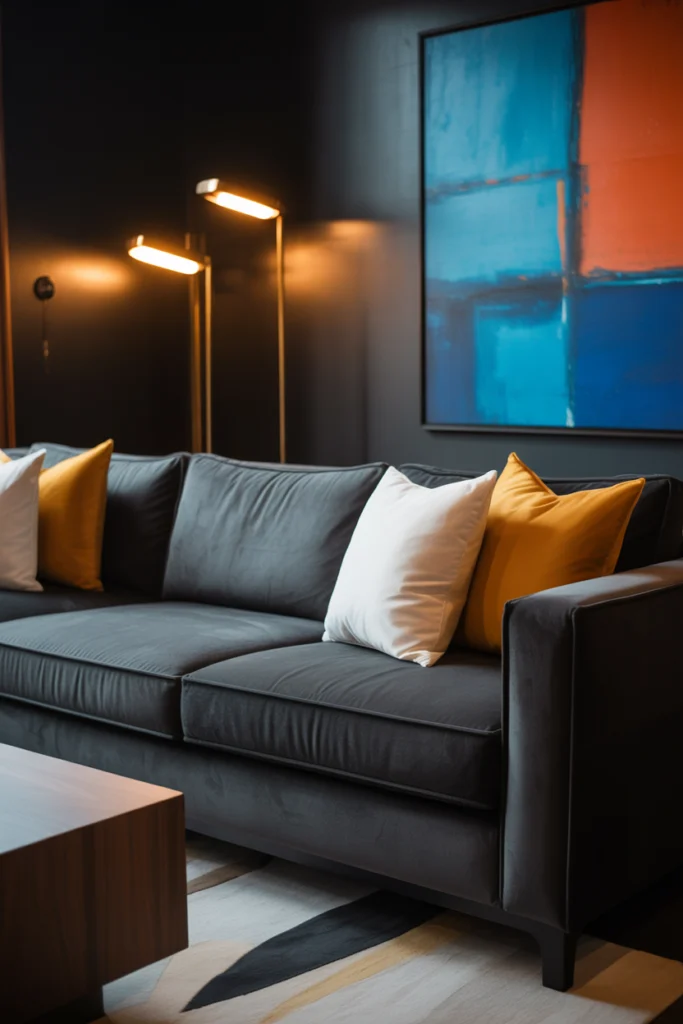
A dark sectional in charcoal, navy, or deep brown adds boldness and sophistication. It creates contrast in bright or neutral rooms and becomes a striking focal point. Dark tones work well in modern and contemporary designs and help anchor the space, especially in large rooms where a light sofa might look washed out. For a deeper color story, see these dark green living room ideas, which show how dark seating pairs with walls, rugs, and lighting.
To keep the room balanced, combine the dark sectional with lighter accessories, soft rugs, and bright artwork. A cream or light gray rug, pale cushions, and a light wood coffee table lift the dark base, while good lighting softens the deep tones and enhances their richness. Add at least three light sources, such as a ceiling light, a floor lamp, and a table lamp, so the dark sofa does not create a shadowy corner in the evening.
Dark sectionals hide everyday marks better than light ones, which makes them practical for busy homes, but they do show dust and pet hair, so a quick weekly vacuum helps. Pair charcoal with white walls and black accents for a crisp modern look, pair navy with brass and cream for a classic look, and pair deep brown with tan leather and warm wood for a rich, earthy room. This idea adds drama without overwhelming the room when light and contrast are planned.
20. Choose a Multi-Level or Tiered Sectional
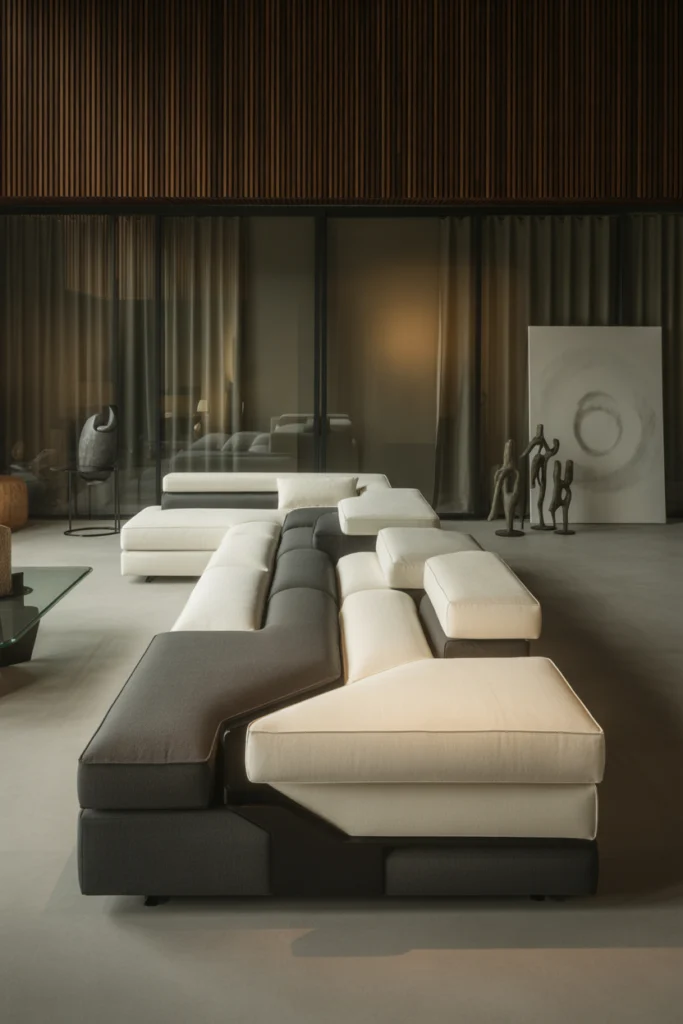
A multi-level sectional has varied seat heights or extended chaise areas that create a unique silhouette. This design is perfect for modern homes that want a more artistic and unconventional layout. It adds visual interest and enhances comfort with differently sized seating areas, so one side can be a deep lounge seat while the other side stays upright for conversation.
Keep surrounding decor simple to highlight the sectional unique shape. Neutral tones, soft lighting, and a modern rug complete the look, and a low, simple coffee table works better than a tall or ornate one, which would compete with the tiered profile. Because the shape is already a statement, avoid busy patterns on nearby cushions and choose solid colors or subtle textures instead.
Before buying a tiered design, sit on every level. A seat that looks striking but feels awkward will not get used. Check that the lower level still supports your back, and that the higher level is not too high for shorter family members. Multi-level sectionals suit open, modern rooms with high ceilings best, where their sculptural shape has space to breathe.
21. Style Your Sectional with Layered Textures
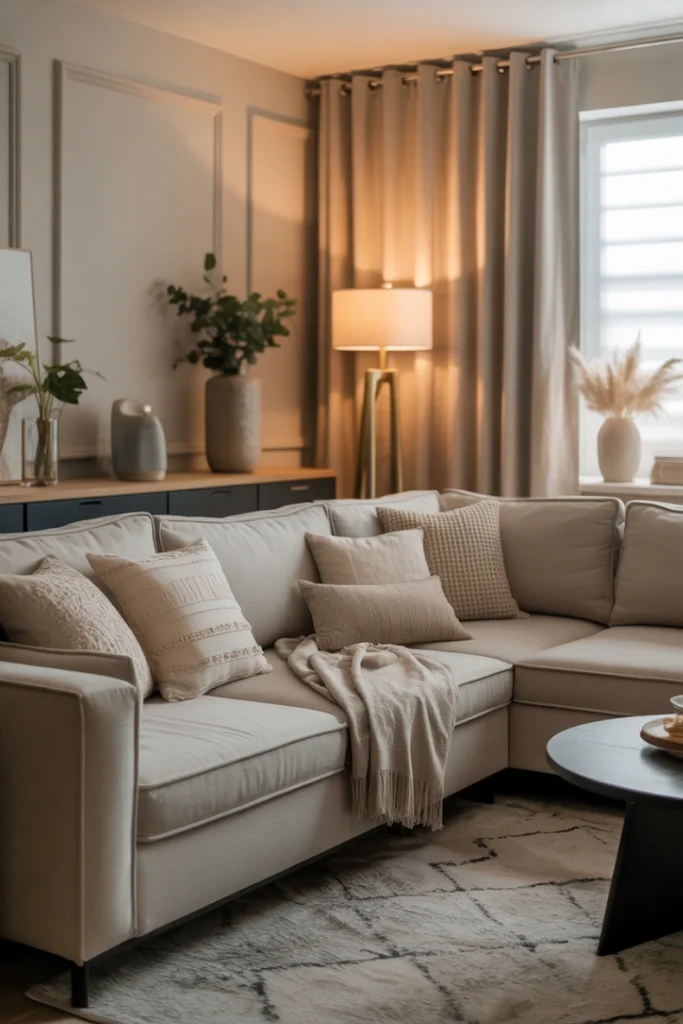
Layering textures is one of the easiest ways to upgrade the look of your sectional. Combine soft pillows, chunky knitted throws, velvet cushions, and textured rugs to add depth and personality. This makes the living room feel warm and inviting without changing the furniture, and it is the fastest refresh you can do for a new season.
Choose textures that complement your sectional color and style. Incorporate a mix of materials like linen, wool, cotton, faux fur, and silk, but limit the palette to three or four colors so the mix stays calm. A good formula is one chunky knit, one smooth velvet, one natural linen, and one patterned cushion. Place larger cushions at the back, medium cushions in front, and one small lumbar cushion at the front center for a styled, layered look.
Change textures with the seasons for an easy update. Use light cotton and linen in summer, then swap in wool, faux fur, and velvet in winter. Keep a basket near the sectional for the off season pieces, and rotate the rug texture too if you can, with a flat weave in summer and a plush pile in winter. Layered texture works for any interior style and instantly enhances comfort and visual appeal.
Conclusion
Sectional living rooms offer endless possibilities, from cozy and compact layouts to luxurious and statement making designs. The right sectional can completely transform the room by improving comfort, function, and overall style. Whether you prefer minimal, bold, natural, or sophisticated interiors, there is a sectional style that fits your taste and lifestyle. By choosing the right layout, accessories, textures, and colors, you can create a living room that feels welcoming, balanced, and beautifully designed.
These 21 sectional living room ideas provide inspiration for every type of home, helping you shape a space that is both stylish and functional. Start by measuring your room and marking the sectional footprint with painter tape on the floor, then test the walkways before you order. Choose a fabric for your real daily life, not just for photos, and layer lighting, rugs, and cushions around the sofa once it arrives. With that simple order, layout first, fabric second, styling third, your sectional will anchor a room you enjoy every day.
Frequently Asked Questions
What size sectional should I choose for my living room?
Measure the longest wall and the available floor space first, then leave at least 30 inches of walkway around the seating. For rooms under 150 square feet, choose a sectional under 90 inches wide. For rooms over 250 square feet, a sectional 110 to 130 inches wide usually anchors the space well. Always check door widths, hallway turns, and chaise depth before ordering.
Should the sectional go against a wall or float in the room?
Against a wall works best in small rooms and corner layouts, because it saves floor space and creates a clear gathering zone. Floating works best in large or open plan rooms, where the sectional can define the living area and leave a walkway behind it. If you float a sectional, use a rug and a console table behind it so the back view looks finished.
What is the best fabric for a sectional with kids or pets?
Performance fabric, top grain leather, and tight weave linen blends are the most practical choices, because they resist stains and clean more easily. Choose a mid tone color rather than bright white, pick removable cushion covers when possible, and avoid delicate velvet or light silk in high traffic family seating. A washable throw over the most used seat adds extra protection.
How far should a coffee table be from a sectional?
Place the coffee table 16 to 18 inches from the front edge of the seat. This distance lets you set down a drink comfortably while leaving room to stand up and walk past. For a chaise sectional, a round table often works better than a long rectangular table, because it keeps movement around the chaise easy.
How do I style a sectional without making the room look cluttered?
Start with three cushion textures and two or three colors, then add one throw and one rug. Keep side tables to one or two pieces, use a tray to group small items on the coffee table, and leave some empty surface space. If the room still feels busy, remove one decor item at a time until the sectional, not the accessories, is the clear focal point.
More Ideas You Will Love
 13 DIY Halloween Room Decor Ideas for a Cozy Aesthetic
 14 Minimalist Summer Home Tips to Declutter and Brighten
 23 Small Apartment Living Room Ideas for Cozy & Functional Spaces
 14 Yard Landscaping Ideas: Transform Your Outdoor Space Beautifully
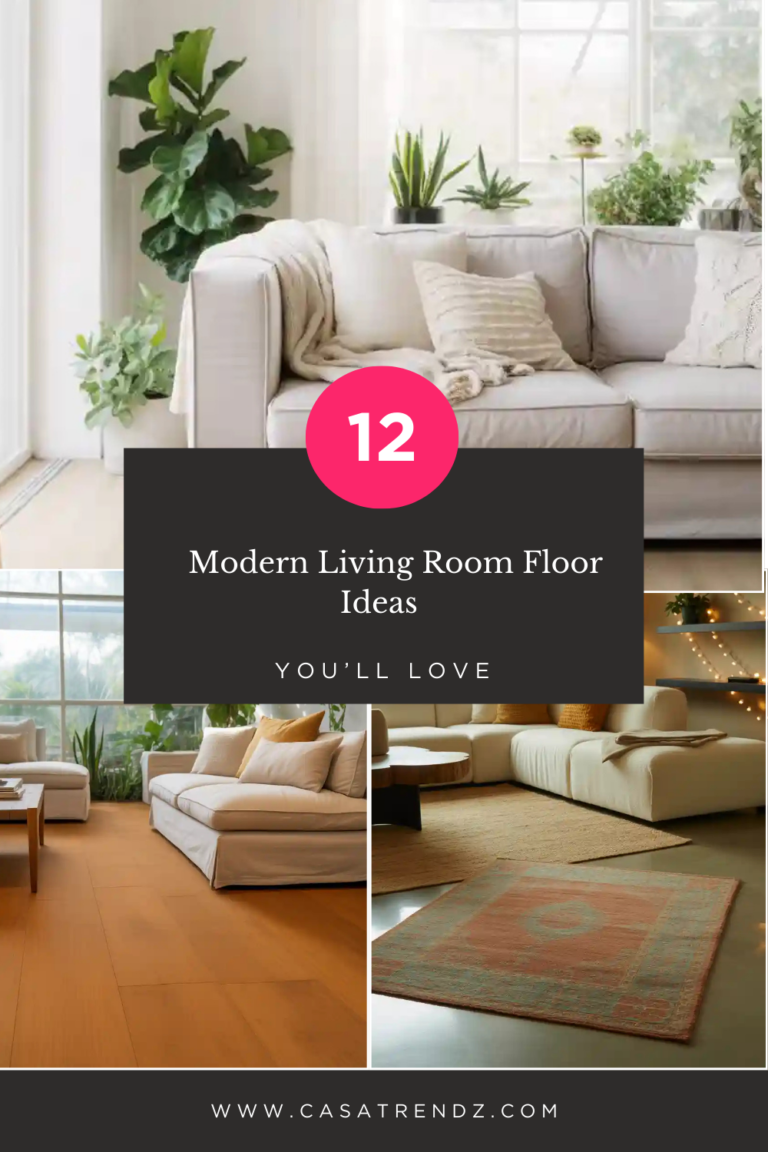 12 Modern Living Room Floor Ideas You’ll Love
 21 Contemporary Living Room Ideas for Modern & Functional Style