
20 Men’s Bedroom Ideas That Are Modern, Masculine & Stylish


A good men’s bedroom does more than look sharp in a photo. It is the room where you start and end every day, so it has to support real life: deep sleep, easy mornings, a place to charge your phone, a chair you actually sit in, and storage that keeps clutter out of sight. The best rooms in this guide are not built around one dramatic piece. They are built around a clear color palette, honest materials, and furniture sized correctly for the space.
The ideas below cover every starting point, from a raw industrial loft to a calm Scandinavian retreat and a plush hotel style room. You do not need to copy any look exactly. Pick one anchor style, then borrow details from two or three others. If you like clean lines and quiet color, start with the minimalist and monochrome ideas and add warmth with wood and texture. If you like drama, start with a dark wall color and balance it with lighter bedding and warm light. For more current room inspiration, see these modern bedroom ideas alongside the styles here.
Before you buy anything, measure your room and your bed. A queen bed needs about 60 inches of width and 80 inches of length, plus at least 24 inches of walking space on each side if you can manage it. Choose your wall color first, then bedding, then lighting, then art. That order keeps the room feeling intentional instead of assembled from random sale items, and it helps you avoid the most common mistake: too many competing colors and finishes in one small space.
1. Industrial Loft Style Bedroom
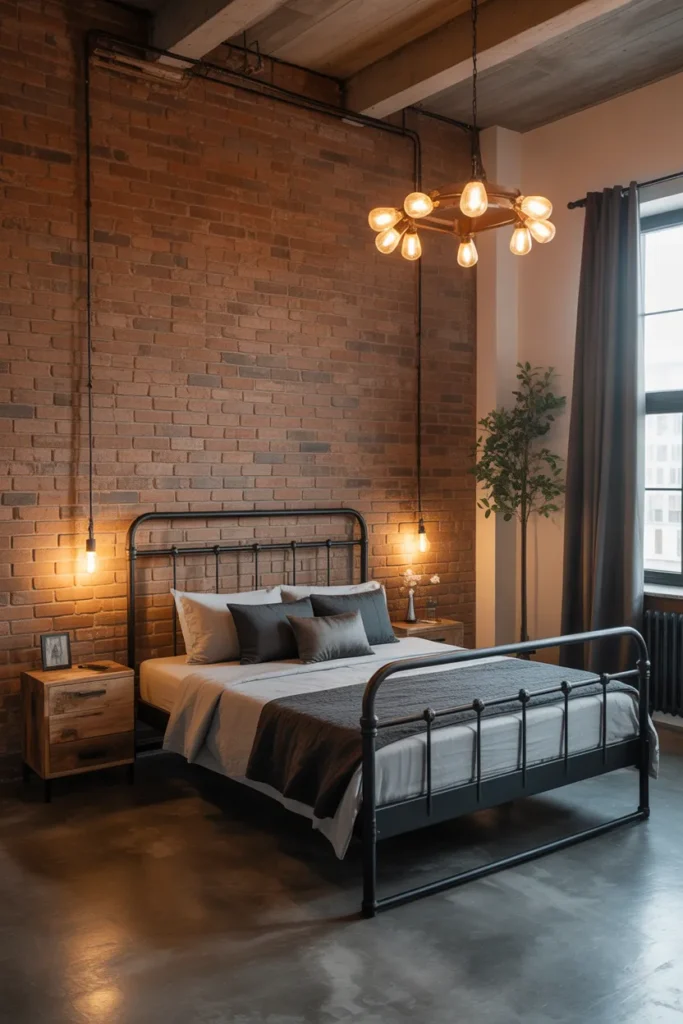
Industrial style works because it mixes raw and refined surfaces. Start with one honest material as the hero: exposed brick, a concrete look wall, blackened steel, or reclaimed wood. A brick accent wall behind the bed gives instant character, and you do not need to cover every wall to get the effect. Keep the remaining walls in warm white, soft gray, or greige so the room still feels like a bedroom and not a warehouse.
Choose furniture with simple, strong shapes. A low platform bed in dark wood or black metal, a nightstand with a steel frame, and open pipe shelving all fit the look. Add a rug at least 8 by 10 feet under a queen bed so your feet land on softness in the morning and the hard floors feel less echoing. Edison style bulbs in a black metal pendant or a cage lamp add warm light, but keep the bulbs dimmable so the room can shift from bright daytime to a relaxed evening glow.
Soften the hard edges with leather and fabric. A cognac leather chair, a charcoal wool throw, and off white or stone linen bedding stop the room from feeling cold. Hang one large black and white photograph or a vintage style map instead of many small frames. In a small room, skip the full brick wall and use industrial accents only: a metal bed frame, black hardware, and one concrete look planter or side table.
2. Minimalist Black and Gray Bedroom
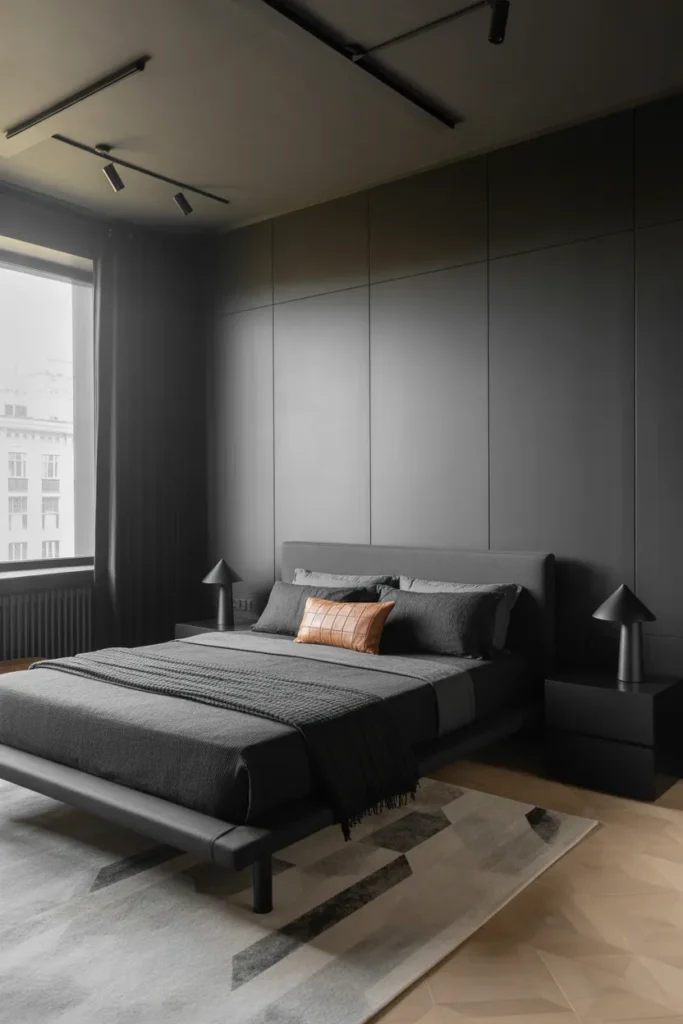
Black and gray minimalism is about editing, not emptiness. Choose three tones and repeat them: a deep charcoal for the bed frame or one accent wall, a mid gray for bedding and curtains, and a light gray or white for sheets and walls. This limited palette makes the room feel calm and orderly, and it lets texture do the talking instead of color. Keep furniture low and straight lined, with closed storage so cables, chargers, and laundry stay hidden.
Texture is what stops this palette from feeling flat or cold. Layer a matte black lamp, a charcoal knit throw, gray linen or cotton bedding, and a low pile rug in a slightly lighter gray. A single piece of abstract art in black, white, and gray is enough on the main wall. If the room feels too stark, add one warm element: a walnut tray on the dresser, a wooden bench at the foot of the bed, or warm white bulbs at 2700K instead of cool daylight bulbs.
For a smaller space, keep the darkest color on furniture and bedding rather than on all four walls. Paint one wall charcoal if you want depth, but keep the ceiling and the other walls light so the room does not close in. This style suits busy schedules because it is easy to keep tidy: fewer objects, one laundry basket with a lid, and a nightstand with a drawer for everything you reach for at night.
3. Dark and Moody Atmosphere
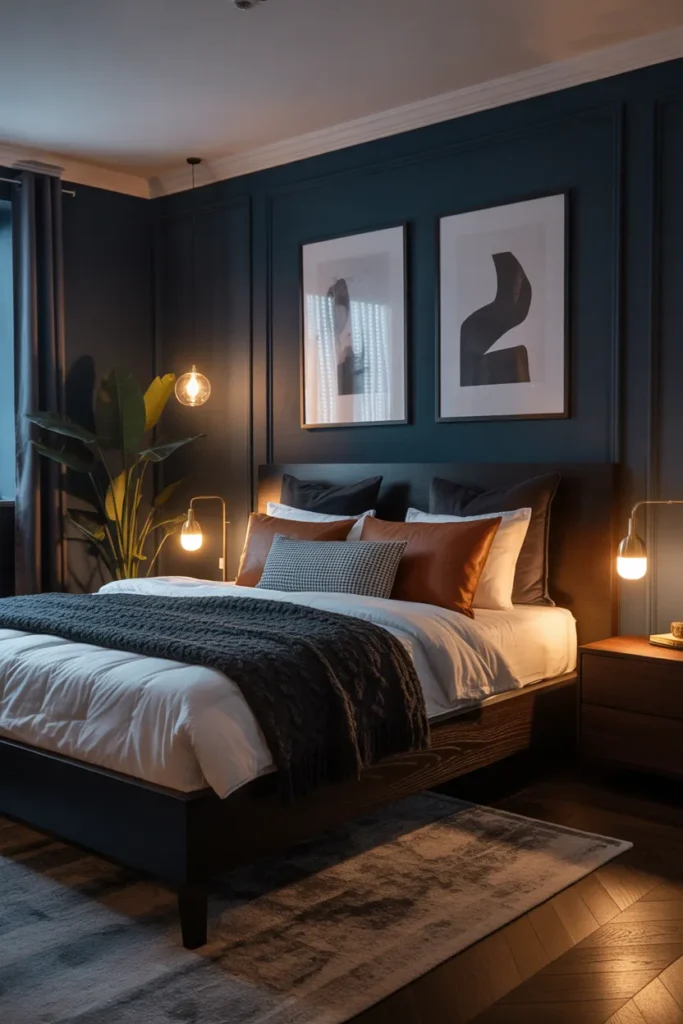
Dark walls in navy, charcoal, or deep forest green create an intimate room that feels grounded and masculine, especially in the evening. The trick is contrast and light. Paint the wall behind the bed in your darkest color and keep the other walls one or two shades lighter, or use the dark color on all walls but add bright white ceilings and trim. Warm lighting is essential: aim for table lamps and wall sconces at 2700K rather than a single harsh ceiling light.
Choose furniture with strong silhouettes so it does not disappear into the dark walls. A dark wood bed frame, a leather accent chair in cognac or black, and brass or gunmetal hardware all stand out beautifully. Layer lighter textiles on top: crisp white or cream sheets, a light gray duvet cover, and off white curtains that soften the window wall. A mirror opposite the window bounces daylight around the room during the day.
Keep the floor lighter if you can. A natural wood floor or a large light rug prevents the room from feeling heavy from top to bottom. Add two or three metallic accents only, such as a brass lamp base, a framed print with a thin gold frame, and a metal tray. Any more and the room starts to look busy. This look works best when you commit to it: one dark color, repeated with confidence, beats five dark colors competing for attention.
4. Scandinavian Men’s Bedroom
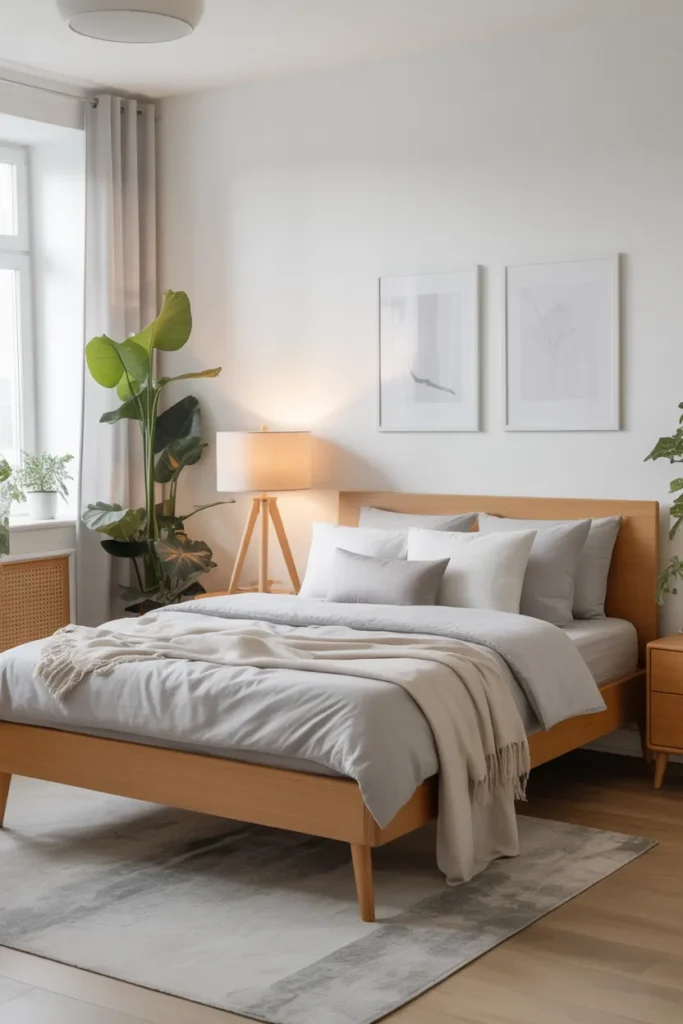
Scandinavian design is built on light, function, and natural warmth. Start with white or pale warm gray walls, light wood furniture in oak or ash, and simple bedding in white, beige, or soft gray. The room should feel bright even on a cloudy day, so keep window treatments sheer or light filtering rather than heavy blackout curtains, unless you need them for sleep and can layer them behind a sheer panel.
Texture replaces decoration here. Add a chunky wool throw at the foot of the bed, a knitted cushion or two, and a plush rug beside the bed in cream or light gray. Indoor plants make a big difference: a fiddle leaf fig in a corner, a snake plant on the dresser, or trailing pothos on a shelf adds life without clutter. Choose planters in terracotta, matte white, or natural wood to stay inside the palette.
Storage should be simple and closed. A low dresser with clean handles, a wardrobe with flat doors, and one open shelf for books or a speaker are enough. If your room is small, this style is a smart choice, and these small bedroom ideas show how the same light palette and low furniture can make a tight room feel larger. Keep art minimal: one large landscape print or a pair of simple line drawings above the bed.
5. Leather Accents for a Masculine Touch
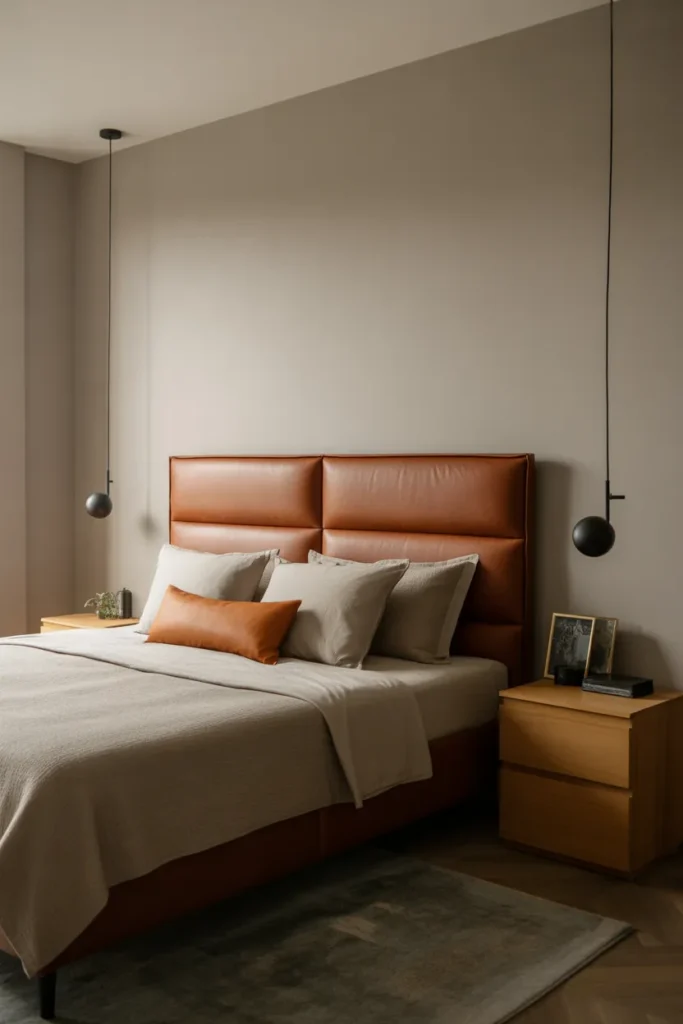
Leather adds instant warmth and character, and it ages well when you choose the right piece. A leather headboard is the easiest starting point because it anchors the whole bed wall. Rich brown leather suits warm palettes with wood and cream, while black leather suits cooler rooms with gray, white, and metal. If a full leather bed is out of budget, start with one accent chair, a leather bench, or leather pulls on a dresser.
Balance leather with soft textiles so the room does not feel hard or heavy. Pair a leather headboard with smooth cotton sheets, a cotton or linen duvet, and a wool throw. The contrast between the smooth, structured leather and the soft bedding is what makes the room feel inviting. Rustic wood nightstands, a metal reading lamp, and a woven rug complete the look without adding another strong material.
Care matters with leather. Keep it out of direct sunlight where possible, wipe it with a dry cloth weekly, and condition it every six to twelve months with a product made for your leather type. Avoid placing a leather chair right beside a radiator or a sunny window, since heat and sun dry and crack the surface over time. One or two leather pieces are enough: a headboard plus a chair, or a chair plus a bench, keeps the look refined.
6. Sports-Themed Men’s Bedroom
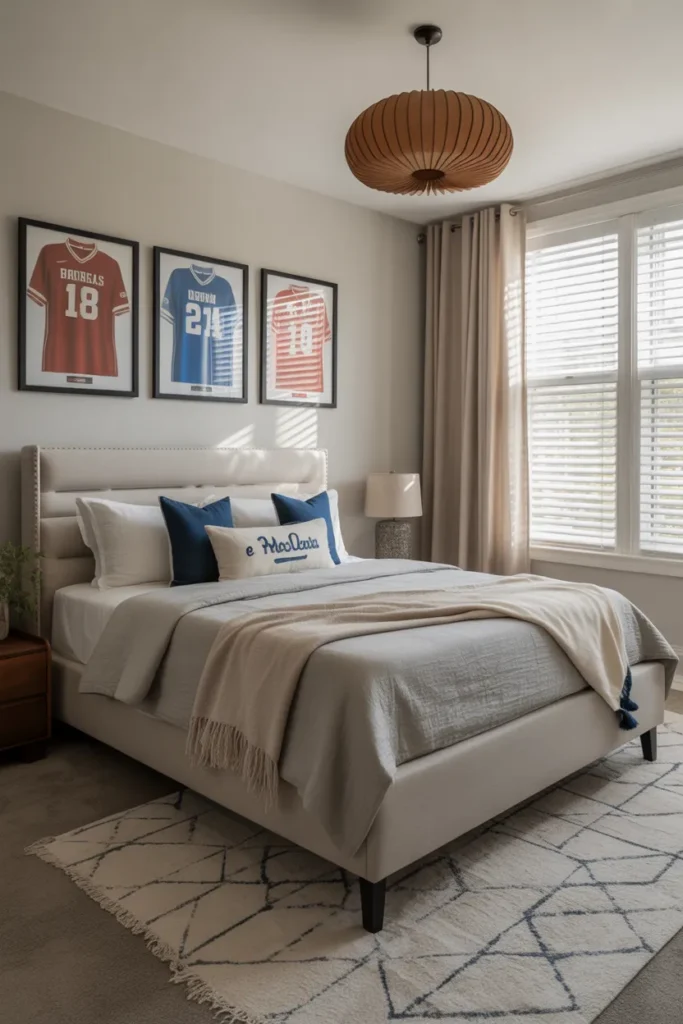
A grown up sports bedroom celebrates the game without turning the room into a fan shop. Choose one sport or one team as the theme, then use it sparingly. A framed jersey in a clean black frame, a large black and white action photograph, or a vintage style poster above the dresser all read as intentional decor. Keep the base palette neutral: white, gray, navy, or charcoal walls with wood or black furniture.
Use team colors as accents, not as wall paint. A throw pillow, a blanket, or a desk chair in the team color gives you the reference without overwhelming the room. Display memorabilia in one place, such as a single floating shelf with two or three items, rather than scattering balls, caps, and programs around the room. A sleek desk, minimal shelving, and one statement light keep the room feeling adult and polished.
If you collect more items than you can display well, rotate them seasonally. Keep the best three pieces on show and store the rest properly. That way the room stays calm and the displayed items actually get noticed. For a bedroom that doubles as a home office or gaming space, keep the sports display on the bed wall and the work zone clean and separate, so neither area fights the other.
7. Rustic Cabin-Inspired Bedroom
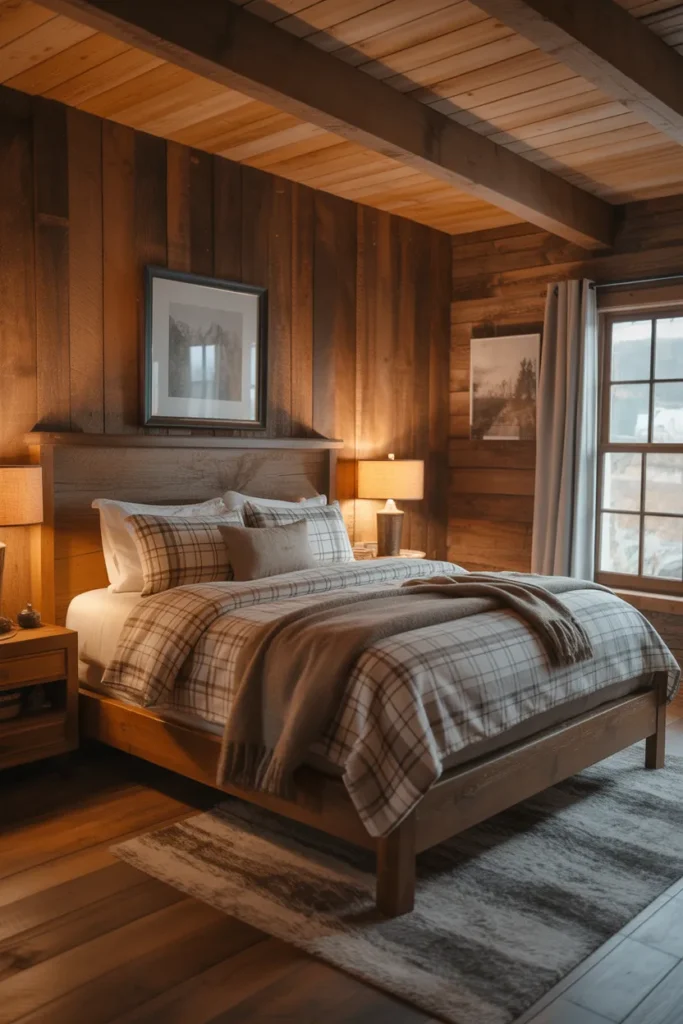
Rustic cabin style brings the outdoors inside through wood, stone, and earthy color. Start with a wooden bed frame in pine, oak, or reclaimed timber, then add plaid or checked bedding in red, green, or navy with cream. A stone look accent wall, a wood beam shelf, or a chunky wooden bench adds texture without a full renovation. Warm lighting from table lamps with fabric shades is far more cabin like than bright ceiling lights.
Mix cabin elements with modern pieces so the room does not feel like a themed set. Pair the wooden bed with a simple black metal lamp, a plain linen curtain, and one piece of modern abstract art. Keep the palette to three or four earthy tones: warm brown, cream, forest green or deep red, and charcoal. A faux fur throw or a thick wool blanket at the foot of the bed adds the cozy layer this style needs.
In a city apartment, you can get the cabin feeling with smaller moves: a wood headboard, a plaid throw, a woven basket for blankets, and warm bulbs. Avoid filling every surface with rustic objects. One wooden tray on the dresser, one lantern style lamp, and one nature photograph are enough to set the mood while the room stays easy to clean and live in.
8. Navy and Wood Modern Bedroom
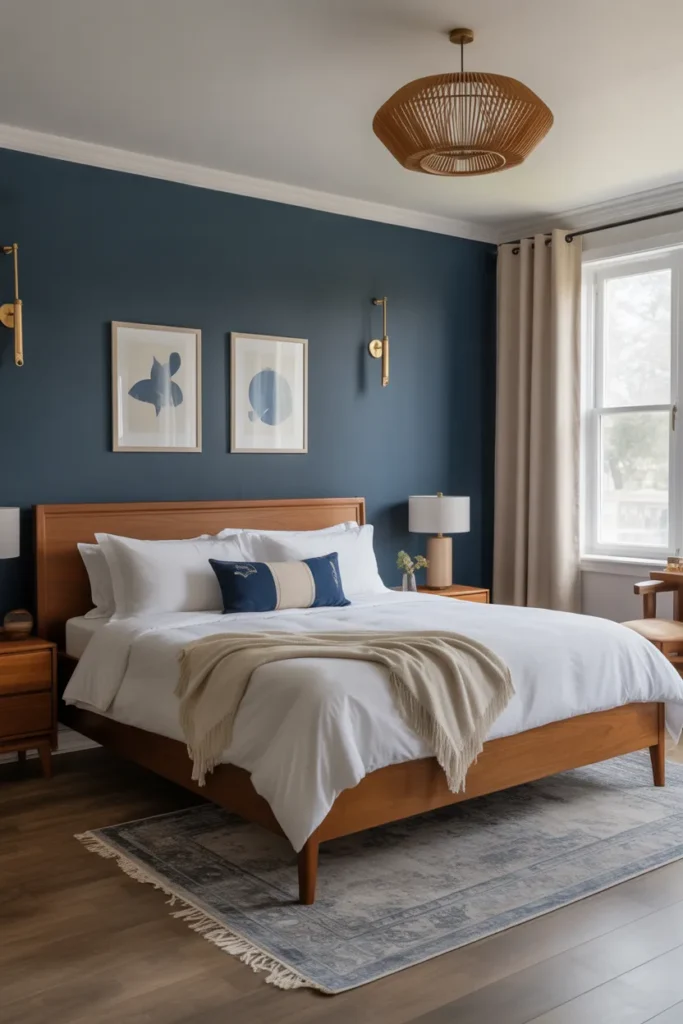
Navy and wood is one of the most reliable combinations for a men’s bedroom because it is rich without being dark and heavy. Paint one wall navy, or use navy bedding and curtains against warm wood furniture, and the room instantly feels tailored. Walnut gives a deep, formal look, oak feels lighter and more casual, and pine suits a relaxed or rustic version of the same palette.
Build the room in layers. Start with navy on the bed wall or in the duvet cover, add wood in the bed frame and nightstands, then add white or cream sheets to keep the look fresh. Brass or black metal details work equally well: brass warms the navy, while black keeps it crisp and modern. Keep artwork simple, such as a coastal print, an architectural photograph, or a set of three small framed prints in matching frames.
For a small room, use navy in smaller doses: a navy throw, navy cushions, and one navy accent chair, with the walls in warm white. That gives you the color impact without shrinking the space. A rug with a subtle navy pattern ties the bed and the seating area together, and a 5 by 8 foot rug works well beside a queen bed if a full 8 by 10 foot rug is too large for the room.
9. Contemporary Smart Bedroom
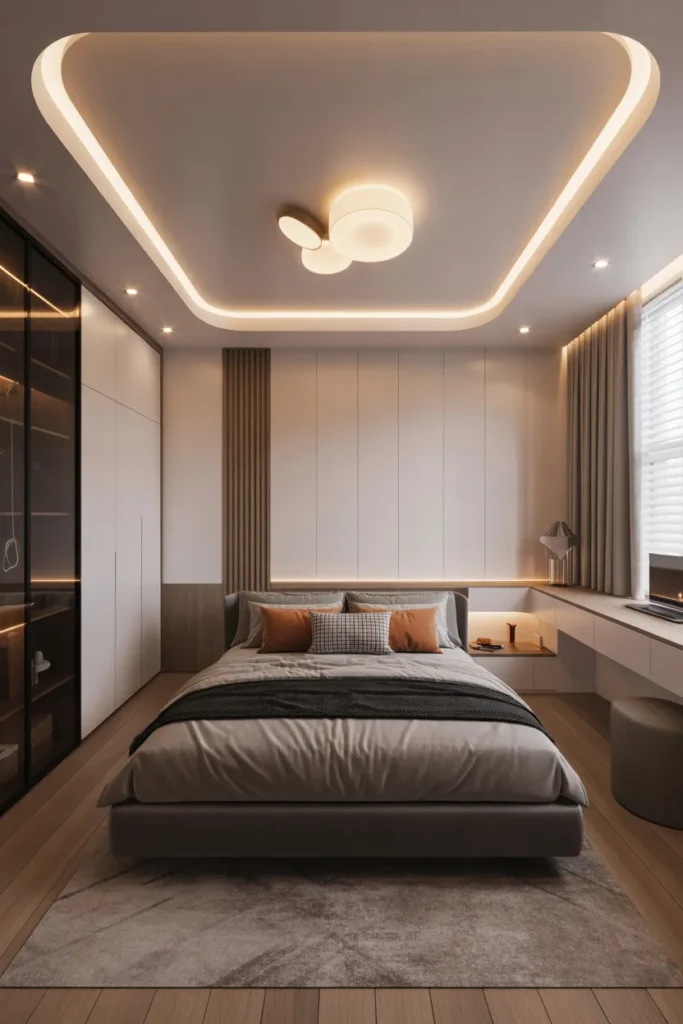
A smart bedroom should make daily life easier, not add another set of remotes and apps to manage. Start with the upgrades you will use every day: dimmable smart bulbs, a smart plug for a lamp, and a wireless charger built into or placed on the nightstand. Voice controlled blinds are a luxury, but they are worth it if you have large windows and want to wake with natural light without getting up.
Hide the technology. Run cables behind the bed frame or through a cable channel painted to match the wall, use a nightstand with a drawer for chargers and controllers, and choose speakers and hubs in the same finish as your furniture. Keep the room palette neutral, with LED backlighting behind the headboard or under floating shelves set to a warm white for evenings. Avoid rainbow color cycling in a bedroom: it looks fun for a night and tiring every night after.
Set up routines that serve sleep. A wind down routine that dims the lights to 10 percent at 10 pm, a morning routine that raises the blinds and turns on a soft light, and a single bedtime switch by the door all make the room feel considered. Keep one analog element in the room too, such as a real alarm clock or a paper book on the nightstand, so the bedroom does not feel like an extension of your desk.
10. Earth Tones for a Natural Vibe
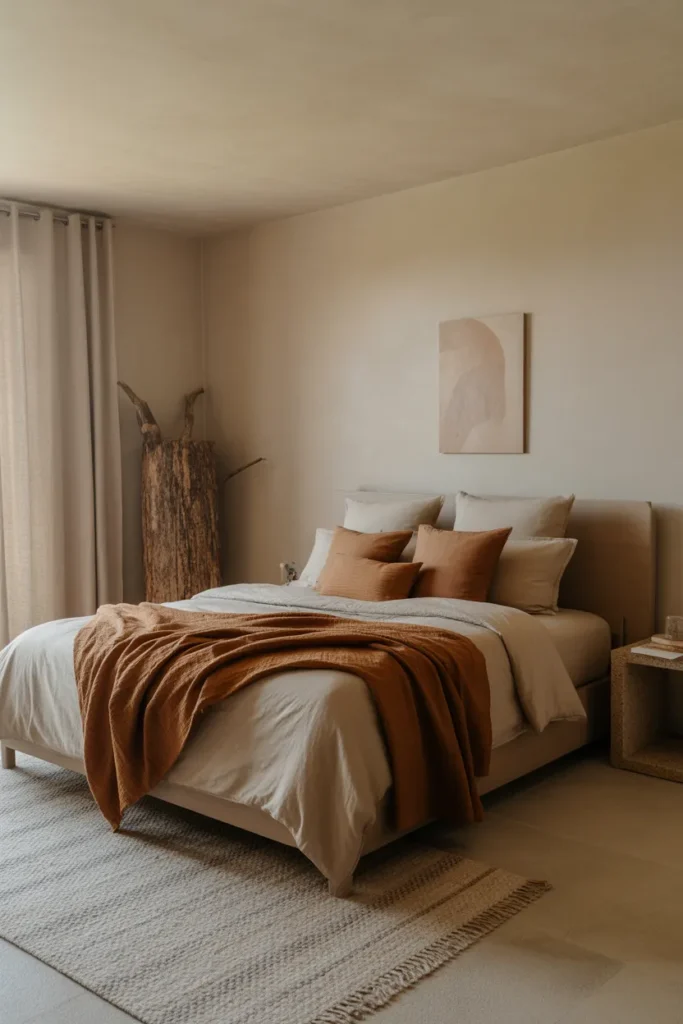
Earth tones create a calm, grounded room that is easy to live with for years. Build the palette from brown, beige, taupe, olive, and clay, and choose one as the dominant color and the rest as accents. A warm beige wall, olive bedding, and clay cushions, for example, feel layered without being busy. These colors suit natural light well and look good with both wood and black metal furniture.
Materials matter as much as color here. Use jute or sisal for a rug, rattan for a pendant light or a chair, linen for curtains and bedding, and solid wood for the bed frame. The slight imperfections in natural fibers are part of the appeal: they make the room feel warm and lived in rather than showroom perfect. Keep patterns subtle, such as a tone on tone stripe on the duvet or a small woven pattern on the rug.
Add plants to complete the natural feeling, but choose plants that match your light and your habits. A snake plant or ZZ plant survives low light and irregular watering, while a monstera needs brighter indirect light and more space. Place one large plant in a corner and one small plant on the dresser, rather than filling every shelf. The goal is a room that feels like a retreat, not a greenhouse.
11. Urban Modern Bedroom
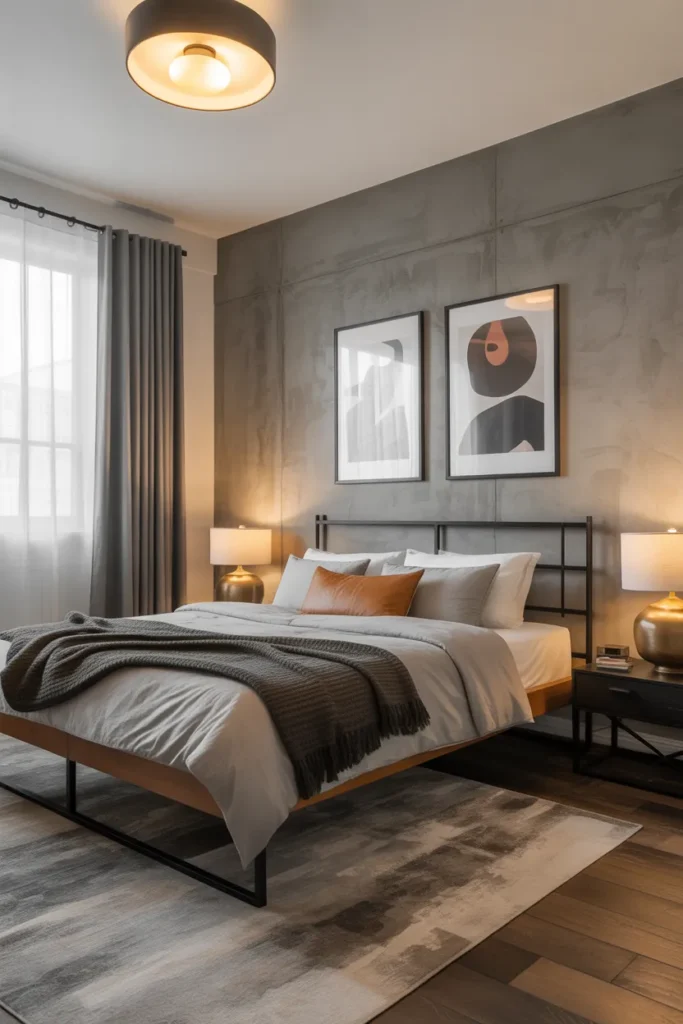
Urban modern style suits apartments and city homes because it is sleek, compact, and confident. Think black metal frames, glass accents, concrete look surfaces, and contemporary art with strong shapes. A low platform bed, a floating nightstand, and a dresser with flat fronts keep the lines clean. The palette is usually charcoal, white, and one bold accent such as mustard, teal, or deep red used in small doses.
Soften the hard surfaces so the room still invites sleep. A modern rug in a geometric pattern, warm white lamps, and soft gray or cream bedding balance the metal and glass. Hang one large abstract print above the bed rather than a gallery wall, which can make a small urban room feel cluttered. If you have a concrete look wall, keep the bedding and curtains light so the room does not feel like a studio.
Storage is critical in an urban bedroom. Choose a bed with drawers or a lift up base, a wardrobe that reaches the ceiling, and a nightstand with a drawer for daily essentials. A wall mounted reading light frees up nightstand space for a phone, a glass of water, and a book. Keep the floor as clear as possible: one rug, one chair at most, and nothing stored under the bed that you do not use regularly.
12. Luxury Hotel-Inspired Bedroom
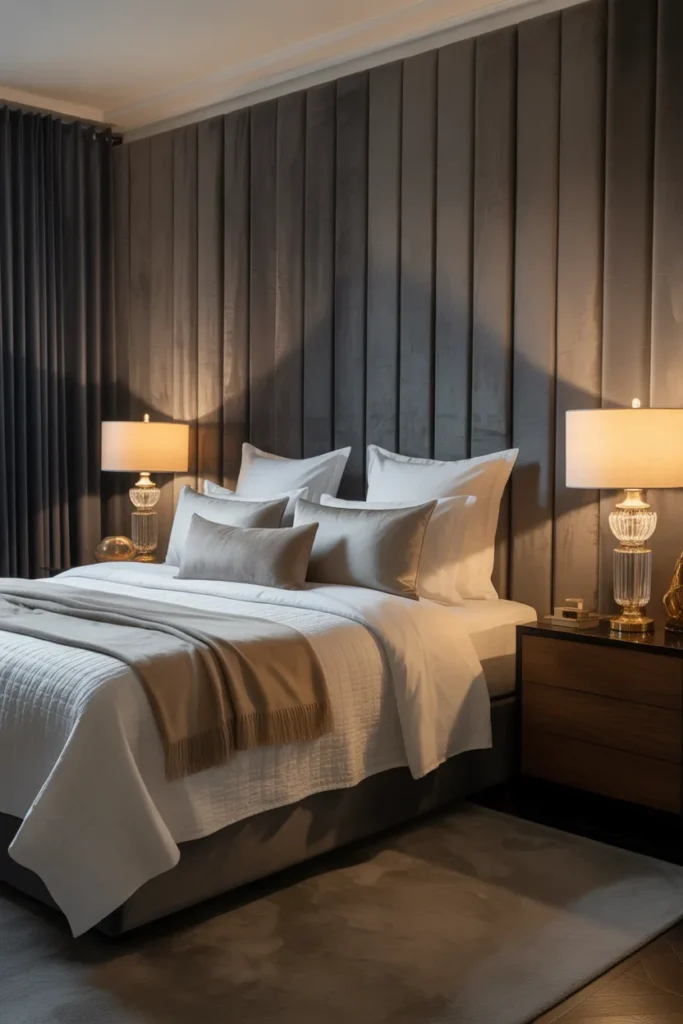
A hotel style bedroom is about layers and quality, not about buying everything at once. Start with the bed: a supportive mattress, a mattress topper if needed, crisp white or cream sheets with a high cotton content, and a duvet that is slightly oversized so it drapes nicely. Add a second layer, such as a folded throw or a coverlet at the foot of the bed, and finish with four sleeping pillows and two decorative cushions. That layering is what makes a hotel bed look and feel different.
Furniture should be symmetrical and calm. Matching nightstands, matching lamps, and a bench or two ottomans at the foot of the bed create the polished hotel feeling. Choose an upholstered bed frame in velvet, linen, or faux leather in a neutral tone, and add tall curtains hung close to the ceiling and extending past the window frame so the windows look larger. A full length mirror leaning against the wall adds a boutique hotel touch.
Details finish the look: a carafe and glass on the nightstand, a small tray with a candle, a luggage style bench, and soft lighting from two lamps rather than one ceiling light. Keep the palette neutral, with white, cream, taupe, and one metallic accent such as gold or brushed brass. If you want a touch of color, add it in the throw or the art, and keep the bedding white so the room always feels fresh.
13. Monochrome Modern Bedroom
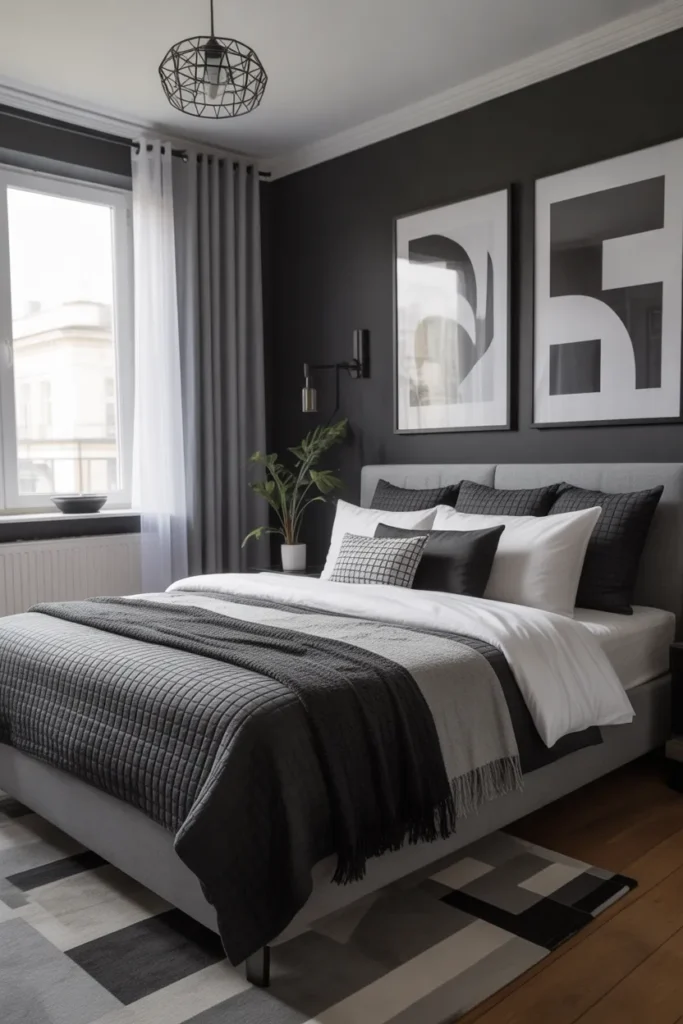
Monochrome design uses shades of a single color, usually black, white, and gray, to create a calm and cohesive room. The key is to vary the shades and the textures so the room has depth. Pair a black bed frame with white sheets, a gray duvet, a charcoal throw, and a light gray rug. Each layer is close in color but different in texture, so the eye has something to explore without any visual noise.
Mix materials deliberately: wool for a throw, leather for a chair or a tray, linen for curtains, and matte metal for lamps. A geometric pattern on a cushion or a rug adds interest without breaking the palette, and one piece of black and white photography gives the wall a focal point. Keep the ceiling and trim white to hold the room open, and use the darkest shade on furniture and accents rather than on every wall.
This style is forgiving for renters because it does not depend on painting walls. You can build a monochrome room with bedding, rugs, curtains, and furniture alone, then add removable wall decals or framed prints for the walls. When you want a seasonal change, swap the throw and cushions for a different shade of gray and the room feels refreshed without a full redecoration.
14. Wood Panel Accent Wall
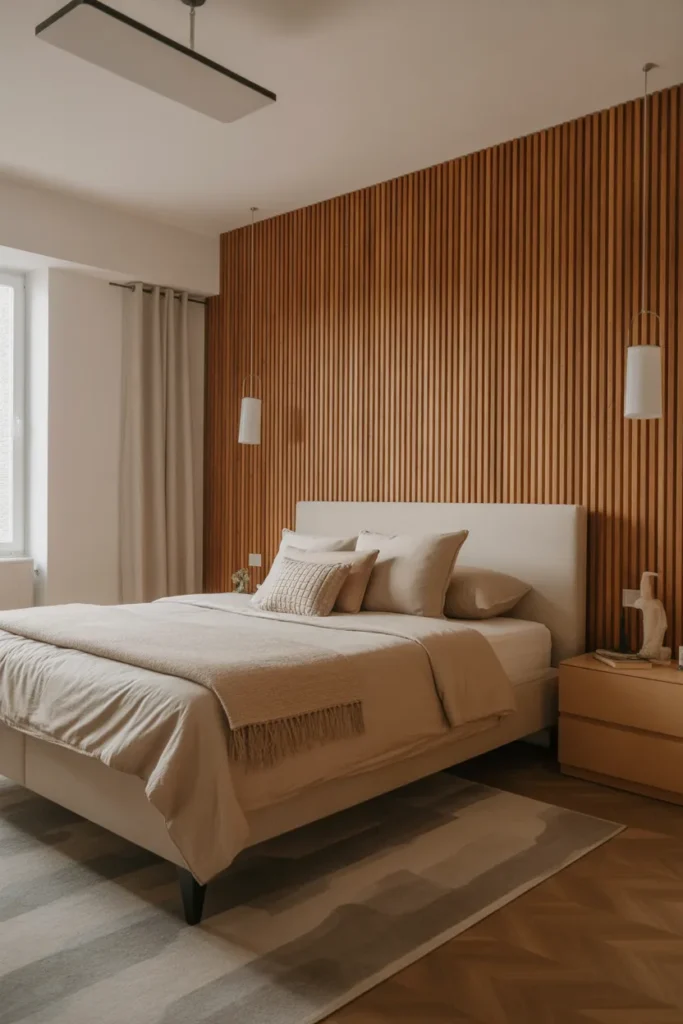
A wood panel accent wall adds warmth and texture in a single weekend project. Vertical slats in oak or walnut make a ceiling feel taller, while horizontal planks make a wall feel wider. For a standard bedroom, slats about 2 to 3 inches wide with a small gap between them give a modern look, and you can paint them the same color as the wall for a subtle effect or stain them for a stronger statement.
Install the panels on the wall behind the bed so the bed becomes the natural focal point. Measure carefully: mark the center of the wall, work outward so the end pieces are even, and use a level for every third slat. Finish the edges with a slim trim piece for a built in look. Pair the wall with simple bedding in white, cream, or light gray so the wood grain stays the star, and add warm lighting from sconces or lamps that washes across the panels.
If you rent or want a reversible option, use peel and stick wood look panels or a freestanding slat screen behind the bed. Both give you most of the visual effect without damaging the wall. Keep the rest of the room quiet: one wood tone repeated in the nightstands, a woven rug, and one or two plants. Too many wood tones in one room can clash, so match the panel stain as closely as you can to your main furniture.
15. Neutral with Black Accents
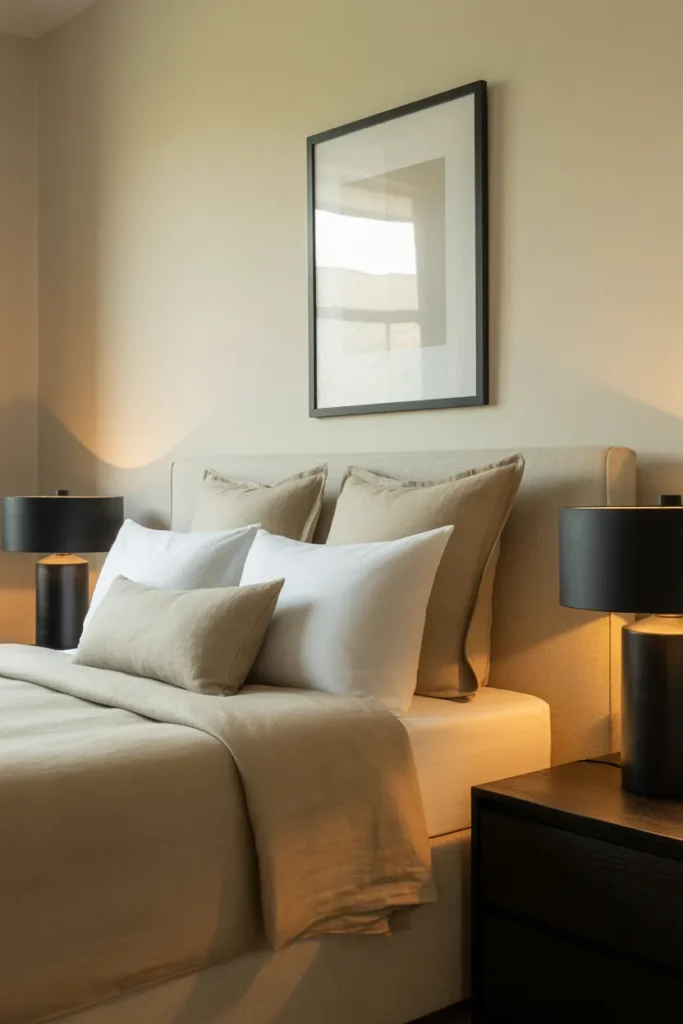
Neutral rooms become instantly more masculine when black is used as a grounding accent. Start with warm white, beige, or light gray walls and bedding, then add black in furniture and details: a black bed frame, black lamp bases, black picture frames, or a black dresser. The contrast is crisp and modern, and it works in both small and large rooms because the overall palette stays light and airy.
Use black in three or four places so it looks deliberate rather than accidental. A black headboard, two black lamps, and black framed art, for example, create a thread that ties the room together. Add texture to keep the neutrals interesting: a chunky knit throw, a woven rug, a linen duvet cover, and a velvet cushion. For ideas on building the gray side of this palette, see these gray bedroom ideas and borrow the shade combinations that suit your light.
Keep the black elements matte or satin rather than high gloss, which can look harsh in a bedroom. Black metal, black wood, and black fabric all read softer than shiny black plastic. If the room feels too contrast heavy, add a mid tone such as warm wood or olive to bridge the black and the neutrals, and keep the largest surfaces, the walls and the bedding, in the lightest tones.
16. Green and Wood Nature-Inspired Bedroom
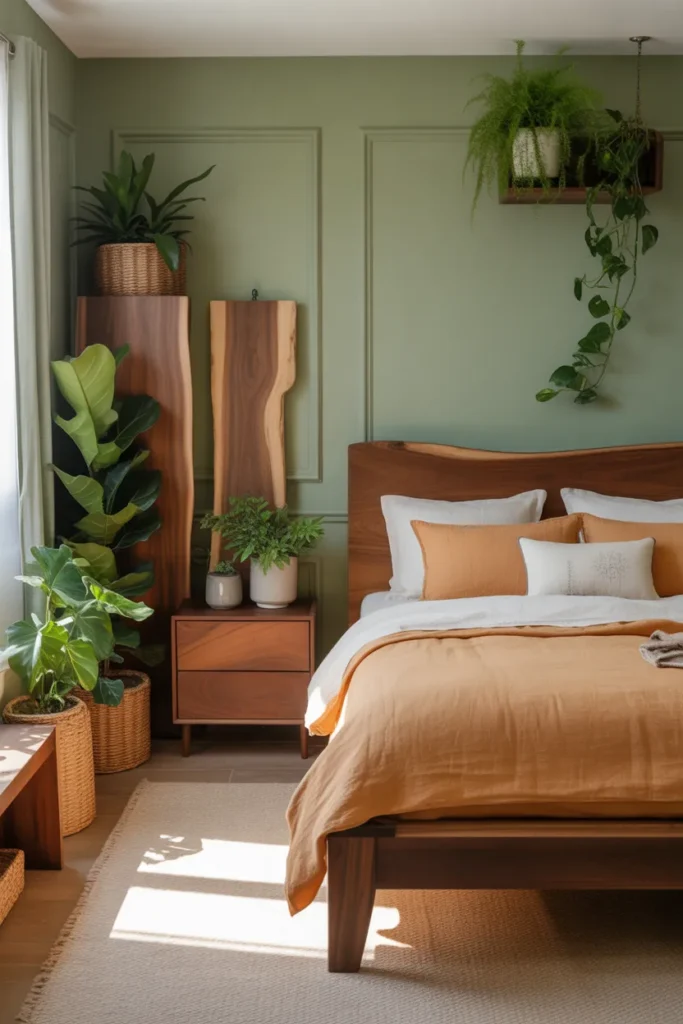
Green and wood is a natural pairing that feels calm, fresh, and grounded. Sage green suits light wood and white bedding for a soft, airy room, olive green suits walnut and cream for a warmer look, and deep forest green suits dark wood and brass for a moodier version. Choose one green as the main color, either on the walls or in the bedding, and let wood carry the rest of the room.
Plants are the finishing layer, not an afterthought. A tall plant in a corner, a trailing plant on a shelf, and a small plant on the nightstand give the room life at three heights. Pair them with natural fabrics: linen curtains, a cotton duvet, and a woven or jute rug. Soft, warm lighting keeps the green from looking cold in the evening, so choose lamps with fabric shades and warm white bulbs.
If you love the coastal side of nature palettes, these coastal bedroom ideas show how lighter greens, blues, and whites can open up the same wood based room. For a green bedroom, avoid pairing green walls with green bedding in the same shade, which can look flat. Instead, use green on the walls and cream or white on the bed, or green bedding against warm white walls, so each layer has room to breathe.
17. Artistic Modern Bedroom
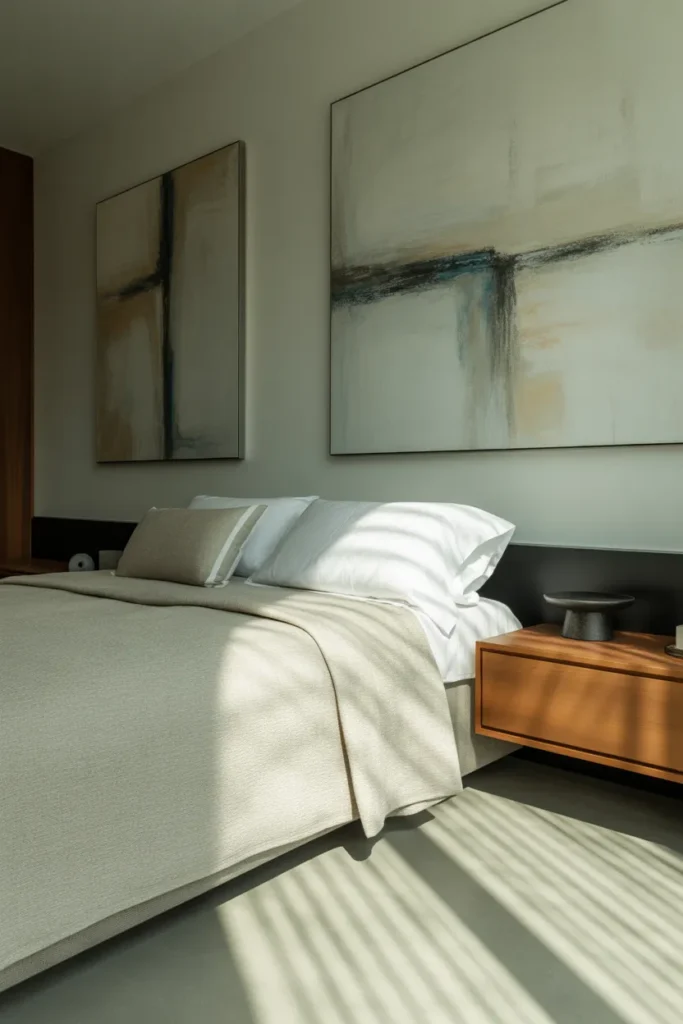
An art focused bedroom lets your taste lead the design. Choose one large piece you love, such as an abstract painting, a bold graphic print, or a black and white photograph, and hang it above the bed or on the main wall at eye level, about 57 inches from the floor to the center of the piece. Keep the furniture simple and low so the art remains the standout feature and the room does not compete with it.
Build the palette from the artwork. Pull two or three colors from the piece for cushions, a throw, and a rug, and keep the walls and bedding neutral so those colors read clearly. Use modern lighting, such as a picture light above the art or a track light aimed at the wall, to make the piece glow in the evening. A simple color palette elsewhere keeps the room cohesive even if the art itself is bold.
If you collect smaller pieces, group them as one gallery wall with consistent frames and even spacing, about 2 to 3 inches between frames. Keep the gallery to one wall only, and leave the other walls mostly bare. Rotate pieces seasonally if your collection grows: a bedroom wall with five strong pieces looks far better than a wall crowded with fifteen pieces fighting for attention.
18. Cozy Textured Bedroom
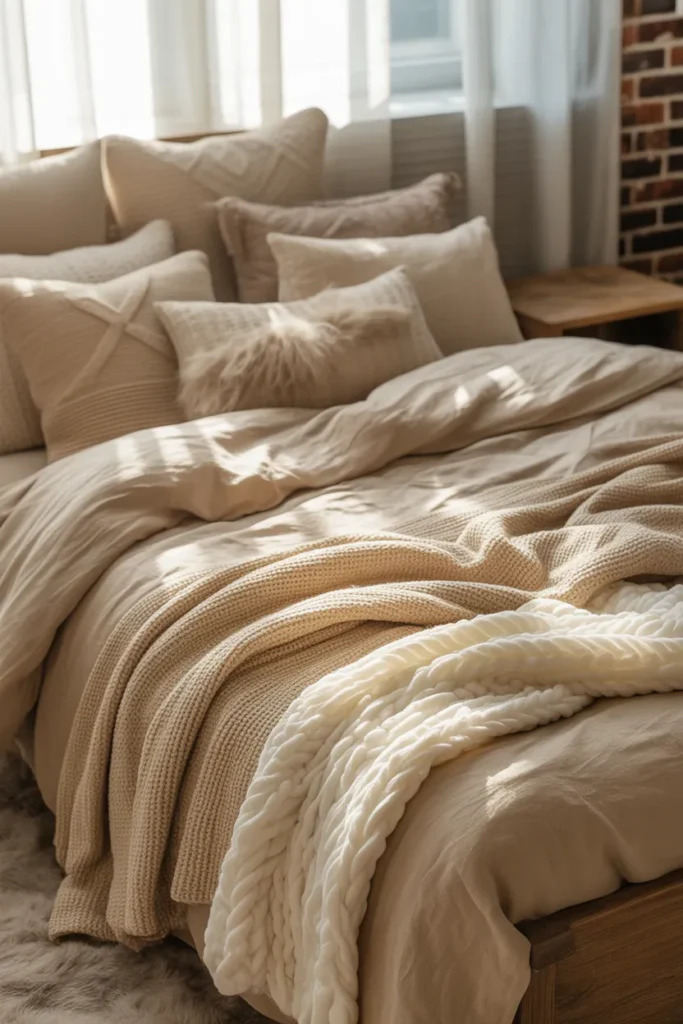
Texture can transform even a simple bedroom into a warm retreat, and it is the easiest upgrade to make without painting or buying furniture. Layer bedding first: a fitted sheet, a flat sheet, a duvet, a coverlet or quilt folded at the foot, and a throw. Add cushions in different fabrics, such as velvet, knit, and linen, but keep the colors close so the bed looks layered rather than messy.
Extend texture to the floor and the windows. A high pile or wool rug beside the bed, a woven basket for extra blankets, and linen or cotton curtains all add softness. Choose a neutral palette, such as cream, beige, gray, and warm brown, so the textures stand out instead of the colors. Wood, leather, and linen together give depth: a wooden tray, a leather chair, and linen bedding in one room feel rich without any bold color.
Lighting completes the cozy feeling. Use two lamps at bedside height, around 24 to 28 inches tall including the shade, with warm white bulbs, and add a dimmer if you can. Avoid a single bright ceiling light in the evening. A small reading light clipped to the headboard or mounted on the wall is a practical touch that also keeps the nightstand clear for a book and a glass of water.
19. Contemporary Blue Bedroom
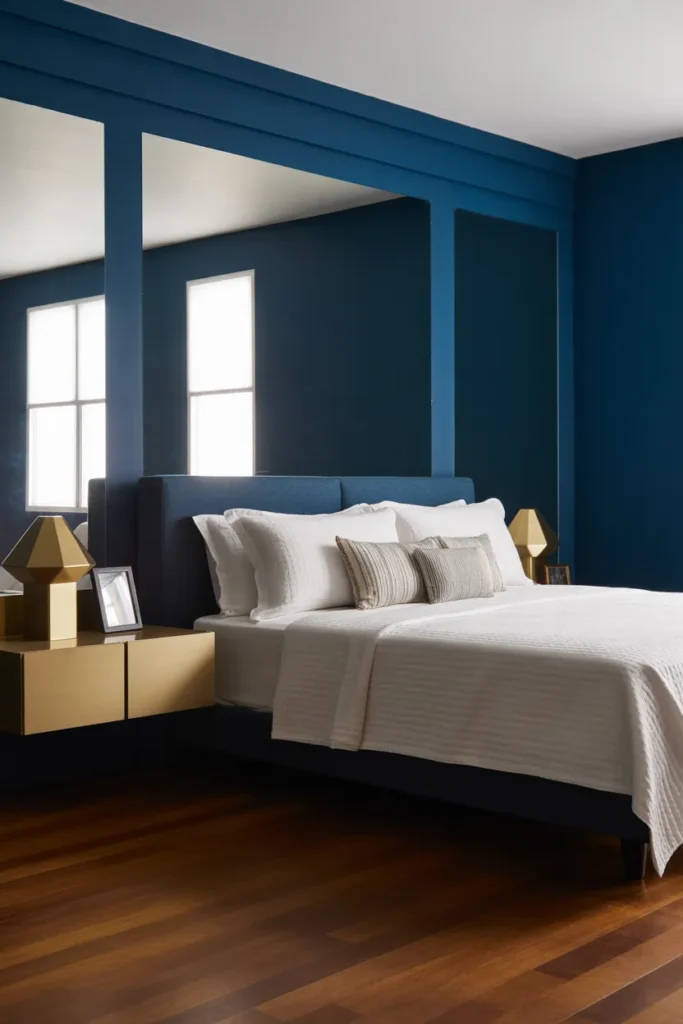
Blue is one of the most versatile colors for a men’s bedroom because it calms the room without making it feel cold, when you choose the right shade. Deep navy feels formal and masculine, slate blue feels modern and relaxed, and muted denim blue feels casual and easy. Use blue on one accent wall, in the bedding, or in curtains, and pair it with white or light gray furniture for a clean, balanced look.
Layer blues rather than using one flat shade. A navy duvet, slate blue cushions, and a light blue throw, for example, give the bed depth. Add metallic accents in silver, chrome, or brushed nickel for a sleek finish, or brass for a warmer version. Keep artwork simple, with white mats and thin frames, so the blue palette stays the focus. A rug with a subtle blue pattern ties the bed area to the rest of the room.
Blue works in any room size if you scale it correctly. In a small room, keep the walls light and use blue in bedding and accessories. In a larger room, a navy accent wall behind the bed adds drama without shrinking the space, especially if the ceiling and trim stay white. If the room gets little natural light, choose a brighter slate blue over a very dark navy, and add warm lamps to stop the room from feeling chilly.
20. Masculine Brown and Charcoal Bedroom
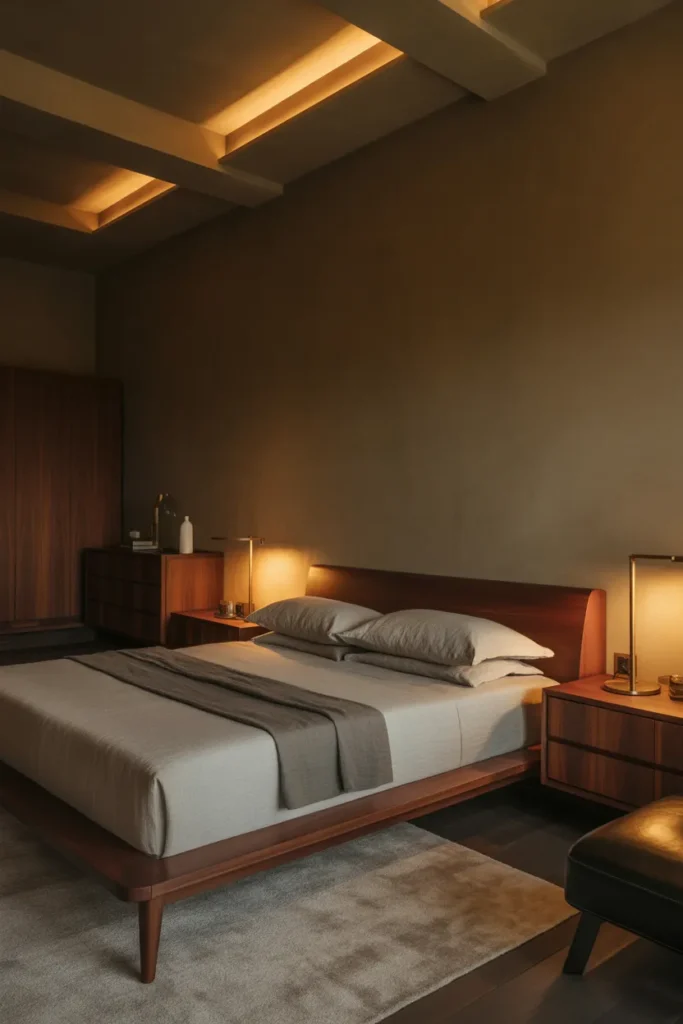
Brown and charcoal create a rich, earthy palette that feels mature and grounded. Start with charcoal bedding or a charcoal accent wall, then add brown through dark wood furniture, a leather chair, and warm wood tones in the nightstands. Warm lighting is essential here: brass lamps, warm white bulbs, and a soft glow from a bedside lamp keep the dark palette inviting rather than heavy.
Texture stops this combination from feeling flat. Pair smooth leather with a nubby wool throw, charcoal linen bedding with a woven rug, and dark wood with a matte black lamp. Keep decor minimal and structured: one large framed print, a tray on the dresser, and a plant in a simple pot. Minimal, well chosen objects suit this palette far better than many small decorations.
Balance the darkness with a light element on the largest surface you can control. White or cream sheets under a charcoal duvet, a light rug over a dark floor, or cream curtains on the window wall all lift the room. If you work from the bedroom, keep the desk zone in the same palette but with a lighter desk surface, so the work area feels bright enough for daytime use without breaking the overall scheme.
Conclusion
These men’s bedroom ideas cover a wide range, from minimalist and modern to rustic, cozy, and luxurious, but the best room for you is the one that fits your daily life. Start with one style you keep returning to, choose a palette of three colors, and size your furniture to your room before you spend on decor. Add texture through bedding, rugs, and lighting, and keep storage closed so the room stays calm even on a busy week.
Small changes often make the biggest difference: warmer bulbs, a larger rug, a proper headboard, and bedding you actually enjoy sleeping in. You do not need to renovate to get a masculine, stylish bedroom. Pick the idea that feels most like you, apply it in layers, and let the room evolve as you live in it. A bedroom that supports good sleep, easy mornings, and quiet evenings is a room well designed, whatever style you choose.
Frequently Asked Questions
What colors work best in a men’s bedroom?
Neutrals with one strong accent work best for most men. Start with white, warm gray, beige, or greige on the walls, then add navy, charcoal, forest green, or brown through bedding, furniture, or one accent wall. Limit the palette to three main colors and repeat them in different textures. This keeps the room masculine and calm without feeling flat or overly themed.
How can I make a small men’s bedroom look masculine without feeling dark?
Keep the walls and bedding light and use dark colors only in furniture and accents. A black bed frame, charcoal cushions, and dark wood nightstands give you the masculine contrast while white walls and a light rug keep the room open. Add a mirror opposite the window, use one large piece of art instead of many small frames, and choose a bed with storage underneath to keep the floor clear.
What is the best bed size for a men’s bedroom?
A queen bed, 60 by 80 inches, suits most bedrooms and most sleepers, and it leaves room for nightstands in a standard room. Choose a king, 76 by 80 inches, only if your room is at least 12 by 12 feet and you can still leave 24 inches of walking space on each side. A full bed, 54 by 75 inches, works in a small room or a guest room, but it can feel tight for taller sleepers.
How do I add personality without making the room look cluttered?
Choose one focal point, such as art above the bed, a wood accent wall, or a leather chair, and keep everything else quiet. Display two or three meaningful objects in one place, such as a shelf or a dresser tray, and store the rest. Use a consistent frame style for photos, one palette throughout the room, and closed storage for everyday items. Personality comes from a few strong choices, not from filling every surface.
How much should I budget for a men’s bedroom makeover?
A cosmetic refresh with new bedding, curtains, lamps, and a rug can cost 300 to 800 dollars, depending on quality and room size. A fuller makeover with a new bed frame, nightstands, and paint typically runs 1,200 to 3,000 dollars. Start with bedding and lighting, which change the feel of the room fastest, then add furniture one piece at a time. Buy the mattress and the rug in the right size first, since those are the hardest to replace later.
More Ideas You Will Love
 21 Dorm Room Inspiration Ideas – Transform Your Space with Creative Touches
 16 Headboard Ideas: Stylish & Functional Designs for Every Bedroom
 23 Small Bedroom Ideas for Stylish, Functional Comfort
 14 Neutral Farmhouse Bedroom Color Trends
 20 Creative Attic Bedroom Ideas to Transform Your Space with Style & Functionality
 13 Guest Room Ideas for a Stylish & Functional Home