
23 Small Apartment Living Room Ideas for Cozy & Functional Spaces

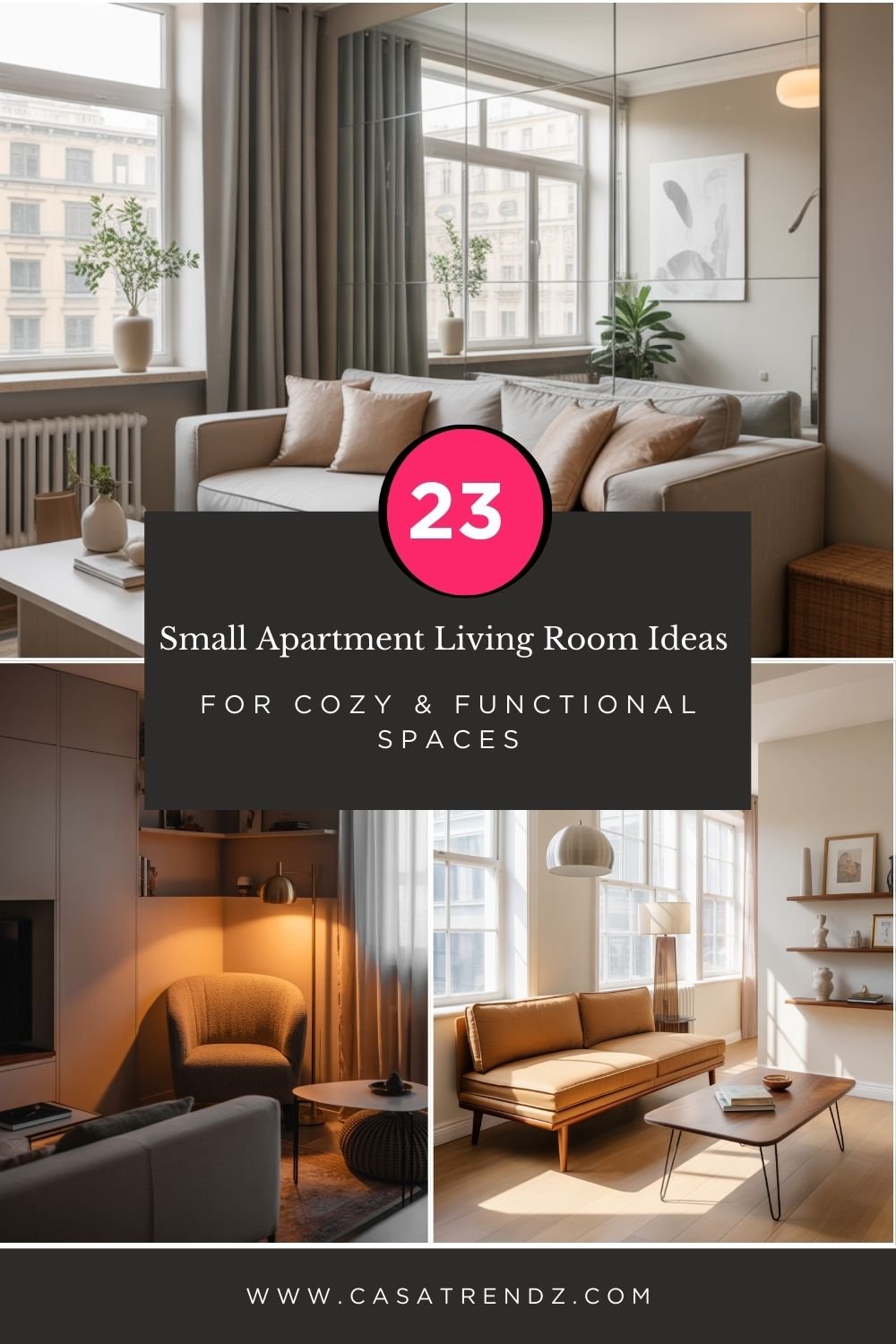
Small apartment living rooms ask a lot from very little space. One room often has to welcome guests, host movie nights, hold your books and chargers, and sometimes double as a dining spot or a work corner. That is a lot of jobs for 150 to 300 square feet, but it is also where smart design pays off fastest. A few well chosen pieces, a lighter palette and a clear layout can make the same room feel calmer, larger and far easier to live in.
These 23 small apartment living room ideas focus on practical choices you can actually make in a rental: furniture that does two jobs, storage that uses the walls instead of the floor, lighting in layers, and colors and textures that open the room up rather than closing it in. If you are starting from scratch, begin with layout, light colors and one good sofa, then add storage and lighting. If you already have the basics, pick the three ideas that solve your biggest daily annoyance, whether that is clutter, dark corners or nowhere for guests to sit. For more compact room inspiration, see these small living room ideas that pair well with the apartment specific tips below.
1. Use Light Colors to Open Up the Space
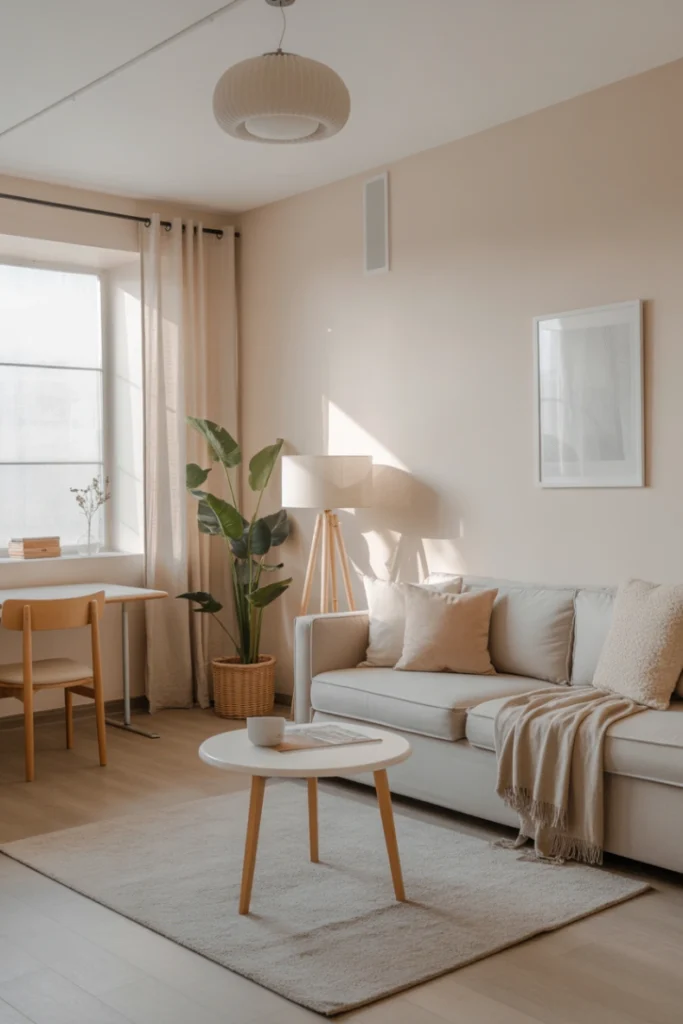
Light colors are the fastest way to make a small living room feel larger because they reflect both daylight and lamp light instead of absorbing it. Paint walls in soft white, warm cream, pale gray or a muted sage, and keep the ceiling one shade lighter than the walls so the room reads taller. A standard 10 by 12 foot living area painted in a warm white with a light wood floor will feel noticeably brighter than the same room in a mid tone gray, even before you change any furniture. Keep large pieces light too: a cream, light gray or natural linen sofa anchors the room without creating a dark block in the middle of the floor.
Layer light tones instead of painting everything one flat white, or the room can feel cold and unfinished. Pair white walls with pale oak, light rattan, a cream wool throw and a rug in ivory or soft beige with a subtle pattern. Add one or two deeper accents, such as olive cushions, a walnut side table or a black picture frame, so the eye has somewhere to rest. Finish with sheer white or linen curtains that let daylight through while softening the window edge. If your walls are already dark and repainting is not allowed, use light slipcovers, a pale rug and white or cream curtains to get most of the same effect without touching the paint.
Try this: Test three paint swatches on the darkest wall and check them at midday and again at night under your lamps before you commit. A white that looks clean in daylight can turn pink or yellow under warm bulbs.
2. Choose Multifunctional Furniture
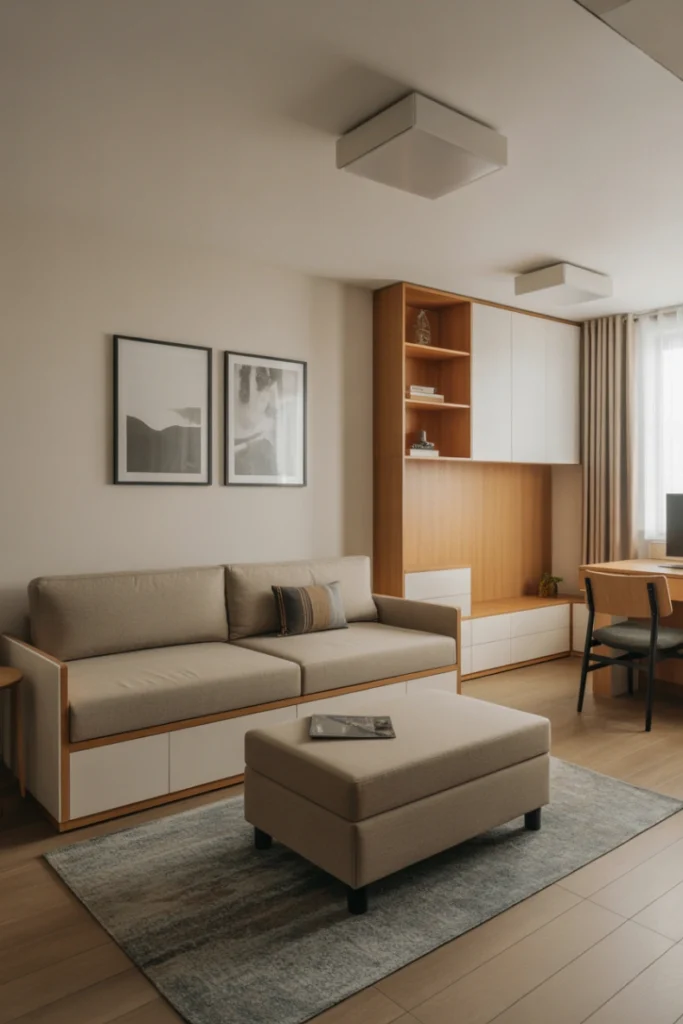
In a small apartment, every large piece should earn its floor space twice. A sofa bed or a sleeper sectional turns the living room into a guest room, a storage ottoman holds throws, chargers and board games while serving as a coffee table, and a nesting set of side tables gives you extra surfaces only when you need them. Look for a compact sofa between 72 and 84 inches wide, which seats three without swallowing a small wall, and pair it with an ottoman about two thirds the width of the sofa so the proportions stay balanced.
Choose mechanisms you will actually use every week, not just admire in the store. A lift top coffee table that rises to desk height is useful for laptop work and casual meals, while a drop leaf console can sit flat against the wall and open to seat two for dinner. Before you buy, measure your doorways, elevator and stair turns, and tape the footprint on the floor with painter’s tape. Leave at least 30 inches of walkway around the main seating area and 18 inches between the sofa and the coffee table so the room stays comfortable to move through. Good multifunctional furniture disappears into daily life; if it is awkward to open, fold or move, it will end up as clutter.
Try this: Make a short list of the jobs your living room must do, such as seating four, storing blankets and holding a laptop, then score each piece of furniture against that list before you buy it.
3. Add Mirrors to Create the Illusion of Space
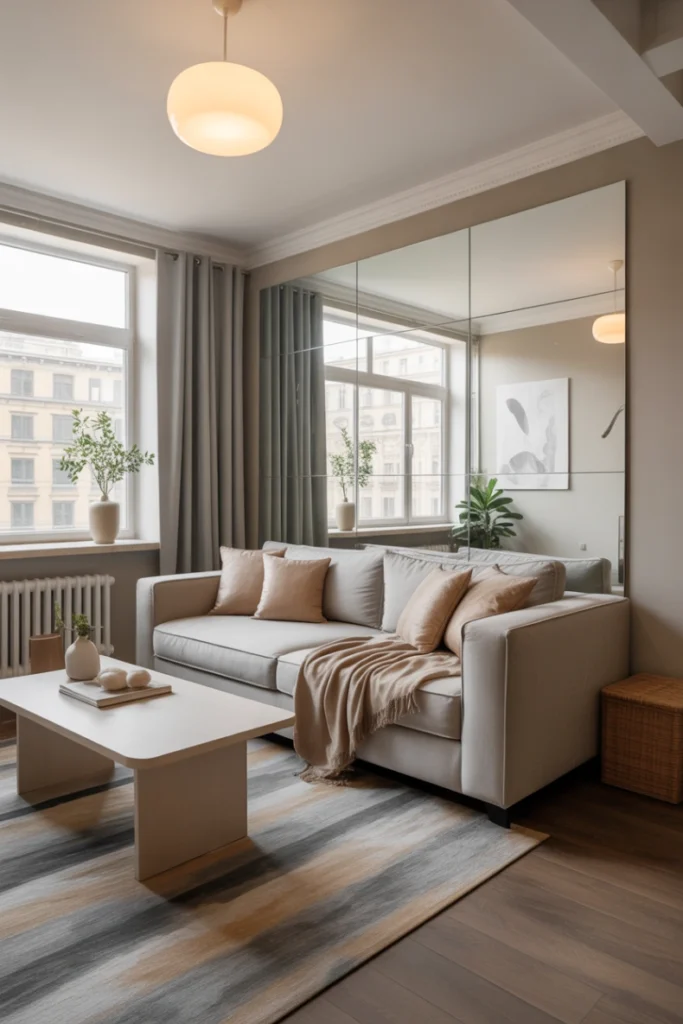
Mirrors work in small rooms because they bounce light and repeat the view, which tricks the eye into reading more depth. Hang one large mirror, about 30 by 40 inches or larger, across from a window or beside it at a slight angle so it reflects daylight rather than a blank wall. A leaning floor mirror, roughly 60 by 24 inches, placed in a corner behind a plant or beside the sofa adds height and makes a low ceiling feel taller. Keep the mirror at eye level when seated, with its center about 57 to 60 inches from the floor, so the reflection feels natural.
Match the frame to the room so the mirror reads as decor, not as a trick. A thin black metal frame suits a modern room, natural wood warms a Scandinavian or farmhouse space, and a gold or brass frame adds a touch of glamour to a neutral palette. Avoid placing mirrors where they reflect clutter, a television glare or the inside of a messy closet, because a mirror doubles whatever it faces. One large mirror usually beats a wall of small ones in a tiny room, since too many reflections can feel busy. Dust the glass weekly, because smudges show up fast when a mirror is doing this much visual work.
Try this: Hold a mirror in a few spots for a full day before you hang it, and check what it reflects in morning light, evening light and when the television is on.
4. Incorporate Vertical Storage Solutions
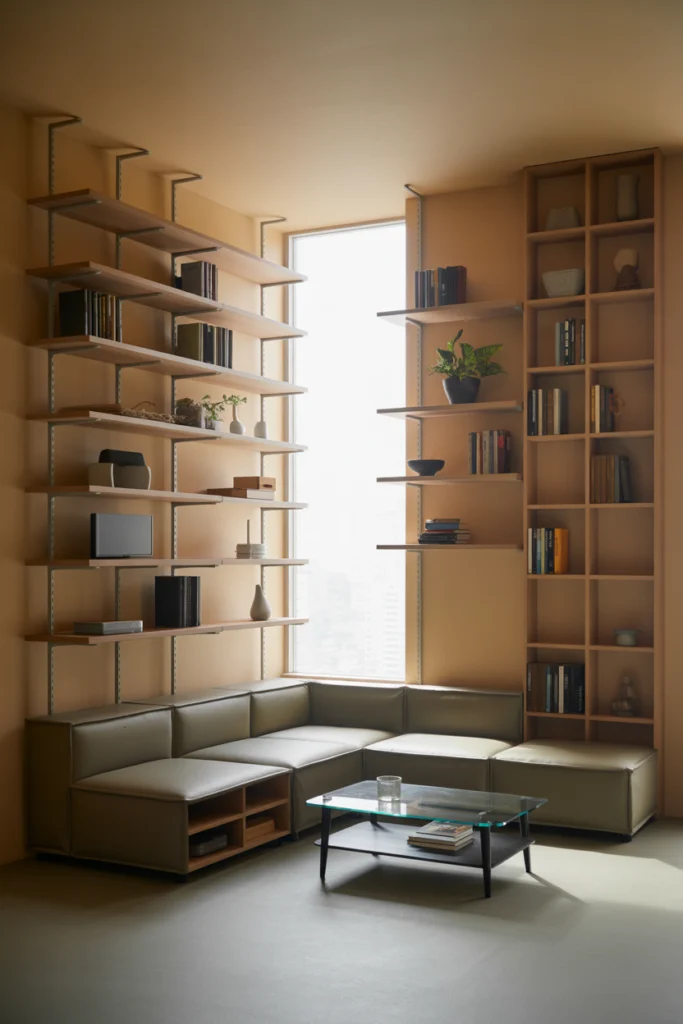
When floor space is scarce, the walls are your extra square footage. Floating shelves, tall bookcases and wall mounted cabinets store books, plants and everyday items without blocking walkways. Install two or three floating shelves, each 24 to 36 inches long and 8 to 10 inches deep, above a console or beside the television, spacing them 12 to 15 inches apart so books and vases fit comfortably. A tall, narrow bookcase about 72 inches high and only 12 inches deep gives you five shelves of storage in less than three square feet of floor.
Keep vertical storage looking calm by leaving breathing room on every shelf. Fill about two thirds of each shelf and leave the rest empty, group items in odd numbers, and mix a stack of books, a small plant and one decorative object rather than lining up dozens of small items. Anchor heavy shelves into wall studs, or use rated wall anchors in a rental, and keep heavier books low and lighter decor high for safety. Label baskets on the top shelf for items you rarely need, such as seasonal decor or spare cables, so the storage stays useful instead of becoming a display of clutter.
Try this: Photograph your wall before you drill, then sketch the shelf positions on the photo. It is much easier to spot a crowded layout on paper than after the holes are made.
5. Go for a Minimalist Layout
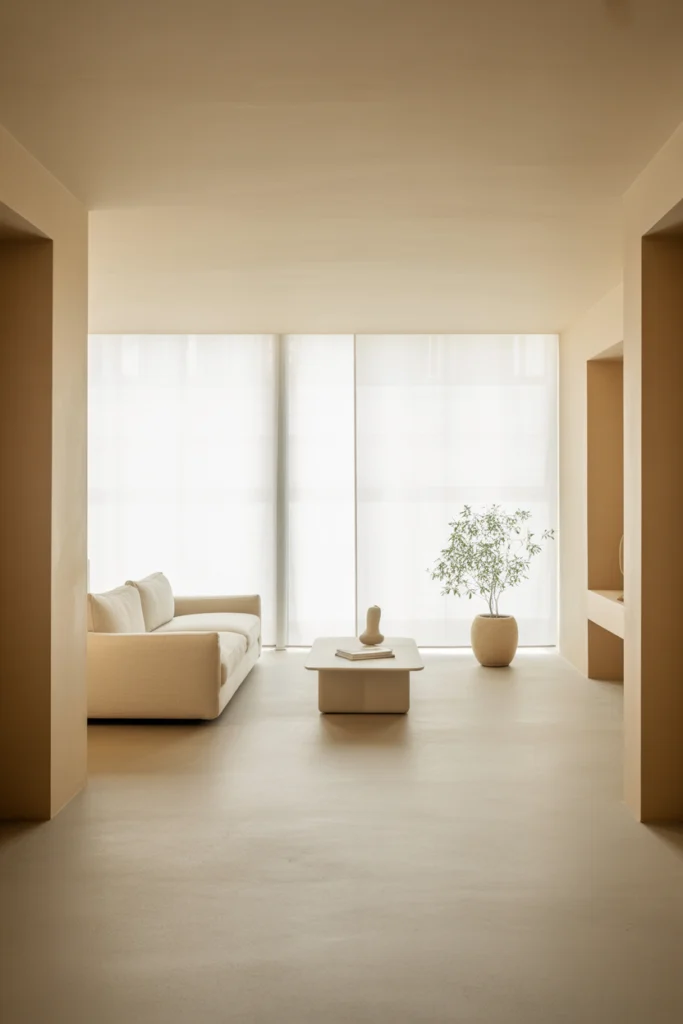
A minimalist layout is not about owning almost nothing. It is about choosing fewer, better pieces and giving each one room to breathe. Start with the essentials: a sofa, one coffee table or ottoman, one or two side tables, a light source and storage for the items you use daily. Remove one piece at a time and live with the room for a day before you decide what truly needs to come back. In most small apartments, removing a bulky armchair or a second bookcase instantly opens a walkway and makes the whole room feel calmer.
Warmth comes from texture, not from more objects. Layer a soft wool or cotton rug, linen cushions in two or three tones, a knitted throw and a natural wood tray to keep the room inviting. Keep the color palette to three main colors, for example warm white, oak and olive, and repeat them in different materials so the room feels intentional. Hide daily clutter in closed storage, such as a lidded basket or a console drawer, and keep only the items you love on display. For a polished take on this approach, these modern living room ideas show how clean lines and warm textures work together in compact spaces.
Try this: Do a 15 minute reset each evening: return remotes, chargers and cups to their homes, fold throws and fluff cushions. Minimalism in a small room is mostly maintenance, not shopping.
6. Use a Compact Sectional Sofa
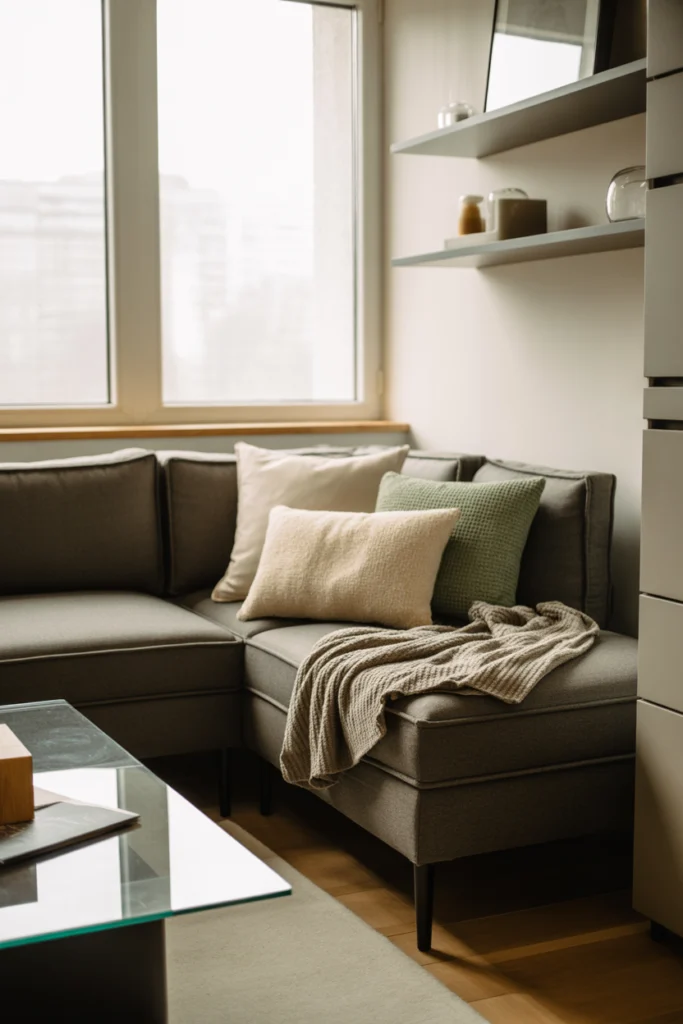
A compact sectional can actually save space in a small apartment because it uses a corner that is often wasted and seats more people than a sofa plus a separate chair. Look for a left or right facing chaise sectional around 80 to 90 inches wide and 60 inches deep on the chaise side, which fits most apartment living walls without blocking a doorway. A low profile design with slim arms, ideally under 8 inches wide, keeps the visual weight down, and a light fabric in gray, beige or sage helps the large piece blend into the room.
Before you order, measure the full footprint including the chaise, and check that you can still open nearby doors, drawers and balcony access. Modular sectionals are a smart rental choice because you can split the chaise off or move it to the other side when you move. Choose a washable or stain resistant fabric if you eat in the living room or have pets, and add a single bold cushion or a textured throw rather than a full set of patterned pillows, which can make a compact sectional look crowded. If a sectional still feels too large, a loveseat plus a movable pouf gives you similar flexible seating with a smaller footprint.
Try this: Tape the sectional outline on the floor and sit in the space for an evening with your usual coffee table in place. You will quickly feel whether the chaise blocks your natural path through the room.
7. Add a Drop-Leaf or Expandable Table
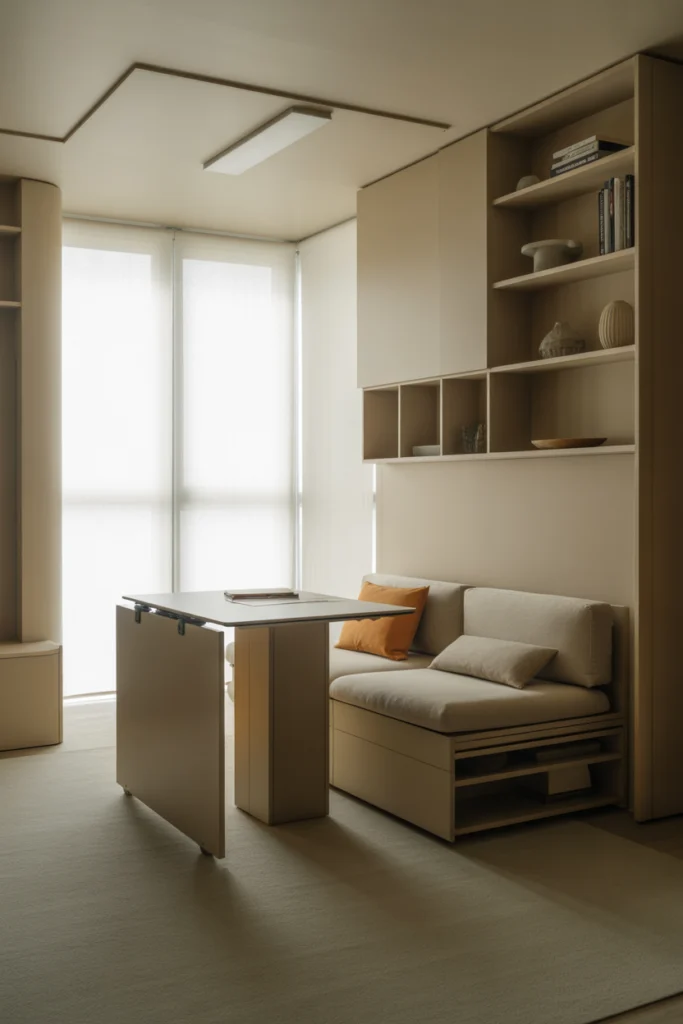
A drop leaf or expandable table is the small apartment answer to the question of where guests will eat. Closed, a typical drop leaf table is about 36 by 20 inches and works as a console or a laptop desk against the wall. Opened, it extends to 36 by 36 inches or more and seats two to four people comfortably. Choose a height of 29 to 30 inches for dining, or a counter height table if you prefer to pair it with stools that tuck fully underneath.
Pair the table with folding chairs or stackable stools that store in a closet or hang on wall hooks when they are not in use. A light wood top with black metal legs suits most modern apartments, while a white or oak top keeps a tiny room feeling bright. Keep a simple centerpiece, such as a small vase or a candle, that can be moved in seconds when the table opens. Wipe the hinges and leaf edges occasionally, because crumbs and dust collect in the seam, and check that the leaf locks flat so plates and glasses sit steady.
Try this: Practice opening and closing the table fully before guests arrive, and set the table once with your actual plates to confirm that four settings fit without elbows bumping.
8. Use Area Rugs to Define Zones
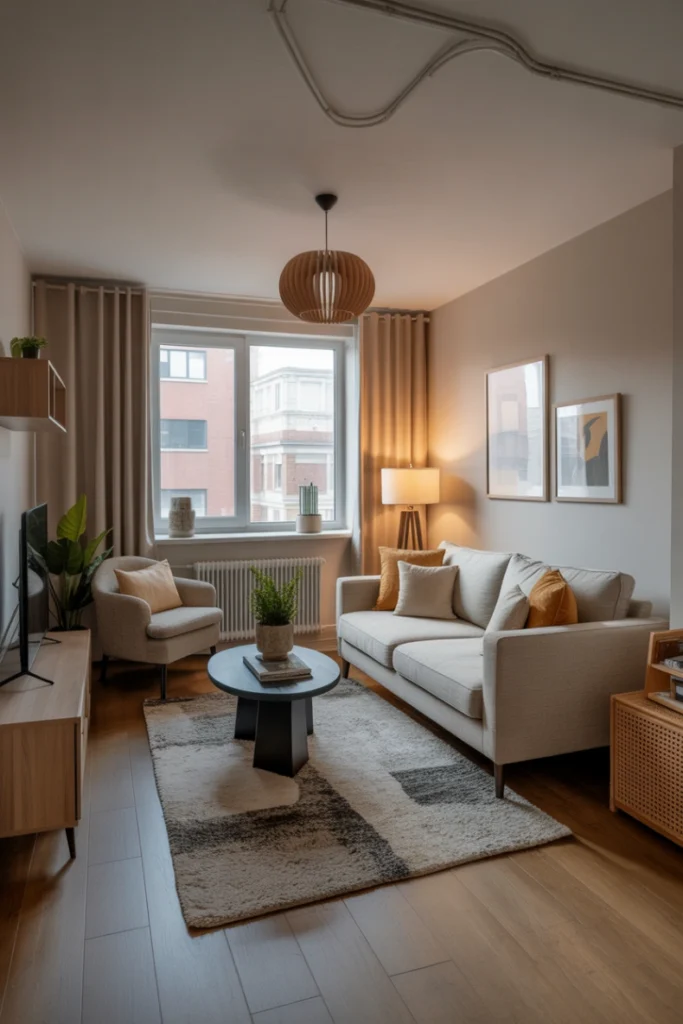
In a studio or open plan apartment, a rug is the easiest way to say where the living room starts and the dining or work area ends. Choose a rug large enough that the front legs of the sofa and any armchairs sit on it, which usually means 5 by 8 feet for a loveseat setup or 8 by 10 feet for a full sofa arrangement in a larger studio. A rug that is too small will float in the middle of the floor and make the seating look disconnected, while a rug that reaches almost to the walls can make the room feel smaller.
Pick a low pile rug in a neutral tone or a subtle pattern for easy cleaning and a calm look, and add a thin non slip rug pad underneath so it stays flat and does not bunch underfoot. If you want to layer rugs, place a larger natural jute rug underneath and a smaller patterned rug on top, offset by a few inches, for texture without bulk. Keep at least 12 inches of bare floor visible around the rug where possible so the room keeps its sense of scale. For more apartment focused layouts, these apartment living room ideas offer additional zoning tricks for studios and open plans.
Try this: Use old bedsheets or painter’s tape to outline two rug sizes on the floor before you buy. The larger size usually looks better in photos and in real life than you expect.
9. Create a Floating TV Wall
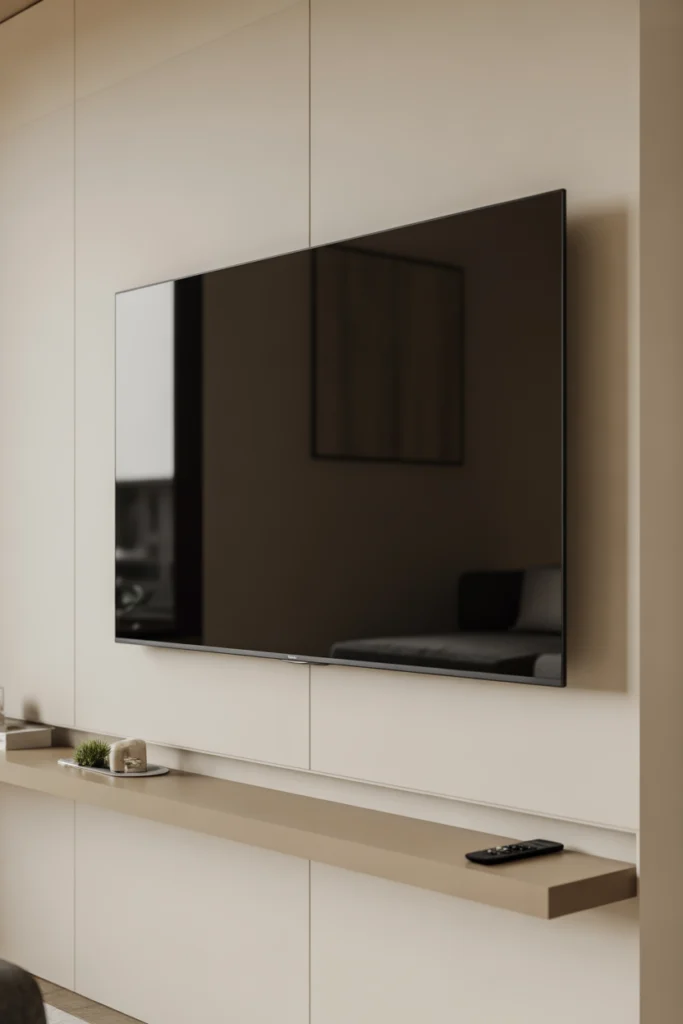
Mounting the television on the wall frees the floor space that a bulky media console would take, and it lets you set the screen at a comfortable viewing height. Mount the center of the screen about 42 inches from the floor for seated viewing on a standard sofa, or slightly lower if your sofa is low. Use a slim floating shelf, about 36 to 48 inches wide and 8 inches deep, below the television for a streaming box, a soundbar and a couple of decorative items, and hide cables in a paintable cable channel that runs straight down to the outlet.
Give the TV wall a deliberate finish so it does not look like a bare screen on a blank wall. Paint that one wall a soft accent color, add wood slat panels, or hang a piece of art at the same height on an adjacent wall to balance the composition. Keep the shelf styled lightly, with a small plant, a stack of two books and a candle, rather than a row of devices and remotes. If you rent and cannot drill, a tall, narrow media stand with open shelving gives you a similar clean look without wall mounting, and adhesive cable clips can still keep cords tidy.
Try this: Sit on your sofa and check for glare from windows at different times of day before you fix the mount position. A tilt mount solves most glare problems for under the cost of a new stand.
10. Add Plants for Freshness and Warmth
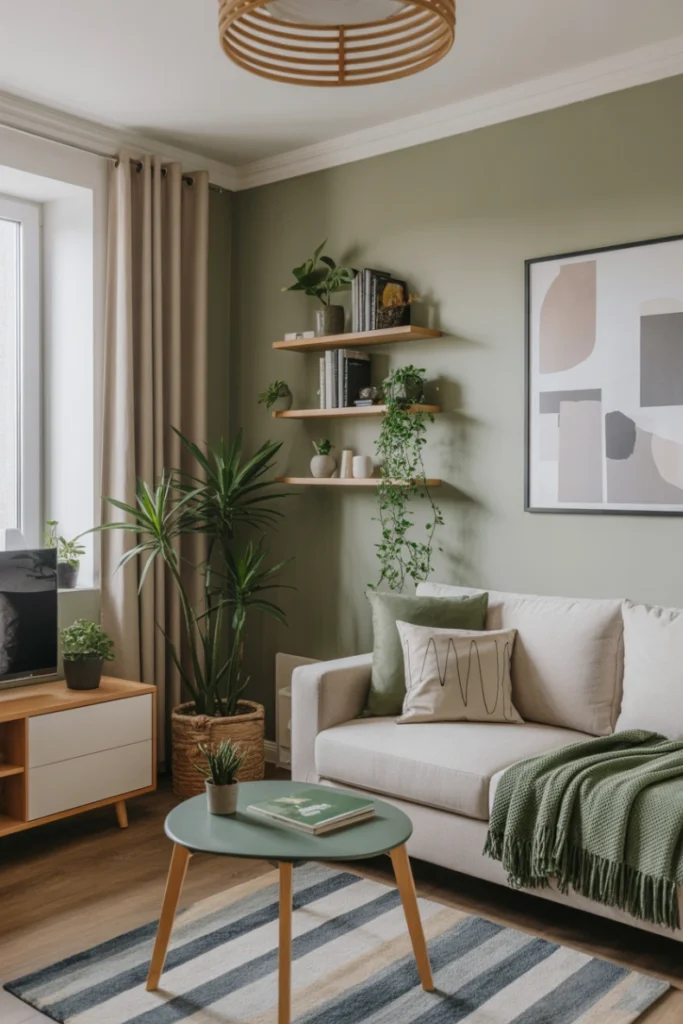
Plants soften hard lines, add natural color and make a small room feel lived in rather than staged. Start with easy, low light tolerant plants such as pothos, snake plants and ZZ plants, which survive missed waterings and typical apartment light. Place a tall snake plant in an empty corner, trail a pothos from a high shelf, and add a small succulent or two on the coffee table or windowsill. Three to five plants, varied in height, usually fill a small living room without turning it into a jungle.
Use the vertical space for plants too. Hanging planters near a window, a wall mounted planter for trailing vines, or a slim plant stand with three tiers keeps greenery off the floor. Choose pots in one or two materials, such as terracotta and white ceramic, so the collection looks curated. Water only when the top inch of soil feels dry, and rotate plants every couple of weeks so they grow evenly toward the light. If you have pets, check that each plant is pet safe before you bring it home, and keep trailing vines out of reach of curious cats.
Try this: Buy one plant first and keep it alive for a month before you add more. Learning its light and water needs in your specific apartment saves money and disappointment.
11. Add Wall-Mounted Lighting
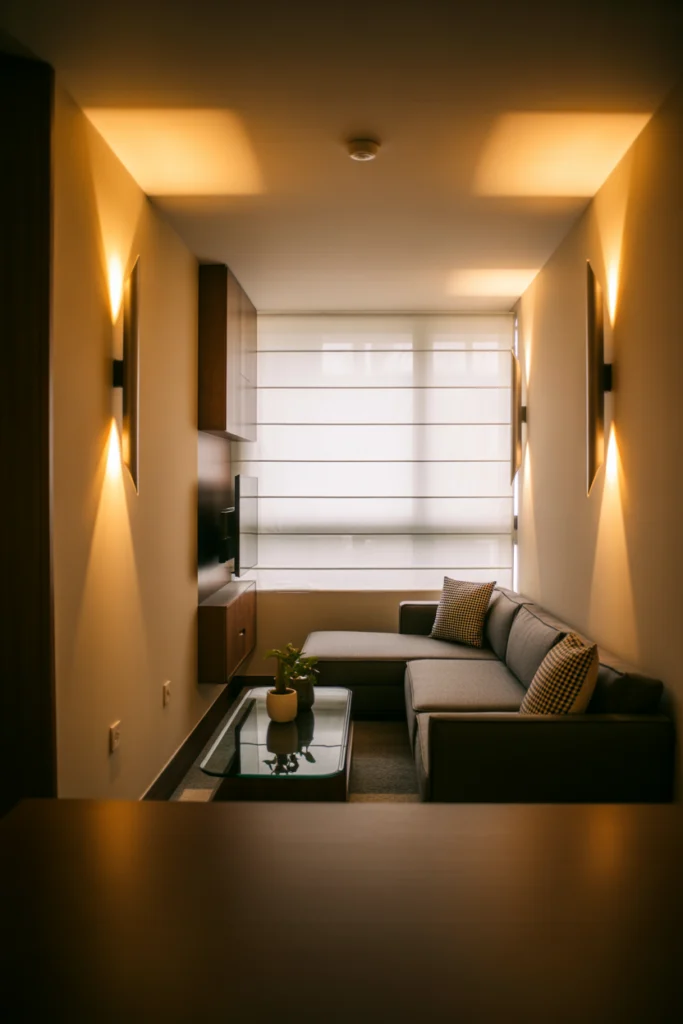
Wall sconces save the floor and table space that floor lamps and large table lamps consume, which matters when every square foot counts. Install a pair of sconces flanking the sofa or a single adjustable reading sconce beside an armchair, with the light center about 60 to 66 inches from the floor. Choose plug in sconces with a cord cover if you rent, or hardwired sconces with a dimmer if you own the space. Warm white bulbs at 2700K give a cozy evening glow, while 3000K works better if you also read or work in the same spot.
Style sconces as part of the decor, not just as utilities. Brass or matte black fixtures add a finished detail to a plain wall, and a fabric or linen shade softens the light and reduces glare on the television. Pair wall lights with a small table lamp and, if you have them, LED strips behind the television or under a shelf, so you can switch between bright task light and soft evening light without relying on a single harsh ceiling fixture. Keep cords tidy with paintable cord covers that blend into the wall color.
Try this: Add a dimmer, even a plug in dimmer for a plug in sconce. Dimming is the cheapest way to make a small room feel cozy at night.
12. Add a Slim Console Table
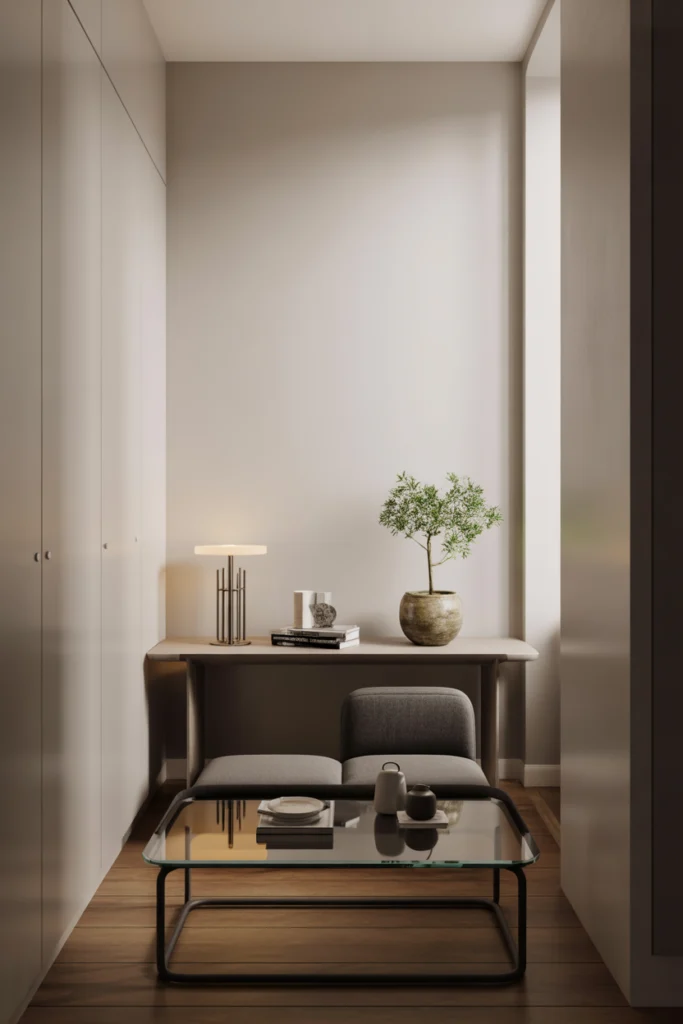
A slim console table, about 10 to 12 inches deep and 36 to 48 inches long, fits behind a sofa or along a narrow wall where a full sideboard never would. Use it as a landing spot for keys, mail and sunglasses near the entry, or as a display surface for a lamp, a vase and a framed photo behind the sofa. A console with one drawer or a lower shelf adds hidden storage for remotes, chargers and dog leashes without adding visual bulk.
Style the top with restraint: one taller item such as a vase or lamp, one medium item such as a stack of books, and one small item such as a candle or a framed photo. Leave at least a third of the surface empty so the table reads as intentional rather than crowded. If the console sits behind a sofa, make sure it is no taller than the sofa back, usually 30 to 32 inches high, so it does not block the view across the room. A console in a light wood or a painted finish keeps a narrow hallway or living wall feeling open.
Try this: Put a small tray on the console for keys and wallets. A tray turns a drop zone into a deliberate spot and makes tidying a ten second job.
13. Use Furniture with Exposed Legs
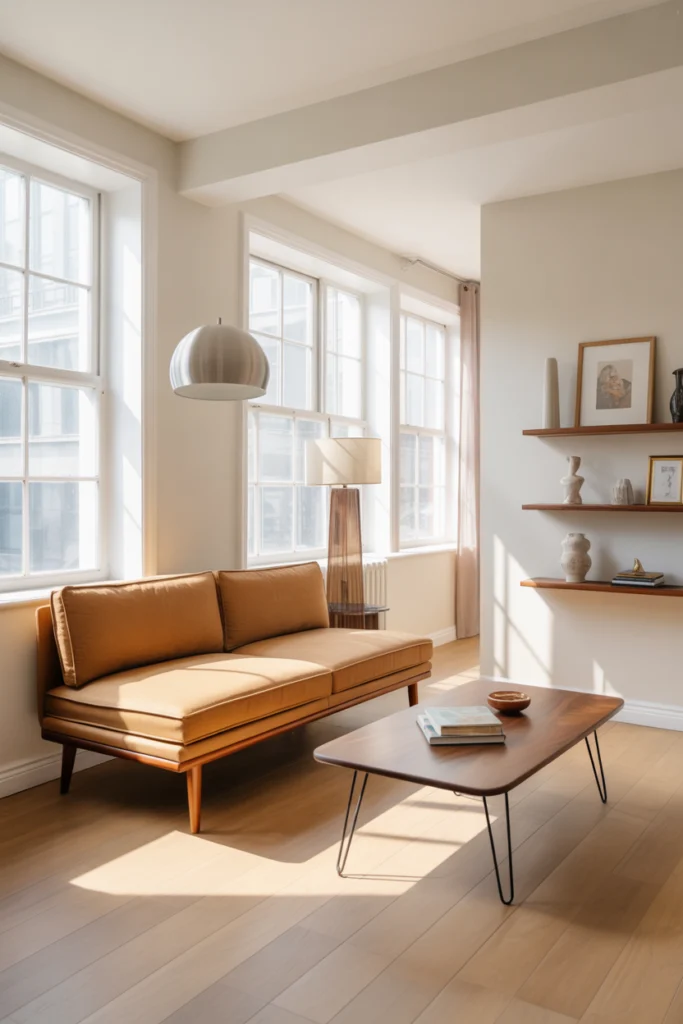
Furniture that sits on visible legs lets you see floor underneath it, which makes a small room feel less crowded and easier to clean. Choose sofas, armchairs and media stands with tapered wood or slim metal legs at least 4 to 6 inches high, rather than pieces that sit flat on the floor like a solid block. Mid century style pieces are a natural fit here, with clean lines, light upholstery and legs that lift the whole silhouette.
Combine raised furniture with a light rug and pale walls for the strongest effect, since the eye can travel across the floor without stopping at every piece. A robot vacuum also benefits, as it can pass under most legged furniture. Balance the airy look with one grounded piece, such as a low wooden coffee table or a chunky woven basket, so the room does not feel like everything is floating. Check the weight rating and stability of legged pieces if you have children or large pets, and add felt pads to protect wood floors.
Try this: If you love a sofa that sits on the floor, lift the visual weight another way: choose a light fabric, slim arms and a low back, and keep the coffee table legged and open underneath.
14. Add a Statement Wall
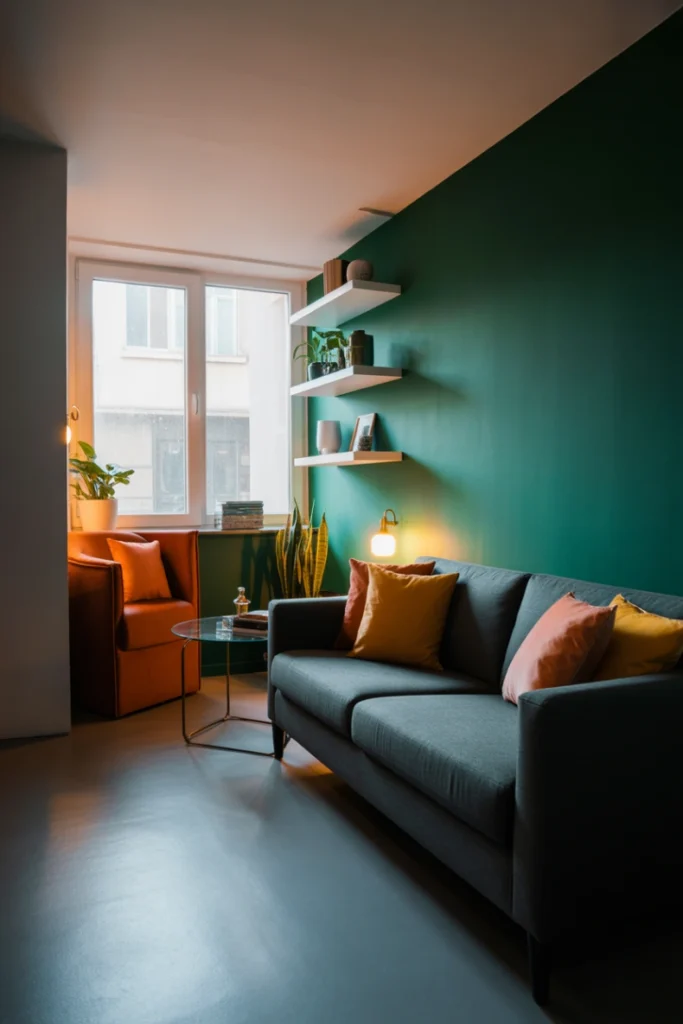
One statement wall gives a small living room personality without the cost or clutter of decorating every wall. Pick the wall you see first when you enter, usually behind the sofa or the television, and treat just that wall with paint, peel and stick wallpaper, wood slat panels or a gallery of framed art. A deep green, navy or terracotta accent works well in a small room if the other three walls stay light, because the contrast creates depth instead of closing the room in.
Keep the statement wall balanced. If you use bold wallpaper, keep the furniture and rug in solid, quiet tones. If you use a gallery wall, use frames in one color and leave consistent spacing, about 2 to 3 inches between frames, so the collection reads as one composition. Peel and stick wallpaper and removable wall panels are renter friendly options that come off cleanly when you move. Test a large sample, at least 24 by 24 inches, on the wall for a few days before you commit, since a color that looks rich in a store can feel very different under your apartment lighting.
Try this: Photograph the room with the sample in place, then view the photo in black and white. If the accent still adds depth without dominating, the value contrast is right.
15. Use Transparent or Glass Furniture
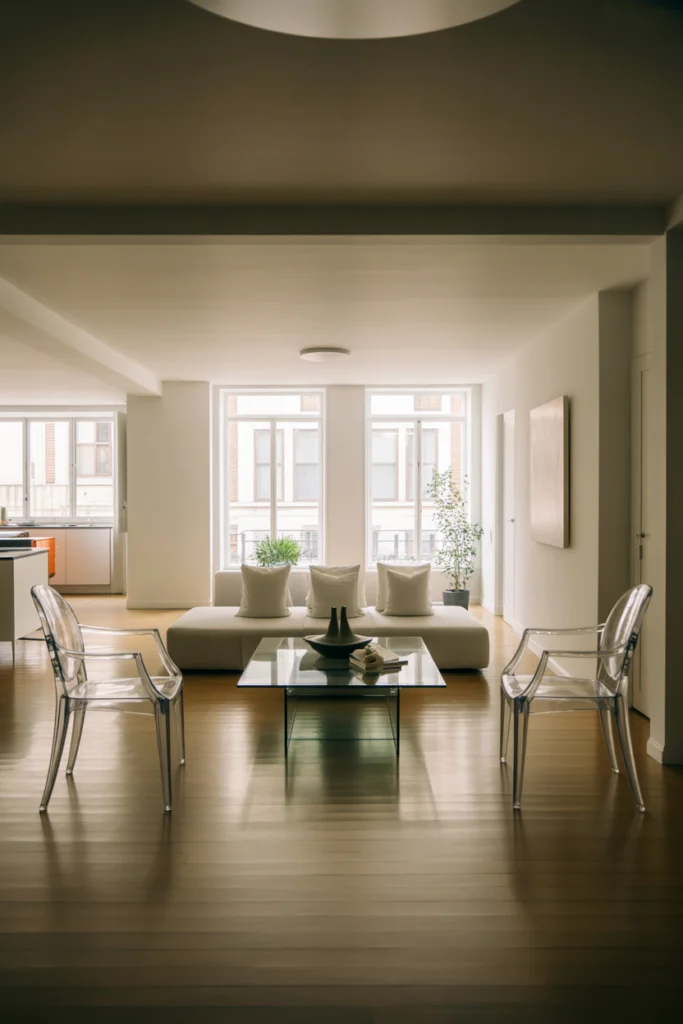
Glass and acrylic furniture take up physical space without taking up visual space, which is ideal when a room already feels full. A glass coffee table, about 36 to 42 inches long with a slim metal or wood frame, lets the rug pattern show through and keeps sightlines open. Acrylic side chairs or a clear console chair can seat guests without adding a dark block to the room, and a glass topped side table beside the sofa holds a drink without visually crowding the seating area.
Use transparent pieces sparingly, one or two per room, and pair them with warmer materials such as wood, linen and woven baskets so the room does not feel cold or fragile. Choose tempered glass for safety, especially if you have children or pets, and keep a microfiber cloth handy because fingerprints and dust show quickly on clear surfaces. Avoid a full set of acrylic furniture, which can look like a showroom rather than a home, and skip glass if your floor is very dark and reflective, since the effect is strongest over a light rug or floor.
Try this: Swap just the coffee table first. It is the largest table in most living rooms, so making it transparent often changes the whole feel of the room for the lowest cost.
16. Install Floor-to-Ceiling Curtains
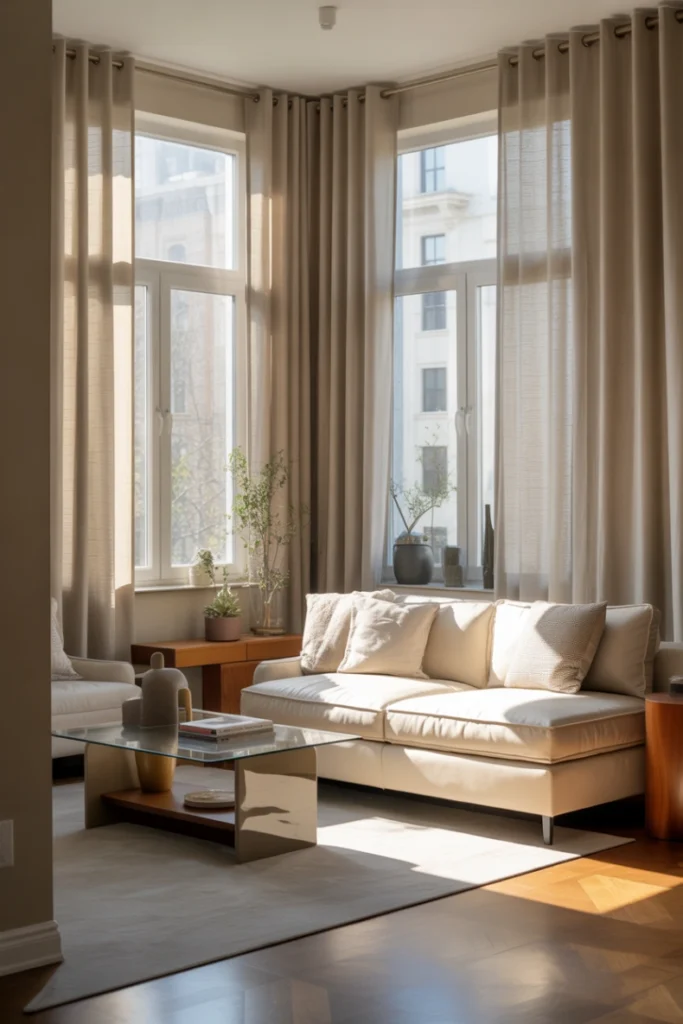
Floor to ceiling curtains make windows look taller and walls look higher, even when the actual window is small. Hang the curtain rod 4 to 6 inches below the ceiling and extend it 6 to 10 inches beyond each side of the window frame, so the curtains stack on the wall rather than covering the glass when open. Choose panels that just brush the floor, about 96 inches long for a standard 8 foot ceiling, and avoid puddling fabric on the floor in a small room, where it collects dust and trips feet.
Lightweight fabrics work best here. Sheer white linen lets daylight through while giving privacy during the day, and a heavier linen or cotton panel in ivory, beige or soft gray adds warmth at night. Use one curtain per side for a clean look, and match the rod finish to other metals in the room, such as black, brass or brushed nickel, for a cohesive finish. If you rent, tension rods inside the window frame are an alternative, but they will not give the same height effect as a rod mounted near the ceiling.
Try this: Measure from just below the ceiling to the floor, not from the window frame, when you buy panels. Most small rooms need the longer 96 inch panels, not the standard 84 inch ones.
17. Add Floating Shelves for Décor
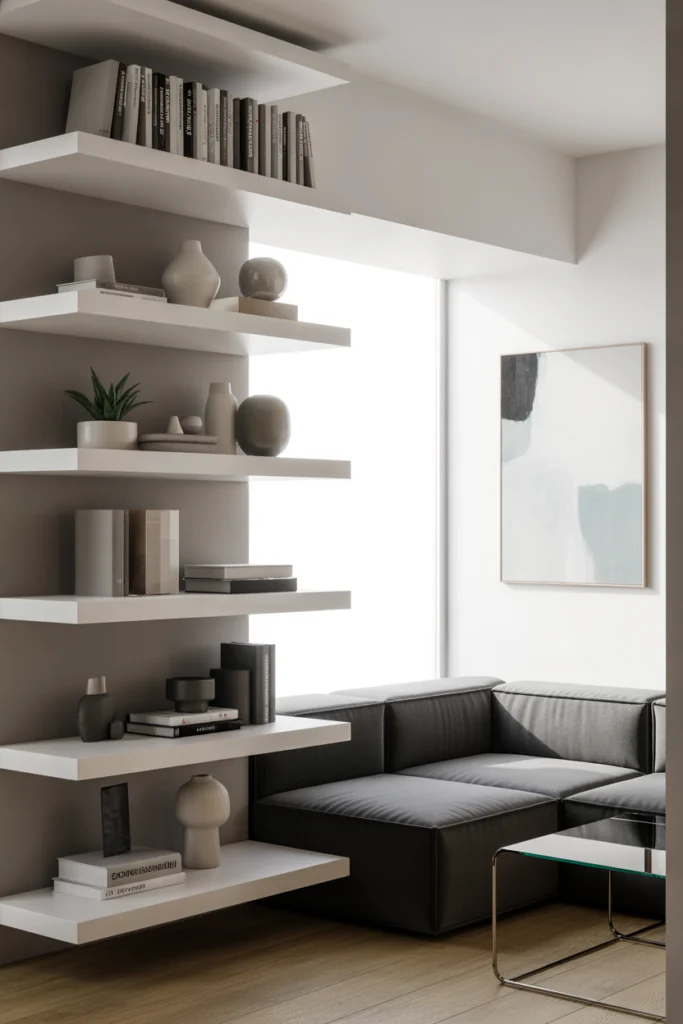
Floating shelves let you display books, plants, candles and art without a bookcase taking up floor space. Install shelves 8 to 10 inches deep, in lengths of 24 to 36 inches, above a console, beside the television or in an awkward alcove. Space them 12 to 15 inches apart vertically so you can fit books upright and still have room for a small vase or plant on top of the books. Two or three shelves usually look better than a full wall of shelving in a small room.
Style shelves in small groups rather than filling every inch. Place books in a mix of vertical and horizontal stacks, add one plant that trails over the edge, and leave one shelf partly empty so the display can breathe. Keep heavier items low and lighter items high, anchor shelves into studs or with rated anchors, and avoid placing shelves directly above where someone sits if they hold heavy objects. Rotate the display with the seasons, swapping a candle color or a small framed print, to keep the room feeling fresh without buying new furniture.
Try this: Lay out your shelf items on the floor first in the exact arrangement you plan, photograph it, then recreate it on the wall. You will spot overcrowding before you drill.
18. Add a Corner Reading Nook
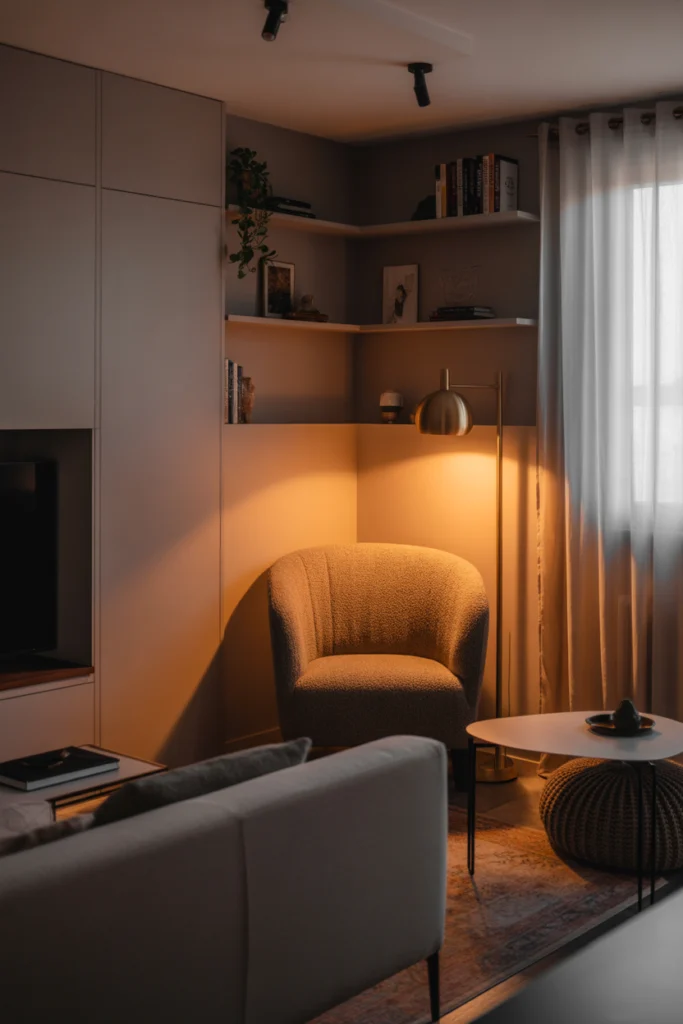
An unused corner can become the most loved spot in a small apartment with just a comfortable chair, good light and a place to set a cup. Choose a compact armchair about 28 to 32 inches wide, or a floor cushion with a backrest if space is very tight, and add a small side table about 16 to 18 inches across for a book and a drink. A wall mounted reading light or a slim floor lamp beside the chair gives focused light without taking table space.
Make the nook inviting with soft layers: a knitted throw, a lumbar cushion in a contrasting texture, and a small basket beside the chair for current books and magazines. Keep the nook close to a window if possible for natural light, and add a sheer curtain if glare hits the pages in the afternoon. If the corner is also a walkway, choose a chair without wide arms and keep the side table small so the path stays clear. A reading nook works best when it is ready to use at any moment, so avoid storing laundry or bags there.
Try this: Sit in the chair with your usual book and drink for ten minutes before you finalize the setup. You will quickly learn whether the light, table height and legroom actually work.
19. Use a Ladder Shelf for Storage
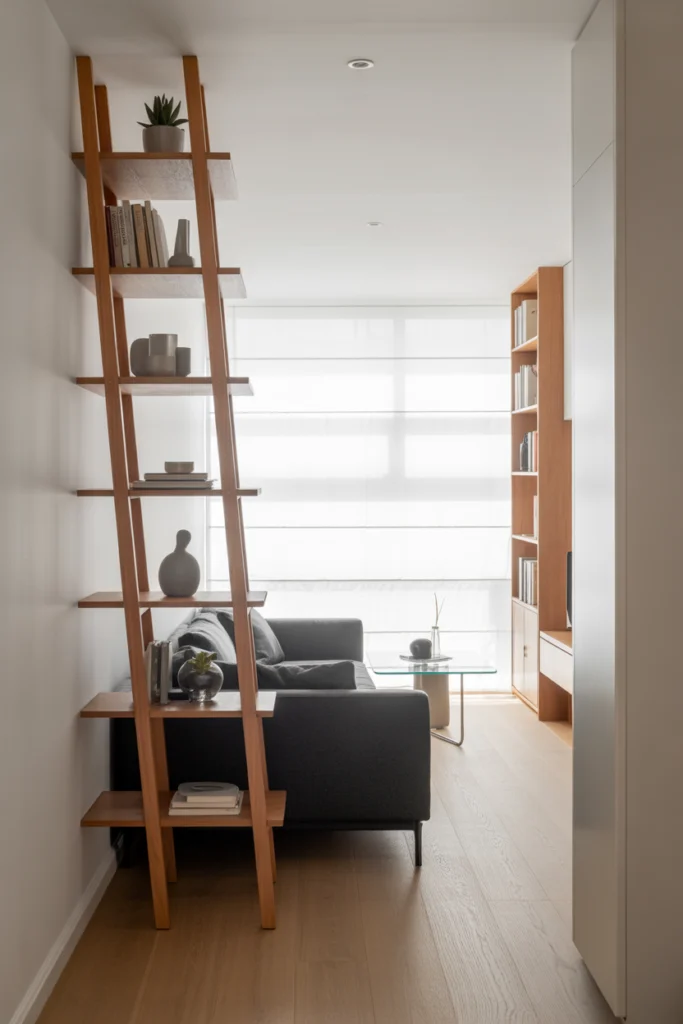
Ladder shelves lean against the wall, so they take up very little floor depth at the base, usually 12 to 14 inches, while giving you four or five tiers of storage going up. That slim profile makes them perfect for narrow gaps beside a sofa, a television or a doorway. Use the wider bottom shelves for books, baskets and larger plants, and the narrower top shelves for small decor, candles and framed photos. A wooden ladder shelf warms a neutral room, while a black metal version suits a modern or industrial space.
Keep the shelf stable and safe by securing the top to the wall with a small bracket or anti tip strap, especially if you have children or pets. Do not overload the top tiers, and place heavier baskets on the bottom shelf. Mix closed baskets with open display so the shelf stores real items without looking like a warehouse: one basket for chargers and remotes, one for throws, and open space for books and plants. Ladder shelves are also easy to move when you rearrange or move apartment, which makes them a practical rental investment. If you need bedroom storage ideas that use the same vertical trick, these small bedroom ideas show ladder and wall storage in smaller rooms too.
Try this: Put a basket on the bottom shelf for the items that usually end up on the sofa, such as chargers, notebooks and remote controls. The shelf then solves clutter, not just decor.
20. Add a Pouf or Floor Seating
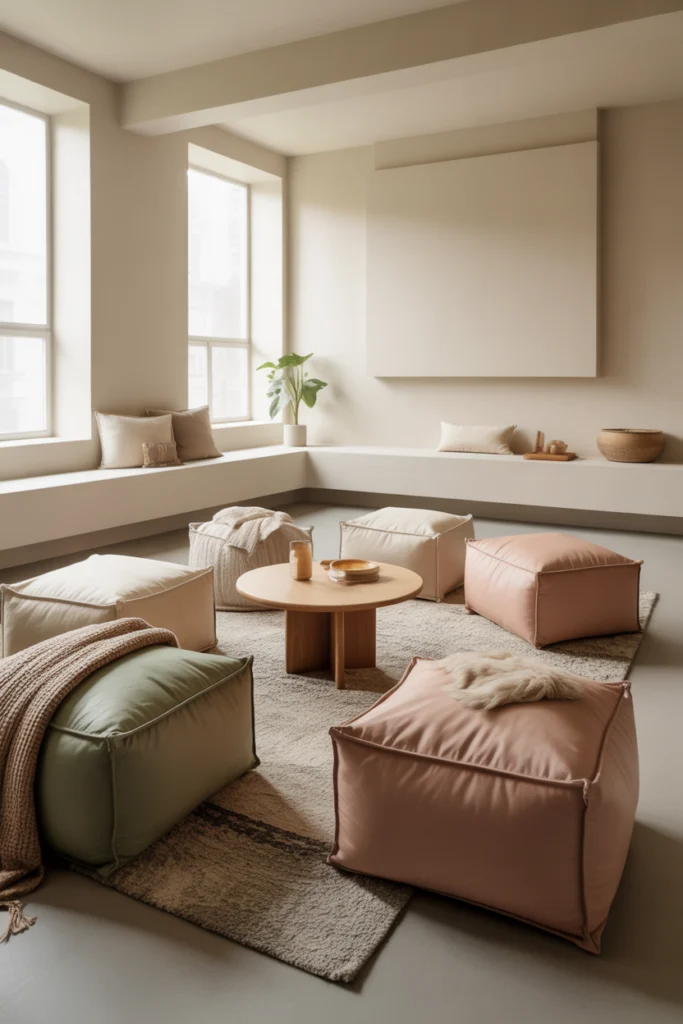
Poufs and floor cushions are the most flexible extra seats you can own in a small apartment. A pouf about 18 to 22 inches across and 14 to 16 inches high works as a footrest most days, an extra seat when friends visit, and a side table with a tray on top when you need a surface. Choose a woven, knitted or leather look pouf in a neutral tone so it blends with your sofa, and store a second floor cushion in a closet or under the bed for larger gatherings.
Floor seating also suits casual evenings, movie nights and families with young children who prefer to sit low. Pair poufs with a soft rug so sitting on the floor feels comfortable, and keep a lightweight throw nearby for cooler evenings. Avoid oversized bean bags, which can swallow a small room, and choose poufs with removable, washable covers if you eat or drink in the living room. When guests leave, a pouf tucks beside the sofa, under a console table or into a corner in seconds, returning the room to its everyday layout.
Try this: Buy one pouf first and live with it for two weeks. If you reach for it daily as a footrest or seat, a second one is worth it. If it stays in the corner, one is enough.
21. Use Built-In Shelving
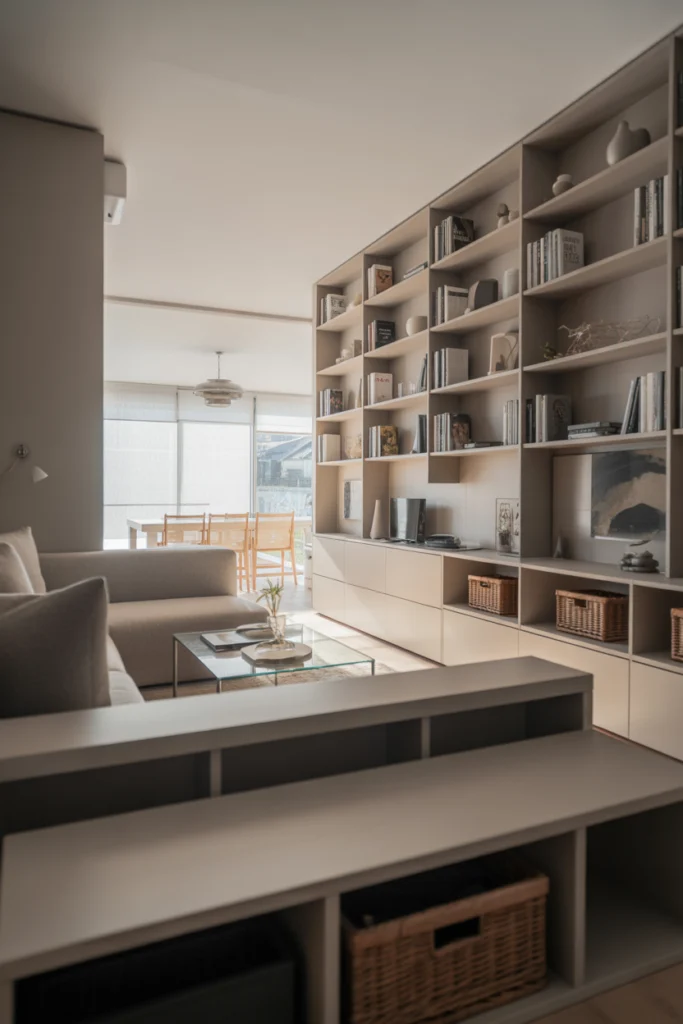
Built in shelving uses wall niches, alcoves and the space around a television or doorway that freestanding furniture cannot use well. In a rental, you can get a similar effect with two tall, narrow bookcases flanking the television, joined visually by painting them the same color as the wall or adding a simple top trim board. Paint built ins the wall color for a seamless look, or paint them a shade darker for a subtle frame that defines the seating area.
Plan the shelves around what you actually own. Measure your tallest books, largest baskets and media devices before you build or buy, and include a mix of open shelves for display and closed baskets or doors for less attractive items such as routers, cables and board games. Leave some shelves partly empty, and use matching baskets in natural seagrass or cotton for a calm, cohesive look. Built ins add a custom, finished feel that can make a small apartment look intentionally designed rather than furnished with whatever fit through the door, and they are a strong selling point if you later show the home to a future tenant or buyer.
Try this: Before you commit to built ins, live with two freestanding bookcases in the same spots for a month. If the layout still works, you have proven the design before spending on carpentry.
22. Add a Small Bar Cart
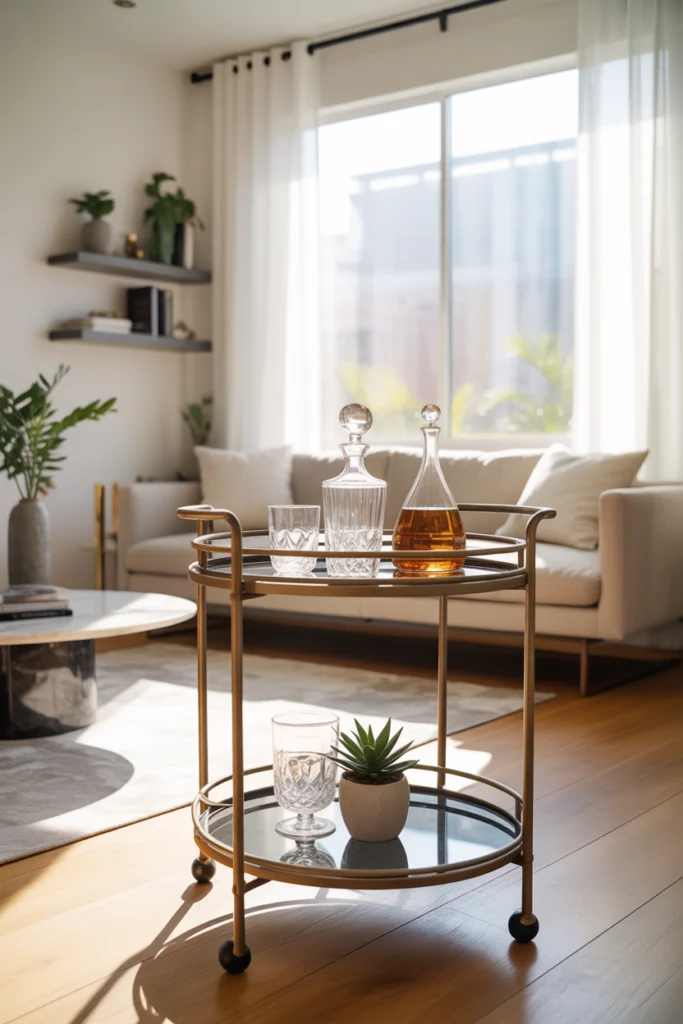
A small bar cart adds style and function without committing a whole piece of furniture to one job. A slim two tier cart, about 24 inches wide and 16 inches deep, rolls between the sofa and the kitchen and works as a drink station, a coffee bar, a plant stand or a dessert cart depending on the evening. Choose a cart with locking wheels so it stays put when you pour, and a lower shelf that holds heavier bottles or books without tipping.
Style the cart lightly: a few glasses, one or two bottles or a coffee setup, a small plant and a candle, rather than a crowded collection. Keep the top tier mostly clear so you have room to mix a drink or set down a tray. If you do not drink alcohol, use the cart as a tea and coffee station with mugs, a small kettle and jars of tea, or as a craft and snack cart for family evenings. When guests arrive, roll it to the seating area. When they leave, roll it back to a corner or beside the kitchen, and the living room returns to its normal size.
Try this: Keep a small tray on the top tier. It corrals bottles and glasses, protects the surface, and lets you carry everything to the kitchen in one trip.
23. Create a Cozy Lighting Layer
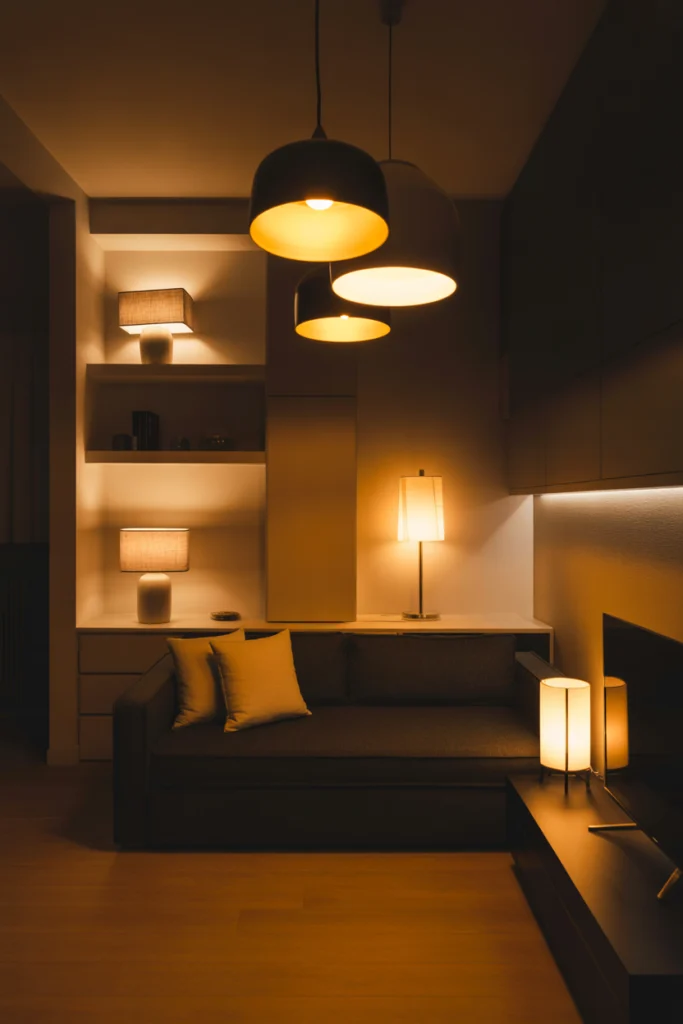
Cozy lighting comes from layers, not from one bright ceiling light. Combine three layers: ambient light from a ceiling fixture or a floor lamp, task light from a reading lamp or sconces, and accent light from LED strips, candles or a small table lamp. Use warm white bulbs at 2700K for evening layers, and place lights at different heights, for example a floor lamp at 60 inches, a table lamp at 24 inches above the side table, and LED strips under a shelf, so the room gains depth instead of flat brightness.
Control is what makes layers work. Put lamps on dimmers or smart plugs so you can lower the light for a movie and raise it for reading without getting up to swap bulbs. Avoid a single overhead light as your only source, since it flattens shadows and makes a small room feel like an office. Add battery candles on a shelf or mantel for a flickering accent without fire risk in a rental, and use a warm LED strip behind the television to reduce eye strain during evening viewing. The goal is a room that can shift from bright and functional in the morning to soft and relaxing at night with one or two switches.
Try this: Walk through your evening routine and note every moment you wish the light were softer or brighter. Those moments tell you exactly where the next lamp or dimmer belongs.
Conclusion
Small apartment living rooms work best when every choice solves a real daily problem. Light colors and mirrors open the room visually, multifunctional furniture and vertical storage free the floor, and layered lighting makes the same space feel bright in the morning and cozy at night. You do not need to do all 23 ideas at once. Start with layout, seating and light, then add storage and decor one piece at a time, checking after each change that the room still feels easy to move through and easy to relax in.
Measure before you buy, choose pieces that do more than one job, and keep the palette calm so the room reads as one intentional space rather than a collection of compromises. With those habits, even a tiny living room can hold guests, work, reading and rest, and still feel like the welcoming heart of your apartment.
Frequently Asked Questions
How do I make a small apartment living room look bigger without renovating?
Use light wall colors, one large mirror across from a window, floor to ceiling curtains, furniture with exposed legs and a rug that fits under the front legs of your seating. Together, these tricks reflect light, extend sightlines and keep the floor visible, which makes the room read larger without any structural work.
What size sofa works best in a small apartment living room?
Most small apartments suit a sofa between 72 and 84 inches wide, or a compact sectional around 80 to 90 inches wide with a chaise depth of about 60 inches. Measure your wall, leave at least 30 inches for walkways, and tape the footprint on the floor before you order so you can check doors, radiators and balcony access.
How can I add storage without buying bulky furniture?
Use the walls: floating shelves, a tall narrow bookcase, a ladder shelf and baskets on top of wardrobes or inside a console. Choose closed baskets for chargers, remotes and seasonal items, and keep open shelves about two thirds full so storage looks intentional rather than crowded.
What colors work best in a small living room?
Warm white, cream, pale gray and soft sage work best as main colors because they reflect light and keep the room calm. Add depth with one or two accent colors, such as olive, terracotta or navy, in cushions, throws and art, while keeping large furniture and the rug in light, neutral tones.
Can I fit a dining area and a work corner in the same small living room?
Yes, if you zone the room clearly. Use a drop leaf table that folds flat against the wall for dining, a rug to define the seating zone, and a slim console or lift top coffee table for laptop work. Keep work items in a basket or drawer at the end of the day so the living room can switch back to relaxing in minutes.
More Ideas You Will Love
 13 Warm Home Aesthetic Living Room Ideas & Style Guide
 15 Earthy Living Room Ideas for a Cozy, Nature-Loved Home Now
 11 Black Sofa Living Room Ideas That Look Instantly Modern
 12 Cozy Living Room Paint Color Ideas for Every Style
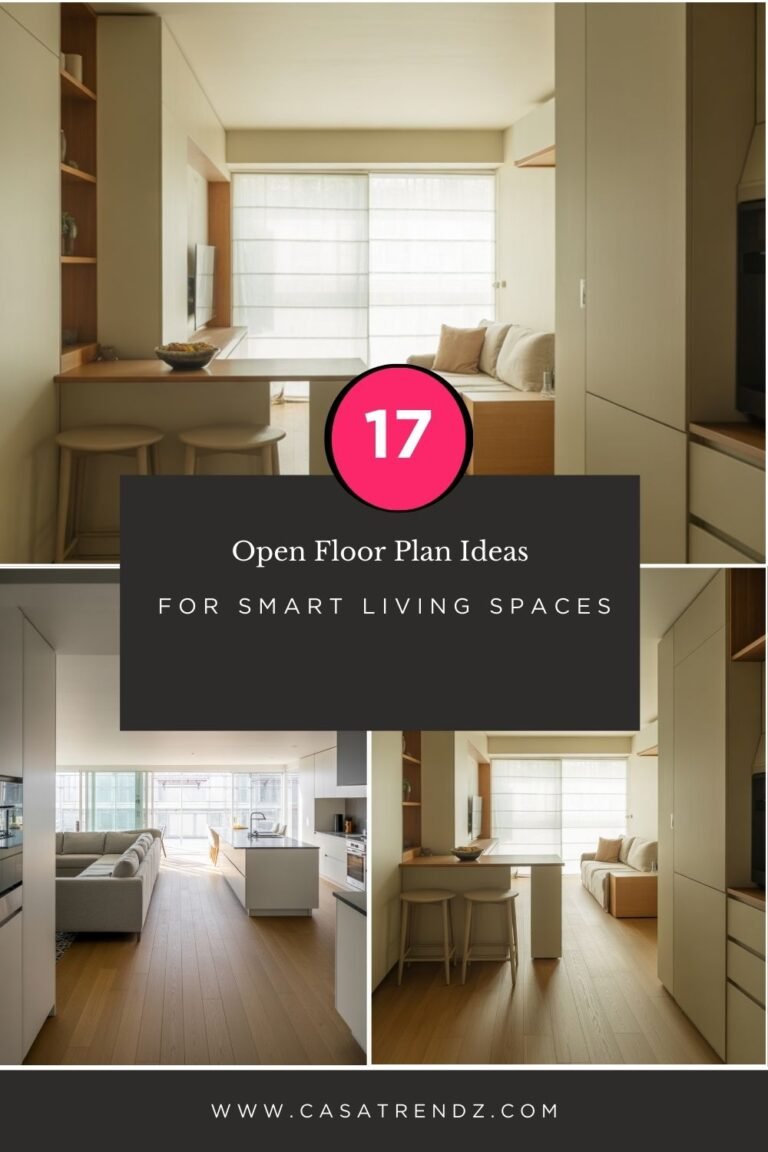 17 Open Floor Plan Ideas for Smart Living Spaces
 21 Contemporary Living Room Ideas for Modern & Functional Style