
21 Contemporary Living Room Ideas for Modern & Functional Style

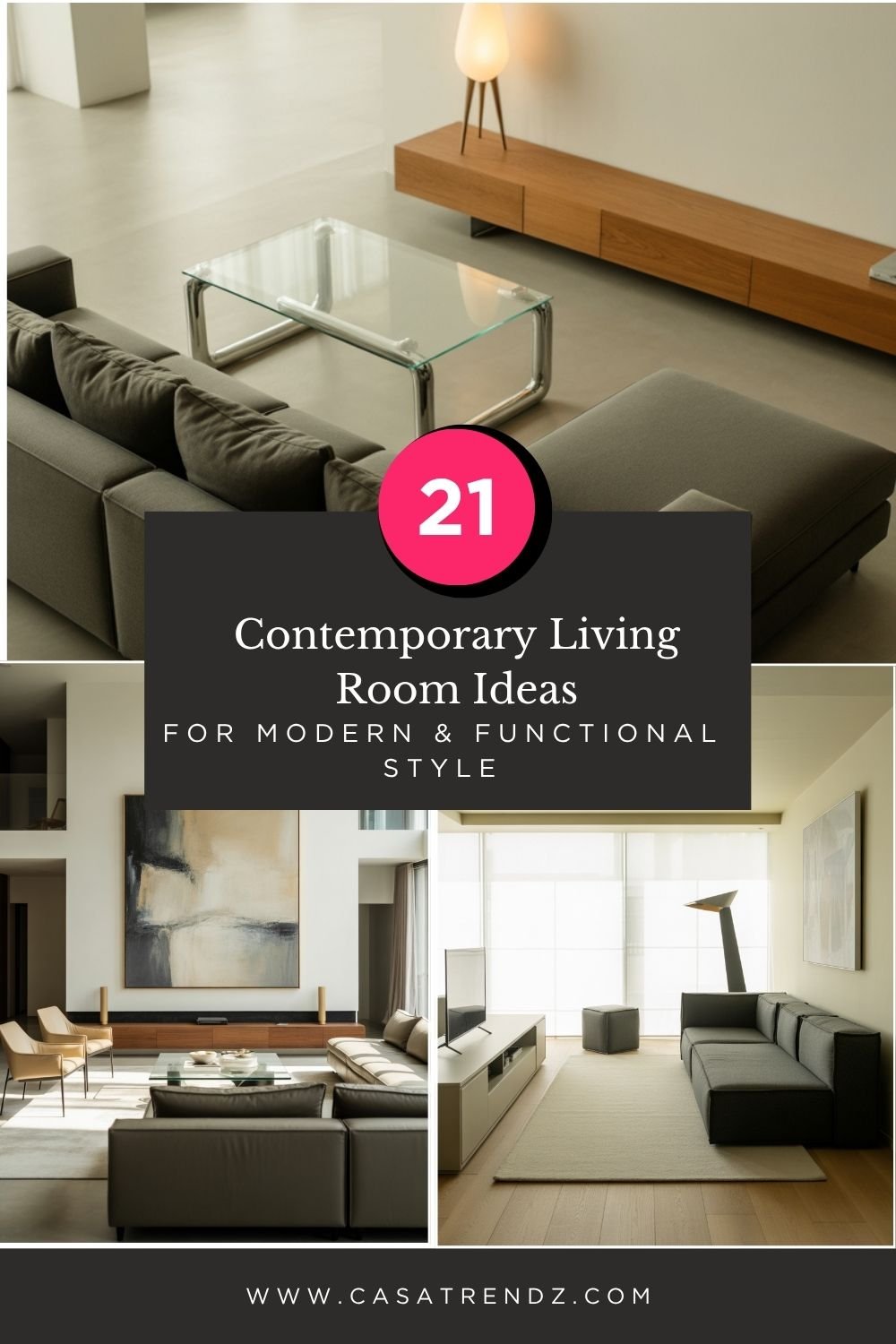
A contemporary living room works best when it feels calm, open, and easy to live in. The style is built on clean lines, a restrained color palette, and furniture that earns its place. Nothing is there just for show. Every piece, from the sofa to the lamp in the corner, should support comfort, light, and movement through the room.
The good news is that you do not need a full renovation to get this look. Small, deliberate changes often make the biggest difference. A lighter wall color, a larger rug, one strong light fixture, or a tidier arrangement can shift the whole room from busy to balanced. The 21 ideas below focus on changes that are practical, affordable to phase in over time, and suited to real homes with kids, pets, guests, and everyday clutter.
Use this list as a menu rather than a checklist. Pick the three or four ideas that solve your biggest frustrations first, whether that is poor lighting, a room that feels cramped, or a space that never quite feels finished. If you want more modern living room inspiration before you start, browse these modern living room ideas alongside this guide and note the rooms that feel closest to your own space, light, and layout.
Budget also matters, and contemporary style is forgiving here because it rewards editing more than spending. Start with paint, lighting, and a rug, which change the room most for the least money, and phase furniture in as budget allows. Buy the sofa and rug first, since they set the scale and palette, then add lighting, art, and accessories. Shopping secondhand for solid wood tables or quality lamps can stretch the budget further, as long as the shapes stay simple and the finishes match your palette.
1. Embrace a Neutral Color Scheme
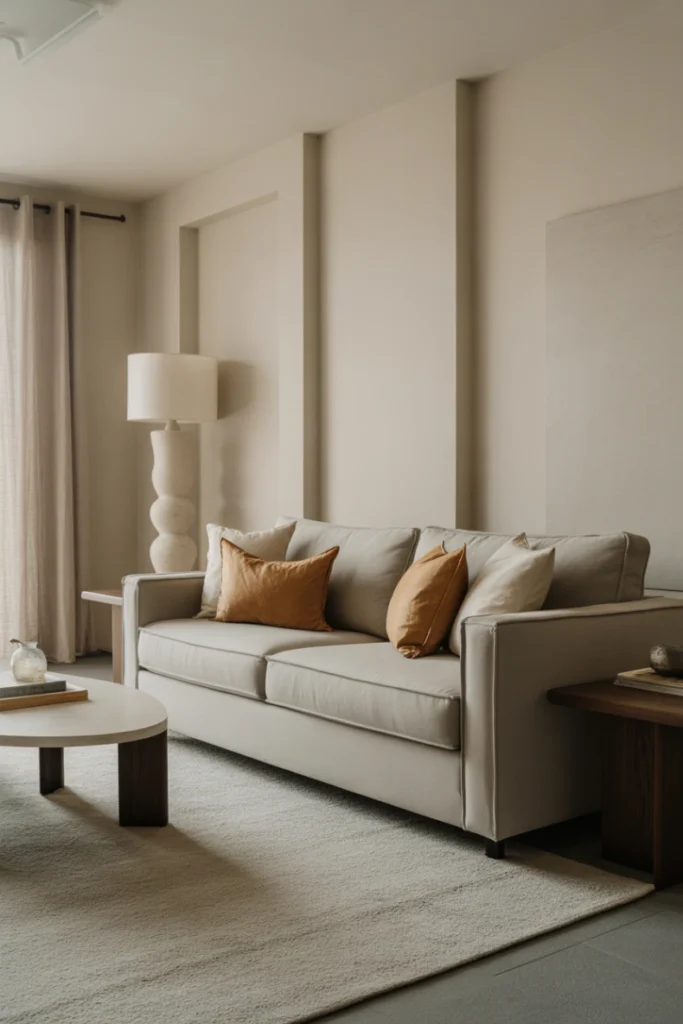
A neutral base is the easiest way to make a contemporary living room feel calm and cohesive. Warm whites, soft beige, light greige, pale taupe, and mid gray all work well because they reflect light and let furniture and art stand out without competing for attention. Start with the walls in a warm white or light greige, then add depth with darker neutrals in the rug, sofa, and curtains. A useful guide is the 60-30-10 rule: about 60 percent dominant neutral, 30 percent secondary neutral, and 10 percent accent color.
Neutrals only feel flat when everything is the same texture, so layer materials instead of adding more colors. Pair a smooth linen sofa with a chunky wool throw, a boucle cushion, a matte ceramic vase, and a natural wood coffee table. Test paint samples on two walls and look at them in morning and evening light before committing, because warm and cool undertones shift a lot during the day. Keep the ceiling a clean white to lift the room, and repeat one wood tone in at least two places so the palette feels intentional rather than accidental.
2. Add Statement Lighting
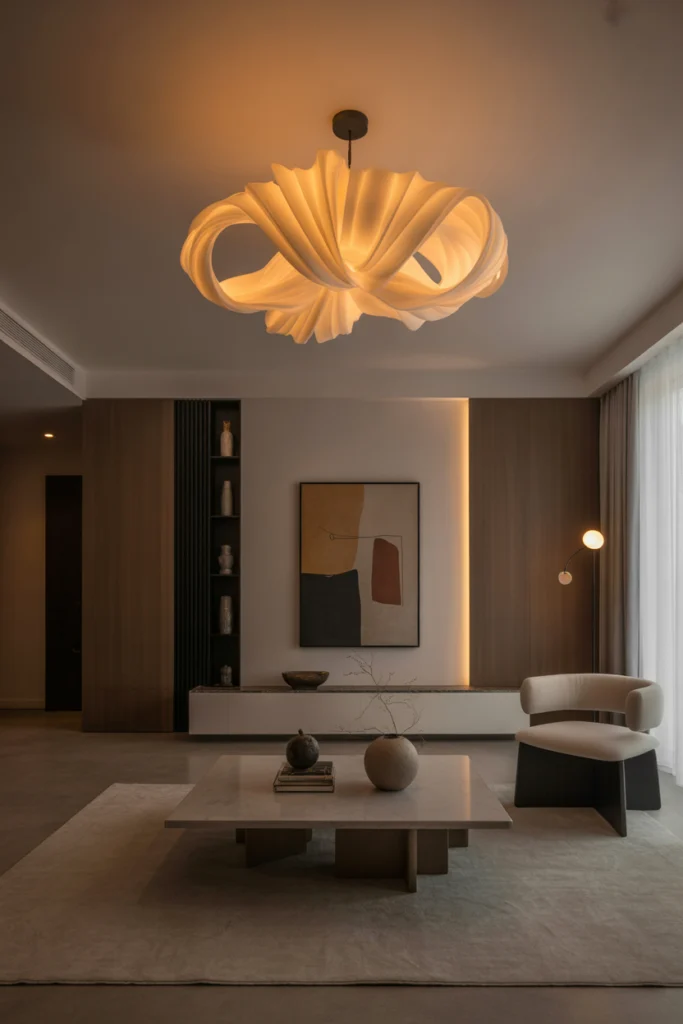
One strong light fixture can anchor a whole contemporary living room. A geometric chandelier, a slim brass pendant cluster, or an arched floor lamp gives the eye a focal point and sets the tone for everything around it. Hang a pendant or chandelier so its lowest point sits about 30 to 36 inches above a coffee table, and keep at least 7 feet of clearance above walking paths. Choose a fixture that is roughly one half to two thirds the width of the table or seating area beneath it, so it looks proportionate rather than lost or overpowering.
Layering matters just as much as the statement piece itself. Combine ceiling light with floor lamps, table lamps, and wall sconces so you can shift from bright daytime light to soft evening light. Put the main lights on dimmers and use warm white bulbs around 2700 to 3000 Kelvin for a relaxed glow. A practical setup is one overhead fixture, one floor lamp beside the sofa for reading, and one small table lamp on a console. This gives you three levels of light and removes the harsh single source glare that makes modern rooms feel cold.
3. Choose Low-Profile Furniture
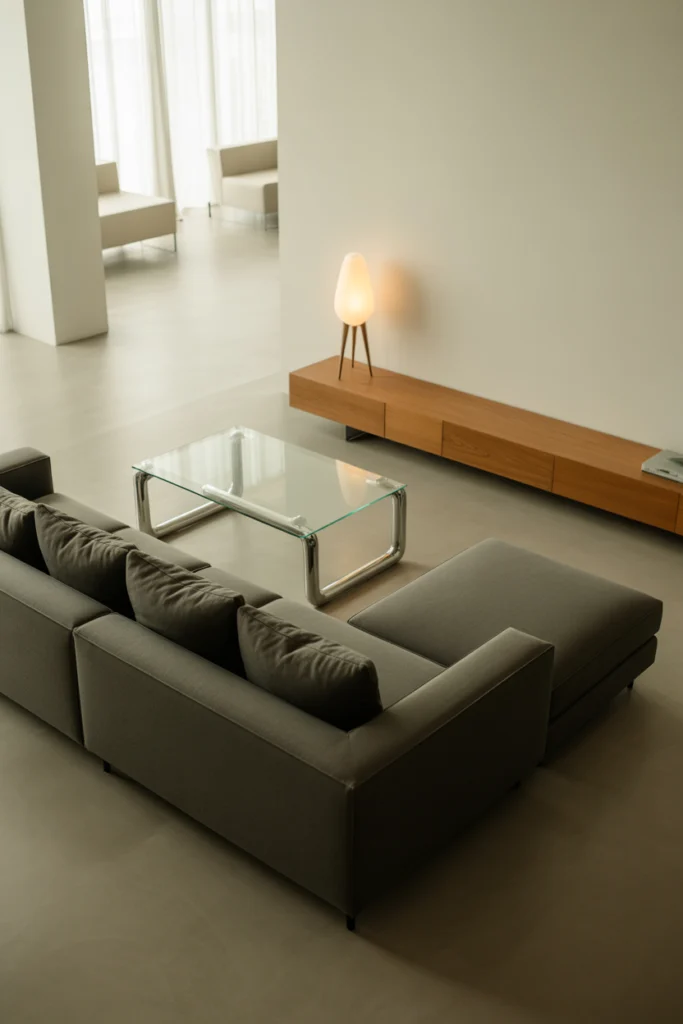
Low-profile furniture is a hallmark of contemporary design because it keeps sightlines open and makes the room feel larger. Look for sofas with a seat height of about 15 to 17 inches, a back height under 32 inches, and slim arms or track arms rather than rolled, bulky ones. Low seating also makes conversation easier, since people sit at a similar level and can see across the room without a tall sofa back blocking the view.
Balance low pieces with a wide, low coffee table and a streamlined media console in matte wood or lacquer. Leave 14 to 18 inches between the sofa and the coffee table so legs have room, and keep at least 30 inches of clear walking space around the main seating group. If your room has a great view or a fireplace, low furniture lets that feature stay visible. Add one taller element, such as a floor lamp or a tall plant, to stop the room from feeling too flat, but keep the bulk of the seating low and horizontal.
4. Introduce Bold Artwork
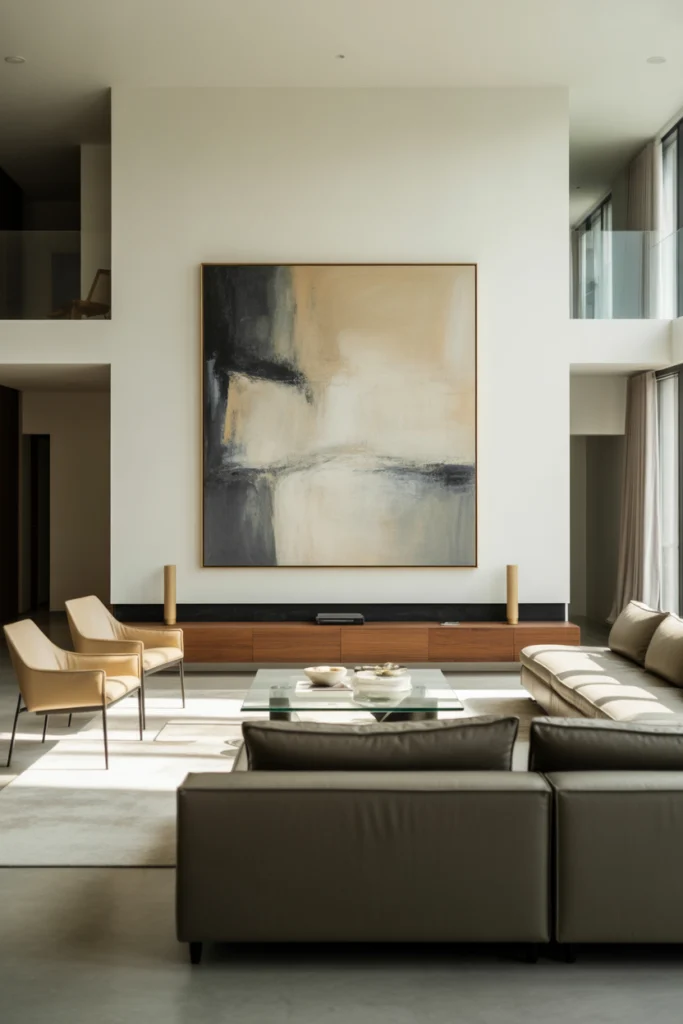
One large piece of art usually looks more contemporary than a wall full of small frames. Abstract prints, bold geometric shapes, black and white photography, and large color field pieces all work well, because they add personality without adding clutter. Size it right: art above a sofa should span about two thirds of the sofa width. For a standard 84 inch sofa, that means a piece or a pair totaling around 56 inches wide.
Hang the center of the artwork at about 57 inches from the floor, which is average eye level, and leave 6 to 8 inches between the bottom of the frame and the top of the sofa. If you choose a contrasting color, echo it once elsewhere in the room, perhaps in a cushion or a throw, so the art feels connected to the space. Use a simple frame in black, natural oak, or white, and keep the wall around it clear. One confident piece above the sofa, fireplace, or console instantly makes the room feel designed rather than decorated by accident.
5. Add Texture with Layered Fabrics
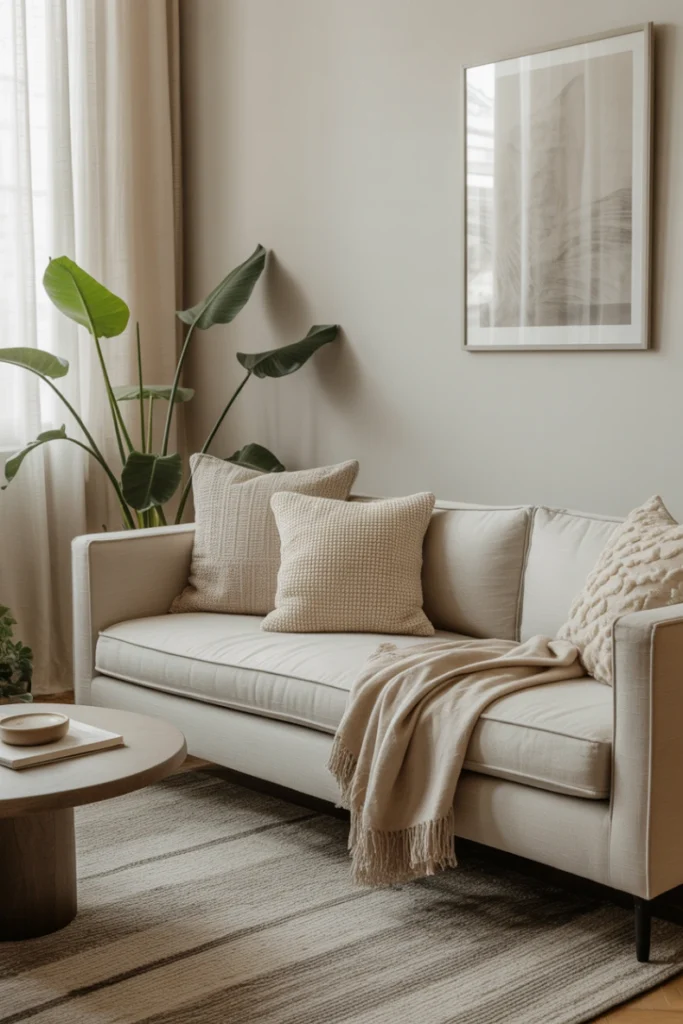
Texture is what stops a neutral contemporary room from feeling cold. Layer wool, boucle, linen, cotton, faux fur, and velvet in similar tones so the room gains depth without gaining visual noise. Start with the largest surfaces: a flat weave or low pile rug, a linen or performance fabric sofa, and curtains in a soft natural weave. Then add smaller layers, such as a chunky knit throw folded over one sofa arm and two or three cushions in different textures but close colors.
Choose performance fabrics if you have kids or pets, since they resist stains and clean more easily than delicate silks. Mix one nubby texture, one smooth texture, and one soft texture in each seating area for balance. For example, pair a smooth leather or linen sofa with a nubby wool throw and velvet cushions. Keep cushion inserts about 2 inches larger than their covers so they look full rather than flat. When textures repeat across the rug, throws, and curtains, the room feels warm, layered, and finished.
6. Incorporate Glass and Metal Elements
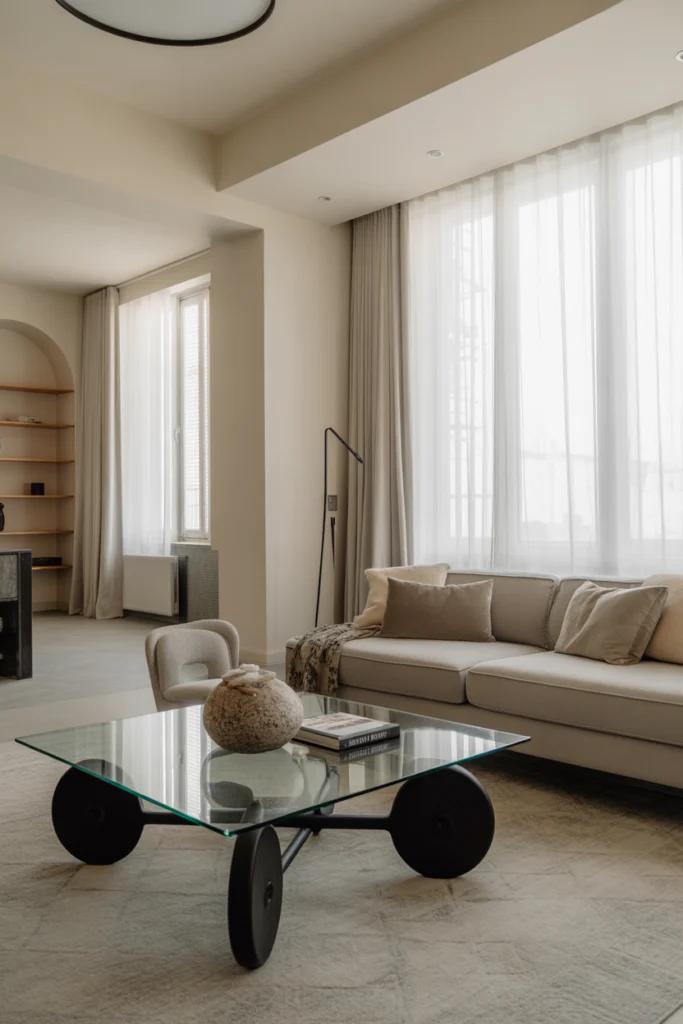
Glass and metal bring a sleek, polished quality to contemporary rooms and help light move through the space. A glass top coffee table, metal framed shelving, or a chrome and glass console keeps the room feeling open, because you can see through or past the piece. This is especially helpful in smaller rooms, where a solid wood table can look heavy. Tempered glass is the safe choice for tabletops, and it pairs well with matte black, brushed brass, or chrome frames.
Use metal as an accent rather than the main event. Matte black hardware, brushed gold lamp bases, chrome table legs, or a thin metal frame on a mirror all add definition without dominating the palette. Repeat one metal finish in at least three places, such as a lamp, a picture frame, and a side table base, so it reads as a deliberate choice. Wipe glass weekly with a microfiber cloth to avoid smudges, and balance hard glass and metal surfaces with soft fabrics so the room still feels comfortable to sit in.
7. Use Clean, Straight Lines
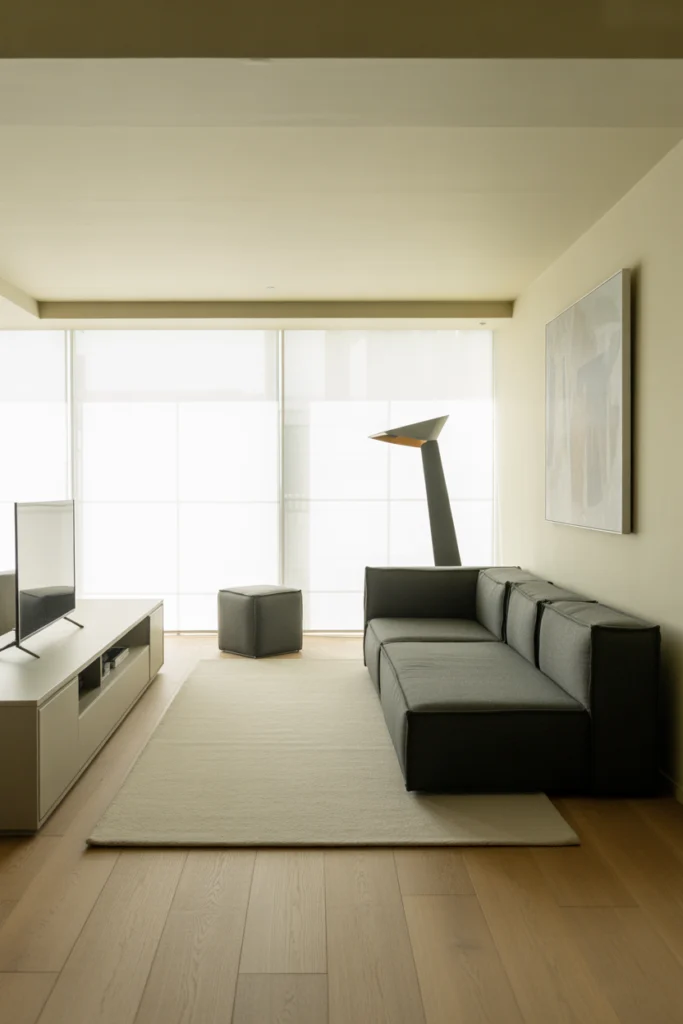
Straight lines are the backbone of contemporary design. Rectangular coffee tables, boxy sofas, linear shelving, and flat panel cabinetry create a sense of order that helps the eye move calmly across the room. Avoid fussy curves, heavy carving, and ornate trim in the main furniture pieces, and let one or two softer shapes, such as a round side table or a curved vase, provide gentle contrast.
This approach works particularly well in open plan rooms, where simplicity keeps connected spaces from feeling chaotic. Align key lines where you can: match the height of shelving to a door frame, keep picture ledges level, and choose a media console that lines up with the sofa width. Straight lines also make styling easier, because each surface has a clear edge to work with. When the big shapes are simple, smaller details like texture, lighting, and art get room to stand out.
8. Add Natural Wood Tones
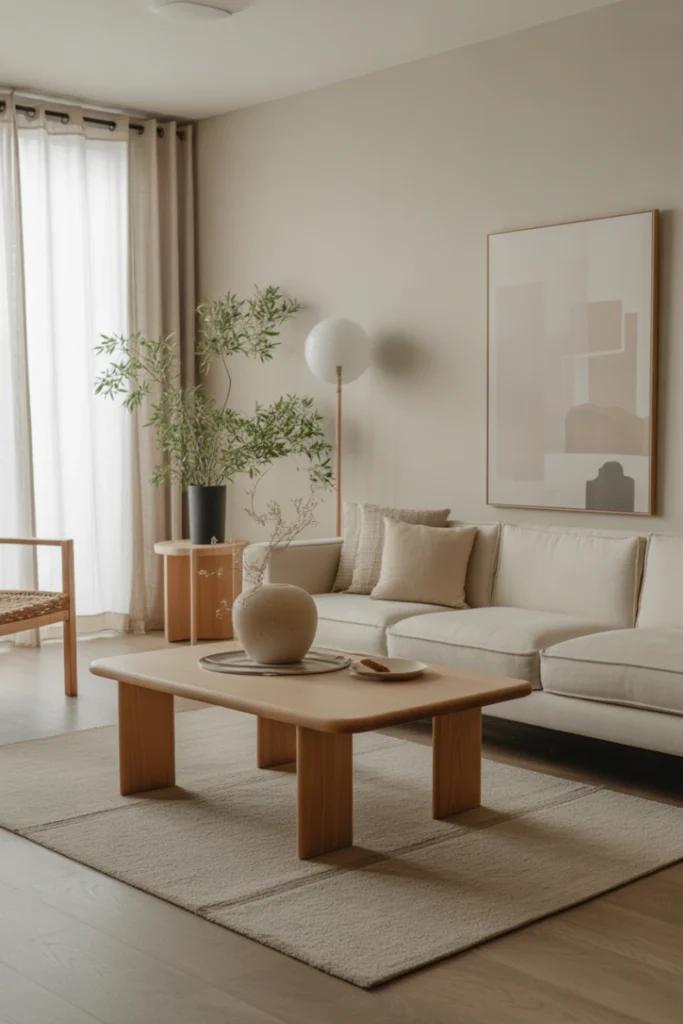
Natural wood warms up contemporary rooms without breaking their clean look. Light oak, ash, walnut, and whitewashed pine all work, but the key is consistency. Pick one dominant wood tone and use it for the coffee table, shelving, or media unit, then repeat a lighter or darker version of it in smaller accents such as picture frames or a tray. Walnut brings richness to a neutral room, while light oak keeps a small space feeling bright and airy.
Protect wood surfaces with coasters and felt pads, and dust weekly with a dry microfiber cloth. A matte or satin finish suits contemporary rooms better than a high gloss varnish, which can look dated and show fingerprints. If your floors are wood, choose furniture in a tone that is either clearly lighter or clearly darker than the floor, so the pieces do not blend into one muddy block. Wood pairs naturally with stone, linen, and metal, making it one of the easiest ways to add warmth to a modern palette.
9. Play with Monochrome Palettes

A monochrome palette uses one color family in several shades to create a calm, high end look. Gray, beige, and soft white are the safest choices, but muted sage green, dusty blue, and warm taupe also work beautifully. Start with the lightest shade on the walls, a mid tone on the sofa, and the darkest tone in the rug, cushions, or art. This layering creates depth while keeping the room visually quiet.
Texture is essential in a monochrome room, or it can feel flat. Combine smooth, rough, matte, and soft finishes in the same color family: a gray linen sofa, a charcoal wool rug, light gray curtains, and a stone or concrete accent. If you love blue gray tones, these gray and blue living room ideas show how to layer cool shades without making the room feel cold. Add one natural element, such as wood or greenery, to keep the palette from feeling too uniform, and let lighting do the rest.
10. Add Functional Built-in Storage
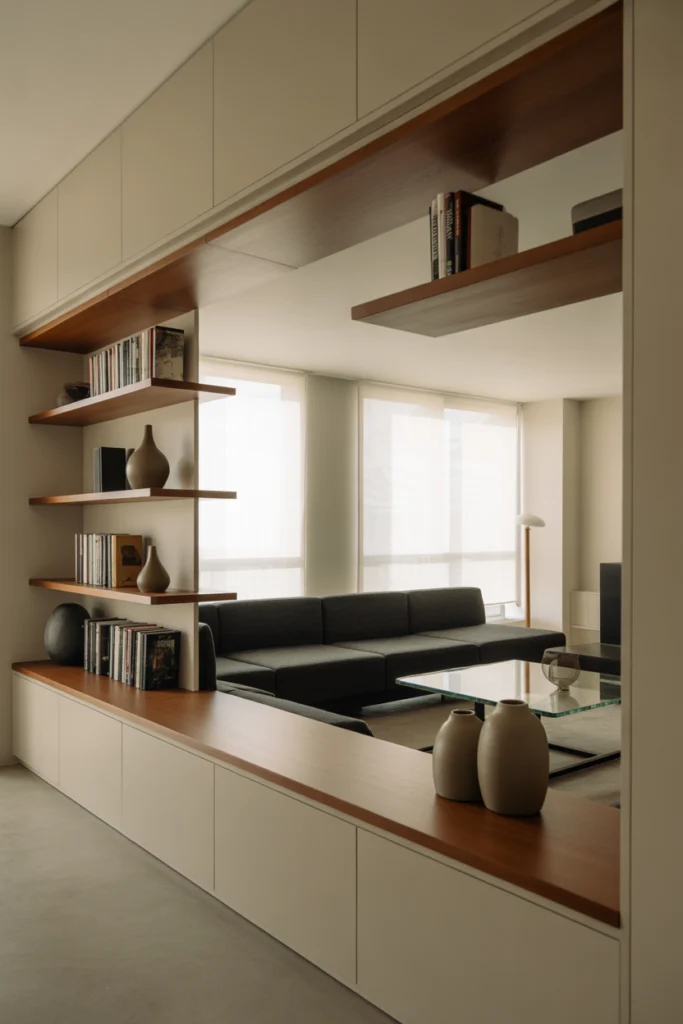
Built-in storage keeps a contemporary living room clutter free without adding bulky furniture. Floating shelves, wall mounted cabinets, recessed niches, and a built-in media wall all hide everyday items while keeping the room looking sleek. Standard shelf depth is 10 to 12 inches for books and decor, and 14 to 16 inches for media equipment. Leave open display space for a few favorite pieces and closed storage for everything else, so the room feels curated rather than crowded.
Plan built-ins around what you actually own. Measure your largest books, game consoles, and baskets before finalizing shelf heights, and leave ventilation gaps behind media units. Paint built-ins the same color as the walls to make them disappear, or use a slightly darker tone to turn them into a feature. Add LED strip lighting under shelves to highlight display items and make the room feel warmer in the evening. Good storage is invisible when it works: the room simply looks tidy, calm, and easy to maintain.
11. Use Large Windows to Open the Space
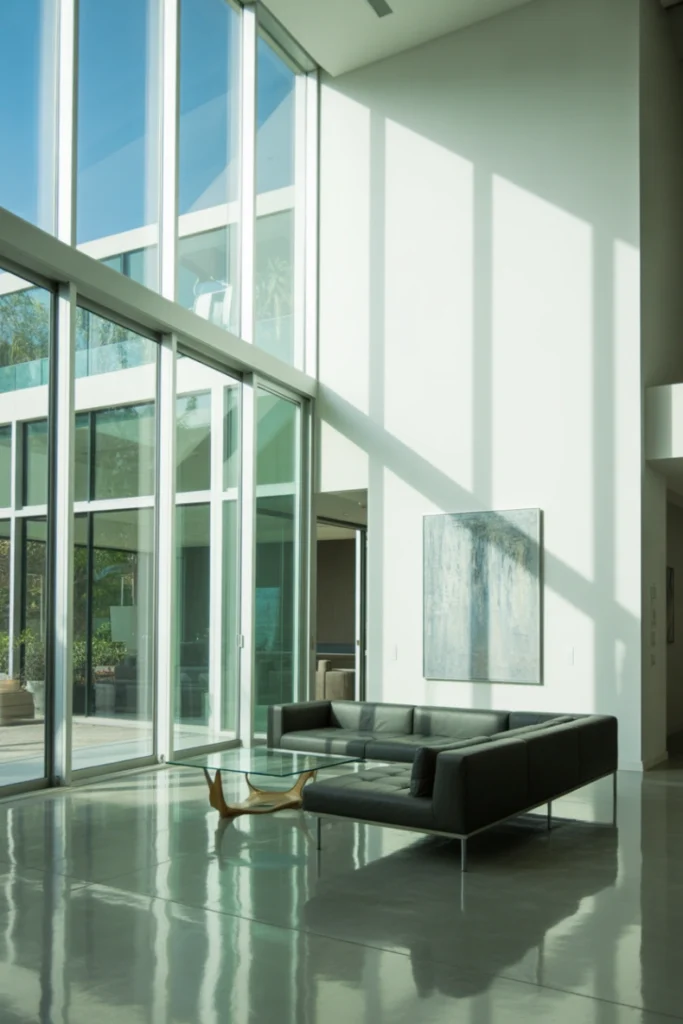
Large windows are one of the most effective ways to make a contemporary living room feel bigger and brighter. Floor to ceiling glass, wide panes, and slim black or white frames strengthen the modern look and turn the outdoor view into a natural focal point. Keep window treatments light: sheer linen panels, roller blinds, or simple Roman shades preserve daylight while giving privacy in the evening.
Mount curtain rods 4 to 6 inches above the window frame and extend them 8 to 12 inches beyond each side, so curtains stack off the glass and the window looks wider. If full window replacement is not in the budget, clean the glass thoroughly, paint the frames a crisp white or matte black, and remove heavy drapes that block light. Place a low console or a plant beside the window rather than tall furniture in front of it, and let daylight become the main decoration during the day.
12. Choose Modular Furniture for Flexibility
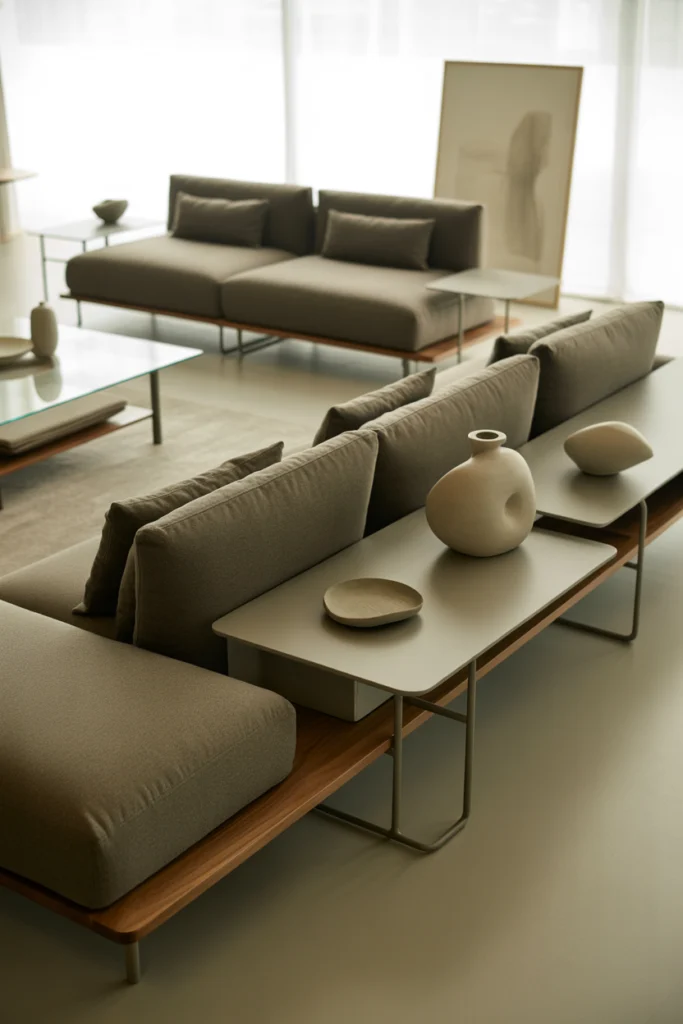
Modular furniture suits contemporary living because it adapts to real life. Sectional pieces, movable ottomans, stackable shelves, and modular storage units can be rearranged for movie nights, guests, or a new layout without buying new furniture. A standard modular sofa section is about 35 to 40 inches deep, so measure your room and map the layout with painter tape on the floor before ordering.
Choose modules in a neutral, durable fabric and keep the shapes clean and low. A corner unit plus an armless chair plus an ottoman can form an L shape, a straight sofa, or two separate seats depending on the occasion. Modular pieces also make moving and cleaning easier, since sections can be shifted to vacuum behind them. For small rooms, pick a two or three piece set rather than a huge sectional, and add a lightweight side table that can move wherever extra surface space is needed.
13. Add a Sculptural Coffee Table
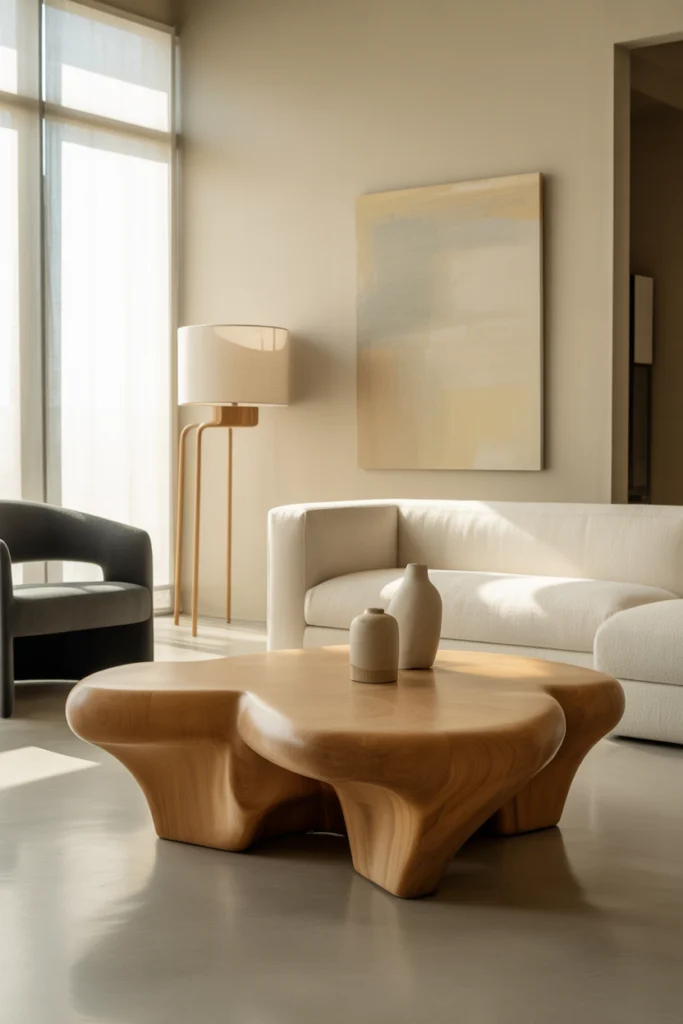
A sculptural coffee table works as both furniture and art in a contemporary living room. Curved stone, asymmetrical wood slabs, geometric metal bases, and travertine or marble tops all add visual interest without adding clutter. Size it carefully: the table should be about two thirds the length of your sofa and sit 16 to 18 inches high, roughly 1 to 2 inches lower than the sofa seat. Leave about 18 inches between the table edge and the sofa so people can sit and stand comfortably.
Style the table lightly so its shape stays visible. One stack of two or three books, a small bowl or tray, and a single vase is enough. Avoid covering a beautiful stone or wood top with a runner or a large tray that hides the material. If you have young children, choose rounded edges and stable, heavy bases over thin pedestal designs. A sculptural table gives the room a focal point at its center and pulls the whole seating arrangement together.
14. Use Oversized Rugs for Balance
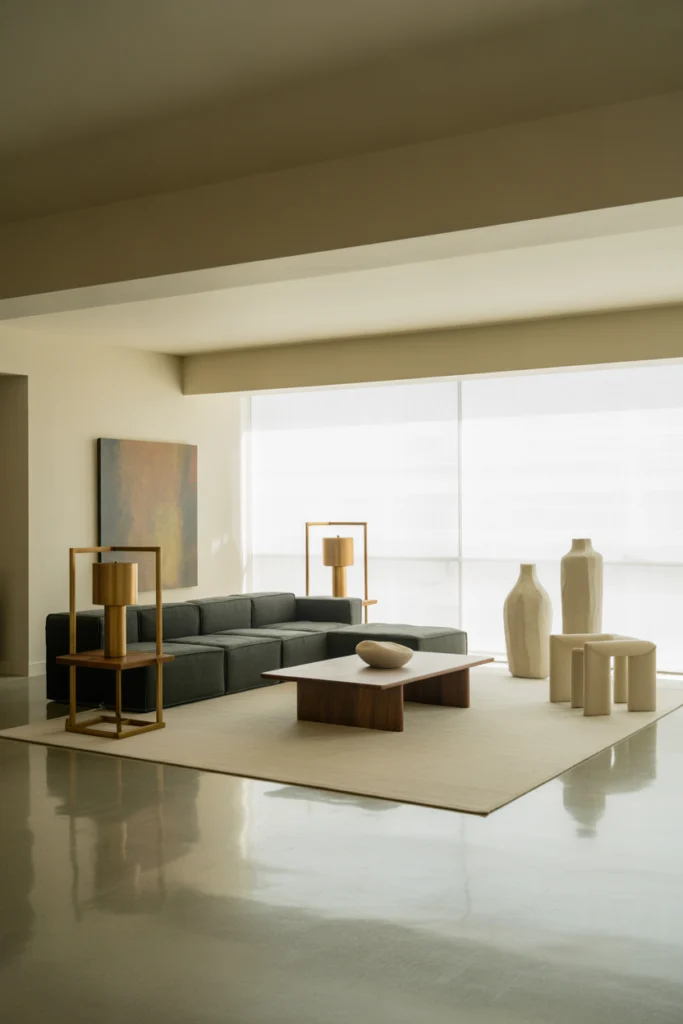
An oversized rug is one of the fastest ways to make a living room look intentional. The rug should be large enough that the front legs of the sofa and chairs all sit on it. For a standard three seat sofa arrangement, an 8 by 10 foot rug is usually the minimum, and a 9 by 12 foot rug works better in larger rooms. In a compact room, a 5 by 8 foot rug can work if the front legs of the main pieces still rest on it. If you are unsure, go one size up rather than down.
Choose a low pile or flat weave rug in a neutral tone or a subtle pattern so it anchors the room without competing with the furniture. Place the rug so it extends at least 6 inches beyond each side of the sofa grouping, and center it on the main seating area rather than the whole room. A rug pad underneath prevents slipping, protects floors, and adds softness underfoot. These sizing rules matter even more in compact spaces, so check these small living room ideas for layouts that show how a generous rug can make a tight room feel larger, not smaller.
15. Add Matte Black Accents
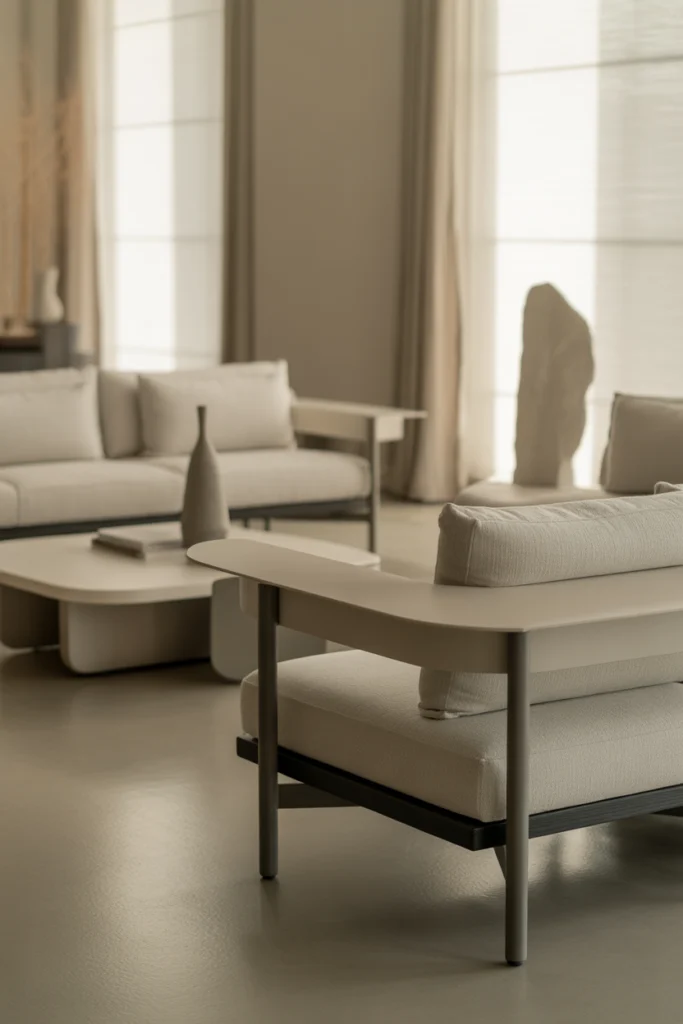
Matte black is a reliable contemporary accent because it adds definition without shouting. Black lamp bases, picture frames, cabinet handles, side table legs, and curtain rods create crisp lines that tie a neutral room together. Use it sparingly, as roughly 10 percent of the room, so it reads as punctuation rather than a theme. Too much black can make a small room feel heavy, especially if walls are already dark.
Repeat matte black in three or four places for a cohesive look: for example, a floor lamp, two picture frames, and a side table base. Pair black with warm wood and soft textiles so the contrast feels balanced rather than harsh. Matte finishes hide fingerprints and dust better than gloss, which makes them practical for high touch items like handles and light switches. If you are hesitant, start with one black floor lamp or a set of black frames, live with it for a week, and then decide whether to add more.
16. Create an Open-Concept Layout
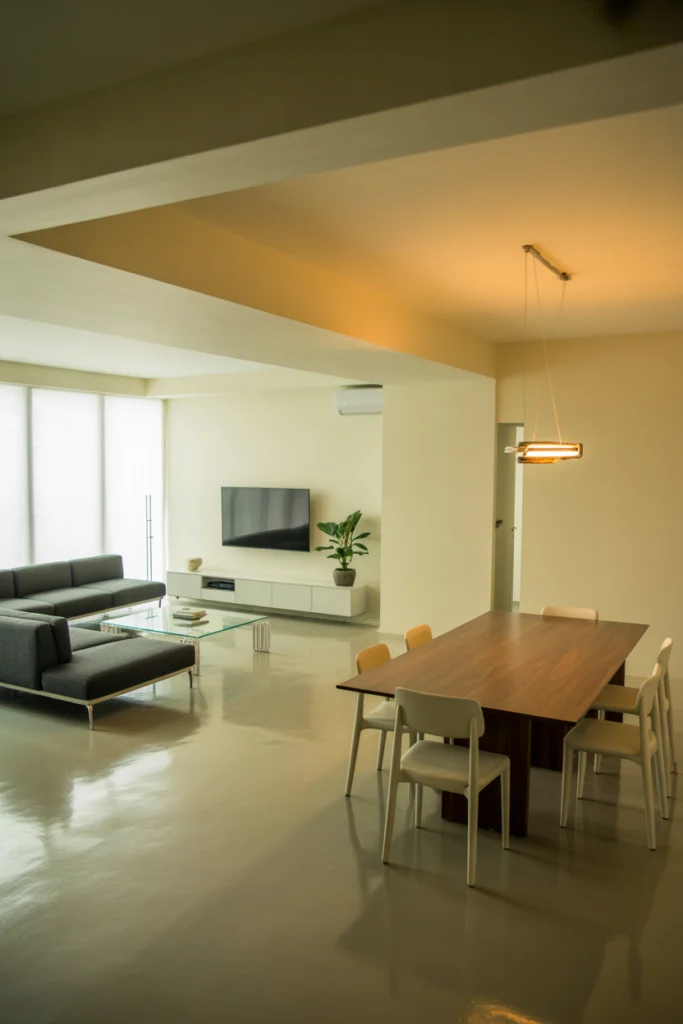
Open-concept layouts connect the living room, dining area, and sometimes the kitchen into one flowing space. Removing a non load bearing wall or simply rearranging furniture to open sightlines can make a home feel much larger and brighter. Before removing anything structural, get professional advice, since load bearing walls need proper support. In many homes, simply turning the sofa to face the room rather than a wall is enough to open the layout visually.
Use consistent flooring, a shared color palette, and repeated materials across zones to keep the open space cohesive. Define each area with a rug, a lighting fixture, or a furniture grouping rather than walls: a pendant over the dining table, a rug under the living seating, and a runner in the walkway. Keep furniture low and organized so sightlines stay clear. For more open plan inspiration, these modern living room design ideas show how consistent colors and low furniture keep connected rooms feeling calm instead of chaotic.
17. Add Greenery for a Natural Touch
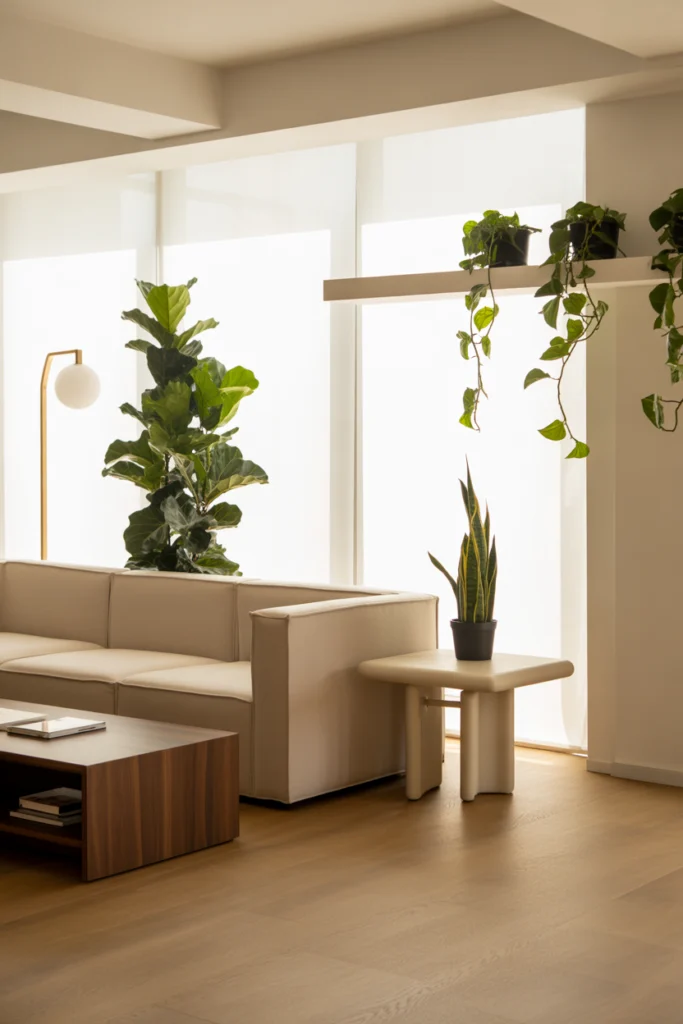
Plants soften the straight lines and neutral tones of contemporary design and make a room feel alive. Tall plants such as fiddle leaf figs, olive trees, and indoor palms work as natural focal points in empty corners. Medium plants like monstera and rubber plants suit side tables and consoles, while snake plants, pothos, and succulents are forgiving choices for beginners and low light spots. Match the plant to your light: most statement plants need bright indirect light near a window, not harsh direct sun all day.
Choose planters in simple materials that fit the room, such as matte ceramic, terracotta, concrete, or woven baskets. Group plants in odd numbers, usually three, at varied heights for a natural look. Water only when the top inch or two of soil feels dry, and empty saucers so roots do not sit in water. Dust large leaves monthly with a damp cloth so they photosynthesize well. Even two or three healthy plants can transform a minimal room from stark to welcoming.
18. Incorporate Multi-Functional Furniture
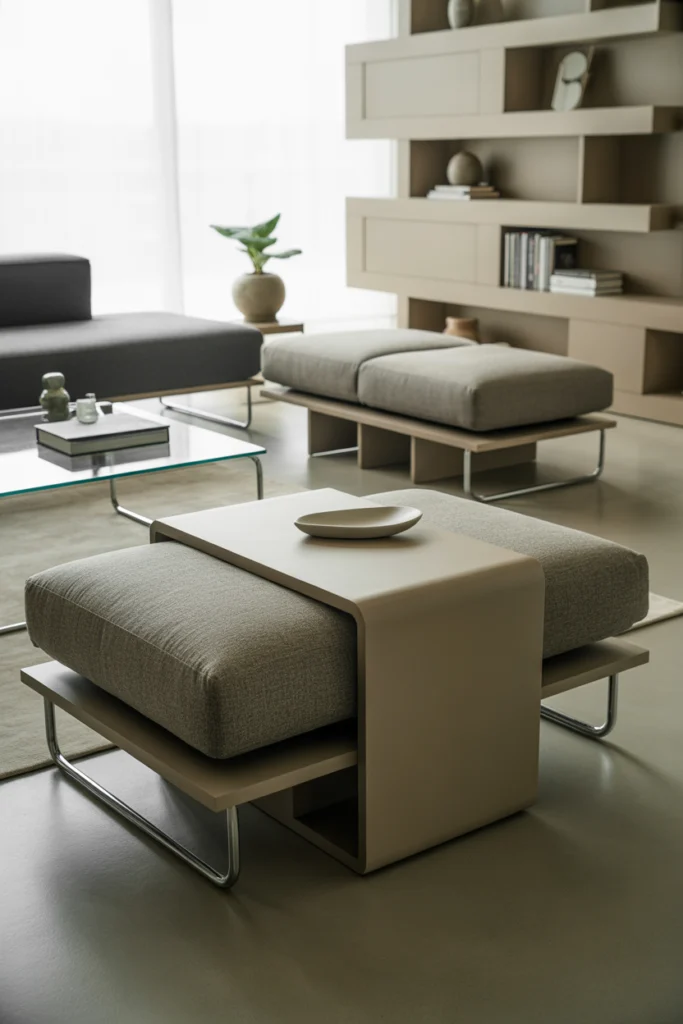
Multi-functional furniture is essential in contemporary homes where rooms serve several purposes. A storage ottoman hides throws and remotes, nesting tables expand for guests and tuck away when not needed, and a sleeper sofa turns a living room into a guest room. When shopping for a sleeper sofa, check the open bed size: a queen sleeper needs about 60 by 80 inches of clear floor space when extended, plus walking room around it.
Look for clean lines, smooth mechanisms, and sturdy construction rather than gimmicky features. A lift top coffee table that rises to dining height is useful for working from the sofa, and a console with closed storage keeps chargers and board games out of sight. Test moving parts in the store or check return policies online, since a stiff mechanism quickly becomes annoying. The best multi-functional pieces look like ordinary, attractive furniture until you need their second job.
19. Use Minimal Décor for a Clean Look
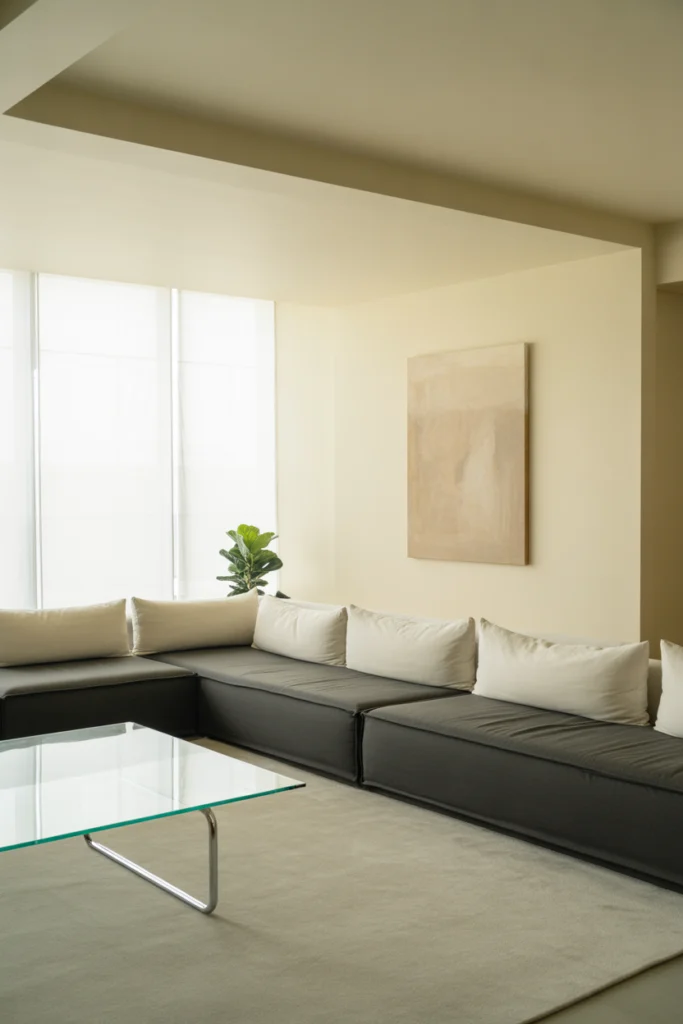
Minimal decor does not mean an empty room. It means choosing fewer, more meaningful pieces and giving each one space. Start by removing everything from shelves and surfaces, then return only items you genuinely like: a sculptural vase, a stack of favorite books, one framed photo, and a candle or bowl. A useful rule is to style surfaces in groups of three at varied heights, then stop and live with the result for a few days before adding anything else.
Use the one in, one out rule to keep clutter from creeping back: when a new decor item arrives, an old one leaves. Store seasonal items in labeled boxes and rotate displays rather than adding to them. Minimal rooms also benefit from hidden storage for remotes, chargers, and magazines, so surfaces stay clear without effort. When each object has breathing room, the furniture, textures, and architecture get the attention they deserve, and the room feels calm rather than bare.
20. Highlight Architectural Features
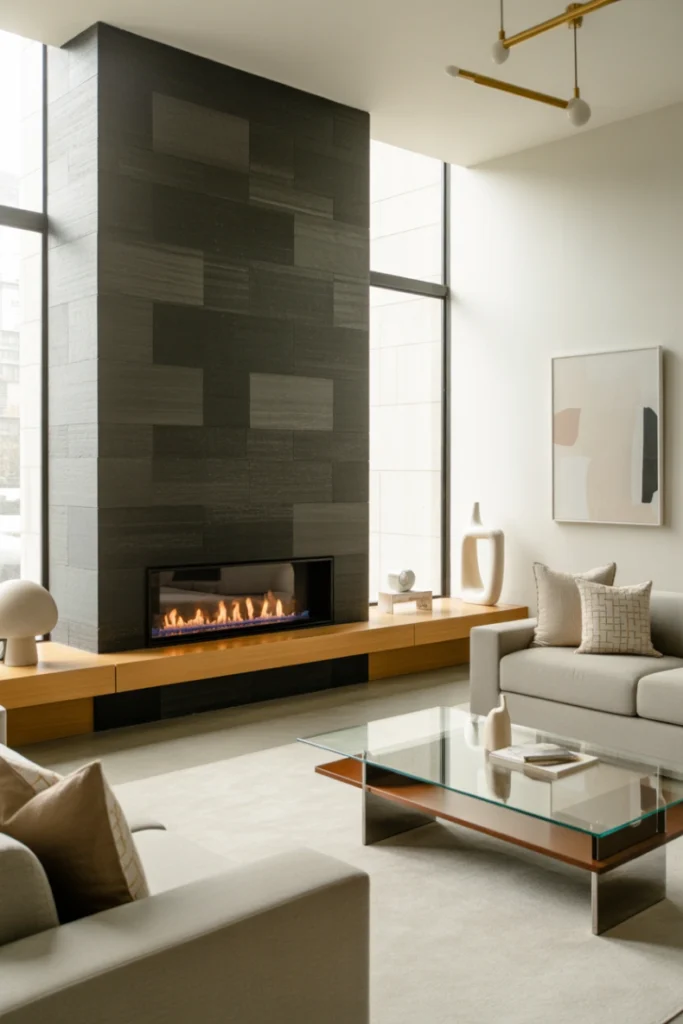
Architectural features give a contemporary living room character without extra decor. Exposed beams, a clean lined fireplace, built-in niches, arched doorways, and interesting ceiling details all deserve attention. Highlight them with simple methods: paint a fireplace wall in a soft stone tone, add a slim LED strip inside a niche, or use a picture light to draw the eye to a textured wall. Avoid covering strong features with large furniture or busy gallery walls.
If your room lacks obvious features, create one. Add simple picture frame molding to a plain wall, install a floating shelf niche, or use a large mirror to emphasize ceiling height. Keep the treatment consistent with the room: flat, simple trim suits contemporary spaces better than ornate molding. When architectural details become part of the design, the room feels intentional and layered, even with minimal furniture and decor.
21. Add a Touch of Luxury with Subtle Details
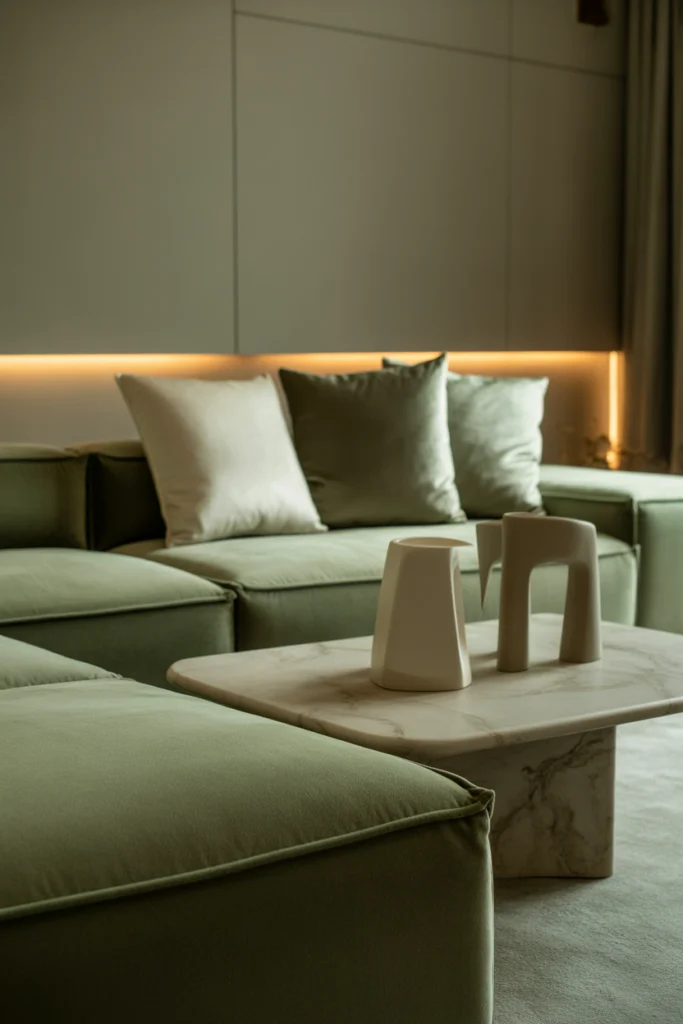
Contemporary luxury is quiet. It comes from quality materials and careful details rather than showy pieces. Velvet cushions, a thick wool throw, a travertine side table, brushed brass hardware, and heavyweight linen curtains all signal quality without overwhelming a minimal room. Invest first in items you touch every day: good sofa fabric, a comfortable cushion fill, and curtains that hang well and feel substantial.
Small upgrades can make a noticeable difference. Swap thin, flimsy curtain panels for lined linen ones, replace plastic light switch plates with metal ones, and choose a solid wood or stone tray instead of a lightweight imitation. Keep luxury details to a few per room so they stand out: one beautiful stone table, one pair of quality lamps, and one soft throw are more effective than a dozen shiny accessories. The result is a living room that feels polished, comfortable, and quietly refined.
Conclusion
A contemporary living room is all about balance, comfort, and clear design. When you mix clean lines, natural textures, and simple colors, the room feels calm and modern at the same time. Each idea in this list helps you create a space that looks fresh while still feeling warm and practical. You do not need complicated furniture or heavy decor. Small changes like new lighting, layered fabrics, or a sculptural table can make the room look more polished right away.
Start with the changes that solve your biggest daily frustrations, then add layers over time. Choose ideas that match your space size, your layout, and the mood you want, and keep the room open, organized, and inviting. When every piece has a purpose, the room works better and looks better. A good contemporary living room feels easy to use, easy to enjoy, and easy to live in every day.
Finally, step back and check the room from the doorway, which is how guests first see it. The focal point should be obvious, walkways should be clear, and no single corner should feel overloaded while another feels empty. Move one piece at a time and live with each change for a day before making the next one. Contemporary rooms improve with small, thoughtful edits, and a room that is adjusted slowly usually ends up calmer and more personal than one decorated all at once.
Frequently Asked Questions
What is the difference between contemporary and modern living room design?
Modern design refers to a specific historical style from the early to mid 1900s, with its own rules and materials. Contemporary design means what is current right now, so it borrows from modern style but also includes present trends, softer shapes, and new materials. In practice, a contemporary living room today usually means clean lines, neutral colors, and functional furniture, with room to add warmer textures and current accents.
What colors work best in a contemporary living room?
Warm whites, beige, greige, light gray, and soft taupe make the best base colors because they reflect light and suit most furniture. Add depth with a darker neutral in the rug or cushions, then one accent color in small doses, such as sage green, dusty blue, terracotta, or matte black. Keep the accent to about 10 percent of the room so the palette stays calm and cohesive.
How do I make a contemporary living room feel cozy, not cold?
Layer textures, add warm lighting, and bring in natural materials. Use a soft rug, layered throws, linen curtains, and wood tones alongside sleek furniture. Choose warm white bulbs around 2700 to 3000 Kelvin, add dimmers, and include two or three plants. These soft elements balance clean lines and hard surfaces, so the room feels inviting rather than stark.
What size rug should I choose for my living room?
For a standard sofa arrangement, an 8 by 10 foot rug is a good starting point, and a 9 by 12 foot rug suits larger rooms. The front legs of the sofa and chairs should all sit on the rug, and the rug should extend at least 6 inches beyond the seating group on each side. When in doubt, size up: a rug that is too small makes furniture look disconnected, while a generous rug pulls the whole arrangement together.
Can I mix contemporary style with traditional furniture I already own?
Yes, if you keep the overall look balanced. Pair a traditional sofa with clean lined side tables, a simple rug, and neutral curtains to modernize it. Reupholstering a dated piece in a solid linen or performance fabric is often cheaper than replacing it. Keep ornate pieces to one or two per room, repeat a consistent color palette, and let contemporary lighting and art bridge the gap between old and new. Start with the largest traditional piece, since updating or repositioning it changes the room most, and keep smaller traditional accessories to a minimum so they read as character rather than clutter. If a piece still fights the room after new curtains, a rug, and lighting, move it to a bedroom or dining room where its style fits better, instead of forcing it into a contemporary scheme.
More Ideas You Will Love
 21 Modern Living Room Ideas for Luxurious and Cozy Vibes
 13 4th of July Pillows Styling Ideas for a Festive Sofa Look
 14 Family Room Design Ideas Perfect for Every Home Style
 16 DIY Soundproofing Tips to Keep Your Home Cool & Quiet
 22 Christmas Living Room Decor Ideas for Small, Cozy Spaces
 13 Summer Home Scents That Make Every Room Feel Fresh Daily