
21 Modern Living Room Ideas for Luxurious and Cozy Vibes

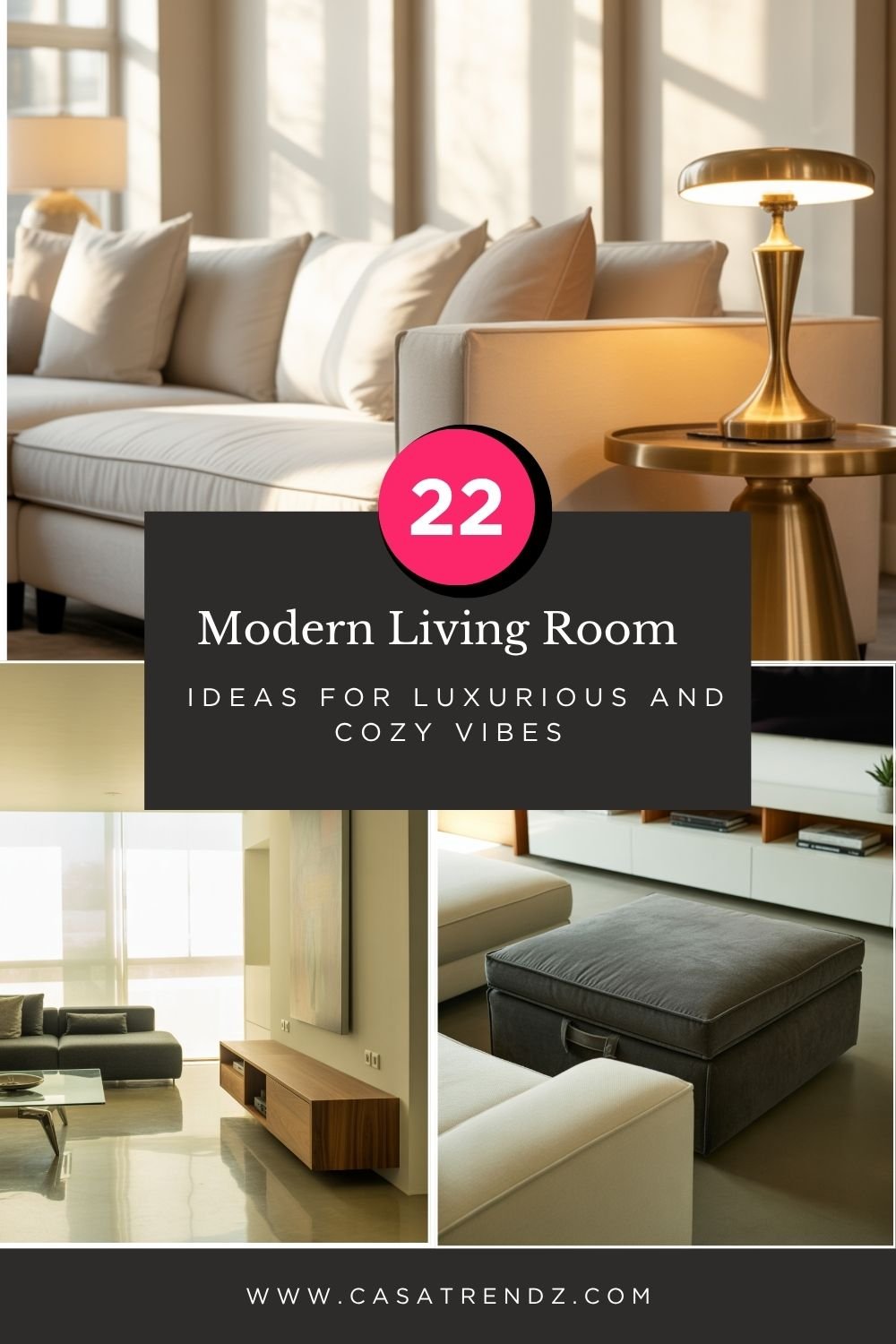
Your living room is the heart of your home, the place where mornings start slowly, guests gather, and evenings wind down. A modern living room works best when it balances sleek design with real comfort, so it looks polished in photos but still feels inviting when you sit down with a cup of coffee. The secret is not buying everything new. It is choosing a clear color base, layering light and texture, and letting a few strong pieces do the talking while everything else stays calm and useful.
These 21 modern living room ideas are designed to help you do exactly that, whether you live in a small apartment, a townhouse, or a spacious family home. Each idea includes practical details on colors, sizes, materials, and placement, so you can apply it this weekend without hiring a designer. Mix the ideas that fit your room, your budget, and your daily routine, and you will end up with a space that feels both luxurious and cozy, a room you actually love spending time in.
1. Neutral Base with Bold Accents
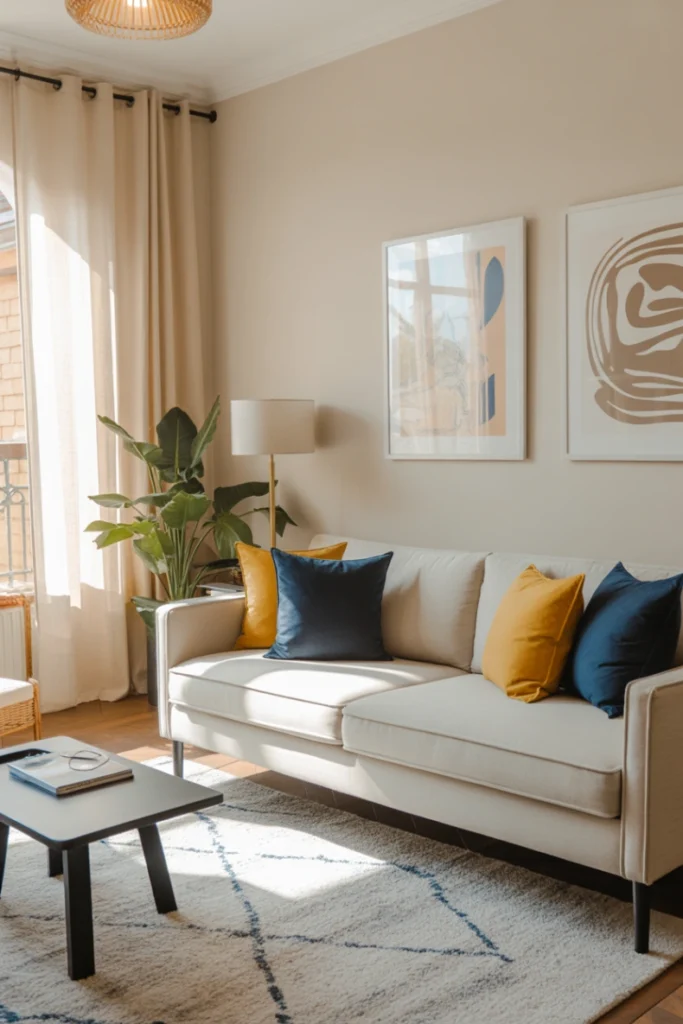
Start with a neutral base of soft white, warm beige, or light gray on walls and large furniture. Paint walls in a warm white such as Benjamin Moore White Dove style shade, or a soft greige, and keep the sofa in a solid neutral fabric so the room feels calm and timeless. A neutral base also makes future updates cheap, because you can change the look by swapping cushions and art instead of repainting or buying a new sofa.
Add bold accents in small, controlled doses. Choose one accent color, such as deep teal, mustard yellow, or terracotta, and repeat it three times: two cushion covers, one throw, and one piece of art or a vase. Limit bold color to about 10 percent of the room so it reads as intentional, not busy. If you love pattern, use it on one item only, such as a striped cushion or a geometric rug, and keep the rest solid.
2. Layered Lighting for Ambiance
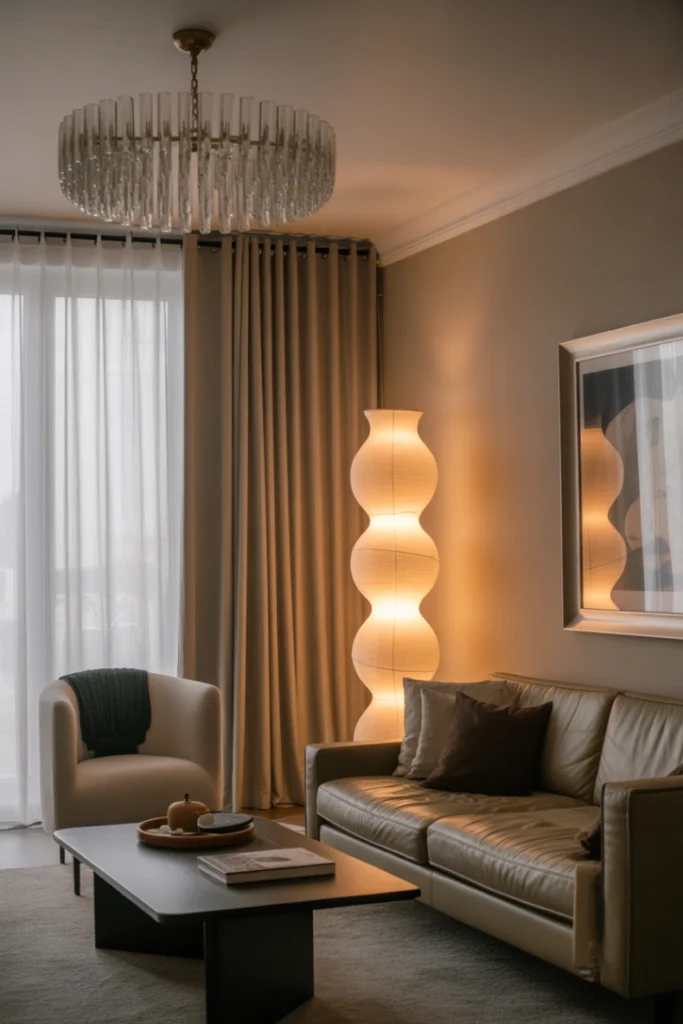
One ceiling light alone always makes a living room feel flat. Instead, layer three types of light: ambient light from the ceiling, task light from floor and table lamps, and accent light from wall sconces or a picture light. Aim for a ceiling fixture on a dimmer, one floor lamp beside the sofa, and one table lamp on a side table, so you can light the room for reading, conversation, or movie night with a simple switch.
Use warm white bulbs at 2700K to 3000K for a cozy glow, and put the main lights on dimmers so evening light stays soft. Place floor lamps so the shade sits at about eye level when seated, roughly 58 to 64 inches from the floor, to avoid glare. Add a small accent light inside a shelf or behind the television for a gentle halo effect that makes the room feel finished after dark.
3. Statement Sofa
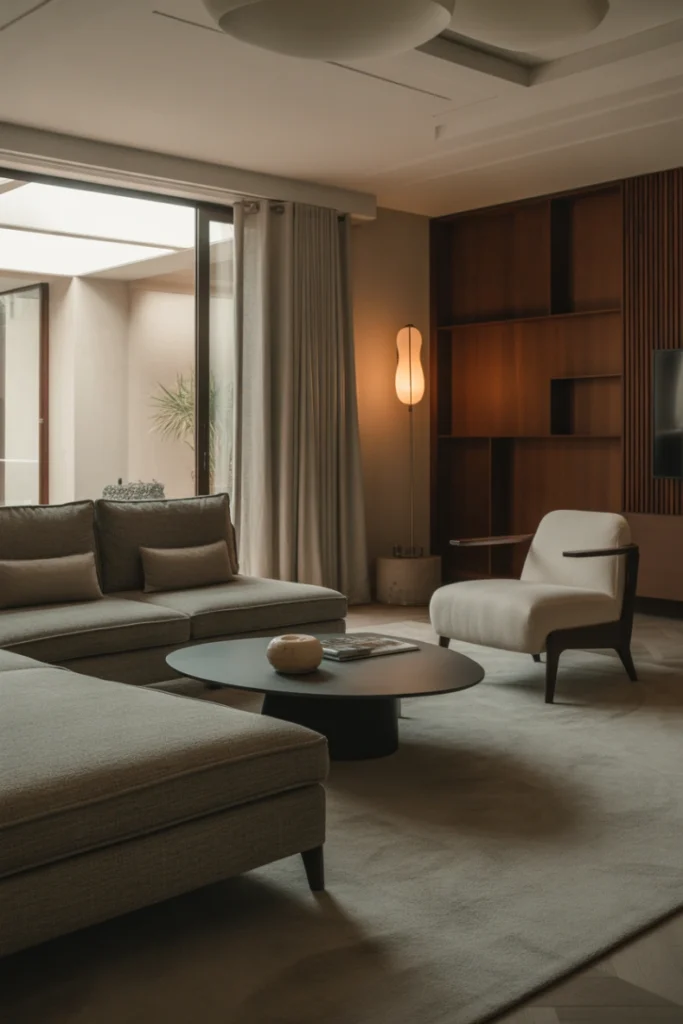
A statement sofa is the anchor of a modern living room, so choose it with care. Look for a solid hardwood frame, high density foam cushions that hold their shape, and a performance fabric that resists stains if you have kids or pets. A standard three seat sofa measures about 84 inches wide, which suits most rooms, while a 72 inch loveseat works better in apartments. Sit on it for at least ten minutes before buying, and check that the seat depth, usually 22 to 24 inches, lets you sit comfortably with your feet on the floor.
Pair the sofa with pieces that support it rather than compete with it. Place a coffee table 16 to 18 inches in front of the sofa, add one accent chair at an angle, and keep a side table within arm’s reach on each end. If your sofa is a bold color, keep chairs and rug neutral. If your sofa is neutral, let cushions and art carry the color. For more inspiration on arranging seating, browse these living room ideas and pick a layout that matches your room shape.
4. Minimalist Furniture Arrangement
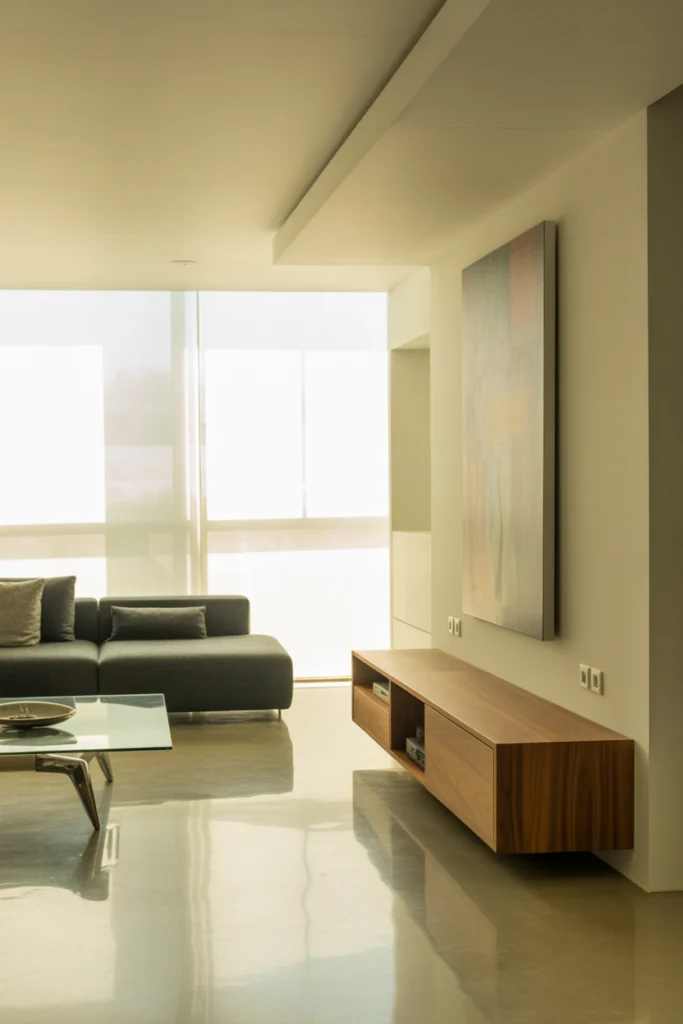
Minimalist arrangement is not about owning very little. It is about giving each piece breathing room. Start by removing one item you do not use, then pull furniture slightly away from the walls. Leave at least 30 inches for main walkways and 18 inches between the sofa and coffee table so people can move without turning sideways. When traffic flows easily, even a small room feels larger and calmer.
Choose pieces with simple lines and more than one job. A slim console behind the sofa, a nesting coffee table, or an ottoman that doubles as extra seating keeps the room functional without clutter. Keep surfaces mostly clear, with one or two styled objects per surface, and store remotes, chargers, and magazines in a basket or drawer. The goal is a room that looks edited, not empty, where every item earns its place.
5. Use Area Rugs to Define Space
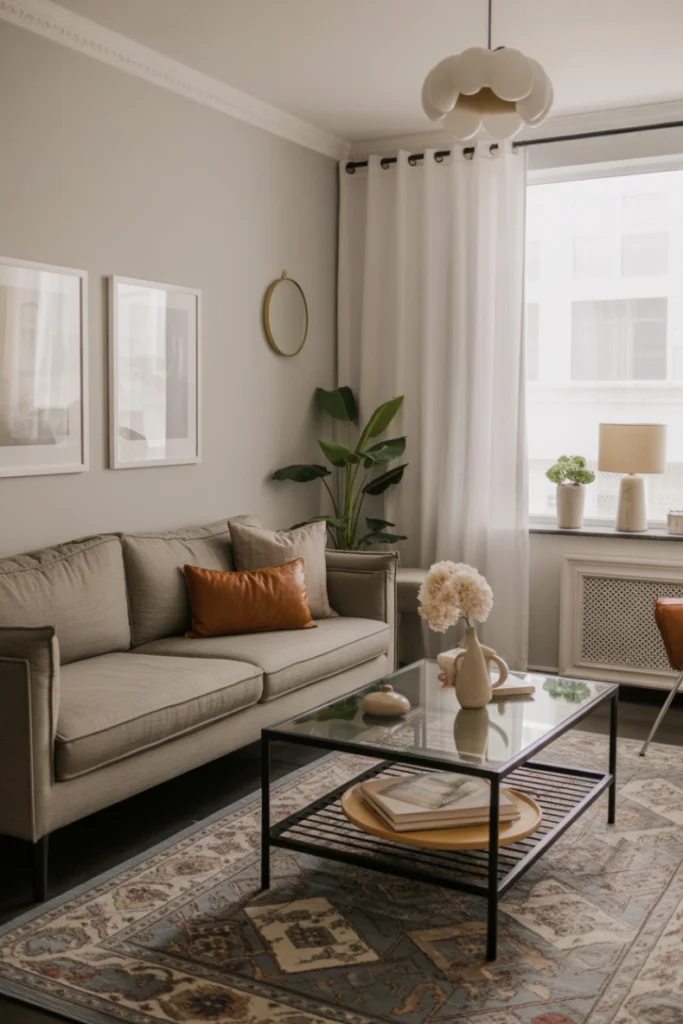
An area rug defines the seating zone, adds warmth underfoot, and ties furniture together. The most common mistake is buying a rug that is too small. In a living room, the front legs of the sofa and chairs should sit on the rug. For a standard seating area, an 8 by 10 foot rug works well, while a 9 by 12 foot rug suits larger rooms. In open plan spaces, the rug also marks where the living area ends and the dining area begins.
Choose a low pile wool or wool blend rug for durability and easy cleaning, and add a rug pad underneath to stop slipping and add cushioning. Match the rug color to your palette: a solid neutral rug calms a bold sofa, while a subtle pattern hides everyday wear in busy homes. If you are working with a compact layout, these small living room ideas show how the right rug size can make a tight room feel open and organized.
6. Incorporate Natural Materials
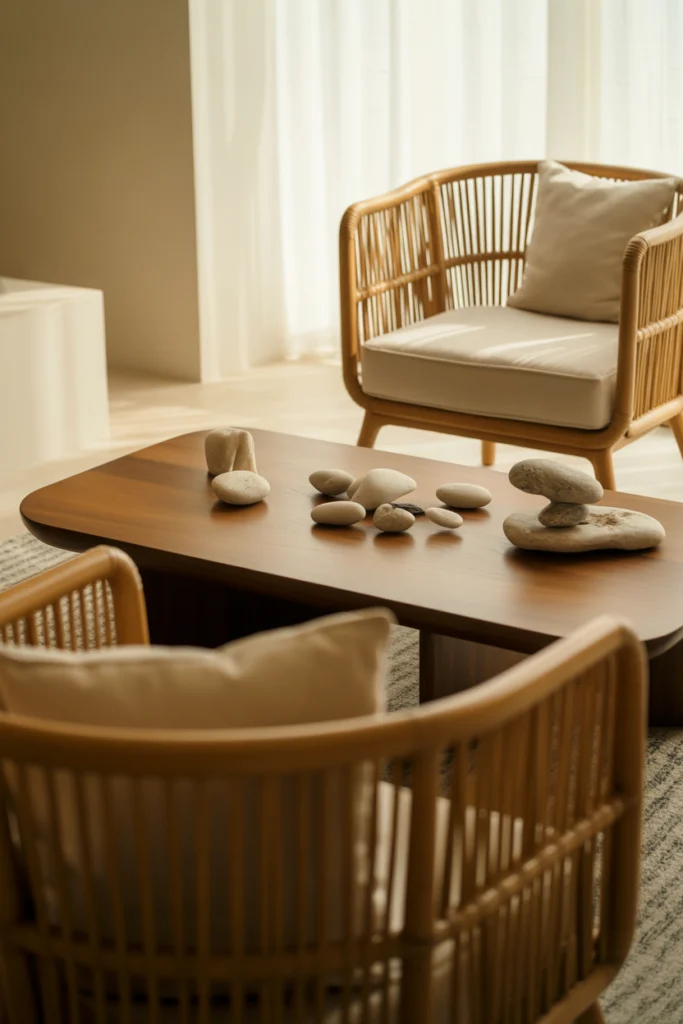
Natural materials keep a modern room from feeling cold. Wood, stone, rattan, linen, and wool add warmth and texture that sleek surfaces alone cannot provide. Try a solid oak or walnut coffee table, a stone topped side table, woven baskets for blankets, and linen cushion covers. Even two or three natural pieces are enough to ground the room and make it feel lived in.
Mix wood tones carefully. Choose one dominant wood, such as light oak, and one darker accent, such as walnut, rather than five competing finishes. Pair warm wood with cool stone or concrete for contrast, and keep rattan to one or two pieces, such as a basket and a chair, so the look stays modern rather than beachy. Natural materials also age well, so they are a smart long term choice for high use pieces.
7. Add Greenery

Plants instantly soften hard edges, add color, and make a room feel alive. Start with easy, low light tolerant plants such as snake plant, pothos, or ZZ plant if you are new to indoor gardening. Place one large floor plant, 4 to 6 feet tall, in an empty corner, add a trailing pothos on a shelf, and keep a small plant on the coffee table or side table. Three plants at different heights look intentional, while one lonely plant can look like an afterthought.
Match pots to your decor. Use matte ceramic or terracotta pots in neutral tones, and raise floor plants on a simple stand so leaves sit above sofa height. Water only when the top inch of soil feels dry, and rotate plants every few weeks so they grow evenly. If natural light is limited, choose a spot within 6 feet of a window, or add a grow bulb in an existing lamp for a few hours a day.
8. Bold Accent Wall
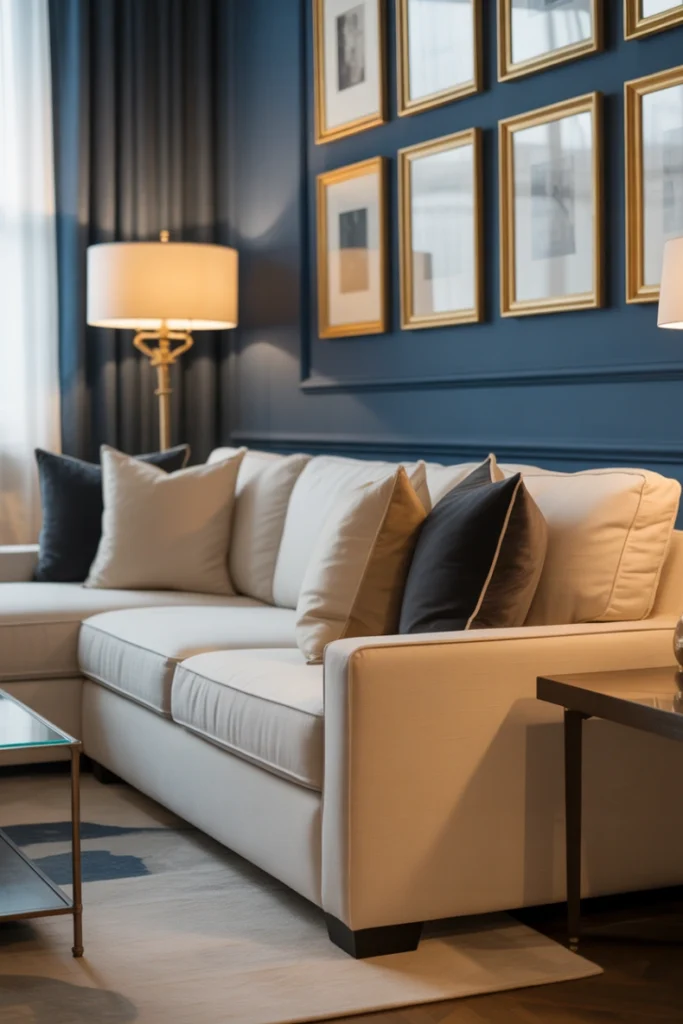
A bold accent wall creates a focal point without repainting the whole room. Choose the wall you see first when you enter, usually behind the sofa or the television, and paint it a deep color such as navy, forest green, or charcoal. Alternatively, use textured wallpaper, wood slats, or limewash paint for depth. Keep the other three walls light so the accent wall stands out and the room still feels bright.
Before committing, test a large swatch, at least 2 feet square, and look at it in morning and evening light. Pair a dark wall with light furniture, a large mirror, and warm lamps so the room does not feel closed in. Hang art with a light frame or a light mat on a dark wall for contrast, and repeat the accent color once more in cushions or a throw to tie the room together.
9. Statement Artwork
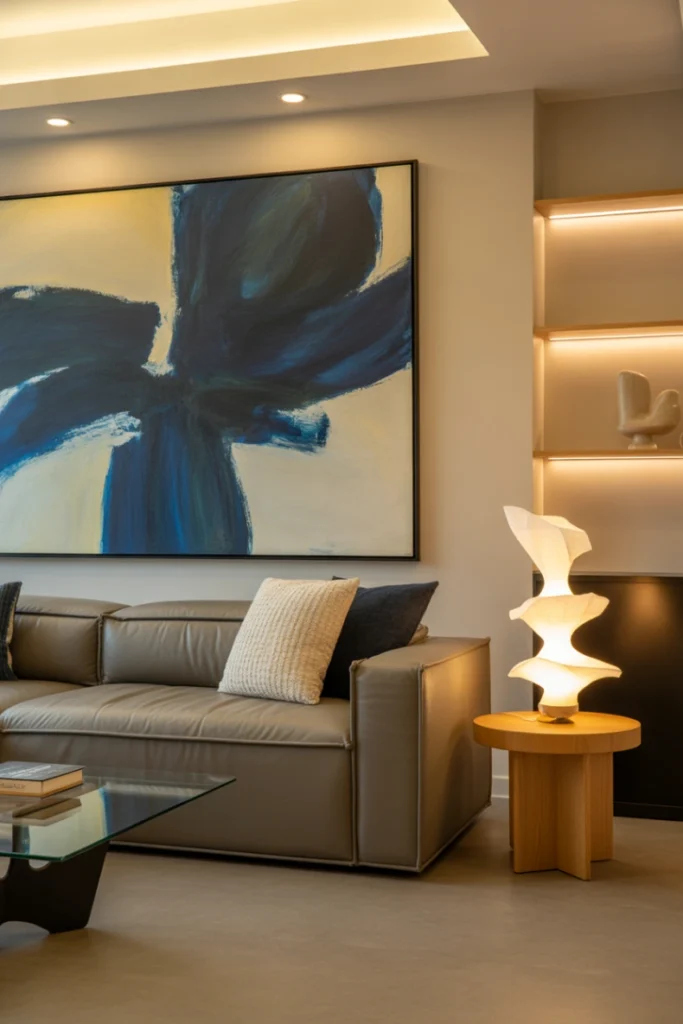
Large scale art is one of the fastest ways to make a living room feel designed. Choose one piece that is about two thirds the width of the sofa, and hang it so its center sits 57 to 60 inches from the floor, which is eye level for most people. Abstract art, large photography, or a bold landscape all work in modern rooms. What matters most is scale: art that is too small above a large sofa looks lost, while one generous piece looks confident.
Pull two or three colors from the artwork into cushions, a throw, or a vase so the room feels connected. If you prefer a gallery wall, plan it on the floor first, keep frames consistent in color, and leave 2 to 3 inches between frames. Use proper picture hanging hardware for heavy pieces, and add a picture light above a favorite piece to make it glow in the evening.
10. Stylish Coffee Table Setup
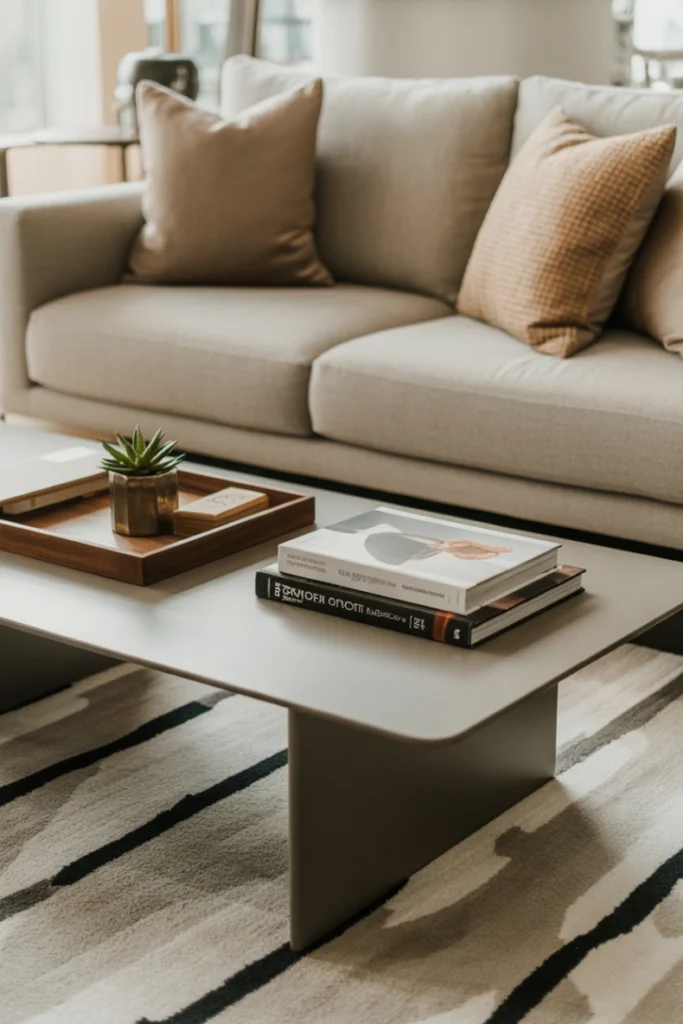
Style your coffee table with the rule of three: one tray, one natural element, and one stack of books. Place a rectangular tray to corral smaller items, add a small plant or a vase with fresh stems, and stack two or three books with a small decorative object on top. Keep at least half the table surface clear so there is room for cups, remotes, and everyday use.
Choose a coffee table that fits the sofa. It should be about two thirds the length of the sofa and roughly the same height as the seat cushions, usually 16 to 18 inches tall. A round table works well with a sectional or in a tight room because it softens corners and improves flow. Refresh the setup seasonally by swapping the book stack or the vase stems, which keeps the room feeling new for almost no cost.
11. Layered Textiles

Layered textiles are what turn a stylish room into a cozy one. Combine cushions, throws, and rugs in different textures, such as velvet, cotton, linen, and chunky wool. Use five to seven cushions on a three seat sofa: two large 22 inch squares at the back, two 20 inch squares in front, and one smaller lumbar cushion in the center. Mix solid colors with one subtle pattern, and keep all cushions in the same color family so the mix looks rich, not random.
Drape a throw over one sofa arm or folded across the back, and choose a heavier knit for winter and a light cotton throw for summer. Wash cushion covers regularly and fluff inserts daily so they keep their shape. If you want help choosing a palette that stays calm while still feeling warm, explore these living room color schemes and pick one base color plus one accent to repeat through your textiles.
12. Functional Storage Solutions
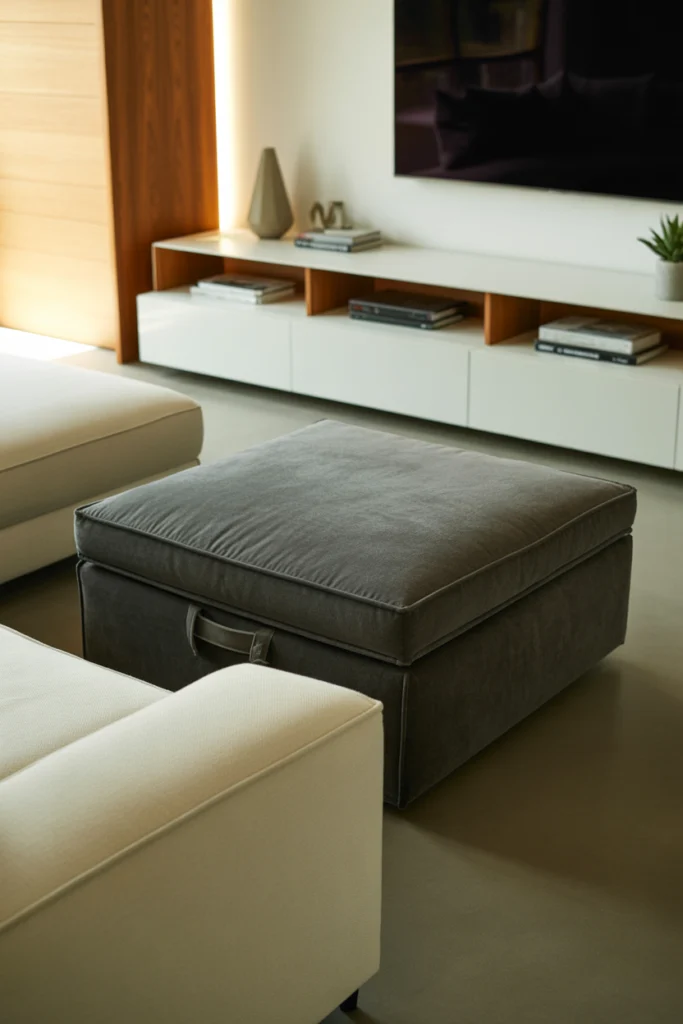
Clutter is the enemy of a modern look, so build storage into furniture. Choose a media console with closed doors to hide cables and devices, an ottoman with internal storage for blankets, and side tables with a drawer for remotes and chargers. Closed storage keeps the room calm, while open shelves should hold only items you enjoy seeing, such as books and a few decorative pieces.
Audit what actually lives in your living room before buying storage. Count books, games, blankets, and electronics, then measure them so shelves and baskets fit. Label baskets inside closed cabinets, keep daily items at arm height, and move rarely used items to another room. When everything has a home, tidying takes five minutes, and the room keeps its clean, luxurious feel day after day.
13. Mirrors to Amplify Light
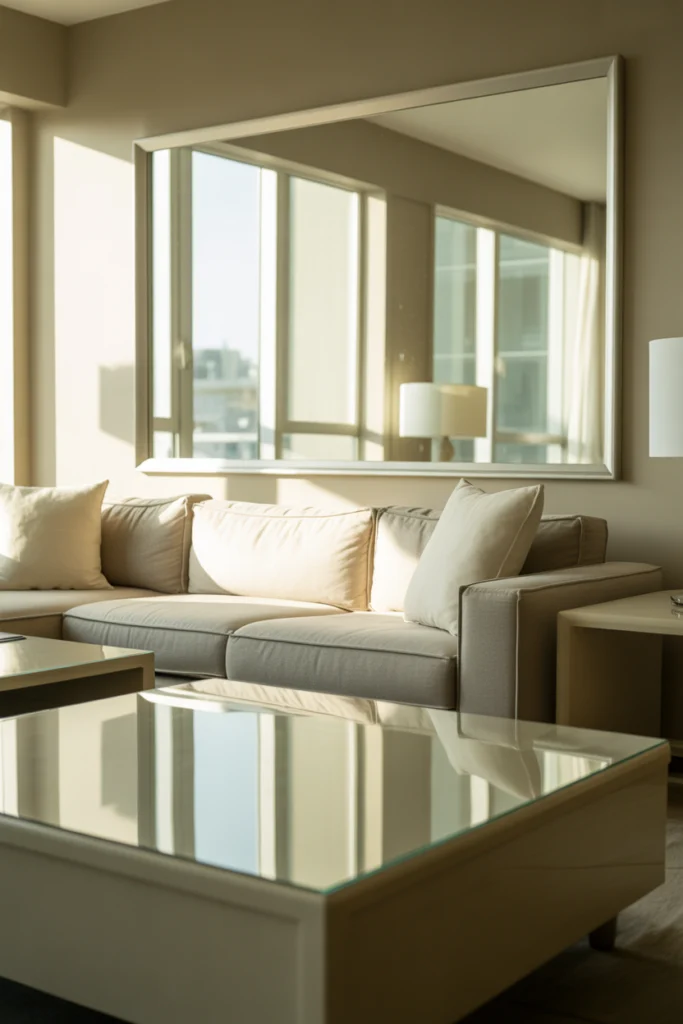
A large mirror reflects light, doubles the sense of space, and acts as art. Hang a mirror opposite or beside a window, not facing a blank wall, so it reflects daylight and a pleasant view. A mirror 36 to 48 inches wide above a console, or a full length leaning mirror in a corner, both work well. In a small room, one large mirror beats several small ones, which can look fussy.
Choose a frame that matches your style: slim black metal for modern rooms, warm wood for cozy rooms, or brass for a touch of glamour. Keep the mirror clean, since dust dulls reflection, and avoid placing it where it reflects clutter such as an open shelf or a television screen. At night, a mirror near a lamp doubles the warm glow and makes the room feel brighter without extra fixtures.
14. Layered Window Treatments
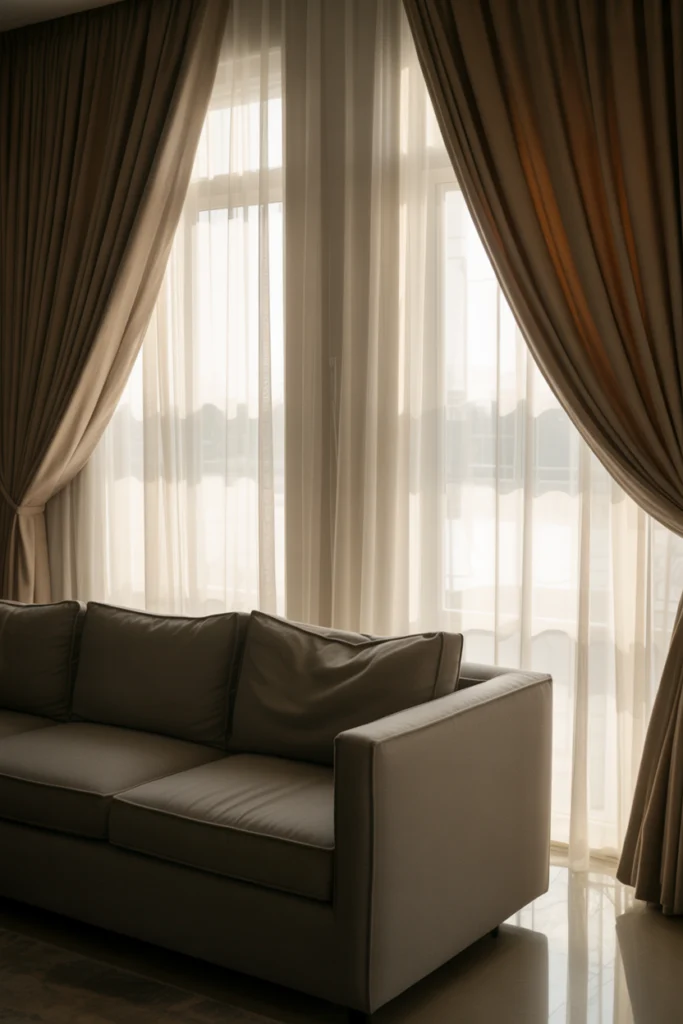
Layered window treatments give you light control, privacy, and softness in one solution. Start with sheer curtains that filter daylight, then add heavier drapes in linen or velvet for evening privacy and insulation. Hang the curtain rod 4 to 6 inches above the window frame and extend it 8 to 12 inches beyond each side, so curtains stack on the wall and the window looks wider when open.
Choose curtain length carefully. Floor length curtains that just kiss the floor look polished and modern, while puddling fabric suits only very formal rooms. Use a double rod or a track system so sheers and drapes move independently. If your entry and living room flow together, matching the curtain style to your modern entryway ideas helps the whole front of the home feel connected and intentional.
15. Smart Technology Integration

Smart technology should make life easier without turning the room into a gadget display. Start with smart bulbs on a dimmer, a smart speaker hidden on a shelf, and a smart plug for lamps, all controlled from one app or voice assistant. Add motorized blinds only on hard to reach windows, and use a soundbar mounted under the television instead of visible speakers scattered around the room.
Hide cables to keep the modern look. Run television cables through a cord cover painted to match the wall, place the router inside a ventilated cabinet, and charge devices in a drawer with a built in outlet. Set evening scenes, such as dimmed lamps at 30 percent brightness, so one command shifts the room from bright daytime to cozy evening. Choose technology that works with what you already own, so you are not locked into replacing everything later.
16. Create a Cozy Reading Corner
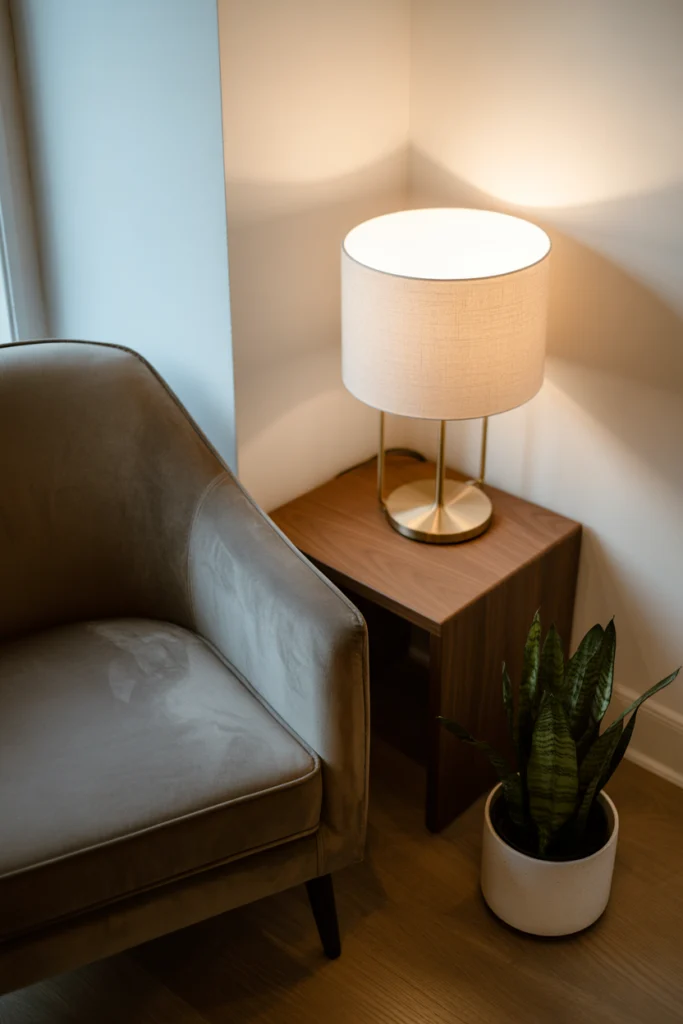
A reading corner turns an unused corner into the most loved spot in the room. Choose a comfortable armchair with a seat height of about 18 inches, add a small side table within arm’s reach, and place a floor lamp behind the chair so light falls over your shoulder. A footstool or ottoman, a soft throw, and a small basket for books complete the setup without taking much floor space.
Position the corner near a window for daylight, or in a quiet corner away from the television. Keep the chair at a slight angle to the room so it feels like a retreat, not a waiting area. If space is tight, use a slim ladder shelf beside the chair for books instead of a bulky bookcase. A reading corner also gives guests a place to sit during gatherings, so it earns its footprint twice over.
17. Add Metallic Accents
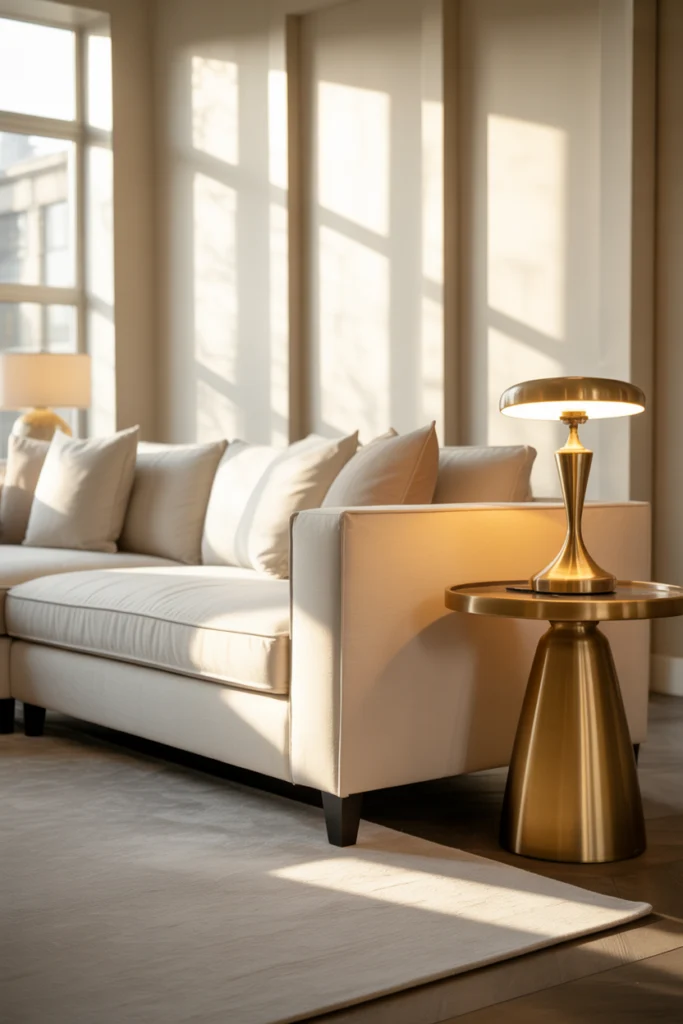
Metallic accents add a touch of luxury when used sparingly. Choose one metal finish, such as brushed brass, matte black, or polished nickel, and repeat it in two or three places: a side table base, a lamp, and picture frames. Mixing too many metals, such as gold, silver, and copper all at once, can make a room feel unsettled, so pick one dominant metal and let other finishes stay quiet.
Use metallics to catch light. A brass tray on the coffee table, a metallic vase, or a lamp with a metal base reflects lamplight in the evening and adds sparkle without glitter. Keep metallic items small and functional where possible, so they feel like jewelry for the room rather than decoration for its own sake. In a room with warm wood, brass feels especially rich, while nickel suits cooler gray palettes.
18. Floating Shelves for Display
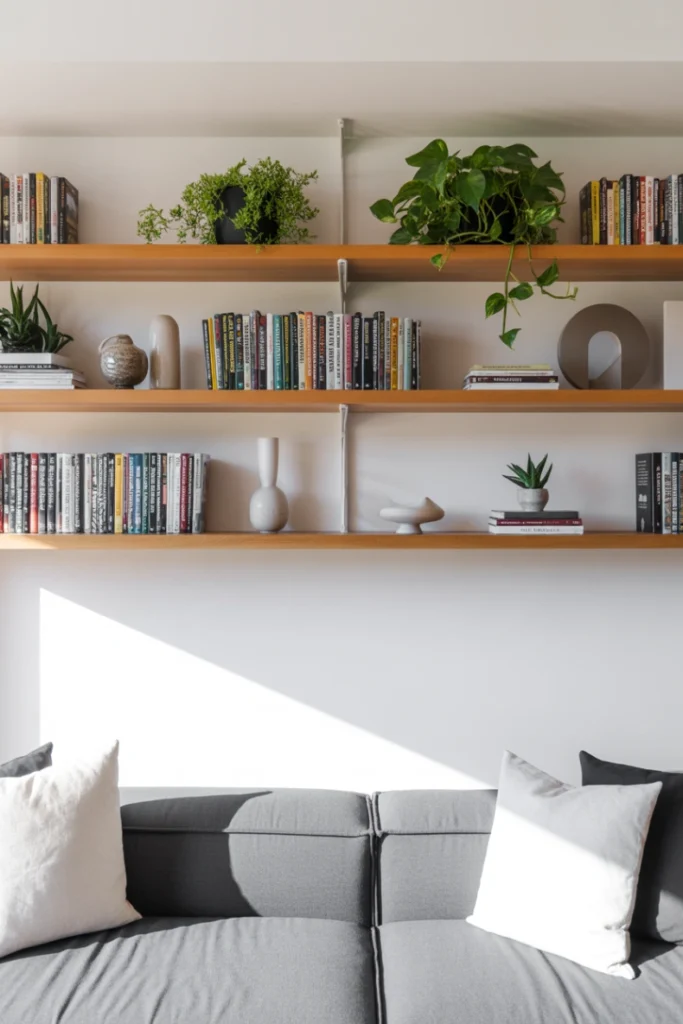
Floating shelves add display and storage without taking floor space, which makes them ideal for small and modern rooms. Install two or three shelves, 24 to 36 inches long, above a console or beside the television, and space them 12 to 15 inches apart vertically. Use solid brackets rated for at least 20 pounds per shelf, and anchor them into wall studs for heavy books.
Style shelves with a mix of heights: tall books or vases, medium plants, and small decorative objects, leaving about 30 percent of each shelf empty so the display breathes. Group items in odd numbers, such as three books with a plant, and vary the arrangement across shelves so the eye moves naturally. Rotate shelf items seasonally to keep the room feeling fresh without buying anything new.
19. Mix Materials for Depth
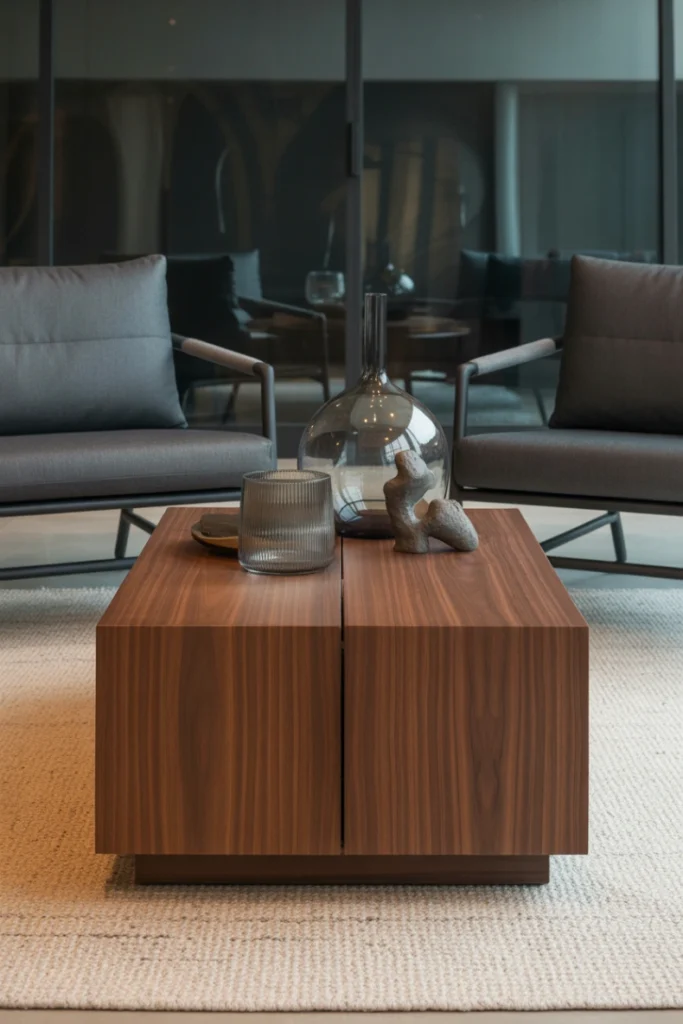
Mixing materials is what gives a modern room depth. Combine smooth glass, warm wood, cool metal, soft fabric, and rough stone in one room, but keep the color palette tight so the mix feels layered, not chaotic. For example, pair a glass coffee table with a wood side table, a metal floor lamp, a wool rug, and linen cushions. Each material adds a different texture, and together they keep the eye interested.
Use the 70-20-10 guide for materials as well as color. Let one material dominate, such as wood or fabric, use a second material for support, such as metal, and add a third as an accent, such as stone or glass. Avoid pairing two very similar materials, such as two different fake woods, which can look cheap. Real textures, even in small doses, make the whole room feel more expensive.
20. Neutral Palette with Soft Pastels
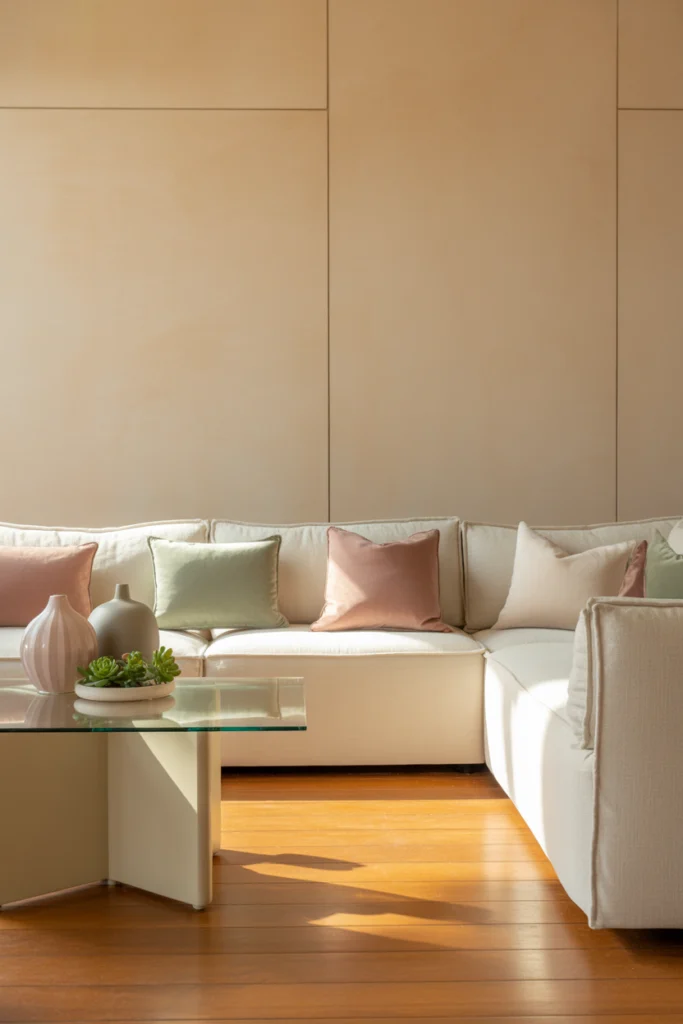
Soft pastels bring calm color to a neutral room without overwhelming it. Start with warm white or light gray walls, then add blush pink, pale sage, soft mint, or powder blue through cushions, art, and a throw. Pastels work best when they are muted and dusty rather than bright, so they read as sophisticated, not childish. Use one pastel as your main accent and a second pastel only in tiny touches.
Balance pastels with warm neutrals and natural wood so the room does not feel washed out. A blush cushion pairs well with a beige sofa and a walnut table, while sage green looks fresh against white walls and oak floors. Test pastel fabric swatches at home in daylight, since pastel colors shift noticeably under warm evening bulbs. When in doubt, choose the slightly deeper shade, which holds up better in real light.
21. Personal Touches and Decor
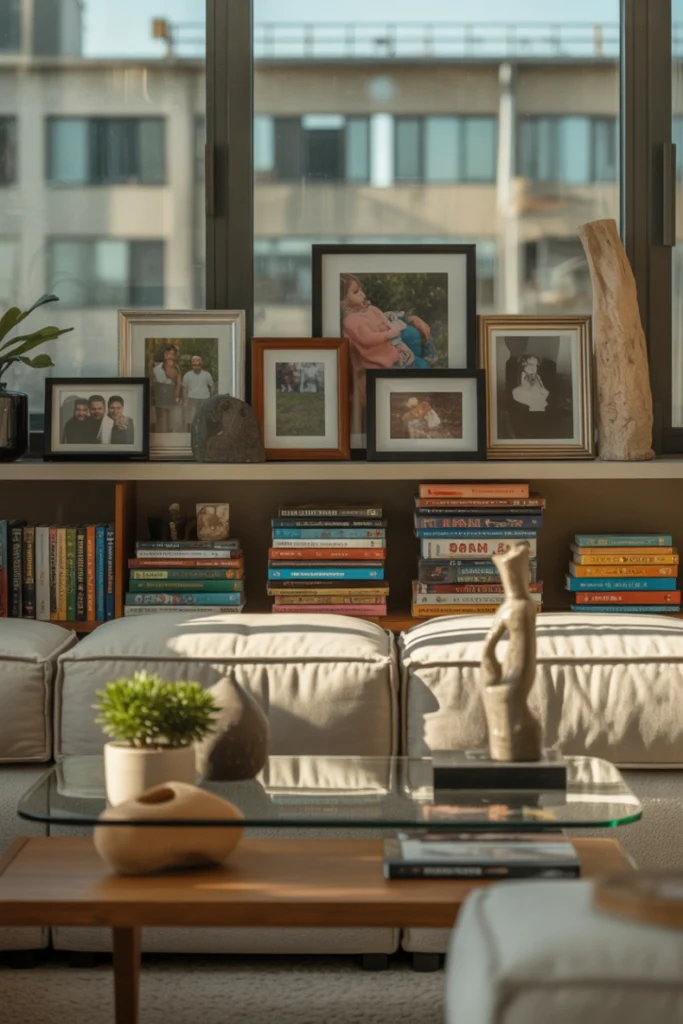
Personal touches are what make a modern room feel like home rather than a showroom. Display a few meaningful items, such as family photos in matching frames, travel souvenirs, favorite books, or a handmade piece, and give each one space instead of crowding a shelf. Three personal items displayed well say more than twenty items crammed together.
Rotate personal displays every few months so the room evolves with you. Frame children’s art in a simple frame, print favorite photos in one size for a clean gallery, and keep one shelf or surface reserved for items that change with the seasons. Personal touches also make guests feel welcome, because they show the room belongs to real people with real stories, not just a catalog.
Conclusion
Modern living rooms feel both luxurious and cozy when every choice is intentional. A neutral base, layered lighting, a strong sofa, and thoughtful textures create a room that looks refined and still invites you to put your feet up. You do not need to apply all 21 ideas at once. Start with the three that will change your daily comfort most, such as lighting, rug size, and textiles, then add the rest over time as budget allows.
Keep the palette calm, repeat your accent color, hide clutter in smart storage, and let personal touches finish the room. With those habits in place, your living room becomes more than a pretty space. It becomes the heart of your home, a place for quiet mornings, lively gatherings, and relaxed evenings, where modern style and everyday comfort meet.
Frequently Asked Questions
How do I make a modern living room feel cozy, not cold?
Layer warmth over sleek lines. Add a wool rug, linen and velvet cushions, a chunky throw, warm 2700K lighting, and natural wood. Coziness comes from texture and warm light, not from adding more furniture. Three textile layers and dimmable lamps usually transform a cold room in one weekend.
What size rug should I choose for my living room?
Choose a rug large enough that the front legs of your sofa and chairs sit on it. An 8 by 10 foot rug suits most standard seating areas, while a 9 by 12 foot rug fits larger rooms. If the rug is too small, the seating area looks disconnected, so always size up when you are between two sizes.
What is the best color palette for a modern living room?
Start with warm white, beige, or light gray as the base, add one accent color such as teal, terracotta, or navy, and use soft pastels only as small touches. Keep bold color to about 10 percent of the room, repeat the accent three times, and let wood and natural textures warm the palette.
How high should I hang art above my sofa?
Hang art so its center sits 57 to 60 inches from the floor, and choose a piece about two thirds the width of the sofa. Leave 6 to 8 inches between the bottom of the frame and the top of the sofa back. One large piece usually looks better than several small pieces above a long sofa.
Can I mix modern furniture with traditional pieces?
Yes, if you keep the color palette and scale consistent. Pair a modern sofa with a traditional wood coffee table, or a classic armchair with sleek lighting, and repeat one wood tone and one metal finish across both styles. The shared palette ties old and new together so the room feels collected, not mismatched.
More Ideas You Will Love
 15 Modern Living Room Wall Color Ideas You’ll Love
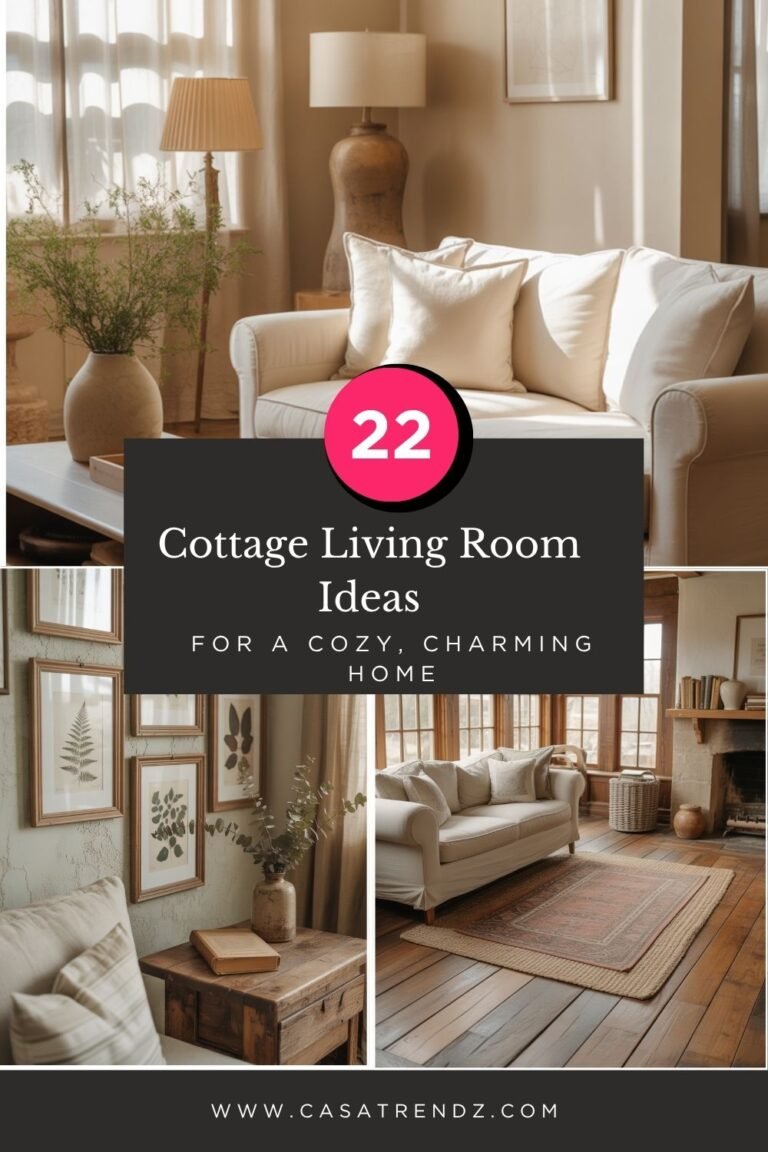 22 Cottage Living Room Ideas for a Cozy, Charming Home
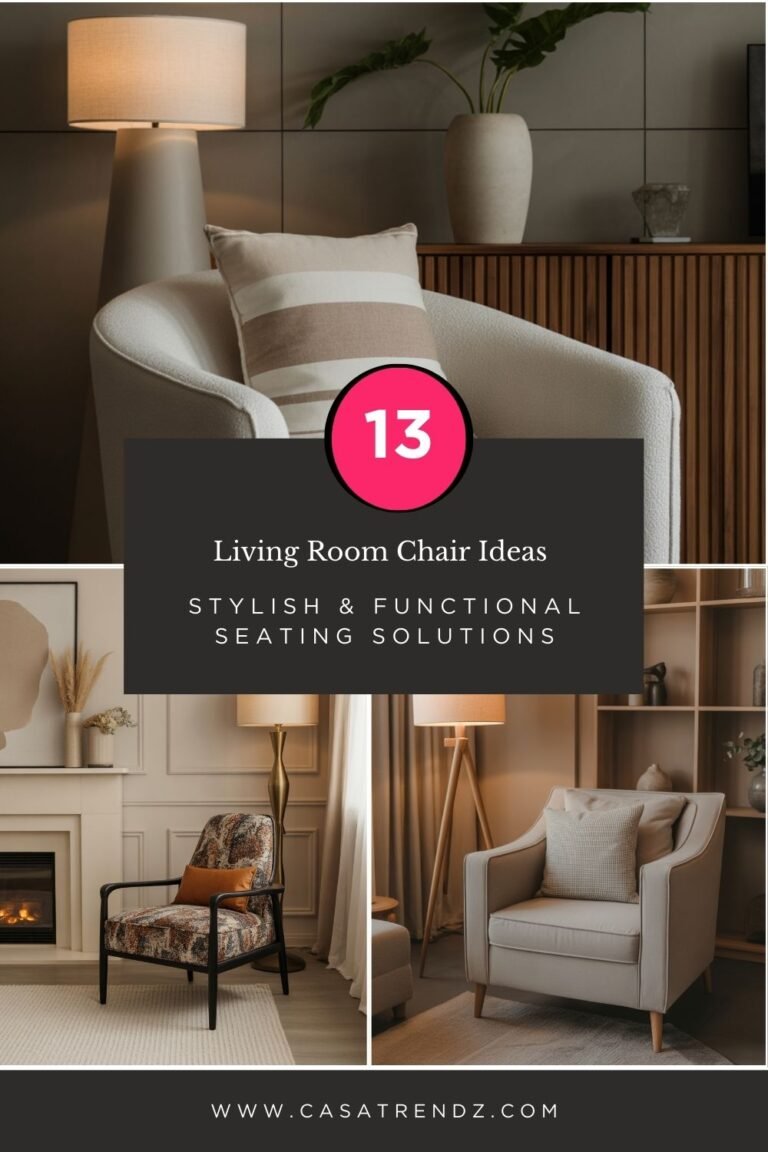 13 Living Room Chair Ideas: Stylish & Functional Seating Solutions
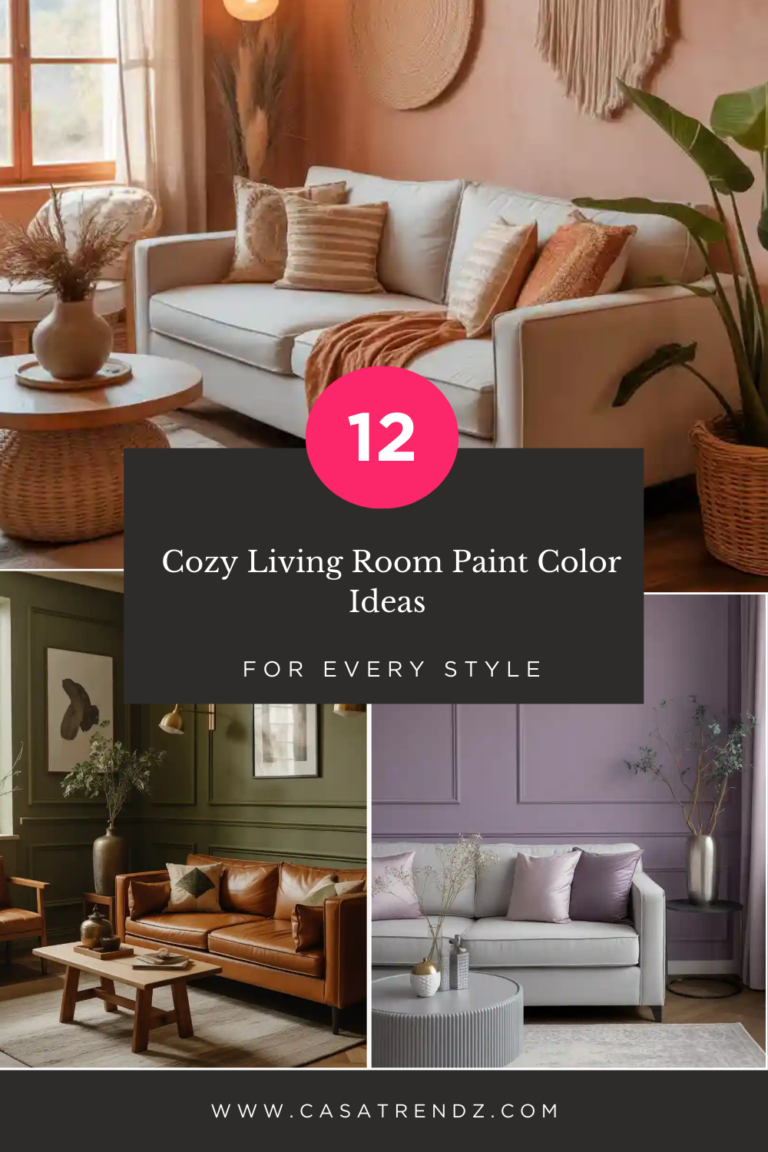 12 Cozy Living Room Paint Color Ideas for Every Style
 15 Fall Home Aesthetic Ideas for a Cozy Living Room Setup
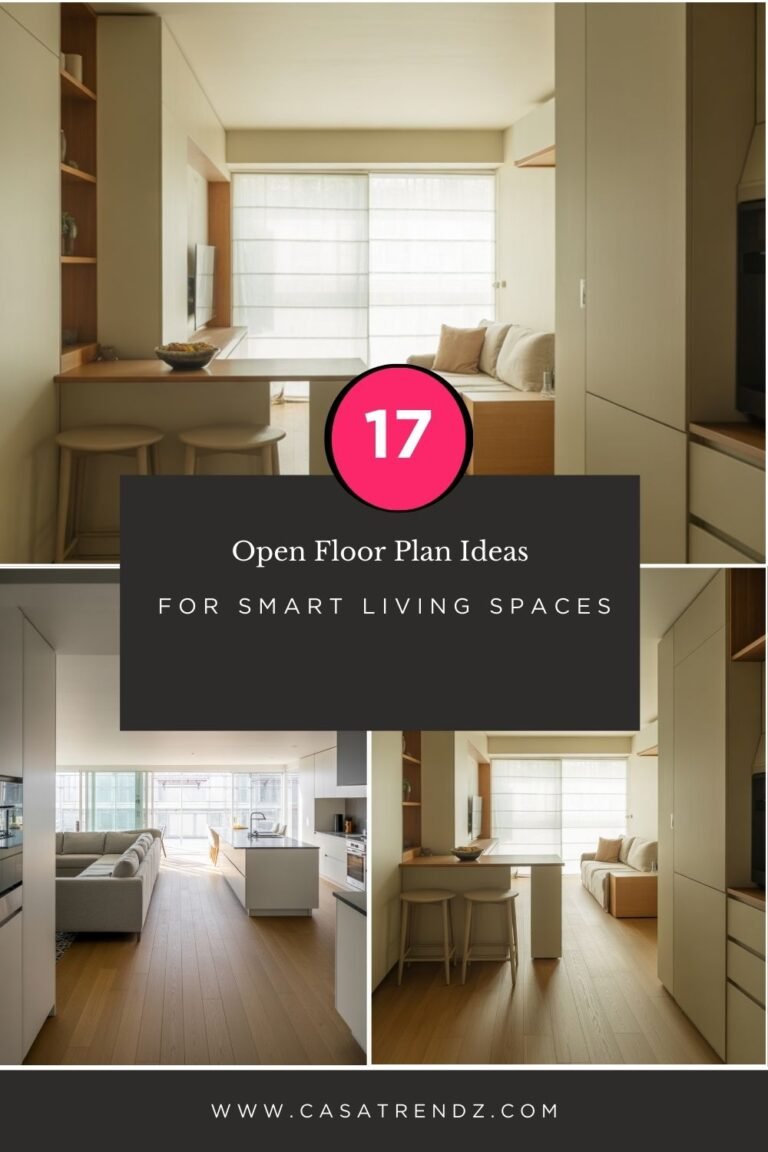 17 Open Floor Plan Ideas for Smart Living Spaces