
14 Yard Landscaping Ideas: Transform Your Outdoor Space Beautifully

Your yard is the first thing people notice about your home, and it is also where some of the best everyday moments happen. Morning coffee on the patio, kids playing on the lawn, quiet evenings under string lights, all of it starts with how the outdoor space is planned. A good yard does not need a huge budget or a professional designer. It needs a clear plan, a few smart choices, and ideas that fit the way your family actually lives.
The best yard landscaping ideas balance beauty with practicality. A lush lawn looks wonderful, but it also needs the right mowing height and watering routine. A stone path looks charming, but it must also be wide enough to walk on comfortably and safe when wet. When every element has a purpose, the whole yard feels calm, welcoming, and easy to enjoy instead of feeling like a list of random features.
Below you will find 14 yard landscaping ideas that work for small yards, large properties, and everything in between. Each idea includes practical details on materials, sizes, and simple steps so you can start with confidence, whether you hire help or do the work yourself.
1. Lush Green Lawn with Defined Borders
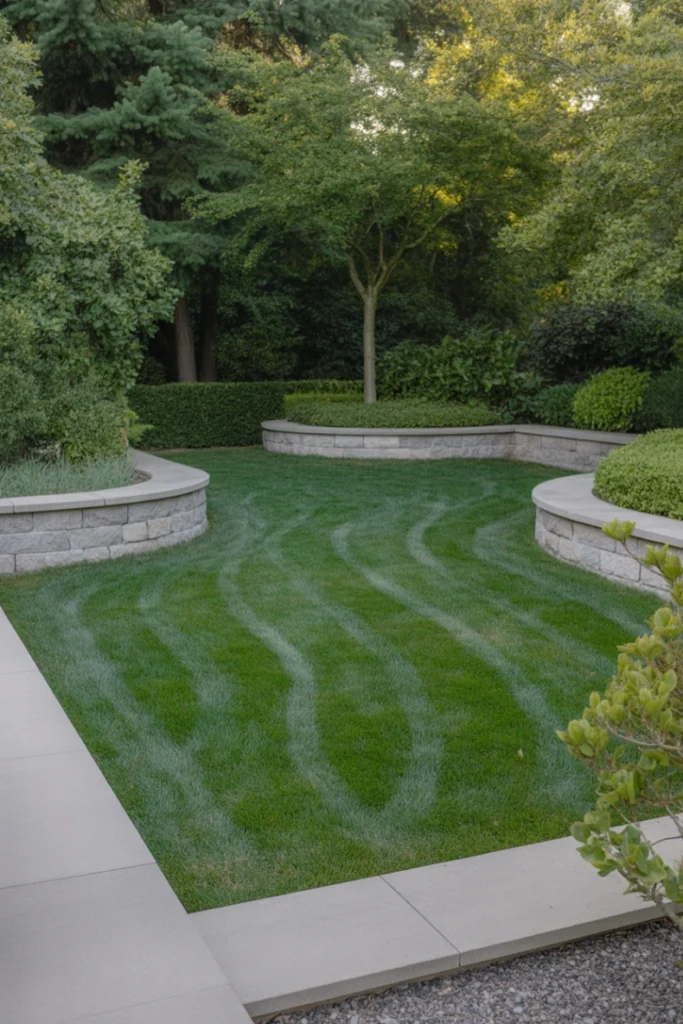
A thick green lawn is the foundation of almost every beautiful yard. It gives the eye a place to rest, makes the whole property feel bigger, and creates a soft surface for play, picnics, and barefoot summer evenings. The secret to a lawn that looks great all season is not a magic product. It is consistent, simple care.
Start with the basics. Mow at a height of 2.5 to 3 inches, and never cut off more than one third of the grass blade at a time. Taller grass shades the soil, holds moisture better, and crowds out weeds naturally. Water deeply but less often, aiming for about 1 inch of water per week, including rainfall. Early morning watering is best because the grass dries before nightfall, which helps prevent disease.
Defined borders are what make a lawn look finished instead of messy. Steel edging gives a clean modern line, brick edging adds classic charm, and natural stone edging suits cottage and rustic styles. Install edging 4 to 6 inches deep so grass roots cannot creep into the beds. A crisp border also makes mowing and trimming faster, because the mower wheel can ride along the edge. Feed the lawn in spring and fall with a balanced fertilizer, overseed thin patches in early fall, and your lawn will thicken up within a single season.
2. Layered Planting for Visual Depth
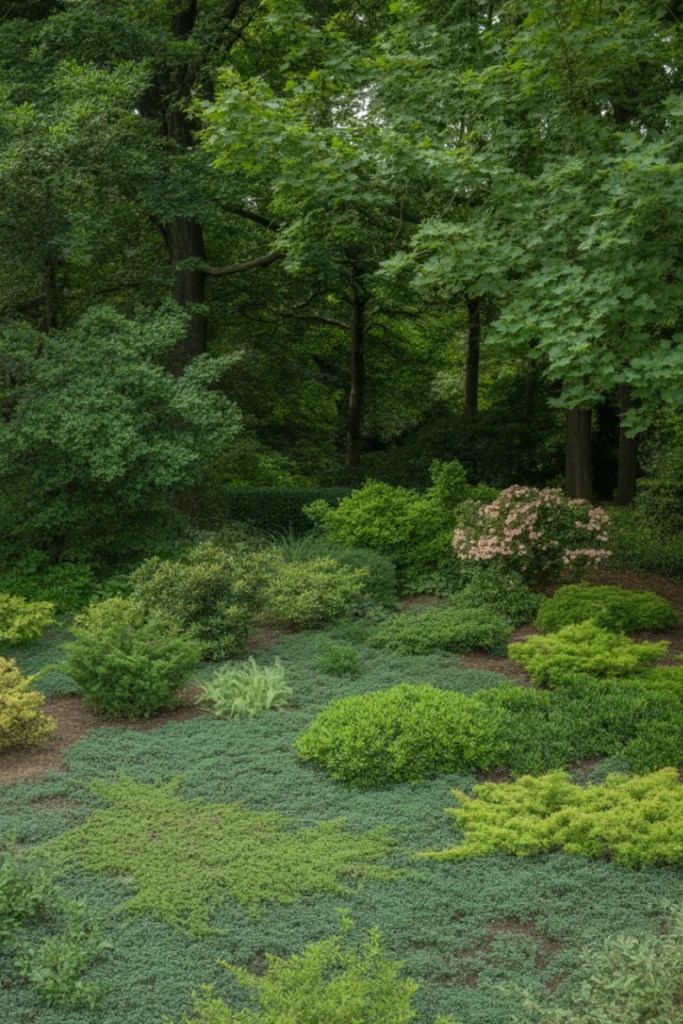
Flat, single row planting makes a yard look thin and unfinished. Layered planting fixes that by arranging plants in tiers, just like nature does. Tall trees and large shrubs form the back layer, medium shrubs and ornamental grasses sit in the middle, and low ground covers and flowers fill the front. The result is a yard that looks full, rich, and interesting from every angle.
Plan each layer with mature size in mind, not the size of the plant in its nursery pot. A shrub that grows 4 feet wide needs 4 feet of space, or you will be pruning it forever. Leave breathing room between layers so light reaches the lower plants. Mix textures as well as heights: pair fine, feathery grasses with bold hosta leaves, and combine evergreens with flowering shrubs so the bed looks good in winter too.
For a classic layered bed, try a small flowering tree such as a dogwood or crape myrtle at the back, boxwood or hydrangea in the middle, and catmint, daylilies, or creeping phlox at the front. Repeat the same plant in groups of three or five instead of scattering one of everything, because repetition creates rhythm. If you want more planting inspiration, explore these garden design ideas and our guide to the best plants for a beautiful backyard landscape to choose varieties that thrive in your climate.
3. Stone Pathways for Structure and Flow
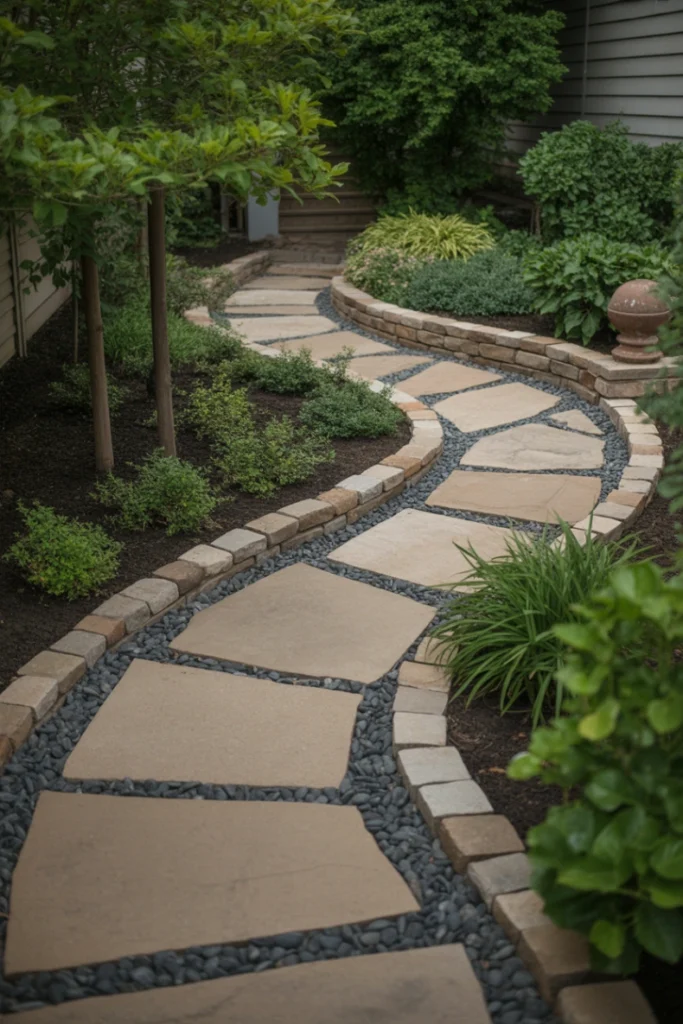
A stone pathway does more than connect point A to point B. It tells visitors where to walk, protects the lawn from worn out patches, and adds texture and rhythm to the landscape. Without paths, people cut across the grass and flower beds, and the yard slowly loses its shape.
Build paths 36 to 48 inches wide so two people can walk side by side comfortably. For a main path from the driveway or gate to the front door, go wider, around 48 inches. For a secondary garden path, 30 to 36 inches is enough. Flagstone, pavers, and pea gravel are all good choices. Flagstone looks natural and timeless, concrete pavers give a tidy modern finish, and gravel is the most budget friendly option.
For a long lasting path, dig 4 to 6 inches deep, lay a compacted gravel base, add a 1 inch layer of coarse sand, then set the stones with narrow, even gaps. Fill the gaps with sand, fine gravel, or low growing ground cover such as creeping thyme. Set stepping stones 24 to 28 inches apart, measured center to center, so the stride feels natural. Add a few solar path lights along the edges, and the walk becomes just as inviting after dark as it is during the day.
4. Outdoor Seating and Relaxation Areas
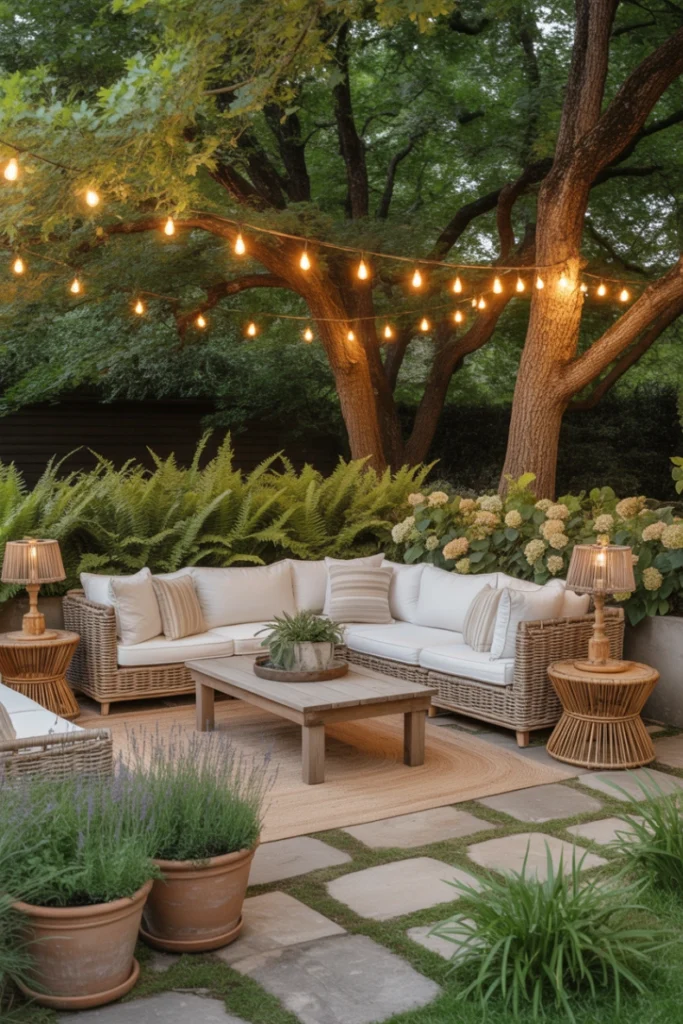
A yard without a place to sit is a yard nobody uses. A seating area turns open grass into a living room outdoors, a spot for morning coffee, family dinners, and long talks with friends. The key is to place it where it feels sheltered and comfortable, not just where there happens to be empty space.
A patio of 10 by 12 feet fits a four seat dining set comfortably, while a 12 by 14 foot space allows room for lounge chairs as well. Choose furniture materials that survive your weather: teak and cedar age gracefully, powder coated aluminum resists rust, and all weather wicker is light and easy to move. Add an outdoor rug to define the area, a few weatherproof cushions in two or three coordinating colors, and a shade source such as a pergola, umbrella, or shade sail.
Frame the seating area with plants or a low hedge so it feels like a room instead of furniture dropped on a lawn. Keep a fire feature at least 10 feet from the house and any overhanging branches if you add one, and see our backyard fire pit ideas for safe, stylish setups. Finish with a small side table for every seat, because nobody wants to hold a drink for an hour. If you are starting from scratch, these outdoor patio design ideas will help you plan the layout, paving, and furniture together.
5. Garden Beds with Seasonal Flowers
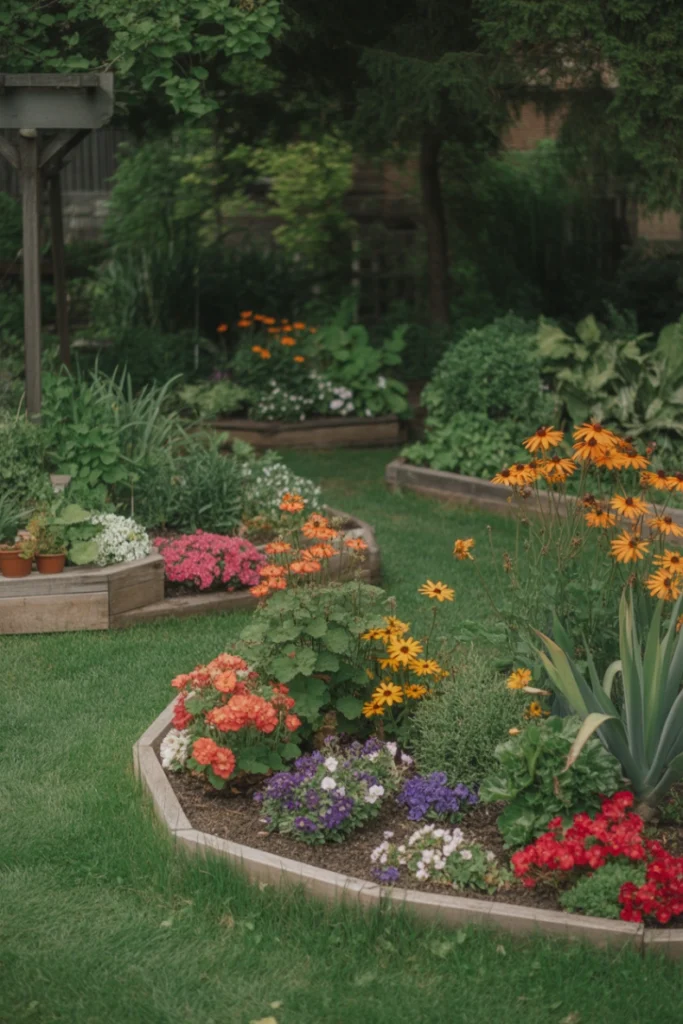
Seasonal flower beds are the easiest way to keep a yard looking fresh all year. Instead of one big planting that peaks for two weeks and then fades, rotate flowers by season so there is always something in bloom. Spring tulips and daffodils, summer zinnias and marigolds, and fall mums and asters keep the color coming from March through October.
Build beds 3 to 4 feet deep so you can reach the middle without stepping on the soil. Improve the soil before planting by mixing in 2 to 3 inches of compost, which feeds the plants and helps the soil hold moisture. Plant in drifts of one variety rather than single plants dotted around, because a group of the same flower reads as a deliberate design choice. Mulch the bed with 2 to 3 inches of shredded bark to suppress weeds and keep the soil cool.
Plan for succession. When spring bulbs finish, let their foliage die back naturally for six weeks so the bulbs store energy, and plant summer annuals in the gaps. Deadhead spent blooms every week to encourage more flowers, and water at the base of the plants in the morning. A small bed by the front walk or mailbox gives the biggest visual return for the least work, and it is the first color guests see when they arrive.
6. Low-Maintenance Landscaping Design
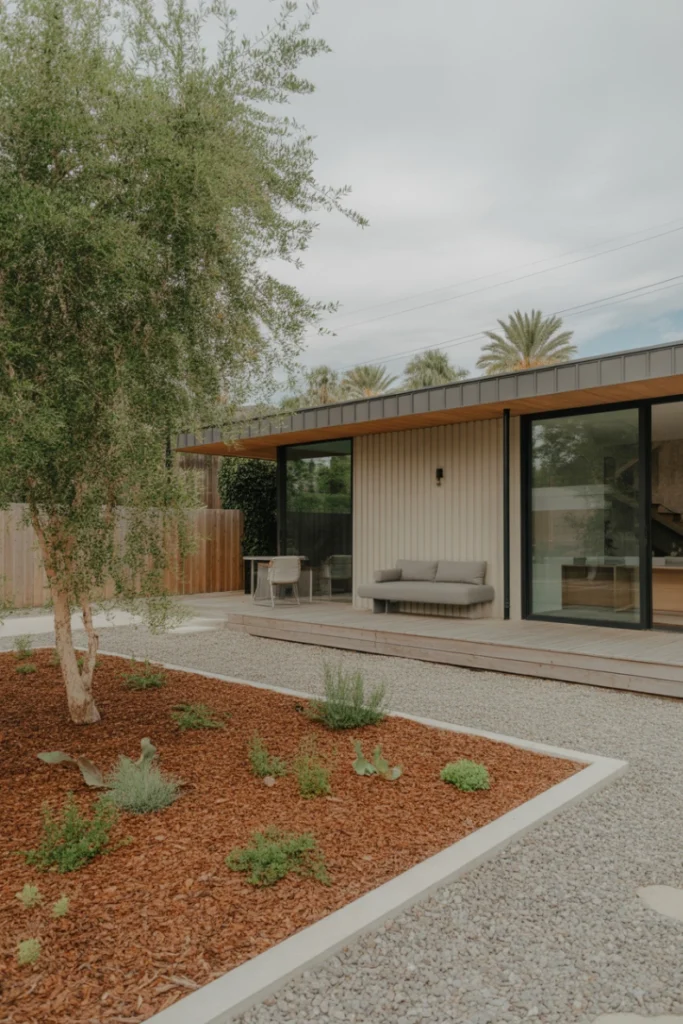
A beautiful yard should not demand every weekend of your life. Low maintenance landscaping uses smart plant choices and simple materials to cut watering, weeding, and mowing down to a manageable routine. It is the right approach for busy families, frequent travelers, and anyone who would rather enjoy the yard than work in it.
Start with native plants, because they are already adapted to your rainfall, soil, and temperature swings. They need less water, less fertilizer, and less fuss than exotic species. Replace thirsty turf in hard to mow spots, such as steep slopes and narrow side yards, with ground covers like creeping thyme, sedum, or mondo grass. Use gravel, river rock, or decomposed granite for paths and borders, and top planting beds with 3 inches of mulch to smother weeds.
Drip irrigation is the single best upgrade for a low maintenance yard. It delivers water directly to the roots, uses up to 50 percent less water than sprinklers, and can run on a timer while you are away. Add ornamental grasses such as fountain grass or blue fescue for movement and texture without pruning, and choose slow growing shrubs so you are not trimming every month. The goal is a yard that looks intentional and tidy with about one hour of care per week.
7. Water Features for Tranquility
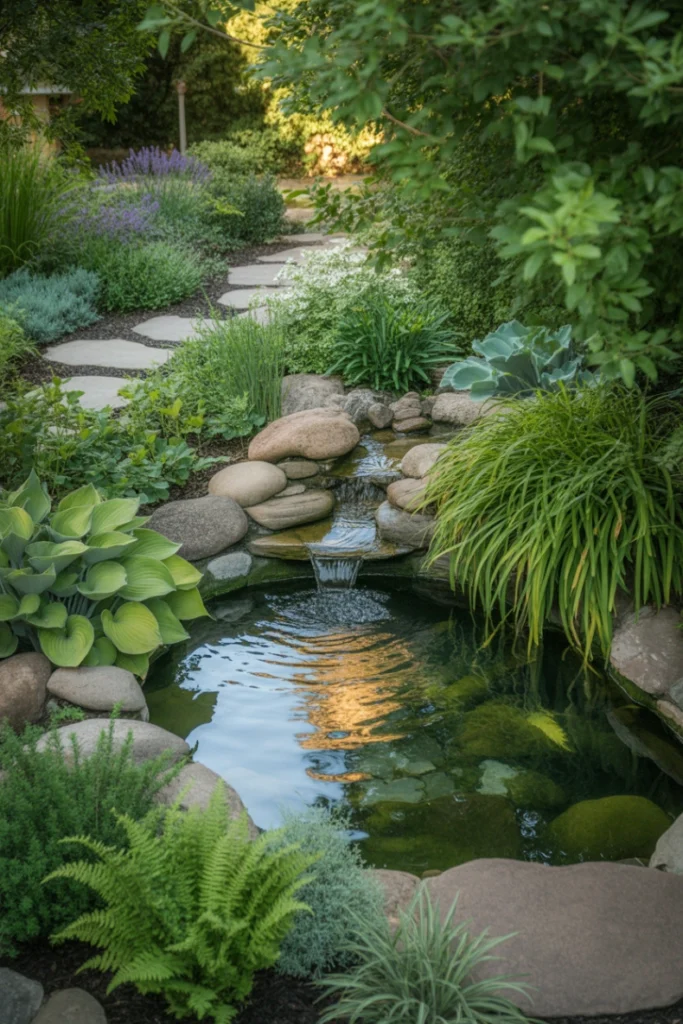
The sound of moving water changes the whole mood of a yard. A small fountain, a birdbath, or a pond adds a sense of calm that plants alone cannot create, and it masks street noise better than almost anything else. Water also draws birds and butterflies, which makes the yard feel alive.
You do not need a large pond to get the effect. A simple bubbling rock fountain or a wall mounted spout needs only a small pump, a hidden reservoir, and a nearby outdoor outlet. For a pond, a size of about 4 by 6 feet and 18 to 24 inches deep is manageable and safe for fish such as goldfish. Place water features where you can see and hear them from your seating area, and keep them at least partly shaded so algae grows more slowly.
Choose a pump rated for your feature size, and run it daily to keep the water moving, because moving water discourages mosquitoes. Add a few water plants such as water lilies or water lettuce to shade the surface naturally. In cold climates, remove the pump before the first hard freeze and store it indoors. Even a small birdbath, refreshed every two or three days, brings birds into the yard and adds a lovely focal point to a flower bed.
8. Defined Zones for Functionality
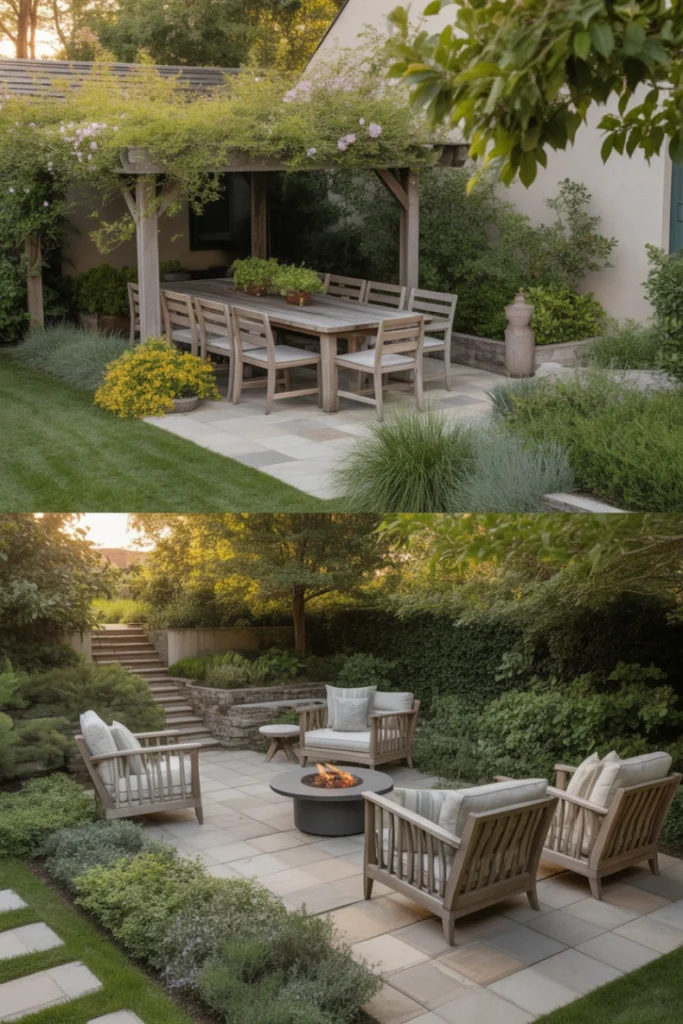
A yard works best when every area has a clear job. Without zones, the grill sits next to the kids play area, the garden tools pile up by the patio, and the whole space feels cluttered. Dividing the yard into defined zones makes it easier to use, easier to maintain, and much more relaxing.
Start by listing what your family actually does outside: dining, lounging, playing, gardening, and maybe grilling or reading. Then sketch the yard on paper and assign each activity a spot, keeping noisy zones such as play areas away from quiet reading corners. Use low hedges, changes in paving material, a pergola, or a row of planters to mark the boundaries. The divisions should feel soft and natural, not like walls.
Keep paths connecting the zones so movement feels easy, and leave a generous open lawn in the middle for flexible use. A dining zone near the kitchen door saves endless trips with food, while a play zone within view of the patio lets parents relax while children play. Give each zone one focal point, such as a table, a fire pit, or a specimen tree, so the eye knows where to land. Zoning costs very little, but it makes even a small yard feel organized and spacious.
9. Vertical Gardening Solutions
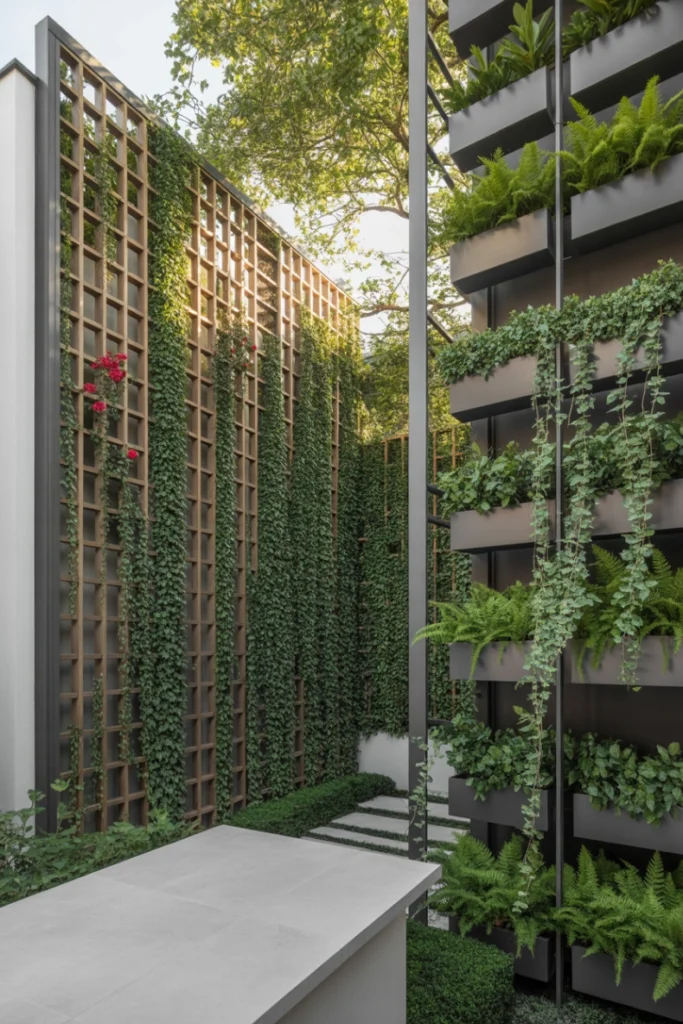
When ground space is limited, the answer is to grow upward. Vertical gardening uses walls, fences, trellises, and freestanding planters to add greenery without taking up precious floor space. It works beautifully in small yards, townhouse gardens, and narrow side passages that would otherwise go to waste.
A simple wooden trellis against a sunny wall can support climbing roses, clematis, jasmine, or morning glories. Wall mounted planters and pocket planters are perfect for herbs such as basil, mint, and parsley, keeping them within easy reach of the kitchen door. A freestanding vertical planter or a tiered plant stand can hold lettuce, strawberries, and trailing flowers in a footprint of just 2 square feet.
Before you attach anything to a wall, check that the structure can carry the weight of soil, plants, and water, because a fully planted wall panel can weigh 30 pounds or more per square foot. Use a drip irrigation line or self watering planters so the upper rows do not dry out, since gravity pulls water down fast. Choose plants that match the light on that wall: sun loving herbs for south facing walls, and ferns and hostas for shaded spots. Vertical gardens also soften bare fences and blank walls, turning the least attractive part of a yard into a feature.
10. Natural Stone and Hardscape Elements
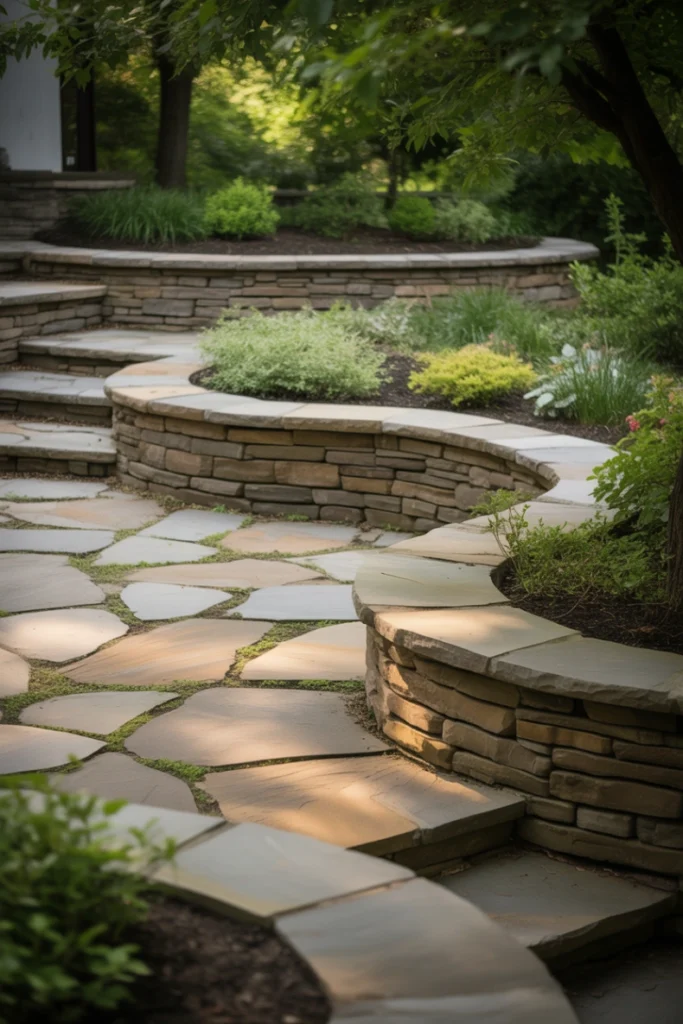
Stone is the backbone of a landscape. While plants change with the seasons, stone stays constant, giving the yard structure and a sense of permanence. Retaining walls, boulder groupings, stone patios, and gravel beds all add texture and contrast that make the greenery around them look even better.
Use natural stone that matches your home and region: limestone and sandstone suit warm climates, granite and slate look right in cooler regions, and river rock works almost anywhere. A low retaining wall of 18 to 24 inches can turn a slope into a level planting bed and stop soil from washing away in heavy rain. Place boulders in odd numbered groups of three or five, burying the bottom third so they look like they grew there instead of being dropped on the lawn.
Balance is the rule with hardscape. As a guide, aim for roughly two thirds planting to one third hardscape, so the yard still feels like a garden rather than a parking area. Leave gaps between patio stones for ground cover, and slope all paved surfaces slightly away from the house for drainage. Stone also needs almost no maintenance: a yearly pressure wash and a check for loose joints is usually enough to keep it looking its best.
11. Privacy Landscaping with Hedges and Trees
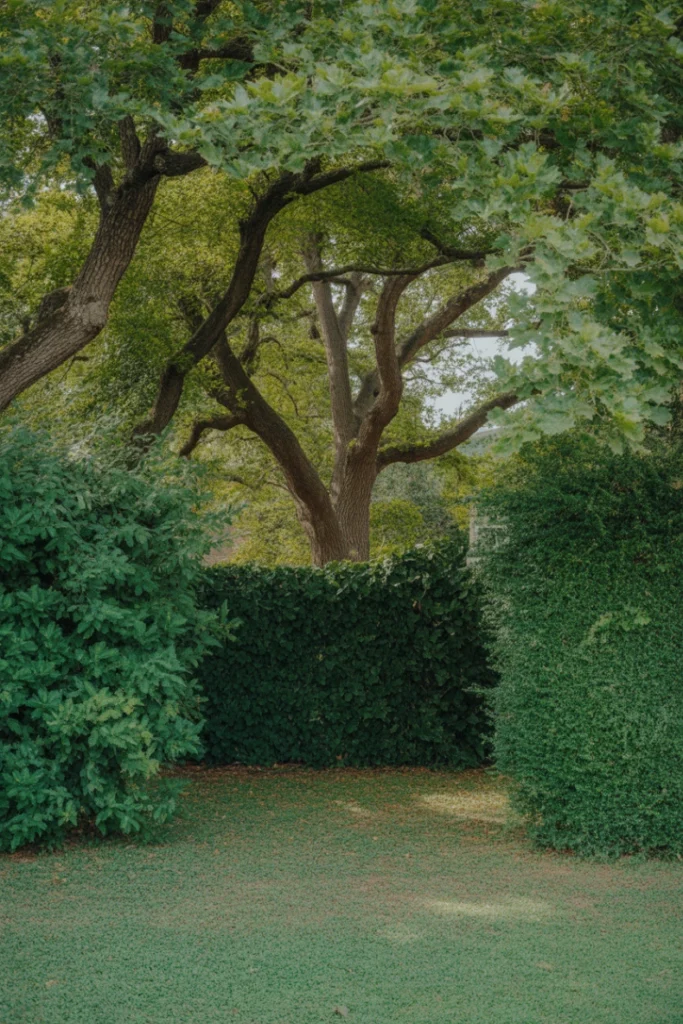
Privacy makes a yard feel like your own. A well planned screen of hedges and trees blocks views from neighbors and the street, softens noise, and creates a sheltered feeling that fences alone cannot match. Living screens also look better every year as they fill in.
Arborvitae is the classic choice: plant them 3 feet apart for a dense hedge, and they grow 1 to 2 feet per year. Leyland cypress grows even faster, up to 3 feet per year, but needs more room, so space them 6 to 8 feet apart. For a layered look, combine a tall evergreen row at the back with a shorter flowering hedge such as viburnum or lilac in front. Bamboo in large containers is a good option for patios, because containers keep it from spreading.
Plan for the mature height before you plant, or you may end up with a 30 foot tree blocking your own windows. Check local rules about planting near property lines, and talk to your neighbors before planting a tall screen on a shared boundary. Water new hedges deeply for the first full growing season, and prune lightly once a year to keep the shape full from top to bottom. Within two to three years, a planted screen gives real privacy and turns an exposed yard into a private retreat.
12. Sustainable and Eco-Friendly Landscaping
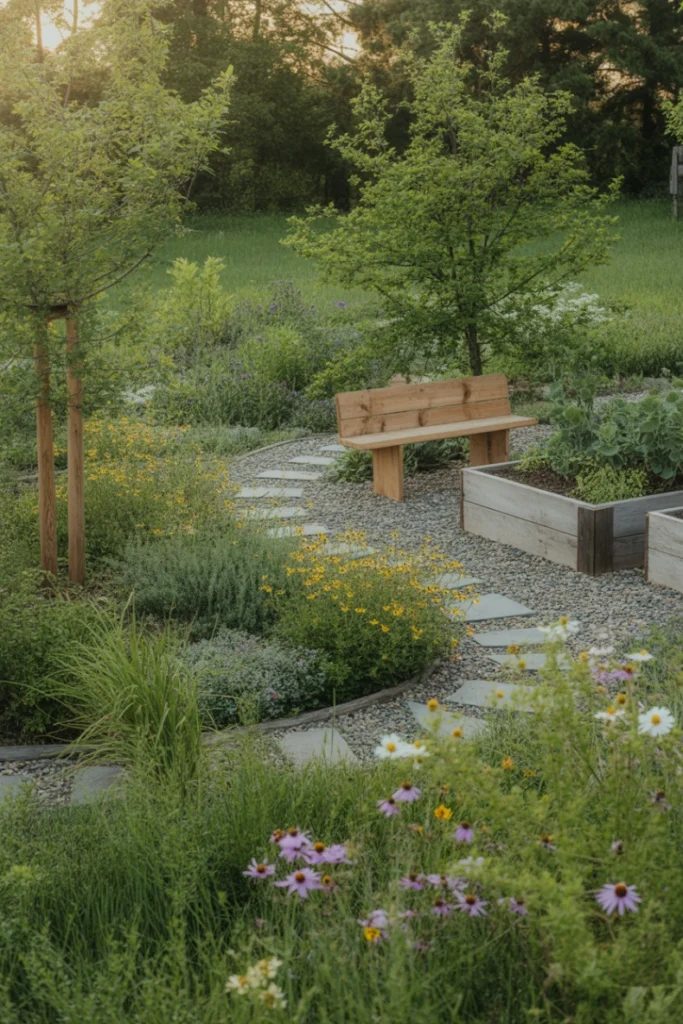
Sustainable landscaping is good for the planet and good for your wallet. It uses less water, fewer chemicals, and less energy, while supporting birds, bees, and healthy soil. The best part is that a sustainable yard does not look different from a conventional one. It simply works better.
Start with the biggest water saver: replace part of the lawn with native plants, mulch beds, and permeable paving that lets rain soak into the ground instead of running into the street. Install a rain barrel under a downspout to collect free water for the garden, and switch spray sprinklers to drip irrigation. Compost kitchen scraps and yard waste to make rich, free soil food, and skip chemical weed killers in favor of hand weeding and thick mulch.
Choose plants that support pollinators, such as lavender, coneflower, milkweed, and salvia, and leave a small wild corner with native grasses if you have the space. Mow with a mulching mower so clippings feed the lawn, and leave the leaves in garden beds over winter as shelter for beneficial insects. These small choices add up to a yard that costs less to maintain, stays healthier in drought, and supports the local ecosystem year after year.
13. Lighting for Ambiance and Safety
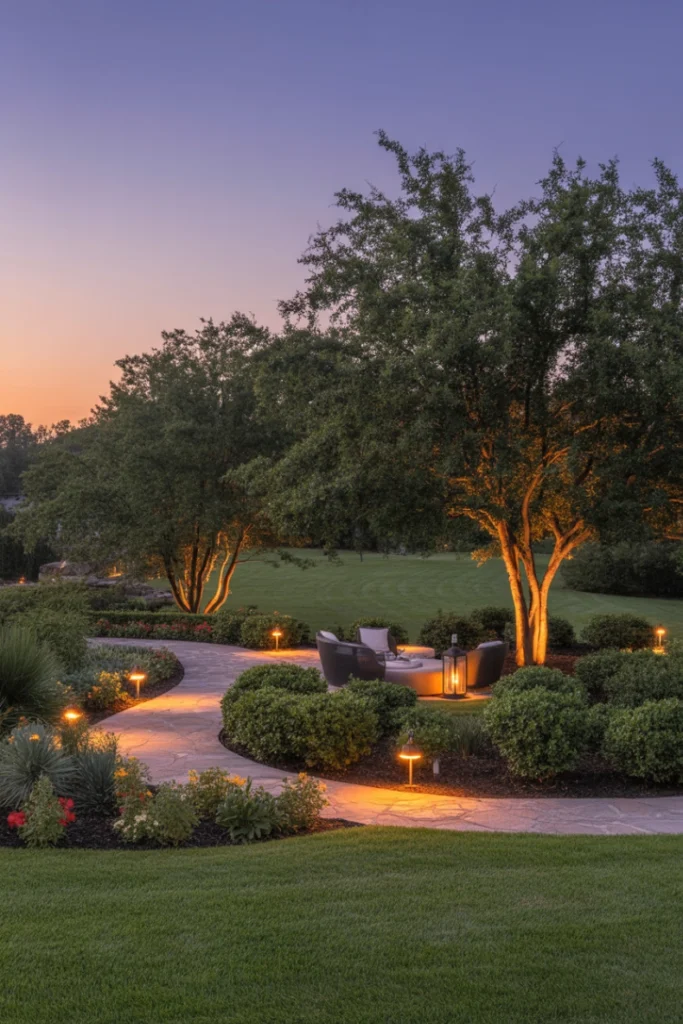
Good lighting doubles the hours you can enjoy your yard. It makes paths safe after dark, shows off trees and stonework, and creates a warm glow that turns an ordinary evening into something special. The trick is to light with a gentle hand: a few well placed lights beat a yard flooded with brightness.
Start with safety. Place path lights 6 to 8 feet apart along walkways, steps, and the driveway, and light any change in level. Then add beauty: uplights at the base of a favorite tree, a soft wash of light across a stone wall, and warm string lights over a seating area. Choose warm white bulbs around 2700K for a cozy feel, and avoid cool blue white light outdoors.
Low voltage systems are the most flexible choice, because the cables are safe to bury just under the mulch and you can add lights later. Solar lights are the easiest to install and work well along paths, but they are dimmer and depend on direct sun during the day. Put the system on a timer or a dusk to dawn sensor so lights come on automatically. Keep the fixtures low and shielded so the light falls on the ground and plants, not into your eyes or your neighbors windows.
14. Personalized Landscape Design
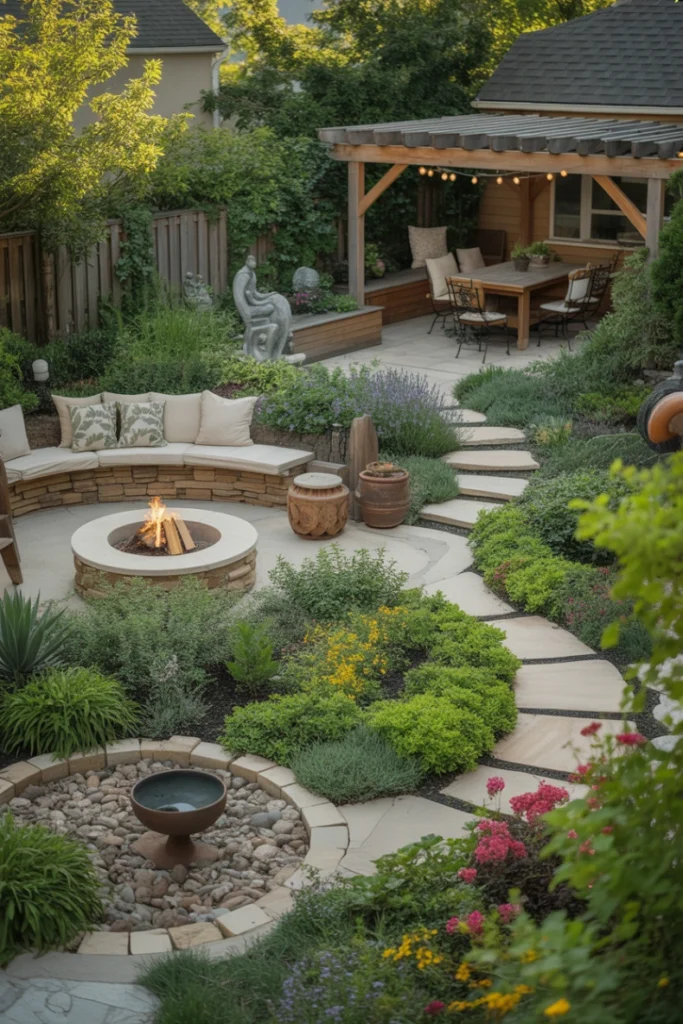
The best yard is not the one from a magazine. It is the one that fits your family, your habits, and your taste. Personalized landscaping means choosing features because you will use them and love them, not because they are trendy. A vegetable patch for a keen cook, a reading nook under a tree, or a play lawn for young children all make a yard feel like home.
Begin with a simple list: what does your family do outside, and what do you wish you could do? Then choose a color palette of two or three colors for flowers, furniture, and accessories so the whole yard feels coordinated. Add personal touches such as a favorite sculpture, handmade planters, a hammock between two trees, or a memory garden planted with flowers that mean something to you.
Work in phases if the budget is tight. Start with the structure, such as paths and seating, then add planting over the next season or two. Keep a notebook or a phone folder of ideas, photos, and plant names so the design stays consistent as you build it up. A personalized yard grows with your family, and because every choice has a reason behind it, the result feels welcoming in a way no generic design ever can.
Final Thoughts
A beautiful yard is not built in a single weekend. It grows from small, thoughtful decisions: a lawn mowed at the right height, a path wide enough to walk on comfortably, a seating area placed where the evening light falls, and plants chosen for your soil and climate. Each of the 14 ideas above works on its own, and together they create a yard that is balanced, practical, and full of life.
Start with the idea that solves your biggest frustration, whether that is a muddy path, a bare fence, or a yard nobody uses after dark. Finish that one project well, then move to the next. Within a season or two, you will have an outdoor space that welcomes you every day, supports time with family and friends, and adds real value to your home.
Frequently Asked Questions
How much does yard landscaping cost?
A simple DIY project such as a flower bed, a gravel path, or a few solar lights can cost under $200. A mid range project with a stone patio, new planting, and low voltage lighting usually runs $2,000 to $8,000, while a full professional redesign with retaining walls and a water feature can cost $15,000 or more. Start with one zone at a time to spread the cost across seasons.
What is the easiest yard landscaping idea for beginners?
Start with a defined lawn edge and a seasonal flower bed. Edging gives an instant tidy look for very little money, and a small flower bed teaches you the basics of soil, watering, and plant care. Both projects can be finished in a single weekend with basic tools.
How do I landscape a small yard?
Use vertical gardening to add greenery without using floor space, choose one focal point instead of many small features, and keep the lawn or patio open so the space feels bigger. Light colored paving, layered planting, and a single seating area work better than crowding a small yard with too many elements.
How often should I water a new lawn?
Water new seed or sod lightly once or twice a day for the first two to three weeks to keep the top inch of soil moist. Once the grass is established, switch to deep watering of about 1 inch per week. Water in the early morning so the grass dries before nightfall.
When is the best time to start landscaping?
Early spring and early fall are the best times to plant, because mild temperatures and regular rain help new plants establish roots. Hardscape work such as paths, patios, and walls can be done in any dry season. Avoid planting during the hottest weeks of summer or when the ground is frozen.
More Ideas You Will Love
 13 4th of July Pillows Styling Ideas for a Festive Sofa Look
 17 Living Room Decor Ideas to Instantly Elevate Your Space
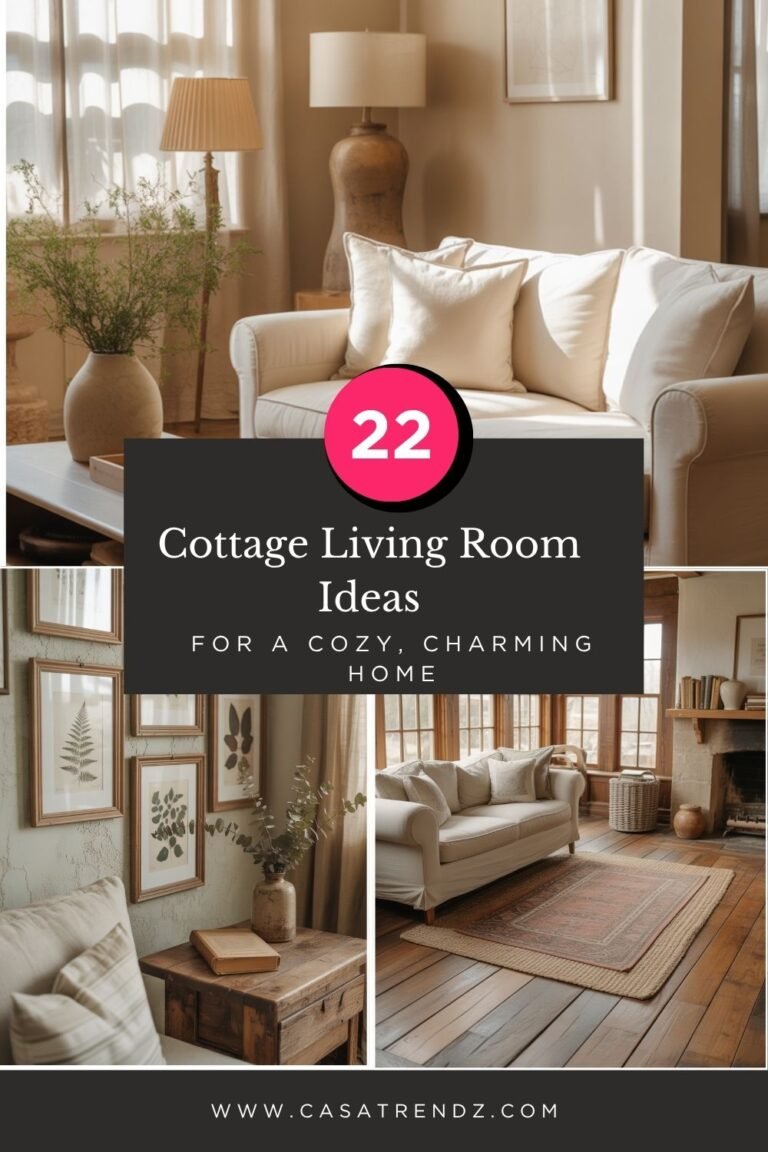 22 Cottage Living Room Ideas for a Cozy, Charming Home
 19 Colorful Living Room Ideas Filled with Bright Accents & Creative Inspiration
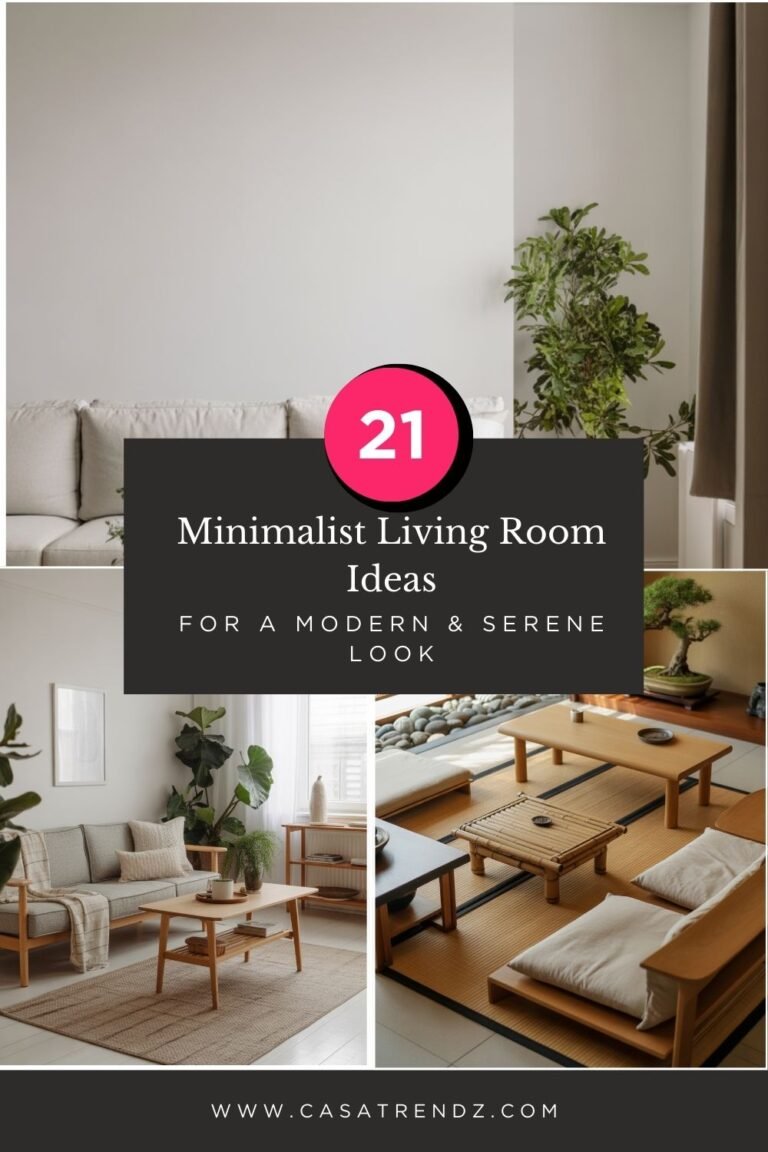 21 Minimalist Living Room Ideas for a Modern & Serene Look
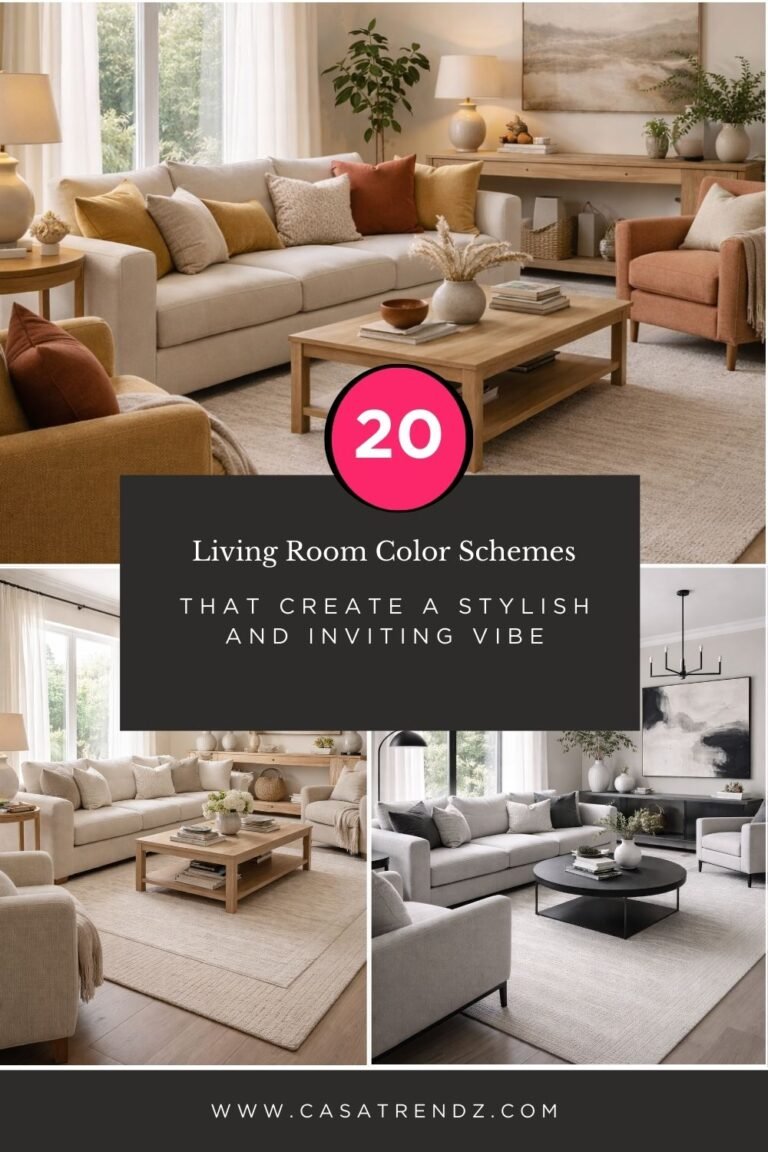 20 Living Room Color Schemes That Create a Stylish and Inviting Vibe