
22 Small Living Room Ideas for Big Style and Cozy Vibes

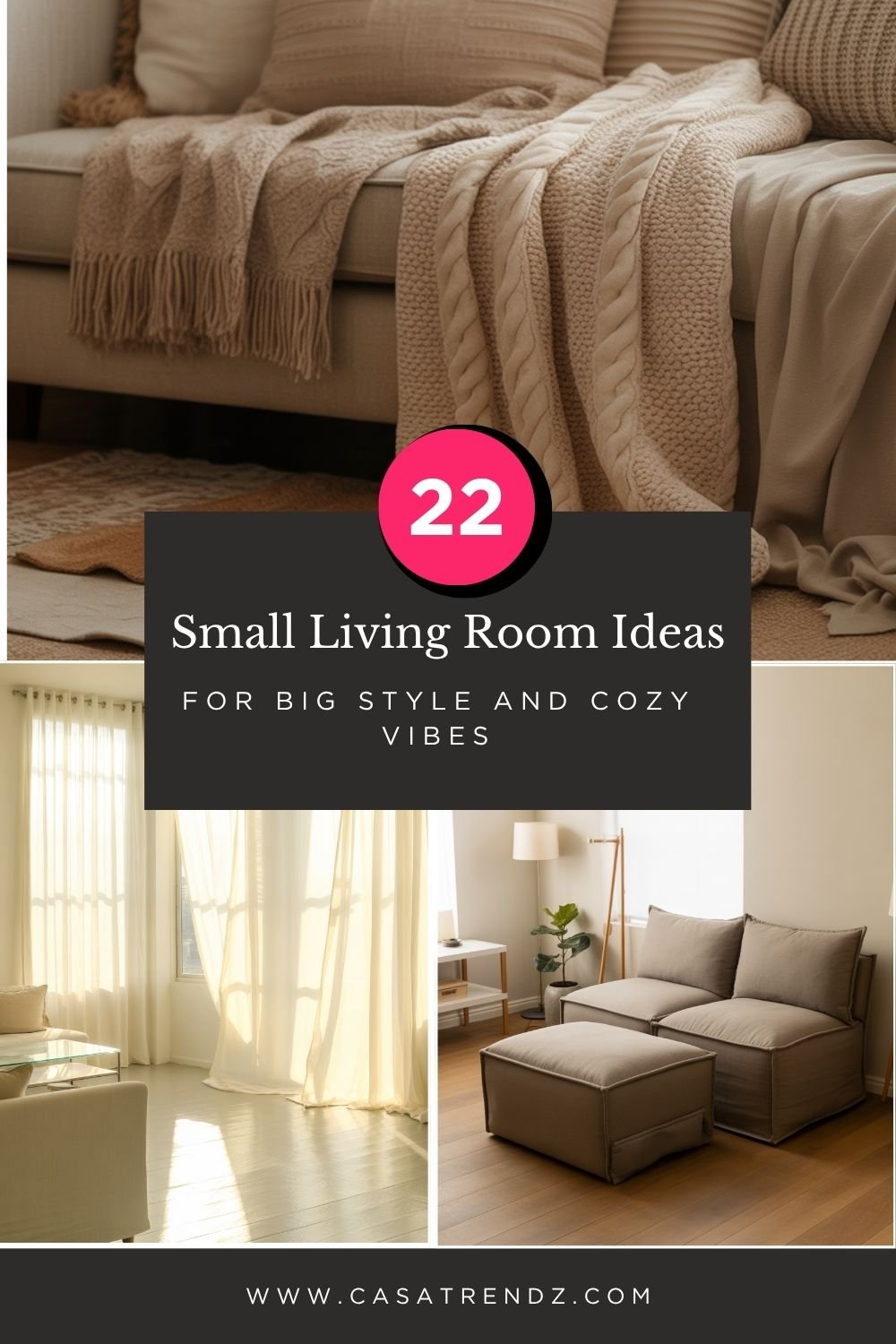
A small living room is one of the hardest-working spaces in any home. It is where you greet guests, unwind after a long day, and spend your weekends. And when square footage is tight, every choice matters more. The good news is that a small living room does not have to feel like a compromise. With the right mix of color, light, and furniture, a compact room can feel warm, stylish, and even more inviting than a sprawling one.
The secret is balance. You want comfort without clutter, personality without chaos, and function without sacrificing beauty. Small rooms actually have an advantage here: fewer square feet means you can invest in fewer, better pieces and create a space that feels curated instead of crowded.
Below you will find 22 small living room ideas packed with practical detail. Each one includes the specific colors, measurements, materials, and step-by-step tips you need to make it work in a real home. Work through them one at a time, or cherry-pick your favorites. Either way, your small living room is about to feel a whole lot bigger.
1. Embrace Light Colors to Open Up the Space
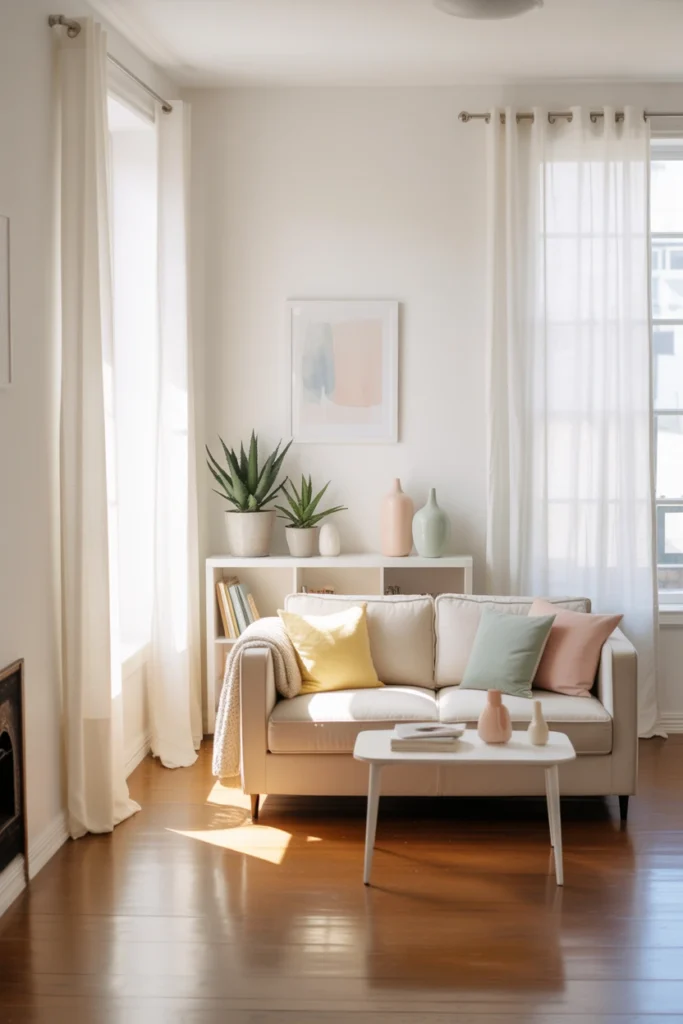
When decorating a small living room, start with your color palette. Light tones like warm whites, soft creams, pale grays, and gentle pastels reflect natural light and make your room feel larger. A bright backdrop paired with subtle accents creates the illusion of openness while keeping things calm and elegant.
Paint is the fastest and most affordable way to transform a small room. For walls, stick with white-based neutrals with a warm undertone so the room feels airy but not sterile. Try a shade like a soft ivory or a warm white rather than a stark, cool white, which can feel harsh under artificial light at night. If you want a hint of color, go one or two shades lighter than your favorite color on the paint strip.
Add depth with a few darker touches: a charcoal throw folded over the arm of the sofa, a walnut coffee table, or a single navy cushion. The key is the ratio. Let lighter shades cover about 70 percent of the room, with deeper tones appearing in the remaining 30 percent for visual interest. If you need inspiration for the exact palette, browse living room color schemes that are designed to work in small spaces.
Practical tip: Paint the ceiling the same color as the walls, just a touch lighter. This blurs the line where the wall meets the ceiling and makes the room feel taller.
2. Choose Multipurpose Furniture
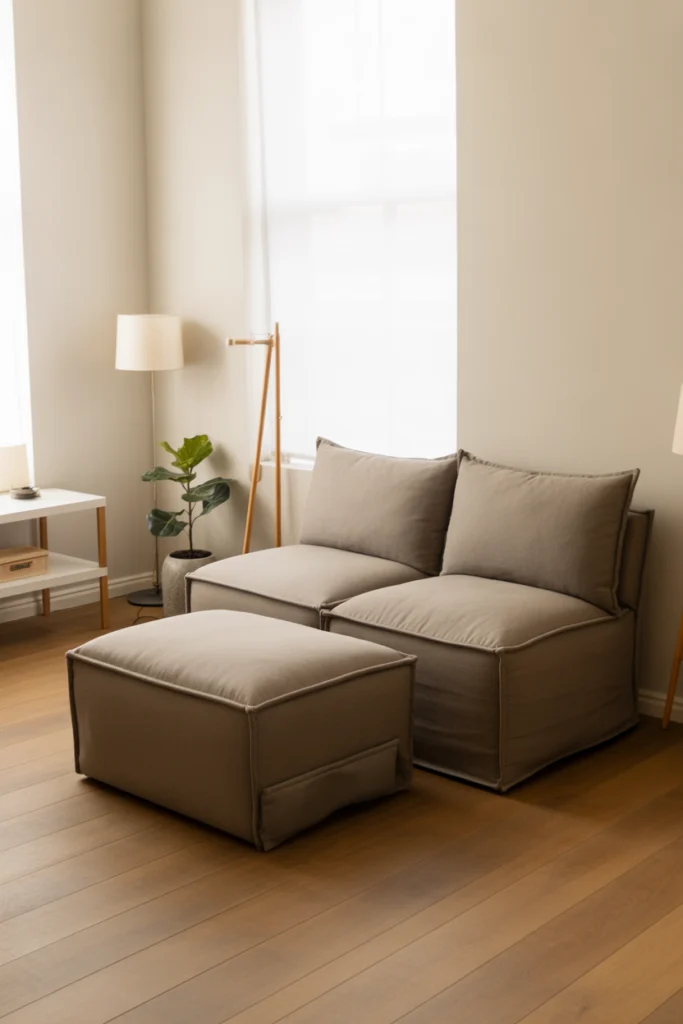
When space is limited, every piece of furniture should work double duty. Think ottomans that open up to store blankets, coffee tables with hidden compartments, or a quality sofa bed for overnight guests. These clever designs help you declutter while maximizing function.
Start with the piece that earns its footprint the most: the coffee table. A storage ottoman measuring about 36 by 18 inches gives you a footrest, extra seating for two, and a place to stash throws and remotes. Lift-top coffee tables are another winner, they raise to a comfortable height for laptop work and reveal storage underneath for board games or magazines.
For seating, look at loveseats or apartment-size sofas rather than full three-seaters. An 72-inch loveseat fits two adults comfortably and frees up several feet of floor space compared to a 96-inch sofa. If you host guests overnight, a sleeper loveseat pulls out into a twin bed without needing a spare room. Nesting tables are brilliant too: three tables that tuck under each other give you surface space when guests visit and disappear when they leave.
Practical tip: Before buying, tape the footprint of any new piece on your floor with painter’s tape. Walk around it for a day to make sure the room still flows.
3. Add Layers of Lighting

Lighting is one of the easiest ways to make a small room feel bigger and more inviting. Instead of relying on a single ceiling fixture, layer your lighting with a mix of floor lamps, wall sconces, and table lamps. This approach creates depth and warmth.
Designers plan lighting in three layers. Ambient light is your general glow: a ceiling fixture or recessed lights on a dimmer switch. Task light helps you read or work: a floor lamp with a shade positioned next to your reading chair, or a swing-arm lamp mounted near the sofa. Accent light adds drama: a small picture light over your gallery wall or an LED strip behind the TV.
For a cozy glow, choose warm LED bulbs rated 2700K to 3000K. That temperature mimics late-afternoon sunlight and flatters skin tones, while cool white bulbs above 4000K can make a small room feel like an office. Add a dimmer switch to your overhead light if you can; being able to lower the light by half in the evening changes the whole mood of the room.
Practical tip: Place at least one light source at a low level, like a table lamp, and one at a high level, like a floor lamp, in each half of the room. Two light sources per zone eliminates dark corners that make rooms feel smaller.
4. Use Mirrors Strategically

Mirrors can instantly double the perceived size of your living room. A large wall mirror opposite a window bounces light around, creating a sense of openness. Even smaller mirrors grouped in a gallery style can add sparkle and expand visual space.
Placement matters more than size. Hang your largest mirror directly across from a window so it reflects daylight deep into the room. For maximum effect, choose a mirror that is at least two-thirds the width of the furniture below it. Above a 60-inch console table, for example, a mirror around 40 to 48 inches wide looks balanced and reflects a generous amount of light.
Choose frames that match your decor: sleek brass or black metal for modern rooms, or natural oak and rattan for a boho feel. A full-length leaning mirror in an empty corner does double duty as a dressing mirror and a light booster. Round mirrors soften a room full of straight lines, while arched mirrors add height to low ceilings.
Practical tip: Avoid placing mirrors directly opposite each other. The bouncing reflections create a confusing tunnel effect. One well-placed mirror per wall is the sweet spot.
5. Go Vertical with Storage
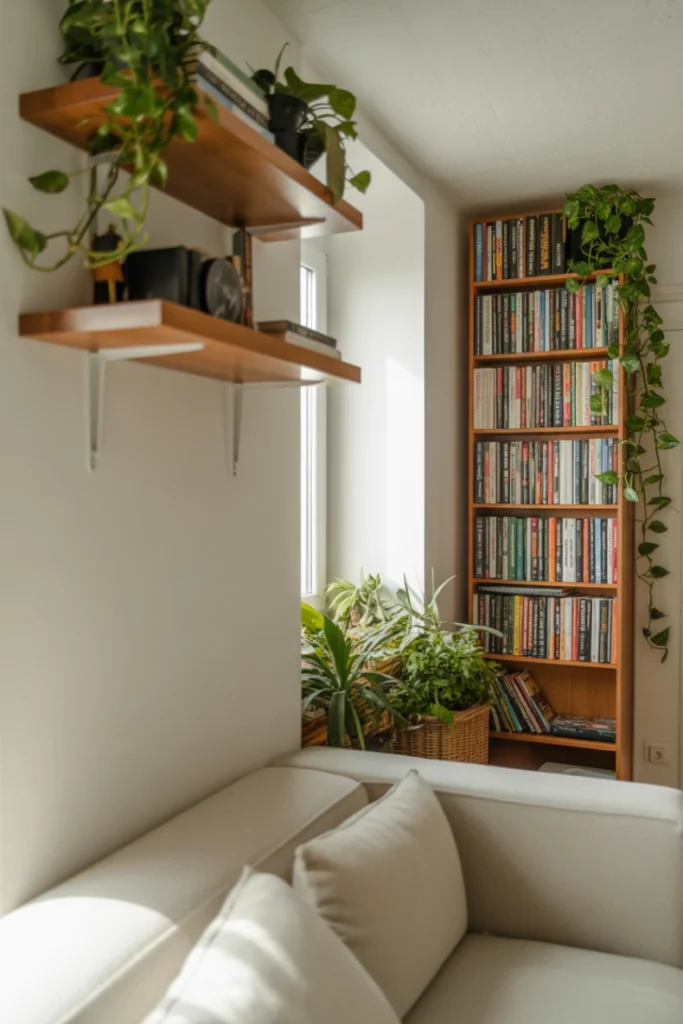
In small living rooms, floor space is precious. That is why vertical storage is your best friend. Floating shelves, tall bookcases, and wall-mounted units draw the eye upward, making ceilings appear higher.
Start with a tall, narrow bookcase. A unit that is 72 inches tall and 30 inches wide holds as much as a low, wide cabinet but takes up half the floor space. Anchor it to the wall for safety, then style the shelves with the two-thirds rule: fill two-thirds of each shelf with books and storage boxes, and leave one-third open or styled with decor.
Floating shelves are perfect for awkward gaps like the wall above the TV or beside a window. Install two shelves spaced 12 to 15 inches apart to display plants, framed photos, and a small stack of art books. For closed storage, a wall-mounted cabinet with doors hides remotes, chargers, and clutter while keeping the floor visible underneath.
Practical tip: Keep the highest shelf within easy reach or reserve it for decor you rarely touch. Anything above 78 inches that needs daily access will become a source of frustration.
6. Play with Textures for a Cozy Feel
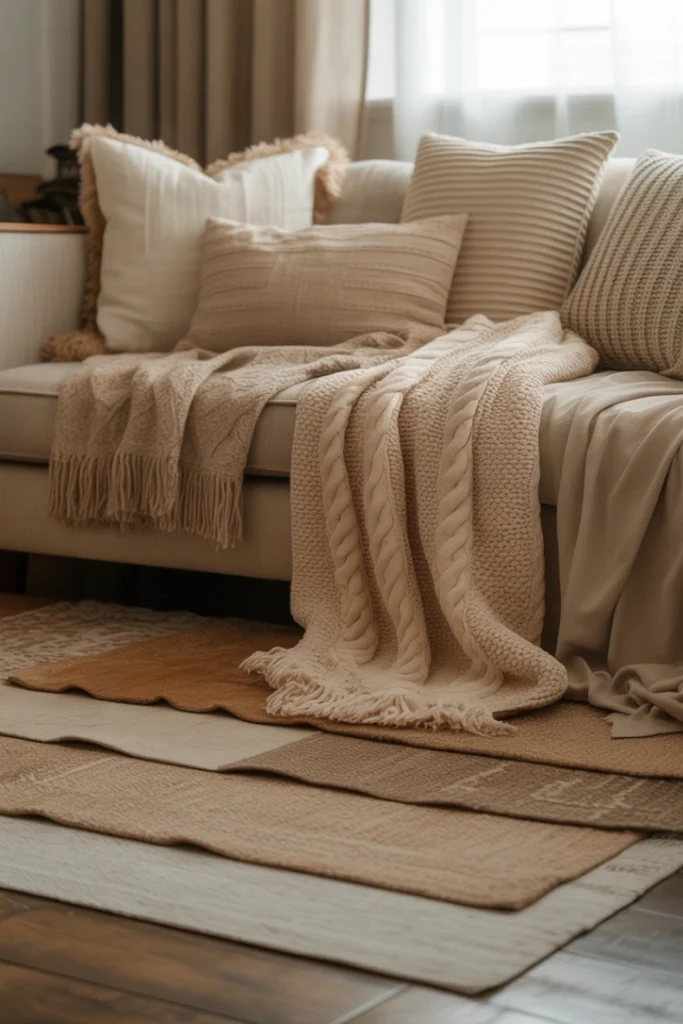
Even if your room is small, you can make it rich and inviting through texture. Mix smooth surfaces with soft fabrics, like a velvet sofa, woven rug, and linen curtains, to add depth and comfort.
Texture does the job that extra furniture cannot: it makes a room feel layered and expensive without taking up a single extra inch. Start with your largest textile, the rug, then build up. Add a chunky knit throw across one corner of the sofa, velvet or linen cushions in two complementary tones, and a woven basket to hold a rolled throw or magazines.
Mix materials on hard surfaces too. Pair a warm wood coffee table with a cool glass vase, or a matte ceramic lamp base with a polished brass tray. Stick to a neutral palette so the mix feels calm, but vary the finishes: rough jute, smooth leather, nubby boucle, and soft cotton all play well together. For wall color that supports this layered look, explore cozy living room paint colors that add warmth behind your textures.
Practical tip: Limit yourself to three main textures per zone of the room. More than that starts to feel busy in a small space.
7. Pick Furniture with Legs
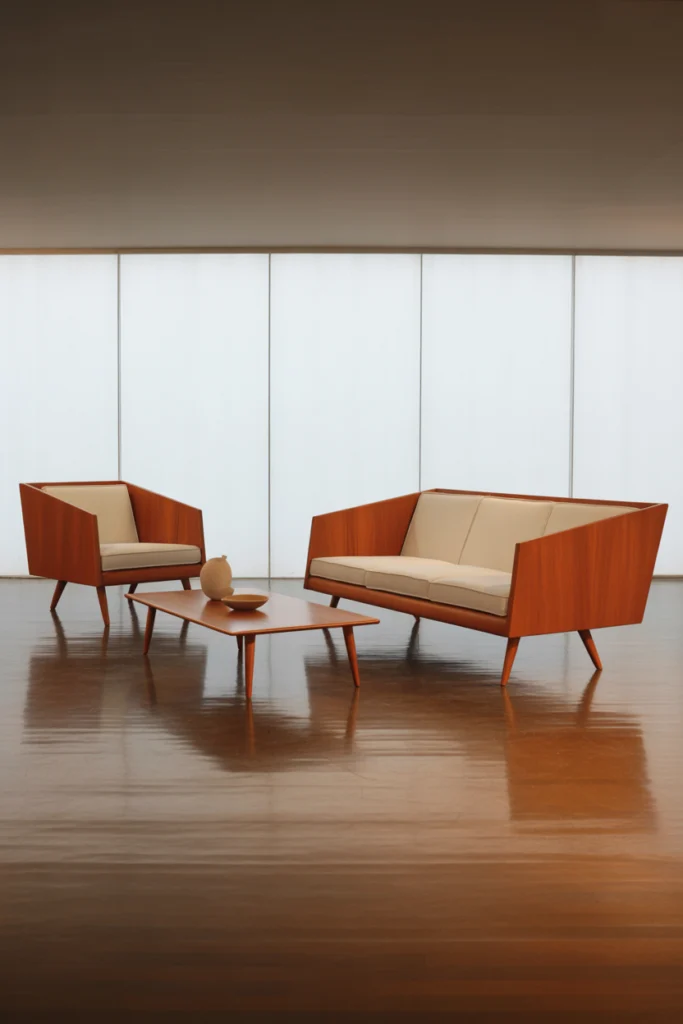
Opt for furniture that is raised on legs rather than bulky designs that sit flat on the floor. This creates a sense of openness and allows light to flow underneath, visually enlarging your space.
The reason this works is simple: when you can see floor continuing under a sofa or armchair, your eye reads the room as larger than it is. Mid-century modern furniture is perfect for this trick. Look for sofas and chairs with legs that are at least 4 to 6 inches tall. The gap should be visible but not so tall that dust bunnies become a daily problem.
Apply the same rule to your media console and sideboard. A console on legs looks lighter than a blocky cabinet, and you can slide flat storage boxes underneath for extra hiding spots. If you already own a skirted sofa you love, raising it is not practical, but you can still get the airy effect by keeping the area in front of it clear and choosing legged accent pieces around it.
Practical tip: Tapered wooden legs in a walnut or oak finish pair with almost any style, from modern to farmhouse, and they visually lift heavy upholstery.
8. Add a Statement Rug

A well-chosen rug can define your space and tie the whole room together. Go for a rug that complements your color palette while adding personality. In small living rooms, larger rugs often make the room look bigger than tiny ones.
This is one place where bigger really is better. A small rug floating in the middle of the floor chops the room into pieces. Instead, size up so the front legs of your sofa and all chair legs sit on the rug. For most small living rooms, an 8 by 10 foot rug works better than a 5 by 8. Leave 12 to 18 inches of bare floor between the rug edge and the walls so the room still reads as one open space.
For patterns, subtle is smart. Low-contrast patterns in two tones, like a faded vintage design or a soft geometric, add interest without overwhelming the room. Flatweave or low-pile rugs are easier to vacuum and make furniture easier to rearrange than thick shag. In a small space, a washable rug is worth its weight in gold.
Practical tip: Layer a smaller textured rug, like a 4 by 6 jute, over your main rug at an angle to add depth and a designer look.
9. Keep It Clutter-Free
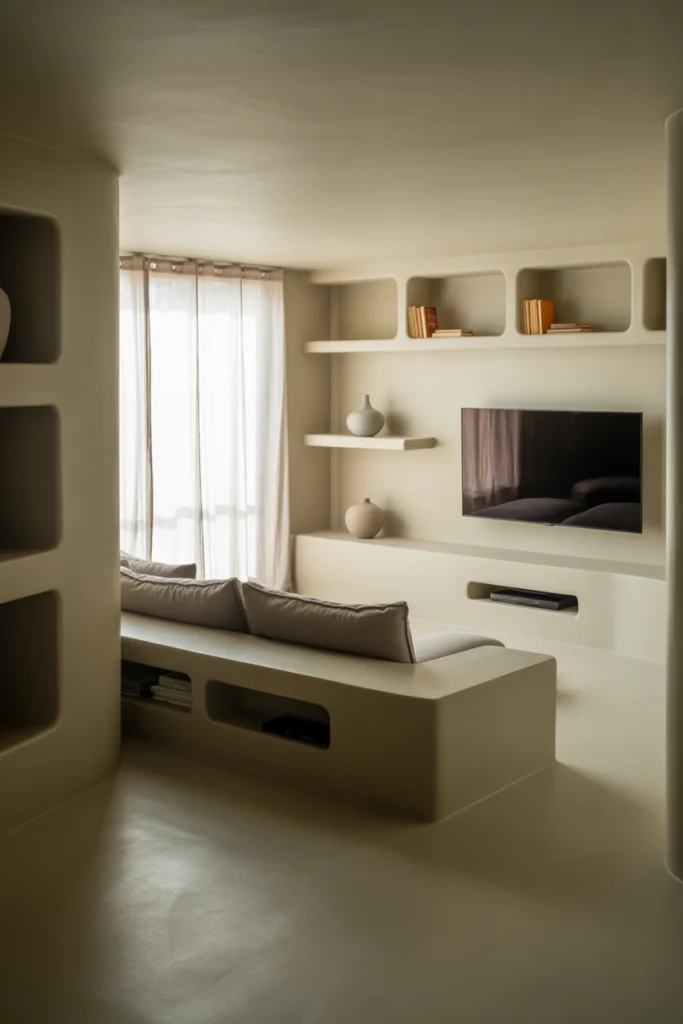
Nothing makes a small room feel cramped faster than clutter. Keep only what you love or need, and use stylish storage baskets or trays to corral smaller items.
Start with surfaces. Clear your coffee table down to three items: a tray, one decorative object, and one functional piece like a candle or small plant. The tray is the secret weapon; it groups small items into one visual unit so they read as intentional instead of scattered. Do the same on your console and side tables.
Adopt a landing zone for daily clutter. A lidded basket by the sofa holds throws and remotes. A slim lidded ottoman swallows magazines and chargers. Give every category of stuff a home: a drawer for remotes, a basket for blankets, a shelf for books. When something does not have a home, it becomes clutter. A weekly five-minute reset, returning everything to its home, keeps the room feeling calm.
Practical tip: Follow the one-in, one-out rule. When a new decorative item enters the room, an old one leaves. This keeps the collection curated instead of crowded.
10. Add Greenery for Freshness

Plants are a wonderful way to breathe life into a small space. From a tall fiddle-leaf fig in the corner to hanging planters or succulents on the coffee table, greenery adds color and freshness.
Plants also improve the feel of a room and make it lively and serene. Choose low-maintenance varieties if you do not have a green thumb. Snake plants, pothos, and ZZ plants are great options because they tolerate low light and forgiving watering schedules. A snake plant in a 10-inch pot adds height to an empty corner without taking up much floor space.
Use vertical space for plants too. A hanging pothos in a macrame holder draws the eye upward. A small wall-mounted planter beside the window creates a living art piece. Group plants in odd numbers: a trio of small pots on a floating shelf looks intentional, while a single tiny pot can look lost. Vary the heights for the most natural look.
Practical tip: Pick planters in the same material family, like all terracotta or all white ceramic, so a collection of different plants still looks cohesive.
11. Use Transparent Furniture
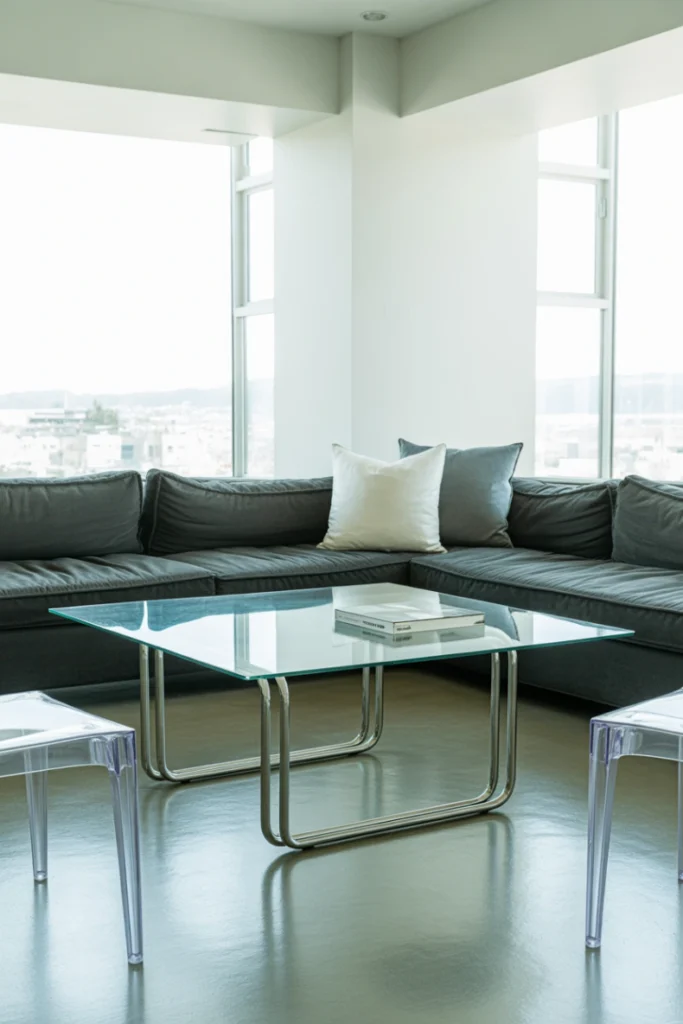
Acrylic or glass furniture pieces are small-space superheroes. Because they are see-through, they do not visually block your room, making it look more open and modern.
A glass coffee table is the classic move. You see the rug and floor straight through it, so the room keeps its sense of openness while you still get a surface for drinks. Choose tempered glass with rounded edges for safety, and pair it with a wood or metal base that matches your other furniture.
Acrylic ghost chairs work beautifully as extra seating. They tuck under a console or dining table and practically disappear when not in use, then seat a guest comfortably when needed. A lucite side table next to your reading chair holds a book and coffee without adding visual weight. These pieces blend with any style, from minimalist to glam, because they reflect rather than compete with your decor.
Practical tip: Keep glass and acrylic pieces clean with a microfiber cloth. Fingerprints show fast, and a smudged glass table defeats the invisible effect.
12. Add a Gallery Wall
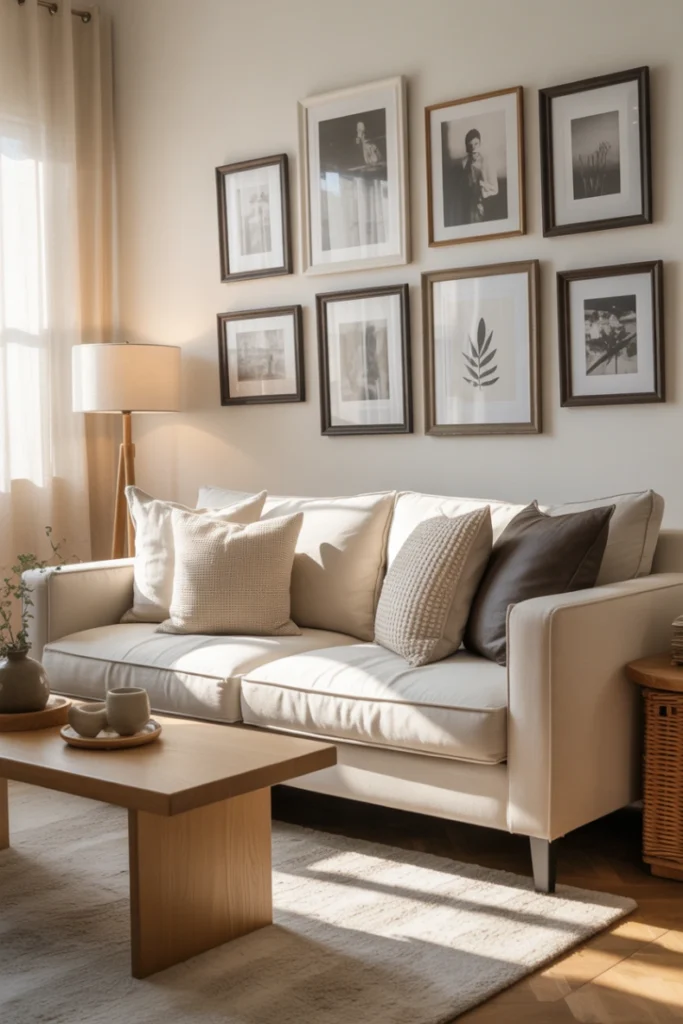
A gallery wall brings personality to your living room without taking up floor space. Combine artwork, photos, and framed prints that tell your story.
Start by choosing one anchor piece, usually the largest frame, around 16 by 20 inches. Arrange the rest around it on the floor first, leaving 2 to 3 inches between frames. A grid of matching frames looks clean and modern, while mixed frames in one color family feel collected and eclectic. Keep the overall arrangement within a rectangle about 48 to 60 inches wide for a standard sofa wall.
Hang the center of the arrangement at eye level, about 57 inches from the floor to the center of the grouping. Use paper templates taped to the wall to plan before you hammer a single nail. Mix in one or two non-art pieces, like a small wall sconce, a woven wall hanging, or a floating shelf with a plant, for depth. For more inspiration on arranging art at the right scale, check out living room wall decor ideas.
Practical tip: Photograph your floor layout before hanging. It is much easier to adjust a plan on the floor than to patch nail holes in the wall.
13. Try Built-In Shelving
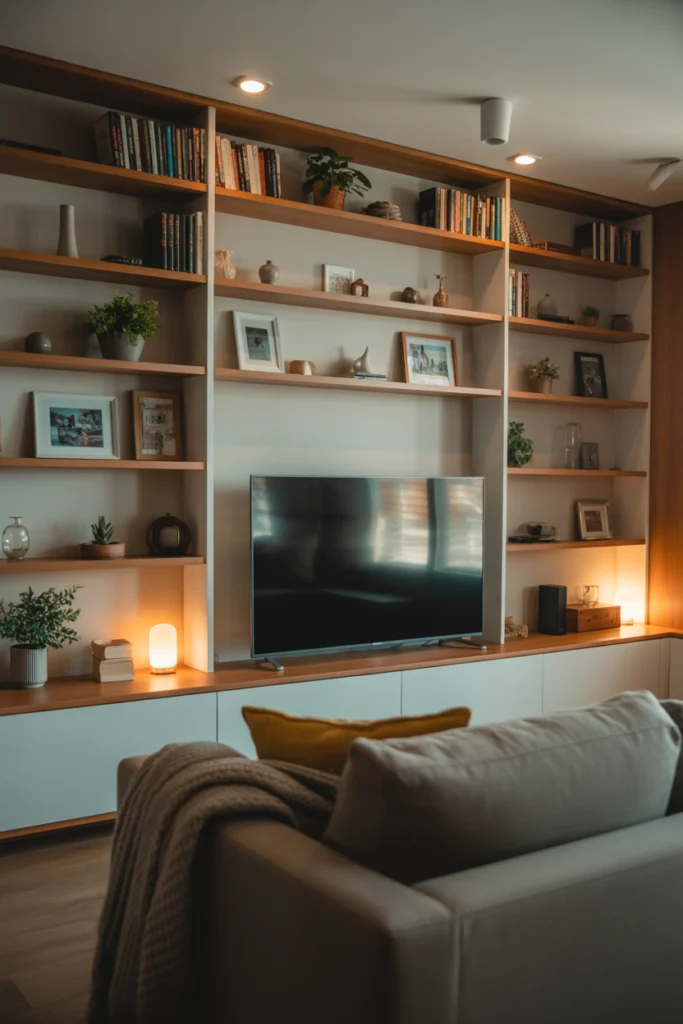
Built-in shelving is a smart solution for small spaces. It utilizes every inch of your wall while providing storage and display options.
You do not need a carpenter to get the look. Flank your TV or fireplace with two matching tall bookcases, then add a bridge shelf across the top for a custom built-in feel. Choose bookcases that reach at least 72 inches high so they use the full wall. Paint them the same color as the walls so they blend in and look like part of the architecture.
Style built-ins with a mix of closed and open storage. Use woven baskets or fabric bins on the lower shelves for hidden clutter, and reserve the upper shelves for books, plants, and decor. Built-ins around a window seat create a cozy reading nook with storage underneath. If you are renting, freestanding tall units styled this way give you 90 percent of the look with zero damage.
Practical tip: Leave some breathing room. Shelves that are packed edge to edge look cluttered; aim for 70 percent filled and 30 percent open space.
14. Focus on One Focal Point
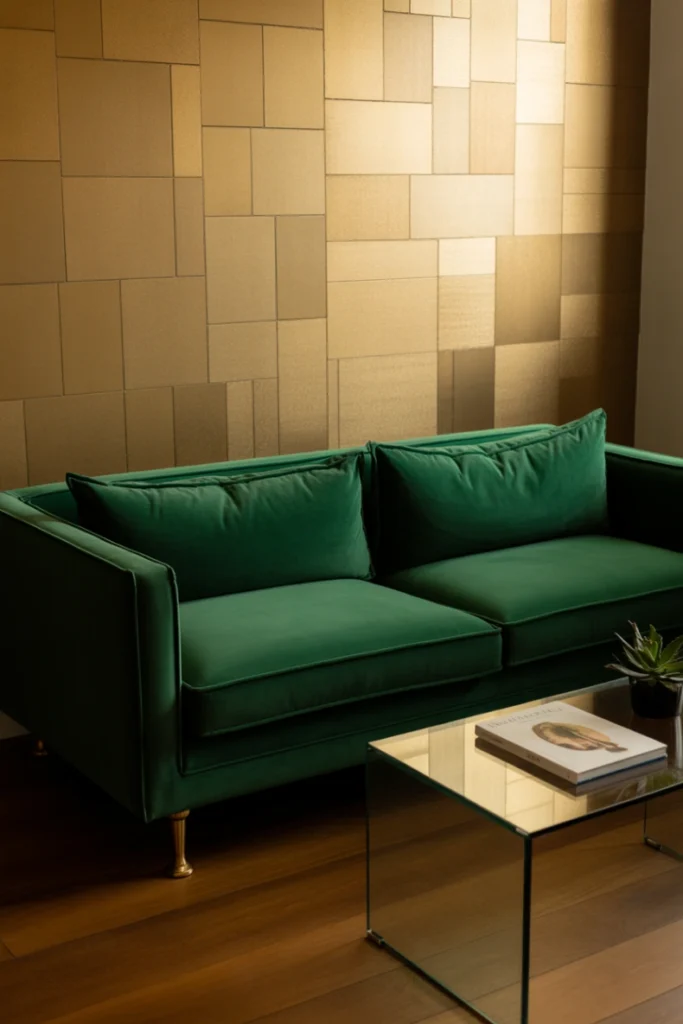
Avoid overwhelming your small living room with too many competing elements. Instead, pick one focal point, like an accent wall, fireplace, or statement sofa, and build your decor around it.
A clear focal point gives structure to your space and draws the eye, helping everything else feel intentional and balanced. Choose the feature you want guests to notice first. In most rooms, that is the fireplace, the TV wall, or the sofa. If you have a fireplace, style the mantel simply: one piece of art, a pair of candlesticks, and a small plant is plenty.
If your room lacks a natural focal point, create one. An accent wall in a deep, rich color, like forest green or navy, instantly anchors a small room and actually makes the other walls feel farther away. Alternatively, let a bold sofa be the star and keep everything else quiet. For ideas on committing to a dramatic centerpiece, see moody living room ideas that show how dark, confident choices work beautifully in compact spaces.
Practical tip: Test a focal point by squinting at the room. The first thing you see when your vision blurs is your focal point. If you see three competing spots, simplify.
15. Go for Wall-Mounted Lighting
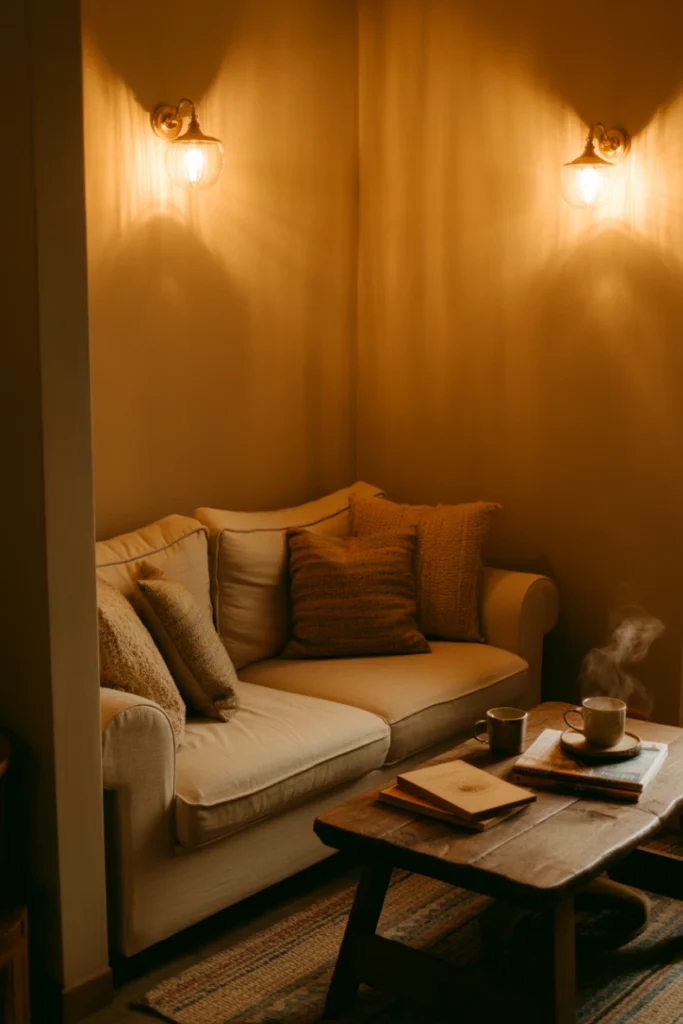
Skip bulky floor lamps and side tables by opting for wall-mounted sconces or reading lights. They save space and add a touch of sophistication.
Wall sconces free up the entire footprint of a floor lamp, which can be 12 to 16 inches of precious floor space per side of the sofa. Mount sconces 60 to 66 inches from the floor to the center of the shade, and about 6 inches from each side of the sofa or bed. For a reading nook, choose an adjustable swing-arm sconce that pulls out over your shoulder and folds flat against the wall when not in use.
Choose warm-toned bulbs to make your space feel inviting and restful. Plug-in sconces are a renter-friendly option: they mount with two small screws and the cord runs down the wall in a cord cover painted to match. Hardwired versions look cleaner, and an electrician can usually install one in under an hour. Pair sconces with a dimmer for full control over the mood.
Practical tip: Mount sconces in pairs for symmetry. One lone sconce can look like a mistake; two create intention.
16. Add Mirrors Behind Furniture
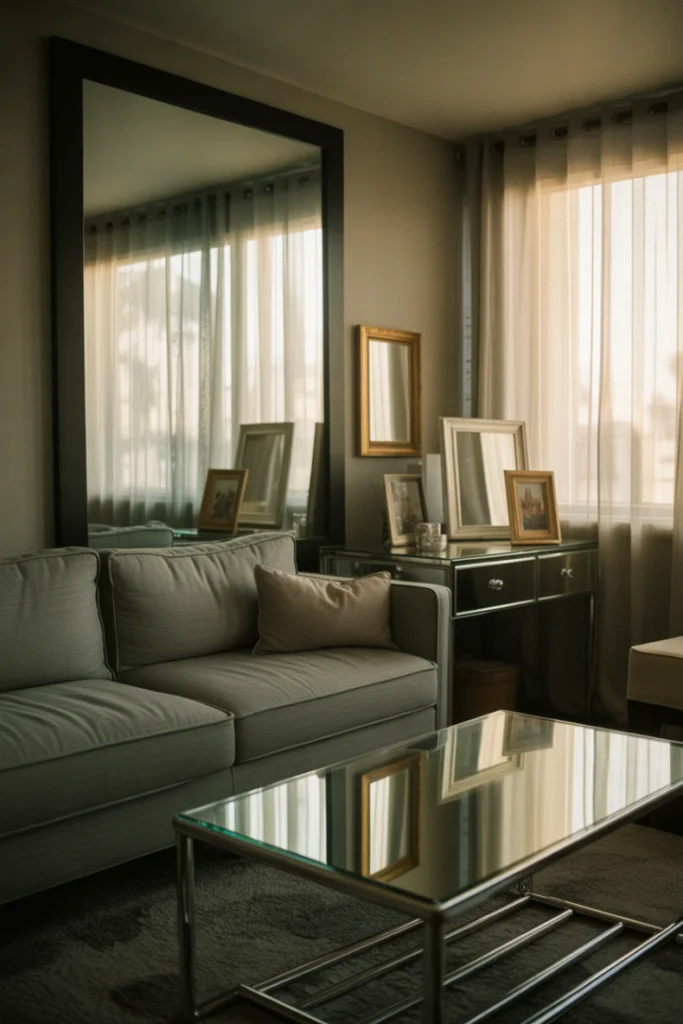
Mirrors are not just for walls. You can place one behind your sofa or console table to add dimension. This trick bounces light and visually expands your room.
A mirror leaning behind a console table creates the illusion that the room continues past the furniture. Use a mirror that is slightly narrower than the table, around 30 to 36 inches wide for a standard 48-inch console, so it reads as intentional layering rather than a tight squeeze. The reflection also doubles the impact of whatever sits on the console: a vase of flowers becomes two.
Mirrored furniture, like a side table or cabinet, can also enhance brightness and style without overwhelming your space. A mirrored nightstand-style side table reflects light at a low level and works beautifully next to a velvet armchair. Keep mirrored pieces away from direct sightlines to the TV to avoid glare.
Practical tip: A round mirror leaning on a console softens a wall of straight-lined furniture and adds a friendly curve to the room.
17. Layer Soft Furnishings
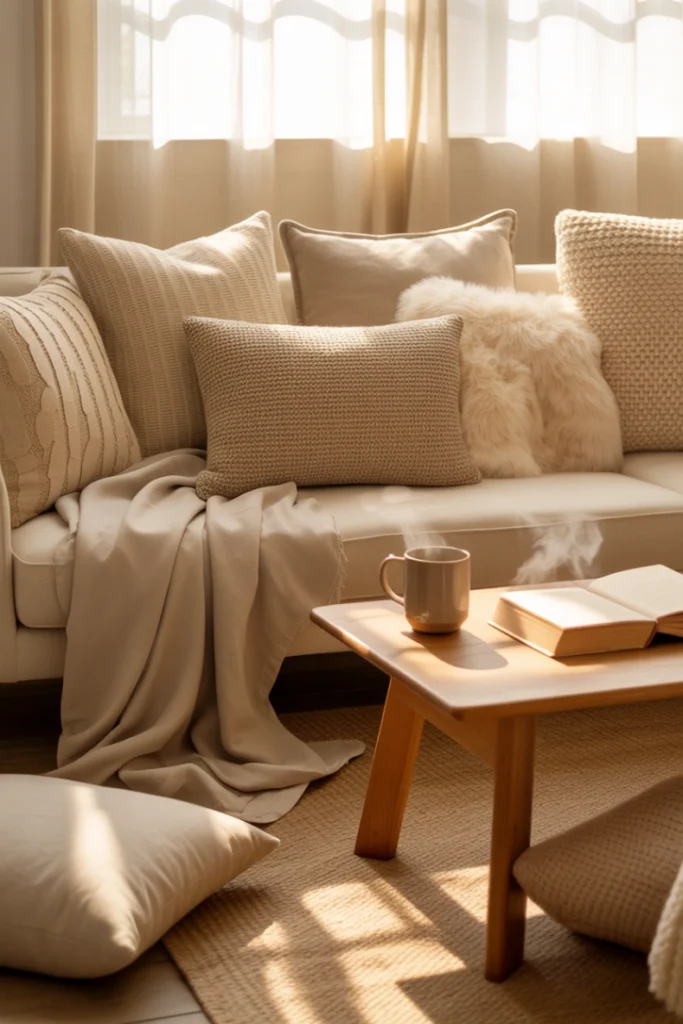
To make your small living room cozy, layer textiles like throws, cushions, and rugs. The mix of materials brings depth and warmth, perfect for a snug evening in.
Start with your cushion formula: two larger cushions in a solid color at the back, two medium cushions in a subtle pattern in front, and one small lumbar cushion to finish. Stick to a palette of three colors total so the mix feels curated. For throws, drape one over the arm of the sofa rather than folding it perfectly; the casual drape looks inviting and effortless.
Choose textures that complement your color palette. Think chunky knits, velvet cushions, and woven throws for instant comfort. Change your cushion covers seasonally: light linen for spring and summer, warm wool and velvet for fall and winter. This simple swap refreshes the whole room for the cost of a few covers. Store off-season textiles in a vacuum bag under the bed or in your storage ottoman.
Practical tip: Fluff cushions daily with a quick karate chop to the top. Plump cushions make even a budget sofa look high-end.
18. Keep Windows Uncluttered

Heavy drapes can block natural light, making your space feel smaller. Instead, go for light, sheer curtains or blinds that let the sunlight pour in.
Natural light not only enlarges the feel of your room but also highlights your decor beautifully. Hang curtain rods 4 to 6 inches above the window frame and 3 to 4 inches wider on each side. This tricks the eye into thinking the window is bigger and lets the panels stack off the glass so they never block light. Sheer white or ivory panels give you privacy while keeping the room bright.
Keep windowsills minimal for a clean, fresh look. One small plant or a single candle is enough. If you need blackout for sleeping, mount a roller shade inside the frame behind your sheers: you get darkness at night and daylight the rest of the time. Avoid heavy valances and layered drapery in small rooms; they eat up visual space fast.
Practical tip: Clean your windows inside and out twice a year. Grimy glass can cut the light entering a room by a surprising amount.
19. Create an Open Layout
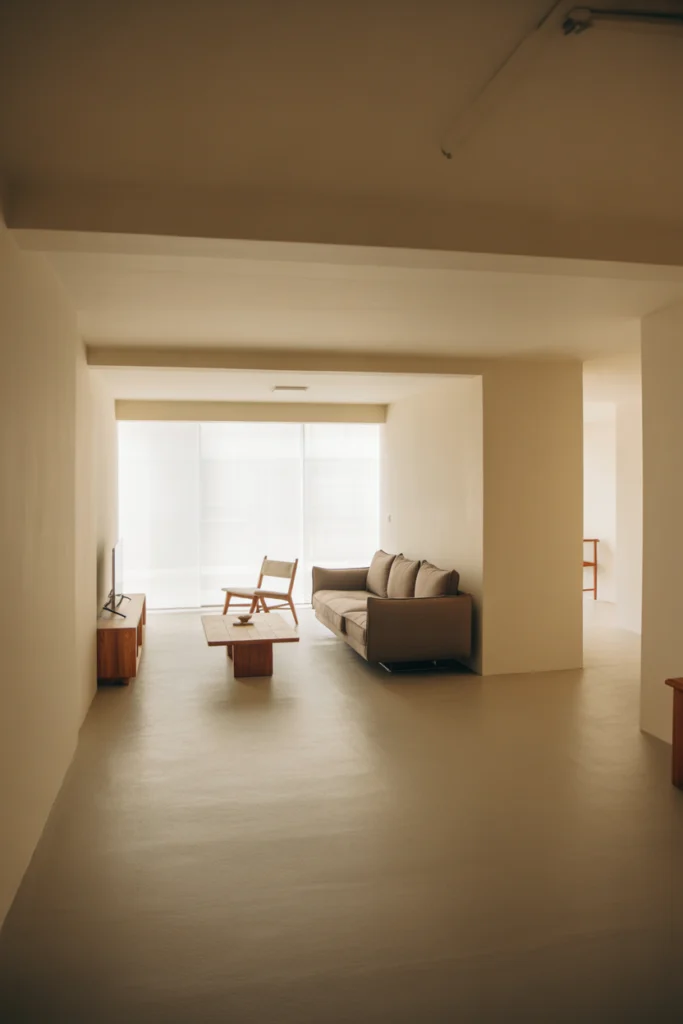
Even if your living room is small, try arranging furniture to create open pathways. Avoid blocking windows or doorways, and keep larger pieces against walls.
An open layout encourages movement and gives your space a sense of flow. Leave 30 to 36 inches for main walkways and at least 18 inches between the coffee table and the sofa so legs have room. Float your furniture if you can: pulling the sofa even 3 inches away from the wall creates a shadow line that makes the room feel deeper.
Start your layout with the largest piece, usually the sofa, facing the focal point. Then add chairs at an angle rather than pushing everything flat against the walls. Angled chairs create conversation groupings and make the room feel designed rather than just filled. It also helps your decor shine without feeling crowded, because each piece gets a little breathing room.
Practical tip: Sketch your layout on graph paper first, one square per foot. You will spot traffic jams before you move a single heavy piece.
20. Add Personal Touches
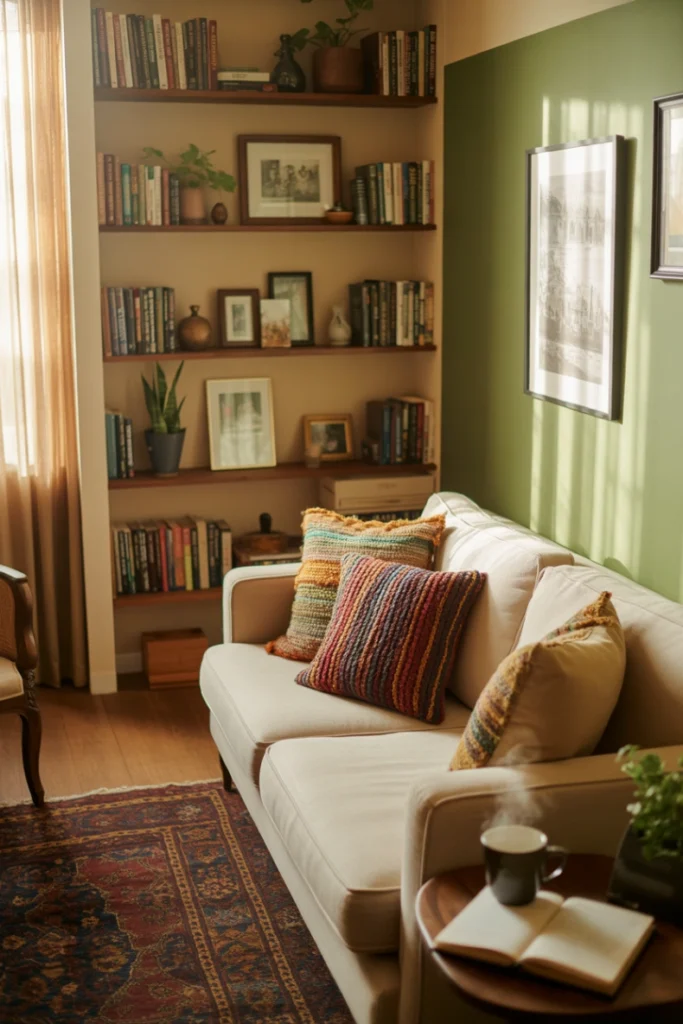
Your small living room should tell your story. Add decor that reflects your personality, like souvenirs, books, or art pieces.
Personal touches make your space feel truly yours while keeping it warm and inviting. The trick is curation. Choose five to seven meaningful pieces and give them real estate: a framed travel photo on the gallery wall, a handmade ceramic vase on the console, your favorite books stacked on the coffee table. Rotate the rest seasonally so the room stays fresh without getting crowded.
Just be sure to keep the overall look balanced and uncluttered. Group small mementos on a tray or a single shelf instead of scattering them across every surface. A memory wall with matching frames turns a collection of photos into a design feature. Your room should feel like you, not like a storage unit for everything you own.
Practical tip: If a piece does not make you smile or serve a purpose, it does not earn space in a small room. Be honest and edit ruthlessly.
21. Use a Large Statement Piece
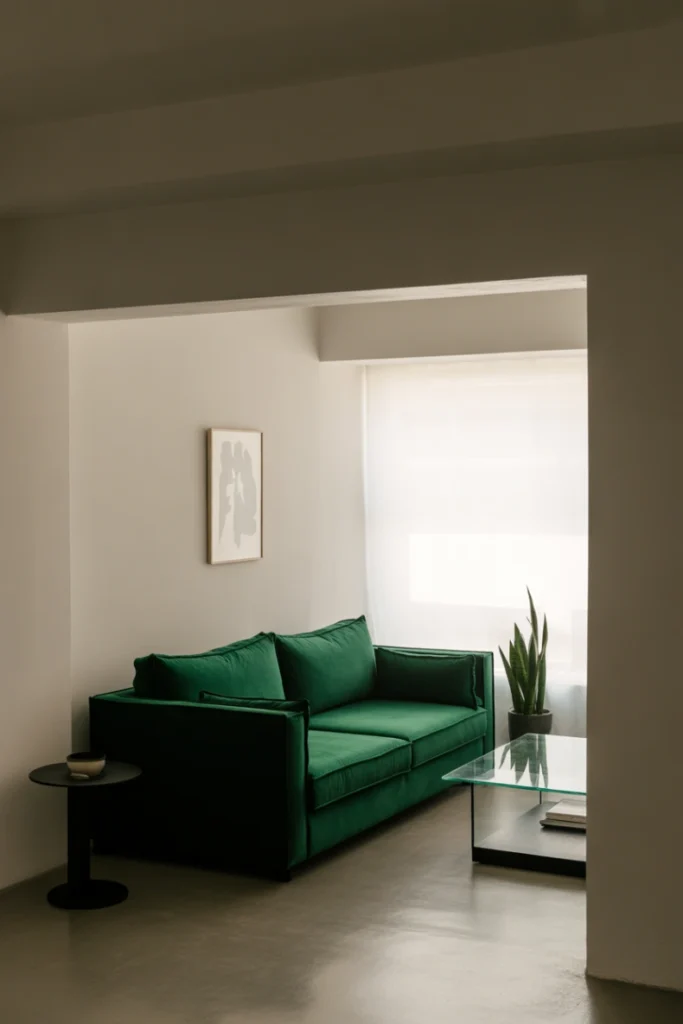
Contrary to popular belief, a single large furniture item, like a bold sofa or oversized artwork, can make a small room feel grander.
One standout piece adds drama and focus, reducing visual clutter compared to many smaller items. A 36 by 48 inch piece of art above the sofa commands attention and makes the wall feel taller. An oversized floor plant, like a 5-foot fiddle-leaf fig, fills an awkward corner with one confident gesture instead of three fussy small objects.
If you go with a bold sofa, keep the rest of the room quiet. Neutral walls, a simple rug, and minimal accessories let the star piece shine. The same logic works for a dramatic light fixture: one sculptural pendant over the coffee table draws the eye up and gives the room a sense of occasion. Keep the rest of your decor simple for harmony, and the room will feel intentional, not crowded.
Practical tip: A statement piece should be about one and a half times the scale you think you need. Timid sizing is what makes small rooms feel small.
22. Define Spaces with Furniture Placement
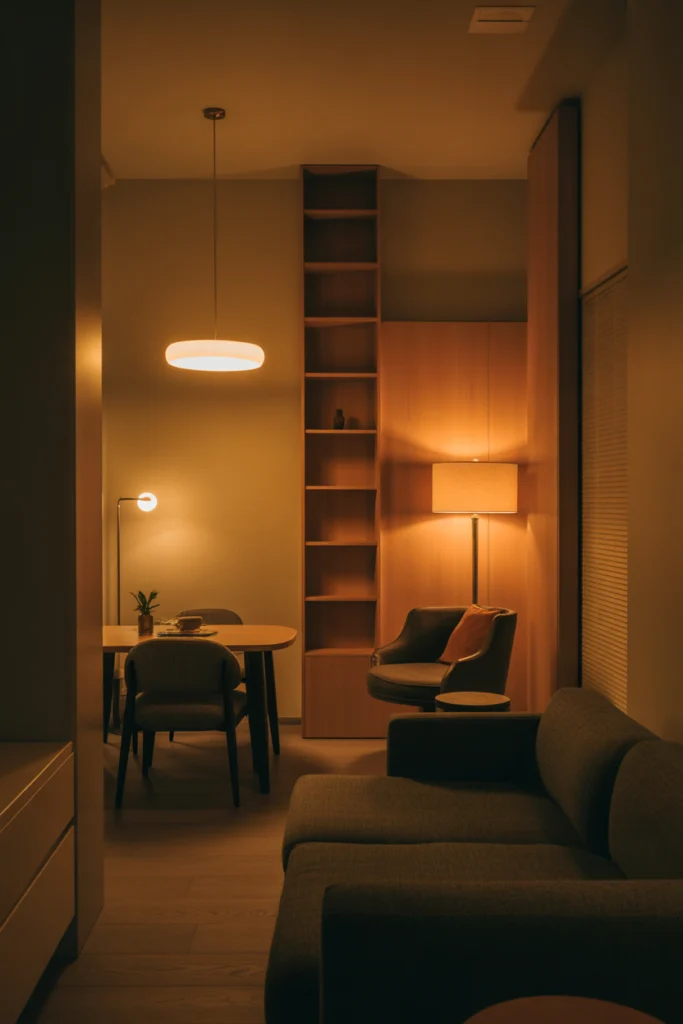
Even in small living rooms, you can create zones by how you arrange furniture. Use rugs or lighting to define areas for lounging, reading, or conversation.
Zoning makes your space feel purposeful and organized, transforming a cramped room into a multi-functional haven. Start with the rug: place your main seating group on one rug to define the lounge zone. Then create a reading corner with an armchair, a small side table, and a dedicated floor lamp or wall sconce in an unused corner. The pool of light itself defines the zone.
In an open-plan apartment, use the back of your sofa as a room divider. Place a narrow console table behind it to mark the boundary between the living area and the dining space. A change in lighting helps too: brighter task lighting in the reading corner, softer ambient light in the lounge zone. Even a tall plant or an open bookshelf can act as a gentle divider without blocking light or sightlines.
Practical tip: Keep zone boundaries soft. Rugs, light, and low furniture define space; tall barriers chop a small room into cramped pieces.
Conclusion
A small living room does not have to feel limiting. It is an opportunity to get creative with design. With the right blend of light, layout, and decor, you can craft a space that is both stylish and comfortable. Whether you are drawn to modern minimalism or cozy cottage vibes, these 22 small living room ideas prove that thoughtful design can transform any size room into a space you love to live in.
Keep experimenting, stay authentic to your style, and remember: big style is never about square footage. It is about how your space makes you feel. Start with one or two ideas from this list this weekend, and watch how quickly your small room starts feeling like the best seat in the house.
Frequently Asked Questions
What is the best layout for a small living room?
The best layout anchors the largest piece, usually the sofa, facing the room’s focal point, then adds chairs at slight angles to create a conversation grouping. Keep larger pieces against walls, leave 30 to 36 inches of clearance for main walkways, and never block windows or doorways. Floating furniture just a few inches from the wall makes the room feel deeper than pushing everything flat against it.
What colors make a small living room look bigger?
Light, warm neutrals make a small living room look bigger: soft whites, warm ivory, pale gray, and gentle pastels. These shades reflect natural light and blur the boundaries of the room. Paint the ceiling the same color as the walls for extra height, and add darker accents in small doses, like a charcoal throw or walnut side table, for contrast and depth.
How do I arrange furniture in a small living room without it feeling cramped?
Choose fewer, appropriately sized pieces and give each one breathing room. Pick an apartment-size loveseat instead of a full sofa, use nesting tables instead of bulky side tables, and leave open pathways of at least 18 inches between pieces. Furniture with visible legs lets light flow underneath, which visually enlarges the floor area.
Can a small living room still fit a TV, sofa, and storage comfortably?
Yes, if each piece works harder. Mount the TV on the wall to free up floor space, choose a storage ottoman as your coffee table, and use tall narrow bookcases instead of wide low cabinets. A media console on legs with closed doors hides electronics and clutter while keeping the room feeling light. Every piece should earn its footprint by serving at least two purposes.
How do I make a small living room feel cozy without adding clutter?
Build coziness through texture and light, not through more objects. Layer a chunky throw, velvet cushions, and a soft rug in a three-color palette, then add warm 2700K lighting at two levels in each zone. Corral small items in lidded baskets and trays, follow a one-in, one-out rule for decor, and let personal touches appear in curated groups rather than scattered across every surface.
More Ideas You Will Love
 22 Living Room Remodel Ideas for 2026 – Modern, Stylish & Budget-Friendly
 11 Black Sofa Living Room Ideas That Look Instantly Modern
 21 Contemporary Living Room Ideas for Modern & Functional Style
 23 Living Room In-House Ideas – Cozy, Modern & Aesthetic Interiors for Every Style
 14 4th of July Décor Ideas for Small Living Rooms (Modern & Cozy)
 15 Fall Living Room Decoration Ideas: Rustic Farmhouse Vibes