
22 Apartment Living Room Ideas for Cozy, Stylish Spaces

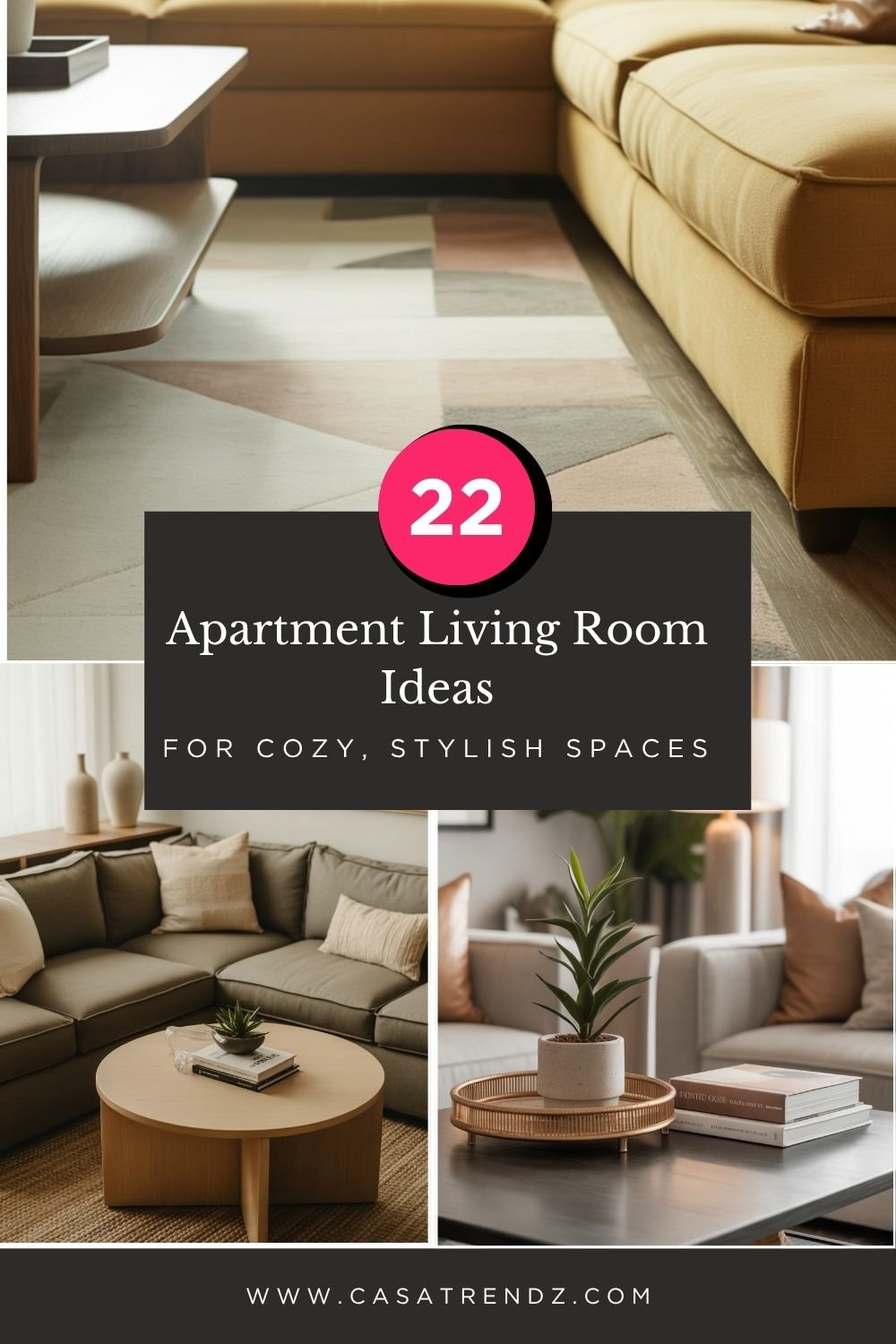
Your apartment living room does more work than any other room in your home. It is where you relax after a long day, welcome friends, eat dinner, watch a show, and sometimes even work. When the space is small, every choice matters more, from the size of the sofa to the height of the curtains, and a few smart decisions can make the whole room feel bigger, calmer, and far more stylish.
The good news is that you do not need a renovation, a large budget, or a huge floor plan to get there. Small changes in color, lighting, layout, and storage add up fast. In this guide, you will find 22 practical apartment living room ideas that work in real apartments, including studios and rentals, with specific sizes, colors, and step by step tips you can use this weekend.
Use the ideas as a menu, not a checklist. Pick the three or four that solve your biggest problem first, whether that is darkness, clutter, or a room that feels cramped, and build from there. A living room that fits your life will always look better than one copied straight from a photo.
1. Use Light Colors to Open Up the Space
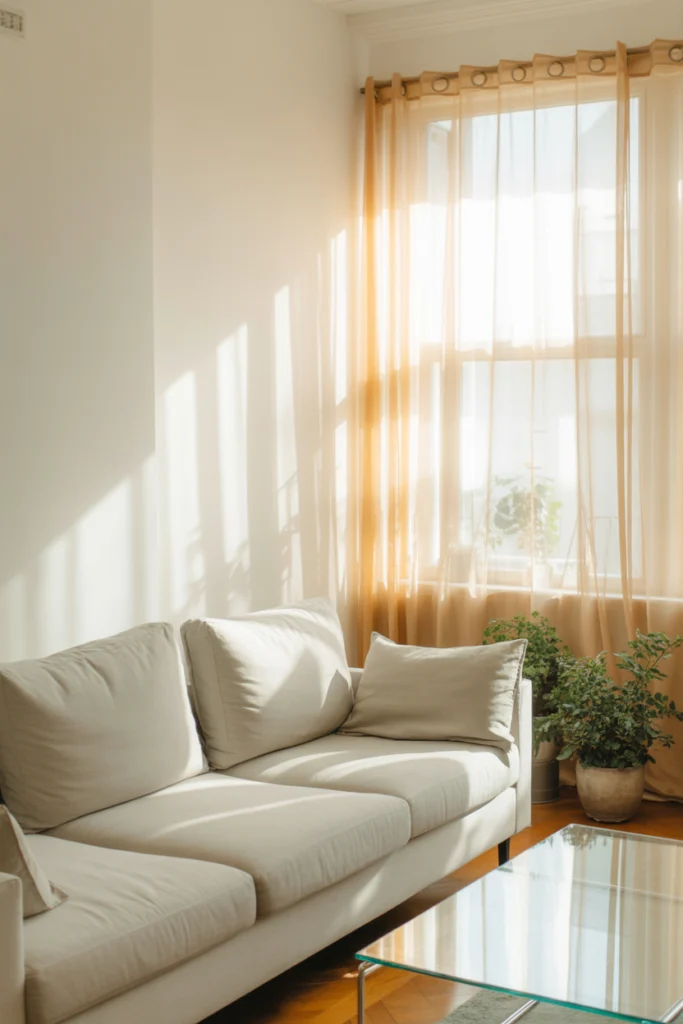
Light colors are the fastest way to make a small apartment living room feel larger. White, warm cream, soft gray, and pale greige reflect natural light instead of absorbing it, so walls seem to recede and the ceiling feels higher. A good starting palette is warm white walls, a light beige or light gray sofa, and one soft accent color, such as sage green or dusty blue, repeated in cushions and art.
To keep light colors from looking flat, layer textures. Pair smooth painted walls with a woven jute rug, linen curtains, a chunky knit throw, and a light wood coffee table. If your walls are already white and you rent, add color through large items you own, like a cream rug, a pale slipcover, or light wood shelving, and keep darker pieces, such as a black TV stand, low and compact so they do not dominate the room.
2. Add Mirrors to Enhance Depth
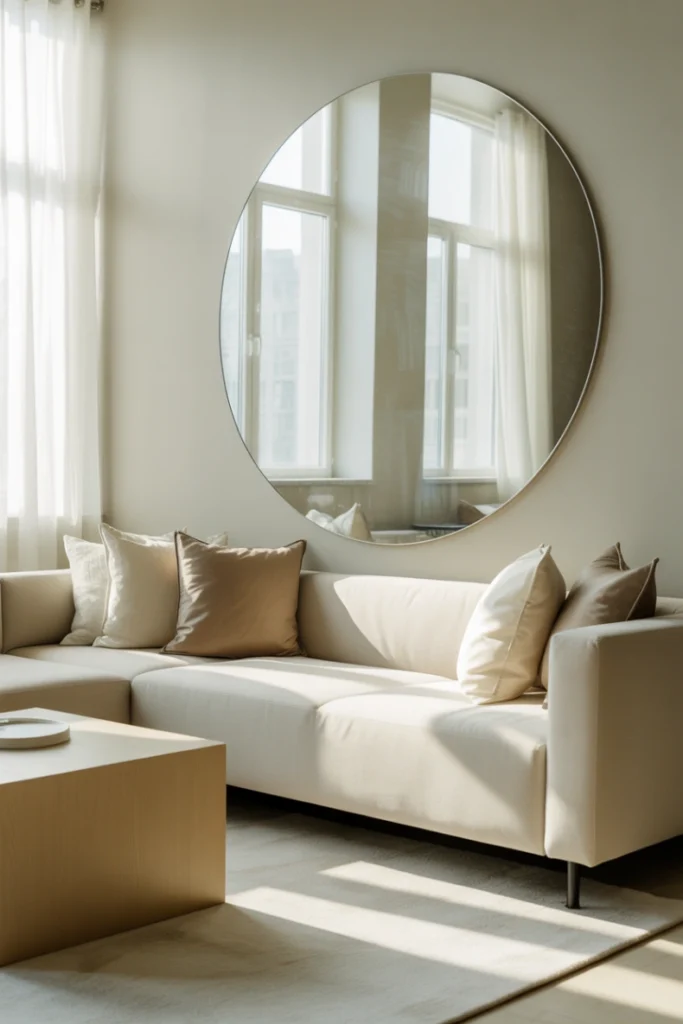
A well placed mirror can almost double how open a room feels because it reflects both light and the view across the room. For the biggest effect, hang one large mirror, around 36 by 48 inches, opposite or beside a window, with its center about 57 inches from the floor, which is close to average eye level. A leaning floor mirror, about 65 inches tall, also works well in a narrow corner.
Choose a frame that matches your style: slim black metal for a modern look, light oak for a Scandinavian feel, or brushed gold for a touch of glamour. Avoid hanging a mirror where it reflects clutter, such as an open shelf of cables, and instead aim it at a plant, a piece of art, or a window. If one large mirror feels too bold, try a grid of four matching 12 inch square mirrors for a gallery effect.
3. Choose Multi-Functional Furniture
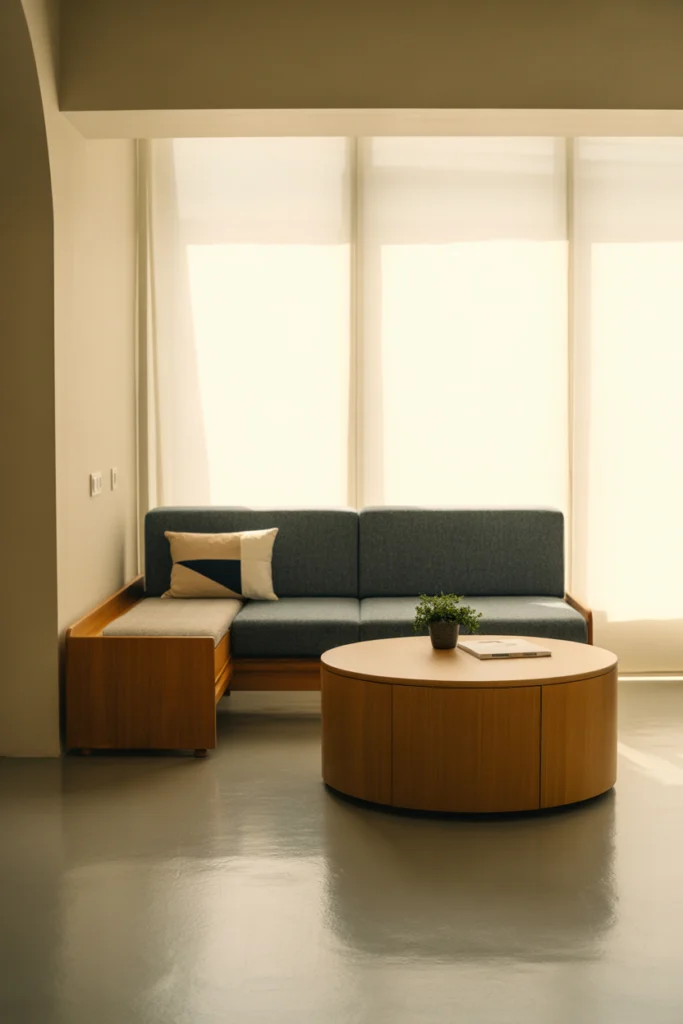
In an apartment, every piece should earn its place. A storage ottoman can hold blankets and board games, a sleeper sofa turns the living room into a guest room, and a nesting coffee table gives you extra surface space only when you need it. Look for a sofa bed with a proper mattress, not just a thin fold out pad, if guests stay often, and choose a lift top coffee table if you eat or work from the sofa.
Measure before you buy. Leave at least 30 inches of walking space around major furniture, and keep the coffee table about 16 to 18 inches from the sofa so you can sit and stand comfortably. Compact designs with slim arms and raised legs also help because you can see floor underneath them, which makes the room feel less crowded. For more compact layout ideas, see these small living room ideas that focus on furniture that fits tight spaces.
4. Create a Gallery Wall
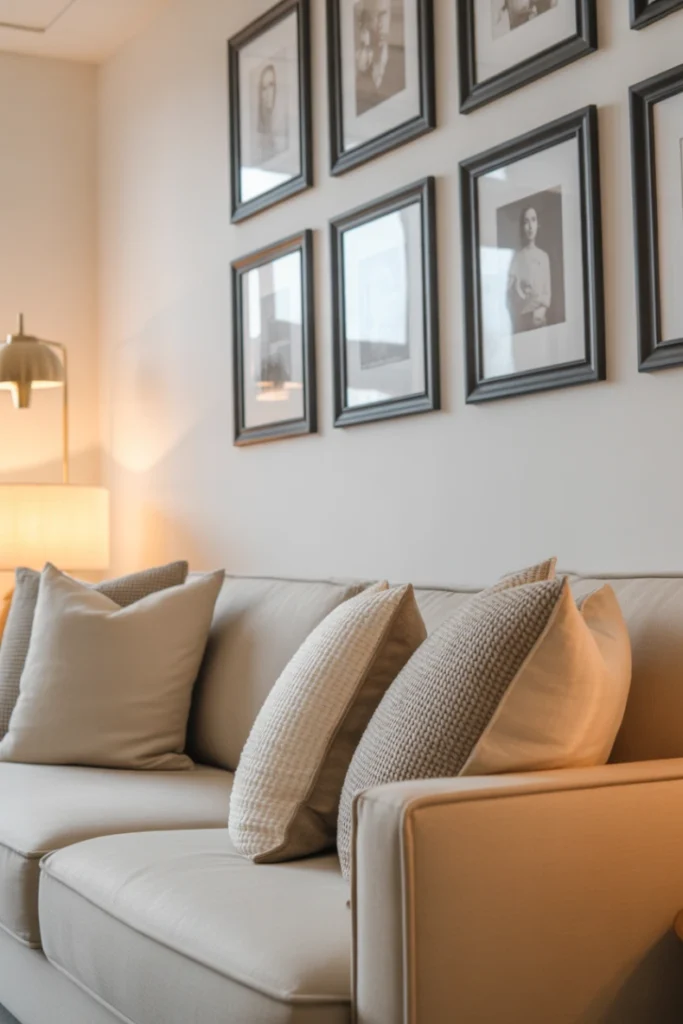
A gallery wall adds personality fast, and it costs far less than one large piece of art. Start by choosing a theme, such as travel photos, botanical prints, or black and white photography, and stick to one or two frame colors for a calm, collected look. Lay the arrangement on the floor first, starting with the largest piece in the center, and keep about 2 to 3 inches between frames.
Hang the center of the arrangement at about 57 inches from the floor, and anchor it above the sofa or console so it feels intentional rather than floating. For renters, use removable picture hanging strips rated for the frame weight, and keep heavier frames on a picture ledge instead. Step back from across the room before you finalize the layout, since a gallery wall should read as one composition, not a random scattering.
5. Add Warm Lighting Layers
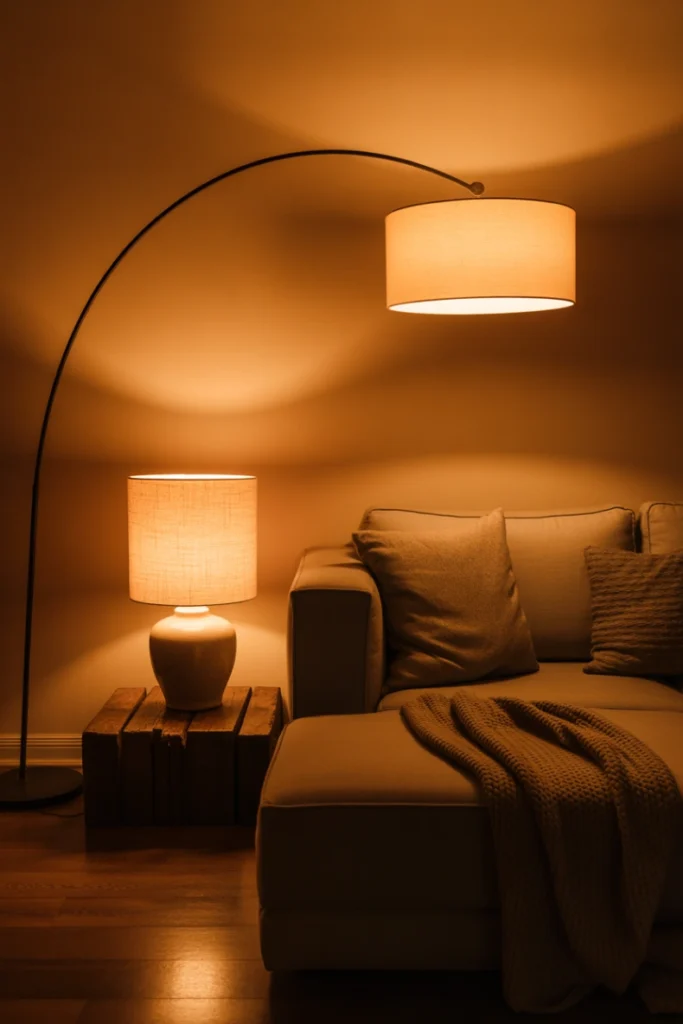
One bright ceiling light makes a living room feel flat and harsh. Instead, aim for three layers: ambient light from a ceiling fixture or floor lamp, task light from a reading lamp beside the sofa, and accent light from a small table lamp, a picture light, or warm string lights on a shelf. Use warm white bulbs, around 2700 Kelvin, for a cozy evening glow.
Put at least one lamp on a dimmer, or use smart bulbs you can control from your phone, so you can shift from bright daytime light to soft movie night light in seconds. Place a floor lamp behind a reading chair, keep table lamps at a height where the shade sits near shoulder level when seated, and avoid placing a bare bulb where it shines directly into eyes from the sofa.
6. Maximize Natural Light
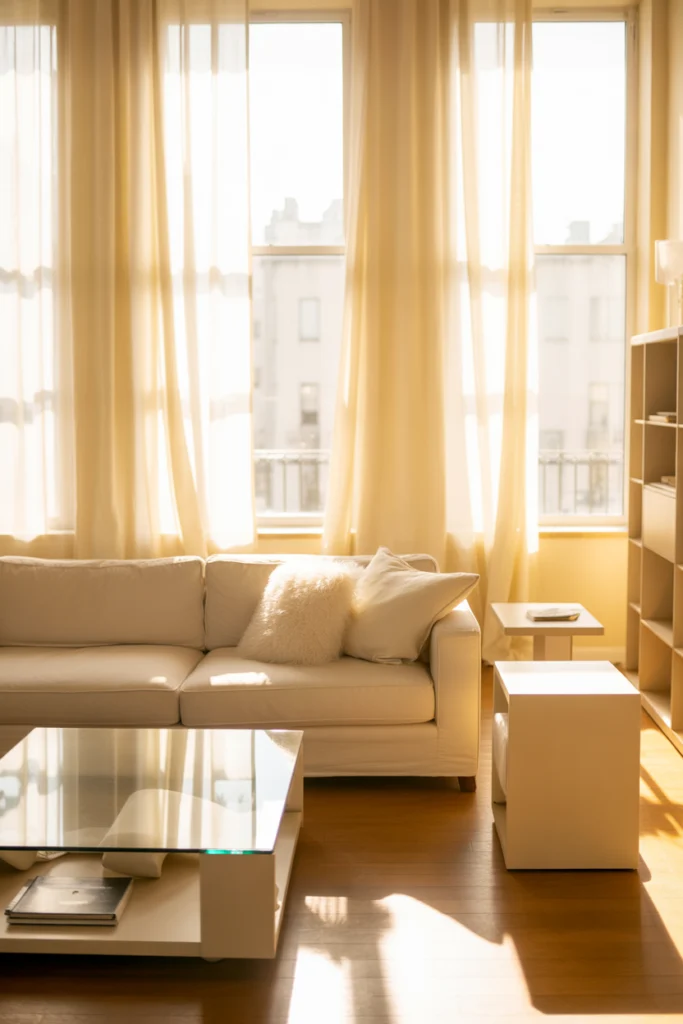
Natural light is free, and it changes how big and cheerful a room feels. Swap heavy, dark drapes for sheer white curtains or light filtering roller blinds that let daylight through while keeping privacy. Keep windowsills clear, avoid tall furniture directly in front of a window, and clean the glass inside and out, since even a thin film of dust dulls the light.
Place a mirror on the wall beside a window, not just opposite it, to bounce light deeper into the room, and choose light colored furniture near windows so the bright area does not end abruptly. If your apartment faces north or gets little direct sun, add a daylight style bulb in a floor lamp near the window to lift the whole corner during dark afternoons.
7. Incorporate Plants for Freshness
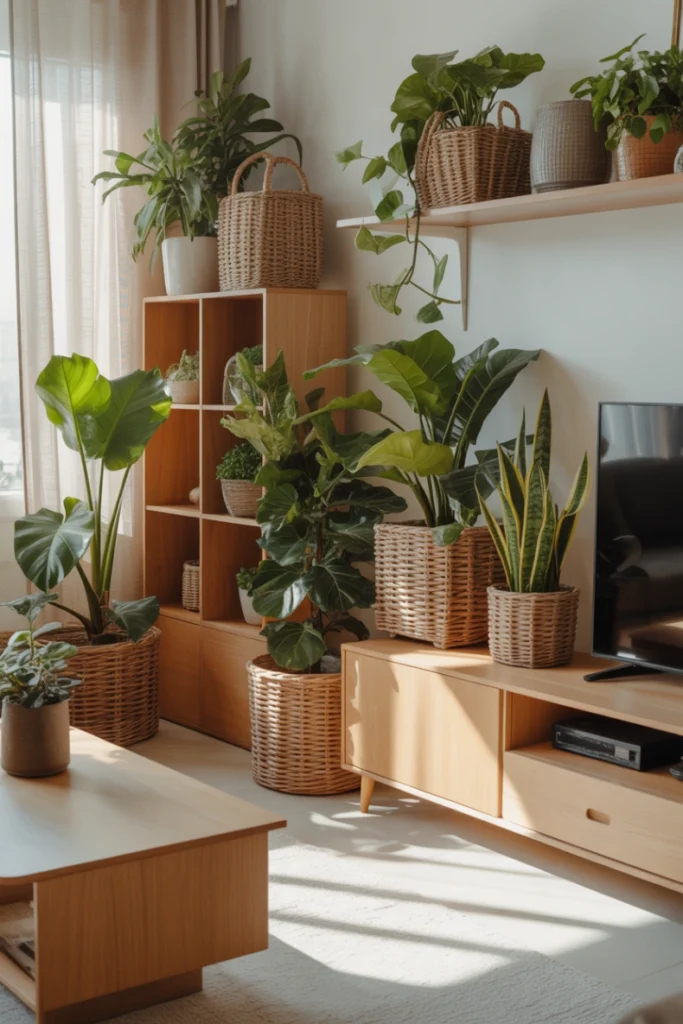
Plants soften hard edges, add color, and make a room feel alive, even when everything else is neutral. Start with easy, low light tolerant plants if your apartment is dark, such as pothos, snake plants, and ZZ plants, and save fiddle leaf figs and olive trees for bright spots near windows. Group plants in odd numbers, such as three pots of different heights on a side table or shelf.
Use planters that match your decor, such as terracotta for a warm look, matte white ceramic for a modern look, or woven baskets with a plastic liner inside. Water only when the top inch of soil feels dry, empty saucers so roots do not sit in water, and rotate pots every few weeks so growth stays even. Hang trailing pothos from a ceiling hook or wall shelf to add greenery without using floor space.
8. Play with Textures and Fabrics
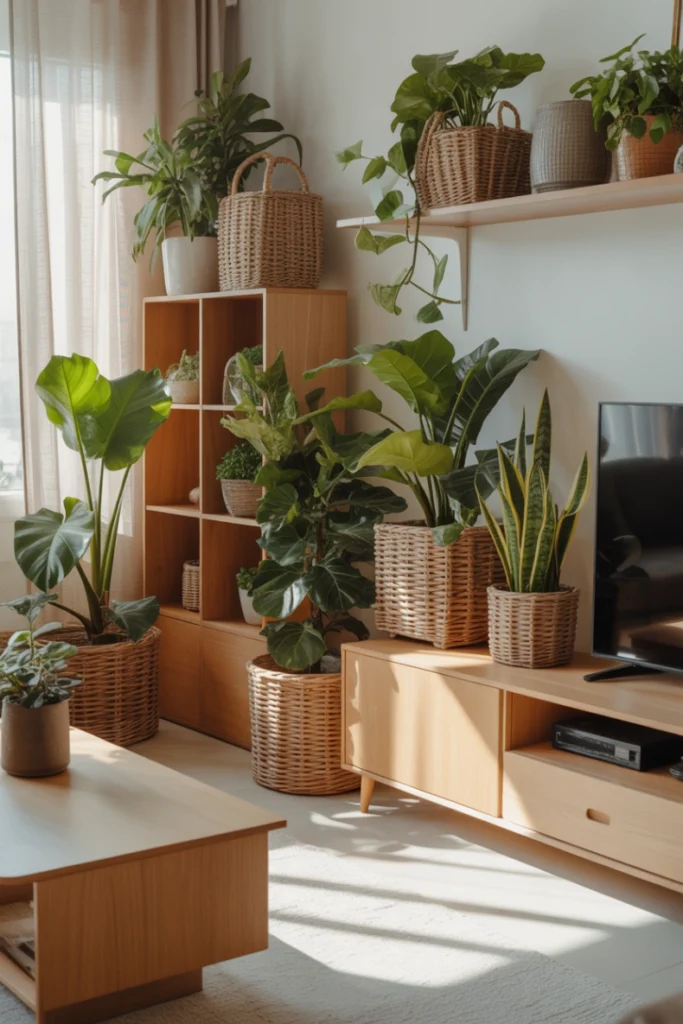
Texture is what stops a neutral room from looking boring. Combine at least four textures in one living room, for example a smooth leather or linen sofa, a nubby wool throw, a velvet cushion, a woven rug, and a wood or rattan side table. The contrast makes the room feel layered and inviting, even when the color palette stays simple.
Keep the palette tight, with two main neutrals and one accent color, so the mix of textures feels curated rather than messy. In summer, swap heavy velvet and wool for cotton and linen, and in winter, bring back chunky knits and faux fur. Washable cushion covers are a smart choice for apartments, since you can refresh the look for the price of a new set of covers.
9. Add Floating Shelves
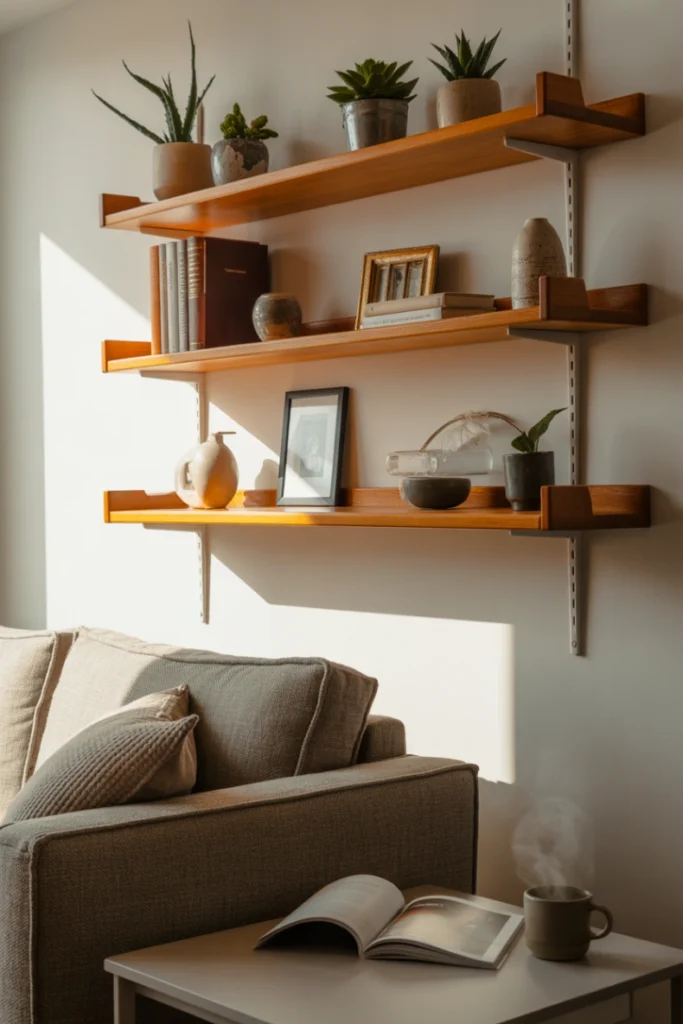
Floating shelves give you display and storage space without taking up floor area, which is ideal for small apartments. Install two or three shelves, each 24 to 36 inches long, staggered or stacked above a console, a desk, or a reading chair. Use them for books, small plants, framed photos, and one or two decorative objects per shelf, and leave some empty space so the display breathes.
Check the weight rating and fix shelves into wall studs or use proper wall anchors, especially in plaster or drywall, since a falling shelf damages both the wall and your belongings. For renters who cannot drill, a tall leaning ladder shelf gives a similar look with no wall damage. Style shelves from the top down, placing taller items at the ends and smaller items in the middle for balance.
10. Use Area Rugs to Define Spaces
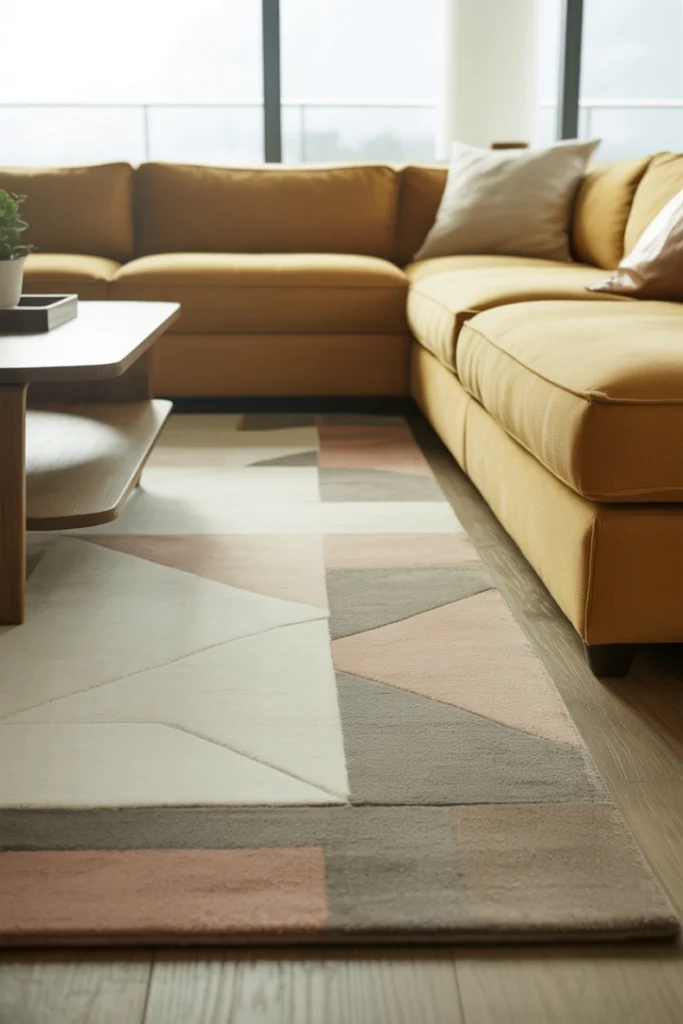
In an open plan apartment, a rug is the simplest way to say, this is the living room. Choose a rug large enough that the front legs of the sofa and chairs sit on it, which usually means 8 by 10 feet for a standard sofa setup, or 5 by 8 feet for a loveseat and chair. A rug that is too small makes furniture look like it is floating and makes the room feel smaller.
Pick a low pile rug if you have pets or a dining area nearby, since it is easier to vacuum, and use a non slip rug pad underneath to stop sliding and add cushioning. A patterned rug can hide everyday wear, while a solid textured rug lets colorful cushions and art take center stage. Keep at least 12 inches of bare floor visible around the rug where possible so the room still feels open.
11. Add Pops of Color
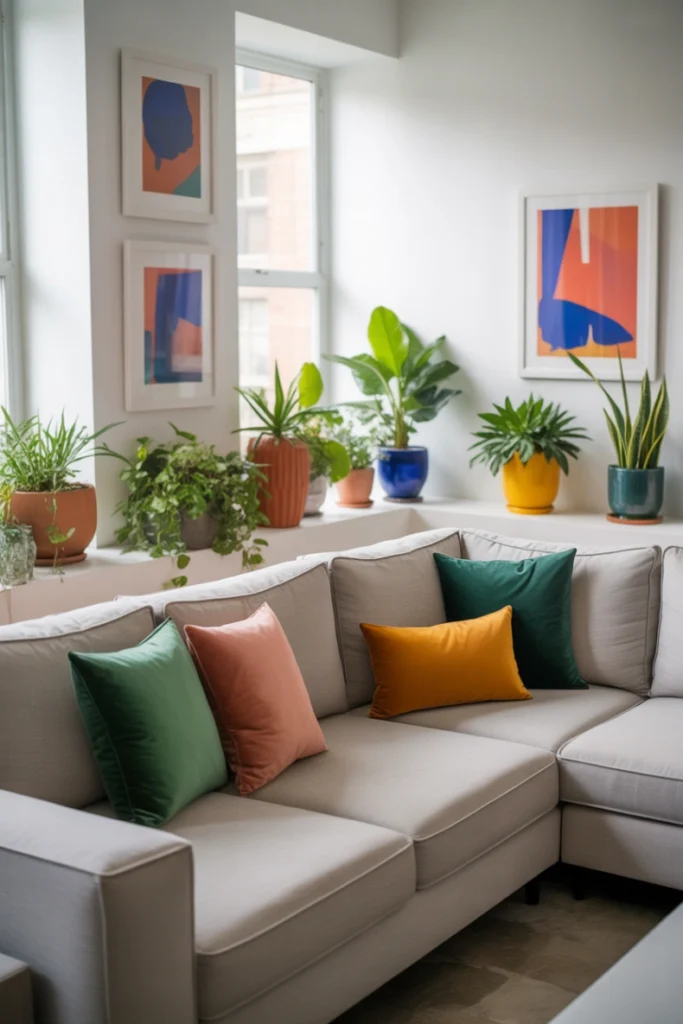
A neutral base gives you freedom to play with color without repainting. Add color through items that are easy to change, such as throw pillows, a blanket, art prints, a vase, or a tray. Mustard yellow, sage green, terracotta, and navy blue all work well against white, beige, and light gray, and you can swap them seasonally for a fresh look at low cost.
Use the 60-30-10 rule as a guide: about 60 percent neutral, 30 percent secondary color, and 10 percent bold accent. For example, a light gray room with sage green cushions and a single mustard throw follows this balance naturally. If you want help choosing a palette, browse these living room color schemes for combinations that work in both small and large spaces.
12. Incorporate Statement Art
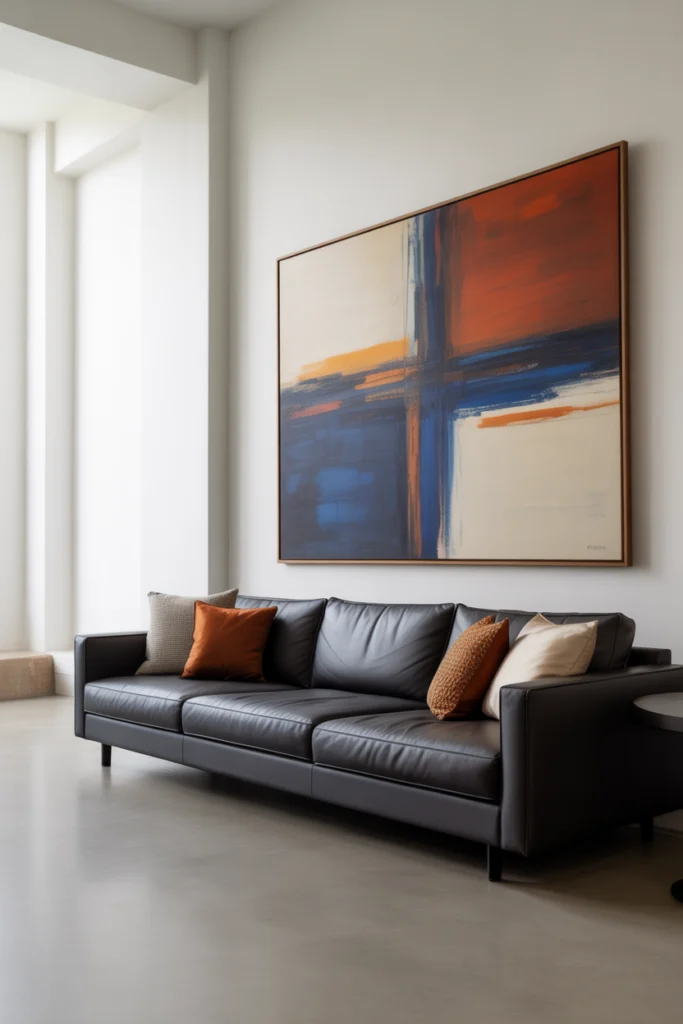
One large piece of art can anchor a whole living room better than many small pieces scattered around. Choose a canvas or framed print at least two thirds the width of the sofa, and hang it so its center sits about 57 inches from the floor, or 6 to 8 inches above the sofa back. Abstract landscapes, large botanical prints, and bold graphic posters all work, as long as the colors connect to your cushions or rug.
If original art is out of budget, look for high quality prints, open edition posters, or a DIY canvas you paint in your palette. A large leaning canvas on a console also works well for renters who want to avoid drilling. Keep the wall around statement art clear, since crowding it with small frames weakens its impact.
13. Add Cozy Throws and Cushions
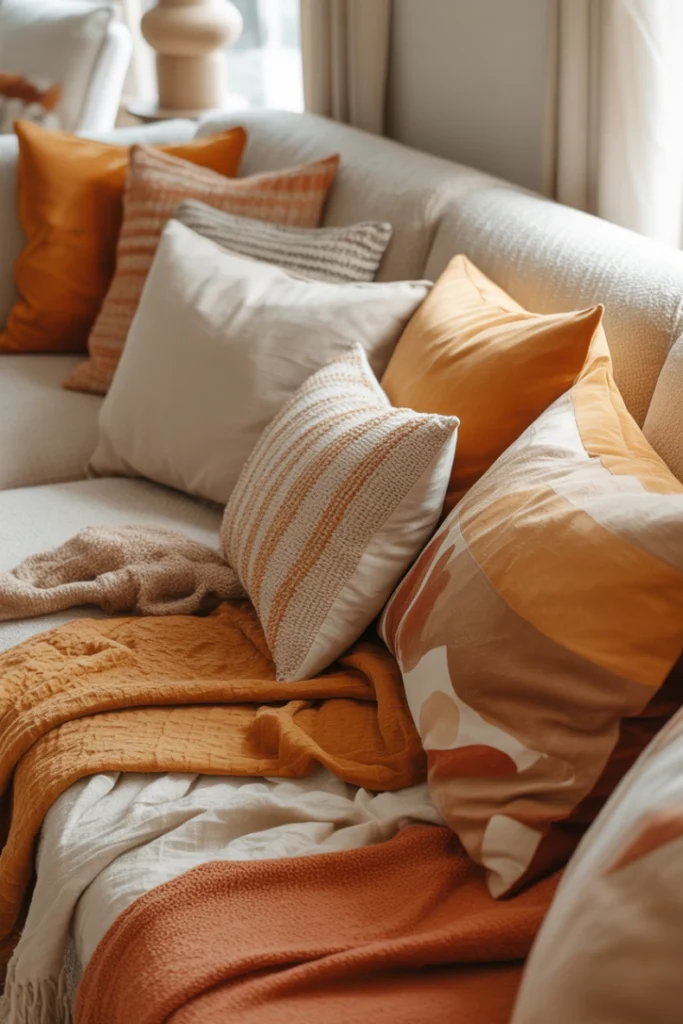
Throws and cushions are the quickest way to make a sofa look inviting. Layer two or three cushions in different sizes, such as a 20 inch square, an 18 inch square, and a lumbar cushion, mixing a solid, a subtle pattern, and a textured fabric. Drape a throw over one arm or folded across the back, not bunched in a corner, so the sofa looks styled rather than messy.
Choose washable fabrics if you have pets or children, and store out of season throws in a basket or ottoman so the sofa does not look overloaded. A soft, warm throw also makes a small apartment feel more like home on cold evenings, which is why cozy layering is central to many cozy apartment makeover ideas that focus on comfort first.
14. Optimize Small Spaces with Vertical Design
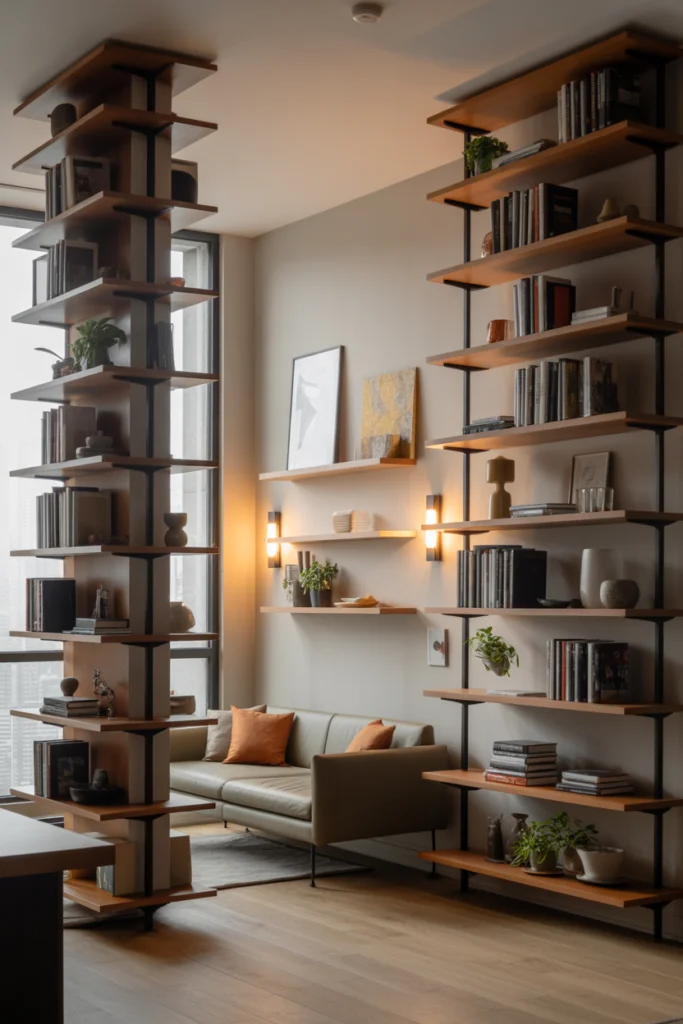
When floor space is limited, look up. Tall bookcases, vertical art, floor to ceiling curtains, and wall mounted storage draw the eye upward and make ceilings feel higher. A bookcase about 72 inches tall in a corner can hold books, baskets, and decor that would otherwise clutter tables and the floor, while a tall plant beside it softens the vertical line.
Keep vertical storage tidy by using matching baskets on lower shelves and leaving the top shelf lighter, since heavy items up high look top heavy and can feel unsafe. In apartments with low ceilings, avoid dark, heavy crown molding or tall dark furniture pressed against the ceiling, and instead use light colors and slim vertical lines to keep the height illusion working.
15. Create a Focal Point
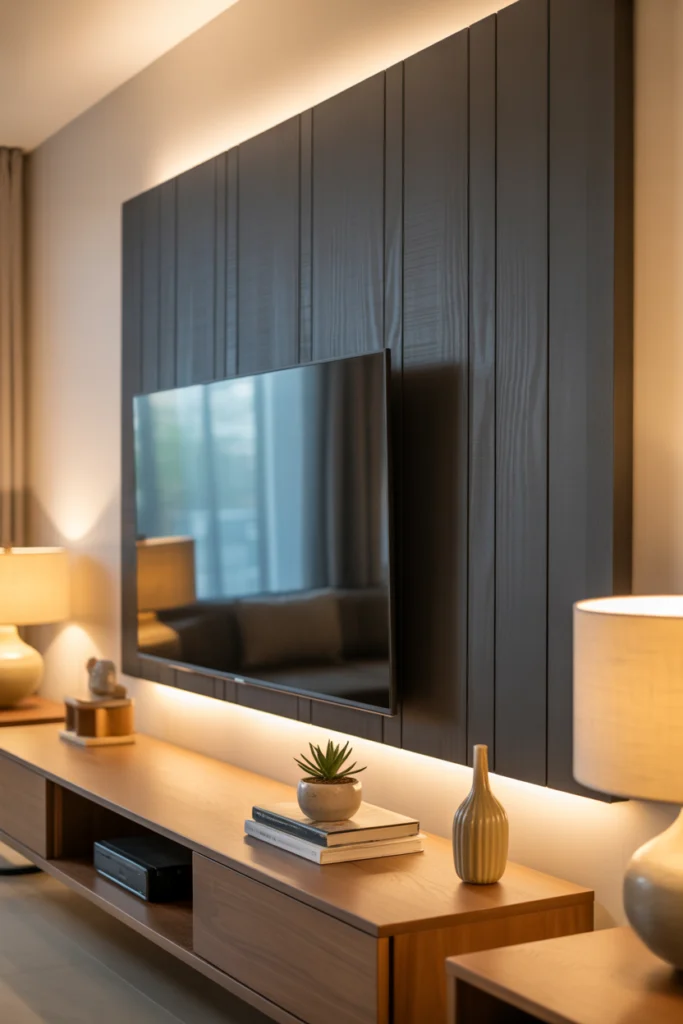
Every living room needs one clear focal point, the first thing your eye lands on when you enter. It could be a fireplace, a large window with a view, a TV wall, a bold piece of art, or an accent wall in a deep color or textured wallpaper. Once you choose it, arrange the main seating to face it, with the sofa opposite and chairs angled inward.
If your room has no natural focal point, create one. Paint one wall in a warm deep tone, hang a large mirror with a striking frame, or build a simple gallery around the TV so it reads as a designed feature rather than a black rectangle. Keep side tables and lamps lower than the focal point so they support it instead of competing with it.
16. Mix Modern and Vintage Decor
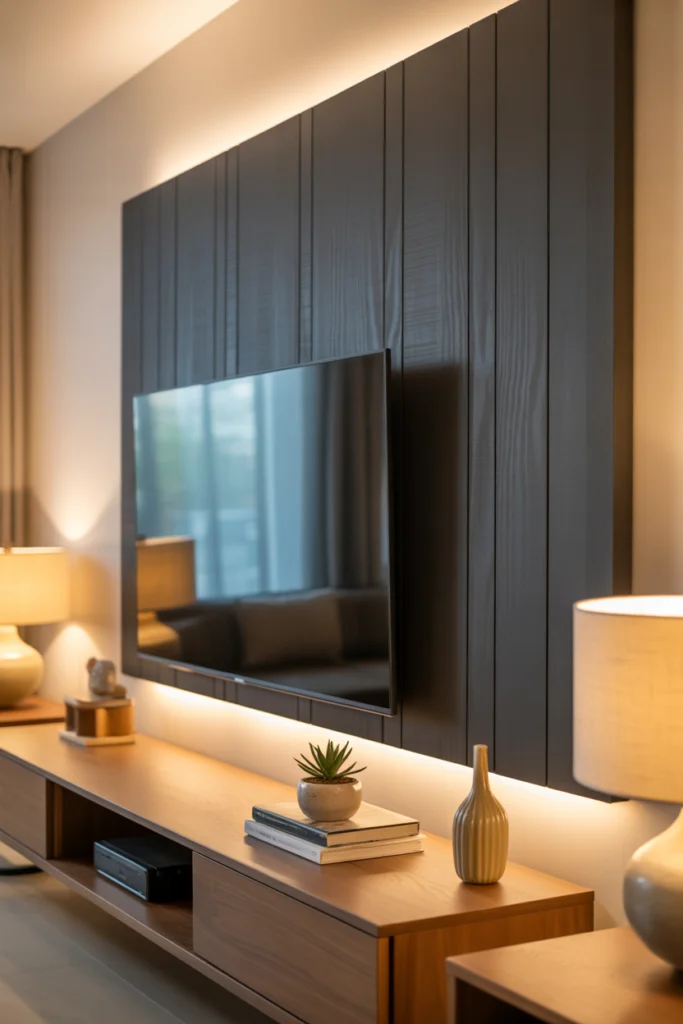
Mixing modern and vintage pieces gives an apartment character that a single store collection cannot. Pair a clean, modern sofa with a vintage wooden coffee table, a mid century armchair, or an antique brass lamp, and the room instantly feels collected over time. The key is to repeat one element, such as wood tone or metal finish, across old and new pieces so the mix feels intentional.
Shop second hand for larger vintage items, since solid wood furniture from thrift stores and flea markets is often better made than new flat pack pieces, and check joints, drawers, and stability before buying. For a fully modern base with vintage accents, see these modern living room ideas and add one or two vintage finds to warm up the clean lines.
17. Add Curtains for Height and Warmth
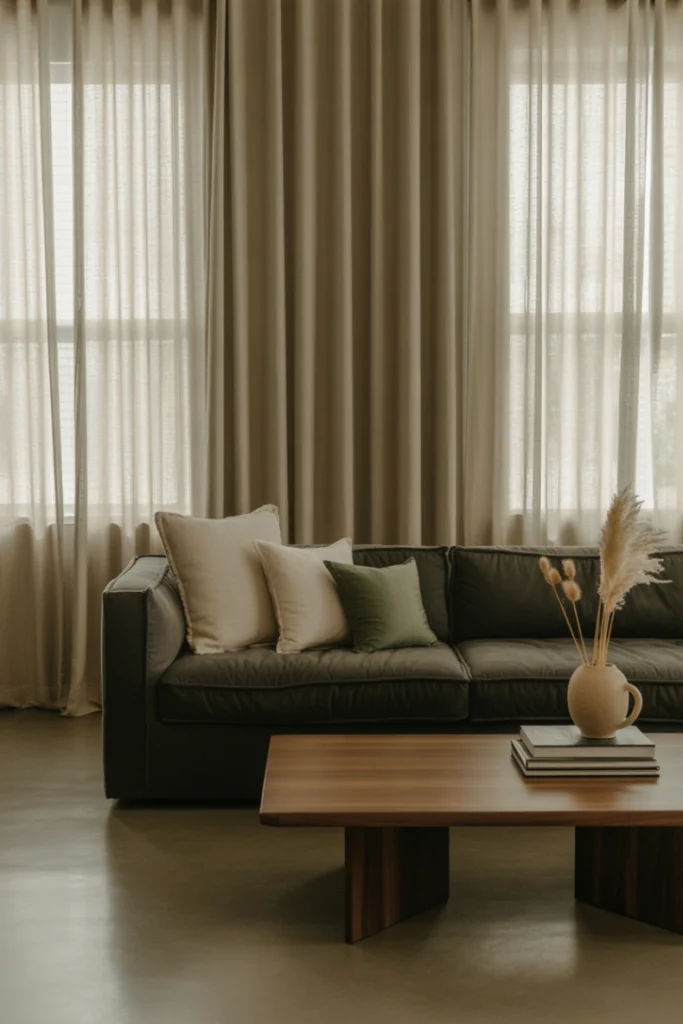
Curtains hung the right way can make windows look taller and the whole room feel more finished. Mount the curtain rod 4 to 6 inches above the window frame, or close to the ceiling if you want maximum height, and extend it 8 to 12 inches beyond each side so curtains do not block light when open. Choose floor length panels that just touch the floor, or puddle slightly for a softer look in a bedroom style living space.
Linen gives a relaxed, airy feel, while velvet adds warmth and helps with insulation and sound in winter. For privacy without darkness, layer sheer panels underneath heavier drapes, so you can close the sheers during the day and the drapes at night. Iron or steam curtains before hanging, since wrinkled panels undo the elegant effect.
18. Use a Sectional Sofa for Comfort
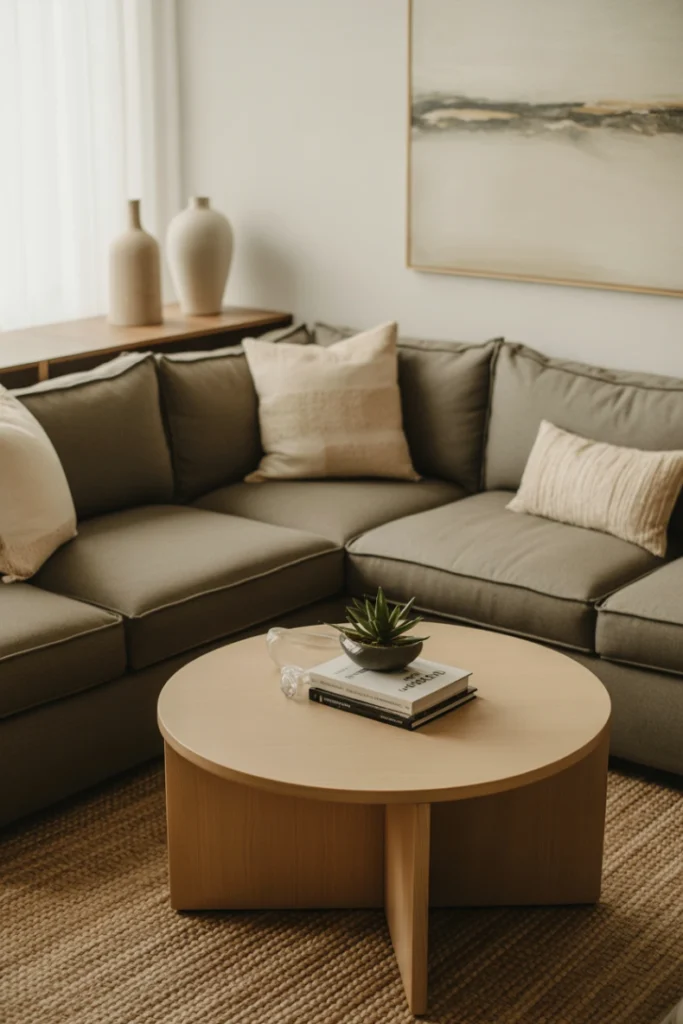
A sectional defines the living area in an open plan apartment and gives you more seating than a sofa and chairs in the same footprint. For small spaces, choose a compact L shaped sectional about 84 to 96 inches long, with a chaise on the side that leaves the main walkway clear. A reversible chaise is useful if you move often, since you can switch sides to fit a new layout.
Pair the sectional with a round coffee table, which softens the straight lines and is easier to walk around than a sharp cornered rectangle. Add a tray on the coffee table to hold remotes and a candle, keep one end of the sectional clear for easy access, and avoid pushing a large sectional hard against every wall, since a few inches of breathing room makes the arrangement feel less cramped.
19. Add Personal Touches
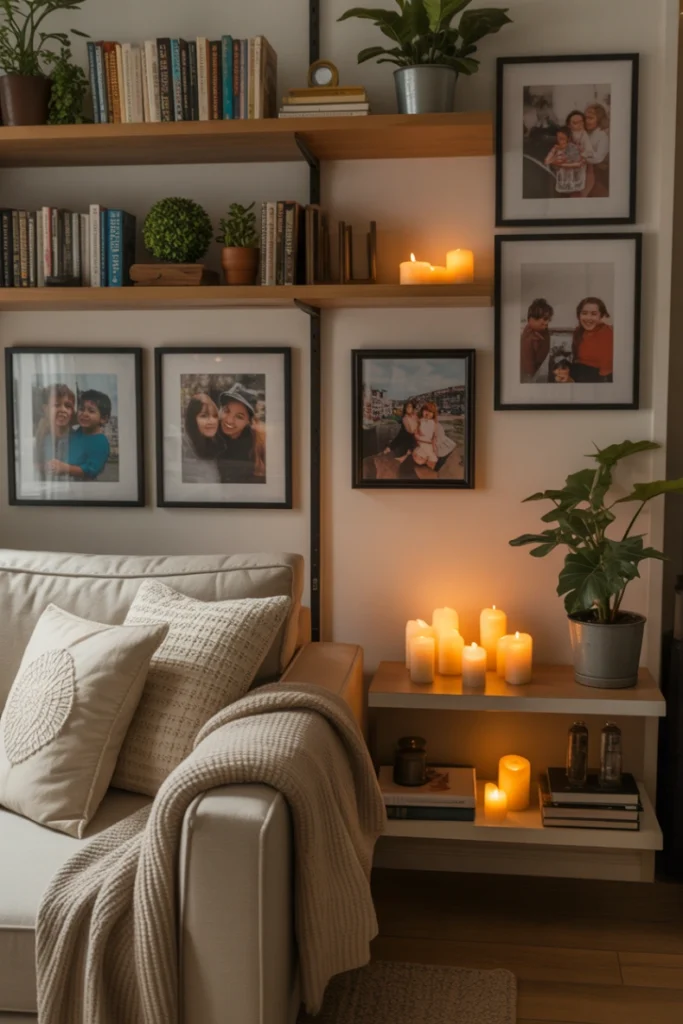
A living room should tell your story, not look like a showroom. Display framed photos from trips, books you actually read, a souvenir from a favorite place, or a handmade item in a spot where you see it daily, such as a shelf, a side table, or the mantel. Group personal items in small clusters of three, rather than spreading single objects around the room, so they read as styled vignettes.
Rotate personal displays seasonally to keep the room feeling fresh, and keep sentimental items out of high traffic zones where they can be knocked over. A simple rule helps: if an object makes you smile when you see it, it belongs in the room, even if it does not match a magazine palette, since authenticity is what makes a space feel like home.
20. Create a Small Reading Nook
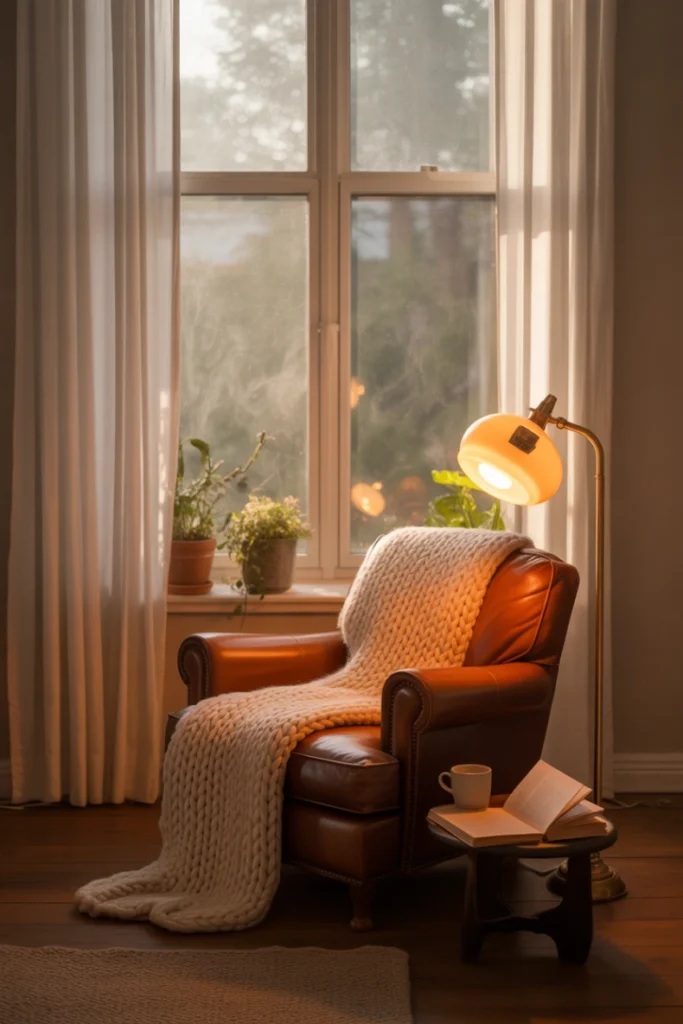
You do not need a spare room for a reading nook, just one quiet corner. Place a comfortable armchair with good back support, a small side table for a book and a drink, and a reading lamp that shines over your shoulder, not into your eyes. A floor lamp with an adjustable arm, or a table lamp on a side table at about 24 to 28 inches high, works well.
Add a soft throw, a small basket for current books, and a plant or candle nearby to make the corner feel like a destination rather than leftover space. If the corner is near a window, use it for daylight reading, and add a sheer curtain to soften glare. Even in a studio, a reading chair angled toward a window creates a distinct zone within the larger room.
21. Add Smart Storage Solutions
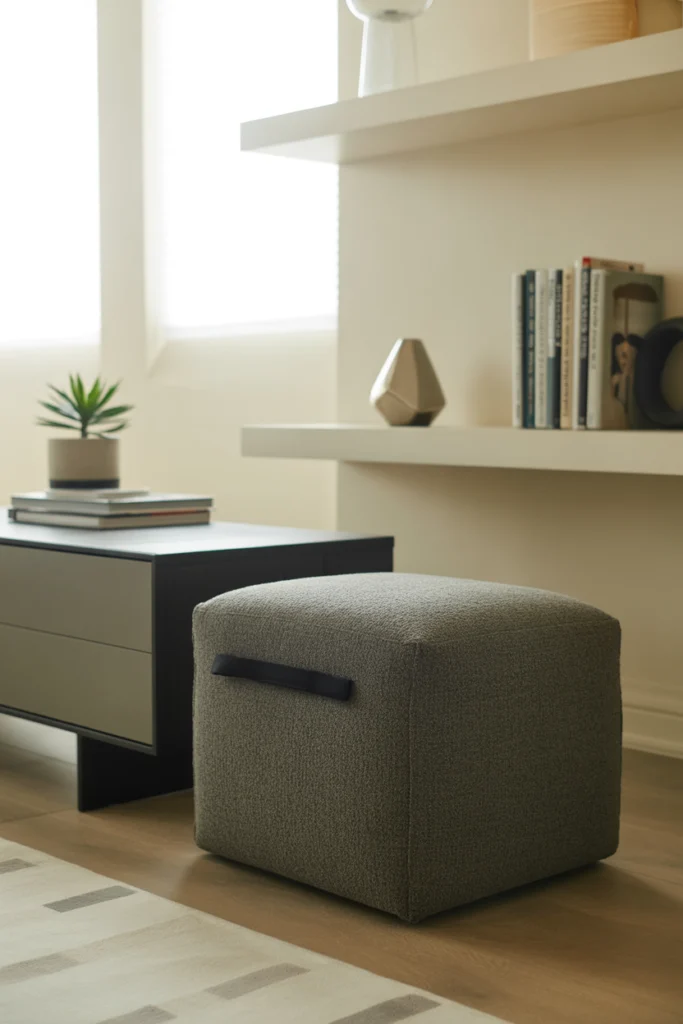
Clutter is the fastest way to make a small living room feel chaotic, so storage should be planned, not added as an afterthought. Use a TV stand with closed drawers for cables and games, a bench with lift up storage by the entry for shoes and bags, and baskets on shelves for remotes, chargers, and magazines. Label baskets inside if several people share the space.
Go vertical with modular shelving, use the space above doorways for a single high shelf of rarely used items, and keep everyday items within easy reach while seasonal items go higher. Do a quick five minute tidy each evening, returning items to their baskets and shelves, since a storage system only works when putting things away is easier than leaving them out.
22. Style Your Coffee Table
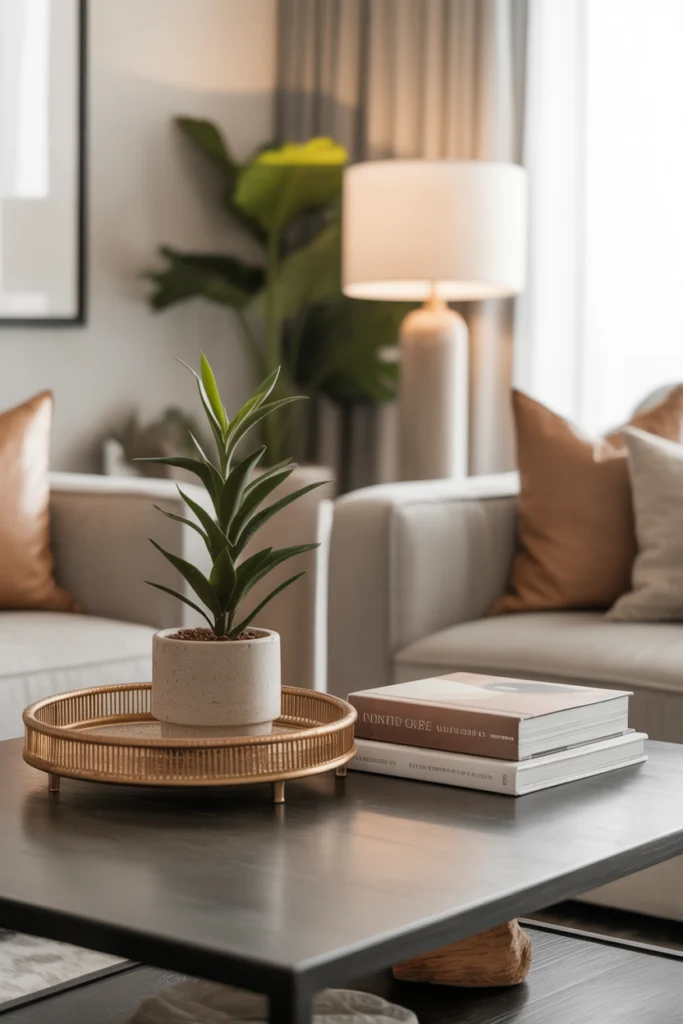
A coffee table is both practical and decorative, so style it with intention. Start with the rule of three: a tray to anchor the display, a small plant or vase for life, and a stack of two or three books for height and personality. Keep the total height of objects below eye level when seated, so conversation across the table stays easy.
Leave about one third of the table surface empty for cups, snacks, or a laptop, and avoid overfilling it, since a crowded table makes the whole room feel cluttered. Change the books or the tray seasonally for a fresh look, and choose a tray in a material that repeats elsewhere in the room, such as wood, rattan, or brass, to tie the display together.
Conclusion
Your apartment living room does not need to be large to feel luxurious, calm, and inviting. With light colors, layered lighting, smart furniture, and thoughtful storage, even a small space can support relaxing evenings, lively gatherings, and quiet mornings with a book. The ideas in this guide work best when you adapt them to your floor plan, your light, and your daily habits.
Start with the change that will make the biggest difference for you, whether that is a larger rug, better lighting, or a proper storage system, and add the rest over time. A living room that is comfortable, organized, and personal will always feel like home, no matter its size.
Frequently Asked Questions
How can I make a small apartment living room look bigger?
Use light wall colors, a large mirror opposite or beside a window, furniture with raised legs, and a rug large enough for the front legs of your seating. Keep walkways clear, hang curtains close to the ceiling, and choose one focal point so the room feels open rather than crowded.
What size rug should I choose for an apartment living room?
For a standard sofa, an 8 by 10 foot rug usually works best, since the front legs of the sofa and chairs can sit on it. For a loveseat and chair, a 5 by 8 foot rug is often enough. Always measure your seating area first and leave at least 12 inches of bare floor around the rug where possible.
How do I arrange furniture in a studio apartment living room?
Use a rug to define the living zone, place the sofa with its back to the sleeping area if needed, and keep the TV wall or focal point opposite the main seating. Leave at least 30 inches for walkways, use multi functional furniture, and avoid blocking windows or doors with tall pieces.
What colors work best in a small apartment living room?
Warm white, cream, light gray, and pale greige make the best base colors because they reflect light. Add sage green, dusty blue, terracotta, or mustard yellow through cushions, art, and throws, following a rough 60-30-10 balance of neutral, secondary, and accent color.
How can I decorate a rental living room without damaging the walls?
Use removable picture hanging strips, leaning mirrors and art, freestanding shelves, and tension rods for curtains where possible. Choose furniture, rugs, cushions, and plants to add color and style, since these change the room completely without any drilling or painting.
More Ideas You Will Love
 20 Living Room Wall Decor Ideas That Instantly Transform Your Space
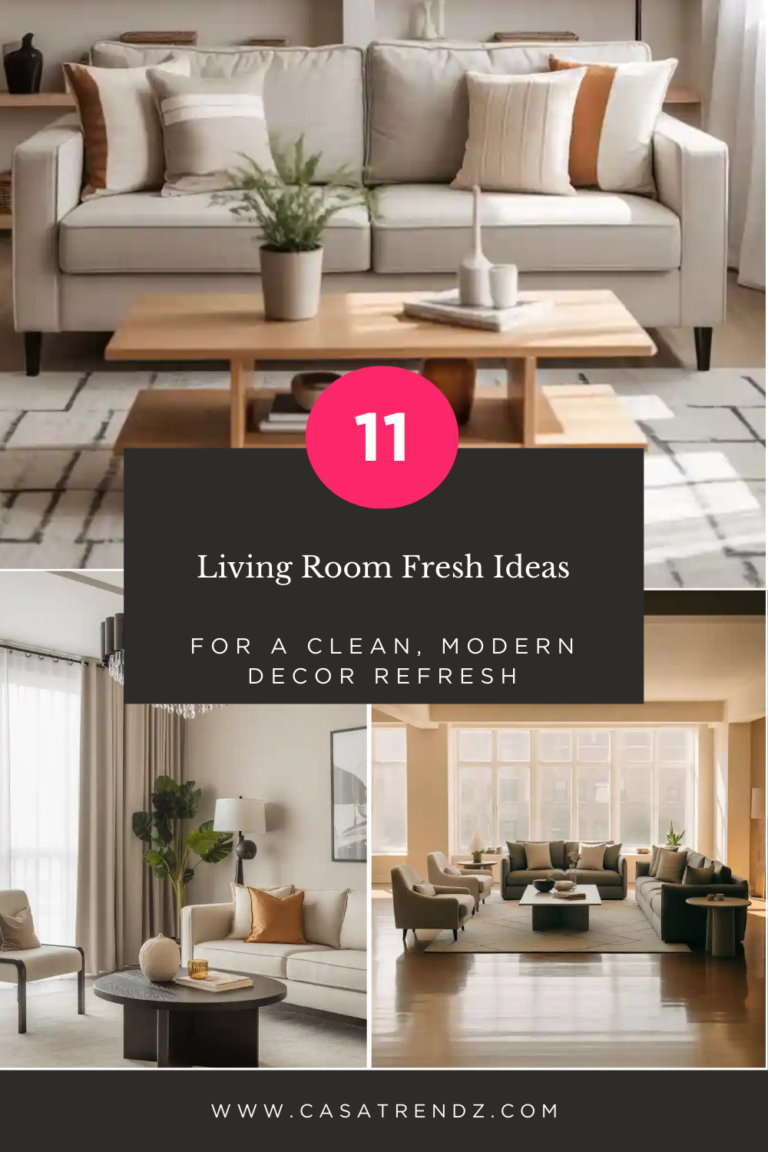 11 Living Room Fresh Ideas for a Clean, Modern Decor Refresh
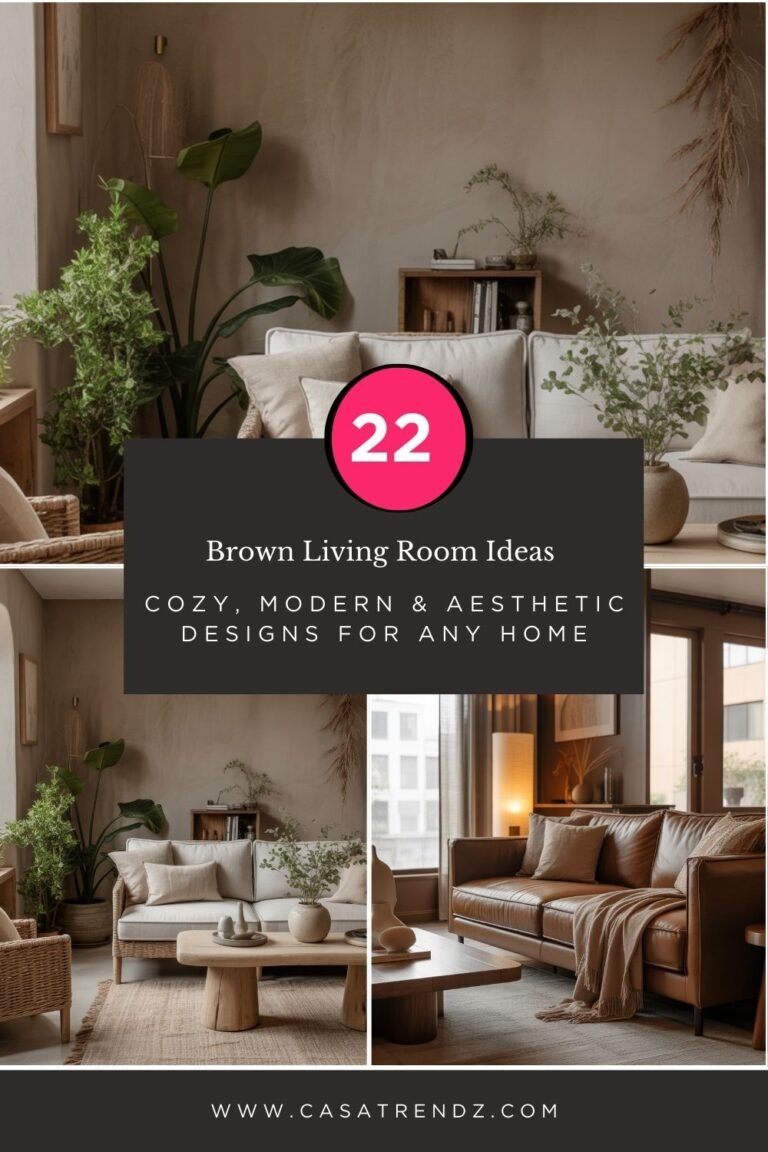 22 Brown Living Room Ideas – Cozy, Modern & Aesthetic Designs for Any Home
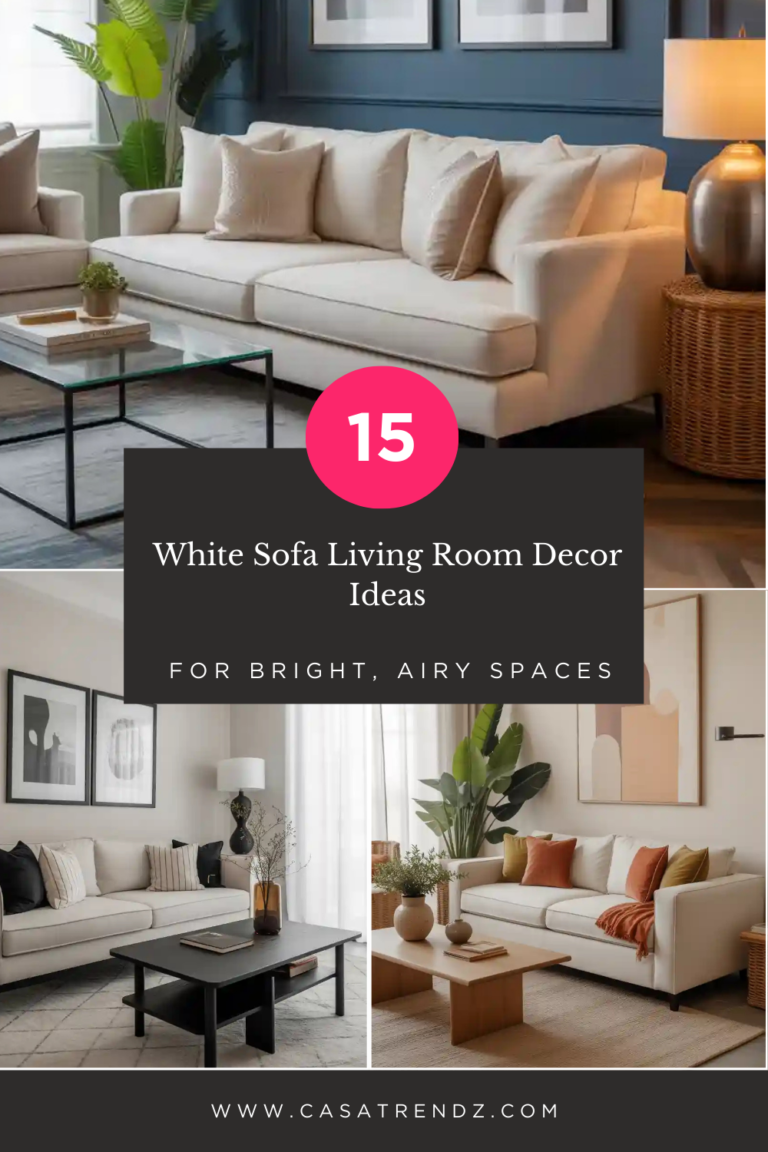 15 White Sofa Living Room Decor Ideas for Bright, Airy Spaces
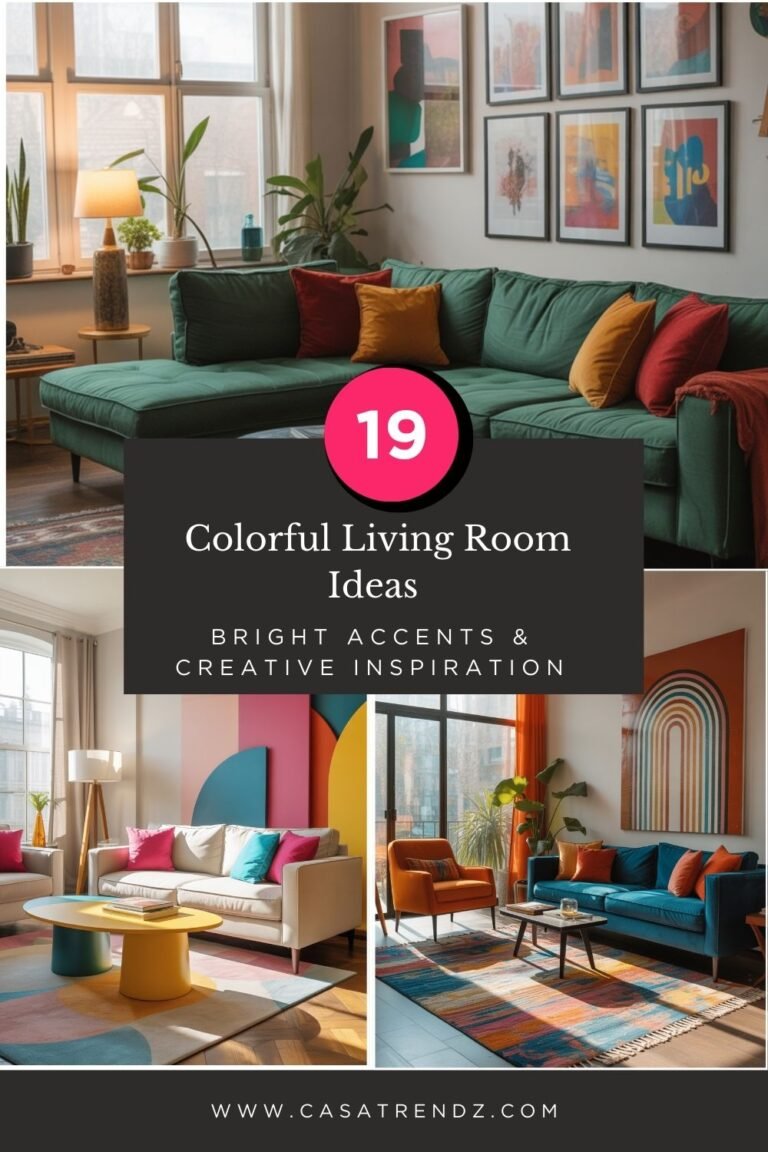 19 Colorful Living Room Ideas Filled with Bright Accents & Creative Inspiration
 13 Organic Pest Control Tips for a Healthy Summer Garden