
12 Outdoor Bench Ideas: Creative & Stylish Seating for Every Space


A bench is one of the hardest working pieces of furniture you can put outside. It gives guests a place to sit, gives a garden path a destination, and gives a bare patio a sense of purpose, all without taking up much room. Unlike a full outdoor sofa set, a single well chosen bench fits almost anywhere, from a narrow front porch to a wide backyard lawn, and it costs far less than a complete furniture set.
This guide covers 12 outdoor bench ideas for patios, gardens, porches, and backyards. For each idea you will find the best materials, realistic sizes, colors that work, and practical tips for placement and care, so you can choose with confidence instead of guessing from photos alone. Whether you want a classic wooden seat under a tree, a built in bench around a fire pit, or a weekend DIY project, there is an option here for your space and budget.
Before you buy or build, measure your spot and keep a few standard sizes in mind. A comfortable bench seat sits 17 to 19 inches high and 15 to 18 inches deep, and a length of 48 to 60 inches seats two adults comfortably. Leave at least 24 inches of clear space in front of the bench so people can sit down and stand up easily. If you are planning the whole seating area at once, our guide to outdoor furniture ideas will help you mix benches with chairs, tables, and shade in a way that feels balanced.
1. Classic Wooden Garden Bench
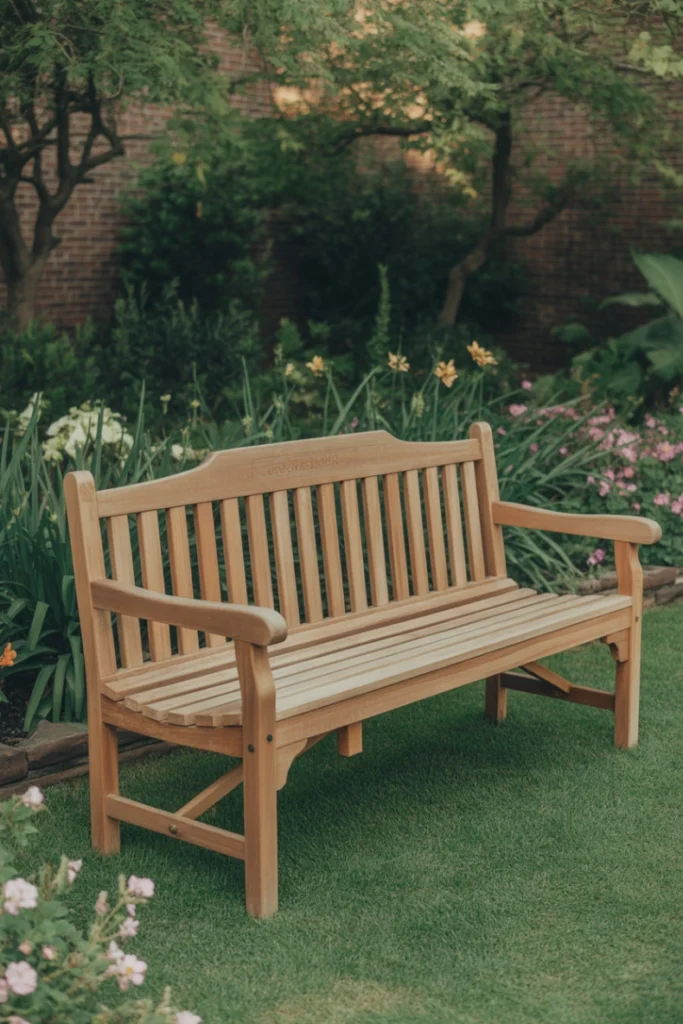
A classic wooden garden bench is one of the most timeless outdoor bench ideas, and it suits almost any garden style. Teak, cedar, and eucalyptus are the best wood choices because they resist moisture, insects, and rot far better than pine or fir. Teak turns a soft silver gray as it ages, cedar keeps a warm reddish tone, and eucalyptus offers a similar look to teak at a lower price. A standard two person bench measures about 48 to 60 inches long, with a seat height of 17 to 18 inches.
Placement makes a big difference with this style. Set the bench at the end of a garden path, beneath a shade tree, or facing a flower bed so sitting there feels like a reward rather than an afterthought. A pair of outdoor cushions in a solid color, such as sage green, navy, or cream, adds comfort and ties the bench to the rest of the garden. If the bench sits on grass, place flat stone pavers under the legs to keep them out of damp soil and prevent rot at the base.
Wooden benches need a little care to stay beautiful. Apply a penetrating oil or outdoor sealer once a year, ideally in spring before the heavy use season. Teak oil keeps the golden color, while a clear sealer protects without changing the look. Tighten bolts each spring, since wood expands and contracts with the seasons and hardware loosens over time. With this simple routine, a good hardwood bench can last 15 to 25 years outdoors.
2. Built-In Bench Seating for Patios

Built in bench seating is one of the most functional outdoor bench ideas for patios and decks, because it turns the structure itself into furniture. These benches are usually built from the same material as the patio, such as pressure treated wood, composite decking, or poured concrete, which creates a clean, intentional look. A typical built in bench is 16 to 18 inches deep and 17 to 19 inches high, and an L shaped or U shaped run can seat six to eight people without a single extra chair.
The real advantage is how much space you save. A built in bench along the edge of a deck or wrapped around a fire pit leaves the middle of the patio open for a table, a grill, or a play area. Many designs include a hinged seat or a lift up lid with storage underneath for cushions, garden tools, and outdoor games. If you plan to eat at the bench, leave 30 to 36 inches between the bench edge and the table so people can slide in and out comfortably.
Plan drainage and comfort before you build. Slightly slope the seat surface, about one eighth of an inch per foot, so rainwater runs off instead of pooling. Add a backrest angled at 10 to 15 degrees if the bench will be used for long evening sits, and choose outdoor foam cushions with quick dry covers in a color that matches your patio. A built in bench costs more up front than a store bought one, but it adds permanent seating that never needs to be stored or rearranged.
3. Rustic Stone Bench for Natural Landscapes
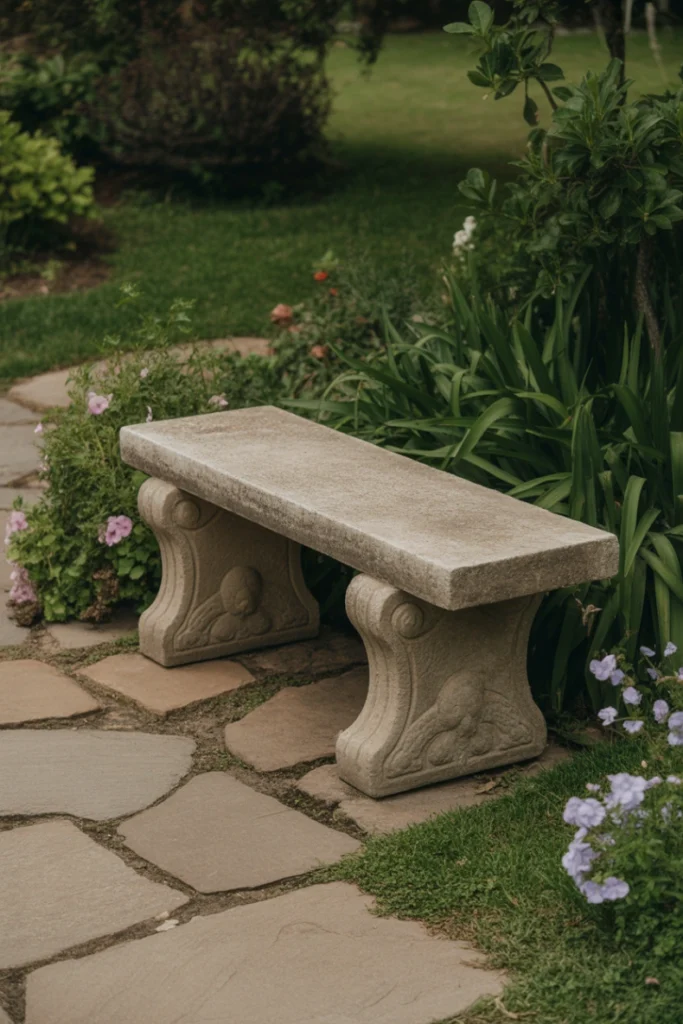
A rustic stone bench brings a sense of permanence to a garden, and it is one of the best outdoor bench ideas for natural or wooded landscapes. Granite, limestone, and sandstone are the most common choices, each with its own character. Granite is dense and nearly maintenance free, limestone has a soft, warm texture, and sandstone offers earthy reds and golds that blend with autumn planting. A simple stone bench is usually a single slab seat, 14 to 16 inches deep, resting on two block supports, with an overall length of 48 to 60 inches.
Stone works best where it looks like it belongs. Place it beside a pond, along a wooded path, or near a rock garden, and let low plants grow around the base. Creeping thyme, moss, or small ferns soften the edges and make the bench feel like part of the landscape rather than a piece of furniture dropped into it. For more planting inspiration, see our garden design ideas for ways to frame seating with beds, paths, and borders.
Stone benches need almost no upkeep, but they are heavy and permanent, so choose the spot carefully. A bench of this size can weigh 300 to 500 pounds, so set it on a level gravel or concrete pad to prevent sinking and tipping. The seat can feel cold in spring and hot in direct summer sun, so add a folded outdoor throw or a thin cushion if you plan to sit for a while. In return you get seating that lasts for decades with no painting, sealing, or winter storage.
4. Modern Minimalist Outdoor Bench

For clean lines and simplicity, a modern minimalist bench is a standout choice among outdoor bench ideas. These benches are usually made from powder coated aluminum, steel, concrete, or smooth hardwood planks with hidden fasteners, and they rely on proportion rather than decoration. A typical design is a low, long slab, about 12 to 16 inches deep and 14 to 17 inches high, which keeps the profile slim and architectural. Neutral colors such as matte black, charcoal, white, or natural wood keep the look calm and easy to coordinate.
Minimalist benches work best in contemporary patios, rooftop terraces, and urban courtyards, where they let the architecture and planting take center stage. Pair one with a single sculptural planter, a gravel bed, or a low ornamental grass to keep the composition simple. Avoid crowding the area with extra decor, since the whole point of this style is breathing room. One bench, one plant, and one light source is often enough.
Comfort needs a little thought with this style, because flat slabs and metal frames are firm by nature. A slim seat cushion, 2 to 3 inches thick, in a solid outdoor fabric makes a long sit much more pleasant without spoiling the clean look. Choose powder coated metal over raw steel to prevent rust, and wipe the surface down a few times a season to keep dust and pollen from dulling the finish. The result is a bench that looks like it belongs in a design magazine and survives daily use.
5. Picnic-Style Bench for Casual Seating

Picnic style benches are a classic example of casual, family friendly outdoor bench ideas, and they are made for real life. A standard picnic bench seats four to six people, with a table top about 28 to 30 inches high and benches 17 to 18 inches high. The attached design keeps everything in one place, so kids can climb on, food stays within reach, and the whole setup can be moved as a unit. Wood is the traditional material, but powder coated metal and recycled plastic versions last longer and need less care.
These benches shine in backyards, near a grill, or under a shade tree, where meals and gatherings happen. A detached picnic bench, without the table, is even more flexible. Place two of them facing each other across a low fire pit, line one along a garden path, or use a single bench as extra seating when guests arrive. To make the setup feel finished, add a washable outdoor tablecloth, a few melamine plates, and a lantern or two for evening meals.
Buy or build with durability in mind. If you choose wood, look for cedar or pressure treated pine, and seal it every one to two years to prevent cracking and graying. Check the bolts twice a year, since picnic benches take a lot of movement and the joints loosen faster than other furniture. A folding picnic bench is a smart pick for small yards, because it stores flat against a wall in winter and opens up in seconds when friends come over.
6. Outdoor Bench with Storage
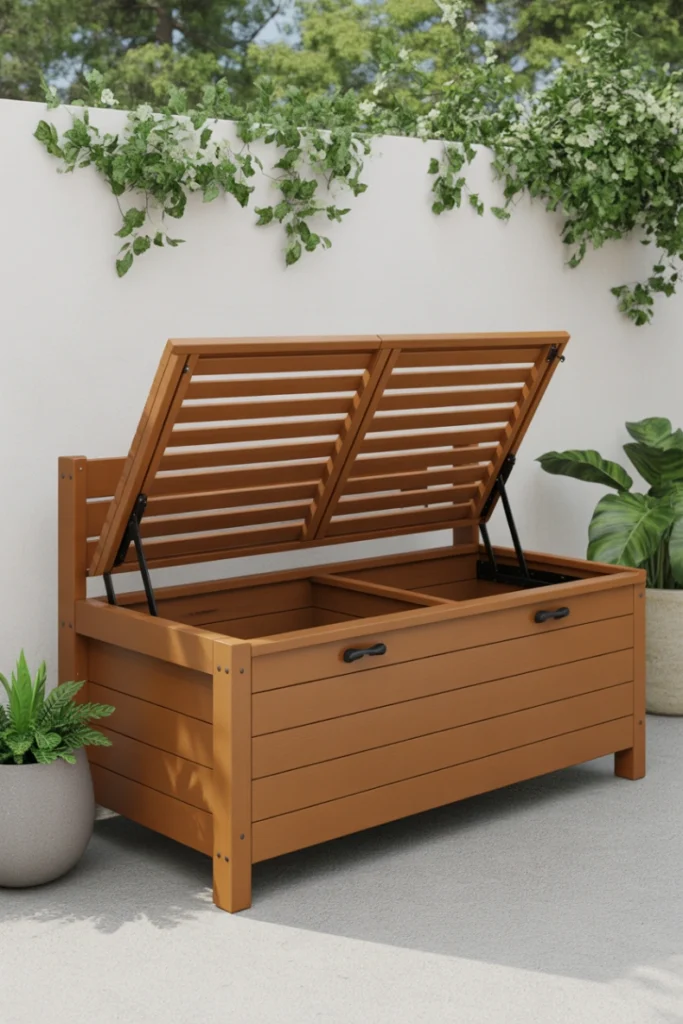
An outdoor bench with storage is one of the most practical outdoor bench ideas, especially for small patios, porches, and pool areas. These benches combine seating with a hidden compartment, usually 12 to 16 inches deep, that holds cushions, gardening tools, pool toys, or kids outdoor gear. Most models are 48 to 60 inches long and seat two to three people, and they come in wood, resin, and powder coated metal. Resin is the lowest maintenance option, while wood looks warmer and more traditional.
Placement is flexible, because a storage bench works almost anywhere you need both a seat and a tidy up spot. Put one by the back door for shoes and garden gloves, beside the pool for towels and sunscreen, or on a small balcony where every inch counts. Look for a model with a lid that stays open on its own, so you can load it with both hands, and a small gap or drainage hole in the base so any water that gets in can escape instead of pooling around your stored items.
Keep stored items dry with a few simple habits. Choose a bench with a weather resistant seal around the lid, and store cushions in a breathable bag inside the compartment during wet weeks. Wipe the inside out once a month to prevent mildew, and avoid storing anything that can rust or stain, such as metal tools without a coating. A storage bench costs a little more than a plain bench, but it replaces a separate deck box, which saves both money and floor space.
7. Curved Bench for Visual Interest

Curved benches add movement and elegance to outdoor spaces, making them a unique choice among outdoor bench ideas. Unlike straight benches, curved designs follow the shape of a tree, a fire pit, or a circular patio, which creates a natural gathering spot. A curved bench around a fire pit is usually built in segments, with each section 36 to 48 inches long, forming a half circle or full ring with a radius of 4 to 6 feet. Around a tree, the bench follows the trunk at a distance of 12 to 18 inches so the tree has room to grow.
The social benefit is real. A curved seat naturally turns people toward each other, which makes conversation easier and the space feel more intimate. This makes curved benches ideal for fire pit areas, conversation corners, and garden focal points where you want people to linger. Pair the curve with a round coffee table or a low fire bowl in the center, and keep the surrounding planting low so the shape stays visible from across the yard.
Building a curved bench takes more planning than a straight one. Wood versions use short slats laid at slight angles, while concrete and stone versions are cast or cut in segments. If you are hiring a builder, ask for a full size template on the ground first, so you can test the curve and the seat height before anything is fixed in place. Add a cushion in segments rather than one long piece, so the padding follows the curve and does not bunch or slide.
8. Swinging Outdoor Bench

A swinging bench brings comfort and charm in equal measure, making it one of the most relaxing outdoor bench ideas. Suspended from a porch ceiling, a pergola beam, or a sturdy A frame, it rocks gently and turns an ordinary porch into a favorite spot. A standard porch swing bench is 48 to 60 inches long and seats two to three people, with chains or ropes rated for at least 500 to 600 pounds. Wood slats are the classic choice, while metal and wicker versions suit modern porches. For more porch seating inspiration, see our porch swing ideas for styles, hanging hardware, and layout tips.
Safe installation matters more than anything with a swing. Hang it from a ceiling joist or a beam, never from drywall or a thin trim board, and use heavy duty swing hangers with lag bolts at least 3 inches long. Leave 18 to 24 inches of clearance behind the bench and 36 inches in front so it can swing freely without hitting a wall or railing. The seat should hang 17 to 19 inches above the floor, the same as a regular chair, so getting on and off feels natural.
Style the swing with weather resistant cushions and a throw blanket in a color that matches your porch. A 48 inch swing looks best with two seat cushions and two small pillows, while a 60 inch swing can take three. Oil the chains once a season to prevent squeaks and rust, and check the hangers each spring for wear. A well hung swing bench becomes the spot everyone heads for first, morning coffee in hand, and it stays that way for years.
9. Concrete Bench for Contemporary Spaces
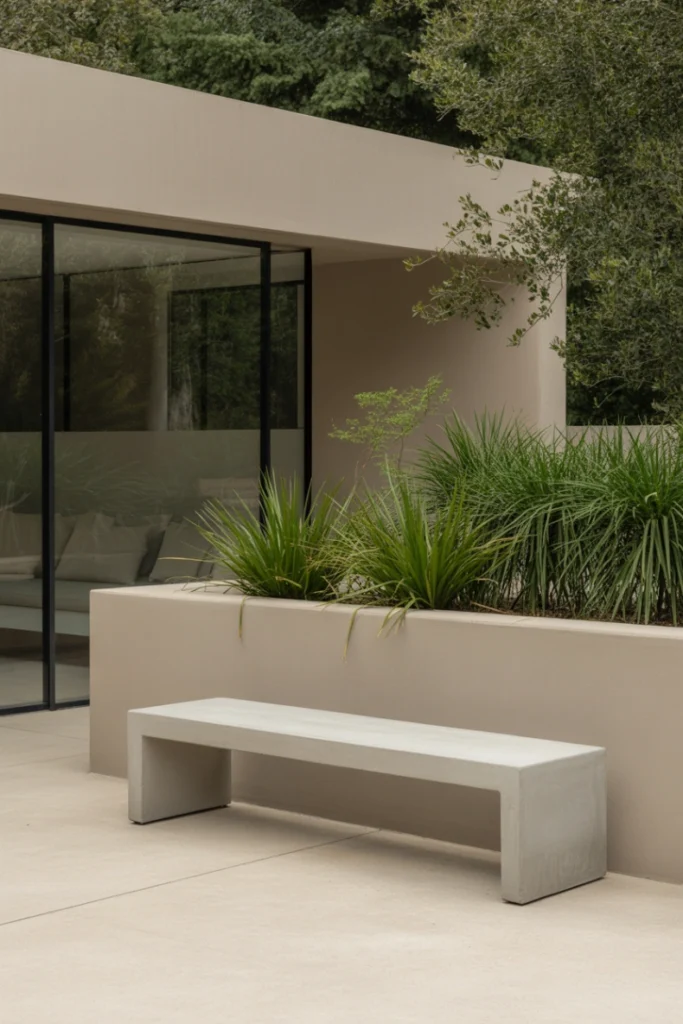
Concrete benches are gaining popularity as bold and durable outdoor bench ideas, and they suit modern landscapes, urban gardens, and commercial style courtyards. Concrete can be cast into almost any shape, from a simple rectangular slab to a sculptural curve, and it pairs well with wood, metal, and soft planting. A typical concrete bench is 14 to 18 inches deep, 16 to 18 inches high, and 48 to 72 inches long, with a weight of 200 to 400 pounds depending on size. Colors range from natural light gray to charcoal, and pigments can add warm tan or terracotta tones.
The key to making concrete feel welcoming is contrast. Place a concrete bench against soft ornamental grasses, a timber deck, or a warm wood fence, so the hard surface is balanced by texture and warmth. A thin wood slat seat on top of a concrete base is a popular hybrid that keeps the modern look while feeling warmer to sit on. Avoid placing a bare concrete bench in full sun without shade, since the surface absorbs heat and can become uncomfortable on hot afternoons.
Maintenance is minimal. Seal the surface once a year with a penetrating concrete sealer to prevent stains and water absorption, and clean it with mild soap and water. Do not use a pressure washer on a high setting, since it can wear away the surface over time. Concrete benches are heavy and hard to move, so decide the final position before delivery and prepare a level gravel or paver base. Once set, a concrete bench needs almost nothing and lasts for decades.
10. Bench with Planters Integrated
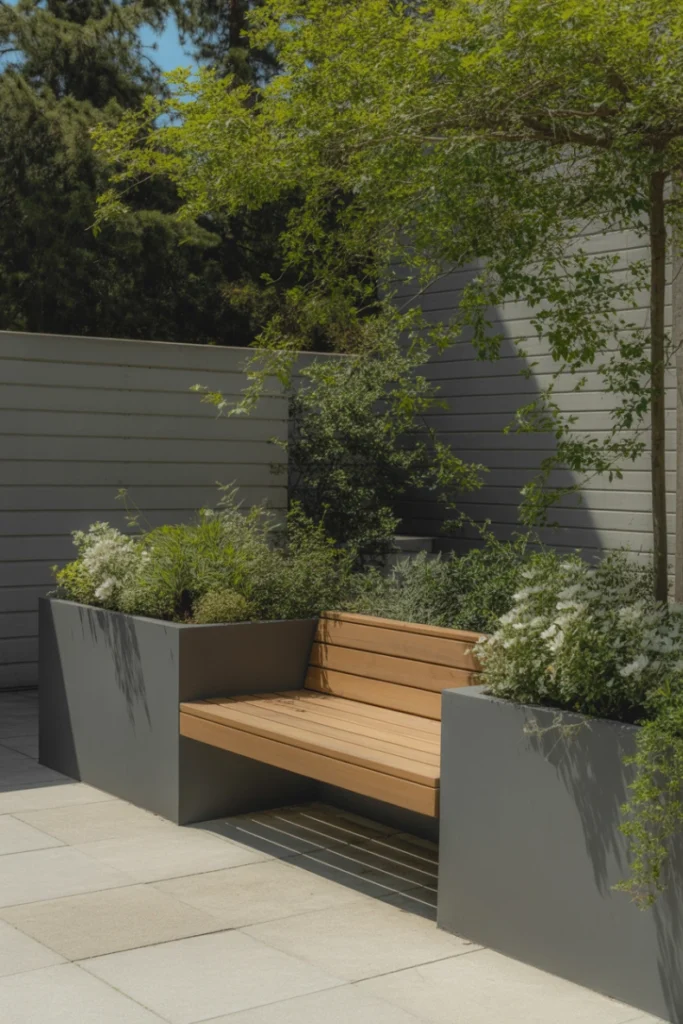
Combining seating with greenery, benches with built in planters are innovative outdoor bench ideas that work hard in small spaces. These designs place a planter box on one or both ends of the bench, or along the back, creating a natural frame that blends furniture with landscaping. A typical model is 60 to 72 inches long overall, with planters 12 to 16 inches wide and 12 to 18 inches deep, which is enough soil for flowers, herbs, or small shrubs. Wood, metal, and composite versions are all available.
This style is ideal for small patios, balconies, and entryways where a separate planter would eat up floor space. Plant the boxes with trailing flowers such as petunias or sweet alyssum for softness, herbs such as rosemary and basil for scent and kitchen use, or compact evergreens for year round structure. Keep taller plants at the ends and lower ones near the seat, so the greenery frames the bench without crowding the sitter.
Good drainage keeps both the plants and the bench healthy. Line the planter with landscape fabric, add a layer of gravel at the bottom, and make sure there is a drainage hole so water does not sit against the wood or metal. Water the planters separately from the seat area, and wipe the bench down after watering to prevent stains. A planter bench defines a space beautifully, and it gives even a tiny patio the feel of a real garden.
11. Wicker or Rattan Outdoor Bench

Wicker and rattan benches bring a relaxed, resort style vibe to outdoor spaces, and they are especially popular for patios, poolside areas, and covered porches. Their woven texture adds visual warmth and pairs beautifully with cushions and throw pillows. Modern outdoor wicker is usually made from synthetic resin woven over an aluminum frame, which resists rain, sun, and mildew far better than natural rattan. A standard bench is 48 to 60 inches long, with a seat height of 17 to 18 inches. If you like this laid back look, our outdoor loveseat ideas show how to pair a wicker bench with matching seating for a complete set.
Color choices are simple with wicker. Natural honey and light gray suit coastal and boho spaces, while dark brown and charcoal feel more modern and hide dirt better. Cushions make the biggest difference to comfort, so choose 3 to 4 inch thick outdoor foam with removable, washable covers in a solid color or a simple stripe. Two seat cushions and two lumbar pillows are usually enough for a 48 inch bench, and the pillows can be swapped seasonally for a fresh look.
Wicker is lightweight and easy to move, which makes it perfect for rearranging a patio through the seasons. The trade off is that it needs shelter from the worst weather. Keep it under a roof or cover it during heavy storms, and hose it down a few times a season to remove dust from the weave. Avoid dragging it across rough concrete, which can snag the fibers. With a cover and basic care, a good resin wicker bench lasts 5 to 10 years outdoors.
12. DIY Pallet Outdoor Bench
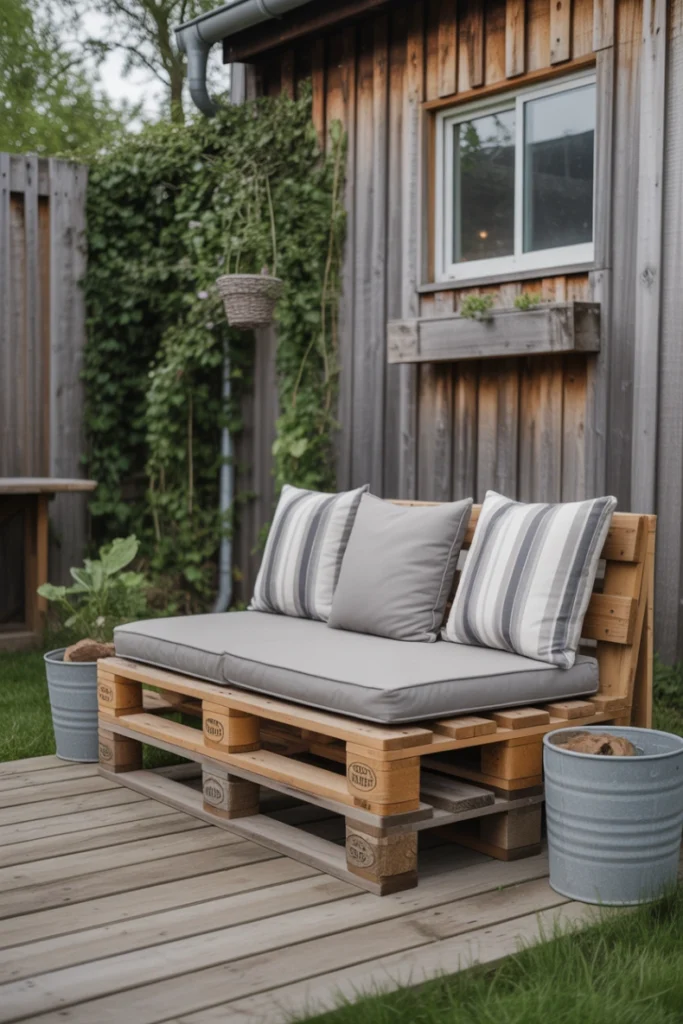
DIY pallet benches are budget friendly and creative outdoor bench ideas that allow for real personalization. Made from reclaimed wooden pallets, they can be customized in size, color, and style, and the whole project often costs less than a store bought bench. A basic pallet bench uses two to three standard pallets, each 40 by 48 inches, stacked to reach a seat height of 16 to 18 inches. Sanding, sealing, and adding a cushion turn rough pallets into a comfortable seat in a single weekend.
Start by choosing safe pallets. Look for the HT stamp, which means heat treated, and avoid pallets marked MB, which were chemically treated, or any pallet with spills, stains, or a strong smell. Sand every surface with 80 grit paper followed by 120 grit, paying special attention to the top edges where hands and legs rest. Cut a piece of plywood for a smooth seat base, then paint or stain the wood in a color that matches your outdoor space. White, sage green, and charcoal are popular choices that hide dirt well.
Finish the bench with casters or short legs so air can circulate underneath and the wood stays dry. A 4 inch outdoor foam cushion cut to size, covered in a washable fabric, makes the seat comfortable for long sits. Add a backrest from a second pallet stood upright, or keep it backless for a clean, low profile look. A pallet bench is a great first woodworking project, and because the materials are nearly free, you can experiment with paint, cushions, and layout until the result feels like yours.
Final Thoughts
Choosing the right seating can completely transform your outdoor area, and these outdoor bench ideas offer inspiration for every style and space. From classic wooden designs to modern concrete structures and multifunctional storage benches, the right choice depends on your lifestyle, your space, and how much maintenance you are willing to do. A wooden bench suits a traditional garden, a concrete bench suits a modern patio, and a storage bench suits a small space that needs to stay tidy.
Before you decide, measure your space, test the seat height if you can, and think about how the bench will be used most days. A bench for morning coffee needs comfort and a view, a bench by the pool needs weather resistance, and a bench around a fire pit needs room for a group. Get those basics right and the bench becomes more than furniture. It becomes the place where people gather, rest, and enjoy the outdoors, season after season.
Frequently Asked Questions
What is the best material for an outdoor bench?
Teak and cedar are the best wood choices because they resist moisture and insects naturally. Powder coated aluminum and resin wicker are excellent low maintenance options, while concrete and stone last the longest with almost no care. Choose based on your climate and how much maintenance you are willing to do.
How high should an outdoor bench be?
A comfortable outdoor bench seat sits 17 to 19 inches above the ground, with a seat depth of 15 to 18 inches. This matches the height of a standard dining chair, so most adults can sit down and stand up easily. A length of 48 to 60 inches seats two adults comfortably.
How do I protect a wooden outdoor bench from rain?
Apply a penetrating oil or outdoor sealer once a year, keep the legs off damp soil with stone pavers, and cover the bench or store cushions indoors during long wet spells. Teak oil preserves the golden color, while a clear sealer protects the wood without changing its look.
Can I leave an outdoor bench outside all winter?
Stone, concrete, and teak benches can stay outside all winter with no damage. Resin wicker and painted wood do better under a cover or in a shed, and cushions should always be stored indoors. Clear snow off the seat so meltwater does not soak into joints and hardware.
How much space do I need around an outdoor bench?
Leave at least 24 inches of clear space in front of the bench so people can sit and stand comfortably, and 36 inches if the bench faces a table. Around a fire pit, leave 24 to 36 inches between the bench and the fire so the heat feels warm without being uncomfortable.
More Ideas You Will Love
 17 White and Red Christmas Light Ideas to Transform Your Outdoor Decor
 11 Container Garden Secrets for Lush, Healthy Summer Plants
 15 Dark Exterior House Ideas: Bold & Stylish Designs
 20 Christmas Fireplace Decor Ideas for 2025 Cozy Homes
 16 Outdoor Entryway Ideas to Transform Your Home’s First Impression
 15 Inspiring Sunroom Ideas to Transform Your Space in Style