
14 Patio Chair Ideas: Cozy & Stylish Outdoor Seating Inspiration


A patio is only as inviting as the chairs on it. The right patio chair turns a plain slab of concrete or a stretch of deck into a place where morning coffee lasts longer, evening conversations stretch past sunset, and guests actually want to sit down. The wrong chair does the opposite. It wobbles, traps heat, fades in the sun, or looks fine in the store and feels wrong at home. Choosing well means thinking about how you will really use the space, not just how it photographs.
This guide covers 14 patio chair ideas that balance comfort, durability, and style. Each one includes the materials that hold up outdoors, realistic sizes, color and cushion guidance, and practical placement tips, so you can match the chair to your patio instead of forcing your patio to fit the chair. Whether your space is a wide backyard deck, a narrow balcony, or a shaded garden corner, there is an option here that fits.
Before you buy, measure your patio and leave at least 30 inches of walkway behind and beside each chair, so people can pull out and move around without bumping into planters or railings. Pair your seating with the season too. A couple of well placed chairs can carry a whole look, as these fall porch decor ideas show, and the same chairs will serve you just as well in summer. Start with the style that suits how you live outdoors, then build around it.
1. Classic Wooden Patio Chairs
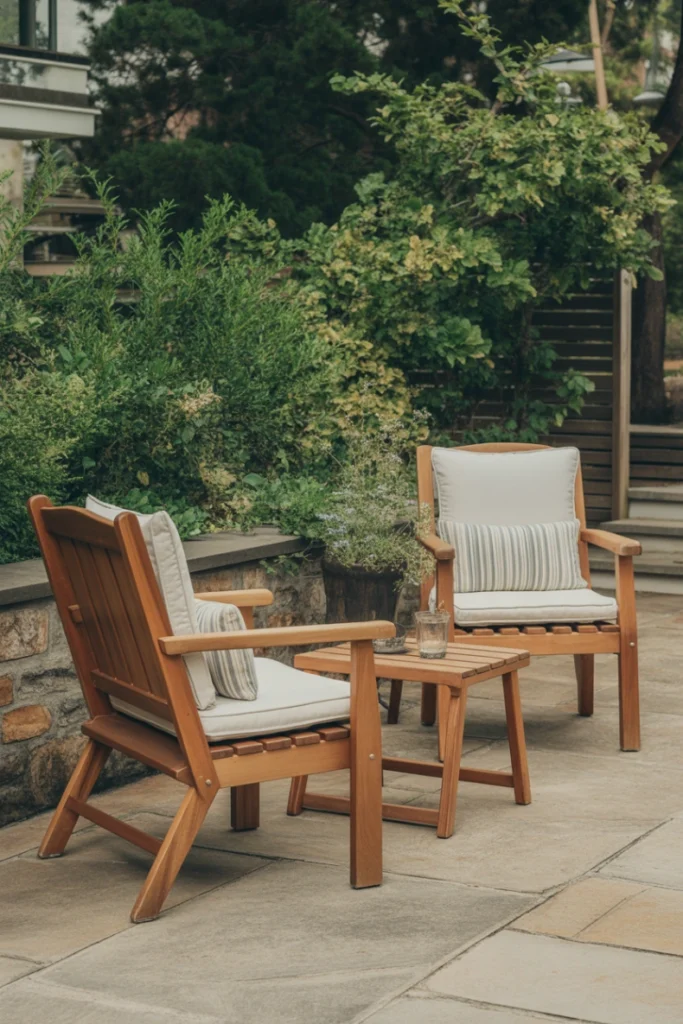
Wooden patio chairs remain a timeless favorite because natural wood suits almost every outdoor setting. Teak is the premium choice, with natural oils that resist moisture and insects, while cedar and eucalyptus offer similar warmth at a lower price. A standard wooden patio chair measures about 22 to 24 inches wide and 34 to 38 inches tall, which fits comfortably around a 36 to 42 inch round or rectangular table. The warm grain pairs naturally with stone patios, wood decking, and garden planting, and it ages into a soft silver gray if left untreated.
To keep wooden chairs looking good, apply a penetrating outdoor oil or a clear sealant once a year, ideally in spring before the heavy use season. Teak oil preserves the honey color, while a marine grade sealant adds stronger protection against rain and sun. Clean the chairs with mild soap and water, and avoid pressure washers, which can raise the grain and splinter the surface. If a chair starts to feel rough, a light sanding with 120 grit sandpaper followed by a fresh coat of oil restores the smooth finish in under an hour.
Style wooden chairs with cushions in neutral or earth tones, such as sand, sage, or charcoal, and choose outdoor fabric with a water resistant finish so a summer shower does not soak the seat. Seat cushions 2 to 3 inches thick make a wooden chair comfortable for long dinners, and a small lumbar pillow adds support without hiding the wood. Mix wooden chairs with a metal or stone table for contrast, or keep the set matched for a calm, traditional look that never goes out of style.
2. Wicker Patio Chairs for Cozy Comfort

Wicker patio chairs create a relaxed, resort style atmosphere that suits coastal, bohemian, and transitional patios. Natural rattan looks beautiful under a covered porch but needs protection from rain, so most homeowners choose synthetic resin wicker, which is woven over a rust proof aluminum frame and resists fading, moisture, and cracking. A typical wicker armchair is 28 to 32 inches wide with a seat height of 17 to 18 inches, deep enough for a thick cushion and a relaxed sitting posture.
Comfort is the real strength of wicker. The woven seat has a slight give, and with a 3 to 4 inch seat cushion it supports long conversations and lazy afternoons. Choose cushions in solution dyed acrylic fabric, which holds its color in strong sun and dries quickly after rain. Soft neutrals such as cream, oatmeal, and warm gray keep the look calm, while a patterned outdoor fabric in stripes or botanical prints adds personality. Keep two sets of cushion covers if you can, so one set can be washed while the other stays in use.
Place wicker chairs in pairs facing each other or angled toward a fire pit or garden view, with a small side table between them for drinks and books. Leave the chairs a few inches away from walls so air can circulate and the weave stays dry. A quick rinse with a garden hose and a soft brush removes dust and pollen, and a yearly check of the weave for loose strands prevents small damage from spreading. With basic care, a quality resin wicker chair lasts ten years or more outdoors.
3. Modern Metal Patio Chairs
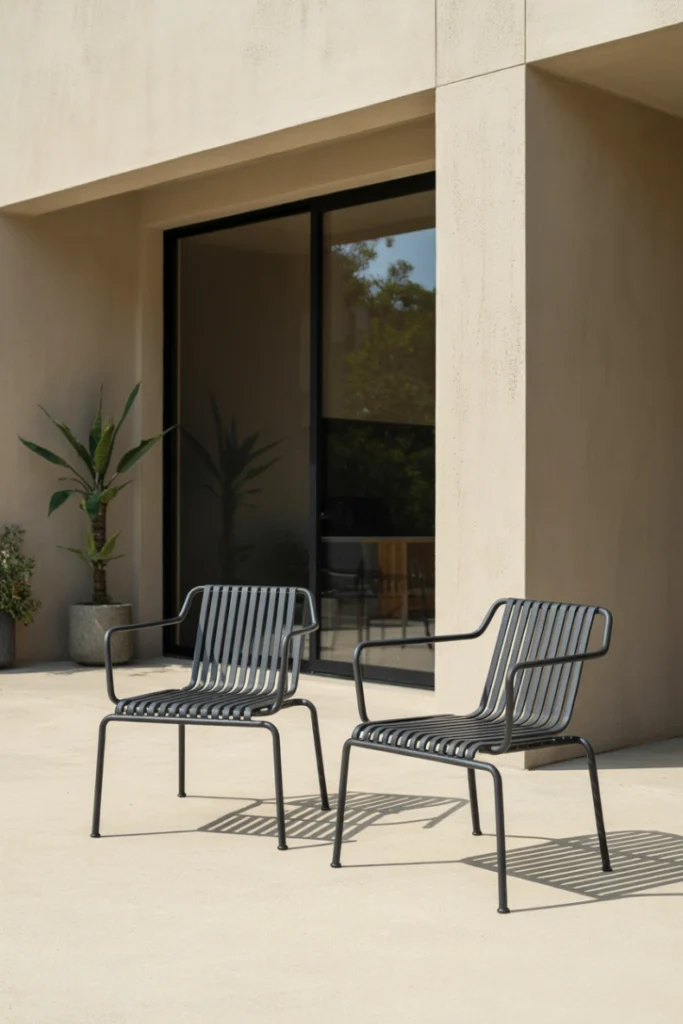
Metal patio chairs bring a sleek, contemporary feel to outdoor spaces. Aluminum is the best all round choice because it is light, strong, and never rusts, while powder coated steel is heavier and sturdier in windy spots but needs its coating kept intact. Look for clean lines, slim frames, and a seat width of 20 to 24 inches for dining chairs or 26 to 30 inches for lounge style metal chairs. Matte black, charcoal, and white are the most versatile finishes, while bold colors such as mustard, teal, or terracotta turn the chair into a focal point.
Comfort in a metal chair depends on the seat design. Chairs with a gently curved seat pan and a slight recline in the backrest feel far better than flat slabs of metal, and a thin outdoor cushion solves most remaining comfort issues. Choose cushions with ties or Velcro straps so they do not slide off, and pick a fabric that dries fast. In hot climates, avoid dark metal chairs in full sun, since the frame can become too hot to touch, or drape a light throw over the seat during the hottest hours.
Pair metal chairs with a concrete, glass, or wood table to keep the modern look balanced. A glass top keeps the arrangement visually light, while a wood top warms up the cool metal. Metal chairs stack or fold easily in many designs, which makes them practical for patios that double as entertaining space. Check the feet for protective glides, which prevent scratching on decking and tile, and tighten bolts once a season, since outdoor temperature changes can loosen hardware over time.
4. Adirondack Chairs for Relaxed Seating
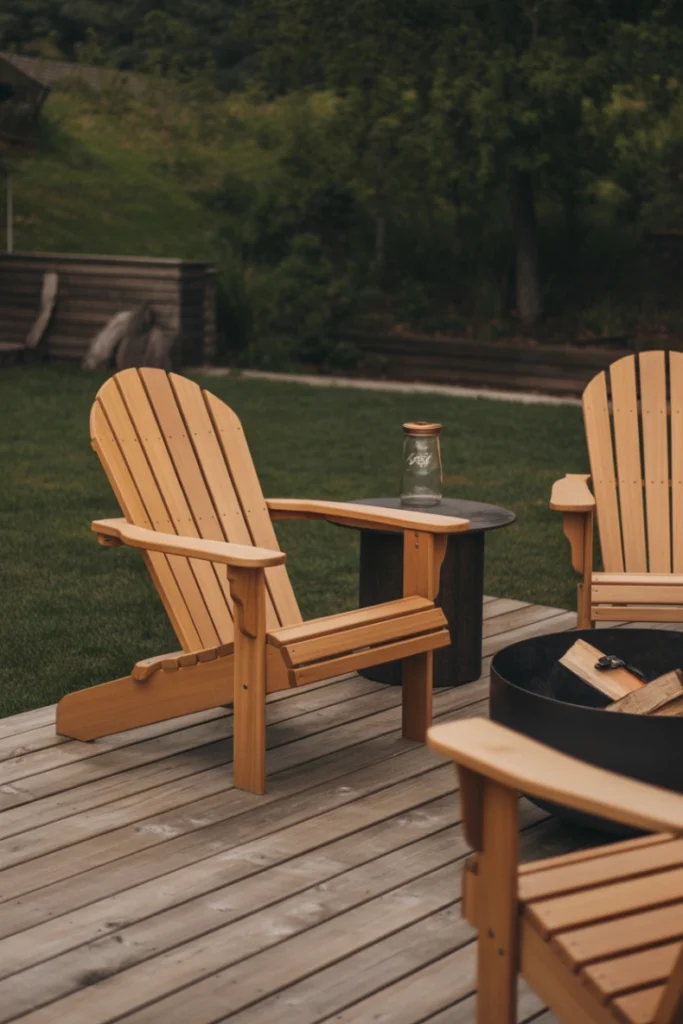
Adirondack chairs are the classic choice for slow, relaxed outdoor sitting. Their wide armrests, slanted seat, and high back are designed for lounging, with room on the arms for a book or a cold drink. Traditional wood versions in cedar or teak look beautiful but need yearly sealing, while recycled plastic lumber versions, often called polywood, resist weather, never need paint, and come in more than twenty colors. A standard Adirondack chair is about 30 inches wide and 36 to 40 inches tall, with a seat that sits low at 14 to 16 inches from the ground.
These chairs work best where relaxation is the goal, such as around a fire pit, facing a garden view, or at the edge of a pool deck. Arrange two or four in a loose circle around the fire pit, leaving about 24 inches between chairs so people can get in and out easily. Because the seat is low and reclined, Adirondack chairs are not ideal for dining, but they are perfect for reading, stargazing, and long evening talks. Add a small side table or a drink holder attachment for convenience, since the wide arms hold only so much.
For seasonal styling, Adirondack chairs are easy to dress up. A plaid throw in autumn, a striped cushion in summer, or a simple wreath hung on the backrest changes the mood without buying new furniture. They also anchor a festive yard beautifully, and the same chairs that hold summer lemonade can frame these fall outdoor decorations when the leaves turn. Choose a color that appears elsewhere on your patio, such as the door, planters, or cushions, so the chairs feel planned rather than random.
5. Cushioned Lounge Patio Chairs
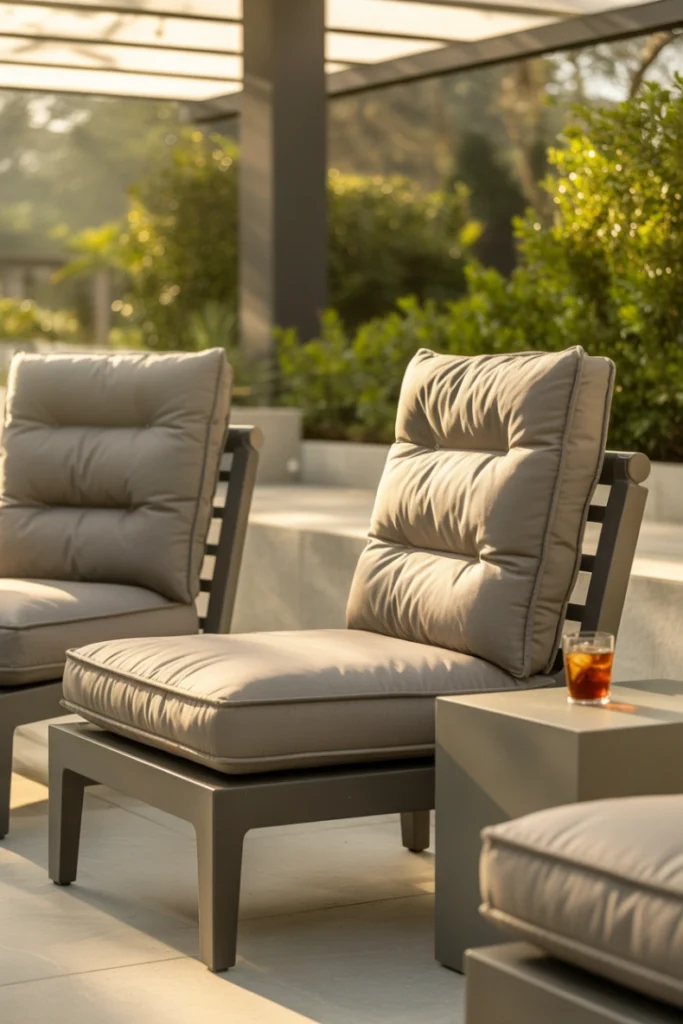
Cushioned lounge patio chairs turn a patio into a true outdoor living room. Deep seats of 22 to 24 inches, adjustable backs, and thick padding rival indoor furniture for comfort, making these chairs ideal for reading, sunbathing, or an afternoon nap. Look for frames in powder coated aluminum or teak, with cushions at least 4 inches thick in the seat and 3 inches in the back. A seat height of 16 to 18 inches and a width of 28 to 34 inches gives most adults room to stretch out without feeling cramped.
Fabric choice decides how long lounge chairs stay comfortable and attractive. Solution dyed acrylic and outdoor olefin fabrics resist fading, mildew, and stains, and they dry quickly after rain. Neutral tones such as ivory, stone, and driftwood create a calm, resort like feel, while bold colors such as navy, coral, or forest green add personality and hide minor marks better. Removable, washable cushion covers are worth the extra cost, especially in homes with children or pets, and a storage box or deck chest protects cushions during storms and winter.
Complete the lounge setup with a side table 20 to 22 inches high within arm’s reach, an outdoor rug large enough for the front legs of the chairs to rest on, and a shade source such as an umbrella or a pergola. The rug defines the seating zone and softens hard patio surfaces under bare feet. Place lounge chairs where they catch morning sun but gain afternoon shade, or add a cantilever umbrella that can be angled as the sun moves. With the right placement, a cushioned lounge chair becomes the most used seat in the house.
6. Folding Patio Chairs for Flexible Spaces
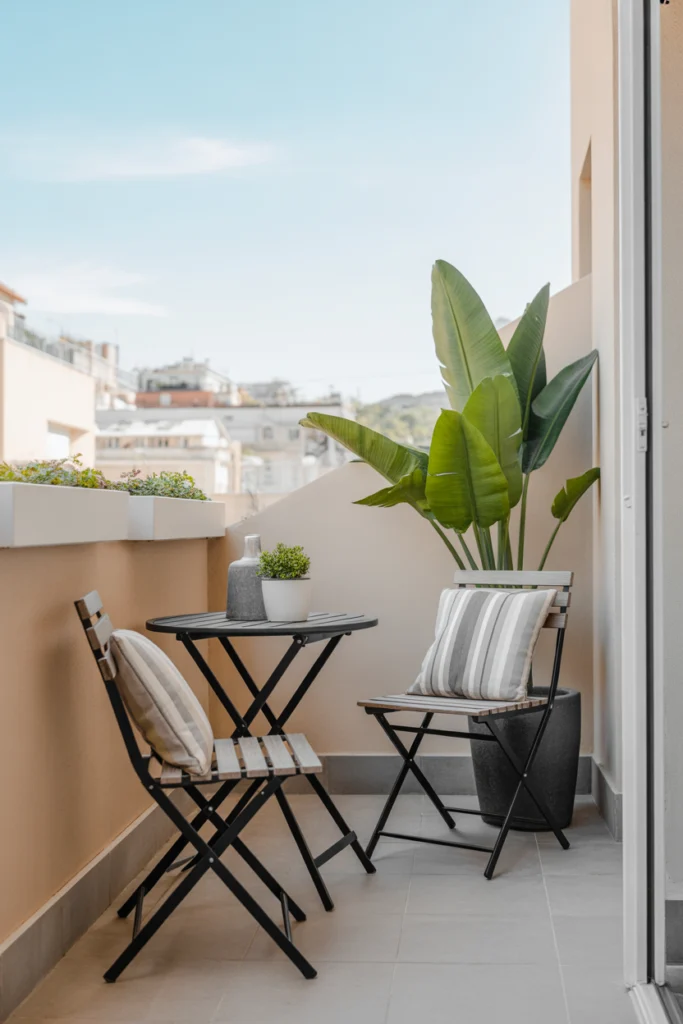
Folding patio chairs are the practical answer for small patios, balconies, and multi purpose outdoor areas. They fold flat for storage in a shed, garage, or narrow gap beside the house, and they unfold in seconds when guests arrive. Modern folding chairs come in wood, metal, and sling fabric styles, with many designs now offering contoured seats, armrests, and breathable mesh that rival fixed chairs for comfort. A typical folding chair weighs 8 to 15 pounds and supports 250 to 300 pounds, so check the weight rating before buying for everyday use.
Choose the material to match your climate and storage situation. Powder coated steel folding chairs are sturdy and affordable but heavy, while aluminum versions are lighter and rust proof. Wood folding chairs in acacia or teak look the most refined but need occasional oiling, and sling fabric chairs dry fastest after rain and suit poolside use. Whatever the material, test the folding mechanism in the store. It should open and close smoothly with one hand and lock firmly, without pinching fingers or wobbling once open.
Style folding chairs as part of the everyday setup, not as a backup that looks temporary. Keep two or four out permanently around a small bistro or dining table, and store the rest for gatherings. Match the chair color to your table or cushions so the set reads as intentional. For balconies, choose folding chairs with a narrow profile of 18 to 20 inches wide, so they fit without blocking the walkway. A folding chair that looks good and stores easily is one of the smartest buys for a small outdoor space.
7. Hanging Patio Chairs for a Unique Look
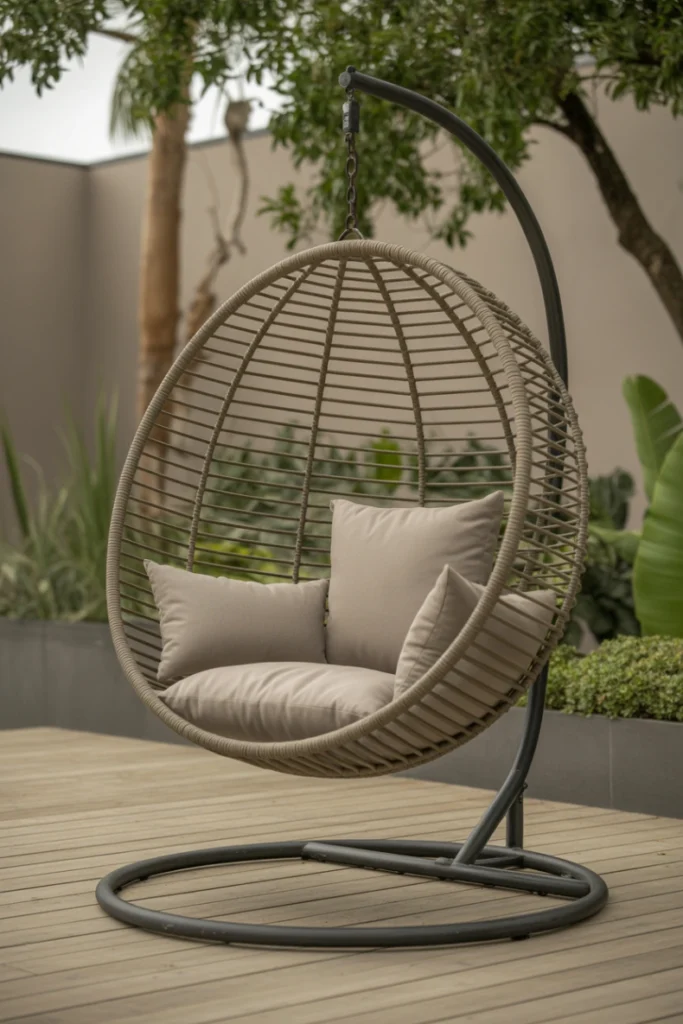
Hanging patio chairs add movement and a playful, resort inspired focal point to any outdoor space. Egg chairs, woven hammock chairs, and macrame swings hang from a freestanding steel frame or a ceiling mount, gently swaying as you sit. A typical hanging chair is 36 to 40 inches wide and needs about 3 feet of clearance on all sides, plus a ceiling or beam rated for at least 300 to 400 pounds if you mount it overhead. Freestanding frames solve the mounting problem and let you move the chair around the patio.
Comfort comes from the shape and the cushion. Egg chairs cradle the body with a deep, curved seat, while hammock style chairs let you sit cross legged or stretch your legs out. A seat cushion 3 to 4 inches thick and a small throw pillow at the lower back make long sitting easy. Choose natural tones such as cream, rattan, or sage for a calming effect, or a bold color such as burnt orange or deep teal to make the chair the star of the patio. Weather resistant cushions are essential, since hanging chairs catch rain from every direction.
Place hanging chairs in a covered patio, under a pergola, or in a sheltered garden corner where wind will not slam them into walls or posts. Check the hanging hardware every spring, and replace ropes or chains at the first sign of fraying or rust. A small outdoor rug underneath defines the spot and protects the patio from the swinging frame. For families with children, a hanging chair quickly becomes the favorite seat in the house, so buy a sturdy frame and set a clear weight limit from day one.
8. Stackable Patio Chairs for Easy Storage
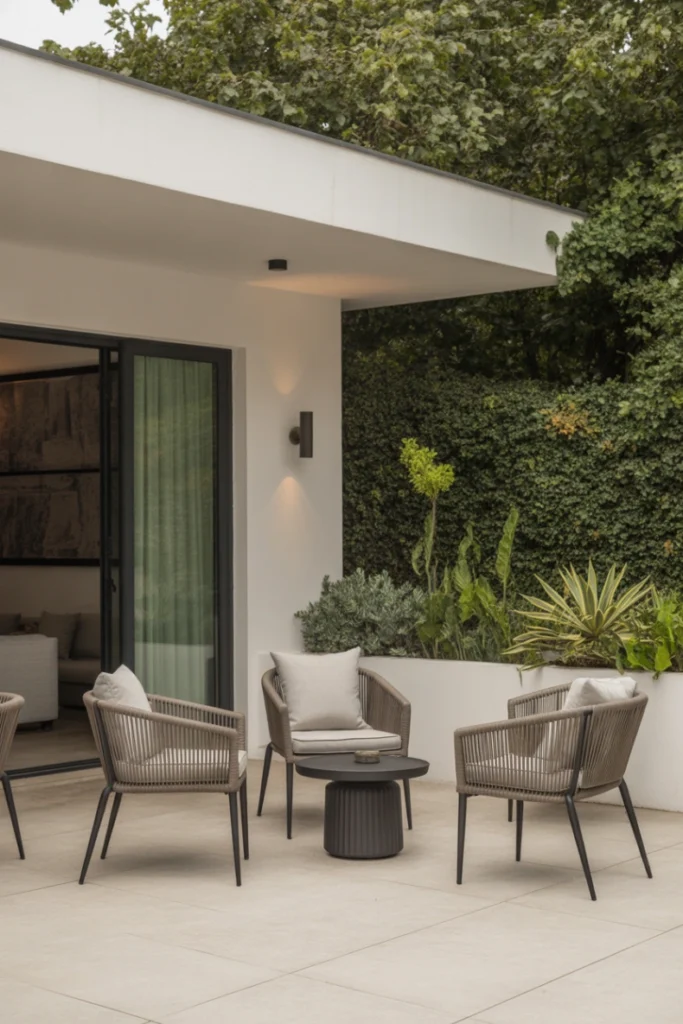
Stackable patio chairs solve the storage problem for patios that host large gatherings. Four to six chairs stack into a single neat pile about 40 inches tall, freeing floor space when the party ends. Materials range from molded resin and plastic to aluminum and steel, with resin being the lightest and easiest to carry, and metal offering the most durability. A standard stackable chair is 22 to 24 inches wide, with a seat height of 17 to 18 inches that suits dining tables 28 to 30 inches high.
Design has improved far beyond the plain plastic chairs of the past. Textured seats, curved backs, woven looks, and wood effect finishes now make stackable chairs look deliberate rather than temporary. Look for chairs with a slight flex in the backrest, which makes sitting more comfortable, and armrests if you plan to use them for long meals. Stackable chairs with a hole or handle in the backrest are easier to carry, and models that stack with a small gap between seats avoid scratching each other.
Keep a stack of four to six chairs near the dining table so extra guests never mean a scramble, and store the rest in a shed or under a cover during winter. Pair stackable chairs with a durable outdoor table in a matching or complementary color, and add seat cushions with ties for longer dinners. When buying, stack two chairs in the store to check that they nest smoothly and sit level. A set of stackable chairs that stores well and looks good is one of the most practical investments for an entertaining patio.
9. Rustic Farmhouse Patio Chairs
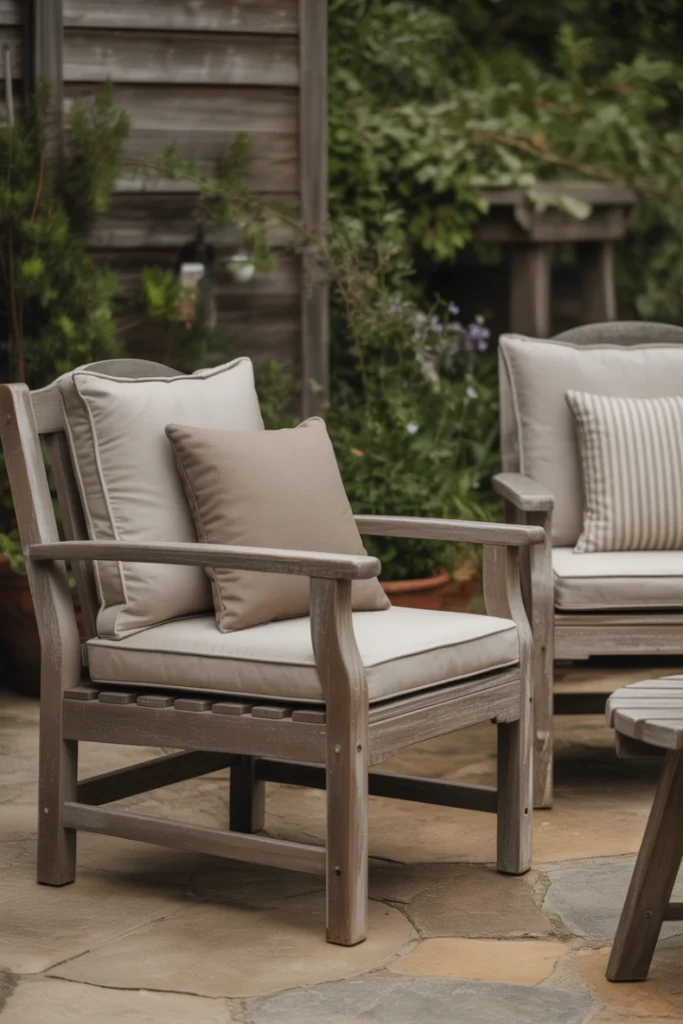
Rustic farmhouse patio chairs bring warmth, texture, and a lived in feel to outdoor spaces. Distressed wood, vintage metal finishes, and simple, sturdy shapes define the style, which pairs beautifully with stone, brick, and wood decking. Look for chairs with visible wood grain, a weathered finish, or a cross back design, and choose muted colors such as cream, sage, dusty blue, or natural wood. A farmhouse chair is usually 22 to 26 inches wide with a straight back that suits a dining table, and it works just as well pulled up to a fire pit.
Comfort comes from simple additions rather than complex design. A seat cushion in gingham, ticking stripe, or solid linen softens the wood, and a woven throw draped over the back adds texture and warmth for cool evenings. Avoid cushions that are too thick or too formal, since they fight the relaxed farmhouse look. For metal farmhouse chairs, check that the finish is powder coated or galvanized, so the vintage look does not turn into real rust after one wet season.
Style farmhouse chairs with natural materials around them, such as a wood dining table, galvanized planters, linen table runners, and mason jar lanterns. They work well in gardens, on porches, and in patios designed for relaxed family gatherings. Group four to six around a rectangular farmhouse table for outdoor dinners, or place two by the garden gate as a welcoming touch. The style is forgiving, which makes it easy to mix in flea market finds and pieces you already own without the set looking mismatched.
10. Plastic Patio Chairs with Modern Appeal
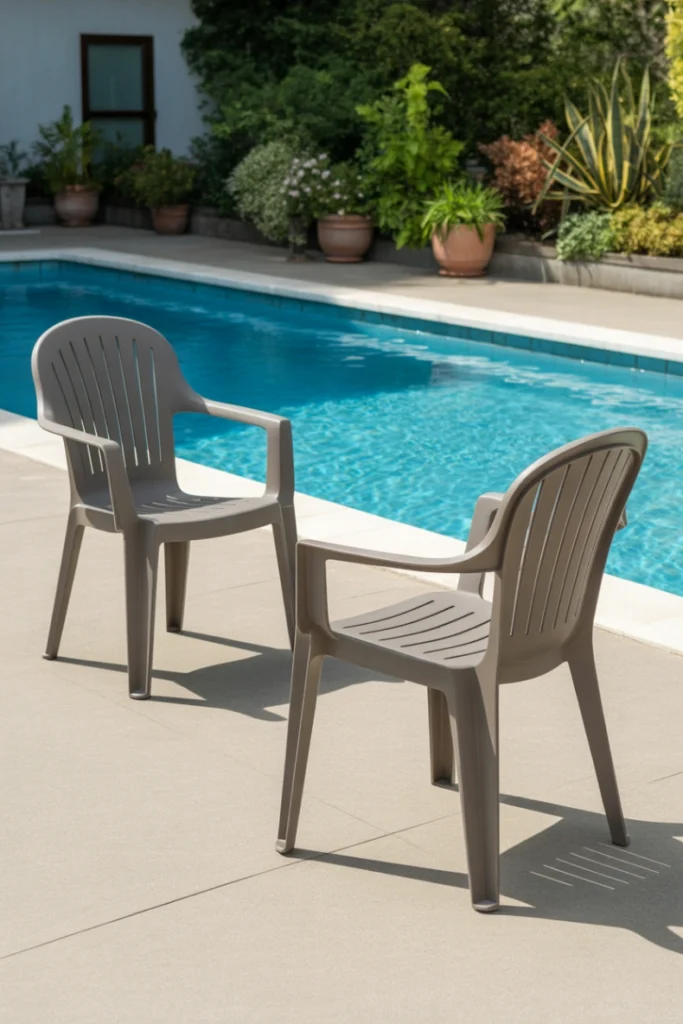
Plastic patio chairs have changed dramatically in recent years. Modern versions use high quality, UV resistant polypropylene or resin with sleek shapes, ergonomic curves, and bold colors that look far from the flimsy white chairs of the past. A good plastic chair weighs 10 to 14 pounds, supports 250 to 300 pounds, and costs far less than wood or metal equivalents. Look for a seat width of 20 to 23 inches, a gently curved back, and a matte or lightly textured finish that resists scratches and hides dust.
These chairs are ideal for casual outdoor spaces, pool areas, and family friendly patios because they are easy to clean and move. A quick wipe with soap and water removes sunscreen, food, and dirt, and they dry in minutes. Choose bright colors such as coral, aqua, or lime for a playful poolside look, or white, charcoal, and sand for a cleaner, more modern feel. Avoid the cheapest thin walled chairs, which can crack in cold weather or fade within a single summer, and check that the chair sits level on a flat surface before buying a set.
Style plastic chairs with outdoor cushions in a contrasting color to lift them visually, and pair them with a simple table in a matching material for a cohesive look. They stack easily, so keep a few extra on hand for gatherings. For a more polished result, mix plastic dining chairs with a wood or stone table, which adds warmth and stops the set from looking too plain. Used thoughtfully, modern plastic chairs offer durability, comfort, and contemporary style at a price that leaves room in the budget for cushions, lighting, and plants.
11. Reclining Patio Chairs for Ultimate Relaxation

Reclining patio chairs are built for long, lazy hours outdoors. Adjustable backs and footrests let you shift from upright reading to a near flat sunbathing position with a simple lever or a smooth manual adjustment. Most recliners offer three to five locking positions, and the best models include a padded headrest and an extendable footrest. A typical reclining chair is 26 to 30 inches wide and 55 to 65 inches long when fully extended, so measure your patio before buying more than two.
Materials range from powder coated aluminum frames with textilene mesh, which dries quickly and stays cool in sun, to wood and resin frames with thick outdoor cushions. Mesh recliners are the lowest maintenance option and suit poolside use, while cushioned recliners feel more luxurious and suit a covered patio or deck. Look for a weight capacity of at least 250 pounds, smooth reclining action that locks firmly, and a frame that folds flat for winter storage. Cushions should be removable and washable, since recliners collect sunscreen and sweat faster than dining chairs.
Place reclining chairs where they catch the sun you want and the shade you need. A side table 20 to 22 inches high holds drinks and books, and a large umbrella or shade sail lets you recline comfortably through the afternoon. Keep at least 24 inches of clear space behind each chair so the back can recline fully without hitting a wall or railing. Two recliners angled toward a garden view, with a shared side table between them, create a simple resort style corner that gets used every sunny day.
12. Low-Seating Patio Chairs for Modern Style
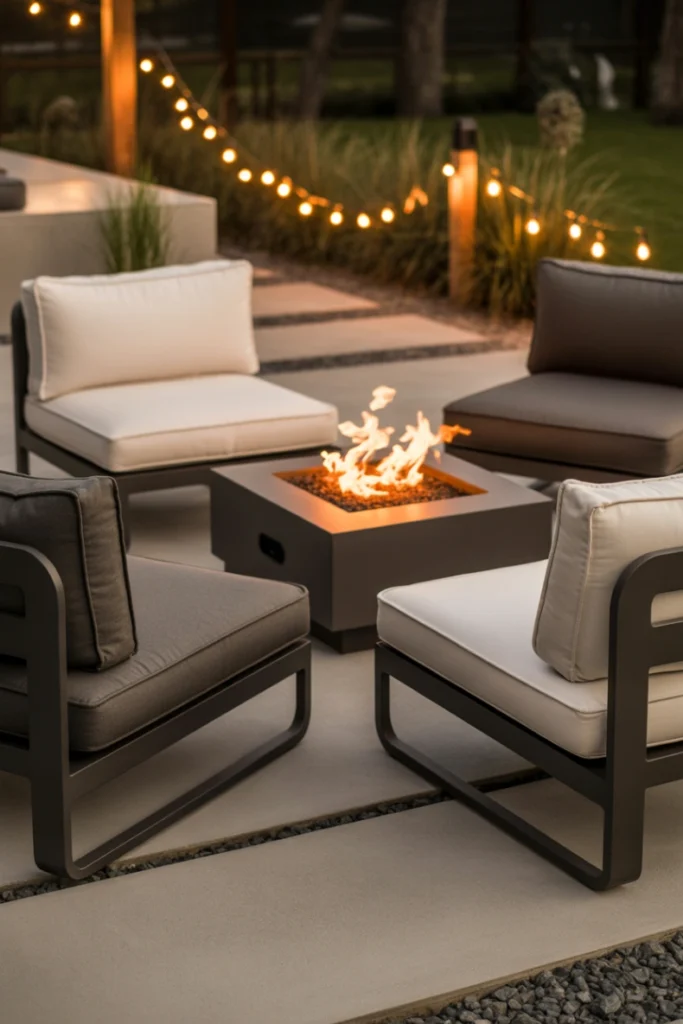
Low seating patio chairs sit closer to the ground than standard chairs, with seat heights of 12 to 15 inches instead of the usual 17 to 18. The lower profile creates a relaxed, contemporary vibe that suits modern and bohemian patios, fire pit circles, and lounge corners. Wide seats of 26 to 32 inches and supportive low backs encourage casual lounging, and the chairs pair naturally with low coffee tables 12 to 16 inches high or directly with a fire pit at ground level.
Materials for low chairs include woven rattan, molded plastic, powder coated metal, and wood, often with thick floor style cushions in outdoor fabric. Because the seat is low, cushion thickness matters more than usual. A seat cushion of 4 to 5 inches keeps the chair comfortable and makes getting up easier, especially for older guests. Choose textured cushions and layered fabrics in warm neutrals, terracotta, or olive to add warmth, since low furniture can look stark without soft layers.
Arrange low chairs in a loose circle or a U shape around a fire pit or low table, leaving about 18 inches between seats for easy movement. They work especially well on patios with a view, since the low back does not block the sightline. Keep in mind that low chairs are harder to get out of, so they suit relaxed lounging better than dining, and they are not the best choice for guests with knee or back problems. Used in the right spot, low seating creates an intimate, stylish corner that feels more like a lounge than a patio.
13. Bistro Patio Chairs for Small Spaces

Bistro patio chairs are made for small spaces. Compact, light, and charming, they pair with a small round table 24 to 30 inches wide to create a café style setup for morning coffee or a casual outdoor meal. A typical bistro chair is 16 to 19 inches wide with a seat height of 17 to 18 inches, small enough for a narrow balcony but comfortable enough for an hour of sitting. Classic French style bistro chairs in metal with a woven or slatted seat are the most popular, while wood and rattan versions suit softer, more traditional patios.
The lightweight design is the main advantage. Most bistro chairs weigh 8 to 12 pounds, so they are easy to move, rearrange, and store, and many fold flat or stack for winter. Choose foldable versions if your balcony is very small, since you can hang them on a wall hook when not in use. Check that the chair feels stable when you lean back, and look for rubber feet that protect balcony tiles and prevent slipping. Powder coated metal resists rain and sun, while wood bistro chairs need a yearly coat of oil to stay in good shape.
Style a bistro set with a small potted plant on the table, two cushions in a cheerful pattern, and a string of lights overhead for evening use. The same compact set works through the year, and it is easy to dress for the holidays, when the table can hold a lantern or a small arrangement beside your outdoor Christmas tree light ideas display. On a small balcony, keep the table against the railing and the chairs tucked in when not in use, so the walkway stays clear. A well chosen bistro set can turn even the smallest outdoor space into a favorite corner of the home.
14. Mixed-Material Patio Chairs for Visual Interest
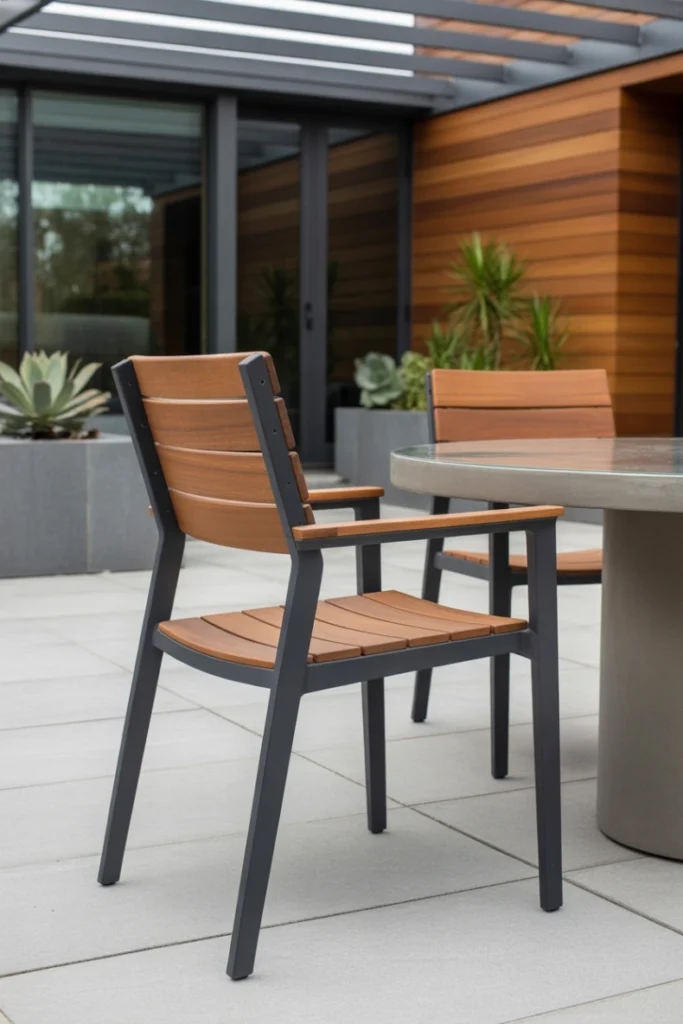
Mixed material patio chairs combine wood, metal, fabric, and sometimes rope or rattan in a single design, creating seating that stands out as a statement piece. A teak seat with a black steel frame, a woven rope back on an aluminum base, or a metal chair with a wood armrest all add depth and personality that a single material cannot match. These chairs suit eclectic and contemporary patios best, where the mix feels intentional rather than accidental. Look for a seat width of 22 to 26 inches and a design where each material has a clear job, such as wood for warmth, metal for strength, and fabric for comfort.
The key to mixing materials is balance. Pick one dominant material that appears in at least two chairs or in the table as well, and let the second material act as an accent. For example, if your table is teak, choose chairs with teak seats and metal frames, so the wood ties the set together. Keep the color palette tight, with two or three colors at most, and repeat one color in the cushions to unify the look. Too many materials and colors at once will make the patio feel busy instead of curated.
Mixed material chairs also make seasonal decorating easy, since they already carry visual interest on their own. A simple cushion change or a throw in a seasonal color is enough to refresh the look, whether you are styling for autumn gatherings or a playful outdoor Halloween decor setup. Check the joints where materials meet, since those are the weak points, and tighten bolts once a season. Clean each material as its maker recommends, oiling wood, wiping metal, and washing fabric separately, so the chair stays beautiful for years.
Final Thoughts
Choosing the right patio chairs is about matching the chair to the way you actually live outdoors. A family that eats outside every evening needs sturdy dining chairs, while a household that loves slow weekends needs lounge chairs, recliners, or Adirondacks. Measure your space first, choose materials that suit your climate, and test the seat height and depth before committing to a full set. A chair that fits your body and your patio will be used every day, while a beautiful chair that feels wrong will sit empty.
Start with two or four chairs in the style that fits your main activity, then add pieces as you learn how the space gets used. Keep the color palette simple, invest in washable outdoor cushions, and protect your chairs with covers or storage through winter. With thoughtful choices, these 14 patio chair ideas can turn any patio, deck, or balcony into an outdoor room that feels comfortable, stylish, and welcoming in every season.
Frequently Asked Questions
What is the best material for patio chairs?
Teak and powder coated aluminum are the best all round choices. Teak resists moisture and insects naturally and ages beautifully, while aluminum never rusts, stays light, and suits modern designs. Resin wicker is best for a cozy, resort style look, and high quality UV resistant plastic is the most affordable option for casual and poolside use. Choose the material that matches your climate, since wet climates punish untreated wood and steel, while hot climates punish dark metal.
How many patio chairs do I need?
Count the people who will use the patio on a normal day, then add two extra chairs for guests. A family of four needs four dining chairs plus two spares, while a couple on a small balcony needs only a bistro set for two. Keep stackable or folding chairs on hand for larger gatherings, so you do not have to buy a full set for the biggest party of the year. Leave at least 24 inches of space per person at a dining table for comfortable seating.
How do I protect patio chairs from rain and sun?
Use breathable outdoor furniture covers when chairs are not in use, and store cushions in a deck box or indoors during storms and winter. Apply sealant or oil to wood once a year, check powder coating for chips and touch them up promptly, and clean chairs with mild soap and water each spring. Solution dyed acrylic cushions resist fading and mildew, and they dry quickly after rain, which makes them the easiest fabric to maintain outdoors.
What size patio chair should I buy?
For dining, choose a chair 20 to 24 inches wide with a seat height of 17 to 19 inches to match a table 28 to 30 inches high. For lounging, choose a wider chair of 26 to 34 inches with a seat height of 16 to 18 inches and a seat depth of 22 to 24 inches. Measure your patio and leave at least 30 inches of walkway around the seating area, and test the chair in person when possible to check the seat depth and back support.
Can patio chairs stay outside all winter?
Teak, aluminum, and high quality resin chairs can stay outside in mild winters with covers on, but they last longer if stored in a shed or garage through freezing weather. Cushions should always come indoors for winter, since trapped moisture causes mildew even in outdoor fabrics. In regions with snow and ice, store all chairs under cover, clean them before storage, and check bolts and joints in spring before the first use of the season.
More Ideas You Will Love
 12 Apartment Balcony Mini Garden Ideas for Urban Spaces
 11 Outdoor Light Fixture Ideas: Stylish & Functional Illumination
 20 DIY Christmas Pathway Light Ideas for 2025 Magic Nights
 13 Summer Maintenance Tips for Outdoor Wood & Decking Introduction
 15 Best Flowers to Plant for Vibrant Summer Blooms
 12 White Exterior House Ideas for a Modern Minimalist Design