
16 Outdoor Entryway Ideas to Transform Your Home’s First Impression


Your home’s outdoor entryway is more than just a passage from outside to inside. It is the first visual and emotional impression visitors experience, and it quietly sets the tone for everything that follows. A thoughtfully designed entryway communicates warmth, style, and attention to detail before anyone even steps through the door. Whether you live in a suburban home, a townhouse, or a countryside retreat, the space outside your front door tells guests what kind of home they are about to enter.
Well executed outdoor entryway ideas combine curb appeal with everyday function. The best entryways look beautiful in photos, but they also work hard in real life. They keep guests dry while they wait, light the way safely after dark, give you a place to set down groceries, and stand up to rain, sun, and muddy shoes without looking tired. From architectural features and lighting to greenery and decorative accents, each element contributes to how welcoming and polished your home feels.
In this guide, we explore 16 outdoor entryway ideas that can dramatically enhance your home’s exterior, regardless of size, style, or budget. Each idea includes specific materials, measurements, colors, and step by step tips you can put to work right away. Some take a single weekend afternoon, others are bigger projects worth planning over a season, but every one of them earns its place by making your first impression stronger. If you are also refreshing the space just inside the door, our entrance hall decor ideas pick up right where this guide leaves off.
1. Classic Front Door Refresh

One of the most effective outdoor entryway ideas is refreshing the front door itself, and it is also one of the fastest. A new coat of paint instantly revitalizes the entire entrance and can redefine the personality of your home in a single afternoon. Rich, timeless colors such as navy blue, charcoal, forest green, or deep burgundy create visual contrast and elevate curb appeal, especially against white, cream, or light gray siding. Even lighter tones like soft gray or warm beige can modernize an outdated exterior when paired with the right accents. Before you paint, sand the door lightly, wipe it clean, and use an exterior grade primer so the finish lasts through summer heat and winter rain.
Beyond color, upgrading door hardware enhances both appearance and function. Replacing old handles, hinges, and knockers with modern or classic finishes such as matte black, brushed brass, or oil rubbed bronze adds a layer of sophistication that guests notice the moment they reach for the door. Choose hardware rated for exterior use, and match the finish across the handle, hinges, and knocker so the set looks intentional rather than pieced together. A standard lever handle sits about 36 inches from the floor, and a knocker or doorbell looks best centered at eye level, roughly 60 inches high.
Finish the refresh with a clean welcome mat and a simple seasonal wreath. A coir mat around 18 by 30 inches fits most single doors, while double doors call for a 24 by 36 inch mat. Scrub the threshold, touch up any chipped trim paint, and check that the door closes smoothly without sticking. This entryway update is affordable, impactful, and ideal for homeowners seeking immediate results without major renovation. Most people finish the whole project, paint included, in four to six hours.
2. Covered Entryway with Architectural Overhang
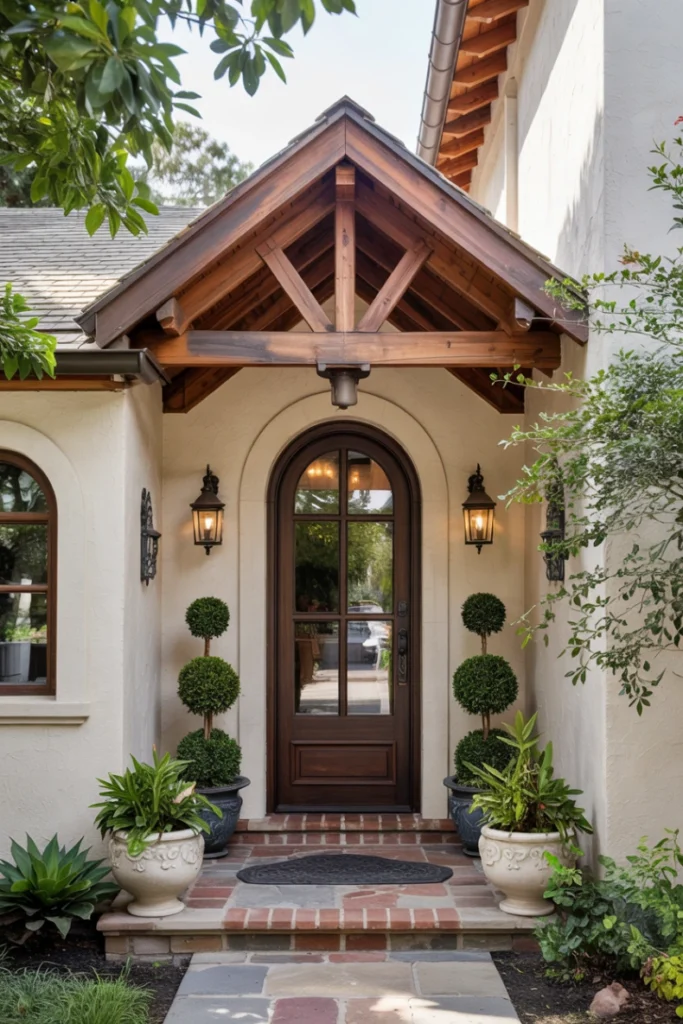
A covered entryway enhances both form and function, making it one of the most practical outdoor entryway ideas you can invest in. Porch roofs, porticos, and extended overhangs protect guests from rain, snow, and harsh sunlight while defining the entrance architecturally. This feature adds depth and visual interest to flat facades, making the home appear more substantial and welcoming. Even a modest overhang of 24 to 36 inches changes how the front of a house reads from the street.
From a usability perspective, covered entryways allow space for lighting fixtures, planters, and decor without weather damage. A wall mounted lantern under a portico stays clean and dry, a bench tucked beneath a porch roof stays usable in a drizzle, and a wreath on a covered door lasts months longer than one fully exposed to the weather. Materials such as wood, metal, or composite blend seamlessly with various architectural styles. Match the roof material and pitch to your existing roofline so the addition looks original to the house rather than added later.
If a full portico is more than your budget allows, start smaller. A simple cedar awning above the door, supported by decorative brackets, gives you shelter and style for a fraction of the cost. Aim for an awning at least 6 inches wider than the door on each side, and mount it 6 to 12 inches above the door frame. Whether minimalist or traditional, a covered entryway elevates the overall exterior while improving comfort and durability, and it is one of the few upgrades that pays you back every single time it rains.
3. Statement Lighting to Define the Entrance

Lighting is a critical component of outdoor entryway ideas, influencing both safety and ambiance. Statement lighting fixtures such as lantern sconces, oversized pendants, or modern wall mounted lights draw attention to the entrance and create a focal point after dark. Proper lighting ensures visibility while enhancing architectural features, so guests can find the doorbell, see the steps clearly, and feel welcome before they even knock. A good rule is to size wall sconces at about one quarter to one third the height of the door. For a standard 80 inch door, that means fixtures roughly 20 to 27 inches tall.
Layered lighting design adds depth and warmth. Pairing functional illumination with decorative fixtures creates a welcoming atmosphere without harsh glare. Warm color temperatures between 2700K and 3000K work best for entryways, as they feel inviting rather than institutional. Mount sconces 60 to 66 inches from the ground, flanking the door at a distance of 6 to 12 inches from the trim, so the light washes the door evenly instead of creating hot spots. If you have a covered porch, a pendant hung 7 feet above the floor keeps headroom comfortable while centering the light over the threshold.
Choose fixtures rated for damp or wet locations, depending on how much exposure they get, and look for dark sky friendly designs if you want to cut glare for neighbors. LED bulbs keep running costs low and last for years, and a simple dusk to dawn sensor or smart timer means the lights are always on when they should be. Thoughtfully chosen lighting elevates the entryway and ensures it remains visually striking day and night, and it is one of the cheapest ways to make a home feel cared for after sunset.
4. Symmetrical Planters for Timeless Appeal
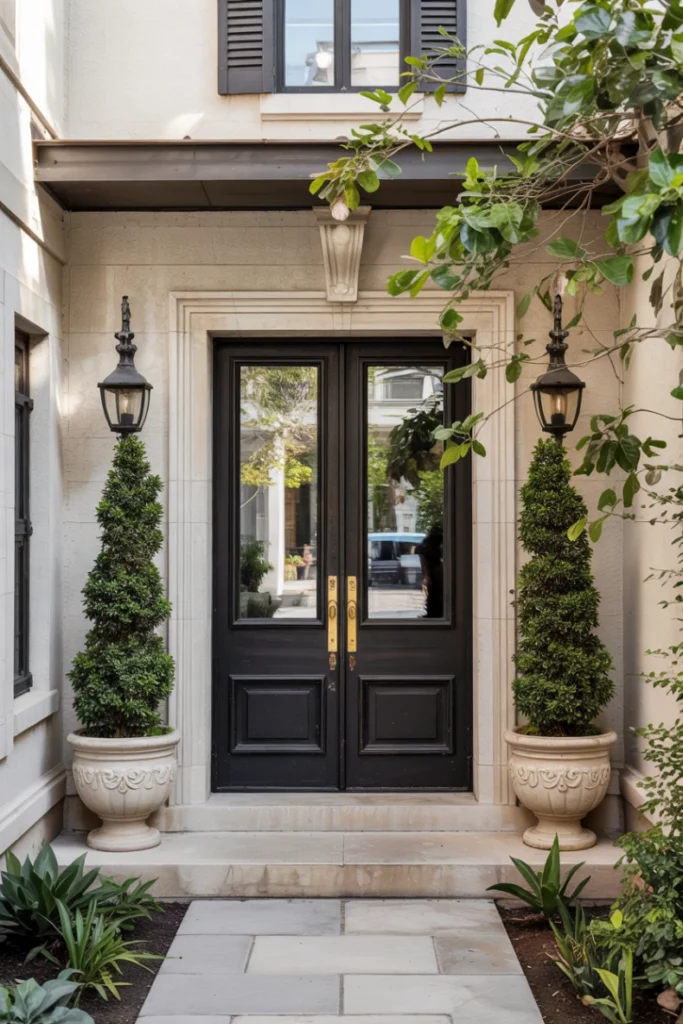
Symmetry brings balance and order, making it a powerful tool in outdoor entryway ideas. Matching planters placed on either side of the door frame the entrance and naturally guide the eye inward. This design approach works across architectural styles, from classic to contemporary, and it is almost impossible to get wrong. The key is true matching: same planter, same plant, same height, same soil line. Even a small difference between the two sides breaks the effect, so buy the pair together and plant them on the same day.
Plant selection plays a vital role in long term success. Evergreen shrubs such as boxwood, dwarf Alberta spruce, or Japanese holly provide year round structure, while seasonal flowers offer color and variety. For a low maintenance pair, plant a small evergreen in the center and ring it with trailing lobelia or sweet alyssum in spring, then swap in mums or ornamental kale for fall. Durable planters made from concrete, ceramic, fiberglass, or metal ensure longevity. Choose planters 18 to 24 inches tall for a standard door, so they read as substantial without blocking the walkway.
Set the planters 12 to 18 inches out from the wall and at least 6 inches clear of the door swing, and raise them on small pot feet so water drains freely and the bottoms never sit in puddles. Fill the bottom third with lightweight filler if the pots are deep, then use quality potting mix rather than garden soil, which compacts and drowns roots. Water deeply once or twice a week rather than a little every day, and feed container plants monthly during the growing season. Symmetrical greenery adds instant curb appeal and reinforces a sense of intentional design, and it is the fastest way to make a plain doorway look finished.
5. Stone or Paver Walkway Leading to the Door

The pathway leading to your entryway is an extension of the entrance itself. Natural stone, brick, or concrete pavers create texture and visual interest while guiding movement toward the front door. This element sets expectations before guests even reach the entryway, so a cracked, narrow, or muddy path undercuts even the most beautiful door. A comfortable walkway is 36 to 48 inches wide, wide enough for two people to walk side by side or for one person carrying groceries without stepping off the edge.
Well designed walkways improve both safety and aesthetics. Lay pavers on a compacted base of 4 to 6 inches of gravel topped with an inch of coarse sand, and keep a gentle slope of about 1 to 2 percent away from the house so water drains off the path instead of pooling against the foundation. Space joints evenly, sweep polymeric sand into the gaps to lock the pavers in place, and edge the path with steel or stone edging so it never spreads. Proper spacing, drainage, and lighting ensure durability and ease of use for decades.
For style, match the walkway material to your home. Flagstone suits cottage and rustic homes, brick pairs beautifully with traditional and colonial facades, and large format concrete pavers in warm gray fit modern designs. Add low solar path lights every 6 to 8 feet along the edges, and soften the borders with ground cover or low grasses. When coordinated with the entryway design, a stone or paver walkway enhances cohesion and elevates the entire exterior presentation, turning the short walk to your door into part of the welcome.
6. Welcoming Front Porch Seating
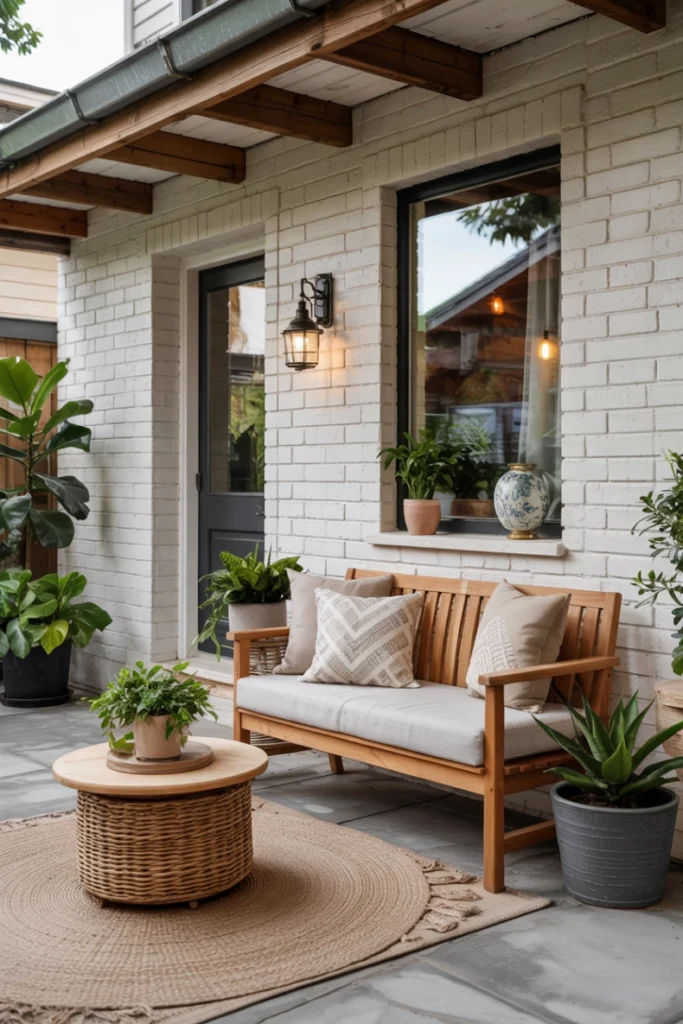
Seating introduces warmth and hospitality to outdoor entryway ideas. A simple bench, pair of chairs, or porch swing transforms the entrance into a place of pause and comfort. This addition signals openness and creates a lived in feel that a bare porch can never match. A bench is the easiest starting point: a 48 inch bench fits most porches, gives you a spot to sit while you put on shoes, and doubles as a landing zone for packages and grocery bags.
Choosing appropriately scaled furniture ensures the space remains functional and uncluttered. Measure your porch depth before you buy. You need at least 24 inches of clear walking space in front of any seat, so a porch 5 feet deep can hold a bench or a pair of chairs, while a porch 8 feet or deeper can handle a swing or a small conversation set. Weather resistant materials such as treated wood, powder coated metal, or all weather wicker provide durability, while outdoor cushions in solution dyed acrylic add comfort and hold their color through sun and rain. If you love gathering outdoors, our outdoor pavilion ideas show how to extend that same welcoming feeling into the backyard.
Style the seating with one or two outdoor pillows, a small side table for a coffee cup, and a throw blanket in a weatherproof basket for cool evenings. Keep the palette tied to your door and trim colors so the porch reads as one designed space. Front porch seating makes the entryway feel like an extension of the home rather than a mere transition zone, and it is the detail guests remember most when they picture your house.
7. Modern Minimalist Entryway Design

Minimalist outdoor entryway ideas focus on simplicity, clean lines, and intentional design. Neutral palettes, smooth surfaces, and limited decor allow architectural elements to stand out without distraction. This style works especially well for modern and urban homes, where a cluttered porch would fight the architecture. Limit the palette to two or three colors, such as warm white, charcoal, and natural wood, and let texture do the work that color usually does. A smooth concrete step, a teak bench, and a matte black sconce give you plenty of contrast without any visual noise.
Functionality is integrated seamlessly through concealed lighting, streamlined hardware, and uncluttered layouts. A recessed downlight under a flat porch roof, a slim house number in brushed steel, and a single sculptural planter are all a minimalist entryway needs. Every element serves a purpose, resulting in a refined and timeless entrance. Keep the doormat flat and dark, skip the wreath or choose one in a single green, and resist the urge to add seasonal clutter. For more inspiration in this direction, explore our modern entryway ideas for interiors that carry the same clean language inside.
The secret to minimalism is maintenance. A minimalist entryway looks stunning when it is tidy and falls apart the moment shoes, packages, and toys pile up. Add one hidden storage solution, such as a slim bench with a lift up seat or a narrow wall mounted cabinet, so everyday items have a home. Sweep the porch weekly, wipe the sconces monthly, and prune the single planter so it always looks deliberate. A minimalist entryway communicates sophistication and clarity from the first glance, and it stays that way with just a few minutes of upkeep a week.
8. Rustic Farmhouse Entryway Charm
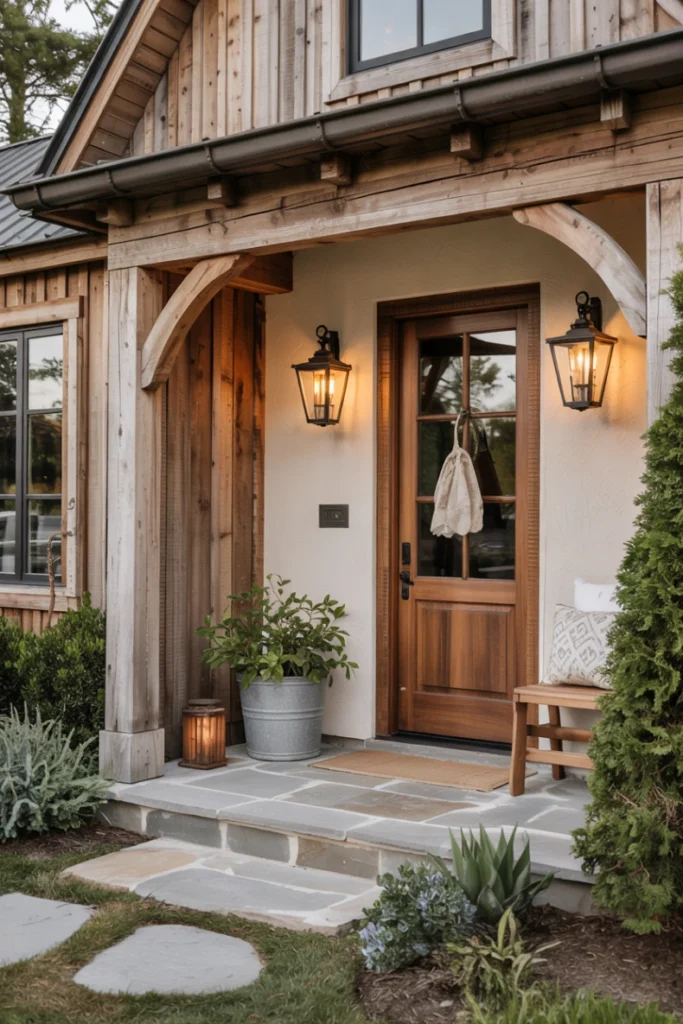
Rustic farmhouse outdoor entryway ideas emphasize warmth, texture, and approachability. Natural wood, stone accents, and classic lantern lighting create a welcoming atmosphere rooted in tradition. This style feels timeless and inviting, and it suits homes with board and batten siding, exposed beams, or a wraparound porch especially well. Start with a reclaimed wood bench or a pair of galvanized metal planters, then layer in a woven coir mat and a lantern style sconce in oil rubbed bronze.
Layering materials adds depth without excess. Pair rough textures with smooth ones: a weathered wood sign against a painted brick wall, a soft cotton pillow on a hard metal chair, a stone step beside a wooden door. Weathered finishes and handcrafted details enhance authenticity, so choose items that show a little age rather than everything brand new. A vintage milk can, an old wooden crate holding firewood, or a handmade wreath of dried wheat all add character without feeling staged.
Keep the color palette warm and earthy. Cream, sage green, warm brown, and dusty red work beautifully together, and a red or navy front door adds just enough contrast. Add seasonal touches that match the style, such as pumpkins in fall, evergreen garlands in winter, and fresh cut flowers in a mason jar in spring. A rustic farmhouse entryway blends comfort and charm, making guests feel immediately at ease, and it forgives a little mess in a way a formal entryway never will.
9. Greenery-Focused Entryway Design
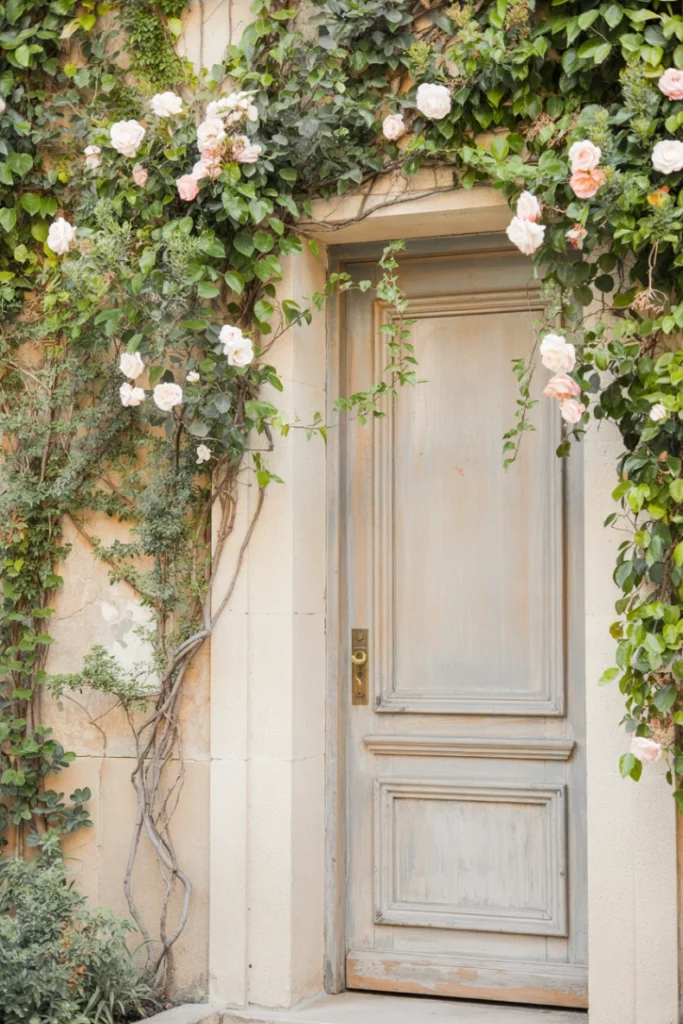
Greenery transforms outdoor entryway ideas by adding freshness and vibrancy. Vertical gardens, trellises, and climbing plants introduce height and soften architectural lines. This approach works particularly well for small or narrow entryways, where a tall trellis or a wall mounted planter adds life without eating up floor space. A climbing jasmine or clematis on a simple wooden trellis beside the door gives you fragrance and flowers for months, while a wall mounted pocket planter holds herbs you can snip on your way to the kitchen.
Choose plants for your actual conditions, not just for the photo. North facing entryways need shade lovers such as ferns, hostas, and ivy, while sunny south facing doors suit lavender, rosemary, and ornamental grasses. Check your hardiness zone before buying, and prefer perennials and evergreens over annuals if you want the entryway to look good in January as well as June. Group plants in odd numbers, three or five, and vary the heights so the arrangement feels natural rather than lined up like soldiers.
Beyond aesthetics, greenery promotes a calming environment and connects the home to nature. A small potted tree such as an olive or a dwarf citrus in a 20 inch pot anchors the space beautifully, and a hanging basket at 7 feet adds color at eye level without blocking the path. Choosing low maintenance plants ensures lasting appeal, so water on a schedule, prune lightly twice a season, and refresh the mulch in spring. An entryway enriched with plants feels alive and welcoming, and it is one of the few decor choices that actually improves with time as the plants grow in.
10. Grand Entryway with Architectural Features

Architectural elements such as columns, arches, or detailed trim create a sense of grandeur. These outdoor entryway ideas emphasize structure and form, making the entrance feel intentional and impressive. A pair of columns flanking the door, a gentle arch above it, or a pediment with crown molding all signal that the entrance matters. For the proportions to work, columns should be about one tenth as wide as they are tall, so an 8 foot column wants a diameter of roughly 9 to 10 inches.
Balance is key to preventing visual overload. One strong architectural gesture beats three competing ones, so pick columns or an arch, not both plus a portico and a pediment. When paired with subtle lighting and landscaping, architectural features elevate the home’s presence without shouting. Keep the door and trim colors restrained, a deep green or classic black door with crisp white trim lets the architecture speak, and let a single pair of planters or a simple wreath provide the only decoration.
If structural changes are out of reach, you can suggest grandeur with trim alone. Add wide pilasters, flat boards that mimic columns, on either side of the door, top them with simple capitals, and paint them the same color as the trim. A transom window above the door adds height and light for a modest cost, and a pair of tall, narrow windows flanking the door has a similar effect. A grand entryway leaves a memorable first impression, and even small architectural moves can give a modest home that same sense of occasion.
11. Coastal-Inspired Outdoor Entryway
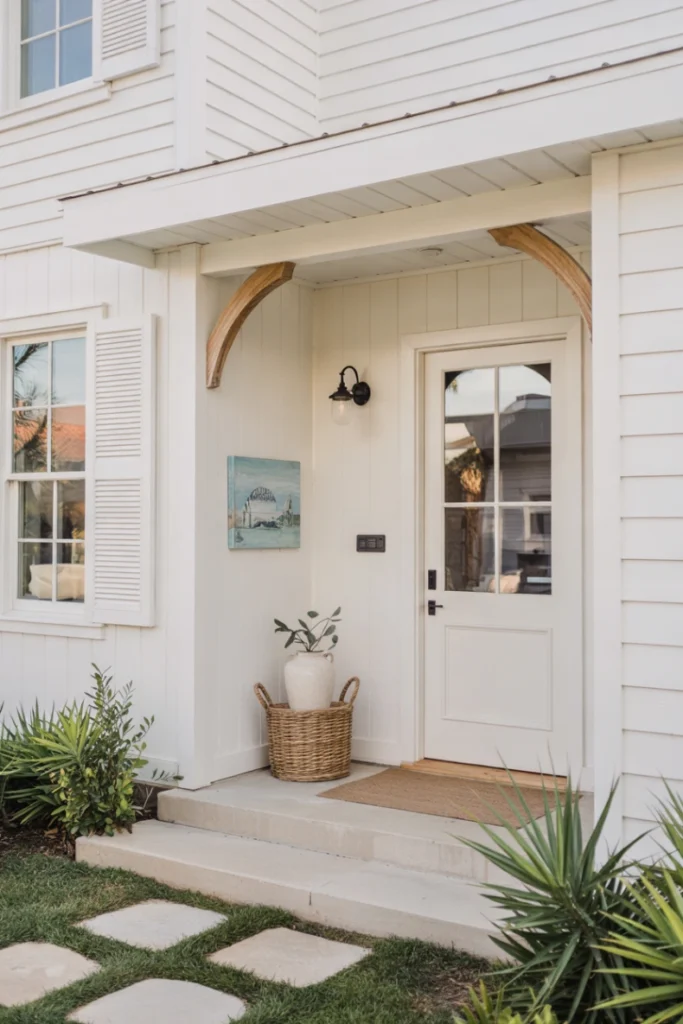
Coastal outdoor entryway ideas embrace light colors, natural textures, and relaxed styling. Soft whites, sandy neutrals, and weathered wood evoke a breezy atmosphere that feels calm the moment you arrive. Paint the door a soft sea glass blue or a pale aqua, choose whitewashed planters, and add a natural fiber mat in jute or sisal. The palette should feel sun bleached, so avoid saturated colors and glossy finishes in favor of matte paint and raw textures.
This style prioritizes comfort and simplicity. Casual decor, understated lighting, and natural materials create a welcoming entrance that feels effortless and serene. A pair of white lanterns with LED candles, a driftwood wreath, and a striped outdoor cushion in navy and white are all you need. Keep furniture light and low, a simple teak bench or a pair of white wicker chairs, and leave plenty of open space so the entryway breathes.
Coastal style works far beyond beach houses. It suits any home that gets strong light and any homeowner who wants a fresh, airy feel. The materials also handle salt air and humidity well, which is why they became coastal staples in the first place. Rinse metal fixtures monthly if you live near the sea, choose marine grade hardware, and pick outdoor fabrics rated for UV exposure. A coastal entryway feels like a deep breath every time you come home, and it stays looking fresh with very little effort.
12. Statement Door Hardware as a Design Feature

Door hardware often goes unnoticed, yet it plays a powerful role in outdoor entryway ideas. Oversized handles, custom knockers, and unique finishes can transform a simple door into a focal point. A long pull handle, 18 to 24 inches of brushed brass or matte black, gives a plain door a designer feel instantly, while a hand forged iron knocker adds craft and character that a standard handle never will.
When choosing hardware, think of it as jewelry for the door. Match the finish to your sconces and house numbers so the entryway reads as a set, and scale the pieces to the door. A small knob disappears on a tall double door, while an oversized pull overwhelms a narrow cottage door. For a standard 36 inch door, a handle set with a 10 to 12 inch pull looks balanced, and a knocker 6 to 8 inches tall sits comfortably at eye level. Smart locks are worth considering too, since a keypad deadbolt in the same finish keeps the look clean while ending the search for spare keys.
Durable, weather resistant materials ensure both style and longevity. Solid brass, stainless steel, and powder coated bronze all stand up to rain and sun, while plated finishes can peel within a couple of seasons outdoors. Check that hinges are rated for the door’s weight, a solid wood door often needs ball bearing hinges, and lubricate moving parts once a year. Thoughtfully chosen hardware adds personality and craftsmanship to the entryway, and it is the detail guests touch every single visit.
13. Smart Design for Small Entryways

Small entryways require strategic design choices, but a small space can still make a big impression. Compact furniture, wall mounted lighting, and vertical decor maximize space without clutter. A slim console table only 10 to 12 inches deep, a wall mounted sconce instead of a floor lantern, and a vertical planter or a tall narrow mirror all add function and style while keeping the floor clear. The goal is to make every inch earn its place.
Light colors and streamlined elements help small entryways feel larger and brighter. Paint the door and trim in a pale shade, choose a light colored mat, and keep the walkway free of bulky planters. A mirror or a glossy tile near the door bounces light around, and a single tall plant draws the eye upward instead of outward. Avoid dark, heavy furniture and oversized decor, which shrink the space visually. If the porch is shallow, skip seating entirely and invest the space in great lighting and one beautiful planter.
Storage is the make or break detail for small entryways. A wall mounted hook rail for coats and bags, a narrow shoe tray that holds two pairs, and a small wall shelf for keys keep daily clutter contained. With thoughtful planning, even the smallest entrance can be functional and stylish, and a compact entryway that is tidy and well lit often feels more welcoming than a large porch that has become a storage zone.
14. Decorative Tile or Patterned Flooring

Decorative flooring adds personality and visual interest to outdoor entryway ideas. Patterned tiles or textured stone surfaces create a strong foundation for the design, and they set the entryway apart from the plain concrete most homes have. Encaustic style cement tiles in blue and white, classic black and white checkerboard, or a terracotta herringbone pattern all give the entrance instant character. A tiled landing of just 3 by 5 feet is enough to make the statement.
Durability is essential, especially in high traffic areas. Choose tiles rated for outdoor use with a PEI rating of 4 or 5, a slip resistance rating suitable for wet conditions, and a frost proof body if your winters drop below freezing. Porcelain tiles handle freeze thaw cycles far better than ceramic, and natural stone needs sealing once a year to resist stains. Set the tiles on a proper mortar bed, not adhesive alone, and use exterior grade grout so the joints survive rain and temperature swings.
Keep the rest of the entryway calm so the floor can shine. A simple door color, plain planters, and quiet lighting let the pattern be the star. If full tiling feels like too much, try a painted stencil on the existing concrete, a border of contrasting pavers, or a single patterned tile inlaid as a doorstep medallion. Decorative flooring anchors the entryway and enhances its character, and it is a detail guests notice every time they step up to your door.
15. Layered Lighting for Depth and Safety
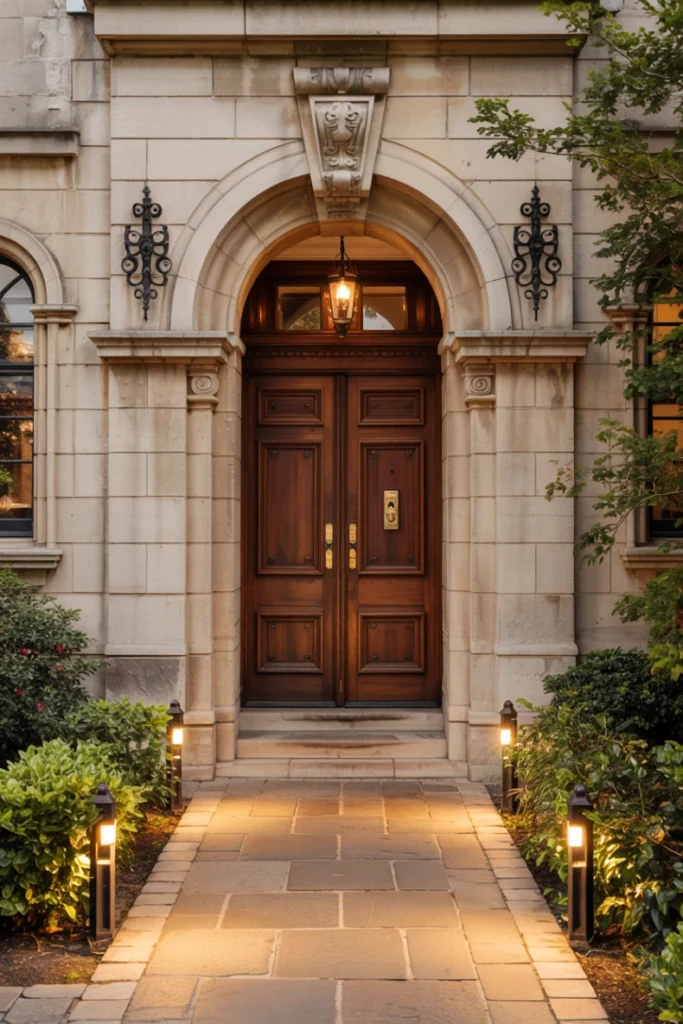
Layered lighting combines overhead fixtures, sconces, and pathway lights to enhance both safety and ambiance. This approach creates depth and visual interest that a single porch bulb can never achieve. Think in three layers: ambient light from an overhead fixture or sconces, task light on the steps and lock, and accent light along the walkway or on a favorite plant. Each layer runs on its own switch or dimmer, so you can turn everything up for a party or dim it down to a soft glow for a quiet evening.
Plan the layers with real numbers. Sconces at 60 to 66 inches high give face level light, a pendant or recessed light above the door covers the threshold, and path lights every 6 to 8 feet keep the walkway safe without glare. Keep all the bulbs at the same warm color temperature, 2700K to 3000K, so the layers blend instead of clashing. Low voltage landscape lighting at 12 volts is safe to install yourself and cheap to run, and a transformer with a timer or photocell handles the schedule automatically.
Warm, well balanced lighting makes the entryway inviting at all hours. Avoid bare bulbs and uplights that shine into eyes, and shield fixtures so the light falls where it is needed, on the path, the steps, and the door. Motion sensors on the task layer add security and save energy, while the ambient layer stays on a timer for a constant welcome. Layered lighting ensures functionality without sacrificing design, and it is the upgrade that makes every other entryway idea look better after dark.
16. Personalized Entryway with Decorative Accents
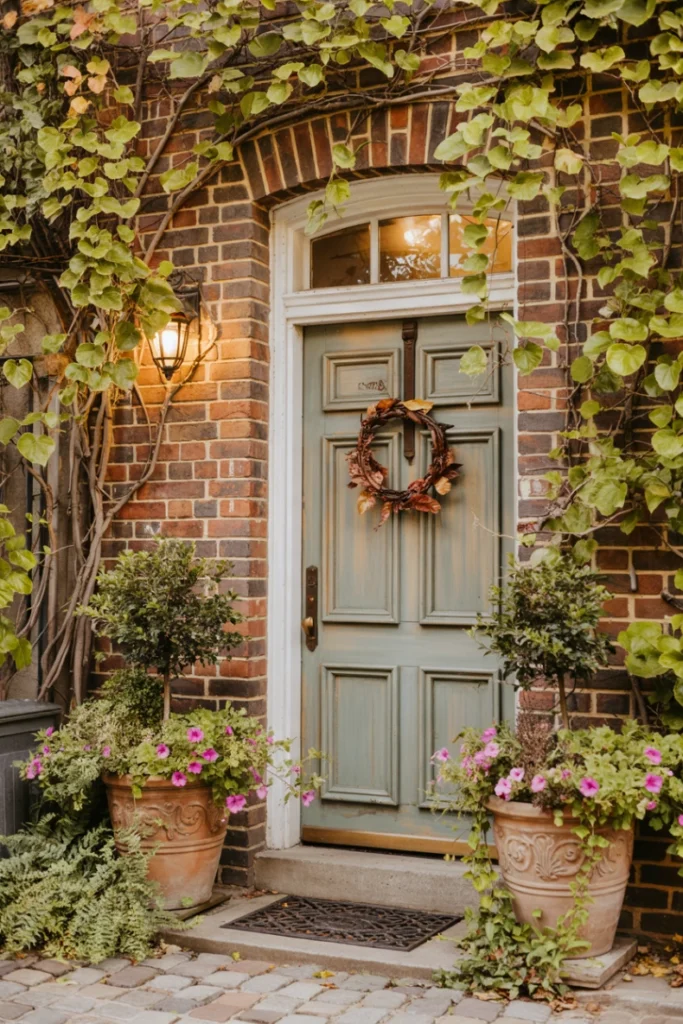
Personalized outdoor entryway ideas reflect individuality through decor accents. Seasonal wreaths, artwork, or custom signage add character that no catalog set can match. A hand painted house number, a welcome sign in your favorite color, or a wreath made from materials you gathered yourself all tell guests something real about the people who live inside. The best personal touches are simple and well made, one strong accent beats a crowded collection.
Rotating decor keeps the entryway fresh without permanent changes. Swap the wreath and the doormat with the seasons, change the planter flowers four times a year, and update a small chalkboard or letter board with a greeting for holidays and gatherings. Store the off season pieces in a labeled bin so the swap takes ten minutes instead of an hour. If you love hosting, our outdoor entertaining area ideas carry the same personal, welcoming spirit into the backyard for parties and family dinners.
Keep personalization tasteful and durable. Choose outdoor rated signs and art, seal painted wood against rain, and avoid anything that blocks the walkway or the door swing. A monogrammed mat, a family initial on the door, or a favorite quote on a weatherproof plaque all add warmth without clutter. Personal touches make the entrance memorable and welcoming, and they are the reason guests remember your home long after they leave.
Conclusion
Outdoor entryway ideas have the power to transform how your home is perceived, and the best part is that you do not need a full renovation to feel the difference. A freshly painted door, a pair of matching planters, and warm layered lighting can change the whole character of a house in a single weekend. Bigger moves such as a covered portico, a stone walkway, or architectural columns reward a little more planning, but they pay you back every day in comfort, safety, and curb appeal.
Start with the idea that solves your biggest frustration. If guests cannot find the door after dark, fix the lighting first. If the entrance feels bare, add planters and seating. If the whole front of the house feels flat, a covered entryway or a statement door refresh will do more than any single accessory. Work through the list one project at a time, keep the palette consistent, and let each change build on the last. With thoughtful design choices, your entryway becomes more than a passage. It becomes a statement of style, warmth, and intention, and a lasting first impression your guests will remember.
Frequently Asked Questions
How can I improve my outdoor entryway on a small budget?
Start with the highest impact, lowest cost changes. Paint the front door, replace the hardware, add a new coir welcome mat, and place a pair of matching planters by the door. These four updates usually cost under 200 dollars total and take a single weekend. Add solar path lights and a simple wreath, and the entrance will look completely refreshed without any construction.
What is the best color for a front door?
The best color depends on your home’s exterior. Navy blue, charcoal, forest green, and deep burgundy work beautifully on most houses because they create contrast against light siding. Black is a safe classic for traditional homes, while a soft sage or pale aqua suits coastal and cottage styles. Always test a sample on the door and look at it in morning and evening light before committing.
How wide should an outdoor entryway walkway be?
A comfortable walkway is 36 to 48 inches wide, which lets two people walk side by side or one person carry groceries without stepping off the path. For a main entrance, 48 inches is ideal. Keep the surface level, slope it slightly away from the house for drainage, and add lighting every 6 to 8 feet so the path stays safe after dark.
What plants work best by a front door?
Evergreens such as boxwood, dwarf Alberta spruce, and Japanese holly give year round structure and need little care. For seasonal color, add petunias or geraniums in summer and mums or ornamental kale in fall. Match the plants to your sunlight: ferns and hostas for shaded north facing doors, lavender and rosemary for sunny south facing doors. Always use pots with drainage holes and quality potting mix.
How do I light an outdoor entryway properly?
Use three layers of light: sconces or an overhead fixture for ambient light, a focused light on the steps and lock for safety, and low path lights along the walkway. Mount sconces 60 to 66 inches high, choose warm bulbs between 2700K and 3000K, and put the lights on a timer or dusk to dawn sensor so the entryway is always lit when guests arrive.
More Ideas You Will Love
 12 Tips for Choosing Durable Outdoor Cushions for Hot Summers
 11 Container Garden Secrets for Lush, Healthy Summer Plants
 14 Outdoor Pavilion Ideas for a Stylish and Functional Backyard
 15 Best Plants for a Beautiful Backyard Landscape
 13 Vanity Table Ideas: Elegant & Functional Designs for Every Space
 13 Outdoor Patio Design Ideas to Elevate Your Backyard Style