
20 Hallway Decor Ideas That Instantly Elevate Your Home’s Entrance

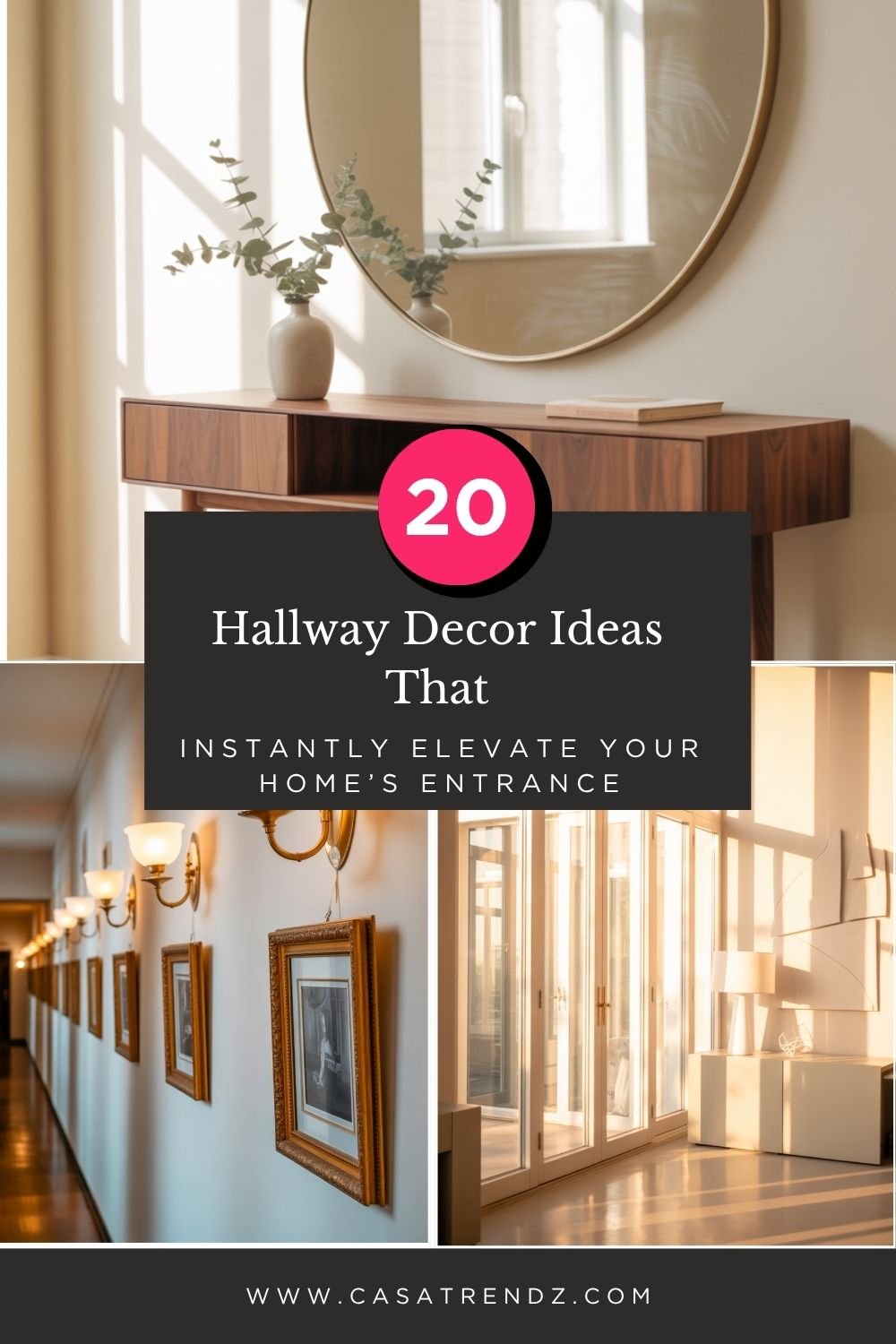
Your hallway is the first room anyone sees when they step into your home, and it is also the room most people decorate last. That is a missed opportunity. A hallway sets the tone for everything that follows, and a few smart choices can turn a dark corridor or a bare entry into a space that feels welcoming, organized, and finished. You do not need a grand foyer or a large budget. You need the right pieces at the right height, in the right place, doing a real job every day.
These 20 hallway decor ideas cover the whole space from floor to ceiling: mirrors that open up narrow halls, storage that hides coats and shoes, lighting that flatters the room at every hour, and personal touches that keep the space from feeling like a showroom. Each idea includes sizes, materials, and placement guidance so you can shop and arrange with confidence instead of guessing. Measure your hallway first, note the width of your walkway and the height of your ceiling, and keep those numbers handy as you read.
Start with the problem that bothers you most. If shoes pile up by the door, start with seating and storage. If the hall feels dark, start with mirrors and lighting. If it feels bare, start with art, paneling, or a gallery wall. Fix one thing well, live with it for a week, and then add the next idea. A hallway built one good decision at a time ends up looking intentional, and it stays tidy because every item in it has a purpose.
1. Add a Statement Mirror
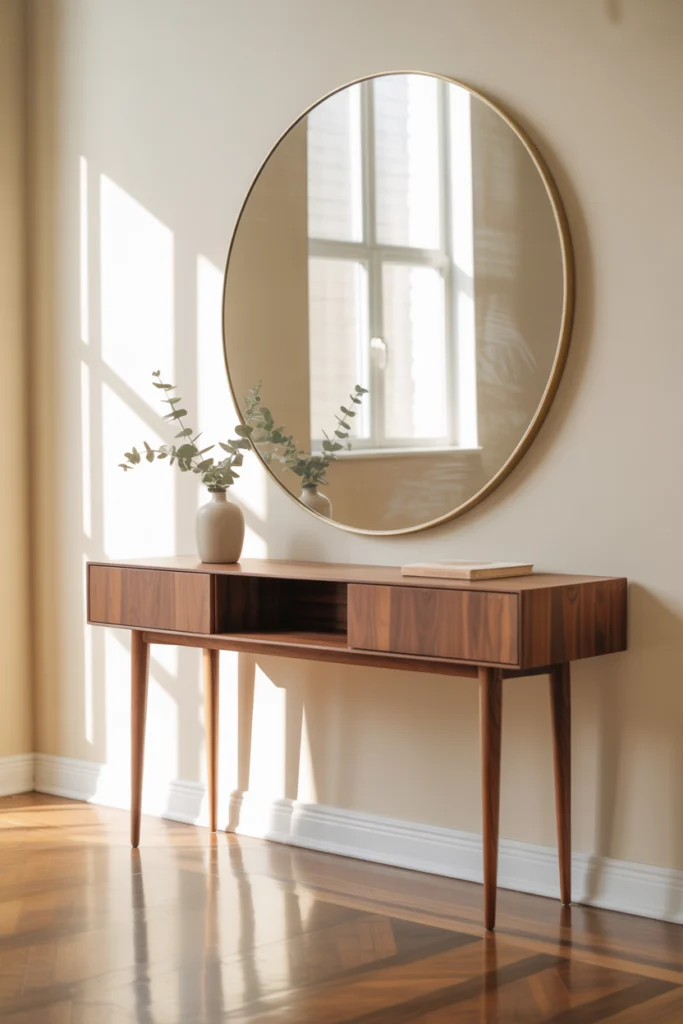
A mirror is the fastest way to make a narrow or dark hallway feel larger and brighter, because it doubles the light in the room instead of just adding decor. Hang a large mirror so its center sits at 57 to 60 inches from the floor, which is eye level for most adults, and place it opposite or beside a window or light source so it reflects daylight deeper into the hall. Above a console table, choose a mirror about two thirds the width of the console and leave 4 to 6 inches between the top of the console and the bottom of the mirror. An oversized round mirror softens a boxy hallway, while a tall rectangular mirror suits a long, straight corridor.
Choose the frame to match the rest of your home: thin black metal for a modern look, warm wood for a traditional or farmhouse feel, or an arched shape to break up straight lines. In a very small hall, one large mirror works better than a cluster of small ones, which can look busy. Check the reflection before you fix it to the wall. A mirror that reflects a blank wall or a messy corner doubles the problem, so angle it toward a window, a plant, or a piece of art instead. For more entryway mirror and console pairings, see these modern entryway ideas for a welcoming first impression.
2. Layer with a Runner Rug

A runner rug instantly warms a hard floor, protects it from daily foot traffic, and draws the eye into the home so a long hallway feels intentional rather than tunnel-like. Choose a runner 2 to 3 feet wide and long enough to cover most of the hall, leaving 4 to 6 inches of bare floor at each end so the rug looks placed, not wall to wall. Low pile materials are essential here: indoor outdoor polypropylene, flatweave wool, or jute all handle grit and shoes well, and they are much easier to vacuum than a thick pile rug.
Always use a non slip rug pad cut to the same size, which stops the runner bunching underfoot and protects the floor underneath. Pick a pattern that forgives dirt, such as a bordered design, a tone on tone stripe, or a vintage pattern in muted colors, since a pale solid runner will show every footprint by the end of the week. Before you commit, check that any door swinging over the runner has at least half an inch of clearance, and choose a rug no thicker than a quarter inch if the door is tight. Vacuum a hallway runner twice a week, since it collects grit from every pair of shoes that enters the house.
3. Incorporate Console Tables
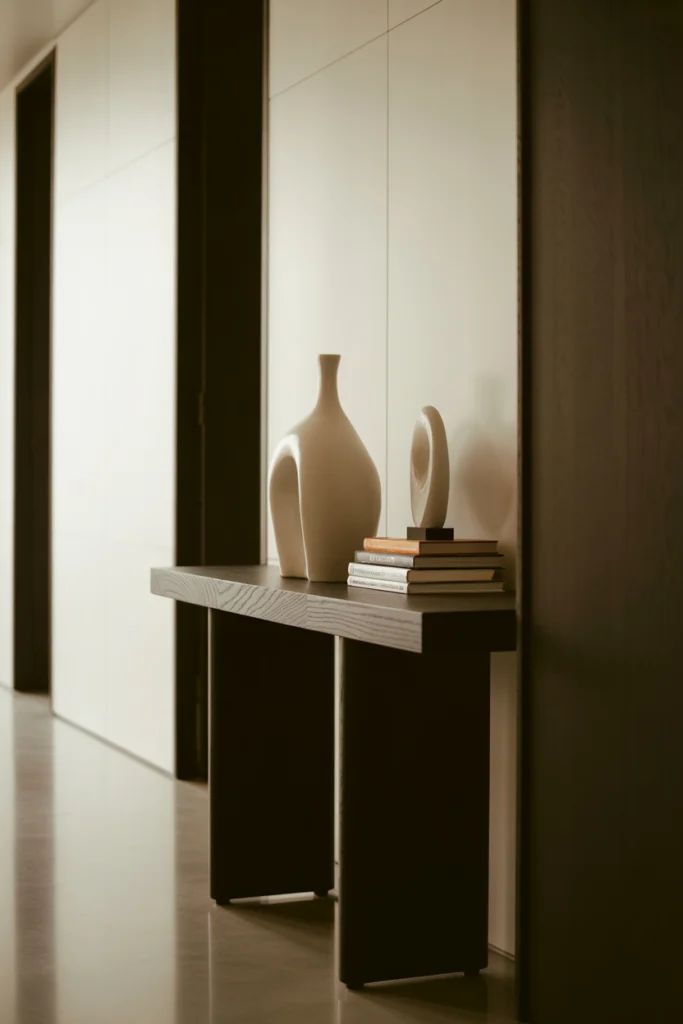
A console table is the classic hallway anchor because it gives you a landing spot for keys, mail, and sunglasses without eating up floor space. Look for a table 30 to 36 inches high and only 10 to 14 inches deep, so it hugs the wall and still leaves a comfortable walkway. The golden rule is to keep at least 36 inches of clear walkway in front of it. In a hall narrower than 48 inches total, a wall mounted shelf table or a demilune table that curves against the wall works better than a four legged console.
Style the top in threes: something tall like a vase of branches, something at mid height like a small lamp, and something low like a catchall tray for keys. Keep one clear zone about 12 inches wide near the door side for the items you grab every day, and resist the urge to fill every inch. A console with a lower shelf or a drawer earns extra points, since it hides chargers, dog leads, and spare keys while keeping the top looking calm. If your hall is wider than 48 inches, you can step up to a deeper console with baskets underneath, but never let it push your walkway below 36 inches.
4. Illuminate with Wall Sconces
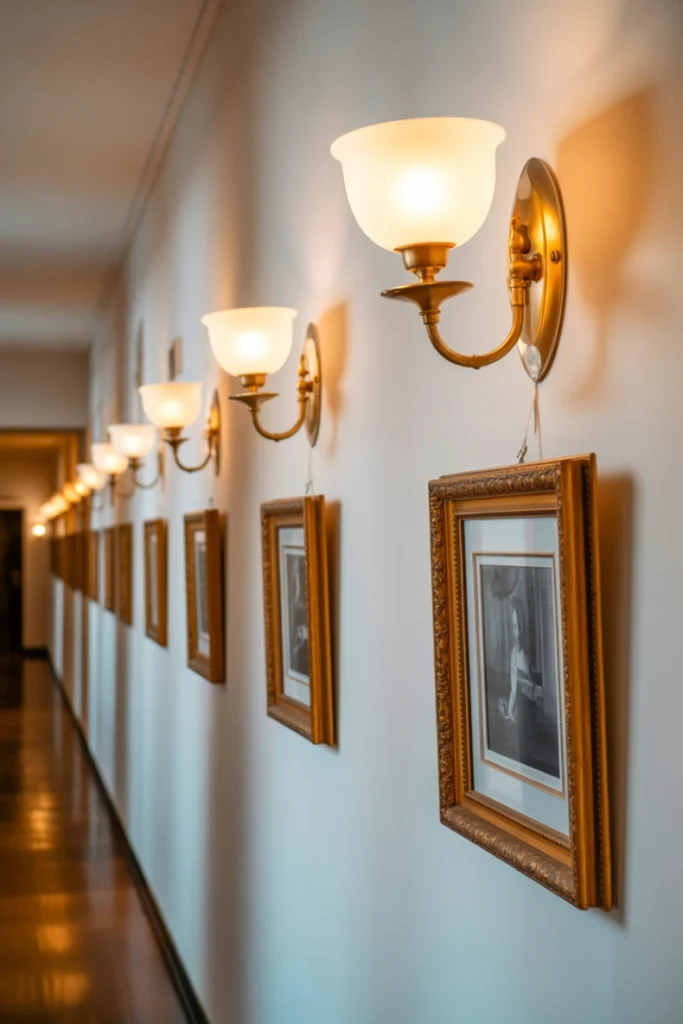
Wall sconces add the soft, layered light that overhead fixtures alone cannot give a hallway. They wash the wall with a warm glow, highlight artwork, and make the space feel inviting in the evening when a bright ceiling light feels harsh. Mount sconces at 60 to 66 inches from the floor, spaced evenly along the hall, and pair them with a dimmer so you can set the brightness for arrivals, evenings, and late night trips through the house.
Choose a finish that repeats elsewhere in the hall: brass sconces warm up wood tones, matte black suits modern and industrial interiors, and glass or fabric shades soften the light for a traditional home. Use warm white bulbs around 2700K for a welcoming glow, and avoid cool daylight bulbs, which make a hallway feel like an office corridor. If your hall has no ceiling fixture at all, a pair of sconces flanking a mirror can carry the whole lighting job, especially when combined with a small table lamp on the console for extra warmth.
5. Create a Gallery Wall
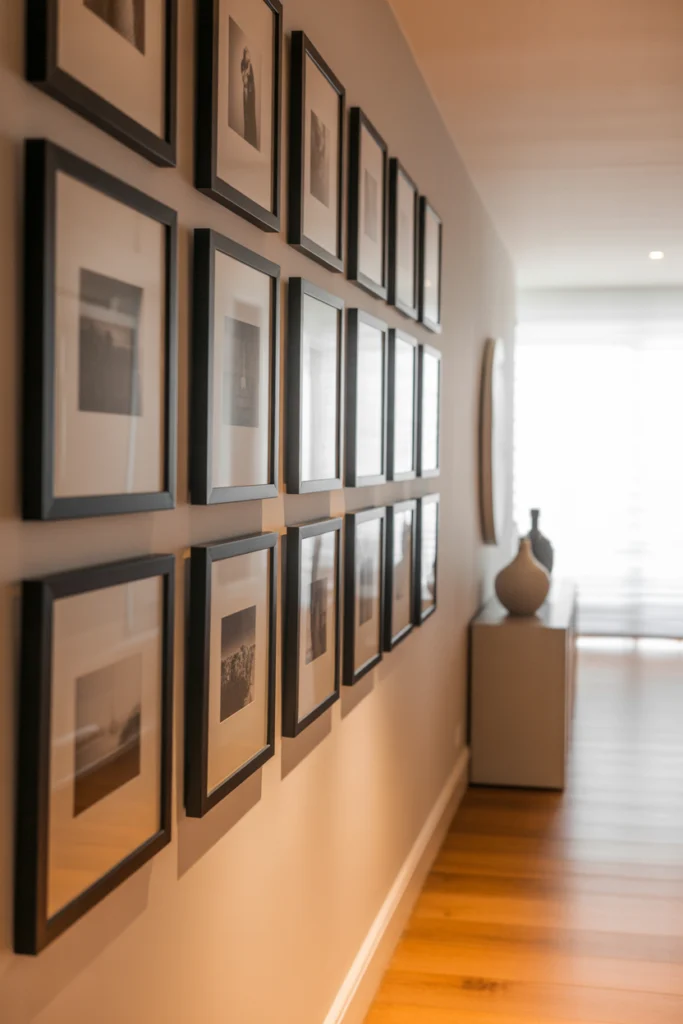
A gallery wall turns a plain hallway into a personal art walk, giving guests something to enjoy as they move through your home. The trick to a gallery wall that looks curated rather than cluttered is consistency: use frames in one finish, or one color family, and keep a single accent color running through the prints. Start by laying the arrangement on the floor, then transfer it to the wall, leaving 2 to 3 inches between frames. Anchor the display around one larger piece, roughly 16 by 20 inches, and build outward with smaller frames.
Hang the center of the arrangement at 57 to 60 inches from the floor, and keep the bottom of the lowest frame at least 6 inches above any console or bench below it. Mix framed prints, family photos, and small art pieces, but limit the mix to one theme per wall, such as black and white photography, travel prints, or botanical art, so the wall reads as one composition. A gallery wall also grows with you: swap in new photos seasonally without repainting or buying new furniture, and keep a small level and a pencil handy for the inevitable straightening after a busy weekend.
6. Add Greenery and Plants
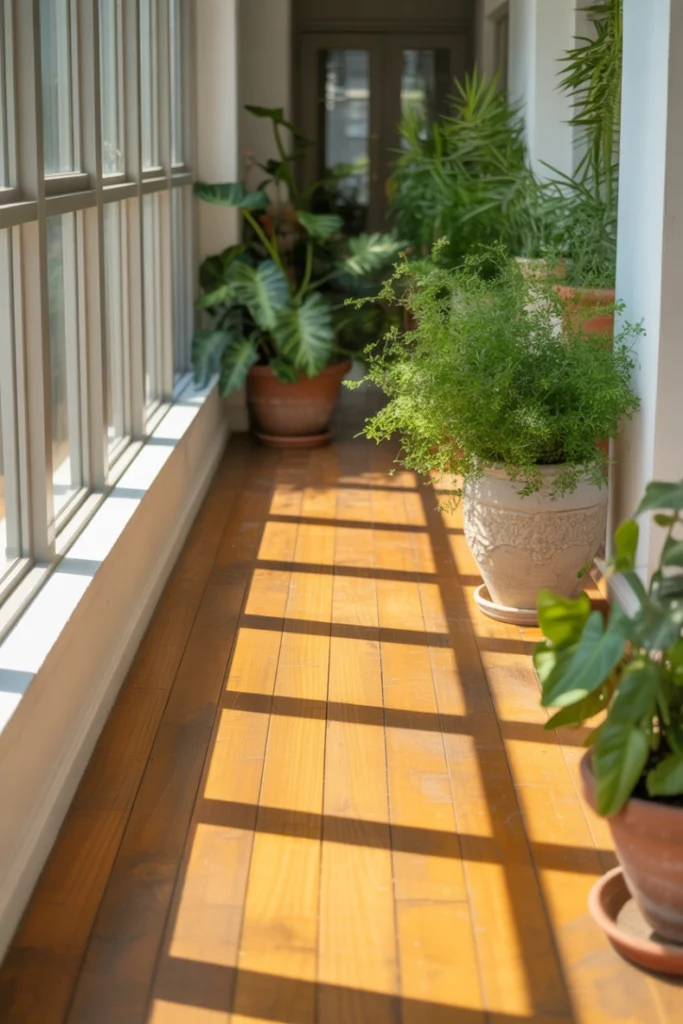
Plants bring life and softness to a hallway in a way no other decor can, breaking up hard lines and adding color that changes with the seasons. A tall snake plant or fiddle leaf fig fills an empty corner, a trailing pothos softens the top of a shelf, and a small peace lily adds life to a console table. Match the plant to your light: snake plants, ZZ plants, and pothos cope with low light hallways, while a fiddle leaf fig or olive tree needs a bright spot near a window or a glass door.
Use pots with drainage holes and a saucer, or keep the nursery pot inside a decorative cachepot so water never reaches your console or floor. Choose planters that repeat your interior style: ceramic for modern halls, woven baskets for a relaxed look, or metallic pots for a contemporary feel. One large plant usually looks better than five tiny ones scattered around, so start with a single statement plant and add a small one only if a surface still looks bare. If your hallway gets almost no natural light, good quality faux greenery still gives you color and softness without the upkeep, and it is a far better choice than a real plant slowly fading in the dark.
7. Use Statement Lighting
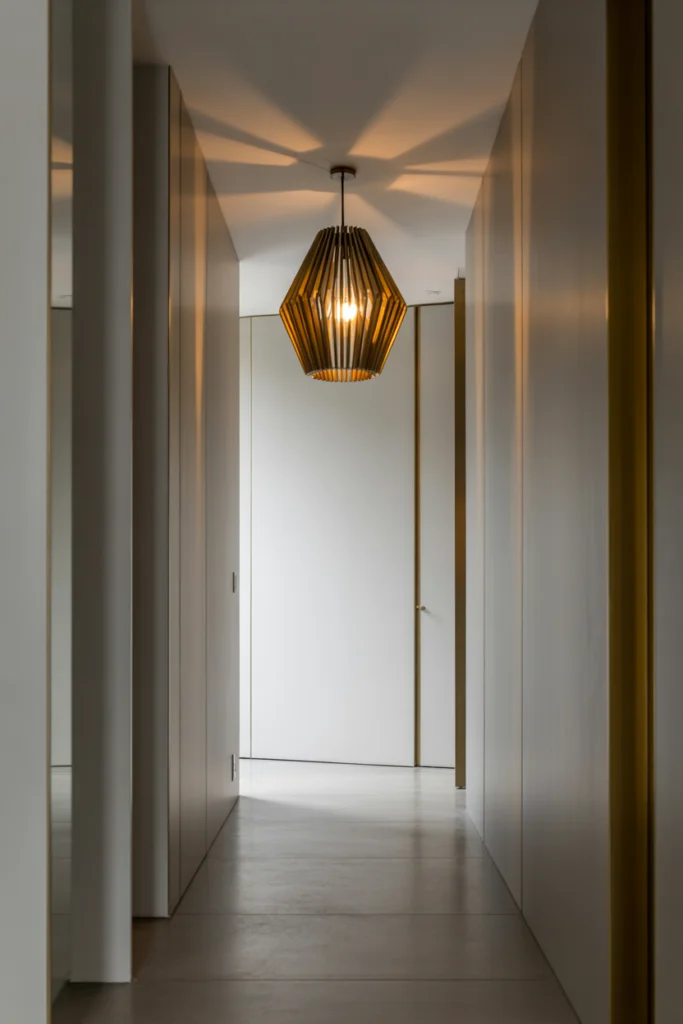
A bold pendant, small chandelier, or lantern fixture can act as the centerpiece of your hallway, drawing the eye upward and making the whole space feel finished. In halls with 8 foot ceilings, choose a semi flush mount or a short pendant that hangs no lower than 7 feet above the floor, so tall guests never duck. With ceilings 9 feet or higher, you can hang a pendant or lantern 30 to 36 inches below the ceiling, which creates a real focal point without blocking the view down the hall.
Match the fixture to your ceiling height and your style: glass pendants suit modern homes, lantern fixtures suit farmhouse interiors, and a small crystal chandelier adds glamour to a traditional entry. Use warm white bulbs around 2700K and put the fixture on a dimmer if you can, so the hall can be bright for arrivals and soft in the evening. In a long hallway, repeat the same fixture two or three times at even intervals instead of mixing different lights, since repetition makes a long space feel designed rather than random. For more entryway lighting and furniture pairings, browse these entrance hall decor ideas for halls of every size.
8. Install Built-In Storage

Built in shelving or cabinetry keeps a hallway organized while looking like part of the house, which is why it suits narrow halls better than bulky freestanding furniture. Use open shelves to display books, baskets, and a few decor pieces, and closed cabinets for shoes, cleaning supplies, and seasonal items you do not want on show. Paint the built ins in the same color as the walls, or in a soft neutral that blends in, so the storage reads as architecture rather than furniture crowding the walkway.
Plan the depth carefully: shelves 10 to 12 inches deep hold books and baskets without jutting into the walkway, while a shoe cabinet needs 12 to 14 inches. Leave open cubbies at bench height for the shoes in daily use, and keep the top shelf for items you reach for rarely. If a full built in is beyond your budget, a pair of matching wall cabinets flanking a bench gives you much of the same look for less, and a coat of paint that matches the trim ties the whole arrangement together. The goal is storage you barely notice, which is exactly what a tidy hallway needs.
9. Add Texture with Wall Paneling

Wall paneling adds architectural interest and depth to a plain hallway, and it protects the walls from scuffs in a high traffic area at the same time. Beadboard suits traditional and coastal homes, shiplap suits farmhouse interiors, and simple wainscoting with a chair rail suits almost any style. Install paneling to a height of 32 to 36 inches for classic wainscoting, or take it two thirds up the wall for a bolder, more modern look, and paint it in a soft neutral or a deep tone depending on how much drama you want.
Paint is the finishing decision that makes or breaks paneling. A soft white or warm greige keeps a narrow hall feeling open, while deep navy, forest green, or charcoal turns a wide entry into a dramatic first impression. Use a durable satin or semi gloss paint, since hallway walls take knocks from bags, shoes, and vacuum cleaners, and a wipeable finish makes scuffs easy to clean. Pair paneling with a simple runner and one large mirror, and let the wall do the talking, since paneling plus a busy gallery wall on the same wall will compete for attention.
10. Incorporate Seating
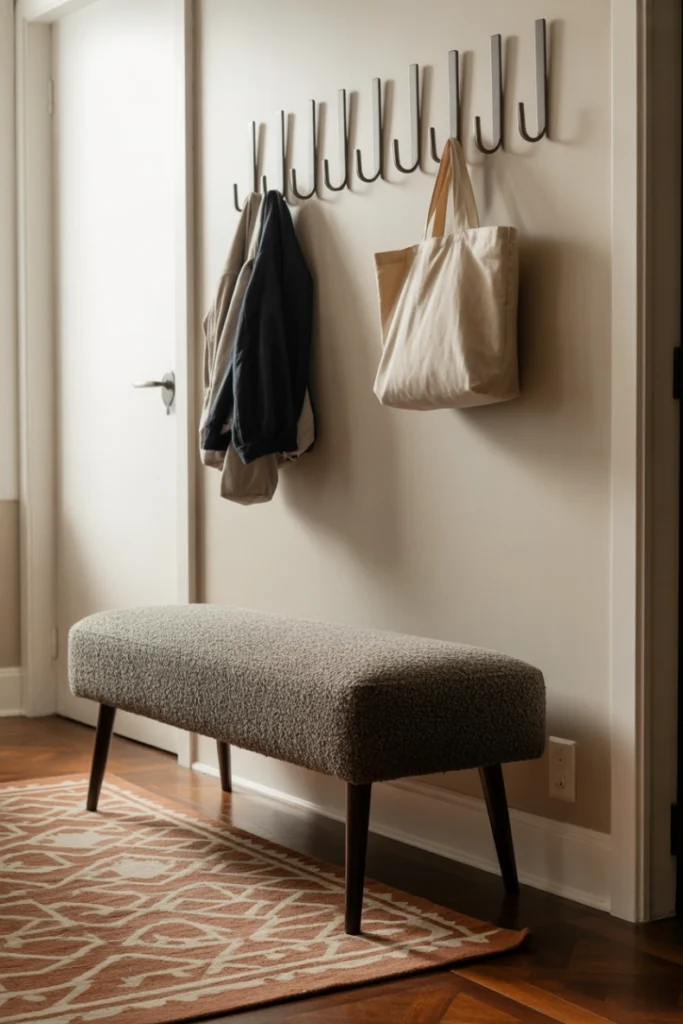
A bench or chair turns a hallway from a pass through into a space you actually use, giving you somewhere to sit while putting on shoes and a perch for bags while you find your keys. Aim for a seat height of 17 to 19 inches, which is comfortable for most adults, and a depth of 14 to 18 inches so the seat does not block the walkway. In a narrow hall, a wall mounted fold down seat or a slim bench with open legs keeps the floor feeling open.
Pick the style to match your storage needs. An open slatted bench keeps the look airy, while a bench with a lift up seat or drawers hides gloves, scarves, and dog leads. Add one or two washable cushions in a durable fabric, since hallway cushions take daily wear, and keep a pair of baskets underneath for shoes. A cushioned bench in velvet suits a formal entry, rattan suits a relaxed coastal hall, and a simple wooden bench with a woven cushion works almost anywhere. Place the bench beside the door, not opposite it, so you never have to squeeze past it on the way in.
11. Play with Bold Colors
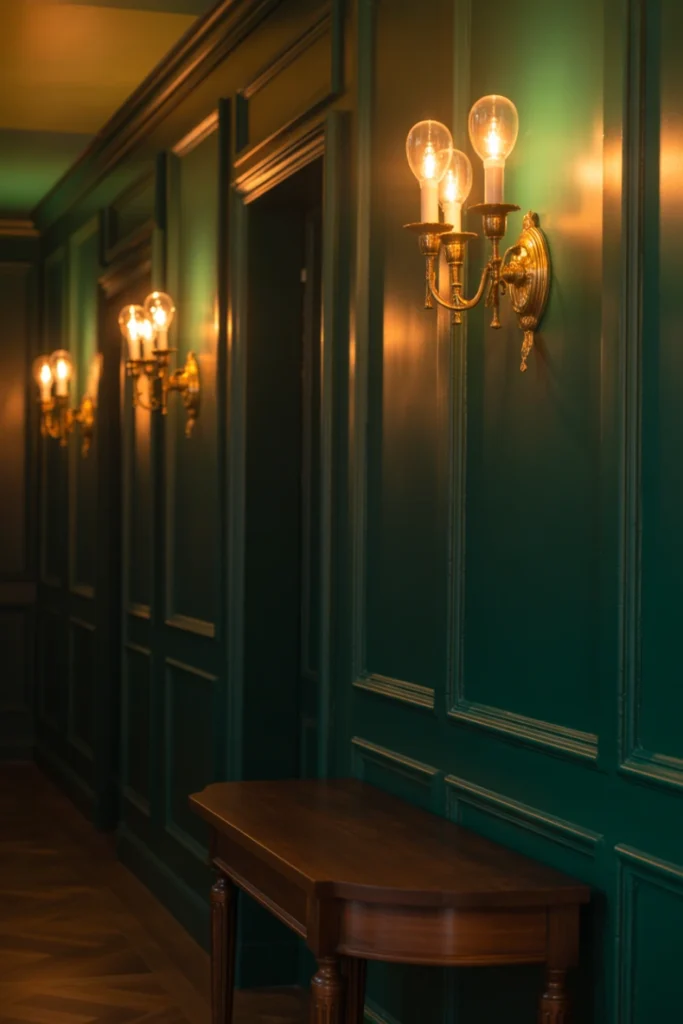
Hallways are the perfect place to experiment with color, because the room is small enough that a bold choice feels exciting rather than overwhelming, and you pass through it rather than sitting in it for hours. Deep hues like navy, forest green, or burgundy create intimacy and drama in a wide entry, while a warm mustard, terracotta, or coral brings energy to a hall that feels dull. Paint the wall your eye lands on first when entering, usually the wall opposite the door or the longest wall, and keep the other walls lighter so the color has room to breathe.
Balance a bold wall with lighter flooring and trim for contrast, and repeat the color once elsewhere in the hall, in a cushion, a vase, or a piece of artwork, so the room feels connected rather than painted at random. If your hallway is very narrow, choose a bold color in a lighter value, such as sage instead of forest green, or use the color on the end wall only, which draws the eye forward and makes the hall feel longer. Test the color at different times of day before committing, since hallway light changes dramatically from morning to evening, and a shade that looks rich at noon can look muddy under evening bulbs.
12. Display Sculptural Decor
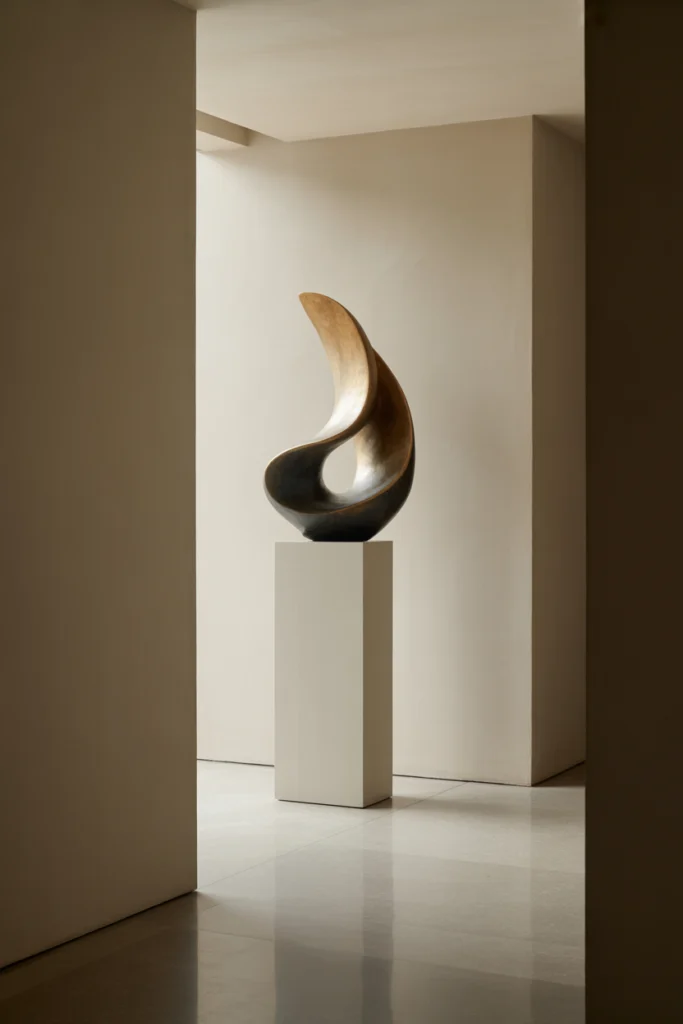
A single sculptural piece can give a minimalist hallway a focal point without adding clutter, which is exactly what a small space needs. Choose one bold object, such as a large ceramic vase, a carved wooden figure, a metal sculpture, or an oversized bowl, and give it breathing room on a console or a pedestal. Scale matters: the piece should be large enough to notice from the doorway, roughly 12 to 18 inches tall on a console, but not so large that it blocks the mirror or the light.
Materials add texture that flat decor cannot: rough ceramic, warm wood, brushed metal, or smooth stone each change the feel of the hall. Place sculpture where it catches light, near a sconce or a window, so shadows add depth through the day. Resist the urge to group five small objects together in place of one strong piece, since a cluster reads as clutter in a hallway while a single confident object reads as design. If you collect objects from travel, rotate one or two into the hallway display each season and store the rest, so the display stays fresh without growing crowded.
13. Maximize Natural Light
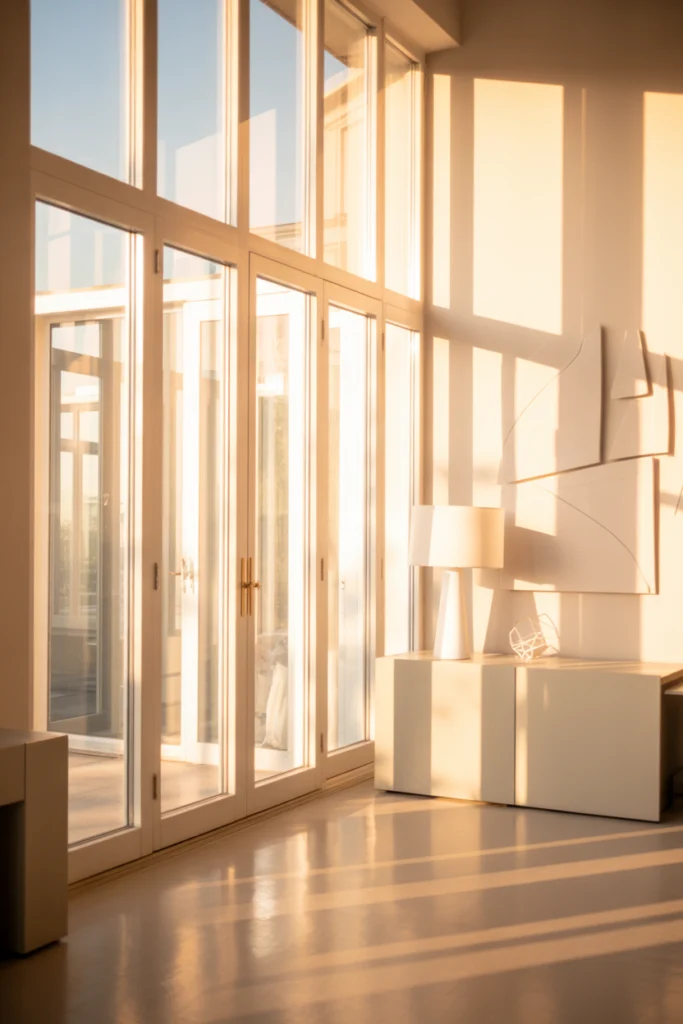
Natural light makes a hallway feel open and welcoming in a way artificial light cannot fully replace, so start by removing anything that blocks it. Keep windows uncovered, or use sheer curtains that let daylight through while keeping privacy. If your hallway has a solid front door, consider swapping an interior door for a glass paneled version, or adding a transom window above a door, both of which borrow light from adjoining rooms without a major renovation.
Once light enters the hall, help it travel. Light colored walls, a large mirror opposite the light source, and a pale runner all bounce daylight further down the corridor. Glossy or satin paint on trim reflects more light than flat paint, and a glass console or a light wood bench keeps the space feeling airy. In a hallway with no windows at all, a skylight or a solar tube is worth considering during a renovation, since even a small shaft of daylight transforms a dark corridor. Until then, layer warm artificial light and keep the palette light, which is the closest you can get to a window you do not have.
14. Add Functional Hooks and Racks
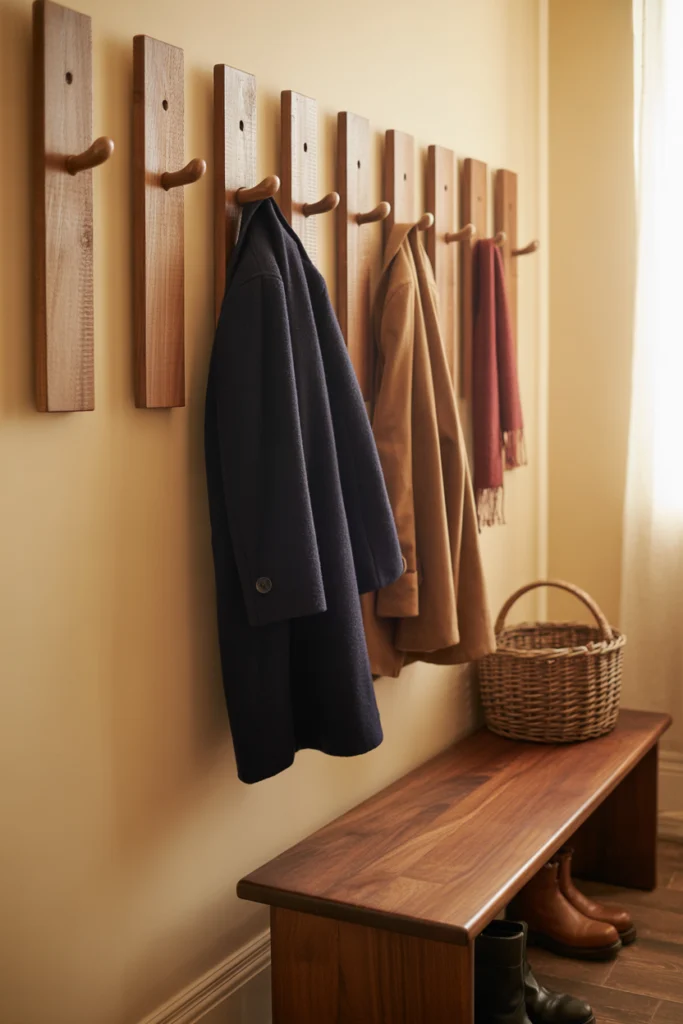
Wall hooks and racks are the hardest working small fix in a busy hallway, keeping coats, bags, hats, and dog leads off chairs and off the floor for very little money. Mount adult hooks at 60 to 66 inches from the floor, and add a lower row at about 42 inches if children use the space. Space hooks 8 to 10 inches apart so coats do not bunch together, and choose hooks rated for at least 15 pounds each, fixed into studs or with proper wall anchors, so a heavy winter coat never pulls them out of the wall.
Choose a style that suits your home: industrial metal hooks for a modern hall, wooden pegs for a farmhouse feel, or a sleek rail with sliding hooks for a contemporary look. A single rail with four to six hooks suits most families, while individual decorative hooks let you space things around a mirror or artwork. Keep one hook free near the door for guests, so visitors never have to ask where to hang their coat, and add a small shelf above the rail for hats, sunglasses, and a catchall dish. That combination of hooks plus a shelf turns one stretch of wall into a complete arrival station. For compact halls that need the same idea in less space, see these small entryway decor ideas that make tight entries work harder.
15. Use Artful Wallpaper
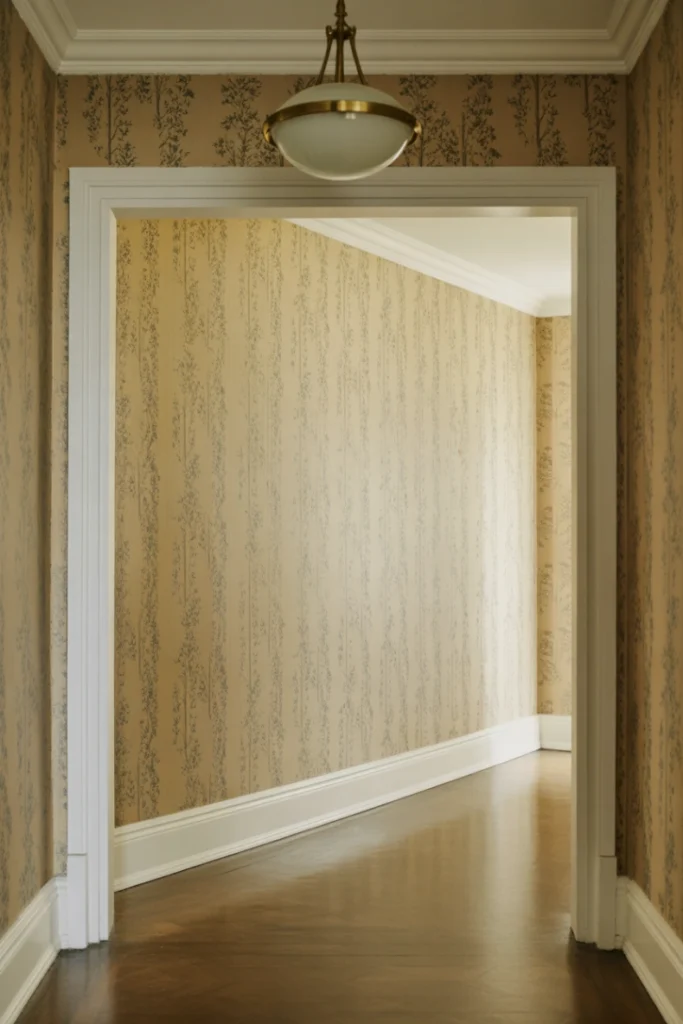
Wallpaper can change the mood of a hallway faster than any other single change, adding pattern, color, and texture in one step. Florals suit traditional and cottage halls, stripes suit modern and narrow spaces, and geometrics suit contemporary homes. In a narrow hallway, vertical stripes add a sense of height, while a light pattern with plenty of background showing keeps the space from feeling crowded. Apply wallpaper to one feature wall, usually the longest wall or the wall opposite the door, and keep the other walls painted in a color pulled from the paper.
Peel and stick wallpaper is a renter friendly option that also lets you change the look seasonally without damage, while traditional pasted wallpaper lasts longer in a busy family hallway. Choose a wipeable or vinyl coated paper, since hallway walls take scuffs, and avoid very dark or very busy patterns in a hall with no natural light. Pair wallpaper with simple furniture, a plain runner, and one large mirror, so the pattern stays the star. If you love a bold pattern but fear it will overwhelm the space, try it on the ceiling or inside a panel molding frame first, which gives you the pattern in a controlled dose.
16. Introduce Accent Ceilings
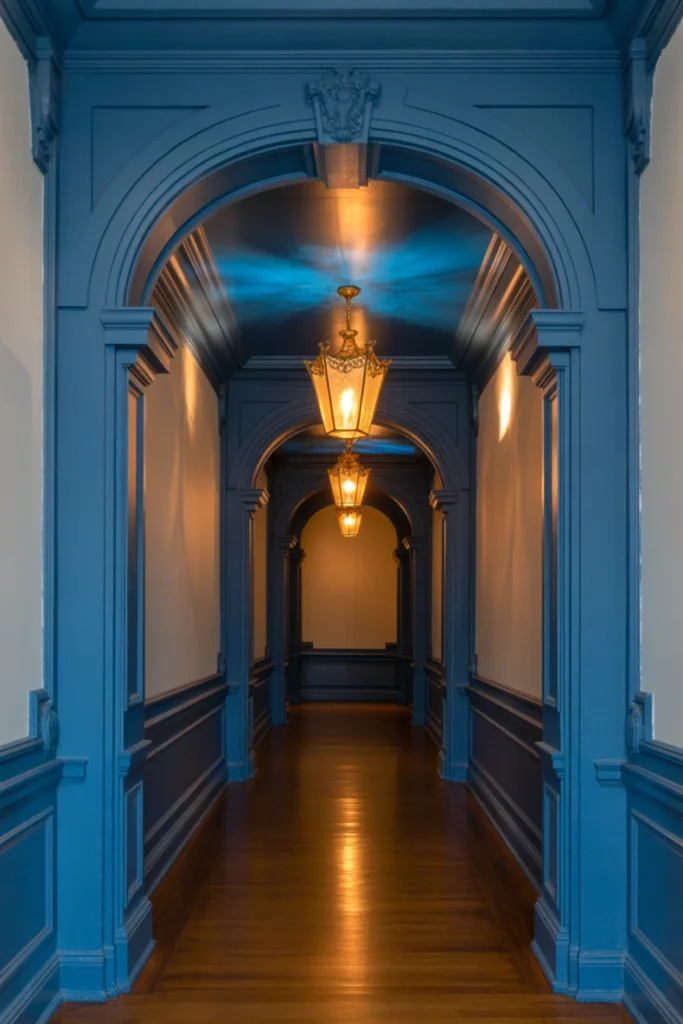
The ceiling is the most overlooked surface in a hallway, and treating it is one of the easiest ways to make the space feel designed rather than finished as an afterthought. Paint it in a color that contrasts with the walls, add wooden beams for a rustic or farmhouse feel, install coffered panels for a traditional look, or apply wallpaper for a surprising pattern overhead. A bold ceiling draws the eye upward, which makes a hallway feel taller and more dynamic, especially in a long corridor where the walls alone can feel monotonous.
Keep the rest of the hall relatively simple when the ceiling is the star, so the room does not feel busy from every angle. Pair an accent ceiling with soft, warm lighting, since a dark or patterned ceiling absorbs light, and add a dimmer so you can brighten the hall when needed. In a hallway with low ceilings, skip heavy beams and choose paint or a subtle wallpaper instead, since beams can make a low ceiling feel lower. A ceiling painted the same color as the walls, but one shade darker, is a gentle first step that adds depth without any construction at all.
17. Highlight Flooring Design
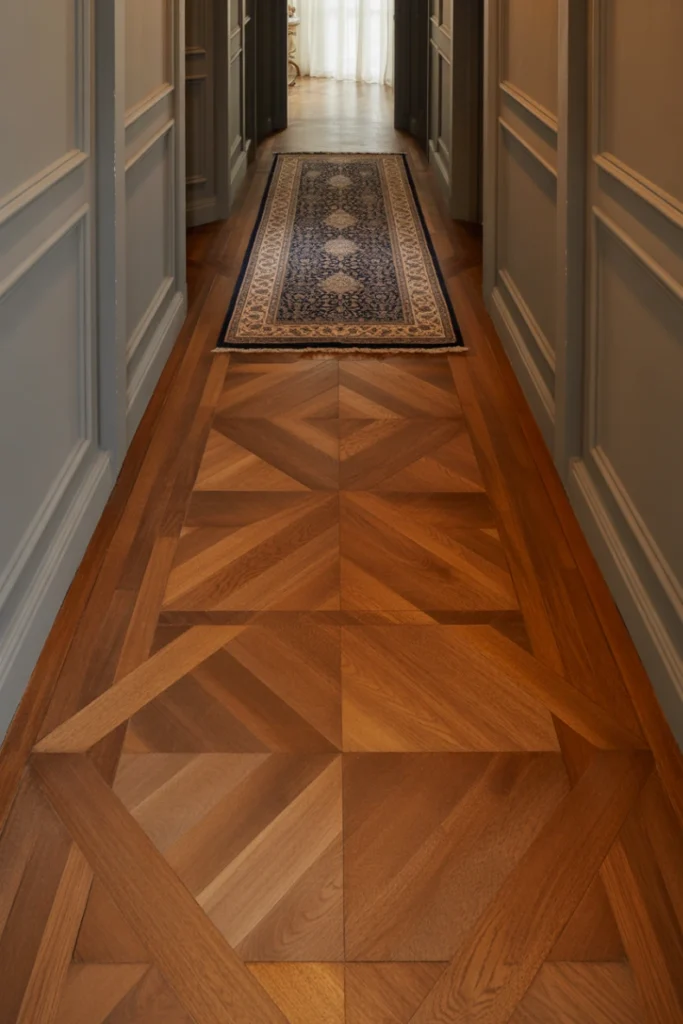
Your flooring choice sets the tone for the entire hallway, since it is the largest surface in the room and the one every guest walks on. Herringbone wood adds movement and elegance, patterned tiles add character and are easy to clean, and marble or stone inlays add luxury to a formal entry. In a long hallway, lay planks or tiles along the length of the hall to draw the eye forward, and use a border or a change in pattern at the doorway to mark the transition into the next room.
Add warmth with a runner that complements the flooring material rather than competing with it: a wool runner over wood, a flatweave over tile, and a simple bordered design over a busy patterned floor. Choose flooring that handles the traffic: sealed wood, porcelain tile, or luxury vinyl all cope with wet shoes and grit better than unsealed stone or pale carpet. Keep a doormat outside and a second mat inside the door, since most of the dirt that damages hallway floors arrives on the first few steps, and a two mat system catches it before it reaches your beautiful floor.
18. Add Floating Shelves

Floating shelves display small decor without taking a single inch of floor space, which makes them ideal for narrow hallways where a console would block the walkway. A shelf 24 to 36 inches long, mounted at 60 to 66 inches high, holds a small plant, a framed photo, and a catchall dish for keys. Two shelves staggered by 12 to 14 inches vertically give you a display without a cluttered look, and a single long shelf above a bench creates a complete arrival wall.
Fix shelves into studs, especially if they will hold anything heavier than a candle, and keep the styling light: three to five objects per shelf, with some empty space between them, reads as curated, while a shelf packed edge to edge reads as storage. Match the shelf material to your console, door, or trim color, wood with wood or black metal with black frames, so the wall looks intentional. Leave one shelf partly empty for mail and items that arrive daily, or the display will slowly turn into a dumping ground. A small plant trailing from the end of a shelf softens the whole arrangement and connects the shelf to the rest of the room.
19. Use Large-Scale Artwork

A single large painting or photograph can turn a hallway into a mini gallery, creating drama that a cluster of small frames rarely achieves. Choose art at least 24 by 36 inches for a main hallway wall, and scale it to the wall: the art should span roughly two thirds of the width of any furniture below it. Abstract designs suit modern spaces, landscape paintings suit a calming traditional hall, and large black and white photography suits almost any interior without competing with other colors in the room.
Lighting makes large art look deliberate rather than accidental. A small picture light above the frame, a nearby sconce, or a track light aimed at the canvas all lift the piece off the wall. Hang the center of the artwork at 57 to 60 inches from the floor, and leave enough wall around it that it can breathe, at least 6 inches on each side. If you rent or like to change art often, a picture ledge lets you lean large pieces and swap them without new holes, and it doubles as a shelf for smaller prints in front. For a cohesive look across the whole entrance, pair the artwork with the living room palette, since guests see both rooms at once, and these living room ideas show how to carry a color story from hall to living room.
20. Personalize with Unique Touches
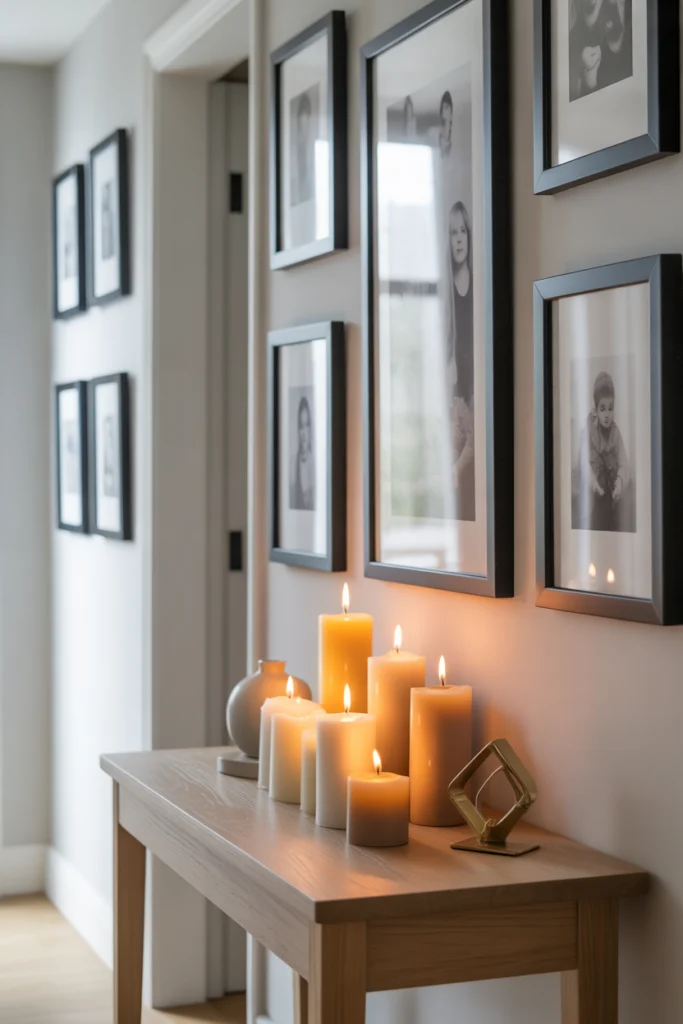
The best hallways reflect the people who live there, and personal touches are what stop a hallway looking like a furniture showroom. Add a decorative tray for keys, a signature scent with a candle or diffuser, custom artwork, or a framed quote that means something to your family. Travel souvenirs, a bowl from a favorite trip, children’s artwork in a proper frame, or a collection of family photos all make the space feel lived in and warm in a way furniture alone cannot.
Keep personal items to a small, curated group so they read as a display, not clutter: three to five pieces on a console or one shelf is plenty, with some empty space around them. Rotate the display occasionally, especially photos and children’s art, so it stays current and guests notice something new. A scent is a personal touch too: a reed diffuser in a light, clean scent such as cedar, citrus, or lavender welcomes guests before they even see the decor, and it is safer than a burning candle near coats and curtains. The rule is simple: if an object tells your story, it earns its place, and if it is only filling space, it can go elsewhere.
Conclusion
Your hallway is more than just a passage between rooms. It is the first impression your home makes, the place where daily life happens in coats, keys, shoes, and hellos, and a powerful design opportunity hiding in plain sight. With these 20 hallway decor ideas, you can elevate even the simplest entryway into a stylish and welcoming space, from bold lighting and wall art to cozy rugs, smart storage, and personal details that make the house feel like home.
Whether your style leans minimalist, rustic, or contemporary, a beautifully decorated hallway ensures every entrance feels inviting and memorable. Start with the idea that solves your biggest daily frustration, whether that is a dark corridor, shoes by the door, or a bare wall, and add the next idea when you are ready. Measure first, choose pieces that earn their floor space, and keep the walkway clear. Do that, and your hallway will set the perfect tone for your entire home every single day.
Frequently Asked Questions
How do I decorate a very narrow hallway?
Focus on the walls, not the floor. Use wall hooks instead of a coat rack, a floating shelf instead of a console table, and one large mirror to open up the space. Keep the floor as clear as possible, choose a runner no wider than 2 feet, and use a light color palette with vertical stripes or paneling to add a sense of height. A slim shoe cabinet 12 inches deep is the only floor furniture most narrow halls need.
What size mirror works best above a hallway console table?
Choose a mirror about two thirds the width of the console table, hung so its center sits at 57 to 60 inches from the floor. Leave 4 to 6 inches between the top of the console and the bottom of the mirror, and place the mirror opposite or beside a window or light source so it reflects light into the hall. A round mirror 24 to 36 inches across suits most standard consoles.
What size runner rug should I buy for my hallway?
Choose a runner 2 to 3 feet wide and long enough to cover most of the hall, leaving 4 to 6 inches of bare floor at each end. Use a low pile, washable material with a non slip pad underneath, and check door clearance before you buy: the rug should be no thicker than a quarter inch if a door swings over it. Vacuum the runner twice a week, since it takes more foot traffic than any other rug in the house.
How can I keep my hallway clutter free with a busy family?
Give every person a labeled hook at their height, one basket or cubby for shoes, and a tray by the door for daily essentials. Add a bench to sit on, a closed cabinet for items you do not want on show, and a five minute evening reset where shoes go in the cabinet, coats go on hooks, and mail goes in the tray. The system works only if every item has a home, so assign one before you buy new storage.
How do I brighten a hallway with no windows?
Start with a light color palette on walls and ceiling, add one large mirror to bounce artificial light, and layer your lighting: a ceiling fixture plus wall sconces plus a small table lamp on the console. Use warm white bulbs around 2700K on dimmers, choose glossy or satin paint on trim to reflect light, and keep furniture light in color and open in design so the hall feels airy even without daylight.
More Ideas You Will Love
 20 Furniture Ideas for Hallways: Stylish & Functional Spaces You’ll Love
 20 Dark Hallway Ideas to Brighten and Modernize Your Space
 20 Hallway Wall Decor Ideas That Transform Any Space Instantly
 22 Entrance Hall Decor Ideas for a Welcoming, Functional Entryway
 12 Modern Hallway Renovation Ideas for Your Homes
 22 Upstairs Hallway Ideas to Elevate Your Home’s Style