
19 Small Entryway Decor Ideas That Are Stylish & Functional

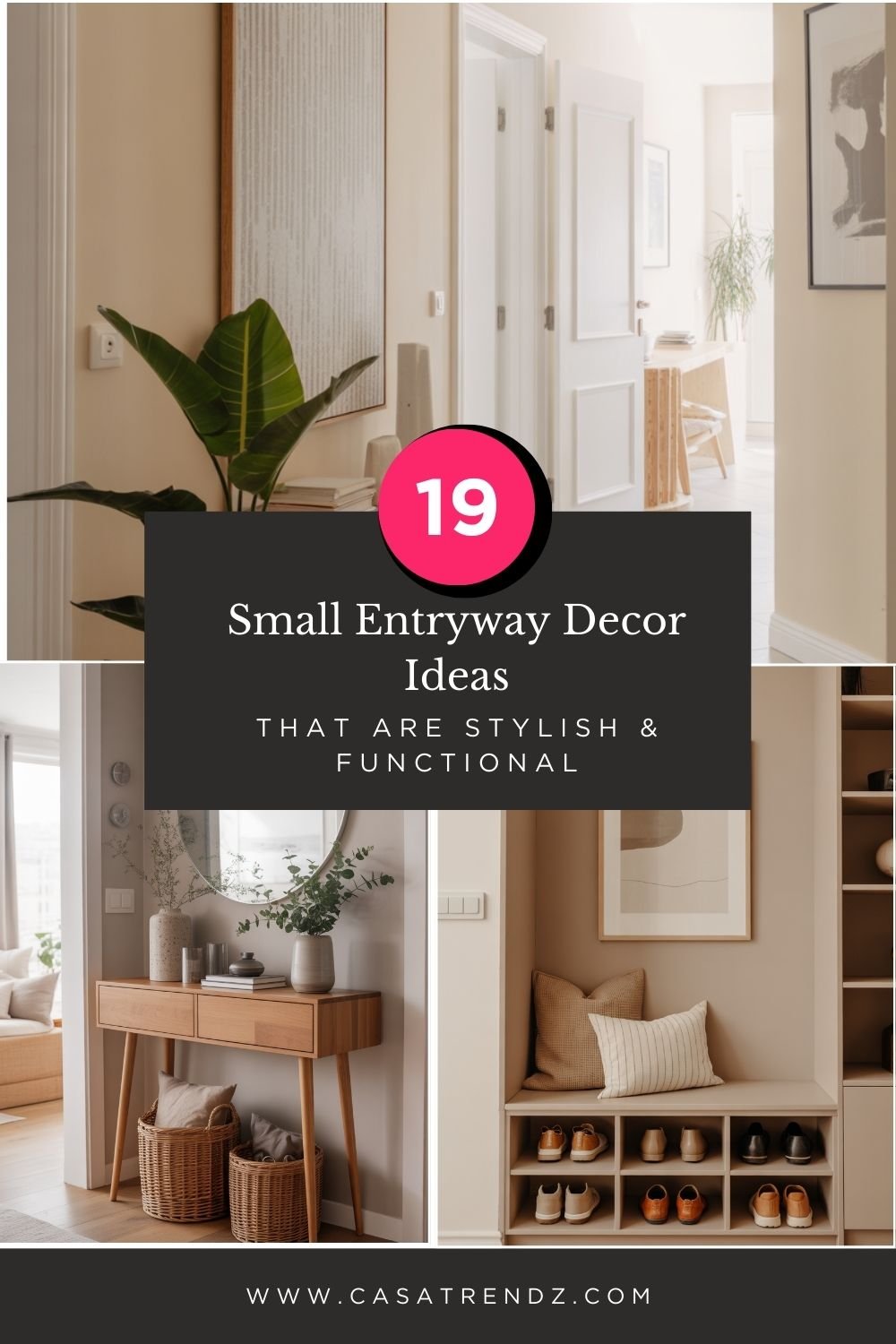
Your entryway is the first room anyone sees, and in a small home it often has to do the work of three rooms at once. It needs a place for keys, coats, shoes, and bags, a spot to sit down and put shoes on, and enough style to set the tone for the rest of the house, all in a space that may be only 3 to 5 feet wide. The good news is that a small entryway does not need a renovation to feel welcoming. It needs furniture sized for the space, storage that uses the walls instead of the floor, and a few deliberate choices about light and color.
This guide covers 19 small entryway decor ideas that work in real homes, from narrow apartment hallways to small foyers that open straight into a living room. Each idea includes practical sizes, materials, and step by step setup advice, so you can copy what fits your space and skip what does not. Before you buy anything, measure your entryway carefully. Note the width of the walkway, the swing of the front door, the height of the ceiling, and the depth you can spare for furniture. A comfortable walkway needs at least 30 inches of clear space, with 36 inches preferred if two people pass through at once. Furniture deeper than 14 inches will crowd most small entries, so slim profiles matter more than style alone.
It also helps to plan your entryway in three small zones. First, a landing zone right by the door for keys, mail, and sunglasses. Second, a storage zone for coats, shoes, and bags, ideally on the wall so the floor stays clear. Third, a finishing zone with a mirror and good light, so you can check your appearance before leaving. When each item has one home, a small entry stops feeling cluttered, even on busy mornings. Work through the ideas below in that order, starting with the problem that bothers you most, and you will be surprised how much calmer a tiny entry can feel.
1. Add a Slim Console Table for Style and Function
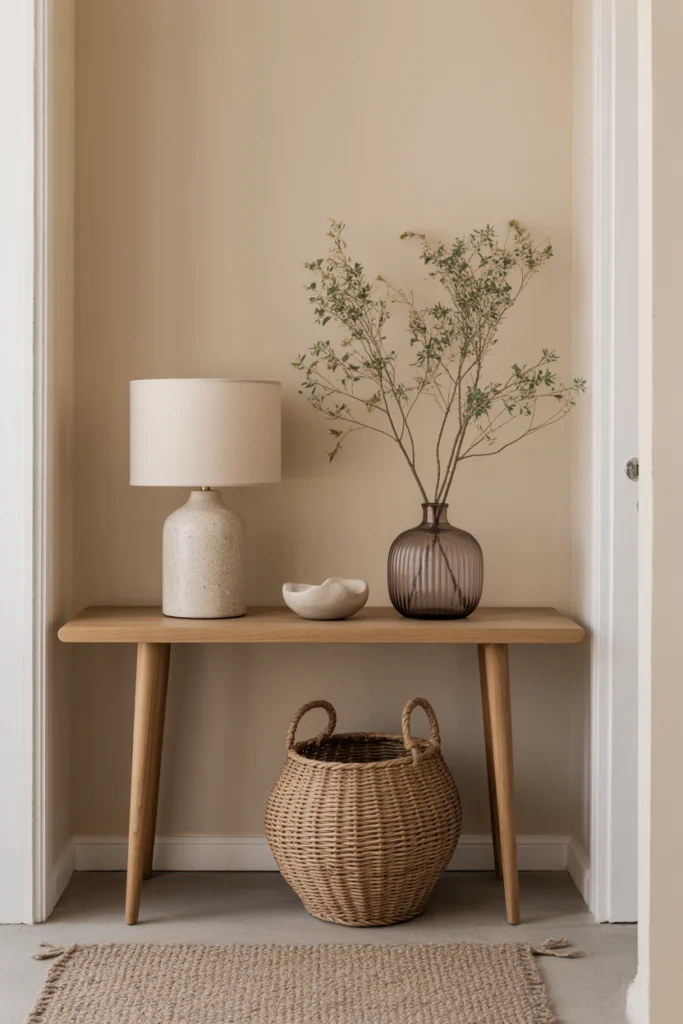
A slim console table is one of the most useful pieces for a small entryway because it creates a landing surface without blocking the walkway. Look for a table 10 to 12 inches deep and 30 to 48 inches wide, with open legs rather than a solid base, so light and air can pass underneath and the room feels larger. A table with one shallow drawer is ideal for keys and mail, while an open lower shelf holds a basket for dog leads, gloves, or reusable shopping bags. Choose a height of 30 to 34 inches, which matches standard console height and works well under a mirror hung 6 to 8 inches above it.
Style the top in layers, but keep it simple. Start with one taller item, such as a vase with fresh greenery or a small lamp, then add a low stack of two books and a small decorative bowl for keys. Leave at least a third of the surface empty so the table looks intentional rather than crowded. If your entryway is narrower than 36 inches, consider a wall mounted floating console instead. It gives you the same landing surface with nothing touching the floor, and you can slide a pair of small baskets underneath for shoes. For more entryway inspiration, see these modern entryway ideas that pair slim furniture with clean lines.
2. Use a Large Mirror to Open Up the Space
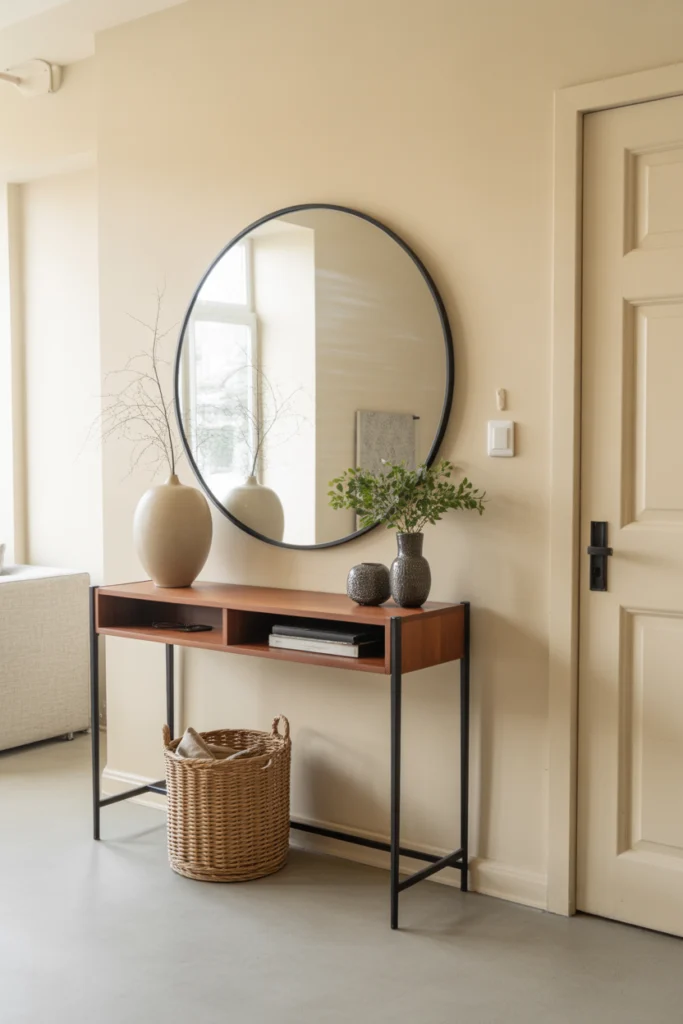
A large mirror is the fastest way to make a small entryway feel brighter and bigger. A mirror reflects both natural and artificial light, and it doubles the visual depth of the space. For a small entry, choose a mirror at least 24 inches wide and 30 inches tall, or a full length leaning mirror about 18 inches wide and 60 inches tall if you have the wall space. Round mirrors soften a boxy entry, while tall rectangular mirrors add height to a low ceiling. Hang the center of the mirror at about 57 to 60 inches from the floor, which is comfortable eye level for most adults.
Placement matters as much as size. If your entry has a window or a glass front door, hang the mirror on the opposite wall so it bounces that light back into the room. If there is no natural light, place the mirror above the console table and add a small lamp or sconce nearby so the reflection adds glow rather than darkness. Choose a frame that matches the rest of your home, such as black metal for a modern look, warm wood for a rustic feel, or brass for a touch of warmth. A mirror also earns its place every day as a last check before you leave the house, so keep the glass clean and the area in front of it clear.
3. Install Wall Hooks to Keep Items Organized
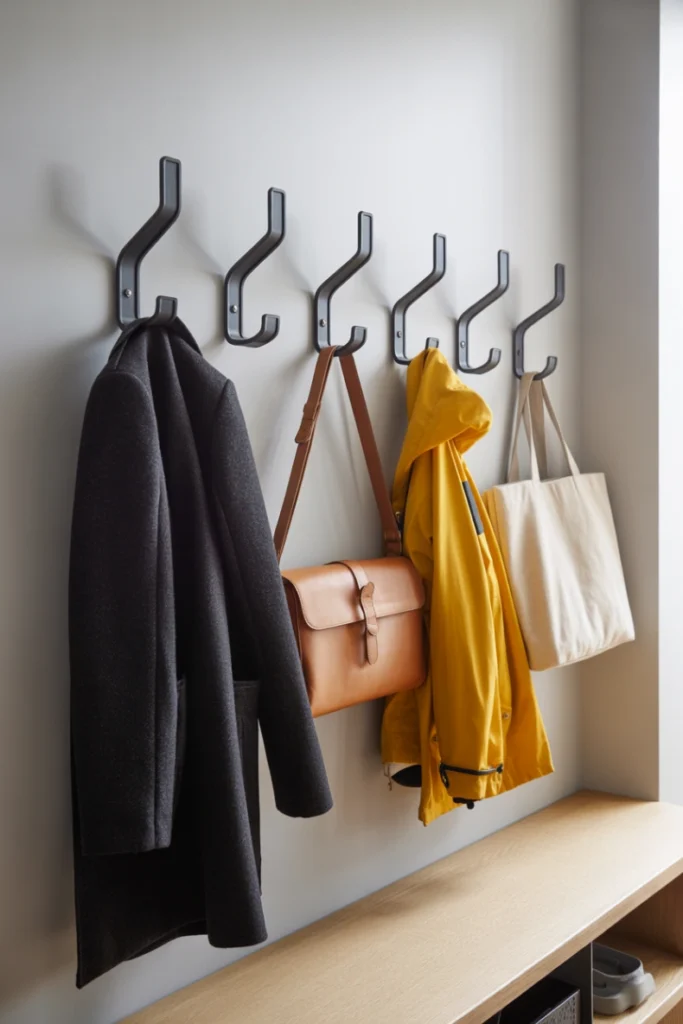
Wall hooks are the simplest and cheapest way to bring order to a small entryway, because they store coats, bags, hats, and umbrellas on the wall instead of on the floor. Install sturdy hooks at two heights if your household includes children: adult hooks at 60 to 66 inches from the floor, and lower hooks at 42 to 48 inches for kids. Space hooks 8 to 12 inches apart so coats do not bunch together, and always screw them into wall studs or use heavy duty wall anchors rated for at least 15 pounds each. A single row of 3 to 5 hooks is usually enough for a small household.
For a tidier look, choose hooks that match your other hardware, such as matte black, brushed brass, or wood pegs. A rail with hooks plus a small upper shelf is even better, because the shelf holds hats, sunglasses, or a small plant while the hooks carry the heavy items below. Add a small bench or shoe tray underneath to catch drips and dirt, and give each family member one hook of their own. That one rule, one hook per person, stops the pile of coats on a chair that makes so many small entries feel chaotic.
4. Choose a Space-Saving Bench with Storage
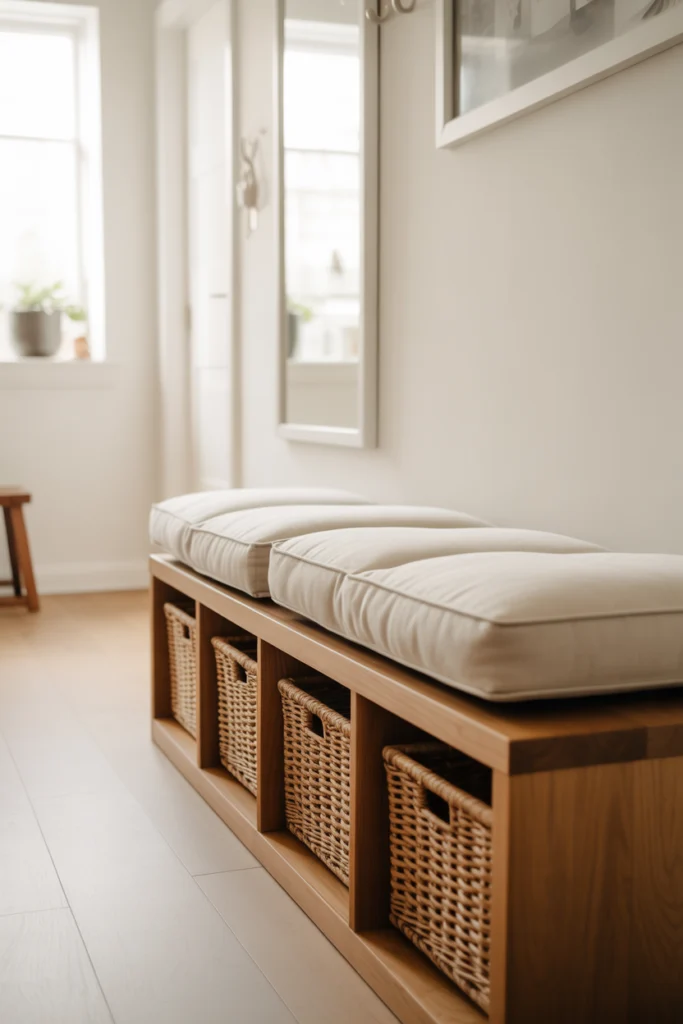
A compact bench gives you a place to sit while putting on shoes, and it grounds the entryway visually so it feels like a real room rather than a passage. Look for a bench 36 to 48 inches wide, 14 to 18 inches deep, and 17 to 19 inches high, which is standard seat height. A bench with hidden storage is best for small spaces: a lift up seat hides shoes and bags, while open cubbies underneath keep everyday shoes visible and easy to grab. If your entry is very narrow, choose a bench with slim legs or a floating design mounted to the wall, which keeps the floor visible and the space feeling open.
Add a thin cushion 2 to 3 inches thick in a durable, wipeable fabric, plus one or two small throw pillows in colors that match your hallway. Avoid a thick, oversized cushion that makes the bench feel bulky. Under the bench, use one basket per person for shoes, and keep a small boot tray beside it for wet days. A bench works best when it sits within two steps of the door, so you can sit, put on shoes, grab your coat from a nearby hook, and leave without crossing the whole house.
5. Add Floating Shelves for Vertical Storage
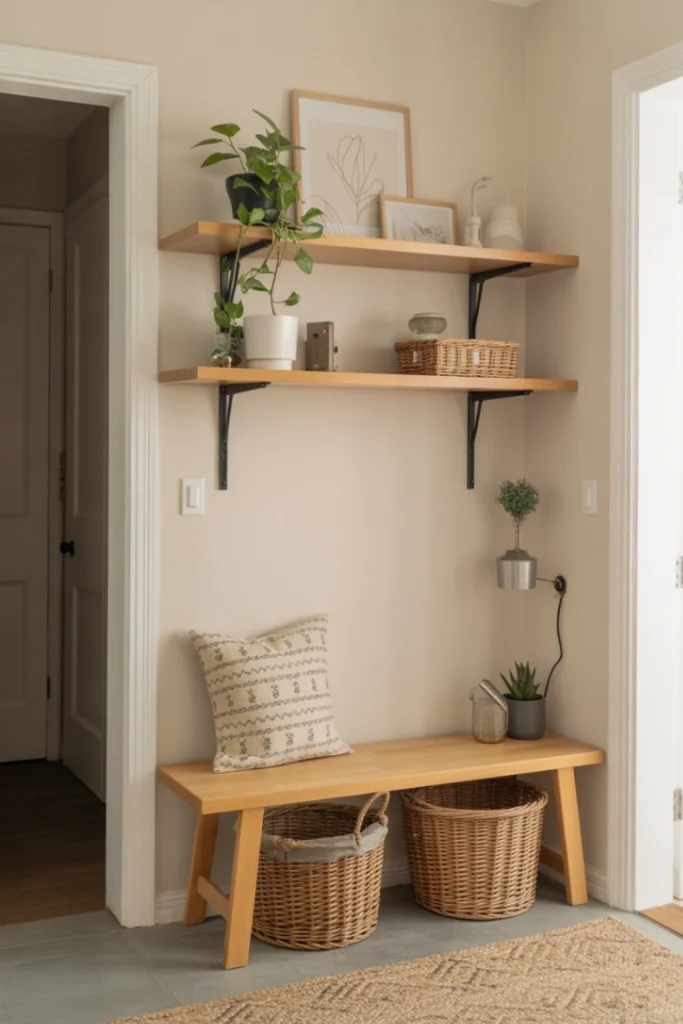
When floor space is limited, the walls are your best storage. Floating shelves add display and storage space without taking a single inch of floor, and they draw the eye upward, which makes a low or narrow entry feel taller. Install one or two shelves above a console table or bench, spacing them 12 to 15 inches apart vertically. Shelves 24 to 36 inches long and 6 to 8 inches deep are plenty for a small entry. Deeper shelves look heavy and invite clutter, so keep them shallow and deliberate.
Style each shelf with only three to five items, mixing heights for interest. Try a small potted plant, a framed photo, a stack of two books, and a tiny basket for sunglasses or keys. Leave some empty space on every shelf, because a crowded shelf makes a small entry feel smaller. Use solid brackets or hidden metal rods rated for the weight you plan to put on them, and always anchor into studs. If you rent, use a picture ledge style shelf with a lip, which holds frames safely and can be removed with minimal wall repair.
6. Use an Accent Wall to Add Personality
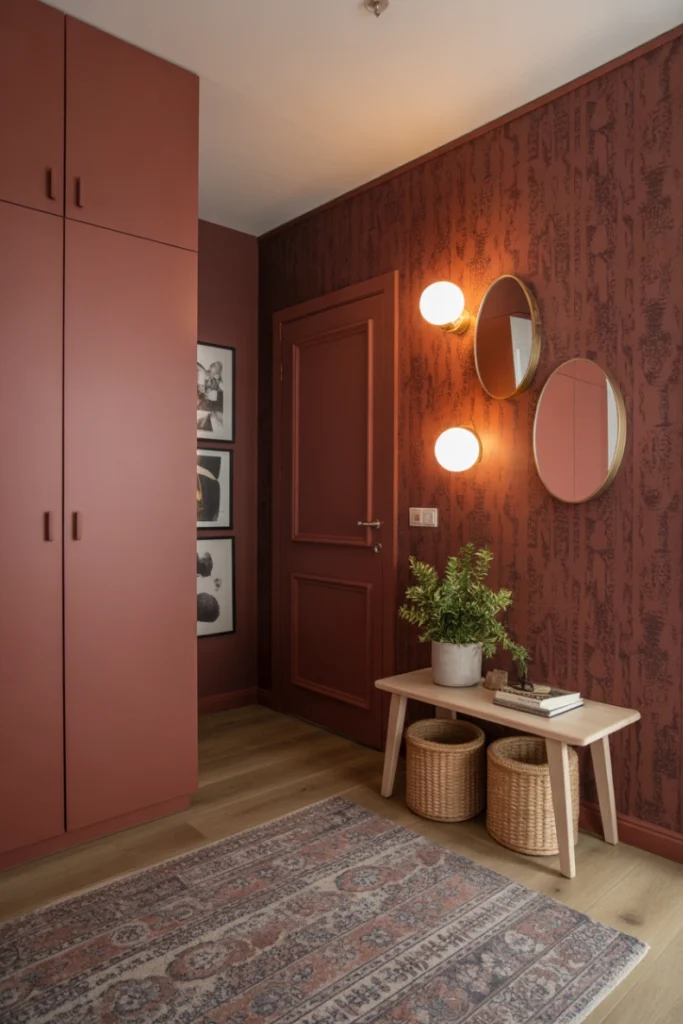
An accent wall adds personality to a tiny entry without adding furniture, which is exactly what a small space needs. Paint is the easiest option: choose a bold but not overwhelming color, such as deep navy, forest green, terracotta, or warm charcoal, and paint only the wall you see first when you walk in. Peel and stick wallpaper is a good rental friendly alternative, with geometric prints, subtle stripes, or grasscloth texture adding depth without a permanent commitment. For texture, consider vertical wood slats or beadboard panels painted in a soft white or sage.
Keep the rest of the entry simple so the accent wall can shine. Pair it with a slim console, a round mirror, and one or two neutral baskets, and avoid adding more patterns nearby. If your entry opens into another room, pick an accent color that already appears somewhere in that room, such as a cushion or a piece of art, so the transition feels planned. Test paint in a small patch first and look at it in both daylight and evening light, because a color that looks rich at noon can look very dark in a windowless entry at night. For narrow spaces, see these narrow hallway makeovers for accent wall ideas that add depth without closing a space in.
7. Add a Runner Rug to Define the Space
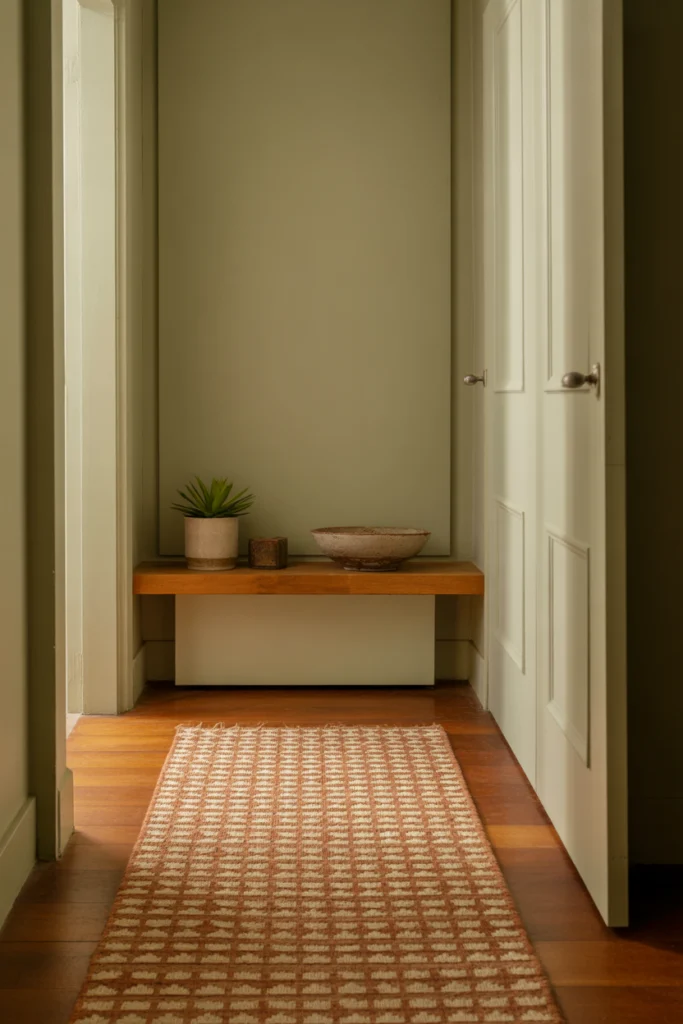
A runner rug instantly defines a small entryway, adds warmth underfoot, and protects your flooring from heavy traffic and wet shoes. For a narrow entry, choose a runner 2 to 2.5 feet wide and long enough to cover most of the walkway, usually 5 to 8 feet, leaving 4 to 6 inches of bare floor on each side so the rug looks intentional rather than wall to wall. Low pile rugs, flatweaves, and indoor outdoor rugs work best, because they are easy to clean, do not catch on doors, and allow a door to swing over them.
Choose a pattern if you want visual interest, such as a simple stripe, a vintage style medallion, or a geometric print, or choose a solid neutral in beige, charcoal, or soft gray for a calm look. Always use a non slip rug pad underneath, cut slightly smaller than the rug, to stop sliding and to add a little cushioning. Shake the rug outside weekly, vacuum it twice a week in high traffic homes, and spot clean spills quickly. A washable runner is worth the investment for families with kids or pets, because an entry rug takes more dirt than any other rug in the house.
8. Use Baskets for Stylish Hidden Storage
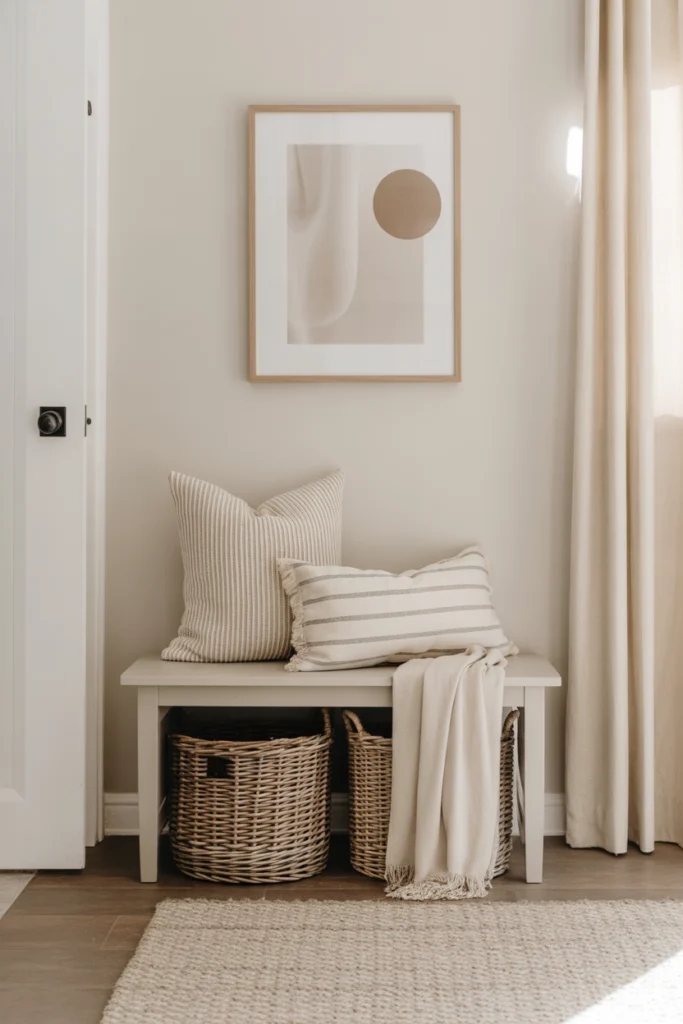
Baskets are the easiest way to hide clutter in a small entryway while adding warmth and texture. Use them under a bench, on the lower shelf of a console table, or on floating shelves to hold shoes, scarves, gloves, pet supplies, and kids items. Seagrass, rattan, and woven cotton baskets suit most styles, while felt or fabric bins work better for soft items like hats and gloves. Choose baskets that fit their spot with about an inch of clearance on each side, so they slide in and out easily without snagging.
Label baskets if more than one person uses the entry, using simple tags or a small chalk label, so everyone knows where their things belong. Keep one basket for outgoing items, such as library books, returns, or items to take to the car, and empty it daily so it does not become a second junk drawer. Match basket colors to your entry palette, sticking to one or two tones rather than a mix of bright colors, which keeps a small space feeling calm. A basket that is too large will dominate a small entry, so measure first and choose the smallest size that still holds what you need.
9. Add Greenery to Bring Life to the Entryway
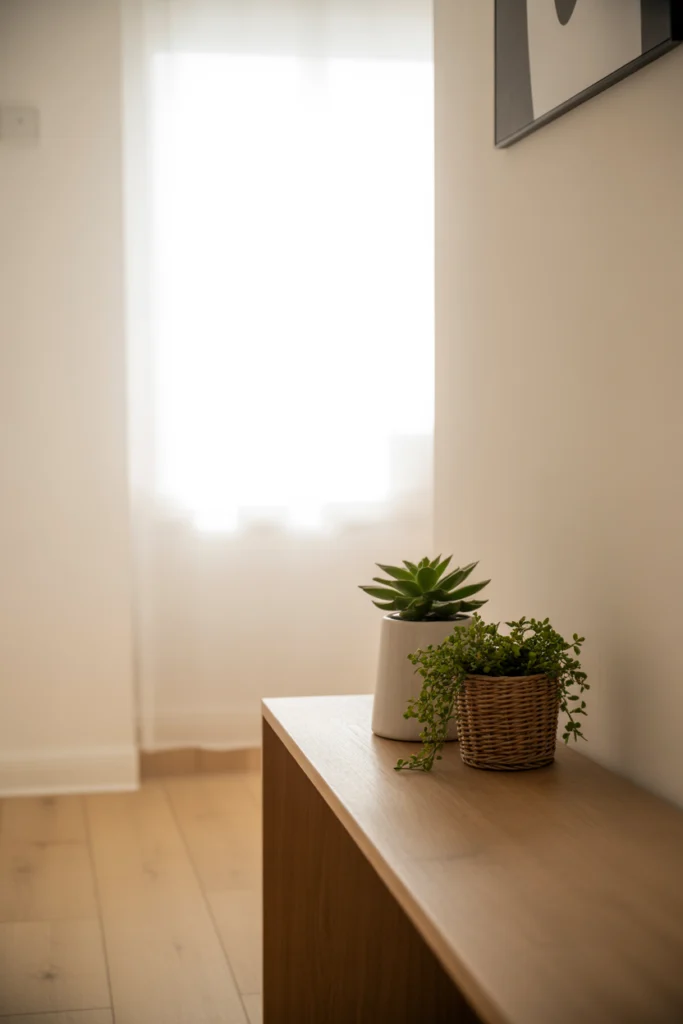
Plants make a small entryway feel fresh, alive, and welcoming, even if you only have room for one or two. Choose low maintenance varieties that tolerate low light and irregular watering, such as pothos, snake plants, ZZ plants, or small succulents. A pothos in a hanging planter or on a high shelf trails beautifully and needs watering only when the soil is dry. A snake plant in a slim tall pot fits neatly beside a console table and survives in corners with almost no direct light.
If floor space is truly tight, use a wall mounted planter, a slim plant stand, or a small pot on a floating shelf instead of a floor plant. Keep plant pots in proportion: a pot 6 to 8 inches wide is right for a console table, while a floor pot should be no wider than 10 to 12 inches in a small entry. Wipe leaves monthly to keep them dust free, and use pots with drainage holes and a saucer to protect wood furniture. If real plants are not realistic for your light or schedule, one high quality faux plant in a nice pot is better than several sad real ones, and it still adds the color and softness a hard surfaced entry needs.
10. Hang Artwork to Add Character
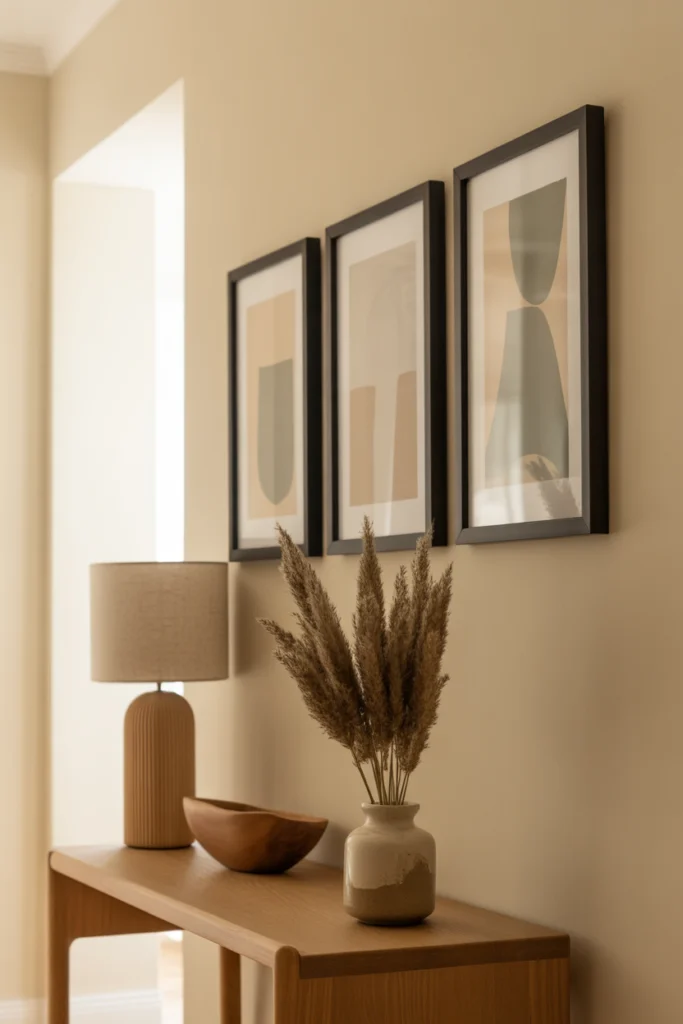
Artwork gives a small entryway personality faster than almost anything else, and it does not use any floor space at all. Choose one large piece, about two thirds the width of the furniture below it, for a bold statement, or arrange three to five smaller frames in a gallery row for a curated look. Abstract prints, nature photography, line drawings, and typography all work well, as long as the colors connect to the rest of your home. Hang art with its center at 57 to 60 inches from the floor, or 6 to 8 inches above a console table or bench.
Keep frames consistent for a calm look, using the same color and material, such as black, natural wood, or brass, even if the art inside is different. Avoid hanging art too high, which is the most common mistake in small entries, and avoid pieces that stick out far from the wall in a narrow walkway. If your entry is dark, choose art with lighter tones or add a small picture light to make it stand out. One personal piece, such as a travel photo or a print from a favorite place, makes an entry feel like home in a way that generic decor cannot.
11. Opt for a Narrow Shoe Cabinet
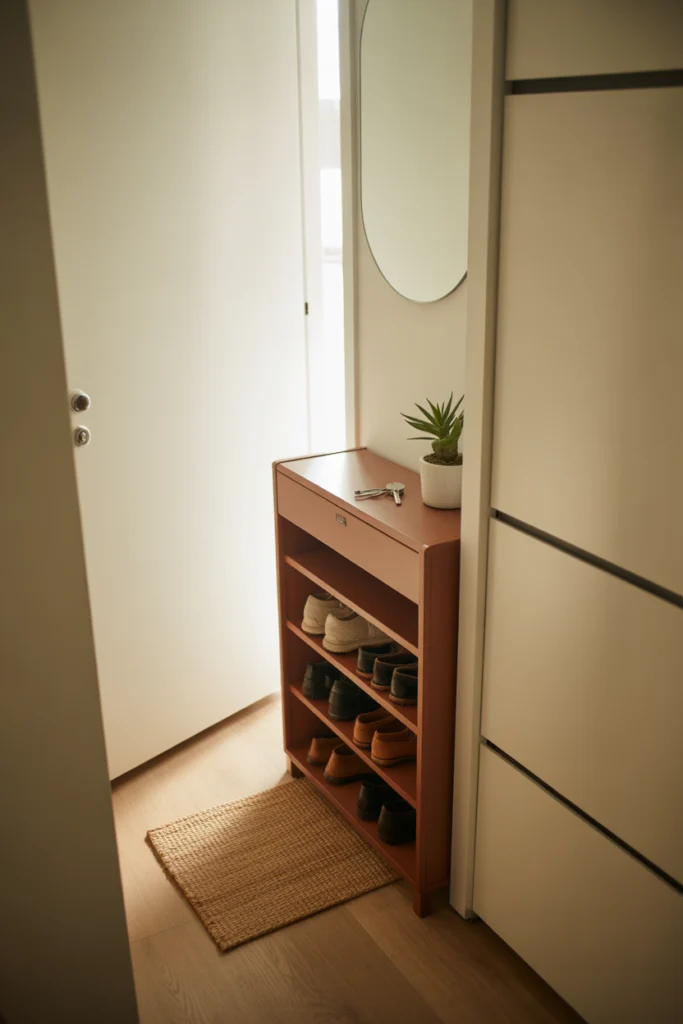
Shoes are the fastest source of clutter in a small entryway, and a narrow shoe cabinet solves the problem without looking like storage furniture. Look for a cabinet 6 to 8 inches deep, which is slim enough for even the tightest entry, with tilt out drawers that hold 2 to 3 pairs per drawer. A cabinet 30 to 40 inches wide with two or three drawers holds 6 to 12 pairs, which is plenty for most households. Because the cabinet is shallow, it can sit against a wall without blocking the walkway, and its flat top becomes a useful surface.
Style the top with a small plant, a tray for keys, or a table lamp, so the cabinet looks like furniture rather than a shoe box. Inside, keep only the shoes you wear most often, and store out of season pairs elsewhere. Add a small boot tray beside the cabinet for wet or muddy shoes, and wipe the cabinet top weekly, because it collects dust and keys quickly. Choose a finish that matches your entry, such as glossy white for a modern home, warm oak for a rustic feel, or matte black for contrast against light walls.
12. Install a Wall-Mounted Coat Rack
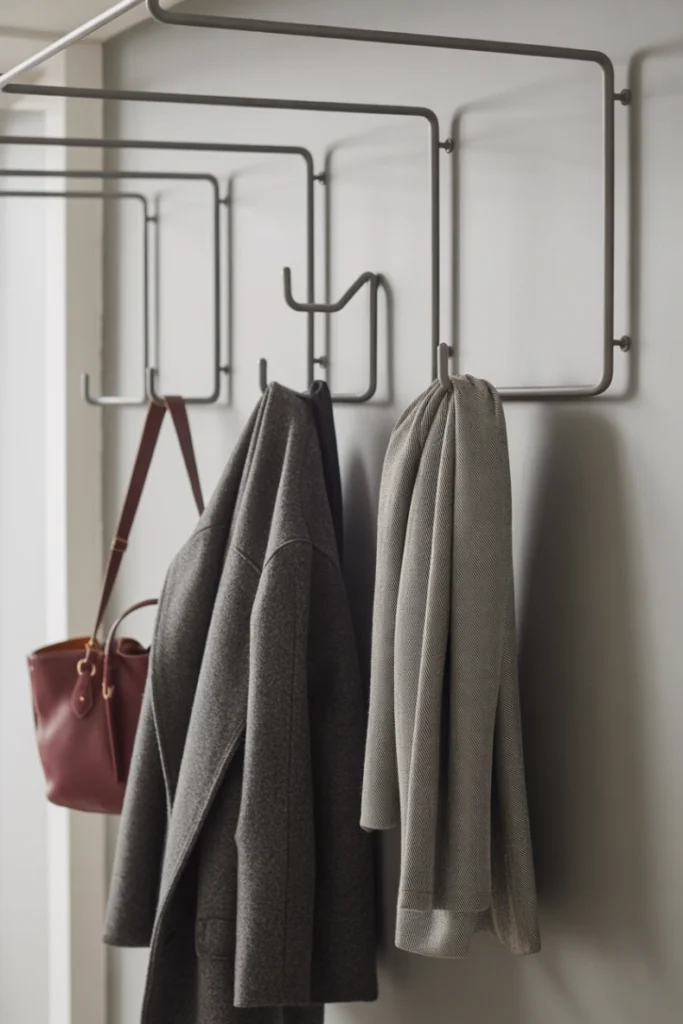
A wall mounted coat rack offers more structure than individual hooks, and it can double as a decorative feature in a small entry. Choose a rack 24 to 36 inches wide with 4 to 6 pegs, mounted at 60 to 66 inches from the floor so coats hang clear of the floor. Some racks include an upper shelf for hats, bags, or small baskets, which adds storage without extra wall holes. Mount the rack into studs or use heavy duty anchors, because a rack full of winter coats can weigh 20 pounds or more.
Place the rack within arm’s reach of the door, and pair it with a shoe cabinet or bench below to create a mini mudroom in just a few square feet. Keep the rack to one coat per peg, and move out of season coats to a closet so the rack never looks overloaded. A wooden rack suits farmhouse and traditional homes, while a black metal rack fits modern and industrial spaces. For a complete entry setup, pair this with ideas from these entrance hall decor ideas that combine coat storage with seating and mirrors.
13. Add a Statement Light Fixture
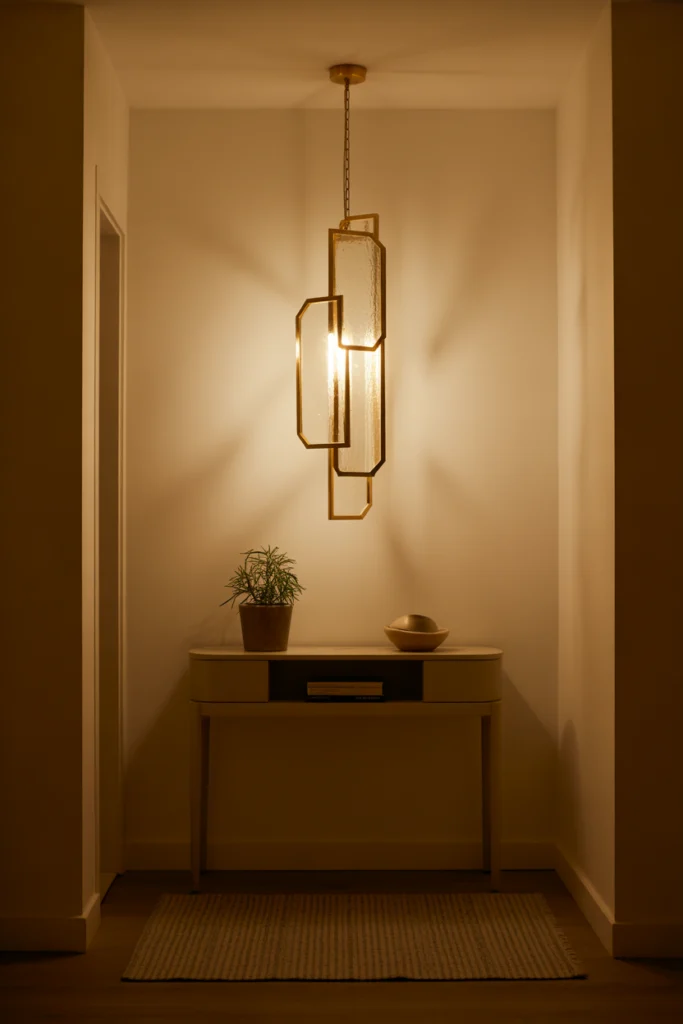
Lighting sets the mood of an entryway, and the right fixture can transform a plain small space into a welcoming one. In a standard 8 foot ceiling entry, choose a flush mount or semi flush mount fixture so no one bumps their head, keeping at least 7 feet of clearance below it. In an entry with a higher ceiling, a small pendant or mini chandelier 12 to 16 inches wide adds drama without overwhelming the space. Choose warm white bulbs, 2700 to 3000 Kelvin, for a cozy glow, and put the fixture on a dimmer if possible so you can brighten it for arrivals and soften it in the evening.
Match the fixture finish to your other hardware, such as brass, black, or brushed nickel, for a cohesive look. If your entry has no ceiling light, or if wiring a new one is not practical, use plug in wall sconces or a small table lamp on the console instead. A statement fixture works best when the rest of the entry stays simple, so avoid pairing a bold chandelier with a busy accent wall and patterned rug at the same time. One strong focal point is enough in a small space, and good lighting makes every other decor choice look better.
14. Use a Decorative Tray for Everyday Essentials
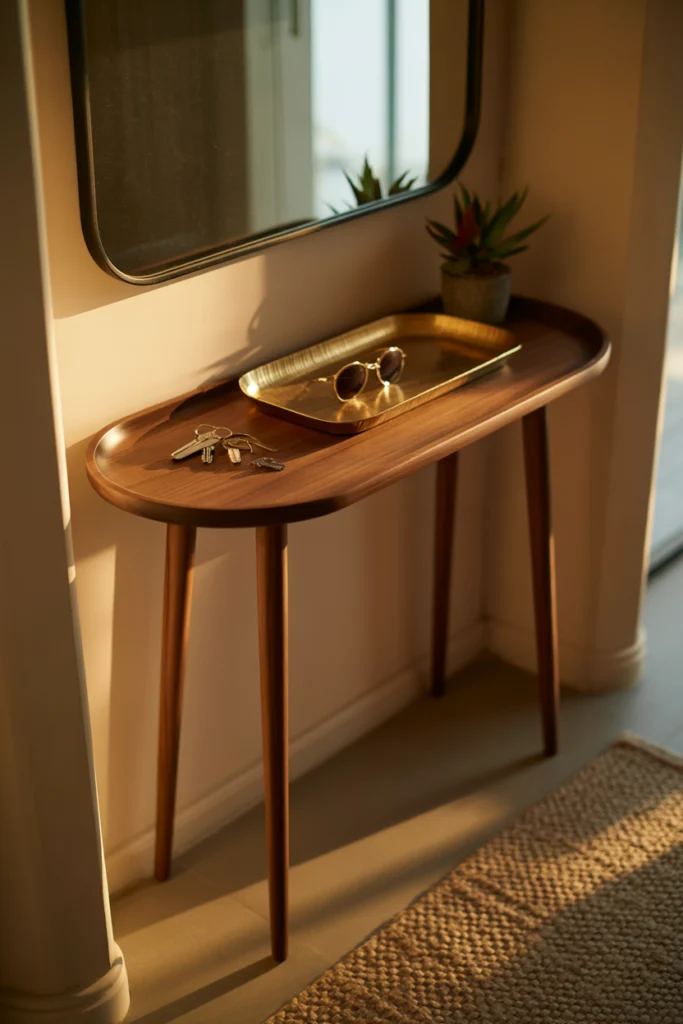
A decorative tray is a small change that makes a big difference in a small entryway, because it corrals keys, sunglasses, wallets, and mail into one neat spot. Choose a tray 12 to 16 inches long and 8 to 10 inches wide for a console table, or a smaller round tray 10 to 12 inches wide for a shoe cabinet top. Wood trays suit warm, rustic entries, marble or stone trays suit elegant spaces, and metal trays suit modern homes. The tray should be large enough to hold daily essentials, but small enough to leave room for a vase or lamp beside it.
To keep the tray useful, follow one rule: only items you use every day belong in it. Once a week, empty the tray, return stray items to their real homes, and wipe it clean. Pair the tray with one decorative item, such as a small candle or a tiny plant, so it looks styled rather than purely functional. If two people share the entry, use two small trays side by side instead of one large one, so each person has a clear spot. A tray also protects wood furniture from keys and wet items, which helps a console table last longer.
15. Try Minimalist Decor for a Clean Look
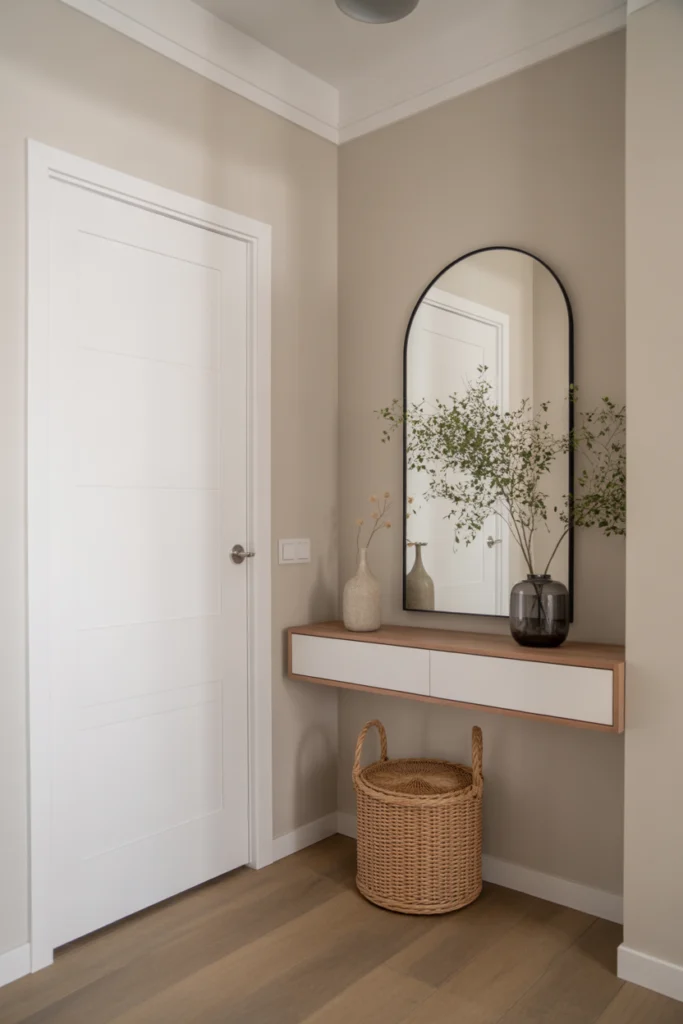
In a small entryway, less truly is more. A minimalist approach keeps the space feeling open, calm, and easy to clean, because every item earns its place. Start by removing everything from the entry, then add back only what you use daily: a mirror, a slim console or bench, one storage solution for shoes, and one or two decorative touches. Stick to a palette of two or three colors, such as white, warm wood, and one accent like sage green or navy, and repeat those colors in the rug, baskets, and art.
Minimalism does not mean empty or cold. It means choosing quality over quantity: one beautiful mirror instead of three small ones, one sturdy bench instead of a bench plus a chair plus a stool. Keep surfaces mostly clear, hide small items in a drawer or basket, and clean the entry weekly so dust and clutter never build up. If you love decor, rotate one seasonal item, such as a wreath in winter or a vase of fresh flowers in spring, rather than adding more permanent pieces. A minimalist entry is also the easiest to keep tidy on busy mornings, because there is simply less to move, dust, and trip over.
16. Decorate with Entryway-Friendly Wall Sconces
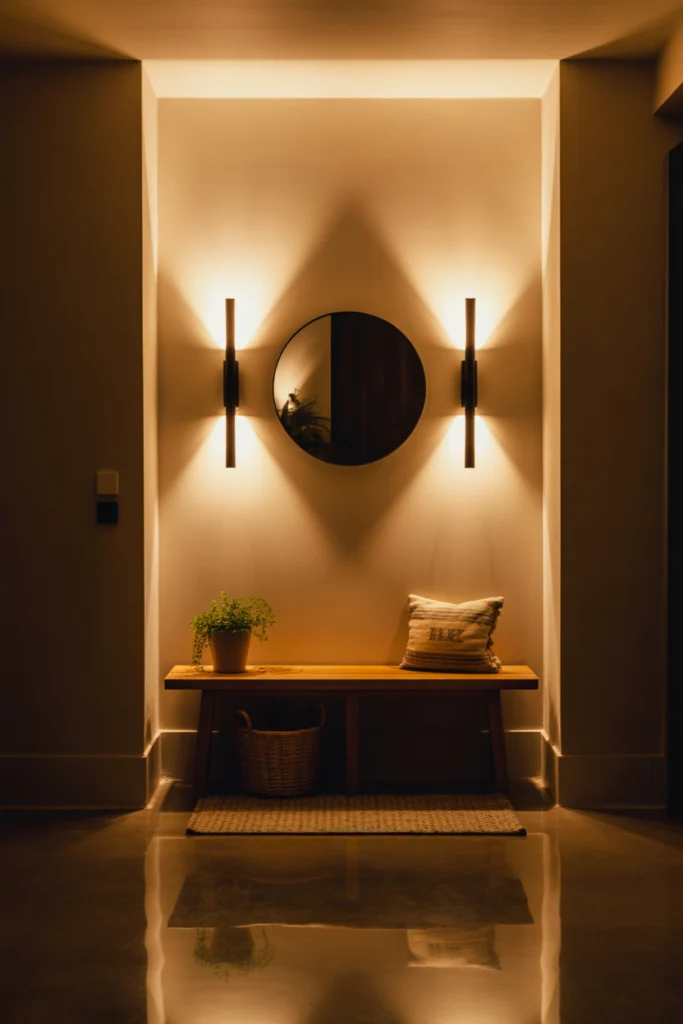
If your entryway has no room for a table lamp, wall sconces are the perfect solution. They provide soft, ambient light while keeping every surface clear, which matters in a space where the console top is already working hard. Plug in sconces are the easiest option for renters, because they need no wiring and can be installed with two screws and a cord cover. Hardwired sconces look cleaner and are worth considering during a renovation, especially if you can add a dimmer switch.
Mount sconces 60 to 66 inches from the floor, flanking a mirror or artwork, or place a single sconce above a bench in a very narrow entry. Choose a shade that directs light up and down for a soft glow, rather than a bare bulb that glares in a small space. Brass, black, and rattan sconces all work well, depending on your style. Pair sconces with a warm bulb, 2700 Kelvin, and keep the rest of the lighting simple, so the entry feels layered rather than bright and harsh. Sconces also add a touch of elegance that makes a small entry feel finished, even if the rest of the decor is simple.
17. Add a Peg Rail for Multi-Purpose Use
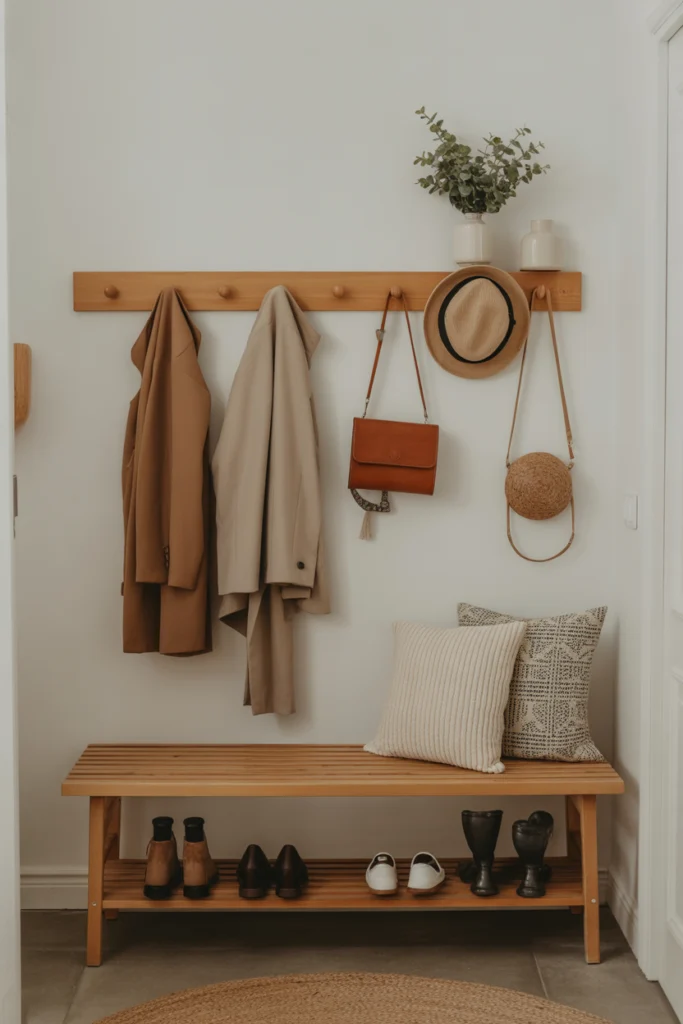
A peg rail is a simple wooden board with evenly spaced pegs, and it is one of the most versatile storage pieces for a small entryway. It holds coats, bags, hats, and umbrellas, and it can also display lightweight decor such as a small basket or a wreath. Choose a rail 24 to 48 inches long with pegs spaced 6 to 8 inches apart, mounted at 60 to 66 inches from the floor. A Shaker style peg rail in painted wood suits cottage and farmhouse homes, while a darker stained rail suits traditional spaces.
Pair the peg rail with a bench below to create a complete entry zone in a narrow hallway, with coats above and shoes below. Keep one peg free for guests, and avoid overloading the rail, because a rail crowded with bags and coats looks messy no matter how pretty the rail itself is. Peg rails are also easy to install, usually needing only two or three screws into studs, and easy to paint to match your walls if you want them to blend in. For a long, narrow entry, a longer peg rail along one wall is often more practical than a coat rack, because it spreads storage along the hallway instead of concentrating it in one spot.
18. Style a Narrow Nook with Built-In Storage
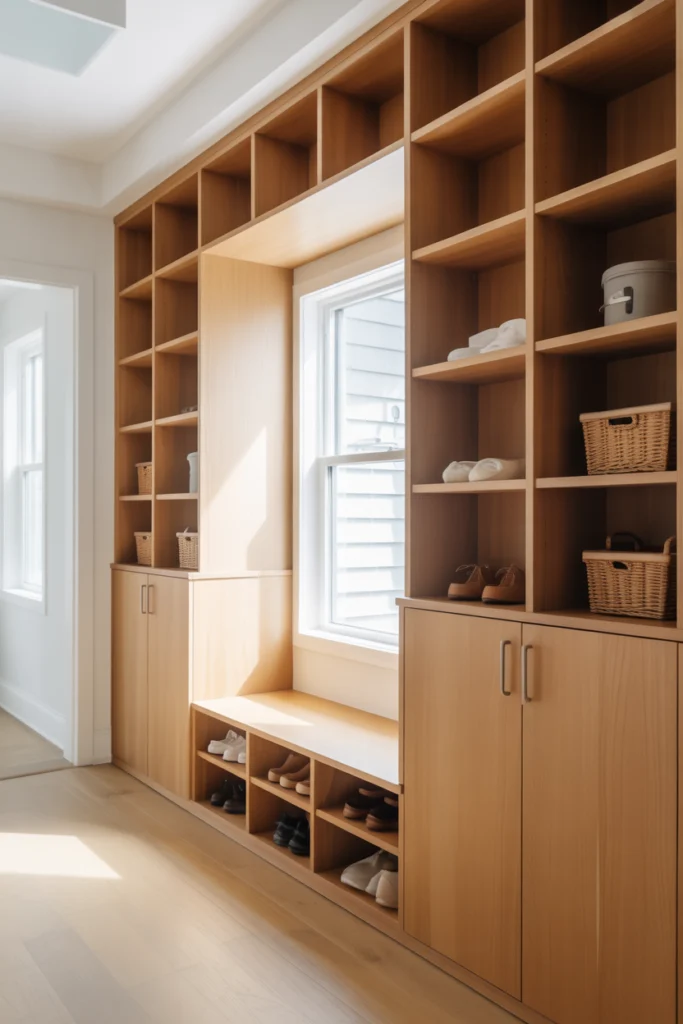
Many small entries include an awkward nook, a recessed wall, or an under stair corner that seems too small to use. With built in storage, that nook can become the hardest working part of your entry. Add shallow shelves 10 to 12 inches deep, a row of cubbies for shoes, or a custom bench that fits the nook exactly, leaving no wasted gaps on either side. Measure the nook three times before ordering or building, because older homes often have walls that are not perfectly square, and a bench that is even half an inch too wide will not fit.
Paint or finish the built in to match your trim so it looks like part of the house rather than an add on. Add a cushion to a nook bench, hooks above it, and a small basket inside each cubby for gloves or pet supplies. If the nook is deep, use pull out baskets or bins so items at the back stay reachable. Even a nook only 18 inches deep can hold a bench and hooks, and a nook 24 inches deep can hold a full mini mudroom. The key is to design for what you actually store, not for a photo, and to keep the most used items at arm height. More built in ideas for tight spaces appear in these hallway decor ideas that turn awkward corners into useful storage.
19. Add Personal Touches for a Welcoming Feel
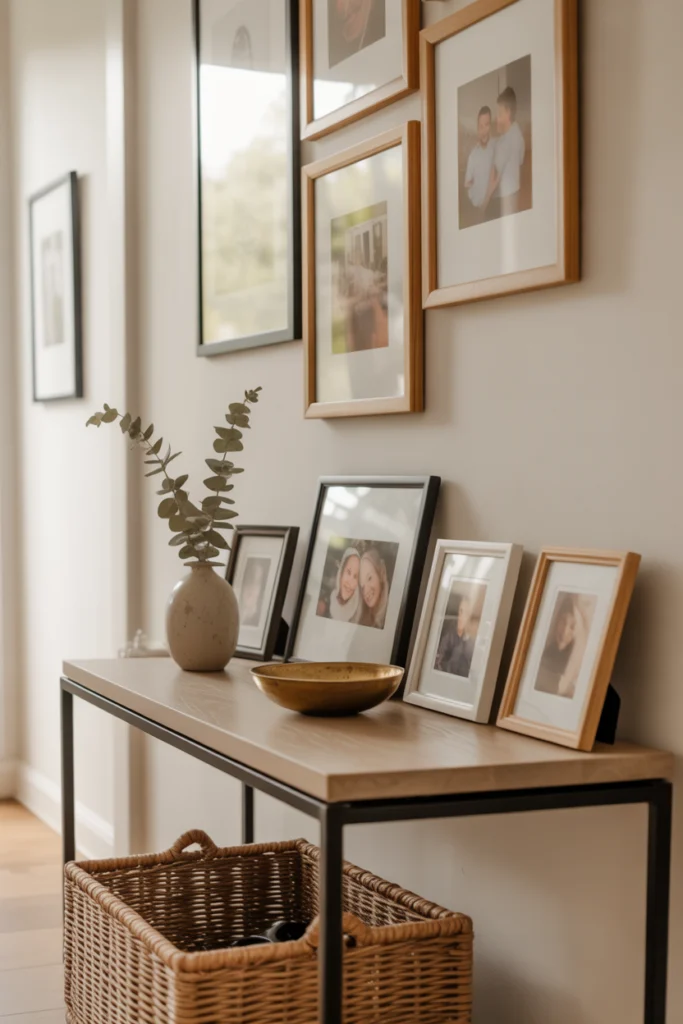
Personal touches are what turn a functional entryway into a welcoming one. Choose a few items that tell your story, such as framed family photos, a piece of art from a favorite trip, a handmade bowl for keys, or a small collection of travel souvenirs. Display them in one place, such as a gallery row above the console or a single shelf, rather than scattering them around the entry, so they feel curated instead of cluttered. Keep personal items small in scale, because a large sculpture or oversized frame will dominate a tiny entry.
Rotate personal touches with the seasons to keep the entry feeling fresh without adding more stuff. A small vase of fresh flowers in spring, a bowl of pinecones in fall, or a framed holiday card in winter adds warmth for a few weeks and then goes away. The goal is an entry that feels like you the moment you walk in, without making guests navigate around your belongings. When personal touches are chosen carefully and kept to a few meaningful pieces, even the smallest entry feels lived in, loved, and truly welcoming.
Conclusion
Small entryways may be limited in size, but with the right decor ideas they can become beautifully functional and full of style. These 19 small entryway decor ideas show how to maximize every inch, whether through smart storage, thoughtful lighting, or carefully chosen decor. From slim furniture to bold accent walls and clever organization, each idea helps you create a welcoming space that sets the tone for your entire home.
Start with one change that solves your biggest frustration, whether that is shoes on the floor, coats with no home, or a dark, uninviting entrance. Measure first, choose furniture that fits, give everything a home, and keep surfaces mostly clear. With intentional design choices, even the tiniest entryway can feel open, organized, and inviting, and it will make coming home feel just a little bit better every day.
Frequently Asked Questions
How do I decorate a very small entryway without making it feel crowded?
Choose slim furniture no deeper than 12 to 14 inches, use the walls for storage with hooks, shelves, and a mirror, and keep the floor as clear as possible. Stick to two or three colors, leave some empty surface on every table and shelf, and add only one statement piece, such as a mirror or a light fixture, so the space feels intentional rather than full.
What is the best furniture for a narrow entryway?
A slim console table 10 to 12 inches deep, a narrow shoe cabinet 6 to 8 inches deep, or a wall mounted bench are the best choices for narrow entries. Floating furniture works especially well, because it keeps the floor visible and makes the space feel larger. Avoid deep dressers, wide benches, and bulky coat stands, which block the walkway in a narrow hall.
How can I add storage to an entryway with no closet?
Combine wall hooks or a peg rail for coats, a narrow shoe cabinet or baskets under a bench for shoes, a tray on a console for keys and mail, and one or two floating shelves for small items. A bench with hidden storage adds even more capacity without extra furniture. Give each person one hook and one basket, and the system stays tidy without a closet.
What color works best in a small, dark entryway?
Light, warm neutrals such as soft white, warm gray, pale sage, and light beige reflect the most light and make a dark entry feel brighter. If you want color, use it on one accent wall in a mid tone rather than a very dark shade, and pair it with a large mirror and warm lighting. Avoid painting all walls in a dark color in a windowless entry, because it can make the space feel smaller.
How do I keep a small entryway tidy every day?
Give everything one home, keep only daily items in the entry, and spend two minutes each evening returning stray items to their spots. Empty the key tray weekly, move out of season coats and shoes to a closet, and keep a small basket for outgoing items that you clear daily. A tidy entry is mostly a habit, not a purchase, and a simple system you actually follow beats a perfect system you ignore.
More Ideas You Will Love
 16 Boys Nursery Ideas: Creative Themes & Stylish Designs
 13 Front Yard 4th of July DIY Decor Ideas for Fences & Pathways
 15 Creative Vertical Gardening Ideas for Small Summer Spaces
 12 Easy Native Plants for Summer Gardening in the USA
 12 Dressing Table Decor Ideas to Instantly Elevate Your Vanity
 12 Edible Landscape Ideas for Urban Spaces