
20 Modern Entryway Ideas for a Welcoming & Stylish First Impression


Your entryway is the first thing guests see and the last thing you pass every morning, so it deserves more than a pile of shoes and a bare wall. A well-planned modern entryway does three jobs at once: it greets people warmly, keeps daily clutter out of sight, and sets the tone for every room that follows. The good news is that you do not need a grand foyer to get that effect. A hallway corner of just 4 by 6 feet can feel intentional and stylish with the right pieces.
Each of the 20 ideas below comes with real measurements, material suggestions, and the small styling tricks that keep the look clean instead of cluttered. Work through the ideas in order if you are starting from scratch: anchor the space with a console or bench, add light and reflection, then layer in texture, art, and storage. If you are refreshing an existing entryway, pick the two or three ideas that fix your biggest problem, whether that is shoe chaos, flat lighting, or a wall that feels unfinished.
Most of these projects cost less than a single weekend of takeout or can be done in an afternoon. A slim console, a round mirror, and a runner rug will transform nearly any entrance in one day, and everything else on the list can be added over time as budget and patience allow.
1. Sleek Console Table with Minimal Decor
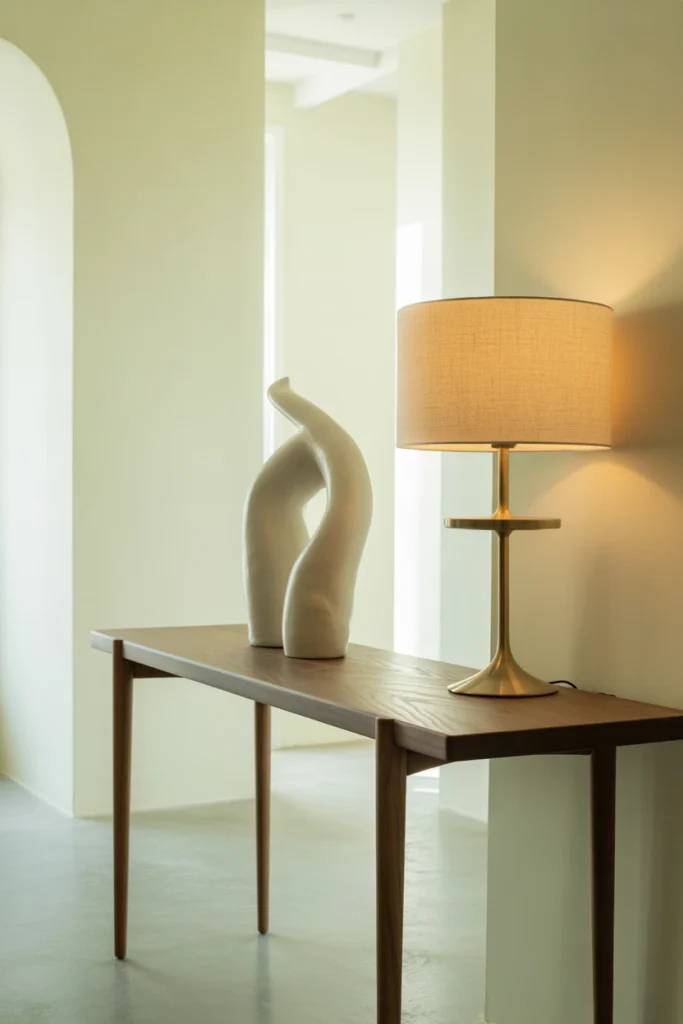
A console table is the backbone of almost every modern entryway because it adds function without eating floor space. Look for a table between 48 and 60 inches wide and no more than 12 to 14 inches deep. Anything deeper will crowd a standard 36 to 42 inch hallway. A height of 30 to 36 inches lines up naturally with light switches and picture hooks, which keeps the wall arrangement feeling balanced.
Materials matter more than brand names. Light oak or walnut veneer brings warmth, powder-coated steel or black metal legs add a modern edge, and a glass or marble top keeps the piece visually light in tight spaces. Style it with the rule of three: one tall element such as a sculptural lamp or branch-filled vase, one flat element like a low tray or stacked art book, and one small living thing like a 4 inch potted succulent. Leave at least a third of the surface empty so the arrangement reads as intentional rather than crowded.
One common mistake is pushing the console flush against the wall and then piling everything along its full length. Instead, center one arrangement and let the ends breathe. If the console has a lower shelf, that is the perfect spot for two matching baskets that hide gloves, dog leashes, and spare tote bags. Wipe the surface weekly, because entryway tables collect dust faster than any other furniture in the house.
2. Statement Mirror for Depth and Light
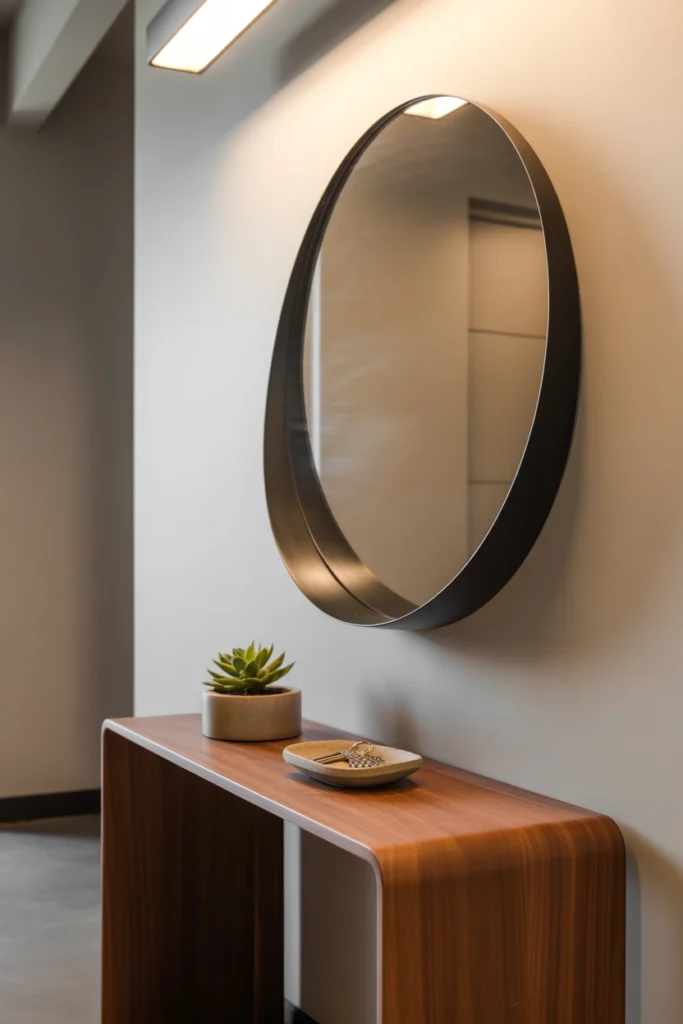
A large mirror is the fastest way to make a small entryway feel twice as big. For a standard foyer, a mirror 28 to 36 inches wide hung so its center sits at about 60 inches from the floor hits the sweet spot for most sightlines. Round mirrors soften the hard edges of modern furniture, while arch-top or geometric frames echo contemporary architecture. Lean a tall floor mirror against the wall only if you have at least 24 inches of clear floor in front of it; otherwise a hung mirror is safer and cleaner.
Light placement turns a mirror from decoration into a lighting tool. Hang it opposite or beside a window to bounce daylight deeper into the space, or mount it above the console and flank it with two small sconces so the reflection doubles the glow. A mirror with a built-in LED halo or backlight gives an even, flattering wash of light and removes the need for an overhead fixture in windowless hallways.
Keep the frame finish consistent with your other metals. Matte black frames pair beautifully with modern hardware, brushed brass warms up neutral walls, and frameless beveled mirrors suit an ultra-minimal look. Avoid hanging a mirror where it reflects a messy corner or the back of the front door; stand in the doorway and check the sightline before you drill. For more ways to decorate narrow halls around a mirror, see our hallway decor ideas.
3. Built-In Bench with Storage
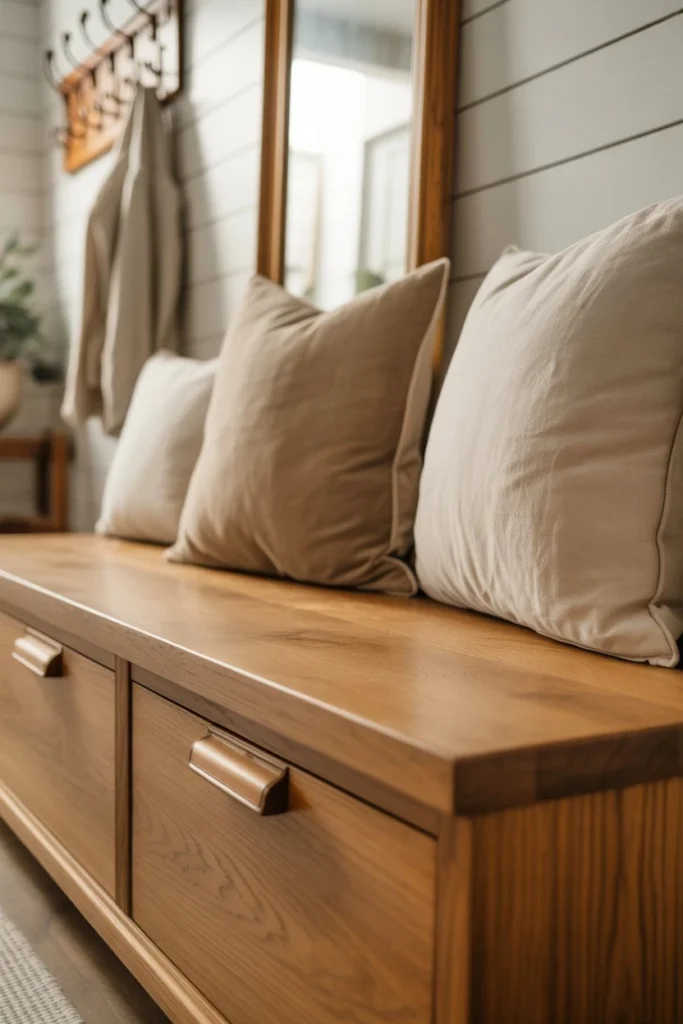
A built-in bench turns an awkward wall into the hardest-working seat in the house. A bench seat 18 to 20 inches deep and 17 to 19 inches high is comfortable for tying shoes and sturdy enough for kids and backpacks. Build or buy one at least 36 inches long; anything shorter feels cramped, while 48 to 60 inches gives two people room to sit at once.
Hidden storage is what separates an entryway bench from a plain seat. A hinged lid with a hydraulic stay opens to a bin deep enough for shoes and umbrellas, while divided cubbies underneath keep pairs together so nobody hunts for a matching shoe. Face-frame the bench in the same paint color as your trim so it reads as architecture rather than furniture, and add a 3 to 4 inch cushion in performance fabric that wipes clean.
Style the wall above the bench with restraint. A single row of hooks at 60 inches for coats, a small framed print, and one shelf for sunglasses and keys is plenty. If built-ins are beyond your budget, a freestanding storage bench in the same dimensions gets you 90 percent of the function; just anchor it to the wall with anti-tip hardware so it cannot shift when kids climb on it.
4. Bold Lighting Fixtures
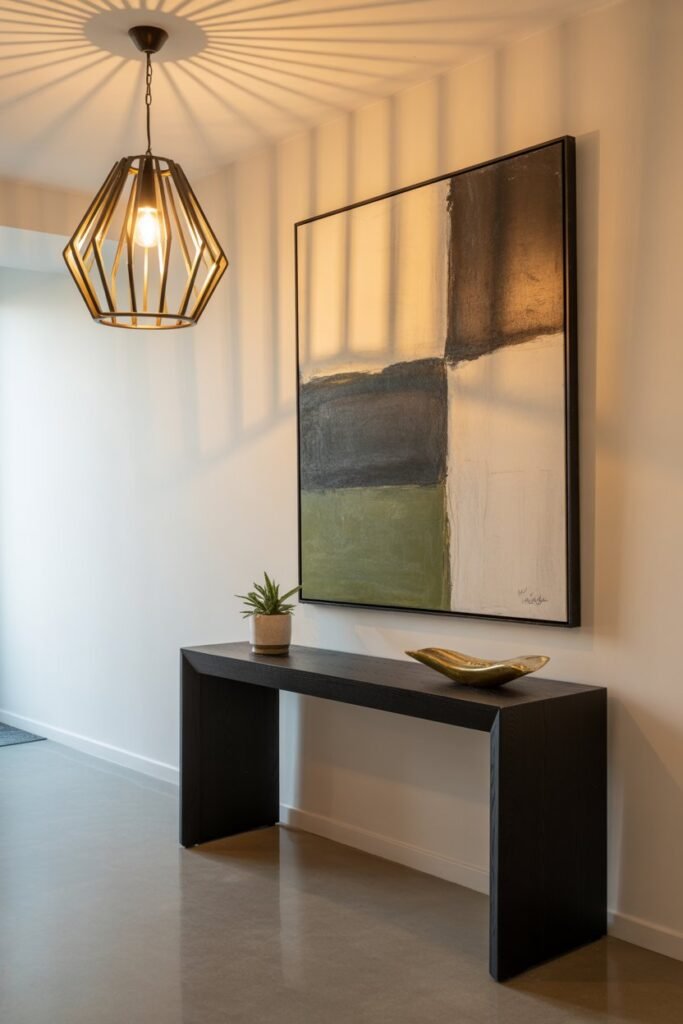
Overhead lighting sets the emotional temperature of your entryway, so treat it as a design decision rather than an afterthought. In a foyer with 8 foot ceilings, a pendant or flush-mount fixture should hang with its bottom edge about 84 inches from the floor, which keeps it above head height while staying in the sightline. For ceilings 9 feet or higher, drop it another 6 to 12 inches so it actually fills the vertical space instead of floating near the ceiling.
Finish choices carry the style. Brushed brass or gold adds warmth to white and gray walls, matte black gives a crisp graphic edge, and opal or frosted glass shades soften glare in spaces with no windows. Aim for 800 to 1,100 lumens in a small entryway, which is roughly one 60 to 75 watt equivalent LED bulb, and choose a dimmable fixture so the same light feels bright at noon and welcoming at night.
Sculptural fixtures with geometric cages, paper lantern forms, or multi-arm designs double as art, which matters in a space with little wall room to spare. If you rent or cannot change wiring, a plug-in pendant with a fabric cord swagged to a ceiling hook gives the same look with zero electrician cost. Always check the fixture weight rating of your ceiling box before hanging anything over 15 pounds.
5. Clean Lines and Neutral Palette
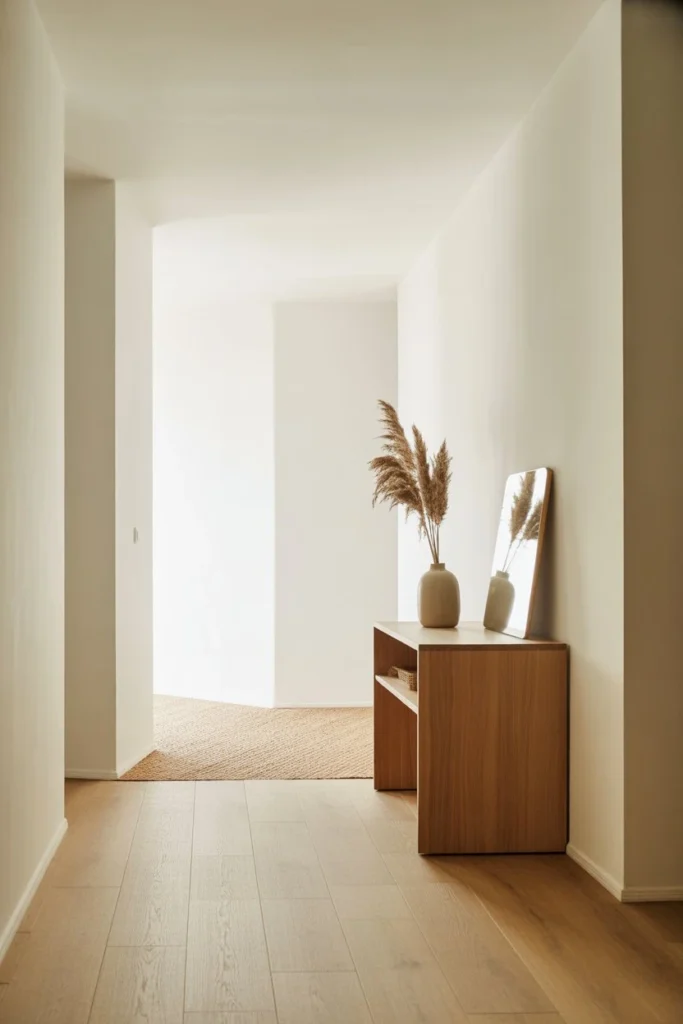
The modern look starts with subtraction. A neutral base of white, warm beige, greige, and soft gray lets furniture and art do the talking instead of competing with loud color. Paint walls in a light-reflective white with an LRV (light reflectance value) of 70 or higher to bounce natural light, and keep trim a half shade brighter so edges read crisp.
The trick that keeps neutrals from feeling flat is texture. Layer a wool runner over oak floors, add a linen throw on the bench, and choose a console with visible wood grain. Matte black hardware, a ceramic vase, and a woven basket introduce enough contrast to keep the eye moving. Stick to three neutrals maximum in one sightline; more than that starts to look accidental.
Warm up the palette with undertone discipline. If your walls lean warm (creamy whites, beiges), choose wood and metals with warm undertones too, like brass and walnut. Cool grays pair better with chrome, black, and light ash. Mixing warm and cool undertones at random is the number one reason neutral entryways feel “off” even when every piece is nice on its own. If your foyer connects to a long hall, the same palette logic applies in our narrow hallway makeovers guide.
6. Gallery Wall with Modern Frames
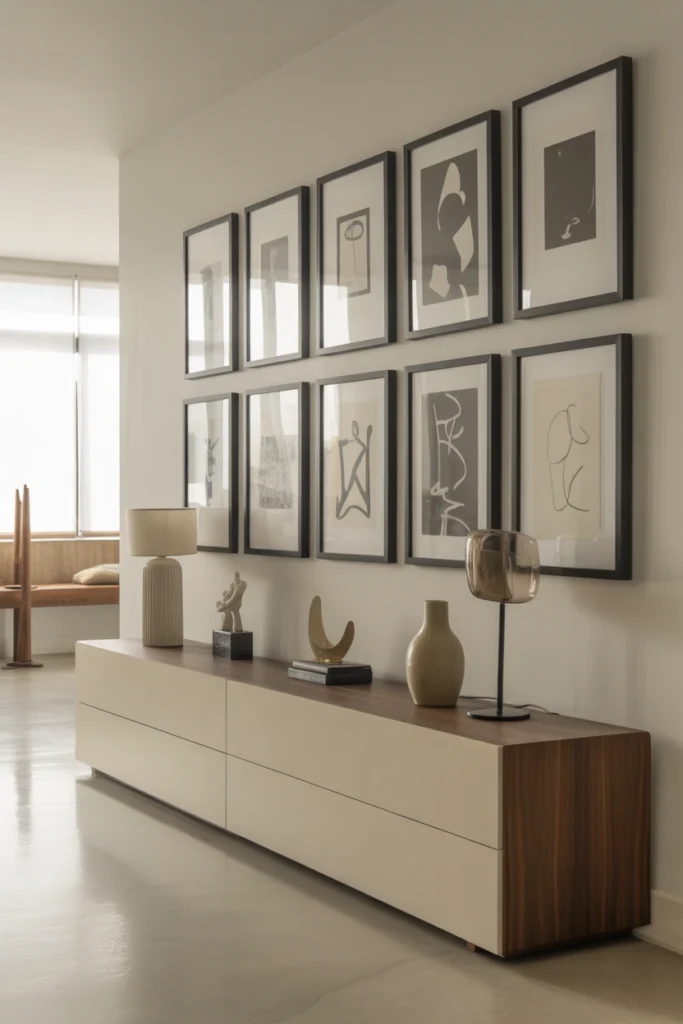
A gallery wall gives your entryway a gallery feel without needing gallery square footage. Map it on the floor first with painter’s tape on the wall, keeping the whole arrangement between 48 and 72 inches wide for a standard foyer wall. Hang the center of the grouping at 57 to 60 inches, which is museum eye level, and keep 2 to 3 inches between frames for a tight, cohesive look.
For a modern feel, limit yourself to one or two frame finishes: matte black, thin natural wood, or slim metal. Mix art types rather than sizes: abstract prints, black and white photography, and simple line drawings play well together when the frames match. Print photos in matte or fine-art paper rather than glossy, because glossy prints catch harsh reflections under entryway lighting.
The cleanest layouts follow a grid of equal frames, a single horizontal row of three, or one large anchor piece (24 by 36 inches or bigger) with smaller pieces clustered around it. Avoid scattered, uneven gaps; modern gallery walls look intentional because the spacing is consistent. If you want art plus function in a small entry, a narrow picture ledge lets you swap prints seasonally without new nail holes.
7. Floating Shelves for Functionality
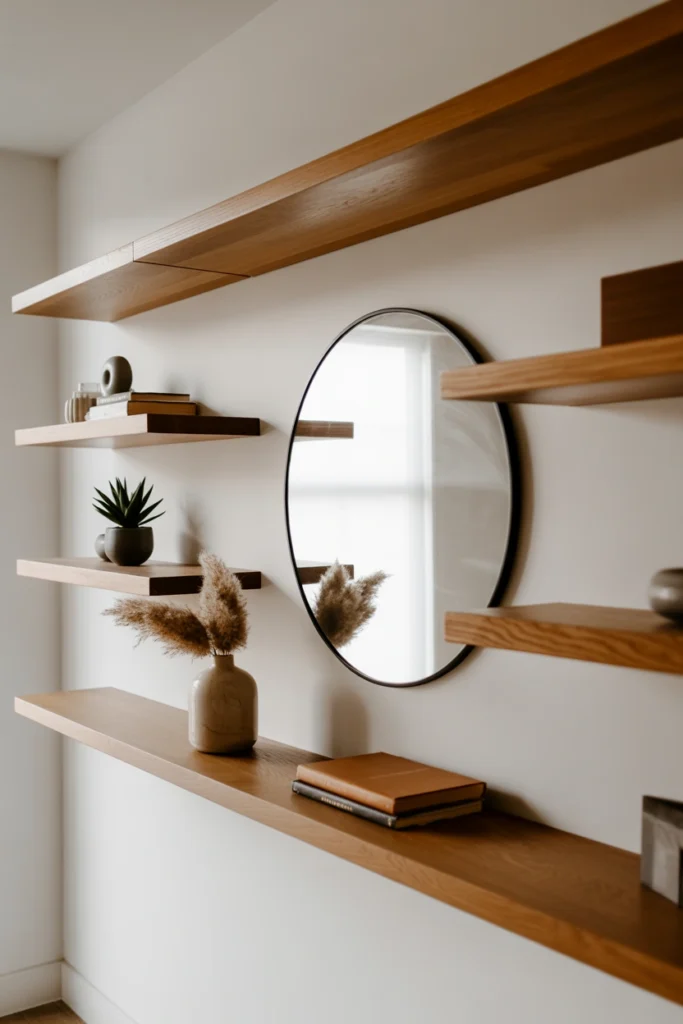
Floating shelves add storage and display space without touching the floor, which is gold in a tight entryway. Install shelves 8 to 10 inches deep; deeper shelves collect clutter and make the wall feel heavy. Space two shelves 12 to 15 inches apart vertically so you can fit a stack of books, a candle, and a small plant without crowding.
Bracketless floating shelves with hidden hardware keep the modern look clean, but check the weight rating: most residential floating shelves hold 15 to 25 pounds per shelf when mounted into studs. In drywall-only spots, use toggle anchors and keep loads light, just a few decorative objects. Solid oak, walnut, or white lacquer shelves match most modern palettes; black metal brackets work only if you embrace the industrial edge they add.
Style each shelf with an odd number of objects and leave breathing room. A stack of two books with a small bowl on top, one trailing plant, and one framed photo is plenty per shelf. Resist the urge to line up a dozen tiny objects; three to five pieces per shelf reads modern, while more reads like a gift shop. Wipe shelves monthly, because high shelves near doors gather dust fast.
8. Natural Wood Accents

Wood is the warmth engine of modern design. A light oak console or bench top softens cool gray walls, while walnut adds richness against white. Aim for one dominant wood tone per sightline; two woods that are close in color but not identical (like oak and maple) tend to clash, while one light and one dark wood can work as deliberate contrast.
Beyond furniture, wood shows up in smaller moves that carry big impact. A slatted wood wall panel behind the console adds texture and hides cord clutter, a reclaimed beam shelf above the door frame draws the eye upward, and wooden tray, bowl, or umbrella stand echo the material without committing to furniture. Keep wood finishes consistent: if your console is white oak, choose picture frames and hooks in a matching tone rather than mixing cherry, pine, and espresso.
Care is simple but matters. Dust wood monthly, wipe spills immediately, and refresh oiled finishes once a year with a food-safe wood oil if the piece sees daily contact. In sun-exposed foyers, choose UV-stable finishes or rotate pieces occasionally, because direct sunlight will fade one side of a walnut bench over a single summer.
9. Patterned Runner for Visual Interest
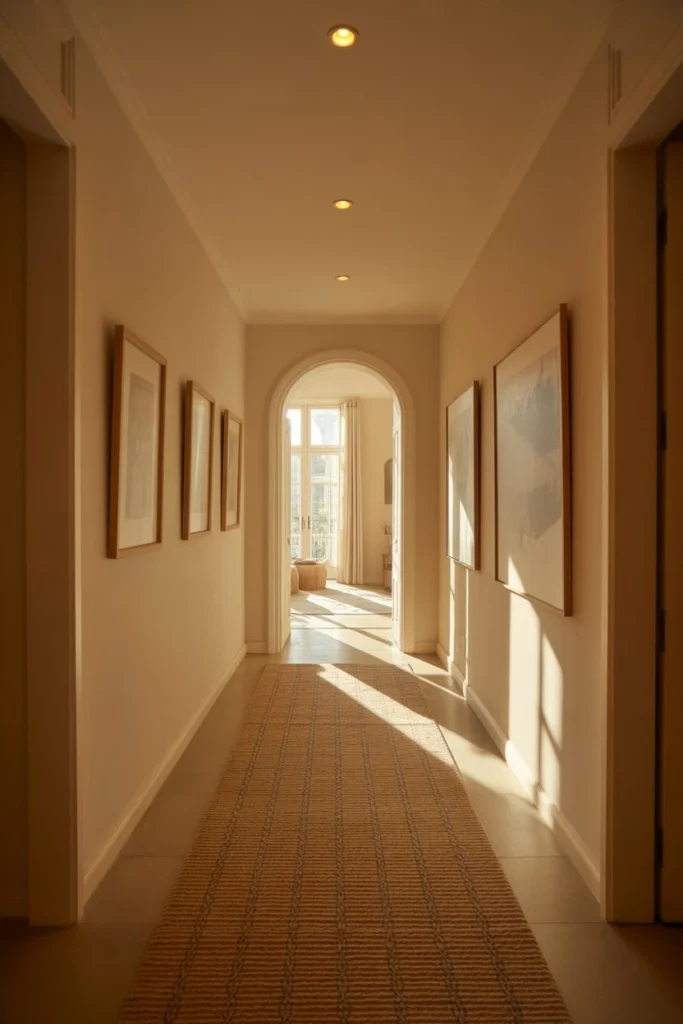
A runner defines the path through your entryway and protects floors from the grit that shoes drag in. Measure the hallway first: the runner should leave 4 to 6 inches of bare floor visible on each side, so a 36 inch wide hall takes a 26 to 28 inch wide runner. Length-wise, end the runner 6 to 12 inches before the doorway threshold and before any intersecting doorway so doors swing clear.
Pattern choice shapes the mood. Geometric patterns in charcoal, ivory, and taupe keep a modern feel, while a subtle Persian-style pattern in muted tones bridges modern and traditional homes. Low-pile or flatweave rugs are easiest to keep clean in high-traffic entries; deep shag traps dirt and makes doors stick. Choose a rug with a pattern dense enough to hide footprints between cleanings.
Always use a rug pad, even on hard floors. A thin non-slip pad keeps the runner from creeping and adds enough cushion to feel good underfoot, while protecting the floor finish underneath. Shake out the runner weekly and vacuum it twice a week in busy households; entryway rugs collect more soil than any other rug in the home. Our small entryway decor ideas show more compact layouts that pair a runner with slim furniture.
10. Accent Wall with Texture
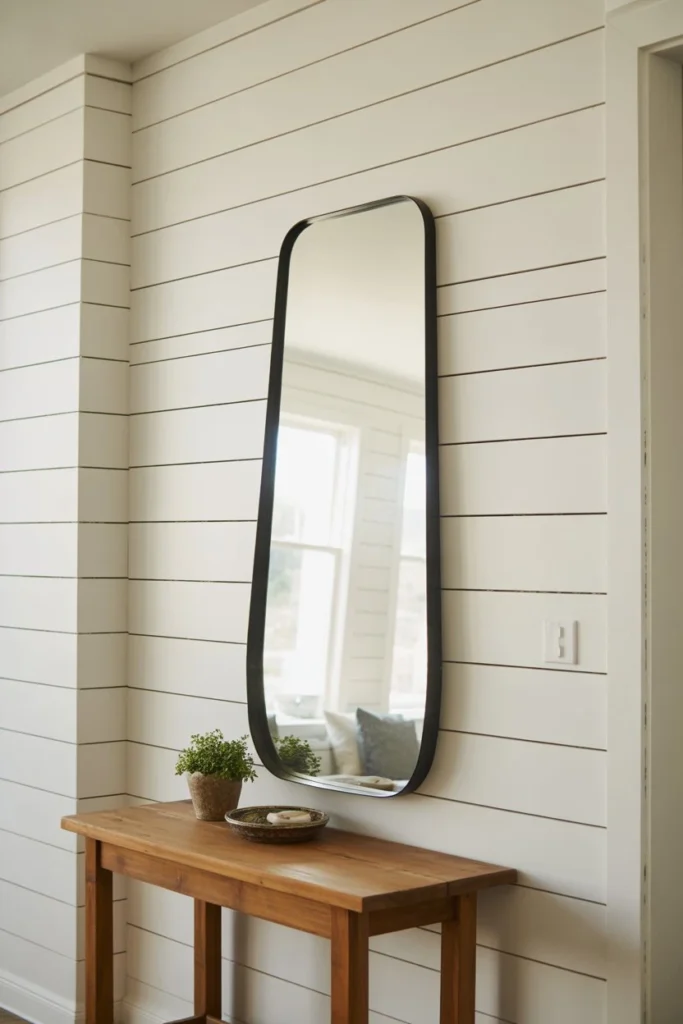
One textured wall gives your entryway a focal point without painting the whole space a loud color. Modern options include vertical shiplap painted the same color as the other walls (texture without color drama), matte wood slats, limewash for a soft plastered effect, or stone veneer for serious depth. Pick the wall you face when you walk in; that is the one your eye lands on.
Installation ranges from weekend-easy to hire-a-pro. Peel-and-stick wood planks and paintable shiplap panels go up in an afternoon with a level, adhesive, and a brad nailer. Limewash needs two thin coats applied in random strokes, and it rewards patience with a cloudy, European-plaster look. Stone veneer is heavier and usually wants a professional, especially around outlets and trim.
Keep everything else on that wall simple. A textured wall is the backdrop, so the console, mirror, or art in front of it should have clean lines and minimal pattern. If the texture is bold, like dark slats or stacked stone, pull one deep tone from it into a cushion, frame, or planter so the wall feels connected to the rest of the space rather than floating alone.
11. Indoor Greenery and Plants
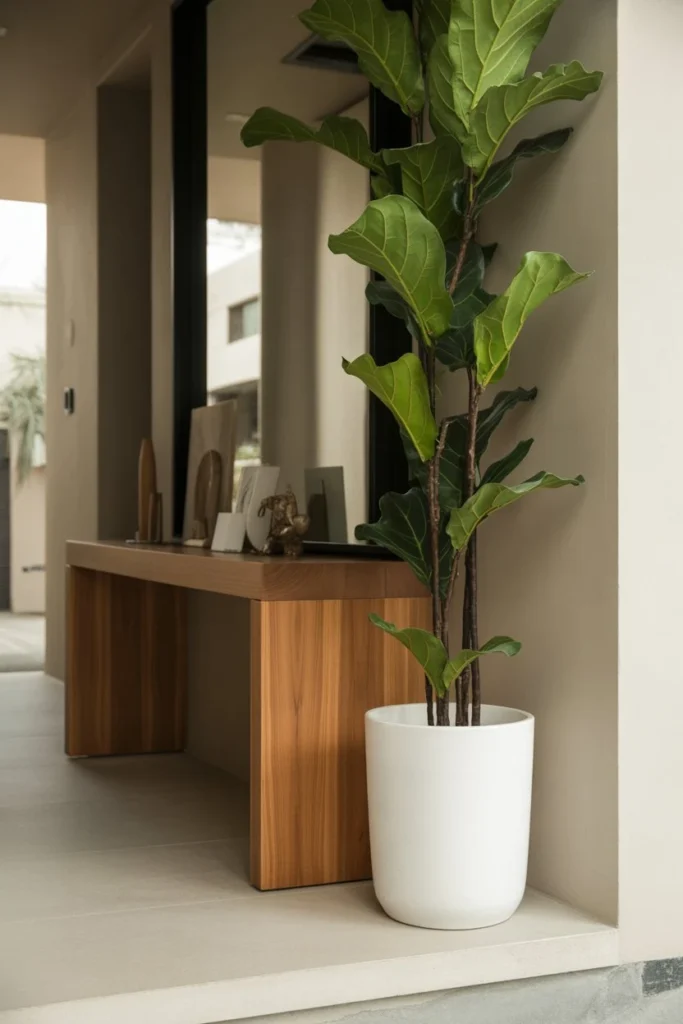
Plants are the quickest way to add life to a neutral entryway. Low-light winners like snake plants, ZZ plants, and pothos survive windowless foyers, while a fiddle leaf fig or olive tree in a bright entry makes a real statement. Match the plant to your light honestly: a fiddle leaf fig in a dark hall will drop leaves within weeks, but a snake plant in the same spot will thrive for years.
Scale matters. A 5 to 6 foot tree in a 14 inch planter anchors a roomy foyer, while a tight entry does better with one medium plant on the console and a small one on a floating shelf. Choose planters with clean lines in ceramic, concrete, or matte black to stay modern, and always use a pot with drainage plus a saucer or cachepot so water never reaches your wood floors.
Maintenance is minimal if you set it up right. Water only when the top inch of soil is dry, wipe leaves monthly so they can breathe, and rotate the pot a quarter turn each month so growth stays even. If real plants feel like too much commitment, one high-quality faux olive tree in a real ceramic pot fools most guests and needs nothing but an occasional dusting.
12. Wall Hooks and Hanging Racks
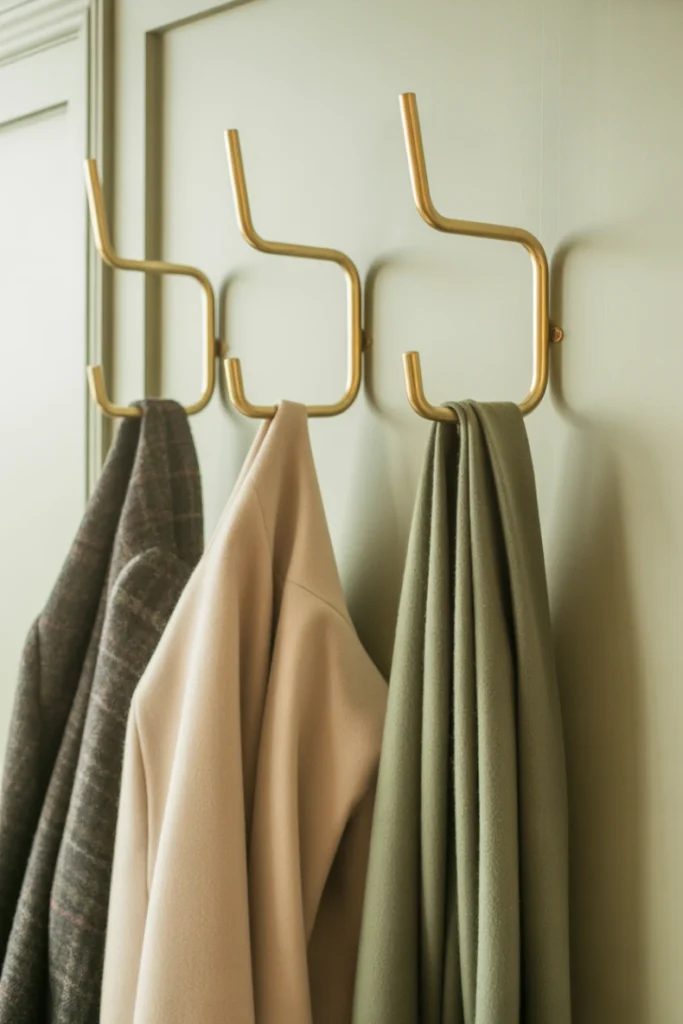
Wall hooks turn coats, bags, and hats into part of the decor instead of clutter. Mount a hook rail at 60 inches from the floor for adult coats, and add a second lower rail at 40 inches if kids use the entry. Space hooks 6 to 8 inches apart so bulky winter coats do not overlap and everything stays visible and grabbable.
Finish the hooks to match your other hardware: matte black for a graphic modern look, brushed brass to warm up neutrals, or brushed nickel for a softer contemporary feel. A solid wood rail in oak or walnut with 4 to 6 hooks costs little and looks far more finished than individual hooks scattered on drywall. Always mount into studs or use toggle anchors, because a rail of winter coats can weigh 30 pounds or more.
Limit each hook to one item and edit weekly. The moment a hook holds three scarves and a gym bag, the modern look collapses. Keep a small basket on the console or shelf for the overflow items that used to live on hooks, like sunglasses, mail, and keys. Hooks plus a bench with storage underneath make even a 3 foot wall into a complete drop zone.
13. Artistic Statement Piece
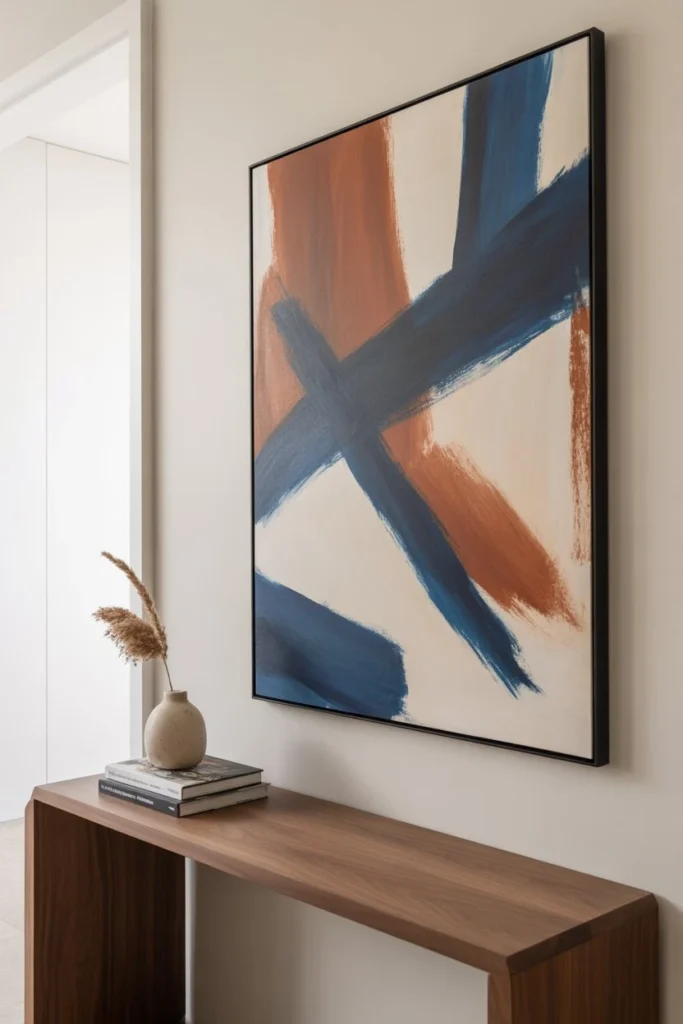
Sometimes one bold piece does more than a wall of small frames. A single painting, print, or sculpture 30 to 40 inches on its longest side becomes the visual anchor of the entryway and gives guests something to remember. Hang it on the wall you face on entry, and keep the surrounding decor minimal so the artwork owns the spotlight.
Choose art with a confident palette: one strong color pulled from the piece can repeat in a cushion, runner, or planter to tie the room together. Abstract prints, large-scale photography, and sculptural wall pieces all suit modern spaces. If you are buying new, local art fairs and independent print shops offer original work at prices that beat mass-produced canvases, and a simple float frame makes even an affordable print look expensive.
Lighting the piece properly is half the effect. A single picture light mounted 6 to 8 inches above the frame, or a ceiling spot aimed at 30 degrees, eliminates glare and makes colors glow after dark. Keep the frame slim and consistent with the room’s metals, and hang the center at 57 to 60 inches so it feels natural from the doorway.
14. Hidden Shoe Storage Cabinet
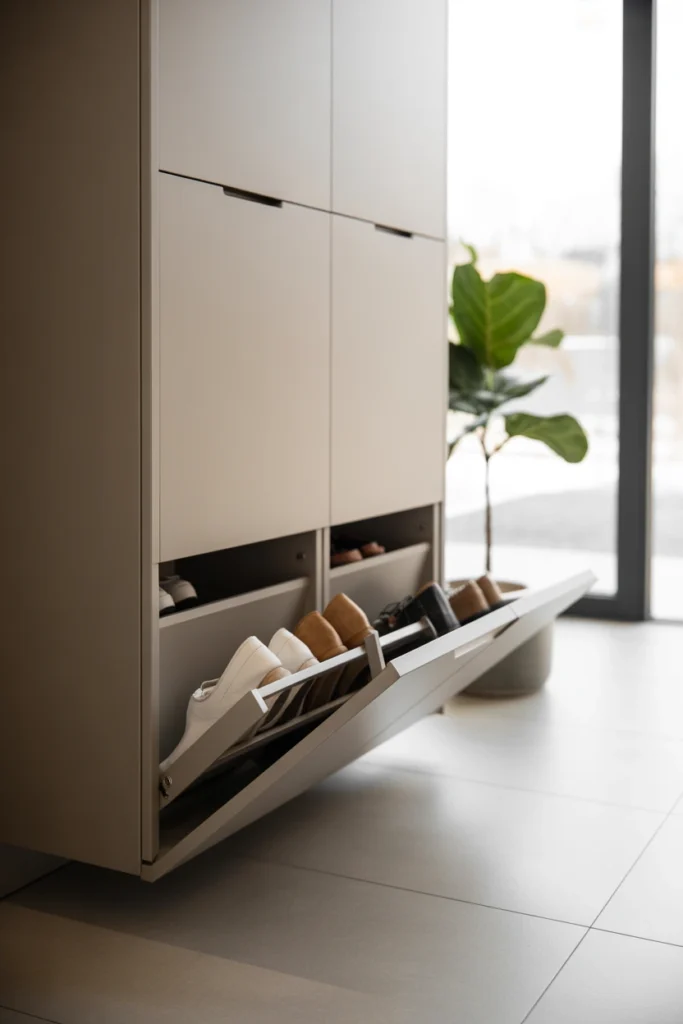
Shoes are the number one source of entryway mess, and a slim cabinet solves it invisibly. Look for a cabinet 8 to 12 inches deep with tilt-out or pull-down compartments; two rows hold 6 to 8 pairs, three rows hold 9 to 12. A 24 to 32 inch wide cabinet fits beside most consoles without crowding the walkway.
Matte finishes in white, greige, or black blend into the wall and keep the cabinet from reading as furniture. Push-to-open mechanisms eliminate handles for a seamless front, which is the detail that makes it look built-in rather than bought. Ventilation matters: leave the back panel slightly open or choose a model with air slots so shoes dry instead of trapping odor.
Place the cabinet within two steps of the door so the shoe-off habit actually sticks, and keep a small tray beside it for the pair currently in use. A cabinet top at 30 to 36 inches doubles as a drop surface for keys and mail, which means one piece handles shoes, keys, and mail in a single footprint. For households with more than a dozen daily pairs, stack two cabinets side by side rather than buying one oversized unit.
15. Smart Entryway Lighting
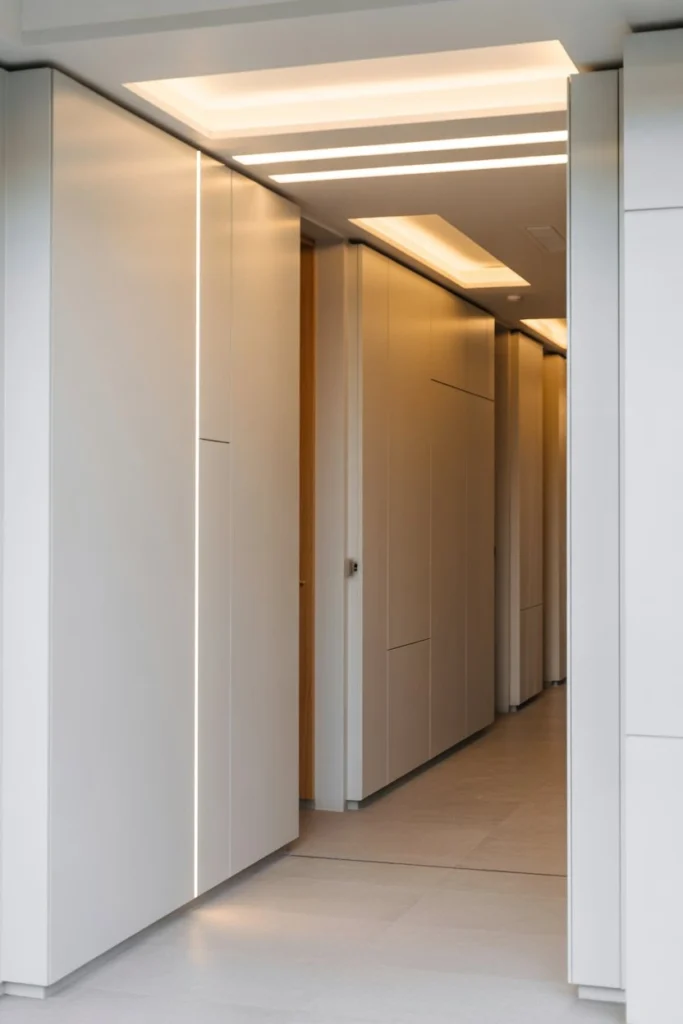
Smart lighting makes your entryway welcome you before you touch a switch. A motion sensor that triggers the foyer light when the door opens means you never walk into a dark house with full hands, and a smart bulb set to fade on at sunset keeps the entrance glowing whether you are home or away.
Start simple: one smart bulb in the existing fixture plus a plug-in motion sensor covers most entries for under thirty dollars. Choose warm white (2700K) for a welcoming glow; daylight tones (5000K) look crisp but can feel cold in a home entrance. Set schedules in the app: on at sunset, off at bedtime, and a dim 20 percent overnight mode so midnight trips do not blast you with light.
Geofencing takes it further by turning the entry light on as your phone approaches home, which is genuinely useful on dark winter evenings. If your entry has no ceiling fixture, a smart plug on a table lamp plus a battery motion sensor achieves the same hands-free effect. Stick to one smart ecosystem (all bulbs and sensors from the same platform) so automations actually run instead of fighting each other.
16. Large Framed Doorway Mirror
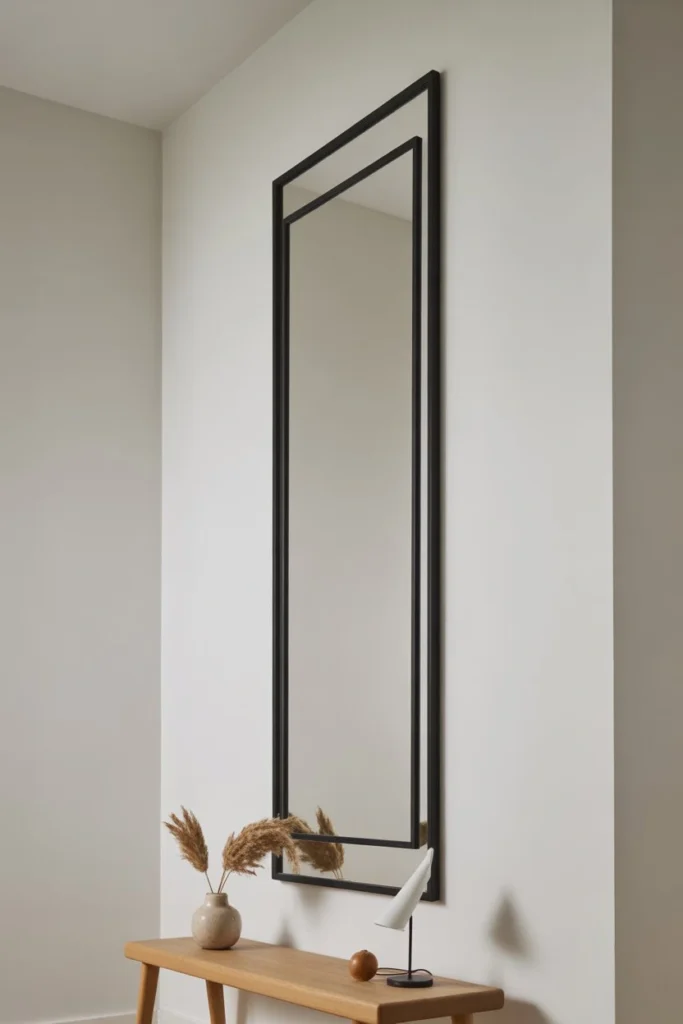
A full-length mirror does double duty: it reflects light to brighten the space and gives you a last check before heading out. A mirror 60 to 72 inches tall and 24 to 36 inches wide leans or hangs beautifully in most foyers. Hang it with the center at about 60 inches, or lean it against the wall at a slight angle if the frame is sturdy and the floor is level.
Frame choice sets the tone. A thin black metal frame reads modern and graphic, brushed brass adds warmth, and a wood frame in oak or walnut softens the look. Beveled edges catch light at the corners and make the glass feel more substantial. Position the mirror where it reflects a window, artwork, or greenery rather than a blank wall or the open front door.
Safety first with leaning mirrors: use anti-tip straps or museum putty at the top, especially in homes with kids or pets. A leaned mirror needs at least 18 inches of clear floor in front so nobody brushes it while passing. Clean it with a microfiber cloth and a 50/50 mix of water and white vinegar; paper towels leave lint that shows up in reflected daylight.
17. Layered Textures and Materials
Layering materials is what separates a flat modern entryway from one that feels rich and finished. Combine three or four textures: smooth (glass, lacquer), natural (wood, stone), soft (linen, wool, leather), and reflective (brass, chrome, mirror). A wood console with a marble vase, a metal wall sculpture, and a wool runner hits all four notes in one vignette.
The rule that keeps layering from turning chaotic is proportion. Let one material dominate (usually wood or a neutral textile), let a second support it, and use the rest as accents. If every surface is a different bold texture, the eye has nowhere to rest. Repeat each material at least twice in the sightline: a brass lamp and brass hooks, or a wood bench and a wood frame, so the mix feels deliberate.
Small swaps layer texture without new furniture. Trade a smooth ceramic vase for a ribbed one, add a woven seagrass basket under the console, or switch flat cotton cushions for nubby bouclé. Each change takes minutes and costs little, but together they build the depth that makes modern spaces feel warm instead of showroom-cold.
18. Minimal Seasonal Decor
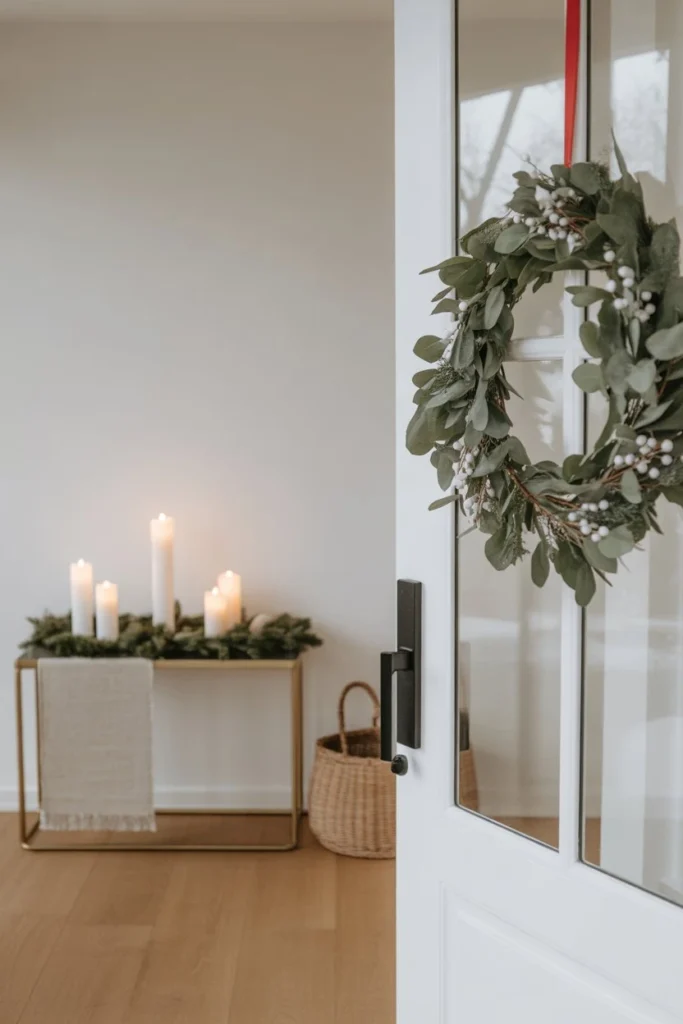
Seasonal decorating works in a modern entryway when you edit hard. Choose one statement per season and let the everyday decor do the rest: a simple eucalyptus wreath on the door for winter, a low bowl of citrus and greenery for spring, a pair of amber glass candle holders for fall. One confident piece reads festive; five small ones read cluttered.
Keep a small “season box” with your three or four go-to pieces so swaps take ten minutes. Store the box near the entry closet so you actually use it. A slim wreath (under 24 inches), a neutral garland you can drape over the mirror, and two candle holders in a finish that matches your hardware cover most of the year without a trip to the store.
The modern seasonal rule is subtraction, not addition. When the wreath goes up, take one everyday object off the console so the total count stays the same. This keeps the entryway feeling calm through the holidays instead of bursting at the seams, and it makes each season’s single statement piece feel special.
19. Architectural Door Design
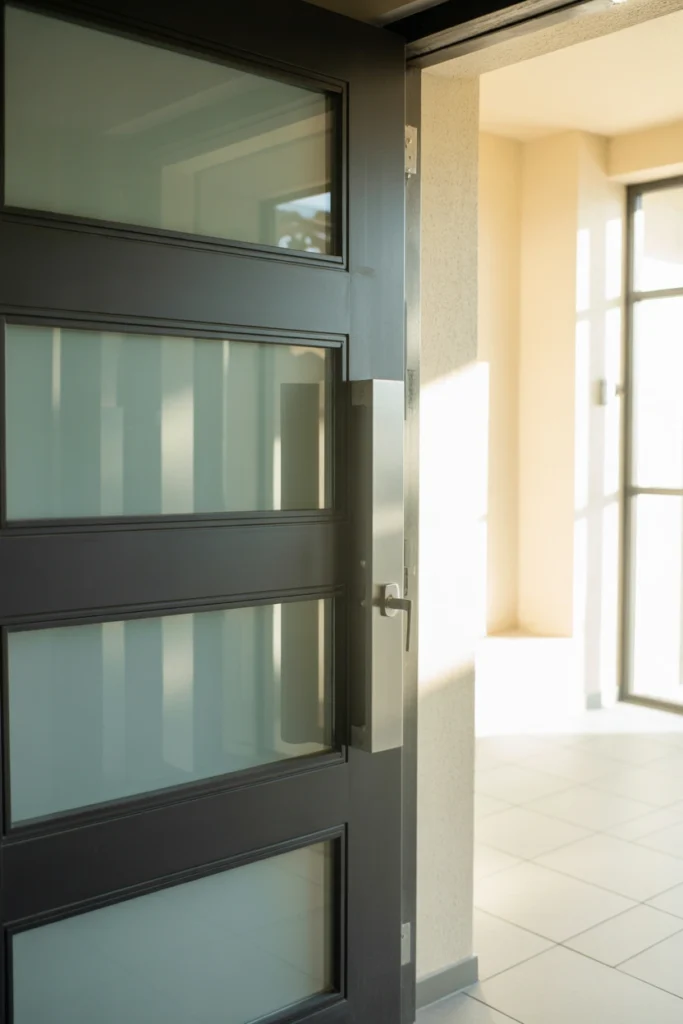
The front door is the largest design element in your entryway, inside and out. A modern door with clean lines, a matte finish, and minimal paneling instantly elevates the whole space. Frosted or reeded glass inserts bring daylight into a dark foyer while keeping privacy; a full-lite glass door suits bright entries but needs a good window covering for night privacy.
Color is the fastest door upgrade. Deep charcoal, navy, or forest green reads modern and hides scuffs, while a warm wood stain suits Scandinavian and mid-century homes. Pair the door with updated hardware: a slim lever handle in matte black or brushed brass, a modern smart lock, and a simple house number in a matching finish. These three details cost far less than a new door and change the first impression completely.
If a new door is in the budget, measure the existing slab and frame before shopping; most residential entries use a 36 by 80 inch door, and keeping the same size avoids reframing costs. Fiberglass doors mimic wood grain convincingly, resist weather, and need almost no maintenance, while solid wood offers unmatched richness if you are willing to refinish it every few years. A new door plus fresh hardware can lift your home’s curb appeal and interior feel in a single weekend.
20. Functional Entryway Console Setup
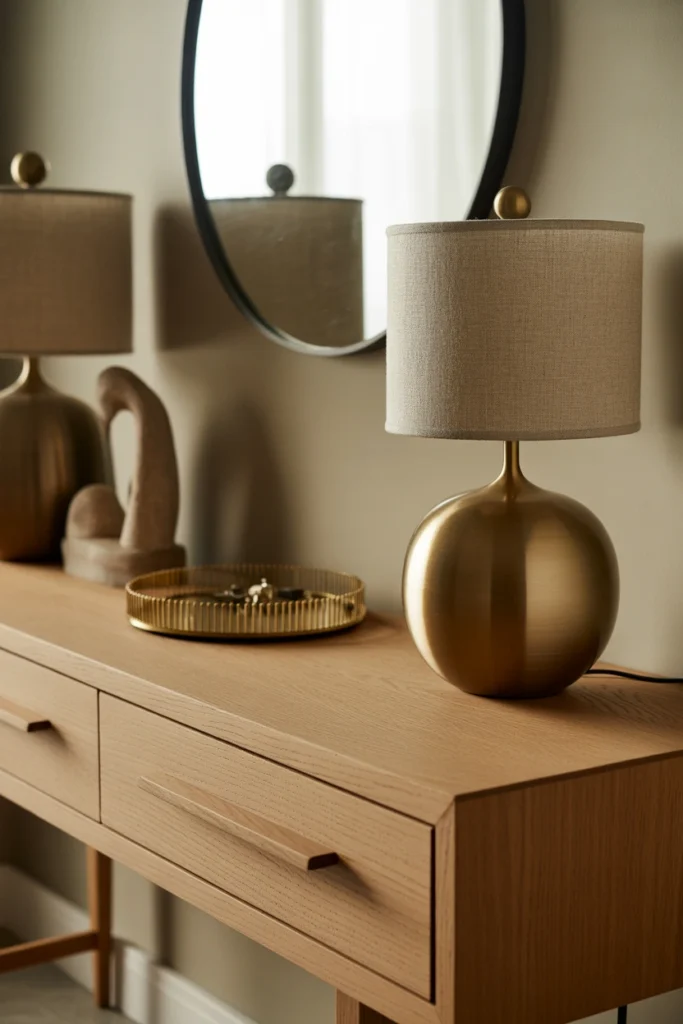
The final idea ties everything together: a complete console station where every daily item has a home. Start with the console itself, 48 to 60 inches wide and 12 to 14 inches deep. Add a table lamp or wall sconce on one side for task light, a shallow bowl or tray in the center for keys and sunglasses, and a small framed print or leaning art on the other side for height.
Build the setup in layers from back to front. Tall items (lamp, vase with branches) go against the wall, medium items (stacked books, framed photo) sit in the middle, and flat items (tray, small bowl) live at the front edge where hands naturally reach. This back-to-front layering keeps the surface usable instead of decorative-only, which is the whole point of an entryway.
Finish with the hidden helpers: a basket on the lower shelf for reusable bags, a wall-mounted mail sorter or slim inbox tray beside the console, and a small trash bin tucked underneath for junk mail triage. When every incoming item has a landing spot, the console stays clear with almost no effort, and your entryway finally works as hard as it looks. For entrance halls that double as corridors, our entrance hall decor ideas extend these setups into longer spaces.
Conclusion
Your entryway is the first glimpse into your home’s personality, so make it count. These 20 modern entryway ideas blend form, function, and style to create spaces that feel organized, bright, and welcoming, whether you are working with a grand foyer or a three-foot hallway.
The smartest way to start is with the big three: a console or bench for function, a mirror for light, and a runner for warmth underfoot. Add lighting, art, and storage next, then layer in texture and seasonal touches over time. Whether you love clean minimalism, Scandinavian warmth, or urban luxury, these ideas give you a clear path from cluttered drop zone to a design statement that leaves a lasting impression.
Frequently Asked Questions
How do I decorate a very small entryway?
Focus on vertical space and slim pieces. A 10 to 12 inch deep console or a wall-mounted shelf, a round mirror to bounce light, one row of wall hooks, and a runner sized to your hall cover function without crowding the floor. Keep the palette light and limit decor to three or four pieces so the small space feels intentional rather than stuffed.
What is the best lighting for an entryway with no windows?
Layer two sources: an overhead fixture at 800 to 1,100 lumens for general light plus a table lamp or pair of sconces for warmth. Choose 2700K warm white bulbs, add a mirror to double the glow, and consider a motion sensor so the light greets you automatically. A dimmable fixture lets the same setup feel bright by day and welcoming at night.
How do I keep my entryway from getting cluttered?
Give every daily item a dedicated home: hooks for coats, a bowl for keys, a cabinet or bench for shoes, and a tray or sorter for mail. Edit weekly by returning stray items to their rooms, and follow the one-in-one-out rule for decor. Hidden storage (closed cabinets, lidded benches, baskets) does most of the work while keeping the modern look clean.
What size mirror works best in an entryway?
For most foyers, a mirror 28 to 36 inches wide hung with its center at 60 inches from the floor suits the space and the sightline. In larger entries, a full-length mirror 60 to 72 inches tall adds drama and a useful last look before you leave. Round and arch shapes soften modern furniture, while rectangular mirrors in slim frames suit a more architectural look.
Can I mix wood tones in a modern entryway?
Yes, if you do it deliberately. Keep one dominant wood tone and let a second appear as a clear contrast (light oak with dark walnut reads intentional; oak with a slightly different oak reads like a mistake). Repeat each tone at least twice in the room, and match undertones: warm woods with warm metals like brass, cool woods with black or chrome.
More Ideas You Will Love
 16 Exterior Wall Design Ideas: Modern & Stylish Facade Trends
 13 Exterior House Style Ideas for a Modern Porch Makeover
 16 Expert Tips to Hurricane-Proof Your Home Decor
 19 Christmas Holiday Decor Ideas for a Festive Home
 14 Low-Maintenance Summer Garden Ideas: Step-by-Step Inspiration
 18 Modern Farmhouse Exterior Ideas: Step-by-Step Dream Home Guide