
21 Creative Kids Bedroom Ideas with Fun Themes & Practical Decor Tips

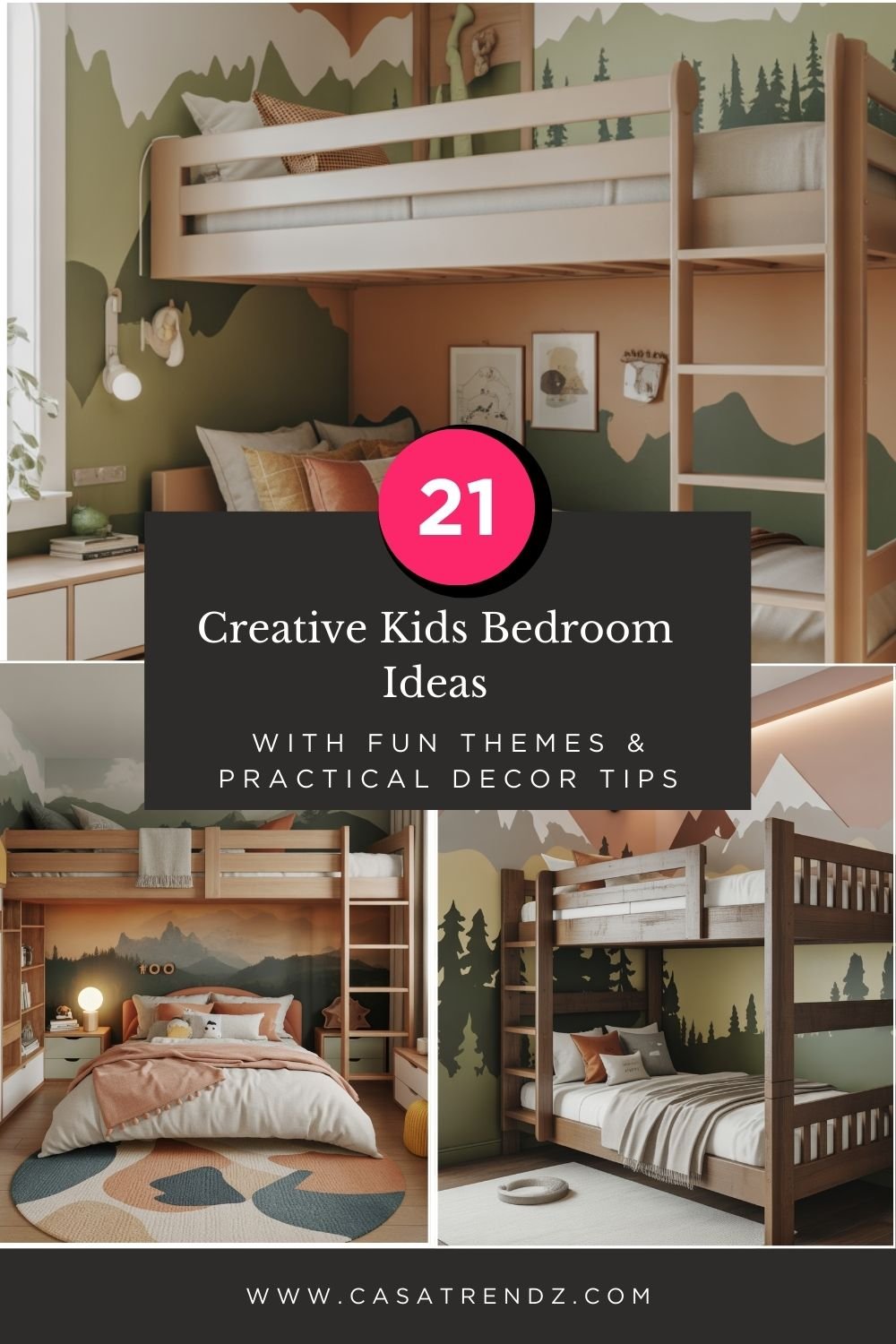
Designing a kid’s bedroom is one of the most enjoyable projects in any home, because it is the one room where imagination is allowed to lead. It has to work hard, though: the same small space must handle sleep, homework, play, storage, and the occasional Lego explosion, and it must keep doing so as your child grows from a toddler who needs everything within reach to a pre-teen who wants privacy and a desk that actually gets used. The ideas below are built around that reality, pairing a fun theme with practical choices you can live with every day.
Before you pick a theme, measure the room and note the fixed points: window positions, door swing, wardrobe depth, and the one wall that gets the best daylight. A theme that fights the room, such as a dark navy space wall in a windowless corner, will always feel heavy, while the same colours on a well-lit feature wall feel exciting. Spend your budget first on the pieces that are hardest to change, a comfortable mattress, a sturdy bed frame, and storage your child can open and close alone, and let the theme live in the cheaper, changeable layers: bedding, wall decals, art, and cushions.
Each of the 21 ideas that follow includes specific colours, materials, measurements, and step-by-step tips, so you can start with a single weekend project or plan a full room makeover. Pick the idea that matches your child’s personality, adapt the colours to your room’s light, and remember that the best kids bedroom is not the most decorated one: it is the one your child can play in, tidy up, and fall asleep in happily.
1. Adventure-Themed Bedroom
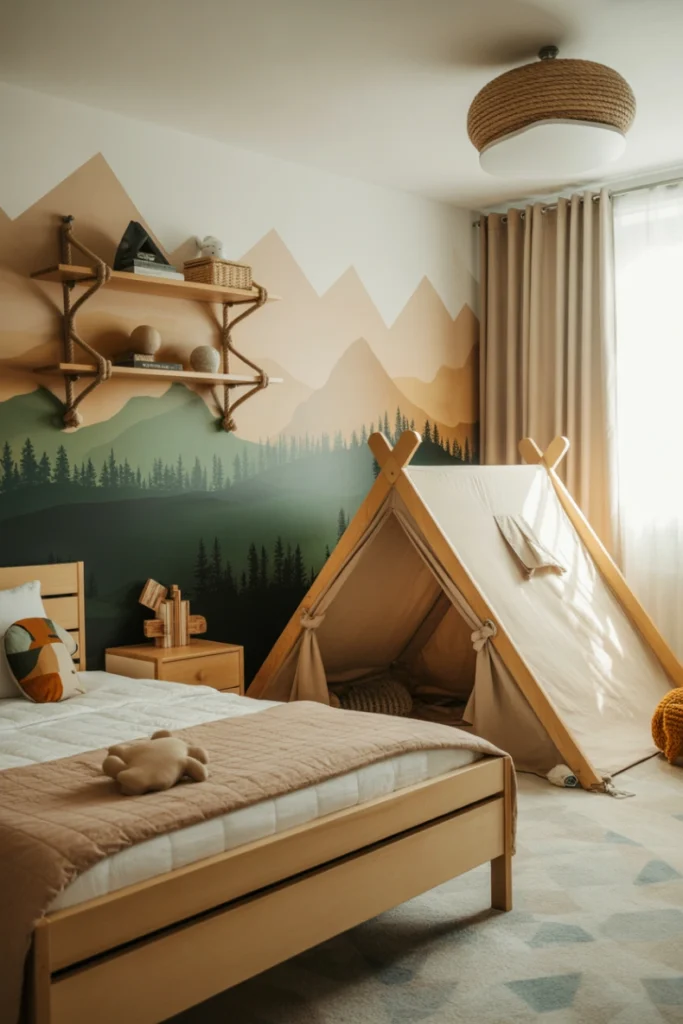
An adventure bedroom turns everyday routines into a small expedition. Start with one feature wall in a warm earthy tone such as olive, clay, or deep forest green, and keep the other walls a soft warm white so the room still feels bright. A large peel-and-stick world map, ideally around 120 by 80 cm, works as the focal point above the bed or desk, and it doubles as a learning tool when your child starts naming countries and oceans.
Add practical adventure gear that earns its floor space. A rope shelf made from a 90 cm pine board and thick cotton rope holds books and small treasures, while a canvas storage chest about 70 cm wide swallows toys at tidy-up time. Lay a jute or flat-weave rug in natural tones, keep at least 1 metre of clear floor in the middle of the room for imaginative play, and finish with warm 2700K bulbs in a rattan pendant so evenings feel like campfire light. Bedding with small compass or animal prints keeps the theme going without shouting it.
2. Nature-Inspired Green Oasis
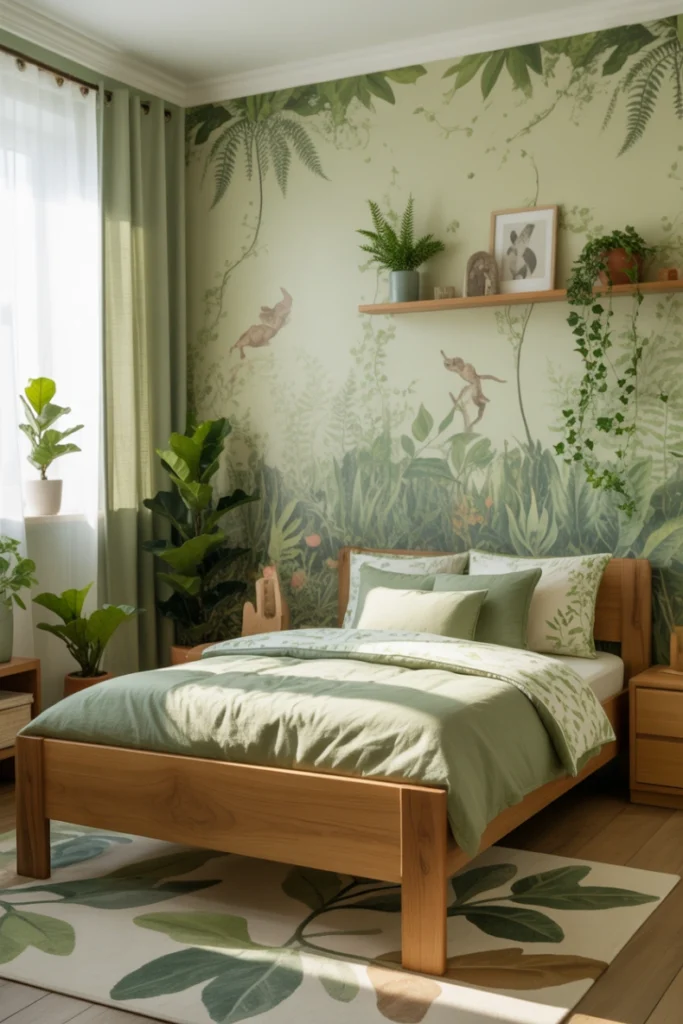
A green oasis suits children who sleep better in a calm room. Paint walls in a soft sage or eucalyptus green, use natural oak or pine furniture, and choose cotton or linen bedding in white and leaf green so the palette stays restful. Botanical wallpaper on a single wall, or three framed leaf prints in matching frames, gives the nature feel without covering every surface in pattern.
Plants make the theme real, but keep them child-safe and out of reach of small hands. Hang two macrame planters near the window with trailing faux greenery if real plants are a worry, and place one sturdy potted plant on a high shelf. Storage matters here: a low wooden unit with labelled baskets keeps the calm look intact, because clutter is what breaks a nature room fastest. A woven laundry basket and a soft green throw complete a space that feels like a quiet garden indoors.
3. Space Explorer Room
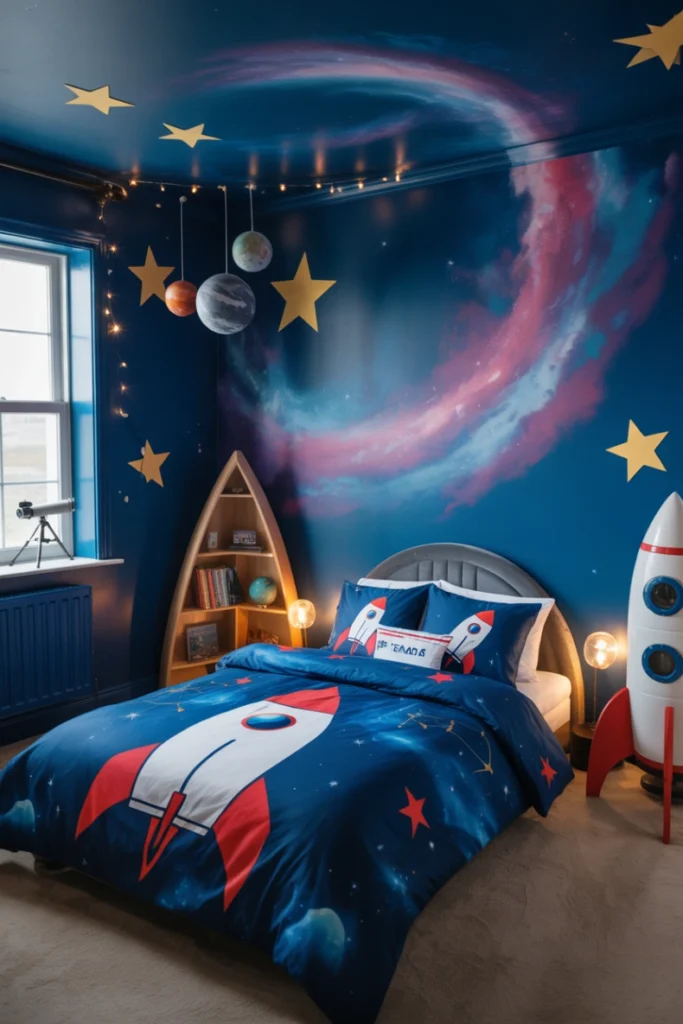
A space room works best when the dark colours are balanced with light. Paint one wall deep navy and leave the rest pale grey or white, then add glow-in-the-dark star stickers on the ceiling in real constellations your child can learn by name. A galaxy mural or a large framed print of the solar system gives older children something to study, while rocket or planet bedding ties the bed into the theme.
Build in learning corners: a wall shelf at your child’s eye level for science kits and astronomy books, and a small desk with a task lamp for homework and stargazing journals. String lights across the headboard wall mimic a starry sky at bedtime and double as a gentle night light. Keep the floor clear around the desk, and choose a navy rug with a subtle star pattern so the room feels magical rather than dark and heavy.
4. Minimalist Scandinavian Kids Room
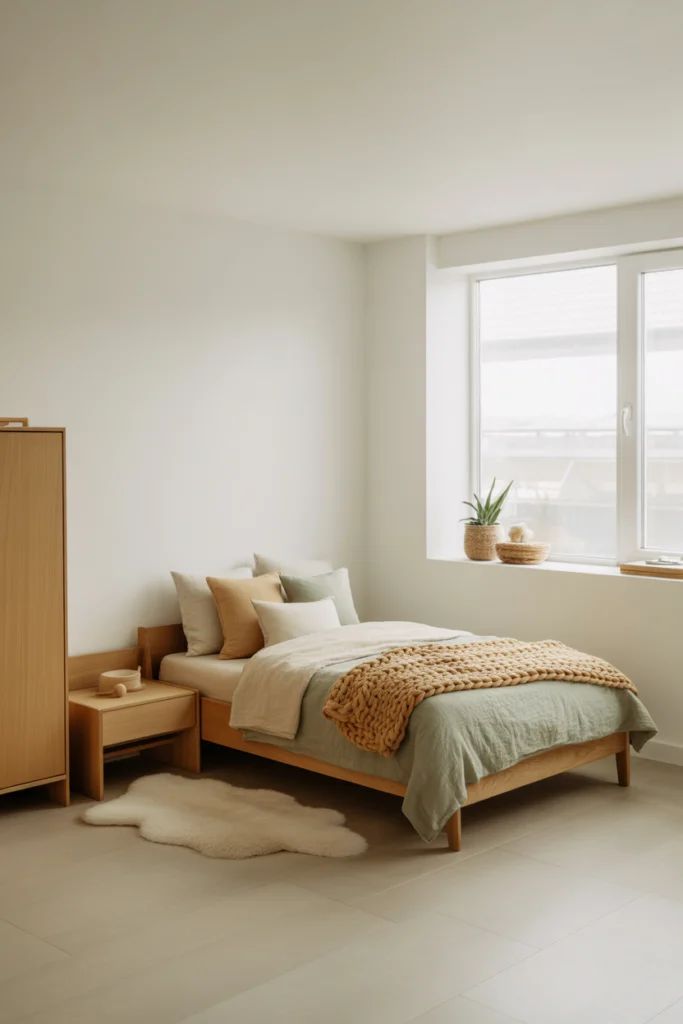
Scandinavian design is a gift for small bedrooms because pale colours and simple furniture make the space feel bigger. Use white, soft beige, and pale grey on walls, add one pale pastel accent such as dusty blue on bedding or a cushion, and choose light wood furniture with clean lines. A low pine bed frame, a simple wardrobe, and one open shelf are often enough.
Storage should be built in, not added as an afterthought. Under-bed drawers on wheels hold out-of-season clothes, while two wall-mounted shelves above the desk keep books visible but tidy. Limit wall decor to one framed print and one soft wall hanging, and layer texture instead of colour: a chunky knit throw, a cotton rug, and linen curtains. The result is a calm room that is easy to clean, easy to rest in, and easy to update as your child grows. For more small-space ideas, see these small bedroom ideas that use the same pale and practical approach.
5. Boho Chic Kids Bedroom
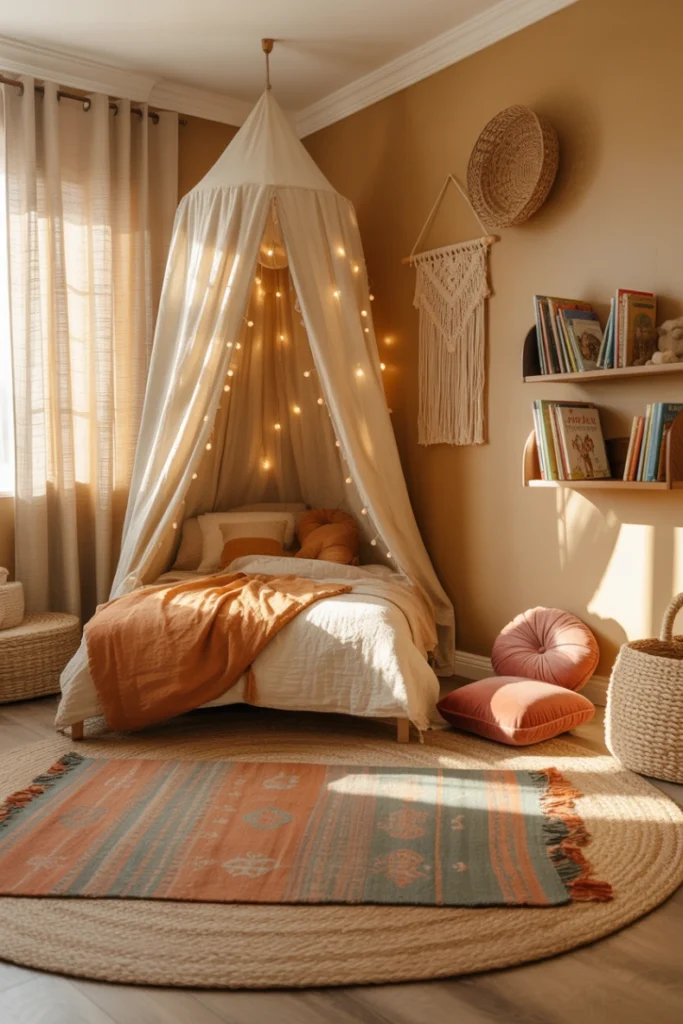
Boho style is forgiving, which makes it ideal for a child’s room that changes often. Layer a flat-weave rug over a larger jute rug, hang one macrame wall piece above the bed, and mix patterns in a controlled way: pick three patterns at most, such as a floral duvet, a striped cushion, and a geometric throw, all sharing one warm colour like terracotta or mustard.
Storage becomes part of the decor with woven baskets, rattan boxes, and floating shelves in natural wood. A hanging chair in a corner, fixed to a ceiling joist with a rated mount, creates a reading spot children actually use, and floor cushions in washable covers give friends somewhere to sit. Because boho pieces are mostly neutral and natural, you can swap one accent colour each year without redecorating the whole room, so the style grows with your child.
6. Pastel Dream Bedroom
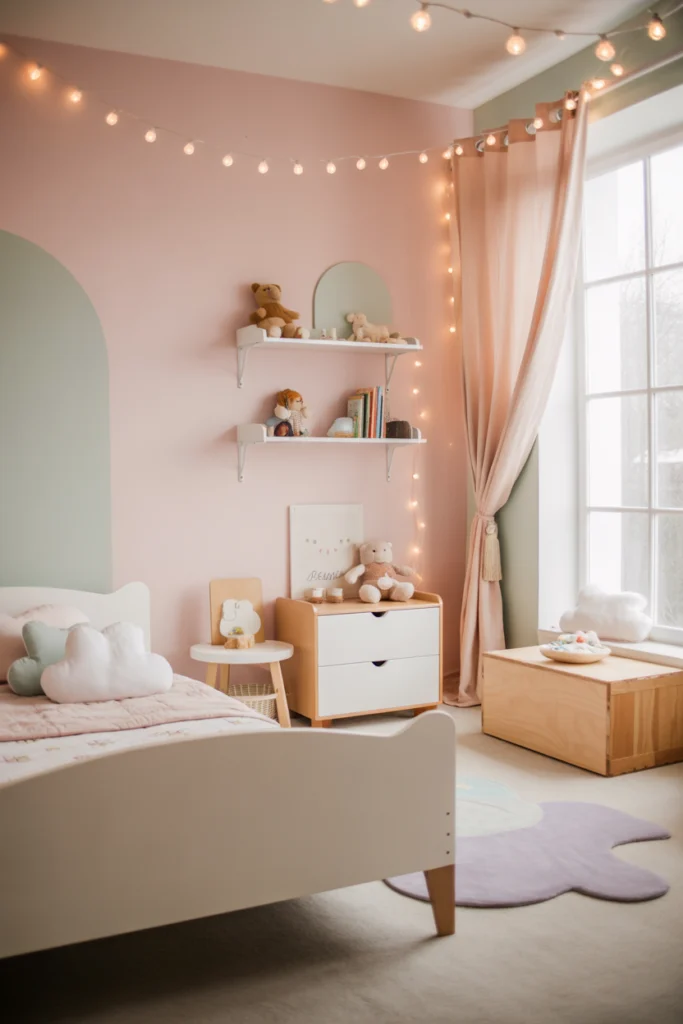
Pastel rooms feel soft and dreamy when the colours are kept pale and consistent. Choose two pastels, for example blush pink and mint, plus white, and repeat them across the wall colour, bedding, and one rug. A pastel ombre wall, painted lightest at the top and slightly deeper at the bottom, makes a gentle focal point, or use a subtle patterned wallpaper on the bed wall only.
Keep furniture white or pale wood so the colours stay airy, and choose storage that matches the palette: pastel bins on open shelves, a white bookcase, and a small wardrobe with simple handles. Soft lighting is essential here, so add a dimmable bedside lamp and a warm fairy light along one shelf. A plush rug beside the bed and a textured throw stop the room feeling flat, and because the base is neutral, swapping cushion covers refreshes the whole look in minutes.
7. Under-the-Sea Ocean Bedroom
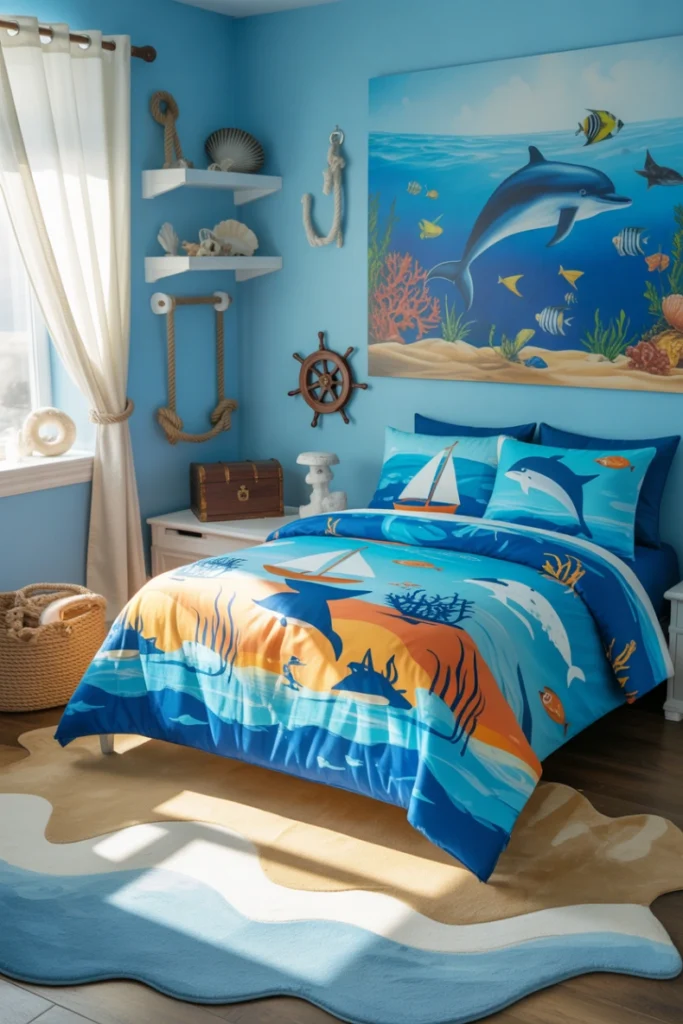
An ocean room should feel fresh, not dark. Paint walls in a pale aqua or soft sky blue, add one deeper blue accent wall behind the bed, and use sandy beige for the rug and curtains to echo the beach. Wall decals of waves, fish, or coral work well above a low bookcase, and a large framed ocean print gives the room a finished focal point.
Bedding with a subtle wave or sea creature pattern keeps the theme playful, while storage bins shaped like boats or labelled with sea animal tags make tidy-up a game. A reading corner with a small canopy in white voile feels like a wave overhead, and layered lighting, a ceiling light plus a warm bedside lamp, stops the blue tones from making the room feel cold. Keep the palette to three colours, blue, white, and sand, so the room stays calming at bedtime.
8. Sports-Lovers Bedroom
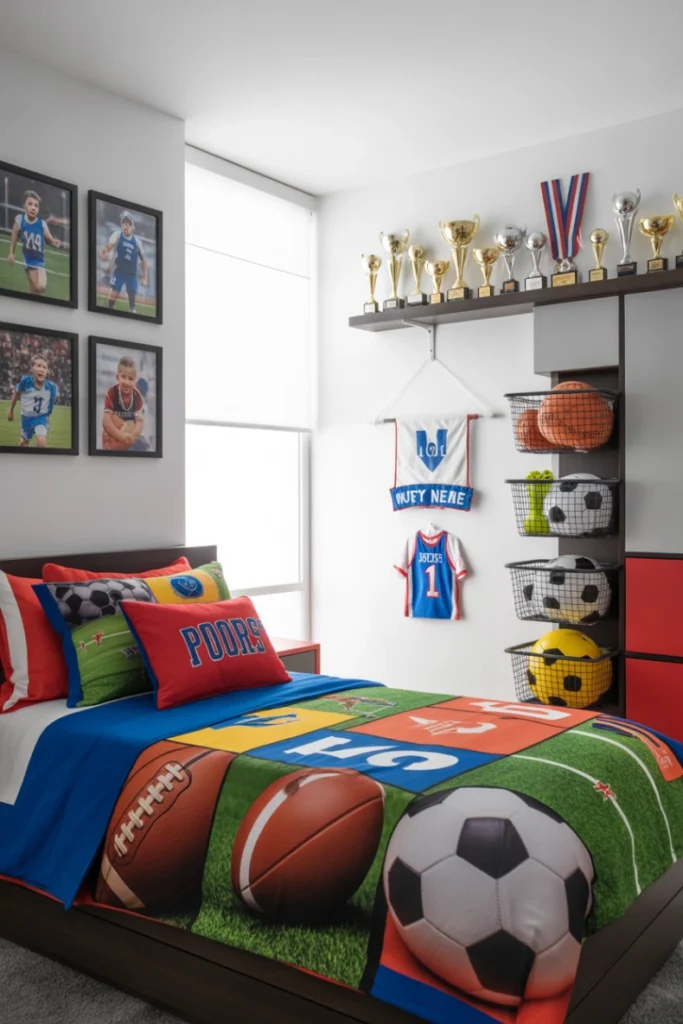
A sports bedroom should celebrate your child’s game without turning into a shop display. Pick one sport as the lead, then use its colours as accents only: bedding and one rug in team colours, wall art of the sport above the desk, and neutral furniture everywhere else. That way, when interests change from football to basketball, you only swap textiles and art.
Function is the real win here. Fit wall hooks at your child’s height for jerseys and bags, a tall narrow shelf for trophies and medals, and a ventilated basket or crate for balls and kit so sports gear does not end up on the floor. Keep a clear homework zone with a desk and good task lighting, separated from the play area by a rug, so the room supports both energy and focus. Washable paint on the lower half of one wall is a practical touch for muddy kit and busy hands.
9. Classic Pink Princess Bedroom
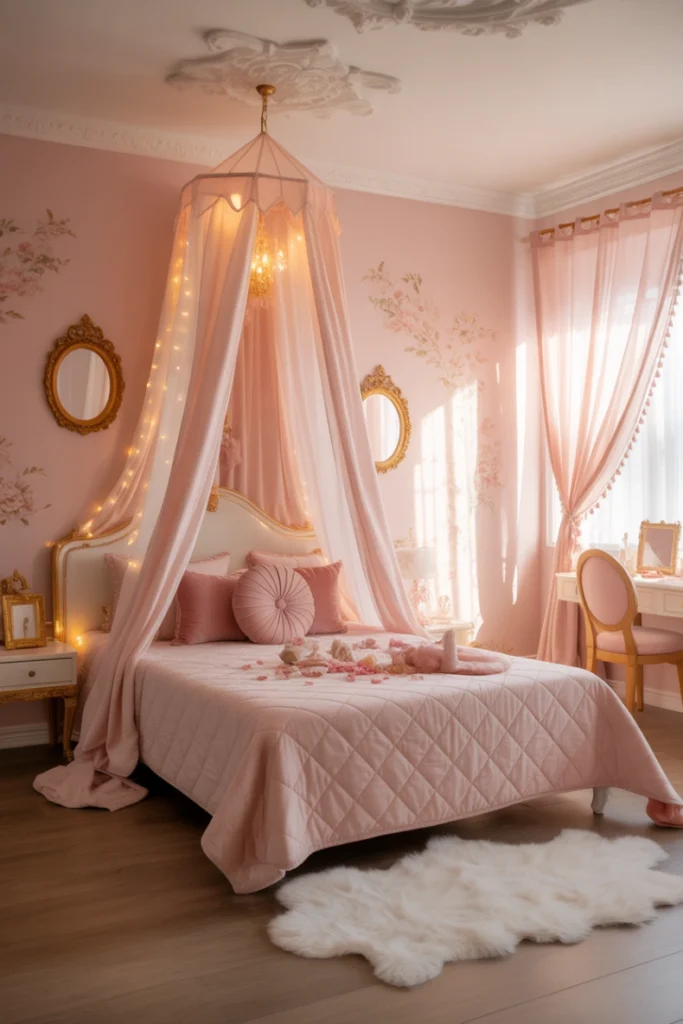
A princess room feels magical when pink is layered rather than plastered everywhere. Paint walls blush pink, add gold or brass accents through a mirror frame, drawer handles, and a small chandelier or wall sconce, and choose a canopy bed or a simple bed with a voile canopy draped from a ceiling hoop. A touch of sparkle, glitter artwork or a shimmering rug, is enough; too much glitter quickly looks messy.
Practical pieces keep the fantasy usable. A storage bench at the foot of the bed holds dress-up clothes, a low bookshelf keeps storybooks within reach, and decorative baskets corral small toys. Choose furniture with classic lines, a wooden bed and a simple dresser, so the room can shift toward a more grown-up style later by changing bedding and wall art only. Soft dimmable lighting lets the room feel enchanted at bedtime and bright enough for homework.
10. Modern Geometric Kids Room
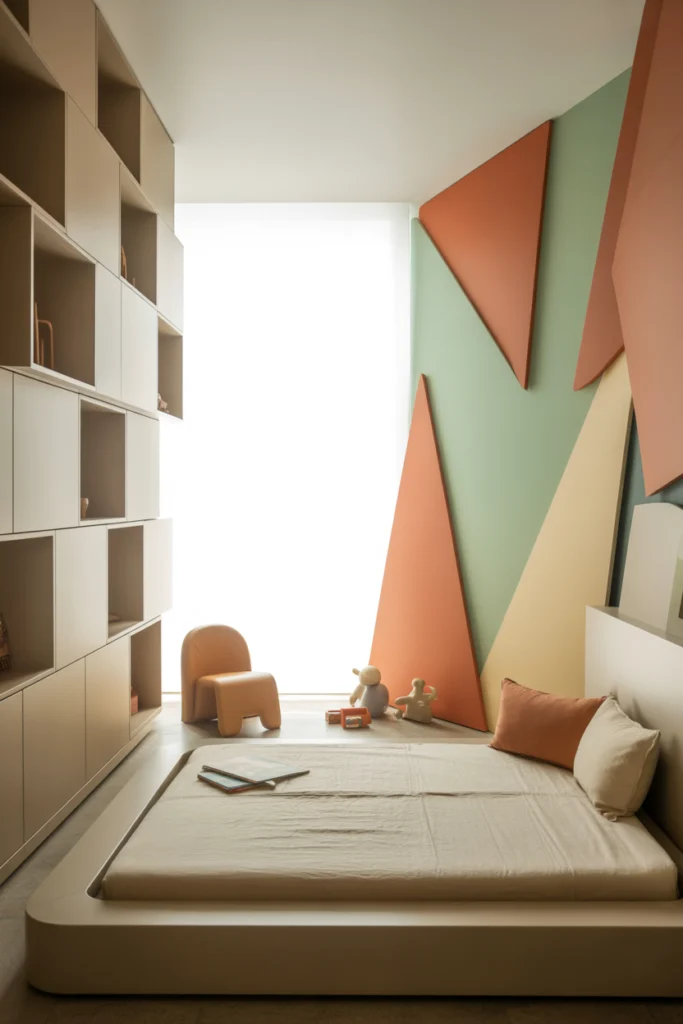
Geometric design adds energy with clean shapes. Paint one accent wall with large triangles or hexagons using painter’s tape and two or three colours, for example navy, mustard, and white, or use peel-and-stick decals if you rent. Keep the other walls plain white so the pattern has room to breathe, and repeat one shape in smaller doses, such as a triangle cushion or a hexagonal shelf.
Storage can follow the theme: cube organizers in a grid, hexagonal wall shelves for small treasures, and a simple desk with straight modern lines. If you are choosing a wall colour scheme, these bedroom color schemes show how bold and neutral tones can be balanced in a child’s room. Keep bedding mostly solid in one of the accent colours, and let the wall do the talking. This look is flexible too: repainting one wall or swapping decals updates the room in a single weekend.
11. Playhouse Loft Bedroom
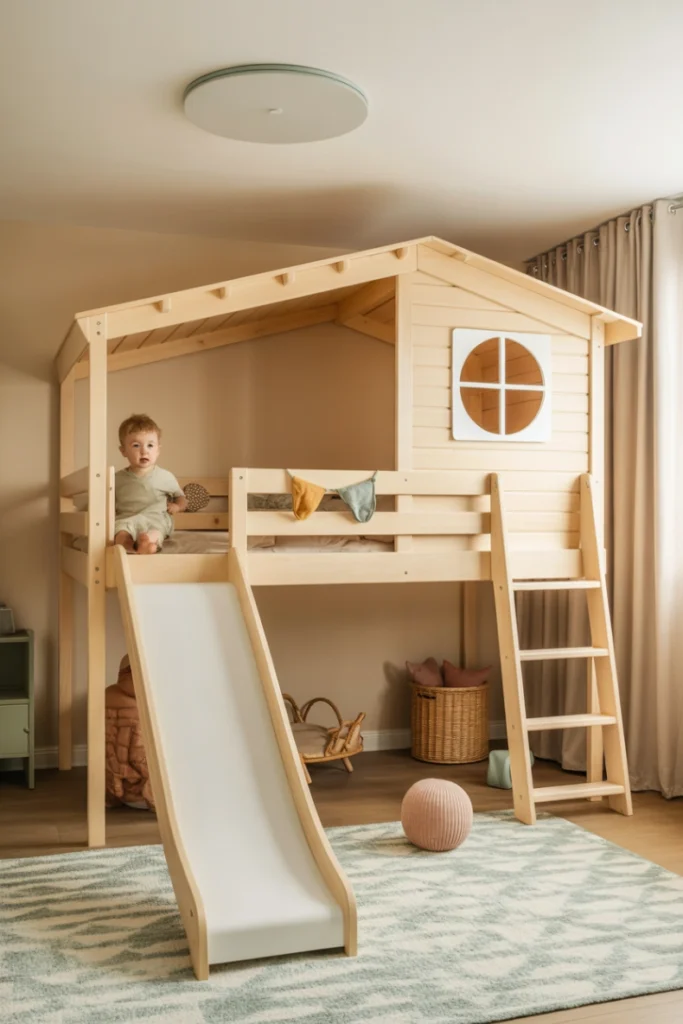
A playhouse loft bed is the smartest trick for a small room because it creates two rooms in one footprint. Choose a solid wood loft frame with a guard rail at least 16 cm above the mattress and a sturdy ladder with flat steps, and check the ceiling height: you need at least 75 to 90 cm of sitting space above the mattress. Add small playhouse details such as a pitched roof frame, a window cutout, or bunting, but keep them light so the structure stays safe.
Underneath, fit exactly one purpose: a desk for school-age children, a reading corner with floor cushions for younger ones, or toy storage in labelled bins. Do not try to fit all three, or the space becomes cluttered. A soft rug under the loft defines the zone, and a clip-on reading light on the bed rail gives your child control at bedtime. Always anchor the loft to the wall studs, and keep the ladder clear of toys so night-time trips are safe.
12. Montessori-Inspired Bedroom
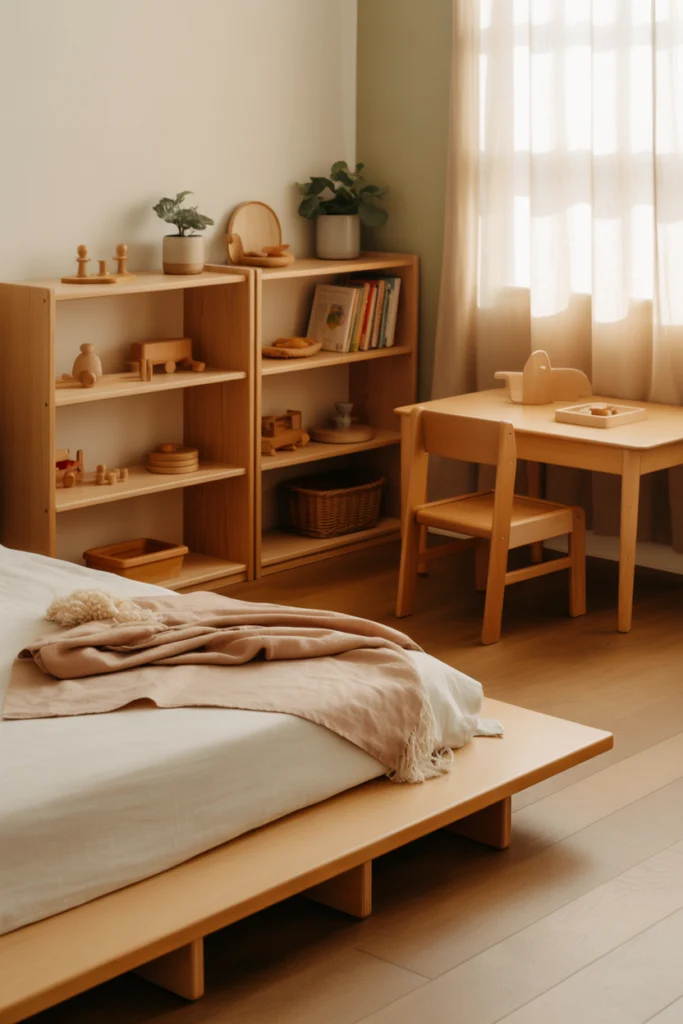
A Montessori bedroom is built around independence. Use a floor bed, a mattress on a low frame about 15 cm high, so your child can get in and out safely alone. Place open shelves at your child’s height with a small rotation of toys, forward-facing book baskets, and clothes in low drawers they can reach. Keep the colour palette soft and neutral, white, beige, and light wood, so nothing competes for attention.
The layout should stay open, with a clear path from bed to play area and nothing blocking the door. Choose natural materials, cotton bedding, wooden toys, and a wool or cotton rug, and add a child-sized table and chair for drawing. Rotate toys every two weeks rather than displaying everything at once: fewer choices mean longer, calmer play. This room teaches responsibility quietly, because everything has a visible place your child can manage.
13. Color-Blocking Bedroom
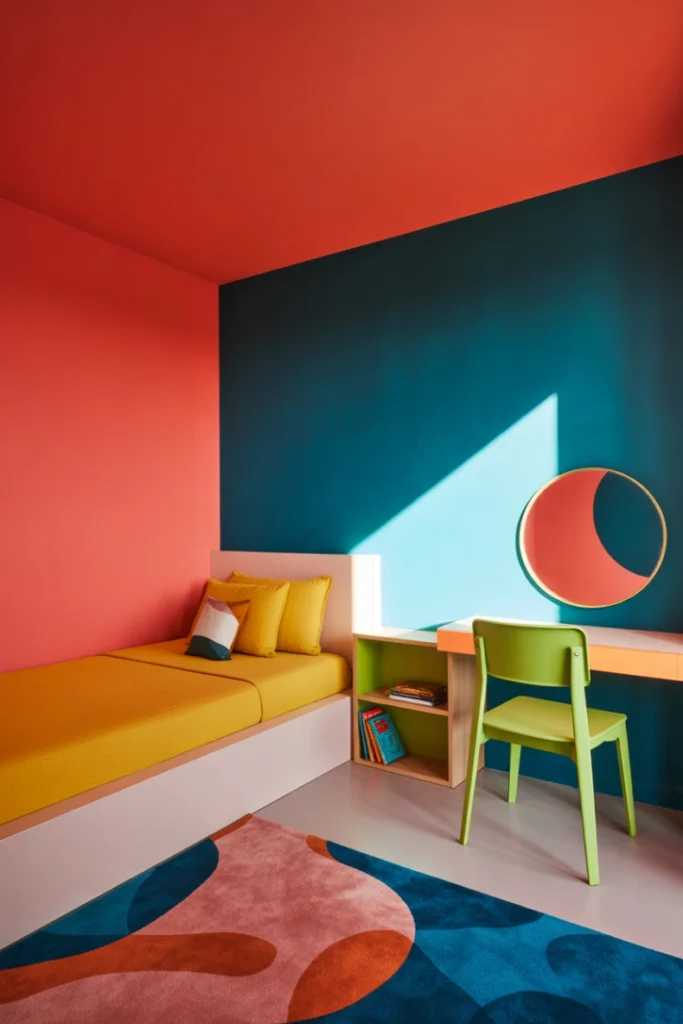
Color-blocking is bold but tidy when you plan the blocks. Paint the lower two-thirds of one wall in a strong colour such as teal or mustard, and the upper third in white, using a crisp horizontal line marked with painter’s tape and a spirit level. Repeat the strong colour once more in the room, on bedding or a desk chair, and keep everything else neutral.
This style suits older children and pre-teens who want a room that feels designed, not decorated. Pair the walls with simple furniture in white or light wood, and add color-blocked accessories, a two-tone cushion, a striped throw, or art prints in the same two colours. The clean lines make the room easy to keep tidy, because the structure of the colour does the decorating work. When tastes change, repainting one wall is a quick weekend update.
14. Reading Nook Bedroom
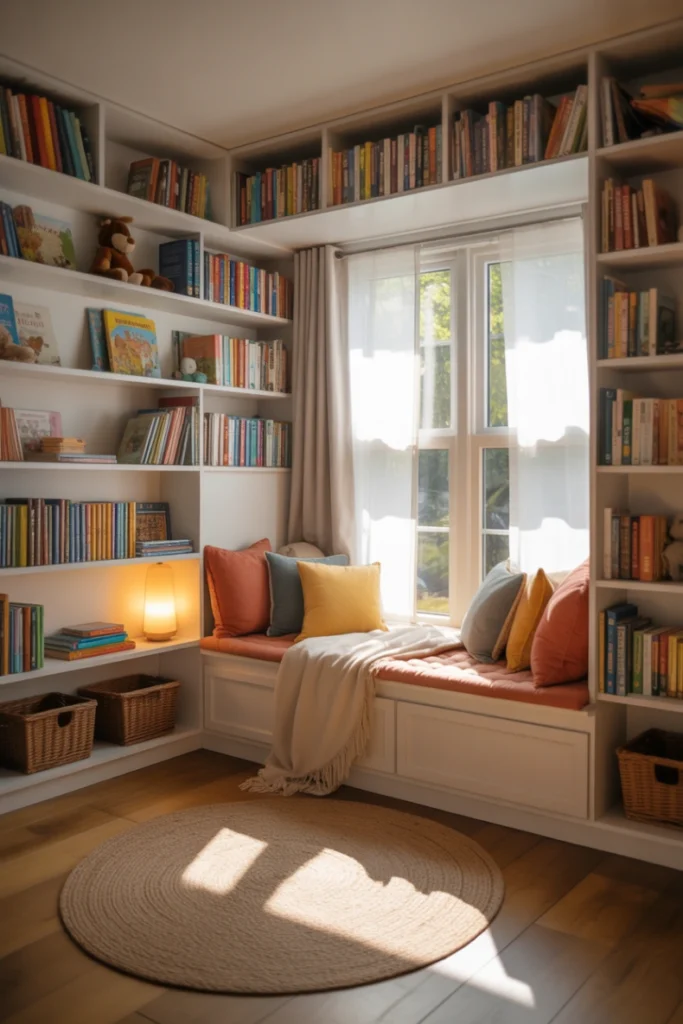
A reading nook gives a child a place that belongs to books alone. Use a corner by the window if you have one: a window seat with a 10 cm thick cushion, a basket of books at arm height, and a small shelf above for current favourites. In a room without a window seat, a comfortable armchair, a floor cushion, and a small side table work just as well, as long as the spot is distinct from the bed and the desk.
Lighting decides whether the nook gets used. Add a warm reading lamp with an adjustable arm, plus fairy lights along the shelf for evening atmosphere, and keep the light warm, around 2700K, so it feels cosy rather than clinical. Organize books by colour or topic in forward-facing bins so younger children can choose by cover, and rotate the selection monthly to keep curiosity alive. A soft throw and a rug underfoot finish a corner that quietly builds a reading habit.
15. Farmhouse Kids Bedroom
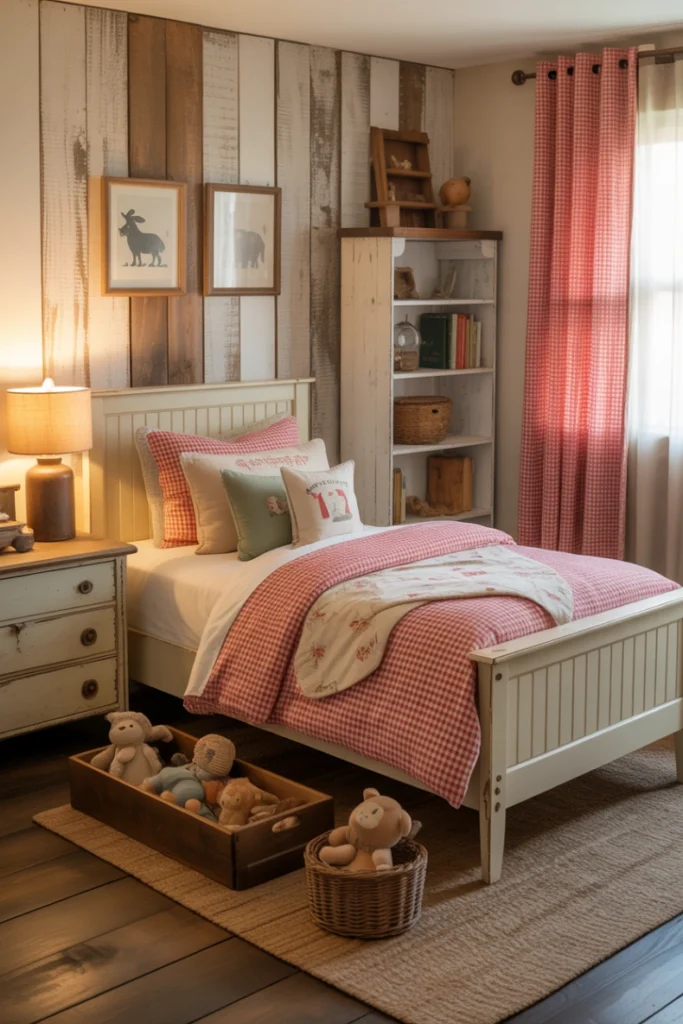
Farmhouse style brings warmth through natural materials and simple shapes. Use a wooden bed frame in a washed or natural finish, white or soft grey walls, and muted accents such as sage green or dusty red in bedding and curtains. Checkered or gingham fabric on one cushion or a throw adds farmhouse character without overwhelming the room, and a barn-style sliding door on a wardrobe, if space allows, is both practical and charming.
Storage follows the same honest approach: wooden crates under the bed, woven baskets on shelves, and a sturdy bookcase that can take heavy books. A chalkboard panel on one wall, framed in wood, gives children a place to draw and doubles as a message board for the family. Layer a textured rug and soft cotton bedding so the room feels homely rather than styled, and keep metal accents, such as black drawer pulls, consistent across the furniture.
16. Tropical Paradise Bedroom
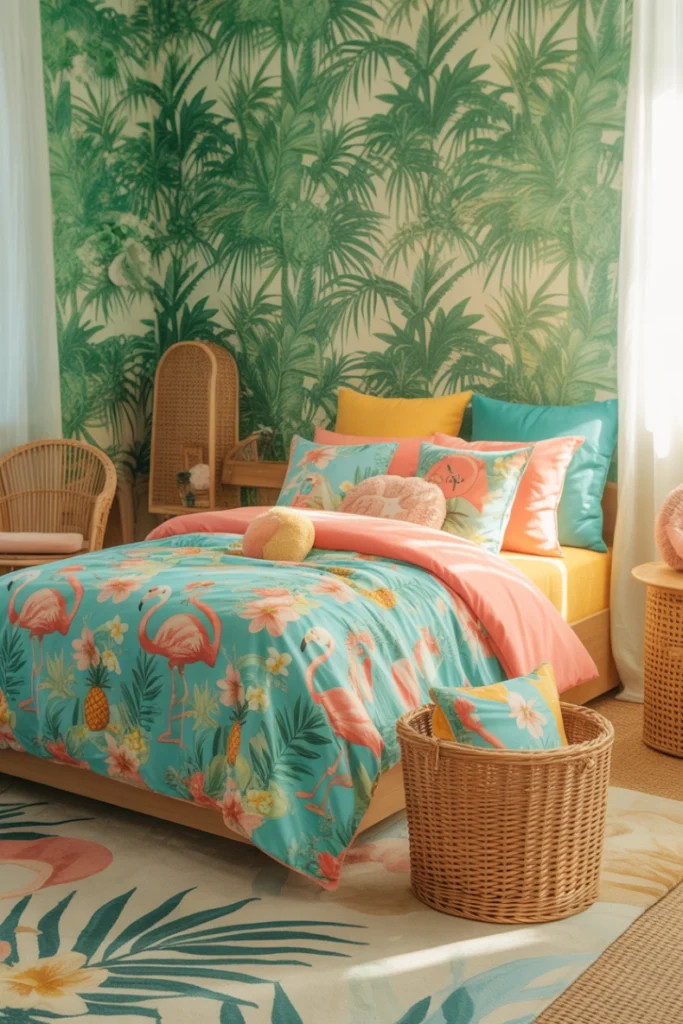
A tropical room should feel sunny, not chaotic. Choose one bold pattern, palm-leaf wallpaper on a single wall or a tropical duvet set, and keep the rest of the room calm with white or light wood furniture. Bright greens, yellows, and pinks work when they share one base colour, so pick a duvet that contains all three and pull cushion colours from it.
Storage in natural materials keeps the look grounded: rattan baskets, bamboo shelves, and a light wood toy box. Keep the layout simple with clear floor space, because bold patterns need breathing room, and use lightweight curtains in white voile so daylight stays bright. A small indoor plant in a rattan pot, real or faux, and a bright rug by the bed complete the holiday feel, and swapping the duvet set is all it takes to tone the room down for winter.
17. Neutral Modern Kids Bedroom
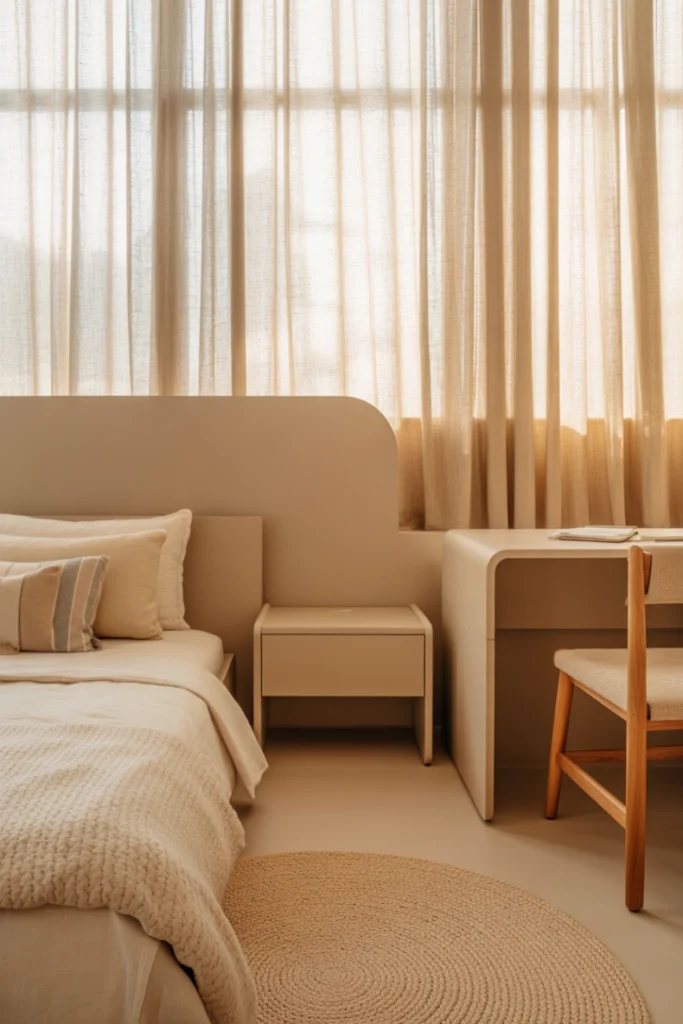
Neutral rooms are the easiest to live with long term. Build the base from beige, taupe, soft grey, and warm brown, then add interest through texture rather than colour: a knitted throw, a woven rug, linen curtains, and cotton cushions in slightly different tones. Modern furniture with simple straight lines, a low bed, a plain wardrobe, and a small desk, keeps the room feeling current without dating quickly.
The real advantage is adaptability. As your child grows, only accessories need to change: swap cartoon cushions for plain ones, add a desk lamp and a pinboard, and the room matures in an afternoon. Seasonal decor works beautifully here too, a heavier throw in winter, lighter bedding in summer, without clashing. Add warmth with layered lighting, a ceiling light on a dimmer plus a bedside lamp, so the neutral palette never feels cold or flat.
18. Creative Chalkboard Wall Bedroom
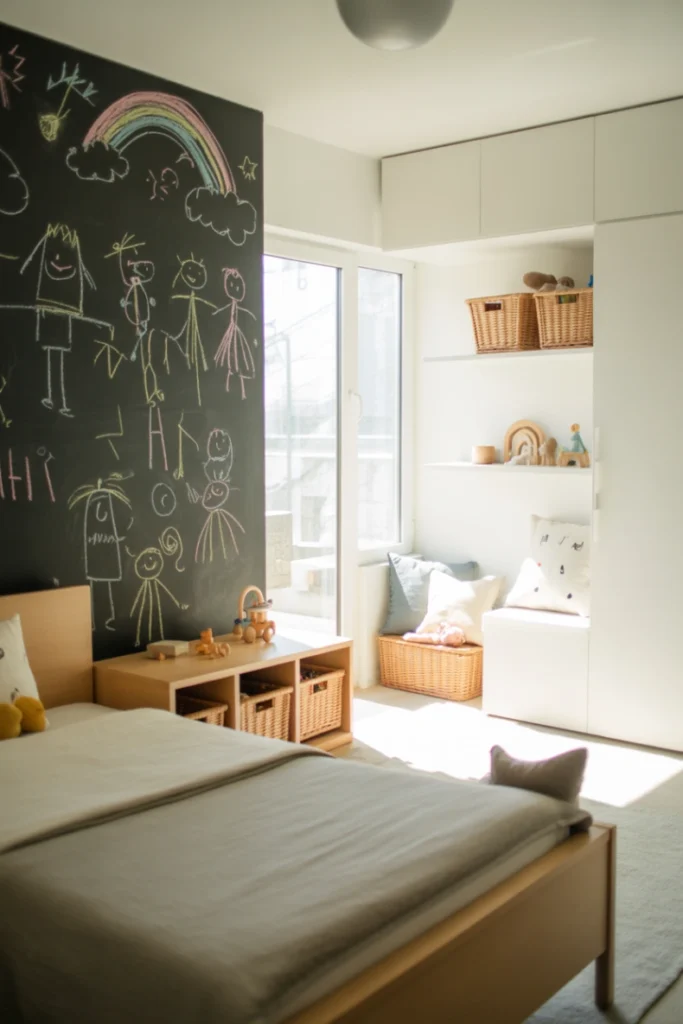
A chalkboard wall turns one surface into a creative tool. Paint a single wall, ideally near the study or play area, with two coats of chalkboard paint over a primed surface, and let it cure for at least three days before the first drawing. Frame the wall with a simple wood trim so it looks intentional, and keep the rest of the room in a calm palette so the chalk art stands out.
Fit a narrow shelf or a magnetic strip along the bottom of the wall for chalk, erasers, and a small cloth, and keep a dustpan brush nearby for easy clean-up. Use the wall for more than drawing: a weekly schedule, spelling practice, or a countdown to a birthday all make it part of daily life. If full chalkboard paint feels permanent, a large framed chalkboard panel, about 120 by 90 cm, gives the same fun and can move rooms later. For wall decor ideas that pair well with a feature wall, see these bedroom wall decor ideas.
19. Superhero-Themed Bedroom
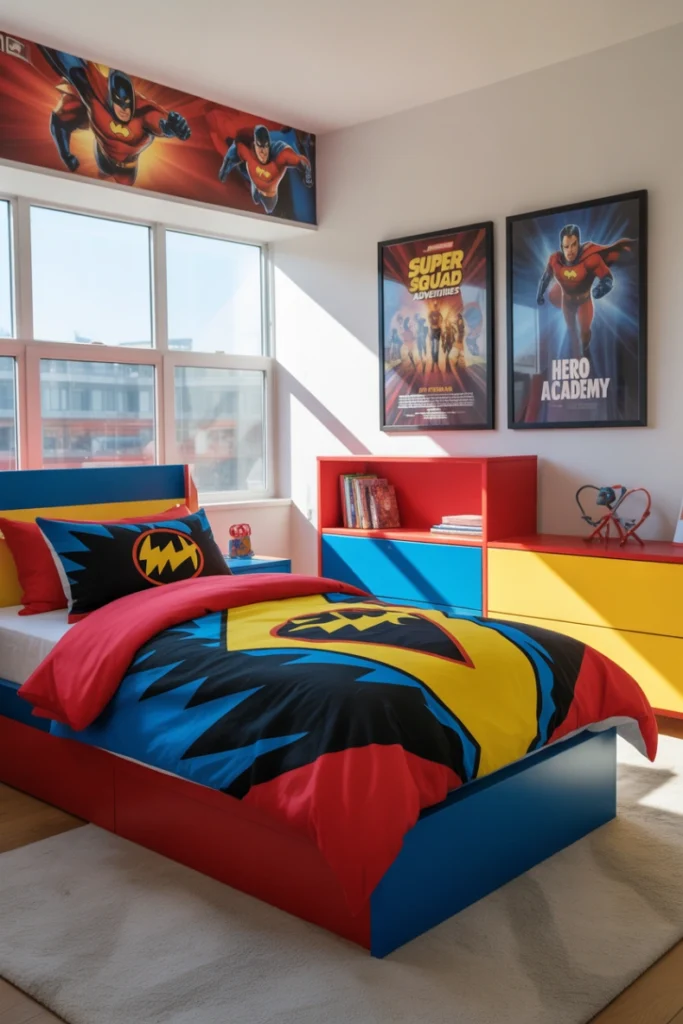
Superhero rooms work when one hero, or one colour scheme, leads. Choose your child’s current favourite and build around its colours, for example navy and red, rather than plastering every character on every wall. Themed bedding, two or three posters in matching frames, and one wall decal above the bed are enough; the rest of the room stays neutral so the theme does not overwhelm sleep.
Storage can join the fun with themed bins for action figures and a display shelf for collections, kept at a height your child can reach and tidy alone. Keep furniture plain and sturdy, a simple bed and wardrobe in white or wood, so that when the hero changes, you only replace bedding, posters, and bins. A bold rug in one hero colour anchors the room, and a dimmable lamp lets the excitement wind down properly at bedtime.
20. Rainbow-Inspired Bedroom
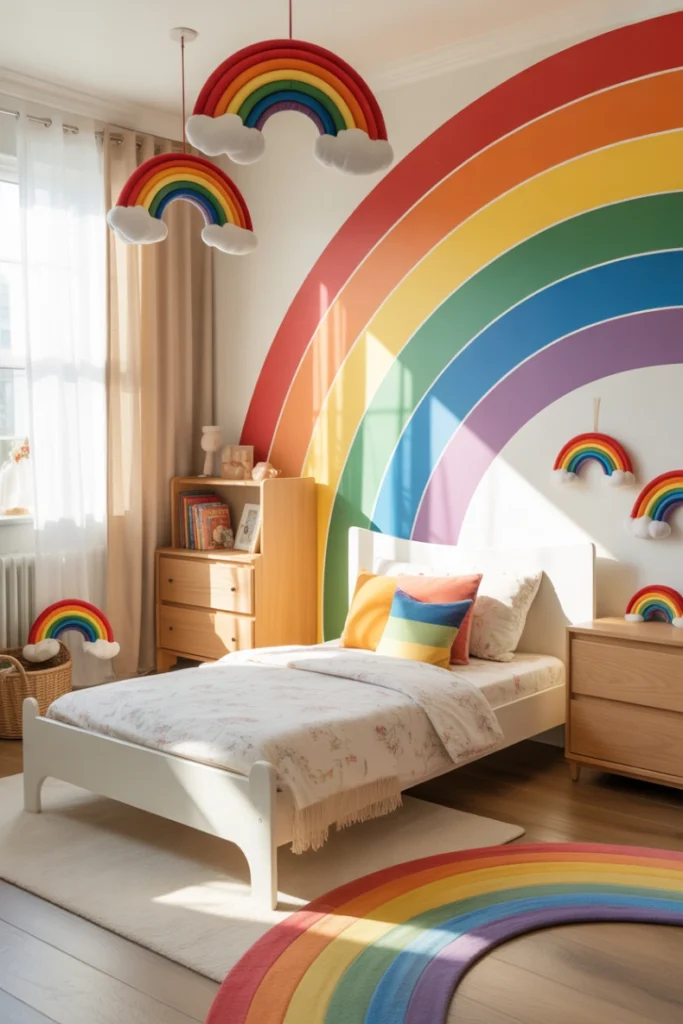
A rainbow room brings instant joy, but it needs restraint to stay restful. Use the full rainbow in one place only, such as a painted arch above the bed, a rainbow wall decal, or a multicoloured rug, and keep furniture and bedding mostly neutral. A white bed frame, pale walls, and one solid-coloured duvet in a rainbow shade, such as soft yellow, let the colour sing without overstimulating.
Tie storage into the theme with bins in single rainbow colours, each labelled for a toy type, so tidy-up becomes a colour game. Balance bright areas with visual rest: solid curtains, a plain rug section, and one uncluttered wall. If painting a rainbow arch, sketch it lightly in pencil first, use painter’s tape for clean edges, and paint from the outermost stripe inward. The result is playful by day and calm enough for sleep at night.
21. Vintage-Inspired Kids Room
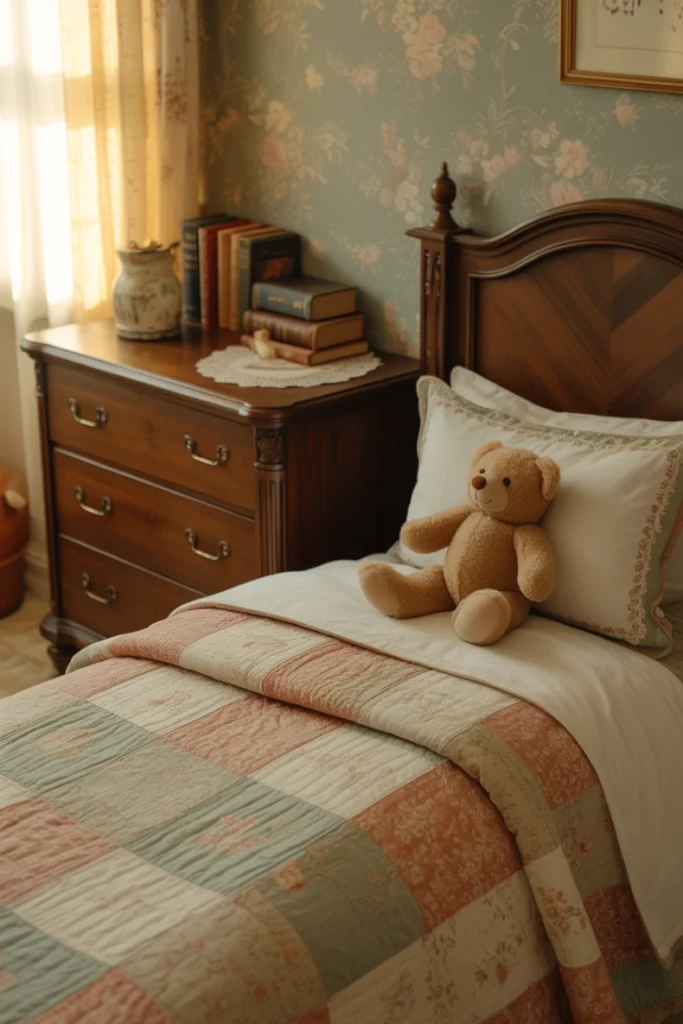
A vintage room feels timeless when the pieces look collected, not costumed. Choose a wooden bed with simple turned details, a dresser in a muted painted finish, and soft floral or gingham bedding in cream, dusty rose, or sage green. Framed vintage-style illustrations, a classic teddy on the bed, and a soft textured blanket add character without needing genuine antiques, which are often impractical for children.
Storage suits the theme naturally: a wooden trunk at the foot of the bed for toys, a classic bookcase for stories, and small wooden crates for keepsakes. Keep the palette muted and consistent, and mix old and new deliberately, a new mattress and safe modern lighting with vintage-look furniture, so the room is charming and safe. If you love attic character, an attic bedroom conversion pairs beautifully with vintage pieces, as shown in these creative attic bedroom ideas. This style ages gracefully, and many pieces can move with your child into a teen room later.
Conclusion
Designing a stylish and functional kids bedroom does not have to be overwhelming. Whether your child loves adventure, pastels, sports, nature, or imaginative themes, these 21 ideas give you practical ways to blend beauty with everyday usability. From smart storage and reading nooks to bold themes and calming palettes, the best rooms are the ones planned around how your child actually lives: space to play, a quiet corner to read, storage they can manage alone, and colours that help them sleep well.
Start with one idea that fits your child’s personality and your room’s size, get the bed and storage right first, and add theme details gradually. With thoughtful planning and purposeful decor, you can transform any bedroom into a joyful, inspiring, and well-organized space your child will adore for years.
Frequently Asked Questions
How do I choose a theme my child will not outgrow quickly?
Keep the expensive and permanent parts neutral: walls in a soft white or pale colour, plain furniture, and simple flooring. Put the theme in bedding, wall decals, art, and cushions, which are cheap to swap. That way a space or dinosaur phase can change in a weekend without repainting or replacing furniture.
What is the best colour palette for a kids bedroom?
Choose one calm base, such as white, soft grey, or pale beige, plus one or two accent colours your child loves. Pale walls help small rooms feel bigger and make bedtime calmer, while brighter colours work best as accents on bedding, rugs, and art rather than on all four walls.
How much storage does a kids bedroom really need?
Plan three types: daily storage your child can reach, such as open bins and low shelves; hidden storage for out-of-season items, such as under-bed drawers; and one display shelf for favourite toys and books. Label bins with pictures for younger children and words for older ones, so tidying up is a habit, not a hunt.
Are loft and bunk beds safe for young children?
Loft and top bunks are generally recommended for children aged six and over, with guard rails at least 16 cm above the mattress, a sturdy ladder with flat steps, and the bed anchored to the wall. Children under six should sleep on a low bed or the bottom bunk, and the area around the ladder should always stay clear.
How can I make a small kids bedroom feel bigger?
Use pale wall colours, a low bed frame, and furniture that does more than one job, such as a bed with drawers or a desk that folds away. Keep the floor as clear as possible, use wall shelves instead of extra bookcases, and add one large mirror or a light curtain to bounce daylight around the room.
More Ideas You Will Love
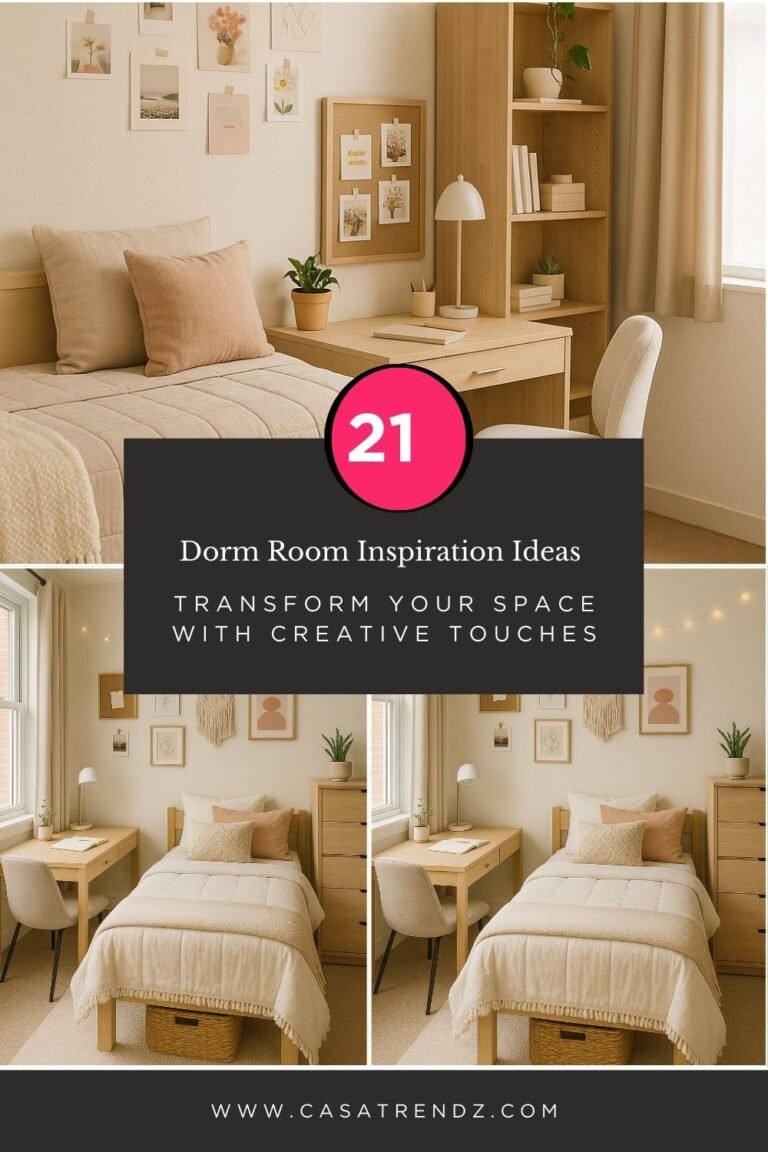 21 Dorm Room Inspiration Ideas – Transform Your Space with Creative Touches
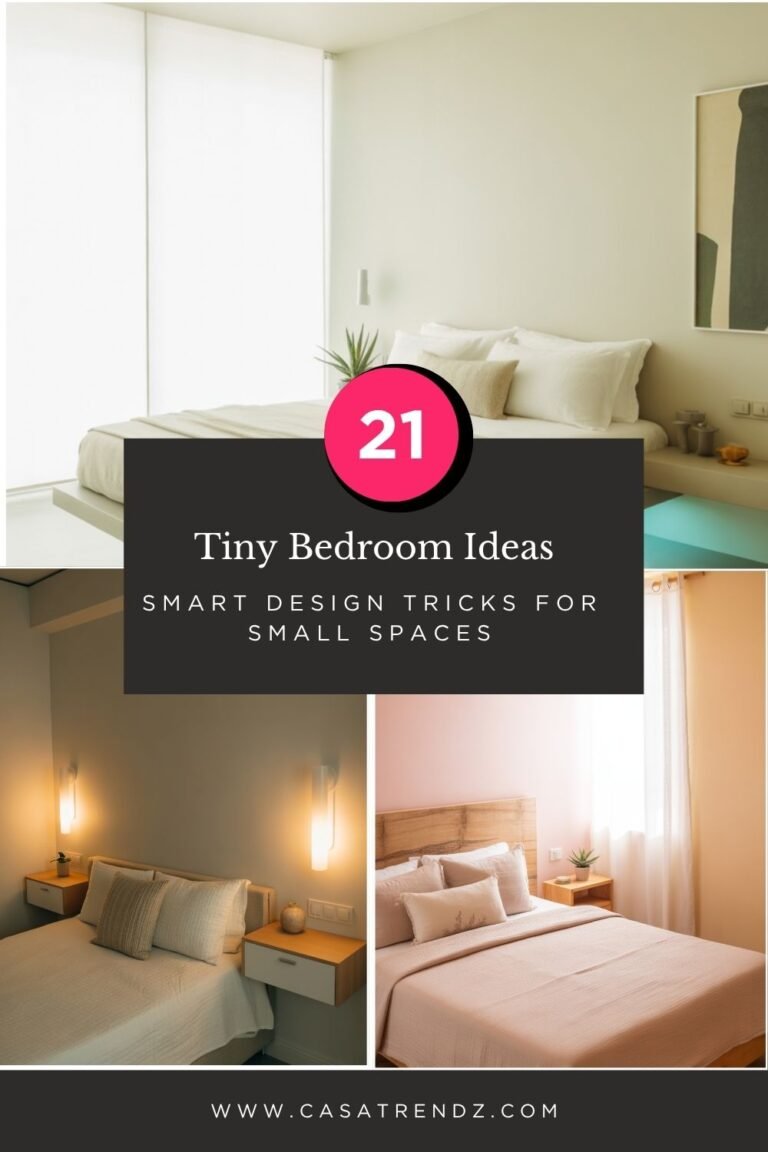 21 Tiny Bedroom Ideas: Smart Design Tricks for Small Spaces
 18 Red Bedroom Ideas That Are Bold, Beautiful, and Inspiring
 15 Warm and Cozy Earth-Tone Bedroom Ideas
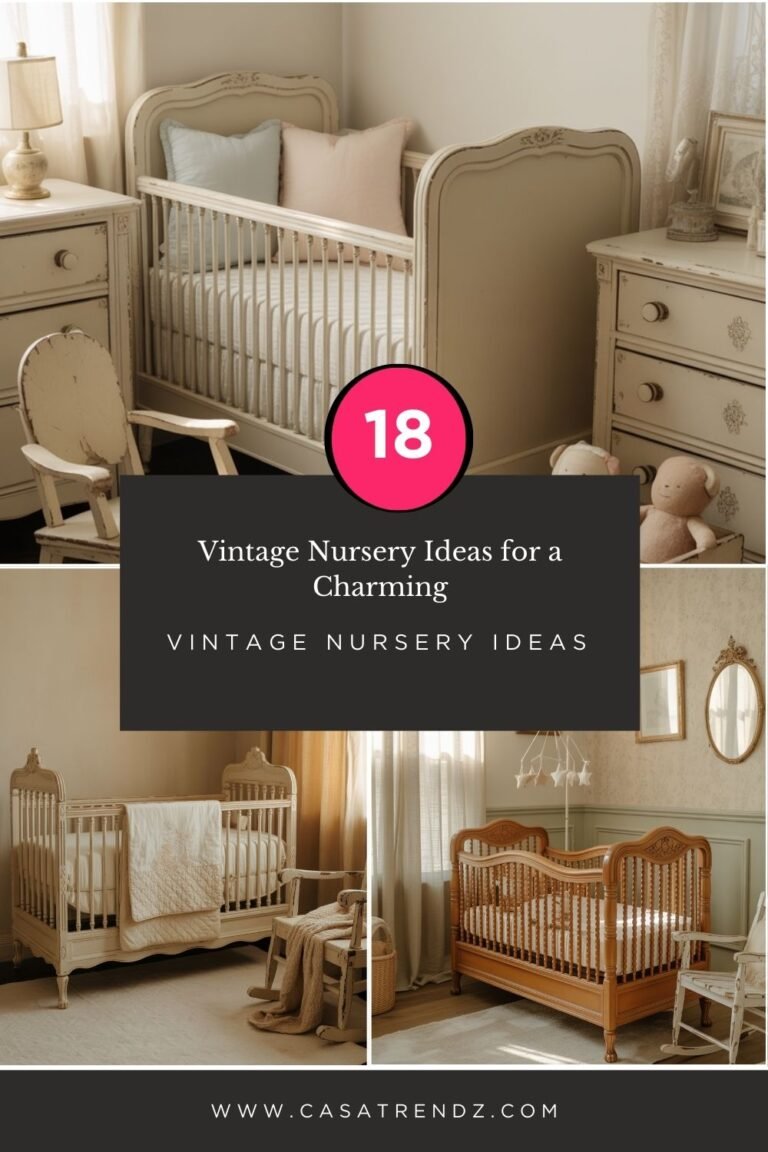 18 Vintage Nursery Ideas for a Charming, Timeless Baby Room
 18 Indoor Christmas Light Ideas for 2025 Inspiration