
20 Modern Living Room Ideas for a Cozy and Stylish Interior

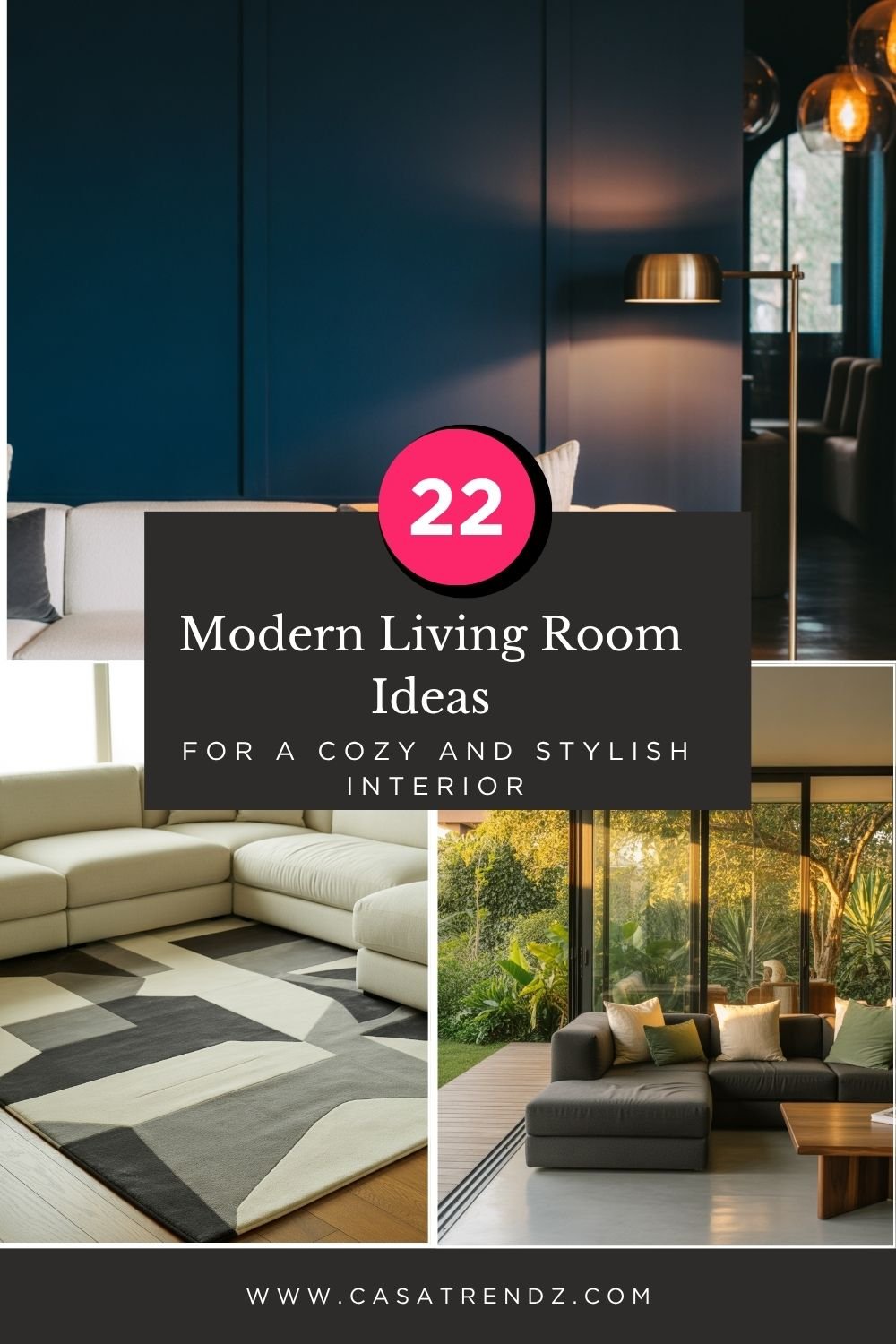
Your living room is the centerpiece of your home, the space where comfort meets style and where guests get their first impression of your interior taste. Modern living room design goes beyond minimalism and sleek furniture. It is about creating an atmosphere that feels warm, functional, and visually appealing, a room you actually want to spend time in every day, not just admire from the doorway.
Whether you live in a small apartment or a spacious house, the right modern living room ideas can make your space both cozy and sophisticated. From clean lines and layered lighting to textured materials and curated decor, every design choice plays a role in shaping a balanced and beautiful environment. The ideas below work room by room and budget by budget, so you can start with one change, such as lighting or a rug, and build toward a full refresh over time.
Here are 20 modern living room ideas that will help you transform your space into a stylish retreat with timeless comfort. Each idea includes practical details on materials, sizes, colors, and placement, so you can apply it with confidence instead of guessing at the store.
1. Neutral Palette with Layered Textures

A neutral color palette is the foundation of modern design. Shades of beige, white, gray, and taupe create a calm and airy atmosphere, and they give you a flexible base that works with almost any accent color later. Start with walls in a warm white or light greige, then add a sofa in a mid-tone neutral, such as oatmeal linen or soft gray bouclé, so the room feels grounded rather than washed out.
To keep neutrals from feeling cold, layering textures is key. Combine a linen sofa, wool throws, and a jute rug for dimension and warmth, and add subtle contrast through matte finishes and natural materials like wood and stone. Try this formula: one smooth surface, one nubby texture, and one natural fiber in each seating zone. A light wood coffee table, a stone tray, and a chunky knit throw will do more for a neutral room than another coat of paint, and this approach lets you highlight texture over color for a sophisticated, cozy, and timeless result.
2. Statement Lighting Fixtures
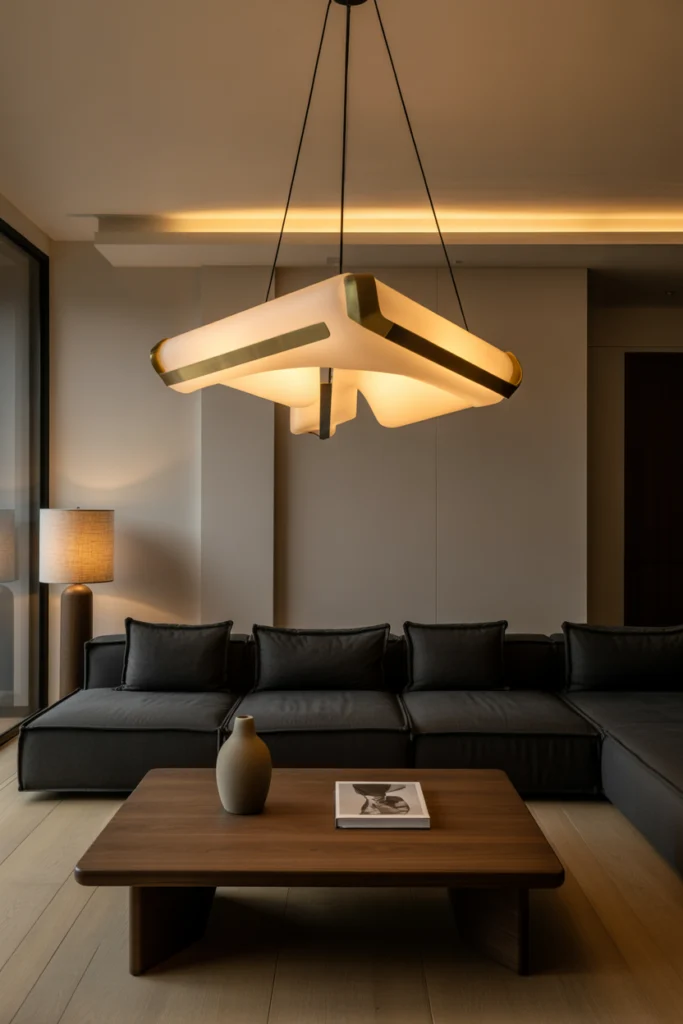
Lighting is both functional and artistic in a modern space. A single statement fixture, such as a sculptural chandelier, a geometric pendant, or a minimalist arc floor lamp, can serve as the focal point of the whole room. Hang a pendant or chandelier so its lowest point sits about 30 to 36 inches above a coffee table, or about 7 feet above the floor in a walkway, so it defines the seating area without blocking sightlines across the room.
Use layered lighting, ambient, task, and accent, to create mood and depth. Dimmable options allow flexibility, helping your living room transition seamlessly from day to night while maintaining a cozy ambiance. Put overhead lights on a dimmer, add a floor lamp beside your reading chair for task light, and use a small picture light or LED strip behind shelving for accent glow. With three layers on separate switches, you can brighten the room for cleaning, soften it for a movie night, and warm it for guests without changing a single piece of furniture.
3. Sleek Furniture with Clean Lines
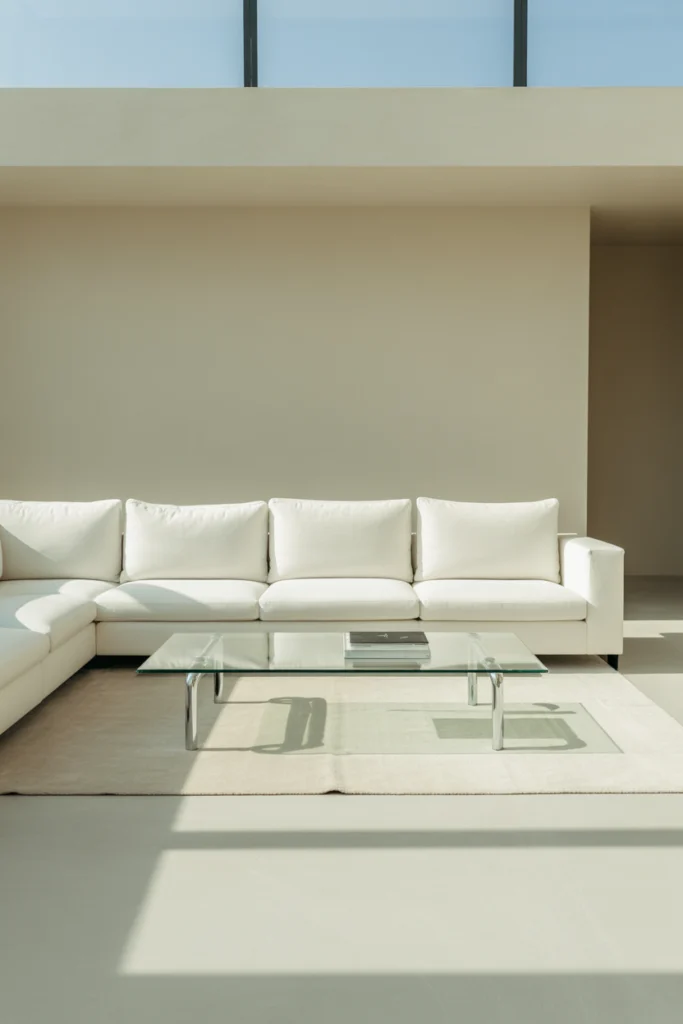
Modern furniture emphasizes simplicity and function. Opt for streamlined silhouettes, low-profile sofas, and leggy armchairs, and avoid heavy or overly ornate pieces that visually crowd the room. A sofa with a seat height around 17 to 19 inches and a depth of 36 to 40 inches suits most adults, while exposed legs, even just 4 to 6 inches tall, help a room feel lighter because you can see floor beneath the piece.
Choose materials like metal, glass, or light wood for an uncluttered aesthetic. The goal is to create open visual space while ensuring each piece adds comfort and sophistication, which matters even more in a compact layout, as these small living room ideas show with their space saving layouts. Leave at least 30 inches for main walkways and 14 to 18 inches between a sofa and a coffee table, so the room stays easy to move through. If a piece does not earn its footprint by being comfortable, useful, or beautiful, it is a candidate for removal.
4. Incorporate Natural Elements
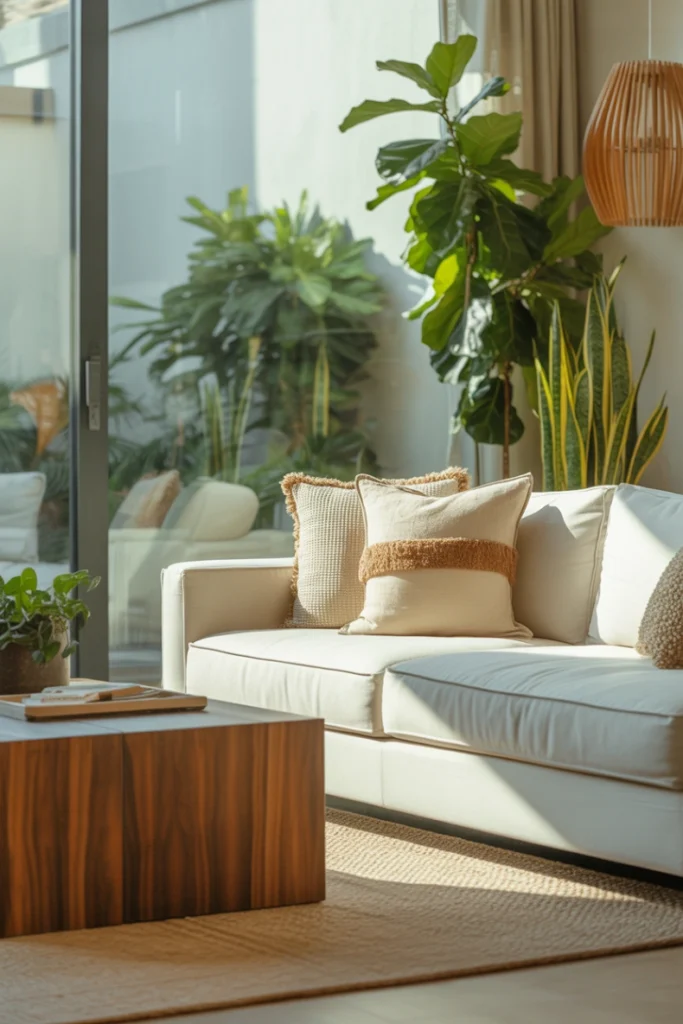
Bring warmth into modern design by blending in natural materials. Wood, stone, rattan, and plants balance the sleekness of modern interiors and stop a room from feeling like a showroom. A solid oak side table, a marble tray, a rattan basket, and one large plant can soften an entire seating arrangement without changing your color scheme at all.
Use wooden side tables or marble accents to create an organic contrast, and place plants where they get the light they need. A fiddle leaf fig or olive tree suits a bright corner, while pothos, snake plants, and ZZ plants tolerate lower light and irregular watering. Indoor plants add freshness, soften sharp architectural lines, and make hard surfaces feel lived in. Group plants in odd numbers, vary their heights, and use simple pots in one or two finishes so the greenery, not the containers, gets the attention.
5. Open-Concept Layouts

Modern living rooms thrive in open-concept designs that merge seamlessly with dining or kitchen areas. This creates a feeling of space and connectivity, which is ideal for family life and entertaining, but it also needs clear zones or the room can feel like one undefined hall. Use area rugs, furniture placement, and lighting to define each zone while keeping the overall look consistent.
Place a rug so the front legs of the sofa and chairs sit on it, with at least 6 to 8 inches of rug extending beyond the seating on each side, to anchor the living zone. Angle a console or a low bookcase as a soft divider between living and dining areas, and repeat one color and one material across both zones, for example black metal and warm oak, to maintain flow and visual harmony. Consistent flooring, matching wood tones, and a shared neutral palette will tie the open plan together far better than a wall ever could.
6. Add Pops of Color

While neutrals dominate modern design, a pop of color adds life. Try accent chairs in deep teal, mustard, or rust, or keep the big pieces neutral and introduce color through art, throw pillows, or decorative vases. This approach keeps the space modern yet dynamic without overwhelming the minimalist aesthetic, and it is easy to change with the seasons.
Use the 60-30-10 rule as a guide: about 60 percent neutral base, 30 percent secondary tone, and 10 percent bold accent. In practice, that might mean beige walls and a gray sofa, warm wood and brass as the secondary layer, and rust or teal in just the pillows, a throw, and one piece of art. For more inspiration on balancing bold and calm tones, see these modern living room ideas that pair statement pieces with quiet backgrounds. If you tire of a color, swapping pillows and a throw costs little and refreshes the whole room in an afternoon.
7. Layered Lighting for Ambience
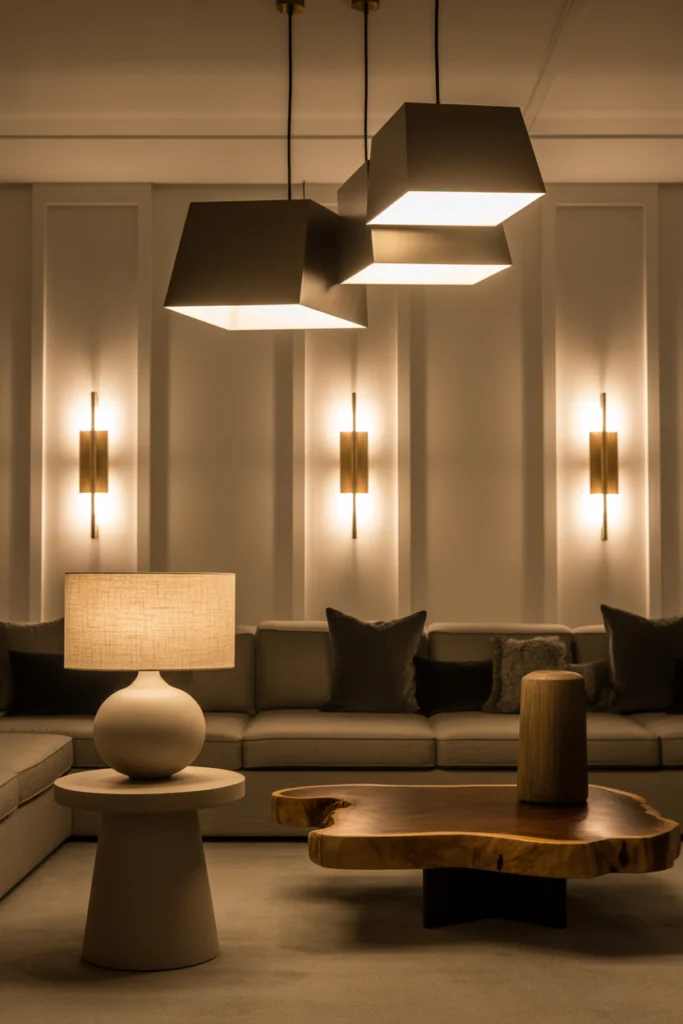
Combine multiple light sources, ceiling lights, wall sconces, table lamps, and floor lamps, to create dimension in a room that can otherwise look flat after dark. Each layer serves a purpose: ambient lighting for general brightness, task lighting for focus, and accent lighting for visual depth. The result is a cozy, well-balanced space that feels alive at any hour, not just in daylight.
Aim for a warm color temperature around 2700K to 3000K for living areas, which reads as soft and inviting rather than clinical. Place table lamps at a height where the bottom of the shade sits near seated eye level, about 58 to 64 inches from the floor when on a side table, so light falls on books and conversation instead of glaring into eyes. Add wall sconces flanking a fireplace or sofa at about 60 to 66 inches high, and keep at least one dimmable overhead source so you can shift the whole mood with one control.
8. Artistic Wall Decor
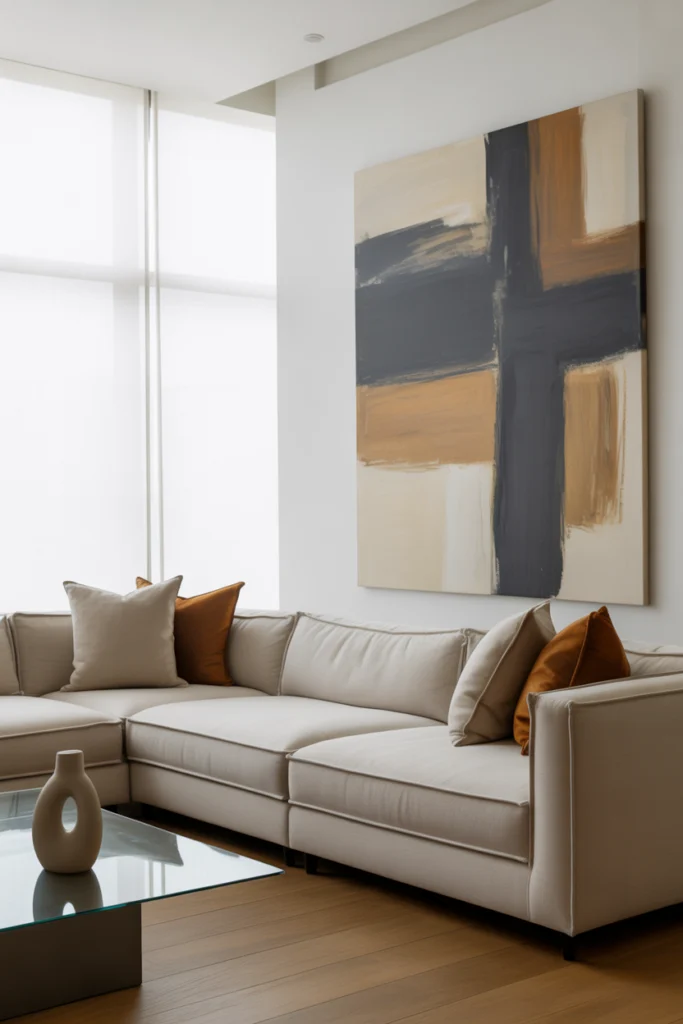
Walls in modern living rooms are ideal for displaying statement art or minimalist gallery setups. Choose large-scale artwork with bold lines or neutral abstract designs, and hang it so its center sits at about 57 to 60 inches from the floor, which is average eye level. Above a sofa, pick art that spans roughly two thirds of the sofa width, and hang it 6 to 8 inches above the sofa back so the art and furniture read as one composition.
For a subtler approach, use floating shelves with carefully curated decorative pieces or framed photographs for a personalized touch. Limit each shelf to three to five objects, vary their heights, and leave empty space between groupings so the display feels intentional rather than crowded. One oversized piece usually beats a wall of small frames in a modern room, because it gives the eye a single resting point and lets the rest of the wall breathe.
9. Mix Materials and Finishes
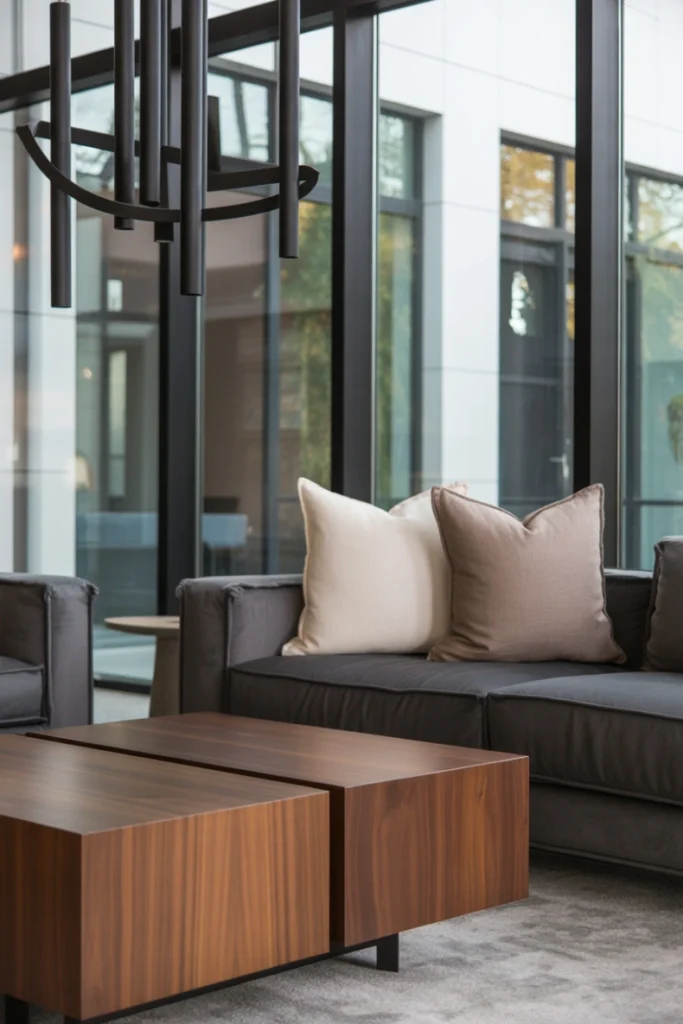
A modern space feels more dynamic when you mix materials, think matte metals, glossy ceramics, and smooth wood finishes, used side by side rather than matched perfectly. Contrast is essential. For example, balance cold steel with warm textiles, pair a glass top with a wooden base, or set a rough stone vase beside a smooth ceramic bowl, so no single texture dominates the room.
This interplay of textures enhances both visual interest and comfort, but it works best with restraint. Pick three to four materials and repeat them around the room: perhaps oak, black metal, linen, and glass. Use the largest material for furniture, the second for lighting and hardware, and the smallest for accessories, so the mix feels deliberate. If a surface feels too cold, add a textile nearby, and if a corner feels too soft, add a metal or stone accent to sharpen it.
10. Minimalist Approach to Accessories
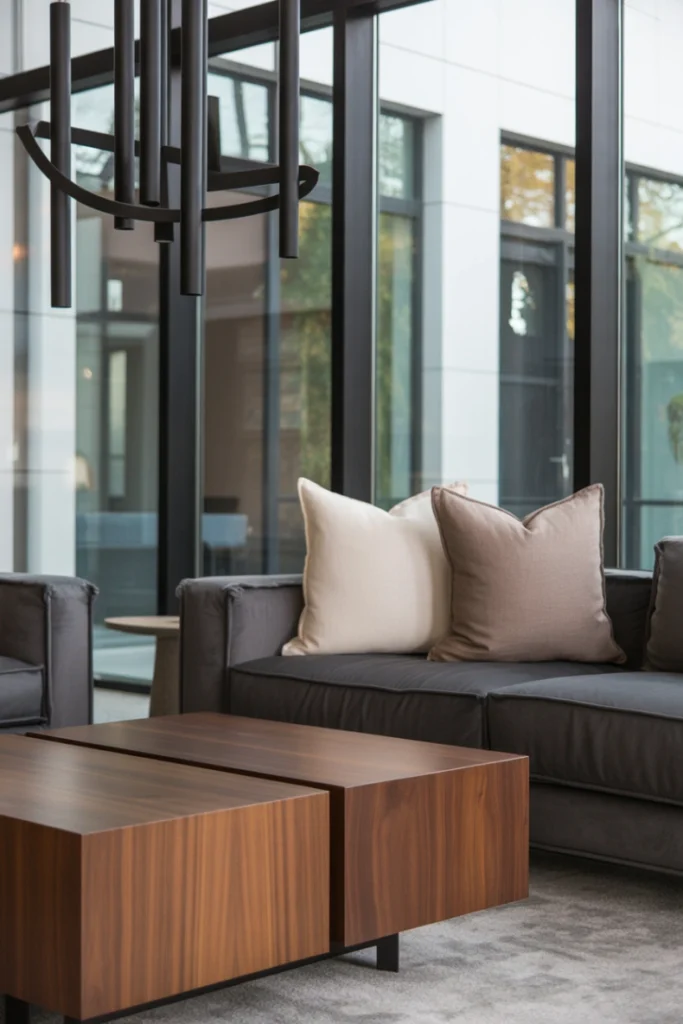
Less is more when styling a modern living room. Choose a few meaningful decor items, sculptural vases, geometric candles, or coffee table books, and arrange them thoughtfully instead of filling every surface. A coffee table looks best with three items at most: something tall, something flat, and something natural, such as a vase, a stack of two books, and a small bowl or plant.
Leave breathing room between pieces to maintain visual balance and calm. The focus should be on form and intentionality, so step back after styling and remove one item from each surface. If the surface still looks finished, that item was clutter. Store seasonal extras in a closed basket or cabinet, rotate accessories every few months, and let the furniture and art carry the room rather than a collection of small objects.
11. Smart Storage Solutions
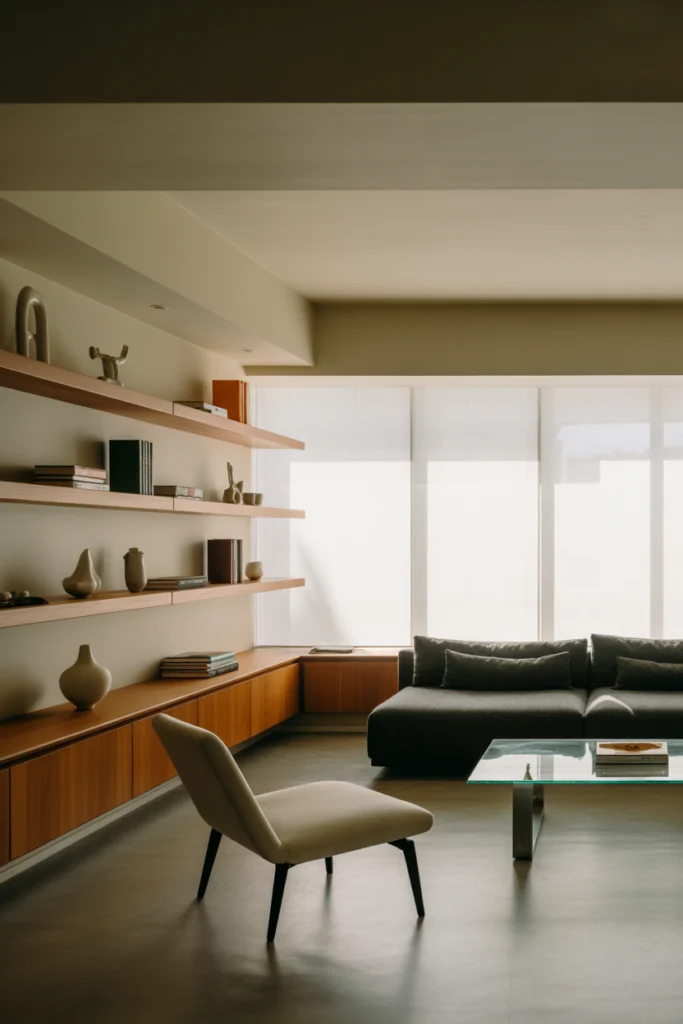
Hidden storage keeps your modern living room clutter-free. Consider built-in cabinets, floating shelves, or ottomans with concealed compartments for remotes, chargers, blankets, and board games. A media console with closed doors hides cables and consoles, while a storage ottoman doubles as extra seating, a footrest, and a blanket box in one piece.
A clean, organized space amplifies the modern aesthetic while keeping functionality at the forefront, so assign every everyday item a closed home. Use lidded baskets on lower shelves for toys and throws, keep charging cables in a drawer with a small tray, and reserve open shelving for display only. When everything has a place, tidying takes five minutes, and the room keeps its calm, streamlined look even on busy days.
12. Statement Rugs
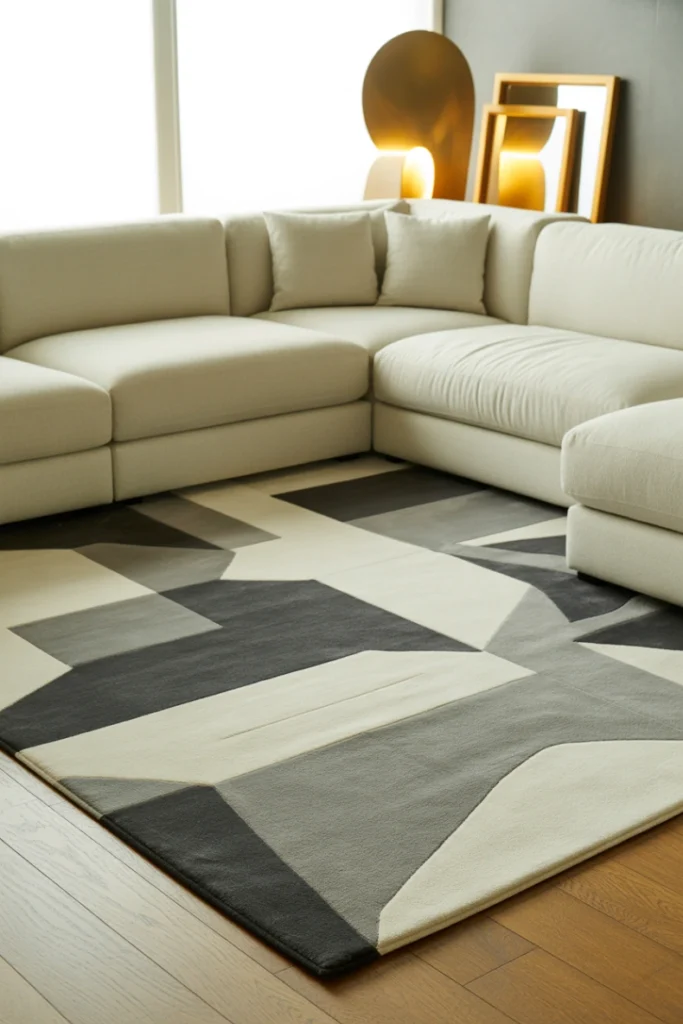
A rug can anchor your living room and define its character. Choose one with a bold pattern, geometric design, or soft neutral tone, and size it generously: too small a rug is the most common living room mistake. For a standard three seat sofa, an 8 by 10 foot rug usually works, with the front legs of all seating on the rug, while a 9 by 12 foot rug suits larger sectionals and open plans.
Layering rugs also works beautifully. Pair a textured jute base with a smaller patterned rug for a stylish twist, keeping the top rug about two thirds the size of the base so both layers stay visible. Choose low pile, easy clean fibers, such as wool blends or indoor outdoor synthetics, for high traffic family rooms, and save plush high pile rugs for quieter seating corners. A rug pad underneath prevents slipping, adds cushioning, and protects both the rug and your floor, and it also helps tie the room together with the right cozy living room paint color ideas on the walls around it.
13. Integrate Smart Home Technology

Modern living is about convenience. Incorporate smart lighting, thermostats, or voice-controlled entertainment systems into your design, and start with the upgrades you will use daily. Smart bulbs or dimmers give you scene control for movie nights and mornings, a smart thermostat saves energy without thought, and a single soundbar often sounds better, and looks cleaner, than a tangle of speakers.
Keep tech hidden with sleek cable management and discreet devices, maintaining the room’s streamlined aesthetic. Run cables through cord covers painted to match the wall, mount the television at seated eye level with its center about 42 inches from the floor, and store routers and consoles inside a ventilated cabinet. Choose devices in one finish, matte black or white, so remotes, speakers, and hubs blend in rather than competing with your decor.
14. Cozy Textiles for Warmth
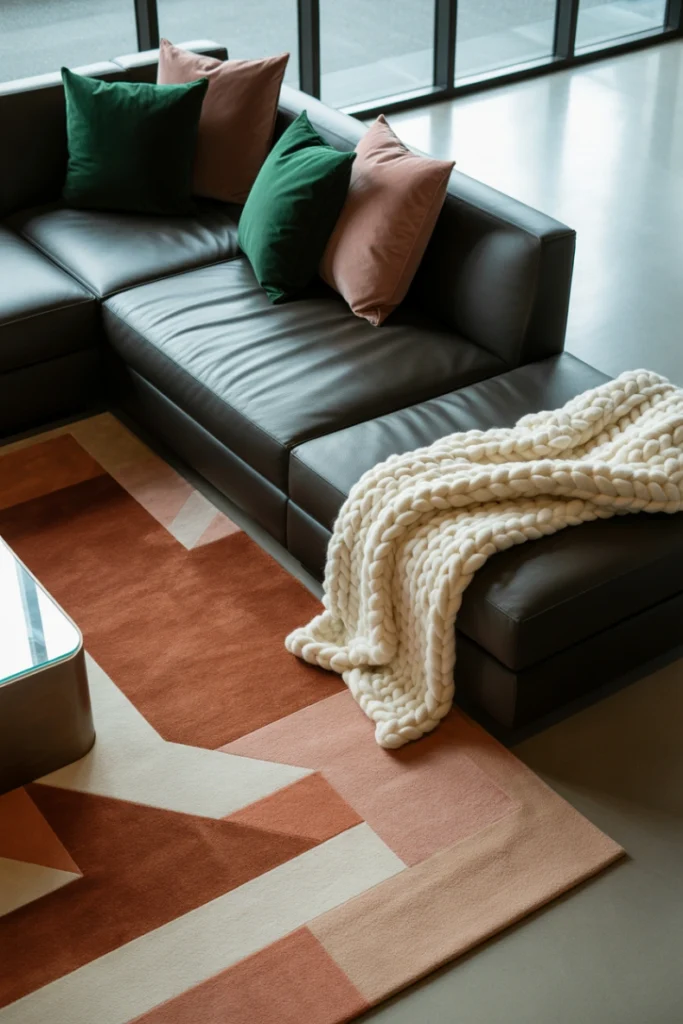
Soft textures make modern rooms inviting. Mix wool throws, velvet cushions, and plush rugs to soften hard surfaces, and stick to complementary tones that blend with your base palette. A good starting set is two solid cushions, one patterned cushion, and one throw per sofa, in textures that differ even when the colors stay close, so the seating looks layered rather than flat.
This layered texture approach brings balance to sleek interiors, and it is the easiest layer to adjust by season. Use linen and cotton in summer, switch to velvet, wool, and faux fur in winter, and keep a washable throw for everyday use if you have pets or children. Drape a throw over one arm or folded across the seat, not spread flat, so it looks relaxed and intentional, and fluff cushions weekly so they keep their shape.
15. Incorporate Metallic Accents
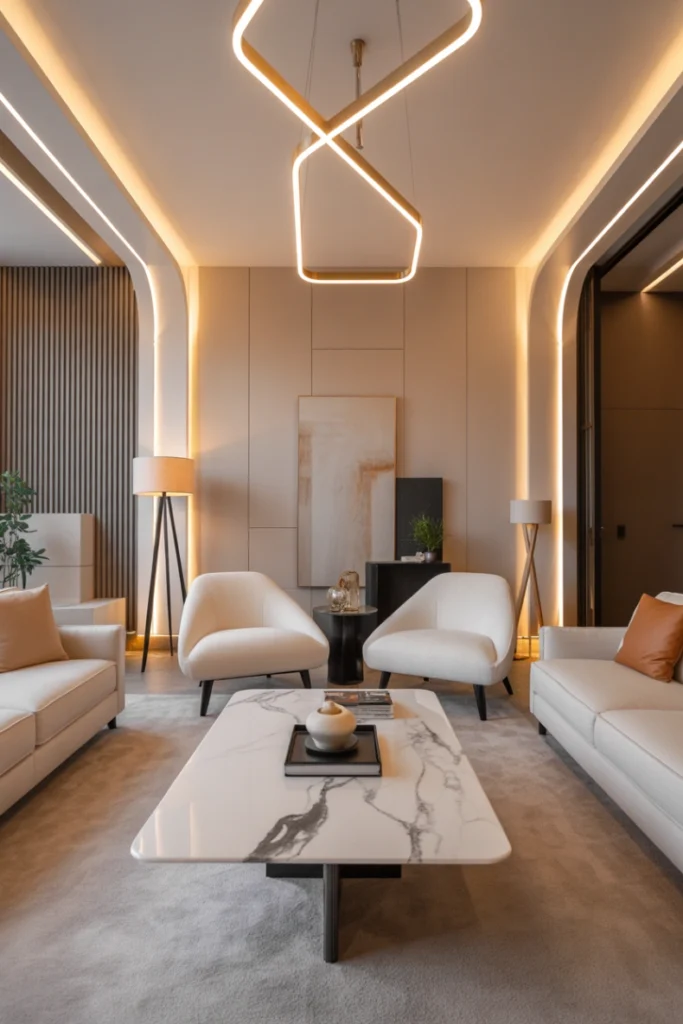
Gold, brass, and chrome instantly add sophistication to a modern space. Use them in lighting fixtures, mirrors, or table legs for a subtle shine, and pick one dominant metal rather than mixing three at random. Warm brass suits beige, cream, and wood tones, while chrome and nickel suit gray, white, and cool palettes.
Metallics reflect light beautifully and elevate the room’s overall tone without overpowering the simplicity of the decor, so use them as jewelry, not as the main outfit. A brass floor lamp, a gold framed mirror, or blackened steel legs with brass tips is enough. Repeat the chosen metal in at least three small places, for example a lamp, a frame, and a tray, so it looks intentional, and keep the rest of the hardware consistent to avoid a mixed metals clash.
16. Indoor-Outdoor Connection
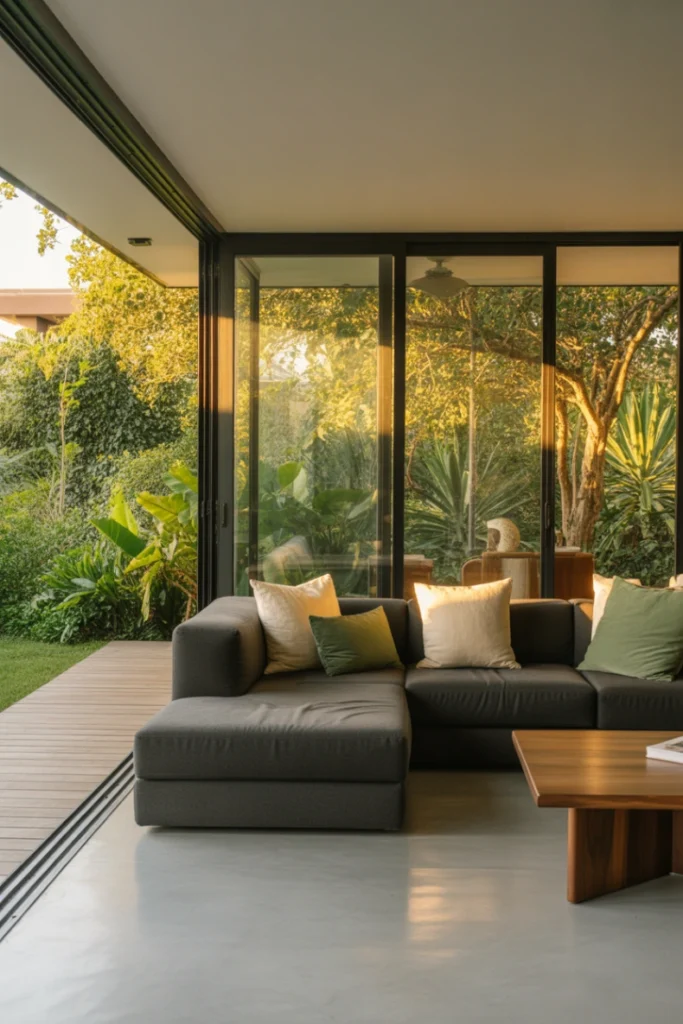
Large windows or sliding glass doors that open to outdoor spaces extend your living room visually and physically. Keep window treatments light, such as sheer linen panels or simple roller shades, so daylight stays the star, and hang curtains high and wide, with the rod 4 to 6 inches above the frame and extending 8 to 12 inches beyond each side, so windows look larger even when curtains are closed.
Use consistent flooring or materials between indoors and outdoors to blur boundaries and enhance natural flow. If you cannot change flooring, repeat an outdoor material inside, such as teak, rattan, or stone, and place a plant or a natural fiber rug near the door to bridge the two spaces. Keep the view clear by avoiding tall furniture in front of windows, and add a mirror opposite a window to bounce daylight deeper into the room.
17. Mix Modern and Vintage Elements
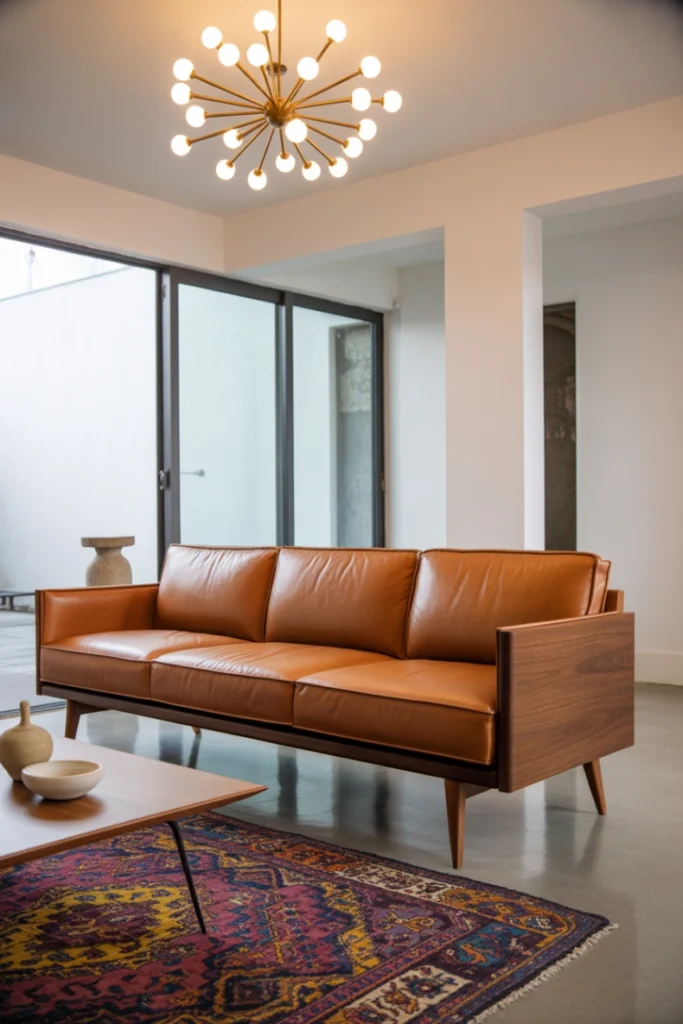
A truly cozy modern room often includes a touch of the past. Incorporate vintage furniture, heirloom decor, or antique artwork into sleek settings, such as a mid-century sideboard beside a low modern sofa, or a carved wooden mirror above a clean lined console. One or two vintage pieces add character, while a room full of them tips back into traditional style.
This blend adds depth, storytelling, and warmth to an otherwise minimalist space. Check scale first: a vintage piece should be similar in height and visual weight to its modern neighbors, so it reads as a partner rather than an outlier. Refinish or reupholster only what needs it, keep original patina where it adds charm, and let the vintage item be the conversation piece while modern pieces keep the room calm around it.
18. Curated Shelving Displays
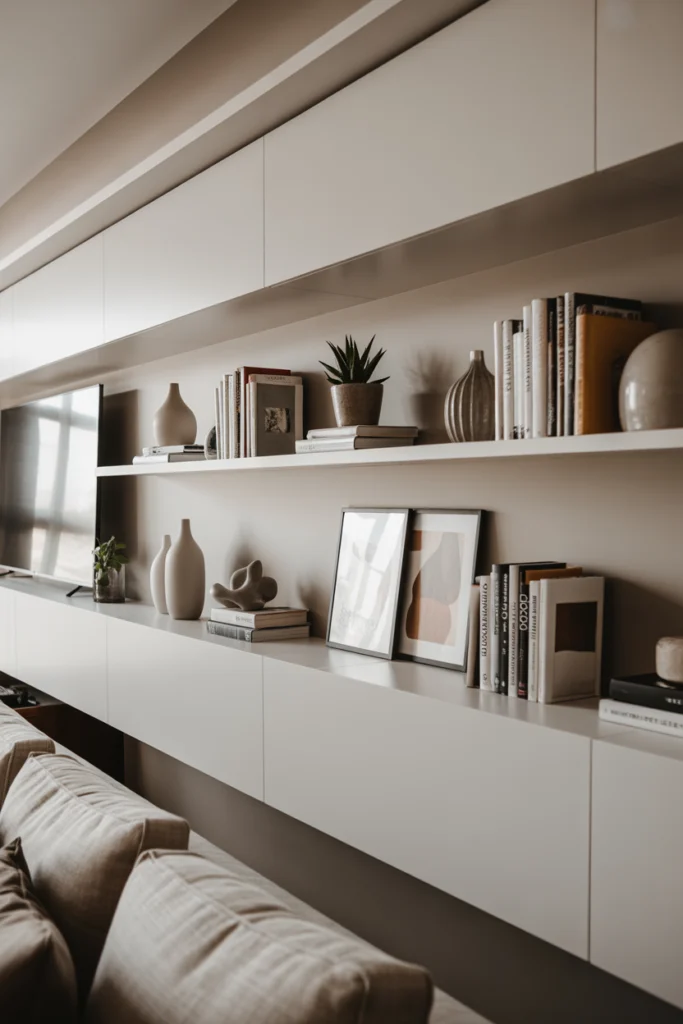
Open shelving creates opportunity for decor display without clutter, if you edit as strictly as you arrange. Arrange items in varied heights and materials for balance, group them in threes, and leave at least one third of each shelf empty. Place heavier books and boxes low, lighter vases and art higher, and anchor each shelf with one larger object so the display does not look scattered.
Keep color palettes consistent and use negative space effectively to maintain a modern, gallery-like appearance. Stick to two or three colors on the shelves, repeat one material, such as wood or ceramic, across shelves, and step back to check the whole wall, not just one shelf. If a shelf looks busy, remove the smallest item first, and if it looks bare, add a plant or a leaning frame rather than another small trinket.
19. Accent Walls for Depth
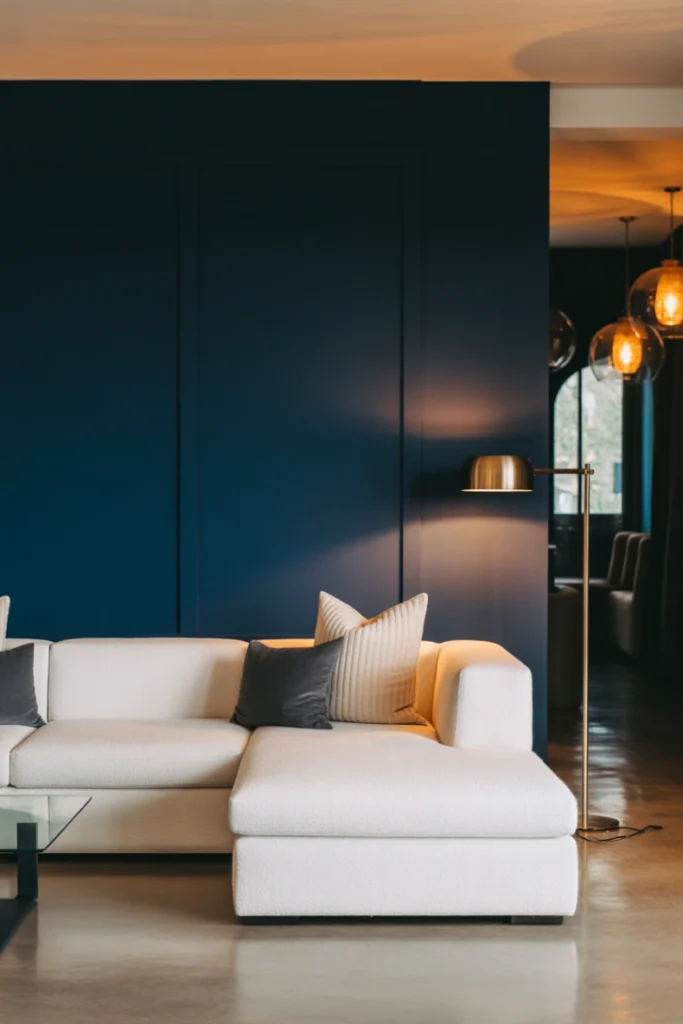
Accent walls add personality and contrast. Try textured wood panels, dark paint shades, or patterned wallpaper behind the sofa, and choose the wall that is already the natural focal point, usually the one behind the sofa or fireplace, so the accent strengthens the room’s layout instead of fighting it. A deep green, navy, or charcoal wall can make a light sofa and pale art stand out beautifully.
This focal point defines the room without compromising its clean, modern essence, especially when the other walls stay light and quiet, as shown in many of these living room ideas that use one bold wall to anchor a calm palette. If you use wallpaper, paper just that one wall and keep the pattern scale in proportion to the room, with larger patterns for larger rooms. For painted slat or panel walls, test the color in both daylight and evening light before committing, since dark tones shift dramatically under warm bulbs.
20. Personal Touches with Art and Decor

Even in a minimalist space, personality matters. Display meaningful art, family photos, or travel finds in subtle, cohesive ways, such as a single gallery ledge with three frames, a travel object on a side table, or a handmade textile folded over a chair. The trick is curation: choose pieces with a story, and give each one space, rather than displaying everything you own at once.
Curated personal decor softens the room’s precision and gives it an inviting, authentic touch. Rotate personal items seasonally, keep frames in one or two finishes so photos from different years still look cohesive, and place the most meaningful piece at eye level where you will see it daily, not hidden on a high shelf. A room that reflects the people who live in it will always feel more welcoming than a room that only follows a trend.
Conclusion
Modern living rooms thrive on balance, the harmony between comfort and sophistication, simplicity and warmth. Whether through textures, lighting, or carefully chosen decor, each element contributes to an inviting yet elegant atmosphere, and the best rooms are rarely finished in one weekend. They improve as you live in them and learn what you actually use.
These 20 modern living room ideas show how to blend clean lines, cozy fabrics, natural elements, and smart storage to achieve a polished yet comfortable design. By layering neutral tones, experimenting with materials, and adding subtle color, your space can feel both modern and timeless, reflecting your personality while embracing the essence of contemporary living. Start with the change that solves your biggest daily frustration, whether that is lighting, seating, or storage, and let the rest follow one thoughtful layer at a time.
Frequently Asked Questions
What is the first step to modernize a living room on a budget?
Start with lighting and textiles, because they change the feel of the room for the least cost. Swap harsh overhead bulbs for warm dimmable bulbs, add a floor or table lamp for a second light layer, and refresh cushions and a throw in your existing palette. Those three changes alone can make a dated room feel modern before you replace any furniture.
What colors work best in a modern living room?
Warm whites, light grays, beige, and taupe work best as a base, because they stay flexible as trends change. Add depth with one darker tone, such as charcoal, deep green, or navy, on an accent wall or large art, and use a single bold accent, like rust or teal, in small doses through pillows and decor.
How do I make a modern living room feel cozy instead of cold?
Layer textures and warm light. Combine a soft rug, wool or velvet cushions, a knit throw, and wood or rattan accents, and keep lighting warm and dimmable with at least two sources besides the ceiling light. Natural materials and plants also help, because they soften hard lines and add visual warmth that sleek surfaces alone cannot provide.
What size rug should I buy for my living room?
For most three seat sofas, an 8 by 10 foot rug is a safe choice, with the front legs of the sofa and chairs on the rug. In a small room, a 6 by 9 foot rug can work if the front legs still sit on it, and in a large open plan room, a 9 by 12 foot rug anchors the seating zone better. When in doubt, size up, because a rug that is too small makes the whole room look cramped.
Can I mix modern and traditional furniture in one living room?
Yes, and the mix often looks better than a strictly modern room. Keep the overall palette consistent, match the scale of pieces so they sit comfortably together, and limit vintage or traditional items to one or two statement pieces. A classic sideboard or antique mirror beside clean lined seating adds warmth and character without losing the modern feel.
More Ideas You Will Love
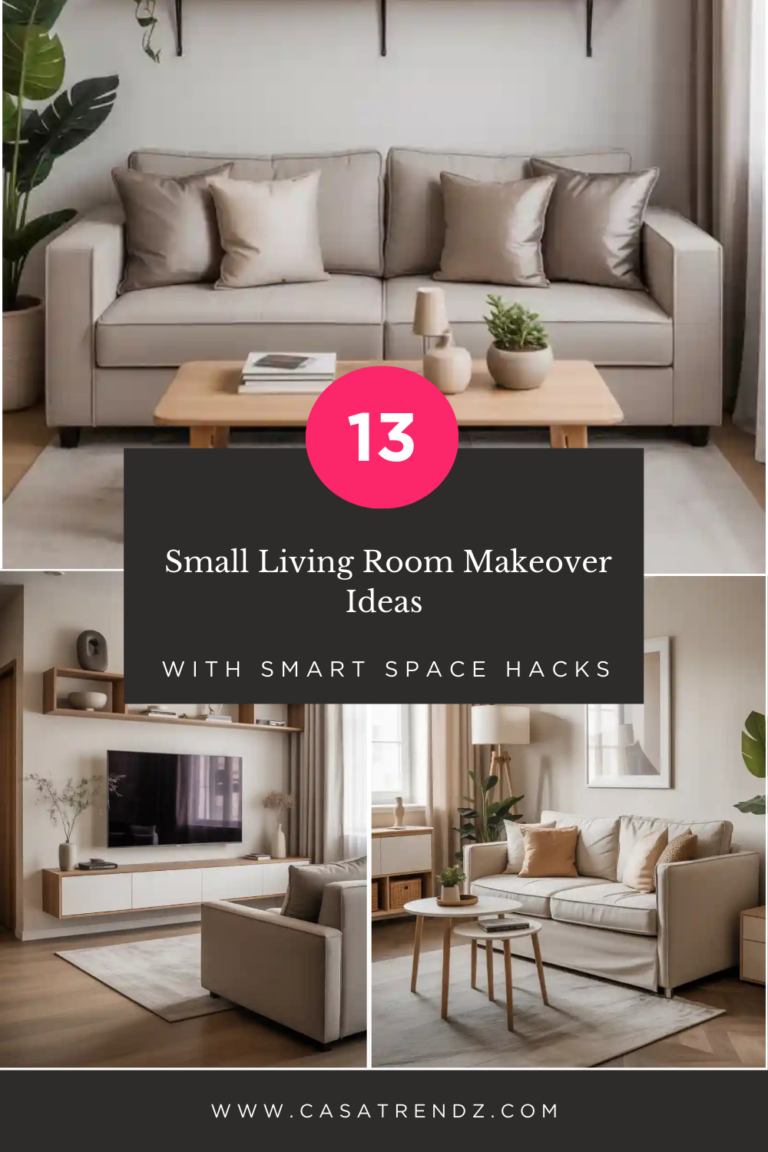 13 Small Living Room Makeover Ideas with Smart Space Hacks
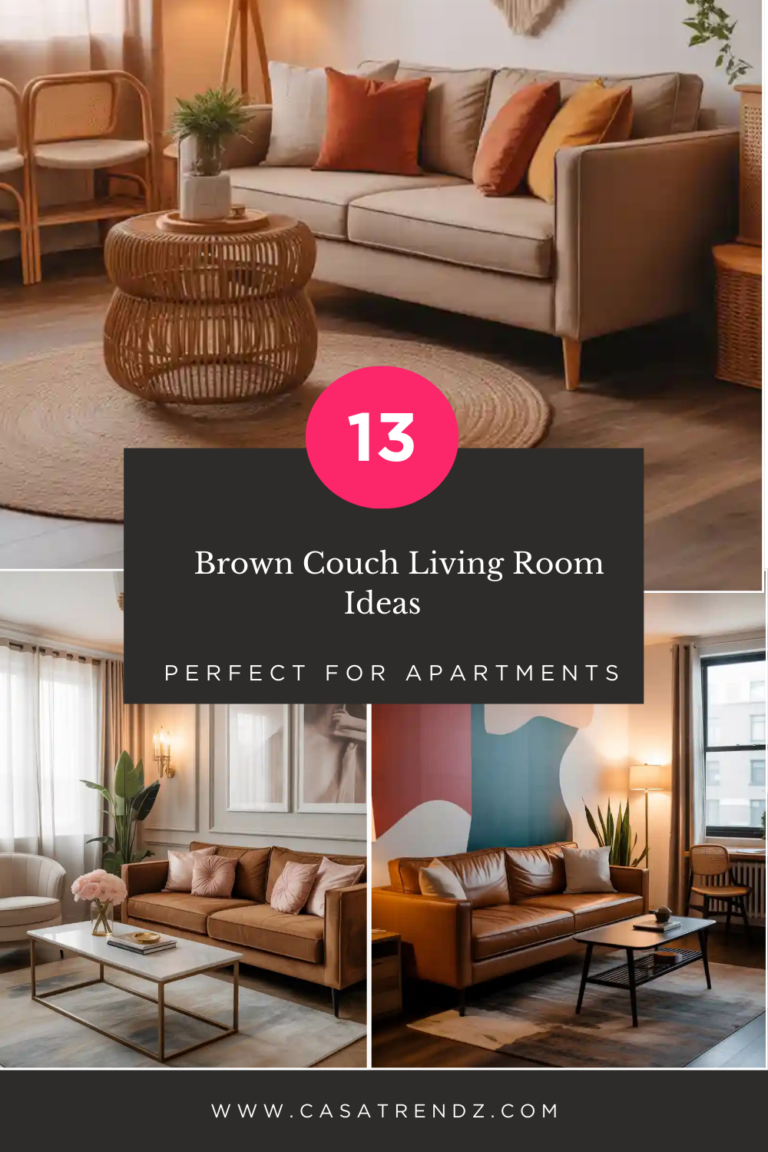 13 Brown Couch Living Room Ideas Perfect for Apartments
 21 Contemporary Living Room Ideas for Modern & Functional Style
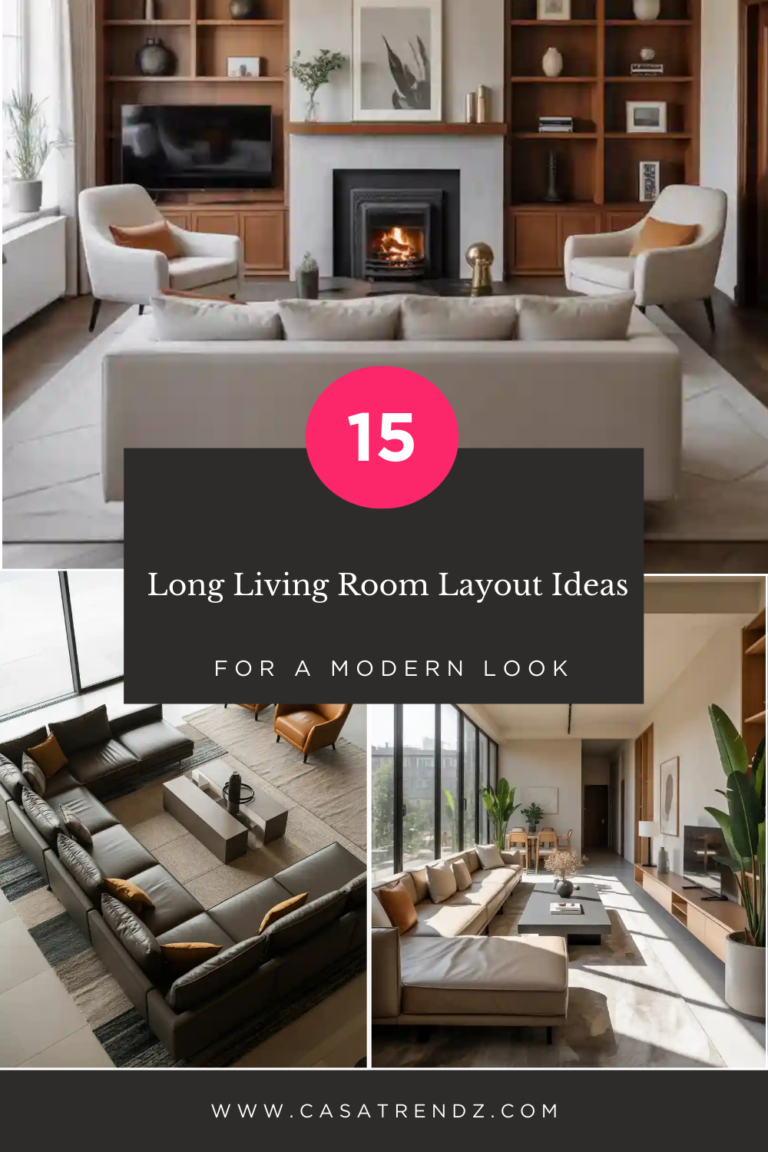 15 Long Living Room Layout Ideas for a Modern Look
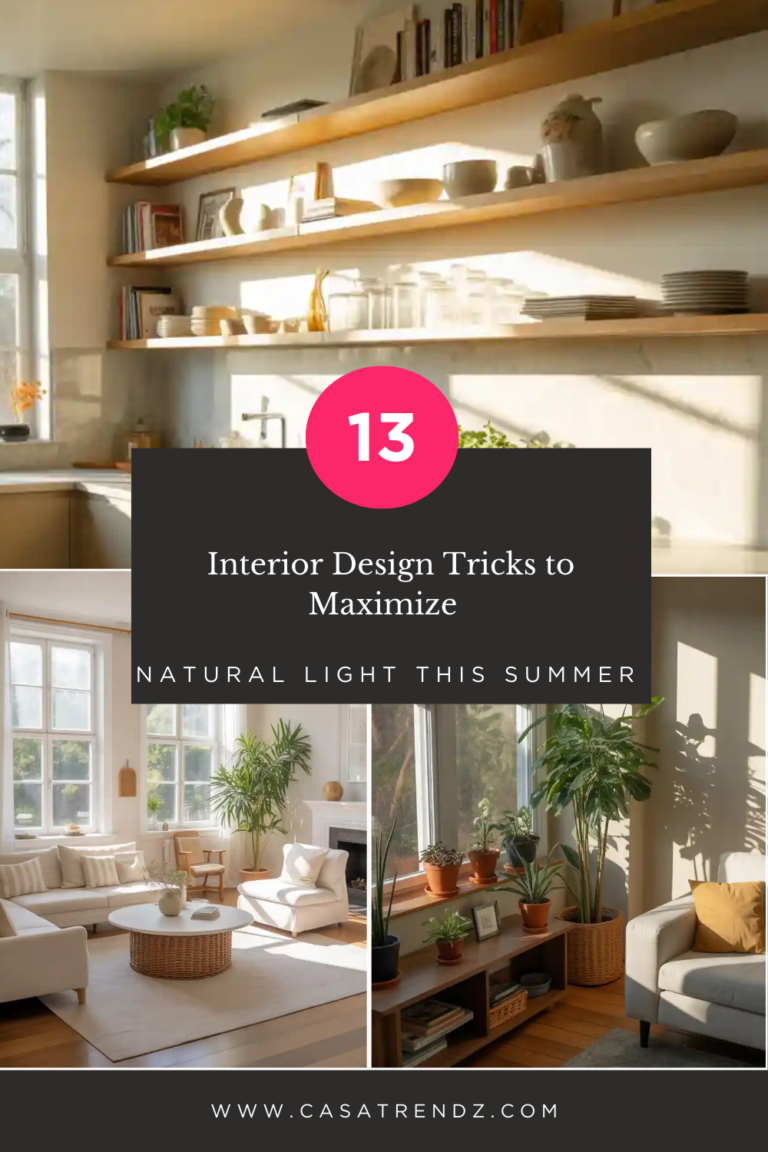 13 Interior Design Tricks to Maximize Natural Light This Summer
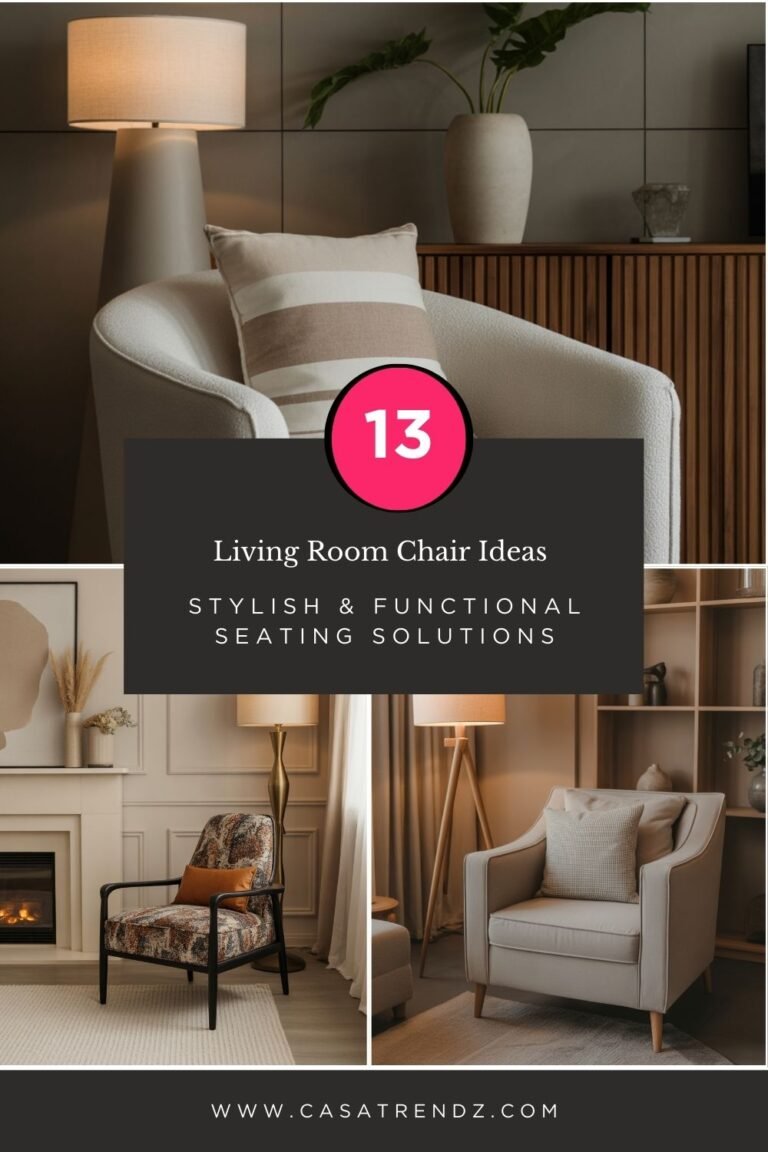 13 Living Room Chair Ideas: Stylish & Functional Seating Solutions