
22 Gray & Blue Living Room Ideas for a Modern, Stylish Home

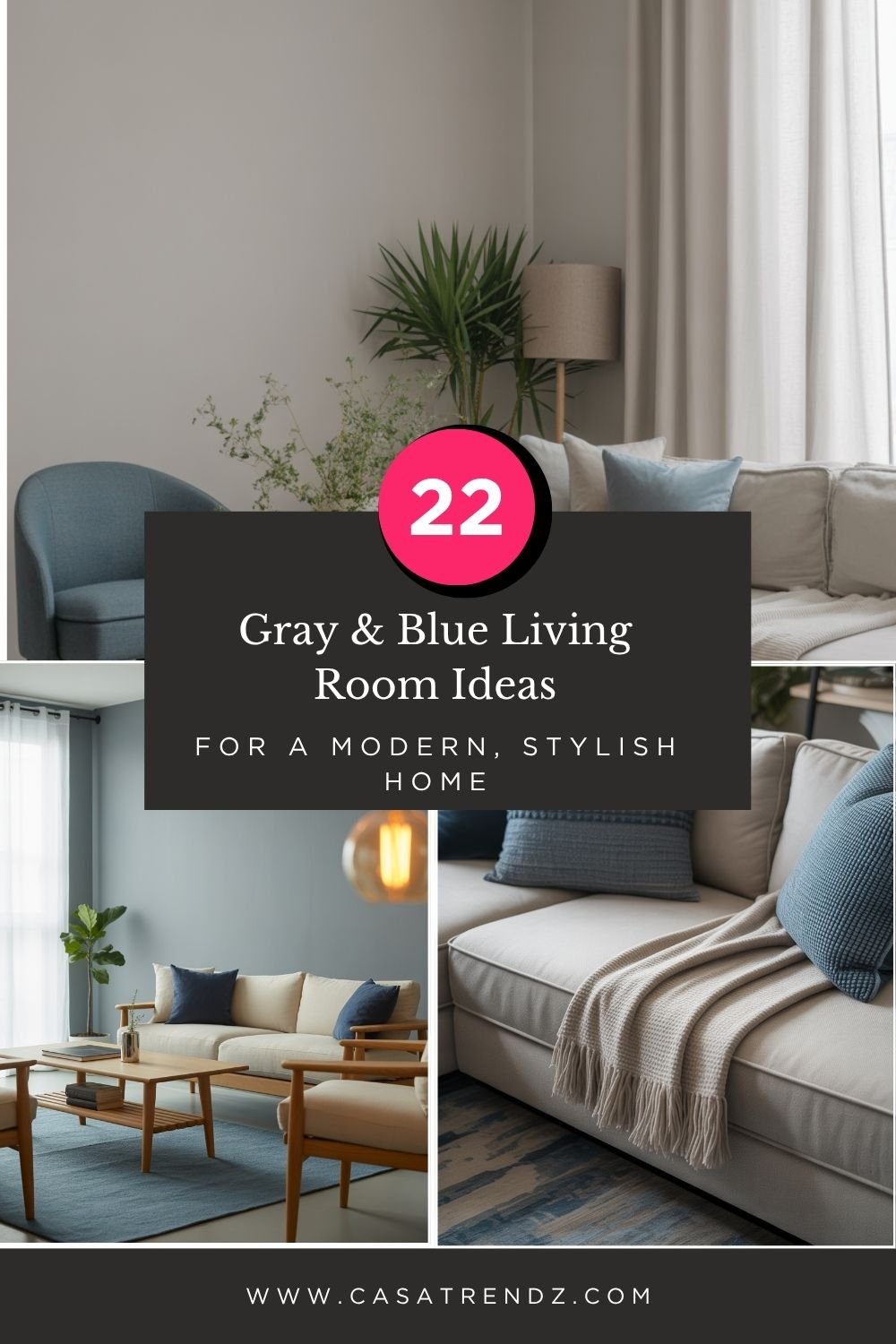
Gray and blue is one of those color pairings that almost never goes wrong in a living room. Gray keeps the room grounded and calm, while blue adds personality, depth, and a sense of freshness. Together they can feel coastal and breezy, moody and dramatic, or clean and modern, depending on the shades you choose and how much of each color you use.
The trick is balance. Let one color lead and the other support it. In most rooms that means gray on the larger surfaces, such as walls, sofas, or rugs, and blue in the pieces that draw the eye, such as accent chairs, artwork, curtains, or a statement sofa. When the ratio is roughly 60 percent gray and neutrals to 30 percent blue, with 10 percent white, wood, or metallic accents, the room feels intentional rather than busy.
Below are 22 gray and blue living room ideas, each with practical detail on paint shades, fabrics, furniture sizes, and styling so you can copy the look in a real room, not just admire it in a photo. If you are starting from scratch, you may also like these cozy and stylish living room ideas for layout and furniture inspiration before you pick your palette.
1. Light Gray Walls with Soft Blue Accents
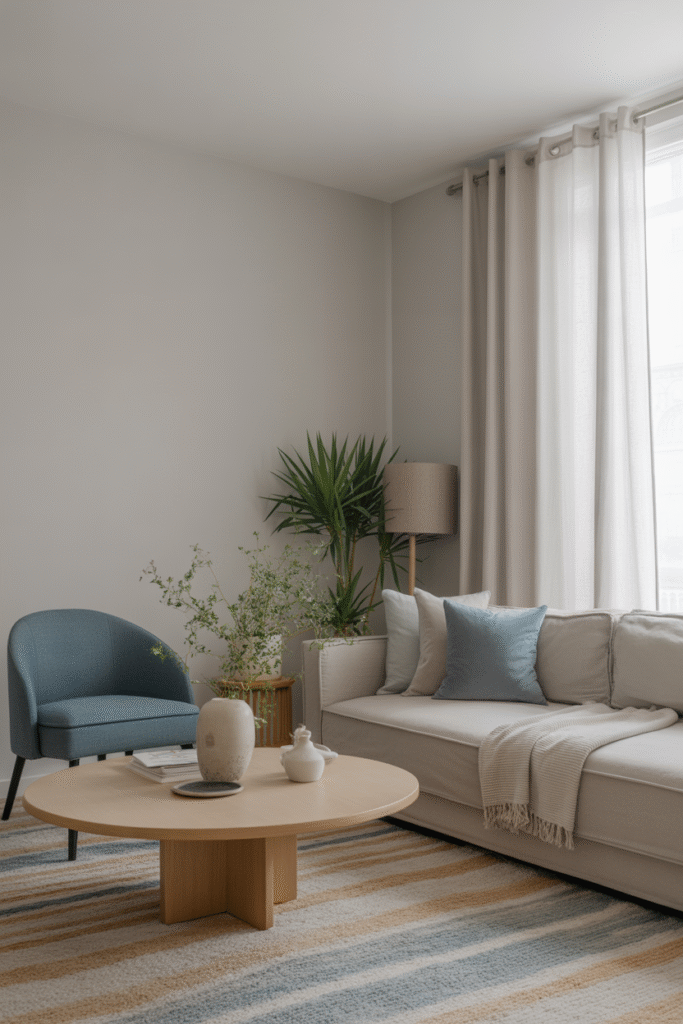
Light gray walls with soft blue accents are the easiest version of this palette to live with. Paint the walls in a warm light gray, such as a shade with a hint of beige or greige undertone, so the room does not feel cold. Then bring in blue through throw pillows, a single accent chair, a piece of art, or a soft blue throw. Because the walls stay quiet, you can change the blue accents with the seasons without repainting anything.
For a standard living room, aim for three blue touchpoints at different heights: something low, like a rug or ottoman; something at sofa height, like pillows or a throw; and something higher, like art or curtains. This triangle of color stops the blue from looking like an afterthought. Keep the blues in one family, for example powder blue, dusty blue, and pale teal, so they relate to each other even when the fabrics differ.
Add warmth with natural textures. A light oak coffee table, a jute or wool rug, linen curtains, and a woven basket soften the cool tones and keep the room from feeling flat. If your room gets little natural light, choose the lightest gray you can live with and add a floor lamp with a warm white bulb near the seating area.
2. Navy Blue Feature Wall with Gray Furniture
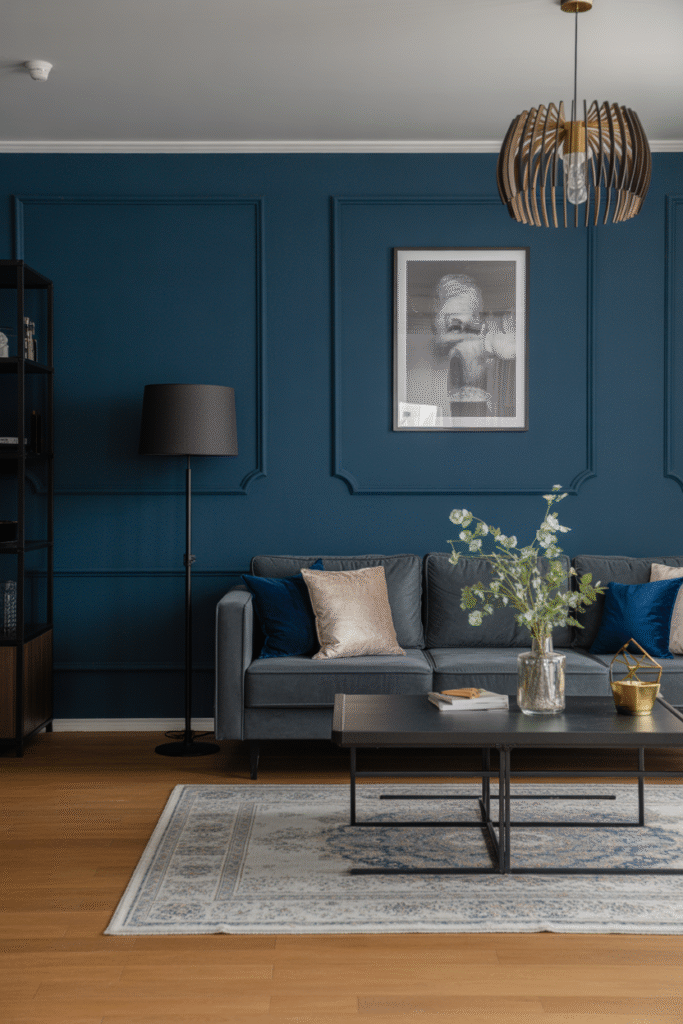
A navy blue feature wall makes an instant focal point, and gray furniture keeps it from feeling too dark or heavy. Paint only one wall navy, ideally the wall behind the sofa or the fireplace wall, and leave the other walls light gray or warm white. A deep navy with a matte or eggshell finish looks richer than a glossy finish and hides minor wall imperfections better.
Pair the navy wall with a mid-tone or charcoal gray sofa, and add warmth with brass or gold accents, such as a floor lamp, picture frames, or a side table. A natural wood floor or a warm-toned rug underneath stops the palette from turning cold. White or cream throws and cushions on the sofa lift the whole scheme and keep the navy from closing the room in.
Before you commit, paint a large test patch, at least 2 feet by 2 feet, and look at it in morning light, evening light, and with lamps on. Navy can shift toward purple or black depending on the light, so testing saves a costly repaint. In a small room, keep the navy wall free of heavy shelving so the color itself stays the feature.
3. Gray Sectional with Blue Layered Textiles

A gray sectional is a forgiving anchor piece, and layered blue textiles are what make it feel styled rather than plain. Start with a base of solid gray cushions, then add blue pillows in two or three shades, such as navy, denim, and sky blue, in different sizes. A standard mix that works well is two 20 inch square pillows, two 18 inch pillows, and one lumbar pillow about 14 by 24 inches.
Mix textures as well as colors. Velvet, chunky knit, linen, and boucle all read differently in the same blue family, which adds depth without adding clutter. Drape a soft blue woven throw over one arm or across the back corner, and finish with a blue patterned rug that picks up at least one of the pillow shades. The rug should be large enough that the front legs of the sectional sit on it, usually 8 by 10 feet for a standard sectional layout.
Keep the rest of the room quiet so the textiles can do the work. A simple coffee table, one floor lamp with warm light, and a single piece of art above the sofa are enough. If the sectional is very large, pull it slightly away from the wall and add a narrow console or floor lamp behind one end so the arrangement does not feel pushed into a corner.
4. Blue Velvet Sofa with Light Gray Walls
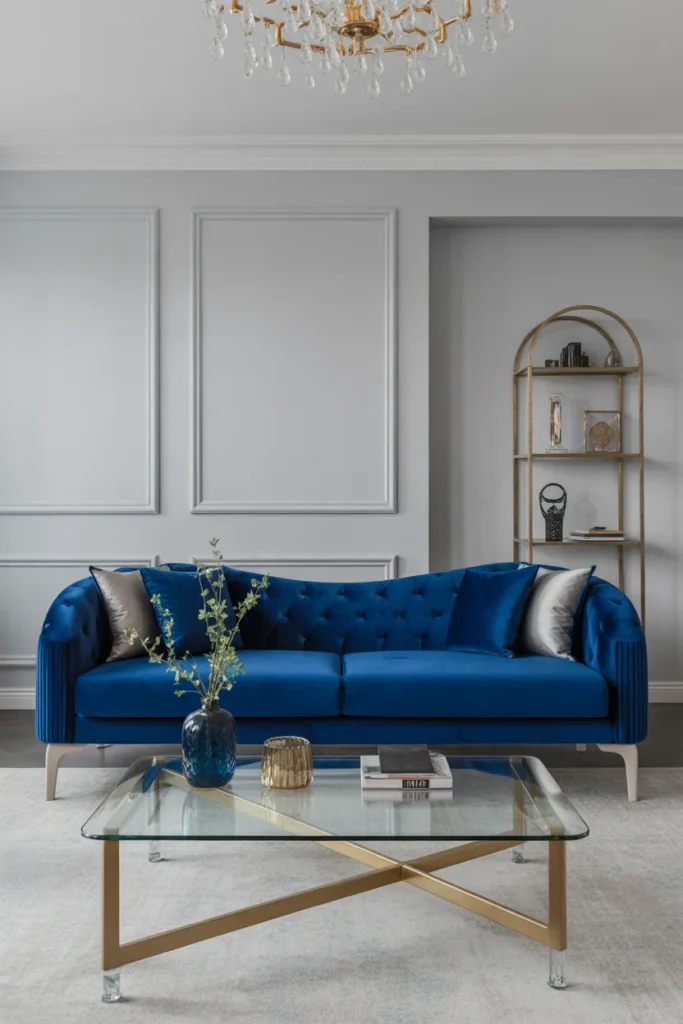
A blue velvet sofa is a true statement piece, and light gray walls are the perfect quiet backdrop for it. Velvet catches light in a way flat fabric does not, so the sofa changes subtly through the day, looking deeper in the evening and brighter in daylight. Choose a mid to deep blue, such as sapphire or peacock, if you want drama, or a softer dusty blue if you prefer a calmer room.
Let the sofa lead and keep everything else simple. A glass or light wood coffee table keeps the arrangement feeling open, a gray patterned rug grounds the sofa without competing with it, and metallic accents in chrome or brushed gold add a touch of polish. Two gray or cream pillows are enough on a velvet sofa; too many patterns will fight with the texture of the velvet itself.
Velvet needs a little care. Brush it weekly with a soft clothes brush, vacuum with an upholstery attachment, and blot spills immediately rather than rubbing them. If you have pets, keep a lint roller nearby and choose a velvet with a tighter pile, which shows pet hair less than a loose, plush pile.
5. Blue and Gray Coastal-Inspired Living Room
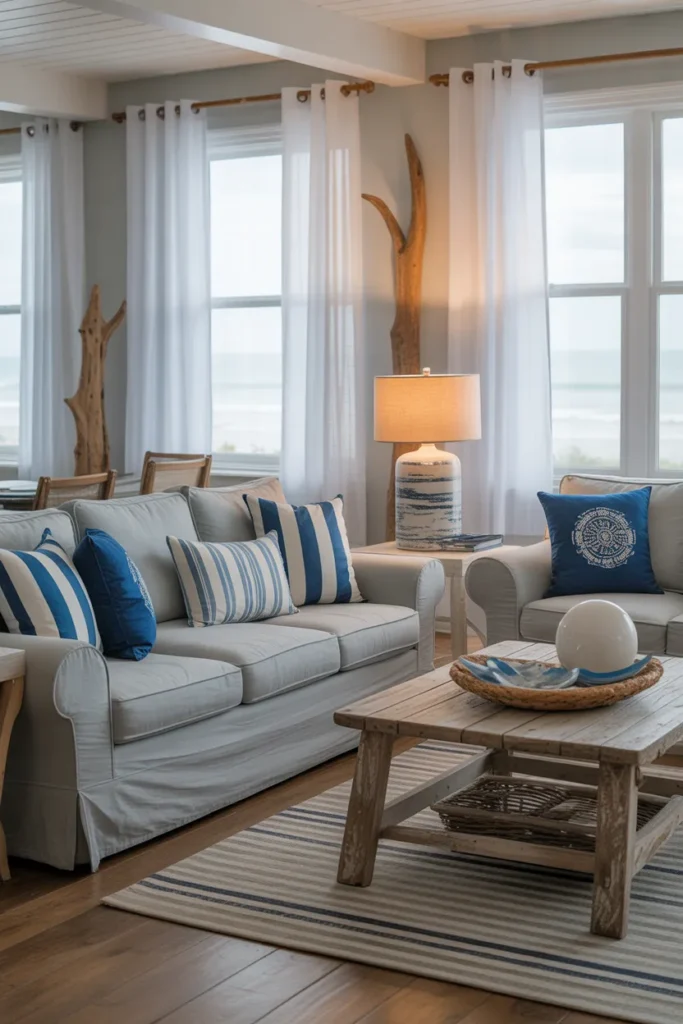
A coastal gray and blue living room should feel breezy, not themed to the point of costume. Start with sandy gray tones on the walls or sofa, add ocean blues in the rug, pillows, and art, and finish with soft white and driftwood textures. A gray slipcovered sofa, a muted blue rug, and woven baskets give you the coastal feeling without a single anchor or shell motif.
Light is the key ingredient here. Use sheer or light linen curtains that let daylight through, keep window sills clear, and add one or two plants for a fresh, natural touch. Choose accessories with intention: one large seascape print beats five small nautical items, and a single woven tray on the coffee table beats a crowded display. For more seaside styling, these coastal decor ideas show how to keep the look relaxed and grown up.
For flooring, light wood or a natural fiber rug works better than dark, heavy materials. If your floors are dark, a large light rug, at least 8 by 10 feet, will lift the whole room. Keep the palette to gray, blue, white, and one wood tone so the space stays calm even when you add seasonal touches.
6. Dark Gray Walls with Blue Artwork
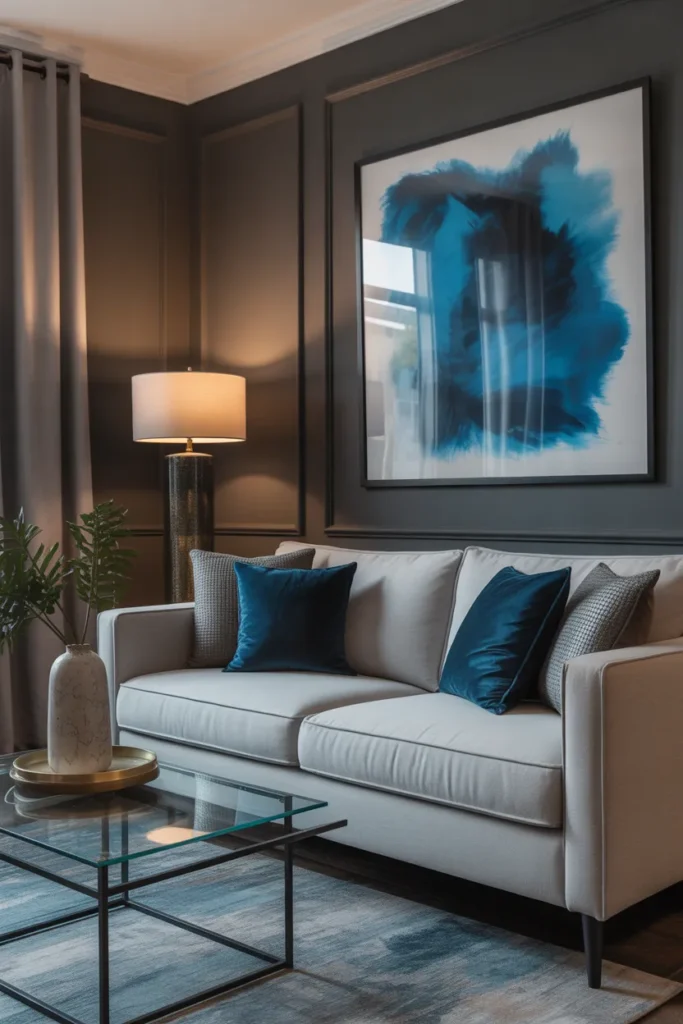
Dark gray walls create a dramatic, gallery-like backdrop, and bold blue artwork is what brings them to life. Choose one large abstract piece, at least 36 inches wide, or a pair of matching pieces, rather than many small prints that get lost against the dark wall. Artwork with cobalt, navy, and turquoise brushstrokes adds movement and stops the wall from feeling flat.
Balance the dark walls with lighter furniture. A light gray or off-white sofa, a pale rug, and reflective surfaces such as a mirrored tray, glass table, or metallic lamp will keep the room from feeling cave-like. Add lighting that points at the art, such as picture lights or adjustable spotlights, because dark walls absorb light and art needs its own illumination to stand out.
This look suits urban apartments and contemporary homes, but it needs good lighting to work. Plan for three light sources in the room: overhead lighting, a floor or table lamp near seating, and accent lighting for the art. Use warm white bulbs, around 2700 to 3000 Kelvin, so the dark gray reads warm rather than cold.
7. Blue Accent Chairs with Gray Sofa
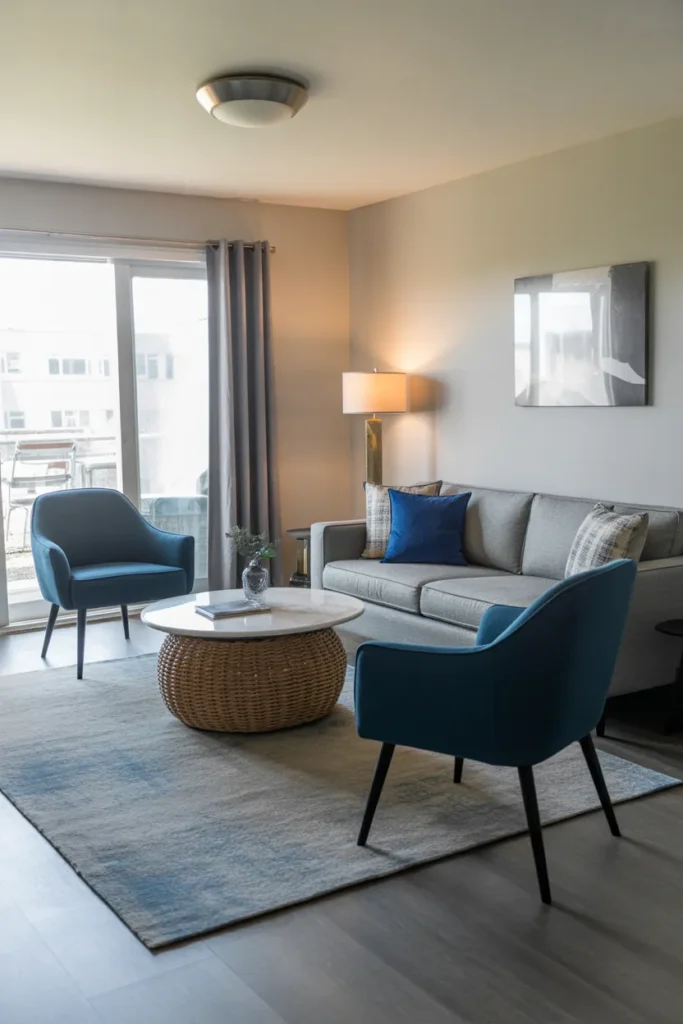
Blue accent chairs beside a gray sofa are a classic, balanced combination that also solves a practical problem: extra seating without a second sofa. Choose chairs in navy for a formal feel, teal for a richer look, or powder blue for a lighter, airier room. The chairs should be similar in height to the sofa, within a few inches, so the seating group feels unified.
Place the chairs opposite the sofa or angled toward it, with a small side table between them if space allows. A rug that includes both gray and blue tones ties the whole group together; the front legs of the sofa and both chairs should sit on the rug. Finish with a coffee table centerpiece that repeats one of the colors, such as a blue ceramic vase or a textured gray bowl.
Measure before you buy. Leave at least 18 inches between the coffee table and the sofa for legroom, and at least 30 inches of walkway behind a chair. Swivel chairs are a smart choice in an open plan room because they can turn toward the sofa for conversation or toward a television or fireplace.
8. Blue Built-In Shelving with Gray Walls
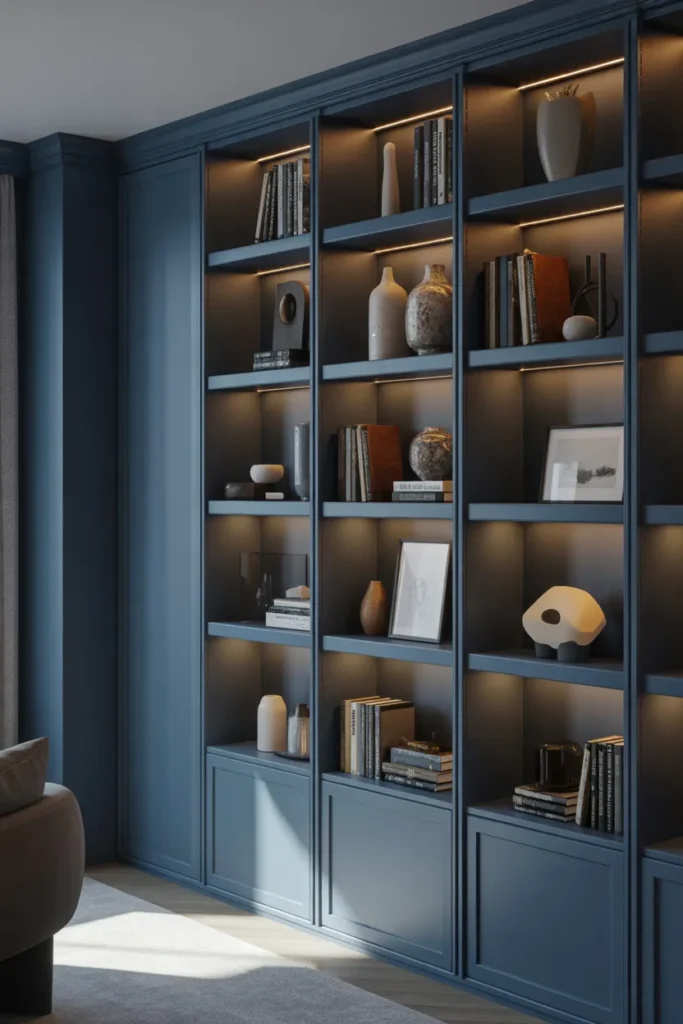
Blue built-in shelving against gray walls gives a room a custom, fitted feeling that freestanding bookcases rarely achieve. Paint the built-ins in navy or deep cobalt for a high-end look, or a softer dusty blue for a casual room. The gray wall color should be at least two shades lighter than the shelving so the contrast reads clearly.
Style the shelves lightly. White ceramics, books in neutral tones, a few framed prints, and small plants work better than shelves packed edge to edge. Leave about a third of each shelf empty so the blue paint itself stays visible. Add warm lighting inside or above the shelves, such as small LED strips or a picture light, to highlight the objects and make the blue glow in the evening.
If full built-ins are out of budget, paint two matching bookcases the same blue and fix them to the wall with a painted board across the top to create a fitted look. Keep the styling consistent across both units, with the same mix of books, ceramics, and greenery, so they read as one piece of furniture.
9. Gray Sofa with Blue Patterned Rug
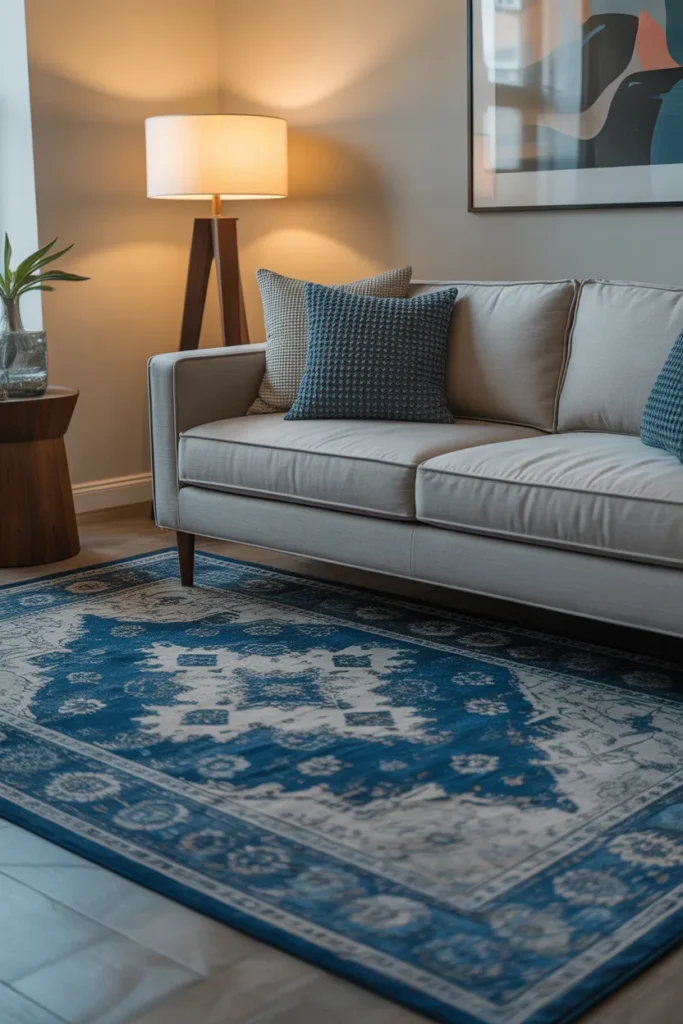
A blue patterned rug is the fastest way to transform a plain gray sofa arrangement. Geometric, Moroccan, or abstract patterns all work, as long as the rug includes at least one blue that matches your pillows or art. The rug becomes the anchor of the room, so size matters more than pattern: the front legs of the sofa and any accent chairs should sit on it, and in a larger room the rug should extend at least 6 inches beyond the sofa on each side.
Echo the rug colors in smaller doses. Two or three pillows that pick up the rug blues, plus a throw in a solid blue from the same palette, will make the whole arrangement feel connected. A dark wood or black metal coffee table adds contrast and grounds the space, while a light table keeps it airy. Either works, but pick one tone and repeat it in a side table or lamp base.
For durability, choose a low pile rug in a living room that gets daily use, and add a rug pad underneath to stop slipping and extend the rug life. If you have children or pets, a washable rug or a pattern with some variation hides marks far better than a solid light rug.
10. Sky Blue Walls with Charcoal Gray Furniture
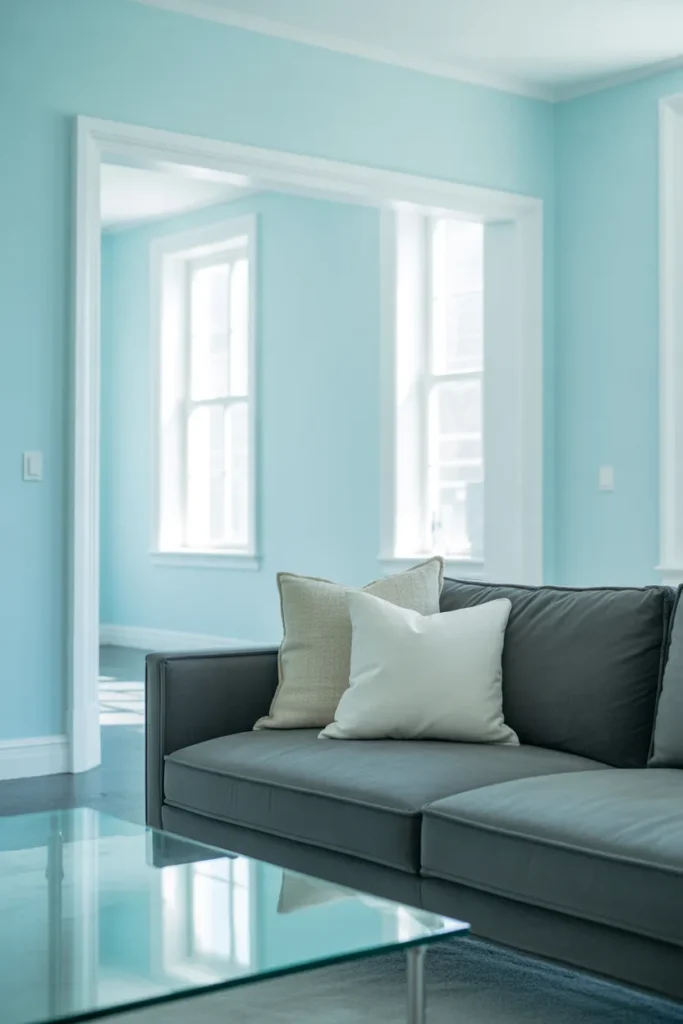
Sky blue walls with charcoal gray furniture are a soft yet grown-up combination. The pale blue keeps the room feeling open, while the charcoal sofa or chairs add weight and stop the room from feeling washed out. This pairing works especially well in rooms with white trim and molding, which give the pale walls structure and a crisp edge.
Keep the rest of the palette simple: white or light gray curtains, a light rug, and metallic or glass accents. A charcoal sofa with sky blue pillows reverses the wall-to-furniture ratio nicely and repeats both colors at seating level. One piece of art that includes both sky blue and charcoal will tie the walls and furniture together.
Sky blue can look different on a large wall than on a paint chip, so test a large patch and check it at different times of day. In a north-facing room, choose a sky blue with a warm undertone so it does not turn cold and gray. In a bright south-facing room, a cooler sky blue holds its color better.
11. Blue Curtains with a Gray Neutral Base
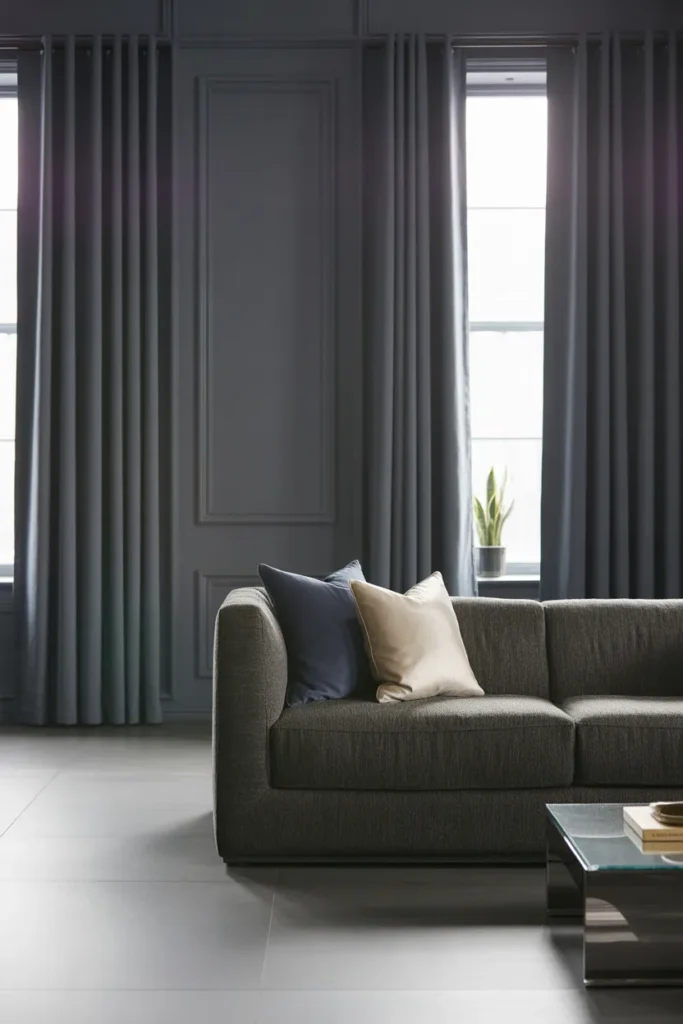
Blue curtains are one of the simplest and most budget-friendly ways to bring color into a gray room. Hang them high and wide: mount the rod 4 to 6 inches above the window frame and extend it 6 to 10 inches beyond each side so the window looks larger and the curtains frame the view rather than covering it. Deep navy curtains create drama, while lighter blue linen curtains feel calm and airy.
For the curtain length, let the panels just touch the floor or puddle very slightly, about 1 inch, for a relaxed look. Short curtains that end at the sill tend to look unfinished in a living room. Repeat the curtain blue in two small accessories, such as a vase, a stack of books, or a pillow, so the color feels distributed through the room rather than isolated at the windows.
Choose the fabric for the light you want. Linen and cotton voile filter daylight softly, velvet blocks light and adds insulation, and a lined cotton curtain sits in the middle. If your gray base is cool, a blue with a warm undertone keeps the room from feeling cold; if your gray is warm, a true or cool blue balances it.
12. Blue Throw Blankets for a Subtle Pop
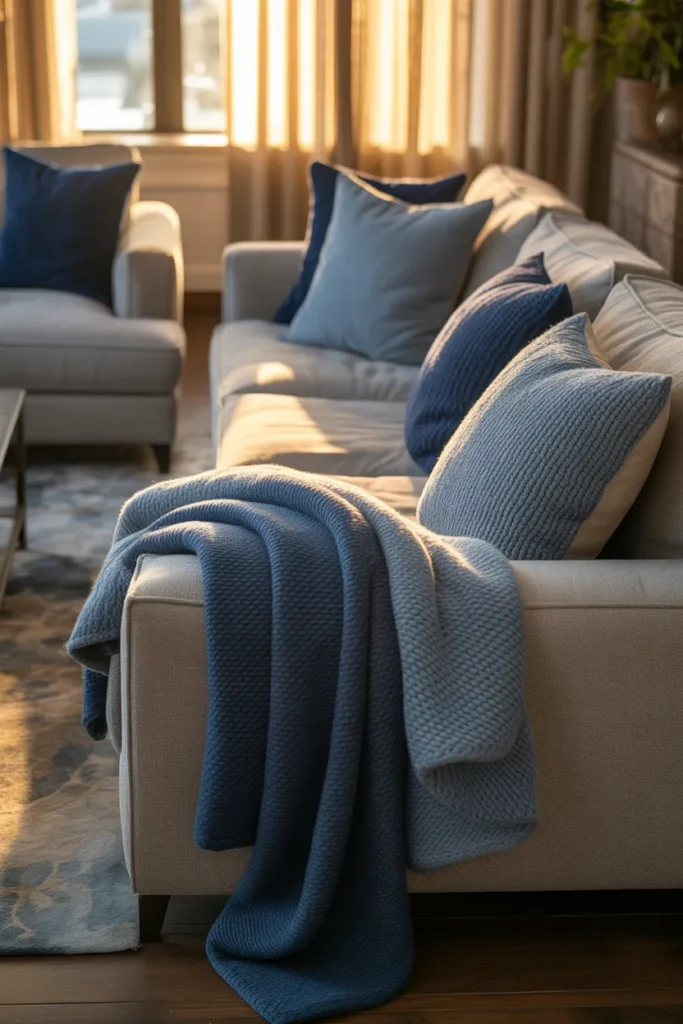
If you are not ready to commit to blue furniture or paint, blue throw blankets are the lowest risk way to test the palette. Drape one over the arm of a gray sofa, fold one across an accent chair, or place one in a basket beside the sofa. Chunky knits suit winter, lightweight linen or cotton suits summer, and fleece works for a family room that gets daily use.
Mixing two shades of blue adds dimension without effort. For example, pair a navy knit throw with a lighter blue linen throw on a nearby chair, and repeat one of those shades in a pillow. The throw also softens the straight lines of a modern gray sofa, making the room feel more inviting and lived in.
Keep throws accessible, not just decorative. A basket or a folded stack on an ottoman invites people to actually use them, which is the point of a cozy living room. Wash throws regularly according to the label, and keep a spare in a closet so the sofa never looks bare on laundry day.
13. Gray Built-Ins with Blue Accessories
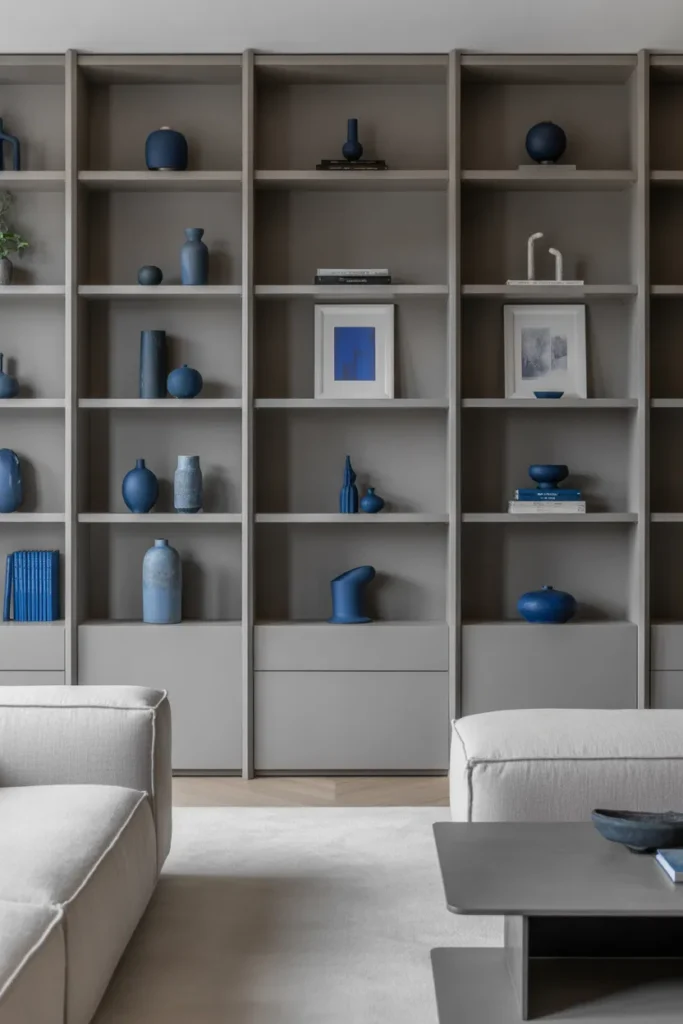
Gray built-in shelving or cabinets become far more interesting when the accessories carry the blue. Vases, bowls, books, framed prints, and pottery in different blue tones create depth against the gray background, and because accessories are easy to swap, you can refresh the look with the seasons without repainting anything.
Group accessories in odd numbers, usually three or five items per shelf section, and vary the heights so the display does not look like a straight line. Mix blue pieces with white, metallic, and organic elements, such as a wooden box or a small plant, so the blue pops without dominating. Step back from the shelves regularly while styling; a display that looks good from 6 inches away can look cluttered from across the room.
Rotate the display twice a year. Swap in deeper blues and heavier textures in winter, and lighter blues and glass or ceramic pieces in summer. Store the off-season pieces in one labeled box so the swap takes twenty minutes rather than a full afternoon of shopping.
14. Blue and Gray Striped Rugs for a Coastal Vibe
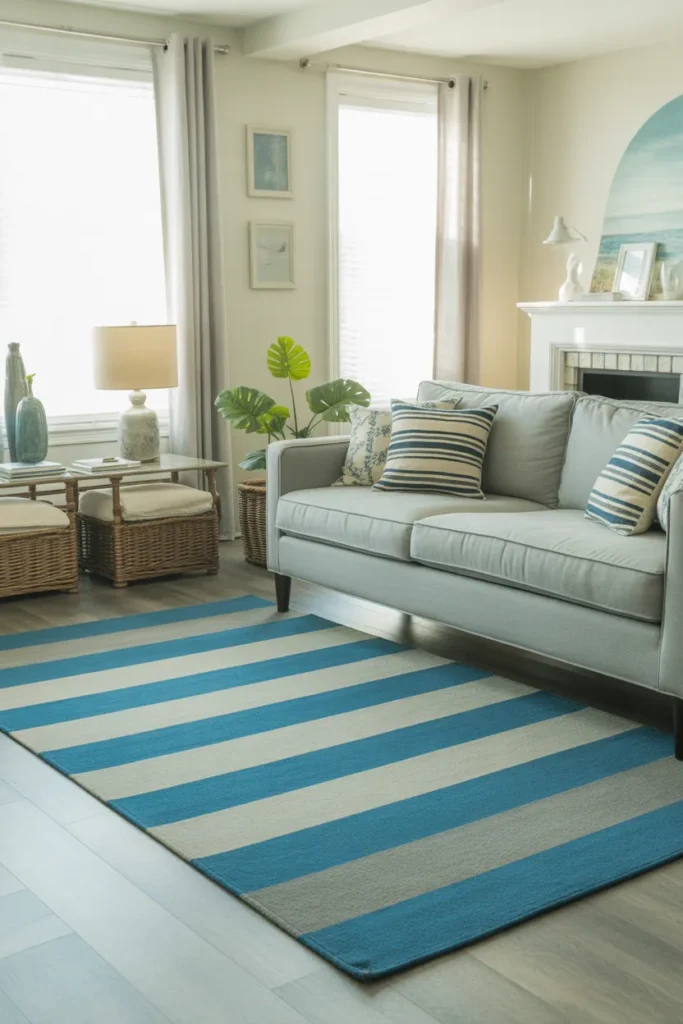
A striped rug brings structure and movement to a gray and blue room in a way a solid rug cannot. Wide stripes feel modern and bold, while thin nautical stripes feel coastal and relaxed. The key is balance: choose a rug where the gray and blue stripes are close in tone so neither color shouts, and let the furniture stay mostly solid so the rug can be the pattern in the room.
Pair a striped rug with a solid gray sofa or navy chairs, and add natural textures to soften the geometry. Woven baskets, a rattan side table, or a jute tray break up the straight lines of the stripes and keep the room from feeling rigid. Keep other patterns small and quiet, such as a subtle pillow texture, so the rug remains the star.
Stripes also change how a room feels in terms of size. Stripes running toward the main seating area draw the eye forward and can make a narrow room feel longer, while stripes running across the room make it feel wider. Lay the rug in both directions before you commit if you are unsure which effect suits your room.
15. Gray Fireplace with Blue Decor Accents

A gray fireplace, whether concrete, stone, or painted brick, is a calm neutral backdrop that blue accents can bring to life. Style the mantel with restraint: one piece of blue artwork or a mirror, two blue vases of different heights, and a small plant or candle group. Deep blue tones pair especially well with concrete gray and natural stone.
Use lighting to make the fireplace the evening focal point. Sconces on either side of the mantel, candles on the hearth, or a small lamp nearby will make the gray texture and blue accents glow after dark. Keep the hearth clear of clutter so the fireplace itself stays the feature, and store firewood or tools in a single neat basket to one side.
Change the mantel with the seasons by swapping only the blue pieces. A lighter blue ceramic in summer and a deeper navy vase in winter keep the fireplace feeling current with almost no cost. Avoid placing anything flammable directly above the firebox opening, and check the mantel clearance recommended for your fireplace type.
16. Blue Ottoman as a Functional Accent
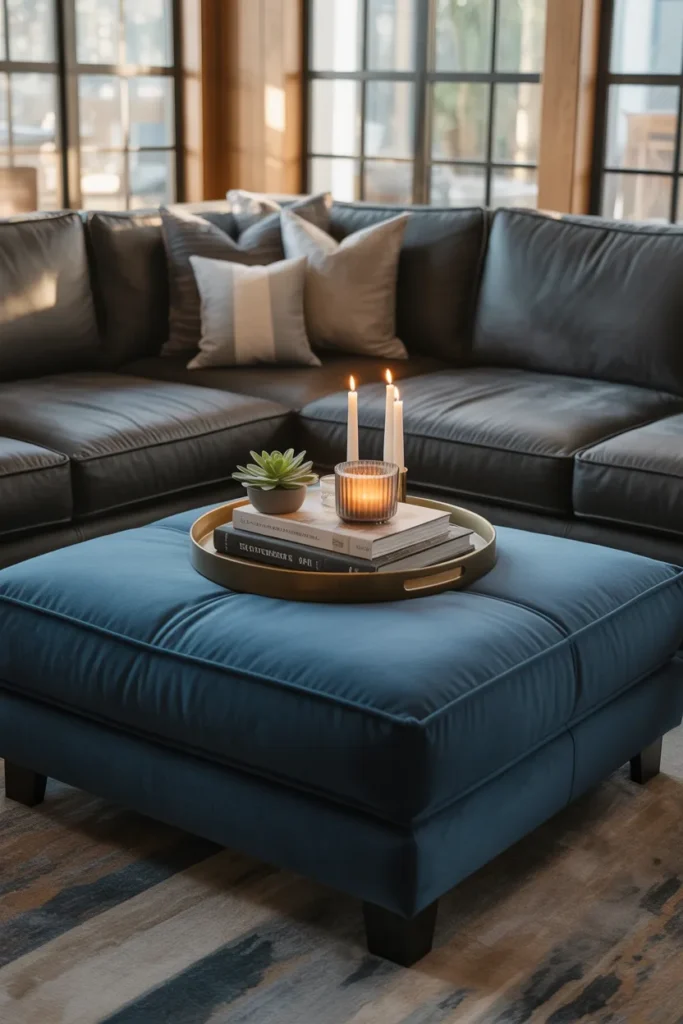
A blue ottoman adds color and function at the same time. It can serve as extra seating when guests visit, a footrest for the sofa, or a coffee table alternative with a tray on top. Tufted velvet ottomans feel formal and plush, while textured fabric or leather ottomans suit a relaxed family room. Choose navy for a formal feel or a lighter blue for a casual room.
Size the ottoman to the sofa: it should be about two thirds the width of the sofa and the same height as the seat cushions, or up to 1 inch lower, so it is comfortable as a footrest. Place a tray on top, roughly 16 to 18 inches across, to hold books, candles, or a vase while keeping the surface usable. A tray with handles is easier to lift off when you need the ottoman as seating.
In a family room, choose a fabric that cleans easily and a shape without sharp corners, such as a round or oval ottoman. A storage ottoman is even better, giving you a hidden spot for throws, remotes, and toys, which keeps the gray and blue palette looking calm rather than cluttered.
17. Blue Accent Wall with Gray Furniture
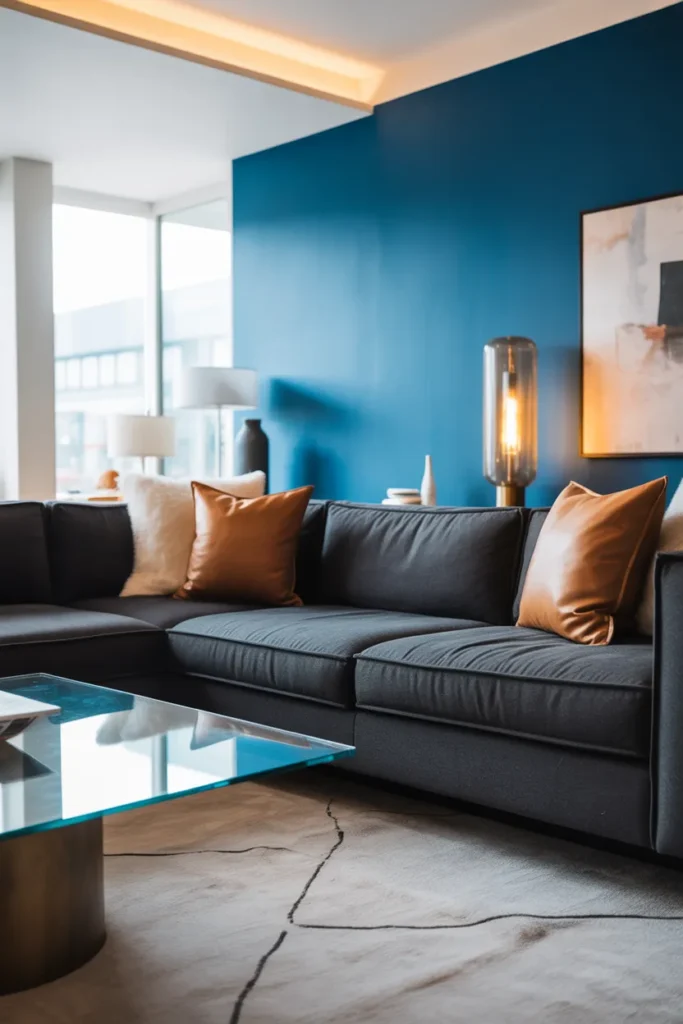
A blue accent wall with gray furniture is a flexible middle ground between a fully blue room and a fully gray one. Peacock blue and teal add richness, navy adds drama, and a softer dusty blue adds calm. Paint the wall that you see first when you enter the room, or the wall behind the main seating, and keep the other walls a light neutral gray so the accent wall stands out.
Hang art that complements the blue rather than competing with it. Black and white photography, gold-framed prints, or art with a touch of the same blue all work well. Add warm wood or metallic pieces, such as a walnut side table or brass lamp, to balance the cool wall color and stop the room from feeling cold.
If you are renting or unsure about a bold color, try a removable option first, such as peel-and-stick panels or a large painted canvas hung as an accent panel. Live with it for a few weeks before painting, and check the color in evening light, when blue walls tend to look darker than they do in daylight.
18. Gray Walls with Blue Vintage Rugs
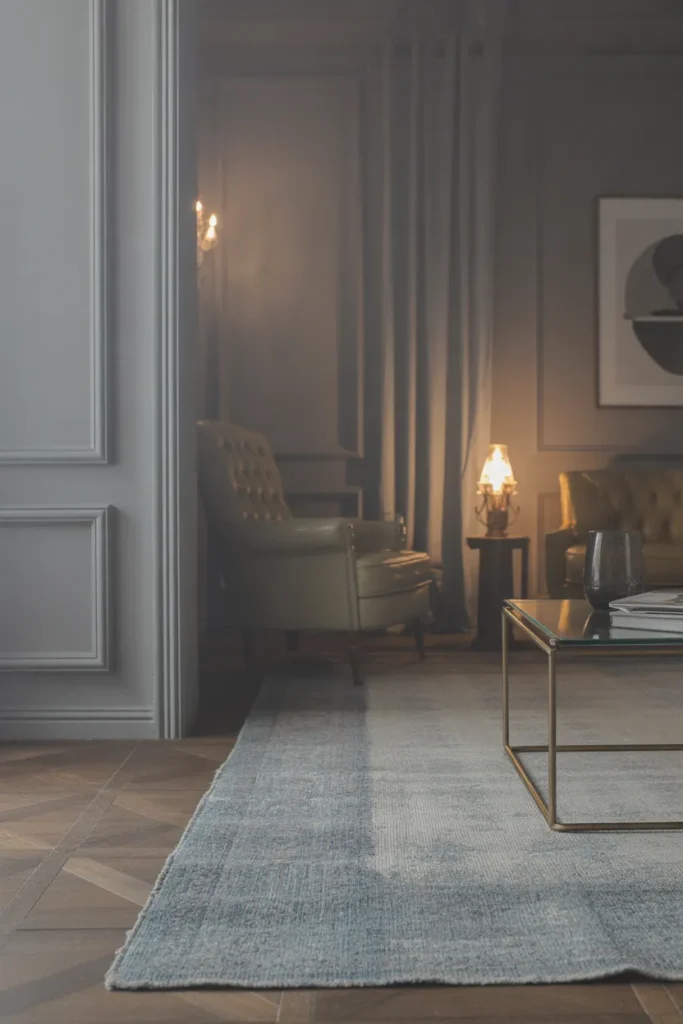
Blue vintage rugs bring charm, history, and texture to a modern gray living room in a way a new rug rarely does. Look for rugs with muted blue tones and a distressed or faded finish for a subtle effect, or deep indigo patterns for a bolder statement. The intricate patterns and worn texture add character that contrasts beautifully with clean-lined contemporary furniture.
Pair the vintage rug with a gray sofa and neutral accessories so the rug can be the most detailed piece in the room. A simple coffee table in wood or glass, plain curtains, and one or two solid pillows are enough. In eclectic, traditional, or transitional rooms, a vintage rug also bridges old and new pieces, such as a modern sofa beside an antique side table.
When buying vintage, check the rug in person if possible, or ask for photos in natural light, and check the backing and edges for wear. A good rug pad underneath protects both the rug and your floors, and rotating the rug every six months evens out wear from foot traffic and sunlight.
19. Blue Wall Art Gallery with Gray Furniture
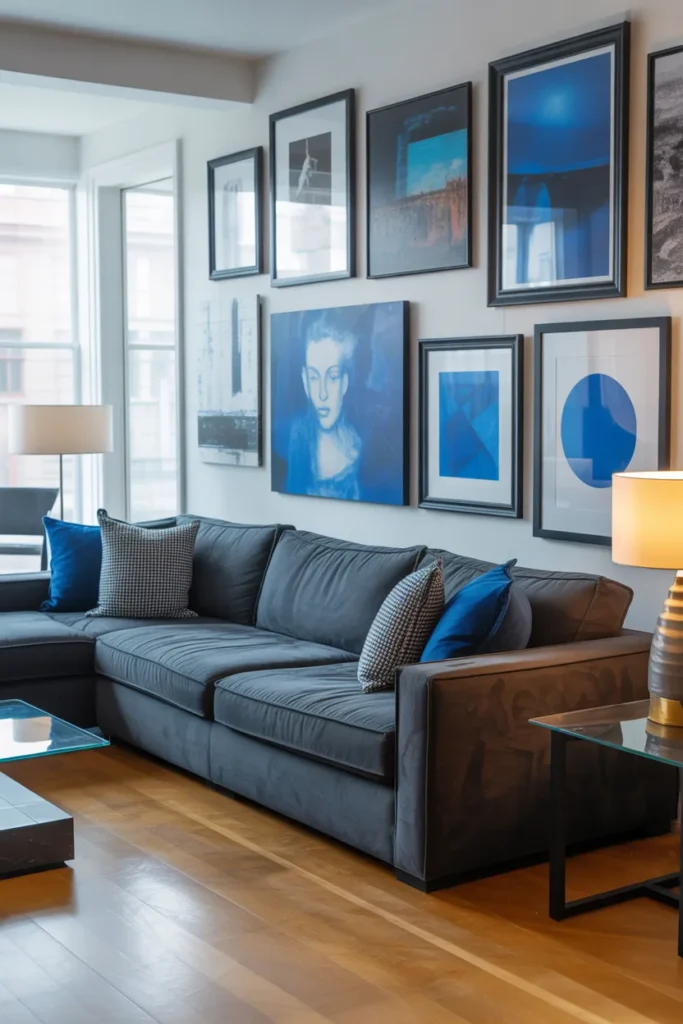
A gallery wall of blue-themed artwork adds personality to a gray living room without any paint or new furniture. Mix shades of blue across the pieces, or choose one theme, such as ocean landscapes, abstract prints, or botanical art, for a more cohesive wall. Keep the frames consistent, all black, all white, or all natural wood, so the wall looks curated rather than random.
Hang the gallery above a gray sofa, with the center of the arrangement at eye level, about 57 to 60 inches from the floor to the center. Start with the largest piece in the middle and build outward, leaving 2 to 3 inches between frames. Repeat the blue in the room with a pillow or throw in a shade from the artwork so the wall feels connected to the rest of the room.
Plan the layout on the floor first, or cut paper templates the size of each frame and tape them to the wall before hammering any nails. This takes an extra twenty minutes but saves a wall full of unnecessary holes, and it lets you adjust spacing until the arrangement feels balanced from across the room.
20. Blue and Gray Scandinavian Style Living Room
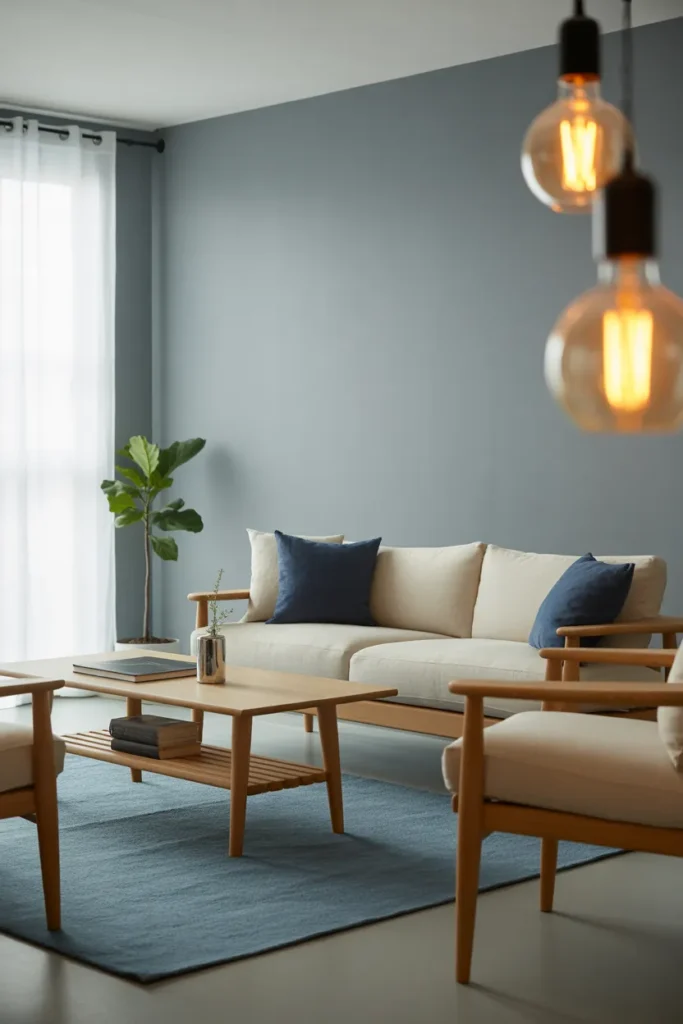
Scandinavian style and a gray and blue palette are a natural match. Start with light gray walls, soft natural wood furniture, and muted blue textiles, and keep the decor clean, minimal, and functional. A light wood coffee table, a pale rug, and a gray sofa with blue knit throws and pillows give you the look without clutter.
Introduce blue in small, deliberate doses: pillows, a throw, a piece of art, and one or two decorative objects. Scandinavian rooms thrive on simplicity, so choose pieces that feel intentional and give each one breathing room. Cozy layers matter more than decoration here, so invest in a good wool rug, soft lighting, and comfortable seating rather than many small accessories. For a fuller take on this style, these modern living room ideas include several calm, light-filled layouts in the same spirit.
Lighting is essential in a Scandinavian room, especially in winter. Use multiple soft light sources, such as a floor lamp, a table lamp, and candles, rather than one bright overhead light. Keep window treatments light and simple so daylight reaches as far into the room as possible.
21. Blue Sofa with Gray Accent Chairs
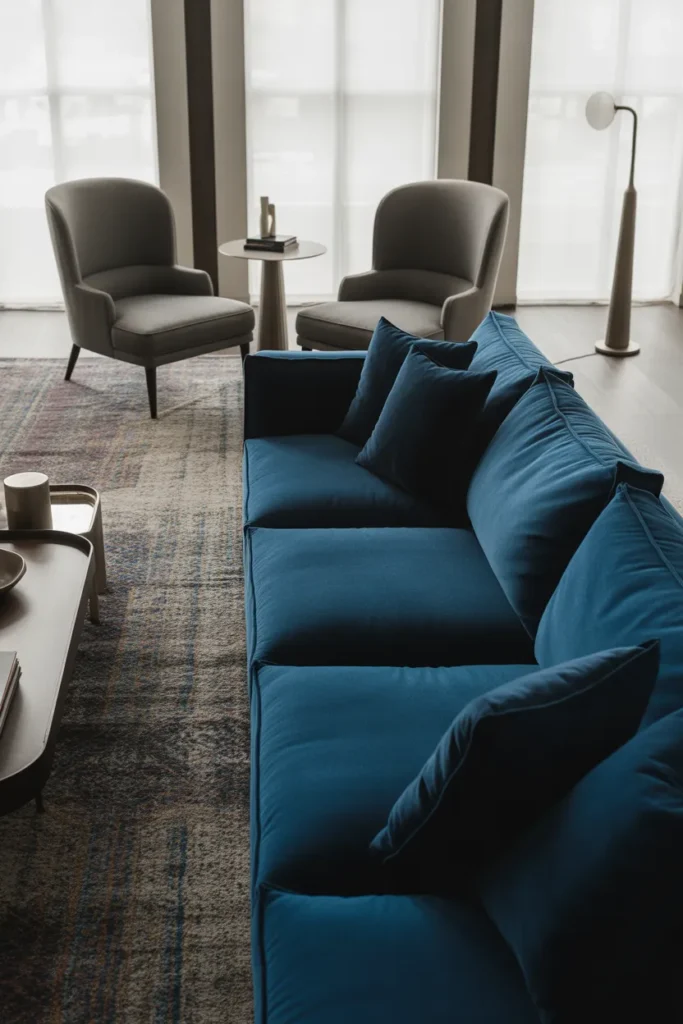
Reversing the usual combination, a blue sofa with gray accent chairs, creates a bold and striking room where the sofa is clearly the statement piece. This works best when the blue is confident, such as navy, teal, or sapphire, and the gray chairs are a soft to mid-tone gray that balances it without competing. Keep the walls light gray or warm white so the sofa has room to stand out.
Unify the seating group with a rug that includes hints of both blue and gray, and pillows that blend the two colors, for example gray pillows on the blue sofa and a blue pillow on each gray chair. Metallic or glass accents, such as a brass lamp or a glass coffee table, add polish and keep the arrangement feeling light.
This arrangement suits modern and transitional living rooms, but it needs balance elsewhere in the room. If the sofa is very bold, keep the curtains, rug, and art quieter so the eye has somewhere to rest. One bold piece per room is a good rule; if the sofa is bold, the art should be calm, and vice versa.
22. Blue and Gray Maximalist Living Room
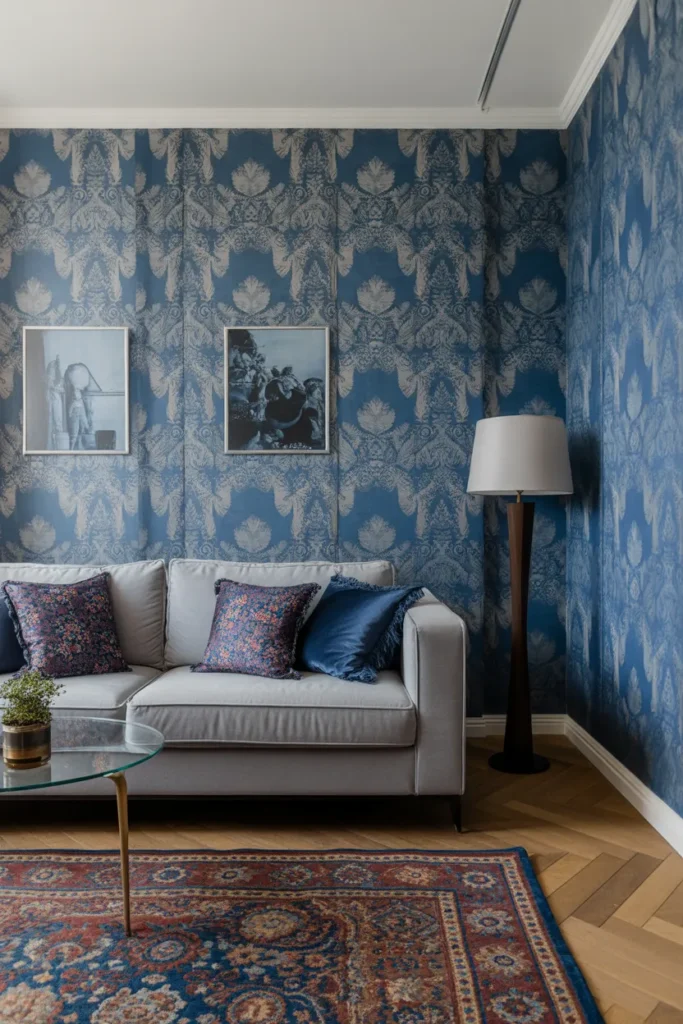
A maximalist gray and blue living room is for homeowners who love bold, layered style. Combine patterned blue wallpaper, textured gray furniture, vibrant rugs, and bold accessories, and do not be afraid to mix florals, geometrics, and abstract prints. The variety is the point, and it gives the room a personal, collected feeling that a minimal room cannot match.
Maximalism still needs a system to avoid chaos. Repeat the same shades of blue and gray throughout the room, in the wallpaper, the rug, the pillows, and the art, so the eye finds connections even among many patterns. Limit the accent colors to one or two, such as brass and white, and repeat those too. A consistent frame color for art and a consistent wood tone for furniture will hold the whole mix together.
Layer in stages rather than all at once. Start with the large pieces, sofa, rug, and curtains, then add art, then pillows and throws, then smaller accessories. Step back after each stage and remove anything that does not earn its place. A maximalist room should feel abundant, not crowded, and editing is what makes the difference. For a bolder green-based contrast to this palette, see these dark green living room ideas for how deep color works on walls and furniture.
Conclusion
Gray and blue living room ideas offer endless possibilities, whether you prefer soft, peaceful tones or bold, dramatic contrasts. The combination adapts to coastal, modern, Scandinavian, farmhouse, and traditional styles, and it works in small apartments as well as large open plan homes. Start with one idea from this list, get the balance of gray and blue right, and add layers slowly until the room feels like yours.
If you are still deciding on shades, order paint samples and fabric swatches and live with them for a few days before committing. A color that looks perfect in a store can shift completely in your own light, and a small sample is far cheaper than a repaint or a returned sofa. Once the palette is set, the rest of the styling, rugs, pillows, art, and lighting, falls into place much more easily.
Frequently Asked Questions
What gray paint goes best with blue in a living room?
A warm light gray with a slight beige or greige undertone works with most blues, from navy to sky blue, because it stops the room from feeling cold. For a cooler, modern look, choose a true light gray with no warm undertone, and pair it with a crisp blue such as navy or cobalt. Always test a large patch in your own light before painting the whole room.
Should the sofa be gray or blue?
Either works, but a gray sofa is the safer long-term choice because it lets you change blue accents cheaply with pillows, throws, and art. A blue sofa makes a stronger statement and suits a room where you are confident about the palette. If you choose a blue sofa, keep the walls and chairs in gray or white so the sofa stays the focal point.
How much blue should a gray living room have?
A good starting ratio is about 60 percent gray and neutrals, 30 percent blue, and 10 percent white, wood, or metallic accents. You can go bolder with a navy feature wall or a blue sofa, but keep the rest of the room quieter so the bold piece has room to breathe and the room does not feel busy.
What rug color works with a gray and blue living room?
A rug that includes both gray and blue is the easiest choice, because it ties the sofa, chairs, and pillows together. A solid light gray rug also works if your pillows and art already carry the blue. Avoid a rug in a strong third color, such as red or orange, unless you plan to repeat that color in at least two other places in the room.
How do I keep a gray and blue room from feeling cold?
Add warmth through wood tones, warm white lighting, and natural textures such as linen, wool, jute, and rattan. A light oak coffee table, a woven basket, warm-toned cushions, and bulbs around 2700 to 3000 Kelvin will make the cool palette feel inviting rather than chilly, even in a north-facing room.
More Ideas You Will Love
 12 Rustic 4th of July Outdoor Patio Ideas for a Cozy Celebration
 16 Modern Home Decor Inspiration Ideas for Living Rooms
 13 Summer Home Scents That Make Every Room Feel Fresh Daily
 11 Contemporary Living Room Ideas You’ll Love
 14 Yard Landscaping Ideas: Transform Your Outdoor Space Beautifully
 21 Christmas Decor Ideas to Transform Your Living Room This Season