
14 Cottage Exterior Design Ideas: Charming & Stylish Makeovers

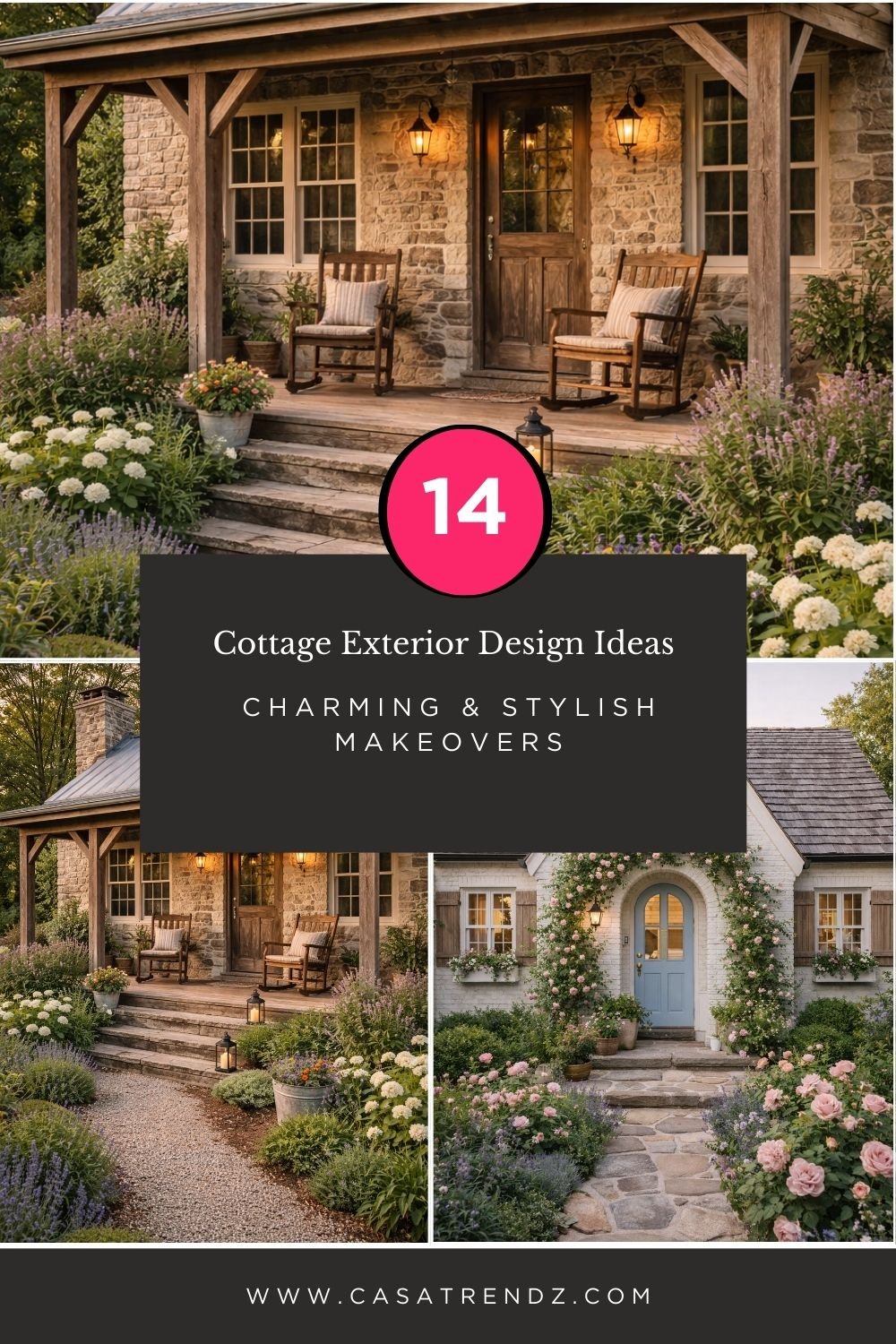
Cottage homes are beloved for their warmth, character, and timeless appeal. Unlike modern builds that often emphasize sharp lines and minimal detailing, cottages evoke comfort, nostalgia, and a close connection to nature. The exterior of a cottage plays a vital role in setting this tone, creating a welcoming first impression while reflecting the home’s personality and surroundings.
The secret to a cottage exterior that looks charming rather than cluttered is restraint. Pick one main material, one main color family, and one or two standout details, then let the garden and the architecture do the rest. A white cottage with a stone path and a wooden door needs little else, while a dark cottage with crisp white trim makes its windows and porch the stars of the show. Start with the big decisions, siding color, roofing, and the front door, then add the character pieces one at a time so each one earns its place.
In this guide, we explore 14 cottage exterior design ideas that combine charm and style through thoughtful use of materials, colors, architectural details, and landscaping. Each idea includes real materials, paint colors, measurements, and step by step tips you can use right away. Whether you are updating an existing cottage or designing a new one with classic inspiration, these ideas will help you create an exterior that feels inviting, authentic, and beautifully lived in.
1. Classic White Cottage with Natural Accents
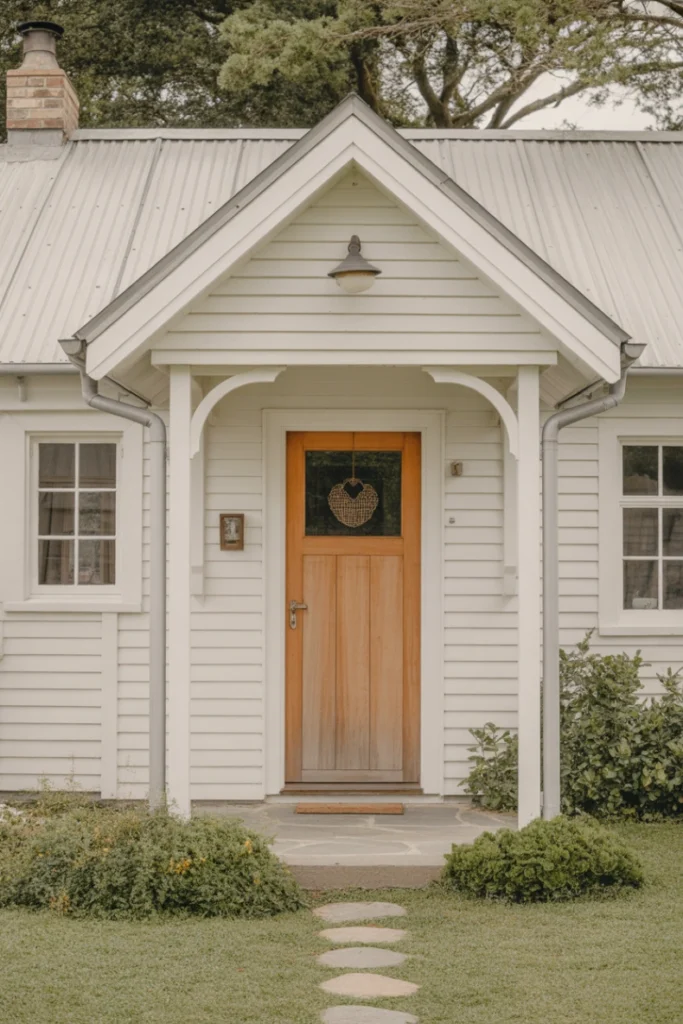
A white cottage exterior is one of the most enduring and versatile design choices. White siding instantly brightens the home and highlights architectural details such as window trim, shutters, and rooflines. When paired with natural accents like stone pathways, wood doors, or exposed beams, the exterior feels balanced and warm rather than stark. Reliable paint choices include Benjamin Moore Simply White, Sherwin-Williams Alabaster, or Farrow and Ball Wimborne White, all warm whites that avoid a cold blue cast in shade.
Start by pressure washing the siding and repairing any cracked boards before painting, then apply two coats of exterior acrylic paint with a satin finish so rain and dirt wash off easily. Keep the trim one shade brighter than the siding and paint the front door a natural wood tone or a soft sage green for contrast. Add a stone or gravel path about 36 to 42 inches wide leading to the door, flanked by low lavender or boxwood, and finish with a wooden bench or a pair of lanterns by the entrance. This approach works particularly well in rural or garden settings, where greenery and flowers provide contrast against the crisp white backdrop. Over time, white cottages age gracefully, developing character while maintaining a clean, timeless appearance that never feels outdated. Plan to touch up the trim every two to three years and wash the siding each spring to keep the white looking fresh.
2. Stone Cottage Facade for Old-World Charm
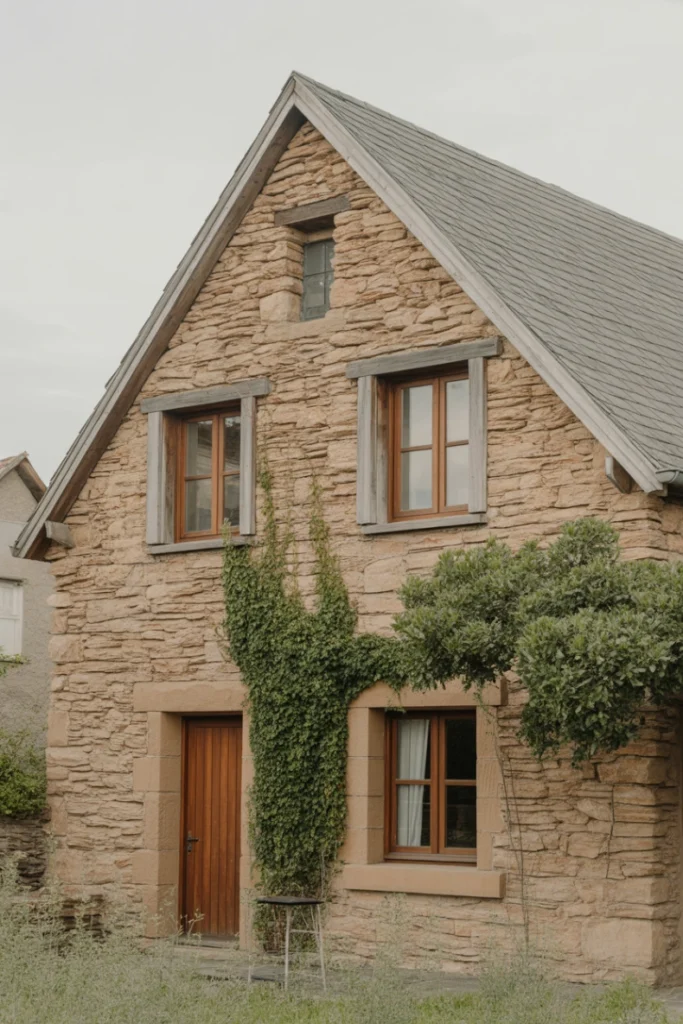
Stone exteriors are a hallmark of traditional cottage architecture, offering durability and unmatched character. A stone cottage facade immediately conveys a sense of history and craftsmanship, making the home feel rooted in its environment. Natural stone textures add depth and visual interest that modern materials often lack. Good choices include fieldstone for a rustic look, limestone for a softer pale finish, and sandstone for warm golden tones. Full stone construction is beautiful but costly, so most homeowners use a stone veneer, which runs about 2 to 3 inches thick and costs far less while looking nearly identical from the street.
Apply stone veneer to the front facade first, around the entryway, or as a wainscot running 3 to 4 feet high along the base of the walls. Pair it with a steep gabled roof, small paned windows with divided lights, and climbing greenery such as ivy or roses trained on a simple trellis. Use a warm mortar color that matches the stone rather than bright white, which can look harsh, and seal the stone every three to five years to prevent water staining. Whether using full stone construction or stone accents around entryways, this exterior style creates a cozy, storybook feel. It is ideal for homeowners seeking authenticity and a strong connection to traditional cottage aesthetics, and it pairs beautifully with a wooden front door and wrought iron hardware.
3. Soft Pastel Cottage Colors

Soft pastel hues such as pale blue, sage green, blush, or butter yellow bring gentle personality to cottage exteriors. These colors maintain the home’s charm while adding subtle individuality. Pastels work especially well on cottages because they complement natural surroundings rather than overpower them. Try Benjamin Moore Palladian Blue for a soft coastal blue, Sherwin-Williams Retreat for a muted sage, or Farrow and Ball Calamine for a gentle blush. Always test a large swatch on the wall and view it in morning and evening light, since pastels can look much brighter in full sun than on a paint chip.
When balanced with white trim and neutral roofing, pastel exteriors feel cheerful yet refined. Paint the body in the pastel shade, keep the trim and window frames bright white, and choose a roof in soft gray, charcoal, or weathered brown so the palette stays grounded. Add a front door in a deeper version of the same color family, for example a navy door on a pale blue cottage, to anchor the look. This approach is ideal for coastal or garden cottages where light, airy colors enhance the relaxed atmosphere. Pastel cottages feel welcoming and whimsical, making them perfect for homeowners who want a touch of color without bold intensity. Repaint every five to seven years, since lighter colors show dirt and fading sooner than dark ones.
4. Thatched Roof Cottage Inspiration
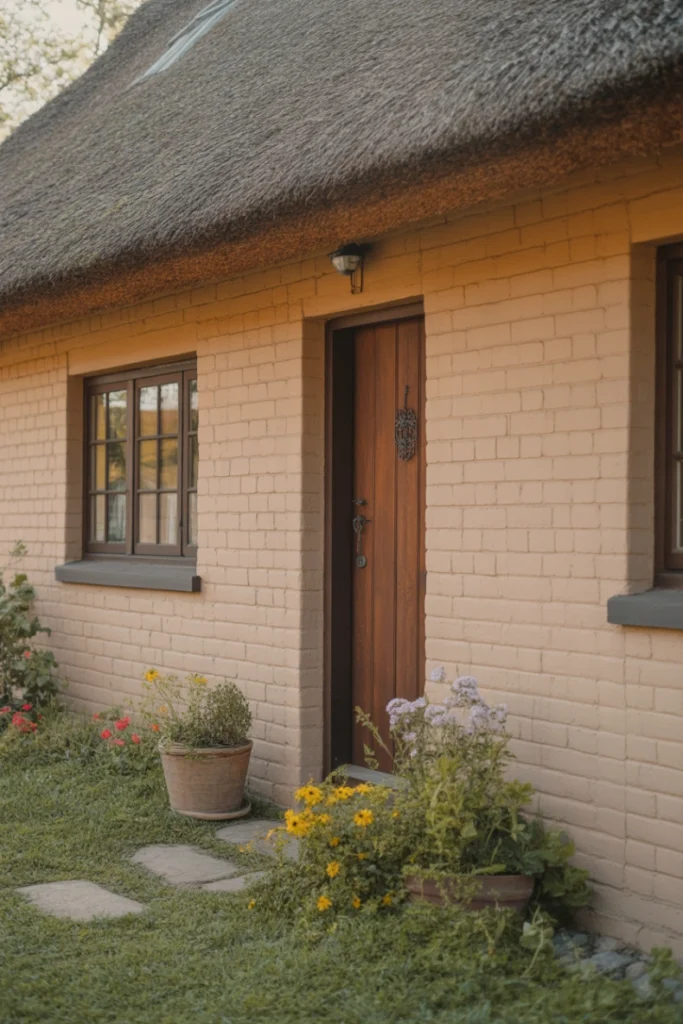
Thatched roofs are iconic in classic European cottage design, instantly evoking romance and tradition. While not always practical everywhere, thatched or thatch-inspired roofing creates a distinctive silhouette and adds texture to the home’s exterior. The organic look blends beautifully with natural landscapes. A real thatch roof is typically 12 to 15 inches thick, lasts 25 to 30 years with care, and needs a steep pitch of at least 45 degrees so rain runs off quickly. In many regions, building codes and fire regulations make real thatch difficult, so synthetic thatch panels or thick layered cedar shakes are a practical alternative that captures the same soft, textured ridge line.
Pair a thatched style roof with plastered walls in warm white or cream, stone details around the door, and a rustic wooden door with black iron hinges. Keep the windows small and cottage style, with diamond or square panes, and add a low stone wall or a picket fence in front. If you choose real thatch, budget for a specialist inspection every two to three years and keep overhanging branches trimmed so the roof dries after rain. Even modern cottages can borrow this look through layered roofing materials that mimic the texture of traditional thatch. This style emphasizes warmth, craftsmanship, and a strong connection to heritage, and it suits cottages in rural or wooded settings best.
5. Brick Cottage with Warm Tones
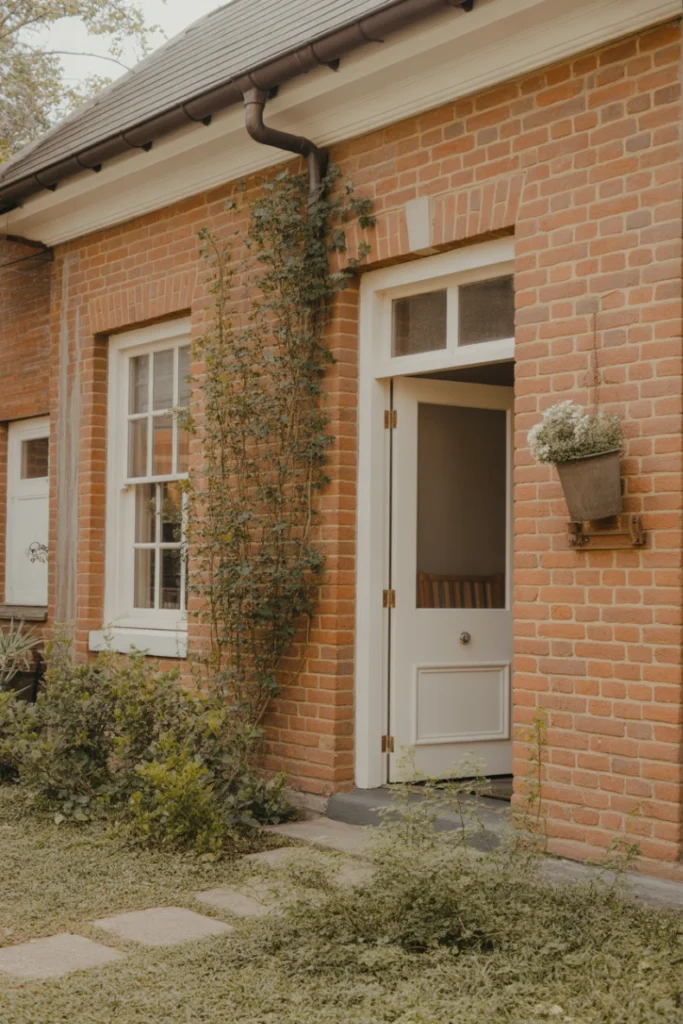
Brick exteriors bring durability and warmth to cottage design. Warm red, brown, or weathered brick creates a welcoming appearance that feels grounded and enduring. Brick cottages often strike a balance between rustic charm and refined elegance. Classic choices include a soft red brick with cream mortar, a weathered brown brick for a quieter look, or a whitewashed brick that keeps the texture while lightening the whole facade. Whitewashing is a simple weekend project: thin white latex paint with water, brush it on in sections, and wipe back some areas so the brick shows through unevenly for a hand finished effect.
This exterior style works well with arched doorways, shuttered windows, and climbing plants such as clematis or climbing roses. Paint the shutters a deep green or charcoal, add a wooden door with a black iron handle, and lay a brick or stone path to match. Over time, brick ages beautifully, adding character rather than showing wear, and it needs almost no maintenance beyond repointing loose mortar every 20 to 30 years. Brick cottages are especially suited to suburban or village settings, offering timeless appeal that blends well with both traditional and modern surroundings. For a softer look, pair the brick with cream trim and a warm gray roof rather than stark white, which can make red brick look harsh.
6. Cottage Exterior with Climbing Greenery
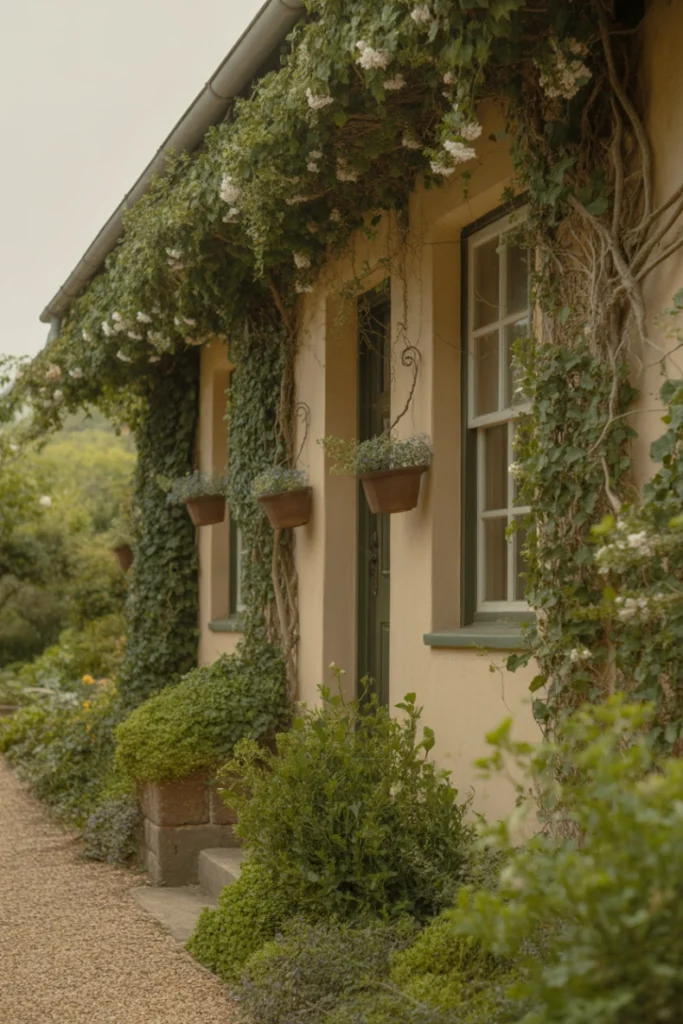
Climbing greenery instantly enhances cottage exteriors by adding softness and organic movement. Ivy, roses, or wisteria can frame windows, doors, and walls, making the home feel integrated with nature. This design choice enhances charm while adding seasonal beauty. Choose self-clinging ivy for brick or stone walls, climbing roses such as New Dawn or Eden for a romantic look, or wisteria for dramatic spring flowers. Install a wooden or metal trellis about 2 to 3 inches away from the wall so air can circulate behind the plant and moisture does not build up against the siding.
Greenery works especially well on neutral-colored cottages, where foliage becomes a focal point. Plant climbers in spring, water deeply once a week during the first year, and prune once a year after flowering to keep growth tidy and away from gutters and roof edges. Beyond aesthetics, climbing plants can provide shade and insulation, cooling a sunny wall by several degrees in summer. This idea is perfect for homeowners who love gardens and want their cottage to feel like a natural extension of the landscape. If you are worried about damage, use a freestanding trellis or an obelisk near the wall instead of planting directly against it, and avoid ivy on painted wood siding, which it can pull loose as it grows.
7. Dark Cottage Exterior with Light Trim
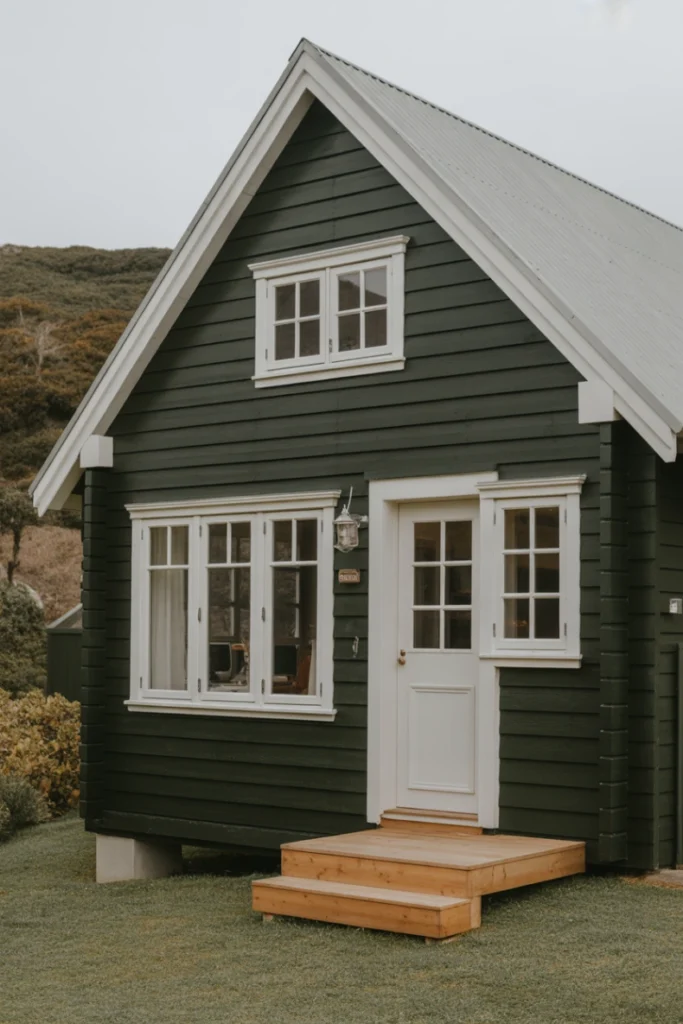
Dark exterior colors such as charcoal, deep green, or navy can create a dramatic yet cozy cottage look. When paired with light trim, these darker tones highlight architectural details and give the home a refined, modern edge while preserving traditional charm. Good paint choices include Sherwin-Williams Iron Ore for a soft black, Benjamin Moore Narragansett Green for a deep green, or Farrow and Ball Hague Blue for a rich navy. Use a matte or low luster exterior paint so the dark color reads soft rather than glossy, and always sample on a large board before committing.
This approach works well in wooded or rural settings, where darker exteriors blend naturally with the surroundings. Paint the body dark, then use bright white or warm cream trim around windows, doors, and eaves so the details pop. Add a wooden front door in a natural honey tone, black lantern style lights, and a light colored stone path to keep the entrance welcoming. Dark cottages feel intimate, stylish, and timeless when executed thoughtfully, and they hide dirt far better than white siding. One caution is heat: dark colors absorb more sun, so use high quality exterior paint and expect to repaint every five to seven years in hot climates. For more ideas on choosing the right shade, see our guide to exterior house color ideas for palettes that work with different roof and trim combinations.
8. Cottage with Wraparound Porch
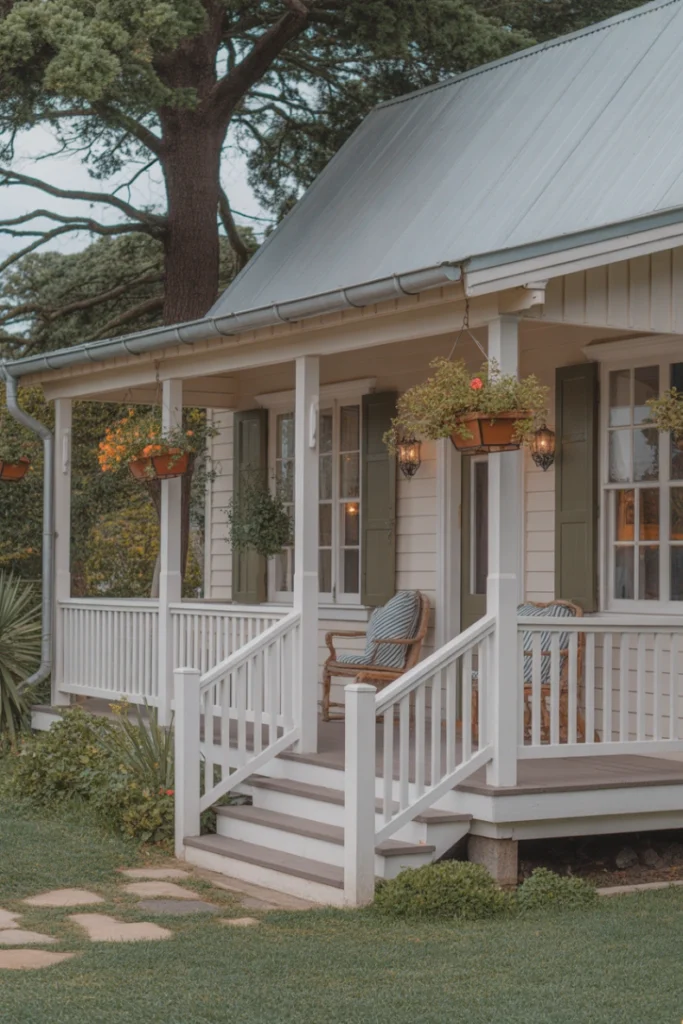
A wraparound porch is a quintessential cottage feature that enhances both function and charm. It creates a welcoming transition between indoors and outdoors while providing space for relaxation and socializing. Porches add architectural interest and emphasize the cottage’s cozy nature. A comfortable porch depth is 8 to 10 feet, which leaves room for a rocking chair and a small side table without blocking the walkway. Use wood decking in a warm natural tone or painted tongue and groove boards, and choose a porch ceiling in a soft haint blue, a classic cottage touch that also discourages insects.
This design works beautifully with rocking chairs, hanging plants, and lantern style lighting. Place a pair of rocking chairs near the front door, hang two or three ferns in baskets from the porch beam, and add a woven outdoor rug about 5 by 7 feet to define a seating area. Keep the railing simple, with square balusters and a chunky top rail, and paint it white to contrast with a natural wood floor. A wraparound porch also improves curb appeal by adding depth and dimension to the exterior. It is an ideal feature for cottages in scenic locations where outdoor living is part of daily life. For more porch styling ideas, explore our small front porch ideas to make even a compact entry feel generous and inviting.
9. Cottage Exterior with Natural Wood Elements
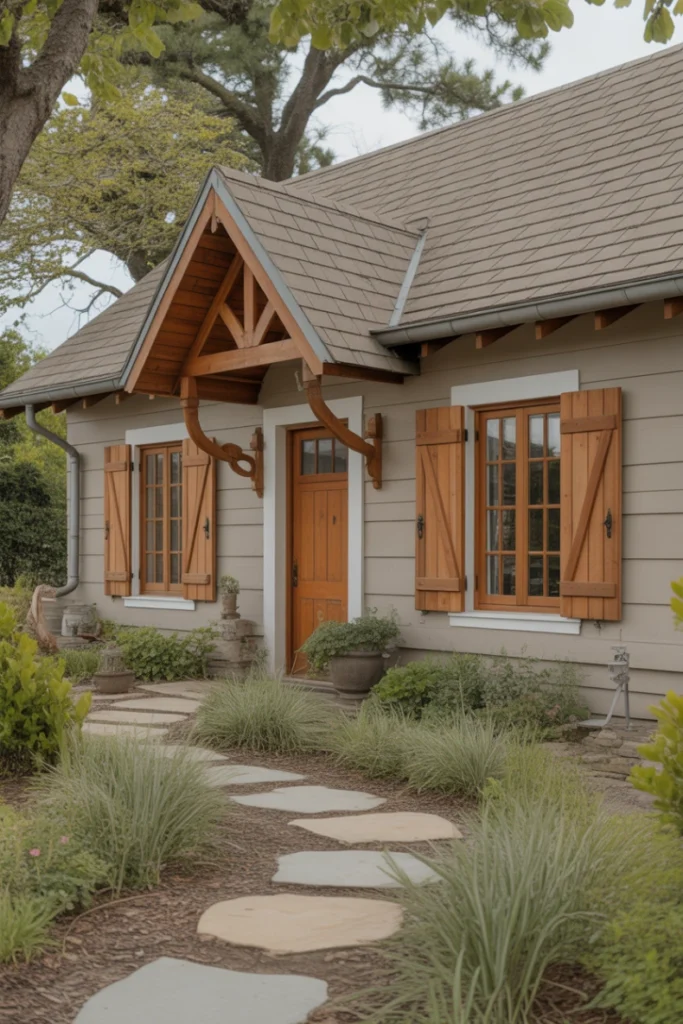
Natural wood elements add warmth and authenticity to cottage exteriors. Wood shutters, doors, beams, or siding details introduce texture and contrast, making the home feel handcrafted and inviting. Wood pairs beautifully with stone, brick, or painted finishes. Cedar is the best choice for exterior wood because it resists rot and insects naturally, while pine is cheaper but needs regular sealing. For shutters, choose board and batten style in cedar, sized to cover half the window width each, and mount them with black iron hinges so they look functional even when fixed in place.
Over time, natural wood develops character, enhancing the cottage’s lived in charm. This approach suits homeowners who appreciate organic materials and rustic detailing. When properly maintained, wood elements provide lasting beauty and reinforce the timeless nature of cottage design. Apply a clear penetrating oil or a semi transparent stain every two to three years, and keep wood at least 6 inches above ground level to prevent moisture damage. Mix wood with other materials for the best effect: a cedar door with stone steps, wood beams under a white gable, or a wooden pergola over the entry. Avoid using too many wood tones at once; one warm tone repeated in the door, shutters, and porch is enough to tie the whole exterior together.
10. Coastal Cottage Exterior Design
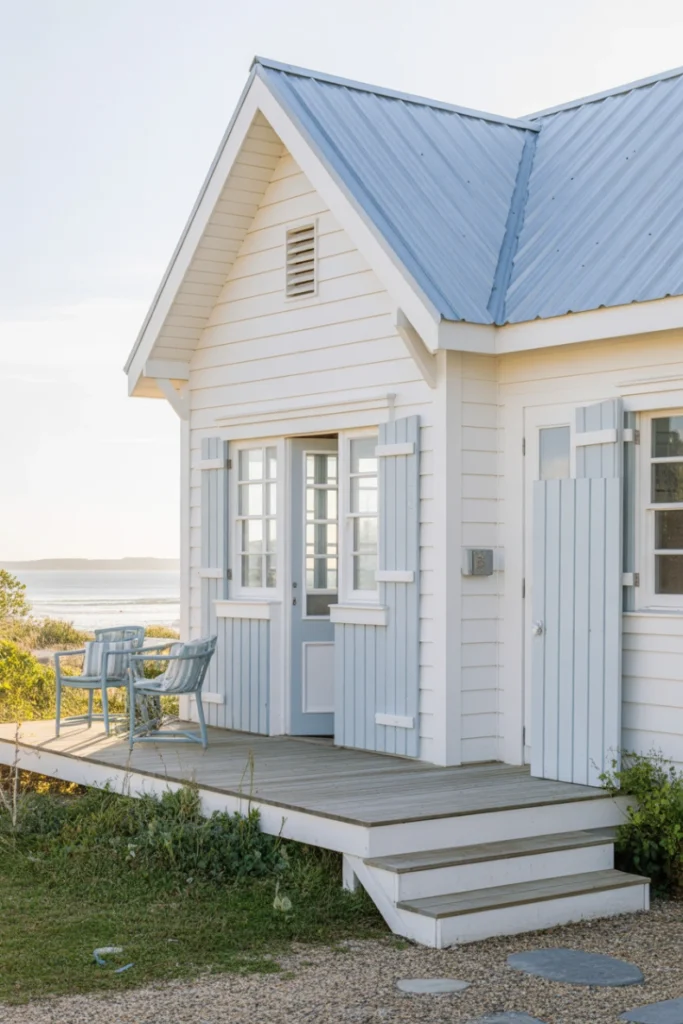
Coastal cottage exteriors emphasize lightness, simplicity, and relaxed charm. Soft colors like white, pale blue, and sandy beige reflect the surrounding environment and enhance natural light. These cottages often feature simple lines, wide windows, and breezy details. Paint the body in a warm white such as Benjamin Moore White Dove, add pale blue shutters or a sea glass green door, and use a light gray or weathered wood roof to complete the palette. Wide windows with white trim let in sea breezes and light, while a low picket fence or a dune grass border keeps the look open and informal.
Materials like wood shingles, metal roofing, and weathered finishes add coastal authenticity. Cedar shingles weather to a soft silver gray on their own, and a standing seam metal roof in a pale gray or white reflects heat and stands up to salty air. Choose stainless steel or marine grade hardware for lights and door handles so they do not rust near the sea. Paired with minimal landscaping and open porches, coastal cottages feel calm and inviting. This style is ideal for seaside or lakefront homes seeking timeless coastal appeal. If your cottage sits near the beach, choose salt tolerant plants and rust proof hardware for the same relaxed look.
11. Cottage with Window Boxes and Floral Details
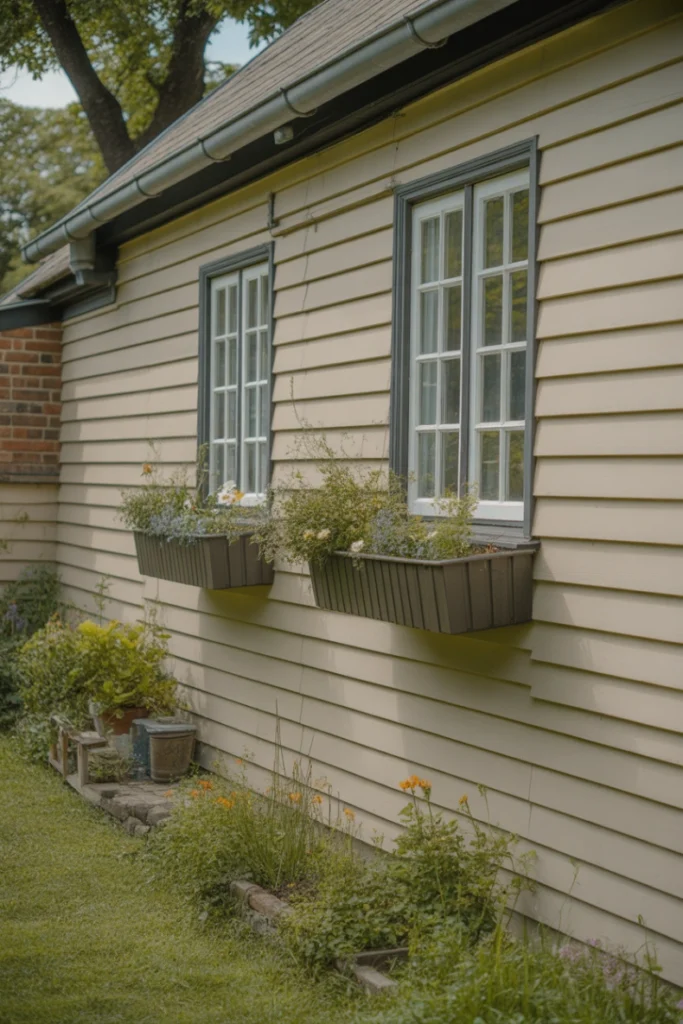
Window boxes filled with flowers are a classic cottage feature that instantly boosts curb appeal. They add color, texture, and seasonal charm while highlighting windows and architectural lines. This detail makes even simple cottages feel warm and welcoming. Build or buy boxes that match the window width exactly, about 6 to 8 inches deep and 8 to 10 inches tall, and mount them 2 to 3 inches below the sill with sturdy brackets. Line them with coco fiber or plastic liners, drill drainage holes, and fill with a light potting mix so the boxes do not stay soggy.
Floral elements can be updated throughout the year, allowing the exterior to evolve with the seasons. Plant trailing lobelia and petunias in summer, pansies and violas in spring and fall, and evergreen sprigs with red berries in winter. Water window boxes daily in hot weather, since small containers dry out fast, and feed with a liquid fertilizer every two weeks during the growing season. Paired with neutral siding and traditional trim, window boxes enhance the cottage’s personality without requiring major structural changes. Choose flowers in two or three colors that repeat across the front of the house, for example white and pink geraniums with trailing ivy, so the look feels planned rather than random. A matching pair of boxes on either side of the front door doubles the effect for very little extra cost.
12. Modern Cottage Exterior Blend
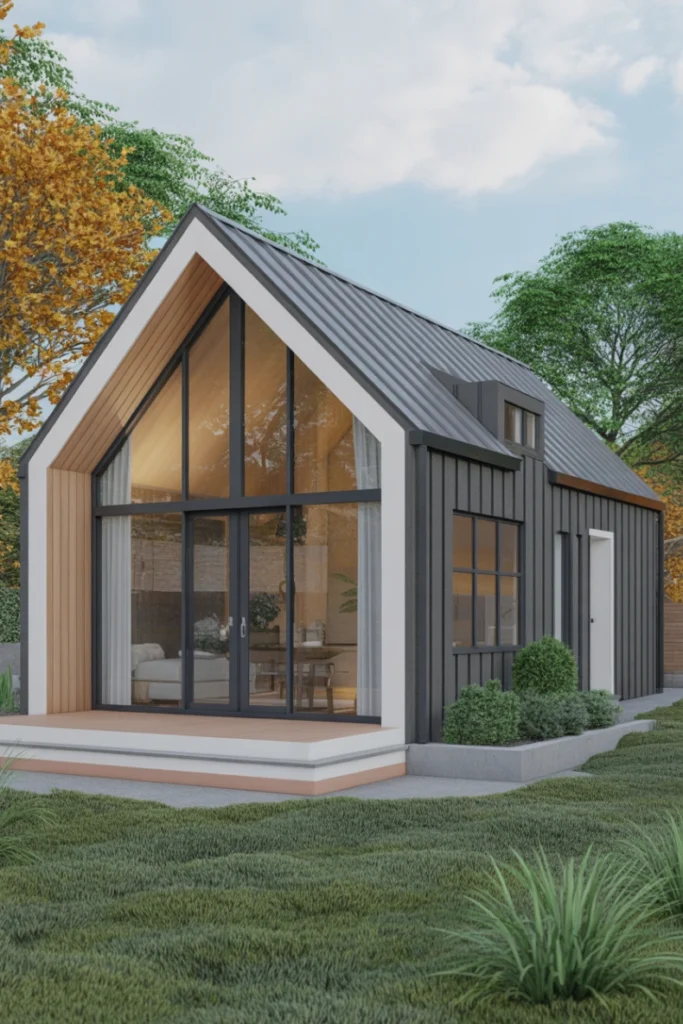
A modern cottage exterior blends traditional charm with contemporary simplicity. Clean lines, simplified trim, and modern materials are balanced with classic proportions and cozy details. This style appeals to homeowners who want cottage warmth without excessive ornamentation. Start with the classic cottage shape, a steep gable roof and a centered front door, then simplify: flat window trim instead of ornate moldings, a single bold house number, and one material repeated cleanly, such as vertical wood siding or smooth stucco. Keep the color palette to two tones, for example warm white walls with charcoal window frames, and let the proportions carry the charm.
Neutral color palettes, large windows, and subtle textures define this approach. Use black framed windows to add definition, a flat canopy or a simple wood pergola over the door instead of a fussy porch roof, and a concrete or large format stone path with clean edges. The result is a fresh, updated cottage that still feels timeless and welcoming. Modern cottage exteriors work well in both rural and suburban environments, especially on newer lots where a traditional cottage might look out of place. The key is keeping at least one clearly cottage element, such as a pitched roof, a flower filled window box, or a wooden front door, so the modern simplicity never turns cold or generic.
13. Cottage Exterior with Garden Pathways
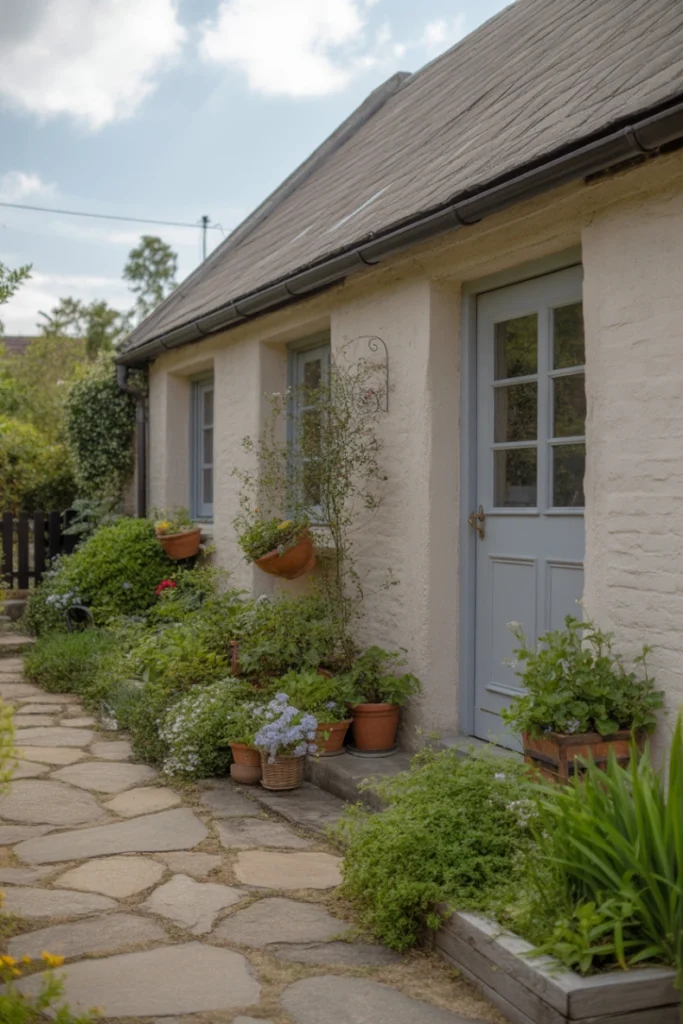
Garden pathways enhance cottage exteriors by guiding visitors toward the home while adding charm and structure to the landscape. Stone, brick, or gravel paths complement cottage architecture and reinforce the connection to nature. A main walkway should be 36 to 48 inches wide so two people can walk side by side, while a secondary garden path can be 24 to 30 inches. Flagstone set in sand gives a natural look and allows ground cover plants like creeping thyme to grow between the joints, while brick laid in a herringbone pattern feels more formal and suits a classic cottage.
These pathways create a sense of journey and anticipation, making the entrance feel intentional and welcoming. Start the path at the gate or driveway, curve it gently rather than running it dead straight, and edge it with low plants such as lavender, catmint, or boxwood to soften the lines. Add a simple arch or a pair of planters where the path meets the porch to mark the arrival point. Combined with flowering borders and natural landscaping, garden paths elevate the cottage’s storybook appeal and enhance overall curb appeal. Keep the path level and well drained, top up gravel once a year, and sweep fallen leaves regularly so the surface stays safe to walk on. For planting ideas along the path, see our garden design ideas for borders and layouts that suit cottage style homes.
14. Neutral Cottage Exterior with Timeless Appeal
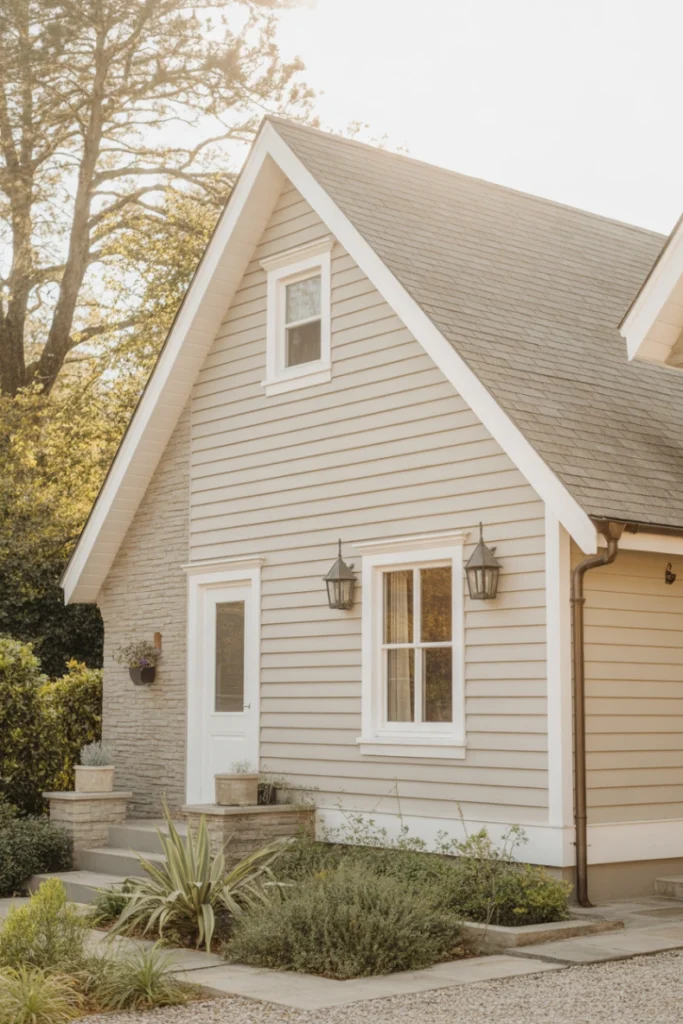
Neutral cottage exteriors rely on shades like cream, beige, soft gray, or taupe to create a timeless and adaptable look. These colors provide a calm backdrop that allows architectural details and landscaping to shine. Good choices include Sherwin-Williams Accessible Beige for a warm greige, Benjamin Moore Revere Pewter for a soft gray with warm undertones, or Farrow and Ball Slipper Satin for a gentle cream. Paint the body in the neutral shade, use white or a slightly deeper tone of the same color for the trim, and add a front door in a muted green, navy, or natural wood to give the facade a focal point.
Neutral palettes work well in any setting and age gracefully over time. Paired with classic materials like wood and stone, neutral cottages feel elegant, cozy, and enduring. This approach is perfect for homeowners seeking longevity and understated charm. Because the base is neutral, you can change the whole mood of the exterior with small seasonal swaps: colorful window boxes in spring, a wreath and lanterns in winter, or terracotta pots in summer. Neutral siding also photographs beautifully and appeals to the widest range of buyers if you ever sell. Once the exterior is finished, carry the same calm palette inside for a cohesive feel, starting with our cottage living room ideas for a living room that matches the charm of the outside.
Final Thoughts
Cottage exterior design is about more than appearance; it is about creating a sense of warmth, comfort, and connection to the surroundings. These cottage exterior design ideas showcase how thoughtful materials, colors, and details can transform a simple structure into a charming and stylish home. Whether you prefer classic, rustic, coastal, or modern influences, the right exterior design will ensure your cottage feels inviting for years to come.
The best place to start is with one change that makes the biggest difference. For most cottages, that is the front door and the path leading to it, followed by the siding color and the garden. Pick the ideas that fit your home, your climate, and your budget, and work through them one season at a time. A cottage exterior is never really finished, and that is part of its charm: a new plant, a fresh coat of paint, or a handmade detail each year keeps it feeling loved and lived in.
Frequently Asked Questions
What is the best color for a cottage exterior?
Warm white is the safest and most timeless choice, because it suits every cottage style and makes the garden stand out. If you want color, soft pastels like pale blue or sage green work well, and dark shades like charcoal or deep green create a cozy modern look. Always test a large swatch on the wall first, since colors look much lighter in bright sun. Pair any body color with white trim and a roof in gray or brown to keep the palette grounded.
How can I make my cottage exterior look charming on a budget?
Start with the cheapest high impact changes: paint the front door, add window boxes, and tidy the garden path. A gallon of exterior paint, two window boxes with seasonal flowers, and a few bags of gravel can transform the front of a cottage for under 200 dollars. Next, add simple lighting by the door and a pair of lanterns. Save bigger projects like stone veneer or a new porch for later, and do one project per season so the cost stays manageable.
What materials work best for a cottage exterior?
Natural materials age best on cottages: wood siding or cedar shingles, stone or brick accents, and a metal or cedar shake roof. Fiber cement siding is a good low maintenance alternative that can be painted any color and resists rot and insects. Avoid shiny vinyl or flat plastic finishes, which clash with the handmade feel of a cottage. Whatever you choose, keep the palette to two or three materials so the exterior looks collected rather than busy.
How do I keep climbing plants from damaging my cottage walls?
Mount a trellis 2 to 3 inches away from the wall and train the plant on the trellis instead of letting it attach directly to the house. This keeps air moving behind the foliage and protects paint and mortar. Prune once a year after flowering, keep growth away from gutters and roof edges, and avoid self clinging ivy on painted wood siding. On brick or stone, ivy is usually safe, but check the mortar every few years and remove any growth that reaches under the roofline.
Can a modern cottage exterior still feel cozy?
Yes, if you keep at least one warm cottage element. A modern cottage with clean lines still feels cozy when it has a wooden front door, a pitched roof, window boxes with flowers, or a small covered porch. Warm materials like cedar and stone, soft lighting by the door, and a garden path all add warmth without adding clutter. The trick is balance: simplify the trim and details, but keep the proportions, the materials, and the garden true to cottage style.
More Ideas You Will Love
 13 Outdoor Patio Design Ideas to Elevate Your Backyard Style
 11 Summer 4th of July Pool Party Décor Ideas You’ll Love
 15 Best Flowers to Plant for Vibrant Summer Blooms
 15 Outdoor Entertainment Ideas: DIY Backyard Bar Setup
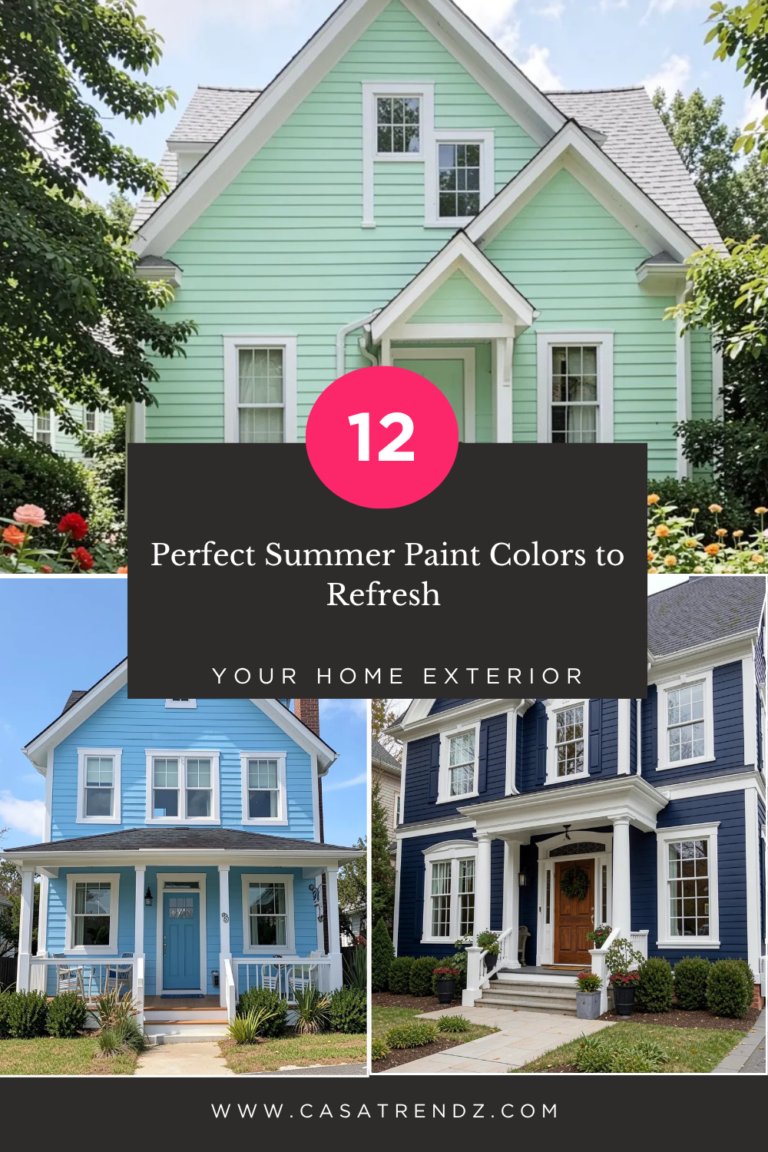 12 Perfect Summer Paint Colors to Refresh Your Home Exterior
 19 Yard Fire Pit Ideas to Add Style to Your Outdoor Space