
14 Farmhouse Living Room Ideas for a Cozy, Rustic‑Chic Makeover

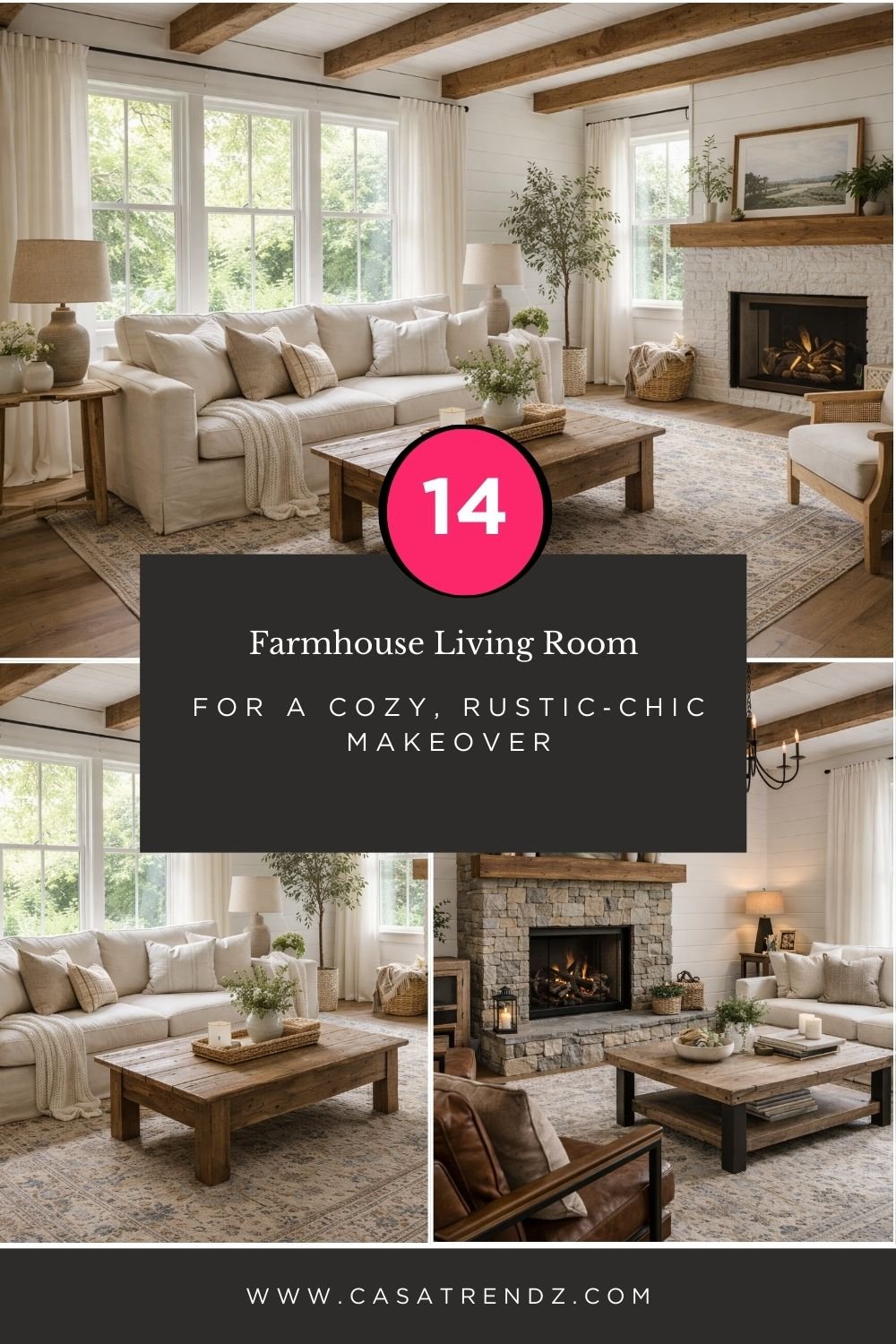
Farmhouse living room design blends comfort, warmth, and timeless charm with subtle elegance. Rooted in rustic simplicity yet refined for modern living, farmhouse interiors create spaces that feel welcoming and lived in. Natural textures, neutral color palettes, and thoughtfully chosen furniture pieces come together to create a relaxed yet stylish atmosphere that works for both everyday family life and entertaining guests.
The secret to a farmhouse living room that looks collected rather than decorated is balance. Too much rustic detail can make the room feel like a theme, while too little leaves it plain. The sweet spot is a calm neutral base, one or two strong rustic features such as beams or a fireplace, and soft layers of wood, linen, and wool that invite people to sit down and stay a while. Start with the big decisions, wall color, flooring, and the sofa, then add the character pieces one at a time so each one earns its place.
In this guide, we walk through 14 farmhouse living room ideas that help you achieve a cozy, rustic-chic makeover. Each idea includes real materials, measurements, paint colors, and step by step tips you can use right away, whether you are starting from scratch or refreshing a room you already love. Work through the ideas in order, or jump to the ones that fit your room, and finish with the frequently asked questions at the end for quick answers on budget, paint, and layout.
1. Classic Neutral Farmhouse Living Room
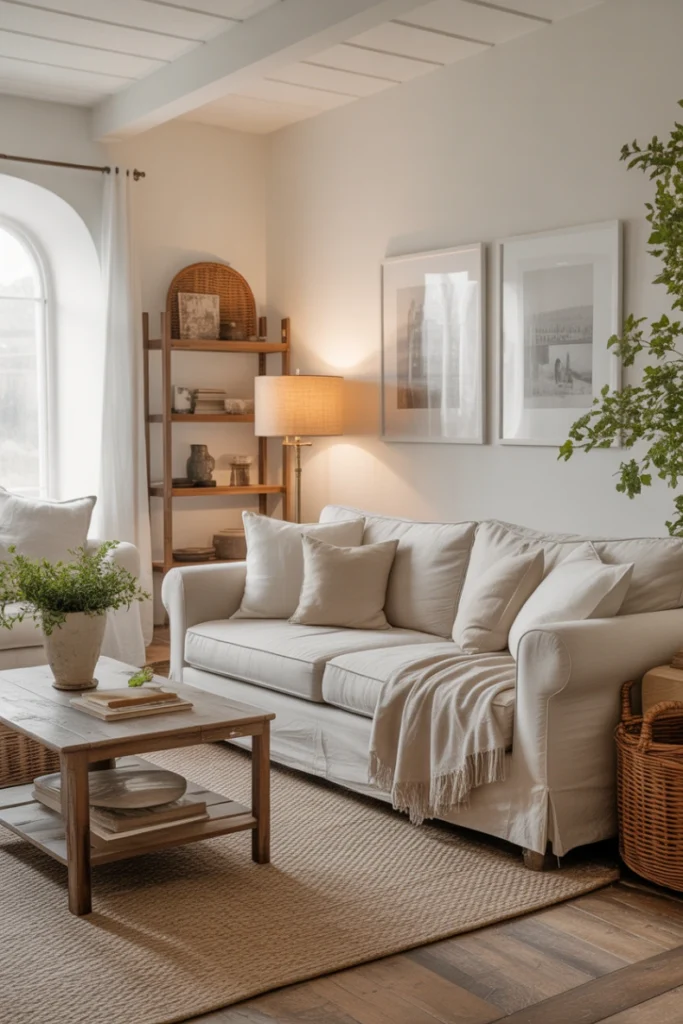
A neutral color palette is the foundation of most farmhouse living room ideas. Shades of white, cream, beige, and soft gray create a calm and inviting environment while allowing textures and furnishings to stand out. Neutral walls also reflect light beautifully, making living rooms feel open and airy even in smaller spaces. The most reliable starting point is a warm white on the walls, such as Benjamin Moore Simply White or Sherwin-Williams Alabaster, paired with a soft greige like Accessible Beige on an accent wall or built-ins. Keep the ceiling bright white and the trim a shade whiter than the walls so the room reads clean without feeling cold.
Functionally, neutral farmhouse living rooms are incredibly versatile. They adapt easily to seasonal decor changes and work with a wide range of furniture styles, so you can swap pillows and throws for fall or spring without repainting anything. Layering different neutral tones through sofas, rugs, and curtains adds depth without visual clutter, making the space feel cozy yet refined. Aim for three neutrals in one room, a light wall color, a mid-tone wood or upholstery, and a darker accent such as charcoal throw pillows or a black metal lamp, so the palette has contrast. If your room leans too flat, add texture instead of color: a nubby linen sofa, a woven jute rug, and a chunky knit throw will warm the space up fast.
Best for: small living rooms, open plan spaces, and anyone who likes to change decor with the seasons. Watch out for: all-white rooms can feel stark under cool LED bulbs, so use warm white bulbs around 2700K and add at least one warm wood tone to keep the room welcoming. If you want a softer, more romantic take on the same neutral base, our cottage living room ideas show how pastel accents and slipcovered seating soften the farmhouse look.
2. Farmhouse Living Room with Exposed Wood Beams
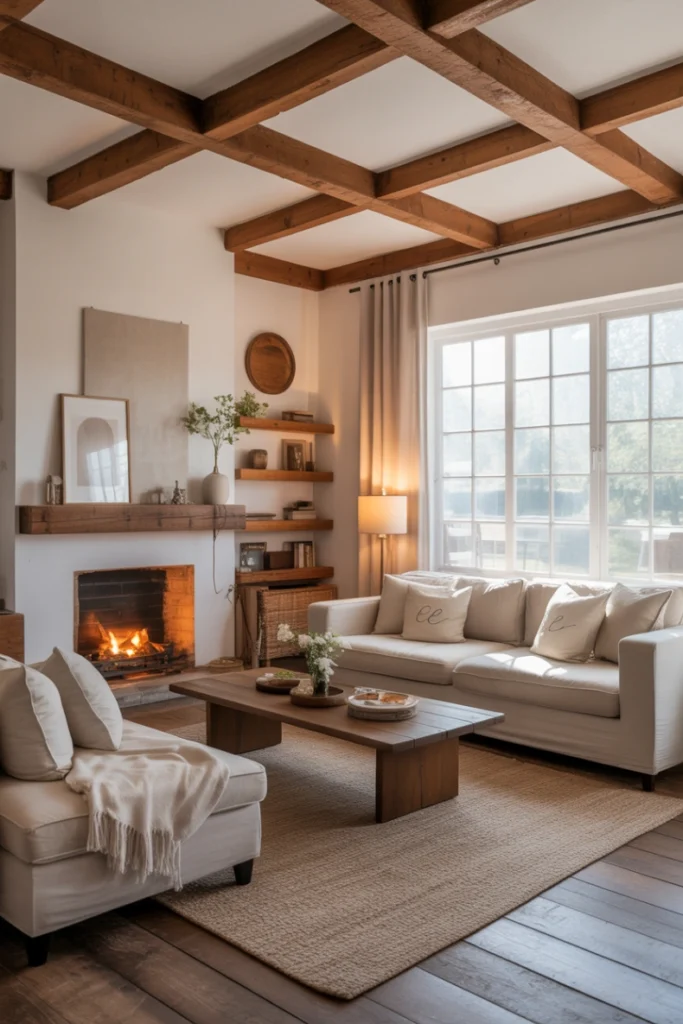
Exposed wood beams instantly add rustic charm and architectural interest to a farmhouse living room. Whether original or decorative, wooden beams draw the eye upward and create a sense of history and craftsmanship. They pair beautifully with neutral walls and natural flooring, and they work on both flat ceilings and vaulted ones. Real reclaimed beams are heavy and need proper structural support, so for most homes, lightweight faux beams made from polyurethane or hollowed pine are the practical choice. They look convincing from below, weigh a fraction of solid timber, and can be installed with a helper and a few lag bolts into ceiling joists in a single afternoon.
For a standard 8 foot ceiling, choose beams 6 to 8 inches deep and 4 to 6 inches wide, spaced 4 to 6 feet apart, running across the shorter dimension of the room so the ceiling feels wider. On a vaulted ceiling, follow the roofline with a beam along the ridge and two or three collar beams across it. Stain the beams one or two shades darker than your floor for contrast, or whitewash them if your room is small and you want the texture without the visual weight. Keep the beams clear of ceiling fans and light fixtures, and leave at least 7 feet of clearance below the lowest beam so the room still feels open.
Best for: living rooms with high or vaulted ceilings, and rooms that need a strong architectural feature. Watch out for: beams on a low ceiling can make the room feel shorter, so in rooms under 8 feet, use shallow beams or paint them the same color as the ceiling for texture without the visual drop.
3. Cozy Farmhouse Living Room with Fireplace
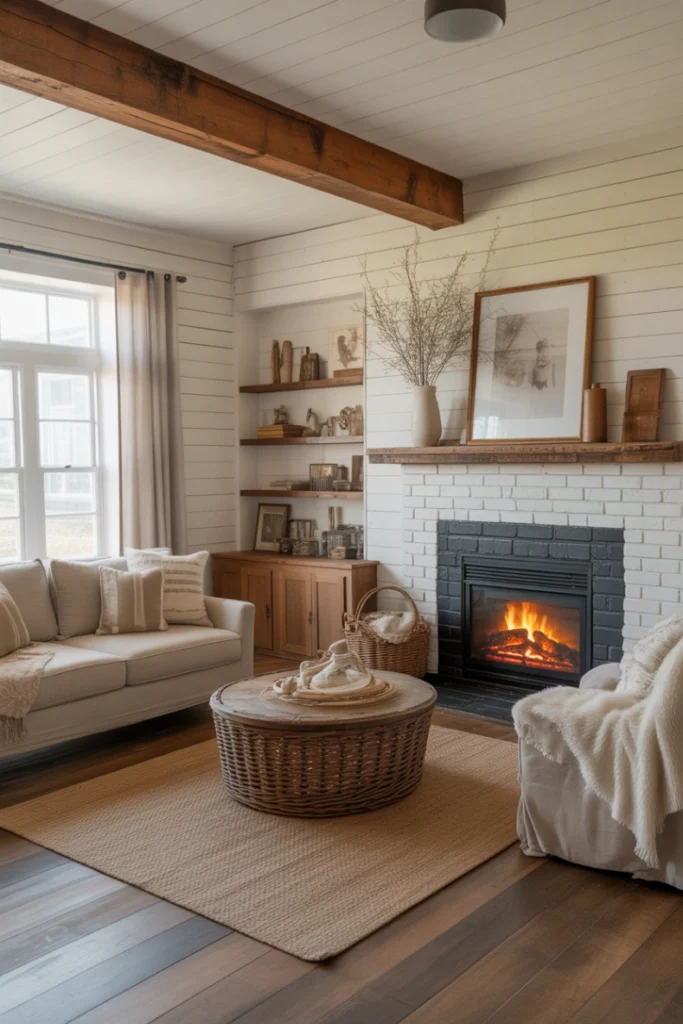
A fireplace serves as a natural focal point in farmhouse living room ideas. Whether wood burning or electric, a fireplace adds warmth, comfort, and visual balance. Stone, brick, or shiplap surrounds enhance the rustic appeal, and the mantel gives you a ready-made display shelf for the seasons. If your home has no chimney, a modern electric fireplace insert fits inside a simple wood surround and gives you realistic flame effects and a heater for under 500 dollars, with no venting or permits needed. Place the fireplace on the longest wall, centered on the seating group, and leave at least 36 inches of clear space in front of the hearth for safety and traffic flow.
From a functional standpoint, fireplaces encourage gathering and relaxation, so arrange the furniture around them rather than around the television. A sofa facing the fireplace with two chairs angled in creates a conversation circle that still lets everyone see the TV if it is mounted above the mantel or on a side wall. Styling the mantel with simple decor, greenery, or vintage accents completes the farmhouse look. Keep the mantel display low and simple: a mirror or framed art centered above, a pair of candlesticks on one side, and a small stack of books or a vase of dried stems on the other. Leave some empty space, since a crowded mantel fights the calm farmhouse feel.
Best for: family living rooms and anyone who wants one clear focal point. Watch out for: a television mounted too high above the mantel strains necks, so keep the center of the screen no more than 60 inches from the floor, and choose a low-profile mount that sits close to the wall.
4. Farmhouse Living Room with Shiplap Walls
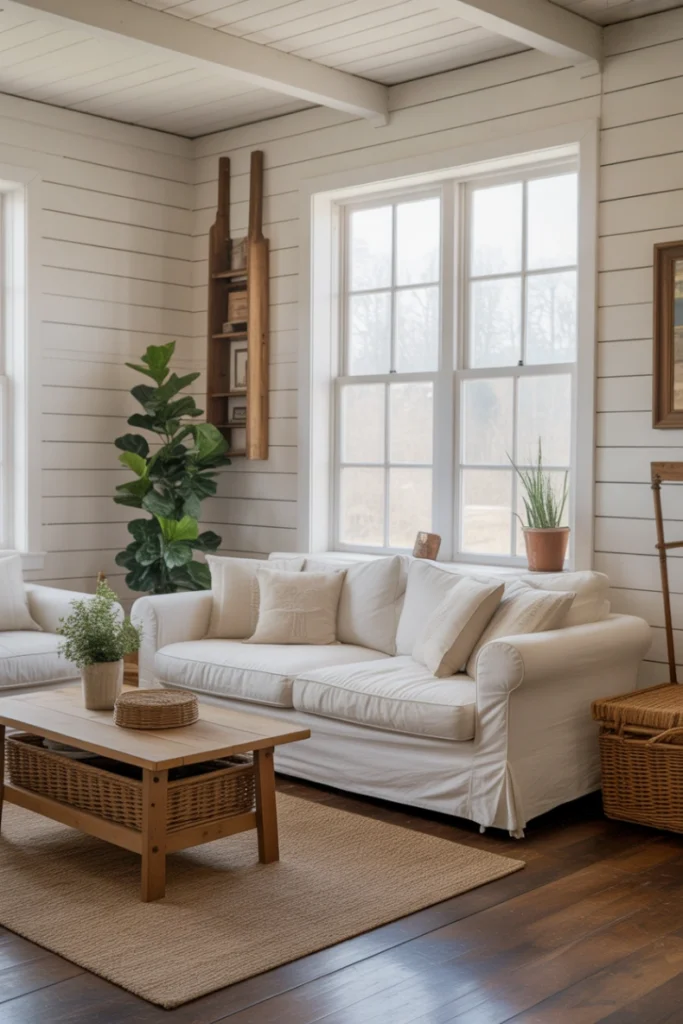
Shiplap walls are a signature feature in farmhouse living room design. The horizontal lines add subtle texture and depth without overwhelming the space. Painted white or soft neutral tones, shiplap creates a clean yet rustic backdrop that works behind a sofa, around a fireplace, or across a full accent wall. Real wood shiplap boards are typically 6 inches wide with a small gap between them, and they install with a nail gun over drywall in a weekend project. For a faster, budget friendly option, peel and stick shiplap panels or MDF planks give the same look for about half the cost and need only a level, a saw, and construction adhesive.
Functionally, shiplap walls are durable and visually forgiving, making them ideal for high-traffic living rooms. Scuffs and small dents blend into the lines between boards, and a fresh coat of paint restores the whole wall in an afternoon. They pair seamlessly with both vintage and modern furnishings, so you can change the furniture without changing the wall. Paint shiplap with a satin or eggshell finish in a warm white such as Benjamin Moore White Dove, and run the boards horizontally to make the room feel wider, or vertically to make a low ceiling feel taller. Use it on one wall only if the room is small, since shiplap on all four walls can feel busy.
Best for: accent walls, fireplace surrounds, and entry walls that need character. Watch out for: shiplap behind a television can create a busy background, so either paint it a soft color that matches the TV frame area or keep the TV on a plain wall and put the shiplap behind the sofa instead.
5. Rustic-Chic Farmhouse Living Room Furniture
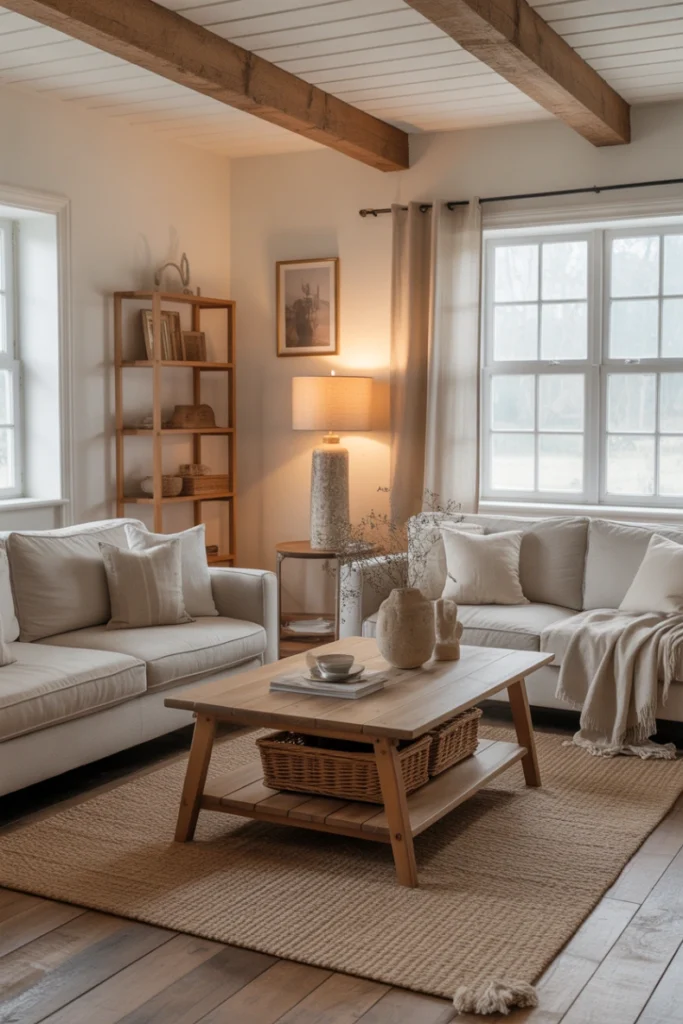
Furniture selection plays a key role in farmhouse living room ideas. Overstuffed sofas, slipcovered seating, and sturdy wood coffee tables create a relaxed, welcoming environment. Comfort is prioritized without sacrificing style, so look for deep seats of at least 22 inches, plush cushions, and washable slipcovers if you have kids or pets. A classic farmhouse layout centers on a three-seat sofa in a neutral linen or performance fabric, two accent chairs in a contrasting texture such as leather or woven rattan, and a wood coffee table with a lower shelf for books and baskets.
Rustic-chic furniture blends distressed finishes with refined silhouettes. This balance allows the living room to feel lived in yet thoughtfully designed. A reclaimed wood coffee table pairs well with a tailored sofa, and a metal and wood side table keeps the room from feeling too soft. Durable materials ensure longevity, making this approach both practical and visually appealing. When shopping, check the frame, kiln-dried hardwood frames last far longer than particleboard, and choose cushions with a high-resiliency foam core wrapped in down for a seat that holds its shape. Leave 18 inches between the coffee table and the sofa, and 30 to 36 inches of walkway behind chairs, so the room stays easy to move through.
Best for: busy family rooms, homes with pets, and anyone who wants furniture that looks better with age. Watch out for: too many distressed pieces in one room can look worn out rather than charming, so limit heavy distressing to one or two pieces and keep the rest clean and simple.
6. Farmhouse Living Room with Vintage Accents
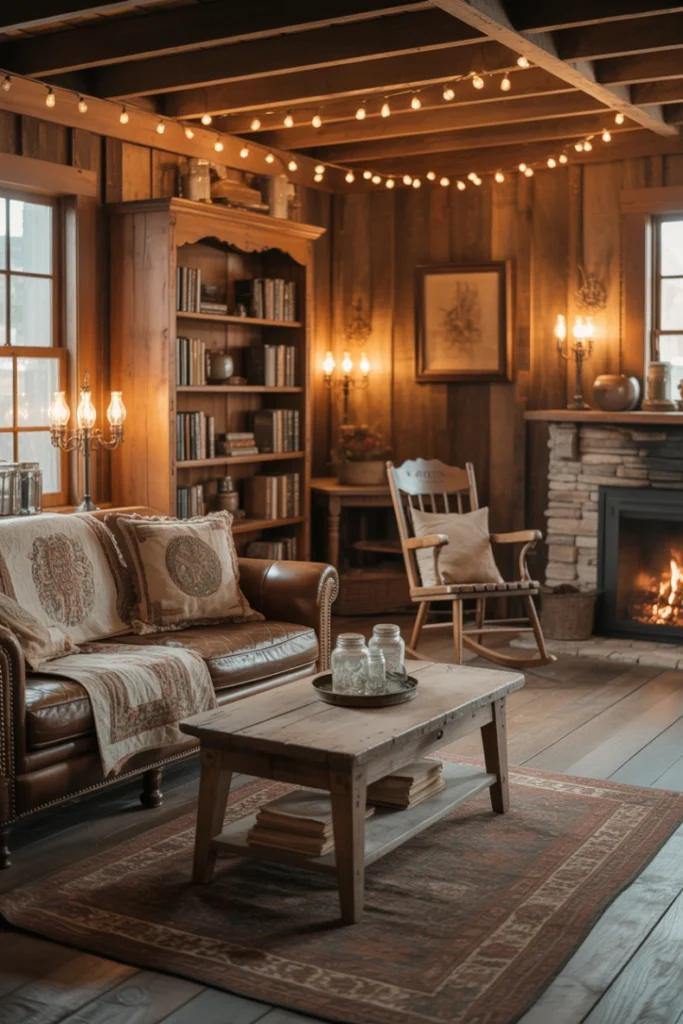
Vintage elements bring authenticity and personality to farmhouse living room ideas. Items such as antique mirrors, old trunks, or repurposed furniture pieces add charm and storytelling to the space. A weathered trunk makes a great coffee table with hidden storage inside, an old ladder hung horizontally becomes a blanket rack, and a vintage window frame works as wall art above the sofa. The best vintage finds come from flea markets, estate sales, and family attics, where the wear and patina are genuine and the price is often a fraction of a new reproduction.
From a functional perspective, vintage decor can double as storage or focal points. An old dresser can hold board games and throw blankets, a set of antique crates can organize firewood or magazines, and a vintage mirror reflects light and makes the room feel larger. Mixing old and new elements keeps the living room from feeling dated while maintaining its rustic roots. This approach creates a layered and meaningful design. The rule that keeps it from turning into clutter is one vintage statement per zone: one large piece on the mantel wall, one on the coffee table, and one in a corner, with the rest of the room kept simple so each piece stands out.
Best for: collectors, thrifters, and rooms that need personality on a small budget. Watch out for: check vintage wood furniture for a musty smell and woodworm before bringing it inside, and seal raw wood with a clear wax or matte polyurethane so it does not shed dust onto your upholstery.
7. Modern Farmhouse Living Room Design
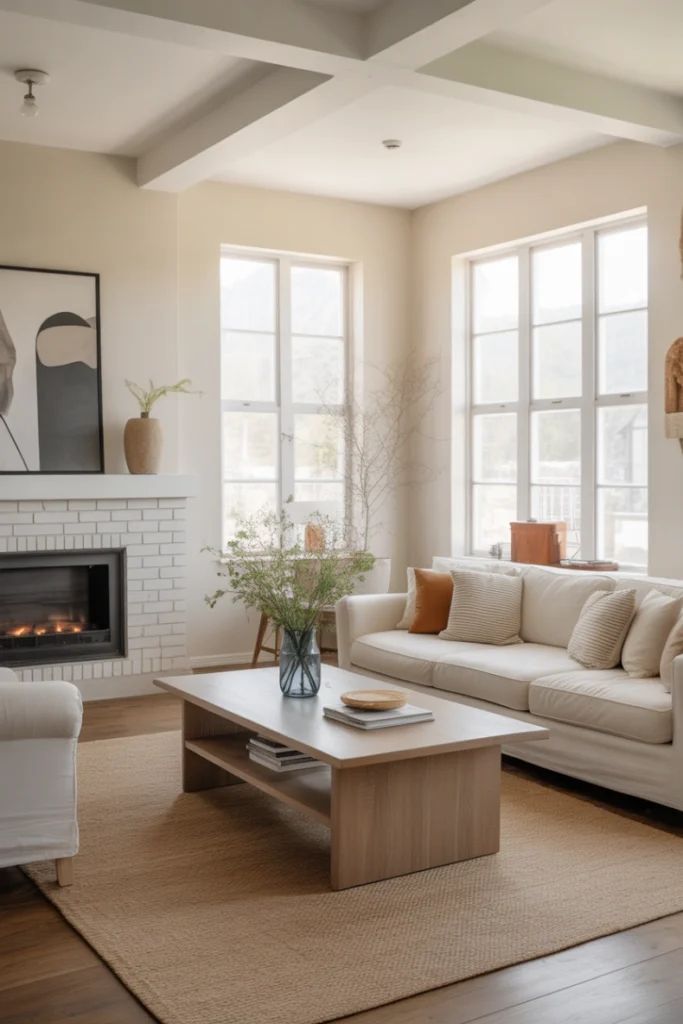
Modern farmhouse living room ideas combine traditional rustic elements with contemporary simplicity. Clean lines, minimal decor, and streamlined furniture update the classic farmhouse aesthetic for modern lifestyles. Think of it as farmhouse with the clutter edited out: a comfortable linen sofa, a single wood accent table, black metal lighting, and one large piece of art instead of a gallery wall of small frames. The color palette stays neutral, but the contrast is stronger, with matte black hardware, dark window frames, and crisp white walls doing most of the visual work.
This style prioritizes functionality and comfort while maintaining visual warmth. Neutral palettes, metal accents, and uncluttered layouts create a polished yet cozy space. Modern farmhouse living rooms are ideal for homeowners who appreciate rustic charm with a fresh, updated feel. To get the look, keep surfaces mostly clear, hide cords and clutter in baskets or closed storage, and choose furniture with simple silhouettes and visible wood grain. A flat weave rug in a neutral tone anchors the room without pattern overload, and a single textured throw keeps the sofa inviting. If you like the clean lines but want a moodier version of the same layout, our dark green living room ideas show how deep green walls pair with the same black and wood accents.
Best for: new builds, open plan homes, and anyone who likes farmhouse warmth without a lot of decor. Watch out for: modern farmhouse can tip into cold and empty if you remove too much texture, so keep at least three natural materials in the room, such as wood, linen, and wool, at all times.
8. Farmhouse Living Room with Natural Textures
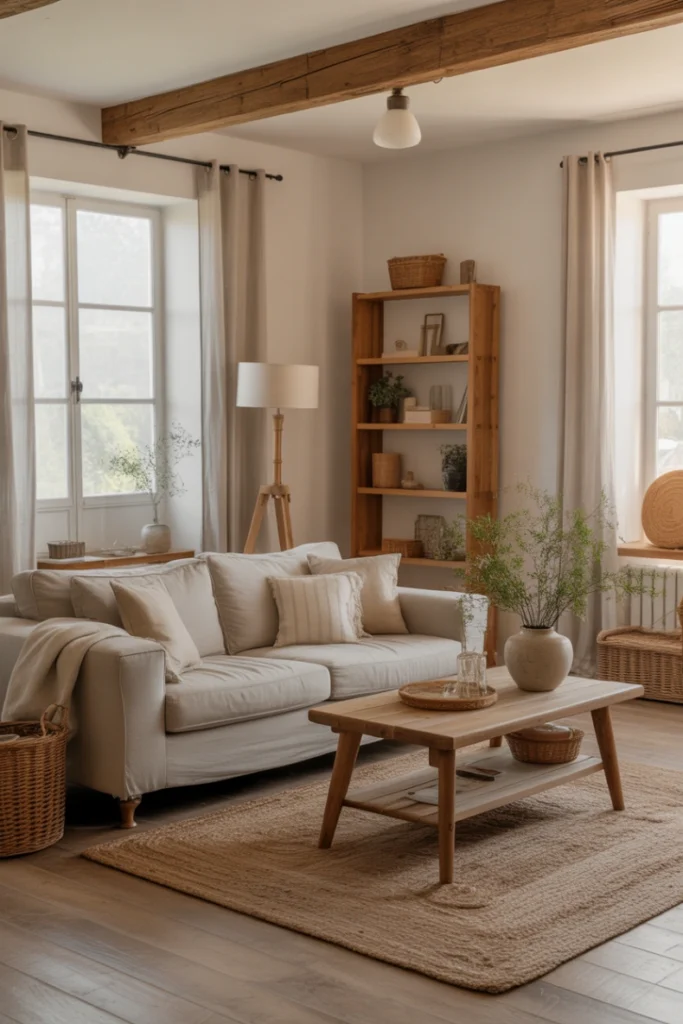
Natural textures are essential in farmhouse living room ideas. Materials such as wood, linen, cotton, jute, and stone add warmth and depth. These textures create visual interest while maintaining a relaxed atmosphere, and they do the work that color does in a bolder room. Start from the floor up: a jute or sisal rug layered under a smaller wool rug, a linen sofa, cotton curtains, and a stone or wood side table give you five textures before you add a single accessory. In a neutral room, texture is what keeps the eye moving and the space feeling rich rather than plain.
Layering natural elements through rugs, cushions, and furniture enhances comfort and durability. Functionally, natural materials age well and contribute to a timeless design. Solid wood develops character with use, linen softens with every wash, and wool rugs resist stains and hold their shape for years. This approach strengthens the connection between farmhouse interiors and nature. Mix rough and smooth textures for balance: pair a rough woven basket with a smooth ceramic vase, or a chunky knit throw with a sleek leather chair. Keep the palette to two or three wood tones at most so the room feels collected, not mismatched.
Best for: neutral rooms that feel flat, and anyone who wants a calm, nature-inspired space. Watch out for: jute and sisal rugs shed in the first few weeks and can feel rough on bare feet, so layer a softer wool or cotton rug on top in the main seating area.
9. Farmhouse Living Room with Open Shelving
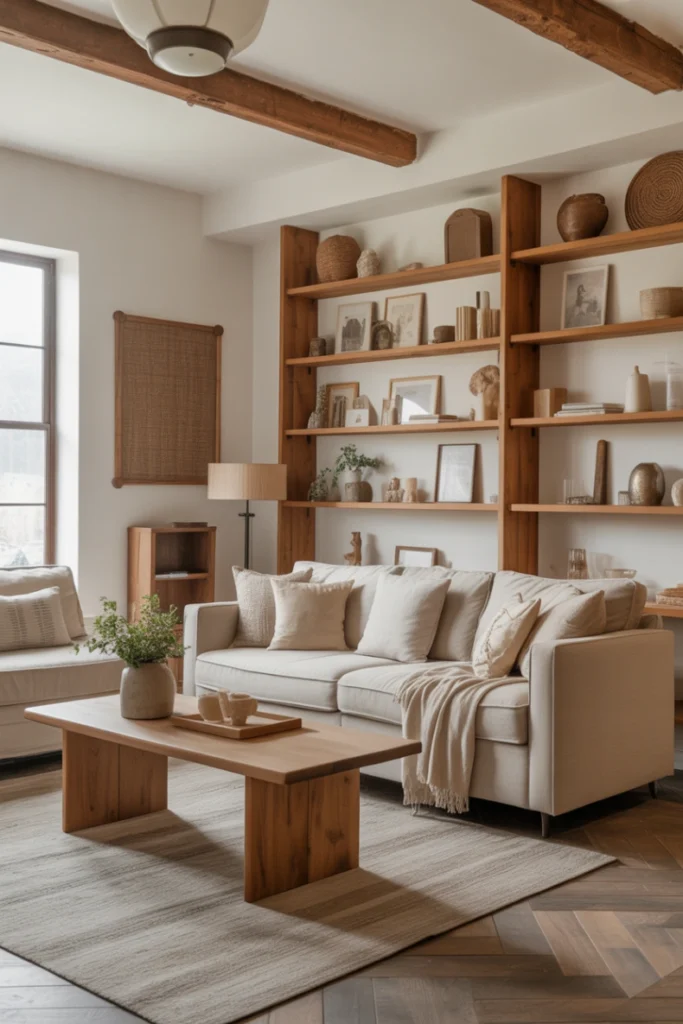
Open shelving adds both style and functionality to farmhouse living room design. Wooden shelves display curated decor such as books, pottery, and greenery while keeping the space organized. The classic farmhouse look uses thick reclaimed wood shelves on black metal brackets, mounted on either side of a fireplace or above a low console table. Two or three shelves, spaced 12 to 15 inches apart, give you room for books and objects without crowding. Mount them into wall studs with brackets rated for at least 25 pounds per shelf so they hold real books and pottery safely.
Functionally, open shelves provide accessible storage and visual balance. When styled thoughtfully, they enhance the rustic charm without clutter. This farmhouse living room idea works especially well in smaller spaces where storage must be both practical and decorative. Style each shelf with a simple formula: one tall item such as a vase or framed print, one stack of two or three books, and one small green plant, then leave about a third of the shelf empty so the display can breathe. Group objects in odd numbers and vary the heights so the shelf looks collected rather than lined up like a shop display.
Best for: small living rooms, fireplace walls, and displaying collections. Watch out for: open shelves collect dust and need a quick wipe every week, so keep them away from the fireplace and the front door where dust is heaviest, and avoid placing more than five objects per shelf.
10. Farmhouse Living Room with Layered Lighting
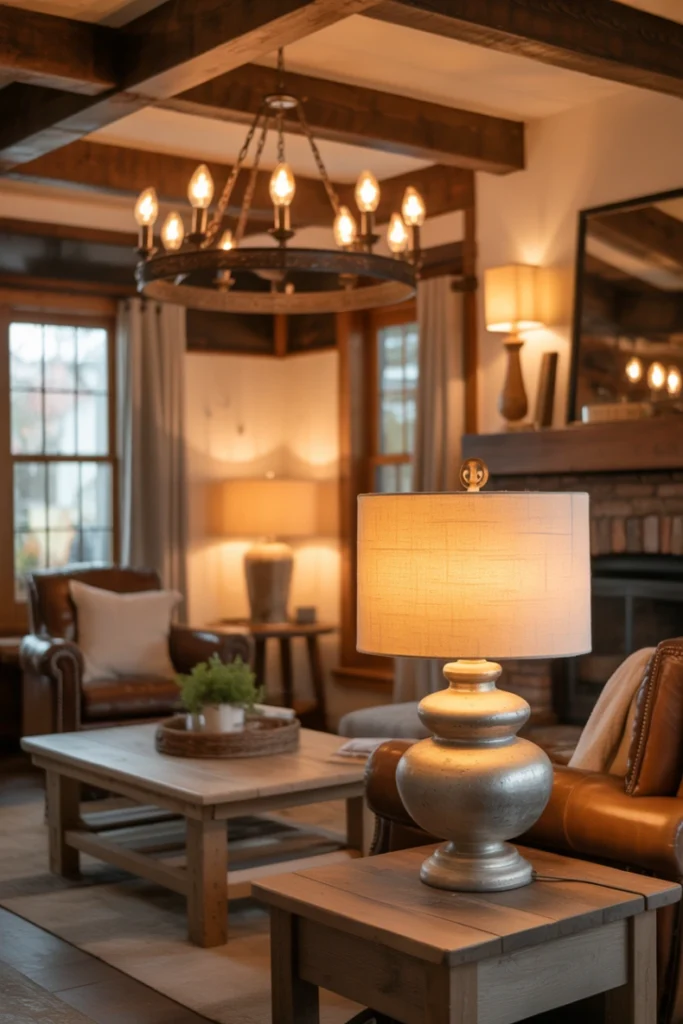
Lighting is crucial for creating a cozy farmhouse living room. Layered lighting, combining ambient, task, and accent lighting, adds warmth and depth. Chandeliers, table lamps, and wall sconces work together to create balance. Start with one ambient source such as a wood bead chandelier or a wrought iron fixture centered over the seating area, then add task lighting with a floor lamp beside the reading chair and a table lamp on each side table, and finish with accent lighting such as picture lights over art or a small lamp on the mantel. Put the main lights on dimmers so you can shift the room from bright daytime to soft evening in seconds.
From a functional perspective, layered lighting supports different activities throughout the day. Soft lighting enhances comfort and highlights rustic textures, while brighter task lighting makes reading and hobbies easy without overhead glare. This farmhouse living room idea ensures both beauty and practicality. Use warm white bulbs around 2700K throughout the room so every light source matches, and choose fixtures with visible wood, linen shades, or black metal to keep the farmhouse character. A good rule is three light sources at different heights in every seating zone: one overhead, one at table height, and one at floor level.
Best for: rooms with little natural light, evening entertaining, and highlighting beams or shiplap. Watch out for: a single bright overhead light flattens the room and kills the cozy mood, so avoid relying on it alone and never mix warm and cool bulbs in the same room.
11. Farmhouse Living Room with Area Rugs
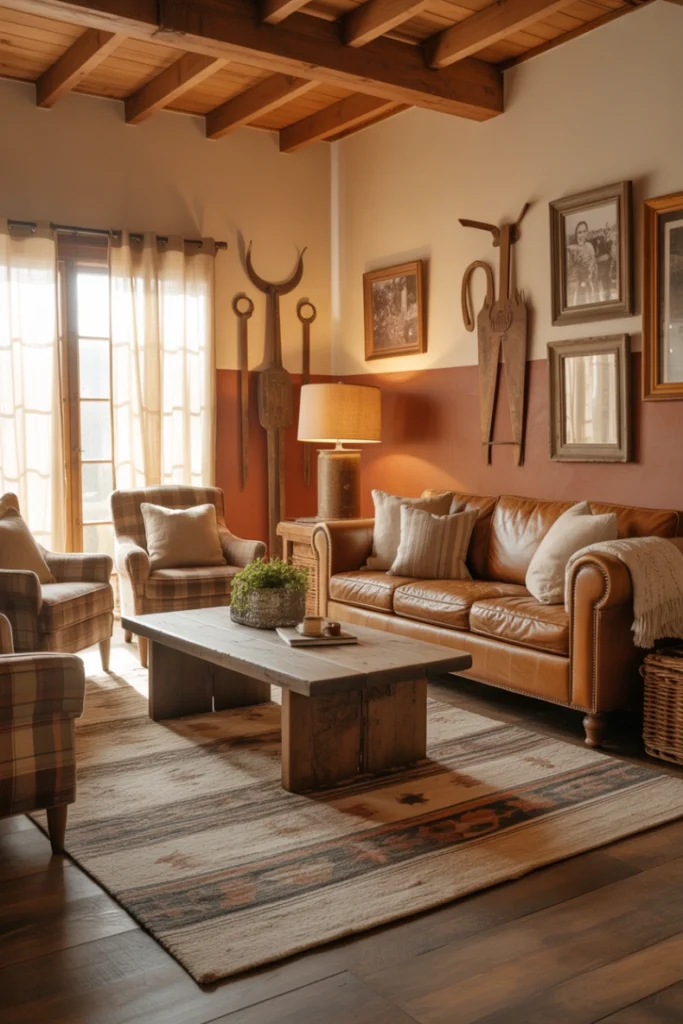
Area rugs help define seating areas and add softness to farmhouse living room ideas. Neutral or vintage-style rugs complement rustic furniture while improving comfort underfoot. The right size matters more than the pattern: the rug should be large enough that the front legs of the sofa and chairs sit on it, which usually means an 8 by 10 foot rug for a standard three-seat sofa, or a 9 by 12 foot rug for a larger sectional. A rug that is too small makes the furniture look scattered, while the right size pulls the whole seating group together into one cozy zone.
Functionally, rugs protect flooring and reduce noise. Layering rugs adds visual depth and warmth, a flat weave jute rug underneath with a smaller vintage style wool rug on top is a classic farmhouse combination that adds pattern without overwhelming the room. This design choice enhances both style and usability, especially in open-concept living rooms where the rug marks where the living room ends and the dining area begins. Choose a low pile rug if you have pets or a robot vacuum, and use a rug pad underneath to prevent slipping and to add cushioning that makes the rug feel twice as thick.
Best for: open plan rooms, hardwood floors, and defining a seating area. Watch out for: light colored rugs show dirt fast in a high traffic room, so choose a washable rug or a pattern with enough variation to hide everyday marks between cleanings.
12. Farmhouse Living Room with Built-In Storage
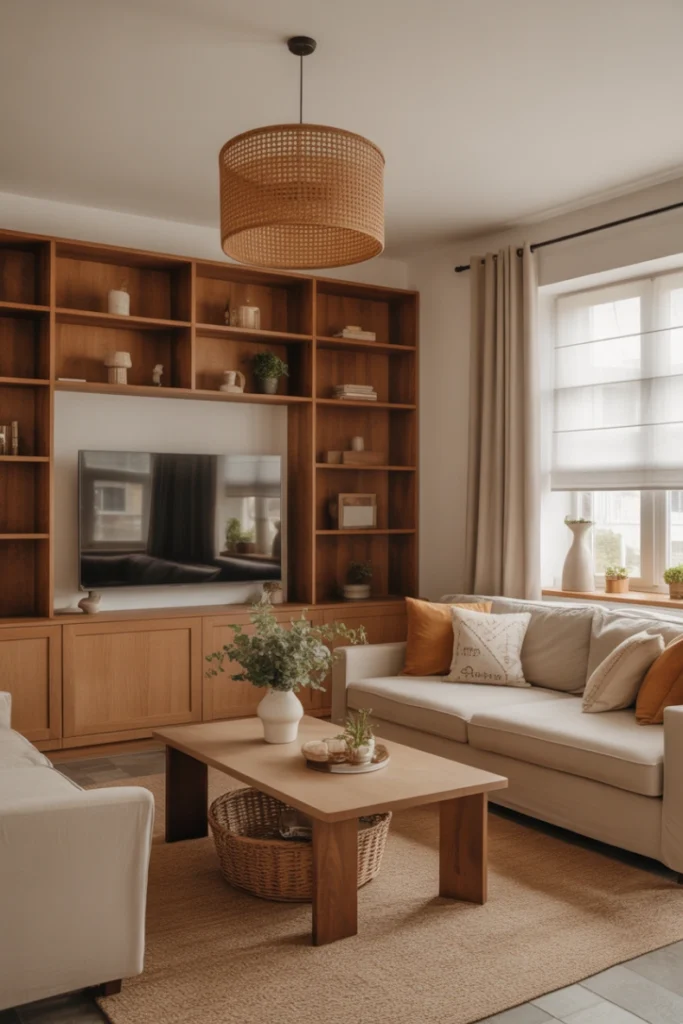
Built-in storage solutions add efficiency and organization to farmhouse living rooms. Cabinets, benches, or shelving units blend seamlessly with rustic design elements while maximizing space. Built-in window seats with storage underneath, cabinets flanking the fireplace, and a bench with cubbies by the entry are the most useful farmhouse built-ins. They use wall space that would otherwise go to waste and keep everyday items such as blankets, games, and shoes out of sight. Have them built in the same style as your trim, painted the same warm white, so they read as part of the house rather than as furniture.
Functionally, built-ins reduce clutter and improve daily usability. When finished in neutral tones or natural wood, they enhance the farmhouse aesthetic while supporting modern living needs. Plan the interior before you build: deep drawers hold throws and board games, adjustable shelves fit books and baskets, and open cubbies work for shoes and backpacks near the entry. Add a cushion to a window seat or bench and it becomes an extra reading spot. If full custom built-ins are outside your budget, a pair of matching bookcases with a wood top spanning between them gives you the same look for a fraction of the cost.
Best for: small living rooms, families with lots of stuff, and awkward wall space. Watch out for: built-ins are permanent, so measure twice and leave a few adjustable shelves in every unit so the storage can adapt as your needs change.
13. Farmhouse Living Room with Soft Textiles
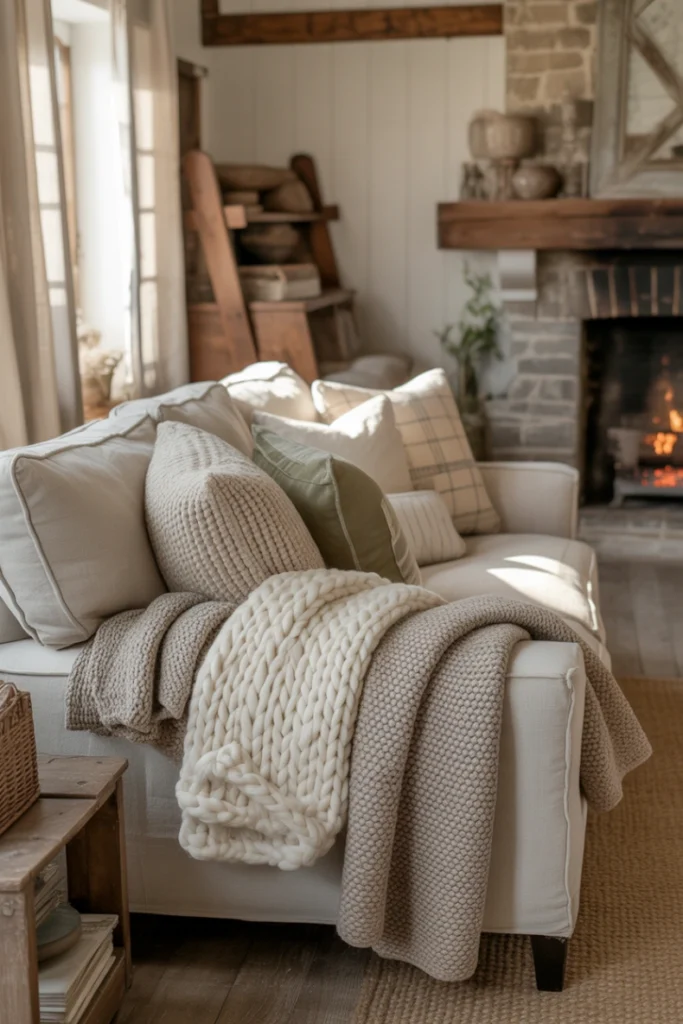
Soft textiles play a vital role in creating a cozy farmhouse living room. Throw blankets, cushions, and curtains add comfort while reinforcing the rustic-chic aesthetic. The farmhouse formula is simple: a linen or cotton sofa, two or three cushions in different textures, a chunky knit or waffle throw folded over one arm, and floor length curtains in a natural fabric. Choose curtain panels that are 1.5 to 2 times the width of the window so they gather softly, and hang the rod 4 to 6 inches above the window frame with the panels reaching the floor for a taller, more finished look.
Functionally, textiles provide warmth and adaptability throughout the seasons. Neutral fabrics with subtle patterns maintain visual harmony, and you can swap a few cushion covers and a throw to change the room for fall or spring without buying anything large. This farmhouse living room idea emphasizes comfort without sacrificing style. Mix textures rather than colors to keep the palette calm: combine linen, cotton, wool, and a touch of velvet in the same neutral family, and keep patterns small and simple, such as ticking stripes, gingham, or a faint plaid. Washable cushion covers and throws are worth the small extra cost in a room that gets daily use. For seasonal textile swaps that keep the same cozy base, our fall living room decoration ideas show which warm layers to add when the weather turns.
Best for: making a new room feel lived in fast, renters, and seasonal refreshes. Watch out for: too many cushions make a sofa uncomfortable to sit on, so limit it to three or four on a three-seat sofa and keep one throw per seating area.
14. Timeless Farmhouse Living Room Styling
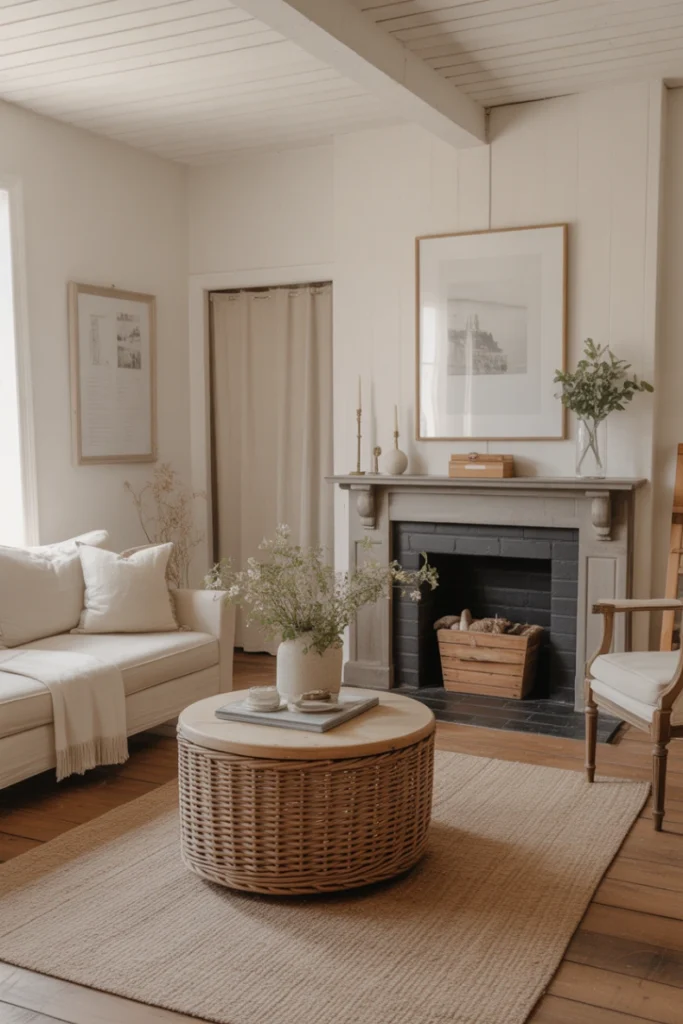
A timeless farmhouse living room focuses on balance, quality materials, and thoughtful design. Rather than following trends, this approach prioritizes longevity and comfort. The pieces that last are the simple ones: a well made sofa in a neutral fabric, a solid wood coffee table, good lighting, and natural textures. Trends such as word art, overly distressed finishes, and themed accessories date quickly, while honest materials and classic shapes still look right ten years later. If you are unsure about a piece, ask whether it would look at home in a farmhouse from fifty years ago and in a modern home today. If the answer is yes to both, it is timeless.
Functionally, timeless styling ensures the space remains relevant and adaptable over time. Neutral palettes, classic furniture, and natural textures create a living room that feels both current and enduring. This farmhouse living room idea is ideal for long-term satisfaction. Build the room in layers and buy the best quality you can afford for the items you touch every day, the sofa, the rug, and the lighting, then save on the accessories you will want to change. Leave a little empty space on every surface and wall so the room can evolve with you, and revisit the styling once a year to remove anything that no longer earns its place.
Best for: long term homes, anyone furnishing a room from scratch, and buyers who hate redecorating. Watch out for: timeless does not mean boring, so keep at least one personal or vintage piece in the room that tells your story and stops the space from looking like a showroom.
Final Thoughts
These farmhouse living room ideas offer inspiration for creating a space that feels cozy, stylish, and functional. By blending rustic charm with modern comfort, farmhouse living rooms become welcoming environments that support everyday life while maintaining timeless appeal. Thoughtful design choices ensure your living room remains both beautiful and practical for years to come.
You do not need to do everything at once. Pick the one idea that fixes your biggest frustration, whether that is a cold color palette, poor lighting, or nowhere to store the blankets, and start there. Once that change is in place, add the next layer. A farmhouse living room grows best one thoughtful piece at a time, and the rooms that feel most welcoming are the ones that were built slowly, with pieces chosen for comfort and for the life that happens in them. For a cleaner, more edited version of the same warm look, take a look at our modern living room ideas and borrow the layout ideas that fit your space.
Frequently Asked Questions
What colors work best in a farmhouse living room?
Warm whites, creams, soft grays, and greige form the best farmhouse base, because they reflect light, suit natural wood, and let textures do the talking. Add contrast with one darker accent such as charcoal, deep green, or black hardware, and keep the palette to three neutrals so the room stays calm. Avoid cool stark whites, which can feel cold under LED lighting.
How can I make my farmhouse living room cozy on a budget?
Start with textiles and lighting, which give the biggest change for the least money. Add a chunky throw and two textured cushions to the sofa, layer a soft rug over your existing floor, and swap cool bulbs for warm white ones on dimmers. Then add one thrifted vintage piece, such as a wooden crate or an old mirror, for character. You can transform the feel of the room for under 150 dollars before touching paint or furniture.
What is the difference between farmhouse and modern farmhouse style?
Traditional farmhouse leans rustic and layered, with distressed wood, vintage finds, and lots of texture. Modern farmhouse keeps the same warmth and natural materials but edits the look down: cleaner lines, less decor, stronger contrast with black metal accents, and uncluttered surfaces. Choose traditional farmhouse if you love collecting and layering, and modern farmhouse if you prefer a calmer, more open feel.
Can farmhouse style work in a small living room?
Yes, and it often works better than bolder styles, because the light neutral palette and natural textures make a small room feel open. Use a light rug large enough for the sofa legs, hang curtains high to make the ceiling feel taller, and choose furniture with visible legs so you can see the floor underneath. Skip heavy beams and dark wood, and use built-in storage and open shelving to keep clutter off the floor.
How do I mix farmhouse style with my existing furniture?
Keep your largest piece, usually the sofa, and change what surrounds it. Add a wood coffee table, a linen throw, and a couple of textured cushions to pull the room toward farmhouse, and swap metal or glass accessories for wood, ceramic, and woven pieces. You do not need to replace everything at once. One wood tone, one natural textile, and a warm light are enough to shift the whole room, and you can replace the remaining pieces over time.
More Ideas You Will Love
 17 Open Floor Plan Ideas for Smart Living Spaces
 13 Interior Design Tricks to Maximize Natural Light This Summer
 21 Modern Living Room Ideas for Luxurious and Cozy Vibes
 15 Modern Living Room Wall Color Ideas You’ll Love
 24 Stunning Accent Wall Ideas That’ll Instantly Elevate Your Living Room
 21 Minimalist Living Room Ideas for a Modern & Serene Look