
22 Living Room Remodel Ideas for 2026 – Modern, Stylish & Budget-Friendly

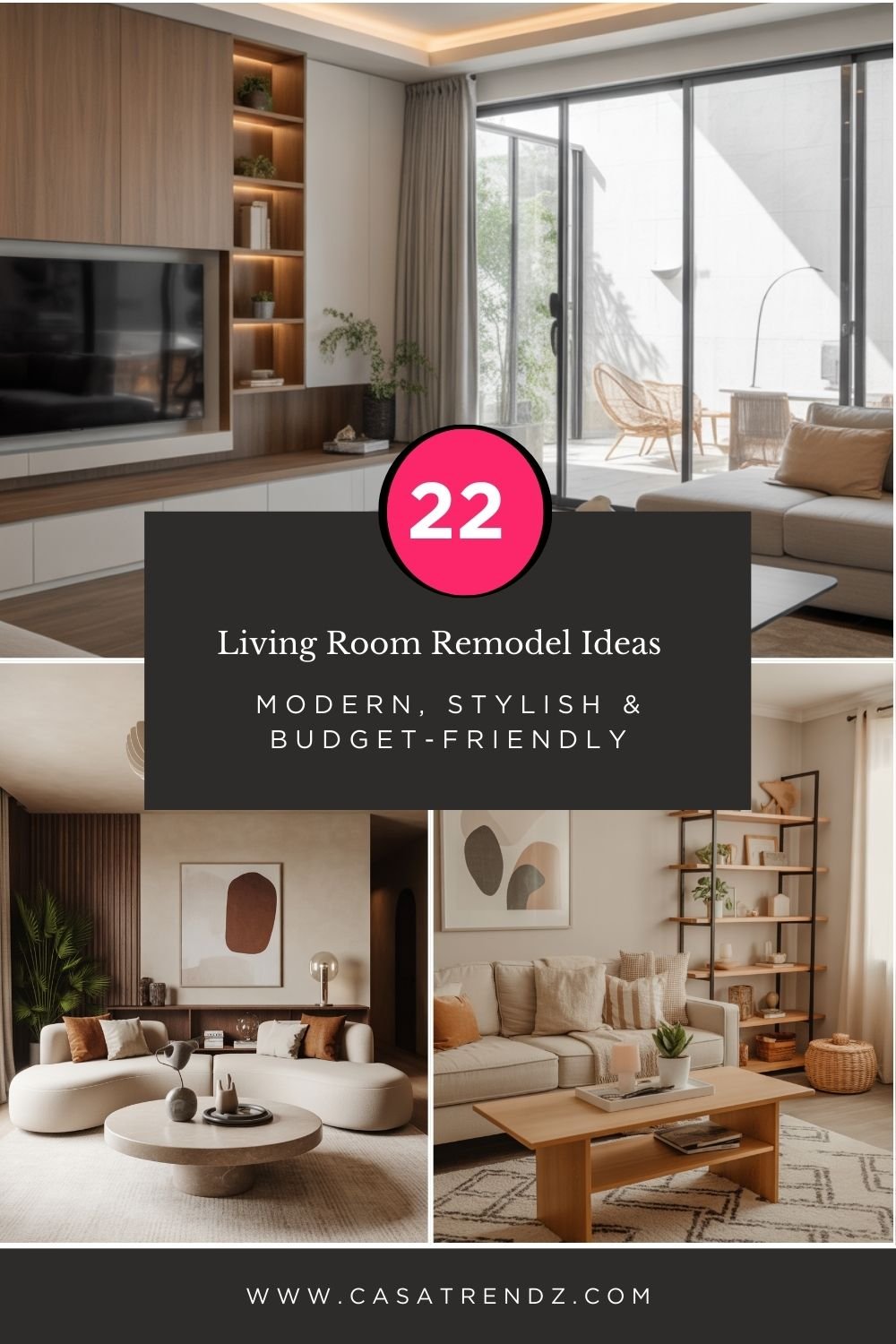
Remodeling a living room does not have to mean gutting the whole space or spending a fortune. In many homes, the biggest change comes from a few smart decisions: a better layout, layered lighting, one strong focal point, and materials that feel good to live with every day. This guide brings together 22 living room remodel ideas that work in real homes, from small apartments to large open plan spaces, and from quick weekend updates to full renovations.
Each idea below includes practical detail you can actually use: typical measurements, materials worth choosing, budget friendly alternatives, and the mistakes to avoid. Start with the one change that solves your biggest daily frustration, whether that is poor light, not enough storage, a room that feels cold, or a layout that never quite works for guests. Then layer in a second or third idea for a room that looks intentional, not patched together.
Before you buy anything, measure your room, note where the natural light falls during the day, and decide on one color palette to carry through the whole space. A remodel feels cohesive when the rug, the wall color, the lighting temperature, and the largest piece of furniture all speak the same language. The ideas below show you how to get that result, room by room and step by step.
1. Open-Concept Living Transformation

Removing a non load bearing wall between the living room and the kitchen or dining area is one of the most transformative remodels you can make. It lets daylight travel further, makes a small home feel much larger, and makes entertaining far easier because the cook is no longer cut off from guests. Before any demolition, have a contractor confirm whether the wall is load bearing. If it is, a steel beam or a wide cased opening can still give you most of the open feel safely.
Once the wall is open, define zones so the room does not feel like one empty box. A rug sized at least 8 by 10 feet anchors the seating area, a pendant light over the dining table marks that zone, and a console or open shelving unit can act as a soft divider without blocking sightlines. Keep one consistent flooring material running through all zones, and repeat two or three colors across the spaces so the eye reads the whole area as one designed room. For more whole home inspiration, see these bedroom remodel ideas that use the same zone by zone thinking.
Practical tip: leave at least 36 inches of clear walkway around seating and dining furniture, and keep the main traffic path away from the television viewing line. If noise travels too easily in an open plan, add soft surfaces such as curtains, an upholstered sofa, and a thick rug, which absorb sound far better than hard floors and bare walls alone.
If you are opening a wall yourself, budget for the hidden costs too: patching floors where the wall stood, moving electrical outlets, repainting both rooms, and repairing the ceiling line. These finishing costs often add 20 to 30 percent to the demolition quote, so get them priced before you start.
2. Statement Ceiling Design
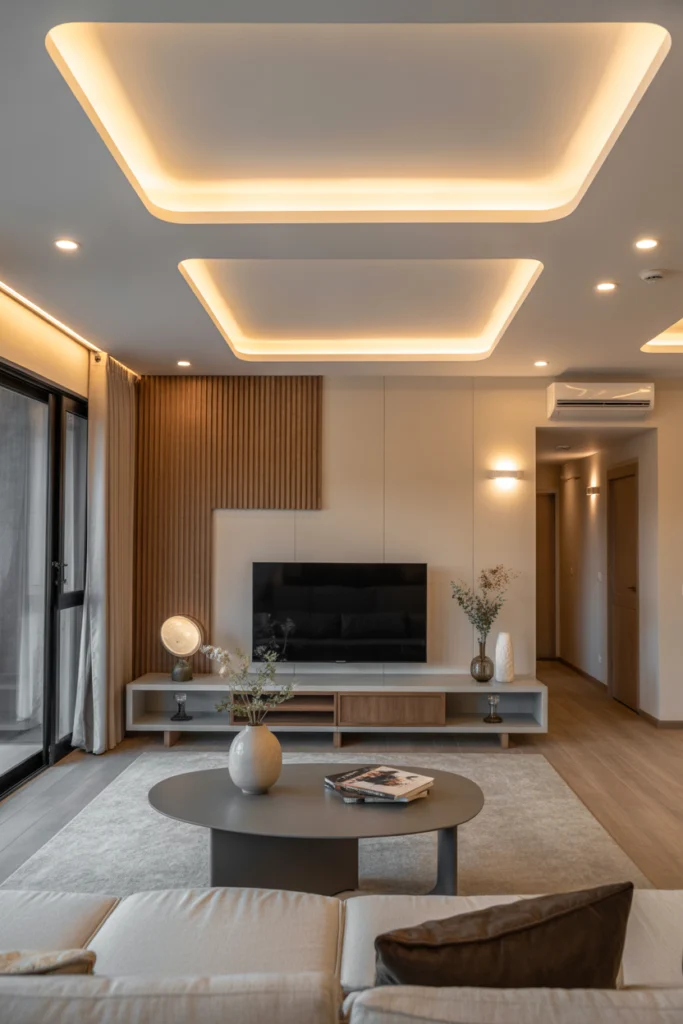
The ceiling is the largest surface most homeowners ignore, yet it sets the whole mood of the room. A statement ceiling can be as simple as painting it a soft contrasting color, or as dramatic as wood beams, coffered panels, or a geometric trim pattern. In a standard 8 foot ceiling room, keep beams slim, about 4 to 6 inches deep, so the room still feels tall. In rooms with 9 feet or more, deeper beams and layered molding look properly scaled.
For a budget friendly version, paint the ceiling in a color two shades darker than the walls, or add lightweight polyurethane beams that look like wood but cost far less and are easy to install. If you want a modern glow, run a dimmable LED strip in a recessed channel around the ceiling edge. Choose warm white light at 2700K to 3000K for living rooms, and put the strip on its own dimmer so you can shift from bright daytime light to a soft evening glow.
Avoid hanging a large chandelier lower than 7 feet above the floor in a walkway, and avoid heavy dark beams in a low, north facing room where they can make the space feel smaller. Test a paint color on a 2 foot square patch first, because ceiling color always looks darker once it covers the whole surface.
When you plan a ceiling project, start with the lighting layout, not the decoration. Mark where recessed lights, pendants, and fans will go, and check that beams or trim will not clash with them. A ceiling design that ignores light placement often ends up with a beam crossing a light fixture or a pendant hanging at the wrong height, and fixing that after installation is expensive.
3. Earthy Tones and Organic Materials

Earthy palettes work because they are easy to live with: warm beige, sand, clay, soft brown, olive, and muted sage calm a room without making it dull. Start with warm white or light greige walls, then add the deeper earth tones through the rug, sofa cushions, throws, and artwork. A good rule is 60 percent light neutrals, 30 percent mid earth tones, and 10 percent darker accents such as walnut wood or deep olive.
Organic materials give this palette its texture. Choose a jute or wool rug, linen or cotton upholstery, rattan baskets, reclaimed wood shelves, and stone or ceramic accessories. Mix at least three textures in one seating area, for example a smooth leather chair, a nubby wool throw, and a woven basket, so the neutral colors do not fall flat. Natural materials also age well: linen softens, wood gains character, and wool holds up to daily use if you vacuum it weekly and treat spills quickly.
Keep the look grounded by avoiding too many small earth toned accessories scattered around the room. Group them instead: one large wooden bowl, one tall vase with dried stems, and one woven basket for blankets will read as intentional, while ten tiny items on every surface will read as clutter.
Earthy rooms also suit handmade pieces well, because slight imperfections in ceramics, wood, and woven baskets add character that factory perfect items lack. One handmade vase or bowl, placed where it catches daylight, will do more for the room than a shelf full of identical accessories.
4. Minimalist Modern Redesign
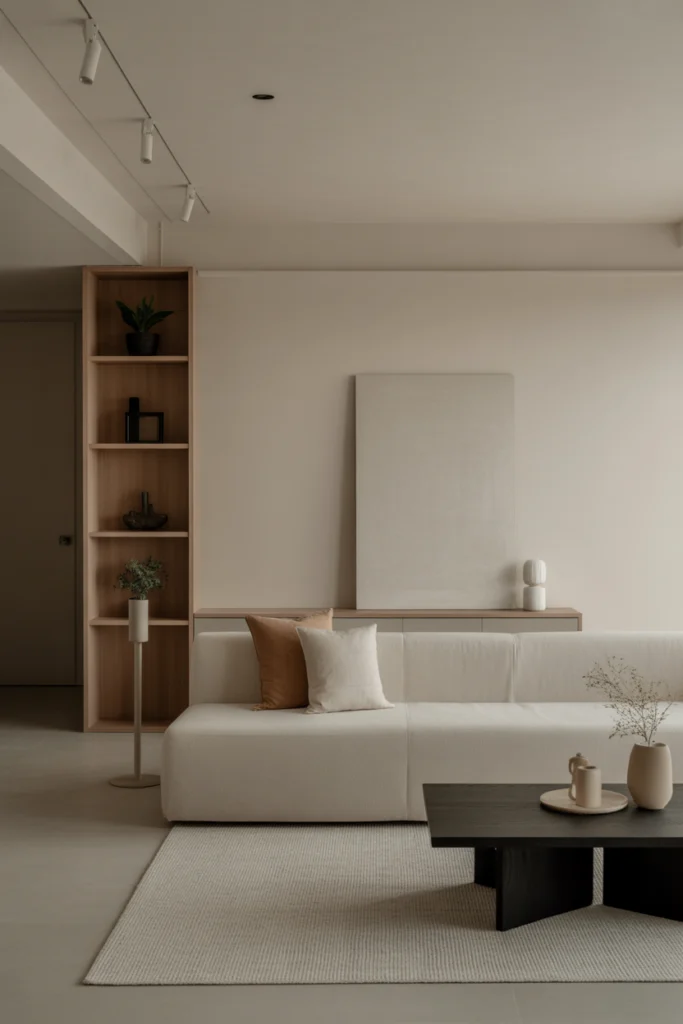
Minimalism is not about owning nothing. It is about choosing fewer, better pieces and giving each one room to breathe. Start by removing everything that does not serve a purpose or bring you real pleasure, then keep only furniture with clean lines: a low profile sofa, a slim media console, and one sculptural coffee table. Leave at least a few inches of empty wall and floor around each large piece so the room feels calm rather than crowded.
Storage is what makes minimalism livable. Choose a media console with closed doors, a coffee table with a lower shelf or drawer, and side tables with a small drawer for remotes and chargers. Hide cables in a cord channel painted to match the wall, and keep daily items in one lidded basket per seating area. A minimalist room still needs warmth, so add it through texture rather than objects: a wool throw, a bouclé cushion, a wooden tray, and a single large plant.
The most common mistake is buying everything in the same flat white or gray, which makes the room feel cold. Layer warm whites, light wood, and one soft accent color, and vary the finishes between matte, woven, and smooth so the simplicity feels rich, not empty.
To keep a minimalist room from feeling bare over time, allow one personal display area, such as a single shelf with three meaningful objects, while keeping the rest of the room clear. This gives the room character without breaking the calm, and it gives you a place to rotate seasonal items without cluttering every surface.
5. Smart Lighting Upgrades
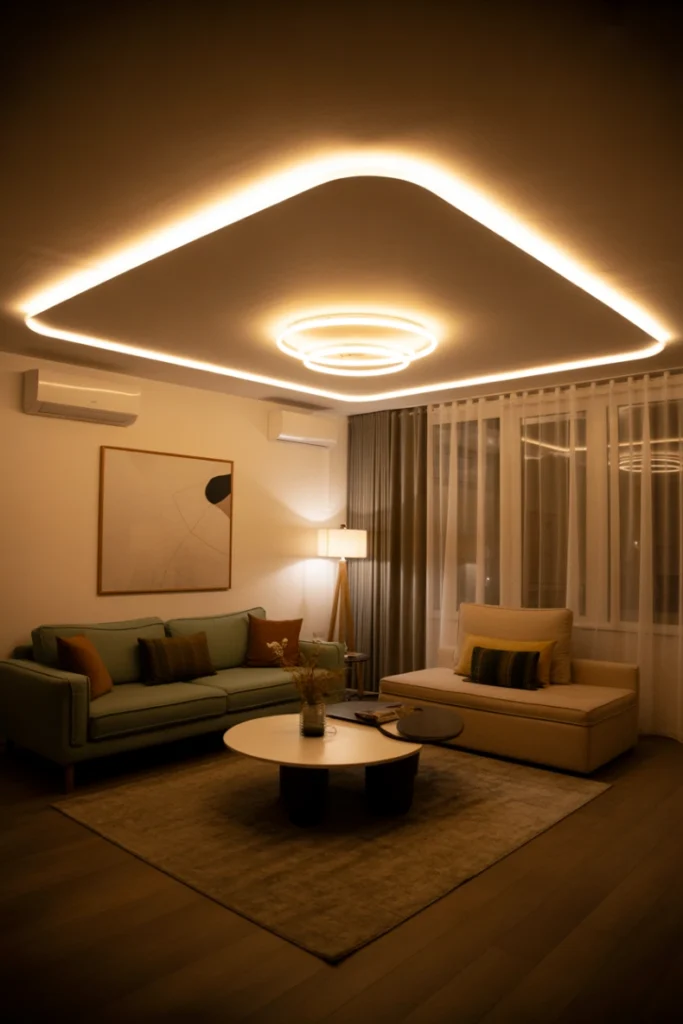
Good living room lighting is layered, not a single ceiling fixture. Aim for three layers: ambient light from the ceiling, task light from floor and table lamps, and accent light that highlights art, shelves, or architectural details. A room about 15 by 18 feet usually needs one central ceiling light plus two lamps and one accent source to feel evenly lit without harsh shadows.
Smart bulbs and dimmers make this easy to control. Set a bright scene at 100 percent for cleaning and daytime use, a relaxed scene at about 50 percent warm light for evenings, and a movie scene at 20 percent with only accent lights on. Place floor lamps beside reading chairs, with the shade bottom about 48 inches from the floor, so light falls on the book rather than in your eyes. Add LED strips behind the television or under floating shelves for a soft glow that reduces eye strain in the evening.
Keep all bulbs in the room at a similar color temperature, ideally 2700K to 3000K, because mixing cool white and warm white bulbs makes even a beautiful room look mismatched. Put lamps on smart plugs or dimmers so you never have to choose between a fully bright room and a fully dark one.
When you buy smart bulbs, check that they work with the switches you already have, and keep one traditional switch in the room for guests. Smart lighting that only works from an app frustrates visitors, while a simple dimmer switch plus smart bulbs gives everyone an easy option.
6. Feature Wall Makeover
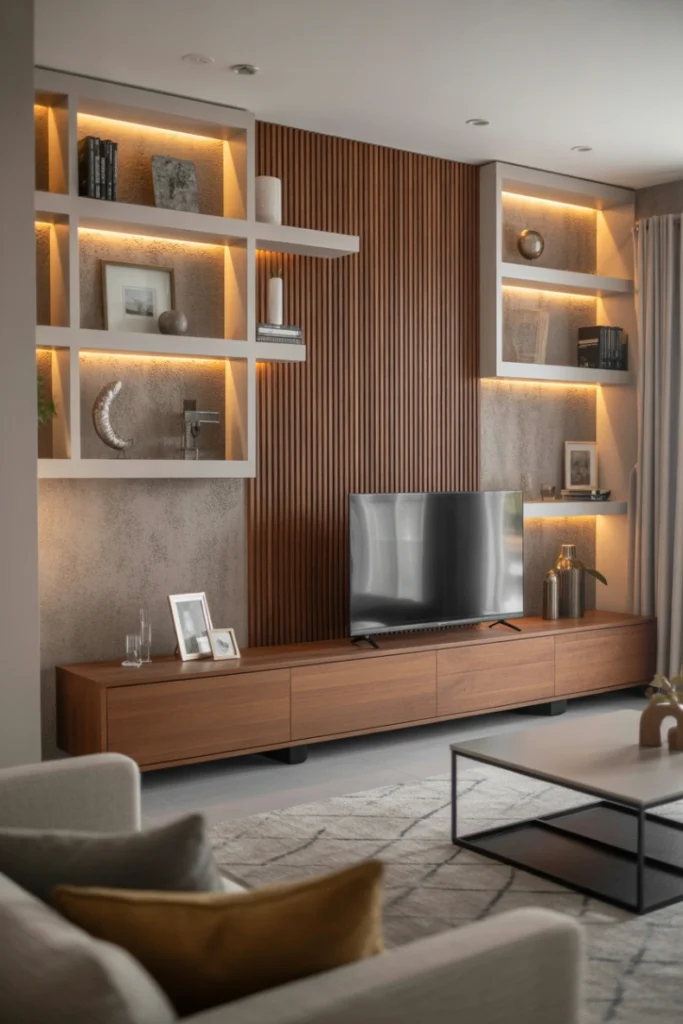
A feature wall gives the eye a place to land and lets the rest of the room stay calm. The wall behind the sofa or the television is usually the best candidate. Popular materials include vertical wood slats, stone cladding, limewash paint, and bold patterned wallpaper. Wood slats spaced about half an inch apart, in a warm oak or walnut tone, add rhythm and warmth without overwhelming the room.
Measure first: a feature wall works best when the treatment runs wall to wall and floor to ceiling, with no awkward gaps at the edges. If you use wallpaper, order one extra roll for pattern matching, and paste it on a smooth, primed wall for a clean result. For a budget version, peel and stick wood planks or a single bold paint color can transform the wall in a weekend for a fraction of the cost of stone or paneling.
Keep furniture and art on a feature wall simple. A low console, one large piece of art, or a pair of sconces is enough. If the wall already carries a television, choose a quieter texture such as limewash or subtle paneling so the screen does not compete with a loud pattern.
Before you order materials, make a full scale paper template of the feature wall treatment and tape it in place for a day. This simple test shows whether a bold pattern feels exciting or overwhelming at full size, and whether the treatment works with your sofa height and television placement, before you spend money or make holes.
7. Cozy Modern Farmhouse Redesign
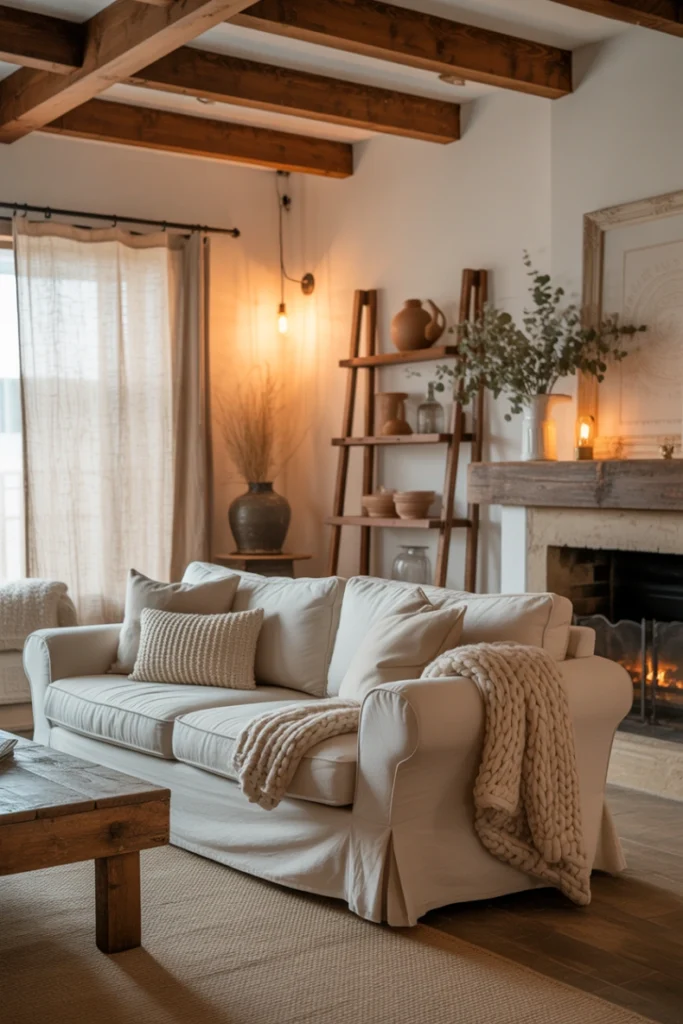
Modern farmhouse blends rustic warmth with clean, current lines. Think light slipcovered sofas, a chunky wooden coffee table, woven baskets, shiplap or beadboard on one wall, and warm metal lighting, all kept tidy by a neutral palette and uncluttered surfaces. The modern part matters: without it, the style can quickly feel dated or overly themed.
Start with a warm white wall color, natural wood tones, and black or bronze hardware for contrast. Add texture with a chunky knit throw, a jute rug, and linen cushions in cream, sage, or soft rust. One statement piece, such as a farmhouse chandelier over the coffee table or a reclaimed wood mantel, carries the style, while the rest of the room stays simple. Avoid filling every surface with vintage signs and small farmhouse accessories, which dilute the look.
This style suits families well because slipcovers wash easily, wood hides wear, and baskets keep toys and blankets out of sight. Choose performance fabrics for the sofa if you have pets or young children, and pick a rug with a low pile that is easy to vacuum.
Modern farmhouse lighting should stay warm and soft. Choose bronze or black metal fixtures with warm bulbs, avoid harsh cool white light, and add a table lamp with a linen shade beside the sofa. The shade diffuses light and adds the soft glow that makes farmhouse rooms feel cozy at night.
8. Built-In Storage and Shelving
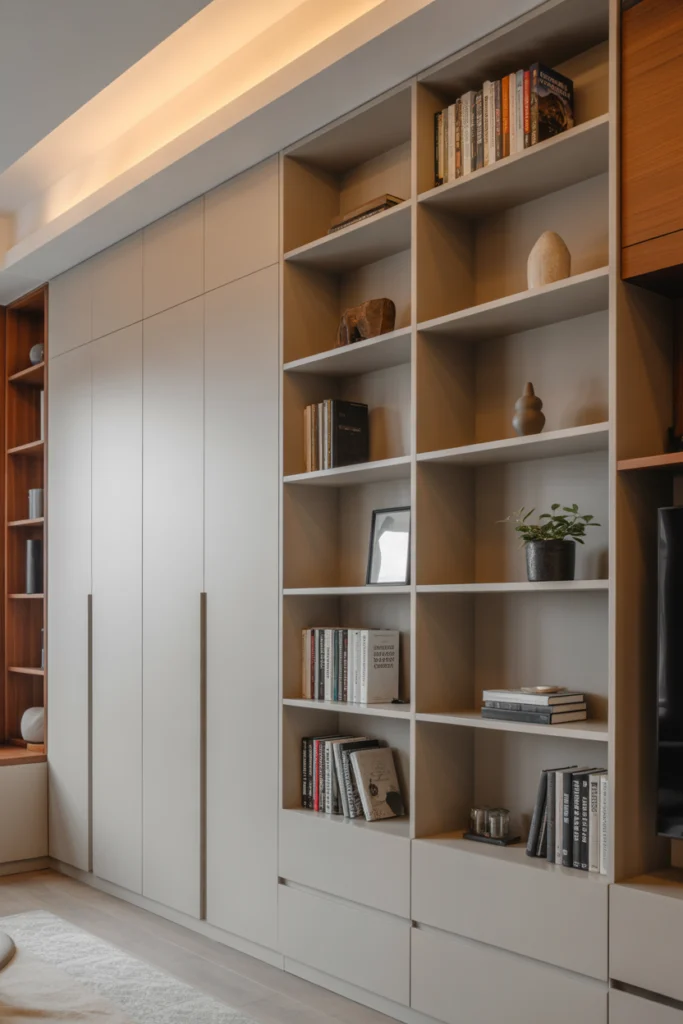
Built in storage is the difference between a room that looks tidy on day one and a room that stays tidy. Custom shelving around the television, a wall of cabinets beside the fireplace, or recessed niches in a hallway wall give books, games, and electronics a permanent home. Measure your largest items first, then design shelf heights around them: about 12 inches for most books, 15 inches for large art books, and at least 18 inches of clear depth for a media console.
For a lower cost version, flank a freestanding bookcase with trim and paint it the same color as the wall, and add a top board to bridge the gap to the ceiling. This built in look costs far less than full carpentry and can be done in a weekend. Add LED strip lighting inside open shelves, set on a dimmer, to highlight decor and make the unit feel like furniture rather than storage.
Leave about 20 percent of open shelf space empty. Shelves packed edge to edge look like a warehouse, while shelves with breathing room, grouped books, one vase, and one framed photo per section, look curated and calm.
If full built ins are out of budget, start with one wall only, usually the television wall, and use matching freestanding units on the other walls. Painted the same color and topped with a continuous board, they read as a set, and you can add true built ins later without redoing the whole room.
9. Scandinavian-Inspired Update
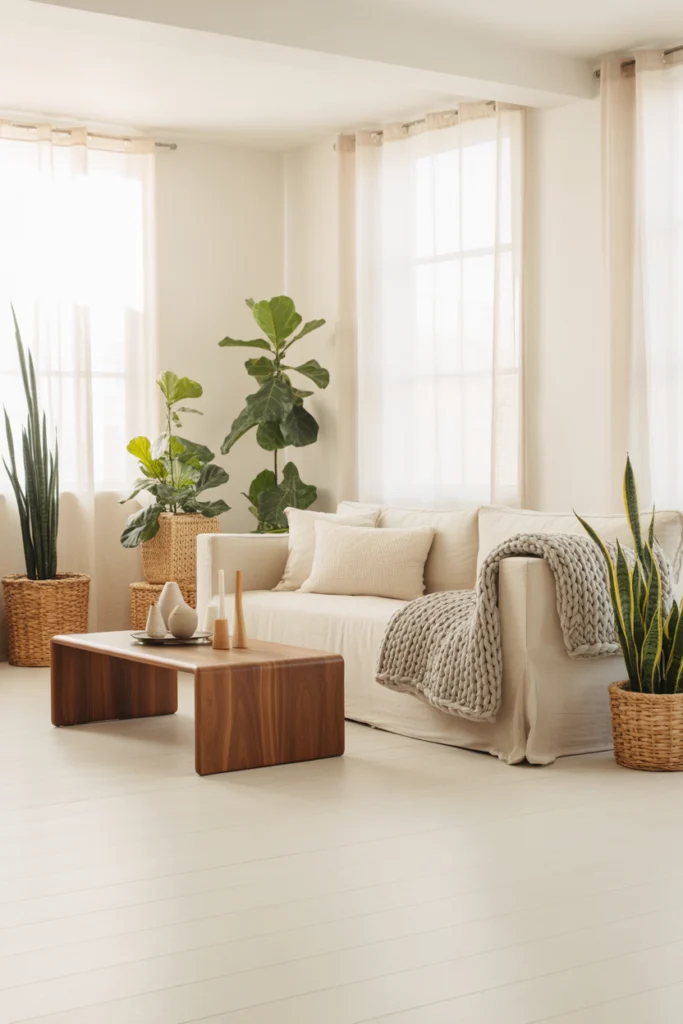
Scandinavian design is built on light, natural materials, and comfort. White or pale gray walls, light oak floors, simple furniture, and soft textiles make even a small room feel bright and airy. If your room gets little natural light, this style is especially effective: sheer white curtains, mirrors opposite windows, and light colored furniture all bounce light around the space.
Layer warmth with wool blankets, cotton cushions, a sheepskin throw over an armchair, and a thick woven rug. Add plants in simple terracotta or white pots for color and life, and choose wood in pale tones such as ash, birch, or white oak rather than dark walnut. Keep decor minimal and functional: a beautiful candle, a wooden tray, and one or two art prints are enough.
Scandinavian rooms benefit from a weekly reset routine more than from extra decor. Because the style relies on clear surfaces, spend ten minutes each weekend returning items to their homes, fluffing cushions, and wiping light wood surfaces. That small habit keeps the bright, airy feeling that makes the style work.
The key is balance. Pure white rooms can feel cold, so add at least one warm element, such as a tan leather chair or a honey toned wood coffee table, and use warm white bulbs at 2700K rather than cool daylight bulbs.
10. Industrial Modern Living Room

Industrial modern style pairs raw textures with comfortable, refined furniture. Exposed brick, black metal frames, concrete look surfaces, and open shelving give the room character, while plush sofas, warm lighting, and natural wood keep it livable. If you do not have real brick, a brick veneer panel on one wall gives the same effect for much less work.
Balance is essential. Pair a metal framed coffee table with a soft fabric sofa, a concrete look side table with a warm wool rug, and dark charcoal walls with light wood accents. Use warm Edison style bulbs in metal pendant lights, and add greenery to soften the harder materials. In a traditional home, you do not need a full loft conversion: one industrial element, such as black metal shelving or a factory style floor lamp, can give the flavor without a full remodel.
Avoid going too dark. If walls, sofa, and rug are all charcoal or black, the room will feel heavy. Keep at least one large light surface, such as a cream sofa or a light rug, and make sure task lighting is generous so the room never feels like a cave.
Industrial style works best when the raw materials look genuine, even if they are reproductions. A thin fake brick sticker or a plastic metal look panel will undermine the whole room, while a solid wood shelf on real black metal brackets, or one genuine reclaimed timber beam, will carry the style convincingly.
11. Multifunctional Living Room Layout
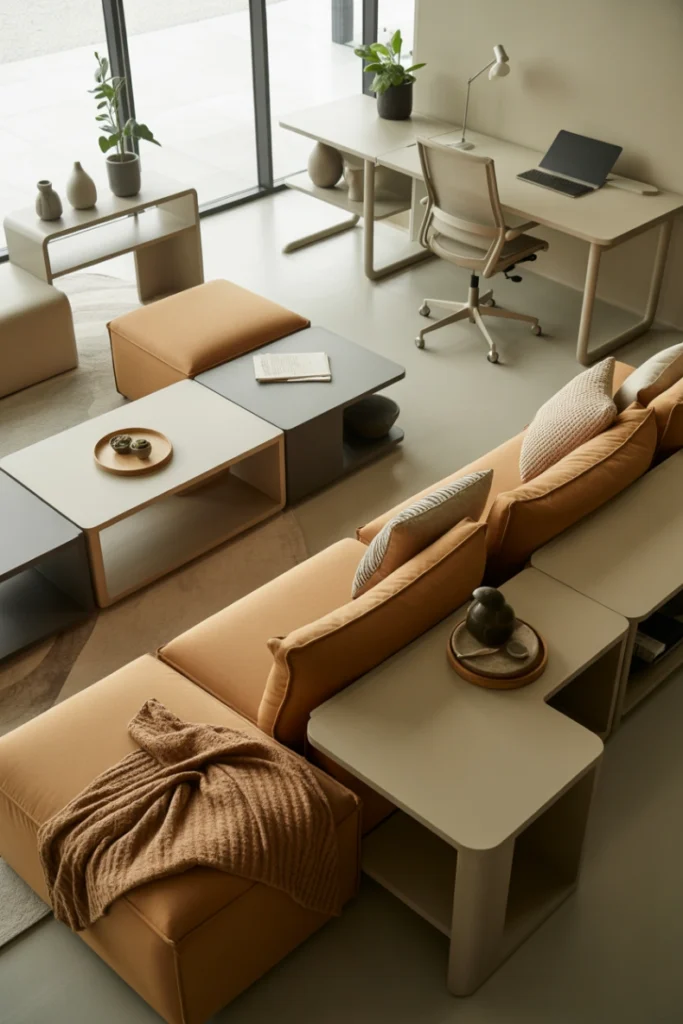
Most living rooms now have to do more than host guests. They serve as a home office, a play area, a reading nook, and a movie room, often in the same day. The trick is zoning without building walls. Use a rug to mark the seating area, a different light source to mark the work corner, and a bookcase turned sideways as a soft divider between zones.
Choose furniture that works twice: a storage ottoman that holds blankets and serves as extra seating, a console table that doubles as a desk, a sofa bed for overnight guests, and nesting tables that spread out for a party and tuck away afterward. A fold down desk mounted on the wall gives you a real workspace that disappears when the workday ends. Keep each zone to a clear footprint, and leave a 30 to 36 inch path between zones so the room never feels like an obstacle course.
A multifunctional room needs a clear end of day routine, otherwise work papers and toys slowly take over the seating area. Use one basket per zone, and spend five minutes each evening returning items to their zone. That small habit is what keeps a flexible room feeling like a living room, not a storage room.
This layout works especially well in smaller homes. For more small space ideas, see these small apartment living room ideas that use the same flexible furniture approach.
12. Bold Color Accents Remodel
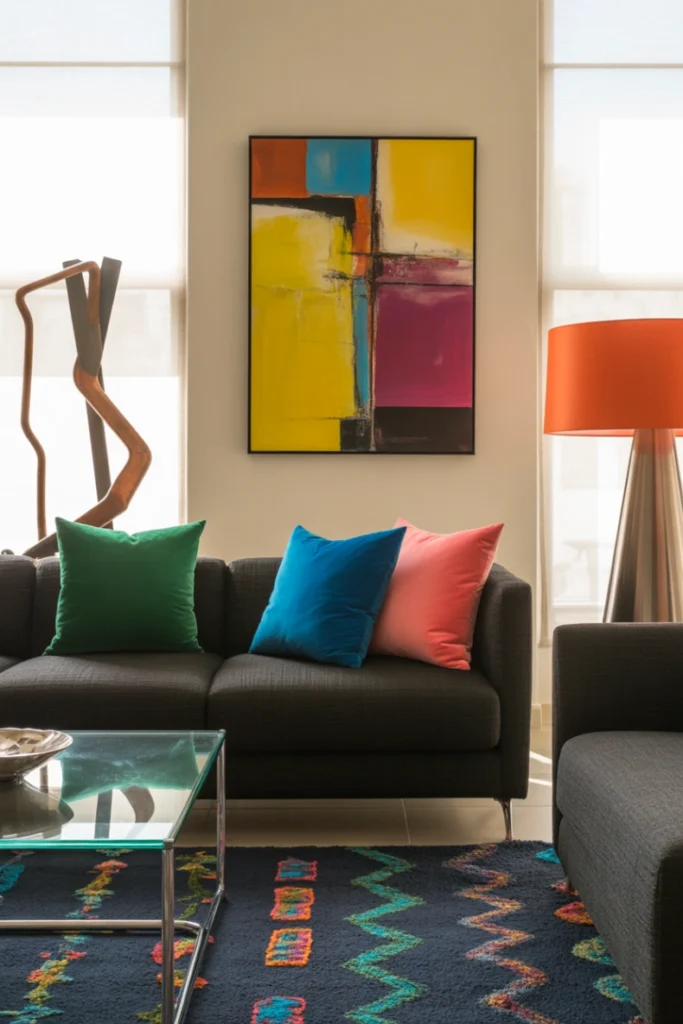
Bold color is easiest to live with when it arrives in accents rather than on every wall. Choose one or two strong colors, such as deep teal, terracotta, mustard, or emerald, and repeat each one at least three times in the room: a cushion, a throw, and a piece of art, for example. That repetition makes the color feel intentional instead of random.
Start with the largest accent first. A bold sofa is a commitment, while bold cushions, a rug, or curtains are easy to change with the seasons. If you paint an accent wall, pick the wall you see first when you enter the room, and test the color in both daylight and evening light before committing. Pair bold colors with a calm base of warm white, light gray, or natural wood so the room feels lively, not loud.
A practical rule: keep bold color to about 10 to 20 percent of the room. Above that, even a beautiful color can feel tiring. If you love a very strong shade, use it in a smaller dose, such as a single armchair or a set of artwork frames, and let neutrals carry the rest.
Test bold accents in daylight and in evening light before you commit, because strong colors shift dramatically under warm bulbs. A teal that looks fresh at noon can look almost black at night, and a mustard that looks cheerful in the store can look muddy under dim lighting. Live with a large fabric swatch for a few days first.
13. Luxurious Velvet and Plush Finishes
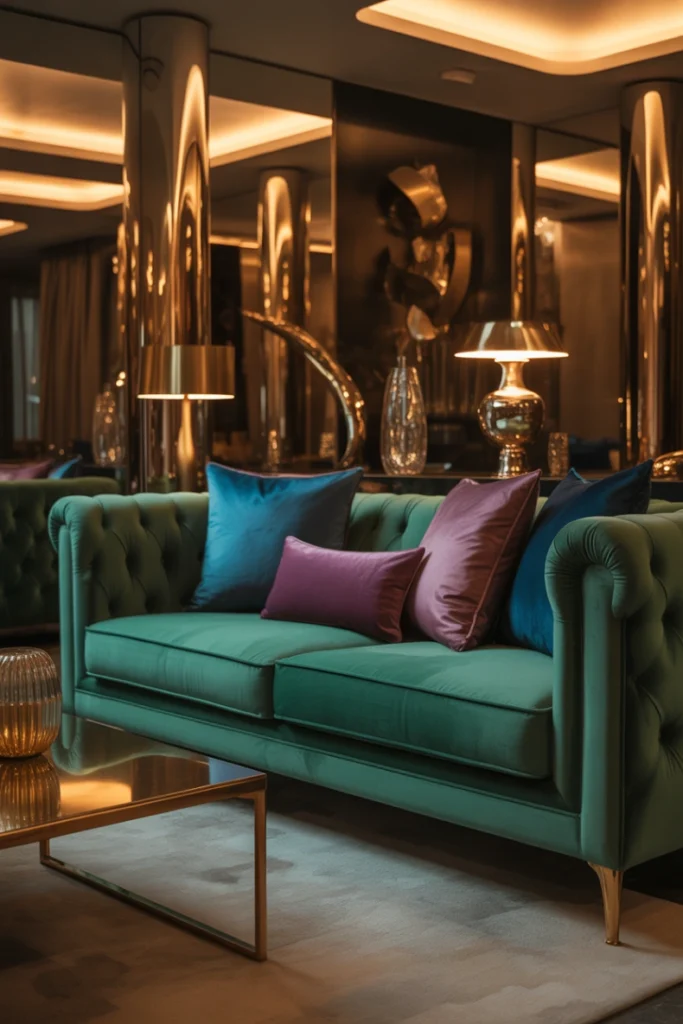
Velvet instantly signals luxury, and it is more practical than many people expect. Modern performance velvet resists stains and wears well, especially in deeper jewel tones such as emerald, navy, or burgundy. A velvet sofa in one of these colors becomes the focal point of the room, so keep the surrounding palette calm: warm white walls, a neutral rug, and brass or gold accents.
Use velvet in layers rather than all at once. A velvet sofa with linen cushions, a plush ottoman, and one velvet armchair gives richness without making the room feel like a theater set. Pair velvet with metal, glass, or marble for contrast, and add soft lighting so the fabric catches the light and shows its depth. Brush velvet weekly with a soft clothes brush, and steam it lightly to remove creases after delivery.
Velvet and plush fabrics need a little routine care to stay luxurious. Keep them out of direct sunlight, which fades jewel tones over time, vacuum with an upholstery attachment weekly, and deal with spills by blotting, never rubbing, with a clean damp cloth. With that care, a good velvet piece can look new for many years.
If a full velvet sofa feels like too much, start with velvet cushions or a single accent chair. You get the luxurious texture at a lower cost, and you can test whether the fabric suits your household before committing to a larger piece.
14. Eco-Friendly Remodel Choices

An eco friendly remodel is mostly about choosing materials that last and finishes that are healthier to live with. Low VOC paint, which releases far fewer fumes than standard paint, is an easy first step and costs only slightly more. Reclaimed wood, bamboo flooring, organic cotton upholstery, and furniture made from recycled materials all reduce waste while adding character.
Energy efficiency matters too. LED bulbs use about 75 percent less energy than old incandescent bulbs, and a smart thermostat can cut heating and cooling waste in a room that is often over heated or over cooled. Before buying new furniture, consider upcycling: repainting a solid wood console, reupholstering a well made chair, or refinishing a coffee table often gives a better result than a cheap new piece, and keeps good furniture out of landfill.
Add plants for a natural finish. Pothos, snake plants, and peace lilies are forgiving for beginners, improve the feel of the room, and need only indirect light and weekly watering. Group three plants of different heights in one corner for a lush effect without filling the room with pots.
When you choose eco friendly products, check the label rather than the marketing claim. Look for specific certifications, recycled content percentages, and low VOC ratings in grams per liter, and be wary of vague words such as natural or green with no detail behind them. A genuinely sustainable product will state exactly what makes it so.
15. Artistic and Gallery Wall Designs
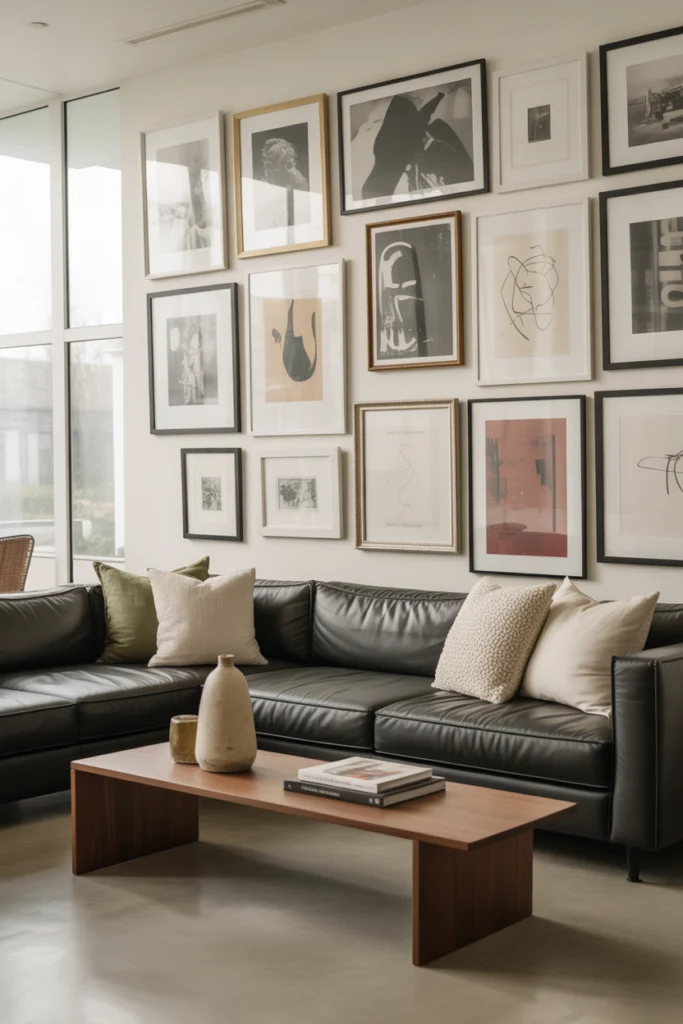
A gallery wall turns a blank wall into a personal statement, and it costs far less than a full remodel. Start by choosing a theme: family photos in matching frames, a mix of art prints in one color family, or a travel collection. Lay the arrangement on the floor first, and photograph it, before you hang anything. Keep about 2 to 3 inches between frames for a tidy look, and hang the center of the arrangement at eye level, about 57 to 60 inches from the floor.
For a clean look, use frames in one finish and one or two sizes. For an eclectic look, mix frame styles but keep a consistent mat color, usually white or cream, so the collection still feels connected. Include one large piece, at least 16 by 20 inches, as an anchor, and build smaller pieces around it. A picture ledge is a flexible alternative: you can swap art without new holes, which is ideal for renters.
Leave the wall color quiet. A soft neutral lets the art stand out, while a bold wall color can compete with the frames. If your gallery wall sits above a sofa, keep its total width to about two thirds of the sofa width so it looks properly scaled.
Gallery walls are easier to update if you plan for change from the start. Use picture hanging strips for lighter frames, or a ledge system, so you can swap a print for a new one without patching holes. Keep a small box of spare frames and mats, so a new piece can join the wall in minutes rather than waiting for a full rehang.
16. Textured Rugs and Layered Flooring
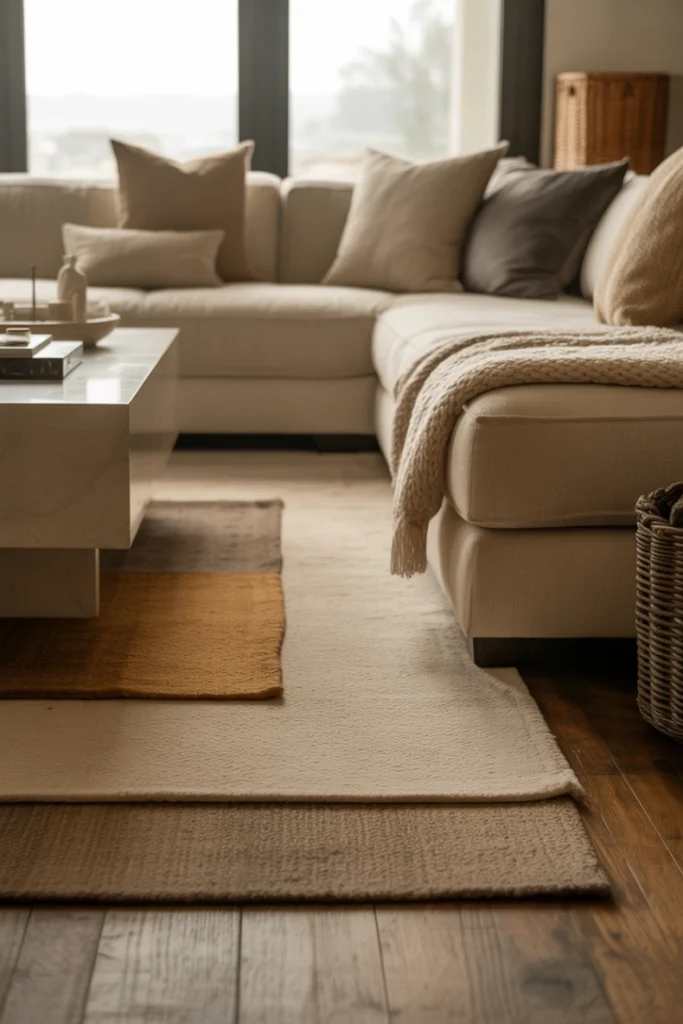
Rugs do more than warm a floor: they define zones, absorb sound, and add the texture that makes a neutral room feel finished. In a seating area, the rug should be large enough that the front legs of the sofa and chairs sit on it. For most living rooms that means at least 8 by 10 feet, and for larger rooms 9 by 12 feet. A rug that is too small is the single most common living room mistake, and it makes even expensive furniture look disconnected.
Layering adds depth: place a large natural fiber rug, such as jute or sisal, as the base, then layer a smaller patterned wool rug on top, offset toward the seating. The base rug should extend at least 12 inches beyond the top rug on all sides. Choose low pile rugs for high traffic areas and homes with pets, because they are easier to vacuum and less likely to trap dirt.
Keep rug colors in the same family as your sofa and curtains, and let the pattern carry the interest. If your sofa is patterned, choose a solid rug. If your sofa is solid, a patterned rug can become the room’s artwork. Clean spills immediately, rotate the rug every six months for even wear, and use a rug pad to prevent slipping and to add cushioning.
For homes with pets, choose rugs with a tight weave and a pattern that hides hair and dirt between vacuums. Wool and indoor outdoor polypropylene rugs both clean well, and a darker border pattern will disguise wear at the edges, which is where rugs usually show age first.
17. Curved Furniture and Soft Lines

Curved furniture softens a room instantly. A rounded sofa, a barrel armchair, or an oval coffee table breaks up the straight lines of walls, televisions, and shelving, and makes the room feel welcoming. Curves also improve flow: there are no sharp corners to bump into in a narrow walkway, and conversation feels more natural when seating curves gently toward the center.
Use curves as accents rather than everywhere. One curved sofa with straight legged side tables, or a round coffee table with a rectangular sofa, gives balance. Pair curved pieces with soft lighting and plush textures, such as bouclé or velvet, for a cohesive look. In a small room, a round coffee table is especially practical because it leaves more walking space than a square table of the same width.
Measure carefully: a curved sofa often needs a few extra inches of depth compared with a straight sofa, so check the full footprint, including the curve, against your rug size before ordering. If you love the look but not the price, start with one curved armchair, which gives the sculptural effect at a fraction of the cost.
Curved furniture also pairs well with round mirrors, arched doorways, and oval mirrors, because repeating a soft shape in two or three places makes the curve feel deliberate. Avoid mixing sharp geometric patterns with curved furniture in the same view, or the room can feel visually busy.
18. Fireplace Revamp

A fireplace is a natural focal point, so updating it changes the whole room. Modern options include a linear gas fireplace, a sleek electric insert that needs no venting, or a simple refresh of the existing surround with paint, tile, or a stone veneer. Electric inserts are especially practical in apartments or homes without a chimney, and many now include realistic flame effects and a heater you can switch off in summer.
For a budget refresh, paint a dated brick surround in a warm white or soft black, add a simple wooden mantel beam, and replace the old screen with a clean glass door. Tile overlays in a large format, such as 12 by 24 inch tiles, look modern and are easier to clean than small mosaic tiles. Style the mantel with restraint: one large mirror or artwork, a pair of candlesticks, and one small plant is enough.
Check safety before you start: keep combustible materials at least 12 inches from the firebox opening, follow the manufacturer’s clearance for any insert, and have a chimney inspected before relighting a wood fireplace that has not been used for years.
A fireplace revamp is also a good moment to check the whole focal wall. Repaint scuffed trim, replace an outdated mantel clock or mirror, and hide television cables in a channel that matches the wall. These small finishing details are what separate a refreshed fireplace from a room that still looks half finished.
19. High-Contrast Black and White Style

Black and white is timeless because it is simple and bold at the same time. White walls and light floors keep the room bright, while black window frames, a black coffee table, black artwork frames, and black lamp bases add depth and structure. The contrast makes architectural details stand out, which is why this style works in both modern and classic homes.
Texture stops the scheme from feeling stark. Mix a black and white patterned rug, a white bouclé sofa, black metal accents, and a marble or white oak surface. Add warmth with natural wood, brass details, and soft lighting at 2700K, and add one natural element, such as a green plant or a wooden bowl, to keep the room from feeling clinical. Keep the black to about 20 to 30 percent of the room: enough to anchor it, not so much that it darkens the space.
This style is easy to update seasonally. Swap cushion colors, add a colored throw, or change the artwork, and the black and white base adapts without a repaint. That flexibility makes it a smart long term choice for a main living space.
Black and white rooms photograph beautifully, which makes them a good choice if you plan to sell or rent the home later. Keep the permanent elements, such as flooring and window frames, in the scheme, and let the changeable elements, such as cushions and art, carry any future color changes.
20. Floating Furniture Arrangement
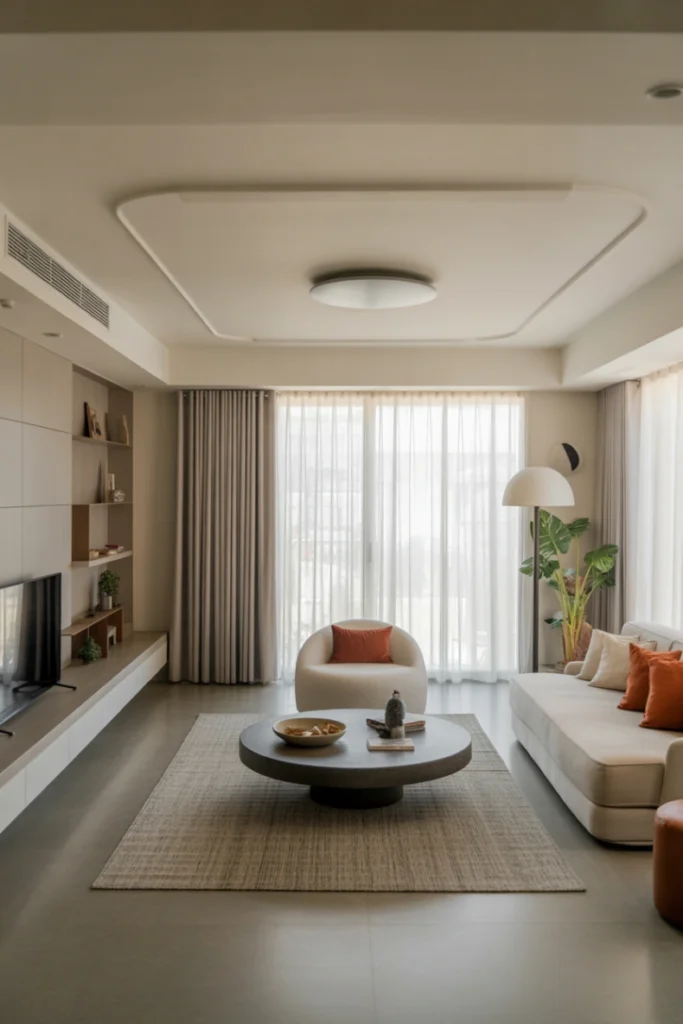
Floating furniture, pulled away from the walls, creates a more intimate and designer led seating area. Instead of pushing the sofa against the wall, place it in the center of the room facing a pair of chairs, with a coffee table between them and a rug anchoring the whole group. This works best in rooms at least 14 feet wide, where you can leave a comfortable walkway behind the sofa.
Anchor the arrangement with a rug large enough for all front legs, and add a console table behind the sofa for lamps, books, and a place to set a drink from the other side. Use the space behind the seating for a reading chair, a plant, or a bookshelf, so it feels intentional rather than empty. Keep traffic paths clear: at least 30 inches between the floating group and any wall or doorway.
In a smaller room, float just one piece, such as pulling the sofa 6 inches off the wall and adding a narrow console behind it. You get the curated look without losing floor space, and the room still feels open and easy to move through.
21. Modern Coastal Refresh

Modern coastal style is breezy without being themed. The palette is light blue, sandy beige, soft white, and pale wood, with natural textures such as rattan, linen, and driftwood inspired accents. Unlike older coastal decor, the modern version avoids anchors, ropes, and shell collections on every surface, and instead lets color and texture suggest the seaside.
Start with white or pale blue gray walls, a light linen sofa, and a natural fiber rug. Add rattan chairs or a rattan pendant light, sheer curtains that let daylight through, and one or two coastal artworks in soft blues. Keep accessories minimal: a ceramic vase, a wooden bowl, and a stack of books in coastal tones are enough. Large windows or mirrors opposite windows amplify the light that makes this style feel airy.
This look works far from the coast too, because its real appeal is calm and light, not beach souvenirs. If your room is dark, choose the palest version of the palette and add extra lamps, so the coastal feeling comes from brightness rather than from themed objects.
Coastal rooms need protection from sun fading, because light fabrics and pale wood show fading faster than dark rooms. Use sheer curtains to filter harsh midday sun, rotate cushions every few months, and choose fade resistant outdoor rated fabric for a sofa near a large sunny window.
22. Personalized Mixed-Style Living Room
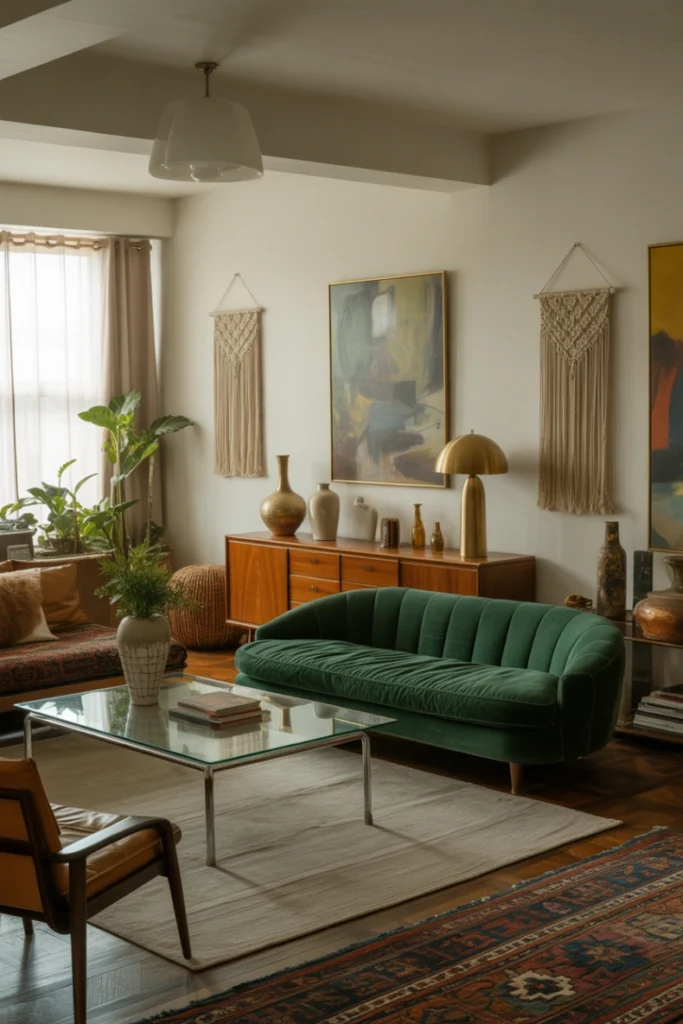
A mixed style living room is the most personal kind of remodel, because it blends the pieces you already love with new finds. The secret to making it work is a single unifying element: one color palette, one wood tone, or one repeated material that runs through the whole room. Without that thread, mixed styles can look accidental. With it, vintage and modern pieces feel curated.
Start with your largest pieces, usually the sofa and rug, in neutral tones, then layer in character: a vintage armchair, a modern floor lamp, a handmade ceramic vase, and art from different periods. Mix textures deliberately, such as smooth leather, rough wood, soft wool, and cool metal, and repeat each texture at least twice so nothing looks like a one off mistake. Edit ruthlessly: if a piece does not fit the palette or serve a purpose, move it to another room.
This approach also pairs well with connected spaces. When the living room opens to the kitchen, carry the same palette into that room too, as in these open kitchen living room ideas and kitchen dining combo ideas, so the whole main floor feels like one home rather than separate decorating projects.
Conclusion
These 22 living room remodel ideas offer a practical starting point, not a rulebook. Pick the change that fixes your biggest frustration first, whether that is light, layout, storage, or color, and build from there with one consistent palette and careful measurements. A room remodels best in layers: layout first, then lighting, then the large furniture, and finally the textures and accents that make it feel like home.
Keep a simple budget note as you go, noting the cost of each change and whether you can do it yourself or need a professional. Painting, swapping rugs and lighting, and rearranging furniture are strong weekend projects. Moving walls, rewiring, and installing gas fireplaces need licensed professionals and permits where required. With thoughtful planning, even a modest budget can produce a living room that feels fresh, functional, and beautifully designed for years to come.
Frequently Asked Questions
What is the cheapest living room remodel that still makes a big difference?
Paint, lighting, and rug size give the biggest return for the lowest cost. A fresh warm white paint job, two well placed lamps on dimmers, and a rug large enough for the front legs of your seating will transform most rooms for far less than new furniture or structural work.
How do I choose a rug size for my living room?
Measure your seating area and choose a rug that extends at least 6 inches beyond the sofa on each side, with front legs of all seating on the rug. For most rooms that means 8 by 10 feet, and for larger rooms 9 by 12 feet. When in doubt, go one size larger rather than smaller.
Should I remove a wall to create an open concept living room?
Only after a contractor confirms whether the wall is load bearing and checks for wiring and plumbing inside it. A non load bearing wall is a straightforward job, while a load bearing wall needs a beam and professional installation, which costs more but still gives you the open feel safely.
What color temperature is best for living room lighting?
Warm white at 2700K to 3000K suits most living rooms, because it feels cozy in the evening and still looks natural during the day. Keep all bulbs in the room at a similar temperature, and use dimmers so one room can serve bright daytime tasks and relaxed evening use.
How can I remodel a living room without replacing the sofa?
Work around the sofa: repaint in a color that complements it, add a correctly sized rug, improve lighting, and update cushions and throws in a fresh palette. A new coffee table, one accent chair, and a gallery wall can make an old sofa look intentional rather than dated.
More Ideas You Will Love
 22 Brown Living Room Ideas – Cozy, Modern & Aesthetic Designs for Any Home
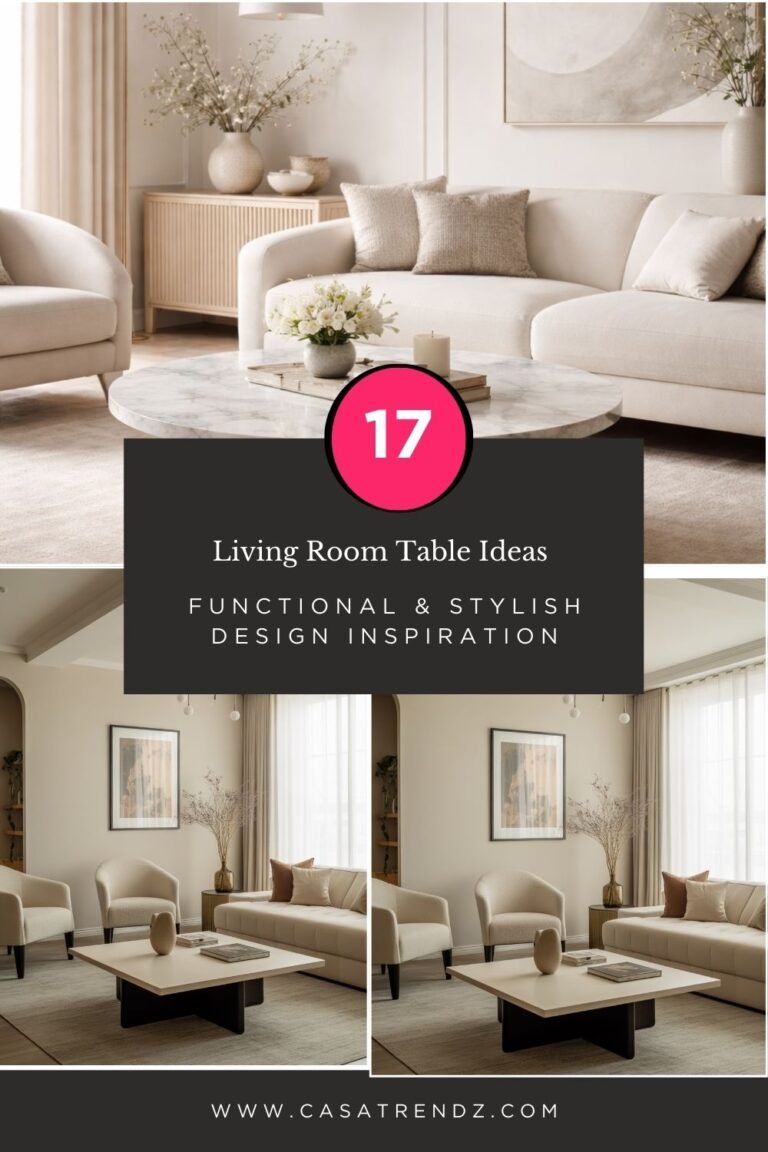 17 Living Room Table Ideas: Functional & Stylish Design Inspiration
 22 Christmas Living Room Decor Ideas for Small, Cozy Spaces
 16 Modern Home Decor Inspiration Ideas for Living Rooms
 16 Americana 4th of July Wall Decal Designs for Every Room
 23 Blue & Green Living Room Ideas for Every Style & Space