
21 Small Bedroom Ideas for Couples – Cozy, Functional & Romantic Designs

Designing a small bedroom for two people is one of the hardest decorating puzzles in a home. You need space for two wardrobes, two bedside routines, and two sets of taste, all inside a room that may measure only 10 by 12 feet. The good news is that a small shared bedroom rewards smart choices far more than it rewards a big budget. With the right layout, the right furniture, and a calm palette, even the tiniest room can feel like a private retreat rather than a crowded compromise.
The ideas below cover every part of the room, from wall color and bed choice to storage, lighting, and the small romantic details that make a shared room feel personal. Each idea includes practical detail you can actually use, such as standard sizes to shop for, spacing rules that keep the room comfortable, and simple styling steps that work in real apartments and small homes. You do not need to use all 21 ideas. Pick four or five that fit your room, repeat the same two or three colors through the space, and keep surfaces clear. That restraint is what makes a small bedroom feel calm instead of cramped.
Before you buy anything, measure the room and sketch the bed position first. A queen bed needs about 60 by 80 inches, plus at least 24 inches of walking space on each side. If your numbers do not allow that, a smaller bed or a smarter layout matters more than any decor item. Start with the layout, then add color and texture, and finish with lighting and art. That order keeps every later decision easy.
1. Use a Light, Neutral Color Palette
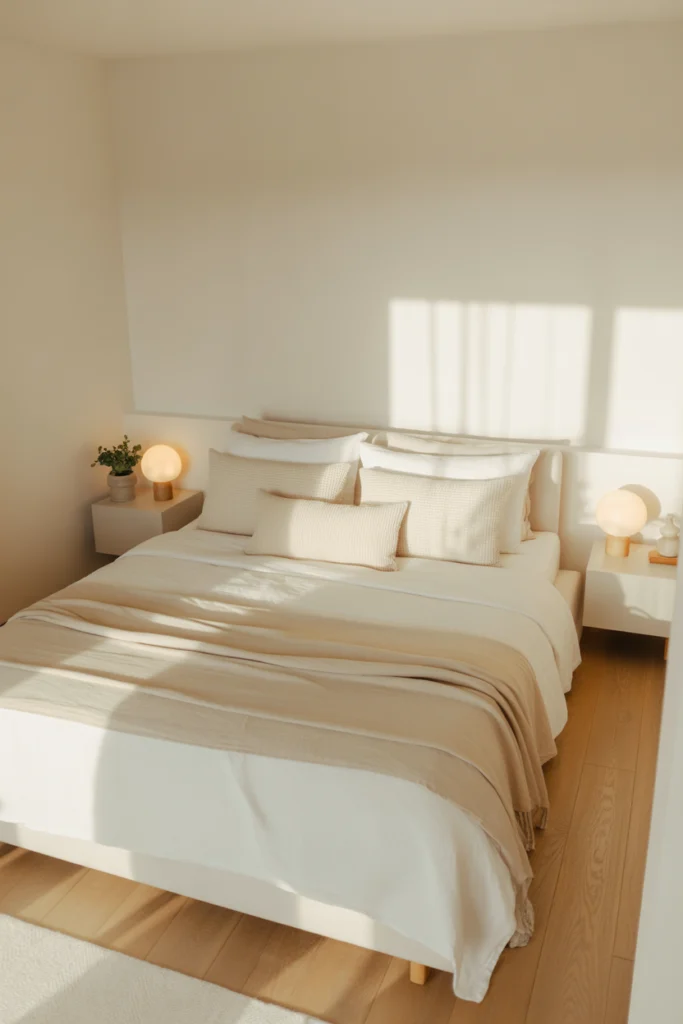
Light neutrals are the most reliable starting point for a small shared bedroom because they reflect daylight and make walls feel farther apart. Choose warm whites, soft greige, pale taupe, or a whisper of sage, and keep the same tone on all four walls so the room reads as one calm volume. Paint with a Light Reflectance Value above 70 if you want the brightest effect, and test a large swatch on the wall opposite the window, where the light is weakest. A color that looks creamy in the store can turn gray or pink under your own bulbs, so check it in morning light and again at night.
Neutrals also solve the hardest part of decorating as a couple, which is blending two tastes without a clash. One partner can add navy or forest green cushions while the other adds blush or terracotta, and both accents sit happily on the same quiet base. Keep the base consistent and let personality come through in bedding, art, and throws, which are easy to swap. For more palette combinations that work in compact rooms, see these bedroom color schemes that pair soft neutrals with one or two accent colors. Finish with white ceilings and pale trim to lift the room, and layer texture through linen, boucle, or a woven rug so the neutral palette feels warm instead of flat.
Practical tip: paint the ceiling the same color as the walls but in a flat finish to blur the edges and make a low ceiling feel taller.
2. Incorporate Multi-Functional Furniture
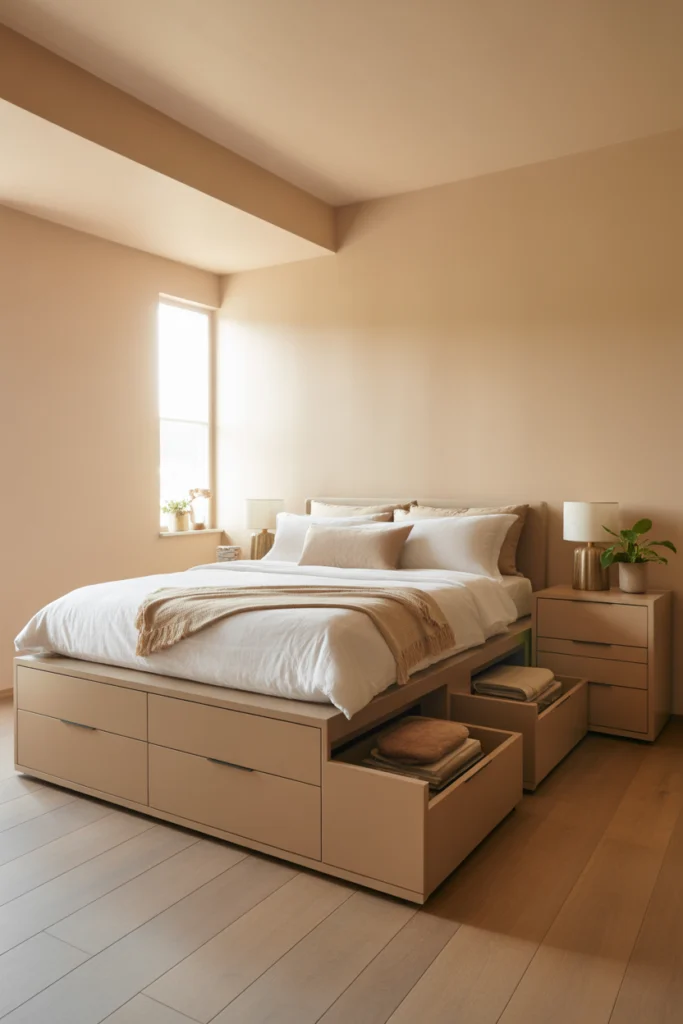
When floor space is scarce, every piece of furniture should earn its place twice. A storage bed with drawers 12 inches deep can hold off season bedding, spare pillows, and even a full set of winter clothes. An ottoman bench at the foot of the bed gives you a seat for putting on shoes and hides extra throws inside. A nightstand with two drawers beats a pretty table with none, and a wall mounted shelf above it adds display space without touching the floor. Choose pieces with clean lines and slim legs, because visual lightness matters as much as real storage.
For couples, multi-functional furniture also settles the question of whose things go where. Give each partner one drawer in the bed base and one shelf in the shared wardrobe, and label the split clearly at the start so neither side slowly takes over. A lift up storage bed works well for bulky items such as spare duvets, while shallow drawers suit folded clothes and accessories. Measure before you buy: a storage bed needs at least 24 inches of clear space on the drawer side, and a lift up base needs 36 inches of clearance above the mattress when open. Buy the storage first and the decoration second, because an organized room always looks bigger than a decorated but cluttered one.
3. Choose a Platform Bed for a Sleek Look

A platform bed is one of the simplest ways to make a small bedroom feel larger, because its low profile leaves more wall visible above the mattress. Look for a frame 8 to 12 inches high with a headboard no taller than 48 inches, so the bed stays in proportion with the room. A queen platform bed measures 60 by 80 inches, and it works best when you can leave 24 inches of walking space on each side and 30 inches at the foot. Solid wood frames in oak or walnut add warmth, while upholstered frames in light linen or boucle soften the look and feel comfortable to lean against.
Many platform beds include built in drawers or a lift up base, which solves storage and style in one purchase. Skip a tall footboard, because it cuts the room visually in half and makes the bed feel like a box. Dress the bed with a fitted sheet, a flat sheet, a light duvet, and a folded throw at the foot, and keep the pillow count to four: two sleeping pillows and two euro shams. That simple stack looks intentional and hotel like, and it leaves no visual clutter. If one partner likes a firmer mattress and the other a softer one, a split queen or two twin XL mattresses on one platform base gives each person their own comfort without changing the look of the room.
4. Maximize Vertical Storage Space
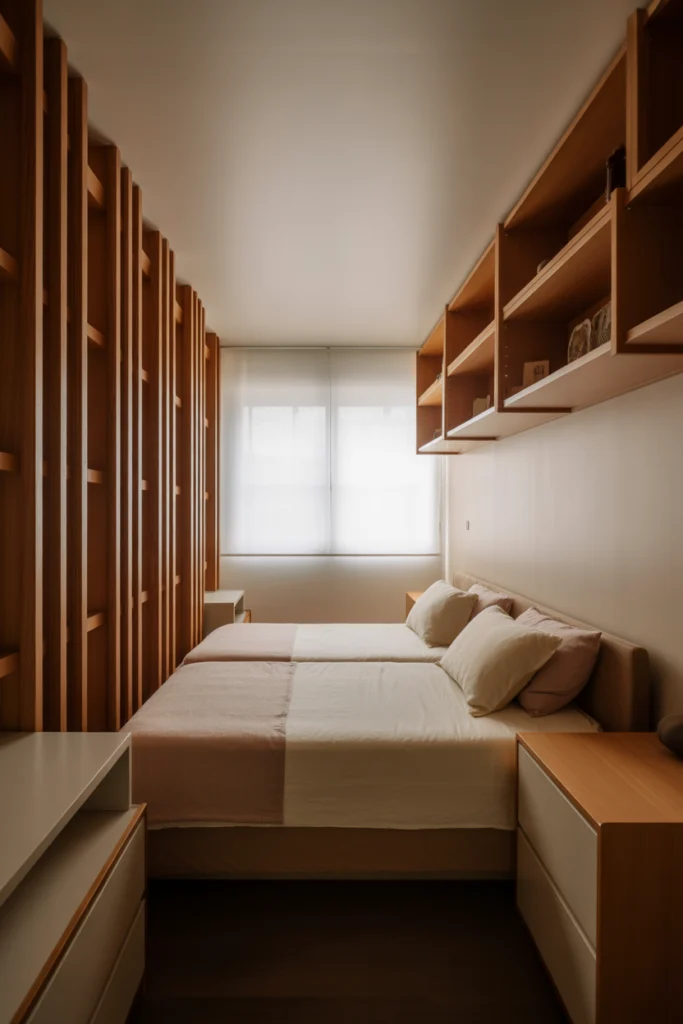
Small bedrooms run out of floor space long before they run out of wall space, so build upward. A tall wardrobe that reaches the ceiling adds roughly 12 inches of usable storage at the top for seasonal clothes and spare bedding, and it removes the dusty gap above the furniture where clutter collects. Wall mounted shelves 10 to 12 inches deep hold books, plants, and framed photos without taking a single inch of floor. Install the first shelf about 18 inches above the nightstand and keep the highest shelf within easy reach, around 72 inches from the floor, so nothing stored there is forgotten.
Divide vertical storage by person to keep the peace: give each partner a column of shelves or one side of the wardrobe, and keep shared items such as extra blankets on the top shelf where both can reach them. Use closed boxes or baskets on the highest shelves so the room reads as calm rather than busy, and reserve open shelving for the prettiest items only. A slim ladder shelf in a corner uses dead space well, and hooks on the back of the door hold robes, bags, and tomorrow’s outfit. When every item has a place above waist height, the floor stays clear and the room feels twice as big.
5. Create a Cozy Shared Reading Nook

A shared reading nook gives a couple a reason to linger in the bedroom beyond sleep, and it needs far less space than most people expect. A window seat 18 inches deep and 36 inches wide fits two people side by side, while a corner with two small accent chairs 26 to 28 inches wide works just as well. Add a cushion 3 to 4 inches thick in a washable fabric, a folded throw, and one cushion each in your own accent color. Place the nook near the window if you can, because natural light makes morning reading pleasant and the view gives the corner a purpose.
Light the nook separately from the rest of the room with a small wall sconce or a clip on reading light in warm white, around 2700K, so one partner can read while the other sleeps. A narrow floating shelf beside the seat holds two books, a phone, and a mug, and a small basket underneath keeps magazines out of sight. If space is very tight, build the nook into the foot of the bed with a low bench and a cushion, which doubles as a place to sit while getting dressed. Personalize the spot with a framed photo or a small plant, and it becomes the room’s quiet corner rather than another piece of furniture.
6. Use Soft Ambient Lighting for Romance
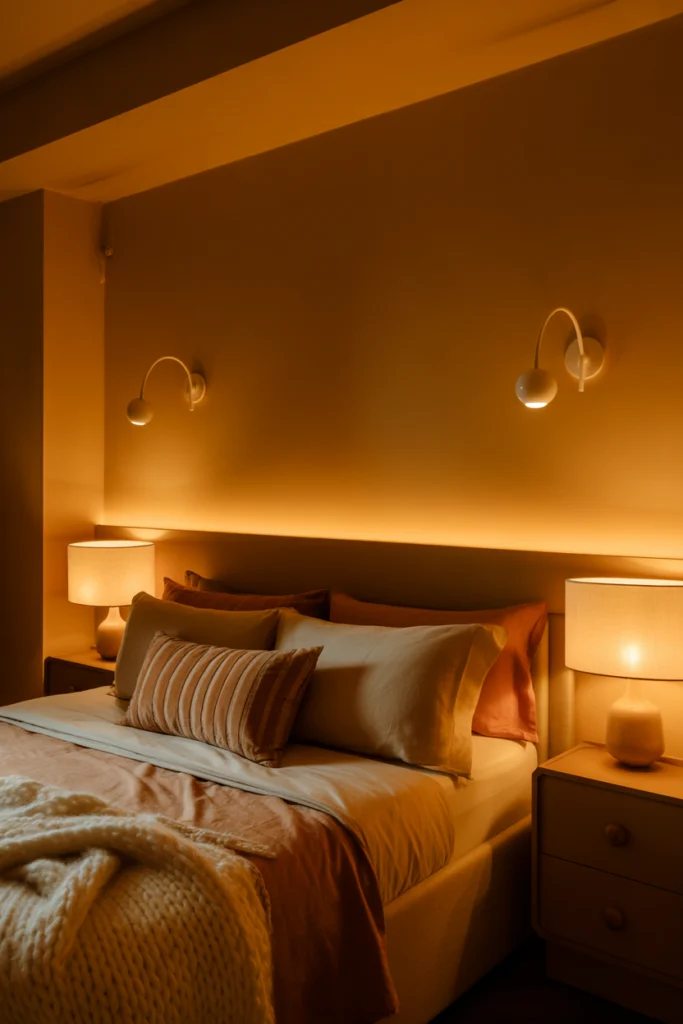
Lighting changes the mood of a small bedroom more than any other single choice, and soft light is what makes a compact room feel romantic rather than cramped. Build three layers: a dimmable ceiling light or pendant for general light, bedside lamps or sconces for reading, and a low glow such as LED strip lighting behind the headboard or under a floating shelf for evenings. Keep every bulb at 2700K warm white, which flatters skin tones and feels like candlelight, and put the main lights on a dimmer so you can lower the brightness to 20 percent for winding down.
Avoid a single bright overhead bulb, which creates harsh shadows and flattens the room. Instead, place two matching bedside lamps 24 to 28 inches tall with fabric shades that diffuse the light, and add a small salt lamp or a flameless candle on the dresser for a warm accent. Smart bulbs let each partner set a scene from the phone, so one can choose a bright setting for getting ready while the other keeps a soft glow for reading. For more ways to use light, texture, and soft color to set a romantic mood, explore these romantic bedroom ideas that work beautifully in small spaces. Good lighting costs little, takes no floor space, and transforms the room every evening.
7. Incorporate Mirrored Furniture to Reflect Light

Mirrors are the oldest trick for making a small room feel larger, and mirrored furniture does the job without hanging a giant mirror on the wall. A mirrored nightstand or a dresser with mirrored drawer fronts bounces daylight around the room and adds a touch of glamour that suits a couples bedroom. Place the largest mirrored piece opposite or beside the window, where it catches the most light, and keep the surrounding decor simple so the reflection stays calm rather than busy. A full length mirror leaning against the wall near the wardrobe also helps with getting dressed and visually doubles the room.
Use mirrors with intention and restraint. One or two mirrored pieces are enough; a whole room of reflective surfaces feels cold and distracting. Avoid placing a mirror directly opposite the bed if either partner finds it unsettling at night, and choose mirrors with slim frames in brass, black, or natural wood to match the room’s palette. Clean mirrored surfaces weekly, because fingerprints and dust show up fast and dull the effect. Paired with a light wall color and sheer curtains, mirrored furniture can make a 10 by 12 foot bedroom feel noticeably brighter and more open, especially in rooms with only one window.
8. Add Floating Nightstands to Save Floor Space
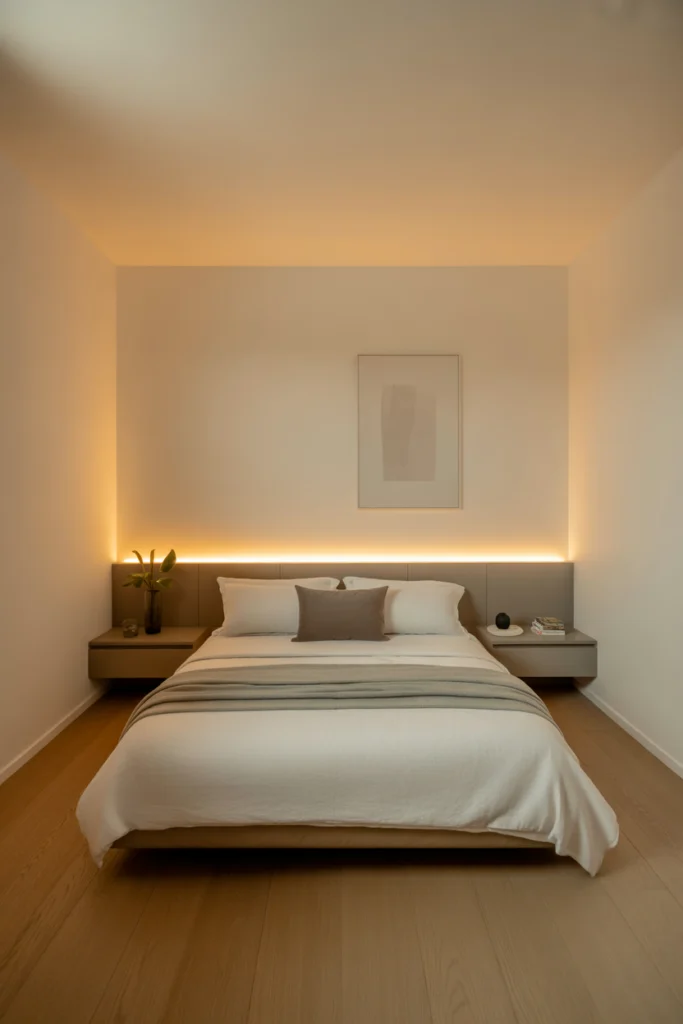
Floating nightstands are a small change with an outsized effect in a couples bedroom. Because they mount to the wall, the floor beneath stays visible and the room feels less crowded, which matters when two people walk around the bed every day. Mount each nightstand 24 to 28 inches from the floor, or level with the top of the mattress, so a book, a glass of water, and a phone are all within easy reach. A size of 16 to 18 inches wide and 12 inches deep is enough for the essentials without crowding the bed, and a single drawer keeps chargers and small items out of sight.
Give each partner their own floating nightstand at the same height, because symmetry keeps the room balanced and prevents arguments about who gets the bigger surface. Choose a finish that matches the bed frame or the wardrobe so the pair reads as part of the furniture rather than an add on. Wall mounted sconces above each nightstand free the surface completely, and a small cable hole in the back keeps phone chargers tidy. Installation takes about 30 minutes per nightstand with a stud finder and a level, and the result is easier to clean underneath, better airflow around the bed, and a cleaner line along the wall.
9. Choose Coordinated Bedding and Textiles
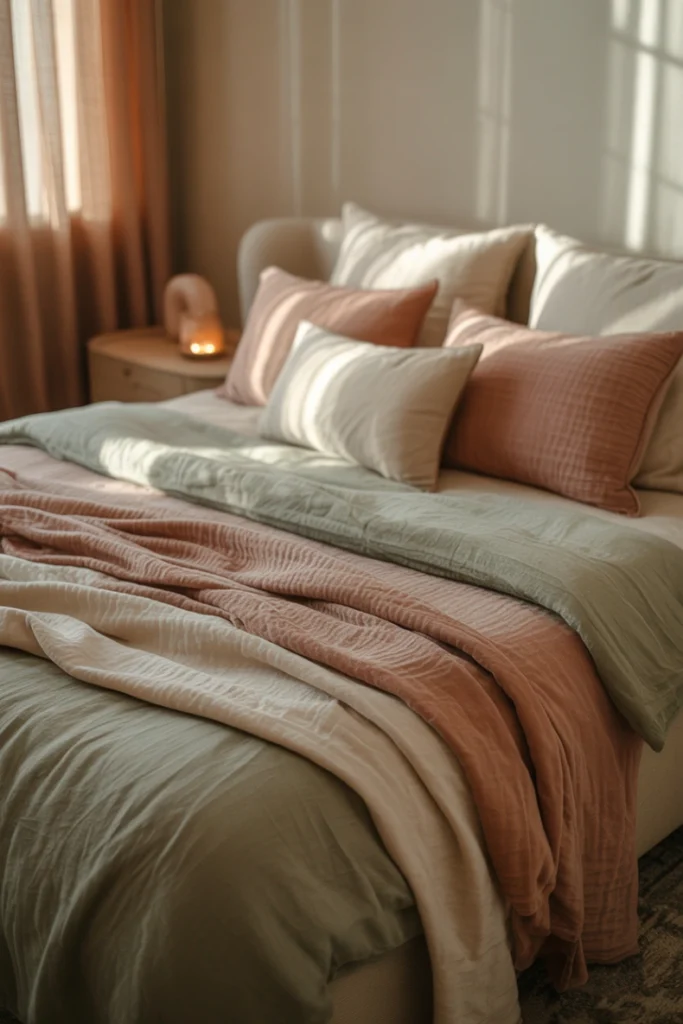
Coordinated bedding is what makes a small bedroom look finished, because the bed fills so much of the room that it sets the style for everything else. Start with a shared base both partners like, such as white or light gray cotton percale, washed linen, or a soft sateen, then let each person choose their own pillow firmness and their own accent color. Layer in this order: fitted sheet, flat sheet, a light duvet or quilt, a folded throw across the foot, and two sleeping pillows plus two euro shams. That stack looks generous without piling the bed so high that it dominates the room.
Keep the palette to three colors at most: a light neutral for the sheets, a mid tone for the duvet, and one accent for the throw and pillow shams. Muted tones such as sage, dusty blue, warm taupe, or blush suit most couples and stay restful over time. Mix textures rather than patterns to add interest, pairing smooth cotton with a waffle weave throw and a velvet cushion, for example. Wash bedding weekly and rotate two sets so the room always looks fresh, and choose a duvet insert one size larger than the cover for a fuller look. When the bed looks calm and inviting, the whole room feels calmer too.
10. Use Sliding Doors to Save Space
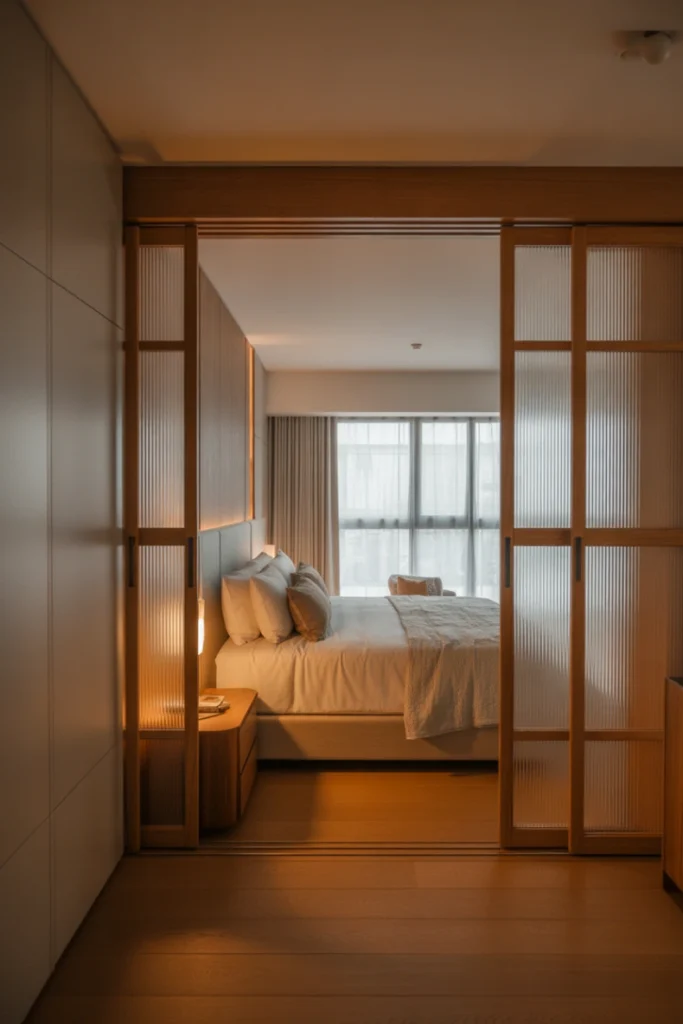
A swinging door needs about 30 inches of clear floor to open, which is a lot of space to lose in a small bedroom. Sliding doors give that space back. A barn style door on a visible rail adds character and works well for closets and en suite bathrooms, while a pocket door disappears into the wall and suits rooms where every inch counts. For closets, mirrored sliding doors serve two purposes at once: they close the storage and reflect light into the room. Choose a door that matches the trim color so it blends in, or paint it a soft accent color to make it a feature.
Measure before you commit. A barn door needs clear wall space beside the opening equal to the door’s width, so check that no light switch, art, or furniture blocks the path. A pocket door needs a wall cavity free of pipes and wiring, so confirm the structure before cutting. Keep the track clean and the rollers adjusted, because a sticking door quickly becomes an annoyance for two people using it daily. Add soft close hardware so the door never slams during the night, and fit a simple pull handle at a comfortable height for both partners. The result is smoother movement, more usable floor, and one less thing to bump into in the dark.
11. Introduce Under-Bed Storage Solutions
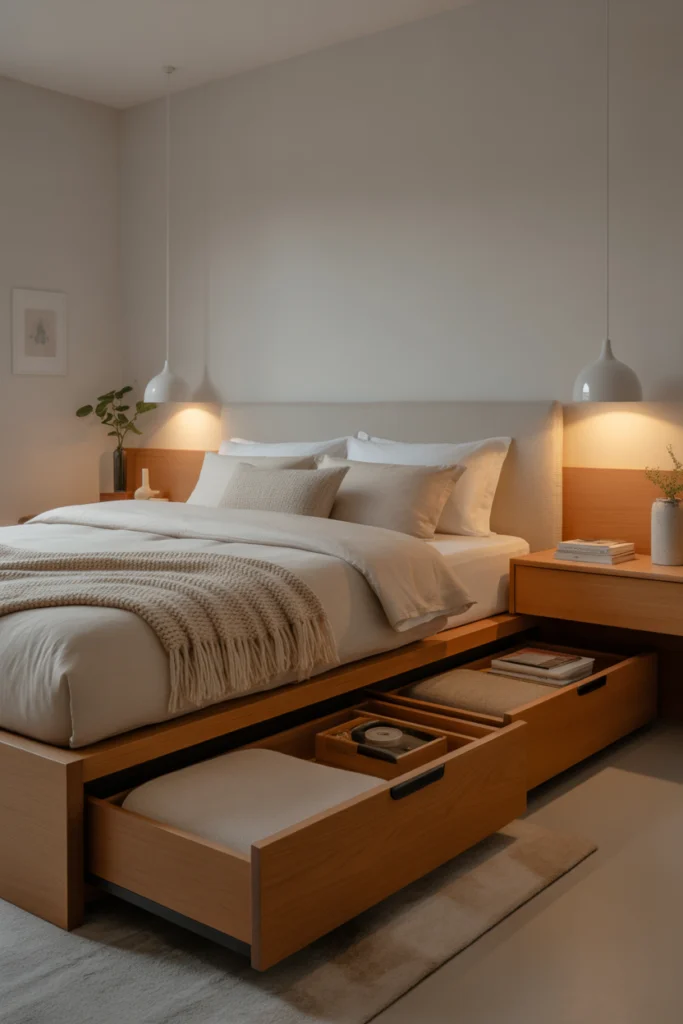
The space under the bed is the largest unused storage area in most small bedrooms, and it can hold a surprising amount without changing how the room looks. Low rolling bins 6 inches high slide easily under a standard frame and hold off season clothes, spare sheets, and shoes. Vacuum sealed bags compress bulky winter duvets to a third of their size, and flat fabric boxes keep things dust free while looking tidy when pulled out. If you buy a new bed, choose a frame with built in drawers 12 inches deep, which is far easier to use than reaching under the bed every time.
Split the under bed storage evenly between partners and label each bin, because shared storage only works when both people can find their own things. Keep everyday items such as pajamas and gym clothes in the easiest bin to reach, and push seasonal items to the far side or the back. Use cedar blocks or lavender sachets inside the bins to keep clothes fresh, and check the contents twice a year to remove what neither of you wears anymore. A bed skirt or a low upholstered base hides the bins completely, so the room stays neat even when the storage is full. Under bed storage turns wasted space into a second closet.
12. Opt for a Statement Headboard for Visual Impact
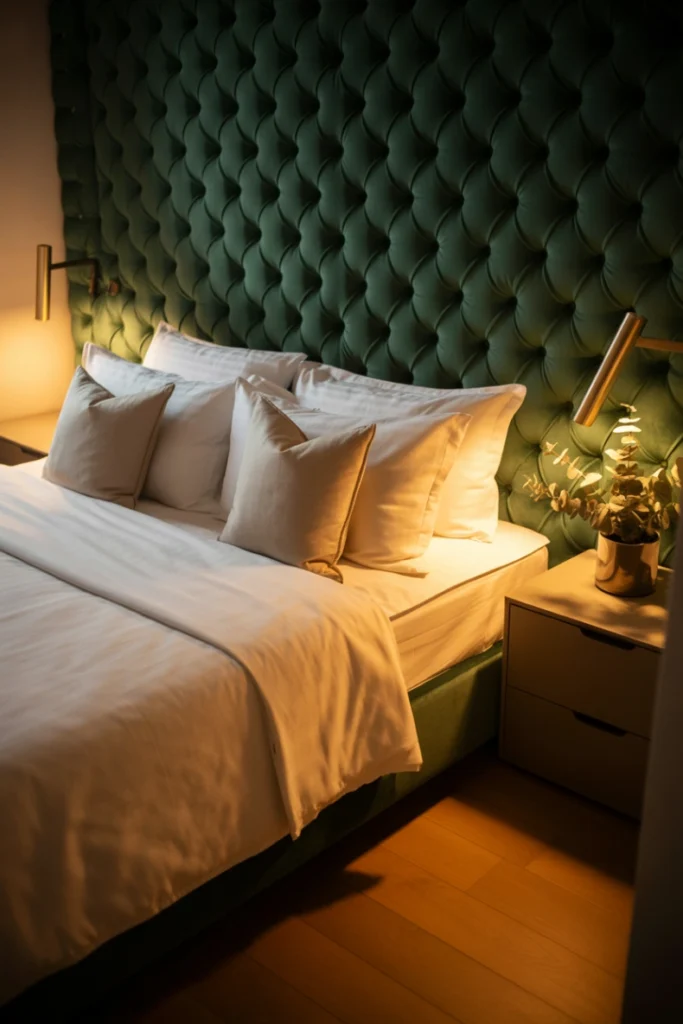
A statement headboard creates a focal point in a small bedroom without taking any floor space, which is exactly what a compact room needs. Choose a headboard 48 to 60 inches tall and as wide as the bed plus 3 to 6 inches on each side, so it frames the sleeping area and draws the eye upward. Upholstered headboards in linen, velvet, or boucle feel soft to lean against for reading, while cane, rattan, or slatted wood add texture and warmth. A channel tufted or arched shape suits romantic and modern rooms alike, and a tall headboard makes a low ceiling feel less noticeable.
Keep the rest of the wall simple so the headboard can do the work. One piece of art or a pair of sconces above it is enough, and busy wallpaper behind a bold headboard will fight for attention. Pick a color that echoes another element in the room, such as the throw, the rug, or the curtains, so the headboard feels connected rather than random. If you rent and cannot mount a headboard, lean a freestanding one against the wall or hang a large fabric panel or a painted arch directly on the wall for the same effect. A strong headboard gives the room a finished, intentional look with a single purchase.
13. Create Symmetry for Visual Balance
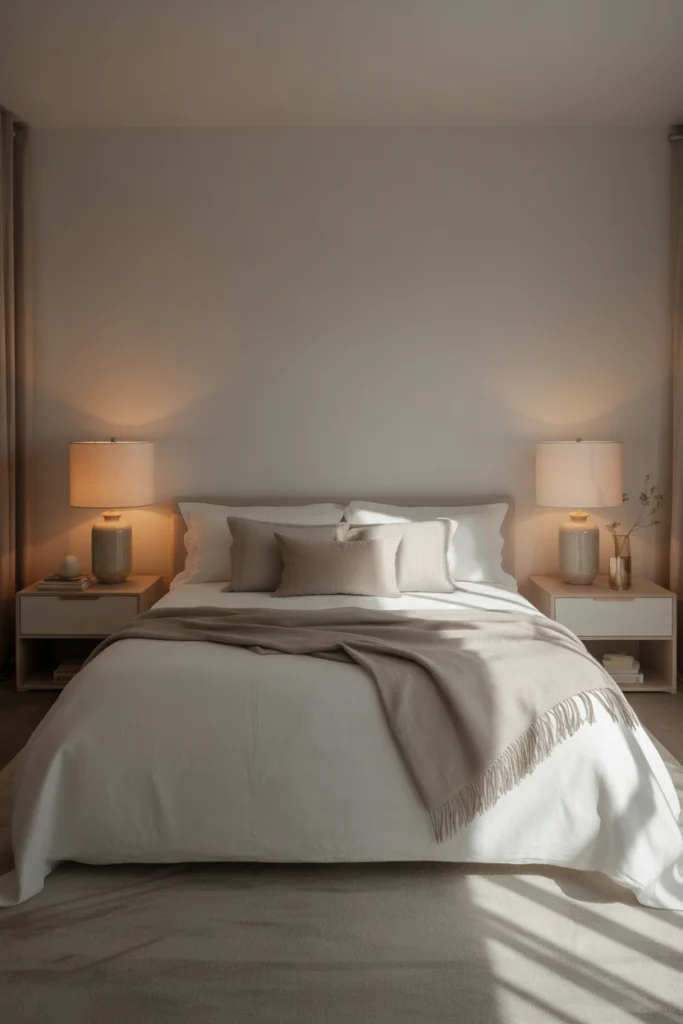
Symmetry is especially powerful in a bedroom shared by two people, because it gives both partners equal visual weight and makes the room feel orderly. Start with the bed centered on the main wall, then mirror the two sides: matching nightstands at the same height, matching lamps or sconces, and a matching pillow on each side. Hang art in pairs or center one piece above the bed, and keep the two halves of the wardrobe roughly equal. The eye reads a symmetrical room as calm and finished, even when the room is small.
Perfect symmetry is not required, and a little variation keeps the room from feeling like a hotel. Let each partner personalize their own nightstand with a book, a photo, or a small plant, while keeping the larger pieces matched. If the room layout makes full symmetry impossible, such as a window on one side only, balance the visual weight instead: a tall plant on the empty side can match a floor lamp on the other. Symmetry also helps with daily life, because equal bedside space means equal access to light switches, chargers, and water. When both sides of the bed feel the same, both partners feel equally at home.
14. Use Foldable or Wall-Mounted Desks
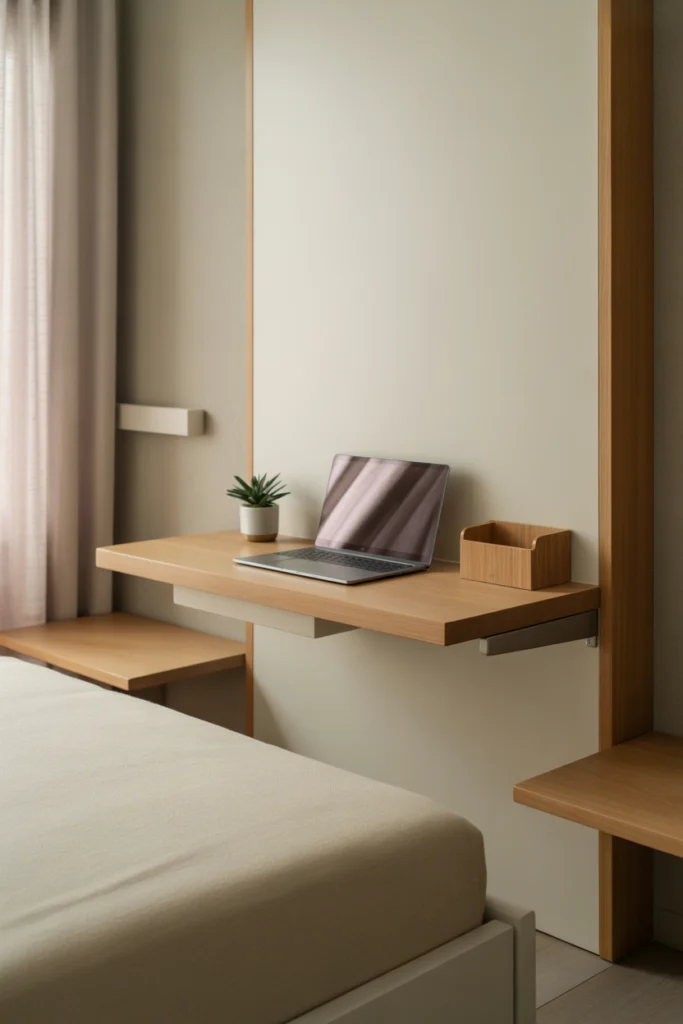
Many couples need a place to work, study, or answer email, and a full desk rarely fits in a small bedroom. A wall mounted desk 36 to 48 inches wide and 20 inches deep gives a real work surface and folds away when the workday ends, so the room returns to being a restful bedroom. A fold down desk with a hinged top and a small shelf inside holds a laptop, a notebook, and a lamp, and it takes about 10 minutes to set up each morning. For two people working at once, mount two narrow desks 24 inches wide on opposite walls or side by side with a small divider.
Pair the desk with a chair that slides underneath or folds flat, so it never blocks the walkway when not in use. Add a wall mounted shelf above the desk for books and supplies, and a cable clip to keep the charger from falling behind the furniture. Keep work items in a single basket or box that lives on the shelf, so the desk can be cleared in under a minute and the bedroom feels calm again. A foldable desk also works as a vanity: add a small mirror above it and a stool, and it serves two purposes without extra furniture. The key is a desk that disappears when you do not need it.
15. Add a Large Area Rug for Warmth
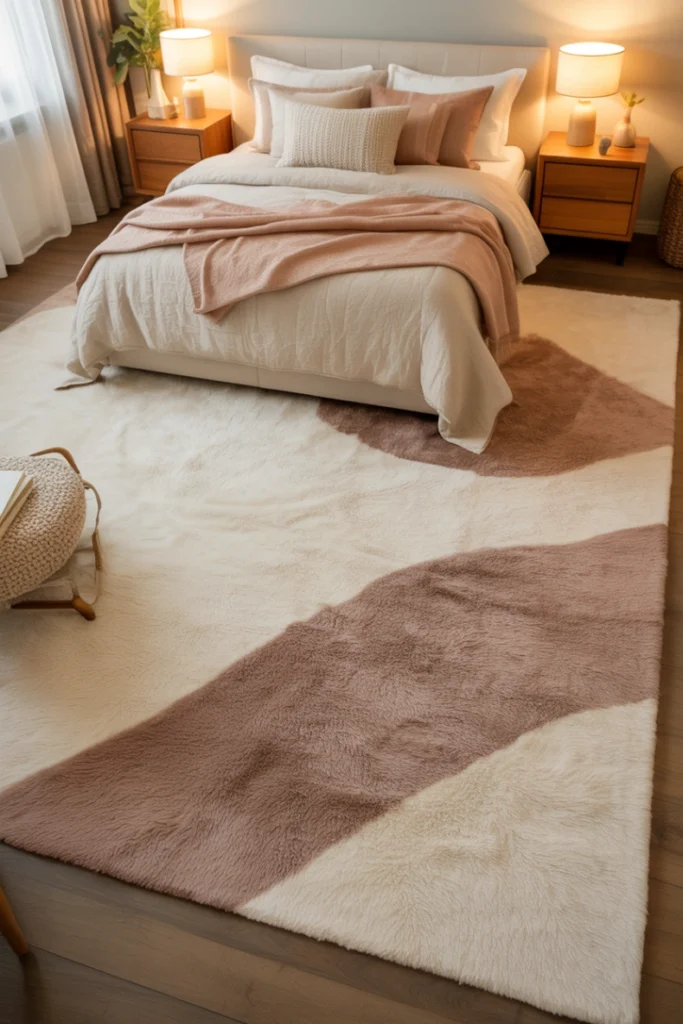
A large area rug anchors the bed and makes a small bedroom feel warmer, softer, and more intentional. For a queen bed, choose an 8 by 10 foot rug placed so it extends 18 to 24 inches beyond each side of the bed and 24 inches past the foot, which gives bare feet a soft landing every morning. A low pile or flat weave rug works best in a small room because it does not fight with the bed for attention and it is easy to vacuum. Choose a light neutral or a soft pattern in the room’s accent colors, and keep the pattern scale small so it suits the size of the room.
Layer the rug under the bed with the front legs of the nightstands resting on it, which ties the furniture together into one zone. If an 8 by 10 rug is too big for the room, a 5 by 8 rug placed across the foot of the bed still adds warmth and defines the sleeping area. Natural fibers such as wool and cotton feel comfortable and last well, while a washable rug is the practical choice if either partner has allergies or the room gets a lot of traffic. Vacuum twice a week and rotate the rug every few months so wear stays even. A good rug also softens sound, which makes a small shared room feel quieter and more private.
16. Build a Cozy Accent Wall
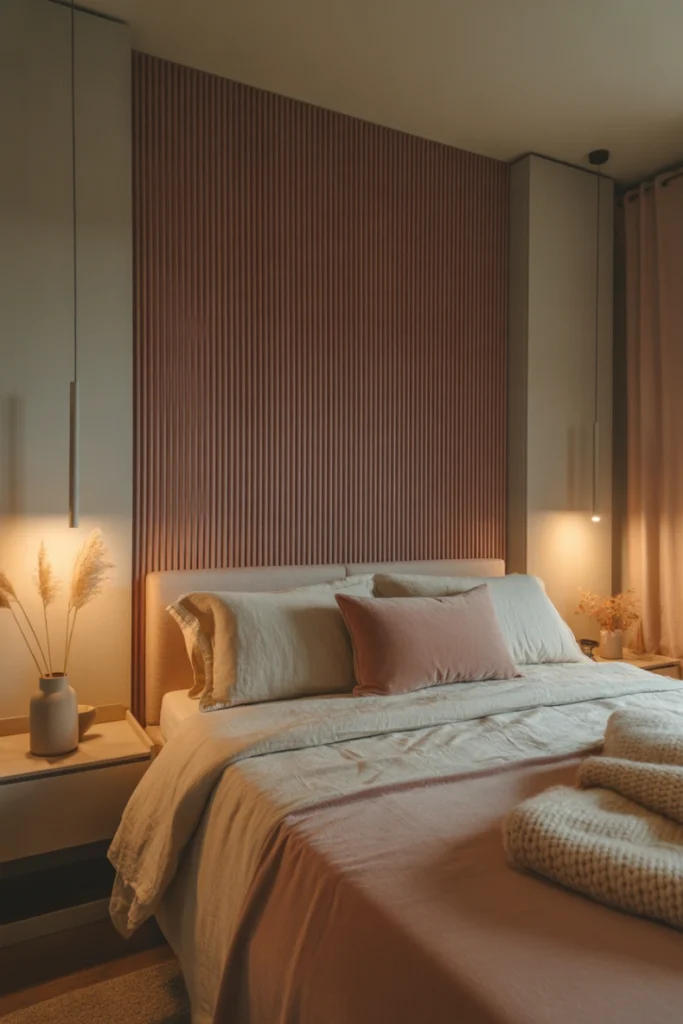
An accent wall adds depth and personality to a small bedroom without crowding it, and the wall behind the bed is the natural place for one. Paint it two shades deeper than the other walls in a color you both love, such as dusty sage, warm terracotta, or deep navy, and keep the other three walls light so the room stays bright. Peel and stick wallpaper is a renter friendly option that installs in an afternoon and removes cleanly, while vertical wood slats spaced 2 inches apart add texture and a modern, crafted feel. For a softer look, try a limewash or a subtle plaster finish that catches the light.
Keep the accent wall simple once it is finished. A headboard, one piece of art, or a pair of sconces is enough, because the wall itself is the decoration. Avoid hanging a gallery wall on an accent wall, since the pattern and the art will compete. If you want a romantic or layered look, pair the accent wall with linen bedding and a soft throw in a matching tone, and explore these dreamy bedroom styles for combinations that feel soft rather than heavy. Test the color on a large board first and live with it for a few days, because an accent wall is the first thing you see when you wake up.
17. Add Plants for Freshness and Romance
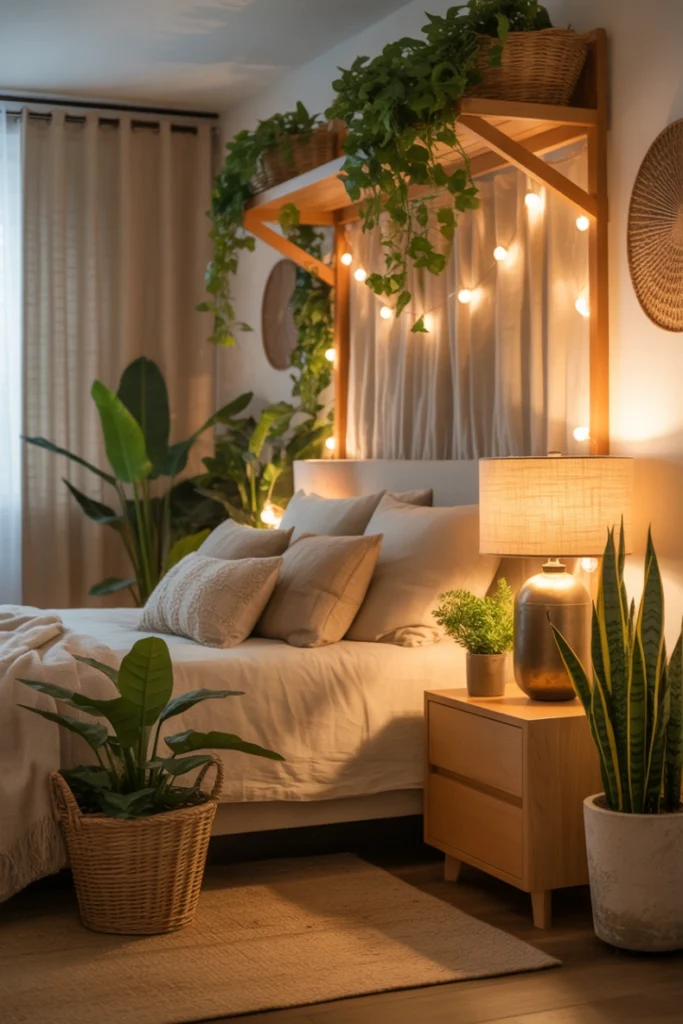
Plants bring life, color, and fresh air into a small bedroom, and they soften hard furniture lines in a way that suits a shared, romantic room. Choose low maintenance plants that tolerate low light and need little water, such as snake plants, pothos, ZZ plants, and peace lilies. A small pot 4 to 6 inches wide fits on a nightstand or a floating shelf, while a hanging planter near the window adds greenery without using any surface at all. A single tall plant in a corner, such as a fiddle leaf fig or a palm in a 10 inch pot, fills dead space and draws the eye upward.
Keep the plant count to three or four so the room feels fresh rather than jungle like, and choose pots in one material, such as terracotta, ceramic, or woven baskets, to keep the look cohesive. Water on a schedule, wipe the leaves monthly so they stay glossy, and rotate the pots every two weeks so growth stays even. Avoid strongly scented flowers near the bed if either partner is sensitive to fragrance, and keep plants away from the pillow area so falling leaves never land on the bedding. A few well placed plants make the room feel alive, calm, and cared for, and they cost almost nothing to maintain.
18. Use Sheer Curtains for Soft, Diffused Light

Sheer curtains filter daylight into a soft, even glow that flatters a small bedroom and makes it feel larger and more romantic. Hang the rod 4 to 6 inches above the window frame and extend it 6 to 12 inches wider than the frame on each side, so the curtains cover the wall when open and the window looks bigger. Choose white or ivory linen look sheers for the brightest effect, and let them fall to the floor or puddle 1 to 2 inches for a relaxed, romantic finish. Sheers give privacy during the day while keeping the room bright, which heavy curtains never do.
Layer sheers with a blackout curtain or a roller blind behind them for sleep, using a double rod so each layer moves independently. Open the blackout layer during the day and close it at night, and the room works for both rest and romance. Wash sheers every two to three months, because dust dulls their glow, and iron or steam them after washing so they hang straight. In a room with only one window, sheers are one of the best investments you can make: they cost little, need no floor space, and change the quality of light in the whole room.
19. Install Sconces Instead of Table Lamps
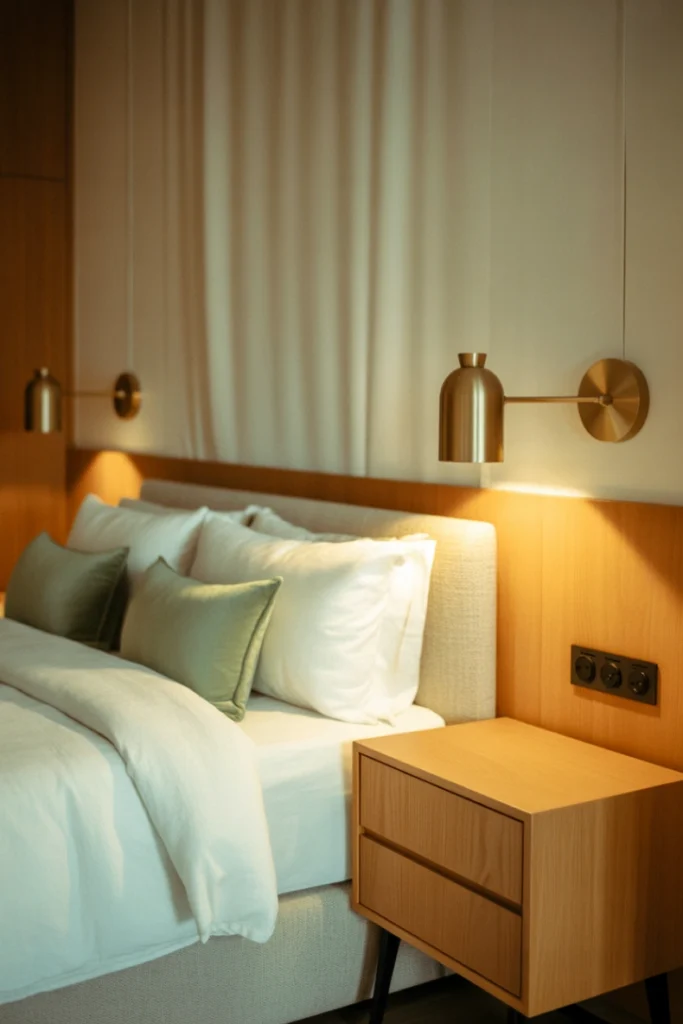
Wall sconces free the nightstand completely, which is a real advantage when two people share a small bedroom and each bedside surface is only 16 inches wide. Mount a sconce on each side of the bed, centered 55 to 60 inches from the floor and about 30 to 36 inches above the mattress, so the light falls on the book rather than in the eyes. Swing arm sconces are the most practical choice because each partner can aim the light independently, and a plug in model avoids rewiring if you rent. Choose a shade that matches the room, such as linen, opal glass, or metal in brass or matte black.
Sconces also add visual height and structure to the wall, which helps a low room feel taller. Pair them with a dimmer switch or a smart bulb so each side can be controlled separately, and keep the style consistent with the rest of the lighting in the room. If hardwiring is not an option, battery powered sconces with a remote control install with two screws and no electrician. Mount them level and at the same height on both sides, because uneven sconces are noticeable every time you look at the bed wall. With the nightstands clear, the bed wall looks calmer and the room gains usable surface space.
20. Incorporate Romantic Artwork
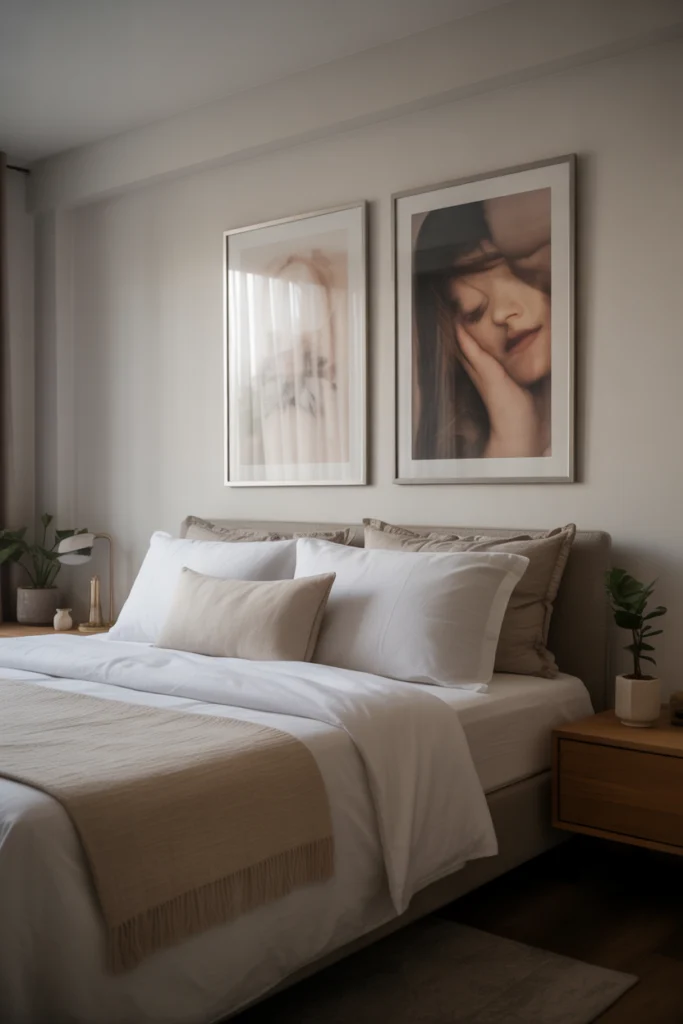
Artwork is the fastest way to make a shared bedroom feel personal, and in a small room one strong piece beats a crowded gallery wall. Choose art that reflects a shared memory or a place you both love, such as a soft abstract landscape, a black and white photograph from a trip, or a simple line drawing in the room’s accent colors. Size matters: art above the bed should measure about two thirds of the bed width, so 40 inches wide for a queen bed, and its center should hang 57 to 60 inches from the floor. A single large canvas reads as calm, while many small frames can feel busy in a compact room.
Keep frames slim and consistent, and choose colors that echo the bedding or the rug so the art feels part of the room rather than an afterthought. A pair of matching prints, one on each side of the bed, also works well and reinforces the symmetry that suits couples. Avoid art with harsh contrast or busy detail near the bed, since the bedroom should feel restful. Rotate the art seasonally if you like change, and use picture ledges instead of nails when you rent, so swapping a print takes minutes. Good artwork turns a small bedroom from a place to sleep into a place that tells your story.
21. Optimize the Layout for Shared Comfort
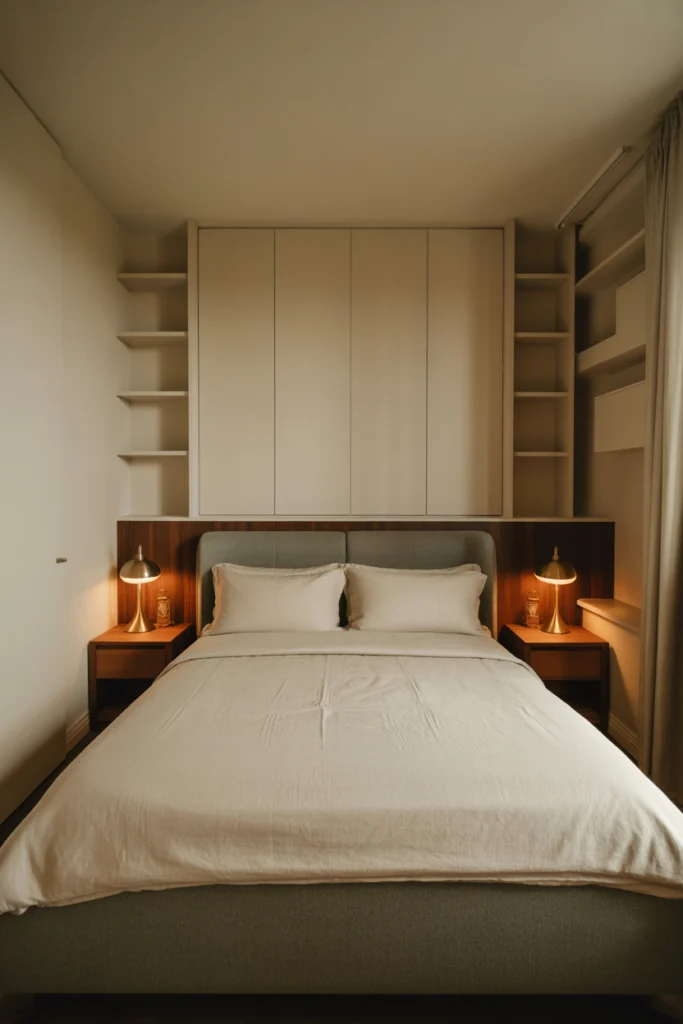
Layout is the foundation every other idea rests on, so get it right before buying decor. Center the bed on the longest uninterrupted wall, leave 24 to 30 inches of walking space on each side, and keep 30 inches clear at the foot so drawers and doors open freely. Place the wardrobe on the wall opposite the bed or beside the door, never where it blocks the path to the window. Put the most used items, such as the phone charger and the water glass, on each person’s own side, and keep the center of the room as open as possible so two people can move without bumping into each other.
Sketch the layout on paper before moving heavy furniture, and test it for a week before drilling holes or buying new pieces. Walk the route each partner takes at night, from bed to door to bathroom, and remove anything in that path. A small bedroom also benefits from a clear zone for each partner: one side of the wardrobe, one nightstand, and one shelf each, so neither person has to cross the room for their own things. For more space saving layouts and furniture arrangements, browse these small bedroom ideas that show how the same principles work in many room shapes. When the layout serves both people equally, the room feels fair, calm, and easy to live in every day.
Conclusion
Small bedrooms for couples can be just as beautiful, functional, and romantic as larger spaces when they are designed thoughtfully. The secret is not buying more furniture or spending more money. It is choosing a calm palette, furniture that works twice as hard, lighting that flatters the room, and a layout that gives both partners equal space and equal comfort. Start with the bed position and the storage, add color and texture next, and finish with lighting, art, and plants that make the room feel personal.
Pick three or four ideas from this guide and try them this weekend, beginning with the ones that cost nothing, such as rearranging the layout, clearing surfaces, and dividing storage fairly. Small changes compound quickly in a small room, and each one makes the next decision easier. With the right choices, any small bedroom can become a warm, peaceful, and intimate retreat where both partners feel at home.
Frequently Asked Questions
What is the best bed size for a small bedroom for couples?
A queen bed at 60 by 80 inches is the best fit for most small couples bedrooms, because it gives each person 30 inches of width while leaving room to walk around it. A king bed at 76 by 80 inches needs a room at least 10 by 12 feet with 24 inches clear on each side, so measure first. If the room is under 10 by 10 feet, a full size bed at 54 by 75 inches or a short queen can work, and two twin XL mattresses on one base give each partner their own firmness without changing the look.
How can two people share a small closet without fighting over space?
Split the closet down the middle and give each partner their own hanging rail, shelf column, and drawer. Add a second hanging rail below the first to double capacity, use slim velvet hangers to save inches, and keep off season clothes in labeled bins on the top shelf or under the bed. Agree on the split at the start and review it twice a year, because closets creep toward one person over time unless both partners keep their side tidy.
How do you make a small bedroom feel romantic without adding clutter?
Use light and textiles instead of objects. Warm dimmable lighting at 2700K, soft linen or cotton bedding, a folded throw, and one piece of romantic artwork create the mood without taking any floor space. Add a small plant and a scented candle on the dresser, keep surfaces mostly clear, and choose one accent color to repeat through the room. Romance in a small bedroom comes from atmosphere, not from filling shelves.
What colors make a small couples bedroom look bigger?
Light neutrals make a small bedroom look bigger because they reflect daylight and blur the edges of the room. Warm white, pale greige, soft taupe, and light sage work best, especially with white ceilings and pale trim. Keep all four walls the same color, add one deeper accent on the headboard wall only if you want contrast, and repeat the accent in bedding and art. Dark colors can work on a single wall, but painting all four walls dark will make a small room feel smaller.
How much walking space do you need around a bed?
Leave at least 24 inches of clear space on each side of the bed and 30 inches at the foot, so both partners can get in and out without turning sideways. These numbers assume a queen bed; a king needs the same clearance, which is why the room must be at least 10 by 12 feet. If you cannot reach 24 inches on both sides, push one side closer to the wall and keep the other side fully clear, or choose a smaller bed. Clear walking space matters more than any single decor item.
More Ideas You Will Love
 13 4th of July Accent Wall Ideas for Bedroom & Living Room Spaces
 21 Bedroom Furniture Ideas – Fresh Ways to Elevate Your Space
 15 Classy Bedroom Ideas to Elevate Your Space with Simplicity
 24 Wardrobe & Armoire Ideas: Smart Storage for Every Room
 20 Creative Attic Bedroom Ideas to Transform Your Space with Style & Functionality
 20 Bedroom Decor Ideas for a Cozy, Stylish, and Inviting Space