
21 Bedroom Furniture Ideas – Fresh Ways to Elevate Your Space

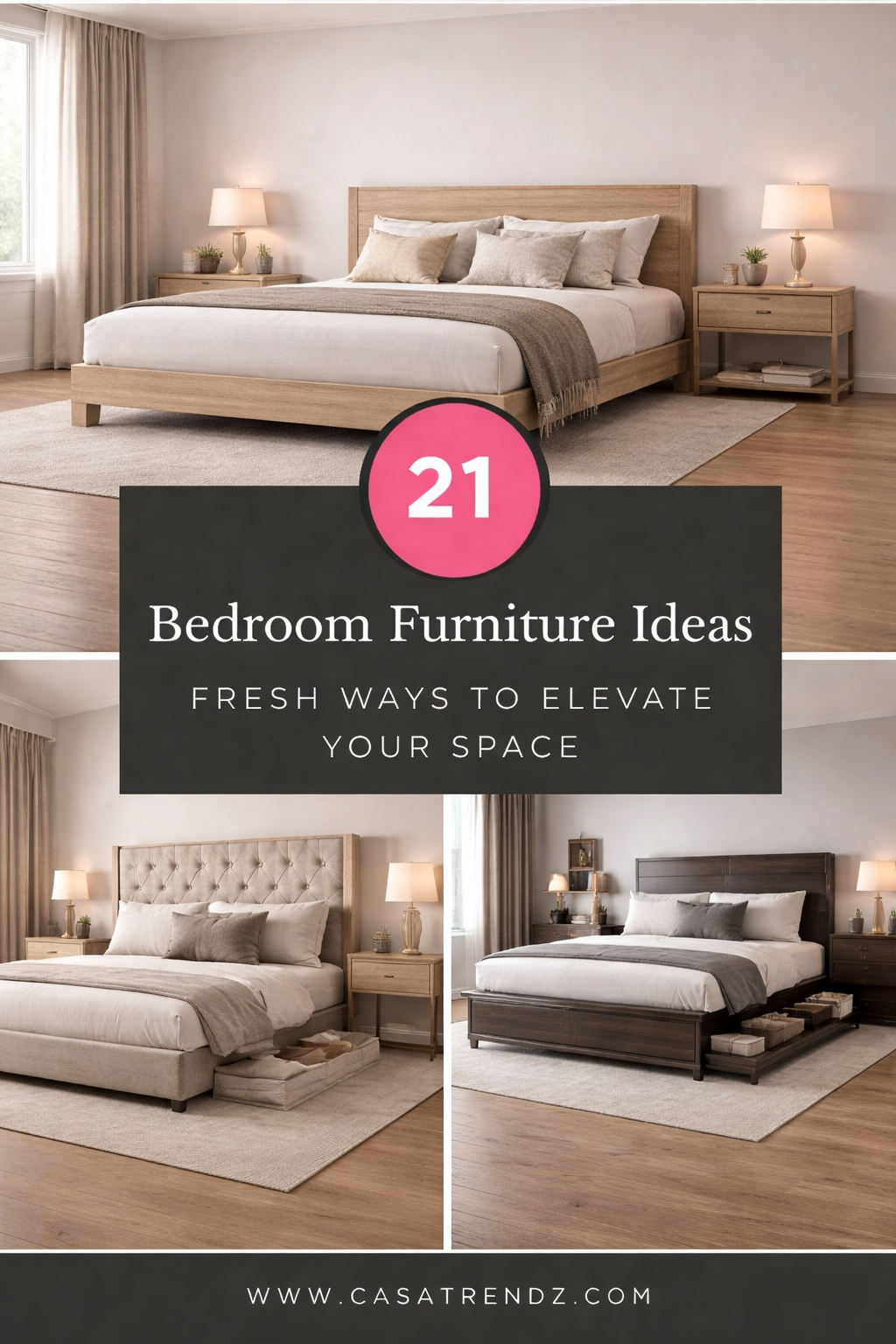
Your bedroom should feel like a retreat, not just a room with a bed in it. The right furniture makes that difference. It decides how easily you move around in the morning, how much you can store without clutter, and how calm the room feels at night. A thoughtful bed frame, well placed nightstands, and one or two pieces with real personality can turn even a plain bedroom into a space you genuinely love spending time in.
In this guide, we share 21 bedroom furniture ideas that cover beds, storage, seating, and layouts for rooms of every size. Each idea comes with real measurements, material suggestions, colors that work, and step-by-step tips so you can put it into practice right away. Whether you are furnishing a small apartment bedroom or refreshing a master suite, these ideas will help you build a bedroom that is comfortable, organized, and stylish without a full renovation.
1. Platform Beds for a Clean, Modern Look
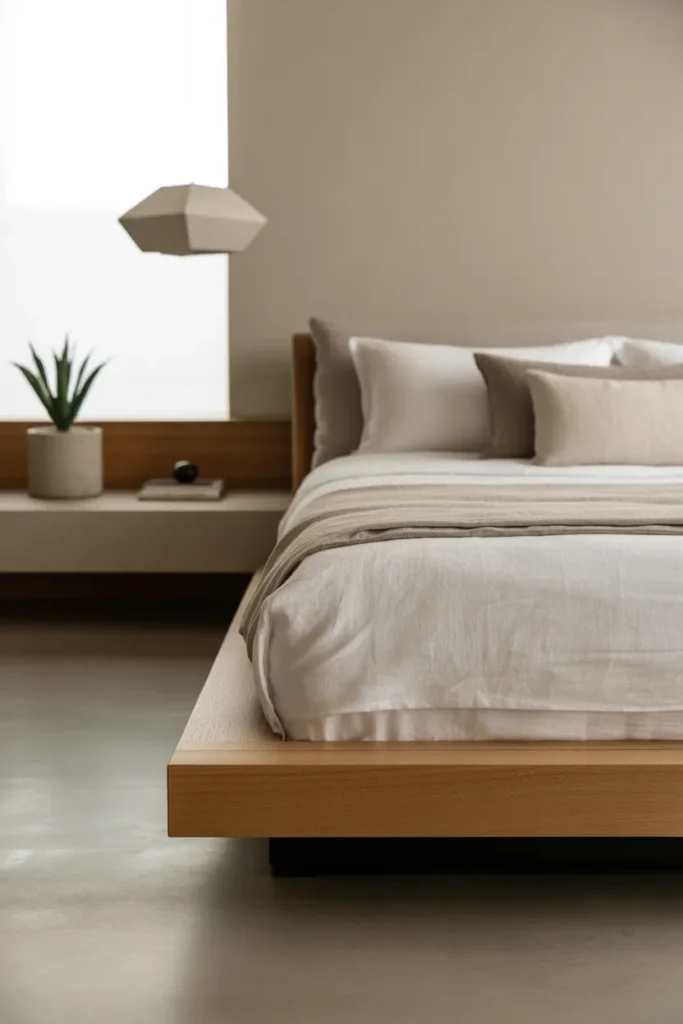
A platform bed is one of the simplest ways to give your bedroom a clean, modern feel. The low profile frame sits close to the floor, usually 10 to 14 inches high, and removes the need for a bulky box spring, which instantly makes the room look more open and streamlined. Most platform beds are 60 inches wide for a queen and 76 inches wide for a king, with solid wood slats spaced 2 to 3 inches apart to support the mattress without sagging.
Choose a frame in solid oak, walnut, or matte black metal depending on your style. Light oak suits Scandinavian and airy rooms, while walnut adds warmth to neutral palettes. Look for models with built-in drawers underneath or at least 6 inches of clearance below the frame so you can slide storage bins under the bed. Pair the bed with low, simple bedding in white or soft grey so the clean lines of the frame stay the star. If your ceiling is low, a platform bed is especially smart because it keeps the whole room feeling taller.
2. Upholstered Beds for Comfort and Style
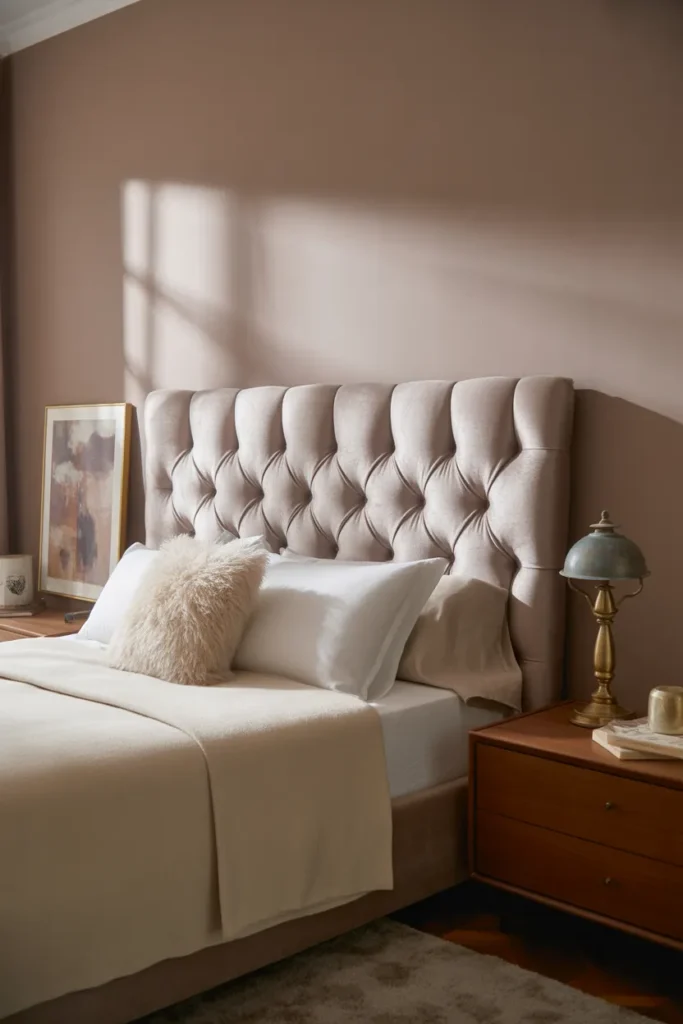
An upholstered bed brings softness and comfort into the bedroom in a way no other bed frame can. The padded headboard, usually 48 to 58 inches tall for a queen, gives you a comfortable backrest for reading or watching TV in bed, and the fabric adds warmth that hard wood or metal frames cannot match. Velvet, linen, and performance fabric are the most popular choices, with velvet in deep green, navy, or blush creating a rich focal point.
Pick a color that anchors your palette. Neutral tones like warm grey, oatmeal, and cream keep the room calm and flexible, while a bold jewel tone turns the bed into the centerpiece. If you have pets or kids, choose a performance fabric that resists stains and can be spot cleaned with mild soap and water. Vacuum the headboard weekly with an upholstery attachment to keep dust from settling into the fabric, and rotate your pillows regularly so the headboard wears evenly. For a softer, layered look, add a dreamy bedroom style with linen bedding and a textured throw draped across the foot of the bed.
3. Storage Beds for Space Optimization
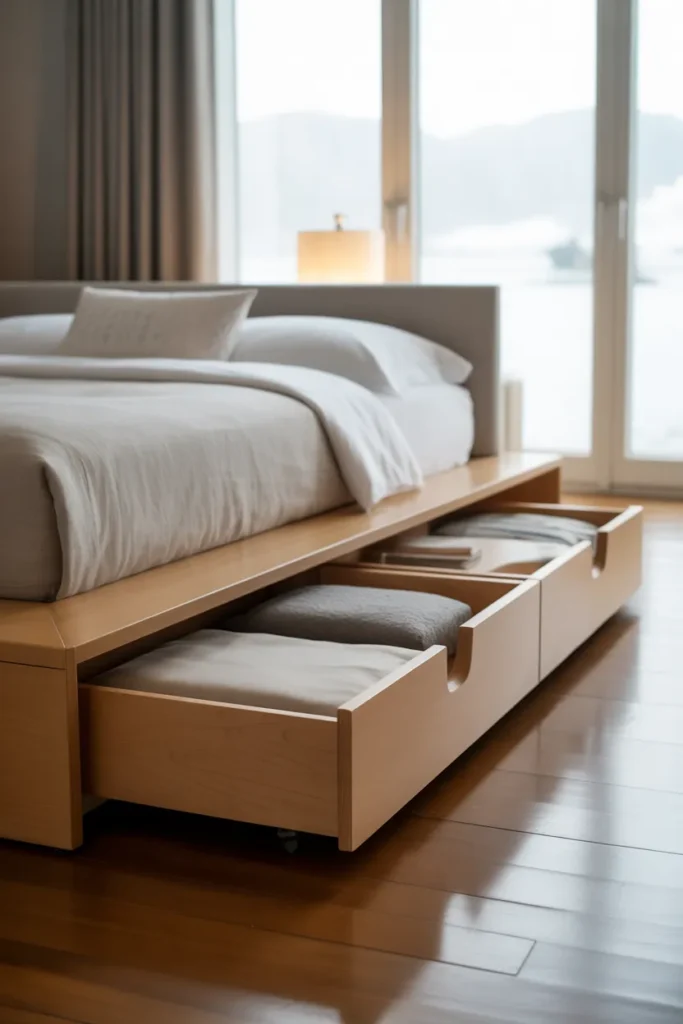
A storage bed solves the most common bedroom problem: not enough closet space. These beds hide drawers in the base or lift up on gas struts to reveal a full storage compartment under the mattress. A queen storage bed typically offers 12 to 16 cubic feet of hidden space, which is enough for out of season clothes, extra bedding, shoes, or luggage. Drawers on the sides need about 24 inches of clearance to open fully, so measure your walkways before you buy.
Use the compartments for things you need a few times a year rather than daily items, so you are not lifting the mattress every morning. Store winter blankets in vacuum bags, keep spare sheets in labeled fabric boxes, and place a small sachet of lavender inside to keep everything fresh. Choose a frame with soft close drawers and sturdy metal glides rated for at least 75 pounds, because cheap glides wear out fast under the weight of folded clothes. A storage bed works best in apartments and small bedrooms where every square foot has to earn its place.
4. Minimalist Nightstands for a Balanced Layout
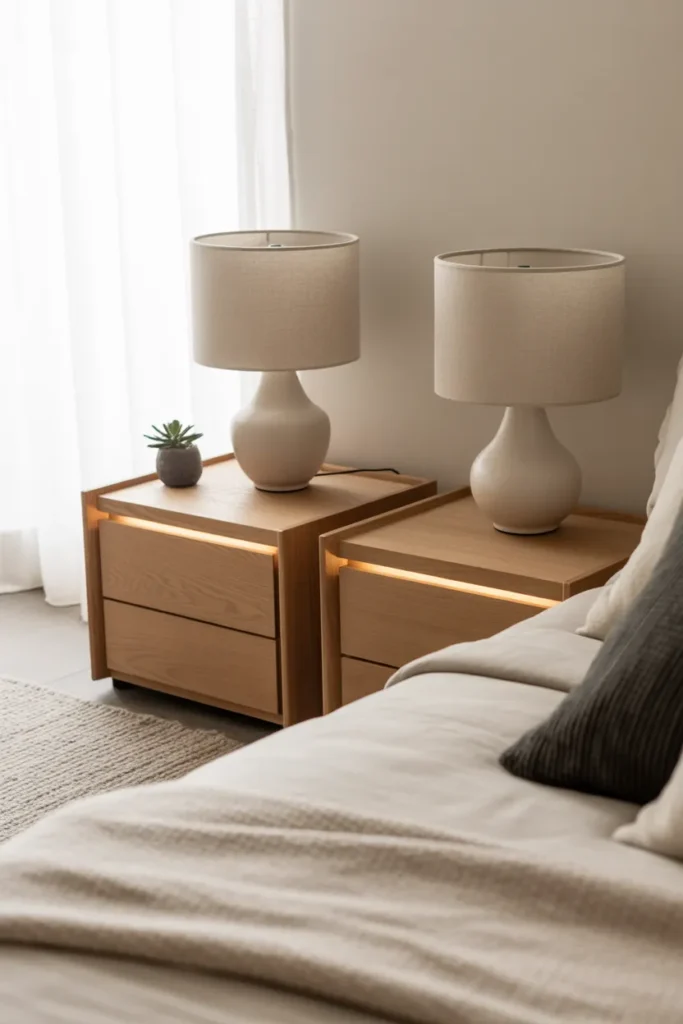
Nightstands do more than hold your phone and a glass of water. A pair of well chosen nightstands frames the bed and keeps the whole layout feeling balanced. The ideal nightstand height matches your mattress top, usually 24 to 28 inches tall, so you can reach your lamp and book without stretching. Widths of 18 to 24 inches fit most bedrooms, while a single drawer plus an open shelf gives you storage without visual bulk.
Keep the surface simple: a lamp, one book, and a small tray for jewelry or glasses. Anything more starts to look cluttered. Floating nightstands mounted to the wall free up floor space and make small rooms feel bigger, and they make cleaning underneath easy. Match the nightstand finish to your bed frame or choose a contrasting material, like a walnut nightstand beside a light oak bed, for a collected look that feels intentional rather than matchy. Leave at least 3 inches of space between the nightstand and the bed frame so bedding does not catch on the edges.
5. Statement Headboards as a Focal Point
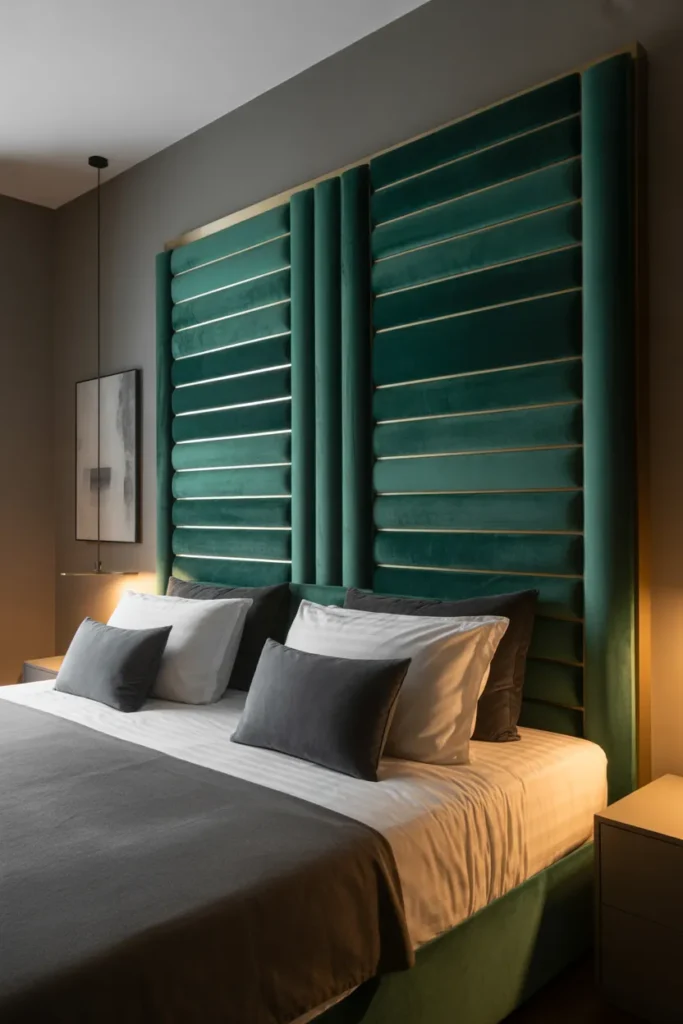
A statement headboard is the fastest way to give your bedroom personality without buying a whole new furniture set. An oversized headboard, 60 to 72 inches wide for a queen bed and up to 58 inches tall, instantly draws the eye and anchors the bed as the centerpiece of the room. Tufted velvet reads luxurious, reclaimed wood adds rustic warmth, and a tall arched rattan headboard brings a relaxed coastal feel.
Measure your wall before ordering and leave 2 to 3 inches of space on each side of the bed so the headboard does not crowd your nightstands. Mount a heavy headboard to wall studs with a French cleat or sturdy brackets rather than leaning it, so it stays secure. If you rent and cannot drill, choose a freestanding headboard with legs that slide behind the bed frame. Pair a bold headboard with calm bedding in solid colors so the two do not compete. One strong focal point is enough; when the headboard speaks, the rest of the room should stay quiet.
6. Multi-Functional Dressers with Smart Storage
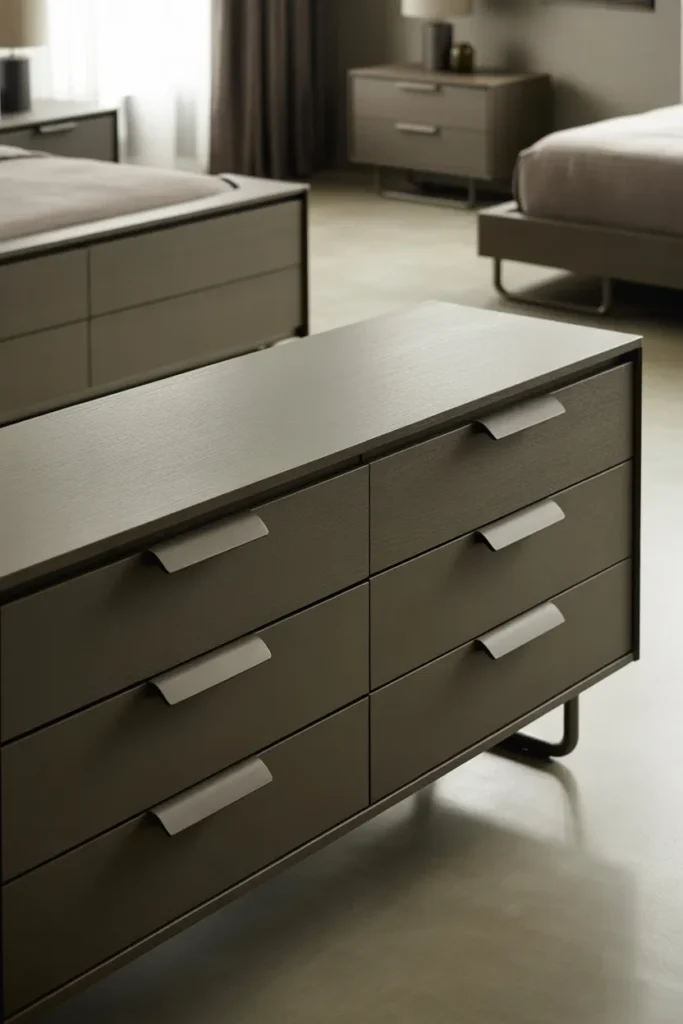
A modern dresser should work as hard as it looks good. Look for a wide dresser, 48 to 60 inches across and 18 to 20 inches deep, with deep drawers on full extension glides so you can reach items at the very back. Drawer dividers keep socks, underwear, and accessories separated, and soft close mechanisms stop drawers from slamming at night. A dresser top also gives you a display surface for a mirror, a lamp, or a small vase.
Organize the top drawer for daily essentials and reserve lower drawers for bulkier items like sweaters and jeans. Fold clothes using the file fold method, standing them upright in rows, so you can see everything at a glance and fit up to 30 percent more into each drawer. Choose a dresser that matches your bed frame in tone, or pick a painted finish in sage green, navy, or soft black for a subtle contrast. Anchor any dresser taller than 30 inches to the wall with anti-tip hardware, especially if children use the room.
7. Wardrobes with Sliding Doors
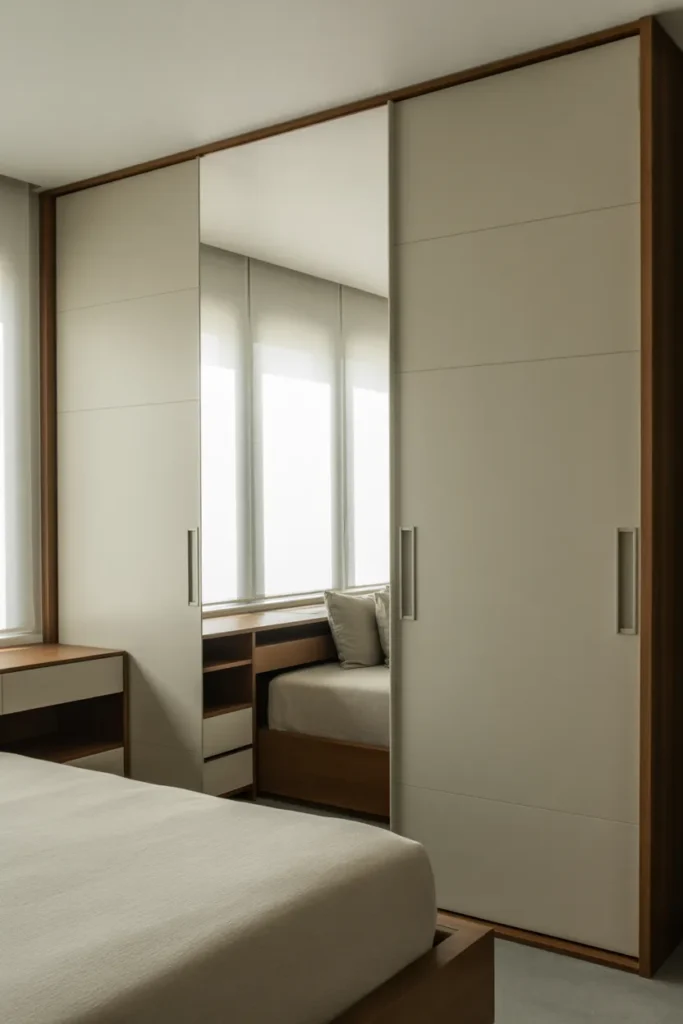
Sliding door wardrobes save space in a way hinged doors simply cannot. Because the panels glide past each other on a track, they need zero swing clearance, which means you can place a wardrobe just 24 inches from the bed and still open it fully. A standard two door sliding wardrobe is 60 to 72 inches wide and 24 inches deep, which is enough for hanging clothes plus shelves and drawers inside.
Inside, plan the layout before you buy: allow 40 inches of hanging height for shirts and folded pants, 60 inches for dresses and coats, and add at least two shelves for folded items and storage boxes. Mirrored sliding doors reflect light and make a small bedroom feel almost twice as large, while frosted glass panels give a softer look and hide clutter. Keep the tracks clean by vacuuming them monthly, because dust in the track is the main reason sliding doors start to stick. A quick spray of silicone lubricant on the rollers once a year keeps them gliding smoothly.
8. Floating Furniture for a Light, Airy Feel
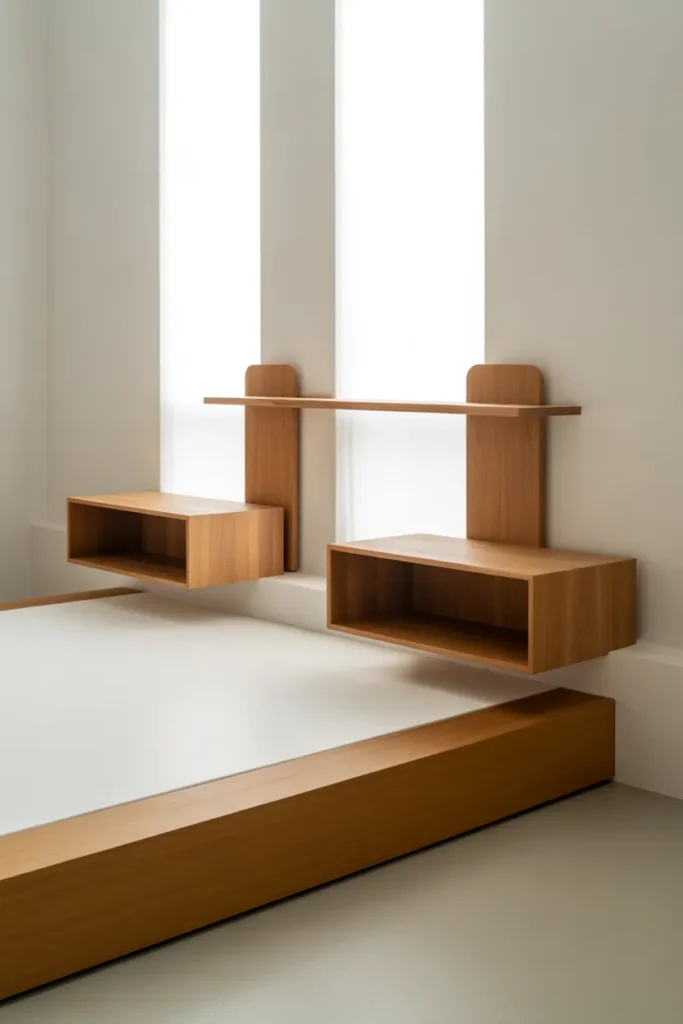
Floating furniture creates the illusion of more floor space by lifting pieces off the ground. Wall mounted nightstands, desks, and shelves leave the floor visible underneath, which tricks the eye into reading the room as larger. A floating shelf 24 to 36 inches wide mounted at 28 inches high works as a nightstand in a tiny bedroom, while a floating desk 40 inches wide gives you a workspace without eating up floor area.
Install floating pieces into wall studs or use heavy duty toggle anchors rated for at least 50 pounds each, because a floating nightstand has to hold a lamp, a book, and a phone without sagging. Keep the underside clean and uncluttered so the airy effect is not lost, and run a slim LED strip under the shelf for soft evening light. Floating furniture works best in small or minimalist bedrooms where every visual trick helps the room breathe, and it makes vacuuming and mopping the floor much easier too.
9. Accent Chairs for Added Functionality
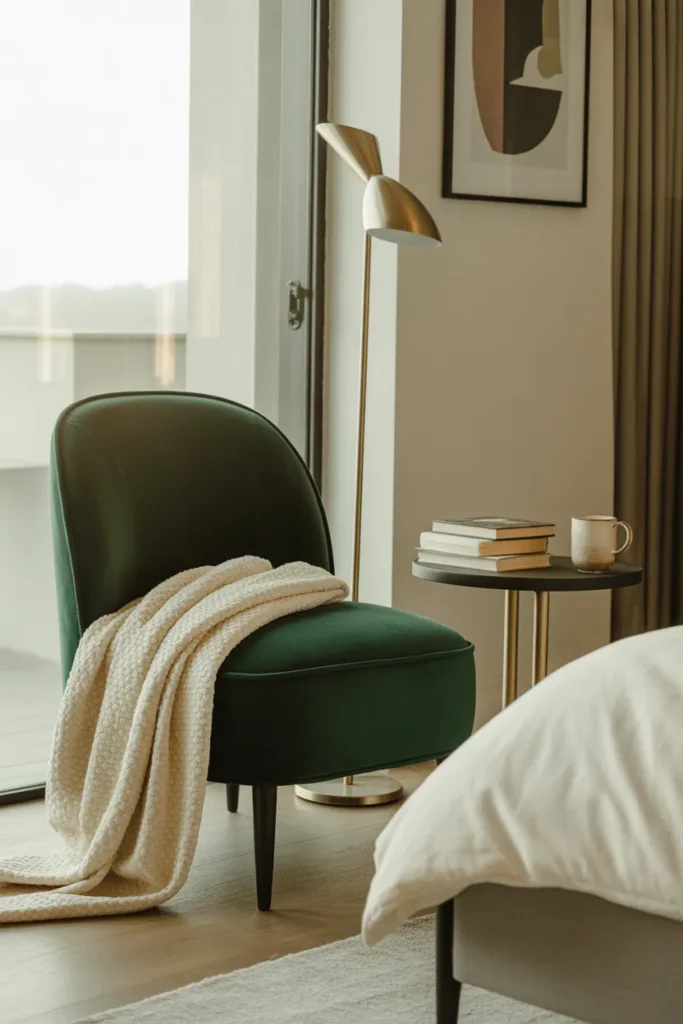
An accent chair turns an unused bedroom corner into a favorite spot. Whether you use it for reading, putting on shoes, or draping tomorrow’s outfit, a chair adds function and style at the same time. Look for a chair 28 to 32 inches wide with a seat height of 17 to 19 inches, which is comfortable for most adults. A swivel base lets you turn toward the window or the bed, and a matching ottoman adds comfort for long reading sessions.
Place the chair near a window for natural light or in a corner with a small side table and a floor lamp to create a reading nook. Choose upholstery that complements your bedding: a boucle chair in cream softens a modern room, while a leather accent chair adds warmth to a neutral palette. Keep at least 30 inches of walkway space around the chair so the room does not feel crowded. If floor space is tight, a slim armless slipper chair gives you the same function in a smaller footprint.
10. Benches at the Foot of the Bed
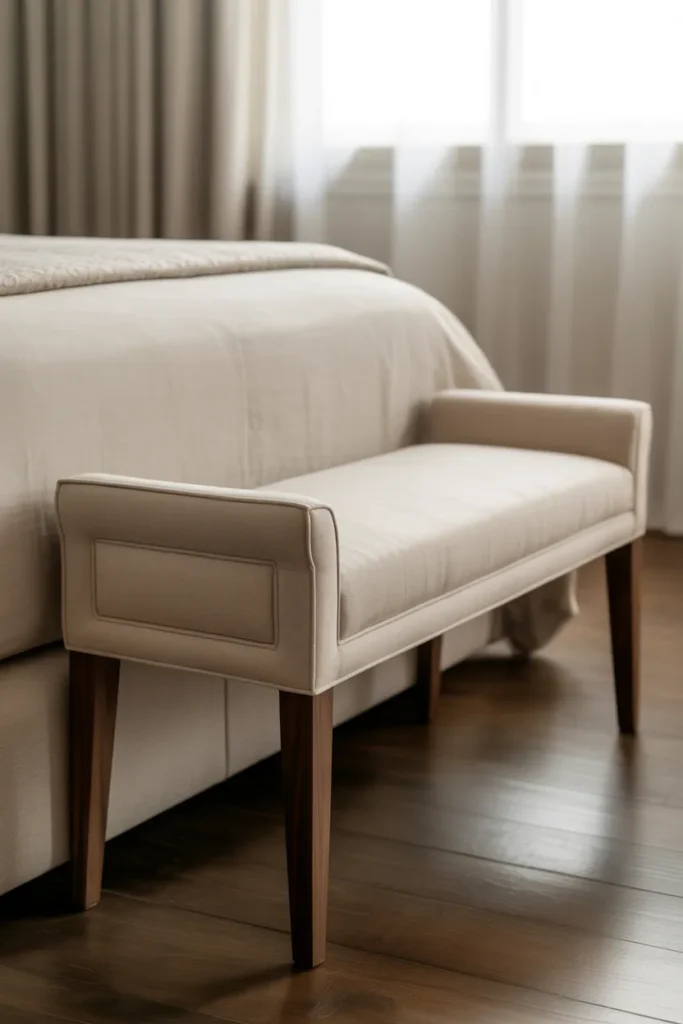
A bench at the foot of the bed is one of those pieces that looks decorative but earns its place every day. Use it to sit while putting on shoes, lay out clothes for the next morning, or store extra blankets within reach. A standard bench is 48 to 60 inches long for a queen bed, 16 to 18 inches deep, and 18 to 20 inches high, which lines up neatly with the mattress and keeps the proportions right.
Storage benches with a lift up lid or drawers hide throws, off season bedding, and shoes out of sight. Choose a cushioned top in a durable fabric like performance linen or faux leather so it stays comfortable and easy to wipe clean. Leave a gap of 18 to 24 inches between the bench and the bed so you can walk around it comfortably. In a small room, a slim open frame bench with a lower shelf keeps the look light while still giving you a place to set a basket or a pair of shoes.
11. Compact Furniture for Small Bedrooms
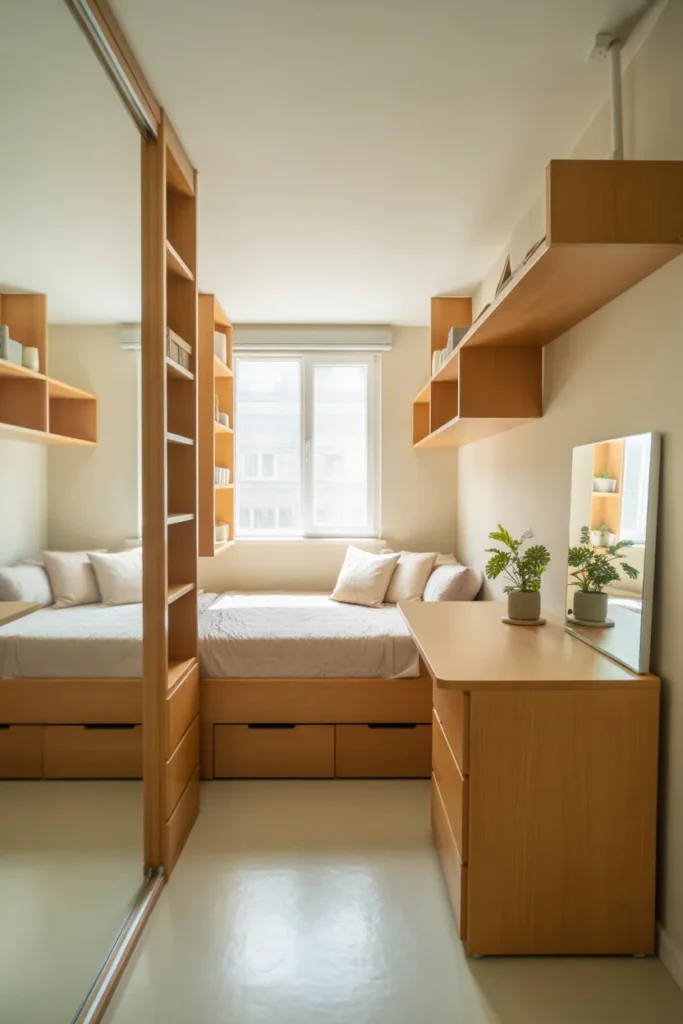
Small bedrooms demand furniture that is scaled down but still fully functional. Slim bed frames, narrow nightstands, and compact dressers keep the room usable without blocking walkways. Aim for a bed frame no wider than 62 inches for a queen, nightstands 16 to 18 inches wide, and a dresser no deeper than 18 inches. Keep at least 24 inches of clear space on each side of the bed so you can move comfortably.
Choose multi purpose pieces so every item does two jobs: a storage ottoman that holds blankets and works as a seat, or a nightstand with a drawer and a charging station. Light colors and furniture with visible legs make the room feel less crowded because you can see the floor underneath. If you are working with a truly tight space, these small bedroom ideas show how the right layout and scaled furniture can make even a tiny room feel calm and organized. Measure everything twice before ordering, and tape out the footprint of each piece on the floor with painter’s tape so you can see the layout before you commit.
12. Modular Bedroom Furniture Systems
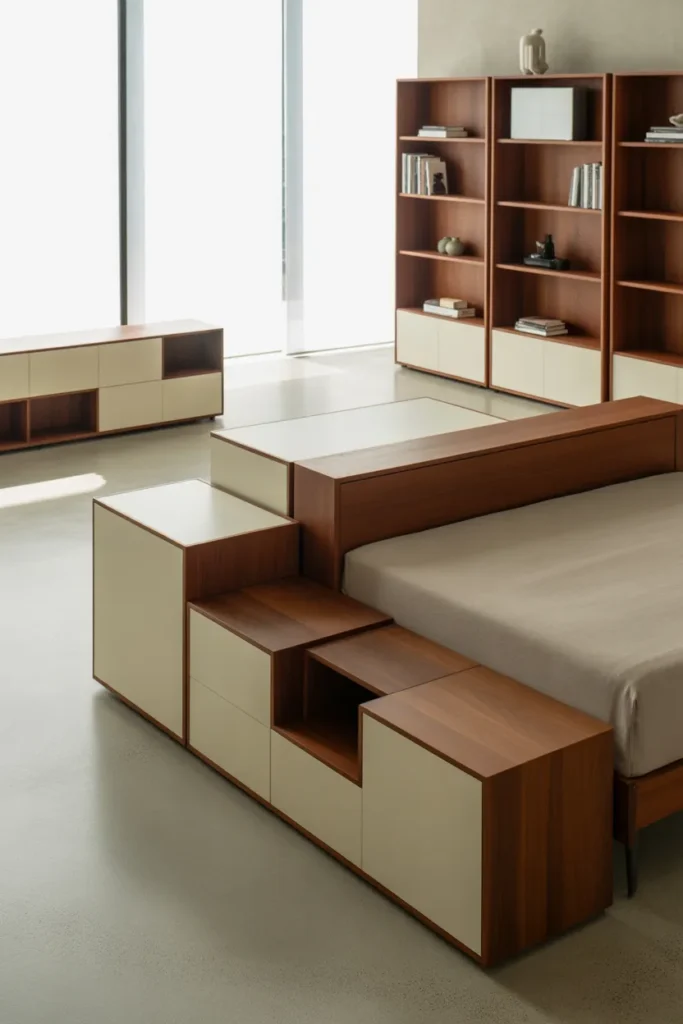
Modular furniture systems are built from separate units that you can rearrange as your needs change. A typical system includes stackable shelves, drawers, cabinets, and hanging rails in 16 or 24 inch wide modules that connect together. You can start with a simple wardrobe wall and add drawers later, or reconfigure the whole setup when you move to a bigger room. This flexibility makes modular systems ideal for renters and growing families.
Plan the system around your storage needs: count your hanging clothes, folded items, and accessories first, then choose modules to match. Leave the most used items between waist and shoulder height, and put seasonal storage up high. Choose modules in the same finish for a built in look, or mix open shelves with closed cabinets so the wall does not feel like a solid block. Most modular systems use simple cam locks and dowels, so you can take them apart and rebuild them in a new layout in under an hour.
13. Wooden Furniture for Timeless Appeal
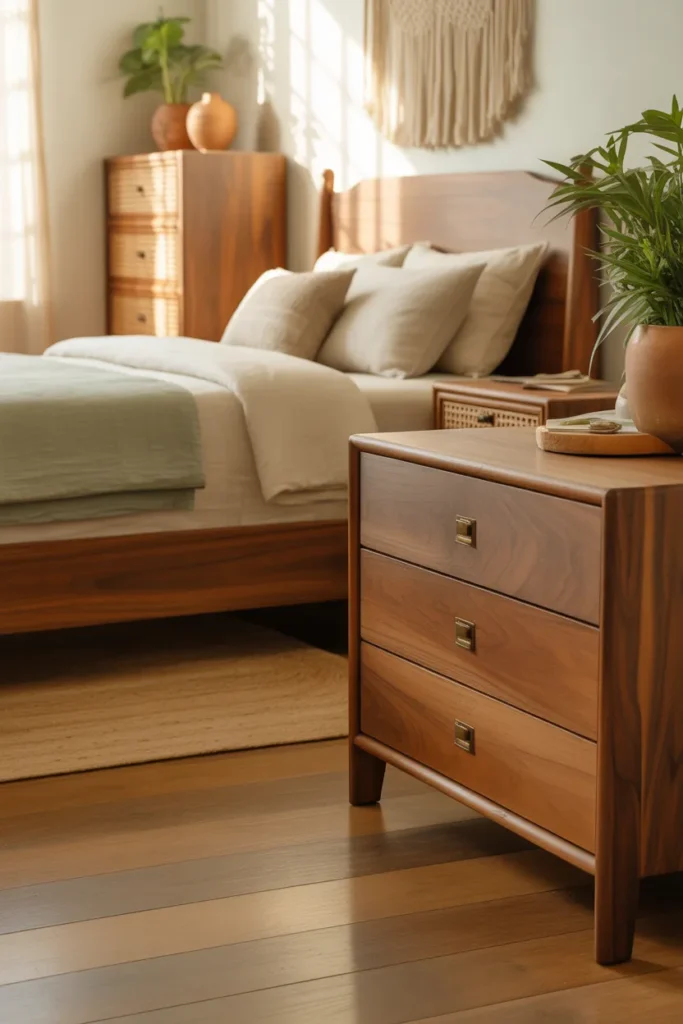
Solid wood furniture never goes out of style, and it ages better than almost any other material. A solid oak or walnut bed frame can last decades, developing a rich patina over time. Light woods like ash and white oak brighten a room and suit Scandinavian and modern styles, while darker woods like walnut and mahogany add depth and work beautifully in traditional or moody bedrooms.
When shopping, check that the piece is solid wood or wood veneer over a hardwood core rather than particleboard with a printed wood look. Real wood can be sanded and refinished if it gets scratched, which means the piece can last a lifetime. Care for it with a soft cloth and a wood safe cleaner, and keep it out of direct sunlight to prevent fading. Mix wood tones carefully: stick to two tones at most, such as a light oak bed with a walnut dresser, so the room feels collected rather than mismatched.
14. Mirrored Furniture for Visual Expansion
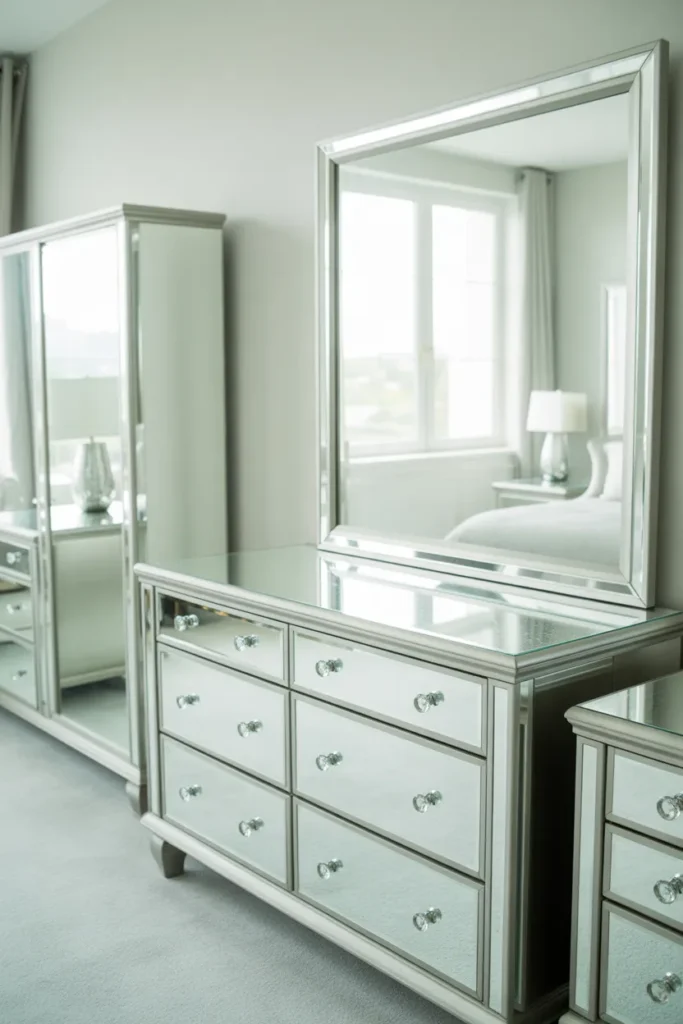
Mirrored furniture bounces light around the room and creates the illusion of more space, which makes it a smart choice for small or dark bedrooms. A mirrored dresser or wardrobe reflects windows and lamps, brightening corners that would otherwise feel flat. Use one or two mirrored pieces at most, because too much reflection starts to feel busy and can show every fingerprint.
A mirrored nightstand or a narrow mirrored dresser is usually enough to get the effect without overwhelming the room. Place the mirrored piece opposite a window or a lamp so it catches and doubles the light. Clean mirrored surfaces weekly with a glass cleaner and a microfiber cloth, and avoid placing mirrored furniture where it reflects the bed directly if that bothers you at night. Pair it with soft textiles like a linen throw and cotton bedding to balance the cool shine of the mirror with warmth.
15. Built-In Furniture for a Seamless Look
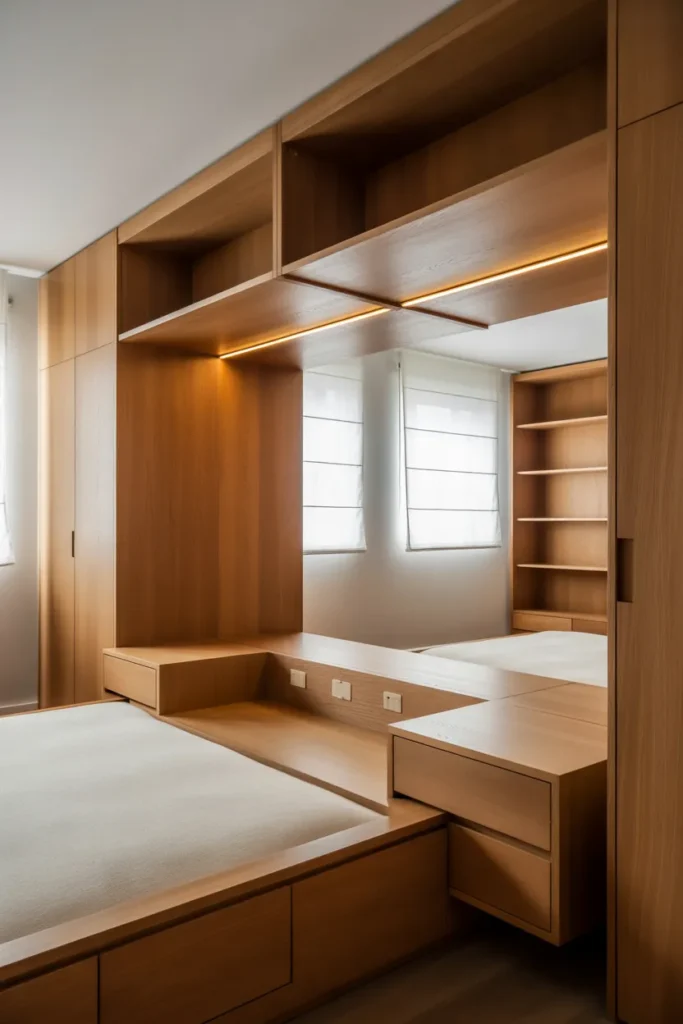
Built-in furniture turns awkward corners and alcoves into useful storage that looks like part of the house. A built-in wardrobe wall, window seat with drawers, or headboard with shelves uses every inch of the room and removes the gaps where dust and clutter collect. Built-ins are usually made to fit the exact dimensions of your wall, so measure carefully and allow a quarter inch of tolerance for uneven walls.
Paint built-ins the same color as the walls for a seamless look, or choose a contrasting shade like deep green or navy to make them a feature. Add interior lighting inside wardrobes and shelves so you can find things easily. Built-ins cost more than freestanding furniture, but they add real value to a home and make small or oddly shaped bedrooms far more livable. If a full built-in is out of budget, a semi built-in look can be achieved by placing freestanding wardrobes wall to wall and adding a filler panel and crown molding on top.
16. Neutral Furniture for a Calm Atmosphere
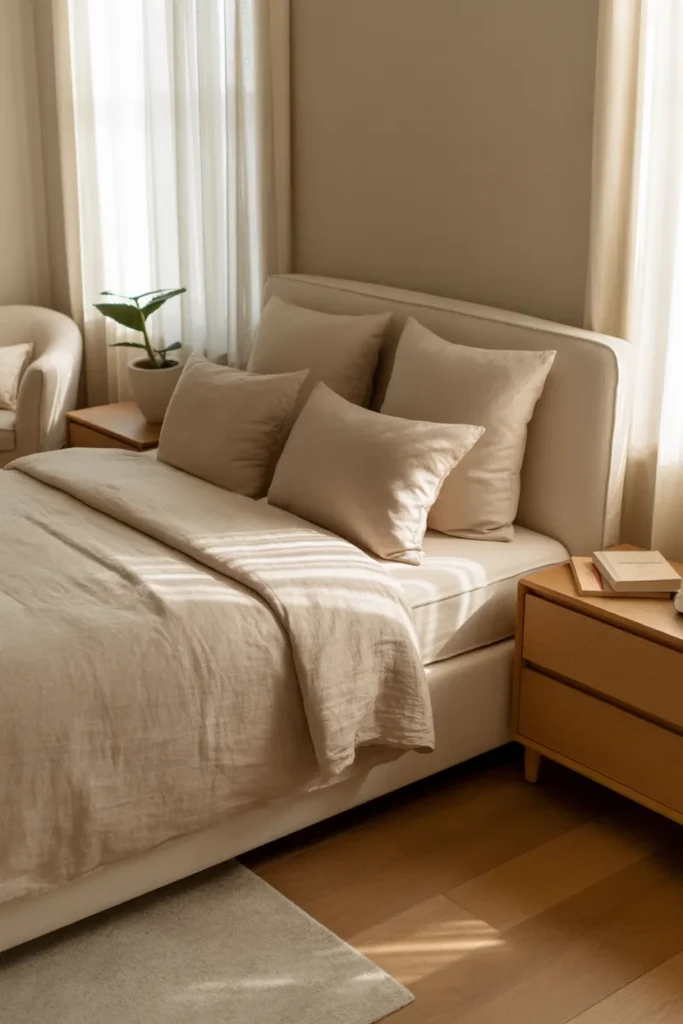
Neutral furniture is the foundation of a calm bedroom. Shades of white, beige, warm grey, and soft taupe make the room feel open and restful, and they give you a flexible base that works with any accent color. A neutral bed frame, dresser, and nightstands in matching or closely related tones create a quiet backdrop, and you can change the whole mood of the room just by swapping pillows, throws, and artwork.
To keep a neutral room from feeling flat, mix textures instead of colors: a linen upholstered headboard, a wood grain dresser, a woven basket, and a soft wool rug. These bedroom color schemes show how neutrals can be layered with warm and cool undertones for a look that feels intentional rather than plain. Add one or two accent pieces in a muted tone like sage, dusty blue, or terracotta to give the room a gentle focal point without breaking the calm. Keep lighting warm, around 2700K, so the neutrals glow rather than look cold.
17. Statement Dressers as Design Elements
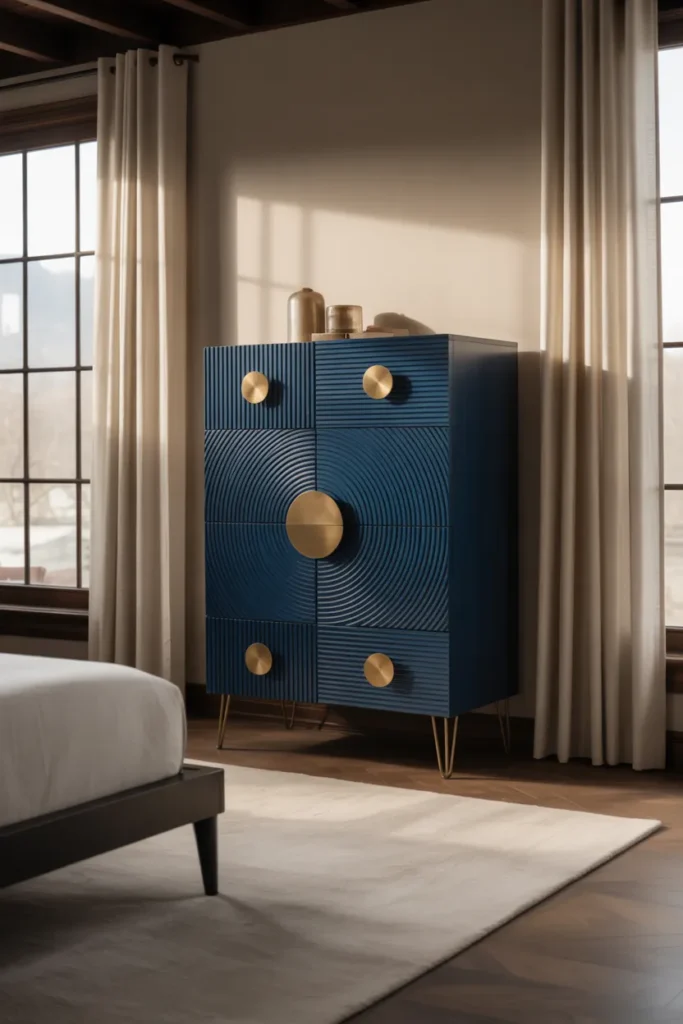
A statement dresser does more than store clothes; it acts as a piece of art in the bedroom. Look for dressers with unusual details: fluted fronts, bold colors, brass hardware, curved shapes, or mixed materials like wood and rattan. A wide dresser of 48 to 60 inches works as an anchor on a long wall, while a tall narrow chest suits a small corner. Place it where it gets noticed but does not block the walkway.
Balance a bold dresser with simpler furniture around it so the room does not feel overloaded. If the dresser is a strong color like forest green or navy, keep the bed frame and nightstands neutral. Style the top with just three items: a mirror or artwork, a lamp, and one decorative piece like a vase or a stack of books. This rule of three keeps the surface looking styled without clutter. A statement dresser is also a great way to add personality to a rental, because it is one piece that changes the whole room.
18. Multi-Purpose Furniture for Modern Living
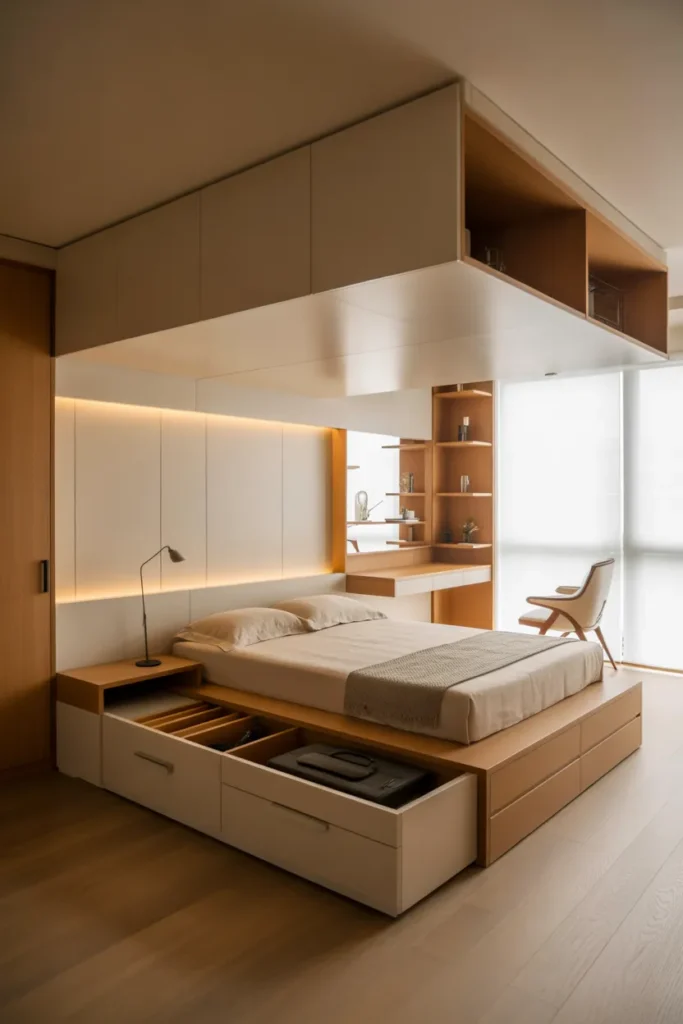
Multi-purpose furniture is essential in modern bedrooms where space is limited and every piece has to earn its place. A bed with a built-in desk, an ottoman with hidden storage, or a nightstand with a charging station and a small drawer combines two functions in one footprint. A storage ottoman of 30 to 36 inches wide can hold extra blankets and serve as a seat or a footrest, while a bedside table with a built-in wireless charger keeps cables off the floor.
Choose pieces where both functions are genuinely useful, not just clever on paper. A lift top coffee table in a bedroom sitting area works for laptop use and hides remotes and chargers inside. Measure the clearance needed for each function, such as the space to open a lift top lid or pull out a desk, so the piece works in real life. Multi-purpose furniture is especially valuable in studio apartments and guest bedrooms, where one room has to do the work of two.
19. Symmetrical Furniture Layouts
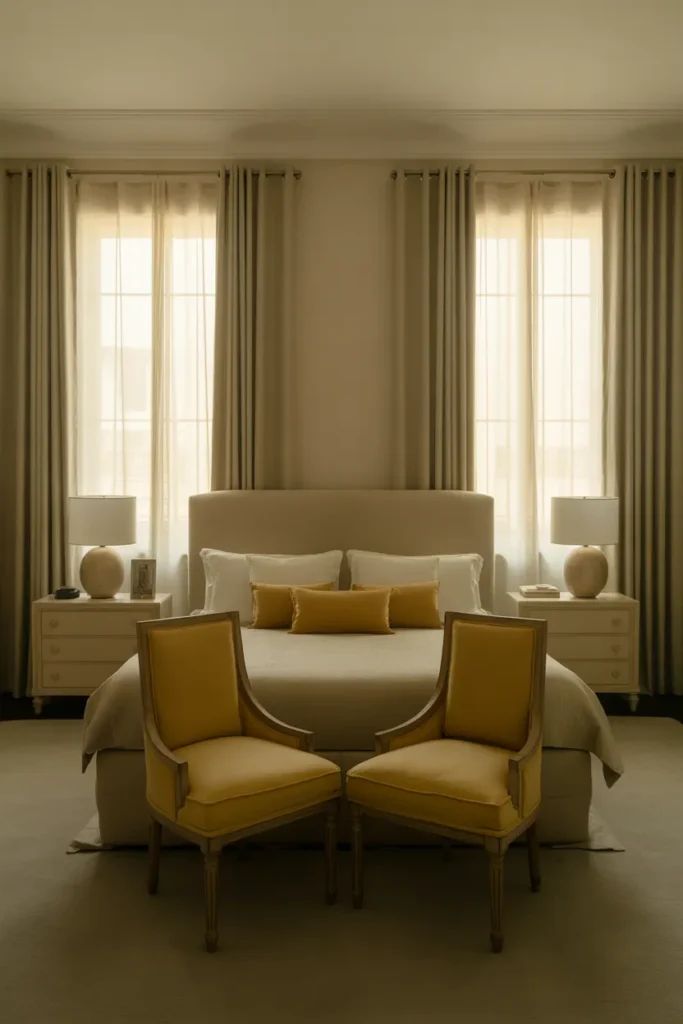
Symmetry brings instant calm and order to a bedroom. Matching nightstands, lamps, and artwork on both sides of the bed create a balanced, hotel inspired look that feels polished without effort. Start by centering the bed on the main wall, then place identical nightstands 2 to 3 inches from the bed frame on each side. Add matching lamps of the same height, usually 24 to 30 inches tall including the shade, and hang a piece of art or a mirror centered above the bed.
Symmetry works best in master bedrooms where there is enough wall space to mirror both sides evenly. In smaller rooms, keep the symmetry simple: matching nightstands and lamps are enough, and you can let the rest of the room be more relaxed. If you want a softer look, use pieces that match in size and height but differ slightly in finish or texture, which keeps the balance while adding character. A master bedroom layout built on symmetry photographs beautifully and feels restful every night, because your eye always finds the same calm order.
20. Furniture with Hidden Storage Features
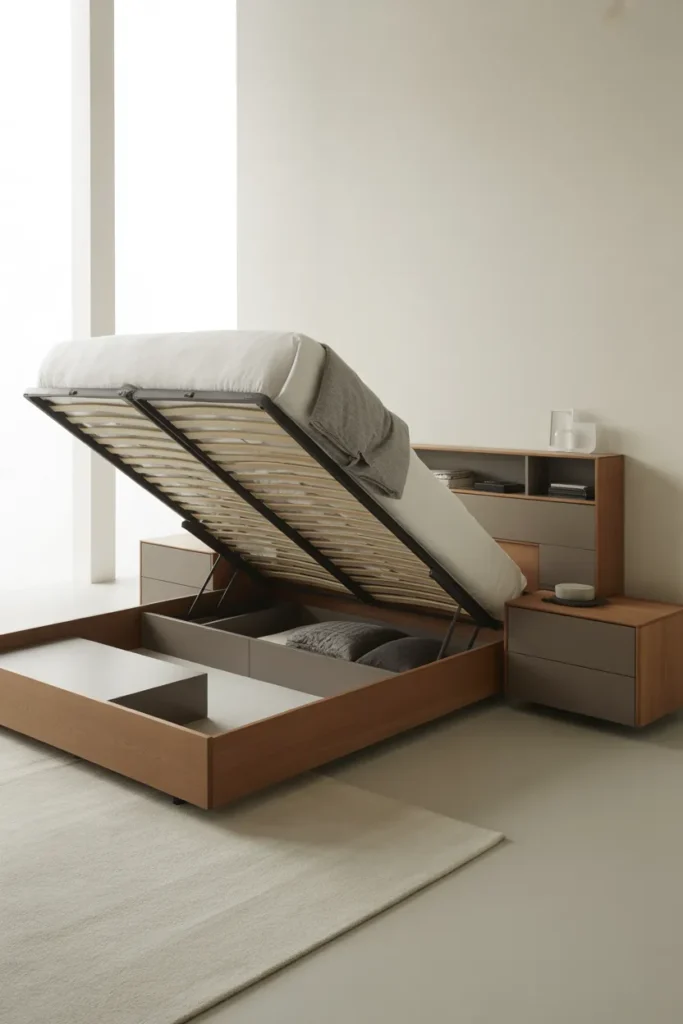
Hidden storage keeps a bedroom tidy while preserving a clean, minimal look. Beds with lift up platforms, nightstands with concealed compartments, and benches with secret drawers hide clutter in plain sight. A lift up bed base can hold up to 20 cubic feet of storage, which is enough for a full set of seasonal bedding. Ottoman beds and storage benches are the easiest way to add hidden storage without changing your layout.
Use hidden compartments for items that would otherwise create visual clutter: charging cables, spare chargers, books you are not currently reading, and off season clothes. Label the inside of each compartment with a small tag so you remember what is stored where. Choose hardware rated for daily use, such as gas struts that hold the lid open safely, and test the mechanism in the store before buying. Hidden storage works best when it is easy to access; if opening a compartment feels like a chore, you will stop using it.
21. Coordinated Furniture Sets for Cohesion
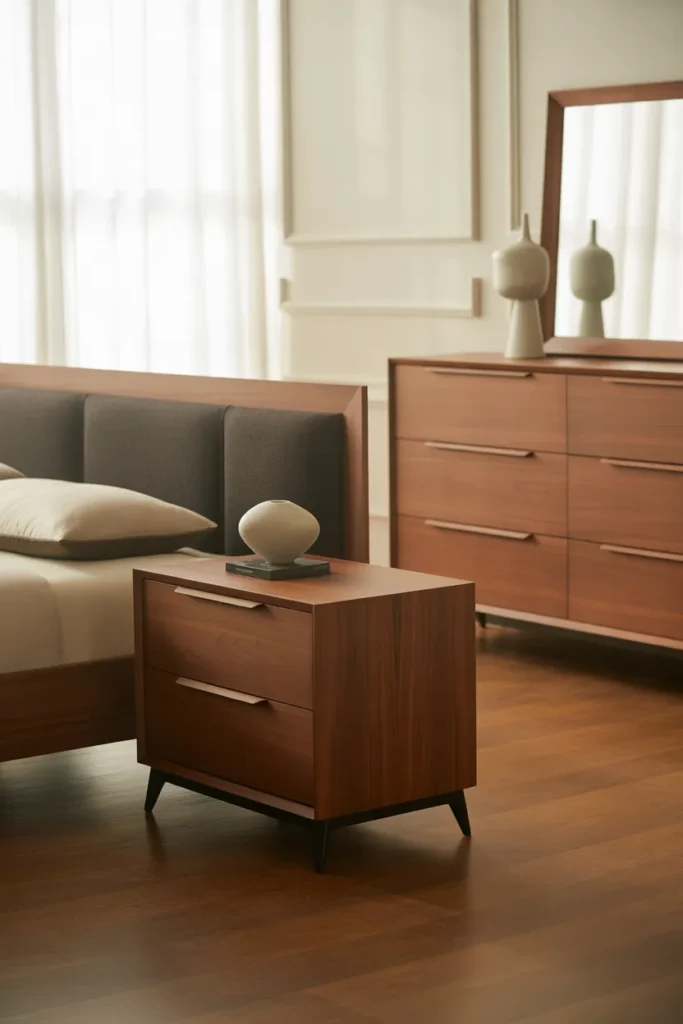
Coordinated furniture sets take the guesswork out of decorating. A matching bed, nightstands, dresser, and sometimes a mirror or chest share the same finish, style, and hardware, which creates a unified and polished look instantly. Sets are available in every style, from modern oak to classic cherry wood, and buying a set is usually cheaper than buying each piece separately.
Before choosing a set, measure your room and confirm that every piece fits with enough walkway space. A typical queen bedroom set includes a bed, two nightstands, and a dresser, which needs a wall of at least 12 feet for the bed wall and 6 feet for the dresser wall. If a full set feels too matchy for your taste, buy the set and swap one piece, like the nightstands, for something in a contrasting material. This keeps the cohesion while adding a personal touch. Coordinated sets are ideal for new homeowners and guest bedrooms, where you want a finished look quickly and without endless decisions.
Final Thoughts
These 21 bedroom furniture ideas show that the right furniture does more than fill a room. It shapes how you sleep, how you store your belongings, and how calm you feel when you walk in at the end of the day. Start with the piece that will make the biggest difference for you, whether that is a storage bed that ends the clutter, a statement headboard that gives the room personality, or a pair of nightstands that finally balances the layout.
Measure your space, choose materials that suit your lifestyle, and add one idea at a time so the room grows into a space that truly feels like yours. A bedroom that is comfortable, organized, and beautiful is not a luxury; it is a daily investment in how well you rest and how well you start each morning.
Frequently Asked Questions
What bedroom furniture should I buy first?
Start with the bed, because it is the largest piece and sets the layout for everything else. Next, add nightstands and a dresser or wardrobe for storage. Seating, accent pieces, and decor can come later once the essentials are in place and you can see how much space is left.
How do I arrange furniture in a small bedroom?
Place the bed against the longest wall, keep at least 24 inches of walkway space on each side, and choose slim furniture with storage built in. Use vertical space with tall dressers and wall shelves, and avoid oversized pieces that block doors or windows.
What is the best material for bedroom furniture?
Solid wood is the most durable and timeless choice, while wood veneer over hardwood offers a similar look at a lower price. Upholstered pieces in performance fabric are best for beds and chairs, and metal frames suit modern and industrial styles. Choose materials that match your budget and how much wear the furniture will get.
How can I make my bedroom look more expensive on a budget?
Focus on one statement piece, such as a tall upholstered headboard or a quality dresser, and keep the rest simple. Matching bedding, layered textures, warm lighting, and a cohesive color palette make a big difference without a big spend. Secondhand solid wood furniture can also be refinished for a high end look at a fraction of the cost.
How much space should I leave between bedroom furniture?
Leave 24 to 30 inches of walkway space around the bed and between furniture pieces so you can move comfortably. Keep 36 inches in front of a dresser so drawers open fully, and allow 18 to 24 inches between the bed and a bench or chair at the foot of the bed.
More Ideas You Will Love
 20 Men’s Bedroom Ideas That Are Modern, Masculine & Stylish
 21 Rustic Bedroom Ideas – Cozy Farmhouse & Modern Designs You’ll Adore
 16 Vintage Bedroom Ideas for Cozy, Elegant & Timeless Style
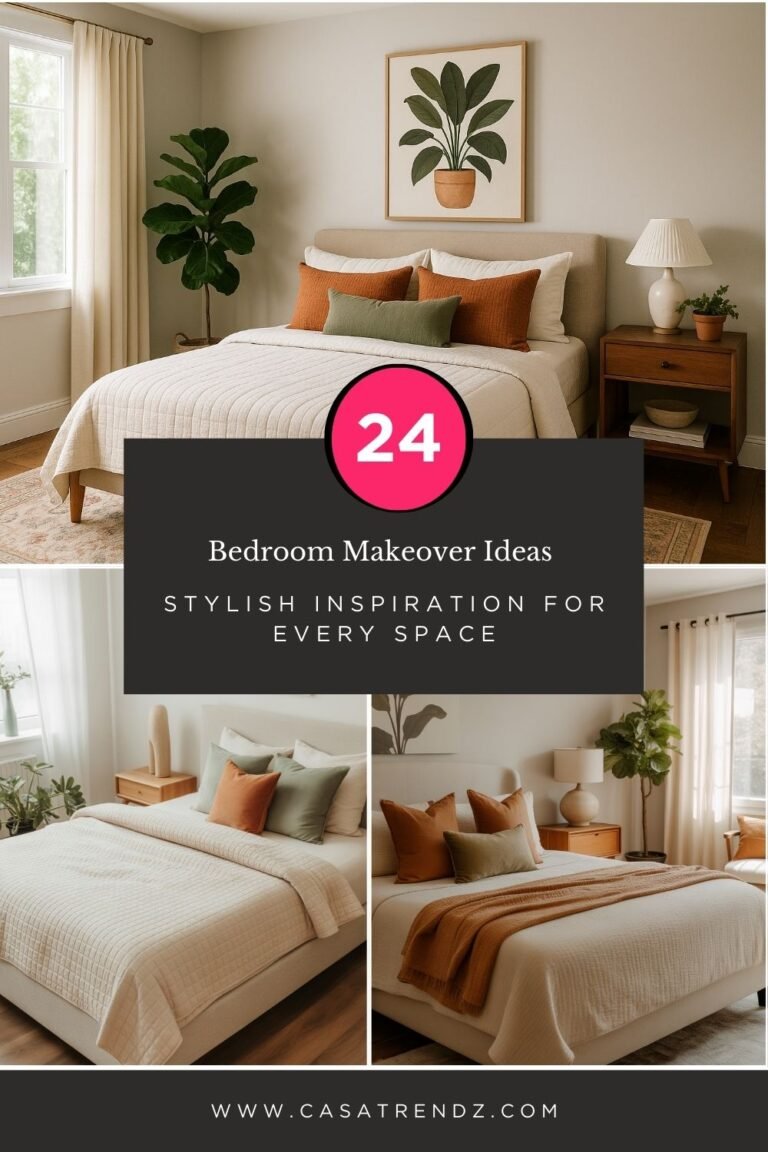 24 Bedroom Makeover Ideas – Stylish Inspiration for Every Space
 14 Modern Bedroom Design Ideas for Elegant Interiors
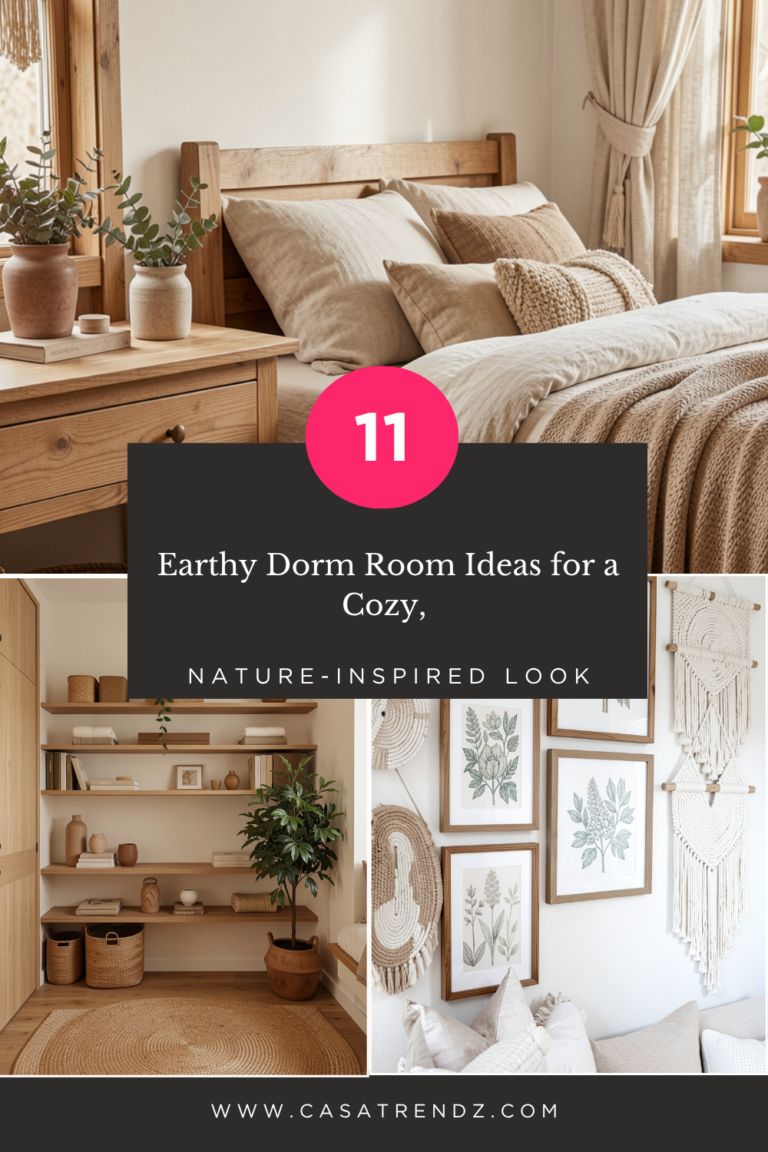 11 Earthy Dorm Room Ideas for a Cozy, Nature-Inspired Look