
23 Colorful Christmas Tree Light Ideas for a Magical Holiday Look

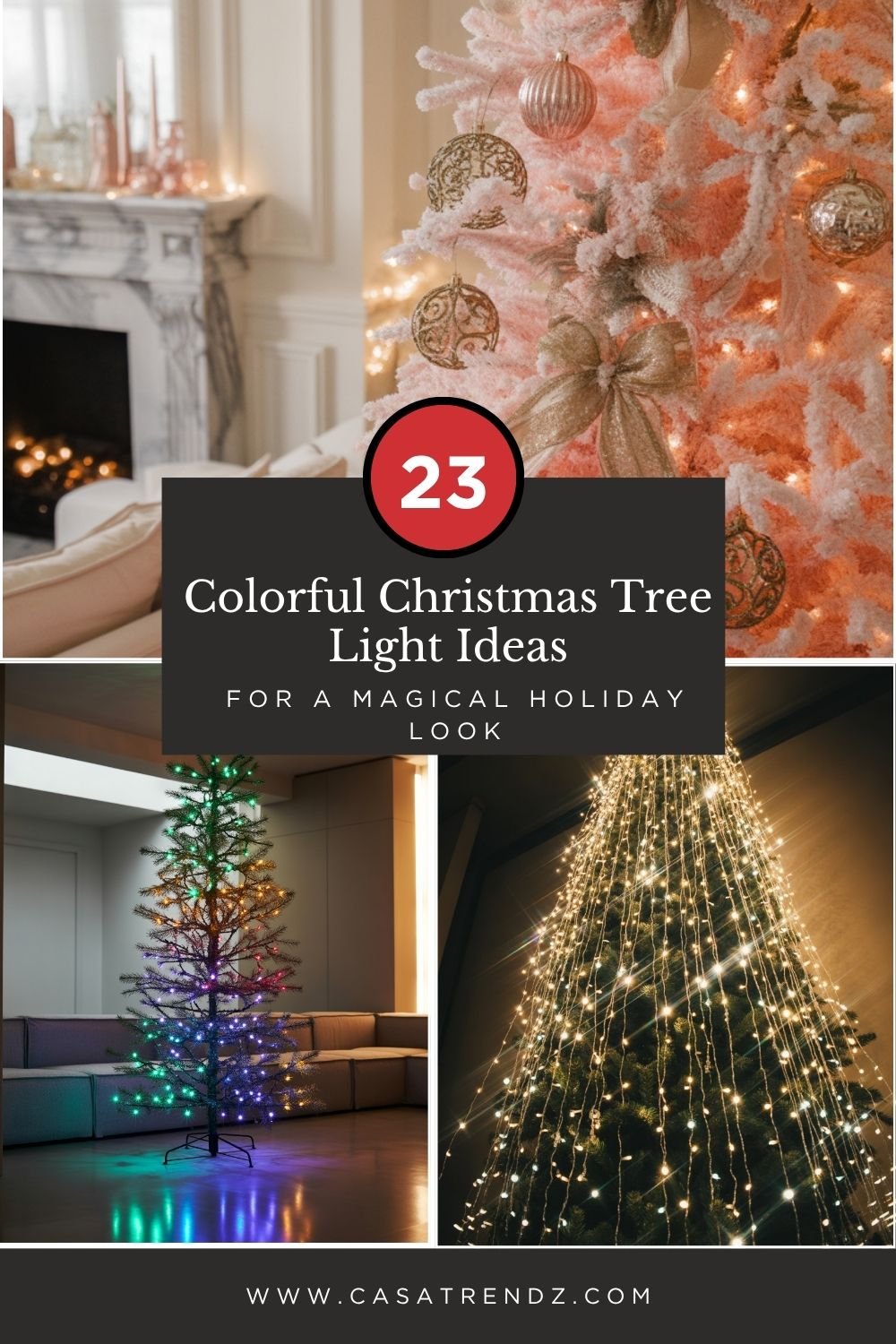
A Christmas tree is the heart of every festive home, and the right lighting can turn a good tree into a truly magical one. While classic white lights bring timeless elegance, colorful Christmas tree lights add energy, charm, and joyful creativity to your space. The possibilities are wide, from bold multicolor strands to soft pastel tones and rainbow gradients that glow with warmth and wonder. Color is also forgiving. It hides a sparse branch, draws the eye away from a gap, and makes even a small tree look full and celebratory.
In this guide, we have gathered 23 colorful Christmas tree light ideas for the 2026 holiday season that balance modern trends and timeless beauty. Whether your style is playful, elegant, or artistic, these ideas will help you transform your holiday decor with vibrant, glowing brilliance. Each idea includes the materials you need, realistic strand lengths and light counts, and step by step instructions, so you can plan before you buy and finish most trees in one relaxed evening.
Before you start, decide on one color story for the whole tree and test every strand before you hang it. A good rule is 100 lights per foot of tree height for a full look, so a 6 foot tree needs about 600 lights and a 7 foot tree needs about 700. Work from the inside out, starting at the trunk and moving toward the tips, and step back every few minutes to check the glow from across the room. For more seasonal inspiration, see these Christmas living room decor ideas that pair beautifully with a brightly lit tree.
1. Classic Multicolor String Lights
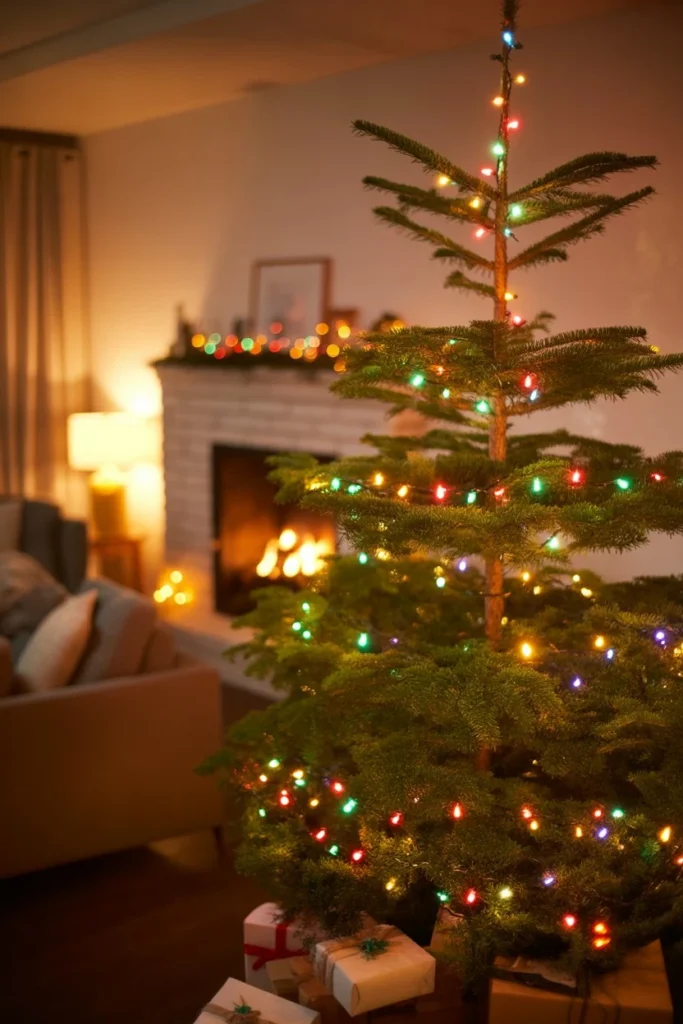
Nothing beats the nostalgic magic of traditional multicolor string lights. Their red, blue, green, and yellow hues bring back childhood memories and a sense of joyful warmth, and they suit almost any ornament collection because every color on the tree already appears in the lights. You need two to three strands of 100 light multicolor mini lights for a 6 foot tree, plus one extension cord and a timer so the tree switches off late at night without you having to crawl behind it.
Start at the top, tuck the plug end near the trunk, and wrap down in wide spirals, spacing each pass about 6 to 8 inches apart. Push some lights deep into the branches and leave others near the tips so the glow has depth instead of sitting only on the surface. Layer them generously from trunk to tip, then add ornaments after the lights are on, since ornaments are much easier to place once you can see where the bright and dark spots fall.
2. Rainbow Gradient Tree Lights
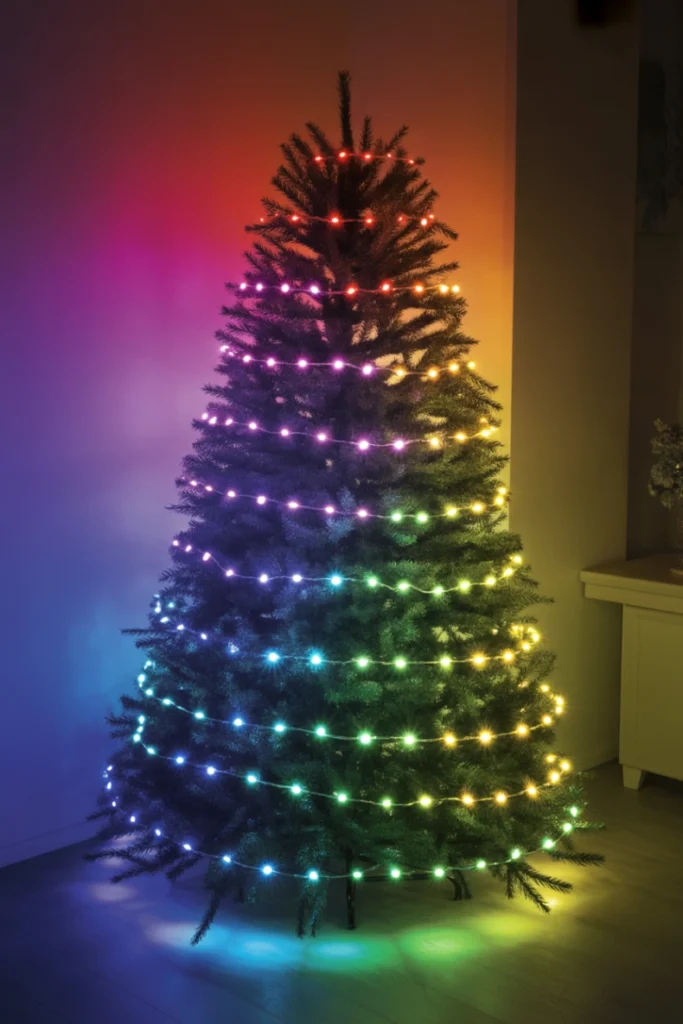
Create a stunning visual by wrapping your tree in a rainbow gradient pattern. Start with cool tones like blue and purple at the base, transitioning to warmer hues toward the top, and the result is a mesmerizing ombre effect that looks bold, modern, and deliberately designed. You need four to six separate single color strands, one per color band, each 50 to 100 lights depending on the width of your tree at that height.
Divide the tree into horizontal bands of roughly equal height, about 12 to 18 inches each on a 6 foot tree, and wrap one color per band with a slight overlap at each boundary so no dark line appears between colors. Keep the order consistent, for example purple, blue, green, yellow, orange, and red from bottom to top, and test the whole tree with the room lights off before adding ornaments. Small ornaments in clear glass or silver work best here, since heavy colored ornaments can fight with the gradient.
3. Pastel Glow Aesthetic
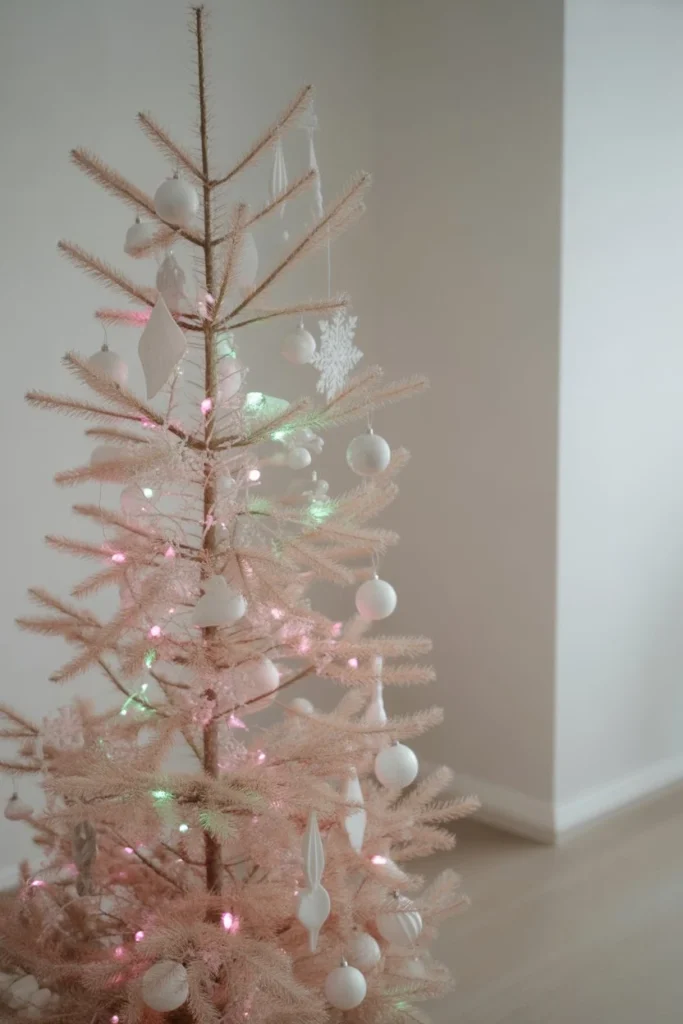
Soft pastel lights in pink, mint, and lavender add a whimsical charm to your Christmas decor, and they are a lovely choice for a bedroom tree, a nursery tree, or a living room with light furniture and pale walls. Pair them with white or silver ornaments for a light, dreamy look that feels magical yet sophisticated. You need two strands of pastel LED lights, 100 lights each, plus white or silver ball ornaments in two sizes, 2 inch and 3 inch, to keep the scale varied.
Wrap the lights a little closer together than usual, about 5 to 6 inches apart, because pastel bulbs read dimmer than saturated colors and a denser wrap keeps the tree from looking washed out. Add a white or silver tree skirt and a simple star topper rather than a bold colored one, and keep ribbon in white, blush, or champagne. If the room has warm yellow ceiling lights, switch them off in the evening so the pastel glow stays cool and dreamy instead of turning muddy.
4. Jewel-Toned Brilliance
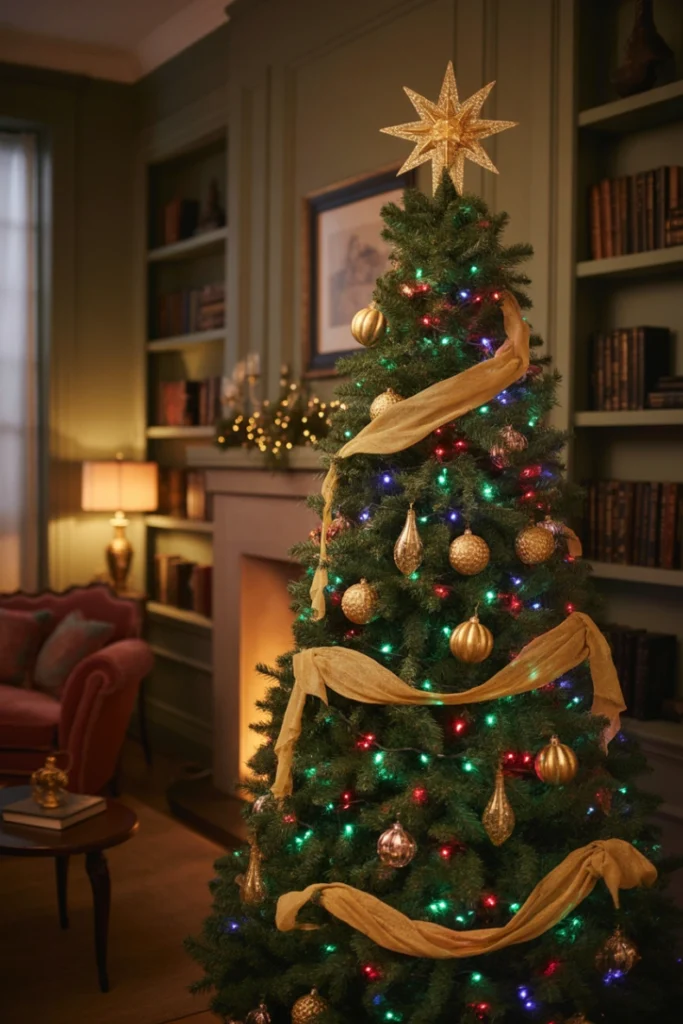
Deep jewel colors like emerald, sapphire, and ruby bring elegance and luxury to your tree, and they look especially rich against a dark green artificial tree or a real fir with deep green needles. Combine them with gold ribbons or metallic ornaments for a rich, regal holiday aesthetic. You need two to three strands of jewel toned lights, plus gold ribbon about 2.5 inches wide and 10 to 12 yards for a 6 foot tree, and gold or brass ornaments to tie the palette together.
Wrap the lights first, then weave the ribbon down the tree in three or four vertical cascades, tucking it into the branches every 12 inches so it drapes rather than hanging loose. Place gold ornaments near the lights so they catch and reflect the color, and keep the tree topper simple, a gold star or a gold finial, so the jewel tones stay the star of the show. This look suits a formal living room and photographs beautifully in the evening with the room lights dimmed.
5. Neon Pop Lights
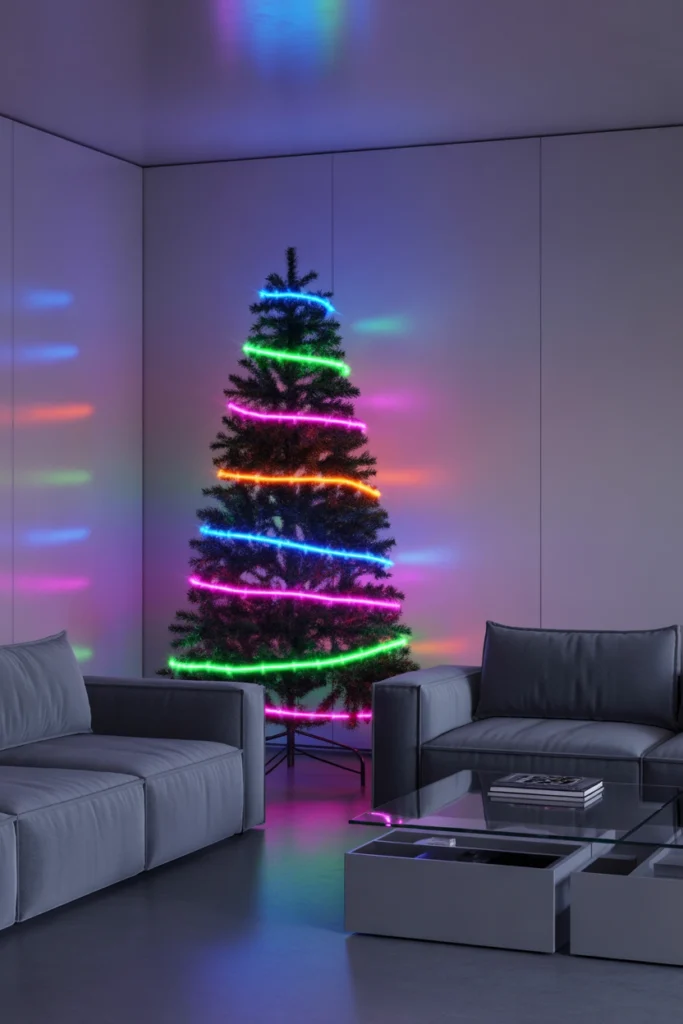
For a bold and modern approach, use neon inspired LED lights. Vibrant pinks, blues, and greens create a contemporary twist that energizes your decor, and the look is perfect for trendy apartments or modern spaces where a traditional tree might feel too formal. You need two strands of bright LED lights in hot pink, electric blue, or lime, plus simple ornaments in white, black, or clear acrylic so the neon colors do not compete with busy patterns.
Keep the rest of the room simple while the tree does the talking. A plain white or black tree skirt, a few white ornaments, and no heavy garland will let the neon glow read clearly. Use a remote controlled strand if you can, since neon colors can feel intense at full brightness and a dimmer setting makes them comfortable for a whole evening. This idea also works well on a small tabletop tree, where one 50 light strand is enough to make a big statement in a small space.
6. Candy Cane Color Combo
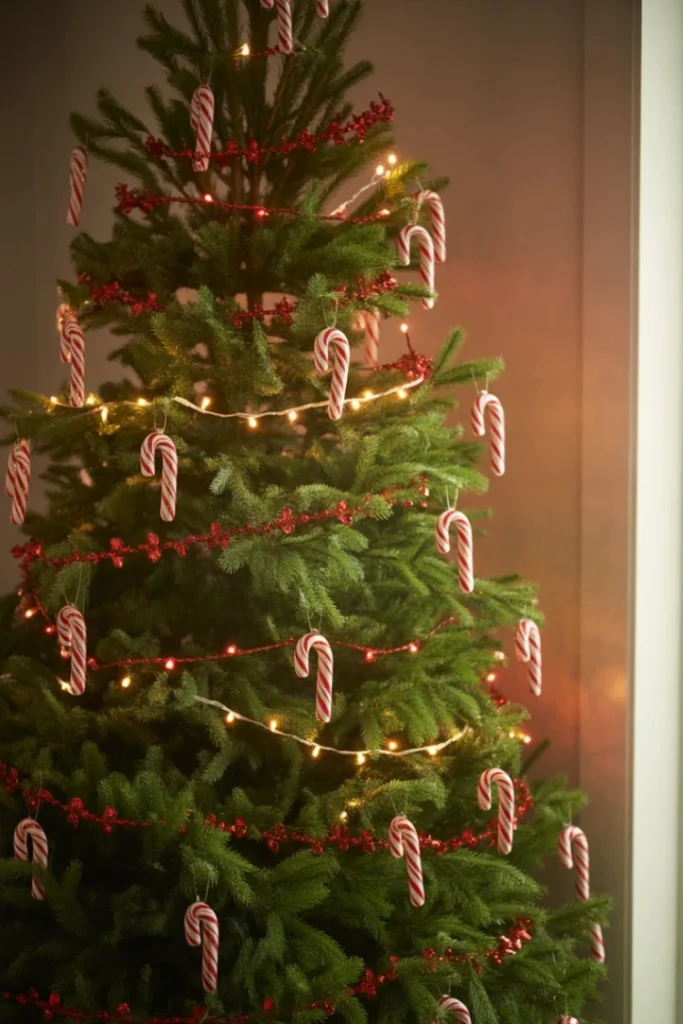
Alternate red and white lights to mimic the festive look of candy canes. This simple yet striking combination creates a cohesive color story that instantly says Christmas, and it is one of the easiest themes to shop for because red and white strands are sold everywhere. You need one red strand and one white strand, 100 lights each, alternating them as you wrap, plus red and white striped ribbon and a few candy cane ornaments if you like a literal touch.
Wrap the red strand first in wide spirals, then wrap the white strand in the gaps between the red passes so the two colors sit side by side rather than overlapping into a blur. Keep the spacing even, about 6 inches apart, and step back often to check that neither color dominates one side of the tree. Add white ornaments with red accents, a red tree skirt, and a simple white star, and the whole tree will read as one intentional candy cane theme instead of a random mix.
7. Golden Glow Mix
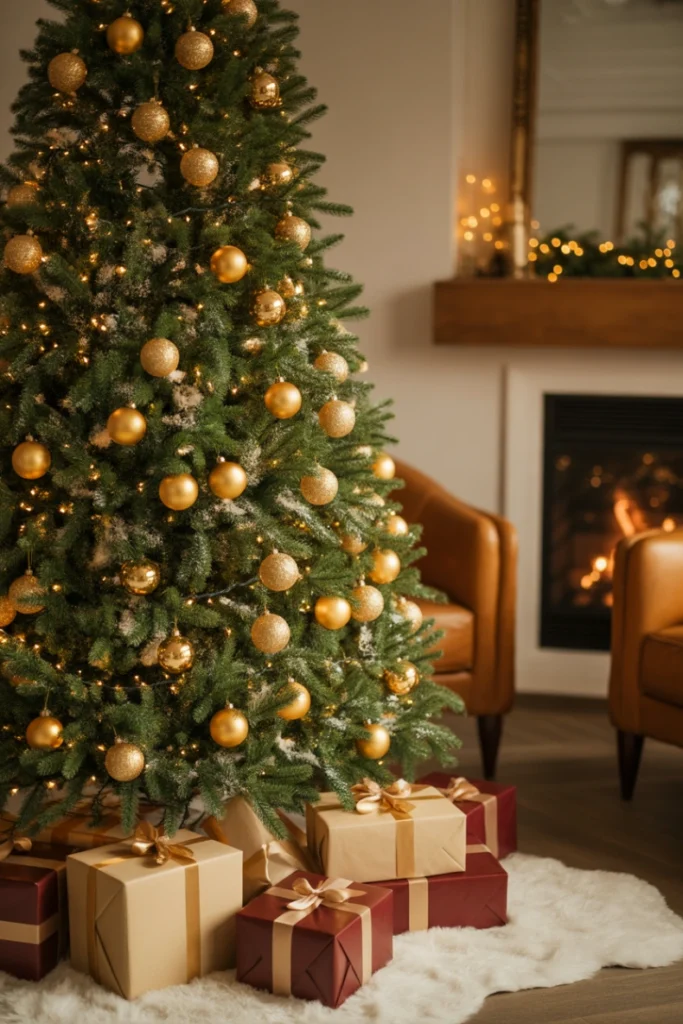
Warm golden lights add elegance and depth to your tree, and they are the safest choice if you want color without a rainbow effect. Mix them with subtle amber tones and gold ornaments for a look that is both sophisticated and inviting. You need two strands of warm white or gold LED lights, 100 lights each, plus one strand of amber lights if you want extra warmth, and gold ornaments in matte and shiny finishes for contrast.
Wrap the warm white lights first, then add the amber strand only on the outer branches so the gold tones catch the eye without making the whole tree look yellow. Mix matte gold balls with shiny ones, since a tree of only shiny ornaments can look flat under bright lights, and add a gold ribbon garland if you want more texture. This palette suits wood furniture, cream walls, and traditional rooms, and it looks warm in photographs without needing any camera adjustments.
8. Blue and Silver Winter Lights

Cool blue and silver tones evoke the beauty of a snowy winter night, and this palette is ideal for a modern home, a white walled room, or a tree decorated with glass and crystal ornaments. Combine icy blue LED lights with silver garlands and glass ornaments for a frosty, elegant glow. You need two strands of blue lights, one strand of cool white lights, silver garland or bead strands, and silver and clear glass ornaments.
Wrap the blue and white strands together, alternating passes, so the colors blend rather than forming separate bands. Add silver bead garland in two or three spirals and place clear glass ornaments near the lights so they sparkle like ice. Keep the tree skirt silver or white, and avoid warm gold ornaments here, since warm tones will clash with the icy palette. If you have a flocked or snowy tree, this is the palette that makes it look its best, since the blue light reads as moonlight on snow.
9. Red and Green Traditional Lights
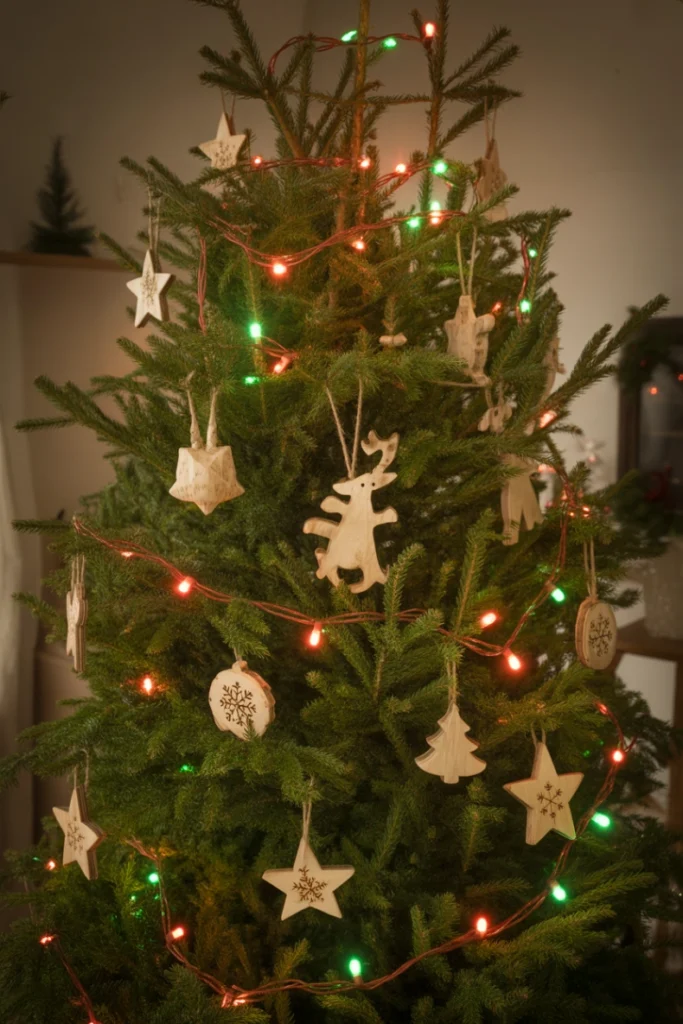
Keep it classic with red and green lights, the ultimate Christmas color duo. This theme suits a family tree covered in handmade ornaments, school crafts, and collected decorations from many years, because the lights frame the ornaments without stealing attention from them. You need one red strand and one green strand, 100 lights each, plus plaid ribbon and rustic ornaments such as wooden stars, dried orange slices, or pinecones.
Wrap the red strand first, then the green strand in the gaps, keeping the same even spacing you would use for a single color. Add plaid ribbon in two vertical cascades and a simple star topper, and let the ornaments do the storytelling. Because red and green can look busy under bright room lights, dim the overhead lights in the evening and let the tree be the main light source in the room. This is also a forgiving theme for a first tree, since both colors are easy to find and easy to replace if a strand fails.
10. Sparkling LED Clusters

Cluster lights feature multiple LEDs on short branches, creating an even, sparkling effect that fills gaps and makes a tree look professionally lit. These give your tree a professional, glowing appearance with maximum light coverage, and they are especially useful on artificial trees with sparse branches. You need two to three cluster strands, usually 200 to 400 lights per strand, depending on the brand, and you will likely need fewer strands than with standard mini lights.
Work the clusters into the branches rather than wrapping them around the outside, pushing each small cluster into a gap and letting the short stems fan out. Start at the trunk and work outward, and check from across the room after each strand, since cluster lights can look patchy up close but perfectly even from a distance. Because clusters are dense, keep ornaments a little smaller and fewer than usual, so the lights stay visible. A timer is essential here, since cluster strands are bright and can feel intense if left on all night.
11. Twinkling Multi-Function Lights
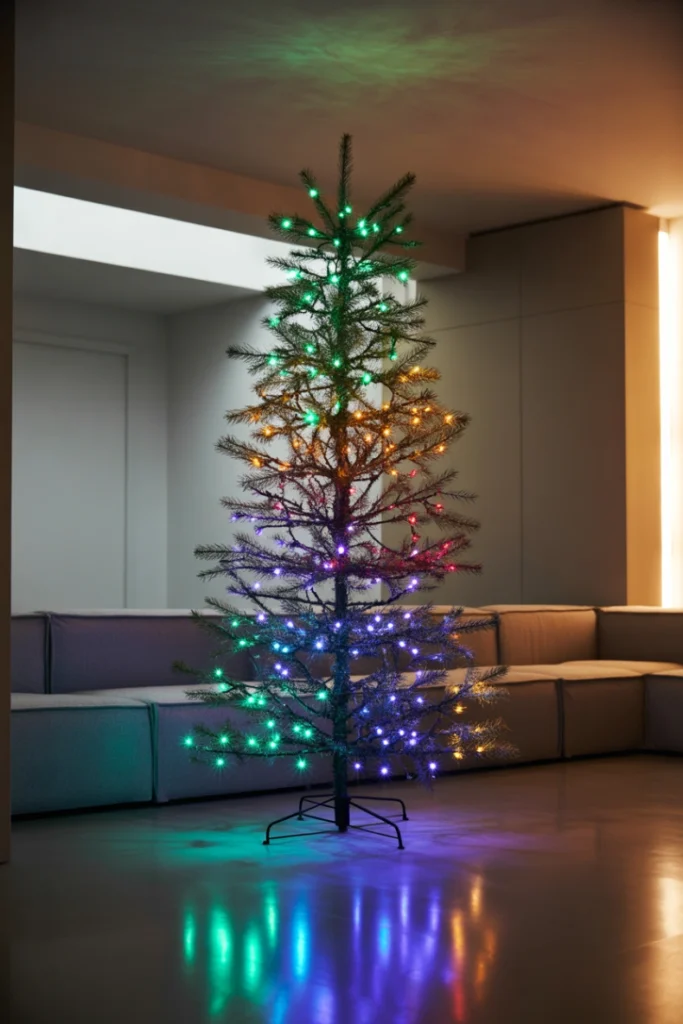
Choose smart LED strands that can change colors or twinkle at different speeds. You can easily switch from a warm white evening glow to colorful party lighting in seconds, which makes this idea ideal for a household that uses the same tree for quiet family evenings and for holiday parties. You need one or two multi-function strands, 200 to 300 lights each, with a controller or remote, plus a surge protected outlet strip near the tree.
Wrap the tree once with the multi-function strand, keeping the controller within reach but hidden behind the tree skirt or a nearby piece of furniture. Test every mode before the first party, since some twinkle modes flash fast enough to bother sensitive guests, and pick two or three favorite modes to use regularly rather than cycling through all of them. Set a steady warm white mode for evenings, a slow twinkle for dinner, and a full color mode for parties, and the same tree will feel different on different nights without any redecorating.
12. Gradient Strand Arrangement
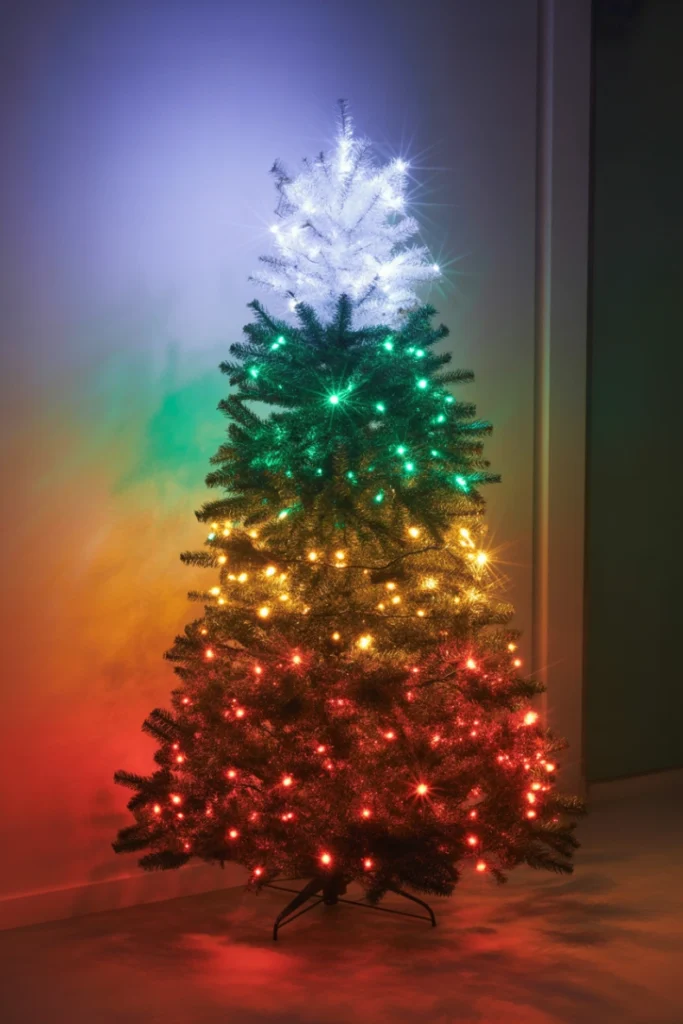
Use different color strands arranged in sections, for example red lights at the bottom, green in the middle, and white on top. This creates a striking tiered effect that is eye catching and unique, and it is simpler than a full rainbow gradient because it uses only three colors. You need one strand per section, 100 lights each, in red, green, and cool white, plus ornaments that match each section or neutral ornaments that work with all three.
Divide the tree into three equal horizontal sections and wrap each color only within its section, overlapping slightly at each boundary so no dark line appears. Keep the top section white, since white at the top reads as a starburst and draws the eye upward, and keep the bottom section red, since red grounds the tree visually. Neutral silver or gold ornaments work across all three sections, while section matched ornaments, red at the bottom and green in the middle, will strengthen the tiered effect if you want a bolder look.
13. Metallic Reflection Lights
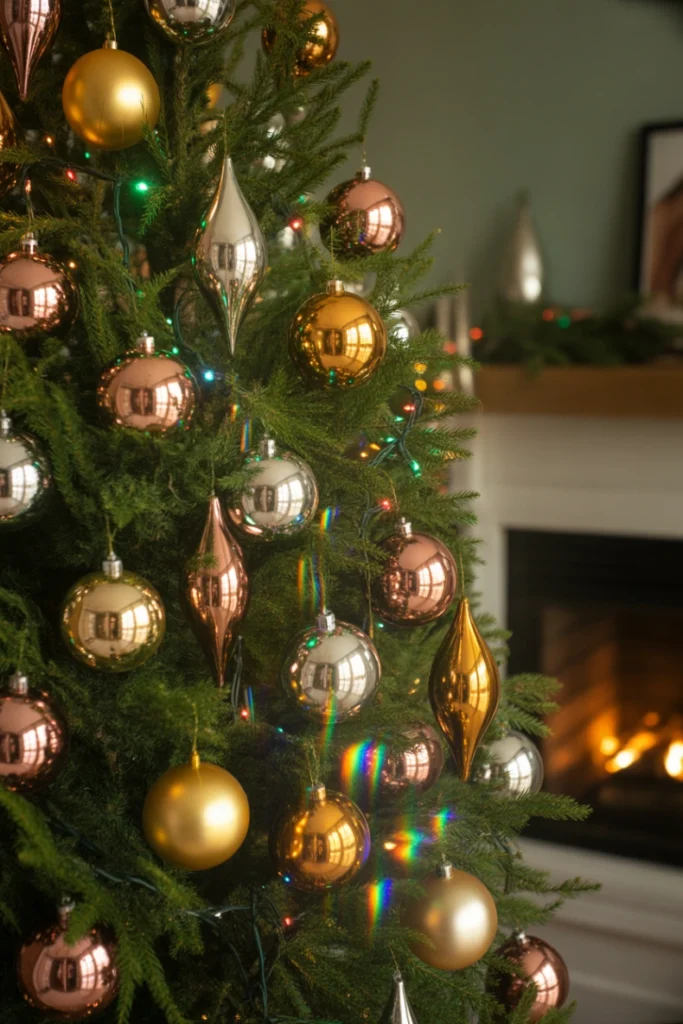
Use shiny metallic ornaments to reflect colorful light strands. The reflections enhance brightness and give your tree a shimmering, multidimensional glow, and this trick can make a modest set of lights look far more expensive than it is. You need one or two strands of multicolor lights, plus metallic ornaments in gold, silver, and copper, in shiny and mirror finishes, placed close to the bulbs.
Hang the lights first, then place a shiny ornament within 2 to 3 inches of a bulb wherever you want extra sparkle, since reflection only works when the ornament sits close to the light source. Mix large mirror balls near the outer branches with smaller metallic balls deeper inside, so the reflections appear at different depths. Avoid matte ornaments in this theme, since they absorb light instead of reflecting it, and keep the tree skirt metallic or white so the base of the tree reflects light upward as well.
14. Pink and Gold Glam Lights
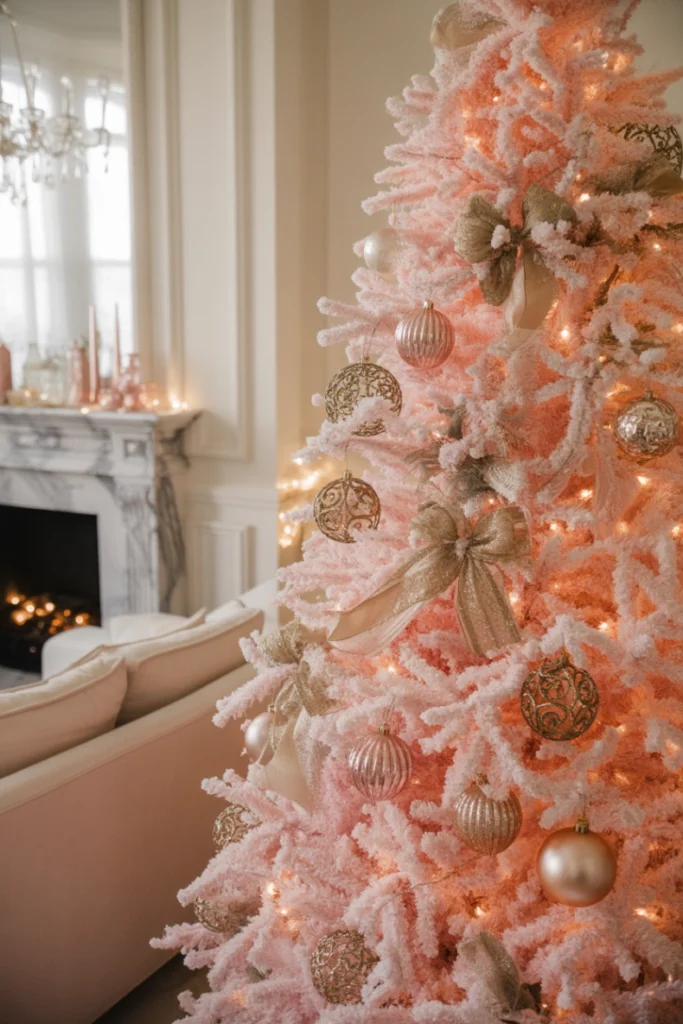
Combine blush pink and gold tones for a chic, glamorous holiday look. The combination is perfect for feminine, modern interiors and looks stunning with soft lighting, and it suits a bedroom tree, a dressing room tree, or a living room with blush and cream decor. You need one strand of pink lights, one strand of warm white or gold lights, blush and gold ornaments, and a blush or champagne ribbon.
Wrap the pink and gold strands together, alternating passes, so the colors blend into a warm blush glow rather than forming separate pink and gold bands. Add gold ornaments near the pink bulbs so the gold catches the light, and use blush ornaments in matte and shiny finishes for variety. Keep the tree skirt blush, white, or gold, and choose a gold star topper rather than a traditional red or green one. For a matching soft glow elsewhere in the room, see these Christmas bedroom decor ideas that use gentle lighting for a cozy night time feel.
15. Smart RGB App-Controlled Lights

Modern technology lets you customize patterns and colors from your phone. You can create gradients, animated effects, or even sync your lights to Christmas music, which makes this idea a favorite for families with children and for anyone who likes to change the tree look without rewiring it. You need one RGB smart strand, usually 250 to 500 lights for a 6 foot tree, a stable Wi-Fi connection near the tree, and the companion app installed before you start wrapping.
Wrap the strand evenly first, then set up the app and test the colors, gradients, and music sync modes with the room lights off. Save two or three presets, such as a calm warm white for evenings, a rainbow gradient for weekends, and a music sync mode for parties, so you are not scrolling through options every night. Keep the controller and power supply ventilated and away from the tree skirt fabric, and use a timer inside the app so the tree switches off automatically. Smart lights cost more than standard strands, but one strand replaces several single color sets.
16. Snow Glow Illusion
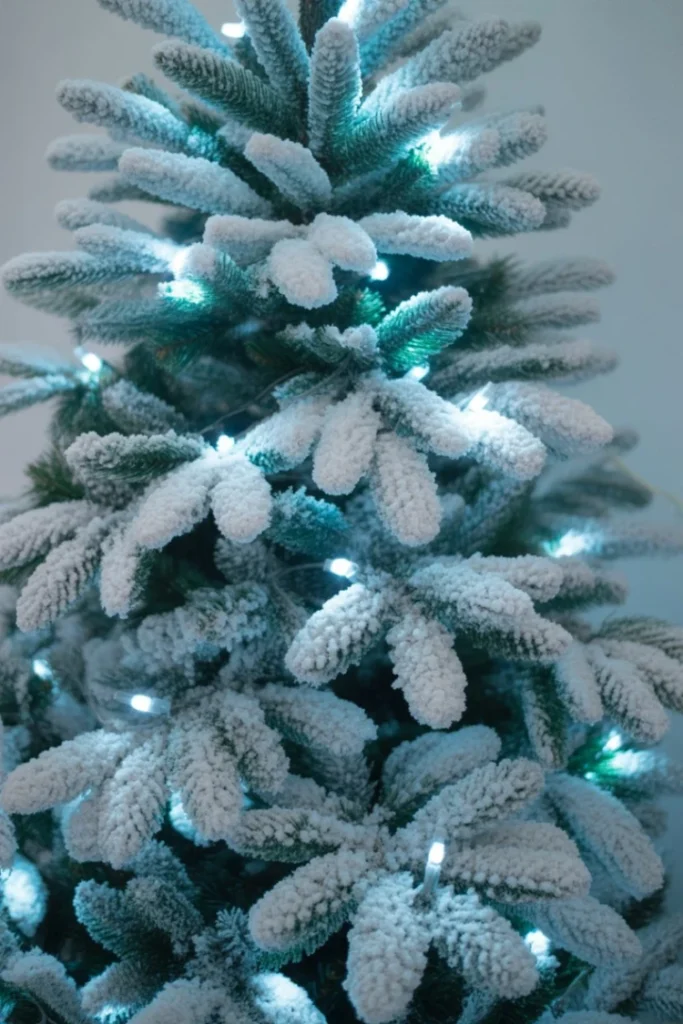
Mix cool white and light blue lights with a dusting of faux snow for a frosty effect. This idea brings an enchanting, wintery atmosphere that is perfect for white themed interiors, and it works best on a flocked tree or a tree with white and silver ornaments. You need one strand of cool white lights, one strand of light blue lights, a flocked tree or faux snow spray for the branch tips, and white and silver ornaments.
Wrap the cool white strand first, then the blue strand in the gaps, keeping both strands a little denser than usual so the glow reads through the flocking. Lightly spray faux snow on the outer branch tips only, not deep inside the tree, and let it dry fully before adding ornaments. Add white ornaments, silver balls, and a few crystal icicles, and keep the tree skirt white. If you use a real tree, skip the spray and use white ornaments and blue lights alone, since spray can dry out real needles faster.
17. Multicolor Twinkle Mix
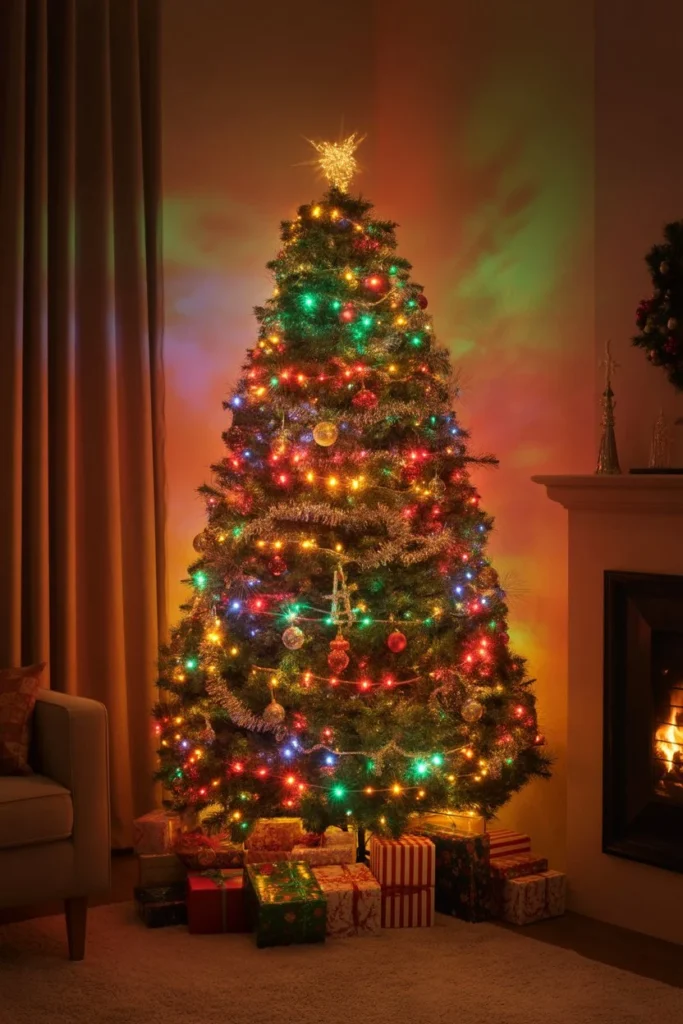
Blend various hues and twinkling patterns for a dynamic and playful light show. It is perfect for families and creates a festive, lively atmosphere that fills the room with joy, and it is the easiest way to make a tree feel like a party centerpiece. You need two strands of multicolor twinkle lights, 100 lights each, with at least two twinkle speeds, plus simple ornaments that will not get lost in the movement.
Wrap both strands evenly, mixing the twinkle modes so some sections twinkle fast and others slow, which keeps the effect lively without feeling chaotic. Keep ornaments simple and sturdy, since a twinkling tree draws hands and eyes, and avoid delicate glass ornaments at child height. Use a timer and a steady mode for late evenings, since a fast twinkle can feel restless when you are trying to relax. This theme suits a playroom tree, a family room tree, or any tree that will be the backdrop for holiday photos.
18. Ombre Ornament Coordination
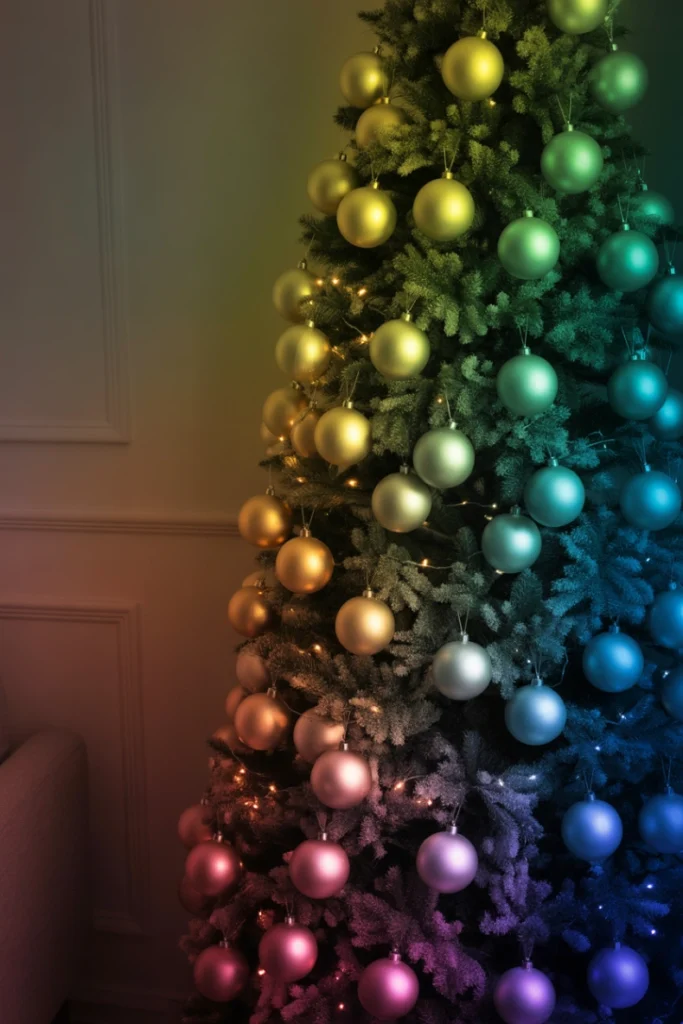
Coordinate light colors with ornaments in similar gradients, pinks blending into purples, or blues into greens. This adds depth and creates a cohesive, artistic visual effect, and it is the most designer looking idea on this list because the lights and ornaments work as one gradient rather than two separate layers. You need single color light strands for each step of the gradient, plus ornaments in matching shades, arranged from lightest at the top to darkest at the bottom, or the reverse.
Plan the gradient on paper first, for example blush pink, rose, magenta, and deep purple from top to bottom, then buy ornaments in each shade before you start. Wrap the matching light color in each band, then hang ornaments of the same shade in that band, with a few transitional ornaments at each boundary to blend the steps. Keep the tree skirt neutral, white or silver, so it does not add a competing color at the base. This idea takes more planning than a single color tree, but the result looks intentional and polished in photographs.
19. Retro Bulb Lights
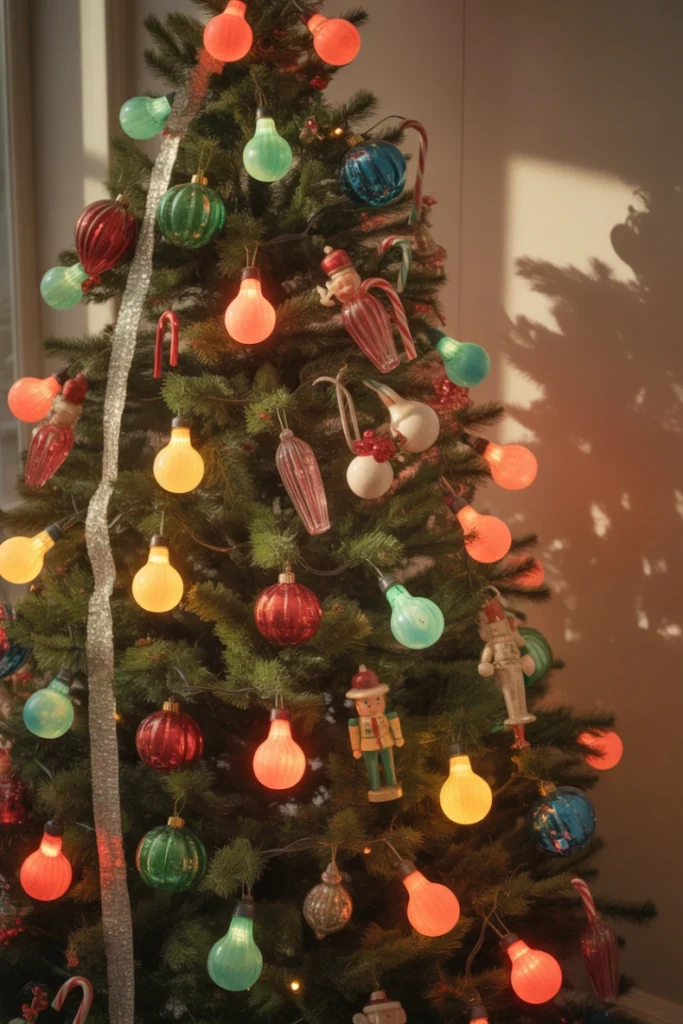
Large C9 retro bulbs bring back vintage charm. Their bold colors and old fashioned glow instantly make your decor nostalgic and heartwarming, and they suit a tree with vintage ornaments, tinsel, and a traditional star. You need one to two strands of C9 lights, usually 25 bulbs per strand, plus vintage style ornaments, tinsel, and a sturdy tree, since C9 bulbs are heavier than mini lights.
Space C9 bulbs about 8 to 12 inches apart and wrap them in wide spirals, since crowding large bulbs together can look cluttered and can overload a branch. Check that your tree stand is stable before you add heavy bulbs and ornaments, and use LED C9 bulbs rather than old incandescent ones, since LED versions stay cool, use less power, and last far longer. Add tinsel sparingly, a few strands draped over the outer branches, so the large bulbs stay visible. This look photographs best with the room lights off and the tree as the only light source.
20. Tropical Bright Lights
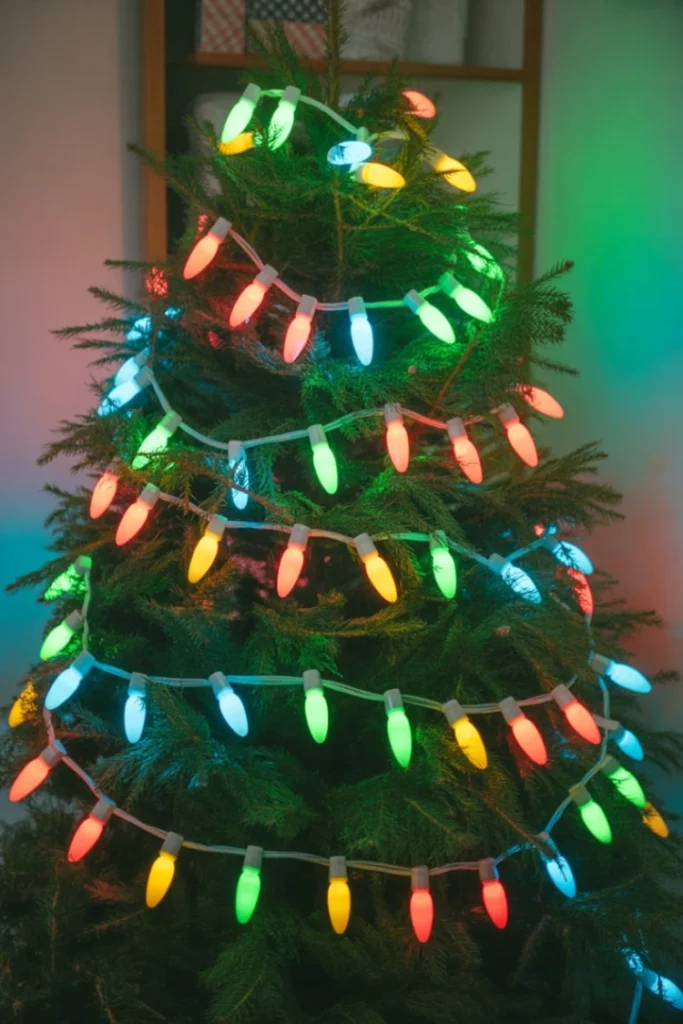
Use bold, tropical hues like teal, coral, and lime green for a fun twist. This unconventional palette brings summer energy to your winter celebrations, and it suits a coastal home, a bright modern apartment, or anyone who wants a tree that breaks the traditional red and green rules. You need one strand each of teal, coral, and lime lights, 50 to 100 lights each, plus white or natural wood ornaments to keep the palette from feeling chaotic.
Wrap the three colors together, alternating passes, so no single color forms a solid band, and add white ornaments, seashell ornaments, or natural wood stars to ground the bright colors. Keep the tree skirt white or natural linen, and avoid traditional red or gold ornaments here, since they will clash with the tropical palette. This theme also works beautifully on a white artificial tree, where the bright colors pop against the white branches, and it is a fun choice for a second tree in a sunroom or a beach house.
21. Color Zone Design

Divide your tree into color zones, top in gold, middle in red, bottom in green. This gives your tree a structured, designer inspired appearance, and it is easier to execute than a gradient because each zone has a clear boundary. You need one strand per zone, 100 lights each, in gold, red, and green, plus ornaments that match each zone or neutral ornaments that work across all three.
Mark the zone boundaries with a piece of ribbon tied loosely around the trunk at each division, then wrap each color only within its zone, overlapping slightly at the boundary. Place gold ornaments in the top zone, red ornaments in the middle, and green ornaments at the bottom if you want a strong zoned effect, or use silver ornaments throughout if you prefer a softer version. Step back after each zone and check that the zones look roughly equal in height, since an uneven zone will make the tree look lopsided. For a matching zoned look on the mantel or windows, see these Christmas window light ideas that work from both sides of the glass.
22. Glitter String Mix
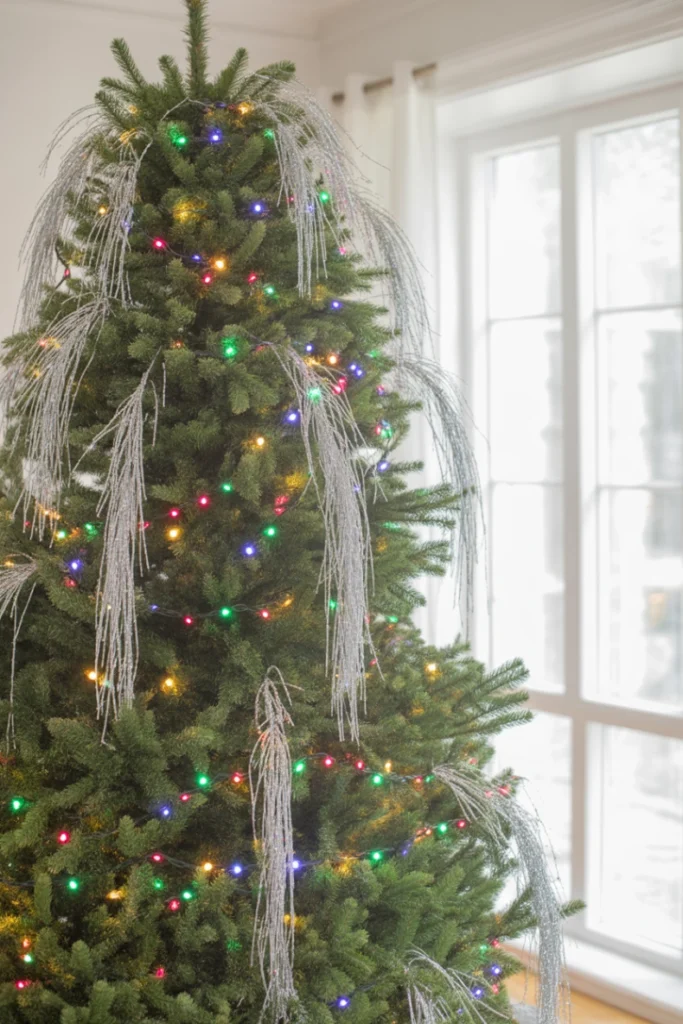
Pair colorful lights with glittery tinsel to amplify sparkle. As the lights reflect off the shiny strands, your tree will shimmer from every angle, and this is a quick way to make a simple multicolor tree look festive without buying new lights. You need one or two strands of multicolor lights you already own, plus glitter tinsel garland, about 10 to 12 feet for a 6 foot tree, and a few glitter ornaments to match.
Wrap the lights first, then drape the tinsel in two or three loose spirals over the outer branches, keeping it away from the bulbs themselves so it does not trap heat. Add glitter ornaments near the lights so they catch the glow, and keep the tree skirt simple, since glitter tinsel already adds plenty of sparkle at the base. If you have pets, choose chunky glitter garland rather than fine tinsel strands, which pets can swallow, and vacuum around the tree after decorating, since glitter sheds. This idea is ideal for a last minute tree, since tinsel and lights together take under 30 minutes.
23. Layered Light Dimensions

Mix light sizes, small fairy lights for inner branches and larger bulbs for outer layers. This adds depth and creates a professional, three dimensional glow effect, and it is the technique professional tree decorators use most often. You need one strand of small fairy lights, 200 to 300 lights, for the interior, plus one strand of larger mini or C7 bulbs, 100 lights, for the exterior, and a timer for each strand or a dual outlet timer.
Start with the fairy lights deep inside the tree, wrapping close to the trunk and pushing the tiny bulbs into the inner branches where they create a warm core of light. Then wrap the larger bulbs on the outer branches, spacing them 6 to 8 inches apart, so the tree glows from within and sparkles on the surface at the same time. Add ornaments last, placing larger ornaments on the outer branches and smaller ones inside, to match the layered lighting. For more wreath and garland projects that use the same layering idea, see these DIY Christmas wreath ideas you can make at home. Test the tree at night with the room lights off, since layered lighting looks flat in daylight but stunning after dark.
Conclusion
Your Christmas tree is more than a decoration, it is the centerpiece of your holiday joy. These 23 colorful Christmas tree light ideas offer creative ways to express your personality through color, glow, and design. From nostalgic classics to high tech LED systems, each idea brings a unique kind of magic to your festive setup, and most of them use strands and ornaments you may already own.
Whether you choose bold multicolor lights, elegant gradients, or modern neon brilliance, your tree will radiate warmth, happiness, and pure Christmas spirit throughout the season. Start with one idea that matches your room, buy the right strand lengths before you begin, and test the tree at night before you call it done. A consistent color story, a timer on every strand, and a quick safety check each week will keep your tree glowing beautifully from the first week of December through the New Year.
Frequently Asked Questions
How many lights do I need for a 6 foot Christmas tree?
Plan on about 100 lights per foot of tree height for a full look, so a 6 foot tree needs about 600 lights and a 7 foot tree needs about 700. For a sparse look, 50 lights per foot is enough, while a dense professional look can need 150 lights per foot. Count your strands before you buy, since two 300 light strands are easier to wrap than six 100 light strands.
Should I put lights on before or after ornaments?
Always put lights on first, starting at the trunk and working outward, then add garland, ribbon, and ornaments. Lights are much easier to place when the branches are bare, and ornaments are easier to position once you can see where the bright and dark spots fall. If you add ornaments first, you will end up moving them to make room for the lights.
Are LED Christmas tree lights better than incandescent lights?
For most homes, yes. LED lights use far less power, stay cool to the touch, last for many seasons, and come in far more colors and smart modes than incandescent strands. Incandescent C9 bulbs still have a warm vintage glow that some people prefer, but LED C9 bulbs now mimic that look closely while staying cool and safe around ornaments and tinsel.
How do I stop one section of my tree from looking dark?
Push some lights deep into the inner branches near the trunk, not only on the outer tips, and step back to check the tree from across the room after each strand. Dark spots usually mean the lights sit only on the surface, so add a short fairy light strand inside that section and weave it through the inner branches until the glow fills out.
Can I mix different colors of lights on one tree without it looking messy?
Yes, if you pick one color story and stick to it. Use a planned gradient, zones, or alternating passes with even spacing, and keep ornaments and ribbon in the same palette. Random colors with random ornaments look messy, but the same colors arranged in bands, zones, or a consistent alternating pattern look intentional and designer made.
More Ideas You Will Love
 12 Rooftop Terrace Design Ideas to Transform Your Outdoor Space
 13 Outdoor Furniture Ideas for a Weatherproof Patio
 11 Water Conservation Gardening Hacks
 21 Warm White Outdoor Christmas Light Ideas for 2025
 12 DIY Halloween Outdoor Decorations
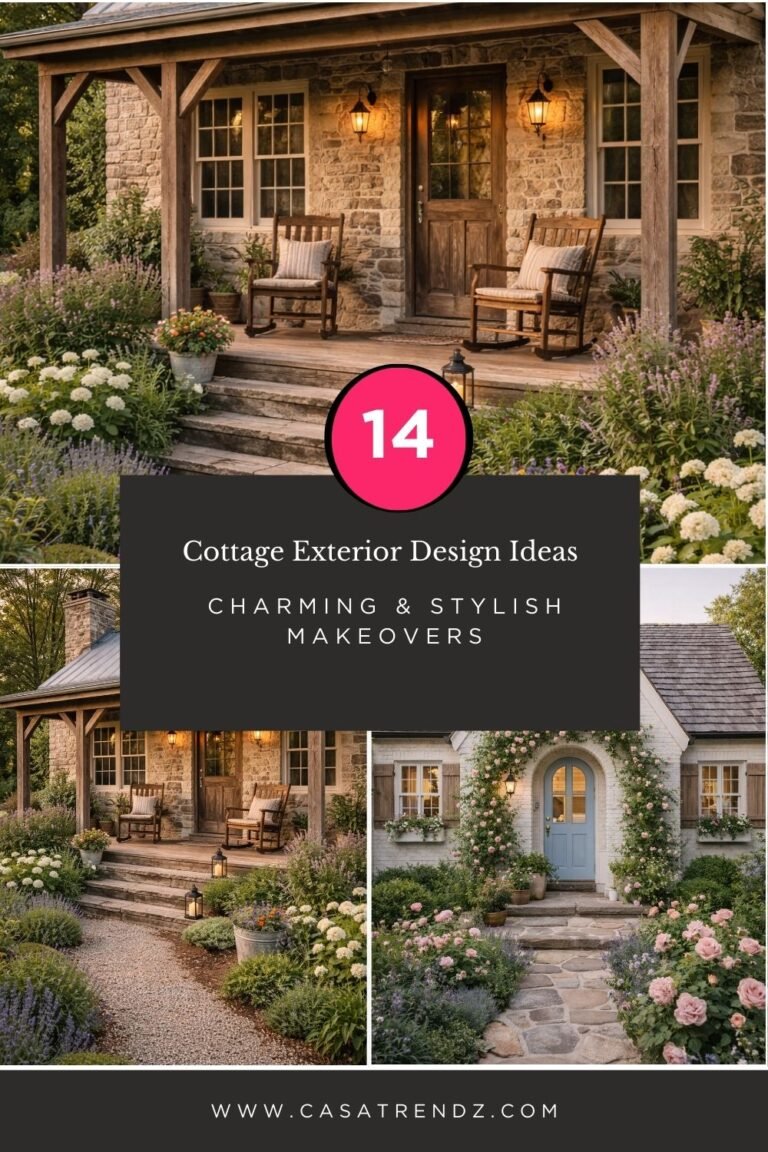 14 Cottage Exterior Design Ideas: Charming & Stylish Makeovers