
23 Small Bedroom Ideas for Stylish, Functional Comfort

A small bedroom is not a design failure. It is a design brief. With less square footage to work with, every decision carries more weight, which means the wins feel bigger too: a calmer room, less clutter, faster cleaning, and a space that feels crafted rather than filled. The trick is to treat the room like a small kitchen or a studio apartment and plan every inch on purpose.
In this guide, you will find 23 small bedroom ideas that balance style, function, and comfort. Each one is a practical move you can actually make, with the specific colors, measurements, and materials that separate a Pinterest fantasy from a room you can build this weekend.
Most of these ideas are renter friendly and budget flexible. Pick three or four, start with the biggest visual change (usually color and lighting), and layer the rest in over time. Your small bedroom will feel bigger, work harder, and finally feel like yours.
1. Neutral Palette for a Spacious Look
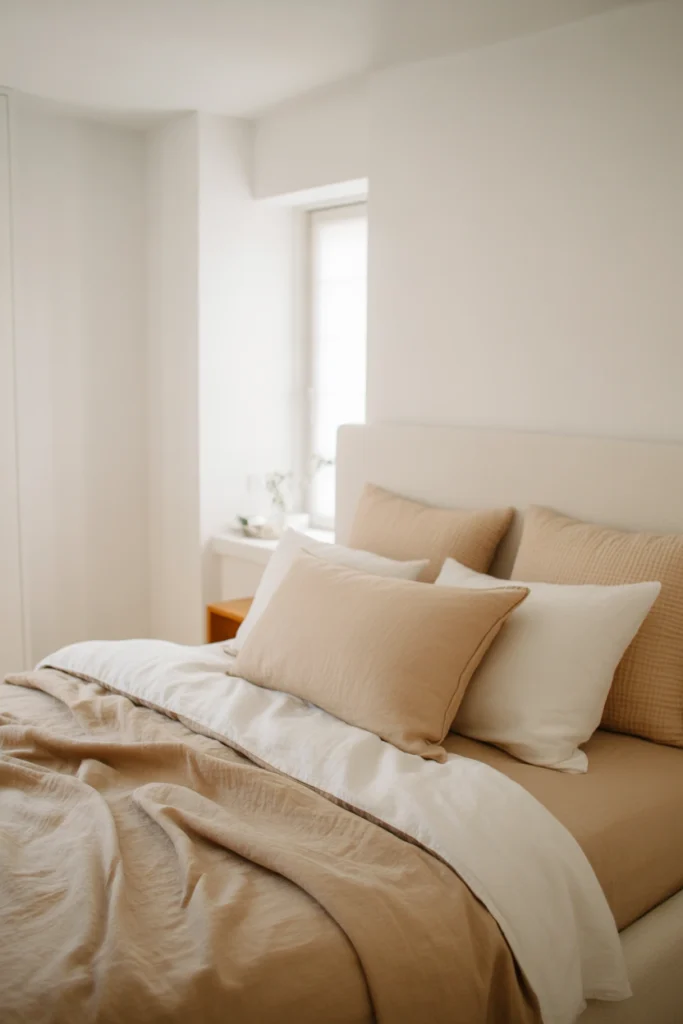
Light, neutral tones make small bedrooms appear brighter and more open, and the effect is real: shades of white, warm beige, and soft gray bounce natural light around the room instead of absorbing it. Paint the ceiling one shade lighter than the walls (or a crisp white like Benjamin Moore Chantilly Lace) and the ceiling visually lifts by several inches.
Follow the 60-30-10 rule to keep neutrals interesting: 60 percent dominant tone (walls and bedding), 30 percent a secondary neutral (rug, curtains), and 10 percent a deeper accent (a throw, artwork frame, or plant pot). Matte or eggshell finishes diffuse light more evenly than glossy paint, which can create harsh hot spots in a tight room. Before committing, tape paint swatches to the wall and check them in morning, afternoon, and evening light, because small rooms change character fast as the sun moves.
2. Floating Shelves for Smart Storage
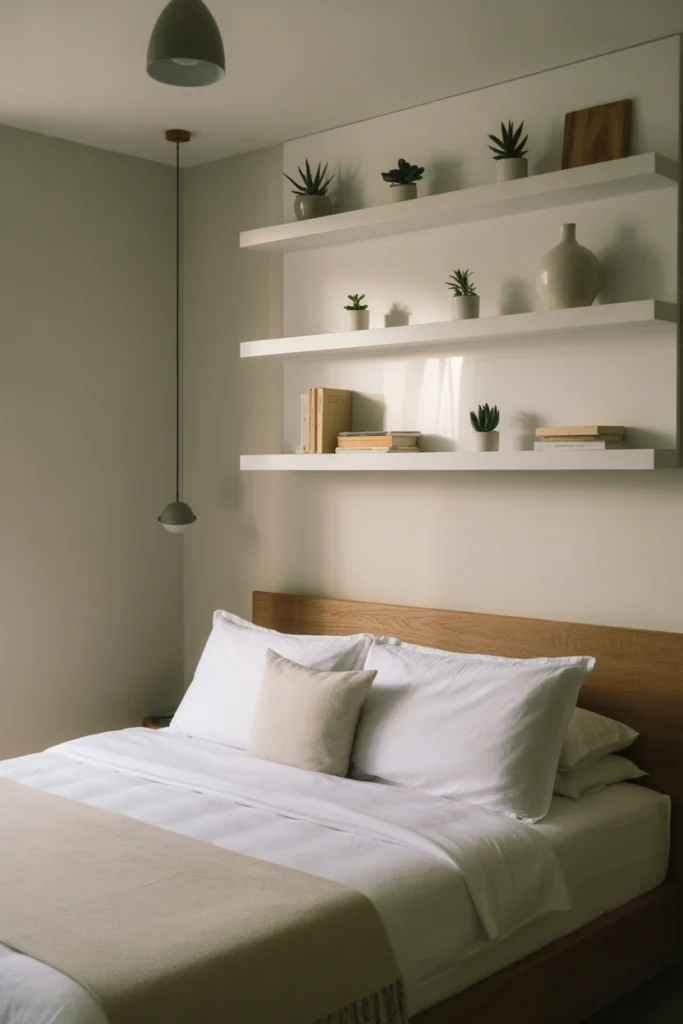
Floating shelves turn dead wall space into storage without touching the floor, which is the single most important thing you can do in a small bedroom. Mount a pair of 24 to 36 inch solid wood or white MDF shelves 30 to 36 inches above your nightstand or desk, always anchored into studs with screws rated for at least 50 pounds, because drywall anchors alone will fail on you within a year.
Style them with the rule of thirds: books stacked horizontally, one small plant, and one decorative object per shelf, leaving a third of each shelf empty so it reads as decor, not clutter. Two staggered shelves beside the bed work better than one long one, and a slim picture ledge shelf can double as a nightstand surface if you mount it at mattress height. Keep shelf depth to 8 inches so items do not cast shadows or jut into your walkway.
3. Multi-Functional Furniture
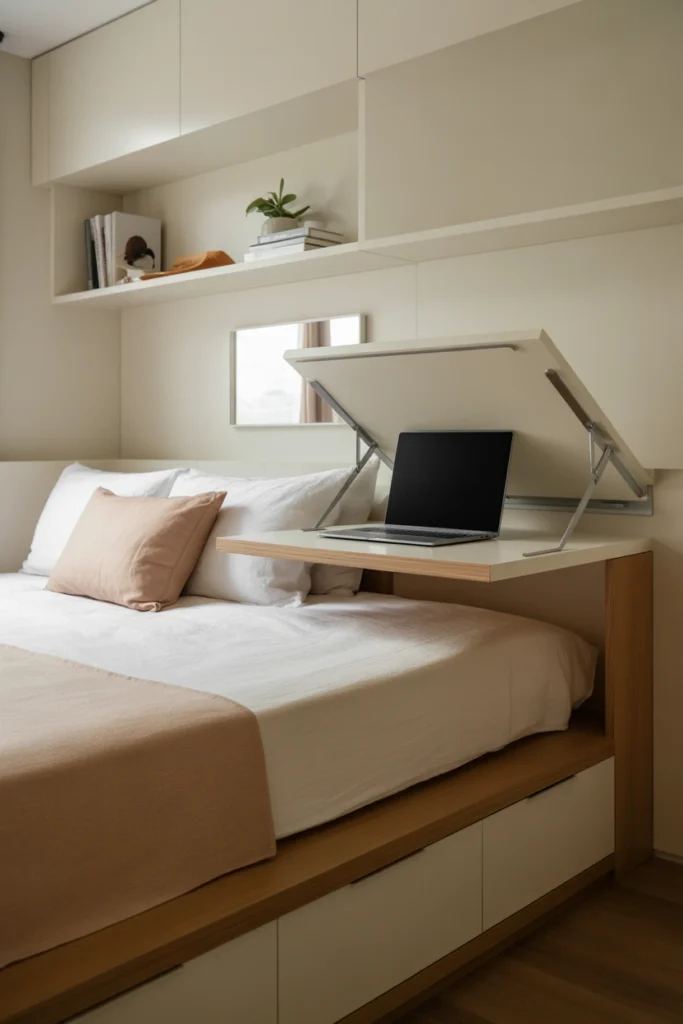
When the room is small, every piece of furniture should hold down two jobs. A storage bed with 12 to 14 inch deep drawers built into the frame replaces a whole dresser. A lift-up ottoman bed hides seasonal bedding, suitcases, and rarely used items inside the mattress platform itself. Daybeds with a trundle give you seating, sleeping, and guest space in one footprint.
Look for desks that fold down from the wall into a console table, vanities that double as nightstands, and benches with hinged lids at the foot of the bed for extra linens. Our guide to small bedroom layout ideas shows how these double-duty pieces fit into real floor plans under 120 square feet. Measure twice: leave at least 24 inches of walking space beside the bed and 30 inches in front of drawers so everything opens freely.
4. Accent Wall with Subtle Patterns
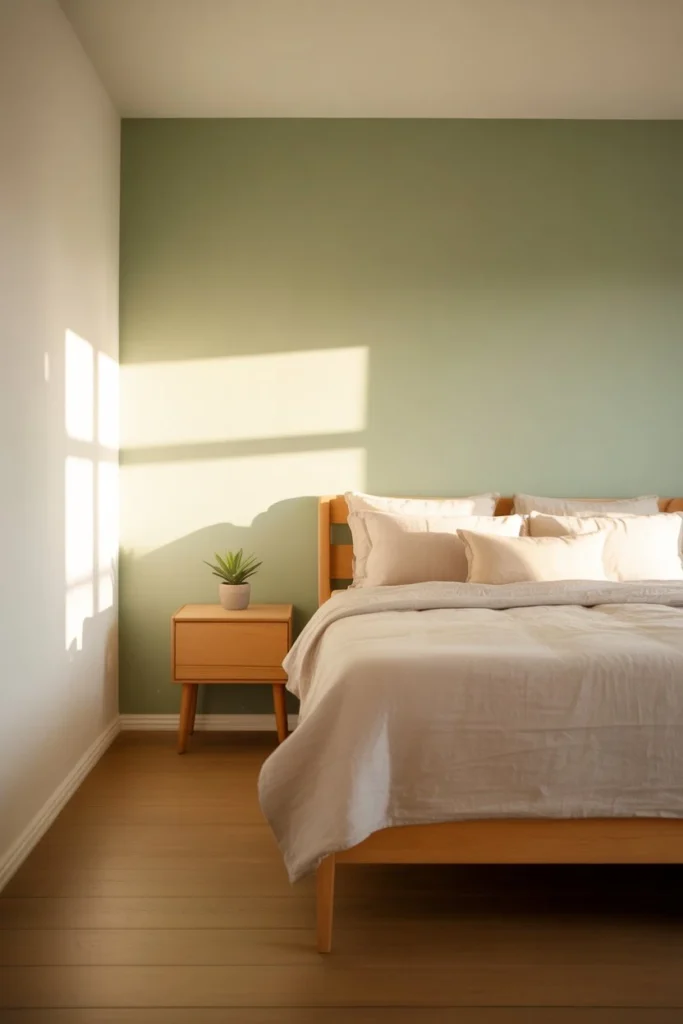
One accent wall adds personality without closing the room in, and the bed wall is the natural choice because it is the first thing you see. Choose peel-and-stick wallpaper in a small-scale pattern, muted sage green, dusty blue, or warm greige, and keep the other three walls a light neutral so the pattern has room to breathe.
Small-scale patterns (repeats under 12 inches) read as texture rather than busy-ness in tight quarters. For renters, removable wallpaper goes up in an afternoon and peels off cleanly with low heat from a hair dryer. If paint is easier, try color blocking: paint the bottom two-thirds of the wall in a deeper tone with a crisp horizontal line, which grounds the bed and makes ceilings look taller. Limit bold pattern to one wall and the room keeps its calm.
5. Mirrors to Reflect Light
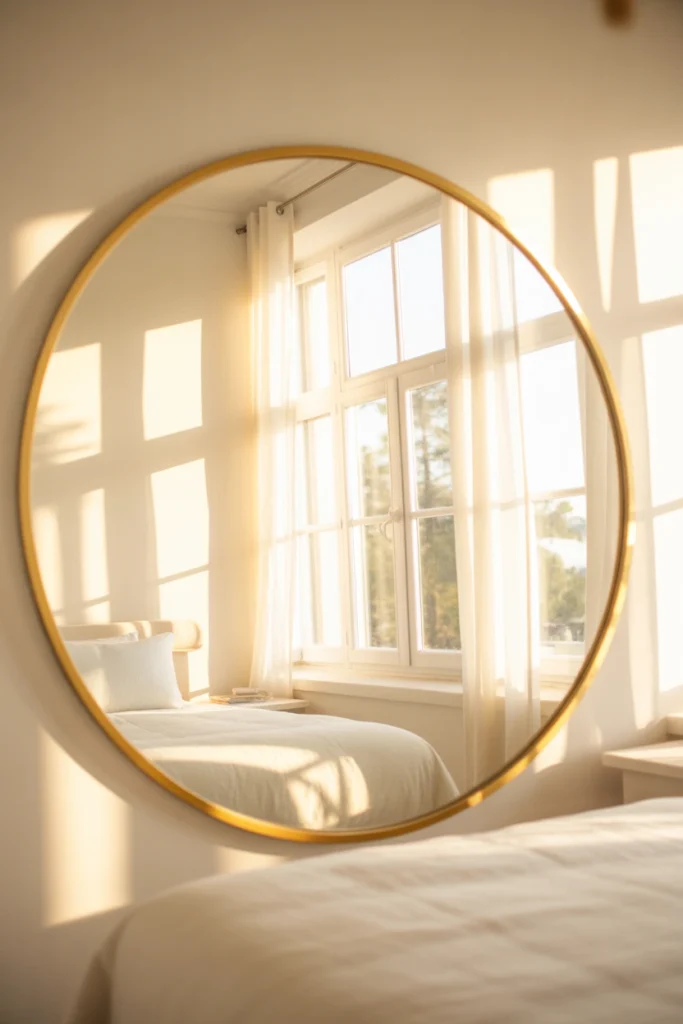
A well-placed mirror genuinely doubles the light in a small bedroom. Hang or lean a full-length mirror directly opposite or adjacent to the window, about an inch or two off the glass line, and daylight bounces deep into corners that would otherwise stay dim. An arched mirror around 60 by 20 inches adds softness that rectangular mirrors lack, and slim black or brass frames keep it modern.
Leaning a floor mirror against the wall reads more relaxed and rental friendly than drilling, and it visually extends the floor line, which tricks the eye into reading a longer room. For tight layouts, a round mirror above the dresser reflects light without the commitment of a full-length piece. Avoid placing a large mirror where it reflects clutter; point it at a window, an art print, or a plant instead.
6. Built-In Wardrobes
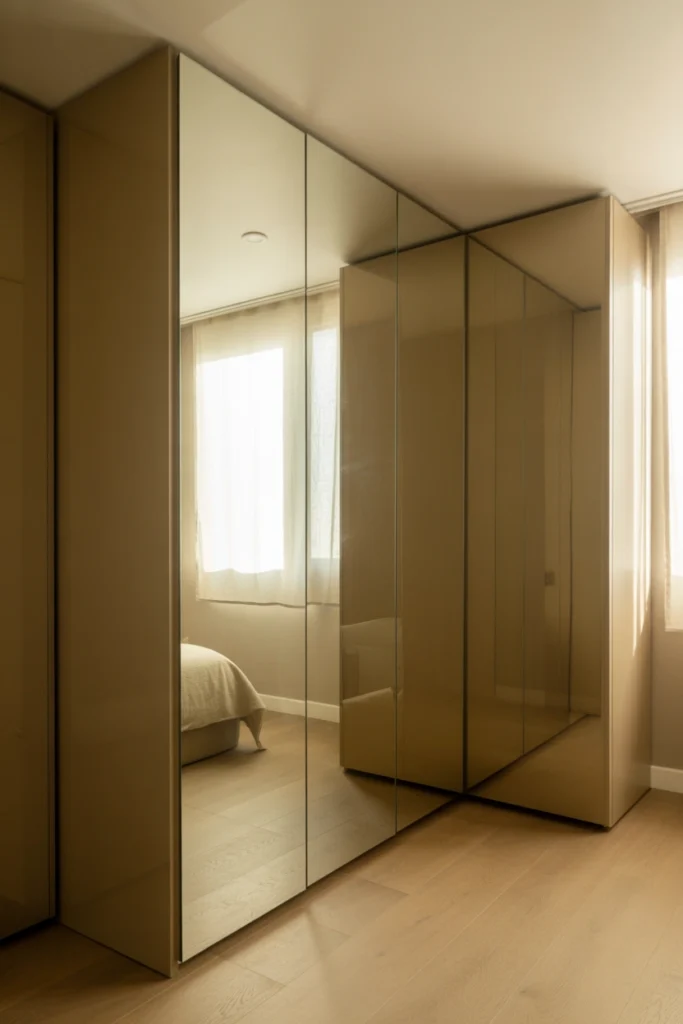
Custom built-in wardrobes use vertical space a freestanding dresser never can. Run cabinetry floor to ceiling on one wall, at the standard 24 inch depth, and you gain a full second tier of storage for off-season clothes, luggage, and bedding above the daily-use hanging rods.
Mirrored sliding doors serve triple duty: closet, full-length mirror, and light reflector, while sliding panels need zero swing clearance, which matters when the bed sits close to the wall. Inside, double-hang rods (one at 40 inches, one at 80 inches) fit twice the clothes of a single rod, and pull-out drawers beat deep shelves for folded items you can actually see. If full custom is out of budget, modular wardrobe systems from IKEA or similar brands can be hacked with trim and crown molding to look built in for a fraction of the price.
7. Under-Bed Storage Solutions
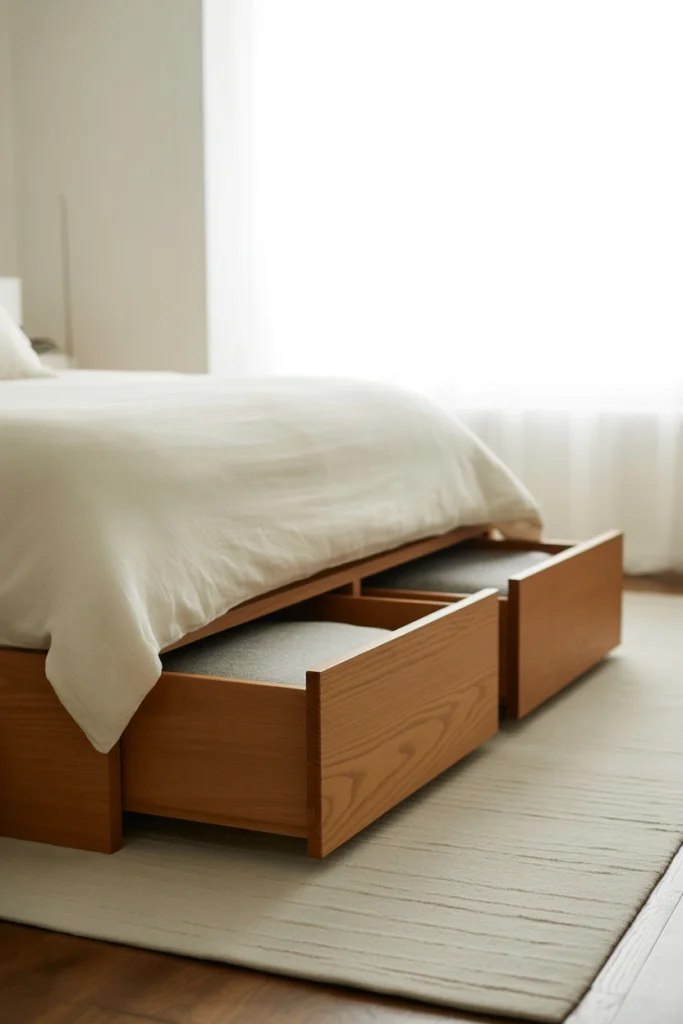
The space under your bed is the largest hidden storage zone in the room, so put it to work. Low-profile rolling bins on casters, 6 to 8 inches tall, slide in and out easily and keep dust off your things. Vacuum-sealed bags compress bulky winter coats and spare duvets to a third of their size.
For maximum capacity, a lift-up storage bed frame raises the whole mattress on gas struts to reveal the entire footprint underneath. Whatever system you choose, label every bin and group like items together, because hidden storage you cannot find things in becomes a junk drawer the size of a mattress. Keep a simple rule: if you have not opened a bin in a year, its contents get donated. Aim for at least 8 inches of clearance, and leave one side free so air circulates and the room does not smell musty.
8. Minimalist Bed Frames
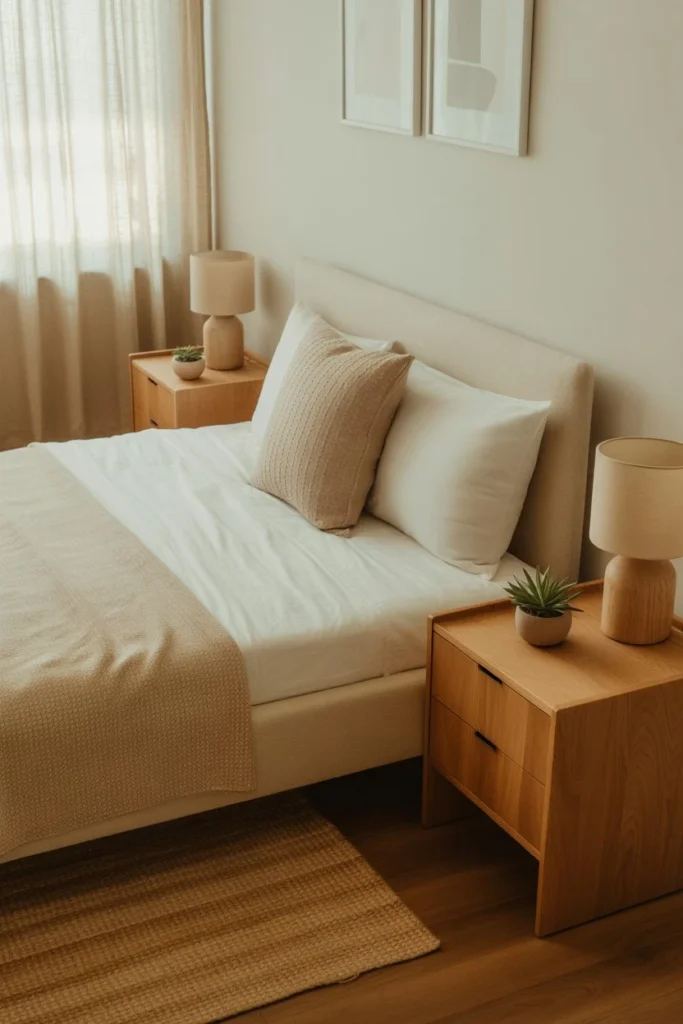
A low-profile platform bed, 10 to 14 inches off the floor, makes ceilings feel taller and the room feel wider because more wall stays visible above the mattress line. Choose clean lines in light oak, ash, or matte black metal, and skip the bulky footboard, which visually cuts the room in half.
Frames with visible legs let the floor continue underneath, a classic small-room trick that adds perceived square footage. Upholstered headboards in performance linen add softness without bulk, and most are stain resistant enough for real life. Standard sizes to plan around: a queen needs roughly 65 by 85 inches of floor space with bedding, so in rooms under 10 by 10 feet, a full or even a well-styled twin XL can free up the space you need for everything else.
9. Compact Nightstands
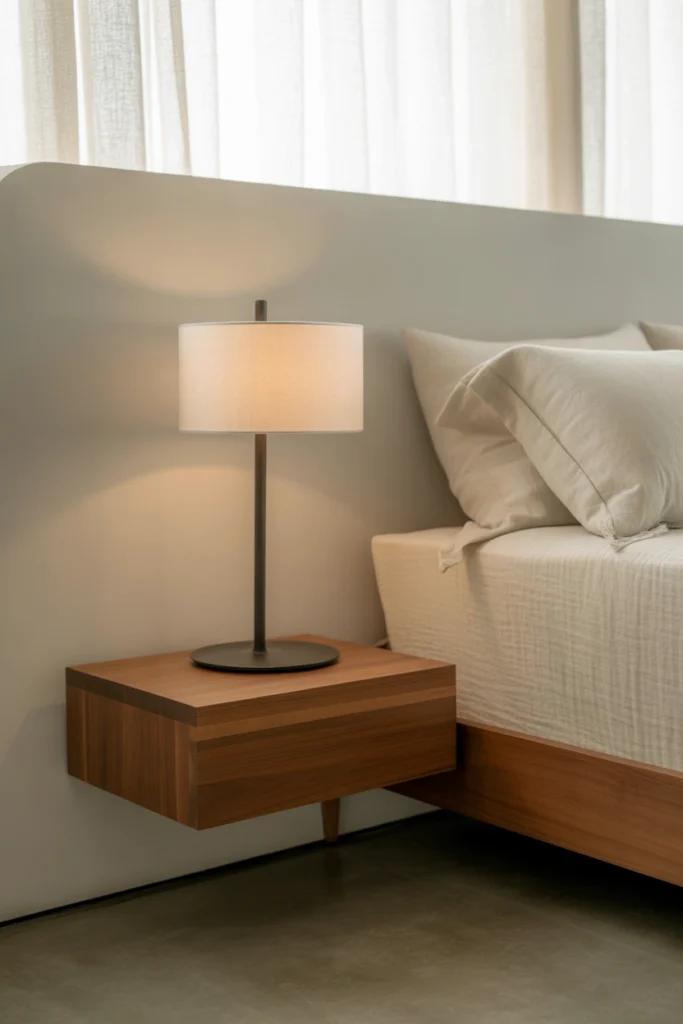
Bulky nightstands eat precious floor inches. Swap them for slim 14 to 18 inch wide tables, wall-mounted floating nightstands, or C-shaped side tables that slide their base under the bed frame. You only need enough surface for a lamp, a glass of water, and your phone, so edit ruthlessly.
In very tight rooms, use a nightstand on one side only and a wall-mounted shelf or a sconce on the other. A small lidded box or drawer unit on top corrals chargers, lip balm, and reading glasses so the surface stays calm. If you share the bed, give each person the same amount of surface, even if the pieces do not match; symmetry reads as intentional and keeps the room feeling balanced.
10. Hidden Lighting
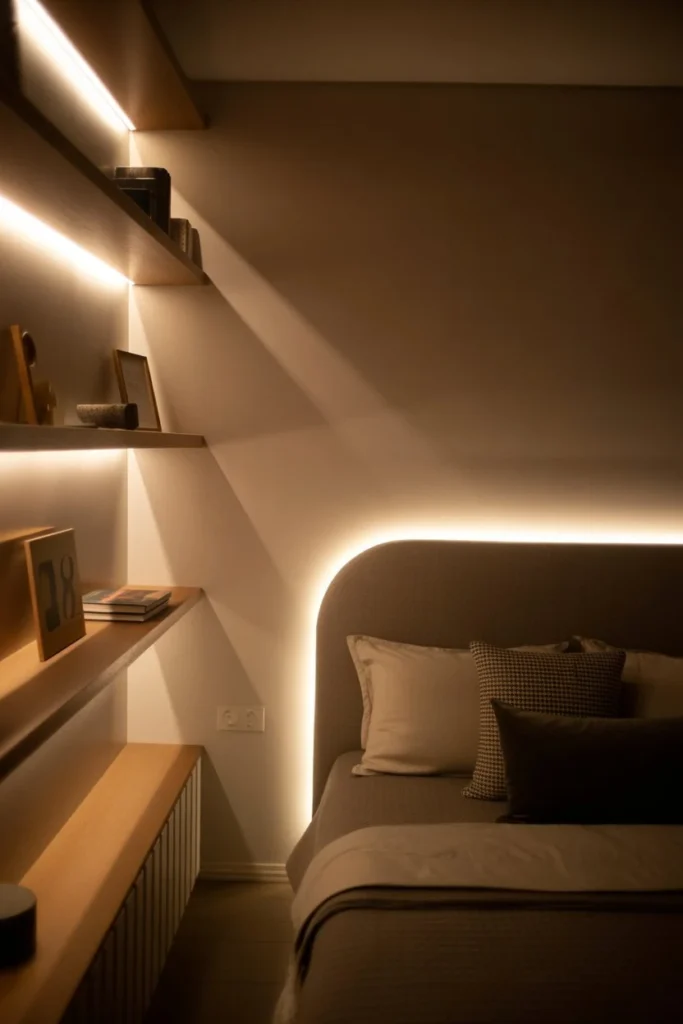
Integrated lighting adds atmosphere with zero floor space. Run adhesive LED strip lights (2700 to 3000K warm white) under floating shelves, behind the headboard, and along the underside of the bed frame. A motion-sensor strip under the bed doubles as a soft night light for late trips to the bathroom, no stubbed toes, no blinding overhead.
Mount strips inside aluminum channels with diffuser covers for a professional look that hides the individual diodes. Plug-in strips with a remote or smart dimmer cost under 30 dollars and install in minutes, no electrician needed. Layer them on a separate dimmer from your main lights so you can drop the room into evening mode: bright for getting dressed, glowing for winding down.
11. Vertical Artwork Displays
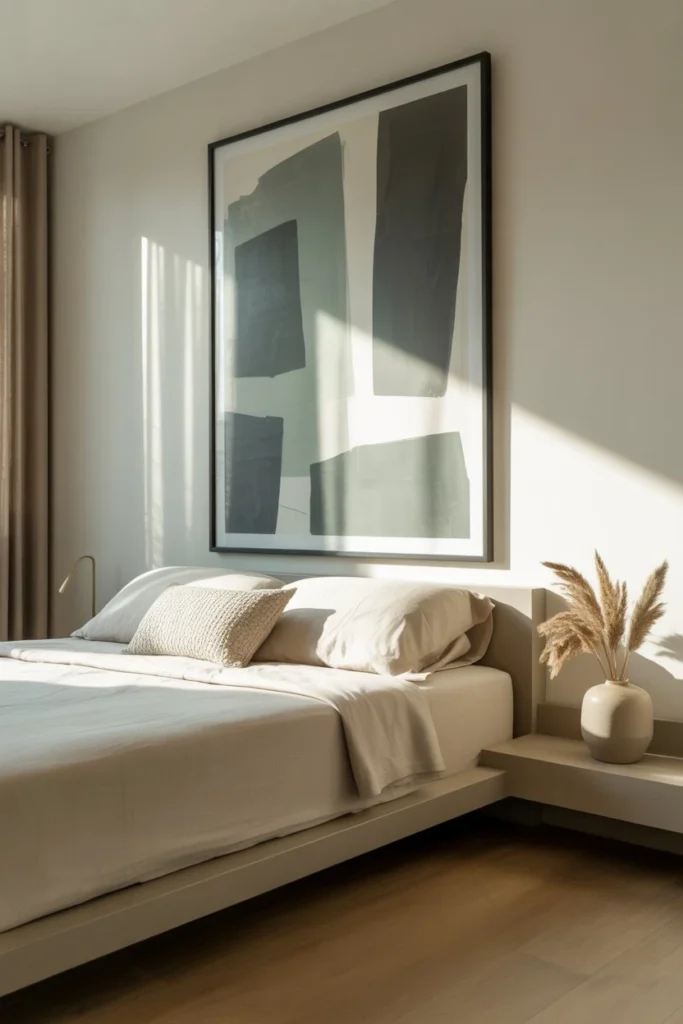
Walls are your square footage multiplier, so decorate upward. Hang tall, narrow art prints or stack two to three frames in a vertical column above the dresser, with the top frame sitting 6 to 8 inches below the ceiling. The eye travels up, and ceilings read higher.
A gallery wall works in a small bedroom if you keep the frames tight (2 inch gaps) and the palette limited to two or three tones. Oversized single pieces, one large canvas over the bed, actually feel calmer than many small frames because they create one focal point instead of visual chatter. Use lightweight frames and adhesive hooks rated for the weight, and always center art at eye level, about 57 inches from the floor, when you are standing.
12. Compact Workspace Nook
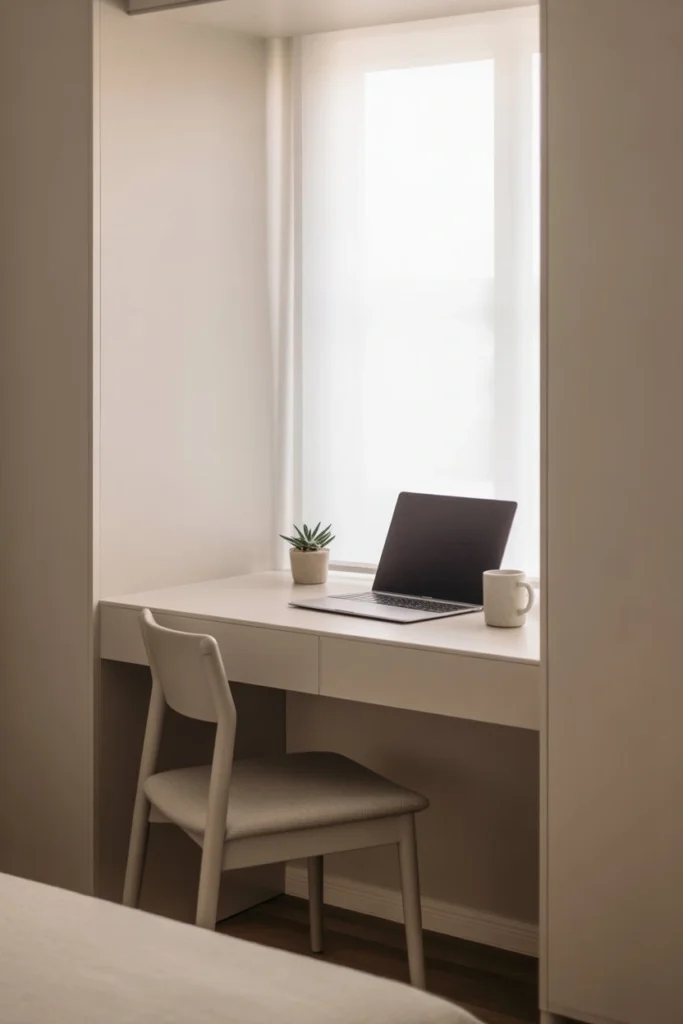
A 30 inch wide corner is enough for a real workspace. Mount a floating desk 20 inches deep at 29 to 30 inches high, add a slim chair that slides fully underneath, and you have a mini office that disappears when the workday ends. A wall-mounted fold-down desk is even better for multipurpose rooms, folding flat against the wall in seconds.
Keep the nook functional with a small desk organizer, a power strip mounted under the desktop, and a clip-on task lamp instead of a bulky desk lamp. Cable clips along the wall edge prevent the dreaded cord tangle. Our home office desk ideas roundup has compact desk styles that fit corners like this. Face the desk toward the room or window rather than a blank wall, and the nook feels like a choice, not a compromise.
13. Light Curtains for Airy Ambiance
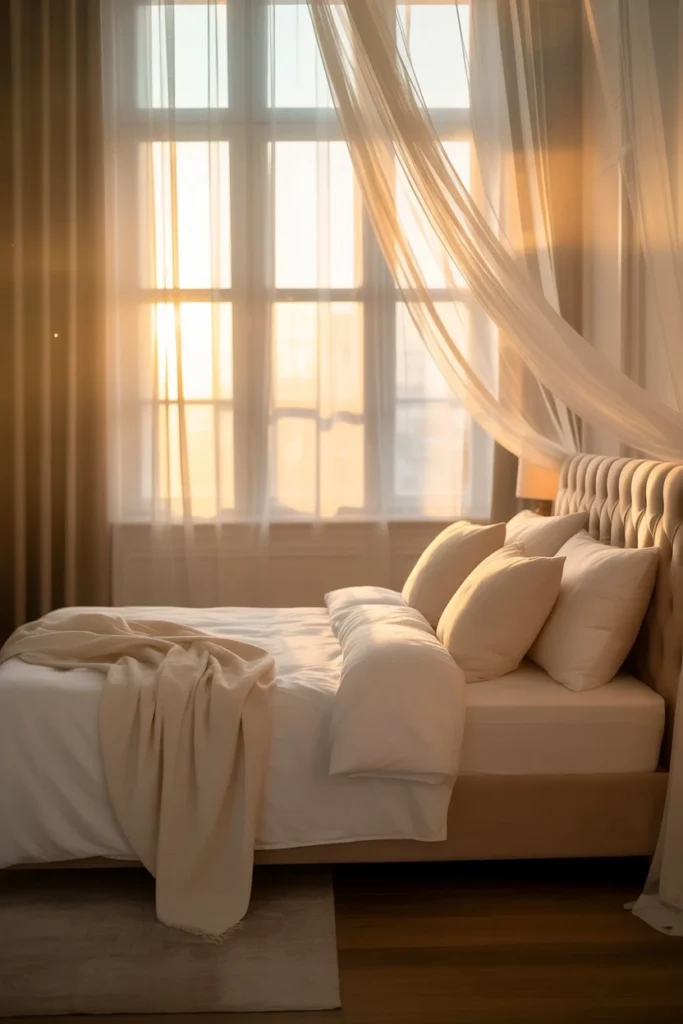
Sheer curtains in soft white or natural linen let daylight pour through while keeping the room private, and they add the soft texture small rooms need to avoid feeling sterile. Hang the rod 4 to 6 inches above the window frame and extend it 3 to 4 inches past each side, so when the curtains are open the glass is fully exposed and the window reads larger.
Choose floor-length panels that just kiss the floor; too-short curtains chop the wall visually and make ceilings look lower. For street-facing bedrooms, layer sheers over a slim blackout roller blind on the same window, privacy and darkness at night, glow during the day. Washable linen blends are the practical pick, and two panels per window look fuller than one, even on narrow glass.
14. Monochromatic Decor Scheme
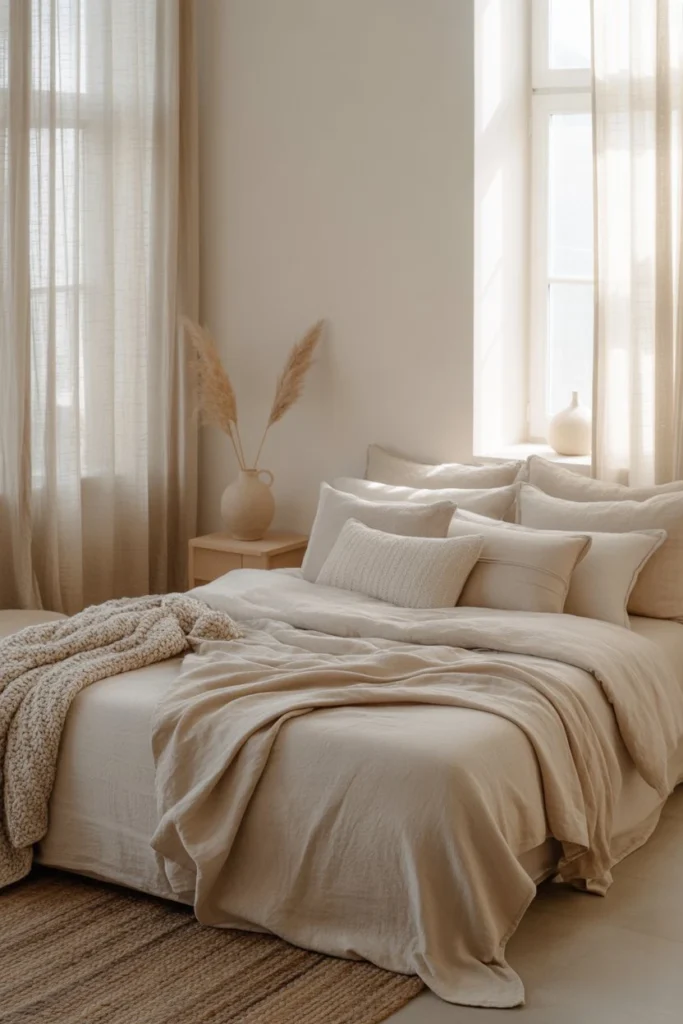
A single-color palette, warm white, greige, or soft gray across walls, bedding, and rug, erases visual boundaries so the room reads as one continuous, larger space. The secret to keeping it interesting is texture: pair smooth cotton sheets with a chunky knit throw, a nubby wool rug, and a woven seagrass basket, all in the same tonal family.
Layer three to four shades of your chosen tone from light to mid, never jumping straight to dark, which breaks the seamless effect. Add exactly one contrasting element, a black metal frame, a brass lamp, or a green plant, to give the eye a place to land. This approach photographs beautifully and never clashes, which makes it ideal if you redecorate often or rent and need pieces that move with you.
15. Floating Wardrobe or Open Closet
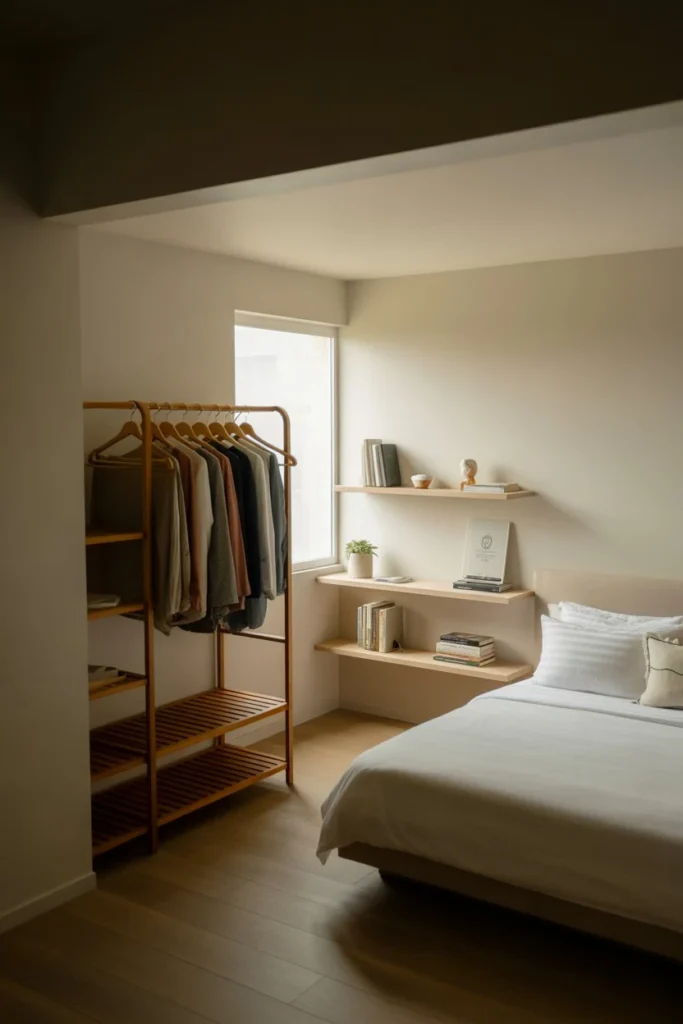
An open clothing rack or wall-mounted wardrobe keeps clothes accessible while using a fraction of the floor space of a dresser. Mount a sturdy wall rod with brackets into studs, add a lower shelf for shoes, and line up matching slim velvet hangers so the display looks curated rather than chaotic.
The discipline rule for open closets: color-coordinate your hanging clothes and keep everything else in closed baskets or boxes below. A ceiling-mounted curtain panel on a slim track can hide the whole setup when guests visit. This setup suits minimal wardrobes best, so pair it with a seasonal clothing rotation: store off-season pieces in vacuum bags under the bed and keep only what you wear now on display.
16. Layered Lighting Design
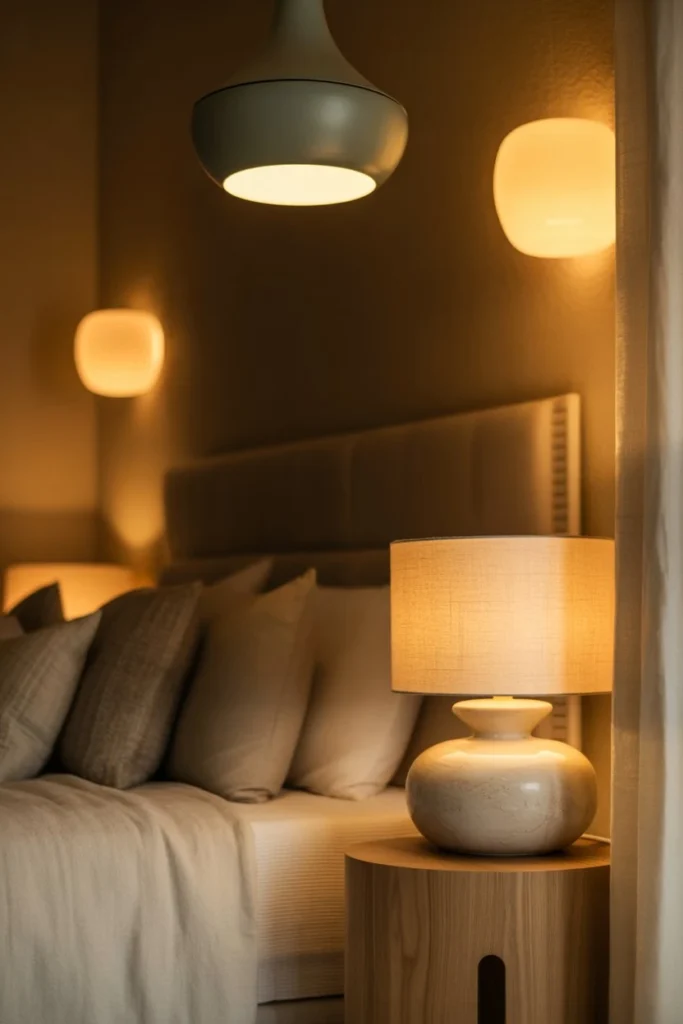
Small bedrooms need three kinds of light: ambient (overall glow), task (reading, getting dressed), and accent (artwork, shelves). Combine a flush-mount or semi-flush ceiling fixture, bedside lamps or sconces, and one accent source like an LED strip or a small picture light. No single light should do all the work.
Stick to 2700 to 3000K warm white bulbs throughout so the layers blend seamlessly, and put the main lights on dimmers. A pendant hung low over a nightstand, about 20 inches above the mattress, frees the surface below and adds sculptural interest. The three-source rule is the fastest way to make a small bedroom feel designed rather than just lit: bright and functional by day, warm and low by night.
17. Statement Headboard
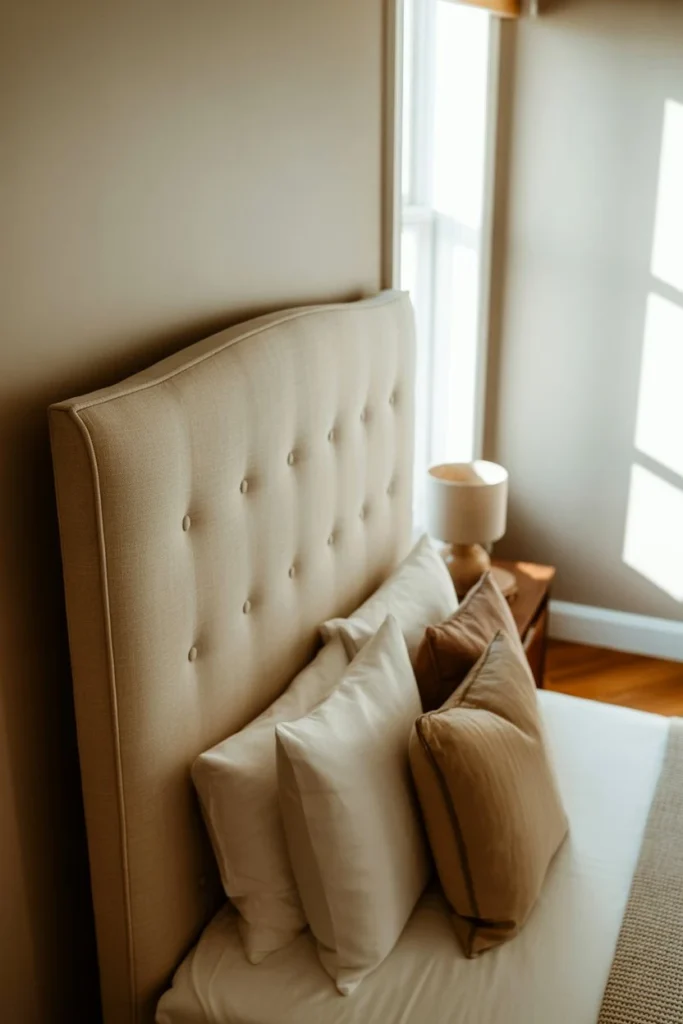
A tall headboard, 48 to 54 inches from the floor, becomes the focal point that gives a small bedroom its personality. Channel-tufted upholstery in a performance fabric adds hotel-level polish, while peel-and-stick upholstered panels let renters build a custom look for under 100 dollars with zero tools.
Choose a headboard slightly wider than the mattress, about 2 to 4 inches of overhang per side, for a tailored fit. If you share the room, a split or extra-tall headboard creates a visual anchor both sleepers benefit from; our bedroom ideas for couples cover more shared-room layouts like this. Keep bedding simple when the headboard is bold, one standout per room, so the statement stays a statement.
18. Foldable or Nesting Furniture
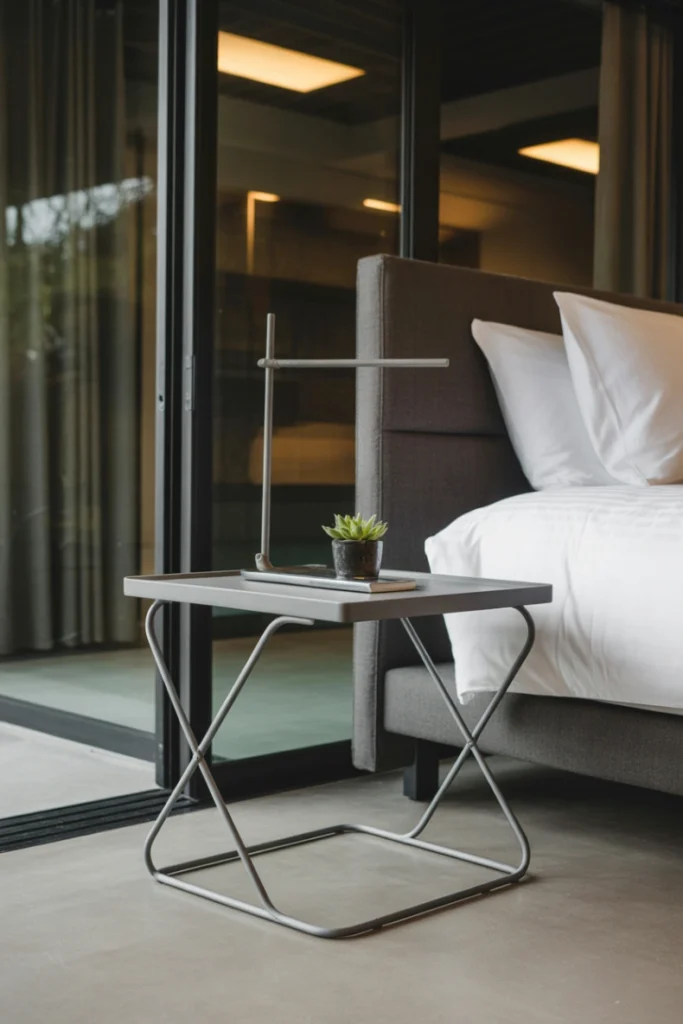
Flexibility is a small room’s superpower. A folding desk that collapses to 6 inches deep, nesting side tables that tuck into each other, and a storage ottoman that seats a guest by day and holds blankets by night all let the room change shape with your day.
Look for pieces with locking hinges and felt pads on the feet so daily folding does not scar your floors. A slim rolling cart, 12 inches wide, can roll between the bed and wall as a mobile nightstand, craft station, or plant stand. When shopping, test the fold mechanism in person if you can: anything you use daily needs to open and close one-handed, or you will stop using it within a month.
19. Soft Rugs for Warmth
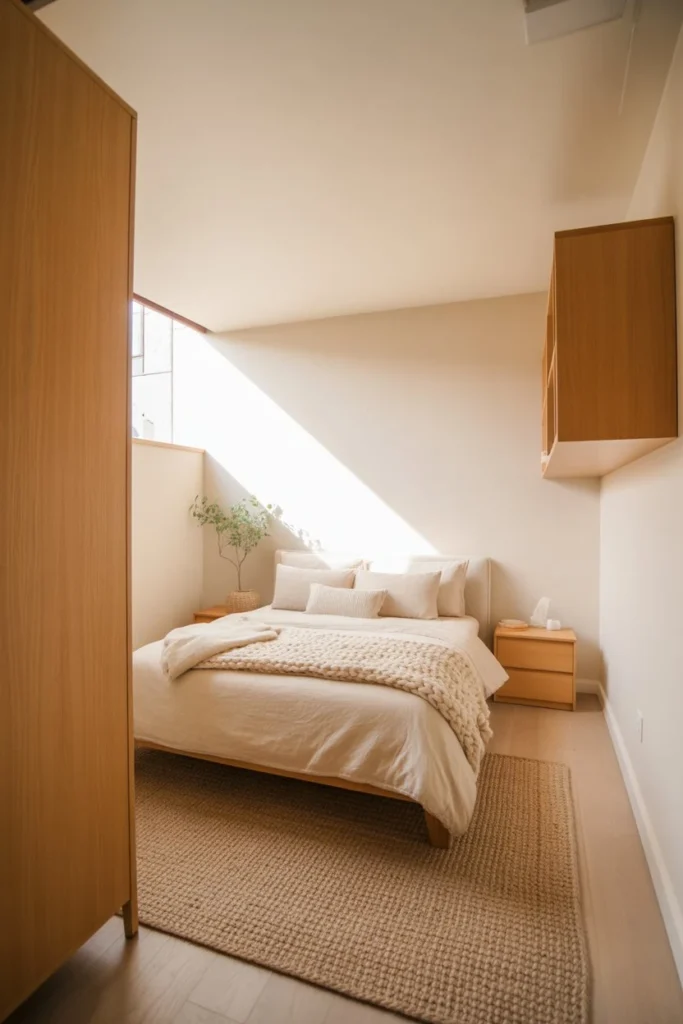
An area rug anchors the bed and softens hard floors, which makes the whole room feel warmer and more finished. For a queen bed, a 5 by 7 or 6 by 9 foot rug placed with its top edge under the front two-thirds of the bed leaves 18 to 24 inches of rug visible on each side, the sweet spot for stepping onto something soft.
Low-pile or flatweave rugs work best in small bedrooms because doors swing over them easily and chairs roll without catching. In very narrow rooms, skip the big rug and run a 2.5 by 8 foot runner along one side of the bed instead. Stick to neutral tones or subtle patterns that echo your bedding, and add a non-slip rug pad underneath, which also adds a touch of cushioning underfoot.
20. Wall-Mounted Lighting Fixtures
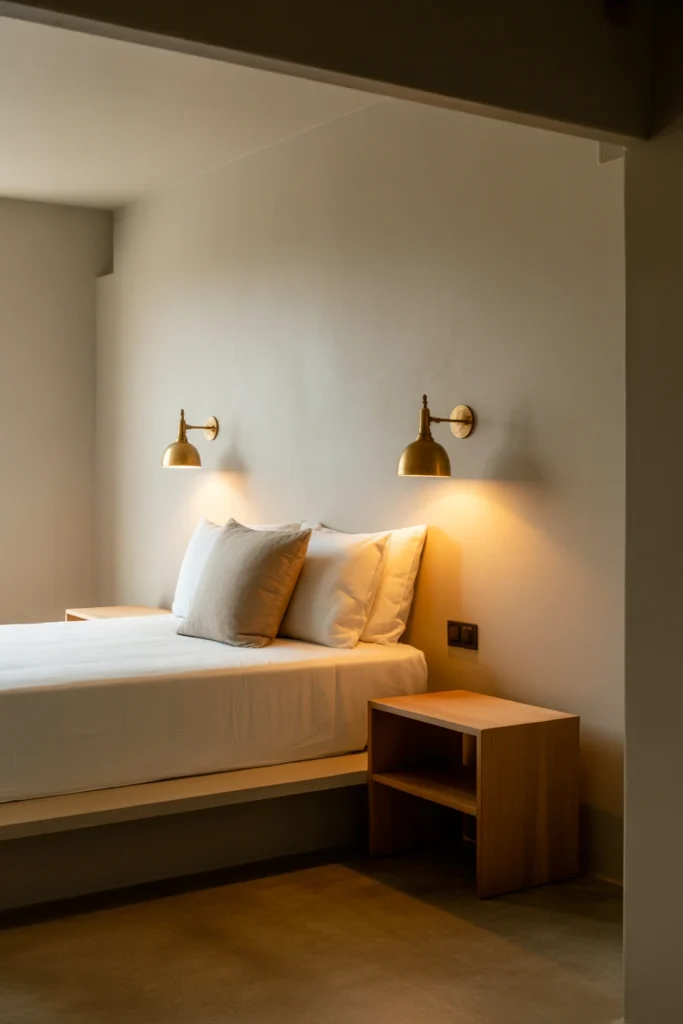
Swing-arm sconces and plug-in wall lamps free up the entire nightstand surface while keeping reading light exactly where you need it. Mount them 20 to 24 inches above the mattress top, centered on your reading position, so the light falls on the page, not in your partner’s eyes.
Plug-in sconces with a cord cover are the renter-friendly route: no electrician, no holes beyond two small anchors, and they move with you. Choose clean-lined metal finishes, matte black, brushed brass, or white, that match your other hardware so the room feels coordinated. Pair each sconce with its own switch or smart bulb so each side of the bed controls its own light.
21. Hidden Corners for Decor
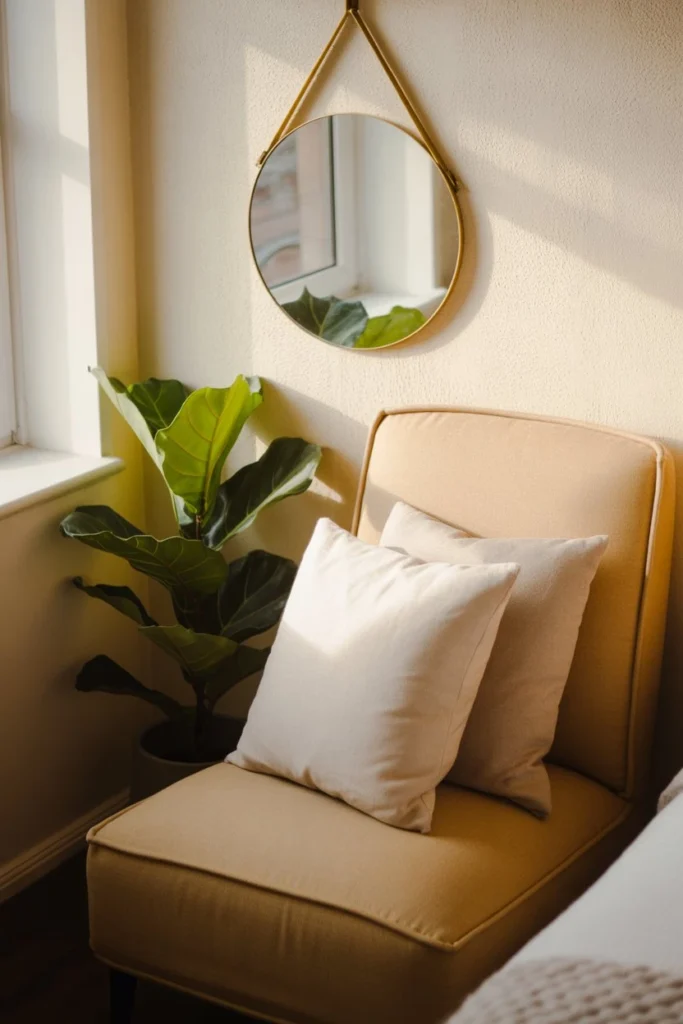
Every bedroom has a dead corner, and every dead corner is an opportunity. Tuck a compact 24 inch accent chair with a floor lamp into one for a reading nook, or group three plants of different heights in another for a living focal point. A leaning ladder shelf, only 16 inches deep, displays books and small art without the footprint of a bookcase.
Corners also fix lighting dead zones: a tall arc or tripod floor lamp aimed into the corner bounces light off two walls at once. Keep the styling simple, one hero piece plus one supporting item per corner, because overfilled corners read as clutter. These small moments give the room its personality and make use of inches that would otherwise collect dust.
22. Smart Storage Baskets
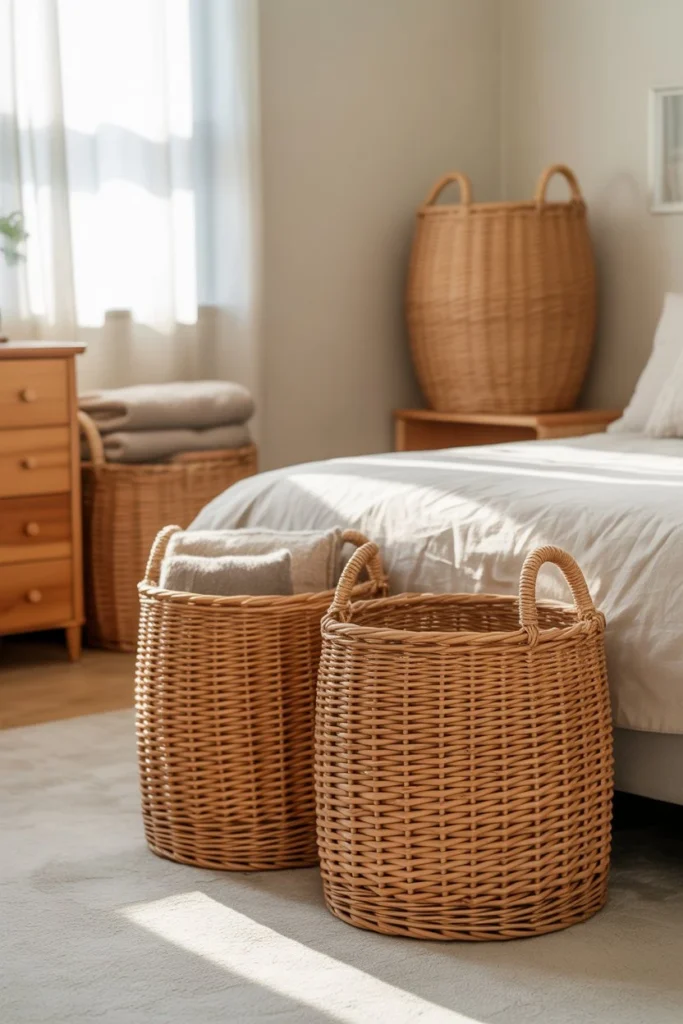
Stylish baskets are the fastest organization upgrade in a small bedroom. Natural rattan, seagrass, or woven cotton bins add warm texture while hiding the visual noise of chargers, accessories, and extra linens. Use a set of three graduated sizes on top of the wardrobe, and matching lidded baskets under a bench or inside open shelving.
Choose baskets with handles for anything you grab daily and lidded ones for anything you want to forget about. A quick labeling system, small kraft tags tied with twine, means anyone in the house can put things back where they belong. Stick to one or two natural materials throughout the room so the baskets read as decor, not as storage you are trying to hide.
23. Personalized Decor Accents
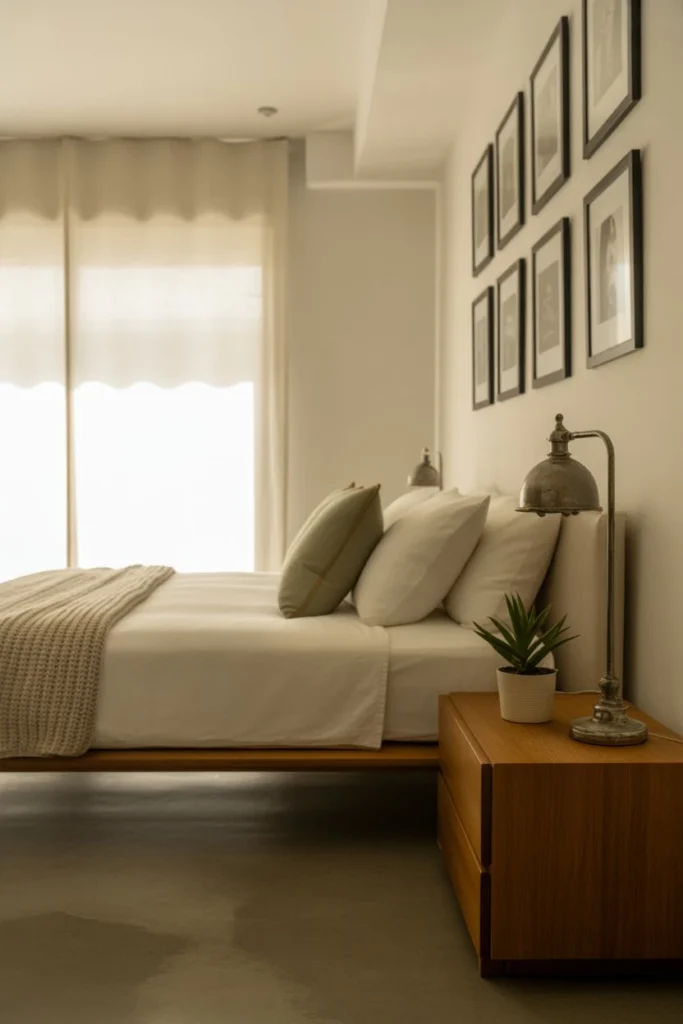
Finally, make the room yours. Framed photos, a print from a favorite trip, or a small shelf of souvenirs turn a well-designed bedroom into a personal one. The rule for small spaces: one personal item per surface, grouped intentionally, rather than scattered singles that read as clutter.
Build a small gallery wall with matching frames for cohesion, mixing photos with one or two art prints so it feels curated. Rotate seasonal items, a shell collection in summer, a cozy textile in winter, to keep the room feeling fresh without buying new decor. For more ways to layer personality into a compact room, browse our bedroom decor ideas. Keep personal pieces at eye level where you will actually see and enjoy them daily.
Conclusion
A small bedroom does not mean compromising on style or comfort. With these 23 small bedroom ideas, you can make the most of every square foot by combining smart storage, cohesive color schemes, layered lighting, and furniture that works twice as hard.
Start with the big levers, a light neutral palette, mirrors, and layered lighting, then add storage and personal touches one project at a time. Whether you love minimalist calm, cozy texture, or modern polish, these ideas will help you turn a compact bedroom into a retreat that feels twice its size.
Frequently Asked Questions
What colors make a small bedroom look bigger?
Light, warm neutrals do the most work: soft white, warm beige, light greige, and pale sage reflect daylight and blur the edges of the room. Paint the ceiling a shade lighter than the walls, keep trim bright white, and limit deep colors to small accents. A monochromatic scheme in one tonal family makes walls, bedding, and rug read as one continuous surface, which the eye interprets as more space.
How can I add storage to a small bedroom without it feeling cluttered?
Go vertical and go hidden. Floating shelves, floor-to-ceiling wardrobes, and over-door organizers use wall space, while under-bed bins, storage beds, and lidded baskets hide everyday items. Keep open storage styled and minimal, books, one plant, one object per shelf, and put everything else behind closed doors or inside baskets. If you can see it, it should look intentional.
What size bed works best in a small bedroom?
Choose the largest bed that still leaves at least 24 inches of walking space on each used side and 30 inches in front of any drawers. In rooms under 10 by 10 feet, a full-size bed often fits the lifestyle better than a cramped queen, and a low-profile platform frame makes any size feel airier. Measure the room, tape the bed footprint on the floor with painter’s tape, and live with the outline for a day before you buy.
How do I make a small bedroom cozy without crowding it?
Cozy comes from texture and light, not from more stuff. Layer a soft rug, linen bedding, and a knit throw in one tonal palette, then add warm 2700K lighting at two or three levels, bedside, plus an LED strip or sconce. One scented candle or a small plant adds life without footprint. Edit as you add: for every new decorative item, remove one, and the room stays cozy instead of crowded.
Can I fit a desk in a small bedroom?
Yes, a 30 inch wide corner is enough. Use a floating or fold-down wall desk 20 inches deep with a chair that slides fully underneath, and the workspace disappears when you are done. Wall-mount your monitor or use a laptop, add a clip-on task lamp, and keep cables managed with clips. Position the desk near a window for daylight, and treat it as a nook, not a full office, so it never overwhelms the room.
More Ideas You Will Love
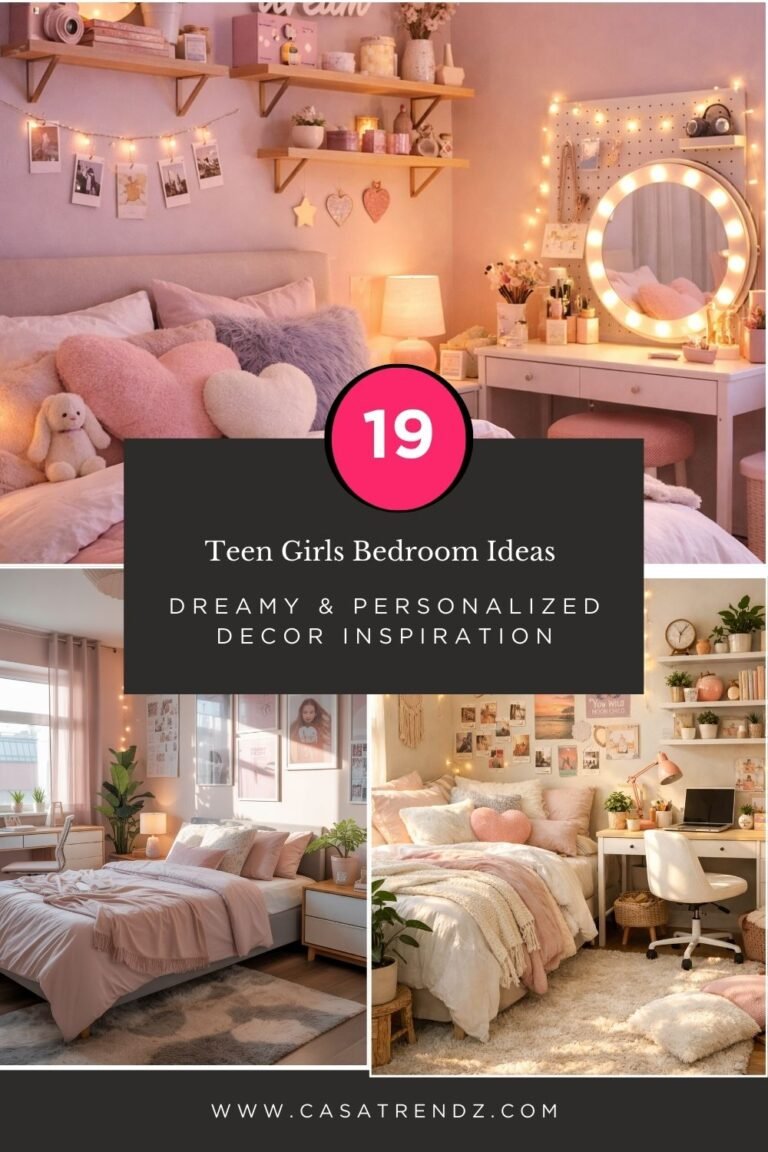 19 Teen Girls Bedroom Ideas: Dreamy & Personalized Decor Inspiration
 22 Romantic Bedroom Ideas – Stylish Inspiration for Couples & Cozy Nights
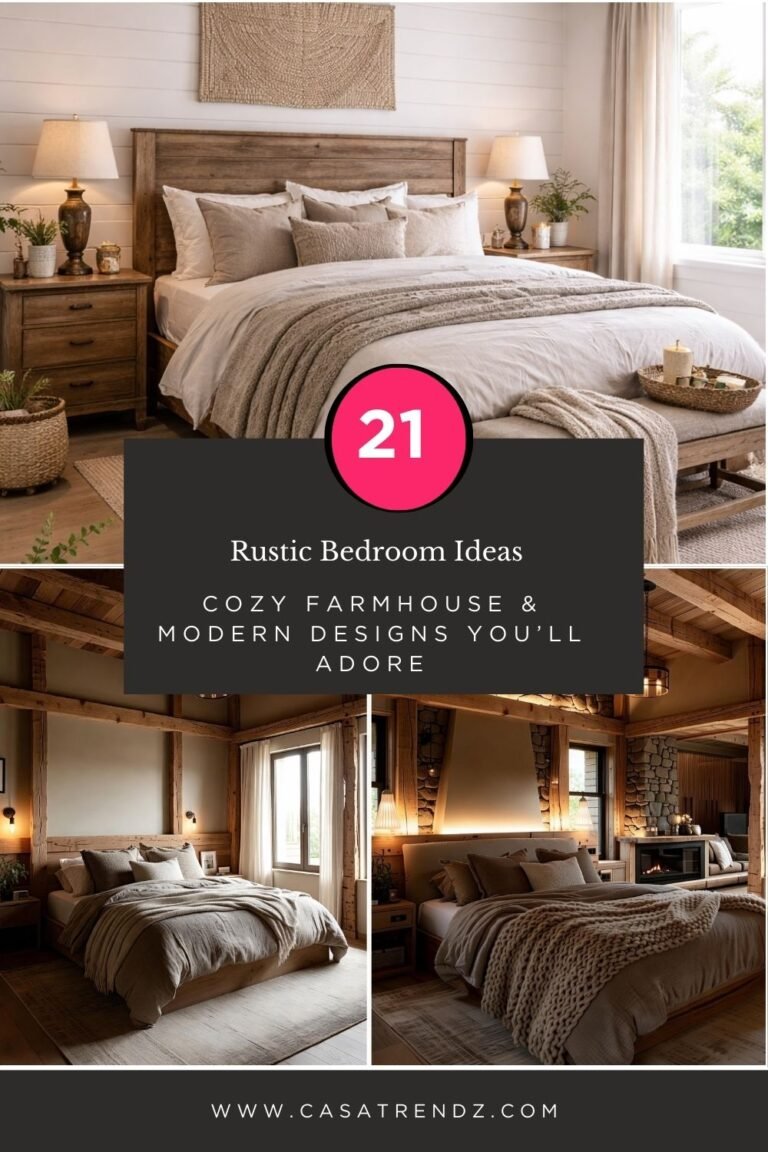 21 Rustic Bedroom Ideas – Cozy Farmhouse & Modern Designs You’ll Adore
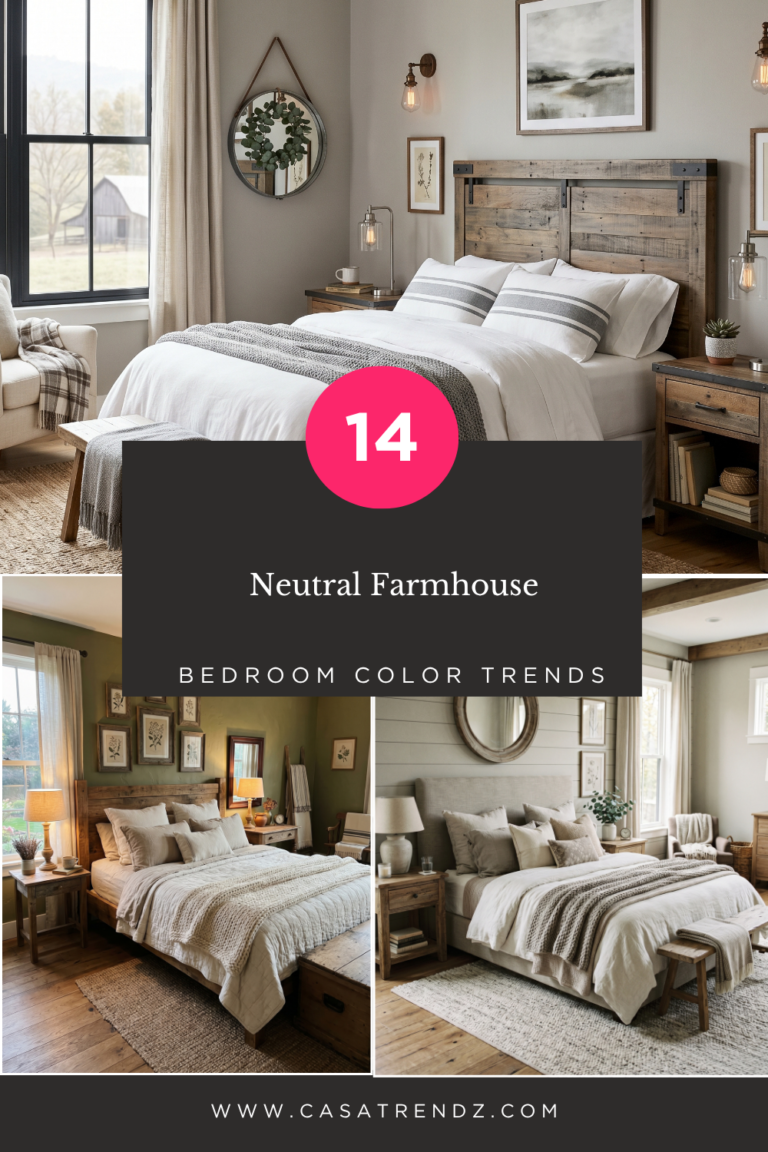 14 Neutral Farmhouse Bedroom Color Trends
 18 Red Bedroom Ideas That Are Bold, Beautiful, and Inspiring
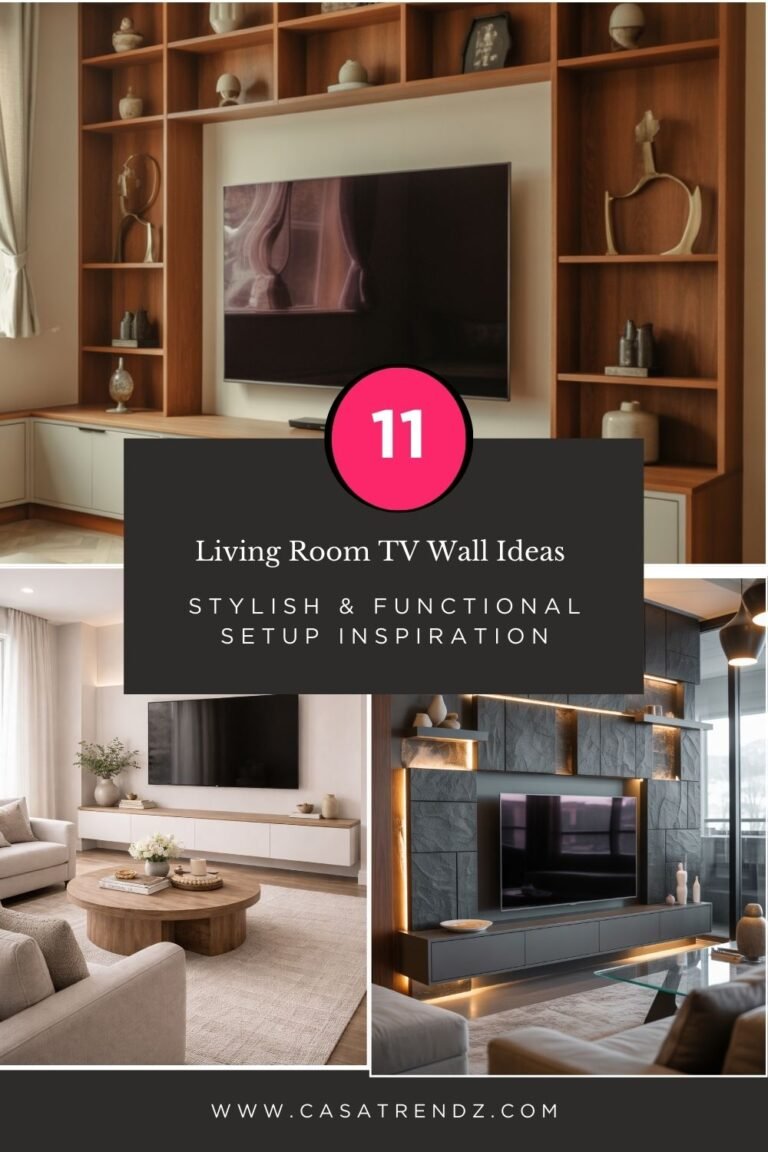 11 Living Room TV Wall Ideas: Stylish & Functional Setup Inspiration