
15 Home Office Desk Ideas: Stylish & Space-Saving Workstations

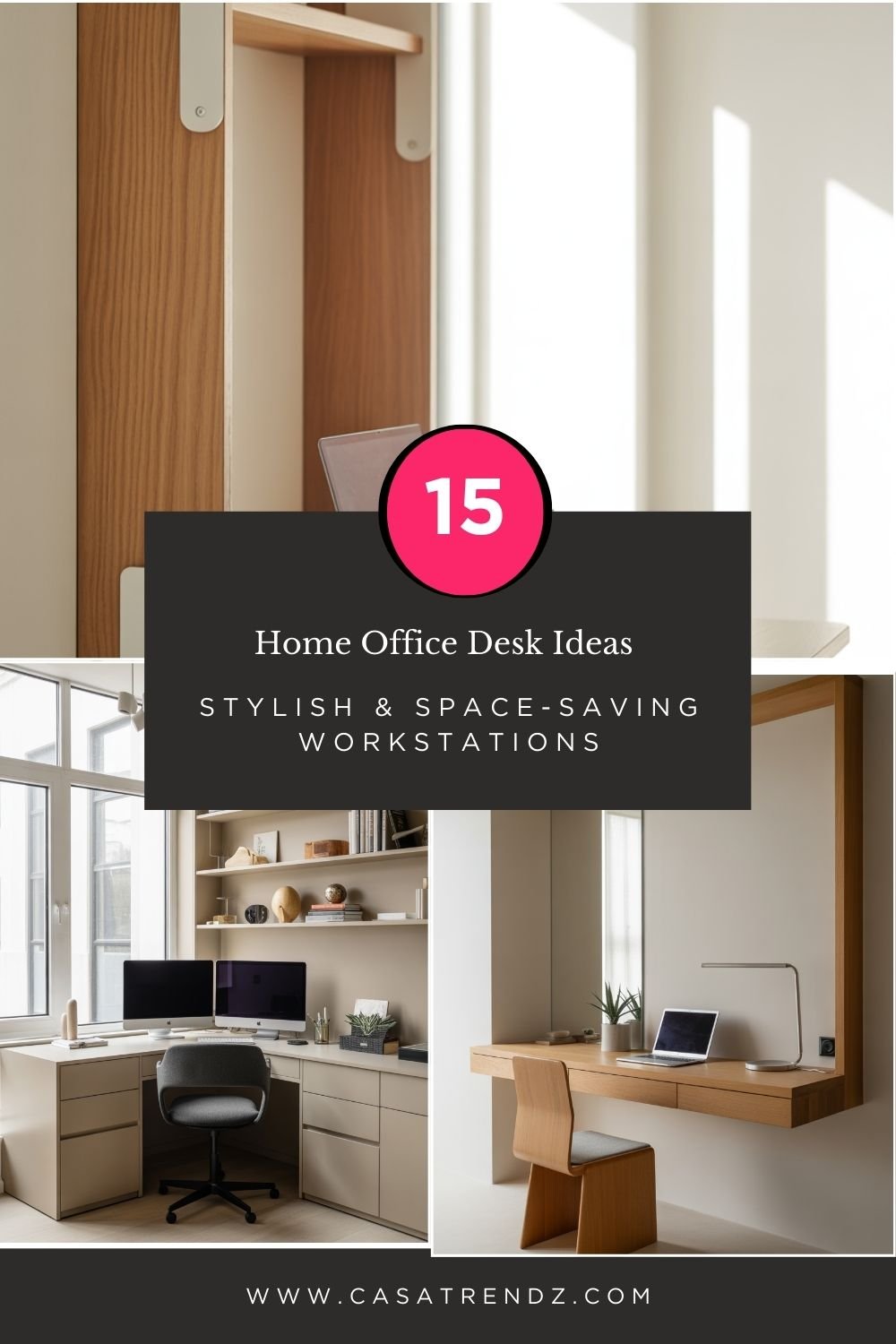
Working from home is now a normal part of life for millions of people, and the desk sits at the center of it all. It is where you answer emails, join video calls, pay bills, and finish projects after dinner. A desk that is too small, too high, or too cluttered makes every task harder, while the right desk quietly makes the whole day run smoother. It supports good posture, keeps your essentials within reach, and gives your work a proper home instead of a corner of the dining table.
The best home office desks do far more than hold a laptop. They add storage without eating up floor space, adapt to different rooms and routines, and look good enough to sit in plain view. A floating desk can open up a tiny bedroom, a fold down desk can disappear when the workday ends, and an adjustable height desk can change how your body feels by late afternoon. The right choice depends on your room size, your work style, and how much gear you actually use every day.
Below you will find 15 home office desk ideas that work in dedicated offices, spare bedrooms, living rooms, and tight corners. Each idea includes practical details on sizes, materials, and setup steps, so you can pick the one that fits your space and build a workstation you will actually enjoy using.
1. Wall-Mounted Floating Desk
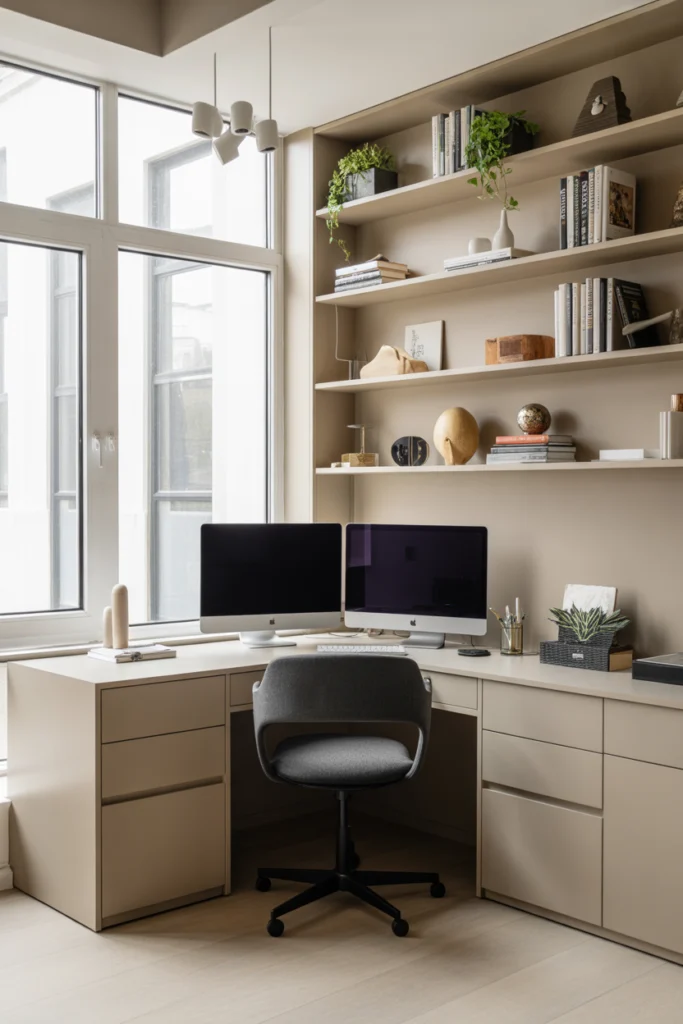
A wall mounted floating desk is one of the smartest choices for a small or minimalist home office. Because it attaches directly to the wall with sturdy brackets, it has no legs and no bulky frame, which leaves the floor underneath completely open. That open floor makes the room feel larger and makes cleaning far easier, since you can sweep or vacuum straight underneath. A standard floating desk is 36 to 48 inches wide and 20 to 24 inches deep, which is enough for a laptop, a notebook, and a coffee mug without crowding the surface.
Installation is straightforward but needs care. Find the wall studs with a stud finder and mount the brackets directly into them, because drywall anchors alone will not hold a desk loaded with a monitor and books. Most floating desks sit at a height of 28 to 30 inches, the same as a standard desk, but you can set yours an inch or two lower or higher to match your chair. Choose a solid wood top in oak, walnut, or white painted MDF to match your room, and add a slim wall shelf above it for a lamp, a small plant, and the books you reach for most often.
This style works best when you keep the surface light. A cable tray or a small cord cover under the desk hides charger cables, and a wall mounted monitor arm frees up even more space. Floating desks suit apartments, guest rooms, and hallway nooks, and they pair well with a simple chair that tucks underneath when the workday ends. If you need more storage, add a small rolling cart beside the desk instead of drilling more holes in the wall.
2. Corner Desk for Maximum Efficiency
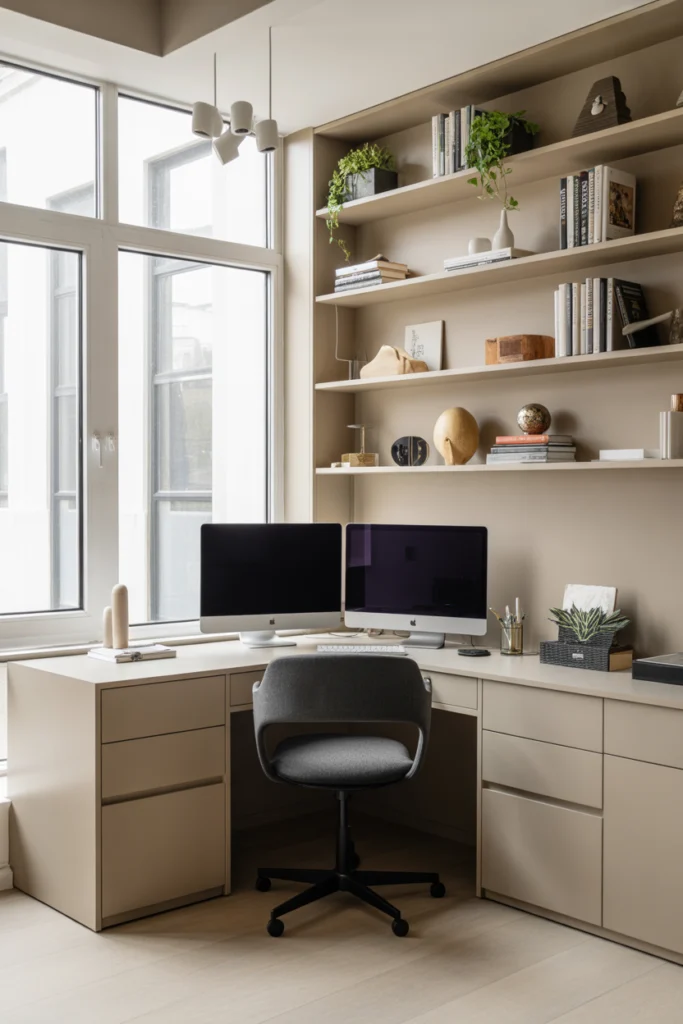
Corners are the most wasted space in most rooms, and a corner desk turns that dead area into a productive work zone. By wrapping around two walls, a corner desk gives you far more surface than a straight desk of the same footprint. A typical L shaped corner unit measures 48 to 60 inches along each wall, which leaves room for a monitor on one side and paperwork or a second screen on the other. It is an ideal setup for anyone who juggles video calls, spreadsheets, and handwritten notes in the same session.
Before you buy, measure both walls carefully and check for baseboard heaters, outlets, and door swings that could get in the way. Leave at least 36 inches of clearance in front of the desk so your chair can roll back freely, and place the monitor in the corner itself so you face into the room rather than staring at a blank wall. Built in cable grommets in the desktop let cords drop neatly to a power strip below, and a small corner shelf above the desk adds storage for reference books and office supplies.
Corner desks work especially well in small bedrooms and box rooms where a straight desk would block the door or the closet. Choose a light wood or white finish to keep the corner from feeling heavy, and add a desk lamp with an adjustable arm so you can aim light exactly where you need it. If the room has a window on one of the corner walls, angle the desk so you get natural light from the side rather than glare on your screen.
3. Minimalist Writing Desk
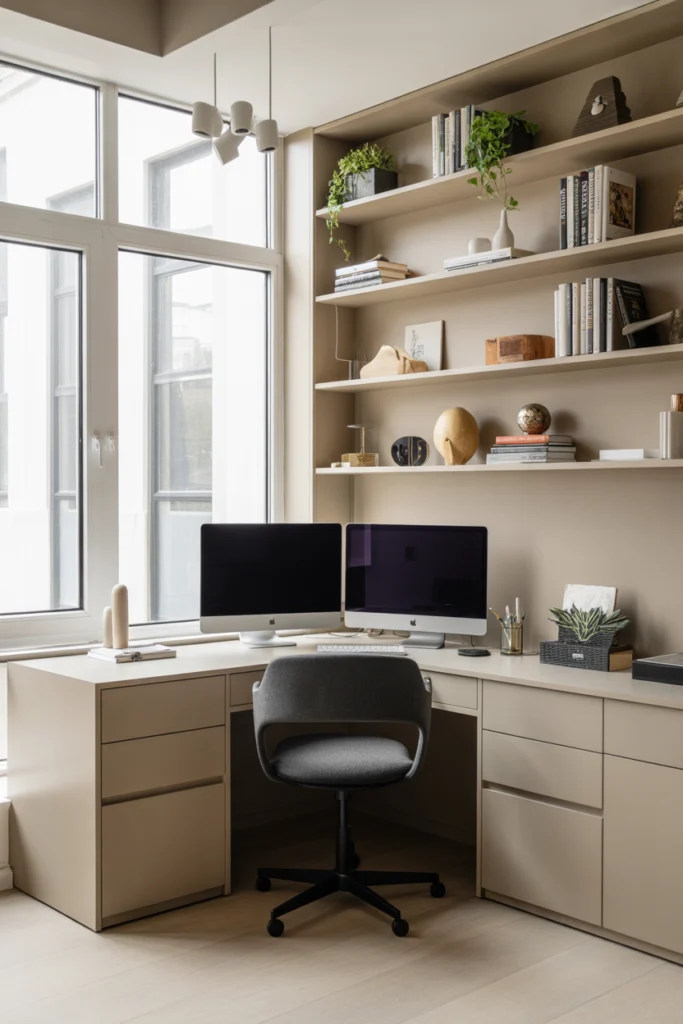
A minimalist writing desk is built around one idea: less clutter means clearer thinking. These desks have slim profiles, clean lines, and almost no decoration. A typical writing desk is 42 to 48 inches wide and only 20 to 24 inches deep, with a thin top in light oak, birch, or matte white. There are no drawers and no hutch, just a clean surface that invites you to sit down and focus on the task in front of you.
This style is best for laptop work, writing, and light office tasks rather than heavy multitasking. Because there is no built in storage, plan where your supplies will live. A small filing box on a nearby shelf, a wall mounted organizer, or a slim rolling cart can hold pens, chargers, and papers without spoiling the clean look. Keep only three things on the surface: your laptop, a lamp, and one small personal item. Everything else belongs somewhere else, and that rule is what keeps a minimalist desk working.
Pair a writing desk with a comfortable chair in a matching tone, and add a single piece of wall art or a small plant for warmth. Writing desks fit beautifully in bedrooms and living rooms, where a bulky office desk would look out of place. If you work from a bedroom, see these small bedroom ideas for ways to carve out a quiet workspace without crowding the room. A writing desk also suits Scandinavian and modern interiors, where pale wood, white walls, and soft textiles create a calm backdrop for focused work.
4. Built-In Desk with Storage
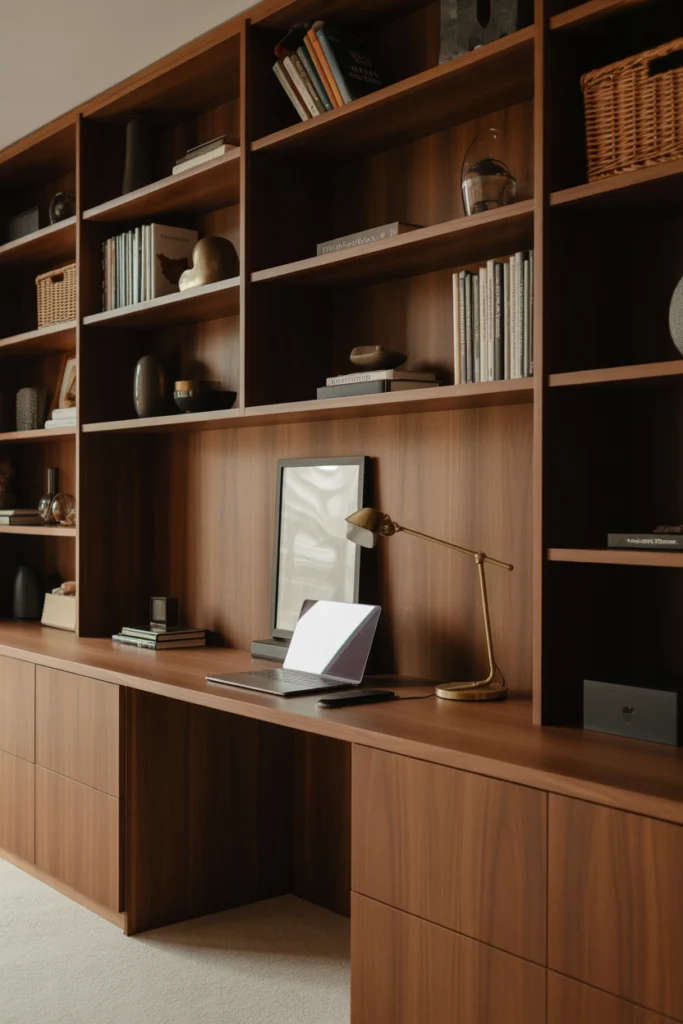
A built in desk is the most polished home office solution, because it is made to fit your exact wall. Instead of a freestanding desk pushed against the wall, a built in unit is anchored to the studs and often flanked by shelves, cabinets, or drawers that share the same finish. The result looks like part of the room rather than furniture that was added later. Built ins are ideal for dedicated offices, converted closets, and alcoves where a standard desk would leave awkward gaps on either side.
Plan the layout around how you actually work. A desktop 60 to 72 inches wide gives room for two monitors and paperwork, while a depth of 24 inches keeps the keyboard at a comfortable reach. Add open shelves above for books and display items, and closed cabinets below for files, printer paper, and supplies you would rather hide. Include at least two power outlets inside a cabinet so you can charge devices out of sight, and add LED strip lighting under the shelves to light the work surface without a desk lamp.
Built in desks cost more than freestanding ones, but they use every inch of the wall and add real value to the home. If a full custom build is beyond your budget, a good middle ground is a pair of matching bookcases with a desktop spanning between them, anchored to the wall for safety. Paint the whole unit one color, such as soft white or sage green, for a seamless look. Keep the desktop clear except for your monitor and a small tray for daily papers, and let the built in storage do the heavy lifting.
5. Fold-Down Desk for Small Spaces
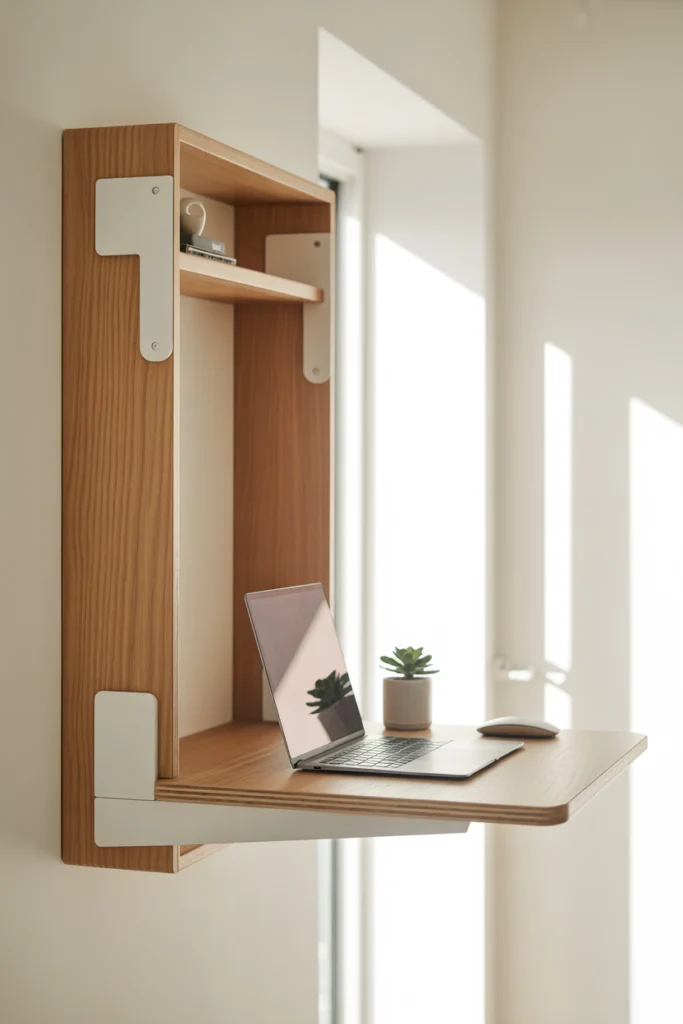
A fold down desk is perfect when your home office has to share a room with something else. Mounted on the wall with hinges, it folds flat against the wall when you are done working, freeing the floor for guests, exercise, or family time. Open, it gives you a work surface 30 to 36 inches wide and about 20 inches deep, which is plenty for a laptop and a notebook. Many designs include a small shelf or a couple of pockets on the inside of the panel, so pens and a charger stay with the desk even when it is folded away.
Mount the desk at standard desk height, 28 to 30 inches from the floor, and anchor the hinges and support brackets into wall studs. A fold down desk must hold the weight of your laptop and your forearms, so cheap hinges are a false economy. Choose a solid plywood or hardwood top rather than thin MDF, and add a magnetic catch or a small latch so the panel stays shut when folded. If you work with a monitor, use a lightweight laptop and a separate keyboard that you can store on a nearby shelf.
This style shines in guest rooms, living rooms, and even kitchens, where a permanent desk would get in the way. When the desk is closed, it can look like a shallow cabinet or a framed panel on the wall, so choose a finish that matches the room. Keep a folding chair nearby or use a dining chair you already own, and your office appears in seconds and disappears just as fast. It is one of the best solutions for renters, because it leaves only a few screw holes behind.
6. Desk with Built-In Shelving
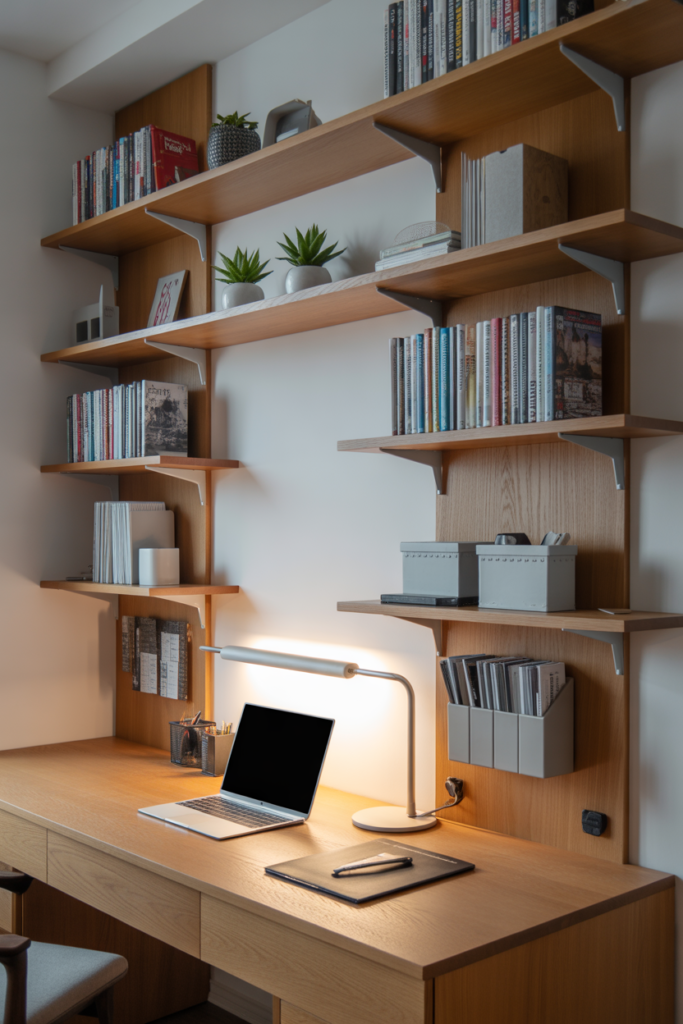
A desk with built in shelving combines your work surface and your storage in one unit, which saves both floor space and money. Instead of buying a desk plus a separate bookcase, you get vertical shelves rising from the back or sides of the desktop. Books, binders, plants, and office supplies all live within arm’s reach, and the desk itself stays clear for actual work. A typical unit is 48 to 60 inches wide, with shelves 10 to 12 inches deep, which is enough for standard books and storage boxes.
Organize the shelves with a simple system. Keep daily items such as notebooks, chargers, and reference books on the lowest shelf, right above the desk. Use the middle shelves for things you need weekly, and the top shelf for display items and supplies you rarely touch. Matching storage boxes in a neutral color hide clutter and make the whole unit look tidy. Leave some breathing room on each shelf rather than packing it solid, because a crowded shelf makes the whole office feel cramped.
Built in shelving works well in small offices where a separate bookcase would block a door or a window. Choose a finish that matches your other furniture, such as natural oak, black metal, or white painted wood, and add a desk lamp that clamps to the shelf so it never eats desktop space. If you share the room with another purpose, pick a unit with a closed cabinet section for items you want out of sight when guests visit.
7. Slim Console Desk for Tight Areas
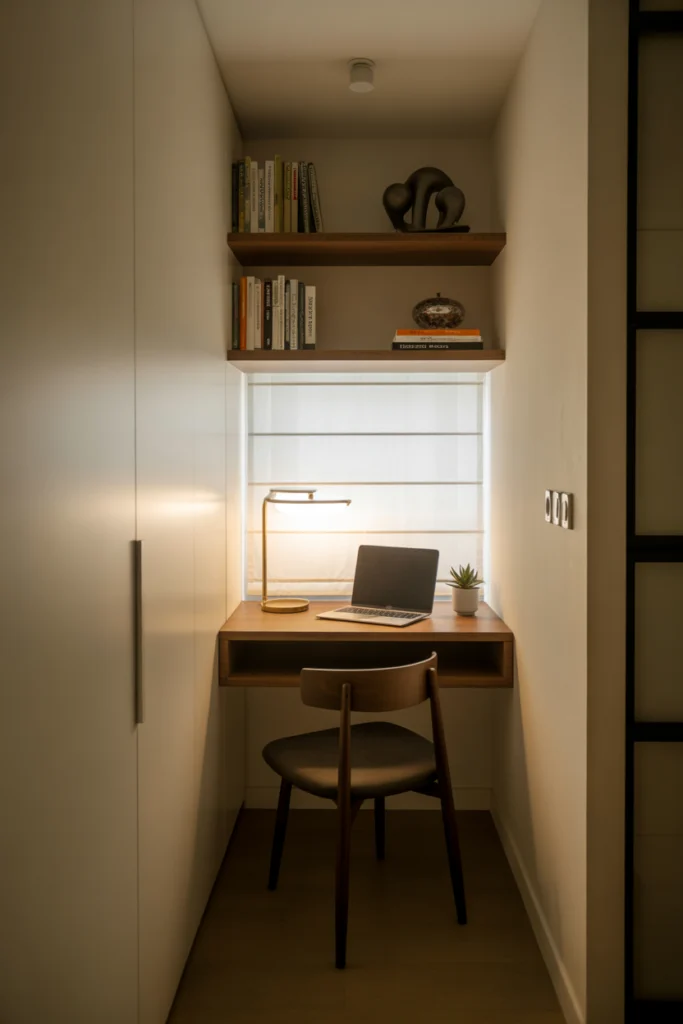
A slim console desk is made for the narrow spots in a home: a hallway, the end of a bedroom wall, or a gap between the sofa and the wall in a living room. At only 12 to 16 inches deep and 36 to 48 inches wide, it slips into places where a normal desk would block traffic. It is just deep enough for a laptop and a small lamp, which is all most people need for email, planning, and light work sessions.
Because the desk is shallow, choose your setup carefully. A laptop works better than a separate monitor and keyboard, and a wireless mouse keeps the surface clear. Place the desk near an outlet so the charger cable can run straight down the wall, and add a small wall shelf above it for a notebook and pens. A chair that slides fully underneath, such as a slim armless chair or a backless stool, keeps the walkway clear when the desk is not in use.
Console desks also make great entryway workstations. If you use one near the front door, see our modern entryway ideas for ways to blend a workspace into an entrance without it looking like an office. Style the desk with one small plant or a framed photo, and keep the surface mostly clear so it reads as furniture rather than a cluttered desk. In a hallway, a console desk can double as a place to sort mail and charge phones, which makes it useful even on days you never sit down to work.
8. Adjustable Height Desk
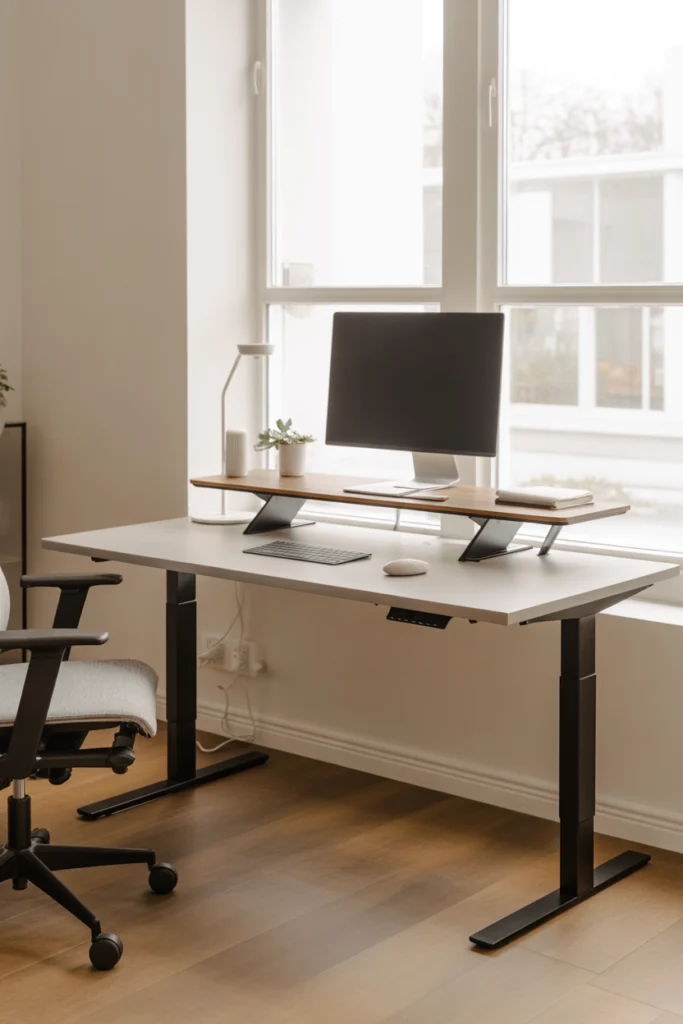
An adjustable height desk, also called a standing desk, lets you switch between sitting and standing with the push of a button. Most electric models move from about 25 inches to 50 inches high, which covers both a seated position and a comfortable standing height for most adults. Health experts suggest changing position every 30 to 60 minutes, and a height adjustable desk makes that easy without rearranging your whole setup.
When choosing one, check the lifting capacity and the stability at full height. A good desk lifts at least 150 pounds smoothly, so it can carry two monitors, a laptop, and books without wobbling. Look for a memory keypad that saves your favorite sitting and standing heights, and a cable management tray underneath so cords do not tangle when the desk moves. A desktop 48 to 60 inches wide and 24 to 30 inches deep gives enough room for a monitor arm, a keyboard tray, and a notebook.
Set your monitor so the top of the screen is at eye level when you are standing, and keep your elbows at about 90 degrees when typing. Start with short standing sessions of 20 to 30 minutes and build up slowly, and use a cushioned anti fatigue mat under your feet. Pair the desk with a stool or a tall chair for a middle option between sitting and standing. An adjustable desk is one of the best investments for anyone who works from home full time, because it adapts to your body instead of forcing your body to adapt to it.
9. Desk with Hidden Storage
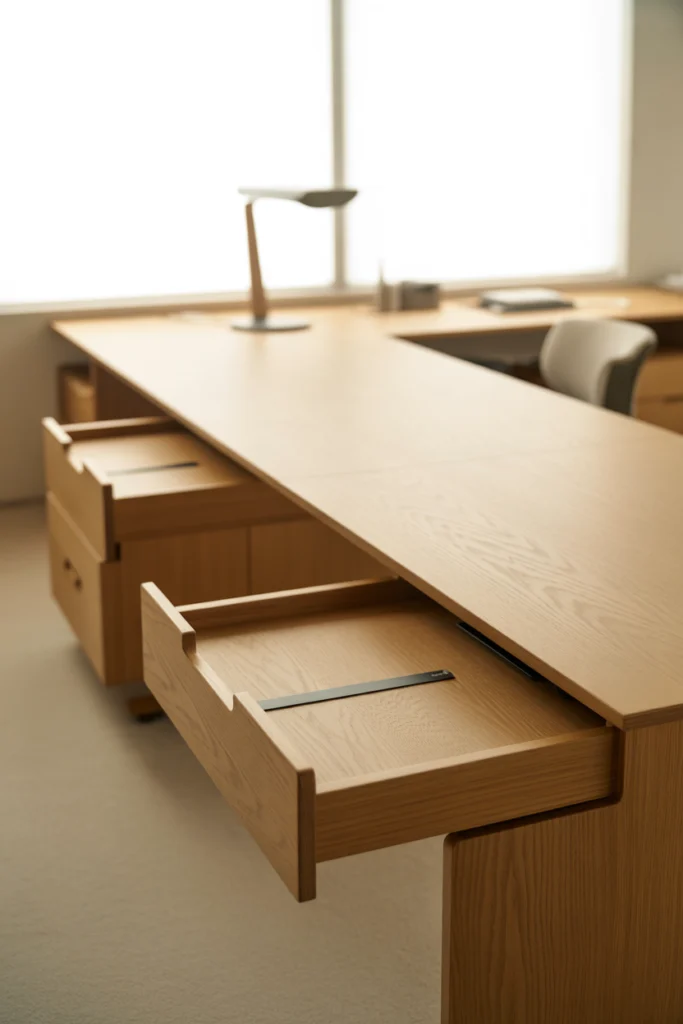
A desk with hidden storage keeps your workspace looking calm by tucking supplies out of sight. Instead of open shelves, it uses concealed drawers, lift up desktop panels, and false fronts that hide chargers, cables, and paperwork. From the outside it looks like a simple, elegant desk, but it holds everything a busy workday needs. This style is ideal for living rooms and bedrooms where the desk is always visible.
Look for a design with at least one deep drawer for files and one shallow drawer for pens, cables, and small supplies. A hidden cable channel under the desktop keeps chargers out of view, and a lift up panel can hide a power strip and a docking station. Soft close drawer slides are worth the small extra cost, because they stop drawers from slamming and protect the finish over time. Measure your largest items, such as a laptop charger or a ring light, before you buy, so you know they will actually fit inside.
Keep the desktop almost empty to get the full effect. A laptop, a small lamp, and one tray for the day’s papers is enough. Everything else goes into the hidden compartments at the end of the day, which takes less than a minute and makes the room feel instantly tidy. Hidden storage desks work especially well in shared spaces, because the room returns to a living room the moment work ends. Choose a finish that matches your existing furniture so the desk blends in rather than announcing itself as office furniture.
10. L-Shaped Desk for Productivity
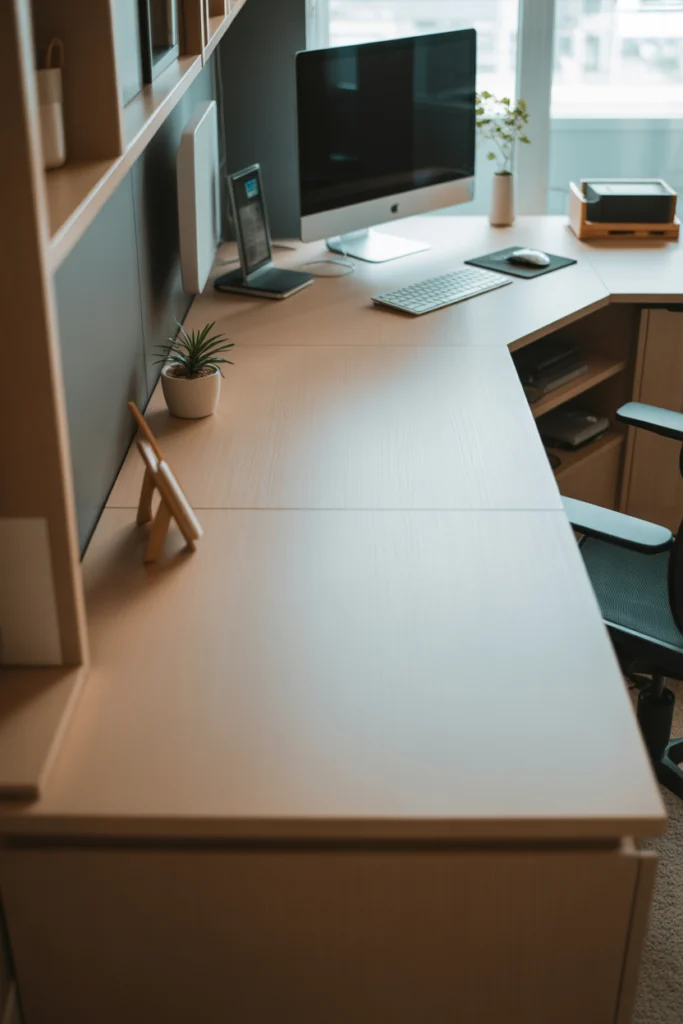
An L shaped desk gives you two work zones in one piece of furniture: one side for your computer and one side for writing, reading, or spreading out documents. The long side usually measures 60 to 72 inches, while the return side is 48 to 60 inches, and both are about 24 inches deep. That extra surface means you can keep a monitor, a printer, and a stack of files out at the same time without feeling crowded.
Arrange the desk so the two zones match your workflow. Put the monitor on the long side and use the return for paperwork, a second screen, or a video call setup with a ring light. If you work with a partner, the return side can serve as a second seat for short shared sessions. Keep the corner itself free for a desk lamp or a small plant, rather than piling it with clutter, because the corner is the hardest part of the desk to reach. Add a cable tray along the back edge and a power strip mounted under the desktop to keep cords off the floor.
L shaped desks suit larger home offices, spare bedrooms, and open plan living areas where the desk can define a work zone. If the desk sits in a living room, see our living room ideas for ways to zone a workspace with a rug, a room divider, or a bookshelf. Choose a finish that works with the rest of the room, and leave at least 36 inches of clearance on the open sides so you can move your chair freely between the two zones.
11. Compact Desk with Drawers
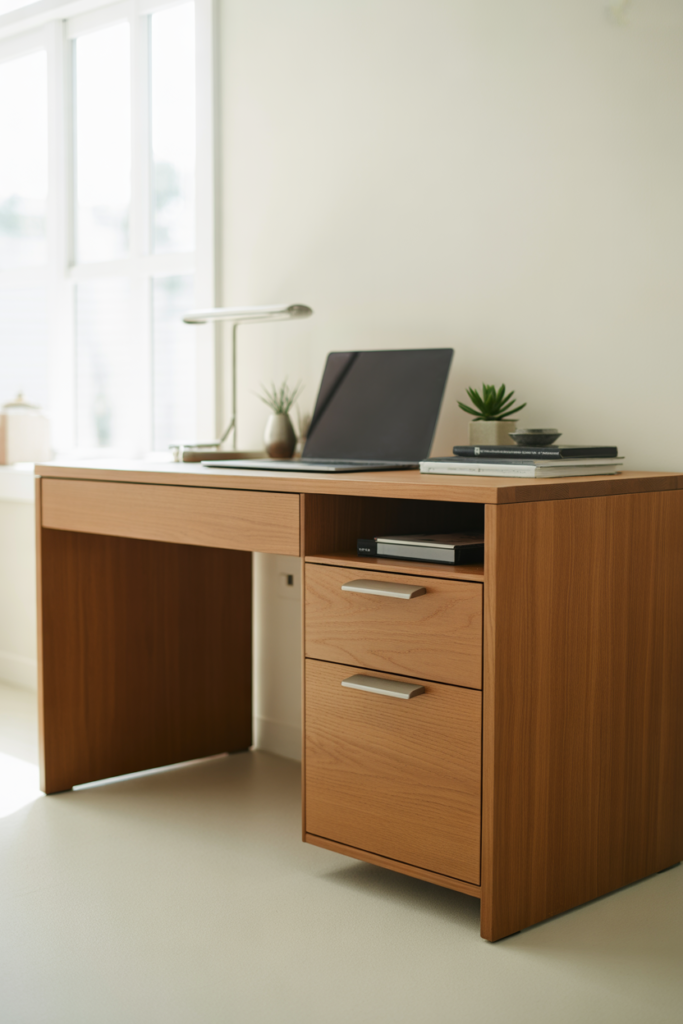
A compact desk with drawers packs real storage into a small footprint, which makes it a favorite for bedrooms and small apartments. At 36 to 48 inches wide and 20 to 24 inches deep, it fits in spaces where a full office desk cannot, yet two or three drawers hold files, chargers, notebooks, and office supplies. The drawers sit on one side or both sides of the desk, leaving legroom in the middle for comfortable sitting.
Before you buy, check the drawer depth and the legroom together. A drawer unit that is 18 inches deep leaves about 24 inches of knee space in a 42 inch wide desk, which is enough for most people. Shallow drawers are best for pens and cables, while a deeper file drawer can hold hanging folders. If the desk will sit in a bedroom, look for a style that doubles as a vanity or a nightstand, with a finish that matches your bed frame and dresser.
Keep the top drawer for the items you use every day, such as a charger, a notebook, and pens, so you never have to dig. Use small drawer organizers to stop supplies from sliding around, and reserve the bottom drawer for files and items you need weekly rather than daily. A compact desk with drawers works well for students and remote workers alike, and if you are setting one up in a bedroom, these bedroom design ideas show how to place a desk so it feels part of the room rather than squeezed into a corner.
12. Industrial-Style Desk
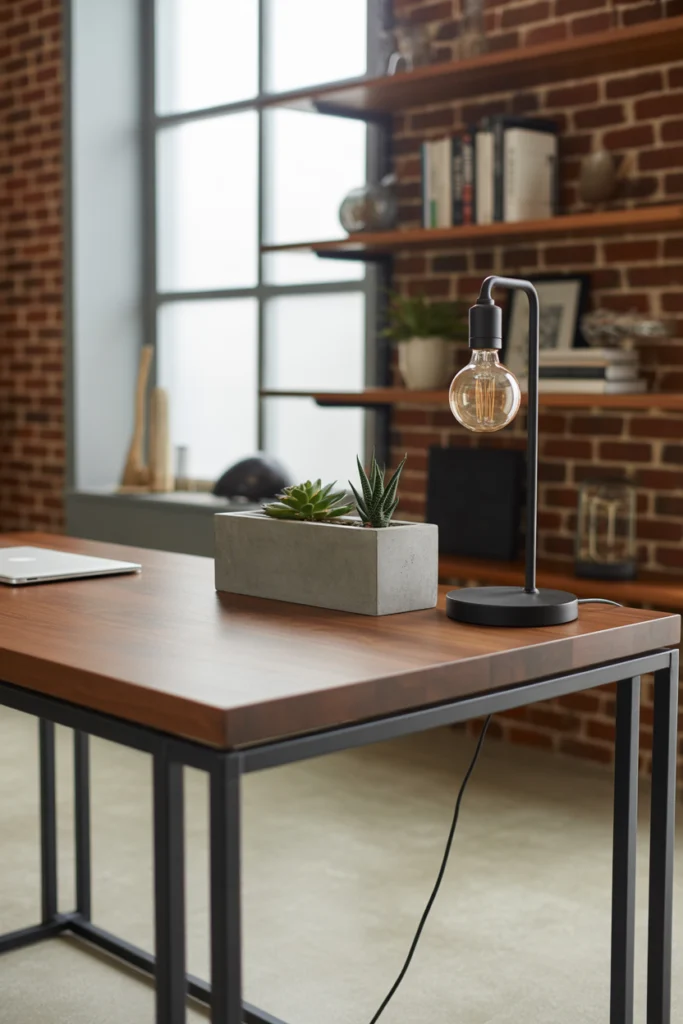
An industrial style desk brings a bold, workshop inspired look to a home office. It pairs a thick wood top, often reclaimed pine, acacia, or walnut, with a black metal frame, exposed bolts, and sometimes a lower shelf or a metal mesh panel. The contrast between warm wood and dark steel gives the desk character, and the sturdy construction handles heavy monitors, books, and equipment without flexing.
A standard industrial desk is 48 to 60 inches wide and 24 to 30 inches deep, with a top at least 1.5 inches thick for a solid feel. The metal frame usually has adjustable feet, which is useful on uneven floors, and a crossbar under the desktop adds rigidity. Because the style is visually heavy, balance it with lighter elements: a simple chair, a pale wall, and a desk lamp with a warm bulb. A leather desk mat in brown or black protects the wood and adds to the look.
Industrial desks work best in lofts, modern homes, and offices with brick, concrete, or dark painted walls. They also suit creative work, such as design, photography, and crafting, where a tough surface matters more than a delicate finish. Keep the desktop organized with a metal tray or a wooden box for supplies, and add a small plant to soften the hard edges. If you like the style but have a small room, choose a slim version with open metal legs rather than a solid panel base, so the floor stays visible and the room feels larger.
13. Desk with Hutch Storage
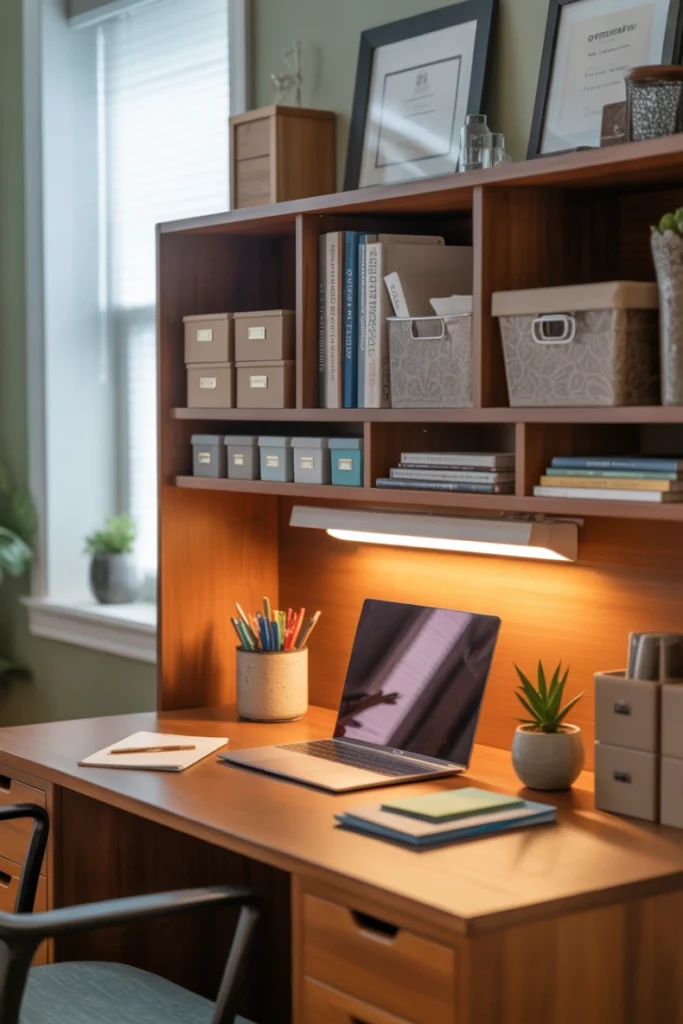
A desk with a hutch uses vertical space to add serious storage without taking up more floor. The hutch is a set of shelves and small cabinets that sits on top of the desktop, usually 30 to 40 inches tall, with a total unit width of 48 to 60 inches. It is the classic choice for home offices that handle a lot of paper, because files, binders, and reference books can live directly above the work surface instead of across the room.
Organize the hutch from the bottom up. The lowest shelf, just above the desk, holds the items you grab daily, such as a notebook, a phone charger, and a small clock. Middle shelves are for binders and files, and the top shelf or cabinet is for supplies you use rarely. Add a corkboard or a magnetic strip on the back panel of the hutch for notes and reminders, and run a short LED strip under the lowest shelf to light the desktop. Keep the hutch doors closed if the unit has them, so the storage stays tidy even when it is full.
Hutch desks work well in dedicated offices and spare rooms, but they can overwhelm a very small space, so measure your ceiling height and leave at least 6 inches of clearance above the unit. Choose a finish that matches your other furniture, and anchor the whole unit to the wall with the included hardware, because a loaded hutch is top heavy. If you need even more storage, pair the desk with a matching filing cabinet on the side, and keep the desktop clear except for your monitor and keyboard.
14. Rolling Desk for Flexibility
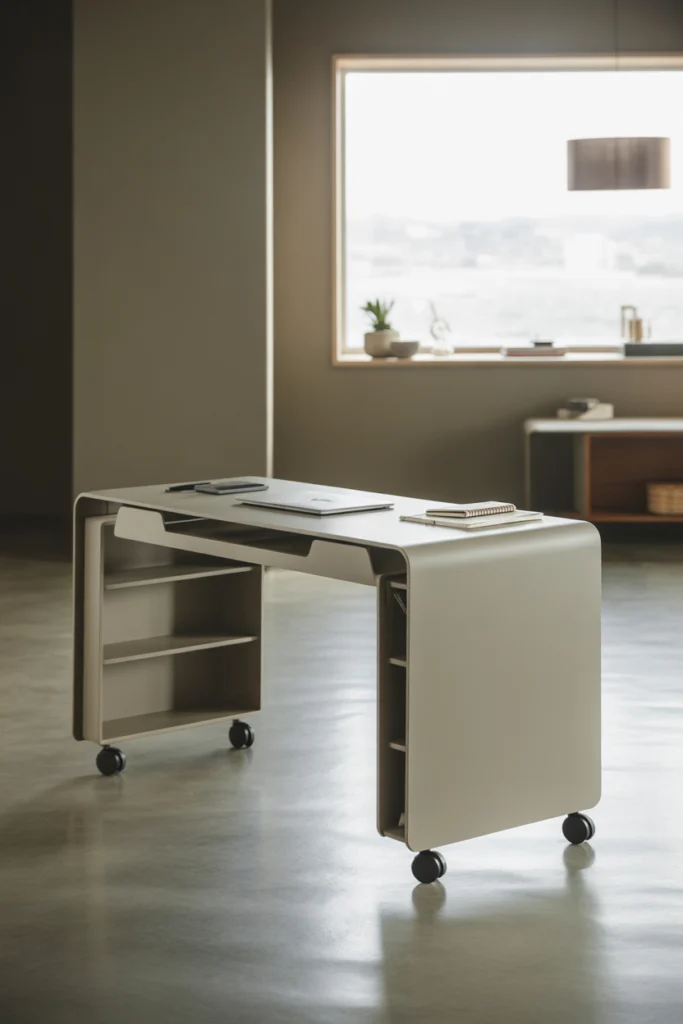
A rolling desk moves where you need it, which makes it ideal for flexible living spaces. Mounted on four caster wheels, it can roll from the living room to the bedroom, out to a sunny patio, or into a closet at the end of the day. Most rolling desks are 36 to 48 inches wide and 20 to 24 inches deep, with a light frame in wood or metal that keeps the total weight manageable. Look for wheels with locks on at least two casters, so the desk stays put while you work.
Keep the setup simple so moving the desk stays easy. A laptop is a better fit than a desktop computer, and a wireless keyboard and mouse mean there are no cables to unplug before you roll away. A small shelf or a side pocket on the desk holds a notebook and a charger, and a lightweight chair that also moves easily completes the setup. Before you roll the desk across the house, clear the path and check that rugs and thresholds will not catch the wheels.
Rolling desks suit people who share their home with family or roommates, and anyone whose work moves around the house during the day. You can work near a window in the morning, move to a quiet room for calls in the afternoon, and tuck the desk away in the evening. Keep the living room setup tidy by storing the desk against a wall when it is not in use, with the chair tucked in beside it. Choose a desk with a handle or a raised edge on one side so it is easy to push, and test the wheels on your floor before you commit.
15. Dual-Purpose Desk for Shared Spaces
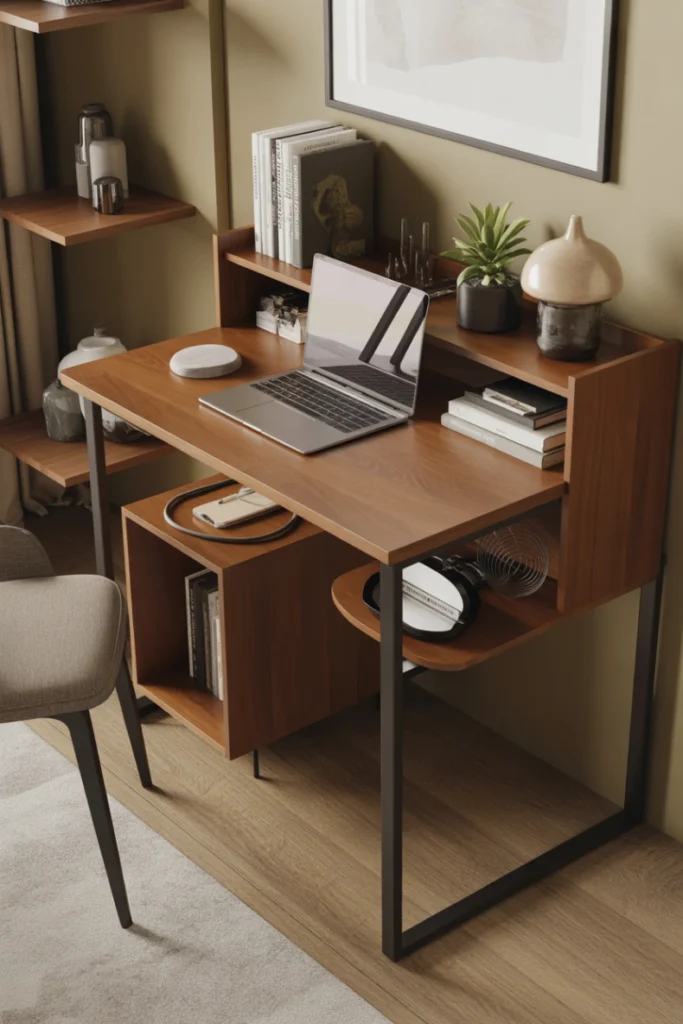
A dual purpose desk earns its place in a shared room by doing two jobs at once. By day it is a workstation, and by evening it becomes a console table, a vanity, or even a small dining table. The key is a design that looks like furniture first and a desk second: a clean top, elegant legs, and no obvious office hardware. A width of 42 to 48 inches and a depth of 20 to 24 inches is enough for a laptop during work hours and a vase of flowers or a table setting afterward.
Set the desk up so the changeover takes less than a minute. Keep work supplies in a single attractive box or basket that slides onto a shelf when the workday ends, and use a laptop rather than a monitor so there is nothing heavy to move. A chair that belongs in the room, such as a dining chair or an upholstered accent chair, works for both roles. If the desk sits in a living room, place it against a wall with a mirror or artwork above it, so it reads as a console table when it is not in use.
Dual purpose desks are perfect for apartments, studios, and homes where every piece of furniture has to work hard. They also suit guest rooms, where the desk can serve visitors as a dressing table. Choose a finish that matches the room, such as walnut in a warm living room or white in a bright bedroom, and keep cables hidden with a small cord cover or a cable box. When one piece of furniture handles two jobs well, the whole room feels more spacious and more useful.
Conclusion
The right desk turns a home office from a temporary setup into a place where real work gets done comfortably. The most effective home office desk ideas balance style, space efficiency, and storage, and they match the way you actually work. A floating desk opens up a small room, a fold down desk disappears when the day ends, and an adjustable height desk takes care of your body through long hours at the screen.
Start by measuring your space and listing what you use every day, then choose the desk that fits both. A small room needs a slim or folding design, a busy household needs hidden storage and a quick tidy up routine, and a dedicated office can handle a built in or L shaped desk with room to grow. Whichever idea you pick, keep the surface clear, the cables hidden, and the chair comfortable, and your home office will support you for years to come.
Frequently Asked Questions
What size desk do I need for a home office?
For laptop work, a desk 42 to 48 inches wide and 20 to 24 inches deep is usually enough. If you use one or two monitors, choose a desk at least 55 to 60 inches wide and 24 to 30 inches deep so the screens sit at a comfortable distance and you still have room for a notebook. Always leave at least 36 inches of clearance behind the chair so you can push back and stand up easily.
What is the best desk height for working from home?
The standard desk height is 28 to 30 inches, which suits most adults when paired with an adjustable chair. Your elbows should rest at about 90 degrees when typing, and the top of your monitor should sit at eye level. If you are taller or shorter than average, an adjustable height desk or an adjustable chair will help you reach a comfortable position.
How can I fit a desk into a small bedroom?
Use a wall mounted floating desk, a slim console desk, or a fold down desk that disappears when you are done. Place it on a short wall or in an unused corner, and use vertical storage such as a wall shelf to keep supplies off the desktop. A chair that slides fully under the desk keeps the walkway clear, and a light colored finish makes the setup feel less bulky.
Should I choose a standing desk for my home office?
A standing desk is a good choice if you work from home full time and want to move more during the day. Look for an electric model with a memory keypad, a lifting capacity of at least 150 pounds, and a stable frame at full height. Start with short standing sessions of 20 to 30 minutes and build up slowly, and use an anti fatigue mat for comfort.
How do I keep my home office desk organized?
Give every item a home. Use drawers or a small storage box for supplies, a cable tray for chargers, and a single tray for the day’s papers. Keep only your laptop, a lamp, and one personal item on the surface, and spend one minute at the end of each workday clearing the desk. A clear desk makes it much easier to start work the next morning.
More Ideas You Will Love
 16 Plank Floor Ideas from Rustic Charm to Modern Luxury
 13 Reasons Why Window Boxes Are the Perfect Summer Decor
 19 Small Entryway Decor Ideas That Are Stylish & Functional
 14 Air Quality Improvement Tips for a Healthier Summer Home
 15 Modern Farmhouse Foyer Ideas That Make a Lasting Impression
 20 Modern Entryway Ideas for a Welcoming & Stylish First Impression