
24 Nursery Remodel Ideas – Transform Your Baby Room with Style & Function


Remodeling a nursery is one of the most rewarding projects in a home. It is the room where your baby will sleep, play, and grow, so every choice matters, from the paint on the walls to the exact spot where the crib stands. A good nursery balances beauty with function: soft light for naps, safe materials for little hands, storage that keeps essentials within reach, and a layout that makes midnight feedings easier instead of harder.
The ideas below cover every style and every room size. You will find calm neutrals, bold themes, clever small-space layouts, twin setups, and eco-friendly options, each with practical detail you can act on this weekend. Pick the look that fits your home, then borrow the measurements, color palettes, and step-by-step tips to make it your own.
Before you start, measure the room and sketch a simple floor plan. Note the window, door swing, and outlet positions first, because those three things decide where the crib, dresser, and glider can go. Plan for at least 90 cm of clear space around the crib for safe access, and keep the changing station within two steps of your diaper storage. With that groundwork done, these 24 nursery remodel ideas will help you build a room that looks beautiful on day one and still works when your baby becomes a toddler. For even more inspiration, browse our collection of baby nursery ideas alongside this guide.
Safety should shape every decision in a nursery remodel, no matter which style you choose. Pick a crib that meets current safety standards, with slats no more than 6 cm apart and a firm mattress that fits snugly with no gaps. Anchor tall furniture such as dressers and bookshelves to the wall, cover all outlets, and keep cords from blinds, monitors, and lamps well away from the crib. Choose low-VOC paint and washable fabrics, and leave fresh paint to cure for at least two weeks before the baby sleeps in the room. A safe nursery is a calm nursery, and these small checks protect your baby while you enjoy the new design.
1. Soft Neutral Color Palette Nursery
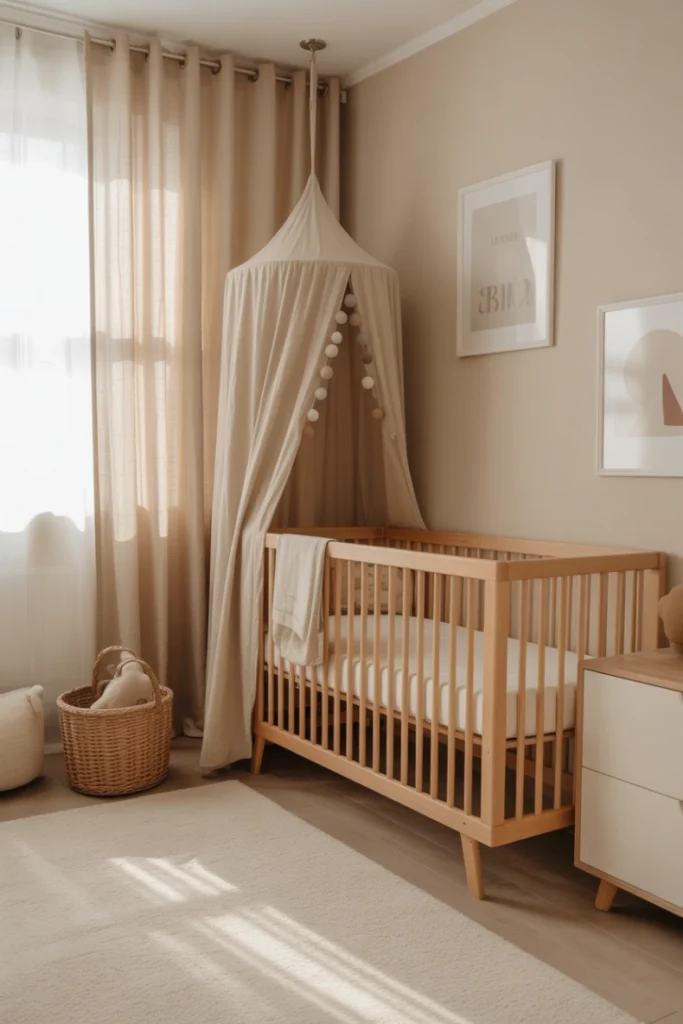
A soft neutral palette is the safest and most flexible starting point for a nursery remodel. Paint the walls in warm white, cream, or light greige, then layer beige, taupe, and soft gray through the rug, curtains, and bedding. A standard crib in natural wood or matte white anchors the room, while a linen glider in oatmeal or stone keeps the seating calm and comfortable. Keep the largest surfaces neutral and add color only through small, swappable pieces such as a throw pillow, a framed print, or a knit blanket.
This palette also makes the room feel larger, which matters in nurseries under 12 square meters. Light walls bounce daylight around the room, and a low-contrast scheme is restful for newborns who are still developing their vision. When your child outgrows the baby stage, you can refresh the whole room by changing the textiles and wall art instead of repainting. Choose washable matte paint in a low-VOC formula, and test three sample swatches on the wall before committing, since neutrals shift a lot between morning and evening light.
2. Gender-Neutral Forest Theme Nursery
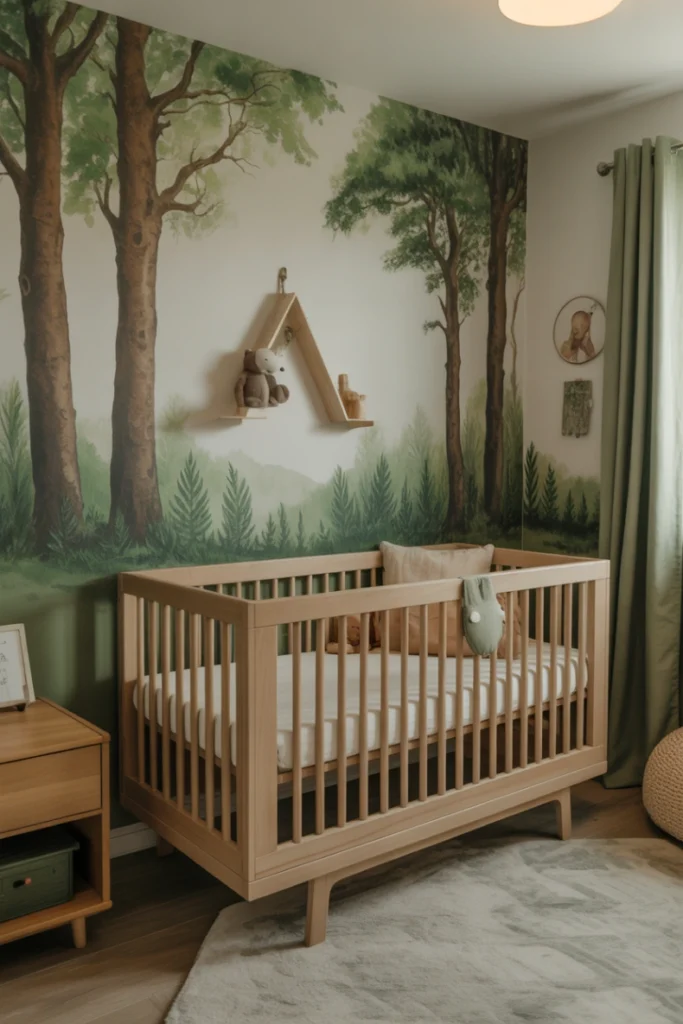
A forest theme works beautifully when you want a nursery that suits any baby and still feels full of character. Start with a base of sage green, warm cream, and light wood. Add one feature wall with peel-and-stick tree or leaf wallpaper, or use large woodland animal decals on a plain painted wall. A wooden crib, a woven basket for toys, and a soft moss-green rug complete the look without making the room feel busy.
Build the theme in layers so it can grow with your child. A reading nook with a small bookshelf at floor level and two or three nature books invites early curiosity, while plush deer, fox, or owl toys double as decor and playthings. Keep the furniture simple and neutral so the forest accents do the talking. If you use wallpaper, apply it to one wall only and leave the rest plain, which keeps the room calm and makes future updates cheap and easy.
3. Minimalist Scandinavian Nursery

Scandinavian style suits a nursery because it is calm, bright, and ruthlessly practical. Use white walls, pale pine or birch furniture, and one or two muted accent colors such as dusty blue or soft gray. Choose a convertible crib that becomes a toddler bed, a dresser that doubles as a changing table, and a single comfortable chair for feeding. Every piece should earn its place, so skip decorative items that collect dust and serve no purpose.
Storage is what makes minimalism work with a baby. Use three or four natural-fiber baskets on open shelves for diapers, clothes, and toys, and label them so anyone helping can find things fast. Sheer white curtains let daylight in while softening glare, and a flat-weave wool rug in cream adds warmth underfoot without shedding fibers. Keep the floor as clear as possible, with at least one open play area of about 1.5 by 1.5 meters, so your baby has room to roll, crawl, and explore safely.
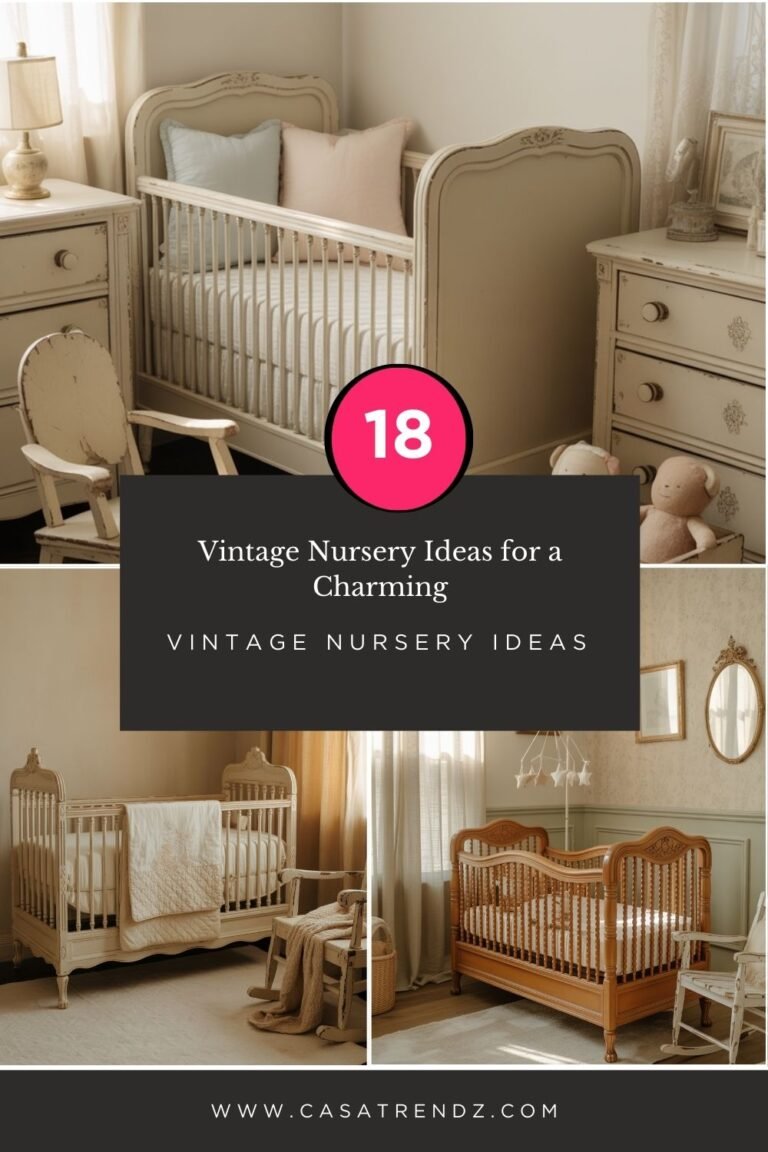
4. Vintage Nursery with Classic Elements

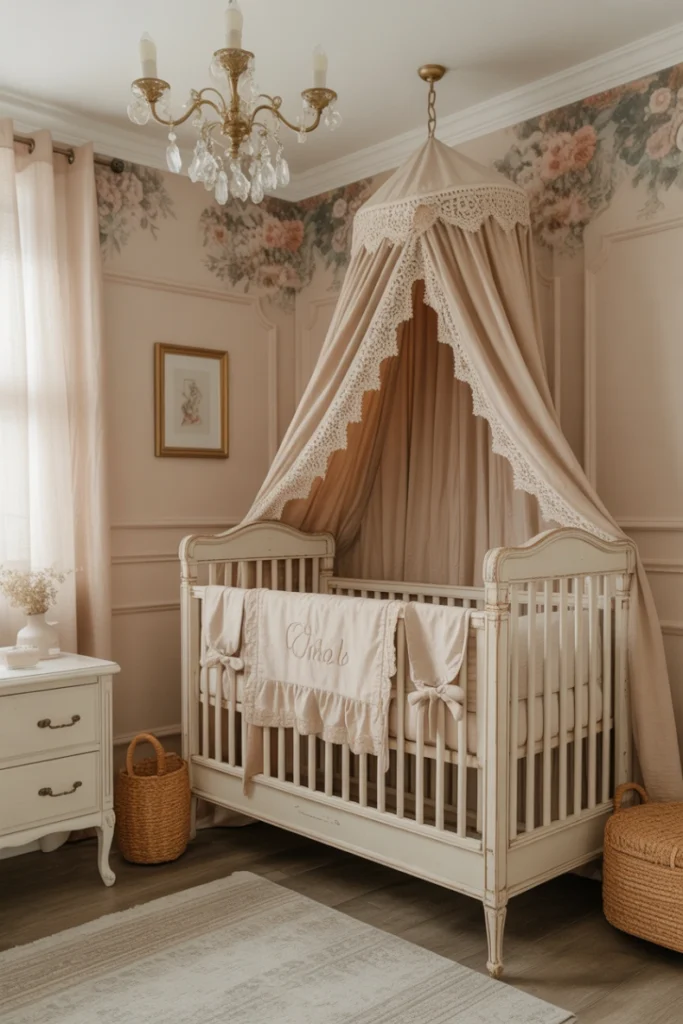
A vintage nursery brings warmth and history into the room. Look for a spindle crib or a solid wood dresser with turned legs, and pair them with soft pastels such as dusty pink, faded mint, or powder blue. Lace-trimmed curtains, a crocheted blanket, and a small chandelier or a vintage-style table lamp add the finishing touches. Framed prints from classic storybooks and a few heirloom toys on a shelf give the room a personal, collected feel.
Safety comes first with older furniture, so check every vintage piece carefully. Make sure crib slats are no more than 6 cm apart, the paint is lead-free, and there are no loose parts or drop-side mechanisms. If a family crib does not meet current safety standards, use it as a display piece and buy a new crib in a vintage style instead. A rocking chair with a soft cushion is worth the floor space it takes, since it becomes the spot for feedings, lullabies, and quiet evenings for years.
5. Boho-Chic Nursery
Boho style is relaxed, layered, and full of texture, which makes it a natural fit for a nursery. Start with a base of warm white or sand, then add rattan furniture, macrame wall hangings, and woven baskets. A low wooden crib, a jute rug, and a canopy or a simple fabric wall hanging over the reading corner set the mood. Accent colors such as terracotta, mustard, and olive green add warmth without overwhelming the room.
Layering is the key skill in a boho nursery, so mix materials on purpose: cotton, linen, wool, rattan, and light wood in the same space. Hang a macrame piece above the crib, place a pampas grass arrangement in a tall vase in a corner your baby cannot reach, and drape a soft throw over the glider. Keep the layout open and the floor soft, since boho nurseries invite floor play. Avoid small loose decor at baby height, and secure any wall hanging well above the crib so nothing can fall into it.
6. Monochrome Modern Nursery
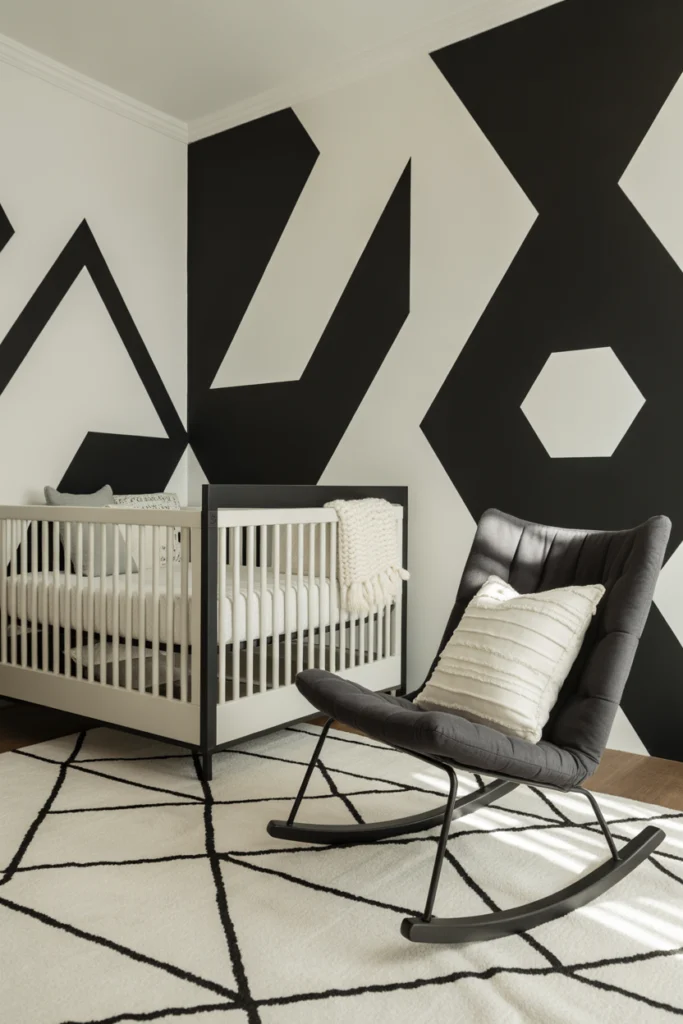
A black, white, and gray nursery looks sharp and modern, and it has a real developmental benefit: newborns respond strongly to high-contrast patterns. Paint one wall soft white and use black and white geometric decals, a striped rug, or bold crib bedding as the focal points. Choose furniture with clean lines, such as a matte white crib, a simple black dresser, and a gray upholstered glider. Add texture through knitted blankets, a plush rug, and velvet cushions so the room feels cozy rather than stark.
Balance is everything in a monochrome room. If the walls are mostly white, use black in smaller doses, such as frames, a mobile, and one piece of furniture, so the space never feels heavy. A black-and-white gallery wall with simple animal prints adds personality without color. This palette is easy to update as your child grows: add one color, such as mustard or sage, through bedding and toys, and the whole room shifts without any repainting.
7. Soft Pastel Color Nursery
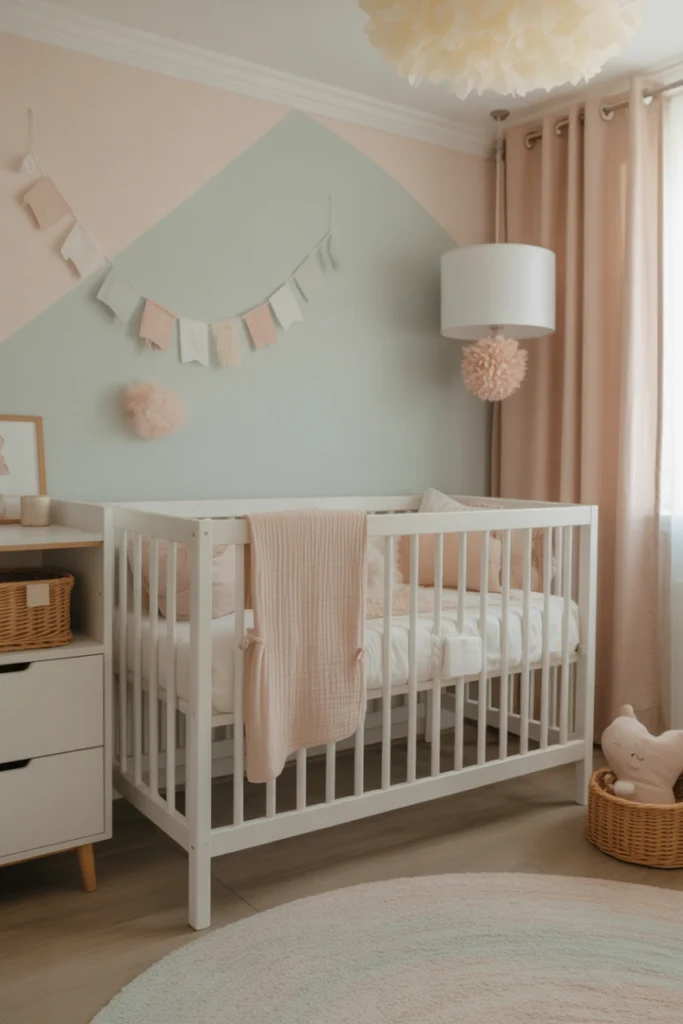
Pastels create a gentle, dreamy nursery that feels calm for both baby and parents. Blush pink, baby blue, mint green, lavender, and peach all work well, especially against white furniture and light wood floors. Paint the walls in one soft pastel or keep them white and bring pastels in through the rug, curtains, crib bedding, and wall art. A cloud-shaped shelf, a pastel mobile, and soft cotton textiles pull the whole look together.
The trick with pastels is to pick two main colors and one accent, then repeat them around the room so the design feels intentional. For example, pair mint walls with white furniture and peach accents in the rug and cushions. Test paint samples in daylight and lamplight, since pastels can look washed out or surprisingly strong depending on the light. Pastels also transition well: swap the mobile and bedding for bolder colors later, and the same room suits a toddler with almost no extra work.
8. Animal-Themed Nursery
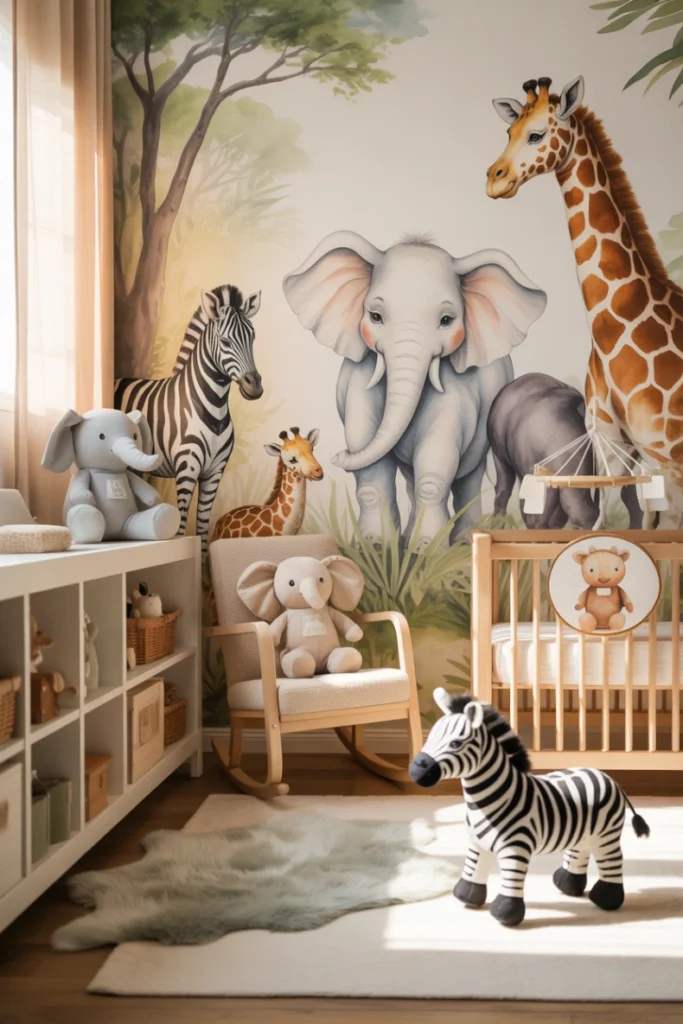
An animal theme is playful, educational, and easy to build. Choose one family of animals, such as safari, jungle, farm, or arctic, and let it guide every choice. A large wall mural or a set of decals featuring a giraffe, elephant, or polar bear makes a strong focal point, while themed bedding, soft toys, and framed animal prints carry the idea through the room. Keep the background neutral or earthy so the animals stand out without clashing.
Add learning into the decor so the theme grows with your child. An alphabet chart with animals, a small shelf of nature storybooks, and a few plush animals at floor level turn the room into an early classroom. Rotate the soft toys every few weeks to keep the room fresh and interesting. If you want a softer version, use the animal theme on one wall and in the textiles only, and keep the furniture plain wood or white, which also makes it simple to change themes later.
9. Space and Galaxy Nursery

A space theme turns the nursery into a small universe. Use deep navy on one feature wall, with glow-in-the-dark star decals, a moon-shaped lamp, and galaxy-print bedding. Silver and white accents keep the dark wall from feeling heavy, and a starry mural or a large framed print of the moon makes a memorable focal point. A mobile with planets or rockets above the crib finishes the look and gives your baby something fascinating to watch.
Lighting does most of the work in this theme. A dimmable ceiling light plus a warm night light lets you check on your baby without waking them fully, and the glow stars create a gentle night sky after dark. Keep the rest of the furniture simple: a white or light wood crib, a gray rug, and a dresser in a matching navy or white. As your child grows, add books about planets and stars to the reading corner, and the room becomes a launchpad for curiosity about science and the sky.
10. Floral Garden Nursery
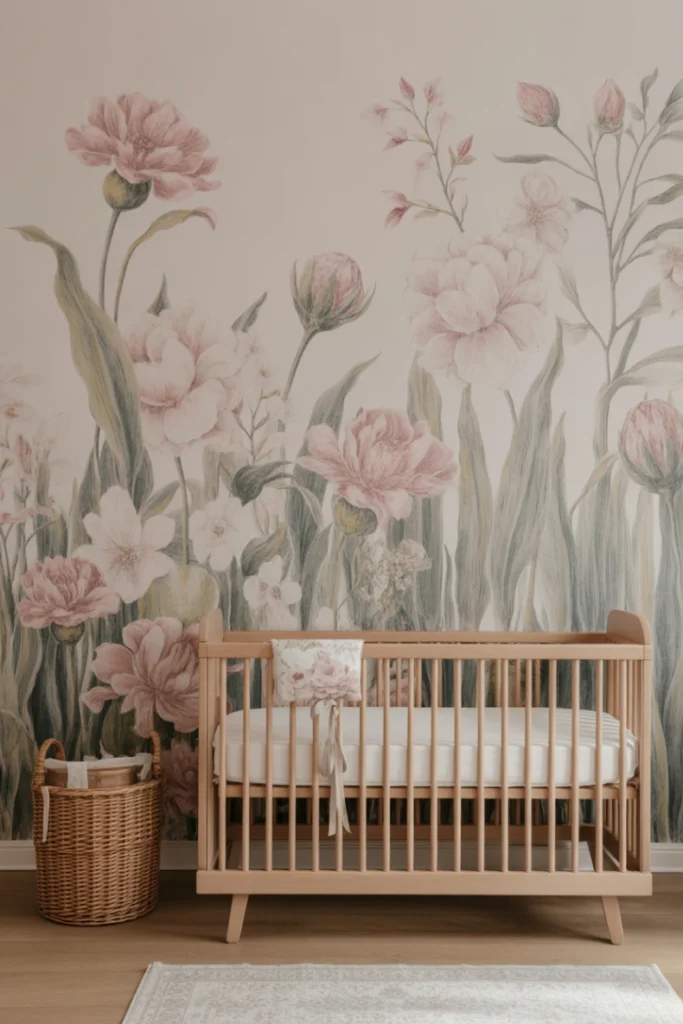
A floral garden nursery feels fresh, elegant, and full of life. Botanical wallpaper on one wall, in soft pinks, greens, and peach, sets the tone, while floral bedding, curtains, and framed watercolor prints carry the pattern through the room. Pair the florals with light wood furniture and natural textures such as a braided rug or linen cushions, which soften the look and stop the pattern from feeling too busy.
Choose the scale of the floral print to match the room size. Large blooms suit a bigger room and one feature wall, while small, delicate prints work better in a compact nursery or on textiles only. Keep the ceiling and at least two walls plain so the eye has somewhere to rest. A floral nursery grows gracefully into a toddler room: swap the crib for a small bed, keep the wallpaper, and change the bedding, and the room still feels intentional and pretty.
11. Rustic Farmhouse Nursery
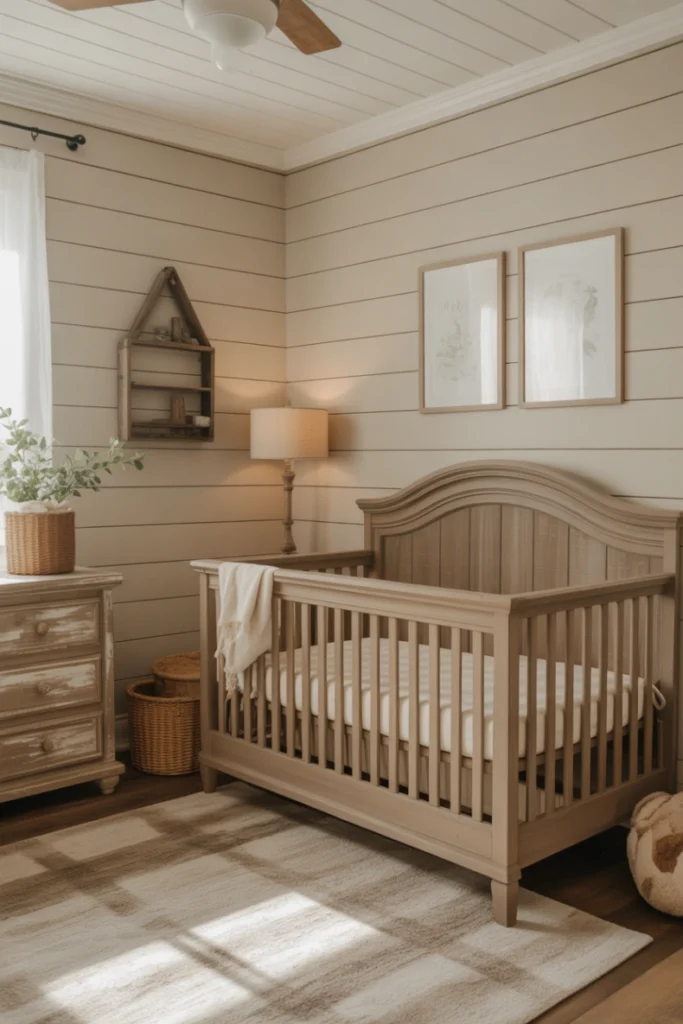
Farmhouse style brings warmth and comfort to a nursery through natural wood, soft textiles, and simple, honest details. Use a shiplap feature wall or exposed wooden beams, a distressed wood crib, and a braided wool rug. Neutral tones such as cream, warm gray, and soft sage keep the room calm, while galvanized metal storage bins, barn-style lighting, and a sliding barn door add farmhouse character.
Comfort matters as much as looks in this style. A cushioned glider with a soft throw, cotton or muslin crib sheets, and blackout curtains in a natural linen color make the room practical for naps and night feedings. Keep the decor simple and sturdy, since farmhouse pieces are meant to be used, not just looked at. Wicker baskets under the changing table hold diapers and wipes within arm’s reach, and a wooden name sign above the crib adds a personal touch without cluttering the walls.
12. Nautical Nursery Theme

A nautical nursery feels fresh and breezy, like a seaside holiday. Use a classic palette of navy, white, and soft sand, with blue and white stripes on the rug or curtains, rope accents, and ocean-themed wall art. Light wood or white painted furniture suits the theme best, and small details such as anchor pillows, a sailboat mobile, and a compass print add charm without going overboard.
Keep the theme light so the room stays restful. One striped wall or a striped rug is enough; too many stripes can feel busy. Add natural textures such as a jute rug or woven baskets to soften the strong lines and balance the marine colors. This palette adapts easily as your child grows: replace the sailboat mobile with framed maps or ocean photographs, and the same navy and white room suits a big-kid bedroom with almost no changes.
13. Modern Glam Nursery

Modern glam brings a touch of luxury to the nursery without losing comfort. Start with soft blush, cream, or champagne walls, then add gold or rose-gold accents through frames, drawer handles, and a small chandelier or a statement pendant light. Velvet cushions, a tufted glider, and a plush rug add softness and shine. Keep the furniture lines clean and modern so the metallic details feel refined rather than fussy.
The secret to glam in a baby room is restraint. Choose three metallic touches at most, such as a gold-framed mirror, rose-gold lamp, and metallic mobile, and keep everything else soft and simple. A white or cream crib with a tailored crib skirt looks polished and hides under-crib storage. Use washable velvet or performance fabric on the glider, since it will see daily use, and add a dimmer to the main light so you can lower the glow for evening feedings.
14. Small Space Convertible Nursery
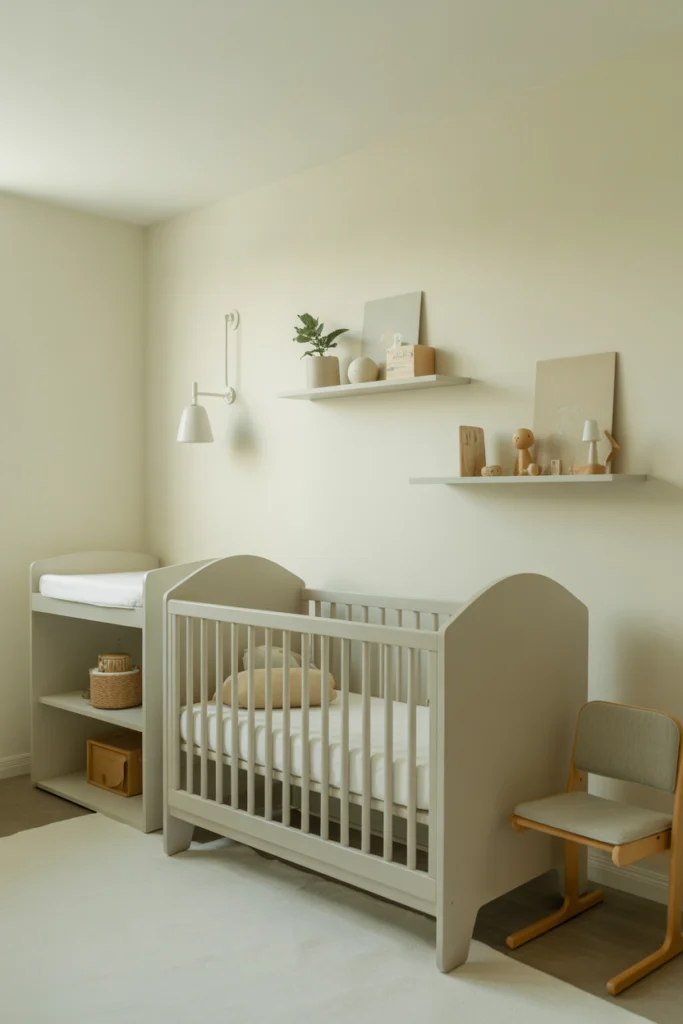
A small nursery can work beautifully when every piece does more than one job. Use a convertible crib with built-in drawers, a dresser that doubles as a changing table, and wall-mounted shelves instead of a bookcase. Light colors on the walls and a large mirror make the room feel bigger, while a mini crib, which measures about 95 by 65 cm, fits rooms where a standard crib will not. Keep at least one clear play zone on the floor, even if it is only a meter square.
Vertical storage is your best friend in a small nursery. Install two floating shelves above the dresser for diapers and creams, use pegboards or hooks on the back of the door, and slide flat storage boxes under the crib. Choose furniture with slim legs so you can see the floor beneath it, which tricks the eye into reading the room as larger. If you are working with a truly tiny room, our guide to small bedroom ideas has more layout tricks that transfer well to nurseries.
15. Travel Adventure Nursery

A travel theme fills the nursery with a sense of wonder and discovery. Use a large world map decal or framed map as the focal wall, then add hot air balloon prints, a small globe on the dresser, and vintage travel posters. Soft earth tones with pastel blues or greens keep the room calm while the travel details add color and personality. A storage trunk or a suitcase-style toy box fits the theme and hides clutter.
Build a reading corner into this theme from the start, with a small bookshelf and a floor cushion, and fill it with picture books about different countries and animals. As your child grows, the map becomes a learning tool: point out places, talk about animals that live there, and add photos from family trips. Keep the furniture neutral so the maps and prints carry the theme, and avoid heavy wall decor above the crib for safety.
16. Rainbow-Themed Nursery
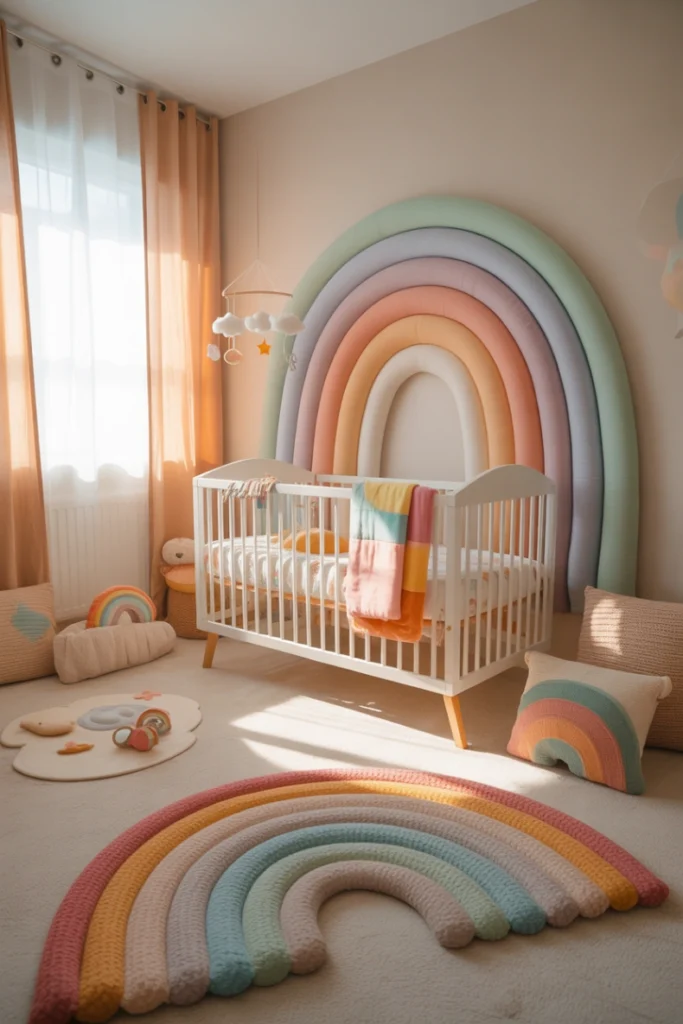
A rainbow theme brings instant joy and color to the nursery. Use a rainbow wall decal or a hand-painted rainbow arch above the dresser, then echo the colors in the bedding, rug, and mobile. Pair the bright colors with neutral walls, usually white or pale gray, so the room stays balanced and the rainbow becomes the star. Soft pastel rainbows feel calm, while bold primary colors feel playful and energetic.
Rainbows are easy to update as tastes change. Start with a removable wall decal rather than paint, so you can move it or remove it without damage. Use colorful storage bins in the rainbow palette to organize toys, which turns storage into decor. Knitted rainbow pillows and woven wall hangings add texture and warmth. Because the theme is built on color rather than a single character or motif, it adapts to any age, from newborn to preschool.
17. Black-and-Gold Luxe Nursery

Black and gold make a bold, luxurious nursery that still feels warm when done right. Use black on one feature wall or in the furniture, such as a matte black crib or dresser, and add gold through frames, a metallic mobile, and warm lighting. Balance the dark tones with white or cream textiles, light wood floors, and plenty of warm light so the room never feels heavy or cold.
Keep the black to about one third of the room: one wall, one large furniture piece, and a few accessories. A black accent wall behind the crib creates drama, while gold-framed art and a plush cream rug soften it. Acrylic or white side furniture keeps the space feeling open. Use warm-white bulbs around 2700K for the main light and the night light, since cool light makes black walls look harsh and unwelcoming.
18. Montessori-Inspired Nursery
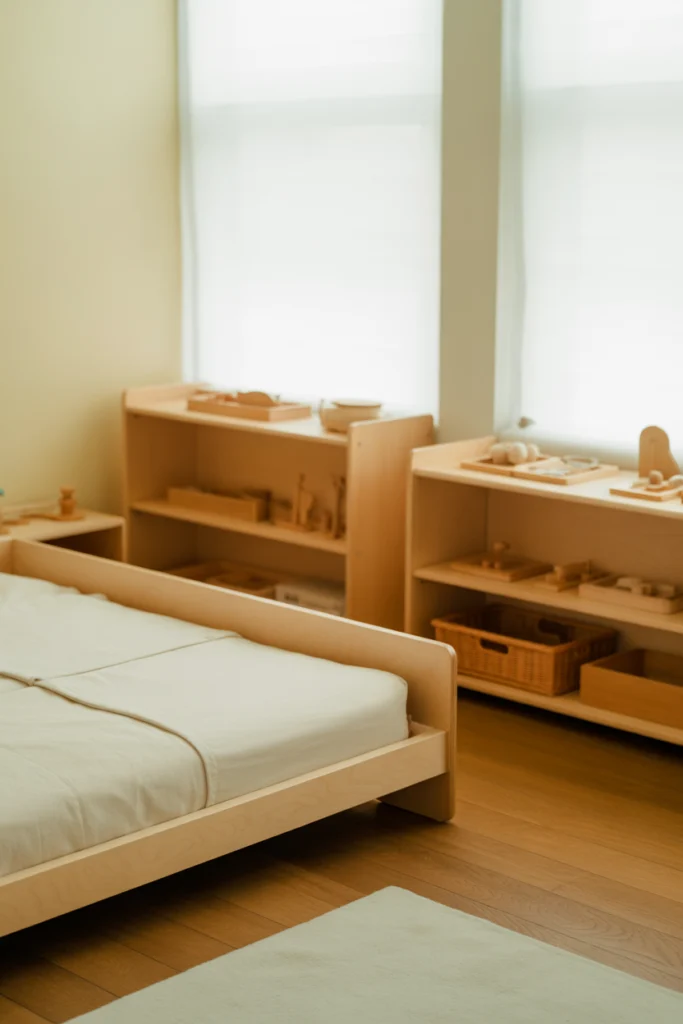
A Montessori nursery is designed around your baby’s independence. Use a low floor bed instead of a traditional crib, open shelves at your child’s height, and a few toys displayed neatly rather than a toy box full of clutter. Natural materials such as untreated wood, wool, and organic cotton create a calm, sensory-friendly environment. A floor-level mirror, secured safely to the wall, helps your baby learn about movement and their own reflection.
Organization is the heart of this style. Use labeled baskets, one toy per shelf, and a simple daily rotation so your child can choose and tidy up with ease. Keep the color palette neutral and the room uncluttered, with soft natural light and a low, cozy reading area. A small child-sized table and chair set invites drawing and quiet play, while a low shelf for books keeps reading material always within reach. Safety proof the whole room as if it were a playroom, since your baby will move freely: cover outlets, secure furniture to the walls, and keep small objects out of reach.
19. Storybook-Themed Nursery

A storybook nursery brings beloved tales to life on the walls and shelves. Choose one or two classic stories, such as Peter Rabbit or a favorite fairy tale, and build the room around them. Use illustrated wall art, themed bedding, and framed book pages to create the magic, with soft pastel backgrounds so the artwork stands out. A hand-painted mural on one wall makes a stunning focal point if your budget allows it.
Make reading the heart of the room. Add low bookshelves your child can reach, a comfortable chair with a soft throw, and a small basket of board books beside it. Plush characters from the stories, vintage-style book covers, and a warm lamp turn the corner into a reading sanctuary that will grow with your child. For more story-driven inspiration, our magical nursery themes collection pairs beautifully with this idea.
20. All-White Clean & Bright Nursery
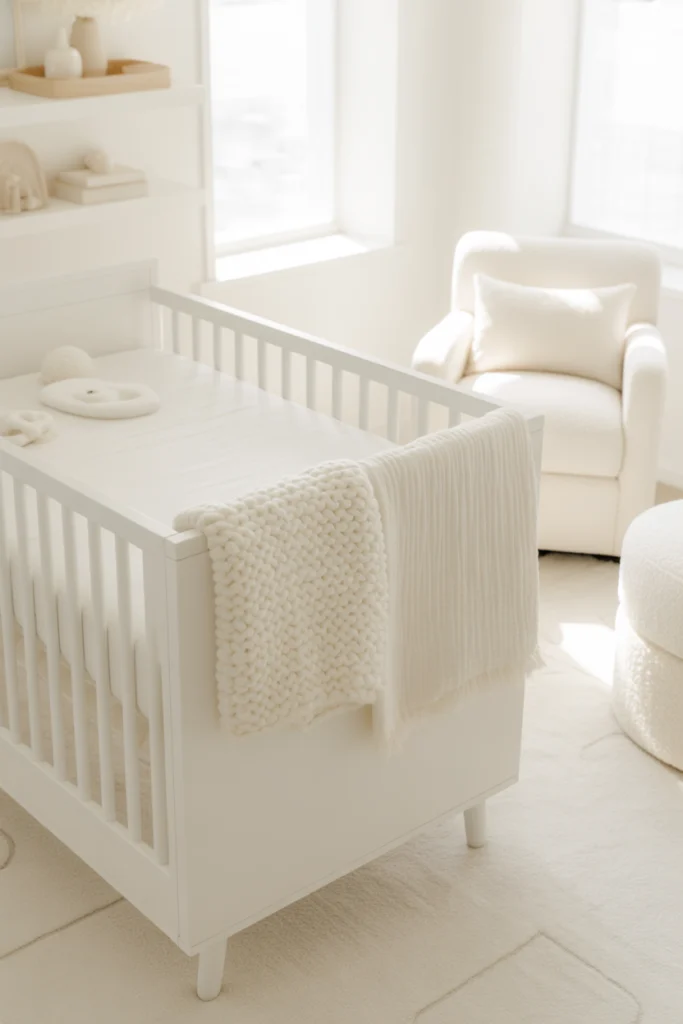
An all-white nursery feels pure, calm, and wonderfully bright. White walls, white furniture, and white textiles bounce natural light around the room and make even a small nursery feel open. The trick is texture: mix knitted blankets, linen curtains, a faux fur rug, and a woven basket so the room feels layered and cozy instead of flat and clinical.
White is also the most adaptable base you can choose. Add color later through a single accent, such as soft sage cushions, a wooden toy, or black-and-white prints, and the whole room changes without any repainting. Choose washable paint and machine-washable fabrics, since white shows every mark, and keep a small basket of cleaning supplies in the room for quick wipe-downs. A white nursery photographs beautifully too, which is a bonus for capturing those early months.
21. Twin Nursery Layout
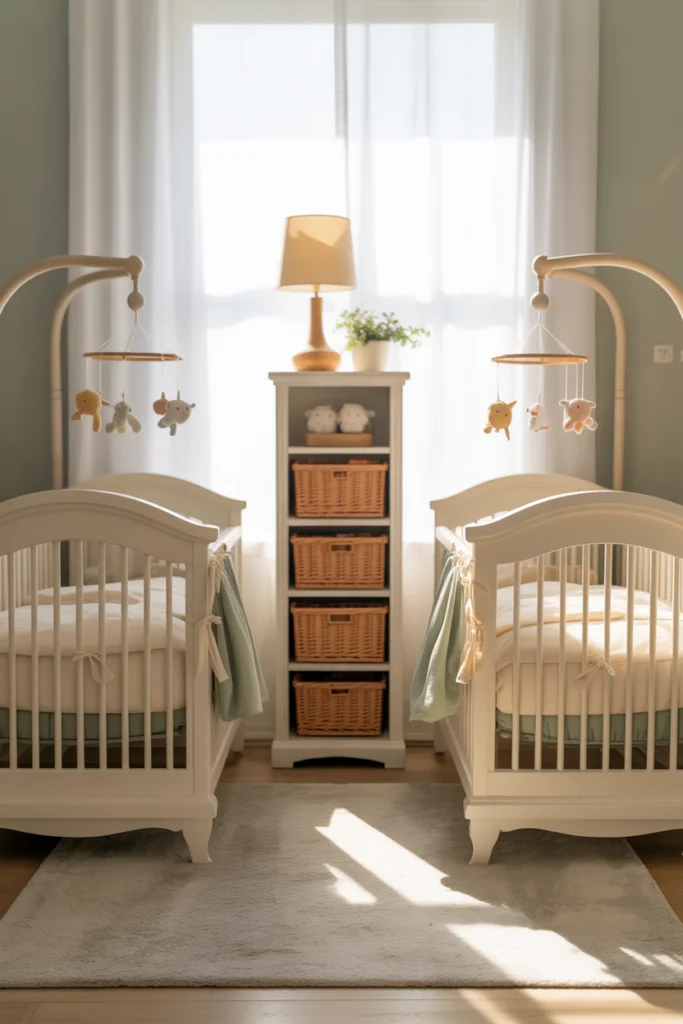
Designing a nursery for twins is all about smart layout. Place two cribs in a mirrored arrangement along one wall, or use an L-shaped layout in a corner to free up floor space in the middle of the room. Leave at least 60 cm between the cribs so you can reach each baby comfortably, and keep a wide dresser between them as a shared changing station. Neutral colors keep the room cohesive, while personalized bedding or name decals give each baby their own identity.
Storage needs double in a twin nursery, so plan for it from the start. Use large labeled drawers, extra shelving, and a tall wardrobe with divided sections for each baby. A comfortable double glider or two chairs make feeding time easier, and soft lighting with a dimmer helps during night wakings. If you are planning around two boys, two girls, or one of each, our boy nursery ideas and girls nursery ideas guides have theme options that work well in a shared twin room.
22. Nature-Inspired Eco-Friendly Nursery

An eco-friendly nursery focuses on healthy materials and a calm, natural look. Choose low-VOC or zero-VOC paint, organic cotton bedding, and furniture made from responsibly sourced solid wood. An earthy palette of greens, browns, and creams creates warmth, while a few potted plants, kept well out of reach, or botanical prints add a fresh, living touch.
Invest in fewer, better pieces rather than lots of disposable decor. A solid wood crib that converts to a toddler bed, a natural latex or organic cotton mattress, and energy-efficient LED lighting are worth the extra cost because they last for years. Use handmade or reclaimed accessories, such as a woven wall hanging or a refurbished dresser, to add character without buying new. An eco-friendly nursery is not only soothing to look at, it also gives your baby cleaner air and a healthier start.
23. High-Contrast Developmental Nursery
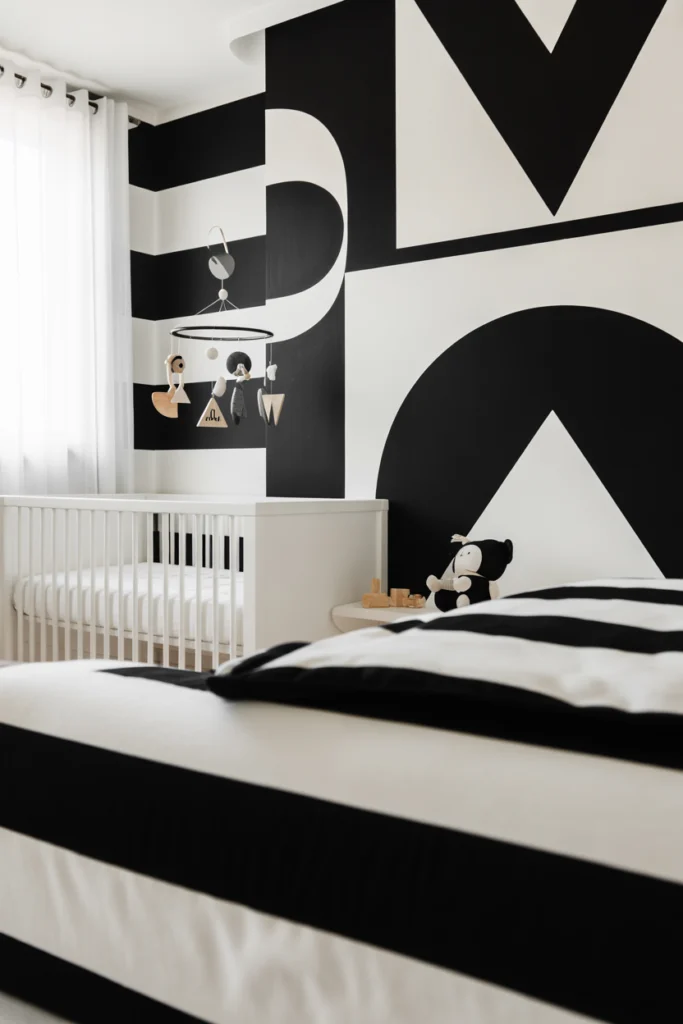
High-contrast design supports newborn vision development, and it looks striking too. Use bold black-and-white patterns on the wall, the mobile, the rug, and the crib bedding, with geometric shapes and strong lines that catch a baby’s eye. Keep the furniture neutral in white, gray, or light wood so the patterns stay the focus and the room does not feel chaotic.
Start with contrast near the crib, where your baby spends the most time: a black-and-white mobile, a patterned crib sheet, and one bold art print at the baby’s eye level from the crib. As your baby grows, soften the room by adding muted colors such as sage, dusty blue, or warm beige through toys and textiles. The high-contrast base stays useful for years, since it pairs with almost any color you add later.
24. Luxe Hotel-Inspired Nursery
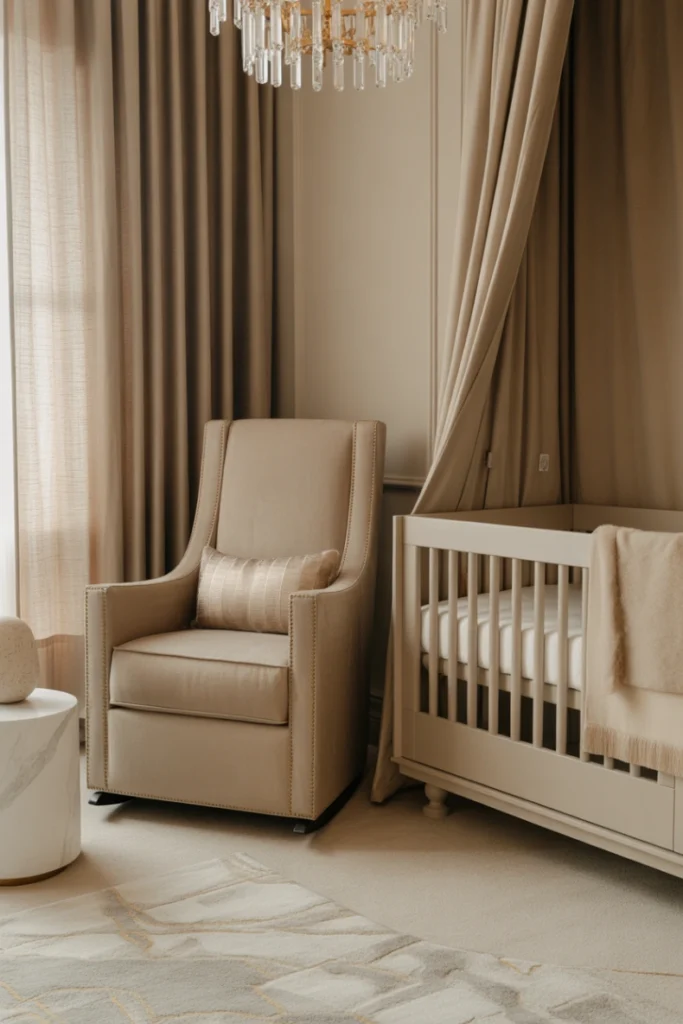
A hotel-inspired nursery brings five-star polish into a baby’s room. Use plush carpet or a thick area rug, upholstered furniture, and tailored curtains in neutral tones with metallic accents. A statement light fixture, high-end bedding in crisp cotton, and a well-made crib with a tailored skirt create the luxurious feel. Keep the color palette calm: warm white, champagne, soft gray, and one metallic accent such as brushed gold.
Luxury must still be practical in a nursery. Choose durable, stain-resistant fabrics on the glider and ottoman, and use hidden storage, such as drawers under the crib and baskets inside the wardrobe, to keep the room looking serene. A blackout curtain with a sheer layer underneath gives you full light control for naps. The result is a room that feels like a boutique hotel suite, yet works hard every day for feeding, changing, and sleeping routines.
Final Thoughts
The best nursery remodel is the one that fits your baby, your room, and your daily routine. Start with the layout and the safety basics, then choose a style that makes you smile every time you walk in. You do not need to finish everything before the baby arrives: paint the walls, set up the crib and changing station, and add the decor gradually as you learn what your baby loves. Pick one idea from this list, measure your space, and start with the single change that will make the biggest difference this week.
Remember that the nursery will change as your child grows, and that is a good thing. A convertible crib, neutral walls, and flexible storage mean the room can shift from newborn to toddler with a few small swaps instead of another full remodel. Keep the pieces you love, let go of the ones that no longer fit, and enjoy watching the room grow up alongside your little one.
Frequently Asked Questions
What is the best color for a nursery?
Soft neutrals and pastels are the safest choices, since they feel calm, make small rooms look larger, and are easy to update later. Warm white, cream, sage green, and soft gray work well in almost any nursery, and you can add color through bedding and art instead of repainting. Avoid very bright or saturated colors on large wall areas, since they can feel overstimulating in a room meant for sleep, and save bold shades for small accents such as a single cushion, a framed print, or a toy basket.
How much does a nursery remodel cost?
A simple refresh with paint, textiles, and wall art can cost under $500, while a full remodel with new furniture, lighting, and storage usually runs between $1,500 and $4,000. Save money by keeping the layout, reusing solid furniture, and spending most on the crib, mattress, and glider, which get daily use.
When should I start remodeling the nursery?
Start in the second trimester if possible. That gives you time for paint to cure, furniture deliveries, and assembly without rushing. Aim to finish the main setup, crib, changing station, and lighting, at least four weeks before your due date, and add decorative touches later.
What furniture does a nursery really need?
The essentials are a safe crib with a firm mattress, a dresser or changing table, a comfortable chair for feeding, and storage for diapers and clothes. Everything else, such as bookshelves, a rug, and wall art, is optional and can be added over time.
How can I make a small nursery feel bigger?
Use light wall colors, a large mirror, slim-legged furniture, and vertical storage such as floating shelves. Keep the floor as clear as possible, choose a mini crib if space is tight, and use one clear play area instead of filling every corner.
More Ideas You Will Love
 22 Bedroom Interior Design Ideas to Elevate Your Space
 19 Teen Girls Bedroom Ideas: Dreamy & Personalized Decor Inspiration
 24 Wardrobe & Armoire Ideas: Smart Storage for Every Room
 21 Gray Bedroom Ideas That Transform Your Space with Modern Comfort
 21 Dorm Room Inspiration Ideas – Transform Your Space with Creative Touches
 18 Vintage Nursery Ideas for a Charming, Timeless Baby Room