
23 Living Room In-House Ideas – Cozy, Modern & Aesthetic Interiors for Every Style

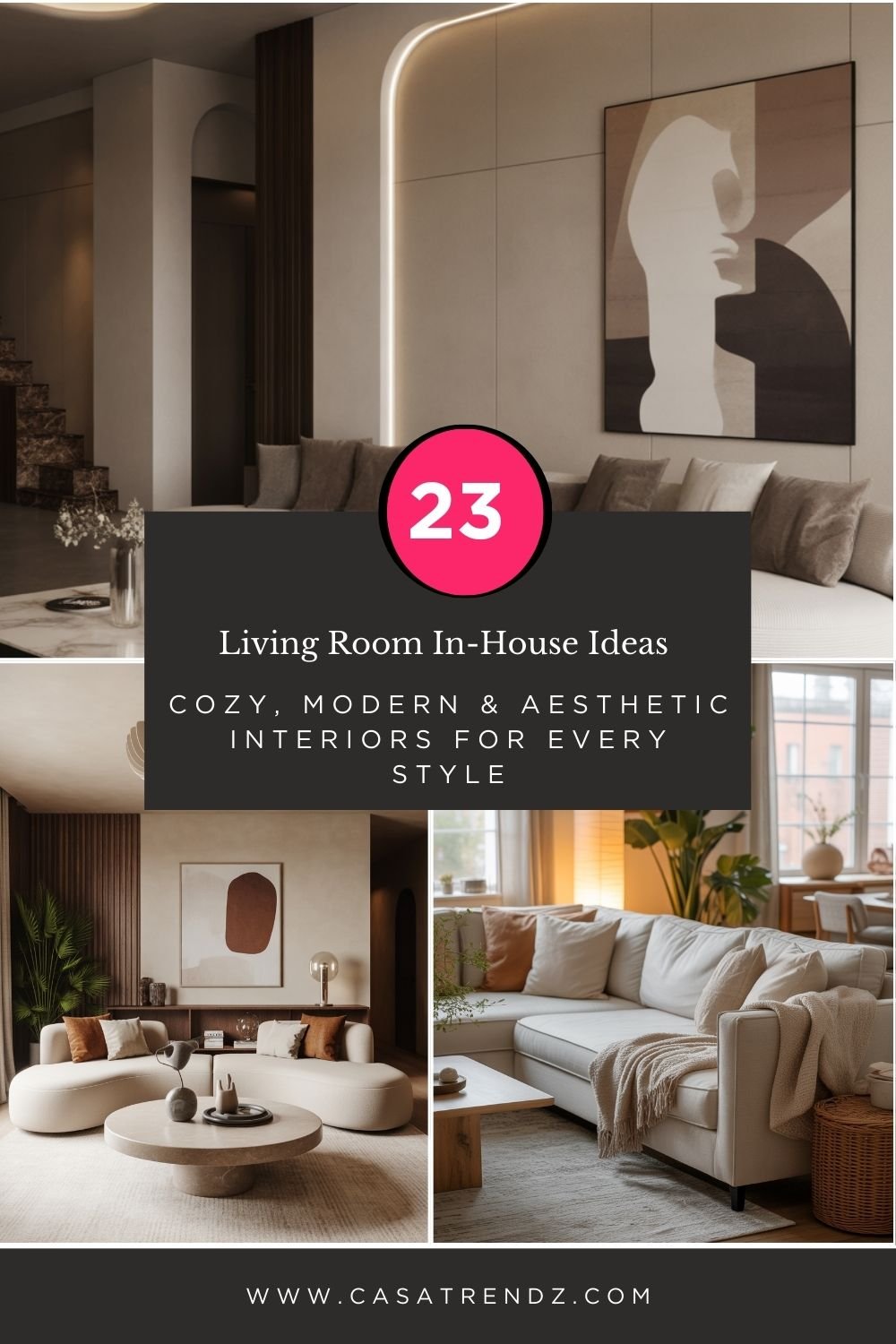
A living room is where daily life happens. It is where you relax after work, welcome guests, watch movies with family, and spend slow weekend mornings with coffee in hand. Because this one room has to do so much, the best living room designs are never just about a pretty sofa or a trendy paint color. They are about layout, light, texture, and storage working together so the room feels comfortable every single day, not just on the day you finish decorating it.
Before you buy anything, start with the basics that cost nothing to get right. Measure your room, note where the natural light falls during the day, and mark the paths people actually walk through, from the front door to the kitchen and from the sofa to the television. Leave 30 to 36 inches of clear walking space around your main furniture, and choose a rug large enough that the front legs of your sofa and chairs sit on it. In a standard living room that usually means an 8 by 10 foot rug, while an open plan space often needs a 9 by 12 foot rug to anchor the seating area properly.
The 23 ideas below cover the full range of living room styles, from cozy and minimal to bold and luxurious. Each idea includes the colors, materials, measurements, and practical steps that make it work in a real home, along with tips for small rooms, rented homes, and family spaces. Work through the list and start with the idea that fixes your biggest problem, whether that is a dark corner, a room that feels flat, or a layout that never quite works. For more room wide inspiration, these living room ideas pair well with the styles in this guide.
1. Modern Cozy Living Room Layouts

A modern cozy layout starts with furniture placement, not shopping. Place your largest sofa against the longest wall, facing the television or fireplace, and angle a pair of lounge chairs inward so conversation feels natural. Keep the coffee table 16 to 18 inches from the sofa, close enough to reach a cup of coffee but far enough to walk past comfortably. If your room is long and narrow, try two smaller sofas facing each other instead of one large sectional, which often blocks the flow of the room.
Comfort comes from layering soft materials. Choose a sofa in a durable fabric such as a tight weave linen blend or a performance fabric if you have kids or pets, then add textured cushions in two or three sizes, a knitted or chunky wool throw, and a plush rug underfoot. Warm neutrals such as oatmeal beige, taupe, warm white, and soft gray keep the room calm, while one darker accent, like a charcoal throw or a walnut side table, stops the palette from looking washed out. Finish with warm lighting at around 2700K, which makes every texture look softer in the evening.
2. Neutral-Toned Aesthetic Interiors

Neutral rooms work because they give you a calm base you can change without repainting. Start with walls in warm white, sand, or light greige, then build up with ivory, cream, mushroom gray, and caramel in your furniture and textiles. This palette suits almost any home, from a city apartment to a suburban family house, and it makes a small room feel more open because there are no sharp color breaks to chop up the space. For a deeper take on warm neutrals, these brown living room ideas show how to layer brown tones without making a room feel dark.
The secret to a neutral room that does not look flat is texture. Mix at least four different textures in one seating area, for example boucle upholstery, linen curtains, a woven ottoman, a wool rug, and a smooth ceramic vase. Add subtle metallic accents in brushed gold or bronze, such as a picture frame, a lamp base, or a tray, to catch the light. Change the look seasonally by swapping only the cushion covers and throw, keeping the larger furniture the same, which saves money and keeps the room feeling fresh.
3. Accent Walls with Bold Textures

An accent wall gives a living room a clear focal point, and texture makes it far more interesting than flat paint alone. Popular options include fluted wood panels, stone cladding, exposed brick, Venetian plaster, and large format tiles with a stone or concrete look. Choose the wall behind the sofa or the television wall, since the eye naturally lands there, and keep the other three walls in a quiet neutral so the accent wall can stand out. For a standard 12 foot wall, fluted panels are usually installed in vertical strips about 1 to 2 inches wide, which adds height to the room.
Color matters as much as texture. Deep shades such as charcoal, navy, emerald, and terracotta work well on a textured wall because the shadows in the texture add depth to the color. Pair a bold wall with simple furniture in solid colors, and avoid busy patterns on the sofa directly in front of it. If you rent, you can get a similar effect with peel and stick wood slat panels or a large textured wallpaper, both of which come off without damaging the wall when you move out.
4. Scandinavian Minimalism

Scandinavian design is built on three principles: light, simplicity, and function. Keep the walls pale, choose light wood furniture in oak or ash, and leave breathing room around each piece instead of pushing furniture against every wall. A typical Scandinavian living room has one sofa, one or two chairs, a low coffee table, and a few well chosen accessories, rather than a room crowded with decor. This restraint is what makes the space feel calm, and it also makes cleaning and daily living much easier.
Warmth comes from natural materials, not from extra clutter. Add a wool rug, linen curtains that filter daylight softly, a woven basket for throws, and one or two houseplants in simple ceramic pots. Lighting is layered and warm, with a floor lamp beside the reading chair and a small table lamp on a sideboard, rather than a single harsh ceiling light. If your room gets little natural light, use mirrors opposite the window to bounce daylight deeper into the space, and keep window treatments light so they do not block what light you have.
5. Japandi-Inspired Living Rooms

Japandi blends Japanese calm with Scandinavian warmth, and the result is a room that feels serene without feeling empty. Furniture sits low and close to the ground, with clean lines, rounded edges, and no fussy detail. Choose a low profile sofa, a simple wooden coffee table, and open shelving instead of heavy cabinets. The color palette stays earthy and muted, with warm beige, soft charcoal, warm brown, and muted green, plus plenty of natural wood grain to keep the room from feeling cold.
Every item in a Japandi room should earn its place. Keep surfaces mostly clear, display one or two ceramics or a single piece of art, and store the rest behind closed doors or in woven baskets. Add texture through bamboo accents, a paper floor lamp, a linen throw, and a jute or wool rug. The goal is a room that helps you slow down, so avoid bright patterns and shiny finishes, and let the natural materials and the quiet layout do the work.
6. Floating TV Units for a Clean Look

A floating TV unit is mounted to the wall, which frees up floor space and makes the room look larger and easier to clean. Mount the television so the center of the screen sits about 42 inches from the floor when you are seated, which is comfortable for most sofas, and leave at least 12 inches between the bottom of the TV and the top of the floating unit. Choose a unit in wood veneer, matte laminate, or a textured finish that matches your other furniture, and keep it 12 to 18 inches shorter than the wall it sits on so the composition looks balanced.
The details make a floating unit look polished rather than improvised. Hide cables inside the wall or in a paintable cable channel, add LED strip lighting behind the unit for a soft evening glow, and include one open shelf for a soundbar and one closed drawer for remotes and game controllers. Avoid lining up every device and decoration in a row, which looks cluttered. Instead, leave some empty space on the shelf and add one plant or one sculptural object for balance.
7. Open-Plan Living Areas

Open plan living works best when each zone is clear even though there are no walls. Use a large rug to define the living area, place the sofa with its back to the dining space to create a natural boundary, and use a console table behind the sofa for lamps and books. Keep walkways at least 36 inches wide between zones so people can move freely, even when guests are over. This layout suits families well because you can cook, supervise homework, and chat with guests without being in separate rooms.
Unity comes from repeating colors and materials across the whole space. If your kitchen has light wood and warm white cabinets, echo those tones in the living room with a light wood coffee table and warm white curtains. Use the same metal finish, such as brushed brass or matte black, for lighting and hardware throughout. When zones share a palette, the room feels like one large, intentional space instead of three small rooms pushed together.
8. Curved Furniture for Soft Elegance

Curved furniture softens a room instantly. A rounded sofa, an oval or round coffee table, an arched cabinet, and a circular rug break up the straight lines of walls and doorways, and they make a room feel more welcoming. Curves are especially useful in small living rooms because there are no sharp corners to bump into, and a round coffee table leaves more walking space around it than a rectangular one of the same size. Aim for one or two curved hero pieces, such as the sofa or the coffee table, rather than curving everything, which can look unfocused.
Pair curves with soft fabrics to complete the effect. Boucle, velvet, and brushed linen all enhance the gentle shape, while a smooth leather curved chair adds a more polished contrast. Keep the rest of the room simple, with straight shelving or a rectangular rug, so the curves stand out. A curved sofa in cream boucle with a round walnut coffee table and a soft wool rug is a reliable combination that works in modern, minimal, and contemporary homes alike.
9. Warm Earthy Color Palettes

Earthy colors such as clay, caramel, olive green, mocha, burnt sienna, and warm beige create a grounded, welcoming room that feels good in every season. Start with one dominant earthy tone, for example a warm beige wall or a caramel sofa, then add two supporting tones in cushions, art, and rugs. This 60-30-10 approach, where 60 percent is the main color, 30 percent is a secondary color, and 10 percent is an accent, keeps the palette balanced and stops the room from feeling like a single block of brown. For a modern take on earthy and contemporary palettes, these modern living room ideas show how warm tones work with clean lines.
Layer natural materials alongside earthy colors to keep the room rich rather than flat. Pair a clay colored wall with rattan baskets, a linen sofa with a wool throw, and a wooden coffee table with a stone or ceramic vase. Add one contrasting texture, such as black metal in a lamp or a picture frame, to give the palette definition. In a north facing room, lean toward warmer earthy tones like caramel and terracotta, which counteract cool daylight, while a bright south facing room can handle deeper olive and mocha shades.
10. Built-In Shelving Walls

Built-in shelving turns a plain wall into both storage and display. A full wall of shelving behind the sofa, around the television, or along a side wall adds architectural character and uses vertical space that would otherwise go to waste. Standard shelf depth is 10 to 12 inches for books and decor, with 12 to 14 inches of vertical space between shelves for larger books and vases. Paint the built-ins the same color as the wall for a seamless look, or paint them a shade darker to make them a feature.
Style built-ins by grouping items in odd numbers and leaving about one third of the shelf space empty, which stops the display from looking like a crowded shop shelf. Mix books stacked horizontally and vertically, add one plant or sculptural piece per section, and use baskets on the lowest shelves to hide remotes, chargers, and games. LED strip lighting under each shelf adds warmth in the evening and makes the whole wall glow, which is especially effective in rooms without a fireplace.
11. Indoor Plants for Natural Freshness

Plants are one of the cheapest ways to make a living room feel alive. Large plants such as a fiddle leaf fig, a monstera, or a snake plant add height and fill empty corners, while smaller plants on shelves, side tables, and coffee tables add texture at eye level. Place one tall plant beside the sofa or in an empty corner, and group two or three smaller plants of different heights on a sideboard for a collected look. Choose planters in neutral ceramic, terracotta, or woven baskets so the plants, not the pots, get the attention.
Match the plant to your light before you buy. Snake plants, pothos, and ZZ plants tolerate low light and irregular watering, which makes them ideal for beginners, while fiddle leaf figs and monsteras need bright, indirect light and a consistent watering routine. Water only when the top inch of soil feels dry, and make sure every pot has drainage so roots do not sit in water. If you have pets, check that your chosen plants are pet safe, since lilies, monstera, and some common houseplants can be toxic to cats and dogs.
12. Layered Lighting for Warm Ambiance

Layered lighting means using three types of light together: ambient light for general brightness, task light for reading and work, and accent light to highlight art or shelves. A living room lit by a single ceiling fixture often feels flat and harsh, while a room with a ceiling light on a dimmer, a floor lamp beside the sofa, a table lamp on a sideboard, and a small accent light on a shelf feels warm and flexible. Put the main lights on dimmers so you can shift from bright daytime cleaning light to soft evening light without changing a bulb.
Choose warm white bulbs at 2700K for living rooms, since cooler daylight bulbs can make a cozy room feel clinical. Match your fixture finishes to the rest of the room, with matte black for modern spaces, brushed gold for warm traditional rooms, and natural wood for Scandinavian or Japandi styles. Place a floor lamp behind or beside a reading chair so light falls over your shoulder, not in your eyes, and use a warm LED strip behind a television unit or under shelves for a gentle glow that makes the room feel finished after dark.
13. Bohemian-Inspired Living Rooms

Bohemian style is relaxed, layered, and personal, which makes it ideal for people who collect pieces over time rather than buying a matching set. Start with a comfortable base, such as a linen sofa in a warm neutral, then layer patterned rugs, colorful cushions, woven baskets, and eclectic art. A good rule is to layer two rugs, a larger neutral jute rug underneath and a smaller patterned rug on top, which adds warmth and pattern without overwhelming the floor. Mix warm earthy tones with one or two vibrant accents, such as terracotta, mustard, or deep teal, to keep the look cohesive.
Natural materials carry a boho room. Add a rattan chair, a macrame wall hanging, a wooden coffee table with a worn finish, and plenty of plants in terracotta pots. Display travel finds, handmade ceramics, and books openly, since a boho room is meant to look lived in, not staged. Keep one element calm, such as plain curtains or a solid sofa, so the pattern and texture have room to breathe, and edit regularly by removing one item for every new piece you add, which stops the room from tipping into clutter.
14. Luxury Marble Accents

Marble adds instant luxury, but a little goes a long way. Use it in one or two places, such as a marble coffee table top, a fireplace surround, or a side table, rather than on every surface. White marble with gray veining suits bright, minimal rooms, black marble adds drama to a moody interior, and green or brown marble pairs beautifully with warm wood and brass. Seal natural marble regularly, since it can stain from coffee, wine, and acidic spills, and use coasters and trays on marble tables in daily use.
Keep the surrounding decor simple so the marble stays the star. Pair a marble coffee table with a plain sofa, a soft rug, and warm lighting that highlights the veining. Add metal accents in brass or brushed gold for warmth, or matte black for a sharper modern look. If real marble is outside your budget, porcelain tiles and quartz with a marble look give you a similar appearance with far less maintenance, and they work well for fireplace walls and large sideboards.
15. Multi-Functional Furniture

Modern living rooms often have to serve as a lounge, a home office, a guest room, and a playroom, which is where multi-functional furniture earns its place. A storage ottoman hides blankets and board games, a sofa bed turns the living room into a guest room in minutes, nesting tables expand for parties and tuck away when not needed, and an extendable coffee table lifts to dining height for working from the sofa. Choose pieces with hidden storage that still look like normal furniture, so the room does not feel like a storage unit.
Measure carefully before buying convertible pieces. A sofa bed needs at least 36 inches of clear space in front of it when open, and a lift top coffee table needs room for the top to rise without hitting a lamp or a plant. Prioritize one or two multi-functional pieces that solve your real problems, such as a storage ottoman for a small apartment or a sofa bed for a home without a guest room, rather than buying every convertible item you see. The best multi-functional furniture is the kind you use weekly, not the kind that impresses guests once and then stays folded away.
16. Large Area Rugs for Definition

A large rug does more for a living room than almost any other single purchase. It defines the seating area, adds warmth underfoot, reduces echo in rooms with hard floors, and ties furniture together visually. In a standard living room, an 8 by 10 foot rug works well, with the front legs of the sofa and chairs on the rug and about 18 inches of rug extending beyond the sides of the sofa. In a small room, a 5 by 8 foot rug can work if the coffee table and the front legs of the sofa sit on it, but a rug that is too small will make the whole arrangement look disconnected. For small space layout tricks, these small living room ideas show how rug size and furniture placement work together.
Material matters as much as size. Wool rugs are soft, durable, and naturally stain resistant, which makes them a good choice for family rooms, while jute and sisal add texture but feel rougher underfoot and suit low traffic areas better. Layer a smaller patterned rug over a larger neutral one for extra pattern and warmth, and always use a rug pad underneath, which stops slipping, adds cushioning, and extends the life of the rug. Vacuum weekly, rotate the rug every few months for even wear, and clean spills promptly by blotting, never rubbing, to protect the fibers.
17. Fireplace Feature Walls

A fireplace naturally becomes the focal point of a living room, so treat the whole wall as a feature, not just the firebox. Modern electric and gas fireplaces offer the warmth and glow of a fire without the mess of wood, and many models can be mounted flush into a wall with stone, marble, or textured plaster around them. Keep the mantel simple, with one piece of art or a mirror above it and one or two objects on each side, rather than a crowded row of small items that distracts from the fire itself.
Balance the fireplace wall with furniture that faces it. Place the sofa opposite the fireplace with a coffee table between them, and add chairs angled inward to create a conversation circle. Built-in shelving on either side of the fireplace adds symmetry and storage, and it frames the fire beautifully. In a room without a chimney, a wall mounted electric fireplace with a simple stone or wood surround gives you the same cozy focal point, and it can be installed in a weekend without major building work.
18. Arched Doorways and Décor

Arches add softness and architectural character that straight doorways cannot match. An arched doorway between the living room and the hallway, an arched mirror above a console, or arched shelving niches in a wall all create gentle, flowing lines that make a room feel more elegant. If structural changes are not possible, you can get the same effect with an arched mirror, arched wall art, or an arched bookcase, which adds the shape without any building work. Repeat the arch shape two or three times in the room, for example a mirror, a doorway, and a cabinet detail, so it looks intentional rather than random.
Arches work especially well in Mediterranean, minimalist, and modern interiors, where their curves soften clean lines. Pair an arched mirror with a simple console table and a vase of dried stems, or place an arched floor lamp beside a curved sofa to echo the shape. Keep the surrounding walls plain so the arch stands out, and avoid mixing arches with too many other strong shapes, such as sharp geometric patterns, which can compete for attention.
19. Glass Partition Walls

Glass partitions divide a living room from a dining area, a home office, or an entryway without blocking light, which makes them ideal for smaller homes and apartments. Black framed glass panels suit modern and industrial interiors, while frameless glass looks cleaner in minimal spaces. A standard partition is often 8 to 10 feet wide and floor to ceiling height, which gives the division a built in, architectural feel, and sliding glass doors add flexibility because you can close them for quiet and open them for parties.
Choose frosted or reeded glass if you need privacy, for example between a living room and a home office, and clear glass if you want maximum brightness and an open feel. Keep the frame color consistent with your other metal finishes, such as matte black hardware and light fixtures, so the partition feels part of the room. Clean glass panels weekly with a simple glass cleaner and a microfiber cloth, and add a subtle decal or a plant in front of large clear panels so guests do not walk into them.
20. Statement Art Pieces

One large piece of art can transform a living room more effectively than a dozen small prints. Choose art that is at least two thirds the width of the sofa it hangs above, and hang it so the center of the piece sits about 57 to 60 inches from the floor, which is eye level for most people standing. Abstract, landscape, and textured art all work well, as long as the colors connect to something else in the room, such as a cushion, a rug, or a throw, so the art feels part of the design rather than an afterthought.
Keep the wall around statement art calm. Paint it a neutral color, avoid busy wallpaper directly behind a large piece, and use a picture light or a directional ceiling light to highlight the work in the evening. If you love several pieces, group them as one gallery wall with consistent frames and even spacing, rather than scattering small frames around the room. A gallery wall above a console or along a hallway wall gives you the impact of a statement piece while letting you display a collection.
21. Natural Wood Elements

Wood brings warmth and texture that no other material quite matches. Light oak suits Scandinavian and modern rooms, walnut adds richness to contemporary spaces, and reclaimed wood brings character to rustic and farmhouse interiors. Use wood in more than one place, such as a coffee table, open shelving, and a picture frame, so it reads as a deliberate material palette rather than a single random piece. Mix wood tones carefully, keeping to two or three tones in one room and repeating each tone at least twice.
Balance wood with soft fabrics and warm lighting to keep the room cozy. Pair a walnut coffee table with a linen sofa and a wool rug, or a light oak sideboard with cream curtains and a soft throw. Protect wooden surfaces from direct sunlight, which can fade the finish over time, and use coasters and felt pads under heavy objects to prevent rings and scratches. A simple routine of dusting weekly and oiling solid wood once or twice a year keeps the grain looking rich for decades.
22. Cozy Reading Corners

A reading corner turns an unused corner of your living room into a favorite spot. You need only three things to start: a comfortable armchair with good back support, a small side table for a book and a cup of tea, and a floor lamp that gives focused light. Place the chair near a window for natural light during the day, or in a quiet corner away from the television for evening reading. Leave about 24 inches of space around the chair so you can get in and out comfortably and stretch your legs.
Make the corner inviting with soft layers. Add a cushion for lumbar support, a textured throw for cold evenings, and a small bookshelf or a basket beside the chair to keep your current books within reach. A floor lamp with a warm bulb at 2700K, positioned behind and slightly to the side of the chair, gives the best reading light without glare. If space is tight, a wall mounted reading light and a slim side table give you the same function in a much smaller footprint.
23. Layered Textures for Depth

Layered texture is what separates a flat, showroom style room from a home that feels rich and lived in. Combine smooth and rough, soft and structured, matte and glossy surfaces in one seating area. For example, pair a velvet cushion with a linen sofa, a wool rug with a wooden coffee table, a leather chair with a knitted throw, and a ceramic vase with a metal tray. Each contrast adds visual interest without adding color, which is why texture layering works even in a neutral room.
Start with the largest surfaces first, then add smaller textures. Choose your rug and sofa fabric, then layer cushions, throws, curtains, and decor objects on top. Aim for five to seven different textures in a living room, and repeat each texture at least twice so the room looks cohesive. Neutral tones paired with layered textures stay elegant while feeling warm, and because texture does not rely on trend colors, a well layered room stays stylish for years with only small seasonal updates.
Conclusion
These 23 living room in-house ideas show that a great living room is not about following one style perfectly, but about combining layout, light, color, texture, and storage in a way that fits your home and your daily life. Start with the layout and the rug size, get the lighting right, then layer in color and texture one step at a time. Whether you prefer Scandinavian calm, boho warmth, Japandi simplicity, or a touch of marble luxury, each idea in this guide gives you a practical starting point you can adapt to your budget, your room size, and your taste.
Pick one idea to try this weekend, whether that is rearranging your furniture for a better flow, adding a large rug, swapping your light bulbs to warm white, or creating a small reading corner. Small, well chosen changes often make the biggest difference, and once one corner of the room feels right, the rest of the design tends to follow naturally. Your living room should feel like home first and look good second, and when you get that order right, the style takes care of itself.
Frequently Asked Questions
How do I choose the right sofa size for my living room?
Measure your longest wall and leave at least 30 inches of walking space on each side of the sofa. In a standard living room, a sofa between 72 and 84 inches wide works well, while a small room often suits a 66 to 72 inch loveseat or a compact apartment sofa. Always measure your doorways and stairwells before ordering, and use painter tape on the floor to mark the sofa footprint so you can see how it fits before it arrives.
What rug size is best for a living room?
For most living rooms, an 8 by 10 foot rug is the safest choice, with the front legs of the sofa and chairs sitting on the rug. A 9 by 12 foot rug suits open plan spaces and larger rooms, while a 5 by 8 foot rug works only in small rooms where the coffee table and the front legs of the sofa still sit on it. If you are between sizes, choose the larger rug, since a rug that is too small makes the whole seating area look disconnected.
How can I make a small living room look bigger?
Use light wall colors, a large rug, and furniture with visible legs so more floor shows. Hang curtains high and wide, well above the window frame and extending past the sides, to make windows look taller. Add a large mirror opposite a window to bounce light deeper into the room, keep the layout open with a clear walkway, and choose multi-functional furniture such as a storage ottoman instead of several small tables that crowd the floor.
What is the best lighting for a cozy living room?
Layer three types of light: ambient light from a ceiling fixture on a dimmer, task light from a floor or table lamp beside seating, and accent light on shelves or art. Use warm white bulbs at 2700K for a cozy glow, and avoid a single harsh overhead light as your only source. Dimmers are the simplest upgrade, since they let you shift from bright light for cleaning to soft light for relaxing in the evening.
How do I mix textures without making the room look cluttered?
Stick to five to seven textures in one room and repeat each one at least twice, for example velvet cushions, a wool rug, linen curtains, wood furniture, and a ceramic vase. Keep the color palette calm, preferably neutrals with one or two accents, so the textures provide interest without competing. Leave some empty space on shelves and surfaces, and remove one item for every new piece you add, which keeps the layering rich but never crowded.
More Ideas You Will Love
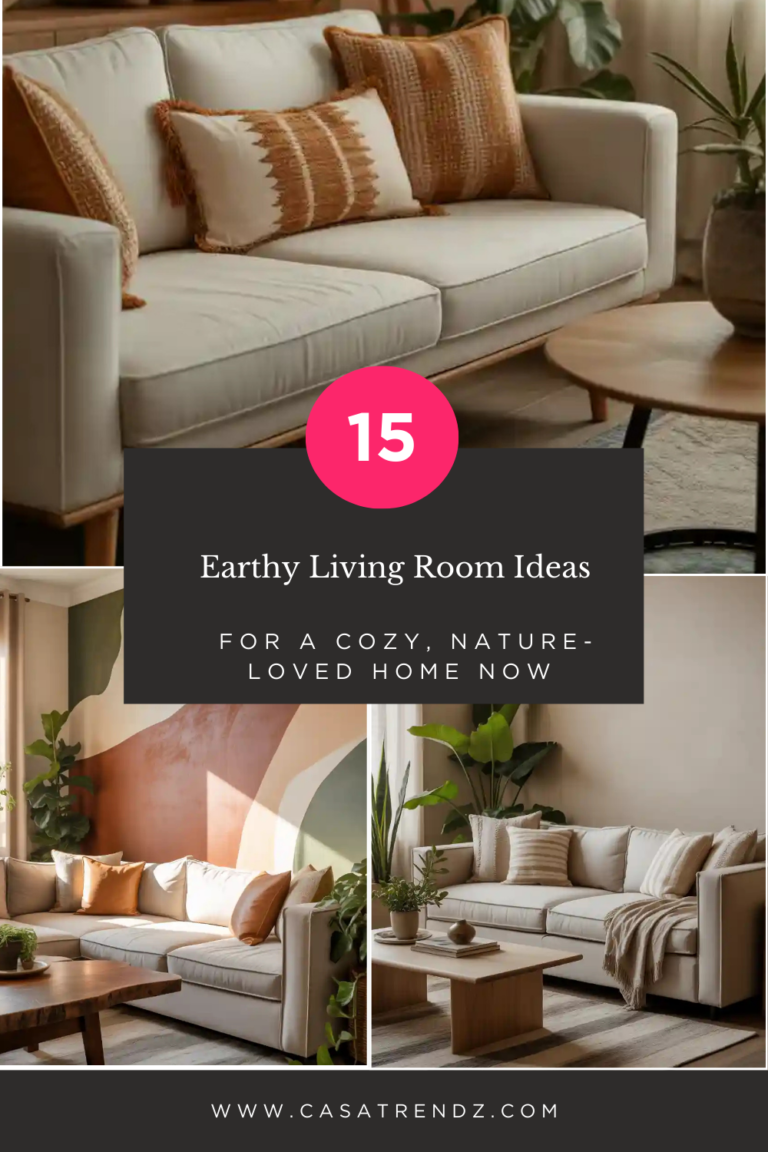 15 Earthy Living Room Ideas for a Cozy, Nature-Loved Home Now
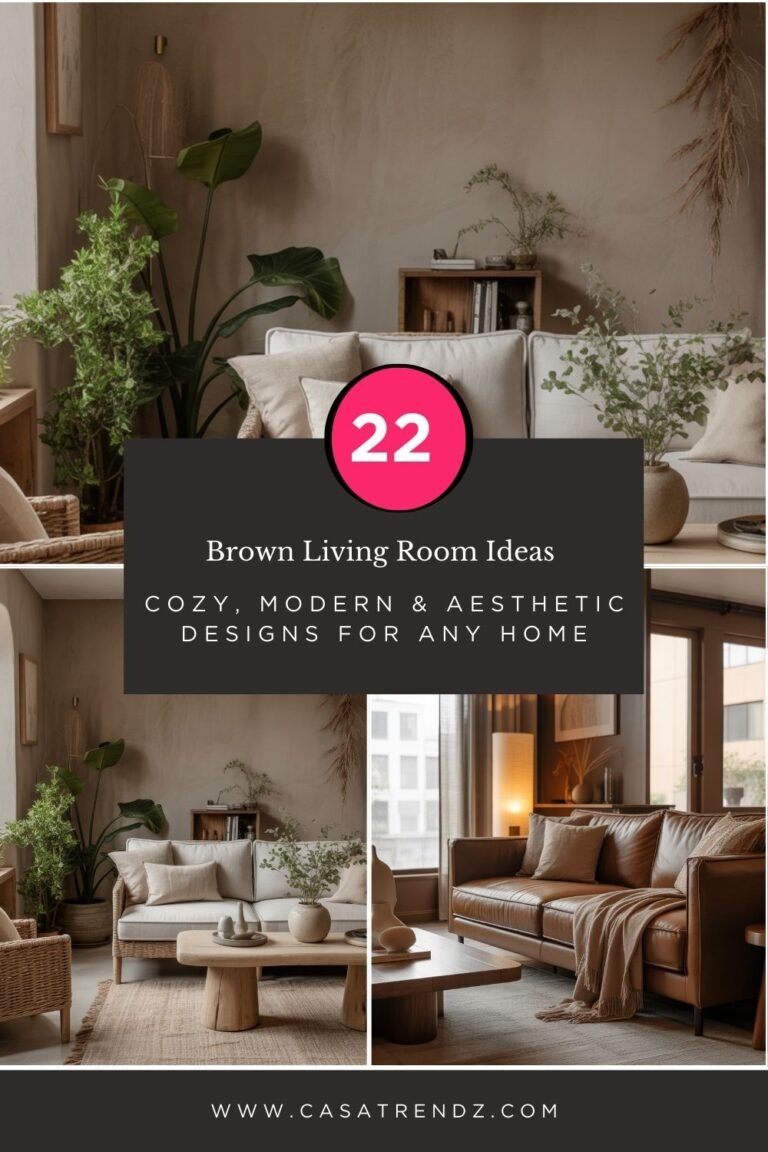 22 Brown Living Room Ideas – Cozy, Modern & Aesthetic Designs for Any Home
 20 Living Room Wall Decor Ideas That Instantly Transform Your Space
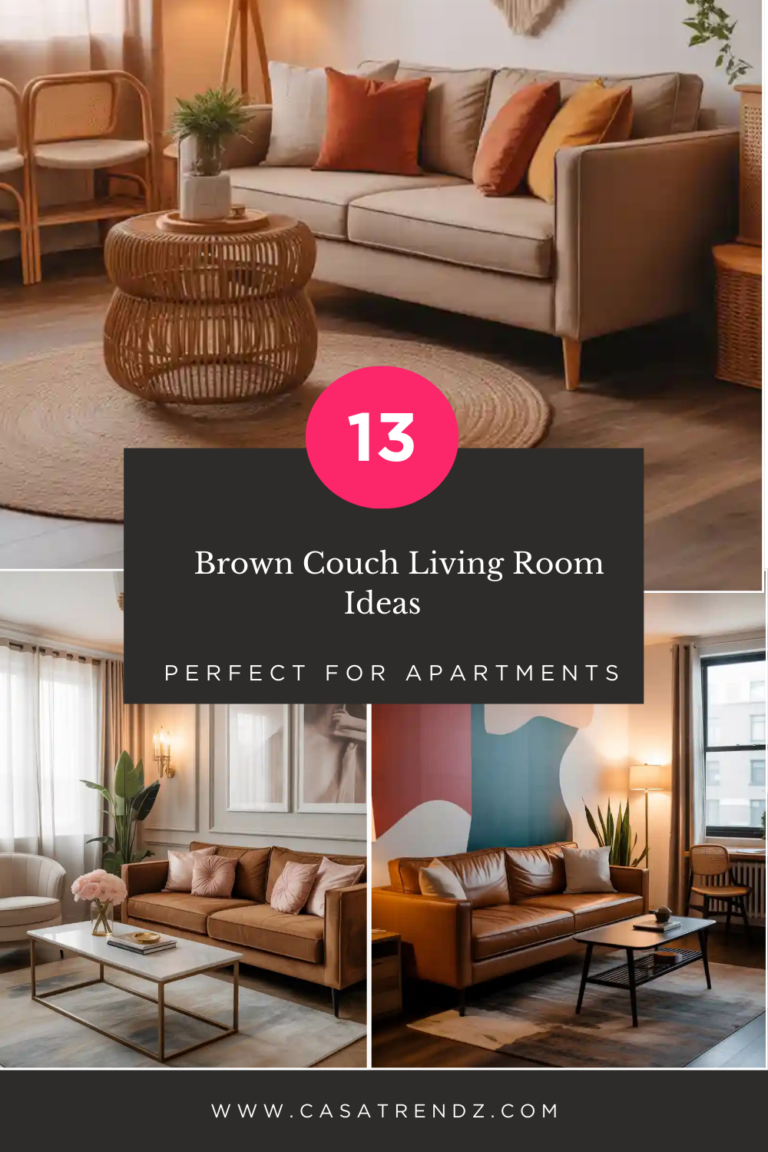 13 Brown Couch Living Room Ideas Perfect for Apartments
 21 Modern Living Room Ideas for Luxurious and Cozy Vibes
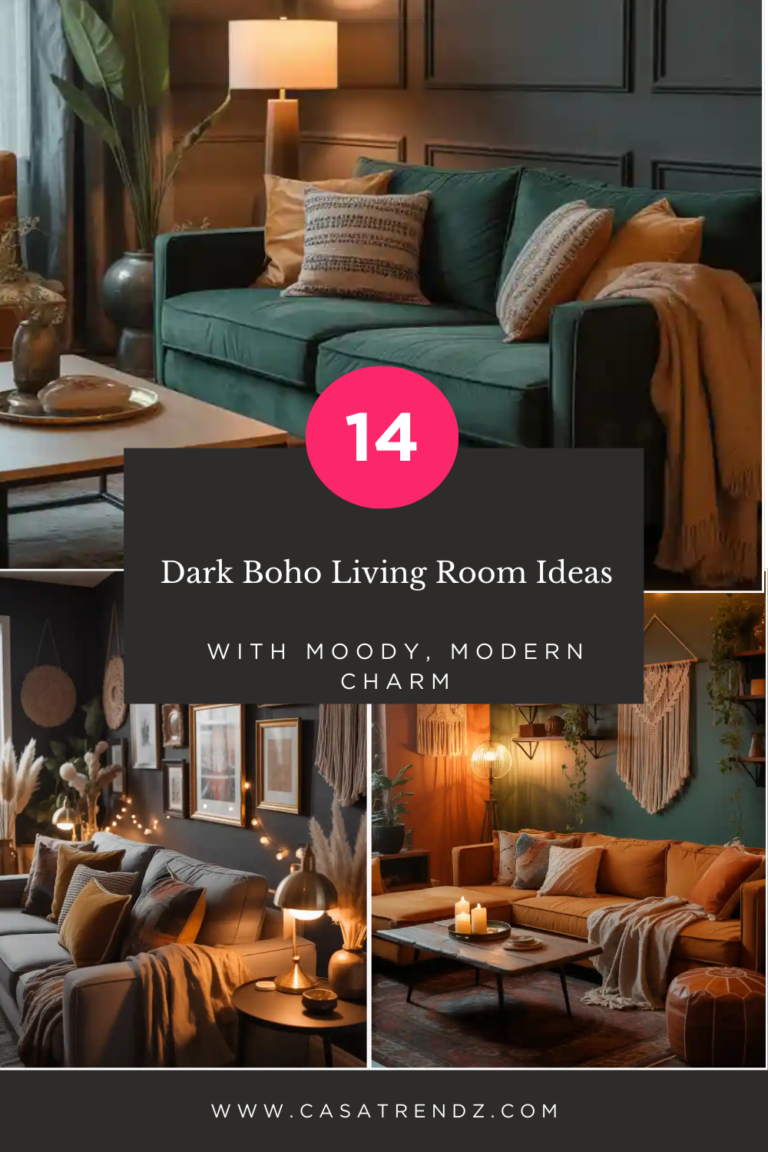 14 Dark Boho Living Room Ideas with Moody, Modern Charm