
20 Gray Kitchen Ideas – Stylish & Modern Designs for Every Home

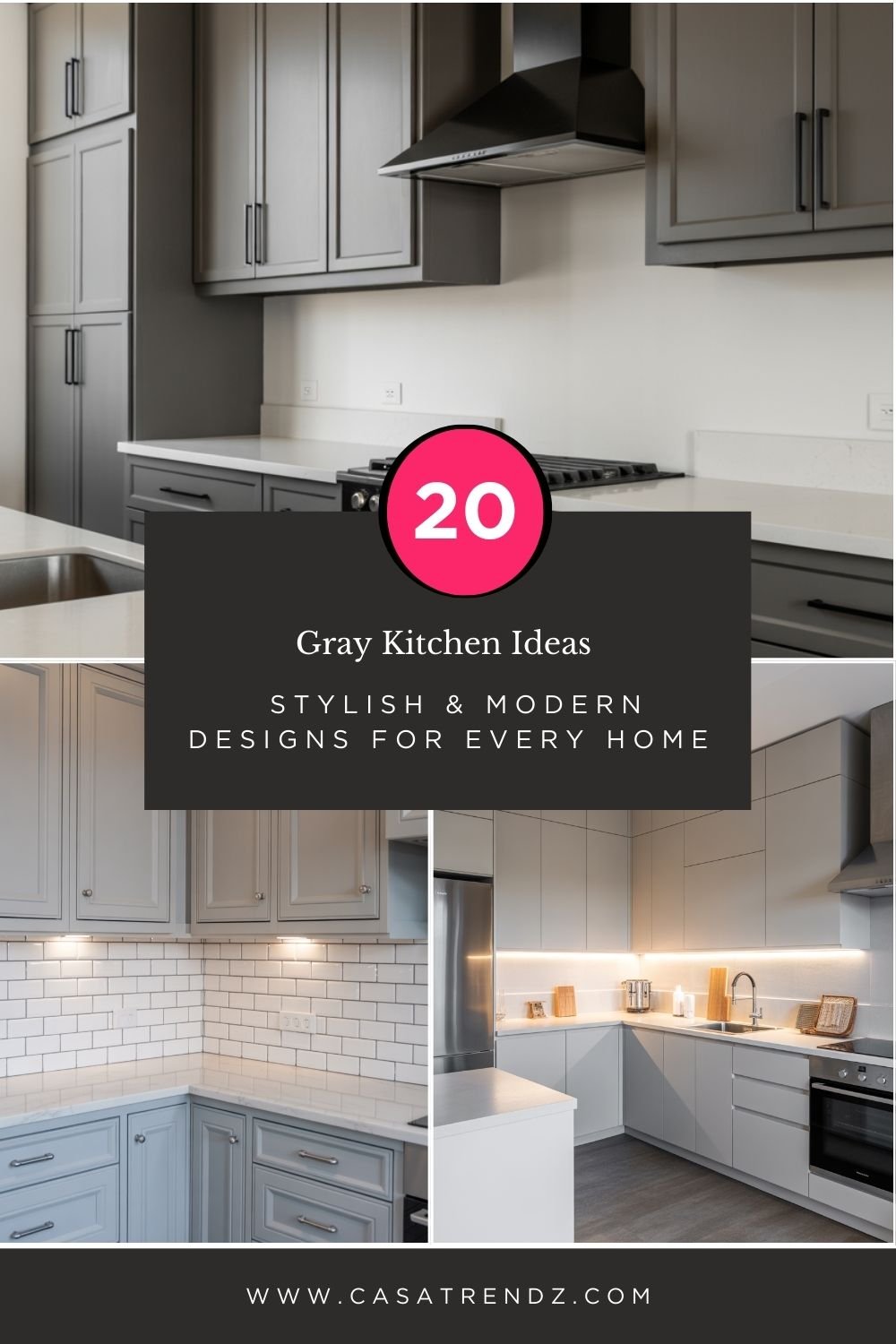
Gray kitchens have earned their place as a modern classic. Gray is calm, flexible, and easy to live with, and it works in almost any home, from a small apartment to a large family kitchen. A soft gray can make a tight room feel brighter, while a deep charcoal can give a big open kitchen real drama. The trick is choosing the right shade, the right finish, and the right partner materials, so the room feels finished rather than flat.
This guide covers 20 gray kitchen ideas, each with practical detail you can actually use: paint and cabinet colors to ask for, countertop and backsplash pairings, hardware finishes, lighting ideas, and small layout tips. Whether you are planning a full remodel or just repainting cabinets, start with the look that matches your home, then borrow the details that fit your budget. If you are still choosing a palette, these kitchen color ideas can help you compare gray with other popular schemes before you commit.
Before you pick a shade, test it in your own light. Paint a large sample board, at least 60 by 60 centimeters, and move it around the room during the day. Gray shifts a lot: a north facing kitchen can pull it blue, while warm evening bulbs can pull it beige. Always check the sample next to your countertop, floor, and backsplash, not on a white wall alone.
1. Light Gray Minimalist Kitchen
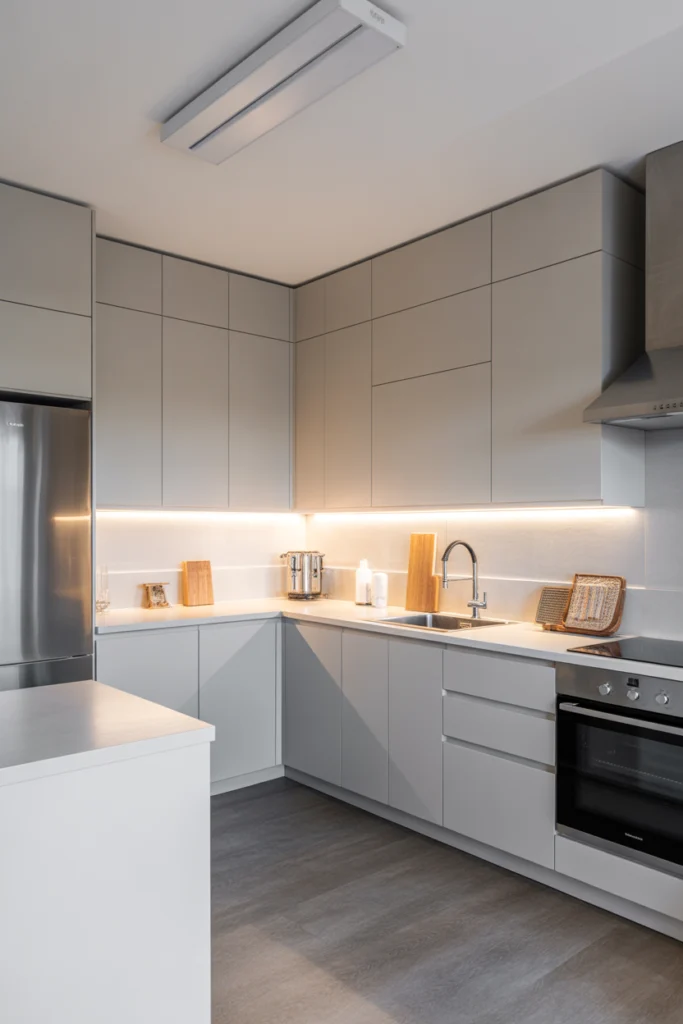
A light gray minimalist kitchen is built on restraint. Choose a soft, cool light gray for flat panel cabinets, such as a shade close to light dove gray, and pair it with white quartz or light marble look countertops. Keep handles slim and simple: slim bar pulls in brushed nickel, about 128 millimeters long on drawers and 160 millimeters on wide drawers, keep the look clean without drawing attention.
For the layout, use handleless wall cabinets where you can, and keep open shelving to one short run so the room stays calm. A matte finish on cabinets hides fingerprints better than gloss, which matters in a busy family kitchen. Add under cabinet LED strips at 3000K warm white, so the worktop is bright for cooking while the room still feels soft in the evening.
Finish with one natural texture to stop the room feeling cold: a light oak cutting board, a linen runner, or a single wooden stool. Keep countertops mostly clear, with only the everyday items out, such as a kettle, a knife block, and a small plant. In a small or narrow kitchen, carry the same light gray onto the walls to blur the edges and make the space feel wider.
2. Charcoal Gray Contemporary Kitchen
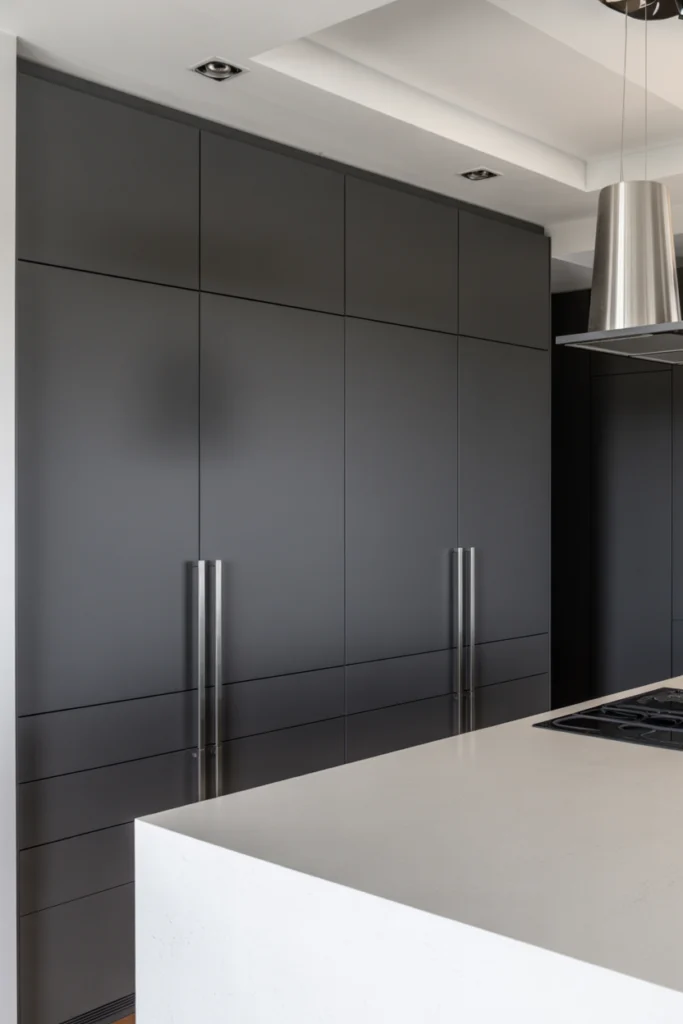
Charcoal gray brings depth and confidence to a contemporary kitchen. Use it on base cabinets or a full run of tall cabinets, and balance it with a white or very light gray worktop so the dark color does not close the room in. A waterfall edge on the island, where the stone runs down the side, makes charcoal feel deliberate and high end rather than heavy.
Pair charcoal with one strong metal: brushed brass for warmth, or matte black for a sharper, more modern edge. Large format floor tiles, 60 by 60 centimeters or larger, with narrow grout lines, keep the floor quiet so the cabinets can lead. Glass front upper cabinets or a single open shelf break up a long dark run and give you a place for glasses and ceramics.
Lighting is what makes charcoal work. Combine recessed ceiling lights for general light, under cabinet strips for tasks, and two or three pendants over the island at about 75 to 90 centimeters above the worktop. If your kitchen gets little daylight, keep walls a warm white and add a mirrored or glossy backsplash to bounce light back into the room.
3. Gray and White Two-Tone Kitchen
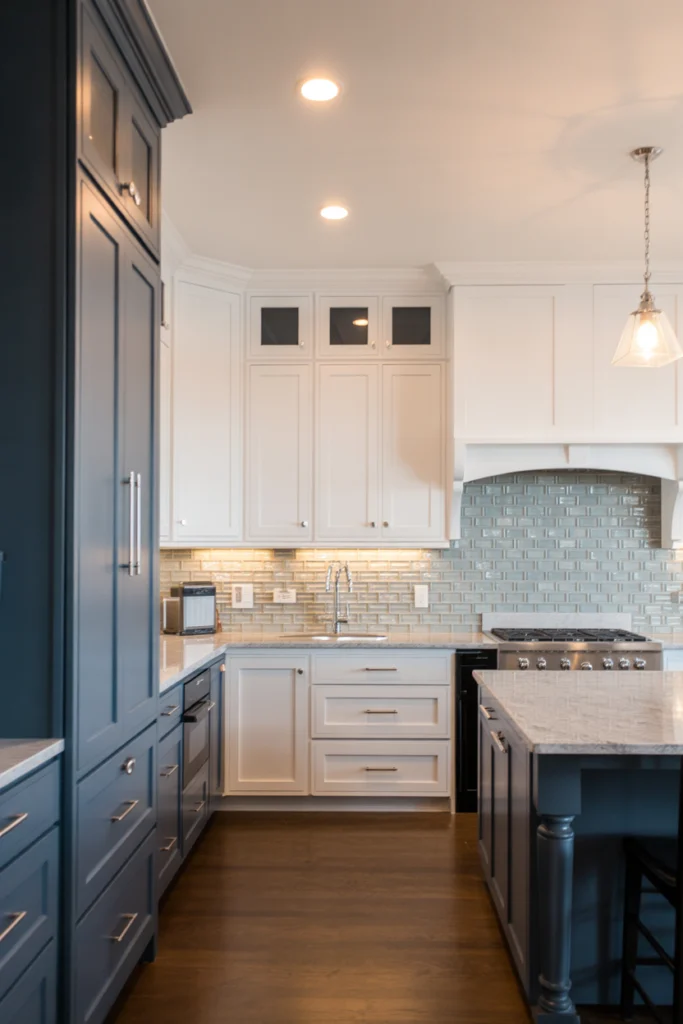
A two tone kitchen, with gray lower cabinets and white upper cabinets, is popular for a good reason: it grounds the room while keeping it bright. A mid gray on the base units, such as a warm greige gray, stops the room feeling clinical, while white uppers keep the eye moving upward and make a low ceiling feel taller.
To join the two colors, pick a backsplash that contains both: a white subway tile with light gray grout is a safe, timeless choice, or try a soft gray and white patterned tile for more character. Keep hardware consistent across both colors, for example brushed nickel knobs on uppers and matching bar pulls below, so the two tones read as one design.
This scheme suits almost any style. For a traditional feel, add shaker doors and a farmhouse sink. For a modern feel, use flat panels, an integrated handle rail, and a plain white quartz worktop. If you want warmth, add a wooden element: oak open shelves, a butcher block section on the island, or warm wood bar stools.
4. Industrial Gray Concrete Kitchen
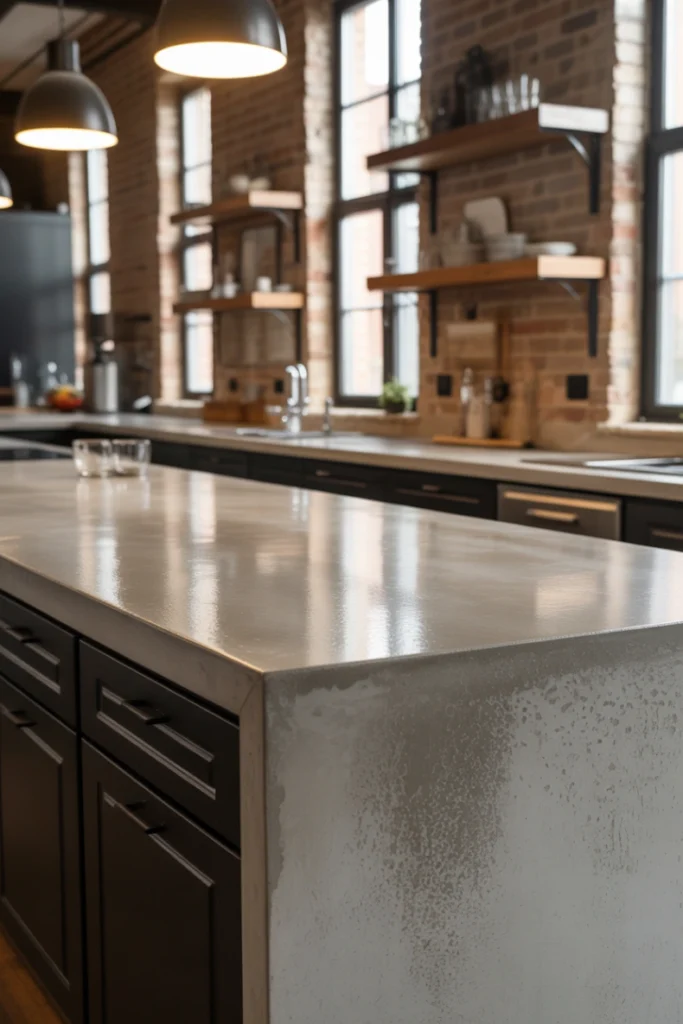
Concrete gives a gray kitchen a raw, architectural edge. Polished concrete worktops, usually 40 millimeters thick, pair well with matte gray cabinets and black steel details. Concrete is heat resistant and very durable, but it must be sealed properly, usually with a food safe penetrating sealer, and resealed every one to two years to resist stains from coffee, oil, and citrus.
Soften the industrial look with warm wood: open shelves in reclaimed pine, a wooden breakfast bar, or a vintage style rug by the sink. Exposed brick, if you have it, is a natural partner, as are matte black pendant lights and open metal shelving. Keep at least one soft texture in the room, such as linen tea towels or a woven basket, so the hard surfaces do not dominate.
Concrete works best in larger or loft style spaces where its weight feels intentional. In a smaller kitchen, use concrete on one surface only, such as the worktop, and keep cabinets a softer gray. Mix in stainless steel appliances and a large, deep sink to complete the workshop feel without making the room feel like a garage.
5. Gray Shaker Cabinets for a Classic Look
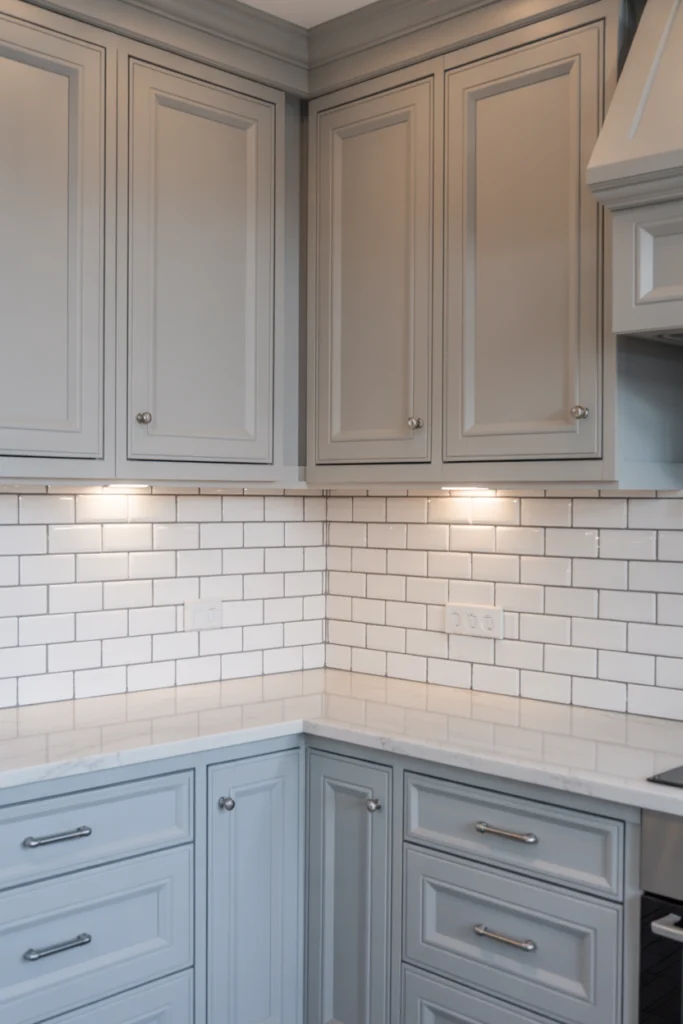
Gray shaker cabinets are a safe long term choice because the simple framed door suits both traditional and modern homes. A mid warm gray, rather than a cold blue gray, is the most flexible: it works with marble, quartz, wood, and painted walls, and it still looks current after ten years. Shaker doors also repaint well, which is useful if you want a refresh later without replacing cabinets.
Pair gray shaker cabinets with a white marble look quartz worktop and a classic subway tile backsplash in a brick pattern. Brushed nickel or pewter cup pulls on drawers and knobs on doors keep the traditional feel. An apron front sink in white fireclay adds charm and is deep enough for large pots and baking trays.
For flooring, warm wood or wood look tile balances the cool gray, while a patterned runner in muted blue, gray, and cream adds softness. Keep wall color simple: a warm white lets the gray cabinets stand out. This is one of the easiest gray kitchens to accessorize, because seasonal decor, from greenery at Christmas to fresh herbs in summer, sits naturally against the neutral base.
6. Sleek Glossy Gray Cabinetry
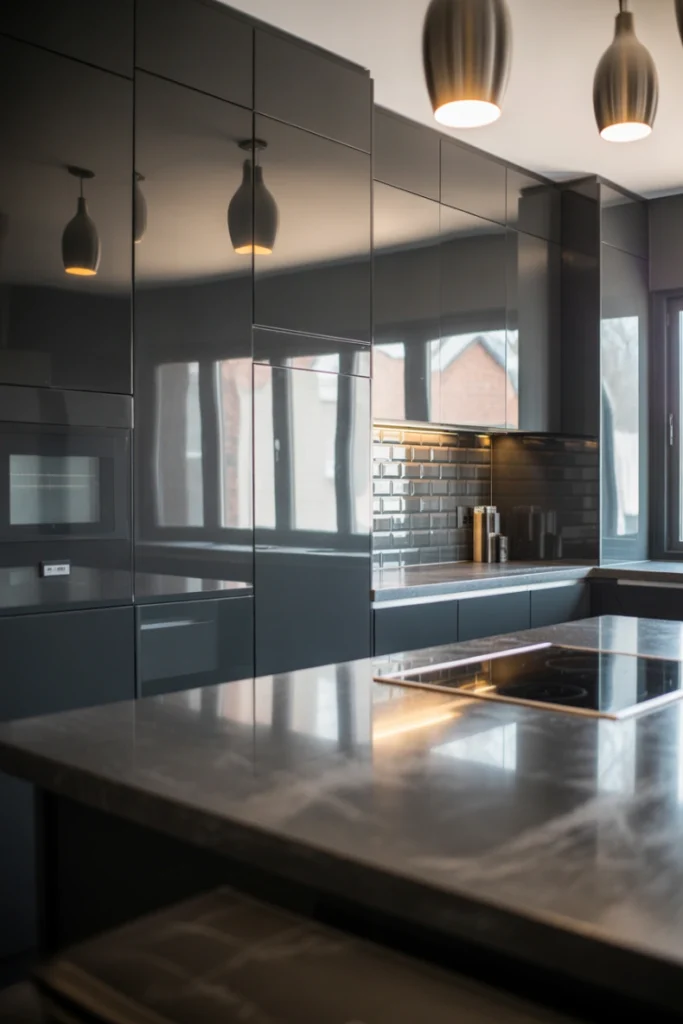
Glossy gray cabinets reflect light, which makes them a smart choice for a small or dark kitchen. A light to mid glossy gray on flat panel doors, with integrated handles or push to open doors, gives a seamless, high end look. Because gloss shows fingerprints and smudges more than matte, keep a microfiber cloth handy and choose a mid tone rather than a very dark gloss, which shows marks most.
Balance the shine with matte surfaces elsewhere: a matte quartz worktop, a matte tile backsplash, or a matte wood floor. This contrast stops the room looking like a showroom. Stainless steel appliances sit naturally with glossy gray, and a simple white or light gray worktop keeps the palette calm.
For lighting, avoid a single harsh ceiling light, which can create glare on gloss doors. Use layered light instead: recessed downlights on a dimmer, under cabinet strips, and a soft pendant over the island. Keep accessories minimal and in one or two finishes, so the reflective surfaces, not the clutter, provide the visual interest.
7. Warm Gray Scandinavian Kitchen
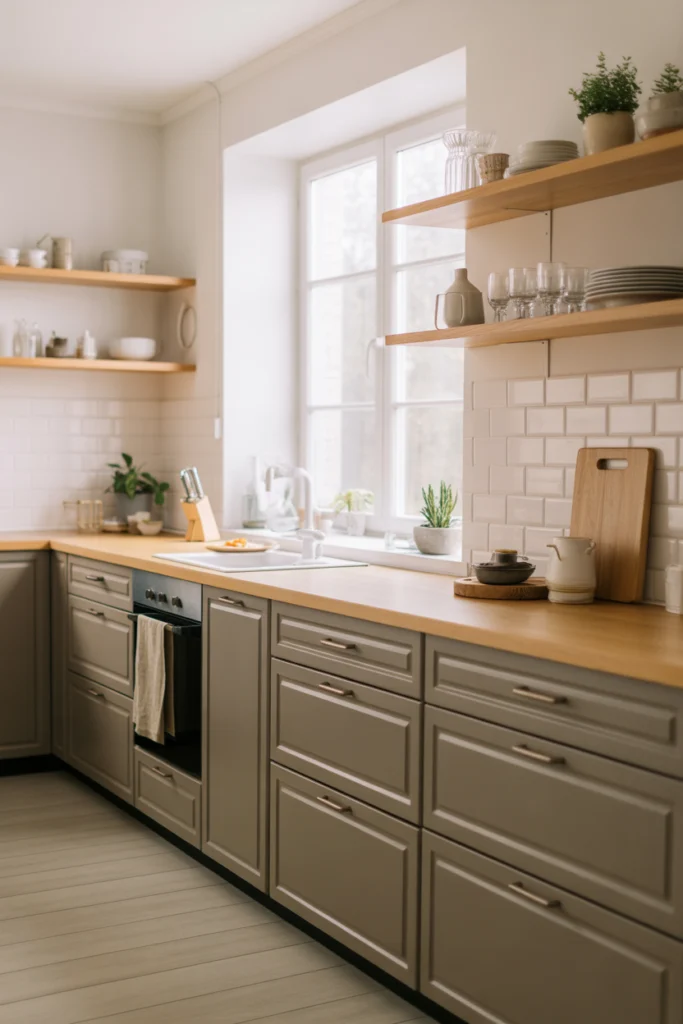
A warm gray Scandinavian kitchen is about light, calm, and natural materials. Choose a warm greige gray for cabinets, one with a hint of beige, and pair it with pale oak: oak open shelves, an oak table, or light wood flooring. White walls and a white worktop keep the room airy, while the warm gray stops it feeling stark.
Keep the layout simple and functional: deep drawers for pots, a pull out larder for dry goods, and open shelving for everyday dishes. Soft textiles add the cozy layer Scandinavian rooms need: a linen runner, cotton tea towels in muted tones, and a sheepskin on a dining chair. Lighting should be warm, around 2700K to 3000K, with candles or small lamps in the evening for a soft glow.
Decorate lightly. A ceramic vase with eucalyptus, a wooden board, and a few handmade bowls are enough. Avoid filling every shelf: empty space is part of the look. If your kitchen is small, use the same warm gray on the walls and cabinets to make the boundaries disappear, and choose pale, reflective surfaces to maximize daylight.
8. Gray Farmhouse Kitchen with Rustic Charm
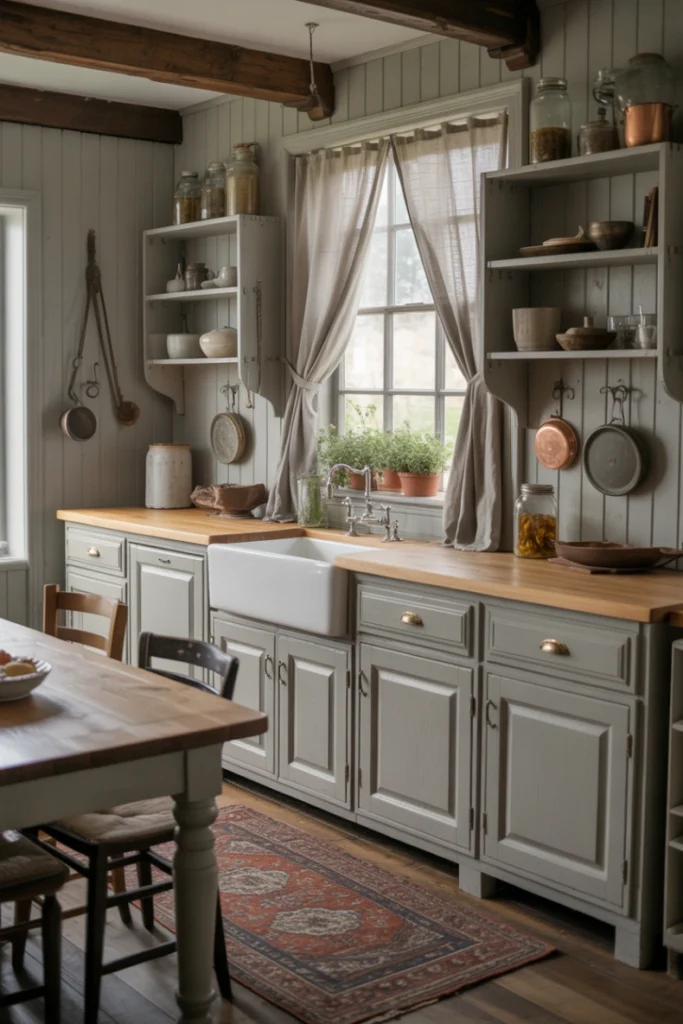
A gray farmhouse kitchen mixes classic comfort with a fresh neutral palette. Use a soft to mid gray on shaker or beadboard cabinets, and pair it with an apron front sink, rustic wood beams or open wood shelves, and vintage style hardware in matte black or oil rubbed bronze. Butcher block on the island adds warmth and gives you a practical prep surface that can be sanded and re-oiled when marked.
Texture is the key here. Add woven baskets for storage, a patterned tile floor or a braided rug, and linen curtains at the window. A subway tile backsplash in a soft white, with slightly uneven handmade look tiles, suits the farmhouse feel better than a perfect glossy tile. Open plate racks or a dresser style hutch give you display space for everyday ceramics.
Keep the gray on the cooler side of warm if your wood is honey toned, so the two do not clash. A wooden dining table in the same tone as your shelves ties the room together. Finish with practical vintage touches: a rail for utensils, mason jars for dry goods, and a large clock or chalkboard for a lived in, welcoming feel.
9. Deep Gray and Brass Luxury Kitchen
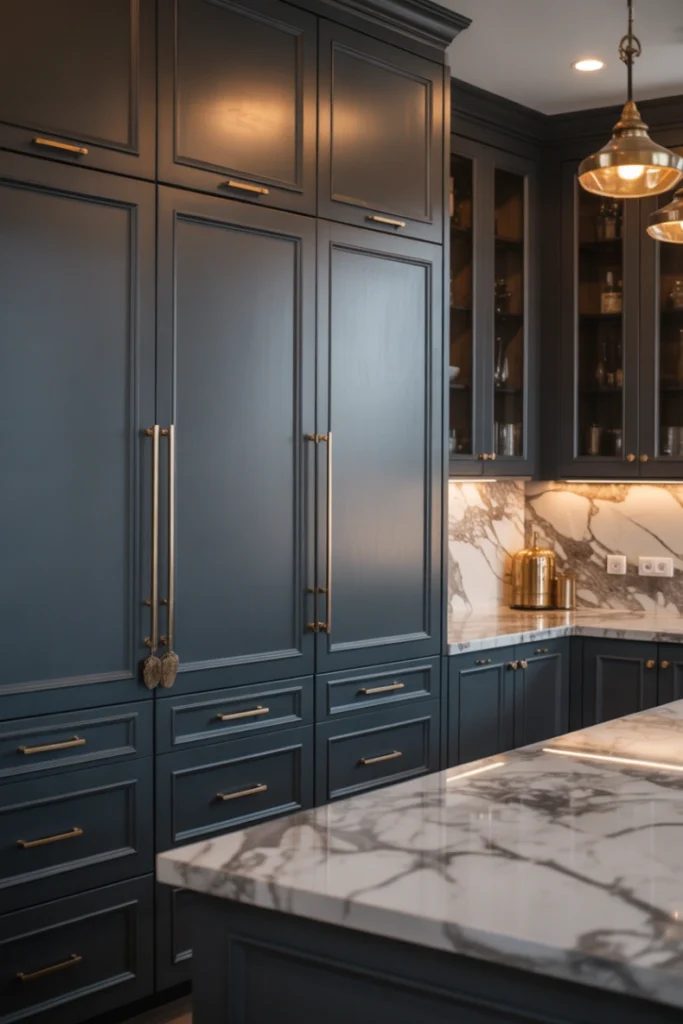
Deep gray and brass is a classic luxury pairing. Use a deep charcoal or graphite gray on cabinets, and let brass do the jewelry work: brass bar pulls, a brass faucet, brass pendant lights, and brass trim on glass front cabinets. Unlacquered brass will develop a patina over time; lacquered brass stays bright. Choose one and use it consistently, so the finishes age evenly.
For worktops, white marble or a white marble look quartz with soft gray veining is the natural partner, because it lifts the dark cabinets and echoes the gray. A full height marble backsplash behind the range makes a strong focal point, but a simpler white subway tile keeps the budget lower while still looking refined. Warm under cabinet lighting, around 2700K, makes brass glow in the evening.
Keep the rest of the room quiet: plain walls, simple flooring, and minimal clutter, so the brass details stand out. A glass front cabinet with interior lighting shows off glasses and adds sparkle. This look suits a larger kitchen best, where the dark color has room to breathe, but it also works on a single island in a lighter kitchen, as a luxury accent.
10. Gray Kitchen with Natural Stone Surfaces
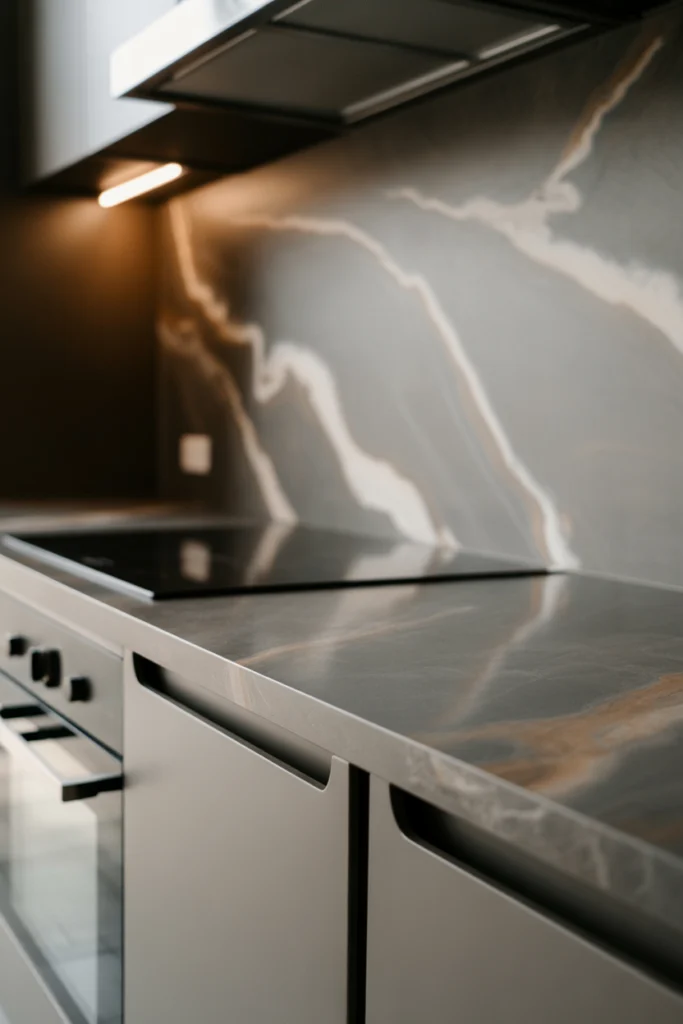
Natural stone is one of the best partners for gray cabinets because the veining adds movement that flat color cannot. Marble brings soft, elegant veining but needs sealing and care with acids. Granite is harder and more stain resistant, with bolder patterns. Soapstone is dark, matte, and very heat tolerant, and it develops a rich patina. Quartz, while engineered rather than natural, offers a similar look with lower maintenance.
Let the stone lead: if your worktop has strong veining, keep the backsplash plain, either the same stone or a simple tile that picks up one gray tone from it. If the stone is quiet, you can add a patterned backsplash for interest. Keep cabinet color one or two shades lighter or darker than the dominant stone tone, so the two relate without competing.
Use lighting to show the stone at its best: under cabinet strips highlight veining on a backsplash, while a pendant over the island draws the eye to the worktop. Seal natural stone as the supplier recommends, wipe spills promptly, and use boards for cutting and trivets for hot pans. With that basic care, a stone and gray kitchen ages beautifully.
11. Soft Gray Cottage-Style Kitchen
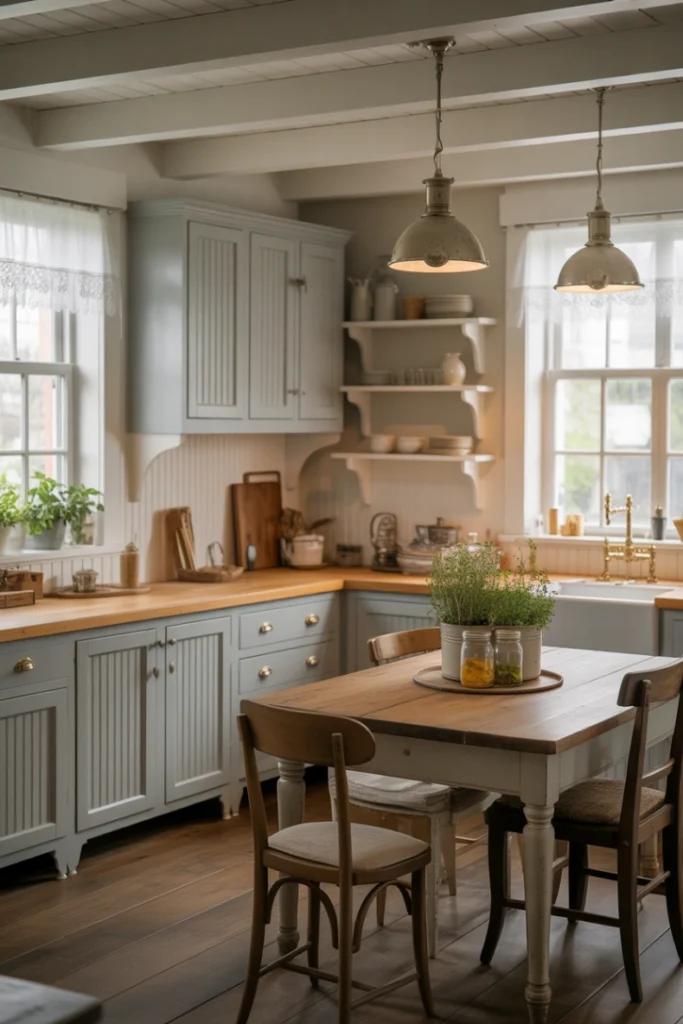
A soft gray cottage kitchen is gentle, charming, and easy to live in. Choose a pale, warm gray for cabinets, beadboard paneling on the island or walls, and warm wood worktops in oak or beech. A pale gray is forgiving with small rooms, and it lets colorful accessories, from floral curtains to painted ceramics, shine without clashing.
Add cottage details in small doses: glass front cabinets with mullioned doors, vintage style taps in brushed nickel, open plate racks, and softly patterned tiles in cream and sage. A Belfast style sink suits the look and is practical for a family kitchen. Keep hardware small and pretty: round knobs in ceramic or aged nickel, rather than long modern bars.
For the floor, painted wood, warm wood, or a classic checkerboard in soft gray and white all work. A small table and chairs in the corner, with a gingham or linen cloth, completes the cottage feel. Avoid too many patterns at once: pick one lead pattern, such as a floral or a stripe, and keep the rest plain.
12. Gray Kitchen with Black Accents
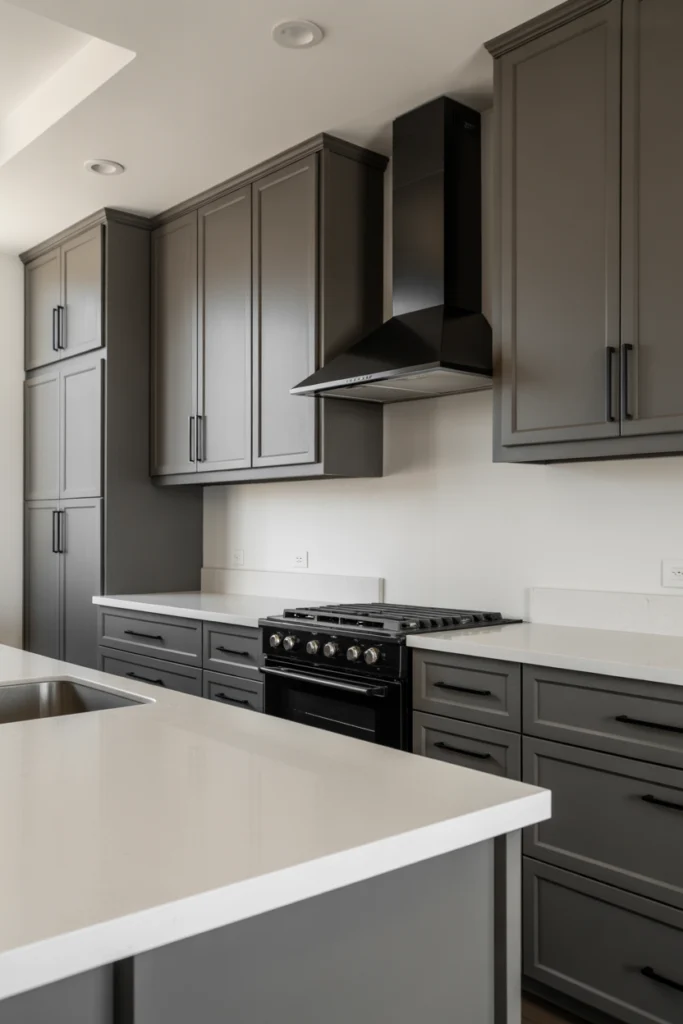
Gray and black is a bold, modern pairing that needs careful balancing to stay bright. Use black in controlled doses: black hardware, black pendant lights, a black faucet, or a black framed island, against light to mid gray cabinets. A black range cooker or black appliances can anchor the scheme, but avoid black on every surface, or the room can feel heavy.
To keep the space bright, add white worktops, a white or light gray backsplash, and as much natural light as possible. A large mirror or a glossy backsplash tile reflects light, while warm wood, such as oak stools or a wooden chopping board, softens the contrast. If you want the look to flow into the next room, these gray and blue living room ideas show how the same gray palette can carry through an open plan space.
Black works best as a frame: black window frames, black open shelving brackets, or black trim on glass cabinets. Keep walls light, and use layered lighting so the black details read as crisp lines rather than dark blocks. In a small kitchen, limit black to hardware and lighting only, and let gray and white do most of the work.
13. Mid-Century Gray Kitchen
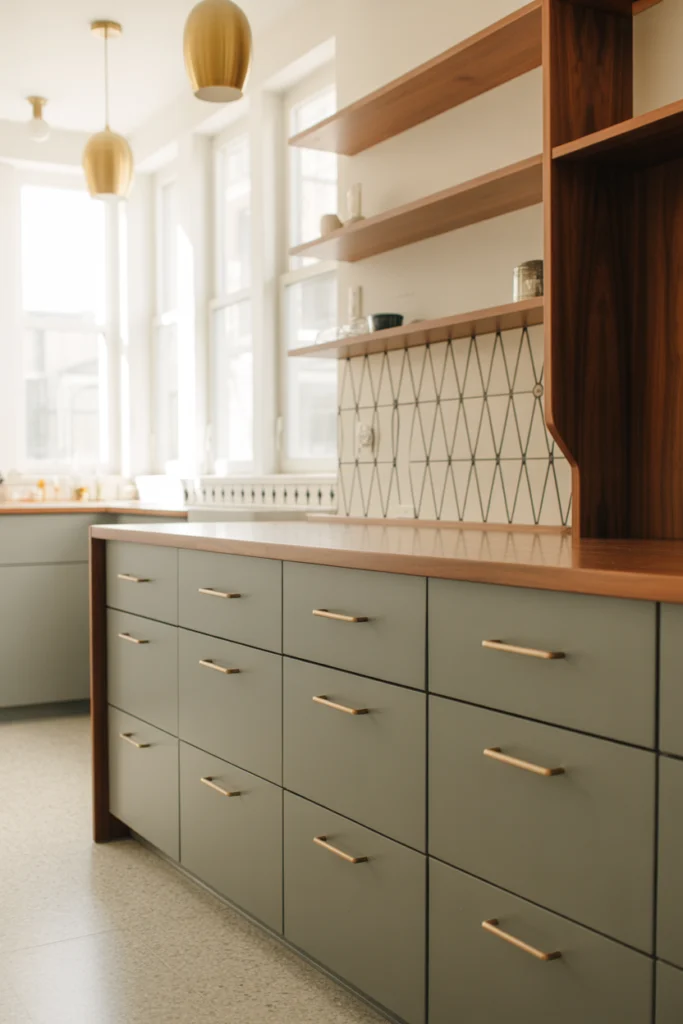
Mid-century style pairs gray with warm wood and retro shapes. Use a soft to mid gray for cabinets, and bring in walnut or teak for open shelves, a dining table, or bar stools. Walnut is the classic mid-century wood: rich, warm, and full of grain, and it stops gray feeling cold. Brass details, such as slim bar pulls or a sputnik style pendant, complete the period feel.
Add retro pattern in small amounts: a geometric tile backsplash in gray, white, and mustard, or a patterned blind in a simple mid-century print. Tapered legs on a table or island seating, globe pendant lights, and a sunburst clock are easy nods to the era without turning the kitchen into a theme room. Keep lines clean and surfaces clear, as mid-century design values simplicity.
For color accents, mustard, burnt orange, or olive green work well with gray and walnut, but use them as accents, a few chairs, a kettle, or artwork, not as a second dominant color. A terrazzo look worktop or a speckled tile also suits this style. The result should feel warm, a little nostalgic, and still practical for everyday cooking.
14. Ultra-Modern Handleless Gray Kitchen
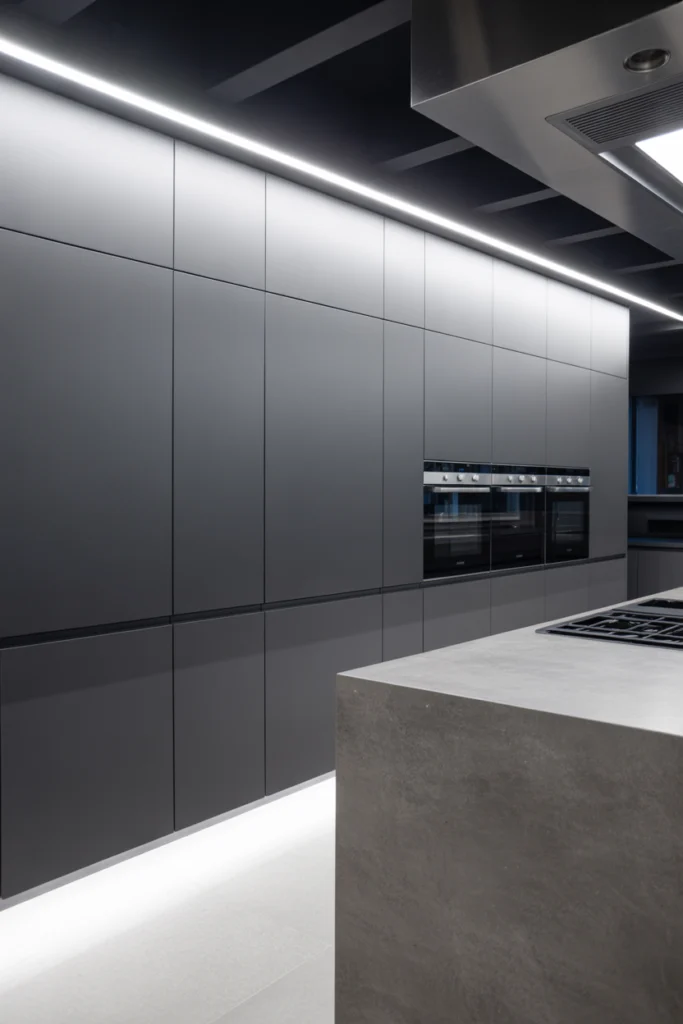
A handleless gray kitchen is the peak of modern minimalism. Flat panel doors in a mid to dark gray, opened by a push latch or a recessed grip rail, create one seamless wall of color. Without handles breaking the line, the room feels larger and calmer, which is ideal for open plan living where the kitchen is always visible.
For this look to work, the details must be precise. Doors need consistent gaps, usually 2 to 3 millimeters, and the grip rail should run in a single finish, such as aluminum or matte black, across the full run. Pair handleless cabinets with a continuous worktop in quartz or a solid surface, with no upstand breaking the line, and hide appliances behind matching panels where possible.
Keep the palette tight: one gray for cabinets, one worktop material, and one metal finish. Add interest through texture rather than color: a fluted backsplash panel, a matte stone worktop, or a timber breakfast bar. Good lighting is essential, since there are no handles to catch the eye: use recessed lights, under cabinet strips, and a slim pendant over the island.
15. Gray Kitchen Island as a Focal Point
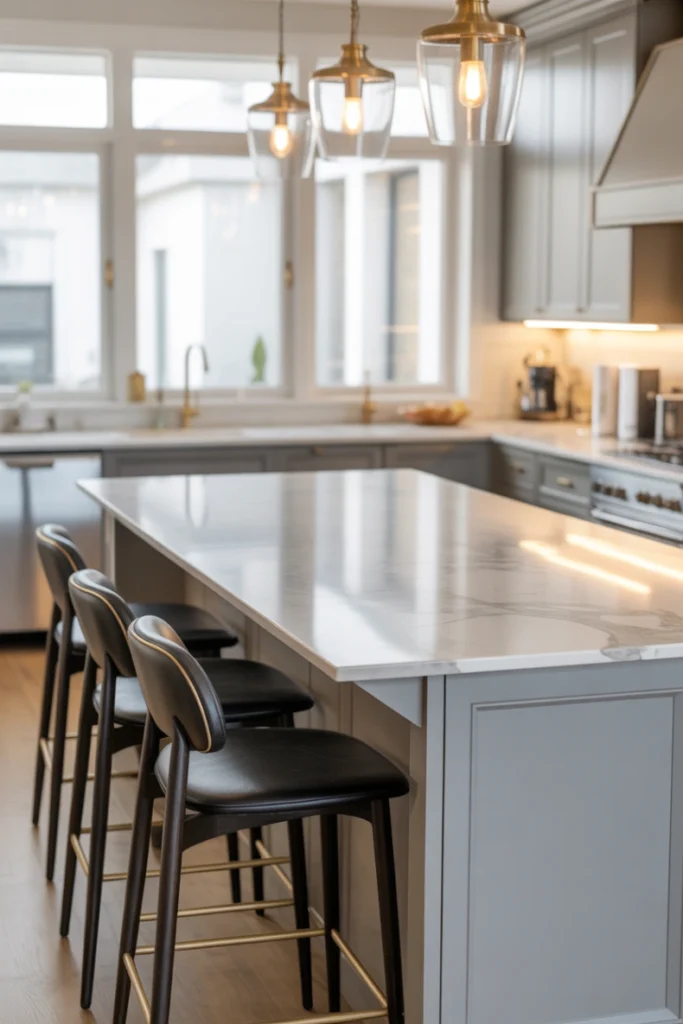
A gray island can anchor the whole kitchen, especially in a white or wood toned room. Paint the island a deeper gray than the surrounding cabinets, for example charcoal against white, or a mid slate gray against pale oak, so it reads as a deliberate feature. A contrasting worktop, such as white quartz on a dark island or butcher block on a gray island, strengthens the focal point.
Size the island for real use: allow at least 90 to 105 centimeters of walkway around it, and at least 60 centimeters of seating width per stool if you plan to eat there. A standard island height is 90 centimeters for prep, while a raised bar section at 105 to 110 centimeters works for casual seating. Add storage where it helps most: deep drawers for pots on the cooking side, and a wine rack or open shelf on the seating side.
Style the island simply: two or three pendants hung 75 to 90 centimeters above the worktop, a large board or a bowl of fruit, and nothing else on a daily basis. Bold bar stools in leather, wood, or a strong accent color add personality without clutter. In an open plan home, the island also acts as a natural boundary between cooking and living, so keep its seating side tidy and inviting.
16. Gray Kitchen with Glass Front Cabinets
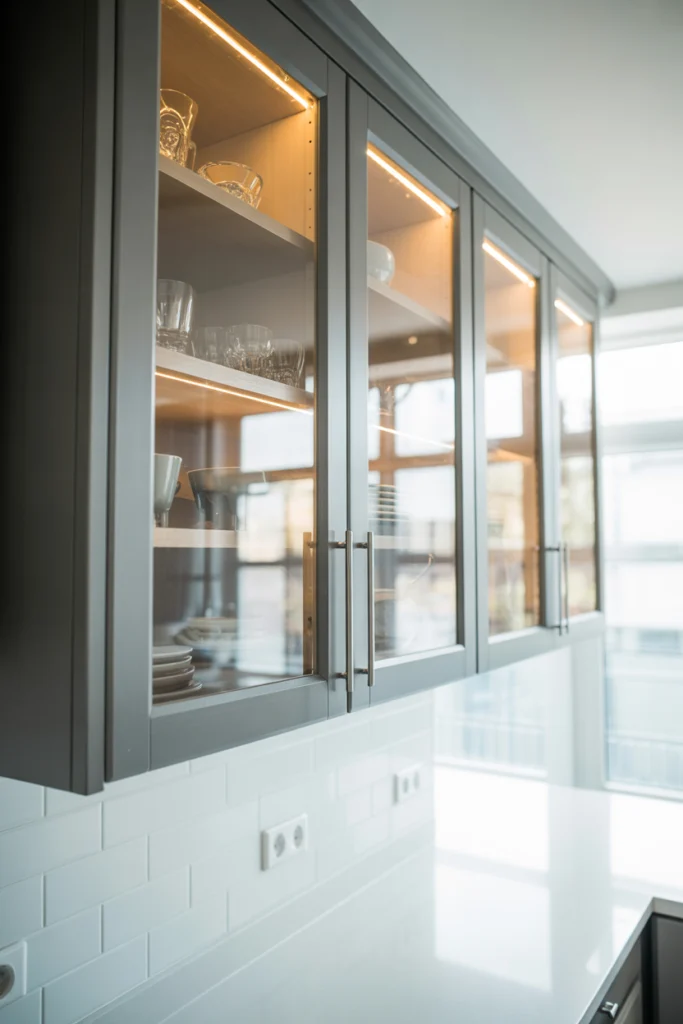
Glass front cabinets break up long runs of solid gray and make a kitchen feel lighter. Use them on upper cabinets only, with solid cabinets below, so the room keeps its storage while gaining display space. Clear glass shows everything, so it suits tidy households; frosted or reeded glass hides clutter while still letting light through, and is a better choice for busy family kitchens.
Style the inside simply: stack white or cream dishes, group glasses by type, and leave some breathing room on each shelf. Interior cabinet lighting, small LED strips or puck lights at 3000K, makes glass cabinets glow in the evening and turns everyday dishes into decor. Keep the number of displayed items low: two or three per shelf is enough.
Pair glass cabinets with soft to mid gray, rather than very dark gray, so the interior stays visible. Slim brass or nickel frames on the glass doors add a refined detail, while plain glass doors keep the look modern. If you only want one feature, try glass on a single pair of cabinets flanking the range or the sink, rather than across the whole wall.
17. Gray Kitchen Paired with Warm Wood
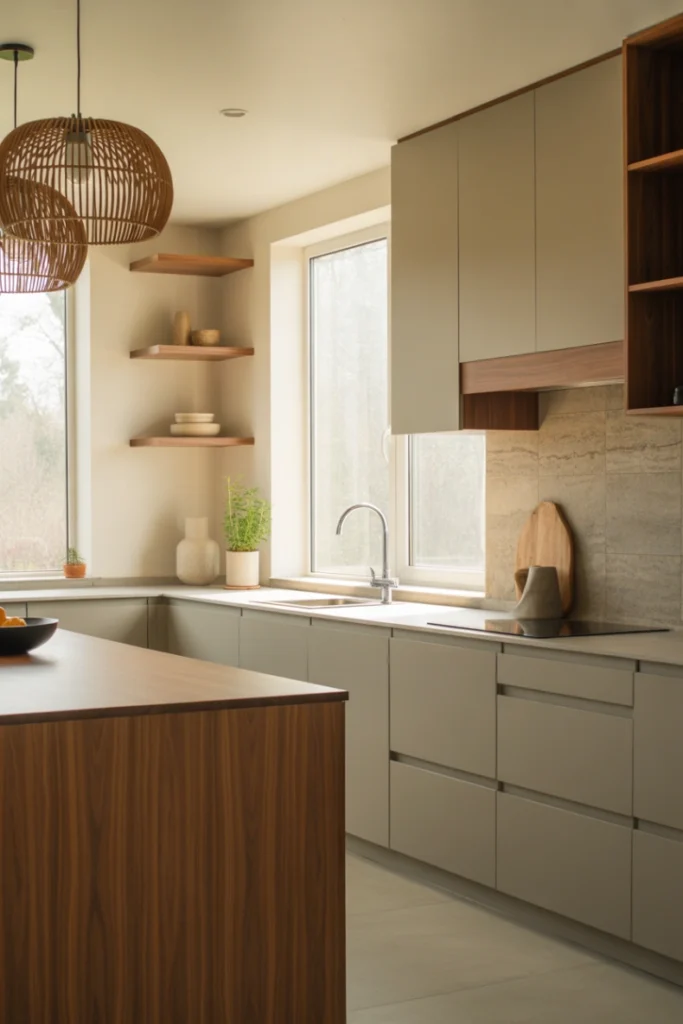
Gray and warm wood is a timeless combination because it balances cool and warm in equal measure. Light honey oak gives a soft, Scandinavian feel, while rich walnut gives drama and depth. Use wood where you touch it most: flooring, open shelves, a butcher block island top, or ceiling beams, so the warmth feels natural rather than decorative. These oak kitchen design ideas show how far a single warm wood can carry a gray scheme.
Match the wood tone to your gray: warm grays pair best with honey and medium oaks, while cool grays need a slightly darker wood, such as walnut, to avoid looking washed out. Repeat the same wood in at least two places, for example shelves and stools, so it feels intentional. A wooden extractor surround or a timber framed window can also tie the scheme together.
Keep other finishes simple so the wood can lead: white or light gray worktops, plain tiles, and one metal finish. Add greenery, a herb pot on the sill or a trailing plant on a shelf, to soften the line between wood and gray. This pairing ages well, because both materials develop character over time rather than dating quickly.
18. Small Gray Kitchen with Space-Saving Solutions
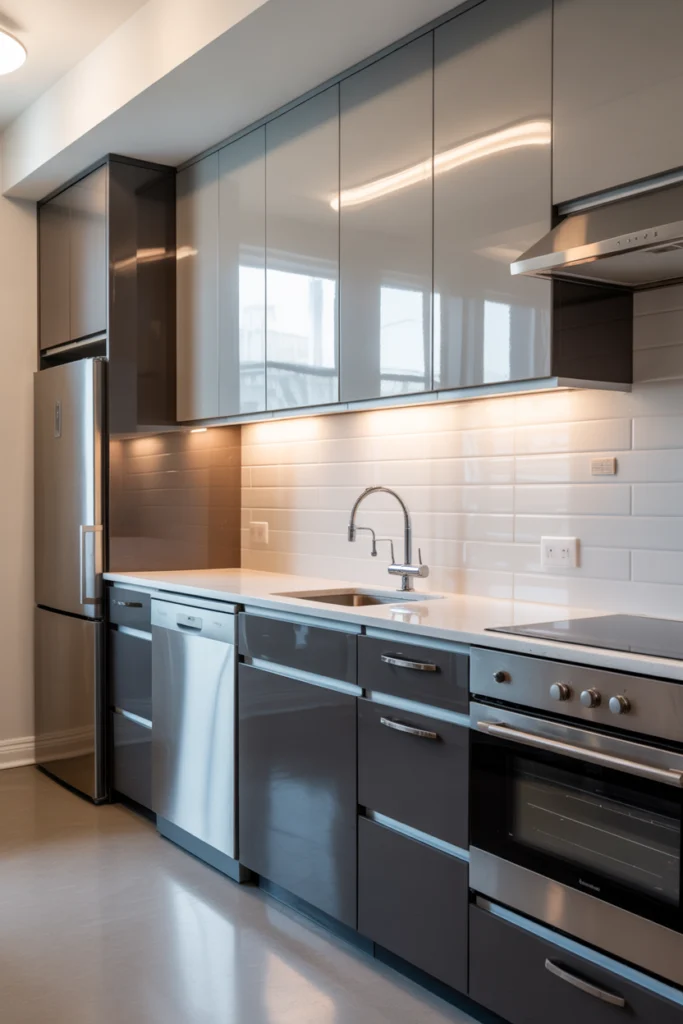
Gray works well in a small kitchen, provided you choose the right shade and layout. A soft to mid gray, rather than charcoal, keeps the room feeling open, especially when paired with white worktops and a light backsplash. Use reflective surfaces, such as a glossy tile or a mirrored splashback behind the range, to bounce light around a tight space.
Storage is where a small gray kitchen wins or loses. Use tall cabinets that run to the ceiling, with a pull out larder for dry goods, deep drawers instead of low cupboards, and a corner carousel or pull out for awkward corners. Vertical storage helps too: a rail for utensils, hooks inside cabinet doors, and magnetic strips for knives free up drawer and worktop space.
Choose compact appliances where you can: a slimline dishwasher at 45 centimeters wide, an integrated fridge, and a combination microwave oven instead of a separate oven and microwave. Keep hardware slim and handles integrated, so nothing catches on clothing in a narrow galley. For more help choosing a palette that keeps a small room bright, these kitchen color schemes compare light and dark options side by side.
19. Dark Gray Monochrome Kitchen
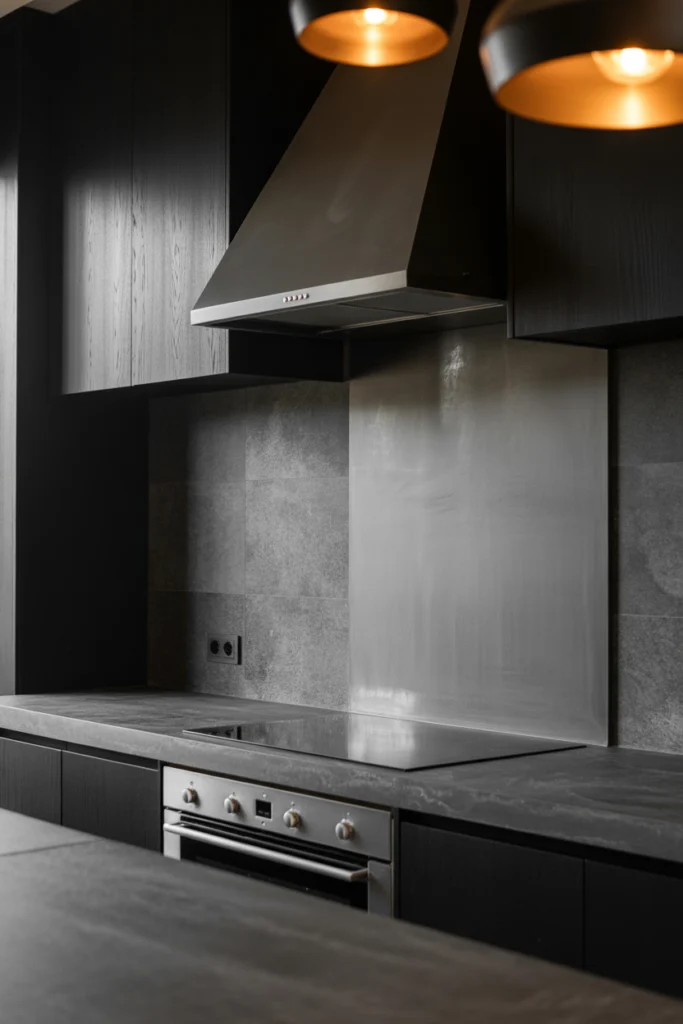
A monochrome gray kitchen uses several gray tones together: charcoal cabinets, slate walls, graphite tiles, and a lighter gray worktop. The result is dramatic and cohesive, but it only works if you vary texture, or the room can look flat. Mix matte cabinets with a honed stone worktop, a textured tile backsplash, and a brushed metal finish, so each surface catches light differently.
Lighting is critical in a monochrome scheme. Use warm white light, around 2700K to 3000K, to stop the grays feeling cold, and layer it: ceiling lights for general cover, task lights under cabinets, and accent lights inside glass cabinets or above open shelves. A single statement pendant in brass or copper adds a warm focal point and breaks the gray field.
Add one softening element to keep the room livable: wooden stools, a linen runner, or a large plant in the corner. Keep accessories in a narrow range of tones, such as black, white, and one metal, so the monochrome discipline holds. This look suits a confident, modern home, and it photographs beautifully, but it needs good daylight or strong artificial light to avoid feeling gloomy.
20. Gray Kitchen with Bold Backsplash Patterns
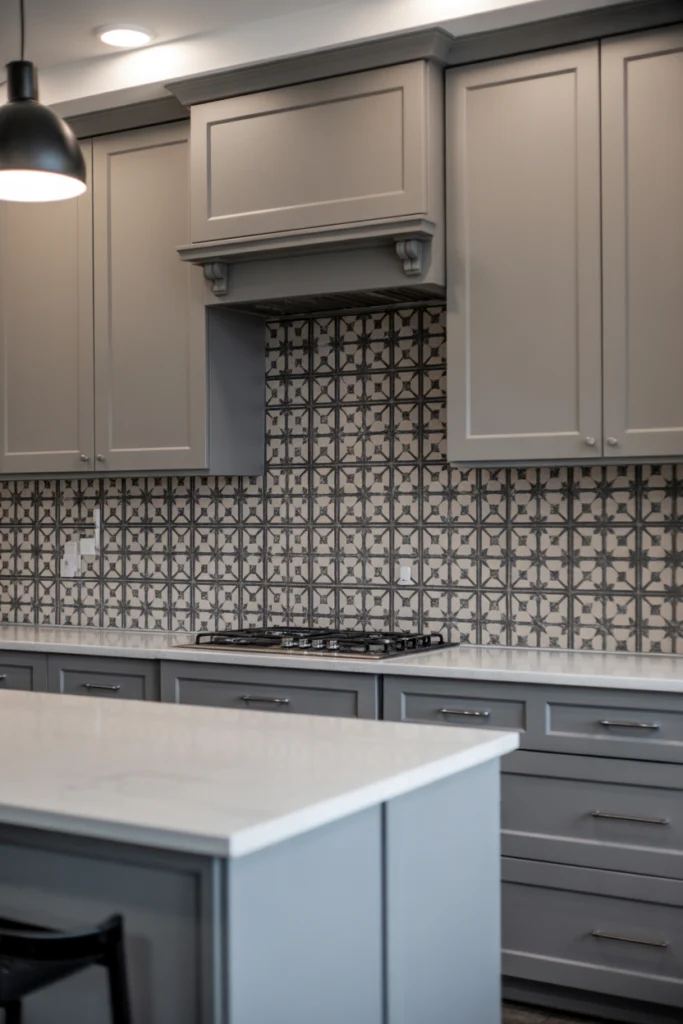
A patterned backsplash is the easiest way to add energy to a gray kitchen without repainting. Geometric tiles, herringbone layouts, Moroccan inspired patterns, or encaustic look tiles all work against gray cabinets, because gray is neutral enough to let the pattern lead. Choose a pattern that contains at least one gray tone, so it ties back to the cabinets, plus white and one accent color.
For a herringbone backsplash, use a standard subway tile, 7.5 by 15 centimeters, laid at 45 degrees, with a grout color close to the tile to keep the pattern subtle, or a contrasting grout to make it bold. For a Moroccan or encaustic pattern, use larger tiles, 20 by 20 centimeters, and keep the rest of the room plain so the backsplash stays the star. Always order 10 percent extra tile for cuts and breakages.
Keep the rest of the kitchen simple to let the backsplash shine: plain worktops, minimal hardware, and neutral flooring. If your pattern is very bold, limit it to the range wall only, and use a plain tile elsewhere. If it is softer, you can run it across the full backsplash wall. Either way, seal the grout, especially behind the range and sink, to keep the pattern looking fresh.
Conclusion
Gray kitchens last because they adapt. A soft gray can feel calm and airy, a charcoal gray can feel bold and luxurious, and everything in between can be tuned with wood, stone, brass, or black to match your home. The 20 ideas above cover the main directions, from minimalist and Scandinavian to farmhouse, industrial, and monochrome, so you can pick a starting point and then adjust the shade, finish, and materials to suit your room, your light, and your budget.
Whatever style you choose, test your gray in your own light, balance dark tones with light worktops and good lighting, and keep at least one warm texture in the room. With those three habits, your gray kitchen will feel stylish on day one and still feel right years later, as trends change around it. A gray kitchen is not just a safe choice: done well, it is a beautiful, practical centerpiece for your home.
Frequently Asked Questions
What color goes best with gray kitchen cabinets?
White is the safest partner, because it keeps gray bright and clean. Warm wood adds warmth, brass adds luxury, and black adds contrast. For walls, a warm white works with warm grays, while a cool white suits cool blue grays. Always test the combination in your own light before committing.
Is gray still a good kitchen color in 2026?
Yes. Gray remains popular because it is neutral, flexible, and easy to update with accessories. The trend has moved from cold, flat gray to warmer greige tones and textured finishes, such as matte cabinets paired with natural stone and wood, which feel softer and more timeless.
How do I keep a dark gray kitchen from feeling too dark?
Balance dark cabinets with light worktops, a light backsplash, and layered lighting. Keep walls white or very light gray, add under cabinet task lighting, and use reflective surfaces such as glass cabinets or a glossy tile to bounce light. A warm wood floor or stools also helps a dark kitchen feel welcoming.
What countertop works best with gray cabinets?
White quartz is the most versatile choice, because it brightens gray and suits almost any style. Marble or marble look quartz adds elegance, butcher block adds warmth, and dark soapstone suits a dramatic monochrome scheme. Match the worktop undertone to your gray: warm whites with warm grays, cool whites with cool grays.
How do I choose between warm gray and cool gray?
Look at your fixed elements: flooring, existing tiles, and natural light. Warm gray, with a hint of beige, suits honey wood floors and south facing rooms. Cool gray, with a hint of blue, suits concrete, stainless steel, and north facing rooms. Paint a large sample and check it morning and evening before you decide.
More Ideas You Will Love
 20 Pantry Cabinet Ideas for a More Organized & Beautiful Kitchen
 19 Gray Kitchen Ideas That Are Both Stylish & Functional
 22 Green Kitchen Ideas – Fresh, Stylish & Refreshing Designs You’ll Love
 18 Walk-In Pantry Design & Organization Ideas Blending Functionality & Style
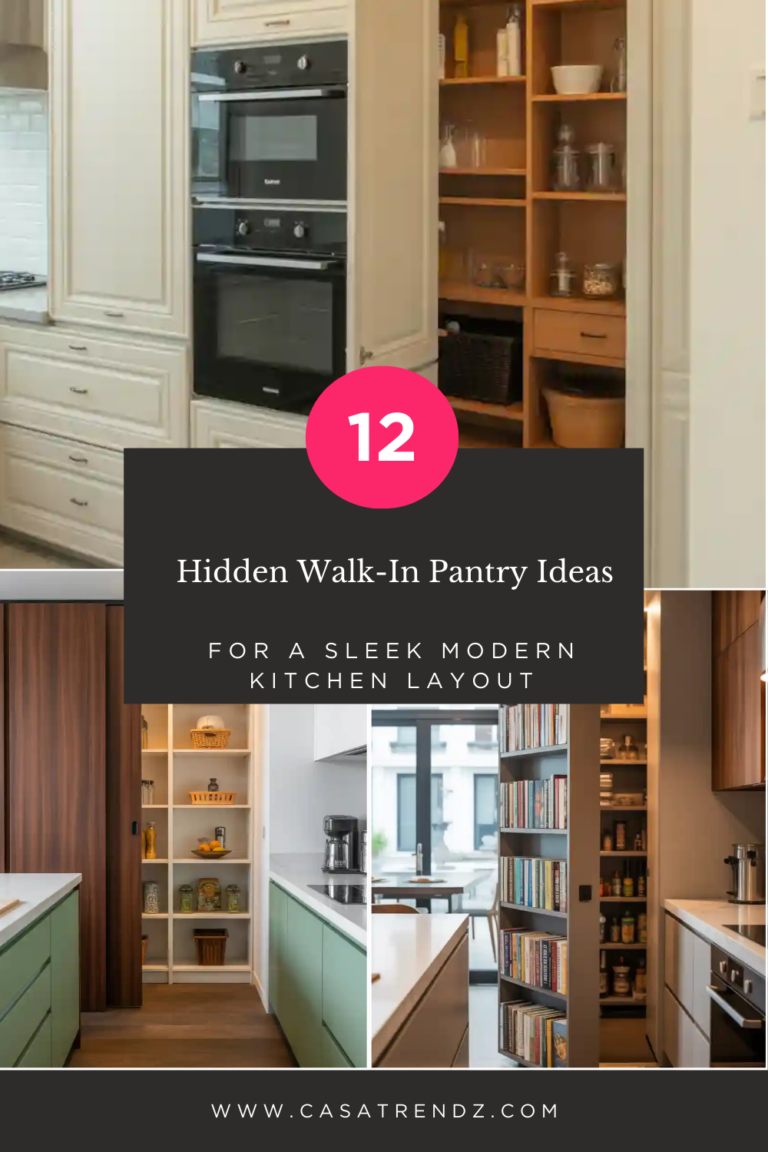 12 Hidden Walk-In Pantry Ideas for a Sleek Modern Kitchen Layout
 22 Pantry Remodel Ideas – Organize & Style Your Kitchen Storage Beautifully