
17 White Living Room Ideas: Step-by-Step Design Inspiration


A white living room never really goes out of style. It feels bright in the morning, calm in the evening, and it gives every piece of furniture, art, and texture a clean stage to stand on. White also makes a room feel larger than it is, which is why it works just as well in a small apartment as it does in a large open plan home.
The secret to a white living room that feels warm instead of cold is layering. One flat shade of white on every surface can look stark, but when you mix soft whites, natural materials, varied textures, and warm lighting, the room starts to feel collected and comfortable. Think of white as the base, not the whole story.
In this guide, you will find 17 white living room ideas with practical detail you can actually use, from paint shades and rug sizes to lighting temperatures and styling steps. Whether you are starting from scratch or refreshing a room you already love, pick one or two ideas to start with and build from there.
1. All-White Living Room for a Clean, Timeless Foundation
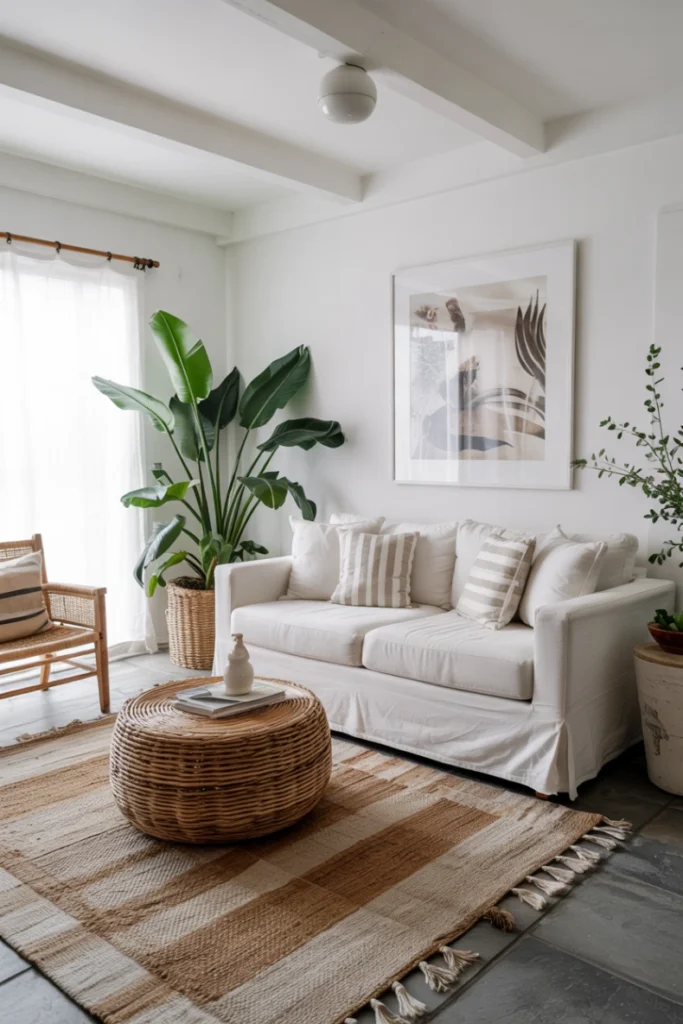
An all-white living room creates a clean and timeless base that instantly makes a space feel larger and brighter. White walls, ceilings, and furniture reflect natural light, which enhances openness and clarity. This approach works particularly well in smaller living rooms or homes with limited sunlight, where every bit of reflected light counts.
To avoid a flat or sterile appearance, use three slightly different whites instead of one. Try a warm white such as Benjamin Moore Simply White on the walls, a brighter white such as Chantilly Lace on the trim, and a flat white on the ceiling. The subtle shifts create depth without adding color. Paint large test swatches, at least 12 by 12 inches, and check them in morning and evening light before committing, because white changes a lot through the day.
Finish the foundation with washable fabrics. A slipcovered sofa in white performance linen or a treated cotton blend lets you remove and wash the covers, which makes all-white living practical even with kids or pets. Among white living room ideas, an all-white foundation offers maximum flexibility, allowing future decor updates without major redesigns.
2. White Living Room with Layered Textures
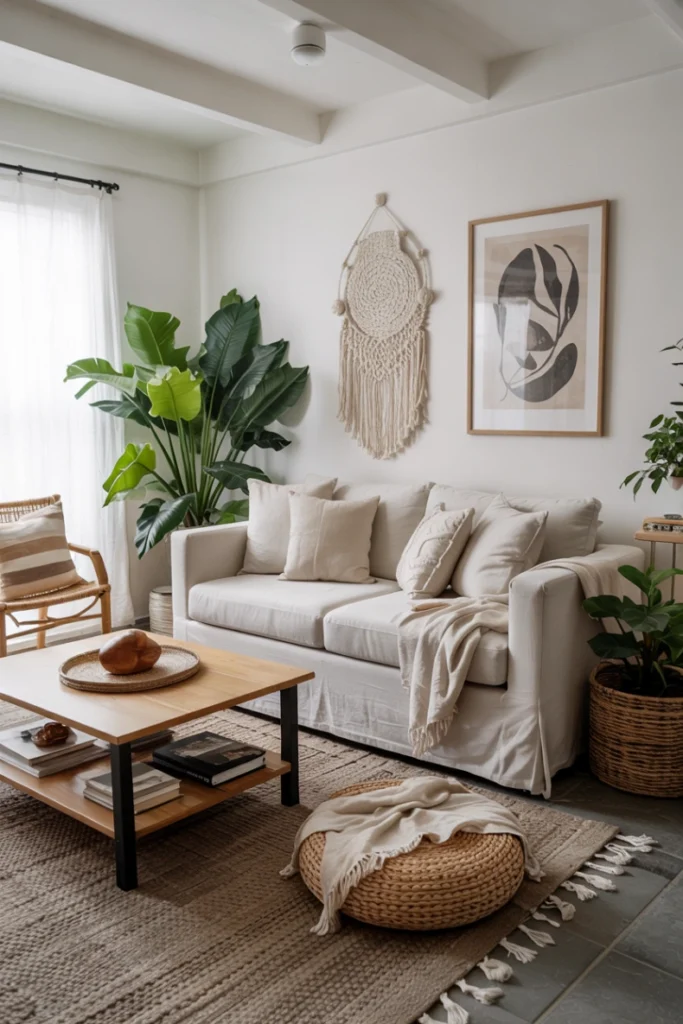
Texture plays a critical role in white interiors. Without color contrast, texture becomes the main design tool that adds depth and warmth. Soft textiles, woven rugs, linen curtains, and textured cushions prevent the space from feeling flat, and they give the eye something to rest on in every corner of the room.
Aim for at least four different textures in the room. Start with a jute or sisal rug as the base, add a wool or cotton throw over the sofa arm, place two linen cushions and one boucle or velvet cushion on the sofa, and hang linen curtains that puddle slightly on the floor. Mixing smooth surfaces, such as a lacquered side table, with rough ones, such as a woven basket, keeps the balance interesting.
Keep the textures in the same warm or cool family so the room stays calm. Warm whites pair well with natural fibers, rattan, and light wood, while cool whites suit linen, chrome, and smooth stone. Among white living room ideas, texture layering is one of the most effective ways to create comfort and visual richness without adding a single bold color.
3. White Living Room with Natural Wood Accents
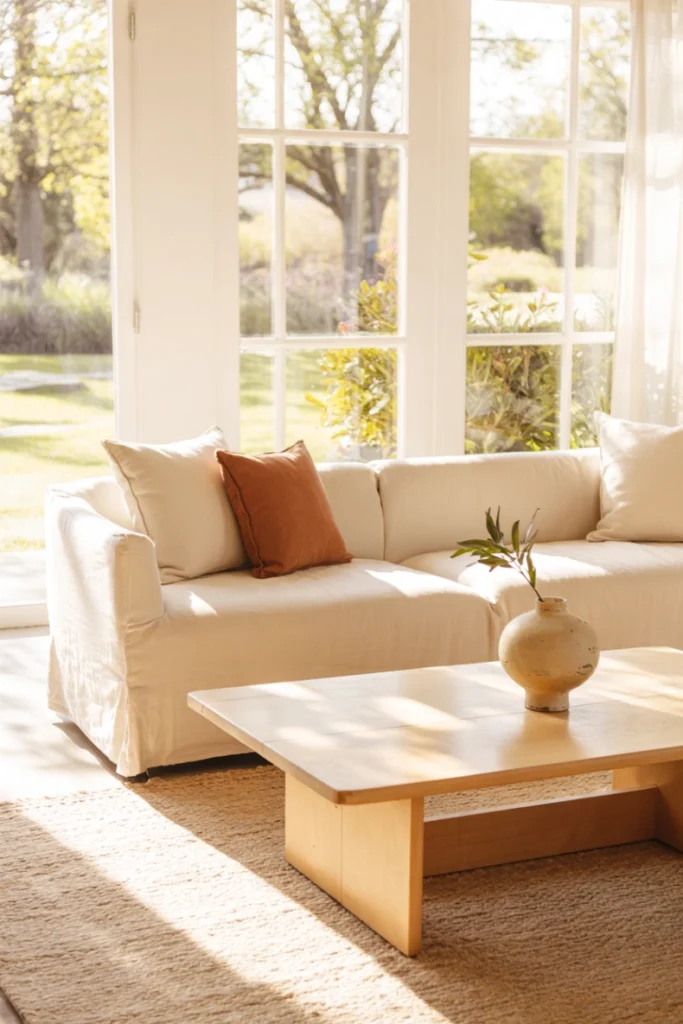
Natural wood accents bring warmth and organic character to white living rooms. Light or medium wood tones soften the brightness of white while adding contrast and grounding the space. This pairing works well in Scandinavian, modern, and rustic-inspired interiors, and it suits almost any budget.
Start with one larger wood piece, such as a white oak coffee table, a walnut media console, or a set of floating shelves in light ash. Then repeat the same wood tone in two smaller spots, for example a picture frame and a side table, so the look feels intentional. Avoid mixing more than two wood tones in one room, or the palette starts to look accidental.
If you have a fireplace, a wood mantel beam is one of the strongest moves you can make. A single 6 by 6 inch reclaimed beam, sanded smooth and sealed with a clear matte finish, adds instant warmth above a white surround. As white living room ideas go, wood accents help strike the perfect balance between brightness and coziness.
4. White Living Room with Soft Neutral Layers
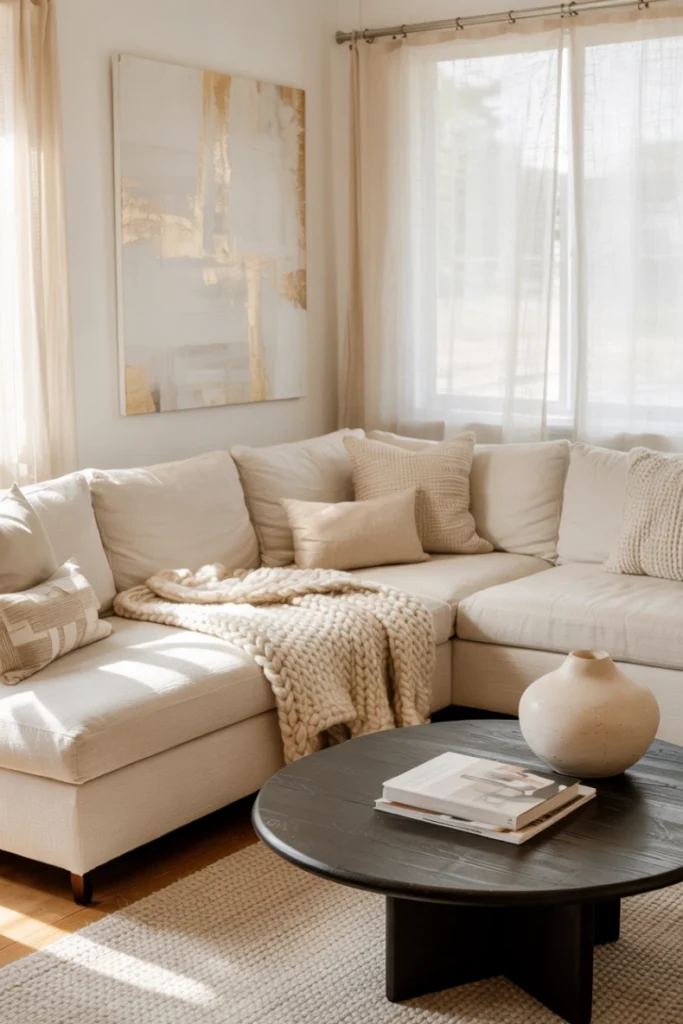
Adding soft neutral tones like beige, cream, or ivory enhances the warmth of a white living room. These subtle variations prevent the space from feeling stark while maintaining a cohesive and elegant look. Neutrals act as a bridge between pure white and the stronger accents you may add later.
Layer neutrals through textiles first, because they are the easiest to change. A cream rug under the coffee table, beige linen curtains, and ivory throws create a soft gradient from floor to ceiling. Choose a rug that is large enough for the front legs of the sofa and chairs to sit on it, usually 8 by 10 feet for a standard sofa setup or 9 by 12 feet for a larger room.
For a finished look, repeat each neutral at least twice. If the curtains are beige, echo that beige in a cushion or a throw blanket. Among white living room ideas, incorporating gentle neutrals creates harmony and visual comfort without sacrificing brightness, and it gives you a forgiving palette if you later add a color accent.
5. Modern White Living Room with Clean Lines
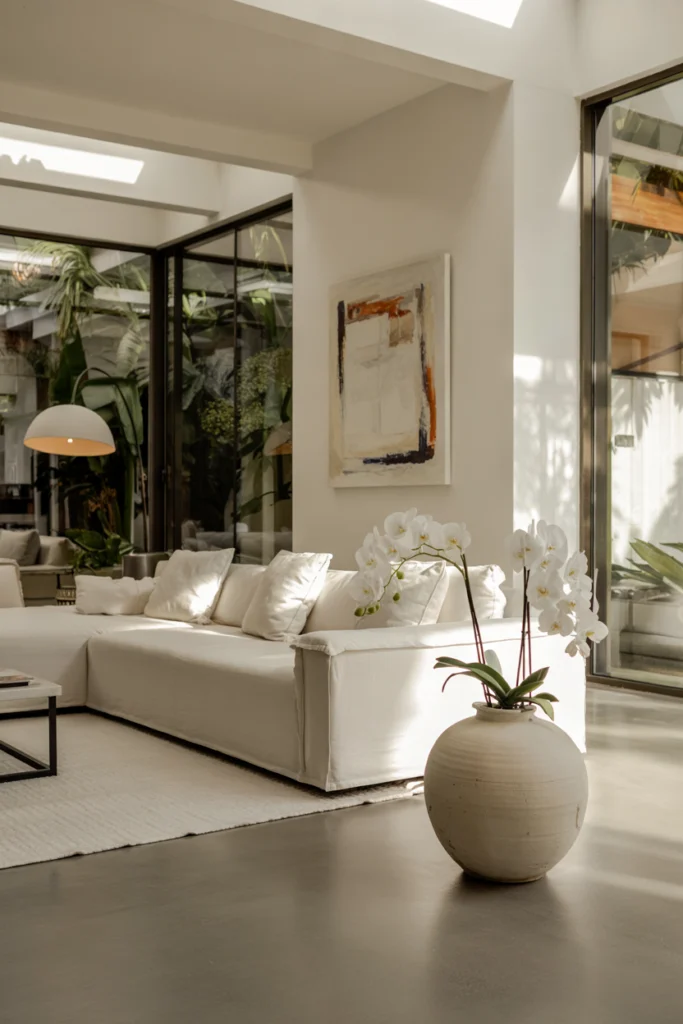
A modern white living room focuses on clean lines, simplicity, and intentional design. White walls and streamlined furniture create a crisp, uncluttered look that emphasizes form and proportion. Every piece earns its place, and nothing feels crowded or fussy.
Choose furniture with straight lines and slim profiles, such as a low sofa with track arms, a rectangular coffee table with a thin top, and a media console that sits close to the wall. Hide clutter with closed storage, a console with doors, or a coffee table with a lower shelf and a lidded basket. Keep surfaces mostly clear, with one or two objects per surface, so the lines of the furniture stay visible.
Lighting should be simple too. A single sculptural pendant or a pair of matching floor lamps is enough. If you love this clean look, our modern living room ideas show more ways to keep a contemporary space warm and livable. Among white living room ideas, modern designs highlight how white can feel sleek, sophisticated, and contemporary without appearing cold.
6. White Living Room with Black Accents for Contrast
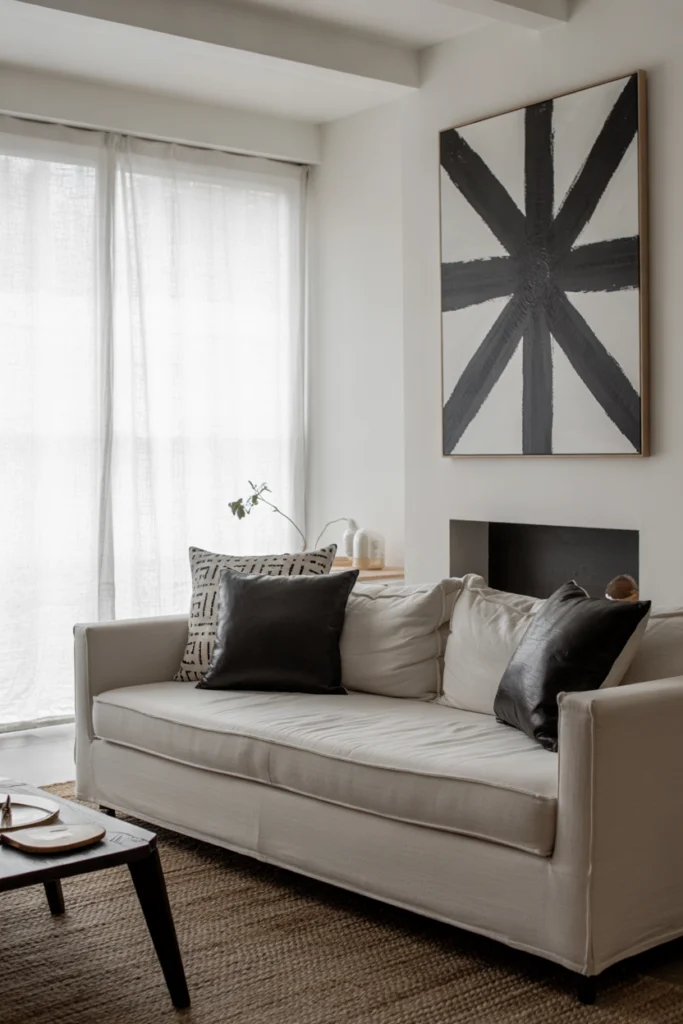
Black accents introduce contrast and definition to white living rooms. Elements such as black frames, lighting fixtures, or furniture outlines add visual structure and a modern edge. Without a dark note somewhere, a white room can drift into looking washed out, especially in bright daylight.
Follow a simple proportion: let black cover roughly 10 percent of the room. A matte black floor lamp, three or four black picture frames, and a black metal side table are usually enough. Keep the black finishes consistent, all matte or all glossy, so the accents read as one deliberate choice rather than random dark spots.
For a bolder move, paint one architectural feature black, such as the window frames, a fireplace surround, or an interior door. If you want to take the contrast further, our black accent wall ideas show how a single dark wall can anchor a bright room. Among white living room ideas, black accents provide bold clarity while maintaining elegance.
7. Cozy White Living Room with Soft Lighting
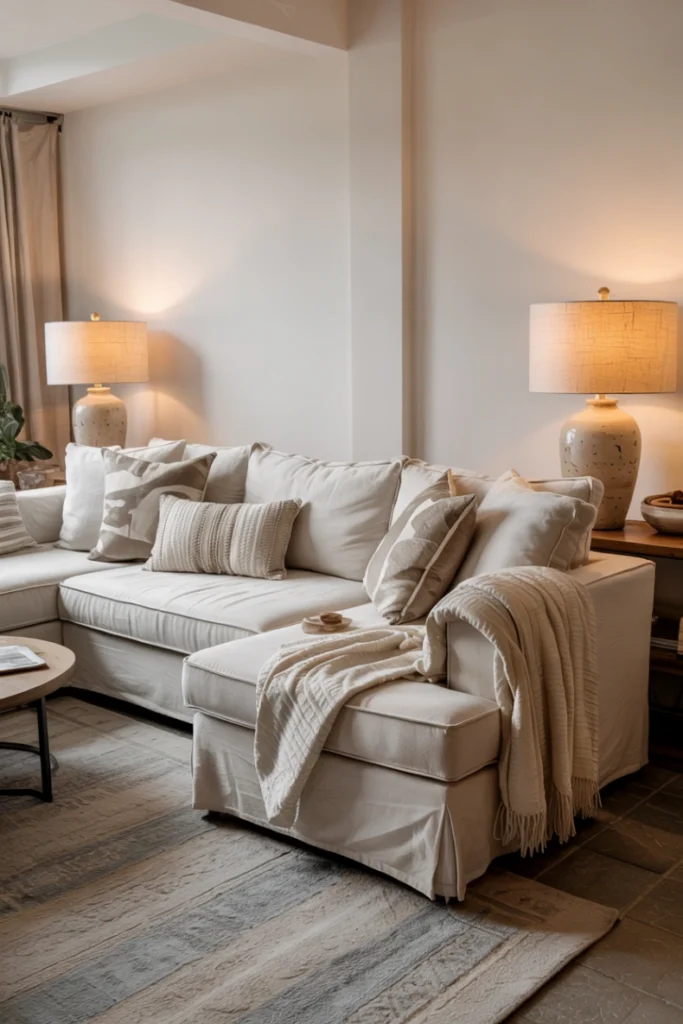
Lighting plays a vital role in shaping the atmosphere of a white living room. Soft, warm lighting transforms white interiors into cozy, inviting spaces. Table lamps, floor lamps, and layered lighting prevent harsh shadows, and they let you change the mood from bright daytime to relaxed evening with a switch.
Build three layers of light. Overhead lighting, such as a pendant or recessed lights on a dimmer, handles general brightness. Task lighting, such as a reading lamp beside an armchair, covers specific spots. Accent lighting, such as a small lamp on a console or LED strips behind a shelf, adds glow. Use warm bulbs around 2700K, because cool daylight bulbs can make white walls look blue and clinical.
Place lamps at useful heights. Table lamps should stand 26 to 30 inches tall, and the bottom of the shade should sit at about eye level when you are seated. Put the main lights on dimmers so you can lower them in the evening. Among white living room ideas, cozy lighting ensures white spaces feel comfortable and welcoming rather than clinical.
8. White Living Room with Statement Furniture
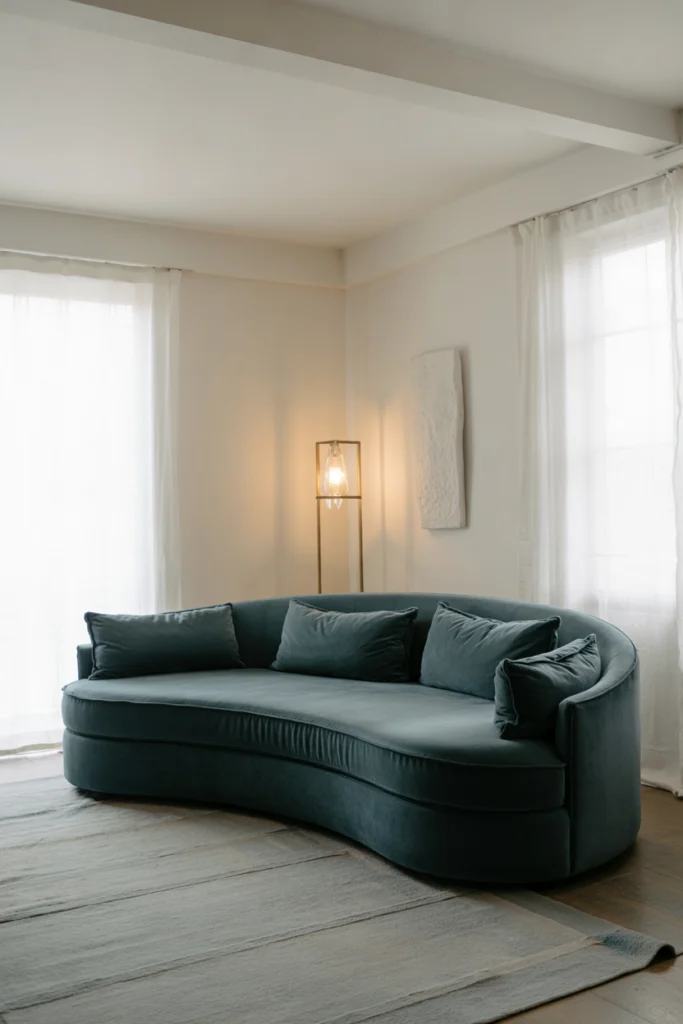
Statement furniture adds personality to white living rooms without overwhelming the space. A sculptural sofa, bold coffee table, or oversized chair becomes the focal point against a white backdrop, and it gives guests something to remember about the room.
Pick one statement piece and let it lead. A curved boucle sofa, a travertine coffee table, or a sculptural lounge chair in a warm wood or bold fabric works well. Keep the other furniture quiet and simple so the statement piece has room to breathe. The piece should be roughly two thirds the width of the wall or sofa it sits against, which keeps the proportions balanced.
Before buying, measure the doorways and the path into the room. A beautiful oversized chair is no good if it cannot get through a 30 inch door. This approach keeps walls and surfaces minimal while allowing design elements to shine. Among white living room ideas, statement furniture introduces character while preserving balance.
9. White Living Room with Indoor Plants
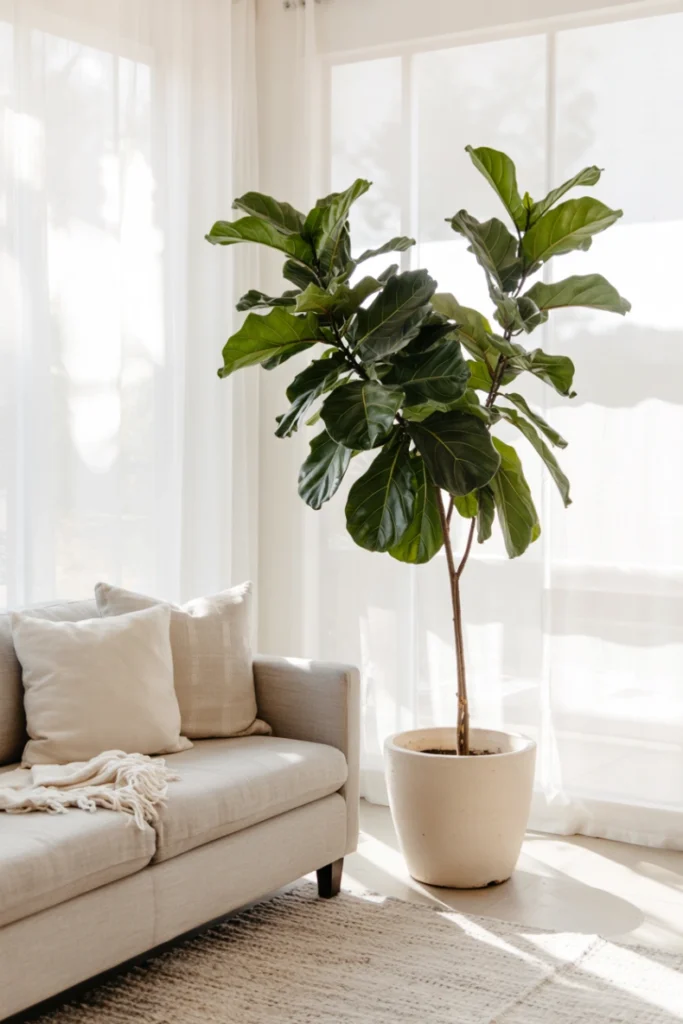
Greenery brings life and freshness to white living rooms. Indoor plants create natural contrast while softening crisp white surfaces. Even a few well-placed plants can dramatically enhance the space, and they add a living texture that no fabric or finish can copy.
Match the plant to your light. A fiddle leaf fig or olive tree suits a bright window and can grow 5 to 6 feet tall, making it a natural corner anchor. Snake plants and pothos handle lower light and are forgiving if you forget to water them. Group plants in odd numbers, such as three pots of different heights on a console, which looks more natural than a single row.
Use simple white, terracotta, or woven pots so the planters support the palette instead of fighting it. Raise plants on stands to vary the height, and wipe the leaves monthly so they stay glossy. Plants introduce organic texture and movement. As white living room ideas demonstrate, greenery adds warmth and visual interest without disrupting the clean aesthetic.
10. Small White Living Room That Feels Spacious
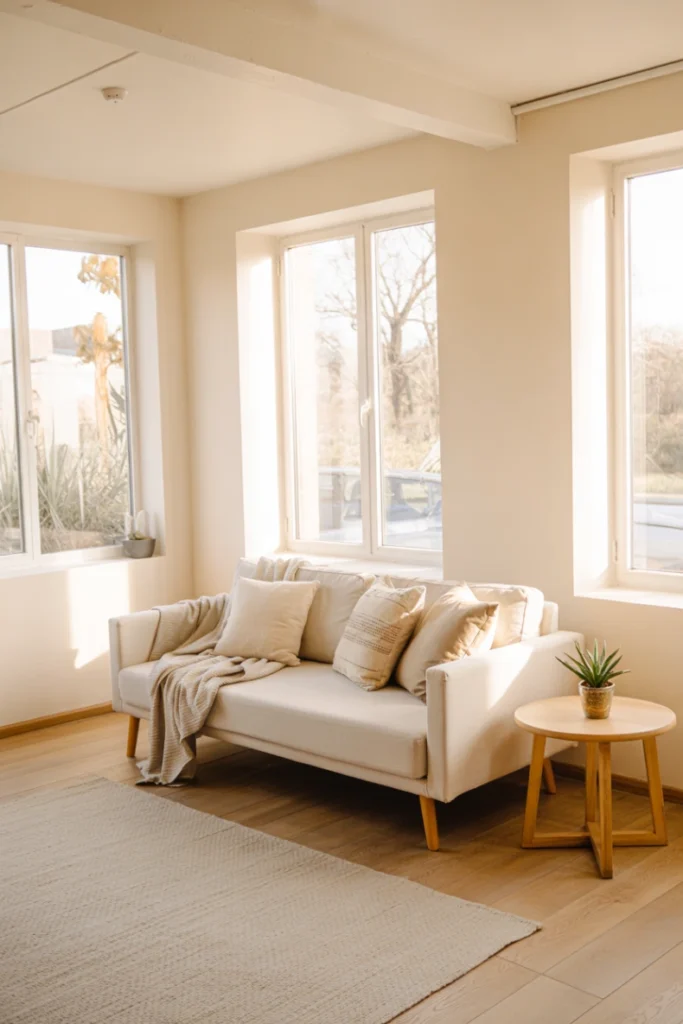
White is ideal for small living rooms because it reflects light and creates the illusion of space. Using white walls, ceilings, and compact furniture keeps the room open and uncluttered. The trick is to choose furniture that fits the room instead of fighting it.
Keep the sofa to 72 to 84 inches wide and choose pieces with visible legs, which let the floor show through and make the room feel airier. A glass or slim-legged coffee table takes up less visual space than a solid block. Hang a large mirror opposite a window to bounce light across the room, and mount the curtains high and wide so the window looks bigger than it is.
Strategic placement of mirrors and minimal decor enhances depth. Leave at least 30 inches of walking space on the main path through the room, and keep only the pieces you use every day. If you need more small-space strategies, our small living room ideas cover layouts, storage, and furniture picks in detail. Among white living room ideas, small-space designs show how white maximizes visual openness and comfort.
11. White Living Room with Metallic Accents
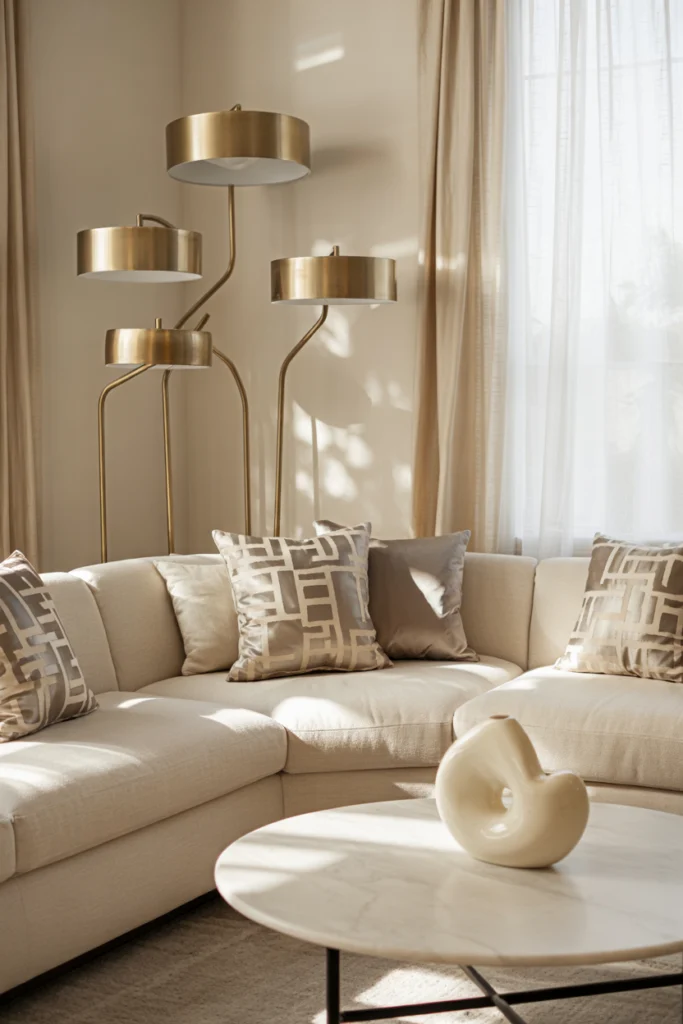
Metallic accents such as gold, brass, or chrome add sophistication to white living rooms. These reflective elements introduce subtle shine and elegance without overwhelming the neutral palette, and they catch the light in a way that flat paint cannot.
Use metallics in small doses and limit yourself to two metals at most. Warm brass works beautifully with warm whites, so try brass lamp bases, a gold-framed mirror, or brushed brass hardware on a console. If your white leans cool, polished chrome or nickel feels more natural. Mixing brass and chrome in equal amounts usually looks messy, so pick one dominant metal and let the other appear only in tiny details.
Repeat the metal at least three times around the room so it feels planned, for example a brass floor lamp, brass picture frames, and a brass tray on the coffee table. Using metallics in lighting, decor, or hardware enhances visual depth. Among white living room ideas, metallic details elevate white interiors into refined, luxurious spaces.
12. White Living Room with Textured Walls
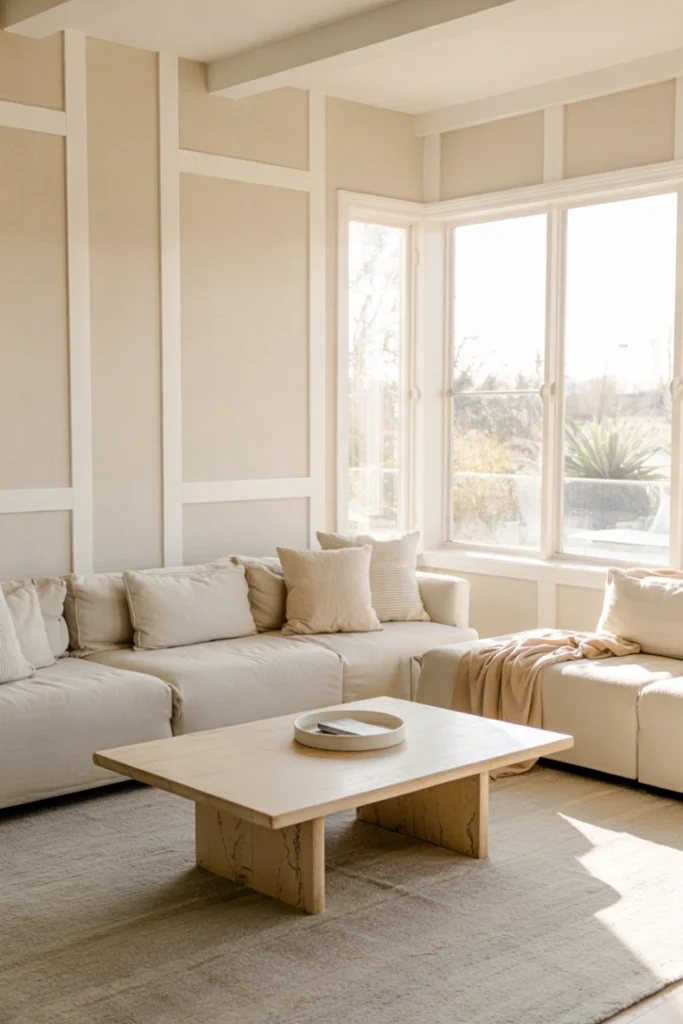
Textured walls add architectural interest to white living rooms. Paneling, plaster finishes, or subtle wall treatments prevent the space from feeling flat, and they give the room character even before any furniture arrives.
Start with one feature wall, usually the wall behind the sofa or the fireplace wall. Shiplap boards, board and batten, or simple picture-frame molding all work in white and cost far less than a full renovation. A limewash or soft plaster finish is another option, giving the wall a gentle, cloudy texture that changes with the light. Paint the texture the same white as the rest of the room so the effect stays subtle.
Install molding at a height that suits the room. A chair rail at 32 to 36 inches suits most living rooms, while full-height paneling feels more formal. Texture creates dimension while maintaining a cohesive color palette. Among white living room ideas, textured walls offer a sophisticated way to add depth without introducing color.
13. White Living Room with Art as a Focal Point
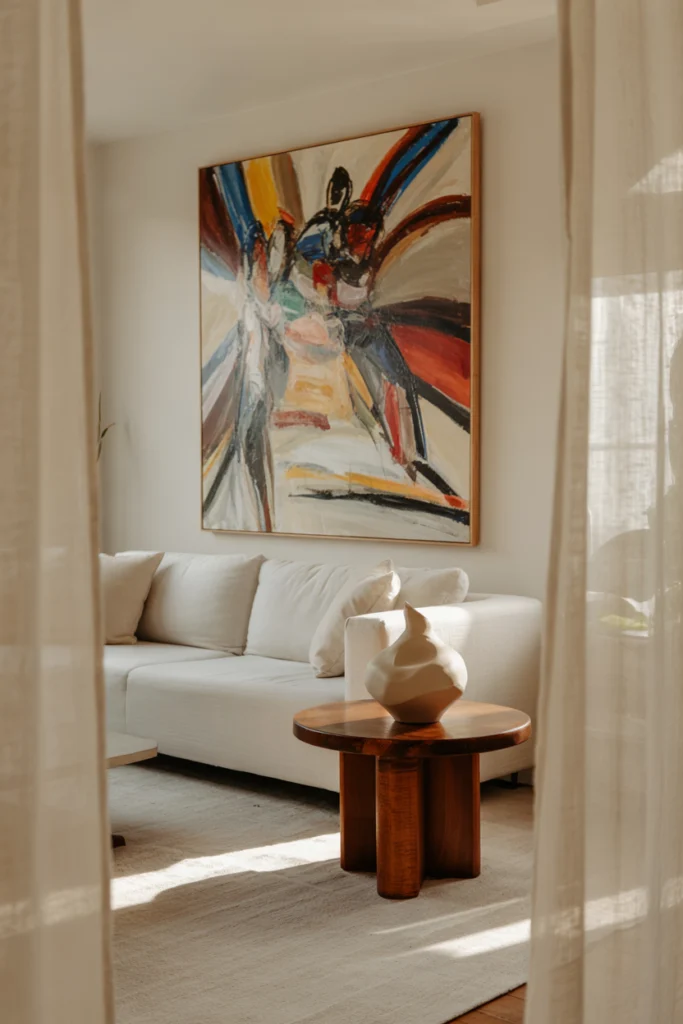
Artwork adds personality and color to white living rooms. Bold or monochromatic art pieces stand out beautifully against white walls, becoming visual focal points that set the tone for the whole room.
Size the art to the furniture below it. A piece above a sofa should be about two thirds the width of the sofa, and its center should hang at about 57 inches from the floor, which is average eye level. One oversized piece, at least 36 by 48 inches, usually has more impact than several small pieces scattered around. If you prefer a gallery wall, keep the frames consistent and leave 2 to 3 inches between frames.
Art is also the easiest way to add color without repainting. A single colorful abstract, a landscape in soft greens, or a black and white photograph can shift the whole mood of the room. This approach keeps the room clean while allowing creativity to shine. Among white living room ideas, art-focused designs offer flexibility and personal expression.
14. White Living Room with Soft Gray Accents
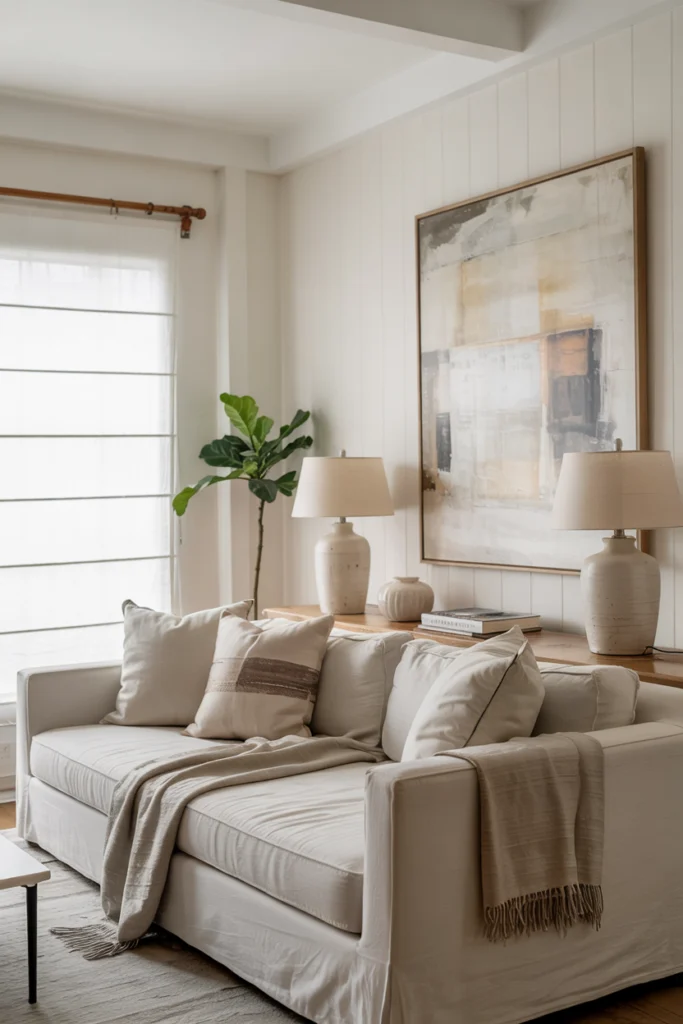
Soft gray accents add depth and sophistication to white living rooms. Gray furniture, rugs, or decor pieces create subtle contrast without disrupting harmony, and the pairing feels calm enough for everyday living.
Choose the right gray for your white. Warm grays with a hint of beige, often called greige, suit warm whites and create a cozy feel. Cool grays with a hint of blue suit bright, crisp whites and feel more modern. A light gray sofa, a gray area rug, or gray linen curtains are all safe starting points. Keep the gray tones close in value, light gray with white rather than charcoal, so the contrast stays soft.
This pairing feels modern, calm, and timeless. For a deeper look at the combination, our gray living room ideas show how to layer gray tones from pale to deep without losing the light. Among white living room ideas, white and gray combinations are especially popular for balanced, elegant interiors.
15. White Living Room with Minimalist Decor
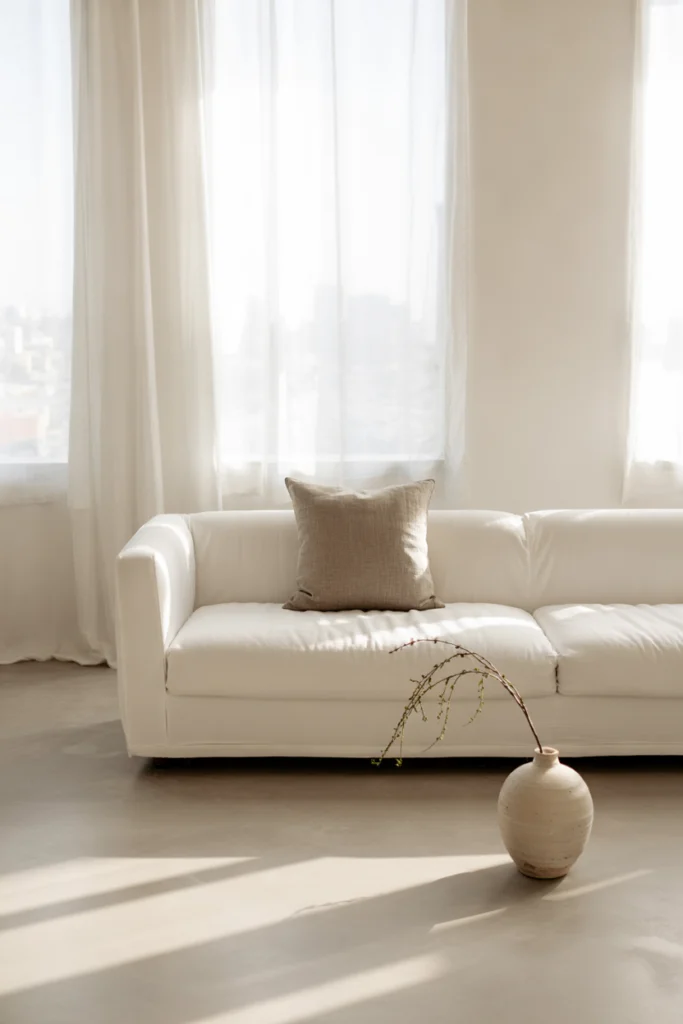
Minimalist white living rooms focus on simplicity and intentionality. Clean surfaces, limited decor, and functional furniture create a calm and uncluttered environment where it is easy to relax and easy to keep tidy.
Edit ruthlessly. Remove everything from the room, then bring back only the pieces you love or use daily. Follow a one-in, one-out rule for new decor so the room never creeps back to cluttered. Use closed storage, such as a console with doors or a storage ottoman, to hide remotes, chargers, and magazines. Leave some empty space on every shelf, because negative space is what makes minimalism feel calm rather than empty.
White enhances the minimalist philosophy by reducing visual noise. A single vase, one stack of books, and a soft throw are enough styling for a coffee table. Among white living room ideas, minimalist designs prove that simplicity can feel warm and refined when every remaining piece is chosen with care.
16. White Living Room with Personal Touches
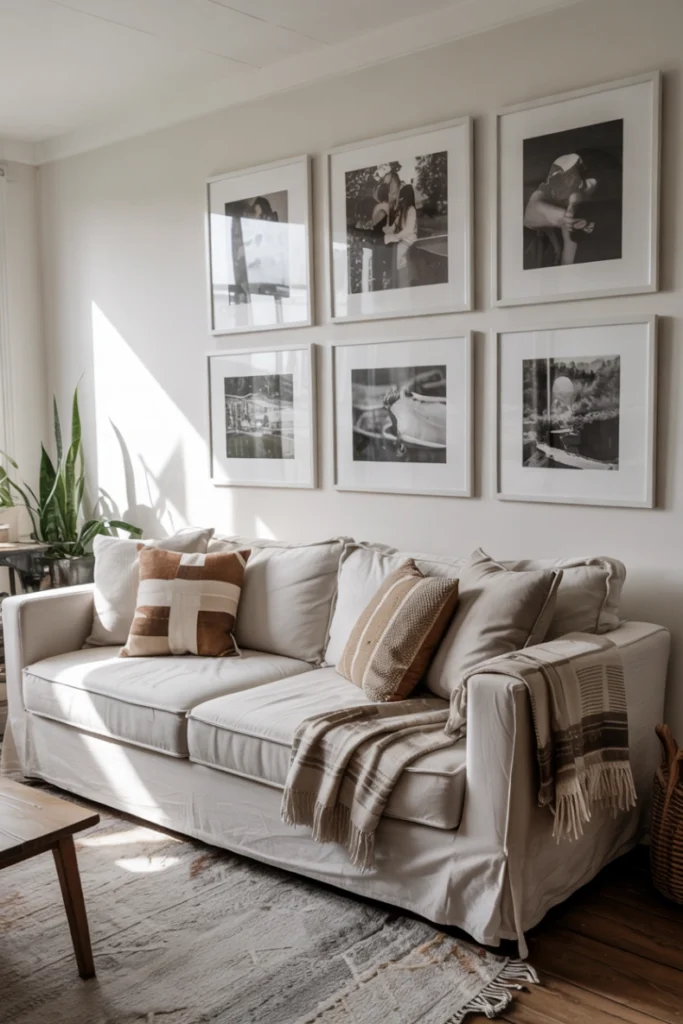
Personal elements bring warmth and individuality to white living rooms. Family photos, meaningful objects, or curated decor pieces add emotional connection without overwhelming the space, and they are what turn a showroom into a home.
Display personal items in small, intentional groups rather than spreading them across every surface. Three framed photos on a console, a travel souvenir on a shelf, and a stack of favorite books on the coffee table are enough. Rotate the display every season so the room feels fresh and the pieces stay meaningful instead of becoming background clutter.
Keep personal touches intentional to maintain balance. Choose frames in one or two finishes, such as black and natural wood, so the display looks collected rather than random. Among white living room ideas, personalization ensures the room feels lived-in and authentic, which is the final layer no store-bought decor can provide.
17. White Living Room with Layered Rugs
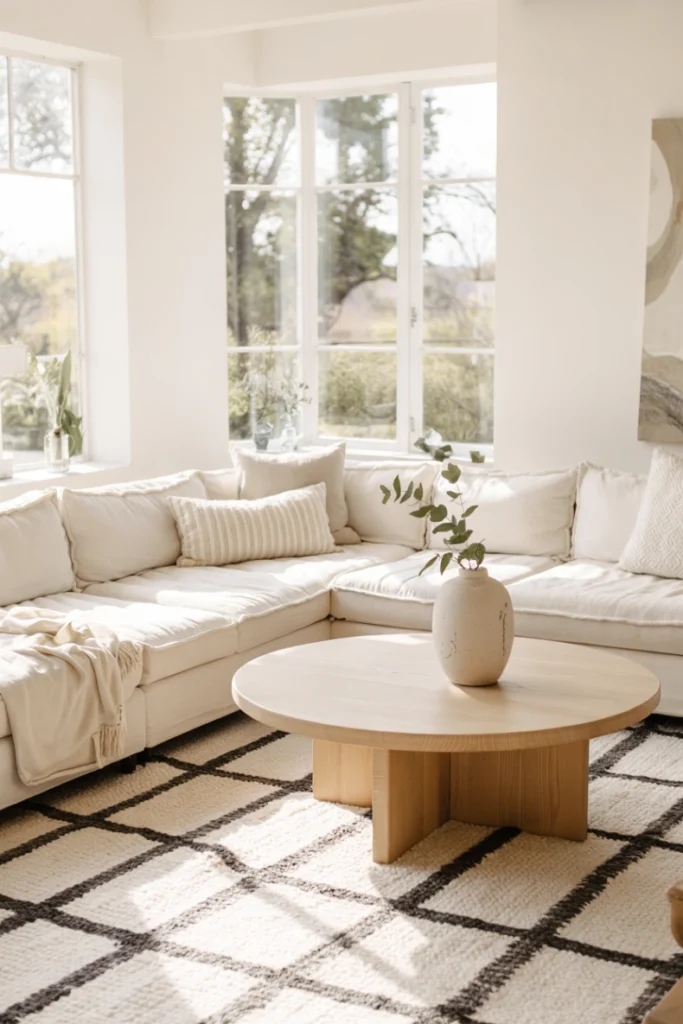
Layered rugs add comfort and dimension to white living rooms. Combining neutral rugs with subtle texture creates visual interest while maintaining harmony, and it lets you define the seating area even in an open plan space.
Start with a large flat base rug, such as a 9 by 12 foot jute or sisal rug, that covers most of the seating area. Layer a smaller, softer rug on top, such as a 5 by 7 foot wool or cotton rug with a subtle pattern, placed slightly off center under the coffee table. Use a rug pad underneath both layers so nothing slips, and leave at least 6 inches of the base rug showing on all sides.
Keep the top rug lighter in color than the base so the layers read clearly, and vacuum the top rug regularly since layered rugs show footprints more easily. This approach enhances coziness and defines seating areas. Among white living room ideas, layered rugs provide warmth and depth without introducing bold color.
Conclusion
White living rooms offer endless design potential when approached with intention. These white living room ideas demonstrate how texture, lighting, materials, and thoughtful accents transform white spaces into warm, stylish, and inspiring interiors. From minimalist designs to cozy layered looks, white adapts to every lifestyle and aesthetic.
By focusing on balance and detail, a white living room can feel timeless, welcoming, and deeply personal. Start with one idea, such as layering textures or adding warm lighting, and build from there. With the right design approach, white becomes more than a color, it becomes a foundation for inspired living.
Frequently Asked Questions
Does a white living room get dirty easily?
A white living room shows dust and marks more quickly than a darker room, but it is very manageable with the right materials. Choose washable slipcovers, performance fabrics that resist stains, and rugs you can spot clean. A quick weekly vacuum and a lint roller for the sofa keep the room looking fresh.
What is the best white paint for a living room?
There is no single best white, because it depends on your light. Benjamin Moore Simply White and Sherwin-Williams Alabaster are popular warm whites that suit most living rooms. For a brighter, cleaner look, try Benjamin Moore Chantilly Lace. Always test a large swatch in your own room before painting the whole space.
How do I keep a white living room from looking cold?
Layer warm textures, natural wood, and warm lighting. Add a wool throw, a jute rug, wood furniture, and bulbs around 2700K. Soft neutrals like beige and cream also help. The goal is to mix at least three textures and one warm material so the white feels cozy instead of stark.
What colors go well with a white living room?
Almost any color works with white, but the most reliable pairings are soft gray, beige, black, natural wood tones, and muted greens from plants. For a bolder look, add navy, sage green, or brass accents in small doses. Keep one accent color dominant and repeat it in at least three places.
Can a white living room work in a small space?
Yes, white is one of the best choices for a small living room because it reflects light and makes the space feel larger. Keep furniture compact, choose pieces with visible legs, use a mirror opposite the window, and avoid overfilling the room. A large rug and high hung curtains also help the space feel taller and wider.
More Ideas You Will Love
 21 Cozy Christmas Living Room Ideas for a Festive, Warm Retreat
 22 Cottage Living Room Ideas for a Cozy, Charming Home
 15 Fall Living Room Decoration Ideas: Rustic Farmhouse Vibes
 13 Brown Couch Living Room Ideas Perfect for Apartments
 16 Americana 4th of July Wall Decal Designs for Every Room
 20 Living Room Color Schemes That Create a Stylish and Inviting Vibe